Luke 15:16
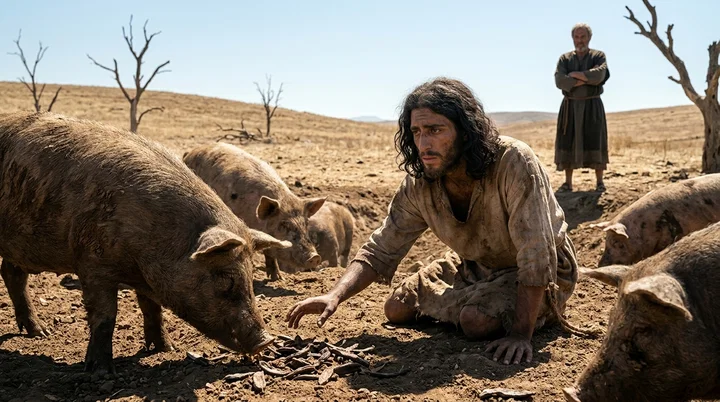
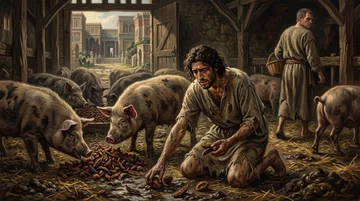
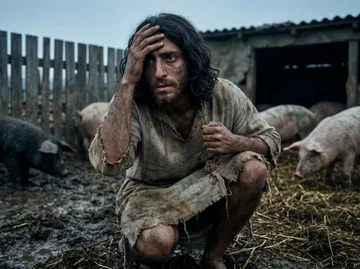
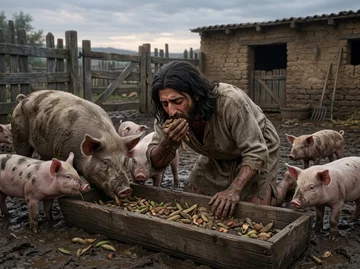
And he would fain have filled his belly with the husks that the swine did eat: and no man gave unto him.
Translations
And he would fain have filled his belly with the husks that the swine did eat: and no man gave to him.
King James Version, KJV Cambridge Paragraph Bible, American Standard Version
And he would fain have filled his belly with the husks that the swine did eat: and no man gave unto him.
And he would fain have filled his belly with the husks that the swine did eat; and no man gave to him.
And he would fain have been filled with the husks that the swine did eat: and no man gave unto him.
and he was desirous to fill his belly from the husks that the swine were eating, and no one was giving to him.
And he longed to fill his belly with the husks which the swine were eating; and no one gave to him.
And he used to long to be filled with the pods which the swine were eating; and, no man, was giving unto him.
Berean Standard Bible, Majority Standard Bible
He longed to fill his belly with the pods the pigs were eating, but no one would give him a thing.
He wanted to fill his belly with the pods that the pigs ate, but no one gave him any.
And so great was his need that he would have been glad to take the pigs' food, and no one gave him anything.
And hee would faine haue filled his bellie with the huskes, that the swine ate: but no man gaue them him.
Douay-Rheims (Challoner revision)
And he would fain have filled his belly with the husks the swine did eat; and no man gave unto him.
Pictures
Cross-references
- Luke 15:20-24
And he arose, and came to his father. But when he was yet a great way off, his father saw him, and had compassion, and ran, and fell on his neck, and kissed him.
The father welcomes, forgives, and restores his returning son with joy.
- Luke 15:4-7
What man of you, having an hundred sheep, if he lose one of them, doth not leave the ninety and nine in the wilderness, and go after that which is lost, until he find it?
The lost sheep’s return is linked with the prodigal’s return and the shepherd’s care.
- Luke 15:24
For this my son was dead, and is alive again; he was lost, and is found. And they began to be merry.
The father rejoices that his lost son has returned alive.
- John 6:35
And Jesus said unto them, I am the bread of life: he that cometh to me shall never hunger; and he that believeth on me shall never thirst.
Christ, the bread of life, satisfies the hunger left empty by earthly husks.
- Luke 15:22-23
But the father said to his servants, Bring forth the best robe, and put it on him; and put a ring on his hand, and shoes on his feet:
Husks lead the penitent son home to a robe, ring, and feast.
- Luke 15:28-32
And he was angry, and would not go in: therefore came his father out, and intreated him.
The elder brother’s cold response contrasts with the welcome the needy prodigal receives.
- Luke 15:21
And the son said unto him, Father, I have sinned against heaven, and in thy sight, and am no more worthy to be called thy son.
The son confesses his sin and unworthiness.
- Luke 15:10
Likewise, I say unto you, there is joy in the presence of the angels of God over one sinner that repenteth.
Both parables describe joy over a sinner who repents.
- Luke 15:7
I say unto you, that likewise joy shall be in heaven over one sinner that repenteth, more than over ninety and nine just persons, which need no repentance.
same lesson that the lost found brings joy
- Luke 15:23
And bring hither the fatted calf, and kill it; and let us eat, and be merry:
The fatted calf is killed for rejoicing at the son’s restoration.
- Genesis 25:29-34
And Jacob sod pottage: and Esau came from the field, and he was faint:
Both depict hunger driving someone to trade lasting good for immediate gratification.
Commentary part 1 of 2
Each commentary is drawn from primary sources: the writings of Ellen G. White and Adventist pioneers and periodicals. Each commentary is separate. Its own words are not a quotation; follow the references to read the source passages.
Ellen G. White
100 sources
The verse pictures the prodigal reduced by waste and famine to the lowest work of feeding swine, starving in a far country and longing to fill himself with the carob pods fed to the animals, while friendless and with no one giving him anything in contrast to the bread in abundance in his father's house.COL 198.4–199.1ST Jan 29, 1894ST Apr 20, 1915TCBMP 124.1ST Jan 29, 1894 His supposed liberty has become bondage to sin and degrading service of Satan, wasting God's gifts and leaving him spiritually impoverished and perishing with hunger.COL 198.4–199.1ST Apr 20, 1915COL 199.2–200.3ST May 26, 1909 The husks are what cannot truly nourish the soul, sin's meager and unsatisfying rewards set against the spiritual food God gives his children.GC 196.1ST May 19, 1881GC88 196.1 His suffering and felt want humble him, make him sensible of his sin and his father's love, and turn him from the swine to begin the journey home in repentance and humble confession as his last hope.3T 103.5–104.13T 101.3–102.2COL 202.3–203.1COL 203.2–205.1TCBMP 124.1 When he comes the Father receives him with compassion, forgiveness and greatest joy without reproach, covering him with righteousness and making a feast, and those who have strayed in such want are to be sought and met with pity, tender encouragement and free forgiveness rather than censure or cold rejection.3T 103.5–104.1ST Jan 29, 1894MYP 408.1Lt 45, 1894, par. 21–24Ms 40, 1899, par. 10–12
Parable Setting and Purpose
Luke 15:16 belongs to the parable of the prodigal son, one of the parables Jesus gave in response to the complaints of the scribes and Pharisees that He associated with sinners.Ms 102, 1894, par. 12–14 The parable was given to teach mercy and forgiveness toward the lost.Ms 102, 1894, par. 12–14 It shows both the misery of one who has strayed from God and God's tender pity and kindness toward those exposed to temptation.COL 198.1Lt 80, 1898, par. 111MR 367.1 Although wanderers choose their own course and fall into misery, He does not abandon them but remains tender in pitying love toward them.COL 198.1Lt 80, 1898, par. 111MR 367.1
Christ told this pathetic, touching story of a son returning to his father's home to illustrate immortal truth directly from familiar facts of daily life and experience.19MR 259.1–3Ms 24, 1891, par. 883MR 333.2–3Lt 223, 1905, par. 8–10 He came right to the point without long, farfetched, complicated reasoning, drawing from His treasure house things both new and old to illustrate and enforce His teaching.19MR 259.1–3 The illustration was given to interest every mind and appeal to every heart, touching the heart, awakening the sympathies, and commending truth to the conscience, while leaving hearers free to accept or reject it as they chose.19MR 259.1–33MR 333.2–3 By such teaching the daily task, instead of being a mere round of toil, is brightened and uplifted by constant reminders of the spiritual and the unseen, with a spirit open to the influences of nature and delighting to teach from them.3MR 333.2–3 Its setting includes the father who, seeing his son afar off, ran to meet him and rejoiced that he who had been thought dead was indeed alive.19MR 259.1–3
The parable teaches that a repentant sinner returning to the Father is welcomed without reproach, and that penitence is what is required.ST Jan 29, 1894 The elder son represents unrepentant Israel, which refused to treat publicans and sinners as brothers to be sought and forgiven.ST Jan 29, 1894
Details of His Want
His own self-indulgence and wasteful spending, meeting a famine, reduced him to utter destitution and drove him to hire himself out to feed swine.COL 198.4–199.1ST Jan 29, 1894ST Apr 20, 19153T 100.3–101.2COL 199.2–200.3 That work was the lowest and most disreputable employment, a deeply degrading occupation especially for a Jew.ST Apr 20, 19153T 100.3–101.2COL 199.2–200.3ST May 26, 1909 His supposed liberty had become bondage, and his sinful indulgence and separation from his father left him spiritually as well as outwardly impoverished.COL 198.4–199.1ST Apr 20, 19153T 100.3–101.2COL 199.2–200.3ST May 26, 1909
Hungry in a famine-stricken land, he longed to fill himself with the husks fed to the swine, even their refuse.COL 198.4–199.1ST Jan 29, 1894ST Apr 20, 19153T 100.3–101.23T 101.3–102.2 His hunger marked the depth of his poverty and the misery that followed his departure and wasteful living.ST Jan 29, 18943T 100.3–101.23T 101.3–102.2RH Jan 19, 1911 Yet though he desired that food, no one gave him anything, and no one supplied his need.COL 198.4–199.1ST Jan 29, 1894ST Apr 20, 19153T 100.3–101.2RH Jan 19, 1911
He was friendless and without help, abandoned by his former companions.COL 198.4–199.1ST Apr 20, 1915MYP 408.1COL 199.2–200.3ST May 26, 1909 The pleasures and friendships of his prosperous life had left him alone, and returning to his father in repentance and humility remained his last hope.COL 198.4–199.1MYP 408.1COL 199.2–200.3ST May 26, 1909 In that extreme need no man relieved him, which shows the larger call to seek and win back the lost with joy when they return.COL 199.2–200.3ST May 26, 190918MR 113.5
He was starving and perishing with hunger in a foreign far country, friendless, destitute, and emaciated through disobedience and sin.TCBMP 124.1ST Jan 29, 18949T 50.2Lt 10, 1856, par. 5Ms 45, 1901, par. 8 That deprivation stands in contrast to the rich supplies in his father's house, where even the servants have provisions and bread in abundance.TCBMP 124.1ST Jan 29, 1894Lt 10, 1856, par. 5 Remembering that abundance humbled him, made him sensible of his need, and moved him to decide to return with humble confession.TCBMP 124.1ST Jan 29, 1894 The husks he desired were carob pods, a bean-like fruit with a seed inside, the same pod-fruit as the locusts eaten by John the Baptist with wild honey.CTBH 189.3–190.2
Misery of Separation from God
The longing to be fed from the swine's trough shows how the desire for freedom from a father's authority turns into wild license and then into bondage to sin, degrading drudgery, and captivity to the tempter.COL 198.4–199.1ST Apr 20, 1915COL 199.2–200.3ST Jan 29, 1894ST Jan 29, 1894 The youth who sought liberty is left hungry in a famine-stricken land, reduced to the lowest and most disreputable work, longing for the animals' food yet unable to get even that because no one gives him anything.ST Apr 20, 1915COL 199.2–200.3ST May 26, 1909ST Jan 29, 1894 His former companions have abandoned him, proving that the pleasures and friendships of his prosperous life have left him alone.COL 198.4–199.1ST Apr 20, 1915COL 199.2–200.3ST May 26, 1909 Life apart from God in this way wastes the blessings, years, and powers God gives and leaves the person spiritually impoverished, degraded, and wretched.COL 198.4–199.1COL 199.2–200.3ST May 26, 1909 To stay long away from Him serving sin and the flesh and the devil brings no profit but poor wages.2T 295.1
His estrangement came by a selfish decision to separate from his father and avoid his counsel, reproof, and advice, through disobedience and sin.TCBMP 123.13T 101.3–102.2TCBMP 124.1TCBMP 128.1 That course left him friendless, destitute, and emaciated with hunger, reduced to tending swine and longing for their food while no one gave him anything.3T 101.3–102.2TCBMP 124.1 The verse pictures a thorough backslider who has left his Father's house and service for the service of Satan and of sin, like a young man turned from God or one who has left the Lord's service and is not fully on the Lord's side.Lt 59, 1886, par. 1–53MR 64.5–65.3Lt 27, 1890, par. 1Lt 52, 1899, par. 1Lt 15, 1899, par. 9–11 Such a one needs to leave sin and return to his father's house and service, recognizing his need, confessing backsliding, and turning toward heaven to respond to God's love.Lt 59, 1886, par. 1–5Lt 27, 1890, par. 1Lt 15, 1899, par. 9–11
That far-country condition comes through Satan's temptations, through mistakes and severe treatment by brethren who do not understand youth, and through giving up the Sabbath for worldly business and trade advantage.3MR 64.5–65.3 The wayward son also illustrates Israel's rejection of God's care: like a son gone astray Israel resisted grace, rejected repeated offers of mercy, and failed to value privileges and blessings from a loving Father, facing consequences over which Christ grieved.ST Feb 27, 1896Ms 56, 1902, par. 5 The same prodigal course is taken by those who claim to keep the commandments yet transgress the law, unthankful and unholy, using entrusted talents to counterwork God and exerting influence on Satan's side while retaining a form of godliness.Ms 75, 1898, par. 13–14 Prodigals are also made by indulgence at home through parents' failure to restrain their children.11MR 40.3–41.2
Husks as Empty Provision
The husks are what cannot truly nourish, the superstitious rites and human traditions that formed the worthless spiritual food Rome gave the people and that could not supply the wants of the soul.GC 196.1GC88 196.14SP 154.1–155.1 When the new teachings of the gospel supplied what their souls needed, people turned away from those who had so long fed them husks.GC 196.1GC88 196.14SP 154.1–155.1 In the same way the husks the hungry son wanted picture sin's meager, unsatisfying rewards, set in contrast with the spiritual food God gives His children.ST May 19, 1881 To prefer sin's husks to that food is moral madness.ST May 19, 1881
Those who spend their means on themselves while the poor lack food and shelter are living on husks.ST Sep 10, 1912 Wealth that could bring comfort to people in need is instead used for unnecessary display and possessions.ST Sep 10, 1912 The verse applies to people so impoverished that they are perishing for scraps discarded in a country of abundance, while money is spent selfishly and needlessly elsewhere.ST Sep 10, 1912Lt 43, 1900, par. 10 Being satisfied with such spiritual husks includes putting worldly appearance in dress before Christ's character, God's will, and lasting riches.MYP 355.3 It also includes comparing with others, copying their conduct, and excusing one's own wrongs by pointing to others' faults, which leaves one spiritually stunted while indulging unconsecrated feelings.ST Mar 8, 1883
Dwelling on other people's faults is living on husks like the poor food the hungry prodigal desired.GW 479.1–2 Looking for and speaking of failings develops evil in the one who does it, while contemplating Jesus and His character changes a person into His image.GW 479.1–2 A hungry person left without help will reach for husks.21MR 191.2–3 People seeking truth and those newly awakened who have no teacher cry for solid food that strengthens spiritual strength, not husks that fail to nourish.Lt 82a, 1897, par. 15–1721MR 191.2–3
Hunger Leading to Return
His suffering and felt want humbled him and made him sensible of his great sin and neglect, leading him to appreciate his father's love and acknowledge his claims, recognizing that only his father could supply his great need.3T 103.5–104.13T 101.3–102.2TCBMP 124.1TCBMP 128.1 Separated from his father through disobedience and sin and reduced to want, friendless, destitute and emaciated with hunger, his adversity broke his pride and turned his thoughts toward home.3T 101.3–102.2TCBMP 124.1TCBMP 128.1
Remembering that his father's household has bread in abundance and that even the servants have provisions, he decided to return with humble confession of his sin and unworthiness, in repentance and humility, as his last hope.TCBMP 124.1ST Jan 29, 1894 His desperate hunger, when he could not even obtain the food given to the swine, pressed that memory home and fixed his resolve to go back.TCBMP 124.1ST Jan 29, 1894
His misery marks the depth of his degradation and turns him from the swine to begin the journey home.COL 202.3–203.1COL 203.2–205.1 Turning to God in repentance is not a degrading step, for God welcomes the returning sinner with love as the father received his son.COL 202.3–203.1Lt 76, 1898, par. 18–20
Returning means turning square about at once, leaving sin and the service of Satan even at loss of position and livelihood, deciding to be a Christian from that day and coming back to the Father's house and the Father's service to receive pardon and love with purified thoughts and changed purposes.3MR 64.5–65.3Lt 27, 1890, par. 1 It means confessing backsliding and turning toward heaven, linking with God with full decision of soul, believing in Christ, learning from Him and following Him, and giving the rest of life to Jesus.Lt 27, 1890, par. 1Lt 33, 1896, par. 12Lt 1a, 1890, par. 1Lt 52, 1899, par. 3Ms 21, 1889, par. 96–97 The backslider's return is a turning unto the Lord with confession and contrition of soul after wandering away.Lt 27, 1890, par. 1Ms 21, 1889, par. 96–97
That return brings the promise of eternal life and heaven's imperishable riches, for the Father still loves the one who has left and calls him back to receive God's love and Christ, whose blood has purchased him.Lt 52, 1899, par. 3 After sin and failure one can turn to Jesus, who welcomes him and gives strength for a fresh effort.MYP 97.1Lt 52, 1899, par. 3 The one who returns is still invited to wear Christ's yoke, lift His burden, and learn His meekness and lowliness of heart, and as reward will find rest unto the soul.Lt 33, 1896, par. 12
Even the poorest person who comes repentant to the Father is welcomed with joy in heaven.Ms 19, 1890, par. 21 None who seek Him with confession and contrition of soul seek Him in vain, for Jesus meets such returning souls with deep compassion and pitying tenderness, having so loved them that He died to save them, and He can be firmly trusted to do for them all He has promised to those who believe.Ms 19, 1890, par. 21Ms 21, 1889, par. 96–97
Being welcomed to a son's privileges requires living by a son's conditions, accepting a son's obligations along with a son's privileges.Lt 164, 1900, par. 21–23Ms 183, 1901, par. 12Ms 98, 1901, par. 17–20ST May 8, 1901 That means submission to God's authority and obedience to His word, and unreserved surrender of the whole life, not money alone but self-denial and personal effort.Lt 164, 1900, par. 21–2310MR 110.3–5 Deliverance is given only on condition of obedience and submission, leaving the devil's side, and like the lost sheep found by the shepherd the returned wanderer must remain under care in the fold in obedience and not renew his wanderings, repaying love by obedience.10MR 110.3–5
The story warns not to delay returning to parents and to God with a humble heart.Lt 18f, 1890, par. 2 Some who come to the Sanitarium may likewise turn back toward God, and they can be wisely helped and saved as truth becomes part of their lives.Lt 200, 1902, par. 8–10 People who have gone astray may be kept from returning to God by the harsh, unchristlike conduct of those who claim to follow Christ.Lt 50, 1893, par. 8–9
Father's Compassionate Welcome
The husks belong to the story of a son separated from his father, wasted in a distant country and held captive by the tempter, whose misery shows the depth of need and abandonment before return.Lt 80, 1898, par. 9–13Ms 41, 1890, par. 45–51 Even while he is still in rebellion in that far-off want, the father's love remains strong and his heart is already yearning for him.Lt 80, 1898, par. 9–13 God does not wait passively but takes the first step to seek the wanderer, working through influences and drawing him by the Spirit to bring him home, giving despondent and distrustful sinners reason to take courage.Lt 80, 1898, par. 9–13ST Jan 22, 1894 The longing to return is itself that drawing back to the Father.
When the erring one becomes sensible of great sin and neglect, appreciates his father's love and acknowledges his claims, and comes as to the only one who can supply his great need, the heavenly Father though sinned against receives him with compassion, pity, forgiveness and greatest joy.3T 103.5–104.1MYP 408.1 He does not hurl denunciations and accusations of wrath, nor meet the return with reproach, cold rejection, complaints or repeated reminders of mistakes.3T 103.5–104.1GW 157.3 He prepares a feast to welcome him, gives robe and ring and a place at God's table, and covers him with Christ's righteousness, the robe of righteousness.GW 157.3Lt 80, 1898, par. 9–13 Penitence is what is required, and the repentant sinner returning in humility is welcomed without reproach and forgiven, showing how God will deal with all erring ones who come back in repentance.ST Jan 29, 1894MYP 408.1Lt 85, 1886, par. 17–18 That welcome sets former hardship and starvation against compassionate forgiveness, and gives grand themes for thought and a solid foundation for faith.COL 203.2–205.1Lt 85, 1886, par. 17–18
That love is revealed in giving His beloved Son to die for the race, making a channel for the outflow of infinite love so that all who believe may be restored to favor, obedience and life in Christ.GW 157.3Lt 85, 1886, par. 17–18 Christ's death is the propitiation for the sins of the whole world, and God regards those perishing in sin and hunger far from His house with that love.Ms 45, 1901, par. 8 His dying love on Calvary, the just dying for the unjust, is the sinner's assurance of acceptance, peace and love, daily beseeching the lost to be reconciled and in no wise casting out any who come.Lt 15a, 1890, par. 9–11Ms 82, 1894, par. 22–24 Viewing Him upon the cross breaks every barrier down, supplies what the soul lacks, and restores to divine favor.Lt 15a, 1890, par. 9–11Ms 82, 1894, par. 22–24 The Father still loves the one who has left, calls him back to receive that love, and promises eternal life and heaven's imperishable riches to those who believe, learn and follow.Lt 52, 1899, par. 3
The return makes all heaven glad, with all heaven's resources and angels' help given to seek and save the lost in careless and hardened misery.COL 197.2 Seraphs and cherubs sing praises to God and the Lamb for mercy and loving-kindness to the children of men, and there is greater joy over one sinner who repents than over many who need no repentance.COL 197.25T 604.1 Even the poorest repentant person is welcomed with joy among the heavenly host, for God as the true shepherd goes after the lost sheep, speaks to the distressed soul ready to die, calls for return, heals backsliding and loves freely.Lt 71, 1895, par. 25Ms 19, 1890, par. 21STOM 11.2STBk 14.1
Those rescued from sin can be brought back to the Father and then, with God working with the returned one, help bring other sinners and youth to Him and to conversion.MH 179.1–2Lt 33, 1896, par. 12 Linking with God with full decision of soul brings blessing, rest, and the invitation still to wear Christ's yoke, lift His burden, and learn His meekness and lowliness.Lt 33, 1896, par. 12
The son's starvation in a foreign land, longing for swine's food with no one giving him anything while his father's house has rich supplies, stands against that compassionate welcome.GW 140.2Lt 10, 1856, par. 5Ms 113, 1902, par. 30 It stands also in contrast to the elder brother's stubborn, selfish, displeased, murmuring and coldly rejecting response, whose complaints though natural and understandable are not right.GW 140.2TCBMP 128.2Ms 113, 1902, par. 30 Those gone astray and suffering in want need pity, help, sympathy and above all free forgiveness, not that cold rejection.TCBMP 128.2Ms 113, 1902, par. 30
That same hunger and misery pictures people burdened by guilt and temptation whose hope is nearly gone, including one once proud and ambitious now fallen and under Satan's control through selfish indulgence.Lt 178, 1902, par. 28–30Ms 22, 1898, par. 19 With loving encouragement rather than blame they can be led to return to the Father in penitence and find hope of redemption through Christ.Lt 178, 1902, par. 28–30 Christ meets such a fallen one with tender sympathy and words suited to his need.Ms 22, 1898, par. 19
Seeking and Restoring Wanderers
The husks mark the lost as in careless and hardened misery, yet one to be sought and saved with all the resources of heaven and the help of angels, whose bringing back to God makes all heaven glad.COL 197.2Ms 41, 1890, par. 45–51 God acts as the true shepherd toward those ready to die, going after the lost sheep and speaking to the distressed soul with a call to return and the promise to heal backsliding and love freely.ST Oct 31, 1916Lt 71, 1895, par. 25 The parable shows what God really is, a Father waiting with yearning love to receive the returning prodigal, preparing a feast rather than hurling denunciations and accusations of wrath, having loved the race in giving His Son to die for them.COL 197.2GW 157.3 The teacher of truth is to make this waiting Father known to the sinner in order to win souls in the way of the Lord, for the son's return illustrates God's work to reclaim the lost and bring them back to the Father's house.GW 157.3ST Oct 31, 1916Lt 27, 1890, par. 18–19
Those who have strayed and are reduced to want and degradation call forth tender sympathy and earnest effort rather than severe judgment, for their suffering and felt need are what drive them back and make them sensible of sin and neglect.3T 103.5–104.1Lt 45, 1894, par. 21–24Ms 40, 1899, par. 10–12 They are objects of compassion like those perishing with hunger, to be met with pity, help, sympathy, tender encouragement, and above all free forgiveness when they return.3T 103.5–104.1TCBMP 128.2Lt 16, 1887, par. 7–14 Their return is not to be met with complaints or repeated reminders of mistakes, nor with censure, reproach, suspicion, or jealousy, nor with contempt, blame, or a cold condemning attitude that drives them away and holds them at a distance.3T 103.5–104.1Ms 40, 1899, par. 10–12RH Nov 25, 1902Lt 16, 1887, par. 7–14Lt 45, 1894, par. 25–27 The father instead welcomes and encourages his erring child, restoring him with a robe and ring, and the heavenly Father though sinned against receives such an erring and repenting one with compassion, pity, and greatest joy, knowing he needs pity and love.3T 103.5–104.1Lt 45, 1894, par. 21–24Ms 40, 1899, par. 10–12
The elder brother's complaints over that welcome, though natural and understandable, are not right.3T 103.5–104.1TCBMP 128.2 His cold, self-righteous, envious, and jealous spirit fails to share the father's compassion and appears when church members murmur that ministers do not constantly feed them with sermons but carry the truth to those who know it not.21MR 296.5–6Ms 49, 1898, par. 24–25Lt 45, 1894, par. 25–27 That same displeased, selfish, murmuring spirit is acted out distinctly when a church raised up by past labor complains that further labor goes to other suburbs and to the baptism of awakened souls rather than to itself, feeling that more labor is not given to it while labor is given to gather new souls.Lt 71, 1895, par. 2721MR 296.5–6Ms 49, 1898, par. 24–25 Indifference and careless disregard for the perishing manifest the spirit of the elder brother instead of partaking of God's spirit and joy over the found.Lt 71, 1895, par. 27Lt 71, 1895, par. 25
A living church is not a gossiping church planting doubt, questioning, evil surmising, and jealousy while expecting constant feeding, for to be given food constantly while not doing righteousness at home or in the church is a curse instead of a blessing.Ms 49, 1898, par. 24–25 Its members are the Lord's chosen vessels to carry salvation and His light bearers reflecting the light of truth to all contacts, delivering an effective testimony by precept and example, burdened for souls, praying in sincerity, stretching out hands all the day long, bringing truth close to hearts and hunting for souls.Ms 49, 1898, par. 24–25 Right discipline teaches members to work rather than expect to be fed, so that those who have had labor bestowed on them gain a knowledge of God and of Jesus Christ whom He has sent, and with Christ formed within as the hope of glory seek to save those that are lost.Ms 49, 1898, par. 24–25 The practical lesson, to be carefully studied together with the lost sheep and the lost piece of silver, involves eternal interests and must be practiced by seeking the lost sheep instead of wounding and driving it away, and by refusing the complaining elder brother's attitude when the prodigal returns.Lt 71, 1895, par. 27Lt 71, 1895, par. 25
Those who have left the Father's house and are in misery, longing for the food given to pigs while no one helps them, are to be encouraged to return to Him in repentance.STB 147.5STB 620.1–2STB 119.1RH Mar 16, 1905 Tender, compassionate efforts are to restore the fallen rather than holding them at a distance, and they can be wisely helped and saved as truth becomes part of their lives.RH Nov 25, 1902Lt 200, 1902, par. 8–10Lt 16, 1887, par. 7–14 Coming back to God is illustrated by the prodigal's decision and return to his father's house, and his coming illustrates God's work to reclaim the lost and bring them back to the Father's house.ST Oct 31, 1916Lt 200, 1902, par. 8–10Lt 27, 1890, par. 18–19
Sources
Pioneers and periodicals
223 sources
The verse pictures the younger son sunk to the lowest depth, after taking his portion and wasting it in riotous living until famine left him in want, joining himself to a citizen and sent to feed swine where in desperate hunger he longed to be filled with the carob pods eaten by the cattle and swine.ST Aug 1, 1911ST Oct 17, 1900ST Sep 6, 1899ST Sep 6, 1899ST Apr 2, 1896 Feeding swine was degrading drudgery, especially for a Jew, and that even pig food was withheld shows him friendless, abandoned and without help.ST Apr 20, 1915ST May 26, 1909ST Jan 29, 1894ST Apr 2, 1896 The husks are the empty provision of life away from the Father's house, which cannot truly nourish the soul, proving Satan a poor provider and that sin's pleasures at their best give no lasting peace or satisfaction.RH Jan 19, 1911ST Nov 14, 1900RH Jul 15, 1862RH Feb 28, 1871 His misery shows where a self-centered life apart from God leads, wasting God-given powers until starvation sets the scene for return.RH Jul 15, 1862ST May 4, 1904RH Jul 15, 1862ST Aug 29, 1895ST Jun 11, 1896 That want leads him to come to himself, remember the Father's plenty and resolve to arise and go home, illustrating God's mercy and love in tenderly welcoming, pardoning and restoring repentant sinners as sons and heirs.RH May 9, 1871ST Jan 18, 1905ST Oct 17, 1900RH Nov 12, 1914ST Mar 25, 1880
Husks and Desperate Hunger
The husks are the pods and seeds of the carob tree, a bean-like fruit also called locusts or St. John's bread, commonly used as food for swine and for cattle.ST Aug 1, 1911ST Apr 2, 1896ST Nov 22, 1899ST Nov 22, 1899ST Oct 17, 1900 They were generally considered unsuitable food for people, yet capable of sustaining human life and eaten in times of scarcity, so that longing for them marks the most desperate condition of hunger and poverty.ST Aug 1, 1911ST Apr 2, 1896ST Oct 17, 1900 Their profusion still hanging in the Holy Land and furnishing rich food for swine bears witness, by nature working everywhere with unvarying laws, to the accuracy and divine truth of the ancient text.RH Aug 29, 1871
The words for desiring denote intense, ardent longing, the same word used for Lazarus longing for the crumbs that fell from the rich man's table.ST Jun 26, 1893ST Apr 9, 1896 The verse shows the younger son after taking his portion, journeying to a far country, wasting his substance in riotous living, falling into want under a mighty famine, joining himself to a citizen of that country and being sent into the fields to feed swine, where in extreme hunger and distress he longed to be filled with the husks the swine ate and no man gave unto him.ST Oct 17, 1900ST Sep 6, 1899ST Sep 6, 1899ST Aug 6, 1894ST Jan 18, 1905 His deprivation, with even the pig food he longed to eat withheld from him, leads him to recognize his condition, remember his father's home, and turn toward return.ST Jan 18, 1905ST Oct 17, 1900ST Nov 22, 1899
Feeding swine was a deeply degrading occupation, especially for a Jew, marking the lowest depth and most disreputable work, bondage to sin, degrading drudgery, wild license come from desire for freedom, and final inevitable degradation.ST Apr 20, 1915ST May 26, 1909ST Jan 29, 1894ST Jan 29, 1894ST Jan 11, 1877 It pictures enslavement to a passing, perishing world in a far-off land, pale and emaciated, homeless and living on scraps, from which one should break free to live as a child of God rather than as a slave to worldly things.RH Aug 5, 1902 No man gave unto him means he was friendless and without help in poverty, abandoned by former companions, with the pleasures and friendships of prosperity leaving him alone in misery and sorrow.ST Apr 20, 1915ST May 26, 1909ST Apr 2, 1896ST Jan 14, 1886 His extreme want and loneliness, longing for the food given to the swine yet receiving nothing, not even proper food, illustrate the hardship of the fallen away from the father's home.ST Apr 2, 1896ST Mar 31, 1914
The hunger to fill the belly with husks that swine eat applies literally where famine prevails, as in the Sumter district of South Carolina where most of over three hundred persons were without bread and were actually subsisting on corn husks and whatever they could get to preserve life.RH Apr 2, 1867
Husks Picture Sinful Emptiness
The husks are the empty provision of life away from the Father's house, which cannot truly nourish the soul; to go on in sin is starvation of soul, while returning is to be satisfied with the bread of life found in the Father's house.RH Jan 19, 1911ST Nov 14, 1900RH Jul 21, 1910RH Jul 15, 1862 The prodigal was reduced to the swine's level, craving their husks in desperate want, consuming earthly things voraciously yet remaining unsatisfied because the soul's vast desires cannot be filled by earthly trash.RH Jan 19, 1911RH Jul 21, 1910RH Jul 15, 1862ST Jan 4, 1905 Feeding on them is no work for a Christian, who needs the bread that nourishes both the hungry and the one who serves it.RH Jan 19, 1911RH Jul 21, 1910ST Jan 4, 1905
Satan is a poor provider and paymaster, leaving those who serve him without a good living.RH Jul 15, 1862 The world even at its best cannot give lasting happiness and peace, and those who accept it as all the good they need forget the better provision of the Father's house.RH Feb 28, 1871RH Jul 18, 1912 Sin's pleasures are like those husks, unable to satisfy or give real comfort, so the sinner remains restless, reaching for a receding contentment.ST May 19, 1881RH Mar 20, 1913 Bartering inheritance for revelry that begins in banqueting and ends with swine exchanges blessings and spiritual privileges held to faith for sensuous present gratification, spending money for that which is not bread and labor for that which satisfieth not.RH Jun 10, 1902RH Mar 20, 1913 Those who drink long at the fountain of pleasure prove it a failure and are left with an aching void.RH Mar 20, 1913
Feeding on husks pictures the sinner's recognition that his own resources and righteousness cannot save him.ST Dec 24, 1902ST Apr 1, 1889 Left clothed only in rags of his own righteousness, he is led to come confessing all guilt, to cast aside his own righteousness and stand with nakedness of soul pleading grace, owning unworthiness even to lift the eyes to heaven, praying to be covered with Christ's blood, clothed with Christ's spotless righteousness, touched with sin-consuming fire, and given new thought, purpose, desire and daily grace to be guided in the narrow way.ST Dec 24, 1902 When he sees his true need he is ready to accept Christ, who alone supplies life and righteousness.ST Apr 1, 1889
Feeding on husks means following confused time-setting and so-called midnight cries without the third angel's message, like sheep without a shepherd seeking rest and finding none.RH Mar 17, 1853RH May 8, 1856RH Dec 9, 1852 Since 1844 some had fed on husks by holding doctrines that put Christ's coming far off, including the temporal millennium or age-to-come doctrine, until examining present truth made them willing to give it up and live under the cross.RH Mar 17, 1853RH May 8, 1856 Having grieved away the Spirit and left the truth after following the first and second angels' messages by sight, many slipped like doubting Thomas, grew impatient walking by faith through the dark and cloudy day, ran into the bewildering fogs of Spiritualism, denied the work of God and lost interest in the coming Saviour.RH Dec 9, 1852 By contrast the third angel's message is cold water in a thirsty land and strengthening meat and abundant bread in the Father's house given in due season, making Bible reading profitable, lighting the whole pathway to the kingdom, restoring the holy Sabbath and the keeping of God's perfect law in love without bondage by grace, and preparing for change at Jesus' coming, so that looking back brings mourning for long feeding on husks.RH Mar 17, 1853RH Dec 9, 1852
Forsaking the Father's table where one once feasted to attempt filling with what swine eat means apostasy from light once received, including the holy Sabbath and the pillar of light that led down to the tenth day of the seventh month 1844, turning back to darkness and to the fable of a future probationary temporal millennium.RH Jul 21, 1853 The husks are outward religious form and organization, worldly conformity and love of power when the kernel should be had, while the kernel is true spiritual life, simplicity of faith and habit, and devotion to truth in its simplicity.RH Nov 17, 1868ST Jan 14, 1886 Feeding on husks causes true spiritual life to decline and the old spirit to die out, turning from the abundance of the gospel and Christ's love to the empty fare of formal worship.RH Nov 17, 1868ST Jan 14, 1886
Husks are sentimental, entertaining preaching given instead of the grain of food that builds spiritually, and feeding ignorant tempted people with empty dry preaching is offering husks instead of what they need.ST Dec 17, 1885ST Nov 21, 1900RH Jul 24, 1855 Preaching about theatrical religious spectacles feeds hungry souls longing for spiritual food with husks of sentimentality, leaving the church without power and making thousands who look for godliness where it ought to be found become disgusted and become scoffers because they do not find it.ST Nov 21, 1900 Brief cushioned-pew services for forty-five minutes are spiritually poor fare contrasted with rich Sabbath teaching and fellowship.RH Jul 24, 1855
The husks are trivial temporal things set against the bread of life, namely politics, Sunday closing, the civil administration of state and nation, reform issues and the faults of the business world.RH Feb 20, 1908 The bread of life is the religion of the Lord Jesus Christ, worship of God and the gospel, and valuing it above husks means preaching and hearing the beauties of Christ's religion rather than forsaking that calling to dabble in politics and civil affairs.RH Feb 20, 1908 Theatrical entertainment is likened to the husks swine ate, an appetite for what is low and unworthy that a true Christian should find repellent.ST Jan 15, 1902
Feeding on husks means filling the mind with foolish stories, vanity and lies through novel reading.RH Mar 26, 1872 Feeding on them long produces spiritual apathy, loss of all relish for the Bible and sacred things, blunted moral sensibilities and warding off the Spirit, so that the mind cannot take hold of solemn truths and realize them, cannot at once appreciate sober candid truth, and much less loves to dwell upon plain unvarnished facts of God's word.RH Mar 26, 1872 The husks also represent scientific subjects and other fare that leave spiritual hunger unmet, so that hearers longing for Christ receive no comfort or hope and go away dissatisfied.ST Oct 9, 1879
Present-day prodigals come with penitential hunger seeking Christ Himself, one who can help, understand weakness, see and feel as they do, and give succor, sympathy, support and mercy for shabbiness, shame and human wretchedness.ST Jul 4, 1899 Instead of flesh-and-blood help they are put off with words, advice, cold talks about a distant historical Christ, conventional sermonizing and ritual machinery, so they must try to still hunger with the bread of isms which cannot satisfy.ST Jul 4, 1899 The husks are likewise the meager worthless substitute of a Christless critically reduced Bible, and religious writings cannot satisfy an honest seeker when teachers are not doing God's work and rightly explaining the word of life.ST Jun 14, 1910RH Jan 23, 1855
The soul-shriveling food of idolatry on which multitudes in China feed while starving for the bread of life shows the same want, and supplying truth meets the real need.ST Jun 27, 1911 The empty doctrines and traditions of papal religion are husks which could not satisfy souls nourished by the Bible and its truths.RH Jun 11, 1908 Seeking nourishment in a godless world or spiritually dead church offers only husks, not food to sustain a hungry soul, while faithless shepherds who feed themselves and neglect the flock leave those in their care spiritually starved.RH Jul 21, 1853
Feeding greedily on the dry husks of pride, selfishness and popularity while leaving untouched the rich fruits of benevolence, humility and right illustrates spiritual emptiness.RH Sep 1, 1868 Feeding the soul on earthly vanities instead of seeking heaven's bread and water of life leaves it empty and ends in being found wanting.RH Feb 21, 1871RH Mar 17, 1904RH Jul 3, 1866 Once a person has tasted the bread of life the world's vanities are as unpalatable and empty as husks, and hungry souls tired of them are ready for something better.RH Mar 17, 1904RH Jul 3, 1866
The husks represent skepticism and the vanity of unbelief after the Spirit has left, leaving the doubter spiritually empty in contrast to the bread in the Father's house.RH May 30, 1871RH May 30, 1871RH Nov 5, 1872 The doubter longs to return yet holds back, and the resolve to arise and go back leads to repentance and welcome and nourishment in returning to God.RH May 30, 1871RH May 30, 1871 Those who reject light and harden in unbelief feed on husks and vanity after the Spirit of God has left them.RH Nov 5, 1872
Those who spend means on self-gratification while the poor lack food and shelter are living on husks, using for unnecessary display and possessions wealth that could bring comfort to the needy.ST Sep 10, 1912 The husks image returning to degraded false observance, with Sunday as counterfeit in contrast to God's Sabbath.ST Sep 1, 1898 The verse pictures Laodicean indifference and spiritual poverty from feeding on sinful pleasures until mind and heart are famished, and from measuring self by others, copying their conduct and excusing wrongs, which leaves spiritual dwarfs stunted while indulging unconsecrated feelings.ST May 1, 1884ST Mar 8, 1883ST Jan 31, 1906ST Jan 21, 1903 The wretched poverty-stricken soul far from the Father's house feeding with swine is urged to rise, come home and receive the riches of grace.ST Jan 21, 1903
The husks are the empty things of the world chosen instead of feeding upon the Word of God, so that people miss its power to produce in them the perfectly beautiful and strong character of Christ.ST Aug 23, 1899 Leaving the husks to come to the living fountain of the Word and continually receive its knowledge, power and purity assimilates a person by divine grace into Christ's likeness.ST Aug 23, 1899 Those who go to church to cavil, spy and criticize get what they go for, and their certain reward is the miserable husks that fret the disquieted soul instead of bringing consolation.RH Jan 9, 1872
Children and youth taught by ungodly world-loving teachers instead of being trained in the Lord's ways are fed husks of error and falsehood while no one provides what they need.RH Mar 3, 1904 Church members who complain about order are like the hungry son feeding on husks, living on poor spiritual food and becoming sickly because they lack nourishment from the Living Vine. The husks offered by old theology are contrasted by others with the nourishment Spiritualism claims to give the hungry for knowledge of the hereafter, and by others with the meager place outside Presbyterian doctrine preferred for material benefits.ST Dec 20, 1883RH May 25, 1916
A mouth filled with husks describes unfriendly speech full of false constructions and false reports; even when not deliberate, neglecting a neighbor's right to truth causes harm and carries the responsibility of a lie.ST Dec 1, 1887 When props sustaining self are removed, self may rebel, complain, choose its own course and feed on what cannot truly satisfy, ending in darkness and ruin.RH Aug 30, 1870RH Nov 10, 1859 Such blinded backslidden feeding brings barrenness of soul with only faint rays of hope from selfishness, stubbornness and jealousy, worldly selfish feeding that cannot satisfy the heart and leaves failure and shame, leading to arising and returning with confession of sin against heaven, admission of unworthiness to be called son, and request to be made as a hired servant in humble service.RH Aug 30, 1870RH Nov 10, 1859
Those who lag in God's service miss its joy and approval, then long for worldly pleasures and complain they cannot have them, and like the hungry son wanting swine's husks they receive little from what they desire, showing need for conversion, a renewed mind and a closer walk with God.RH Apr 29, 1902 Heirs of God and of a heavenly home who become attached to earthly joys settle for low empty rewards instead of longing for the city prepared for them.RH Jan 9, 1908RH May 8, 1913 Some who seem to repent when sick return to the world when recovered, like those tasting the world's husks, showing superficial repentance.
Seeking love and happiness outside a home lacking parental love and sympathy is feeding on swine's husks, and loving trust between parent and child could keep children from going out to seek what they have not received at home.RH Jul 21, 1868 The prodigal in the enemy's country longing for swine's husks shows the emptiness a backslider feeds on, and man without the law, having habitually departed from God's way and not knowing His will, lives on worthless sin until he comes to himself and resolves to go to his Father because even servants in the Father's house fare better.ST Feb 13, 1912ST May 8, 1884 The humble penitent can turn back to a God willing to welcome and pardon.ST May 8, 1884
The husks picture empty religious observances that leave people unfed, demoralizing habits away from the household, worldly life after serving God, and backslidden starvation for heavenly nourishment.RH Sep 5, 1871ST Nov 22, 1883ST Jul 29, 1908 The prodigal's misery after leaving his father urges one who once served God but returned to the world to remember former joy, confess sin and return.RH Sep 5, 1871 Those starving spiritually among demoralizing habits need only faith to return daily where there is enough for all who ask, and those feeling the emptiness of unfed observance may long for the Father's house and on turning be welcomed and restored, as the backslider starving for heavenly nourishment turns back to God.ST Nov 22, 1883ST Jul 29, 1908
Sources