Luke 22:58
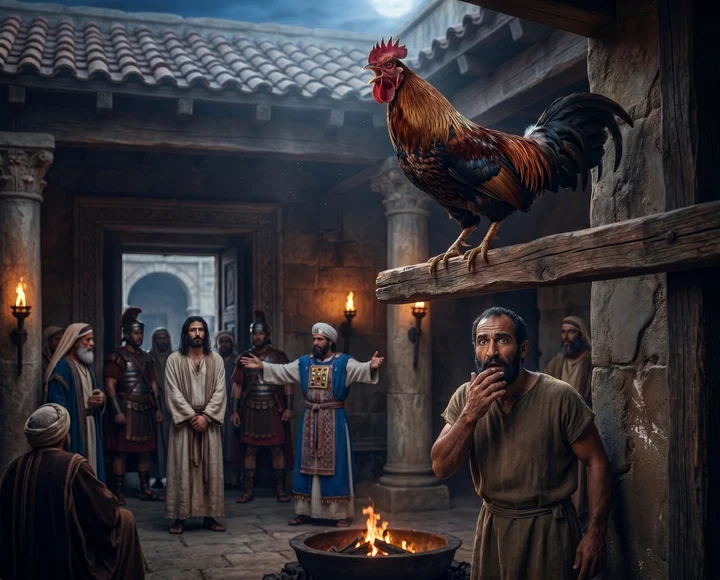
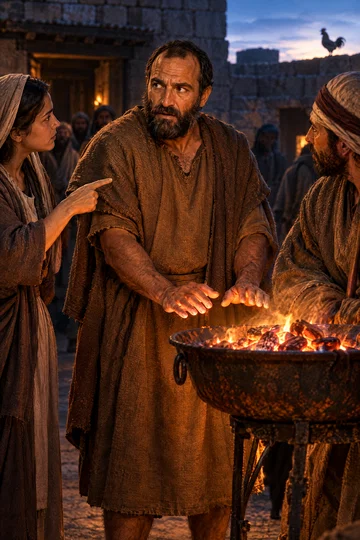
And after a little while another saw him, and said, Thou art also of them. And Peter said, Man, I am not.
Translations
And after a little while another saw him, and said, You are also of them. And Peter said, Man, I am not.
King James Version, KJV Cambridge Paragraph Bible, Webster Bible
And after a little while another saw him, and said, Thou art also of them. And Peter said, Man, I am not.
Revised Version, American Standard Version
And after a little while another saw him, and said, Thou also art one of them. But Peter said, Man, I am not.
And after a little, another having seen him, said, 'And thou art of them!' and Peter said, 'Man, I am not.'
And after a short time another seeing him said, And thou art of them. But Peter said, Man, I am not.
And, after a little, another, beholding him, said—Thou also, art, from among them. But, Peter, said—Man! I am not.
Berean Standard Bible, Majority Standard Bible
A short time later, someone else saw him and said, “ You also are one of them.”But Peter said, “ Man, I am not.”
After a little while someone else saw him and said, “ You also are one of them!”But Peter answered, “ Man, I am not!”
And after a little time, another saw him and said, You are one of them; and he said, Man, I am not.
And after a little while, another man sawe him, and saide, Thou art also of them. But Peter said, Man, I am not.
Douay-Rheims (Challoner revision)
And after a little while, another seeing him, said: Thou also art one of them. But Peter said: O man, I am not.
Pictures

Cross-references 20 of 35
- Matthew 26:71-72
And when he was gone out into the porch, another maid saw him, and said unto them that were there, This fellow was also with Jesus of Nazareth.
Peter denies knowing Jesus under accusation.
- Luke 22:32
But I have prayed for thee, that thy faith fail not: and when thou art converted, strengthen thy brethren.
Jesus foretells Peter’s trial and prays that his faith will not fail.
- Mark 14:69-70
And a maid saw him again, and began to say to them that stood by, This is one of them.
Peter again denies being one of Jesus’ followers when challenged.
- John 18:25
And Simon Peter stood and warmed himself. They said therefore unto him, Art not thou also one of his disciples? He denied it, and said, I am not.
Peter denies being one of Jesus’ disciples when questioned.
- John 21:15-17
So when they had dined, Jesus saith to Simon Peter, Simon, son of Jonas, lovest thou me more than these? He saith unto him, Yea, Lord; thou knowest that I love thee. He saith unto him, Feed my lambs.
Christ later questioned Peter and drew him back after his denial.
- Luke 22:33
And he said unto him, Lord, I am ready to go with thee, both into prison, and to death.
Peter’s bold promise to remain loyal precedes his denial.
- Matthew 26:33
Peter answered and said unto him, Though all men shall be offended because of thee, yet will I never be offended.
Peter boasts that he will remain faithful even if the others fall.
- Luke 22:62
And Peter went out, and wept bitterly.
Peter weeps bitterly after denying Jesus, expressing repentance.
- Acts 4:8-10
Then Peter, filled with the Holy Ghost, said unto them, Ye rulers of the people, and elders of Israel,
Peter’s Spirit-filled testimony before the leaders contrasts with his earlier denial.
- Luke 22:34
And he said, I tell thee, Peter, the cock shall not crow this day, before that thou shalt thrice deny that thou knowest me.
Jesus foretold Peter’s repeated denial before the cock crowed.
- Mark 14:29
But Peter said unto him, Although all shall be offended, yet will not I.
Peter confidently asserts loyalty before Jesus predicts his denial.
- Mark 16:7
But go your way, tell his disciples and Peter that he goeth before you into Galilee: there shall ye see him, as he said unto you.
Peter is specially included in the message that Jesus is risen, showing he was not rejected after his denial.
- Luke 22:45-46
And when he rose up from prayer, and was come to his disciples, he found them sleeping for sorrow,
Peter remembers sleeping while Jesus prayed in agony; Jesus had warned them to pray against temptation.
- Luke 22:31
And the Lord said, Simon, Simon, behold, Satan hath desired to have you, that he may sift you as wheat:
Satan’s warning is fulfilled when Peter denies Jesus.
- Matthew 10:33
But whosoever shall deny me before men, him will I also deny before my Father which is in heaven.
Peter denies Jesus before others, illustrating the warning about denying him.
- Acts 2:22-24
Ye men of Israel, hear these words; Jesus of Nazareth, a man approved of God among you by miracles and wonders and signs, which God did by him in the midst of you, as ye yourselves also know:
Peter boldly preaches Jesus’ death after his transformation.
- Galatians 2:11-14
But when Peter was come to Antioch, I withstood him to the face, because he was to be blamed.
Peter denied his convictions under pressure, later withdrawing from Gentile believers out of fear.
- Luke 22:47-48
And while he yet spake, behold a multitude, and he that was called Judas, one of the twelve, went before them, and drew near unto Jesus to kiss him.
Contrasts Judas’s betrayal with Peter’s denial.
- John 18:17
Then saith the damsel that kept the door unto Peter, Art not thou also one of this man’s disciples? He saith, I am not.
A parallel account of Peter denying that he is Jesus’ follower.
- John 13:37-38
Peter said unto him, Lord, why cannot I follow thee now? I will lay down my life for thy sake.
Peter offers his life, but Jesus predicts that he will deny him three times.
Commentary
Each commentary is drawn from primary sources: the writings of Ellen G. White and Adventist pioneers and periodicals. Each commentary is separate. Its own words are not a quotation; follow the references to read the source passages.
Ellen G. White
34 sources
Luke 22:58 records Peter's second denial, when after a short interval another person identified him as one of Jesus' followers and he insisted he did not belong to them.7RED 15.35RED 32.24T 342.1 It took place in the judgment hall while Jesus was on trial, where Peter had followed to watch and hid among hostile onlookers by affecting indifference toward his Master.EW 138.23SP 107.1DA 711.2–3 The denial was cowardice born of fear of scorn and suffering, exposing self-confidence and trust in his own strength, and by his false front he placed himself on the enemy's ground where Satan prompted him to disown the truth.EW 138.27RED 15.33SP 112.2GW92 365.6–366.1COL 150.1–152.2 Even as Peter denied him, Jesus turned a sorrowful reproving gaze upon him that melted his heart and kept love unfaltering toward him.EW 138.23SP 230.2–232.1Lt 12, 1861, par. 12–14 Peter then wept bitterly in repentance and was freely forgiven and restored to feed Christ's flock, while his fall stands faithfully recorded to warn all against self-confidence and to give hope that repentant failure can be overcome by grace.Lt 54, 1874, par. 15–16EW 138.2SLP 329.1AA 199.23SP 230.2–232.1
The Second Denial
The verse records the second denial, when after a little while another person recognized Peter as one of Jesus' followers and Peter denied that he belonged to them.7RED 15.35RED 32.24T 342.1COL 150.1–152.2AA 199.2 It happened in the judgment hall while Jesus was under examination, after He had been hurried under insult and mockery through the dark streets early in the morning to the palace of Caiaphas where He was falsely accused, sneeringly questioned and reviled.EW 138.23SP 107.1 Peter had followed anxiously to see what would be done with Jesus and hid his identity among people hostile to his Master.EW 138.2DA 711.2–3 It was in the very room and before some of the very men, Annas and Caiaphas and the other temple dignitaries, before whom he later stood for trial after the healing of the cripple.AA 62.2–63.1
To hide that he was a disciple Peter put on an air of indifference about his Master's trial.ST Oct 19, 1882ST Jun 6, 1878 Outwardly he appeared disinterested while inwardly his heart was wrung with sorrow at the cruel taunts and mockery and abuse heaped upon Jesus.ST Jun 6, 1878 He tried to join with the persecutors of Jesus in their untimely jests in order to cover his true feelings.ST Oct 19, 1882ST Jun 6, 1878 Under conflicting emotions of sorrow, surprise and anger he could hardly keep up the indifferent character, and his appearance was unnatural as he tried to cover his sorrow.ST Oct 19, 1882ST Jun 6, 1878
The denial escalated to an oath to convince the accusers.ST Oct 19, 1882 Because the disciples were noted for purity of language, to convince his accusers he was not one of Christ's disciples he denied with cursing and swearing.EW 138.2Lt 12, 1861, par. 12–14 Hearing His beloved disciple deny Him with cursing and swearing while He endured the mockery of an examination cut Jesus' heart and pierced Him more deeply than anything His enemies did to Him.3SP 107.1
Jesus, at some distance from Peter, turned a sorrowful and reproving gaze upon him that melted Peter's heart and saved him.EW 138.2 That look in sadness and grief broke his heart and led him to understand his sin.COL 150.1–152.2Lt 12, 1861, par. 12–14 During the time Peter was denying Him, the love Jesus bore him never faltered.3SP 230.2–232.1
Causes of Failure
The second denial was an act of cowardice, driven by fear for his own safety and by fear of people, of ridicule and suffering and scorn and reproach.EW 138.27RED 15.33SP 112.2AA 62.2–63.1AA 199.2 Though he had been courageous when he imagined defending Jesus in a fight, under scorn he became ashamed of Jesus, failed to hold right principles, put Christ to open shame, and openly denied his Lord when Christ needed him most.3SP 112.2AA 62.2–63.1AA 199.2ST Jul 28, 1898 It exposed the self-love and self-assurance hidden beneath his sincere promise to go with Christ to prison and to death and never to be offended.GW92 365.6–366.1COL 150.1–152.219MR 59.3–60.2Lt 33, 1879, par. 14–15 Trusting his own strength instead of heeding Christ's warning, resenting that warning in self-sufficiency, and failing to learn and heed Christ's lessons proved his ruin.RH Dec 16, 1902Ms 115, 1902, par. 5–6 Zeal and ardent feeling and good intentions and even partial reform are not conversion and cannot overcome self-confidence, and without standing right with God he could not stand firm or count the cost.GW92 365.6–366.1Lt 12, 1861, par. 12–14ST Jul 28, 1898
By his false front he placed himself on the enemy's ground and became an easy subject to Satan's temptation.ST Oct 19, 1882ST Jun 6, 18783SP 112.2 Satan took advantage of his naturally forward and impulsive character, as he had desired to sift him as wheat, and prompted the denial.3SP 230.2–232.1Lt 34a, 1886, par. 41Ms 115, 1902, par. 5–6 In that moment an evil spirit took possession of him, so that he voiced the sentiments of Satan and exchanged leaders, denying the truth to unbelievers while talking the language of worldlings. Feeling no need of grace, grace could not be given to him, for he did not know what spirit he was of and was ignorant of Satan's devices. The same spirit takes possession of all who forsake God and deny received truth.
The verse shows Peter denying the Man of Sorrows in His hour of humiliation and acquaintance with grief.Lt 54, 1874, par. 15–16 He was surprised and angry that Jesus would humiliate Himself and His followers by submitting passively to such treatment, and that anger helped drive him to deny his Master with an oath.ST Oct 19, 1882ST Jun 6, 1878 Peter was naturally ardent and zealous and impetuous, impulsive and self-confident, proud and boastful.AA 62.2–63.17RED 16.1EW 188.1–2 He had been chosen to work as companion together with the mild, patient John, who would often check him without reforming him.EW 188.1–2 Jesus had joined him as a co-laborer while he was still imperfect and had not yet learned to distrust and watch himself with jealous care, so that divine teaching would correct his wrong ideas of what constitutes Christian character.Lt 34a, 1886, par. 41Lt 63a, 1893, par. 15–17
Unlike Judas, who had the same opportunities to learn yet remained a hearer only and ended in betrayal, Peter improved by using failure to learn.Lt 34a, 1886, par. 41 The verse illustrates that disguising one's faith from fear of suffering or reproach is in effect denying the Lord, and that denying Christ means failing to acknowledge Him when challenged.5RED 32.2DA 711.2–33SP 112.2Ms 91, 1909, par. 24–25 Associating with people who tempt believers to conceal their faith can lead them to say or do what they otherwise would not, and those who tempt them may later despise them for yielding.3SP 112.2 A person can also deny Christ not only by openly disowning Him but by refusing to practice known truth and letting a cherished sin or clung-to old habits keep him from taking a stand, losing the blessings of following the Lord.Ms 91, 1909, par. 24–25Lt 32, 1896, par. 3–6
Repentance and Warning
Afterward Peter remembered Jesus' words to him in the upper chamber and his own zealous assertion that though all should be offended he would never be offended, and Christ's sorrowful and reproving look broke his heart and led him to understand his sin.Lt 54, 1874, par. 15–16EW 138.2COL 150.1–152.2Lt 12, 1861, par. 12–14 With blinding tears he made his way to the solitude of Gethsemane and prostrated himself where he had seen his Saviour prostrated as bloody sweat was forced from His pores by great agony.Lt 54, 1874, par. 15–16Ms 16, 1894, par. 33–34 He remembered also that he had slept while Jesus prayed those fearful hours of agony, and his penitential tears moistened the sod stained with the sweat drops of God's dear Son as he wept bitterly in the garden.Lt 54, 1874, par. 15–16EW 138.2GW92 401.1 His denial exposed that self-confidence had failed under temptation and that he had misjudged his own strength, and after that look he repented bitterly and found mercy.COL 150.1–152.2GW92 401.1Lt 12, 1861, par. 12–14
He repented with deep remorse, was reconverted with true contrition of soul, gave himself afresh to his Saviour, and left that garden a converted man and a better man.Lt 54, 1874, par. 15–16EW 138.2GW92 401.1Lt 12, 1861, par. 12–14 Christ's grace regulated his fervor so he became calm, teachable, modest and self-distrustful, humble, compassionate toward the tempted and weak, cautious to warn the presumptuous, and fully fitted to strengthen his brethren and to help and care for other tested disciples.Lt 54, 1874, par. 15–16GW92 365.6–366.1GW92 401.1Ms 16, 1894, par. 33–34 There he finally learned jealous self-distrust and corrected his wrong ideas of what constitutes Christian character, for zeal, ardent feeling and good intentions cannot overcome self-confidence without standing right with God.Lt 54, 1874, par. 15–16GW92 365.6–366.1 Afterward all that was needed to check his ardor and zeal was a mild caution from his mild, patient companion, and filled with the Holy Spirit he became firm as a rock yet courageous and modest in magnifying Christ, no longer a proud boaster but a bold witness.AA 62.2–63.17RED 16.1EW 188.1–2
Jesus did not cast him off but freely forgave him, having foreseen both the denial and the repentance, and during the time Peter was denying Him the love He bore him never faltered.3SP 230.2–232.1RH May 19, 1910Ms 16, 1894, par. 33–34 He later entrusted him with the high commission to feed the sheep and lambs and to care for His flock, and Peter's humiliation and repentance prepared him to care for Christ's flock.SLP 329.13SP 230.2–232.16RED 47.1 Before Peter could resume apostolic work he needed to show the other disciples that he truly repented, so their distrust of his former failure would not hinder his usefulness.6RED 47.1 The way Christ dealt with him teaches under-shepherds to deal with the transgressor with patience, sympathy and forgiving love, remembering their own weakness and failure.3SP 230.2–232.1
The denial came vividly and distinctly to mind when Peter later stood for examination after the healing of the cripple before the same authorities and temple dignitaries, in the very room and before some of the very men, Annas and Caiaphas and others, before whom he had disowned and dishonored Christ in Christ's greatest need.7RED 15.3AA 62.2–63.17RED 16.1 Since his fall he had been converted, becoming modest and self-distrustful and filled with the Holy Spirit, and stood widely different from the impulsive, self-confident, proud and boastful denier.AA 62.2–63.17RED 16.1 By that Spirit's power he was resolved to remove the stain of his cowardice and apostasy by honoring the name he had once disowned, making that later trial an opportunity to redeem his failure and make amends by faithfully honoring Christ.7RED 15.3AA 62.2–63.17RED 16.1
Peter remembered the cowardly failure with deep sorrow throughout his life and lived in repentance and humility.SLP 329.14T 342.1 He could never forgive himself, so that not even the agonies of his coming death lessened the bitterness of his sorrow and repentance.SLP 329.1 When condemned as a Jew and a foreigner to be scourged and crucified, feeling unworthy of so great an honor as to die in the same manner as his Master and Lord, he entreated as a last favor of his executioners that he might be nailed to the cross with his head downward.SLP 329.14T 342.1
The denial is faithfully recorded by divine wisdom with the faults, follies and infirmities of a man favored by God and entrusted with great responsibility, the Holy Spirit lifting the veil from the human heart instead of suppressing it to give a faithful narration of facts for the benefit and warning of all who read.ST May 31, 1910 It teaches obedience to the law of God and the sure penalty and retributive justice following disobedience, and warns that self-confidence does not ensure faithfulness under opposition and fear of people.AA 199.2Lt 33, 1879, par. 14–15ST May 31, 1910 It shows Peter as human common clay subject to ordinary temptation like people today who strive, waver and fall into error, so that sinful natures need not despair as they would if he had been without foible, but desponding hearts can take heart again, renew the conflict, press on, surmount obstacles and conquer through grace to gain fresh vigor above evil nature.ST May 31, 1910 The Lord permits His children to fall to teach lessons learned only through failure, and if they repent of wrongdoing He helps them to stand on vantage ground and purifies them by temptation and trial as fire purifies gold.Ms 115, 1902, par. 13 Unless the heart has been hardened by disregard of great light, temptation and fall bring repentance, and humble fervent prayer saves the soul from death while confession and restitution hide a multitude of sins.Ms 115, 1902, par. 13 Denying Christ means failing to acknowledge Him when challenged, and a person can deny Him not only by openly disowning Him but by refusing to practice known truth and letting a cherished sin or clung-to old habits keep him from taking a stand for God and lose the blessings of following the Lord, so that a claim that one would never have denied like Peter is empty if present choices amount to denying Him, as Peter's own later wavering again under pressure after restoration further warns.AA 199.2Ms 91, 1909, par. 24–25Lt 32, 1896, par. 3–6
Sources
Pioneers and periodicals
53 sources
Luke 22:58 records Peter's second denial in the high priest's courtyard, when a short time after a maid accused him, another person charged him with belonging to Jesus' company and he answered that he did not.ST Oct 19, 1882ST Nov 5, 1894ST Nov 5, 1894ST Jan 10, 1911 He had followed Jesus at a distance and mingled with servants and soldiers around the fire, and that distant following with hostile company left him exposed to fall.ST Dec 30, 1889ST Mar 14, 1906 His fall came from trusting his own strength instead of watching and praying as Christ had warned, so that fear of people overcame his promise never to deny his Lord.ST Dec 21, 1888ST Aug 12, 1880RH Sep 28, 1869 It was a cowardly refusal to be counted with Christ that wounded him afresh, yet Jesus' look of pity pierced Peter to bitter repentance and Jesus restored him to fellowship and service.ST Jan 13, 1888RH Mar 30, 1916ST Jan 10, 1911ST Mar 3, 1881ST Jan 28, 1913 Converted from trusting self to trusting Christ, he was changed by repentance and the Holy Spirit to boldly honor the name he had disowned, warning disciples to stay close to Jesus, watch and pray, and own him openly rather than deny him by word or silence.ST Oct 24, 1911ST Aug 8, 1906RH Sep 28, 1869RH Jan 9, 1908ST Jan 28, 1913
Setting and Sequence
Luke 22:58 belongs to the betrayal, arrest and denial of Jesus recorded in Luke 22:39-62.ST Nov 5, 1894 When Jesus was seized the disciples fled, but Peter followed at a distance because he still wanted to stay near Jesus and imagined he might yet have another chance to fight for him, though he had not learned the spirit of Jesus' kingdom and carnal means do not advance it.ST Mar 14, 1906
The denial takes place in the courtyard of the high priest's house after Jesus was seized, where Peter both sits and stands together with the captors, servants and soldiers around a fire kindled in the midst of the court while watching the arrest and trial.ST Nov 5, 1894ST Aug 12, 1880 He is there warming himself by the fire among the people gathered against Jesus.ST Jan 10, 1911ST Aug 12, 1880
The verse is Peter's second denial, coming a short time, almost immediately and within an hour, after a maid accused him of being with Jesus.ST Nov 5, 1894ST Jan 10, 1911ST Feb 16, 1915 At that point another person says he is also of them, and this stands after the first accusation and before the third denial, the cock crow and Jesus' look.ST Nov 5, 1894ST Jan 10, 1911ST Jan 28, 1913ST Sep 9, 1875ST Feb 16, 1915
When thus identified as one of Jesus' company, followers and disciples, Peter answers, Man, I am not, denying that he belongs to him and disowning knowledge of him.ST Nov 5, 1894ST Jan 28, 1897 That turning of his back on his Lord is done with wicked words, at times with an oath and sealed with cursing and swearing to prove his words.ST Oct 19, 1882RH Mar 30, 1916ST Jan 28, 1897
To hide that he is a disciple he puts on an air of indifference about his Master's trial and tries to join the persecutors in their untimely jests in order to cover his true feelings.ST Oct 19, 1882ST Jun 6, 1878 The effort to cover his sorrow makes his behavior and appearance unnatural, so that outwardly he appears disinterested while he can hardly keep up the indifferent character.ST Oct 19, 1882ST Jun 6, 1878 Inwardly his heart is wrung with sorrow at the cruel taunts, mockery and abuse heaped upon Jesus, and he is surprised and angry that Jesus would humiliate himself and his followers by submitting passively to such treatment.ST Jun 6, 1878
Causes of the Fall
Peter follows at a distance instead of staying close to Jesus and going to his side, entering the courtyard and mingling with the servants and soldiers around the fire rather than identifying himself with Jesus until he sees what Jesus will do.ST Dec 30, 1889ST Mar 14, 1906 Though he still loves Jesus and yearns for him, his attempt to blend in with the crowd leads to further weakness and failure, for separation from Jesus and failure to watch and pray make the denial possible.ST Dec 30, 1889RH Dec 2, 1909 Contact with that hostile setting does not elevate others but brings spiritual decline, and even the kindness of being welcomed and allowed to warm himself disarms him so that he fails to remain watchful among those opposed to Christ.ST Oct 1, 1885ST Jan 17, 1884
Having decided on the course of avoiding recognition as a disciple, circumstances bring the test that exposes it, and the second charge that he is also of them meets him on that ground.ST Dec 30, 1889RH Jul 13, 1911 The fall comes from misplaced confidence in his own strength, trusting himself instead of heeding Christ's warning, reproof and lessons on watching and prayer.RH Dec 16, 1902ST Dec 21, 1888 He sleeps when watching matters most, and is left to stand alone against the powers of darkness so that his weakness and its sinfulness are demonstrated to him, a dealing of mercy rather than wrath because there is no other way to teach him fully.ST Dec 21, 1888RH Aug 3, 1869
Fear of people overcomes his earlier confidence that he could endure anything for his Master, and under pressure in the high priest's house his courage fails.ST Aug 12, 1880RH Sep 28, 1869 With Jesus abused and the disciples' hopes seemingly lost, and under mere kindness and small social pressure at the fire without physical persecution, he disowns association with Jesus.RH Sep 28, 1869ST Oct 21, 1897ST Jan 17, 1884 Pride, selfishness and cherished pride, with resentment of reproof, ambition, greed, pleasure and fear of loss, come between him and Christ and leave him vulnerable to denying him openly even when faithfulness might bring condemnation, loss of reputation or death.ST Aug 8, 1906ST Dec 30, 1889ST Aug 8, 1906ST Jan 25, 1905 After the first denial pride drives him to defend it, so fear and the effort to appear indifferent cannot conceal his anxiety and the second denial marks a further step away from Jesus toward his former life.ST Mar 14, 1906
By putting on indifference and joining the persecutors in jests to hide true feeling and to seek safety where there is no danger of being classed with the inner circle, he places himself on the enemy's ground and forbidden ground.ST Oct 19, 1882ST Jun 6, 1878ST Nov 1, 1910ST Jan 31, 1911 There he becomes an easy subject to Satan's temptation, his behavior unnatural as he tries to cover inward sorrow at the taunts, mockery and abuse heaped on Jesus.ST Oct 19, 1882ST Jun 6, 1878 Surprise and anger that Jesus humiliates himself and his followers by submitting passively join that sorrow, and under those conflicting emotions he can hardly keep up the indifferent character, bringing bitter grief upon himself.ST Jun 6, 1878ST Nov 1, 1910
Nature of the Denial
The second denial in the high priest's courtyard is a guilty and fearful refusal to be counted with Christ, spoken as he stood warming himself by the fire almost immediately after the first denial to the maidservant.ST Jan 13, 1888ST Jul 28, 1898ST Jan 10, 1911 It is apostasy in weakness, a forsaking and deserting and turning of the back upon his Master with wicked words, a cowardly denial that puts Christ to open shame.ST Jan 13, 1888ST Jul 28, 1898ST Jan 10, 1911 It pierces and wounds Jesus afresh in the house of His friends, making the denier a poor, lost, undone, guilty sinner.ST Jan 28, 1913
It is done by one of Jesus' best friends, who had promised to die with Him and never deny Him though all others did.ST Jan 28, 1913 That even zealous Peter failed his suffering Lord shows how human weakness falters under trial and depends wholly on God's mercy.ST Mar 19, 1894ST Jan 28, 1913RH Jun 8, 1869 His fall belongs to the sifting and temptation that can reach anyone, bringing shame and lasting scars.ST Mar 19, 1894
The denial exposes weakness, instability, waywardness and cowardice following earlier self-confidence, when fear, doubt and cowardice overcame him.ST Feb 7, 1884ST Sep 9, 1875ST Mar 14, 1906ST Mar 5, 1912 Christ knew the conflicting emotions in his heart that night, and no effort to appear indifferent could conceal his anxiety.ST Sep 9, 1875ST Mar 14, 1906 After beginning to deny, pride drove him to defend the first denial, so the second denial was a further step away from Jesus and toward his former life.ST Mar 14, 1906
Despite years with Jesus, commission to work miracles, and devoted following through a three-year ministry, Peter was still in a sense unconverted.RH Apr 20, 1869ST Mar 24, 1914ST Jan 29, 1902 Selfishness remained in his heart rather than a wholly regenerated heart that has no self and seeks not its own, for he had not yet partaken of Christ's spirit of self-abnegation and had not comprehended being meek and lowly in heart.RH Apr 20, 1869ST Mar 24, 1914 Ashamed of Jesus under scorn and pressure and fearing people, he had not counted the cost nor been converted to Christ.ST Jul 28, 1898ST Jan 29, 1902
By denying his loving Lord he lost his glorious title as son of the Holy Spirit.ST Jul 16, 1902 The denial trailed his Christian honor in the mire of blasphemy and cost him character and manhood, leaving him headed for final defeat apart from the pity of Christ.ST Jul 16, 1902 That fall required repentance, pardon, and reinstatement to name and privilege.ST Jul 16, 1902
Repentance and Restoration
The look Jesus turned on Peter after the denials was love and sad reproach, sorrow and forgiveness and pity, and it pierced Peter's heart and brought him back to himself.RH Mar 30, 1916ST Jan 10, 1911ST Jan 28, 1913 With that look came remembrance of his sins, his cruelty and ingratitude, and the sight of his sin as Jesus saw it, bringing bitter grief and shame and remorse and tears and crying to God for forgiveness and restoration to fellowship.ST Jan 10, 1911ST Mar 3, 1881ST Jan 28, 1913 That sorrow held hope, for Peter despaired of himself but did not despair of God.ST Mar 3, 1881ST Jan 28, 1913
God permitted the repeated fall not in wrath but in mercy, letting Peter stand alone against the powers of darkness to demonstrate his weakness to him because reproof had not been taken to heart.ST Dec 21, 1888 There was no other way to teach him, and the first fall gave only partial realization of weakness and its sinfulness, so he was permitted to fall again until the lesson was fully learned.ST Dec 21, 1888 The grave failure was then met with thorough repentance and free forgiveness, for Jesus did not cast Peter off but received him anew, restored him to fellowship and communion, entrusted him with the care of his followers, and gave him a second opportunity to serve.ST Jan 13, 1888RH May 19, 1910RH Jan 9, 1908ST Jan 28, 1913 Though the denial was apostasy and forsaking his Master in weakness in the hour of grief and humiliation, it did not have to crush him, and forgiveness remained possible for such denial of Christ.ST Jan 13, 1888RH May 19, 1910RH Jan 9, 1908ST Jun 25, 1894
That receiving proves mercy cleanses even denial, so one who has yielded to temptation can trust God to heal him if he returns.RH Dec 13, 1864ST Mar 7, 1878 The failed one may cast himself naked and helpless upon that mercy and have his robe washed clean in Christ's blood rather than patched from his own righteousness, standing complete in him.ST Mar 7, 1878 It is the same mercy that saved the thief on the cross, honored Mary Magdalene as first witness of the resurrection, and changed persecuting Saul into a chief apostle.ST Mar 7, 1878 Peter repented, and his name remained in the book of life while his sins were blotted out of the book of remembrance.RH Dec 13, 1864ST Feb 16, 1915
To be converted is to be turned from self to Christ, no longer trusting self for sustaining grace but trusting Christ, so that any miracle done through him is by Christ and not by any holiness in himself.ST Jan 28, 1913 Peter learned his own weakness and came to trust God for strength, becoming a humbled and changed man, modest and self-distrusting, transformed by word and grace into a firm and faithful preacher, healer, Bible writer and powerful laborer whom God could make an apostle and saint out of weakness and waywardness.RH Sep 28, 1869RH Jan 9, 1908RH Aug 7, 1913RH Apr 27, 1916ST Mar 22, 1899 About fifty days later he boldly spoke to the assembled Jews about their part in Jesus' death.RH Sep 28, 1869
Full conversion came not by the denial alone but with repentance, experience at Christ's resurrection, communion with Christ during the forty days on earth, and the work of God on the day of Pentecost, together fitting him to strengthen his brethren and feed sheep and lambs.ST Sep 9, 1875RH Apr 20, 1869 The conflicting emotions of fear, doubt and cowardice that night stayed with him in grief, humbled the confident and boastful man, wrought contrition and deep repentance, and were remembered when Christ asked him three times if he loved him.ST Sep 9, 1875RH Apr 20, 1869 Sight of Christ's agonies and sufferings in Gethsemane, in the judgment-hall and upon Calvary revealed the true nature of sin and the wickedness of exalting self, and the Holy Spirit afterward took away fear of human threats and power.ST Mar 24, 1914ST Jan 29, 1902 Conversion is therefore a deep and thorough work of grace on the heart, a complete change of the current of thought, the uprooting of the evil principle of the carnal mind and the implanting of good and holy principles by the special influence of the Holy Spirit, giving a wholly regenerated heart that has no self, seeks not its own, partakes of Christ's self-abnegation, and comprehends being meek and lowly in heart.RH Apr 20, 1869ST Mar 24, 1914
The sin is faithfully laid bare because the Holy Spirit lifts the veil from the human heart instead of suppressing the faults, follies and infirmities of believers, even when the man was favored by God and entrusted with great responsibility and overcome by temptation.ST May 31, 1910 It is recorded with divine wisdom as a faithful narration of facts for the benefit and warning of all who read, teaching obedience to the law of God and the sure penalty and retributive justice following disobedience.ST May 31, 1910 Seeing where Peter struggled and fell shows he was human common clay subject to ordinary temptation like people today who strive, waver and fall into error, so sinful natures need not despair as they would if he had been without foible.ST May 31, 1910 His fall and rising again through God's grace to gain fresh vigor above evil nature encourages desponding hearts to take heart again, renew the conflict, press on, surmount obstacles and conquer.ST May 31, 1910
Warning and Application
Following at a distance leaves a person exposed to disowning Christ, so disciples are to stay near him in every circumstance rather than keep him at a distance and then deny him under pressure.ST Aug 8, 1906ST Mar 14, 1906ST Aug 8, 1906 Open identification with Jesus is required even when it brings condemnation, loss of reputation, or death, for pride, selfishness, resentment of reproof, ambition, greed, pleasure, or fear of loss coming between a person and Christ makes discipleship less evident and increases the danger of denial.ST Aug 8, 1906ST Dec 30, 1889ST Aug 8, 1906 Trust in self and neglect of watching lead by the same pattern from distant following to falling away, and such failure brings rebuke and humiliation.ST Aug 8, 1906ST Aug 8, 1906
Denial of the Lord is not only in spoken words but also in silence, turning away, cowardly rebuff, and failure to oppose mockery and wrongdoing when he is taunted and abused.ST Oct 24, 1911ST Jan 31, 1911 Friendship with Jesus must be reciprocal, giving loyal, loving service in return, regarding him highly by word and action before the world, showing kindness and consideration, hearing his Word, seeking him out and loving him.ST Jan 31, 1911 That loyalty forbids neglecting him for amusing companionship and wounding and slighting him even among professed friends, lest those who have never known its blessedness think his friendship scarcely worth having.ST Oct 24, 1911ST Jan 31, 1911
The fall shows how friends may forsake one who is falsely accused, and how a Christian can fail under a small act of social pressure without facing physical persecution.ST Oct 21, 1897ST Jun 6, 1878 Peter's indifference toward Jesus in the hall was a serious trial, though it seems minor beside violence or death.ST Oct 21, 1897 The same disowning of knowledge gives the pattern for denying self, which is not going on a hard pilgrimage of pain or torturing flesh and blood to gain favor, but doing to sinful self what was done to Jesus, refusing to know it and knowing Christ alone as strength, life, and all.ST Jan 28, 1897
Failure came because watching was neglected when watching mattered most, so constant watchfulness and prayer are needed, since failing to watch leaves a person to deny the Lord when tried.RH Aug 3, 1869 Sifting and temptation can reach anyone, and the fall brings shame and lasting scars.ST Mar 19, 1894 Yet one who rises from defeat is humbled and strengthened, bearing scars yet fresh vigor above evil nature.ST Mar 19, 1894RH Aug 3, 1869
Sources