Matthew 26:71
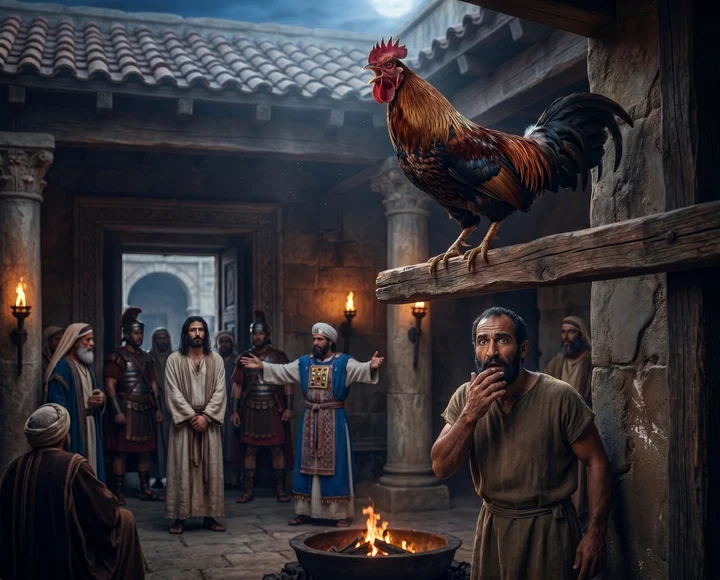
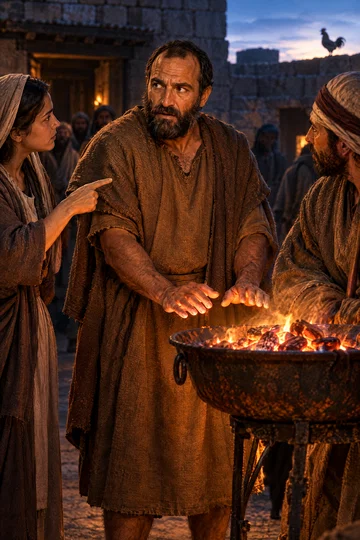
And when he was gone out into the porch, another maid saw him, and said unto them that were there, This fellow was also with Jesus of Nazareth.
Translations
And when he was gone out into the porch, another maid saw him, and said to them that were there, This fellow was also with Jesus of Nazareth.
King James Version, KJV Cambridge Paragraph Bible
And when he was gone out into the porch, another maid saw him, and said unto them that were there, This fellow was also with Jesus of Nazareth.
And when he had gone out into the porch, another maid saw him, and said to them that were there, This man was also with Jesus of Nazareth.
And when he was gone out into the porch, another maid saw him, and saith unto them that were there, This man also was with Jesus the Nazarene.
And when he was gone out into the porch, another maid saw him, and saith unto them that were there, This man also was with Jesus of Nazareth.
And he having gone forth to the porch, another female saw him, and saith to those there, 'And this one was with Jesus of Nazareth;'
And when he had gone out into the entrance, another [maid] saw him, and says to those there, This [ man] also was with Jesus the Nazaraean.
And, when he went out into the porch, another female saw him, and said unto them who were there—This, one was with Jesus the Nazarene.
When Peter had gone out to the gateway, another servant girl saw him and said to the people there, “ This man was with Jesus of Nazareth.”
When Peter had gone out to the gateway, another servant girl saw him and said to the people there, “ This man was also with Jesus of Nazareth.”
When he had gone out onto the porch, someone else saw him and said to those who were there, “ This man also was with Jesus of Nazareth.”
And when he had gone out into the doorway, another saw him and says to those who were there, This man was with Jesus the Nazarene.
And when hee went out into the porche, another maide sawe him, and sayde vnto them that were there, This man was also with Iesus of Nazareth.
Douay-Rheims (Challoner revision)
And as he went out of the gate, another maid saw him, and she saith to them that were there: This man also was with Jesus of Nazareth.
Pictures



Cross-references 20 of 34
- Luke 22:54-62
Then took they him, and led him, and brought him into the high priest’s house. And Peter followed afar off.
Luke recounts Peter’s denials and Jesus’ look that leads him to weep bitterly.
- Mark 14:69-70
And a maid saw him again, and began to say to them that stood by, This is one of them.
A parallel account includes the maid’s accusation that Peter was with Jesus and his denial.
- John 21:15-17
So when they had dined, Jesus saith to Simon Peter, Simon, son of Jonas, lovest thou me more than these? He saith unto him, Yea, Lord; thou knowest that I love thee. He saith unto him, Feed my lambs.
The risen Jesus restores Peter after his denial and commissions him to care for his flock.
- John 18:15-27
And Simon Peter followed Jesus, and so did another disciple: that disciple was known unto the high priest, and went in with Jesus into the palace of the high priest.
Parallel account of Peter’s denials.
- Matthew 26:33
Peter answered and said unto him, Though all men shall be offended because of thee, yet will I never be offended.
Peter’s confident promise not to fall away contrasts with his later denial.
- Luke 22:33-34
And he said unto him, Lord, I am ready to go with thee, both into prison, and to death.
Peter boasts of readiness for prison and death, but Jesus predicts his denial.
- Matthew 26:58
But Peter followed him afar off unto the high priest’s palace, and went in, and sat with the servants, to see the end.
Peter’s distant following of Jesus leads to his denial.
- Matthew 26:34
Jesus said unto him, Verily I say unto thee, That this night, before the cock crow, thou shalt deny me thrice.
Jesus foretold Peter’s three denials, fulfilled in this denial.
- John 18:25-27
And Simon Peter stood and warmed himself. They said therefore unto him, Art not thou also one of his disciples? He denied it, and said, I am not.
John describes Peter’s further denials during Jesus’ arrest.
- Matthew 26:56
But all this was done, that the scriptures of the prophets might be fulfilled. Then all the disciples forsook him, and fled.
The disciples flee Jesus before Peter denies him.
- Matthew 26:75
And Peter remembered the word of Jesus, which said unto him, Before the cock crow, thou shalt deny me thrice. And he went out, and wept bitterly.
Peter remembers Jesus’ prediction after denying him and weeps bitterly.
- Luke 22:31-32
And the Lord said, Simon, Simon, behold, Satan hath desired to have you, that he may sift you as wheat:
Jesus foretold Peter’s failure and return, praying that his faith would endure.
- Mark 14:29-31
But Peter said unto him, Although all shall be offended, yet will not I.
Peter confidently promises not to deny Jesus before his denial.
- John 18:26
One of the servants of the high priest, being his kinsman whose ear Peter cut off, saith, Did not I see thee in the garden with him?
Malchus’s kinsman recognizes Peter in the third accusation.
- Matthew 26:40-41
And he cometh unto the disciples, and findeth them asleep, and saith unto Peter, What, could ye not watch with me one hour?
Peter slept when he should have been praying, before his denial.
- Matthew 26:48-50
Now he that betrayed him gave them a sign, saying, Whomsoever I shall kiss, that same is he: hold him fast.
Christ endured betrayal and denial during his trial.
- Luke 22:58
And after a little while another saw him, and said, Thou art also of them. And Peter said, Man, I am not.
A parallel account of Peter being identified as Jesus’ companion.
- John 18:17
Then saith the damsel that kept the door unto Peter, Art not thou also one of this man’s disciples? He saith, I am not.
Both recount the first accusation against Peter and his denial.
- John 18:10
Then Simon Peter having a sword drew it, and smote the high priest’s servant, and cut off his right ear. The servant’s name was Malchus.
Peter’s attack on Malchus contrasts with his later denial of Jesus.
- Acts 4:8-12
Then Peter, filled with the Holy Ghost, said unto them, Ye rulers of the people, and elders of Israel,
Peter boldly testifies to Jesus before the leaders, unlike his earlier denial.
Commentary
Each commentary is drawn from primary sources: the writings of Ellen G. White and Adventist pioneers and periodicals. Each commentary is separate. Its own words are not a quotation; follow the references to read the source passages.
Ellen G. White
61 sources
Matthew 26:71 records the second accusation against Peter after he had moved out into the porch to escape notice, when another maid publicly identified him to those standing by as one who had been with Jesus of Nazareth.Ms 167, 1907, par. 8–10Ms 29, 1909, par. 5–9Ms 104, 1897, par. 17–22RH Feb 6, 1913SG1 49.2 When so accused Peter shamefully denied with an oath that he was His follower, from fear for his life and dread of scorn and suffering, and from proud self-confidence after boasting he would go with Jesus to prison and death.Ms 167, 1907, par. 8–10Ms 29, 1909, par. 5–9RH Feb 6, 1913EW 138.2SG1 49.2 That denial, uttered while Jesus was openly confessing Himself the Messiah amid reviling, pierced Christ's heart more keenly than the insults of His enemies, yet His love did not falter and His sorrowful look broke Peter's heart.5RED 27.13SP 107.1SG1 49.2ST Jun 6, 1878Ms 39, 1891, par. 6–7 Peter went out in bitter remorse to Gethsemane and was fully forgiven and converted, becoming no longer a proud boaster but distrustful of self and filled with the Holy Spirit, so that he later boldly honored before Annas and Caiaphas the name he had disowned.3SP 279.1–2SG1 49.2ST Nov 11, 1897ST Jan 22, 1885Ms 38, 1897, par. 18–21 The verse warns that profession and boasted loyalty cannot keep anyone in trial, and that only constant self-distrust, dependence on Christ, and watching in prayer can keep believers from denying Him through fear of mockery and suffering.Ms 167, 1907, par. 8–10Ms 29, 1909, par. 5–912MR 289.1–2Ms 126, 1907, par. 9–10SG1 170.1
Setting and Wording
The verse records the second accusation brought against Peter after he had gone out into the porch, the gateway and courtyard area outside the judgment hall in the open court surrounding the high priest's palace.Ms 167, 1907, par. 8–10Ms 29, 1909, par. 5–9Ms 104, 1897, par. 17–2219MR 167.3–168.28MR 241.2–242.3 Her charge that he had been with Jesus of Nazareth led to his second denial, exposing how his self-confidence failed when he was not kept by divine power.Ms 167, 1907, par. 8–10Ms 29, 1909, par. 5–9SG1 170.1 It was the second charge laid in that open court where he had taken his place among the soldiers, chief priests, and multitude, another opportunity when he should have confessed his Lord without shame or unwillingness.Ms 104, 1897, par. 17–2219MR 167.3–168.2
The setting is the palace of Caiaphas the officiating high priest in the early dark morning before dawn.3SP 107.1ST Jun 6, 1878 Peter had taken his place there among soldiers, chief priests, the multitude and others hostile to Jesus.Ms 104, 1897, par. 17–2219MR 167.3–168.2DA 711.2–3 Jesus had been hurried through the dark narrow streets amid insult and mockery to a mockery of an examination, with coarse accusation by His persecutors, sneering questioning by the priest, and reviling by the whole assembly.3SP 107.1ST Jun 6, 1878
Another maid, servant girl and woman recognized Peter as one who had been with Jesus of Nazareth and as a companion and follower belonging to His disciples.RH Feb 6, 19133T 416.2SG1 49.2ST Oct 19, 1882AC1 15.3–16.1 She said so to those who were there and nearby, publicly identifying him as also associated with Him.ST Oct 19, 1882AC1 15.3–16.1ST Nov 14, 1878ST May 30, 1911 After he left the gateway for the porch she pointed him out to those nearby as one of His followers.ST Oct 19, 1882AC1 15.3–16.1ST Nov 14, 1878
Peter had moved out to the porch to escape notice while disguising his faith, and this identification in the porch led directly to his second denial.Ms 167, 1907, par. 8–10RH Feb 6, 191312MR 289.1–2Ms 1, 1878, par. 51–52 It formed part of his repeated threefold public disowning of Jesus.12MR 289.1–2Ms 1, 1878, par. 51–52Ms 39, 1891, par. 6–7 When accused a second time he denied with an oath that he was a follower, so thoroughly intent on carrying out the false character he had assumed that he did not hear the cock crow the second time.Ms 104, 1897, par. 17–2219MR 167.3–168.2RH Feb 6, 1913SG1 81.1Ms 39, 1891, par. 6–7
Peter's Denial and Causes
Peter shamefully denied his Lord in the porch, and that denial was cowardly, rash, wicked cowardice and apostasy that disowned the name of Christ and left a stain.3SP 279.1–2ST Jan 22, 1885SG1 81.1STMW6 5.1–6.15T 557.1 In denying he used an oath and even cursing and swearing.SG1 81.1Lt 35, 1891, par. 5–8 At that time he was proud, boasting, impulsive, self-confident and unconverted, not distrustful of self and not filled with the Holy Spirit.3SP 279.1–2ST Jan 22, 18855T 557.1 His sin remained a humbling memory through life, yet after conversion he boldly honored the name he had denied.4T 342.1SG1 81.1
He denied because he feared for his safety and life, and feared scorn, reproach, suffering, persecution and abuse.RH Feb 6, 1913EW 138.2SG1 49.2DA 711.2–35RED 32.2 From shame and unwillingness to confess his Lord openly he sought by worldly policy to avoid a crisis of fidelity when he saw Jesus in humiliation.RH Feb 6, 19133SP 112.25T 427.3 Fear of scorn and reproach kept him from standing openly with his Lord despite his earlier confidence, and one who would have fought boldly became cowardly when faced with scorn.RH Feb 6, 19135RED 32.23SP 112.2 Ridicule and fear of reproach can lead even a disciple who might be courageous in open conflict to deny the Lord.DA 711.2–33SP 112.2
His failure came from self-confidence and claims of greater faithfulness after firmly assuring Jesus he would go with Him to prison and death.Lt 33, 1879, par. 14–15Ms 1, 1878, par. 51–52Ms 39, 1891, par. 6–7 He did not take Christ's warnings as verity and truth, knew himself little, and trusted himself instead of being kept by divine power.Ms 167, 1907, par. 8–10Ms 29, 1909, par. 5–9Ms 39, 1891, par. 6–7 Professed faithfulness could not withstand testing without strength from above, and spiritual safety depends on distrusting self and trusting God's wisdom.Ms 29, 1909, par. 5–9Lt 33, 1879, par. 14–15 Under trial he did what Christ had said he would do, revealing infirmity and how little safety there is in self-trust.Lt 33, 1879, par. 14–15Ms 38, 1897, par. 18–21
Having failed to watch and pray and being overcome with sleep, he faced the test in his own weak strength without the light of Christ's sufferings and coming glory.Ms 126, 1907, par. 9–10ST Dec 9, 18972T 204.2–3 Watching with the Saviour in prayer would have prepared him to stand securely and would have prevented the denial.ST Dec 9, 18972T 204.2–3 By placing himself among those he should have avoided and trying to hide his allegiance by acting indifferent and joining in jests, he put himself where Satan could tempt him.5RED 32.23SP 108.2 In that position he even gave voice to words Satan suggested to him, and in unbelief and infirmity he carelessly yielded to temptation and showed a character unlike Christ's.5T 427.3Ms 38, 1897, par. 18–21Lt 35, 1891, par. 5–8
Christ's Suffering and Love
While enduring coarse accusation and reviling in His humiliation and rejection, Jesus heard His beloved disciple deny Him with cursing and swearing.5RED 27.13SP 107.1ST Jun 6, 1878 He had been hurried through the dark narrow streets amid insult and mockery in the early dark morning before dawn to the palace of Caiaphas the officiating high priest, where He was coarsely accused by His persecutors, sneeringly questioned by the priest, and reviled by the whole assembly in a mockery of an examination.3SP 107.1ST Jun 6, 1878 While enduring that mockery, that denial pierced His heart with a keener pang than insults, mockery, accusations and reviling from His enemies could inflict, keener than anything it was in their power to inflict.5RED 27.13SP 107.1ST Jun 6, 1878
At the very time Peter denied in the porch that he was Christ's follower when charged with it, even with cursing and swearing, Christ was openly confessing Himself as the long-expected Messiah.12MR 403.1 None of the disciples dared open their lips to acknowledge Him in that hour.12MR 403.1 This stood in stark contrast to Peter's earlier Spirit-given confession that Jesus is the Christ, the Son of the living God, for which Christ had called him blessed.12MR 403.1
Christ knew beforehand that this denial and rejection would happen, and with prophetic eye discerned it for the time when, as a Galilean, He would be delivered by Pilate to be scourged and crucified.Ms 56, 1894, par. 3–4Ms 49, 1898, par. 37–40 As He contemplated the bitter cup and the burden of sin in Gethsemane, this scene of saying he did not know his Lord passed before Him, and He felt the agony of hearing those words.Ms 49, 1898, par. 37–40 It belonged to the humiliation and self-sacrifice He knew He must tread, part of the load of guilt He voluntarily accepted, adding, Not my will but thine be done, so the plan of redemption would not be frustrated.Ms 49, 1898, par. 37–40 The one who so denied with cursing and swearing was a man favored by being in Christ's presence and hearing the words that fell from His lips, who had mingled with the disciples with blessed opportunities and had received lesson upon lesson, line upon line and precept upon precept, here a little and there a little, and in clear and elevated principles Christ had shown him God's hate for sin, yet he had not become transformed in character.Ms 56, 1894, par. 3–4
Jesus gave Peter a sorrowful and reproving look of grief and sadness that was not hopeless, which brought the denial back to Peter's mind and broke his heart.SG1 49.2Ms 39, 1891, par. 6–7 Peter had been recognized as one of Jesus' followers after he went out to the porch, and he denied knowing Jesus because he feared for his life, part of his repeated thrice-repeated disowning of Jesus before the cock crew.SG1 49.2Ms 39, 1891, par. 6–7 A few hours before he had firmly assured his Master he would go with Him to prison and death, but he was self-confident and did not take Christ's words as verity and truth, showing how little he knew himself.Ms 39, 1891, par. 6–7 Circumstances soon tested his allegiance in the very hour he should have watched with Him in fervent prayer, and when accused in the judgment hall of being one of this Man's disciples he denied, at the third accusation emphasizing his denial with cursing and swearing, which led him to bitter repentance and conversion.SG1 49.2Ms 39, 1891, par. 6–7
Despite Peter's weakness and failure, Jesus' love for him did not falter, and He did not forsake His poor disciple.6RED 69.2DA 815.19MR 304.2–3 In the time of Christ's greatest trial Peter thrice denied Him, while one other disciple betrayed Him and all the disciples forsook Him and fled, which Christ endured though He was without the taint of sin.Lt 40, 1890, par. 17 Although Peter hated himself and even Jesus' own disciples by their actions disappointed Jesus and showed themselves vulnerable to Satan's temptations, the Lord loved him still.9MR 304.2–3Ms 21, 1888, par. 2–6 After His resurrection He called him by name and sent him a loving message, which proves Jesus is a kind, loving, compassionate Saviour who gave Himself for sinners and will not thrust away one who is tempted and in weakness is overcome, but loves still though we err.9MR 304.2–3 He dealt with him in a way that teaches patience, sympathy, forgiveness, forgiving love and tenderness toward those in care who fail, remembering one's own weakness and failure.6RED 69.2DA 815.1
Repentance and Restoration
The denial filled Peter with shame and sorrow and remorse that brought blinding and bitter penitential tears.SG1 49.2ST Nov 11, 1897Ms 38, 1897, par. 18–21 He made his way to the solitudes of Gethsemane and prostrated himself where he had seen his Saviour's prostrate form.SG1 49.2ST Nov 11, 1897 He remembered with remorse that he had slept while Jesus prayed during those fearful hours.SG1 49.2ST Nov 11, 1897
His proud heart broke, and his penitential tears moistened the sod stained with the bloody sweat-drops of God's dear Son.ST Nov 11, 1897 He left the garden a converted man, thoroughly converted.SG1 49.2ST Nov 11, 1897Ms 38, 1897, par. 18–21 His remorse was complete and was fully known in heaven.3SP 205.1
Though his sin was forgiven and his repentance was accepted, his fearful fall remained a humbling and humiliating memory throughout his life.4T 342.1AA 537.3COL 160.1 It left him the most despondent of all Christ's followers.3SP 205.1 Holy angels felt tender compassion for him as wayward and sorrowing.3SP 205.1
By expressly naming Peter as one to whom the women from the tomb were to carry the news of the resurrection, heaven showed him solicitude that proved his repentance was accepted and his sin of denial forgiven.3SP 205.1 After His resurrection Jesus called him by name and sent him a loving message.9MR 304.2–3 This proves Jesus is a kind, loving, compassionate Saviour who did not forsake His poor disciple, though Peter hated himself, and who will not thrust away one who is tempted and in weakness is overcome.3SP 205.19MR 304.2–3
Because his denial dishonored Christ, his shameful denial stood in contrast to his earlier professions of loyalty and devotion.DA 811.1DA 812.1–23SP 228.2–229.1 As representative of the Twelve it damaged his trust among the other disciples and threatened his standing, influence and usefulness as a minister in time of emergency.DA 811.13SP 228.2–229.1 Before he could resume his apostolic work he had to give evidence to all the disciples that he sincerely repented of his sin.DA 811.13SP 228.2–229.1 Christ placed him where he could regain their entire confidence and, as far as possible, remove the reproach his sin had brought on the gospel.DA 811.13SP 228.2–229.1 His later three assurances of love and loyalty showed his repentance and humility after his three public denials; he was no longer self-confident and was better prepared to shepherd Christ's flock.DA 811.1DA 812.1–2
At the time of denial Peter was the impulsive, self-confident disciple, a proud boaster, unconverted, not distrustful of self and not filled with the Holy Spirit.3SP 279.1–2ST Jan 22, 1885 After conversion he became distrustful of self and no longer a proud boaster, and through the power of the Holy Spirit he became firm as a rock.3SP 279.1–2ST Jan 22, 1885 With modest courage and bold witness he honored the name he had once disowned, magnifying Christ.3SP 279.1–2ST Jan 22, 1885AC1 15.3–16.1ST Nov 14, 1878SG1 81.1 His shameful denial with cursing and swearing had been wicked cowardice and apostasy that disowned the name of Christ and left a stain, committed in the very room where Annas and Caiaphas with the other dignitaries and members of the council afterward sat to try him.3SP 279.1–2ST Jan 22, 1885SG1 81.1 Later Peter and John were brought for trial before those very men in that same room, who remembered the part he had acted at his Master's trial, and though the same company expected to intimidate him by threat of imprisonment and death, he embraced the examination to redeem his former cowardice and to remove the stain of his apostasy.3SP 279.1–23T 416.2ST Jan 22, 1885AC1 15.3–16.1ST Nov 14, 1878
His deep conversion was marked by continuing repentance and humility, for he knew that only Christ's grace could overcome the weakness of character that had caused his fall, and he found nothing in himself to boast about.4T 342.1COL 160.1 When he was later called to die for his faith, he asked to be crucified head downward because he felt unworthy of the honor of dying as his Lord had.4T 342.1
Warnings for Believers
Professed faithfulness and love for Christ do not by themselves protect anyone in trial, for such profession can fail when tested, and claims of greater loyalty offer no safety when pressure comes.Ms 29, 1909, par. 5–912MR 289.1–2SG1 170.1EW 221.1 Even one favored with Christ's presence, hearing the words from His lips, enjoying blessed opportunities, receiving lesson upon lesson, line upon line and precept upon precept, and being shown in clear and elevated principles God's hatred for sin, can remain untransformed in character and deny Him with cursing and swearing.SG1 170.1Ms 56, 1894, par. 3–4 Ridicule and fear of reproach can lead a disciple to deny the Lord, even one who would have fought boldly and been courageous in open conflict.DA 711.2–35RED 32.23SP 112.2 Hiding faith from fear of suffering, mockery, scorn or reproach is itself a denial of the Lord in practice, as when fear of scorn led to denying connection with Jesus.ST Oct 19, 1882DA 711.2–35RED 32.23SP 112.2
Spiritual safety depends on self-distrust and constant dependence on Christ with reliance on the Saviour, for only divine power and Christ's grace can overcome weakness of character, and standing amid temptation is possible only in that way.Ms 167, 1907, par. 8–10DA 382.2COL 160.1Lt 33, 1879, par. 14–15 Trusting in self is dangerous, and the lesson of distrusting self and trusting God's wisdom was not learned until temptation overcame and the second denial in the porch followed failure to be kept by divine power.Ms 167, 1907, par. 8–105T 557.1Lt 33, 1879, par. 14–15 Failure to watch and pray leaves one to his own weak strength, and being overcome with sleep cut off the light God desired to give of Christ's sufferings and the glory to follow.Ms 126, 1907, par. 9–10ST Dec 9, 18972T 204.2–3 Watching with the Saviour in prayer would have prepared Peter and the other disciples to stand securely through the coming trial and would have prevented the denial.Ms 126, 1907, par. 9–10ST Dec 9, 18972T 204.2–3 Had they remained watching they would have shared His self-sacrifice, would not have lost faith while beholding the Son of God dying on the cross, and amid the gloom of that terrible trying hour some rays of hope would have lighted the darkness and sustained their faith.Ms 126, 1907, par. 9–10
The failings of Bible believers, including this denial, are recorded as lessons for later generations, revealing human weakness yet encouraging those who struggle and fall to take heart again and conquer through God's grace.4T 12.1–3 That humbling failure, though forgiven, remained a humiliating memory, and after repentance and conversion it taught pity for the tempted and weak and fitted him to warn the presumptuous and strengthen fellow believers.3T 416.212MR 289.1–2Ms 38, 1897, par. 18–21 His own weakness and failure were to teach him to treat those in his care and those tempted or having done wrong with patience, sympathy, forgiveness, forgiving love and tenderness, remembering his own weakness, a lesson learned because Jesus' love did not falter toward him.3T 416.26RED 69.2AA 516.2–3DA 815.1 The fall also teaches humility and care for those who err, warns against boastful confidence and refusing to see oneself as Christ sees, and shows the need to seek Christ's help to resist temptation and remain faithful.12MR 289.1–2Ms 38, 1897, par. 18–21
Deep conversion marked by continuing repentance and humility turns suffering for Christ willingly and gladly rather than complaining into victory.4T 342.1 Zeal and boldness are valuable, yet ardor needs mild caution to keep it from going too far.SG1 122.2 This denial belongs to Christ's greatest trial and humiliation, when one disciple betrayed Him, all forsook Him and fled, and Peter thrice denied Him, a failure of one of His best-loved disciples during the arrest and trials that stirred the disciples' hearts as they recognized their unbelief.DA 507.2–508.1ST Nov 30, 1882Lt 40, 1890, par. 17Lt 2, 1874, par. 37–43 Since the sinless Christ endured such abandonment and rejection without taint of sin, His followers should not expect a better portion when they meet opposition and desertion.Lt 40, 1890, par. 17 When seeing Jesus in humiliation, giving room to unbelief and seeking by worldly policy to avoid reproach, scorn, persecution and abuse yields to temptation, whereas the crisis calls for fidelity rather than unbelief.5T 427.3ST Apr 8, 1913
Sources
Pioneers and periodicals
126 sources
Matthew 26:71 records the second charge against Peter, when after slipping out from the courtyard into the porch to escape notice he was again recognized as a companion of Jesus of Nazareth by another servant girl speaking to the bystanders.RH Feb 6, 1913ST Nov 27, 1901ST Nov 21, 1892ST Nov 1, 1910ST Oct 24, 1911 He answered by denying that he knew Jesus, this time with an oath, in cowardly falsehood and open lying that went on to cursing and swearing.RH Feb 6, 1913ST Mar 3, 1881RH Feb 9, 1911RH Dec 2, 1909RH Dec 12, 1865 His fall came from following from a distance, from presumption and self-confidence in his own strength, and from sleeping instead of watching and praying so that he met trial unprepared and shrank from scorn and danger.ST Oct 19, 1882ST Nov 1, 1910RH Jul 13, 1911RH Jun 10, 1858ST Apr 20, 1882 While enduring mockery Jesus heard His disciple deny Him, a keener wound than insult and scourging, and looked on him with grief, pity, love and compassion that brought memory of sin and opened the way to sympathy for every infirmity.ST Jun 6, 1878ST May 24, 1883ST Jan 21, 1889RH Feb 9, 1911ST Apr 9, 1912 Peter viewed his sin as infinitely evil and wept bitterly in shame and self-loathing yet with hope in God, and being forgiven and restored to closer fellowship he became through the Spirit bold to honor before rulers the name he had disowned, which warns to distrust self, watch and pray lest one fall, and remain close to Jesus at all hazards rather than warming indifferently with scoffers.ST Nov 11, 1897ST Jan 22, 1885ST Nov 1, 1910ST May 24, 1883RH Mar 13, 1879
Setting and Wording
After he went out into the porch, another maid or servant girl told those present that he had been with Jesus of Nazareth, and this was the second accusation against Peter in the course of his three denials.ST Nov 27, 1901ST Nov 21, 1892ST Oct 24, 1911ST Jan 10, 1911ST Jun 17, 1897 The identification prompted his further denial, and his bitter weeping afterward shows the repentance that must follow sin.RH Jul 14, 1868ST Jan 10, 1911ST Jun 17, 1897
He had left the courtyard and the first place of questioning and gone out to the porch or gateway to escape notice, where he was again recognized as a companion of Jesus.RH Feb 6, 1913ST Nov 14, 1878ST Nov 1, 1910ST Mar 14, 1906RH Jul 13, 1911 His distance from Jesus left him cold and vulnerable, and his attempt to avoid being identified and to fit in by concealing his discipleship placed him in temptation that led to denial in word and daily action.ST Mar 14, 1906RH Jul 13, 1911ST Feb 16, 1915 The accuser was another woman speaking to the bystanders nearby, so his association with Jesus was noticed and confronted while he tried to remain apart.ST Oct 19, 1882ST Dec 30, 1889ST Apr 20, 1882RH Oct 5, 1911RH Mar 6, 1866 Her questioning continued the fall begun with the first denial, showing how gradual turning from the right leads to greater failure.ST Dec 30, 1889RH Jul 18, 1854ST Apr 20, 1882
The verse belongs to the night of seizure in the Garden when all forsook and fled, when Jesus was bound and taken to Annas the former high priest and then to Caiaphas the officiating high priest, coarsely accused and reviled in a mockery of examination on the day of crucifixion.ST Jun 6, 1878ST Mar 14, 1906RH Feb 13, 1872 It recalls betrayal by one friend, denial by another, and desertion by the rest, and it records the failure of one of His best-loved disciples during the arrest and trials when expediency led him to disown his Lord in the high priest's palace.ST Nov 30, 1882ST Mar 14, 1906ST Jan 18, 1905 Peter and John later stood in that same room where the shameful denial before Annas and Caiaphas and the council took place.ST Jan 22, 1885 The fuller story is Matthew 26:57-75, to be read with Mark 14:53-72, Luke 22:54-62, and John 18:12-27.ST Mar 6, 1901
It took place on a cold midnight with a brazier of burning coals on the cool spring night, where Peter stood warming himself with the officers, servants, and mocking crowd while Christ stood bound, mocked, stripped, shivering, and forsaken.ST Jun 24, 1889ST Aug 12, 1880ST Oct 21, 1897ST Mar 14, 1906 By the warm fire among enemies with an indifferent look he was ready to deny, unlike the outer night where he was ready to die, and comfort among Christ's enemies weakened loyalty while trials and discomforts protect character from spiritual coldness.ST Jun 24, 1889ST Oct 21, 1897ST Mar 14, 1906 The verse thus belongs to the account of Jesus despised and rejected, fulfilling the description of the Messiah as a man of sorrows acquainted with grief, seen in His humiliation in the hour when Peter denied Him.ST Nov 11, 1897RH Nov 18, 1862
Nature of Denial
After he had moved out to the porch to escape notice, another woman recognized him as a companion of Jesus of Nazareth, and Peter again denied knowing Jesus, this time with an oath.RH Feb 6, 1913RH Dec 12, 1865GSAM 68.2 This was the second step in the threefold denial, showing the weakness he had been warned of despite his claim that he would never be offended even if all others fell.RH Feb 9, 1911GSAM 68.2 His fear of scorn and reproach kept him from standing openly with his Lord despite his earlier confidence that he would remain faithful.RH Feb 6, 1913RH Feb 9, 1911 After denying his Lord thrice even with an oath, he went on to deny his Master with oaths and curses.RH Feb 9, 1911RH Dec 12, 1865
The denial was vehement, only a few hours after just as vehemently assuring his greatest Friend he would be faithful unto death though all others forsook Him.ST Mar 3, 1881RH Dec 2, 1909 Suddenly caught in fear, he denied knowing Jesus, lied, and cursed and swore, falling under temptation before he was fully aware of it.ST Apr 3, 1884RH Oct 7, 1862ST May 10, 1883 Frightened and anxious when accused and recognized as a disciple, he fell back into old habits and began cursing and swearing to make his denial seem earnest, with impetuous rage and needless profanity.ST Mar 3, 1881RH Oct 7, 1862ST May 10, 1883 He denied the accusation of belonging to the followers repeatedly, and fear and pretense led to further failure ending in an emphatic declaration, even with cursing, that he did not know his Master.RH Dec 2, 1909ST Jan 17, 1911
It was a cowardly falsehood from one who had followed Jesus, witnessed His works, and claimed he would die with Him, bringing bitter shame and grief.RH May 5, 1863 His failure to acknowledge his Master proved him apostate and cowardly and disowned the name, leaving a stain.RH Jan 13, 1863ST Feb 18, 1886RH Sep 19, 1912 His forceful defense with the sword beforehand was assertive but not true courage, and his later denial was cowardly, revealing the aggressiveness of the human heart rather than the progress of a regenerated life.RH Feb 5, 1914RH Sep 19, 1912 Shrinking from public contempt instead of standing by the truth, his cowardice contrasted with the courage and gentleness shown under insult and suffering, though the power of the gospel later changed that cowardice into boldness.RH May 5, 1863RH Sep 19, 1912
The falsehood came suddenly when a maid identified him as one who had been with Jesus, a small, unplanned response to a seemingly slight challenge.ST Apr 3, 1884RH Apr 2, 1861 Despite his courage and loyalty, he was shaken by a maid's accusation, showing that even a seemingly insignificant person's scrutiny through fear and ridicule could overcome him.RH Apr 2, 1861ST May 26, 1909 Small temptations can thus expose cowardice and lead to serious sin, showing the need for constant watchfulness against temptation.ST Apr 3, 1884RH Apr 2, 1861 Yet grave unfaithfulness in a time of great need, it belonged to the crisis leading to Calvary when a disciple denied his Lord.ST Apr 3, 1928
It was the denial in the porch before those who were there, the second of three denials within only a few hours apart from Him.RH Apr 16, 1861RH Jul 8, 1909 When questioned about being a disciple he cursed and denied his Lord three times.RH Apr 16, 1861RH Jul 8, 1909 His denying was only thrice and his sin was washed in bitter tears of repentance, in contrast to denying a thousand times and persisting in it for years.RH Apr 16, 1861
The episode belongs to his failure after boasting that he was ready to face prison and death for Jesus though all others fell, and it humbled him by showing how little he could endure, sacrifice, or suffer for Christ.RH Jul 15, 1862RH Jun 10, 1875RH Oct 15, 1872 His boastful self-confidence brought him close to a disgraceful fall when another maid recognized him as one who was with Jesus.RH Oct 15, 1872 His confidence that he could die for his Lord did not keep him from denying Him, warning that confident disciples can fail to acknowledge Jesus when danger and ridicule threaten.RH Apr 23, 1867 Strong feelings of love or confidence, bravery in the garden, and confident words are no reliable proof of genuine faith.RH Jul 15, 1862RH Apr 23, 1867
Causes of Failure
Peter had already put himself in temptation by following Jesus at a distance and keeping apart instead of staying close, and that distancing led directly to denial when he was recognized in the porch as having been with Jesus.RH Jul 13, 1911ST Apr 20, 1882RH Jun 8, 1869RH Oct 31, 1912 Trying to avoid identification as a disciple and to fit in with unbelievers by concealing his Christian identity left him vulnerable, so that gradual turning from the right issued in greater failure in word and in daily action.RH Jul 13, 1911ST Apr 20, 1882ST Jul 8, 1913 Even ardent disciples fail in this way, for the natural heart shrinks from suffering and falters before crosses and obstacles, and professed followers who feel ready in peace and prosperity to go to prison and death deny Him for lack of faith and fortitude when affliction and temptation test them.RH Jun 8, 1869RH Oct 31, 1912ST Jul 8, 1913 The wandering back from Christ met forgiving tenderness and a hearty welcome for every wandering one who returns to the Father's house.RH Oct 31, 1912
His fall followed a presumptuous venture onto forbidden ground, where confident words and bravery in the garden did not keep him when temptation came in unexpected form.ST Nov 1, 1910ST Oct 19, 1882RH Oct 15, 1872 Unbounded self-confidence with the little word I prominent, holding the head too high and exposing himself without fear to irreligious influences, marks those often first to desert and backslide.ST Nov 1, 1910ST Oct 19, 1882RH Oct 2, 1866 Relying on his own courage and strength brought him close to disgrace, proving that mature wisdom and long experience do not protect anyone who thinks he stands and fails to take heed lest he fall.RH Oct 2, 1866RH Jun 10, 1875RH Oct 15, 1872
He had slept instead of watching and praying in the garden and had not entered into Christ's agony, so he faced trial in his own weak strength, frightened into apostasy and unprepared.ST Dec 9, 1897RH Jun 10, 1858RH Nov 26, 1903ST Dec 19, 1916 Watching with the Saviour would have helped prepare him and the other disciples to stand securely, and earnest prayer instead of self-trust would have spared the fall and the bitter tears of regret and shame that followed.ST Dec 9, 1897RH Nov 26, 1903ST Dec 19, 1916 His denial is an example of spiritual failure in a time of general spiritual weakness, with the sleep in Gethsemane linked to that weakness.RH Jun 10, 1858RH Jun 10, 1875
Fear of scorn, reproach, ridicule, contempt, danger and persecution led him to deny his faith to escape danger and preserve himself, giving in to fear and selfishness.ST Oct 19, 1882RH Jan 6, 1910RH May 5, 1863ST Nov 19, 1894 Shrinking from confessing Jesus when danger was near and from standing by the truth in trial warns each person to examine himself with Is it I.RH Feb 10, 1863RH Mar 6, 1866RH May 5, 1863 Such denial to avoid reproach is denial of the Lord in practice, betraying loyalty through fear of ridicule and scoffing, in cowardly contrast to Christ's courage and gentleness under insult and suffering.ST Oct 19, 1882RH Jan 6, 1910RH May 5, 1863
Expediency led him to disown his Lord in the high priest's palace, choosing what seemed advantageous instead of what was right, while principle later led him to accept death by the cross.ST Sep 9, 1889ST Jan 18, 1905ST Jan 28, 1913 Suffering and loss for Christ are better than gain by expediency.ST Sep 9, 1889ST Jan 28, 1913 When faith failed moral courage failed, for faith is to moral courage what root is to tree, and as the tree cannot live except as it draws life through the root from the ground, so moral courage cannot exist except as it draws life through faith from God; when he began to doubt he began to sink.ST Oct 11, 1877
Separation from Christ made loyalty unclear, for pride, ambition, greed or avarice, pleasure, and resentment over reproof when reproof has made the heart sensitive and selfish can come between a disciple and Christ until words, acts and looks no longer proclaim love.ST Aug 8, 1906ST Dec 30, 1889ST Aug 8, 1906 Anyone whom others must ask about to find out if he is Christ's disciple has no assurance he will not deny the Lord, and such failure brings rebuke and humiliation.ST Dec 30, 1889ST Aug 8, 1906 The call is to go in with Jesus at all hazards to judgment hall, condemnation, loss of reputation and death, never following afar off.ST Dec 30, 1889
He lingered in the palace yard warming himself in an indifferent manner among scoffers hostile to Christ, keeping distance so as not to be classed with the inner circle of friends.ST Dec 30, 1889ST Jan 31, 1911ST Oct 1, 1885 Cowardly silence and open rebuff fail the reciprocal loyalty true friendship requires and make those who never knew the blessedness of Jesus think His friendship scarcely worth having, whereas loyal service requires openly regarding Him highly by word and action rather than denying association to avoid danger.ST Jan 31, 1911 Presence among His enemies led toward denial and may proceed even to blasphemy, with restoration, if it comes, following penitence and tears.ST Oct 1, 1885
Only hours after confidently affirming he would never forsake Christ even if all others did, he denied with an oath that he did not know Him, belonging to the disciples' utter failure to grasp Christ's teaching about His death, humiliation, trial and crucifixion.GSAM 68.2 When the trial came hope died and all forsook and fled, and the same dullness toward the promise to rise on the third day left them void of faith, preparing to embalm His body and keeping a desolate Sabbath burdened with grief and disappointment without comfort.GSAM 68.2 His earlier sword defense had been assertive force without true courage, revealing the aggressiveness of the human heart rather than the progress of a regenerated life, with forceful defense followed by cowardly denial.RH Feb 5, 1914 Trying to look out for himself made him a liar and a coward, connected with not keeping actively engaged in his work, showing the weakness believers must recognize and the need to be rooted in God's truth and trust Him to endure greater trials and tests.RH Feb 16, 1911RH Jan 27, 1874RH Feb 6, 1908
Christ's Suffering and Sympathy
While He was being hurried through dark streets before dawn to the palace of Caiaphas the officiating high priest, where He was coarsely accused by persecutors, sneeringly questioned, and reviled by the whole assembly in a mockery of an examination, Jesus heard His beloved disciple deny Him with cursing and swearing.ST Jun 6, 1878ST Jan 21, 1889ST Oct 21, 1897 That second denial, when another maid recognized Peter as also with Jesus of Nazareth and told those nearby, was part of denying Him three times within an hour by one who had said he would never deny Him though all others did and was willing to die for Him.ST May 30, 1911ST Jan 21, 1889ST Oct 21, 1897 The denial pierced Him afresh and wounded Him in the house of friends, a keener pang than insult, mockery, accusation, reviling, struck fist, scourging, and crown of thorns.ST Jun 6, 1878ST Jan 21, 1889ST Oct 21, 1897 He bore in it not only little slights but the stern sorrow of humiliation and of seeing His most cherished friends turn against Him with aversion and denial.ST May 30, 1911ST Apr 9, 1912
He turned upon Peter a look full of sorrow and loving grief, not anger, even deepest pity, love and compassion.ST May 24, 1883ST Jan 21, 1889RH Feb 9, 1911ST Aug 8, 1906 Peter, who had separated himself from Jesus and stood warming himself in the hall with an indifferent look, had just vehemently denied his greatest friend only a few hours after just as vehemently assuring Him he would be faithful unto death, with impetuous rage and needless cursing and swearing.ST Mar 3, 1881RH Feb 9, 1911ST Oct 21, 1897 Jesus knew what Peter was doing, and Peter looking at Him expected censure and reproach but found only pity, so that his heart was broken as he recognized how fully Christ knew him.RH Feb 9, 1911ST Aug 8, 1906 With that look came memory of sin, and Peter viewed his denial as Jesus saw it, as God sees sin in itself as infinitely evil, and went out and wept bitterly with a bitterness as bitter as that of Judas, yet with hope in God so that despair of self did not become despair of God.ST May 24, 1883ST Jan 21, 1889ST Mar 3, 1881
By being denied by one disciple, betrayed by another, and forsaken by all, amid the fickleness of friends and the mistrust and woundings of brethren, Christ came to know human assault, malignity, fickleness, and sorrow from close friends.RH Jul 30, 1857RH May 10, 1860 His sympathy, at once human and divine, tender, clinging and personal, therefore entwines around every bodily, mental and spiritual infirmity and makes it His own, giving reason for love, confidence, hope, joy and praise and for coming boldly for mercy and grace in need.RH May 10, 1860 That sympathy restores, while censure would have driven the consciously faulty to despair and some desperate act, and it teaches not to drive souls conscious of fault and children under criticism from truth by rebuke and nagging.RH Feb 9, 1911 Because He bore base ingratitude that only God could bear and knows human frailty, He is touched by penitential tears, forgives and banishes fear, and deep feeling and weeping over sin comes before He looks in mercy and gives assurance that names are in the book of life.RH Jul 30, 1857 Remembering this brings comfort to sensitive sufferers, for He knows what they feel when little slights are turned over in the tired brain until they assume entirely unjustified proportions and cause worry and fretting into a fever, and He loves them through it all.ST Apr 9, 1912
Even as He was reviled, abandoned and deserted by His closest friends denying that they knew Him, He kept the assurance of His Father's approval and did not retaliate.RH Feb 2, 1911
Repentance Restoration and Courage
Peter's denial in the porch led him to see his sin as God sees sin, as infinitely evil in itself, and to weep bitterly over it in shame, sorrow, remorse and self-loathing.ST Nov 11, 1897ST Nov 1, 1910ST Mar 3, 1881 That bitterness was as bitter as that of Judas, known only to those who learn to look on sin as God does, yet it contained hope because he saw God in it all.ST Mar 3, 1881 His proud heart broke under that sight, and his despair of self did not become despair of God.ST Nov 11, 1897ST Mar 3, 1881RH Jul 21, 1868 His blinding, penitential tears expressed the painful fall that follows venturing onto forbidden ground in self-confidence.ST Nov 11, 1897ST Nov 1, 1910RH Jul 21, 1868
Such bitter weeping is the repentance that should follow sin, for failing to repent afterward is worse than committing the sin.RH Jul 14, 1868 True conversion includes continuing repentance even after hoping for pardon, with hatred of sin and repentance growing as assurance of heaven grows. Peter's quick repentance and abiding faith in the face of a wrong condemned by the truth he had received are therefore commendable, making his failure an example of one that can be repented of quickly.RH Aug 22, 1871ST Feb 26, 1902
He acknowledged his denial, sought forgiveness, and was restored to fellowship, confidence, affection and favor.ST May 24, 1883RH Mar 13, 1879ST Feb 18, 1886 That restoration was not merely pardon but a bringing into even closer and more sacred fellowship, with renewed usefulness and an opened way to serve again.RH Mar 13, 1879ST Feb 18, 1886 Jesus did not wait for him to prove himself faithful and brave before receiving him again, but met him with forgiving tenderness, sent a message after the resurrection specifically including him, and recommissioned him to care for followers, showing the same hearty welcome God gives every wandering one who returns.ST May 24, 1883ST Feb 18, 1886RH Oct 31, 1912RH Sep 2, 1873RH Oct 28, 1909 His later service depended on Christ's sustaining grace and not on any holiness in himself.ST May 24, 1883
After the look of sorrowful love brought his sin and ingratitude to mind, he made his way to the solitudes of Gethsemane where he had slept through the fearful hours of prayer, and prostrated himself where he had seen his Saviour's prostrate form.ST Nov 11, 1897ST Jan 21, 1889 There his penitential tears moistened the sod stained with the bloody sweat-drops of God's dear Son, as he remembered with remorse his sleep while Jesus prayed.ST Nov 11, 1897 Having turned from self to Christ, he no longer trusted in himself for sustaining grace but trusted in Christ, left the garden a converted man, strengthened his brethren and did miracles through Him.ST Nov 11, 1897ST Jan 21, 1889ST Sep 20, 1905 His religious zeal and sincere resolve alone had not been enough without thorough conversion perfected by the Holy Spirit.ST Sep 20, 1905
The cowardly, impulsive, self-confident and boasting Peter who disowned the name of Jesus in apostasy before Annas and Caiaphas and the council became through the Spirit a different man, firm as a rock, bold, and modestly courageous.ST Jan 22, 1885RH Mar 18, 1915RH Feb 8, 1915 Filled with the Holy Spirit rather than self-confidence, he honored the name he once disowned, boldly witnessing to the risen Lord as both Lord and Christ in the same hall and before many of the same men who had heard his denial, embracing examination before those same men to redeem his former cowardice and remove the stain of apostasy.ST Jan 22, 1885RH Mar 18, 1915RH Feb 8, 1915 Though his grave failure might have seemed to bar him, he received a special invitation to meet the risen Savior and preached the principal sermon at Pentecost, boldly testifying before the very people who had condemned Jesus after fearful flight, and later became willing to exalt Jesus and follow Him even unto martyrdom and death.ST May 31, 1905RH Mar 18, 1915RH Feb 8, 1915RH Apr 7, 1868ST Nov 4, 1930
Jesus afterward asked him three times whether he loved him, matching the number of the three denials and bringing them vividly back to his mind.ST May 30, 1895ST Mar 5, 1912 The memory of denying Jesus in the high priest's palace later made him humble and hesitant to claim a greater love than the other disciples had.ST Jul 27, 1882 He long remembered the denial with deep sorrow and looked back on that cowardice with shame, even after Christ had forgiven him and entrusted him with caring for believers and he had been unwilling for a time to acknowledge his Lord.RH Sep 26, 1912ST Nov 14, 1878 His yielding under sifting, complaining and leaving his stand on the platform of truth for a time, was followed by returning with a humble look to step back upon it.RH Dec 31, 1914 His rashness and helplessness had to feel defeat before he could receive power to serve others by sharing the bread of life and strengthening brethren through Christ and not self.ST Jan 21, 1889ST Jun 20, 1911
Scripture and Doctrine
The inspired record faithfully preserves both the charge made by the other maid and Peter's conduct under it, yet the mere recording of the denial is no divine approval of it.RH Jul 9, 1908 That Peter, in Matthew 26:69-75, denied that he knew Jesus proves he was not then infallible, for if his infallibility had begun when Jesus addressed him, he would already have been infallible when he denied his Master.ST Dec 3, 1894 His denial with an oath was a denial of the Word of God itself, standing together with betrayal by a kiss and the forsaking of the Word as a threat meant to extinguish it, yet all such denial and betrayal could not extinguish the Word but only aided it, proving how transient are the noblest monuments of man and how enduring is the least word God has spoken.RH Sep 28, 1916ST Dec 27, 1905
His public denial through sudden fear is the same sin as withdrawing from uncircumcised Gentile believers while circumcision is still made a condition of salvation, since to discriminate against them for being uncircumcised says in effect that faith in Christ alone does not save but that salvation depends on circumcision and works of law, so both acts deny Christ and the gospel truth that salvation is by faith alone and both stand as a warning because all have too often been guilty of the same sin.ST Dec 22, 1898 His yielding under sifting in Matthew 26:69-75, complaining and leaving his stand on the platform of truth for a time and afterward returning with a humble look to step back upon it, shows that sifting produces temporary failure and departure followed by humble restoration to the same position.RH Dec 31, 1914 His denials stand over against three heavenly witnesses to Christ's mission, given at His baptism and at His transfiguration and at His prayer to the Father.ST Dec 16, 1897
That one disciple among the twelve was weak and denied his Lord with oaths does not make religion false nor condemn Christianity nor a system of faith because some followers fall short, and it excuses no one from following Christ.ST Jul 29, 1886ST Apr 21, 1898 His failure outside, when another woman identified him as a companion of Jesus, was human weakness, distinct from the divine message that God can speak through frail people.RH Feb 26, 1914
Warnings for Today
Peter's fall in the porch warns against trusting one's own courage, for confident words and bravery in the garden did not keep him from failing when temptation came in sudden fear and unexpected form, and even mature wisdom and long experience did not protect him.ST Apr 3, 1884ST Oct 19, 1882RH Jun 10, 1875 Constant watchfulness and prayer are needed against temptation, with distrust of self and reliance on Christ rather than on one's own strength, lest one who thinks he stands should fall.ST Apr 3, 1884ST Oct 19, 1882RH Jul 21, 1868RH Jun 10, 1875 His denial, with lying and cursing and swearing after he was recognized as one who had been with Jesus, shows that a disciple who fails to watch may deny the Lord in time of trial, and that weakness must be recognized and rooted in God's truth in order to endure greater trials.RH Jul 21, 1868RH Aug 3, 1869RH Feb 6, 1908
The verse warns against following from a distance, for after leaving the first place of questioning and going out to the porch he was again identified as one who had been with Jesus.ST Mar 14, 1906RH May 9, 1865 Distance ends in denial in word and daily action, and anyone whom others must ask about to learn whether he is Christ's disciple is in danger of denying as Peter did, when reproof has made the heart sensitive and selfish and pride, ambition, greed, pleasure and resentment stand between the disciple and Christ until words, acts and looks no longer proclaim love.ST Dec 30, 1889RH May 9, 1865RH Dec 31, 1914 Disciples are therefore to go in with Jesus at all hazards to judgment hall, condemnation, loss of reputation and death, never warming in an indifferent manner with scoffers hostile to Christ, and avoidable absence from gathering is infallible evidence of that decay.ST Dec 30, 1889RH Dec 31, 1914
Failure to acknowledge the Master is repeated whenever a Christian stays silent while Christ is attacked, religion opposed, wickedness defended or truth denounced, and shrinking from open confession when danger is near makes His friendship seem worthless.RH Jan 13, 1863RH Feb 10, 1863 The same denial is repeated whenever believers turn away without pity from suffering homeless ones and leave them to their dreary lot, fail to refresh a thirsty foe and to know mercy, turn from upright deeds and burden the toiler's way, fail to guide erring feet into peace and glorious light, crowd today with tomorrow's care in a fretful spirit, murmur at hardship as if the Father does not care, and forget the thorn-crowned, pierced and bleeding Saviour who in kindly love watches to feed their lives. Not openly denying like Peter yet living for self, providing only for this life, and slighting the pilgrim servant who left home and family to save souls, preached, prayed for pardon and baptized in the name of the Father, Son and Holy Spirit, abuses Christ in His servant, and every want suffered, every neglect felt and every bitter tear shed over seeing no fruit is written and marked in heaven.RH Aug 27, 1857
The same denial happens now when people cling to old habits and practices, and those who deny in this way lose the blessing they would have at every step if they would follow on to know the Lord.RH Jan 13, 1910 Denying through fear of ridicule and scoffing is betraying for something suited to carnal desire, counting temporal personal advantage of more value than the things of God, and any who hold in reserve earthly desire or sordid purpose to carnal advantage do so to exclusion of God's blessing and will be found betraying in the market of carnal desires to everlasting destruction.RH Jan 13, 1910ST Oct 13, 1898
Trials, offenses and apostasies occurred even among chosen disciples, when after betrayal and seizure he denied with cursing and swearing, so they should be expected and not discourage as though some strange thing had happened, and mercy and restoration followed, for he was converted and restored to favor.RH Sep 2, 1873 His failure in that great trial, standing warming himself with an indifferent look while denying Jesus of Nazareth, wounded more than struck fist, scourging and crown of thorns, proving that want of endurance is largely made up of little cowardices that in general estimation do not count at all.ST Oct 21, 1897RH Sep 2, 1873 Strong feelings of love or confidence are no reliable proof of genuine faith, for confidence that he could die for his Lord did not keep him from denying.RH Apr 23, 1867
Religious zeal and sincere resolve, even claiming readiness to follow to prison and death, are not enough without thorough conversion, and after conversion was perfected and the Spirit received at Pentecost he could face suffering and death.RH Apr 23, 1867ST Sep 20, 1905 Self-reliance cannot sustain under fear of man at the high priest's house, while courage rooted in love for God stands firm where self-confidence falters.ST Sep 20, 1905RH Sep 28, 1869 His denial when another servant girl identified him as companion of Jesus of Nazareth was a moment of weakness under pressure, yet one bad action did not define his whole character, for he later became a martyr.RH Dec 4, 1860RH Jul 18, 1871 Even a devoted follower can fail, which does not excuse wrongdoing but calls for humility and charity toward others' faults.RH Dec 4, 1860RH Jul 18, 1871
Denial on the night of the crucifixion under terrible pressure of darkness and agony differs from a deliberate course carried on for years with highest profession, preaching preparation for the coming of Christ and obligation of the law of God while using influence to work ruin of those seeking guidance, lying to cover it, falsely claiming each exposure was the first and only time in an unguarded moment, begging with tears for secrecy, and threatening accusers.RH Nov 19, 1872 Denying self is not going on a hard pilgrimage of pain or torturing flesh and blood to gain favor, but doing to sinful self what Peter did to Jesus on that awful night in his threefold denial with cursing and swearing to prove his word, refusing to know sinful self and knowing Christ alone as strength and life and all, so that in knowing Him His followers shall be known.ST Jan 28, 1897
Sources