Luke 24:10
It was Mary Magdalene, and Joanna, and Mary the mother of James, and other women that were with them, which told these things unto the apostles.
Translations
It was Mary Magdalene and Joanna, and Mary the mother of James, and other women that were with them, which told these things to the apostles.
King James Version, KJV Cambridge Paragraph Bible
It was Mary Magdalene, and Joanna, and Mary the mother of James, and other women that were with them, which told these things unto the apostles.
It was Mary Magdalene, and Joanna, and Mary the mother of James, and other women that were with them, who told these things to the apostles.
Revised Version, American Standard Version
Now they were Mary Magdalene, and Joanna, and Mary the mother of James: and the other women with them told these things unto the apostles.
And it was the Magdalene Mary, and Joanna, and Mary of James, and the other women with them, who told unto the apostles these things,
Now it was Mary of Magdala, and Johanna, and Mary the [mother] of James, and the others with them, who told these things to the apostles.
Now they were the Magdalene Mary, and Joana, and Mary the mother of James; and, the other women with them, were telling, unto the apostles, these things.
Berean Standard Bible, Majority Standard Bible
It was Mary Magdalene, Joanna, Mary the mother of James, and the other women with them who told this to the apostles.
Now they were Mary Magdalene, Joanna, and Mary the mother of James. The other women with them told these things to the apostles.
Now they were Mary Magdalene, and Joanna, and Mary, the mother of James: and the other women with them said these things to the Apostles.
Now it was Mary Magdalene, and Ioanna, and Mary the mother of Iames, and other women with them, which tolde these things vnto the Apostles.
Douay-Rheims (Challoner revision)
And it was Mary Magdalen, and Joanna, and Mary of James, and the other women that were with them, who told these things to the apostles.
Pictures
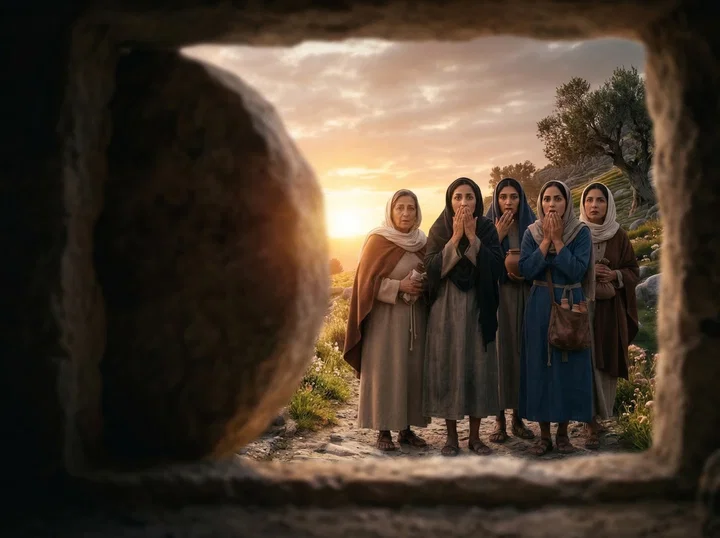
Cross-references 20 of 32
- Mark 16:1-8
And when the sabbath was past, Mary Magdalene, and Mary the mother of James, and Salome, had bought sweet spices, that they might come and anoint him.
Women visit Jesus’ tomb and are told to report that he has risen.
- Matthew 28:1-10
In the end of the sabbath, as it began to dawn toward the first day of the week, came Mary Magdalene and the other Mary to see the sepulchre.
Parallel account of the women at Jesus’ tomb and their report.
- John 20:1-18
The first day of the week cometh Mary Magdalene early, when it was yet dark, unto the sepulchre, and seeth the stone taken away from the sepulchre.
Mary Magdalene visits the empty tomb and reports the risen Jesus.
- Mark 16:9-11
Now when Jesus was risen early the first day of the week, he appeared first to Mary Magdalene, out of whom he had cast seven devils.
Mary Magdalene reports the risen Jesus, but the disciples do not believe her.
- Luke 23:56
And they returned, and prepared spices and ointments; and rested the sabbath day according to the commandment.
The women rested on the Sabbath before going to the tomb.
- John 20:18
Mary Magdalene came and told the disciples that she had seen the Lord, and that he had spoken these things unto her.
Mary Magdalene tells the disciples she has seen the risen Lord.
- Mark 16:14
Afterward he appeared unto the eleven as they sat at meat, and upbraided them with their unbelief and hardness of heart, because they believed not them which had seen him after he was risen.
Jesus rebukes the apostles for not believing those who had seen him risen.
- Luke 24:34
Saying, The Lord is risen indeed, and hath appeared to Simon.
Peter’s report of the risen Jesus strengthened the disciples’ faith.
- Luke 24:22-23
Yea, and certain women also of our company made us astonished, which were early at the sepulchre;
The disciples recount the women’s report of the empty tomb and the angels’ message that Jesus was alive.
- Matthew 28:1
In the end of the sabbath, as it began to dawn toward the first day of the week, came Mary Magdalene and the other Mary to see the sepulchre.
Reports the women’s visit to Jesus’ tomb.
- Luke 24:1
Now upon the first day of the week, very early in the morning, they came unto the sepulchre, bringing the spices which they had prepared, and certain others with them.
The women visit the tomb on the first day of the week and report what they found.
- Luke 24:36-43
And as they thus spake, Jesus himself stood in the midst of them, and saith unto them, Peace be unto you.
Jesus appears to the disciples after the women’s reports and shows he is alive.
- John 20:19
Then the same day at evening, being the first day of the week, when the doors were shut where the disciples were assembled for fear of the Jews, came Jesus and stood in the midst, and saith unto them, Peace be unto you.
Jesus appeared to his disciples on the first day of the week.
- Matthew 28:5-6
And the angel answered and said unto the women, Fear not ye: for I know that ye seek Jesus, which was crucified.
Records the angels’ announcement to the women that Jesus had risen.
- John 20:11-17
But Mary stood without at the sepulchre weeping: and as she wept, she stooped down, and looked into the sepulchre,
Mary Magdalene meets the risen Jesus and is sent to tell the disciples.
- Mark 16:12-13
After that he appeared in another form unto two of them, as they walked, and went into the country.
Two disciples report seeing Jesus, but the others do not believe them.
- Matthew 28:11-15
Now when they were going, behold, some of the watch came into the city, and shewed unto the chief priests all the things that were done.
Continues the resurrection reports, contrasting the women’s testimony with the priests’ false claim.
- 1 Corinthians 15:7
After that, he was seen of James; then of all the apostles.
James is named among those who saw the risen Christ.
- Acts 1:3
To whom also he shewed himself alive after his passion by many infallible proofs, being seen of them forty days, and speaking of the things pertaining to the kingdom of God:
Jesus appeared alive to his followers after his resurrection.
- 1 Corinthians 15:20
But now is Christ risen from the dead, and become the firstfruits of them that slept.
Christ’s resurrection assures the hope of the dead’s resurrection.
Commentary
Each commentary is drawn from primary sources: the writings of Ellen G. White and Adventist pioneers and periodicals. Each commentary is separate. Its own words are not a quotation; follow the references to read the source passages.
Ellen G. White
12 sources
Luke 24:10 names Mary Magdalene, Joanna, Mary the mother of James, and the other women with them as the ones who carried the news to the apostles, making them the first messengers of the resurrection.Ms 115, 1897, par. 1–2SG1 71.23SP 205.2–3 What they told was what they had seen and heard that morning, that the tomb was empty, that angels had appeared declaring Jesus risen, and that they had seen the living Lord and spoken with Him.Ms 115, 1897, par. 1–2SG1 71.23SP 205.2–3 All the apostles heard the report yet refused it as idle tales and illusion, counting it the mistake or deception of the women, and even Mary Magdalene's word that she had seen Jesus did not persuade them.Ms 115, 1897, par. 1–2SG1 71.23SP 205.2–3 Their unbelief showed how low their faith had fallen, for while heaven rejoiced they mourned over the empty tomb in uncertainty, confusion and hopelessness, unable to receive news so unlike their expectations that it seemed too good to be true after their hopes had died with Christ.SG1 71.23SP 205.2–3ST Sep 26, 1878DA 790.4 Peter's ardent testimony of meeting the risen Lord carried greater weight than the women's and began to revive their faith, and with the empty tomb and their afterward seeing and speaking with Him, the women's report stands as part of the evidence that Jesus had risen.ST Sep 26, 18786RED 34.1–23SP 216.2Ms 203, 1898, par. 9
Witnesses and Their Report
Luke 24:10 names Mary Magdalene and Joanna and Mary the mother of James, with the other women who were with them, as the ones who told these things to the apostles, and so makes those women the first messengers of the resurrection.Ms 115, 1897, par. 1–2SG1 71.23SP 205.2–3ST Aug 22, 18786RED 34.1–2 What they told was what they had seen and heard that morning at the tomb, the empty tomb itself and the appearing of angels with the announcement that Jesus had risen.Ms 115, 1897, par. 1–2SG1 71.23SP 205.2–3ST Aug 22, 18786RED 34.1–2 Their report also included that they had seen Jesus alive and had spoken with Him and learned of Him.SG1 71.23SP 205.2–3ST Aug 22, 1878ST Sep 26, 18786RED 34.1–2
On receiving that report the apostles went to the tomb and found the body of Jesus gone, yet still did not believe that He had risen.SG1 71.2
Unbelief and Its Overcoming
The report of the women was heard by all the apostles, yet it was not believed but dismissed as idle tales, an illusion, and the mistake or deception of the women.Ms 115, 1897, par. 1–2SG1 71.23SP 205.2–3ST Aug 22, 1878DA 790.4 Even Mary Magdalene's personal testimony that she had seen Jesus alive and had spoken with Him in the garden did not persuade them that He had risen.3SP 205.2–3Ms 113, 1897, par. 1DA 790.4 They went to the tomb, found His body gone, and still did not believe that He had risen.SG1 71.2 Their apparent unbelief in testimony that angels had appeared and affirmed that Christ had risen showed how low and weak their faith had fallen.SG1 71.23SP 205.2–3Ms 113, 1897, par. 1Ms 113a, 1897, par. 1DA 790.4
While Christ was in God's presence receiving gifts for His church, the disciples thought upon His empty tomb and mourned and wept.DA 790.4 The day that was a day of rejoicing to all heaven was to them a day of uncertainty, confusion, perplexity, and hopelessness.ST Sep 26, 18786RED 34.1–2DA 790.4 Some were overcome by hopelessness and too hopeless to believe, while in others hope and faith were left excited and struggling against hopelessness.ST Sep 26, 18786RED 34.1–23SP 216.2 Their grief prevailed over astonishment, though they recalled Jesus' words foretelling His resurrection.3SP 205.2–3
They could not take in the great subject because the news was so different from what they had anticipated and seemed too good to be true.DA 790.4 Their hopes had died with Christ, and His resurrection was so unlike what they expected that they could not believe the report.Ms 113a, 1897, par. 1DA 790.4 They had heard so much of the doctrines and so-called scientific theories of the Sadducees that the impression on their minds in regard to the resurrection was vague.Ms 113a, 1897, par. 1DA 790.4 They scarcely knew what resurrection from the dead could mean and were unable to take it in.Ms 113a, 1897, par. 1DA 790.4
Peter's testimony of his meeting with the risen Lord was given with ardor and assurance.3SP 216.2 It carried greater weight with the brethren than the women's testimony and began to revive their faith.ST Sep 26, 18786RED 34.1–23SP 216.2 This reviving began before the two from Emmaus arrived with their joyful tidings.3SP 216.2 The women's report belongs with the evidence that Jesus had risen: the tomb was empty, and the disciples afterward saw and spoke with Him.Ms 203, 1898, par. 9
The chapter to which the verse belongs teaches that God gave His Son to save sinners.Lt 100, 1910, par. 18 Through Christ's death those who repent and are converted may receive salvation.Lt 100, 1910, par. 18 Those who come to the Father by faith in Christ and follow His example may receive forgiveness and be sanctified through belief in the truth.Lt 100, 1910, par. 18
Sources
Pioneers and periodicals
47 sources
It was Mary Magdalene and Joanna the wife of Chuza and Mary the mother of James with the other women who followed Jesus who brought word to the apostles.ST Oct 21, 1886RH Oct 23, 1856 They came very early on the first day of the week after resting the Sabbath to anoint his body, found the stone rolled away and his body gone, and heard from two shining angels that he was risen as he had foretold in Galilee.RH Jun 6, 1865RH Jan 1851RH Nov 21, 1854ST Feb 22, 1899 What they told the eleven and the rest was all that had happened at the tomb and that Jesus was alive and would meet the disciples in Galilee, yet their words seemed as idle tales to mourning hearers who did not believe.ST Oct 21, 1886RH Jun 6, 1865RH Oct 21, 1862ST Apr 4, 1900 The day is called only the first day of the week with no sacred title or command to keep it, and the disciples themselves were not observing it in honor of the resurrection but were running about and journeying to Emmaus and back.ST Dec 15, 1881RH Jan 1851RH Jan 17, 1856RH Feb 13, 1872ST Sep 10, 1896 The report testifies that the same Jesus who died and was laid in the tomb rose bodily with flesh and bones, which revived the disciples' hope and assures the gospel hope of the resurrection of the dead.RH Nov 21, 1854ST Jun 26, 1901RH Jan 1, 1914ST Feb 9, 1882
Women and Their Report
The women named as bringing the report were Mary Magdalene and Joanna and Mary the mother of James, together with the other women who were with them.ST Oct 21, 1886RH Oct 23, 1856RH Sep 11, 1860RH Oct 21, 1862 They belonged to the company of disciples who had followed Jesus and ministered to him and to them, and Joanna was the wife of Chuza, Herod's steward.RH Sep 11, 1860ST Feb 22, 1899ST Dec 3, 1874 On Sunday morning at Jerusalem they brought their report to the eleven and to all the rest, to the apostles, the disciples who had been with Jesus.ST Oct 21, 1886ST Oct 28, 1913
They came very early in the morning on the first day of the week, the day after the Sabbath, after having rested on the Sabbath according to the commandment.RH Jun 6, 1865RH Nov 21, 1854RH Feb 11, 1858ST Sep 10, 1896 Their purpose in going to the sepulcher was to anoint the body of their Lord.RH Nov 21, 1854ST Nov 11, 1908 They found the stone rolled away from the sepulcher and the body of the Lord Jesus gone.RH Jun 6, 1865RH Nov 21, 1854 There they saw two men in shining garments, angels, who told them he is not here but is risen and reminded them of his words in Galilee that the Son of man must be delivered into the hands of sinful men and be crucified and rise again the third day, which they then remembered.RH Jun 6, 1865RH Nov 21, 1854ST Nov 11, 1908ST Dec 3, 1874
What they told the apostles, the eleven and all the rest, was all that had happened at the tomb, what had been seen and heard there.ST Oct 21, 1886ST Apr 4, 1900 Their message was that Jesus was risen from the dead and would go before the disciples into Galilee by appointment made before his death.ST Oct 21, 1886ST Jun 8, 1904 It included Mary Magdalene's own testimony to those who had been with Jesus that he was alive and that she had seen him and spoken with him and heard what he said to her, and the true report that morning was that they had seen the risen Jesus and encountered him.ST Jul 29, 1908ST Oct 21, 1886ST Feb 22, 1899ST Mar 8, 1905
They ran quickly from the tomb to bring the disciples word, for they had been sent on an errand to report the events.ST May 24, 1899 Mary Magdalene had returned to the tomb after the women first went there.ST May 24, 1899 In the order held by those who set the visits in sequence, Joanna with the other Galilean women arrived after the earlier visitors had left, found the tomb empty, heard two angels announce that Jesus had risen, and then told the eleven and the others.RH Sep 11, 1860 Apart from this joint report, Jesus himself met the other women, who took hold of his feet and worshiped him, and he sent them to tell his brethren to depart into Galilee where they would see him.ST Oct 21, 1886
Unbelief of the Apostles
The women returning from the tomb on Sunday morning at Jerusalem brought their report to the eleven and to all the rest, the disciples who had been with Jesus and were mourning and weeping, telling all that had happened at the tomb, that he was alive and had been seen, including that he had risen and what had been said at the sepulchre.ST Oct 21, 1886RH Jun 6, 1865RH Oct 21, 1862RH Jan 17, 1856 Their words appeared to the hearers as idle talk and idle tales, and they disbelieved them even after hearing that he was alive and had been seen.ST Aug 22, 1878ST Oct 21, 1886RH Jun 6, 1865RH Oct 21, 1862RH Jan 17, 1856 The apostles, overcome by hopelessness, did not believe them, thinking the women mistaken or deceived, and remained sorrowful and unbelieving.ST Aug 22, 1878ST Sep 26, 1878ST Oct 21, 1886ST Jul 1, 1880 The testimony of the two disciples returning from Emmaus likewise did not persuade them.ST Jul 1, 1880
That day was past before the eleven believed he was risen, for when they heard he was alive they believed not.ST Sep 15, 1887 Even the two to whom he appeared in another form as they walked into the country did not convince them, and the two on the way to Emmaus did not recognize him until they had reached Emmaus and were sitting at supper with him when the day was far spent.ST Sep 15, 1887ST Jul 1, 1880 There he took bread and blessed it and brake and gave to them, and their eyes were opened and they knew him.ST Sep 15, 1887 He left the disciples in doubt and perplexity until near the close of the day.ST Jul 22, 1908
The report was heard by all, but some, overcome by hopelessness, did not believe it, while Peter's testimony of seeing the risen Lord carried greater weight and helped their faith revive.ST Sep 26, 1878ST Jun 8, 1904 Their report included his instruction that the disciples meet him in Galilee by appointment made before his death, yet the apostles did not believe the women's message, and Jesus later rebuked them for not believing his messengers.ST Jun 8, 1904 That report made the apostles astonished instead of looking forward with joyous hope to the third day, and their mourning, sadness, and astonishment prove they did not understand the plan of God for the salvation of lost men through the death and intercession of Christ, but trusted he would redeem Israel by freeing them from under the hand of the Romans and establishing his kingdom.ST Dec 3, 1874
First Day Not Sacred
The record calls the resurrection day the first day of the week, the day after the Sabbath, and gives it no sacred title and sets it apart for no sacred purpose.RH Feb 13, 1872ST Sep 10, 1896ST Jan 2, 1879 It does not call it a holy day or Sabbath, does not prove it to be the Lord's day, and does not establish Sunday as sacred or as a replacement for the Sabbath.RH Feb 13, 1872ST Sep 10, 1896ST Jan 2, 1879ST Jan 2, 1879 It contains no command or intimation to regard the first day as holy and gives no warrant for its future observance or for changing the Sabbath to Sunday to commemorate the resurrection.RH Jan 17, 1856ST Jan 2, 1879 The women came on that morning to report that Jesus had risen, but their words seemed as idle tales and the apostles believed them not.RH Jan 17, 1856RH Apr 14, 1874
Because the disciples did not believe on that first day that Jesus was risen, they were not keeping the day in honor of the resurrection and were not observing it as a Sabbath or Lord's day.RH Jan 17, 1856RH Apr 14, 1874 Instead of resting as they had the day before, they were running about the city, and two of them traveled seven and a half miles to Emmaus with Jesus and returned the same afternoon without rebuke from him for breaking a holy day.ST Dec 15, 1881RH Jan 1851 Their movement and work prove they did not regard the first day as they regarded the seventh-day Sabbath, and their gathering at Jerusalem was not a shutting themselves up to keep Sunday.ST Dec 15, 1881RH Jan 1851
What was done on that day was that Christ rose from the dead, expounded the Scriptures concerning himself, proved he was the very one who had been slain by showing his resurrected body, and gave the apostles their commission and invested them with authority.RH Nov 21, 1871 These are things done on the day, not things done to the day, for work done on a day does not make that day a Sabbath.RH Nov 21, 1871 He did nothing to the first day to make it holy, did no act of a Sabbatical character on it, expressed no intention to honor it above other days or to institute it as a new Sabbath to be called the Lord's day, and did not even take the day into his lips.RH Nov 21, 1871 Making a Sabbath requires what God did to the seventh day at the beginning by his rest, his blessing, and his appointment of it to holy use, which was not done for the first day.RH Nov 21, 1871
The meeting by which he made himself known to the women who had come to the tomb with spices, together with his being seen that same day by the two disciples at Emmaus and just before sunset by Peter at Jerusalem, was a personal encounter at the tomb and not an appointed worship assembly.RH Sep 10, 1857ST Apr 13, 1882 Those meetings of Jesus with his disciples on the first day, including the appearances that evening to show that he was alive and had risen, do not establish a first-day Sabbath and did not make that day a holy day.RH Feb 11, 1858ST Oct 21, 1897ST Aug 6, 1912ST Apr 13, 1882 It is presumption to assert that the first day became sacred because of those resurrection-day appearances, especially since the ascension at Bethany on the Mount of Olives forty days later on Thursday was in some respects the most important of all his manifestations and did not take place in honor of the first day.ST Apr 13, 1882 The visit to the tomb took place on the morning of the first day after resting on the Sabbath according to the commandment, and the group first gathered near the close of the resurrection day after the two returned from Emmaus following their meal there, but Jesus met them after that day had ended and the second day had begun.RH Feb 11, 1858ST Mar 24, 1909RH Feb 25, 1862
Bodily Resurrection and Hope
Luke 24:10 means that the identical personage who expired on the cross and was taken down and wrapped in linen and laid in a hewn stone sepulchre arose from the dead.RH Nov 21, 1854 No soul or spirit or intelligent part survived death apart from the body.RH Nov 21, 1854 Jesus of Nazareth after his resurrection is the same I myself with hands and feet and flesh and bones.RH Nov 21, 1854 The women came very early on the first day of the week to anoint the body of their Lord, found the stone rolled away from the sepulchre and the body of the Lord Jesus gone, were told by two men in shining garments that he is not here but is risen, were reminded how he said in Galilee that the Son of man must be delivered into the hands of sinful men and be crucified and rise the third day, and carried that report to the apostles.RH Nov 21, 1854
The verse is part of the Gospel testimony to Jesus' bodily resurrection.RH Jan 1, 1914 The resurrection of the dead is the hope of the gospel, and Christ's resurrection assures that this hope is true.ST Jun 26, 1901 That resurrection revived the hopes of disciples cast down by his unexpected crucifixion.ST Feb 9, 1882 The resurrection and ascension occurred in A.D. 31, the same year as the crucifixion.ST Sep 22, 1909
The disciples expected Jesus to be crowned as king and were sorely disappointed when he was crucified, trusting he would redeem Israel by freeing them from under the hand of the Romans and establishing his kingdom.RH Dec 8, 1874ST Dec 3, 1874 Certain women of the disciples' company were early at the sepulcher, found not his body, and came saying they had seen a vision of angels which said he was alive, yet that report made the apostles astonished instead of looking forward with joyous hope to the third day.ST Dec 3, 1874 Their mourning, sadness, and astonishment prove they did not understand the plan of God for the salvation of lost men through the death and intercession of Christ.ST Dec 3, 1874 Their disappointment did not prove Christianity false, for after his resurrection Jesus himself showed them that his suffering and death were only a fulfillment of prophecy, proving that a prophetic disappointment does not disprove the doctrine behind it.RH Dec 8, 1874 The resurrection account itself is not the primary evidence for Jesus' resurrection; the early Christian faith, preaching, and church, and the spiritual life of the New Testament, are presented as evidence that the resurrection occurred.RH May 11, 1916
Harmony of Gospel Accounts
Luke's account of the resurrection is one of several accounts, and the accounts give different details and mention events that others omit, yet those differences do not make them contradictory, for each states what is true while selecting different particulars.ST Mar 5, 1912 The different accounts are set side by side without any editorial weighing of conflicting statements and without any word of comment to harmonize them.ST Jun 14, 1877 That absence of harmonizing shows perfect simplicity, guileless confidence, and the artlessness of conscious truth.ST Jun 14, 1877 It reveals a sublime consciousness of integrity that solemnly assumes divine truthfulness yet shows no anxiety to vindicate its own consistency with itself.ST Jun 14, 1877
The report of Mary Magdalene, Joanna, Mary the mother of James, and the other women with them, that Jesus had risen, stood against the priests' claim that the disciples had stolen His body, and it added to the disciples' confusion about the empty tomb.ST Feb 22, 1899 Certain women of their company went early to the tomb, found not His body, and came saying they had also seen a vision of angels who said He was alive, a report confirmed when others with them went to the tomb and found it even so as the women had said though they did not see Him.ST Apr 4, 1900 Those reports amazed the two disciples going to Emmaus and they repeated them to Jesus on the way.ST Apr 4, 1900 The women's testimony was true, for they had seen the risen Jesus, and Mary also testified that she had seen and spoken with Him, and their testimony brought the resurrection message to the disciples before two other disciples arrived with their own account of seeing Him.ST Feb 22, 1899ST Mar 8, 1905
Luke 24 places the women's report before the disciples' later meeting with Jesus, and its account helps identify that meeting as the same interview described in John and Mark. On the day of Christ's resurrection Jesus showed Himself to the Marys, who with Joanna, Mary the mother of James, and other women told these things to the apostles, after which He appeared to those on the way to Emmaus and then to the eleven with Thomas absent.RH Feb 13, 1872 That day, the first day of the week, the day after the Sabbath, was marked by a great earthquake and the angel rolling away the stone, Christ rising from the dead and many saints coming out of their graves and appearing to many.RH Feb 13, 1872 Christ was seen by the women at the sepulchre on that day, together with His being seen that same day by the two disciples at Emmaus and just before sunset by Peter at Jerusalem.ST Apr 13, 1882 On that same day Cleopas on the way to Emmaus confirmed the timing by saying that day was the third day since the crucifixion, while the women who had come to the sepulchre very early in the morning on the first day of the week, found the body gone, saw two men in shining garments who told them Jesus had risen and reminded them of His words in Galilee that the Son of man must be delivered into the hands of sinful men and be crucified and rise again the third day, which they remembered, told the apostles that Jesus had risen, and their report seemed to the eleven as idle tales.RH Jun 6, 1865
Example for Believers
The women who followed Jesus and told the apostles what they had witnessed illustrate the role of women in bearing and sharing the gospel message. They were the first to announce that He had risen.ST May 27, 1897
The telling by the Marys of Him who rose from Joseph's tomb is a joy.ST Aug 26, 1880 Women still go forth by twos and threes, unmindful of morning ease, ministering through tragic darkness where they see the faintest rim of promise, all for His sake.ST Aug 26, 1880 Holy women at home and abroad are still myrrh-bearers when they do this work, burdened with votive gifts for God whose chief worth is that their spices have been bruised for Christ.ST Aug 26, 1880
The eagerness of the women hastening to the tomb while the male disciples were sad and despondent is an example of faithful zeal. The resurrection news they carried was rapidly heard and spread.ST Mar 9, 1882 Sad-hearted sisters went to the sepulcher early in the morning to anoint His body, met two shining angels who told them Jesus was risen, and were entrusted with that message to carry to the sorrowing disciples.ST Nov 11, 1908 This carrying of the message was a shower of blessing preceding the early rain as preparation for the pentecostal baptism.ST Nov 11, 1908
Sources