Mark 16:13
And they went and told it unto the residue: neither believed they them.
Translations
American King James Version, Webster Bible
And they went and told it to the residue: neither believed they them.
King James Version, KJV Cambridge Paragraph Bible
And they went and told it unto the residue: neither believed they them.
Revised Version, American Standard Version
And they went away and told it unto the rest: neither believed they them.
and they having gone, told to the rest; not even them did they believe.
and they went and brought word to the rest; neither did they believe them.
and, they, departing, bare tidings unto the rest,—but, even them, they believed not.
Berean Standard Bible, Majority Standard Bible
And they went back and reported it to the rest, but they did not believe them either.
They went away and told it to the rest. They didn’ t believe them, either.
And they went away and gave news of it to the rest; and they had no belief in what was said.
And they went, and told it to the remnant, neither beleeued they them.
Douay-Rheims (Challoner revision)
And they going told it to the rest: neither did they believe them.
Pictures
Cross-references 20 of 23
- Luke 24:13-35
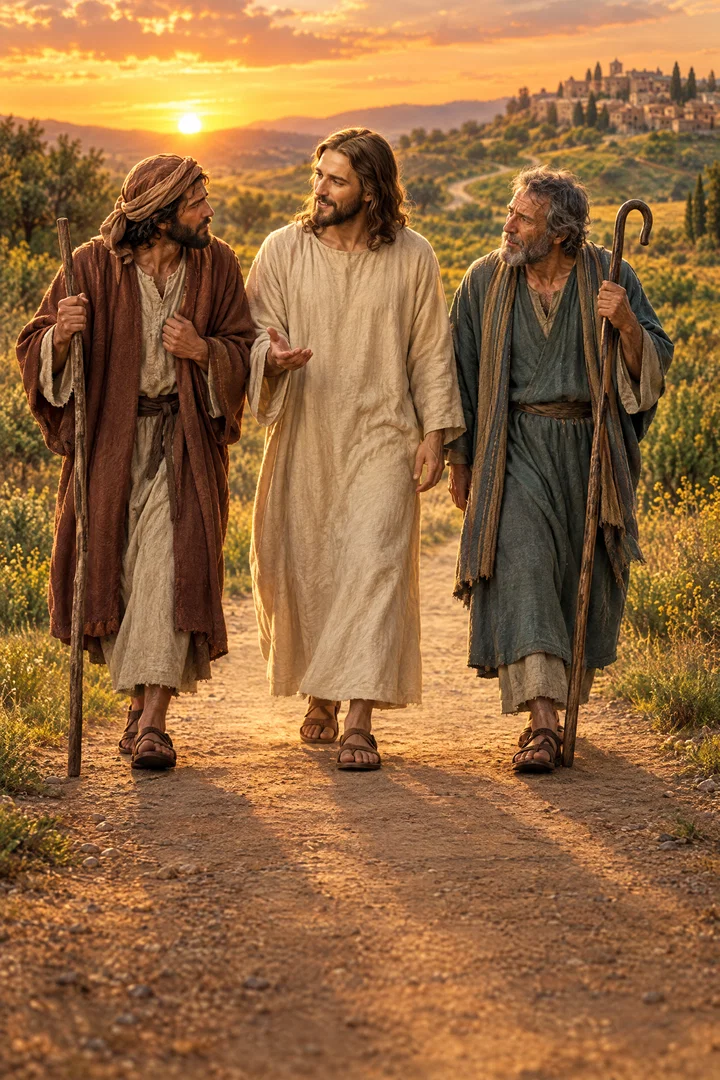
And, behold, two of them went that same day to a village called Emmaus, which was from Jerusalem about threescore furlongs.
Gives the fuller account of the two disciples’ journey and report.
- John 20:19-20
Then the same day at evening, being the first day of the week, when the doors were shut where the disciples were assembled for fear of the Jews, came Jesus and stood in the midst, and saith unto them, Peace be unto you.
Jesus appears to the gathered disciples after the resurrection, though they had not believed the report.
- Luke 24:36-43
And as they thus spake, Jesus himself stood in the midst of them, and saith unto them, Peace be unto you.
Jesus appeared to the gathered disciples after they heard the report.
- Luke 24:13-31
And, behold, two of them went that same day to a village called Emmaus, which was from Jerusalem about threescore furlongs.
Two disciples meet Jesus and return to report what happened.
- Luke 24:38-43
And he said unto them, Why are ye troubled? and why do thoughts arise in your hearts?
Jesus answers the disciples’ doubts and eats before them.
- John 20:26
And after eight days again his disciples were within, and Thomas with them: then came Jesus, the doors being shut, and stood in the midst, and said, Peace be unto you.
Jesus meets the disciples again, and Thomas doubts their report of his resurrection.
- Matthew 28:1-10
In the end of the sabbath, as it began to dawn toward the first day of the week, came Mary Magdalene and the other Mary to see the sepulchre.
Both recount the first-day resurrection and Jesus’ meetings with his followers.
- Luke 24:1-12
Now upon the first day of the week, very early in the morning, they came unto the sepulchre, bringing the spices which they had prepared, and certain others with them.
Both accounts place the resurrection events on the first day and report disbelief at the news.
- Luke 24:11
And their words seemed to them as idle tales, and they believed them not.
The disciples disbelieve the witnesses’ report of Jesus’ resurrection.
- Luke 24:37
But they were terrified and affrighted, and supposed that they had seen a spirit.
The disciples feared they were seeing a spirit and disbelieved the resurrection report.
- Luke 24:30-33
And it came to pass, as he sat at meat with them, he took bread, and blessed it, and brake, and gave to them.
The Emmaus disciples recognize Jesus and return to report to the gathered disciples.
- Acts 1:3
To whom also he shewed himself alive after his passion by many infallible proofs, being seen of them forty days, and speaking of the things pertaining to the kingdom of God:
Jesus showed himself alive to the disciples with many proofs.
- John 20:25
The other disciples therefore said unto him, We have seen the Lord. But he said unto them, Except I shall see in his hands the print of the nails, and put my finger into the print of the nails, and thrust my hand into his side, I will not believe.
Thomas, like the other disciples who heard the report, refused to believe the resurrection testimony.
- Matthew 28:9
And as they went to tell his disciples, behold, Jesus met them, saying, All hail. And they came and held him by the feet, and worshipped him.
Jesus meets the women after the resurrection, and they report seeing him.
- Mark 16:9
Now when Jesus was risen early the first day of the week, he appeared first to Mary Magdalene, out of whom he had cast seven devils.
Both fix the resurrection on the first day of the week.
- Matthew 28:7
And go quickly, and tell his disciples that he is risen from the dead; and, behold, he goeth before you into Galilee; there shall ye see him: lo, I have told you.
The women report Jesus’ resurrection and say he will meet the disciples in Galilee.
- Luke 24:25-27
Then he said unto them, O fools, and slow of heart to believe all that the prophets have spoken:
Jesus connects the disciples’ doubt with failing to understand prophecies of his suffering and glory.
- John 20:1-18
The first day of the week cometh Mary Magdalene early, when it was yet dark, unto the sepulchre, and seeth the stone taken away from the sepulchre.
Another account of the first-day resurrection, with details not included in every Gospel.
- Acts 10:40-41
Him God raised up the third day, and shewed him openly;
The risen Jesus appeared to chosen witnesses, who ate and drank with him.
- Luke 24:33
And they rose up the same hour, and returned to Jerusalem, and found the eleven gathered together, and them that were with them,
The disciples gather in Jerusalem after the resurrection reports.
Commentary
Each commentary is drawn from primary sources: the writings of Ellen G. White and Adventist pioneers and periodicals. Each commentary is separate. Its own words are not a quotation; follow the references to read the source passages.
Ellen G. White
1 source
The two who had encountered Jesus alive after His resurrection went back and reported it to the rest of the disciples.DA 842.2–8 Those who heard them refused to believe their testimony that He had risen.DA 842.2–8 Their unbelief proves they had not assembled to celebrate a resurrection, since they did not yet believe any resurrection had occurred.DA 842.2–8
Sources
Pioneers and periodicals
43 sources
The two who had met Jesus on the way to Emmaus returned to Jerusalem and told the rest that He was alive, but those who heard them did not believe their report.ST Nov 18, 1886ST Jul 1, 1880 Their refusal continued to the very end of the resurrection day even after repeated witnesses, for they had not believed Mary Magdalene and remained shifting between confidence and doubt, in perplexity and confusion.ST Oct 4, 1899ST Dec 21, 1882ST Apr 15, 1889 They did not believe because they did not yet understand from the Scriptures that Christ had to suffer and die and then enter His glory, having expected Him to redeem Israel by an earthly kingdom.ST Dec 10, 1894RH Jan 10, 1871 Their unbelief shows their evening gathering on the first day of the week was not a religious meeting to celebrate the resurrection or honor the day, and the verse gives no command to sanctify that day and no hint of any change or transfer of the Sabbath.ST Nov 18, 1886ST Mar 16, 1882ST Aug 13, 1874RH May 10, 1860 Because they rejected those who had seen Him after He was risen, Jesus Himself then stood in their midst behind shut doors and proved He was risen bodily with flesh and bones by showing His hands and feet and side and eating before them, upbraiding them for their unbelief and hardness of heart.ST Sep 15, 1887ST Apr 11, 1900RH Mar 31, 1874RH Oct 21, 1873
Text and Historical Setting
Mark 16:13 belongs to the genuine, inspired ending of Mark in Mark 16:9-20.ST Nov 3, 1909ST Oct 10, 1911ST Dec 17, 1902 Its absence from some early manuscripts does not prove it is not genuine, for it was quoted in the second century and was placed as a completion of the Gospel immediately after the apostolic period.ST Nov 3, 1909ST Dec 17, 1902 It is an authentic fragment added as a completion in very early times, coming with weighty sanction and having strong claims on reception and reverence.ST Nov 3, 1909ST Dec 17, 1902 It is omitted in the Sinaitic and Vatican manuscripts but is supported by the Alexandrian, Beza, and Paris manuscripts and the Vulgate.ST Nov 3, 1909 Nothing in this ending is contrary to the rest of Scripture, it is in harmony with the other Gospels, and the Gospel would be incomplete without it.ST Nov 3, 1909ST Oct 10, 1911ST Dec 17, 1902 The genuineness of Mark 16:8-20, including this verse, has been questioned because of its absence from some early manuscripts.
The verse reports two disciples to whom Jesus was manifested in another form as they walked into the country on the way to Emmaus.ST Sep 15, 1887ST Apr 11, 1900 He joined them and remained unrecognized until He was made known to them in breaking of bread at supper and then vanished.ST Sep 15, 1887ST Apr 13, 1882RH Sep 10, 1857 After this they rose up the same hour and returned to Jerusalem.ST Sep 15, 1887 At Jerusalem in A.D. 31 those two went and told what had happened to the residue, the rest, the eleven gathered together with those with them.ST Apr 11, 1900ST Apr 11, 1900ST Nov 11, 1889 The journey was about seven miles each way, seven and a half miles, sixty furlongs, more than eight English miles, to Emmaus and back, with arrival at Emmaus toward evening when the day was far spent.RH Sep 10, 1857ST Mar 18, 1889
Their return journey began near sunset after Jesus had made Himself known to them at supper.ST Apr 13, 1882 The report and the meeting that immediately followed it came late, near the close of the first day of the week on which Jesus rose.ST Apr 13, 1882RH Sep 10, 1857ST May 19, 1909 By travel and meal chronology the gathering in Jerusalem was likely after the first day had ended at sunset and the second day had begun.ST Feb 23, 1915ST Apr 13, 1882ST May 24, 1910ST May 19, 1909
Disciples' Persistent Unbelief
The two who had seen the risen Jesus on the walk into the country went and reported to the rest that he was alive and had appeared to them, but those who heard did not believe their testimony.ST Nov 18, 1886ST Jul 1, 1880ST Aug 14, 1893 The report was that they themselves had met him and seen him risen, and the residue, the eleven with those gathered with them, refused to credit the two witnesses.ST Nov 18, 1886ST Jul 1, 1880ST Aug 14, 1893ST Oct 5, 1882
That refusal lasted through the whole resurrection day until its very last moments and continued even after repeated witnesses.ST Oct 4, 1899ST Dec 21, 1882ST Apr 15, 1889ST Oct 17, 1878RH Feb 27, 1872 They had already disbelieved Mary Magdalene in the same way, and though they had taken up Peter's word that the Lord is risen indeed and hath appeared to Simon, they remained unsettled, shifting between confidence that he had risen and doubt.ST Oct 4, 1899ST Dec 21, 1882ST Oct 17, 1878ST Dec 10, 1894ST Dec 10, 1894 Their state was doubt and perplexity and confusion with hurried exchanges, so that when the two testified they were ready to doubt everything.ST Dec 21, 1882ST Oct 17, 1878ST Dec 10, 1894RH Feb 27, 1872ST Dec 10, 1894
They did not believe because they did not yet believe he had risen and did not understand the Scriptures that Christ had to suffer and die and then enter his glory.ST Dec 10, 1894RH Jan 10, 1871ST Dec 10, 1894 The two themselves had expected him to redeem Israel by establishing an earthly kingdom, and he had to open the Scriptures to show that the Messiah must suffer before he made himself known to them in the breaking of bread.ST Dec 10, 1894ST Dec 10, 1894
Because they believed not them which had seen him after he was risen, Jesus afterward was manifested unto the eleven themselves as they sat at meat and upbraided them with their unbelief and hardness of heart for rejecting the witnesses.ST Sep 15, 1887ST Apr 11, 1900RH Oct 21, 1873RH Sep 10, 1857RH Feb 25, 1862 That manifestation came later on that same first day when he himself stood among them at their supper, to convince them by his own presence after the testimony of the two had been refused.ST Sep 15, 1887ST Apr 11, 1900RH Oct 21, 1873RH Sep 10, 1857
Resurrection Witness and Proof
The report belongs to the sequence of appearances by which Jesus sought to convince the disciples that He was alive and to make them witnesses of His resurrection.ST Nov 18, 1886RH Oct 22, 1872ST Aug 6, 1912 The first day of the week is presented as the time when Christ appeared to His disciples to show that He had risen.RH Oct 22, 1872 The testimony of those who had seen the risen Jesus was met with unbelief and did not establish the first day as holy.ST Nov 18, 1886ST Aug 6, 1912
On the evening of the day Jesus rose the two to whom He had appeared rose up the same hour and returned to Jerusalem and found the eleven gathered together with those with them as they sat at meat.ST Sep 15, 1887 They declared that the Lord is risen indeed and hath appeared to Simon, and told what things were done in the way and how He was known of them in breaking of bread, yet the rest did not believe them.ST Sep 15, 1887RH Mar 31, 1874RH Oct 21, 1873 As they thus spoke, while the doors were shut where the disciples were assembled for fear of the Jews, Jesus Himself came and stood in the midst, saying Peace be unto you.ST Sep 15, 1887ST Aug 24, 1888ST Mar 11, 1889 They were terrified and affrighted, supposing they had seen a spirit, and while they yet believed not for joy and wondered He upbraided them with unbelief and hardness of heart because they had not believed them which had seen Him after He was risen.ST Sep 15, 1887ST Mar 11, 1889ST Dec 15, 1881 He proved that it was He Himself risen bodily with flesh and bones by showing His hands and His feet and His side, and by taking a piece of broiled fish and honeycomb and eating before them.ST Sep 15, 1887ST Dec 15, 1881 At this the disciples were glad when they saw the Lord and were together refreshed by the manifestation.ST Sep 15, 1887
The different Gospel accounts of the resurrection give different details, and one may omit events another includes, yet these differences do not necessarily contradict one another.ST Mar 5, 1912 Together with the other Gospel accounts the report fixes that Christ rose on the first day of the week, which Scripture calls only the first day of the week and never the Sabbath.RH Oct 21, 1873
First Day Not Sacred
The refusal to believe the two returning witnesses shows the evening gathering on the first day of the week was not a religious meeting to celebrate the resurrection, commemorate it, or honor the day, because those who heard did not yet believe He had been raised.ST Aug 13, 1874RH May 10, 1860ST Apr 15, 1889RH Jul 20, 1911 The same unbelief that had rejected Mary Magdalene rejected the two, leaving the company unsettled and shifting between confidence and doubt, in doubt and perplexity and confusion, ready to doubt everything when the testimony came.ST Sep 15, 1887ST Oct 4, 1899ST Dec 21, 1882ST Apr 15, 1889ST Oct 17, 1878 Their meeting with Jesus that evening therefore cannot be treated as a gathering to celebrate an event they still denied, and it proves they had no idea of a change of the Sabbath.RH May 10, 1860ST Apr 15, 1889RH Jul 20, 1911ST Oct 14, 1913RH Mar 31, 1874
They were at their lodging, their common home and dwelling place in Jerusalem, sitting at meat eating their common evening meal and supper.ST Sep 15, 1887ST Oct 4, 1899ST Dec 21, 1882RH Mar 31, 1874 They were mourning and weeping, secluded with closed doors for fear of the Jews, disputing whether Jesus had risen, with some saying the Lord is risen indeed and hath appeared to Simon while the two told what things were done in the way and how He was known of them in breaking of bread.ST Sep 15, 1887ST Oct 4, 1899RH Mar 31, 1874ST Aug 24, 1888ST Mar 11, 1889 His coming was unexpected and simply to show at once that He was risen and to relieve sorrow as one of many infallible proofs that He had risen the third day as He said, not to gather them for worship, prayer, or a sacred observance.ST Sep 15, 1887ST Oct 4, 1899ST Apr 13, 1882RH Mar 31, 1874ST Aug 24, 1888 As they thus spoke Jesus Himself came and stood in the midst saying Peace be unto you, and they were terrified and affrighted supposing they had seen a spirit, while they yet believed not for joy and wondered.ST Sep 15, 1887ST Mar 11, 1889ST Dec 15, 1881 He upbraided them with unbelief and hardness of heart for rejecting the witnesses, and proved He Himself was risen bodily with flesh and bones by showing His hands and His feet and His side and by taking a piece of broiled fish and honeycomb and eating before them, at which the disciples were glad when they saw the Lord and were together refreshed by the manifestation.ST Sep 15, 1887ST Oct 4, 1899RH Mar 31, 1874RH Oct 21, 1873ST Dec 15, 1881
The account gives no indication that the first day was being kept as Sabbath or sacred day, no command to sanctify that day, no announcement that it had been set apart for holy use, and no hint of any change or transfer of the Sabbath.ST Nov 18, 1886ST Mar 16, 1882RH Mar 31, 1874ST Oct 17, 1878 It supplies no apostolic example or proof for keeping Sunday in honor of the resurrection, since the sequence belongs to appearances intended to convince the disciples that He was alive and make them witnesses of His resurrection.ST Nov 18, 1886ST Apr 13, 1882RH Mar 31, 1874RH Oct 21, 1873ST Oct 17, 1878 Scripture calls that day only the first day of the week and never the Sabbath, while fixing with the other Gospel accounts that Christ rose on the first day of the week.ST Apr 13, 1882RH Mar 31, 1874RH Oct 21, 1873 The report and return journey began near sunset after He was made known at supper, so by travel and meal chronology the arrival in Jerusalem was likely after the first day had ended at sunset and the second day had begun.ST Apr 13, 1882ST May 19, 1909
Their conduct that day was bustle and activity, not rest, passing the day traveling, in doubt and fear and anxiety.ST Mar 18, 1889ST Mar 11, 1889ST Dec 15, 1881ST May 19, 1909 Two went to Emmaus seven miles from Jerusalem on business and then returned, about fifteen miles to Emmaus and back, treating the day as purely secular and not keeping it as Sabbath or holy day in any way.ST Mar 18, 1889ST Mar 11, 1889ST May 19, 1909RH Apr 14, 1874 The majority had not seen Him once during the whole day and did not believe until He came to them in the evening while they were eating.ST Mar 11, 1889ST Dec 15, 1881ST May 19, 1909RH Apr 14, 1874 Resting on that weekday therefore does not memorialize the resurrection, and if the Sabbath had been changed that day it would have been done while they disbelieved the resurrection, through the close of the first day on which Christ rose.ST Dec 15, 1881ST May 19, 1909RH Apr 14, 1874
Doctrine and Scriptural Connections
The account of Jesus' resurrection to which this verse belongs brings joy and hope of eternal life, assuring believers that they too will live through Christ, who is their Lifegiver.ST Jun 17, 1889 The commission in Mark 16 to preach the gospel throughout the world is connected with the coming of the end.RH Aug 14, 1856 The gospel proclaimed by the first angel, that God's judgment has come, belongs to the final work of proclaiming the gospel of Jesus, not to a future dispensation after the gospel has ended.RH Aug 14, 1856
The Lord's resurrection recorded in Mark 16 is the end and consummation of the true rest foreshadowed by the ancient Sabbath, putting an end to the shadows.ST Jan 2, 1879 It therefore admonishes Christians not to adhere to a shadowy ceremony.ST Jan 2, 1879 On the day Jesus rose He joined two disciples in a long walk to Emmaus and met that same evening at Jerusalem with them and the rest of the eleven, a day of bustle and activity and not rest, so that resting on that weekday does not memorialize the resurrection. Burial by baptism in water and rising from it shows faith in the resurrection of Christ by the power of God, and the resurrection belongs to that day and cannot be changed to another day.
Sources