Translations
American King James Version, King James Version, KJV Cambridge Paragraph Bible, Webster Bible
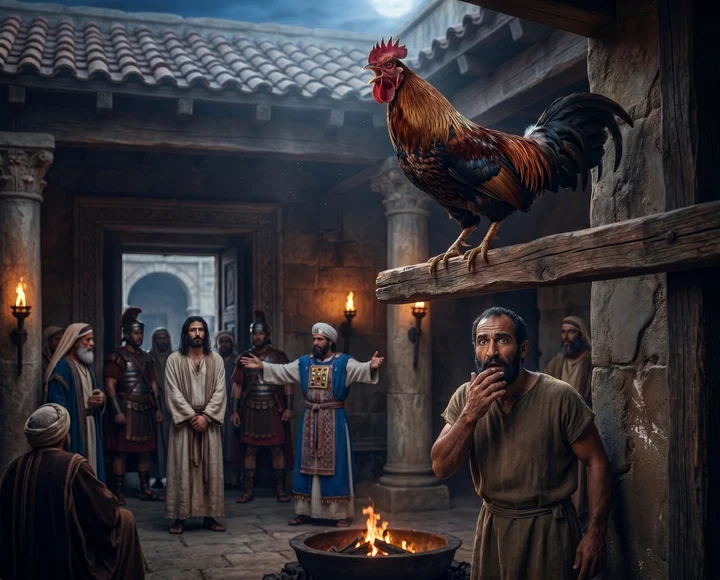
And again he denied with an oath, I do not know the man.
Revised Version, American Standard Version, Douay-Rheims (Challoner revision)
And again he denied with an oath, I know not the man.
and again did he deny with an oath — 'I have not known the man.'
And again he denied with an oath: I do not know the man.
And, again, he denied, with an oath—I know not the man.
Berean Standard Bible, Majority Standard Bible
And again he denied it with an oath: “ I do not know the man!”
Again he denied it with an oath, “ I don’ t know the man.”
And again he said with an oath, I have no knowledge of the man.
And againe he denied with an othe, saying, I knowe not the man.
Pictures

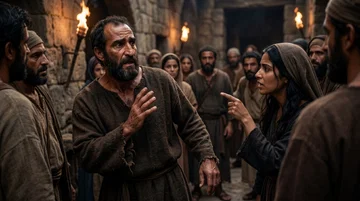
Cross-references 20 of 35
- Luke 22:61-62
And the Lord turned, and looked upon Peter. And Peter remembered the word of the Lord, how he had said unto him, Before the cock crow, thou shalt deny me thrice.
Jesus looks at Peter after his denial, and Peter weeps bitterly.
- Mark 14:71
But he began to curse and to swear, saying, I know not this man of whom ye speak.
Mark also records Peter’s oath and denial.
- John 18:25-27
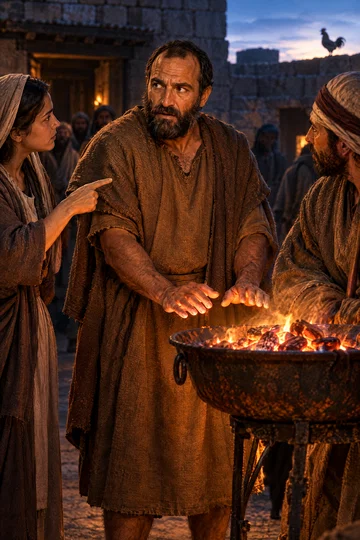
And Simon Peter stood and warmed himself. They said therefore unto him, Art not thou also one of his disciples? He denied it, and said, I am not.
Peter again denies being Jesus’ disciple, and the cock crows.
- John 21:15-17
So when they had dined, Jesus saith to Simon Peter, Simon, son of Jonas, lovest thou me more than these? He saith unto him, Yea, Lord; thou knowest that I love thee. He saith unto him, Feed my lambs.
Jesus answers Peter’s three denials with questions about his love and commissions him to care for the flock.
- Matthew 26:34
Jesus said unto him, Verily I say unto thee, That this night, before the cock crow, thou shalt deny me thrice.
Jesus foretold Peter’s three denials before the cock crow.
- Luke 22:34
And he said, I tell thee, Peter, the cock shall not crow this day, before that thou shalt thrice deny that thou knowest me.
Jesus foretold Peter’s denial during the coming test.
- Matthew 26:58
But Peter followed him afar off unto the high priest’s palace, and went in, and sat with the servants, to see the end.
Peter follows Jesus at a distance before denying him.
- Matthew 26:33
Peter answered and said unto him, Though all men shall be offended because of thee, yet will I never be offended.
Peter’s boast that he would never fall away contrasts with his later denial.
- Matthew 26:40-41
And he cometh unto the disciples, and findeth them asleep, and saith unto Peter, What, could ye not watch with me one hour?
Jesus’ warning to watch and pray precedes Peter’s denial.
- Mark 14:30
And Jesus saith unto him, Verily I say unto thee, That this day, even in this night, before the cock crow twice, thou shalt deny me thrice.
Jesus foretold Peter’s three denials before the cock crowed twice.
- Acts 4:8-12
Then Peter, filled with the Holy Ghost, said unto them, Ye rulers of the people, and elders of Israel,
The Spirit transforms Peter’s denial into bold testimony about Jesus.
- Mark 16:7
But go your way, tell his disciples and Peter that he goeth before you into Galilee: there shall ye see him, as he said unto you.
Jesus’ resurrection message specifically includes Peter after his denial.
- John 21:18-19
Verily, verily, I say unto thee, When thou wast young, thou girdedst thyself, and walkedst whither thou wouldest: but when thou shalt be old, thou shalt stretch forth thy hands, and another shall gird thee, and carry thee whither thou wouldest not.
Jesus foretells Peter’s death, contrasting it with his denial.
- Acts 3:13-15
The God of Abraham, and of Isaac, and of Jacob, the God of our fathers, hath glorified his Son Jesus; whom ye delivered up, and denied him in the presence of Pilate, when he was determined to let him go.
Peter, who once denied Jesus, now publicly testifies to him and accuses others of denying him.
- Acts 2:14
But Peter, standing up with the eleven, lifted up his voice, and said unto them, Ye men of Judæa, and all ye that dwell at Jerusalem, be this known unto you, and hearken to my words:
Peter later stood and preached publicly after denying Jesus.
- Matthew 14:30
But when he saw the wind boisterous, he was afraid; and beginning to sink, he cried, saying, Lord, save me.
Peter failed when faith wavered and he lost sight of Jesus.
- Matthew 16:16
And Simon Peter answered and said, Thou art the Christ, the Son of the living God.
Peter’s denial contrasts with his earlier confession of Jesus as Christ.
- John 18:15-16
And Simon Peter followed Jesus, and so did another disciple: that disciple was known unto the high priest, and went in with Jesus into the palace of the high priest.
John’s connection gains Peter admission to the courtyard before his denial.
- John 18:18
And the servants and officers stood there, who had made a fire of coals; for it was cold: and they warmed themselves: and Peter stood with them, and warmed himself.
Peter warms himself by the fire where his denial takes place.
- Galatians 2:12
For before that certain came from James, he did eat with the Gentiles: but when they were come, he withdrew and separated himself, fearing them which were of the circumcision.
Peter’s fearful withdrawal echoes his fearful denial.
Commentary
Each commentary is drawn from primary sources: the writings of Ellen G. White and Adventist pioneers and periodicals. Each commentary is separate. Its own words are not a quotation; follow the references to read the source passages.
Ellen G. White
61 sources
The verse records Peter's second denial, when accused again of following Jesus he swore an oath that he did not know Him, the middle step of three denials before the rooster crowed that led on to cursing and swearing.Ms 167, 1907, par. 8–10Ms 29, 1909, par. 5–9RH Feb 6, 1913ST Oct 19, 1882EW 138.2
It took place in the judgment hall in Caiaphas's palace before Annas and Caiaphas with the council, in the early dark morning while Jesus was enduring mockery, reviling and a mock examination.DA 6983SP 107.13SP 279.1–25RED 27.1ST Nov 30, 1882
Peter fell through self-confidence, pride and self-trust, overcome by fear for his life and fear of scorn, and by standing among Christ's mockers as an indifferent bystander to hide his discipleship he put himself on the enemy's ground, having failed with the others to watch and pray.EW 138.23SP 279.1–2ST Oct 19, 1882ST Jan 22, 1885AC1 15.3–16.1
Jesus heard the denial while being examined and it pierced His heart with deeper pain than His enemies inflicted, yet when the rooster crowed He turned and looked on Peter with sorrow, compassion and forgiveness that broke and melted him, for His love never faltered.EW 138.23SP 107.15RED 27.1SG1 49.2ST Jan 17, 1900
Peter remembered Christ's warning and his own boast, and with shame and bitter weeping he repented, was converted and forgiven, becoming humble, distrustful of self and compassionate toward the weak, until filled with the Spirit he stood courageously in that same room before those same men to honor the name he had disowned.EW 138.23SP 279.1–23T 416.2SG1 49.2ST Jan 22, 1885
Confidence in one's own strength and loyalty leaves a person weak in temptation, and disguising faith from fear of suffering or ridicule while joining those hostile to Jesus is as real a denial as Peter's, so his fall stands as a warning to depend constantly on divine power and to deal tenderly with those who err.Ms 167, 1907, par. 8–10Ms 29, 1909, par. 5–9ST Oct 19, 1882DA 382.212MR 289.1–2
Words and Setting
The verse records the second denial, when Peter was again accused of being a follower of Jesus and answered with an oath that he did not know the man.Ms 167, 1907, par. 8–10Ms 29, 1909, par. 5–9RH Feb 6, 19133SP 109.1SG1 49.2 It was a denial under oath, even with swearing, that he knew Jesus or was one of His disciples.Ms 167, 1907, par. 8–10Ms 29, 1909, par. 5–9RH Feb 6, 1913SG1 49.2DA 812.1–2
The denial took place in the judgment hall in the palace of Caiaphas the officiating high priest.DA 6983SP 107.15RED 27.1ST Jun 6, 1878STMW6 5.1–6.1 It was before Annas and Caiaphas with the council and other dignitaries of the temple, in that very council room and before those very men where Peter afterward stood for his own trial.DA 6983SP 107.13SP 279.1–2ST Jan 22, 1885ST Nov 14, 1878
It happened in the early dark morning, while it was yet very dark, after Jesus had been hurried there through dark and narrow streets guided by torches and lanterns amid insult and mockery.5RED 27.1ST Jun 6, 1878 At that hour Jesus was enduring a mockery of an examination, coarsely accused by His persecutors, sneeringly questioned by the priest, reviled by the whole assembly, and taken from tribunal to tribunal.5RED 27.1ST Jun 6, 1878ST Nov 30, 1882
It is the middle step of three denials before the rooster crowed, a second denial with an oath that led to a third denial emphasized with cursing and swearing.EW 138.2SG1 49.25RED 29.1–212MR 403.1Ms 39, 1891, par. 6–7 Peter did not hear the second crowing because he was intent on maintaining his false character and was angry at the abuse of his Master.ST Oct 19, 18825RED 29.1–2
Peter was trying to remain near Jesus to watch the trial while hiding that he was a disciple by acting as an indifferent bystander.RH Feb 6, 1913ST Oct 19, 18823SP 109.1DA 711.2–33SP 108.2 Attention was drawn to him and he was pressed about his connection to Jesus, and irritated at being recognized a second time he sought to escape his accusers.RH Feb 6, 19133SP 109.1 He tried to cover his true feelings of sorrow and anger at Jesus' abuse and surprise at His passive submission, and to fit in with the persecutors, by joining their jests and acting unconcerned.RH Feb 6, 1913ST Oct 19, 1882DA 711.2–33SP 108.2DA 712.1–713.1
The denial was a refusal to acknowledge Jesus as the long-expected Messiah at the very time Jesus openly confessed before the rulers that He was the Messiah, one with God.12MR 403.1 Peter denied the Man of Sorrows while He stood condemned, humiliated, and rejected.3T 416.2ST Nov 11, 1897DA 507.2–508.1Lt 33, 1879, par. 14–1512MR 403.1
Causes of Denial
Peter fell because he was impulsive, self-confident, proud, boastful and self-trusting, and because unconverted he did not know himself, did not distrust himself, did not watch over his own weaknesses, and did not take Christ's warning that he would deny Him three times before the cock crowed as verity and truth despite having confidently promised to follow Him even to prison and death.3SP 279.1–2ST Jan 22, 1885AC1 15.3–16.1STMW6 5.1–6.15T 557.1 His shameful denial under oath in the judgment hall was wicked cowardice and apostasy that disowned and dishonored Christ's name in the hour of His greatest need and left a stain.3SP 279.1–2ST Jan 22, 1885AC1 15.3–16.1ST Nov 14, 1878 Afterward, converted and filled with the Holy Spirit, he became distrustful of self, firm as a rock, courageous yet modest, no longer self-confident or boastful.3SP 279.1–2ST Jan 22, 1885AC1 15.3–16.1ST Nov 14, 1878
Fear for his safety and life overcame him and led him to seal his denial with an oath that he was not one of Jesus' disciples.EW 138.2SG1 49.2DA 382.2 Fear of scorn, suffering, reproach, persecution and abuse made him cowardly despite the courage he might have shown in open combat, and when he saw Jesus humiliated unbelief gained place in his heart.EW 138.2ST Oct 19, 18823SP 112.25RED 32.2 Relying on his own policy instead of faithfulness he wickedly denied his Lord, and confidence in his own strength left him weak in temptation where safety required constant dependence on divine power and self-distrust.RH Feb 6, 1913DA 382.2
Though he wanted to remain near Jesus and watch the trial, to escape his accusers and hide that he was a disciple he tried to act as an indifferent bystander, covering his true feelings of sorrow and anger at Jesus' abuse and surprise at His passive submission by joining the persecutors' jests.RH Feb 6, 1913ST Oct 19, 18823SP 108.2 By standing among Christ's mockers and revilers he put himself on the enemy's ground and in the way of temptation.RH Feb 6, 1913ST Oct 19, 1882DA 711.2–3 There associating with those who tempt to compromise led him to words and actions he would otherwise reject, and being intent on maintaining that false character he did not hear the second crowing.ST Oct 19, 18823SP 112.2DA 711.2–33SP 108.2
He and the other disciples had failed to watch and pray, and that failure left him to his own weak strength without knowledge of Christ's sufferings and the glory to follow.Ms 126, 1907, par. 9–102T 204.2–3ST Dec 9, 1897 Had they remained watchful with Jesus they could have been strengthened for the test and stood secure with heaven's help.Ms 126, 1907, par. 9–10ST Dec 9, 1897 Hope would then have sustained their faith as they saw Jesus die and kept them through His death.Ms 126, 1907, par. 9–10ST Dec 9, 1897
Carelessness in entering temptation, failure to surrender his own will, and irritation at being recognized a second time contributed to the fall when he sought to escape his accusers.RH Feb 6, 1913Ms 38, 1897, par. 18–21 In the judgment hall, tempted and overcome in weakness during Jesus' humiliation, in denying with cursing and swearing he gave voice to words suggested by Satan.Ms 38, 1897, par. 18–21Lt 35, 1891, par. 5–8Ms 21, 1888, par. 2–6 His denial is thus an example of how even one of the twelve failed Him.Lt 35, 1891, par. 5–8Ms 21, 1888, par. 2–6
Christ's Suffering and Foreknowledge
The denial fulfilled the warning that Peter would deny Him three times before the rooster crowed.Ms 167, 1907, par. 8–10STMW6 5.1–6.1Lt 33, 1879, par. 14–15Ms 38, 1897, par. 18–21Ms 39, 1891, par. 6–7 That warning had been given only hours before, after Peter had firmly assured Jesus he would go with Him to prison and to death and would never fall away, yet self-confidence kept him from taking Christ's words as verity and truth because he did not know himself.STMW6 5.1–6.1Lt 33, 1879, par. 14–15Ms 38, 1897, par. 18–21Ms 39, 1891, par. 6–7 Christ discerned this denial beforehand with prophetic eye, knowing that as a Galilean He would be delivered by Pilate to be scourged and crucified, that one of the twelve who were with Him would betray Him into the hands of sinners, and that this other disciple, though favored by being in His presence and hearing the words that fell from His lips and blessed with lesson upon lesson, line upon line and precept upon precept, here a little and there a little, yet not transformed in character, would deny Him with cursing and swearing.Ms 56, 1894, par. 3–4
Jesus heard His beloved disciple's denial while He was enduring a mockery of an examination in the palace of Caiaphas the officiating high priest.3SP 107.15RED 27.1ST Jun 6, 1878 He had been hurried there in the early morning while it was yet very dark through dark and narrow streets guided by torches and lanterns amid insult and mockery, where His persecutors coarsely accused Him and the priest sneeringly questioned Him and the whole assembly reviled Him.5RED 27.1ST Jun 6, 1878 There the denial with an oath, made with bitter oaths, reached Him and pierced His heart with a keener pang than it was in the power of His enemies to inflict, adding betrayal and reproach to the suffering He endured and filling Him with deep sorrow.3SP 107.15RED 27.1ST Jan 17, 1900ST Jun 6, 1878ST May 30, 1911
When the rooster crowed Jesus turned and looked at Peter.EW 138.2SG1 49.2ST Jan 17, 1900 His face showed sorrow, compassion, forgiveness, grief and sadness, and sorrowful reproof rather than hopelessness.EW 138.2SG1 49.2ST Jan 17, 1900Ms 39, 1891, par. 6–7 Peter could not bear to meet that gaze, and the look melted his heart and broke him.EW 138.2ST Jan 17, 1900Ms 39, 1891, par. 6–7 He remembered Jesus' warning and his own confident claim, and wept bitterly, repented, was converted, and was then ready to strengthen his fellow disciples.EW 138.2SG1 49.2
Christ foresaw this denial beforehand as part of the rejection and humiliation He would meet at the hands of men.Ms 56, 1894, par. 3–4Ms 49, 1898, par. 37–40 In taking the guilt of every sinner upon Himself and contemplating the burden of sin, He felt the agony of hearing those words, counting Peter's denial among the self-sacrifice, contradiction of sinners, and suffering He voluntarily endured rather than letting the cup pass and frustrating redemption.Ms 49, 1898, par. 37–40
The denial belongs to Jesus' abandonment in suffering, when one disciple betrayed Him, Peter denied Him three times, and the others fled.Lt 40, 1890, par. 17Lt 2, 1874, par. 37–43 It was made again in the judgment hall under Satan's temptation during Jesus' humiliation, and as the failure of even one of His twelve it helps explain His disappointment in His disciples.Lt 40, 1890, par. 17Lt 2, 1874, par. 37–43Ms 21, 1888, par. 2–6
The denial stands in contrast to Peter's earlier experience when his soul had been flooded with the Saviour's glory so that by revelation from the Father in heaven he declared Jesus to be the Christ, the Son of the living God, and was commended as blessed.12MR 403.1 He now refused to acknowledge Jesus as the long-expected Messiah at the very time Jesus openly confessed before the rulers that He was the Messiah, one with God.12MR 403.1 When asked if he was one of the disciples Peter denied, and when again charged with being Christ's follower he denied with an oath, with cursing and swearing.12MR 403.1
Though Peter denied Him, Jesus' love for him never faltered and He did not forsake His poor disciple but loved him still.6RED 69.2AA 516.2–3DA 815.19MR 304.2–3 After His resurrection Jesus called Peter by name and sent him a loving message, showing what a kind, loving, compassionate Saviour He is.9MR 304.2–3 This proves He does not thrust away those who err under temptation in the hour of trial when overcome in weakness, even when they hate themselves for it, but loves them still.9MR 304.2–3 Peter's experience of Christ's patience, sympathy, and forgiving love taught him to treat those in his care with tenderness, patience, sympathy, and forgiving love, remembering his own weakness and failure.6RED 69.2AA 516.2–3DA 815.1
Repentance and Changed Life
The oath-bound denial was followed by remembrance, for when Christ turned and looked on Peter with sorrow and reproof rather than hopelessness, Peter recalled both the warning that he would deny three times before the cock crowed and his own confident boast that he would never fall away even if it meant prison and death.EW 138.23T 416.2SG1 49.2 That look melted his heart, filling him with shame and sorrow, and he went out and wept bitterly in repentance, was converted and forgiven, and was made ready to strengthen his fellow disciples.EW 138.23T 416.2SG1 49.2DA 812.1–212MR 289.1–2 In Gethsemane he wept in repentance and left the garden a converted man.ST Nov 11, 1897
His pride was broken by the fall, and the once boastful and self-trusting disciple became humble and distrustful of self, compassionate toward the tempted and the weak, and ready to warn the presumptuous.3T 416.2COL 160.1 He learned by bitter experience that only Christ's grace could remedy the weakness of character that had caused his fearful fall.COL 160.1 Though forgiven and afterward faithful in service, he never forgot his humiliation nor ever claimed goodness of his own.4T 342.1COL 160.1
The change is measured by contrast between the impulsive, self-confident, proud, unconverted denier and the converted apostle filled with the Holy Spirit and firm as a rock.3SP 279.1–2ST Jan 22, 1885AC1 15.3–16.1 The shameful denial had been cowardice and apostasy in Christ's hour of greatest need, disowning His name in the very council room before the very men, Annas and Caiaphas with the council and other dignitaries of the temple.3SP 279.1–2ST Jan 22, 1885RH Feb 2, 1911 In that same room before those same leaders Peter afterward stood for his own trial, no longer boastful but courageous yet modest, magnifying Christ and honoring the name he had once disowned.3SP 279.1–2ST Jan 22, 1885AC1 15.3–16.1ST Nov 14, 1878SG1 81.1 He embraced that later examination as the opportunity to redeem his former cowardice and remove the stain of apostasy left by dishonoring Christ.3SP 279.1–2ST Jan 22, 1885ST Nov 14, 1878SG1 81.1RH Feb 2, 1911
Because the open denial had dishonored Christ, damaged Peter's influence, and caused his fellow disciples to distrust him, repentance alone was not enough to restore him to apostolic work; he needed to give public evidence of sincere repentance and regain their entire confidence.EW 138.2SG1 49.2DA 811.1 Christ's later searching questions brought Peter's repentance and love into the open and prepared the humbled denier to serve as shepherd of Christ's followers.DA 811.1DA 812.1–2 Entrusted with the care of the flock, he was taught by his experience of Christ's patience, sympathy, and forgiving love to strengthen his brethren and to treat those in his charge with tenderness, patience, sympathy, and forgiving love, ever remembering his own weakness and failure.EW 138.23T 416.2SG1 49.2DA 812.1–26RED 69.2
He carried the memory of that cowardly sin with deep shame and sorrow throughout his life.4T 342.1AA 537.3 Even after Christ forgave him and entrusted him with His followers, and even when facing death, he could not forgive himself for denying his Lord.4T 342.1AA 537.3 When martyred he asked to be crucified head downward because he felt unworthy to die in the same manner as Christ.4T 342.1
Warnings for Believers
Self-confidence cannot be trusted, for confidence in one's own strength and loyalty leaves a person weak in temptation and unable to withstand a test. Ms 167, 1907, par. 8–10Ms 29, 1909, par. 5–9DA 382.25T 557.1Lt 33, 1879, par. 14–15 Safety lies only in constant dependence on divine power, in learning to distrust self and watch over personal weakness, in distrusting self and trusting God's wisdom, and in gaining strength from above and a deeper experience of faith, especially by those awaiting Christ's return. Ms 167, 1907, par. 8–10Ms 29, 1909, par. 5–9DA 382.25T 557.1Lt 33, 1879, par. 14–15 Disguising faith from fear of suffering, reproach, scorn, or ridicule is as real a denial of the Lord as denying with an oath when challenged, even for one who might have shown courage in open combat. ST Oct 19, 18823SP 112.2DA 711.2–35RED 32.2 By hiding his identity and standing among those hostile to Jesus, Peter put himself in the way of temptation, and disciples who conceal their faith or join those they should avoid place themselves where associating with those who tempt to compromise can lead them to words and actions they would otherwise reject. 3SP 112.2DA 711.2–3 John's example stands in contrast, for he openly remained a follower. DA 711.2–3
Yielding under pressure to avoid reproach can bring contempt even from the very people who tempted one to yield, and those who pressure conscientious people to compromise may then despise them for doing so. ST Oct 19, 18823SP 112.25RED 32.2 The account tests claims of love for Jesus, showing that professed sympathy does not prove faithfulness when a test comes. Ms 38, 1897, par. 18–21SG1 170.1 Failure through fear, carelessness in entering temptation, and failure to surrender the will shows the need to seek Christ's help against temptation and to reveal His self-denying character through steadfast loyalty, with shame and sorrow leading to repentance and thorough conversion. Ms 38, 1897, par. 18–21
The fall is recorded as a warning and lesson for later generations, showing that believers can struggle and fall yet take heart and overcome through God's grace, giving others hope to press on. 4T 12.1–3 The denial is held up as an example not to follow, in contrast with earnestly following Christ and continuing His work, and those who profess to love Jesus deny Him in practice when they reject the message of His coming. ST Apr 8, 1913EW 221.1 The failure warns against self-confidence and self-righteousness and teaches humility, while calling for tenderness, sympathy, loving care, and love toward those who err and need help rather than harshness, especially when opposition arises and Christ is humiliated and after bitter repentance. 12MR 289.1–2
Tested failure with an oath is an example of a flawed member within God's organized church, not a reason to condemn or abandon the church, for Jesus works to instruct and correct such evils. RCOC 9.1–5 Open denial with an oath, in shameful contrast to earlier claims of loyalty, dishonored Christ, damaged influence, and caused fellow disciples to distrust, so that repentance needed to be demonstrated publicly before resuming apostolic work and regaining entire confidence. DA 811.1 That denial of Christ in His humiliation and rejection remained a painful memory that stirred the disciples as they recognized their own unbelief and failure to know and appreciate Him. DA 507.2–508.1
Sources
Pioneers and periodicals
125 sources
Peter denied a second time with an oath that he did not know Jesus, strengthening a lie with emphatic swearing that escalated toward cursing before the cock crowed to complete three denials within the hour.RH Feb 6, 1913ST Oct 24, 1911RH Jul 18, 1854ST Aug 8, 1906RH Oct 7, 1862 He fell not by deliberate hypocrisy but by sudden fear and surprise, after following at a distance, mingling with Christ's enemies, trusting his own boasted loyalty, and sleeping instead of watching and praying.ST Aug 8, 1906ST Mar 14, 1906ST Apr 3, 1884RH Apr 2, 1861ST May 10, 1883 That cowardly denial pierced Christ more keenly than the abuse of his enemies, yet Jesus turned and looked on him with sorrow, compassion and forgiveness without rebuke, and Peter went out and wept bitterly in true repentance.ST Jan 17, 1900ST Jun 6, 1878ST Oct 24, 1911ST Jan 21, 1889 Christ fully restored him, matching three denials with three affirmations of love and entrusting him with the flock, so that in that same council room where he had denied, he later stood firm as a rock filled with the Holy Spirit.ST Jan 22, 1885ST Nov 14, 1878ST May 24, 1883ST Jan 21, 1889ST Jun 17, 1897 Beginning by following at a distance still leads on to denying knowledge of him, whether by shrinking from open confession under scorn and danger or by forgetting him in practice toward suffering people.RH Jan 13, 1863RH Mar 6, 1866RH Feb 10, 1863RH May 9, 1865RH Dec 31, 1914
Setting and Sequence
The night was the seizure in the garden, when all the disciples forsook him and fled, and a certain young man, probably Mark, who followed with him fled when they sought to take him, leaving Jesus alone with his enemies.ST Mar 14, 1906 Bound as an utterly needless precaution, he was taken to Annas the former high priest and father-in-law to Caiaphas who then held the office.ST Mar 14, 1906 Peter followed because, still smarting under the Master's rebuke for his use of the sword, he could not forget his Lord and could not leave him.ST Mar 14, 1906 He hoped there might still be opportunity to fight for Christ, and that the Master might assert the authority Peter had seen him use in the cleansing of the temple, so that Peter could show how valiant was his heart and how strong his right hand.ST Mar 14, 1906 That hope shows he had learned so little of the spirit of the Master and the principles of the kingdom, and that all who profess his name and seek to promote his kingdom by means that are carnal profit nothing, for all they that take the sword shall perish with the sword.ST Mar 14, 1906
The verse falls within the account of Jesus' arrest and trials before the Sanhedrin and the chief priests.ST Feb 3, 1909 It belongs to the full story of Jesus and Caiaphas in Matthew 26:57-75, with Peter following afar off.ST Mar 6, 1901 It is to be read together with the parallel accounts in Mark 14:53-72, Luke 22:54-62, and John 18:12-27.ST Mar 6, 1901
The denial took place in the palace of the officiating high priest Caiaphas in the early dark morning after Jesus was led through dark and narrow streets by an armed band with torches and lanterns.ST Jun 6, 1878 While he was being coarsely accused by his persecutors, sneeringly questioned by the priest, and reviled by the whole assembly in this mockery of an examination, bound and mistreated and despised, his beloved disciple denied him.ST Jun 6, 1878ST Nov 30, 1882 He stood bound and forsaken and mocked, stripped of his outer robe and inner garment and shivering bare in the chilling air, only a week after he had raised Lazarus of Bethany.ST Aug 12, 1880 One of his best-loved disciples, one of his closest friends, denied him with cursing and swearing while he was being arrested and taken from tribunal to tribunal, adding betrayal and reproach to his suffering.ST Nov 30, 1882ST May 30, 1911 Betrayed by one of the twelve and denied by another while all forsook him, deserted before condemnation and death, he was denied as he was taken toward condemnation and death, and that denial with abandonment and human sin led to his crucifixion.RH Sep 7, 1916RH Jun 4, 1908
It is Peter's second denial, part of three denials within an hour.ST Jan 21, 1889 When recognized a second time he denied again with an oath that he did not know Jesus, wanting to remain near Jesus and watch the trial yet led by fear of scorn and reproach to disown his Lord.RH Feb 6, 1913ST Oct 19, 1882 Trying to hide his true feelings by acting indifferent and joining his persecutors, he put himself on the enemy's ground, stood among Christ's mockers, and became vulnerable to temptation, so that his assumed character led him to deny his Master even as he felt sorrow and anger at Jesus' abuse.RH Feb 6, 1913ST Oct 19, 1882 Irritated at being recognized, he sought to escape his accusers, and the cock's second crow went unheard because he was intent on maintaining that false character.RH Feb 6, 1913ST Oct 19, 1882 The repeated denials, accompanied by cursing and swearing, followed his choice to keep his distance and mingle with servants and soldiers rather than watch and pray, and they escalated to cursing and swearing in the third denial, after which the cock crowed.ST Nov 1, 1910ST Dec 30, 1889 His three denials were later recalled when Jesus three times asked if he loved him, and they belong to the days before the early morning meeting on the shore of the Sea of Galilee.ST Oct 24, 1911ST Jan 21, 1889
After following afar off he sat with the servants by the fire to see the end, joining the officers and servants and soldiers and mockers by the brazier fire in the hall in the high priest's hall at midnight.ST Aug 12, 1880ST Jan 10, 1911 There he was charged again and again by a maid, the woman keeping the door, and jeering men that he was one of Jesus' disciples, because his speech marked him as Galilean and he was known as the man who had drawn the sword on Malchus.ST Aug 12, 1880ST Jan 10, 1911 Fear and anxiety led him back to his former habit of cursing and swearing to make the denial seem earnest, and his anxiety and desire to hide his allegiance led him to continue the compromise begun with his first denial.RH Oct 7, 1862ST Mar 14, 1906 In bravado and hatred toward his accuser and with hot shame and anger he hurled the repeated denial with oaths straight at his accusers, saying Woman, I know not the Man.ST Aug 12, 1880ST Jan 10, 1911 Though he had heard the rooster crow and seen Jesus struck, he was moving back toward the coarse habits of his former life, and ridicule and pressure of being judged by others can make even a bold person falter and act falsely when a servant girl challenges him.ST Mar 14, 1906ST May 26, 1909 Jesus heard, turned, and looked on him, and that gaze burned into his deepest soul.ST Aug 12, 1880ST Jan 10, 1911
Meaning of Denial
Peter denied with an oath that he did not know the man, confirming and strengthening the denial with an oath to make it emphatic and earnest.RH Jul 18, 1854ST Aug 8, 1906RH Oct 7, 1862 It was a lie, for he did know Jesus.RH Feb 8, 1915 It was spoken while Jesus was bound and being mistreated and despised, kindness repaid with profanity.RH Jul 18, 1854 Fear and anxiety drove him back to his former habit of cursing and swearing when people recognized him as a disciple.RH Oct 7, 1862
The denial was base, cowardly, disgraceful, unfaithful in the hour of great need, and mean denial joined with wicked blasphemy.ST Nov 21, 1892RH Jun 10, 1875 It was a fall in a moment of extreme trial under terrible pressure of darkness and agony on the night of the crucifixion, not a deliberate course of hypocrisy pursued for years under high profession while lying to cover it up.RH Nov 19, 1872 Peter denied after boasting confidence that he would die with Jesus, and his quick repentance that followed belongs to few men while bragging belongs to all and base denial to most.ST Nov 21, 1892 Peter's fear of public contempt contrasts with Jesus' courage and gentleness, warning against hiding loyalty to Christ or shrinking from obeying God's law because of others' opinions.RH May 5, 1863 The denial taught him how few sacrifices he could make and how little he could brave, humbling pride and ambition to fit him to receive the lowly work of feeding lambs and sheep instead of mighty deeds.RH Jun 10, 1875
To deny means to claim not to know, for Peter denied Jesus by declaring he did not know him and backing it with cursing and swearing.ST Jan 28, 1897 That not-knowing is the pattern for denying self, which is not a hard pilgrimage of pain or torturing flesh to gain favor but refusing to know sinful self and knowing Christ alone instead, who is strength and life and all, so that by knowing him believers shall be known.ST Jan 28, 1897 His claim exposed that he did not know Jesus as closely as he should, when physical and spiritual coldness and separation from following at a distance made denial easy.ST Feb 16, 1915
The lie was unpremeditated and sudden, not on a grand premeditated occasion but when suddenly assaulted by a small person with a small taunt.RH Apr 2, 1861ST May 10, 1883 Entangled by sudden surprise of fear, the old Galilean boatman in him reasserted himself so that he denied and lied and cursed and swore.ST Apr 3, 1884 Human nature so needs a strong reign and steady driver and constant watchfulness, for when will is paralyzed and self-control destroyed the evil of the nature is liberated, just as wine loosens tongues.ST Apr 3, 1884 It warns to watch for sudden temptations to small sins, for little leaks sink the ship and little foxes spoil the vine.RH Apr 2, 1861
Denying Jesus is sinful and a grave sin against his Lord, and failing to repent and weep bitterly afterward is worse than the sin itself.ST May 24, 1883RH Jul 14, 1868 The denial wounds the conscience, and Peter's prompt repentance stands as warning and example lest delay harden the conscience into a downward course.ST Feb 26, 1902 Peter recognized his denial as grave sin when Jesus' sorrowful loving look brought it to mind, and he wept, sought forgiveness, was restored to fellowship, and relied not on himself but on Christ to strengthen his brethren.ST May 24, 1883
Causes of the Fall
Peter denied after following at a distance, keeping both physical and spiritual distance through separation and coldness rather than watching and praying.ST Aug 8, 1906ST Mar 14, 1906ST Dec 30, 1889ST Apr 20, 1882 That withdrawal was gradual rather than one sudden change, leaving him no longer clearly known as a disciple so that others had to ask to ascertain it, while he mingled indifferently with servants, soldiers, unbelievers and scoffers to avoid identification and warmed himself among them.ST Mar 14, 1906RH Jul 13, 1911ST Dec 30, 1889ST Apr 20, 1882 The same distance produces every Christian's denial, and safety lies only in keeping with him at all hazards, going in with him even to the judgment hall, condemnation, loss of reputation and death, and in openly identifying with him as the mark of new life.ST Mar 14, 1906RH Jul 13, 1911ST Dec 30, 1889
His fall was prepared by earlier confidence in his own loyalty, boasting he would die with Jesus and never deny though all others did, and insisting he would never be offended.RH Feb 9, 1911RH Jul 21, 1868RH Oct 2, 1866GSAM 68.2RH Apr 23, 1867 That self-confidence, presumption and reliance on his own strength left even an experienced and wise disciple unprepared for temptation and unable to stand when tested, proving age and experience do not keep anyone from falling.RH Feb 6, 1913RH Feb 9, 1911RH Jul 21, 1868RH Oct 2, 1866 Joyful feelings and strong assurances of love are not reliable grounds for confidence in one's spiritual state.ST Oct 19, 1882RH Oct 2, 1866RH Apr 23, 1867
He was ready to fight and even die in open combat yet was unprepared for reproach, and fear of scorn, ridicule, contempt, suffering and danger made him cowardly despite the courage he might have shown in battle.ST Oct 19, 1882ST Oct 19, 1882RH May 5, 1863 His sword attack displayed human aggressiveness, not true courage or the progress of a regenerated life.ST Oct 19, 1882RH Feb 5, 1914 Disguising faith from fear of suffering or reproach is likewise denial, and yielding under pressure can bring contempt from the very people who tempted one to yield.ST Oct 19, 1882RH May 5, 1863
Trying to hide true feelings by acting indifferent and joining his persecutors, he put himself on the enemy's ground among Christ's revilers and mockers and became vulnerable to temptation.RH Feb 6, 1913ST Oct 19, 1882RH Jul 13, 1911ST Oct 1, 1885 That assumed character, dissembling in weakness, and mingling with the indifferent, reckless throng itself became the source of further weakness and further failure.ST Oct 19, 1882RH Jul 13, 1911RH Dec 2, 1909 Association with those hostile to Christ can lead to denial and even to blasphemy, with restoration coming through penitence and tears.ST Dec 30, 1889RH Jul 13, 1911ST Oct 1, 1885
Neglect of prayer and watchfulness left him unarmed, for sleeping in the garden instead of spending the dark hour praying, failing to share the agony and toil, and spiritual languor and idleness left him to his own weak strength.RH Jun 10, 1858RH Feb 16, 1911RH Aug 3, 1869RH Dec 12, 1865RH Sep 28, 1869 Hence he was frightened even by a servant girl into denial, whereas watching with Jesus and seeking the Lord earnestly in prayer would have strengthened him to stand secure with heaven's help through Jesus' death and spared him denial and bitter tears of regret and shame.RH Jun 10, 1858RH Aug 3, 1869RH Dec 12, 1865RH Sep 28, 1869ST Dec 19, 1916 Failing to watch and pray leaves disciples unprepared to remain faithful in trial, and neglecting vigilance can lead to a serious fall in faith.RH Aug 3, 1869RH Dec 12, 1865RH Sep 28, 1869
Among the high priest's officers by a warm fire he denied whom outside in the cold he had been ready to die for, showing comfort among Christ's enemies weakens faithfulness while hardship in Christ's service guards character and keeps the heart spiritually warm.ST Jun 24, 1889ST Sep 9, 1889 Expediency led him to act against what was right for self-protection, while principle later led him to accept death by the cross, for suffering or loss for Christ's sake is infinitely preferable to gaining through expediency.ST Sep 9, 1889ST Jan 18, 1905ST Jan 28, 1913 Protecting position, business, friends or life by giving up Christ ends in defeat, since Christ alone gives life, and Christians need principles of right and truth and faith in God's Word to guide choices even at financial or personal cost.ST Jan 18, 1905ST Nov 19, 1894ST Jan 28, 1913
Still smarting under the rebuke for his use of the sword, he could not forget his Lord and could not leave him, hoping there might still be opportunity to fight and to see him assert the authority seen in cleansing the temple so he could show a valiant heart and strong hand.ST Mar 14, 1906 He had learned little of the Master's spirit and kingdom principles, for all who profess his name and seek to advance his kingdom by carnal means profit nothing, since all who take the sword perish with it.ST Mar 14, 1906RH Jul 15, 1862 Grown sensitive under reproof he brooded in selfishness until the Master was far in advance, with pride, ambition, avarice, greed, pleasure and resentment over reproof between him and Christ, and though he still loved him and his heart still yearned for him he dissembled.ST Aug 8, 1906ST Dec 30, 1889RH Dec 2, 1909ST Aug 8, 1906 That failure taught him how little he could endure and how few sacrifices he could make for Christ, humbling pride and ambition to receive the lowly work of feeding lambs and sheep and watching the fold instead of seeking heroic deeds and mighty deeds.RH Jul 15, 1862RH Jun 10, 1875
Fear and danger pressing upon him, fear of ridicule and scoffing, and looking out for himself to preserve his life, made him a liar and a coward.RH Jan 6, 1910ST May 26, 1909RH Jan 27, 1874 To escape danger he risked loss of the soul, betraying the Lord for personal desire and advantage suited to carnal desire.RH Jan 6, 1910ST Oct 13, 1898ST Mar 24, 1898 That exchange belongs with Esau selling his birthright for appetite, Judas valuing Christ at the price of a slave, and Demas exchanging Christ for riches and pleasures, and with everyone who holds any earthly desire in reserve and thereby counts it of more value than God; unless Christ is chiefest and altogether lovely with no provision for flesh, that reserve will betray him to destruction, for the value of Jesus is the value of a soul and the value of a soul is eternity of joy in God's presence.ST Oct 13, 1898ST Mar 24, 1898
Sorrow Forgiveness and Change
That denial pierced the Saviour's heart with a keener pang than anything His enemies could inflict, and hurt Him more than abuse, the drawn fist, the scourge and the crown of thorns.ST Jan 17, 1900ST Jun 6, 1878ST Oct 21, 1897 It wounded Him in the house of His friends and pierced afresh His bleeding side, adding betrayal and reproach to His suffering while He was coarsely accused, sneeringly questioned and reviled in a mockery of an examination.ST Jun 6, 1878ST Jan 21, 1889 By it He bore the stern sorrow of cherished friends turning with aversion, taking human infirmity in body, mind and spirit and learning by experience the fickleness of friends and the woundings of brethren, betrayed by one, denied by another and forsaken by all.ST Apr 9, 1912RH May 10, 1860ST Oct 21, 1897 His sympathy is therefore human yet divine, tender, clinging and personal, entwining around every infirmity.RH May 10, 1860
When the cock crowed Jesus turned and looked on Peter, and that face showed sorrow, compassion, forgiveness, pity and infinite love with no rebuke, no anger and no I-told-you-so.ST Jan 17, 1900ST Jan 21, 1889ST Dec 30, 1889RH Feb 9, 1911 Though Peter expected censure, that gaze burned into his deepest soul, broke his heart, brought his sin to mind and showed him that Jesus knew him fully and knew what he was doing.ST May 24, 1883ST Dec 30, 1889RH Feb 9, 1911 It rebuked and recalled him, and left him hope.ST Oct 24, 1911 That is what it means to be touched with the feeling of another's infirmity, where pity restores the conscious sinner where censure would drive him to despair or some desperate act.RH Feb 9, 1911 His grief and shame followed, and through that sorrow came renewed strength and a change that shaped his entire future career.ST Oct 24, 1911RH Feb 9, 1911
Peter's grief was bitter because he saw the denial as sin as Jesus did when He looked on him and brought him to his senses.ST May 24, 1883ST Mar 3, 1881 Irritated at recognition and intent on a false character he had not heard the second crow, but remorse, despair, self-loathing and horror tore his heart till he lay prone in shame till dawn.ST Nov 21, 1892RH Jul 21, 1868 He fled to the garden where Jesus suffered to beg forgiveness, and went out and wept bitterly.ST Nov 11, 1897RH Jul 21, 1868 His sorrow included hope, for despair of self did not become despair of God.ST Mar 3, 1881 In Gethsemane he wept in repentance and left a converted man, and that defeat brought him to feel his helplessness, which humbled him to receive power to share the bread of life with others.ST Nov 11, 1897ST Jun 20, 1911 The denial was base and belongs to most men as bragging belongs to all, while the quick repentance that followed belongs to few, and a true convert continues to repent even after hoping for pardon, growing in hatred of sin as assurance increases.ST Nov 21, 1892
He wept to think how cruel and ungrateful he had been, asked forgiveness and was restored to fellowship and communion.ST May 24, 1883ST Jan 21, 1889 He then trusted not in himself for sustaining grace but in Christ, who told him when converted to strengthen his brethren.ST May 24, 1883ST Jan 21, 1889 Christ did not wait for him to prove faithful and brave before restoring him, but after hearty repentance forgave fully, reinstated him in affection and esteem, took him back into confidence and restored him to close and sacred fellowship, so that past sin did not prevent usefulness again.ST May 24, 1883RH Mar 13, 1879ST Feb 18, 1886 Jesus later drew from him three affirmations of love to match three denials and entrusted him with caring for the flock, recommissioning him to preach and care for followers, for love for Christ was essential to faithful shepherding.ST Jun 17, 1897ST Feb 18, 1886 That restoration came with a personal resurrection message as special love, and even such denial is met by God with invitation to return to the Father's house where there is bread and to spare, with hearty welcome and words of forgiving tenderness to the wandering one.RH Oct 31, 1912
Christ afterward probed his heart with questionings on the shore of the Sea of Galilee until he threw himself upon mercy.ST Mar 5, 1912 By calling him Simon, one who hears and obeys and is fit for discipleship, rather than Peter, Christ gently rebuked his defection without driving him to despair.ST Mar 5, 1912 The denial had exposed him as loving and enthusiastic but weak and vacillating, unstable and easily moved like a stone, a recreant follower who defected when he should have followed toward Calvary as Simon of Cyrene did in bearing the cross.ST Mar 5, 1912 Though forgiven and commissioned, he could never forgive himself and remembered the denial with deep sorrow even facing death.RH Sep 26, 1912 His past is pictured as the speaker's own guilt, confessing denial far more often and longer, borne by Christ's suffering, with Christ's righteousness, peace, joy and sonship becoming the sinner's.RH Apr 16, 1861
Later Bold Witness
In that very council room, before those very men, Annas and Caiaphas with the council, he shamefully denied his Lord in his hour of greatest need, an act of cowardice and apostasy that disowned and dishonored Christ's name and left a stain.ST Jan 22, 1885ST Nov 14, 1878RH Feb 2, 1911 The denial was done by an impulsive, self-confident, proud and boasting man who trusted in himself.ST Jan 22, 1885ST Nov 14, 1878 After conversion he became a very different man, distrustful of self, filled with the Holy Spirit, firm as a rock, no longer self-confident or boastful.ST Jan 22, 1885ST Nov 14, 1878 With modest courage he honored the name he had once disowned, embracing his own later examination and trial in the same room before the same leaders to redeem his former cowardice and remove the stain of his apostasy.ST Jan 22, 1885ST Nov 14, 1878RH Feb 2, 1911 He later witnessed boldly for the risen Lord in the same hall before many of the people who had heard his denial, showing the Spirit made him stronger and bolder than his own self-assertions ever had.RH Mar 18, 1915
His denial belonged with the cowardly flight of all the disciples, who left their Master like a flock of sheep before a ravenous beast only days before Pentecost.RH Apr 7, 1868 That failure proves what the disciples were without power from on high, despite long association with Jesus, knowledge of theory and argument, explanation of prophecy, and works done under his direction.RH Apr 7, 1868 His earlier readiness to suffer rested only on his own resolve when his Lord most needed a friend, and he strenuously denied Jesus with an oath.ST May 31, 1905ST Sep 20, 1905 The mighty contrast after the power descended is Peter standing fearless with his life in his hand before the council that condemned Jesus and before the throng that cried for his blood.RH Apr 7, 1868 There he declared obedience to God above men and charged them with crucifying the Lord and Christ, denying the Holy One and the Just, desiring a murderer, and killing the Prince of Life, so that thousands were cut to the heart.RH Apr 7, 1868 The gospel's power thus changed the cowardly disciple into a bold witness, his repentance before Pentecost followed by witnessing power, his failure not preventing a special invitation to meet the risen Savior and his being chosen to preach the principal sermon at Pentecost, and after conversion and receiving the Holy Spirit he was enabled to stand faithfully even in the face of suffering and death.ST May 31, 1905ST Sep 20, 1905RH Sep 19, 1912
His denial with an oath during the trial was a great sin in a moment of weakness, sincerely repented of and forgiven, with Christ's commission to care for the flock showing he was forgiven.RH Sep 26, 1912RH Dec 4, 1860 Yet though forgiven he could never forgive himself, and even facing death he remembered the denial with deep sorrow.RH Sep 26, 1912 That single act does not define his whole character, for former failure did not prevent faithful service and he later became a martyr for the Master he had denied.RH Dec 4, 1860RH Oct 24, 1912 Once unwilling to acknowledge the cross, he later counted it joy to die for the gospel, exalting Jesus and accepting the risk of death in contrast with denying him before the crucifixion.RH Sep 26, 1912ST Nov 4, 1930 By grace he was sustained to die for Christ, asking to be crucified head downward because he felt unworthy to die in the same manner as his Master.RH Sep 26, 1912RH Oct 24, 1912
Remembering that denial in the high priest's palace made him diffident, unwilling to boast that he loved Jesus more than the other disciples or to claim the highest degree of love.ST Jul 27, 1882
Prophecy Doctrine and Scripture
The denial belongs to the rejection and suffering surrounding the trial, showing those events as the fulfillment of what was predicted concerning the Messiah.RH Nov 18, 1862 It lays bare how completely the disciples failed to grasp the teaching about trial and crucifixion, how faint their conception of the truth was, and how their hope died when the trial came.GSAM 68.2
The inspired record faithfully reports the words spoken and the act done with an oath, yet that faithful reporting does not mean the denial was approved or caused by God.RH Jul 9, 1908 The oath-bound denial proves fallibility at that time, even in one who would afterward proclaim a powerful gospel.ST Jul 22, 1913ST Dec 3, 1894 Even devoted and prominent servants can fail through human weakness, so the failure warns against putting human beings in the Creator's place, gives no excuse for personal faults, and calls for seeking what is right in oneself while treating the faults of others with charity.RH Jul 18, 1871 Fixing attention on such frailty can cause loss of the message, for the failure does not make words of eternal life spoken through the failing messenger any less God's message.RH Feb 26, 1914
Though a disciple denied knowing his Lord with oaths, the failure of a follower gives no ground for condemning religion itself or a whole system of faith.ST Jul 29, 1886 Even among the apostles a follower could fail seriously, so the failure of one believer is no reason to condemn Christianity or any particular system of faith.ST Apr 21, 1898
The public denial through sudden fear was repeated at Antioch, when out of fear of those of the circumcision there was withdrawal and separation from uncircumcised Gentile believers.ST Dec 22, 1898 That withdrawal, shared with Barnabas and the other Jews, was not walking uprightly according to the truth of the gospel but a virtual and public denial, although unintentional.ST Dec 22, 1898 In effect it said that faith in Christ alone does not save and that salvation depends on circumcision and works of law.ST Dec 22, 1898
The denial belongs to an experience that fills both places, that of the self-righteous Pharisee and that of the humble repentant publican.ST Nov 27, 1901 The three denials are matched by three affirmations from heaven concerning Christ and his work on earth, at his baptism, at his transfiguration, and in his prayer to the Father.ST Dec 16, 1897
The oath-bound denial is the pattern for many denials of God's Word with an oath, for rejection and betrayal meant to extinguish it.RH Oct 7, 1915ST Dec 27, 1905 Such betrayal did not prevent the Word from enduring and did not extinguish it.RH Sep 28, 1916 The survival of the Word through that threat proves how transient human opposition is and how enduring every least word spoken by God remains.ST Dec 27, 1905
The same denial is repeated when those who professed to believe the alarm to prepare for the coming judgment and sought to obey fall away through weakness of human nature and distrust of grace.RH It is the pattern for the final sifting, when under pressure some complain and leave their position and platform and afterward with humble look step back upon it again, while those finally shaken out have their places immediately filled by others who accept the truth.RH Dec 31, 1914 Clinging to old habits and failing to follow brings loss of blessing.RH Jan 13, 1910 A fall under a test exposes weakness from lack of deep grounding in truth and firm trust, and a lesser fall may be permitted to reveal weakness and prepare for greater trials.RH Feb 6, 1908
Age and experience did not keep even an experienced and wise disciple from falling, warning no one who thinks he stands to assume safety from sin.RH Jun 10, 1875 The wrong was condemned by truth already received, which lived up to would have kept him from it, and when reproved he repented.RH Aug 22, 1871
Warning for Believers Today
Denying with an oath, I do not know the man, warns that those who profess to follow Christ may deny him when trial or persecution comes and danger draws near.RH Mar 6, 1866RH Feb 10, 1863 Refusing to speak for Christ when duty calls is itself denial of the Lord, as guilty as Peter's denial in Pilate's hall.RH Jan 13, 1863 Shrinking from confessing Jesus when tested, failing to remain faithful and openly own his name when threatened or surrounded by scoffers, repeats his fall when fear and danger pressed upon him.RH Feb 10, 1863 His denial is held up as an example not to follow, in contrast with earnestly following Christ and continuing his work.ST Apr 8, 1913
Forgetting Christ in practice is denying him, for turning away from suffering people without pity, withholding mercy from an enemy, neglecting upright deeds, and failing to guide those who have gone astray deny the Savior. Forgetting his care and meeting life's burdens with fretful worry and murmuring likewise fails to remember the one who watches over and provides for his people. Living wholly for self while slighting his servants' temporal wants writes neglect against the neglectful in heaven, for every want the servant suffers, every neglect he feels, and every bitter tear he sheds over seeing no fruit is marked there.RH Aug 27, 1857 Being charged with the doctrines that gave birth to Christianity and then cursing to deny them repeats Peter's cursing and swearing under accusation, a failure overcome only by returning to the truth.ST Jul 14, 1914 Holding any earthly desire or sordid purpose in reserve, as Esau selling his birthright for appetite, Judas valuing Christ at the price of a slave, and Demas exchanging Christ for riches and pleasures did, shuts out blessing and counts that thing of more value than God, betraying Christ in the market of carnal desire unless Christ is chiefest and altogether lovely with no provision for the flesh.ST Oct 13, 1898
Moral courage equal to every emergency comes only through strong unshakable faith in God, for faith is to moral courage what root is to tree, and as a tree cannot live except as it draws life through the root from the ground, so moral courage cannot exist except as it draws life through faith from God.ST Oct 11, 1877 Peter denied his Lord when his faith failed him, failing in endurance in a great trial while warming himself in the hall with an indifferent look, a denial that hurt Jesus more than fist, scourge, and crown of thorns.ST Oct 11, 1877ST Oct 21, 1897 Lack of endurance is mostly made up of little cowardices that in general estimation count for nothing, not only breaking under persecution, inquisition, and death.ST Oct 21, 1897 Denying to escape danger risks loss of the soul to preserve life.ST Mar 24, 1898
Yielding before awareness and becoming entangled again in the tempter's snare, letting warring passions, hatred, pride, unbelief and besetting sin baffle faith and prayer, denies the Lord as Peter did and spurns his tender care with base ingratitude that only God could bear.RH Jul 30, 1857 Even a good person's holiness is marred by sin, and the apostles' cowardice and denials were later remembered by them with shame and sorrow.ST Nov 14, 1878RH Dec 9, 1862 Even a zealous disciple can falter and shrink from suffering, so salvation depends on God's infinite mercy.RH Jun 8, 1869 Yet Bar-jona still loved the Master he denied, and after the resurrection believed the women's report though he did not yet understand it.ST Feb 14, 1911 Deep feeling and weeping over such denial must come before Christ looks with favor and gives assurance that names are in the book of life, for he knows human frailty, is touched by penitential tears, forgives and banishes all fear.RH Jul 30, 1857
Beginning by following at a distance leads on to denying knowledge of him, for distant following ends in declaring I do not know him.RH May 9, 1865RH Dec 31, 1914 Avoidable absence from worship and from church is infallible evidence and sign of the same spiritual decay and decline.RH May 9, 1865RH Dec 31, 1914
Sources