Matthew 27:55
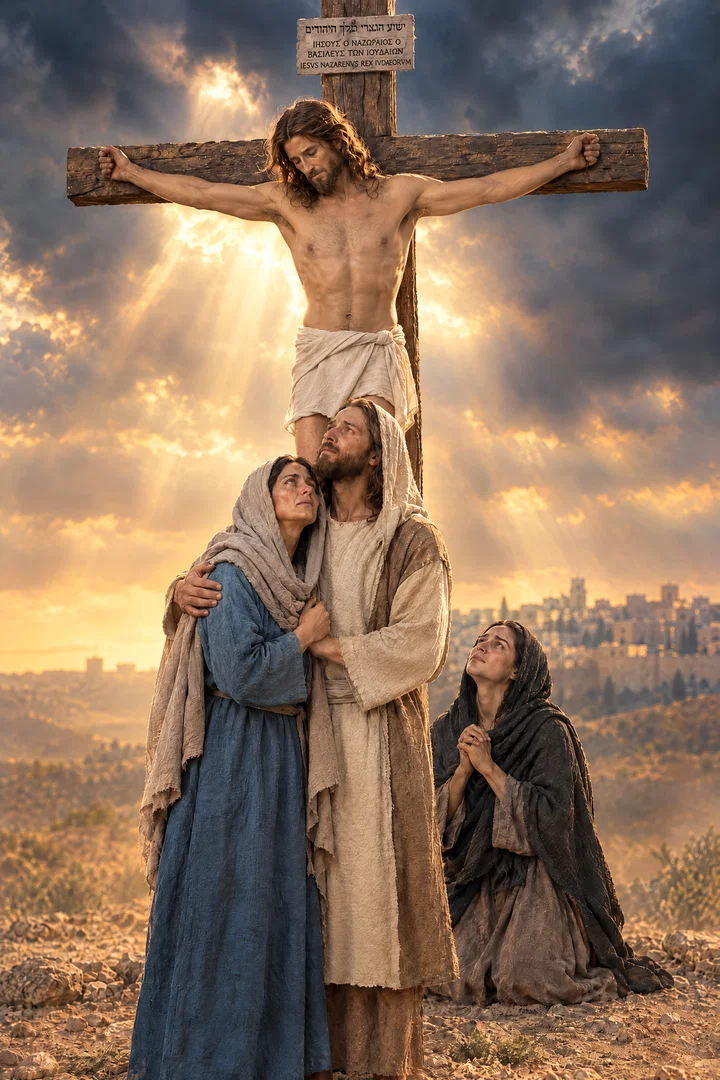
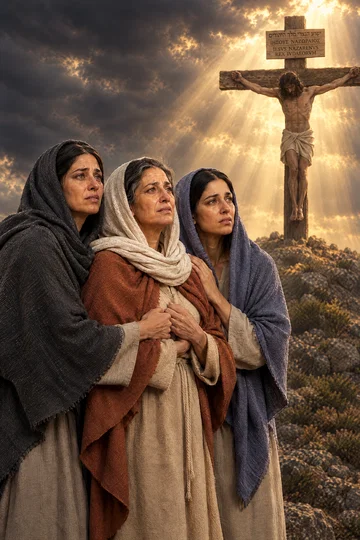
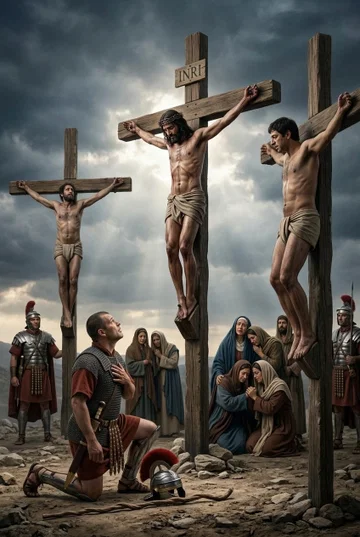
And many women were there beholding afar off, which followed Jesus from Galilee, ministering unto him:
Translations
And many women were there beholding afar off, which followed Jesus from Galilee, ministering to him:
King James Version, KJV Cambridge Paragraph Bible
And many women were there beholding afar off, which followed Jesus from Galilee, ministering unto him:
And many women were there (beholding at a distance) who followed Jesus from Galilee, ministering to him:
And many women were there beholding from afar, which had followed Jesus from Galilee, ministering unto him:
And many women were there beholding from afar, who had followed Jesus from Galilee, ministering unto him:
And there were there many women beholding from afar, who did follow Jesus from Galilee, ministering to him,
And there were there many women beholding from afar off, who had followed Jesus from Galilee ministering to him,
Now there were there, many women, from afar, beholding, who indeed had followed Jesus from Galilee, ministering unto him;
Berean Standard Bible, Majority Standard Bible
And many women were there, watching from a distance. They had followed Jesus from Galilee to minister to Him.
Many women were there watching from afar, who had followed Jesus from Galilee, serving him.
And a number of women were there, watching from a distance, who had come with Jesus from Galilee, waiting on his needs.
And many women were there, beholding him a farre off, which had folowed Iesus from Galile, ministring vnto him.
Douay-Rheims (Challoner revision)
And there were there many women afar off, who had followed Jesus from Galilee, ministering unto him:
Pictures
Cross-references
- Matthew 28:1
In the end of the sabbath, as it began to dawn toward the first day of the week, came Mary Magdalene and the other Mary to see the sepulchre.
The women who followed Jesus come to see his tomb after the Sabbath.
- Mark 15:40-41
There were also women looking on afar off: among whom was Mary Magdalene, and Mary the mother of James the less and of Joses, and Salome;
Women who followed and served Jesus watched the crucifixion from a distance.
- Luke 8:2-3
And certain women, which had been healed of evil spirits and infirmities, Mary called Magdalene, out of whom went seven devils,
Women followed Jesus and ministered to him from their substance.
- John 19:25
Now there stood by the cross of Jesus his mother, and his mother’s sister, Mary the wife of Cleophas, and Mary Magdalene.
Places women, including Jesus’ mother, beside the cross, unlike those watching from afar.
- Luke 24:10
It was Mary Magdalene, and Joanna, and Mary the mother of James, and other women that were with them, which told these things unto the apostles.
Women who followed Jesus came to his tomb and reported his resurrection.
- Mark 16:1
And when the sabbath was past, Mary Magdalene, and Mary the mother of James, and Salome, had bought sweet spices, that they might come and anoint him.
Names Salome among the women who followed Jesus.
- Mark 15:42-45
And now when the even was come, because it was the preparation, that is, the day before the sabbath,
The women witness Jesus’ death before Joseph receives his body for burial.
- Luke 23:49
And all his acquaintance, and the women that followed him from Galilee, stood afar off, beholding these things.
Both describe Jesus’ Galilean followers watching from afar.
- Luke 23:55
And the women also, which came with him from Galilee, followed after, and beheld the sepulchre, and how his body was laid.
Women who followed Jesus from Galilee watched where he was buried.
- Matthew 27:61
And there was Mary Magdalene, and the other Mary, sitting over against the sepulchre.
The women who watched the crucifixion remained at Jesus’ tomb.
- Luke 24:22
Yea, and certain women also of our company made us astonished, which were early at the sepulchre;
identifies tomb women as disciples
- Luke 23:50-53
And, behold, there was a man named Joseph, a counsellor; and he was a good man, and a just:
Joseph receives Jesus’ body and prepares it for burial.
- John 19:38-40
And after this Joseph of Arimathaea, being a disciple of Jesus, but secretly for fear of the Jews, besought Pilate that he might take away the body of Jesus: and Pilate gave him leave. He came therefore, and took the body of Jesus.
Joseph and Nicodemus take and prepare Jesus’ body.
- John 20:1
The first day of the week cometh Mary Magdalene early, when it was yet dark, unto the sepulchre, and seeth the stone taken away from the sepulchre.
Mary Magdalene came to the tomb after Jesus’ death.
- Matthew 27:32
And as they came out, they found a man of Cyrene, Simon by name: him they compelled to bear his cross.
same procession with pressed countryman
Commentary
Each commentary is drawn from primary sources: the writings of Ellen G. White and Adventist pioneers and periodicals. Each commentary is separate. Its own words are not a quotation; follow the references to read the source passages.
Ellen G. White
3 sources
The verse identifies faithful followers from Galilee, specifically women, who had accompanied Jesus from Galilee while ministering to Him and serving Him, and who followed Him all the way to Calvary to witness His death.EW 206.4ST Aug 1, 1878DA 568.1–2 They beheld the crucifixion from afar off, watching from a distance, and they stayed last at the cross watching.ST Aug 1, 1878DA 568.1–2 Mary was among those women who stayed near Jesus at the cross.DA 568.1–2
Their hope that Jesus would reign as an earthly king ended in grief at His death, but His resurrection renewed their hope.EW 206.4 After the cross they drew near at His burial to see that all that could be done for His lifeless form was done and saw the heavy stone rolled against the entrance of the sepulcher.ST Aug 1, 1878 As Mary Magdalene and the other Marys lingered about the sacred resting place while the evening shades gathered, shedding tears of sorrow over Him whom they loved, they were last at the tomb as they had been last at the cross.ST Aug 1, 1878
Mary's closeness to Jesus followed His deliverance of her from demonic control, when He rebuked the demons, and through His grace she overcame and became His disciple.DA 568.1–2 She then learned at His feet, anointed Him, followed Him to the tomb, and became the first to proclaim His resurrection.DA 568.1–2
Sources
Pioneers and periodicals
25 sources
Many women who had followed Jesus from Galilee and ministered to him stood watching from a distance as he died and was buried, then came to the tomb at dawn after the Sabbath ended at sunset.ST Jul 16, 1912RH Apr 4, 1871ST Apr 3, 1901 Those distant watchers included Mary Magdalene, Mary the mother of James the less and of Joses, Salome, and Joanna the wife of Chuza, while Jesus' mother is set apart as standing near the cross.ST Apr 3, 1901ST Feb 14, 1911 They stayed last at the cross and last at the tomb, then were first at the sepulcher, holding to him through sorrow, disappointment and delay in patient love.ST Aug 1, 1878RH Jan 12, 1860ST Feb 10, 1881 His anguished death at Calvary on the day before the Sabbath at the last Passover he attended, in A.D. 31, was the great sacrifice for sinful humanity that brought the ceremonial sacrificial system to an end.RH Feb 13, 1872ST Dec 23, 1897RH Feb 6, 1879 Though crucified under pagan Roman rule and sealed in a tomb when his mission appeared defeated, he rose triumphant, ascended to God's right hand, lives unchanged today, and is coming again as King and Judge.ST Feb 6, 1907ST Nov 7, 1906ST Feb 4, 1913RH Feb 4, 1915ST Apr 15, 1897
Crucifixion Setting and Witness
Matthew 27:55 belongs to the account of the crucifixion of Jesus at the last Passover He attended, in A.D. 31.ST Dec 23, 1897 That crucifixion day was the day before the Sabbath, a day exceptionally significant because Christ died for sinful humanity, showing His love in a way unmatched by the other days of His life.RH Feb 13, 1872
Its notice of onlookers at the execution is part of a brief history of Jesus' trial, execution and burial that records many small surrounding circumstances exactly as they were under Roman rule in Judea.RH Feb 11, 1862 Those circumstances include Jesus being brought to Pontius Pilate as governor of Judea whose sentence was necessary with power of life and death, being mocked and scourged according to Roman custom before crucifixion, bearing His cross as criminals did, having His accusation fixed to the cross in three languages as public notices at Jerusalem were written, and having His body released for burial at the request of friends as Roman governors allowed unless the criminal was infamous.RH Feb 11, 1862 The agreement of all these subordinate particulars, often given only by slight and distant allusion with nothing forced or out of place, with outside histories and known manners and institutions shows the account was not invented, for an inventor would not risk so many points of comparison with other authors.RH Feb 11, 1862
The watching from a distance shows that the crucifixion site was visible from afar, since women watched Jesus from a distance.ST Feb 18, 1913 Many women who had followed Jesus from Galilee and ministered to Him were watching from a distance during the events surrounding His death and burial.ST Jul 16, 1912 They came to the tomb at dawn in connection with Matthew 28:1, after the Sabbath had ended at sunset.ST Jul 16, 1912
The distant watchers were followers of Jesus from Galilee who were counted among the disciples, and who at times traveled with Jesus and His company and ministered unto them.ST Apr 3, 1901 They included Mary Magdalene, Mary the mother of James the less and of Joses, Salome, and Joanna the wife of Chuza.ST Apr 3, 1901 Alongside the parallel lists, three women are identified as initially watching from afar, while Jesus' mother is not counted among them but is described separately as near the cross, with others later joining her.ST Feb 14, 1911
The surrounding context in Matthew 27:50-58 records that many saints who had died were raised at the time of Christ's resurrection and came out of their graves.RH Nov 26, 1861 Their resurrection shows that some people had already been redeemed from the earth.RH Nov 26, 1861 They are a likely part of the company Christ led captive when He ascended.RH Nov 26, 1861
Women's Faithful Ministry
The women had followed Jesus from Galilee, at times traveling with Jesus and His company and ministering unto Him and unto them, and are counted among the disciples and set forth as an example of women serving as helpers in His work.RH Apr 4, 1871ST Apr 3, 1901RH Jul 30, 1861 Among them were Mary Magdalene, Mary the mother of James the less and of Joses, Salome, and Joanna the wife of Chuza.ST Apr 3, 1901 They beheld His crucifixion from afar as weeping friends who had hoped for much from Him and mourned His fate as if ended by His death, while His enemies rejoiced.ST Apr 8, 1903 They stayed last at the cross watching, then drew near at His burial to see that all that could be done for the lifeless form of their beloved Teacher was done, saw the heavy stone rolled against the entrance of the sepulcher, and as Mary Magdalene and the other Marys lingered about the sacred resting place while the evening shades gathered, shedding tears of sorrow over Him whom they loved, they were last at the tomb as they had been last at the cross.ST Aug 1, 1878RH Aug 30, 1870
Their faithful devotion continued at the cross and through burial and resurrection to being first at the sepulcher, and their faithful presence and waiting at the tomb exemplify patient love that remains through sorrow, disappointment, and delay.RH Jan 12, 1860ST Feb 10, 1881 Their presence at the cross and their being first at the grave show their devotion to Jesus.ST Feb 10, 1881ST Aug 8, 1900 Alongside those watching from afar, women pressed through the crowd to the foot of the cross, wept for Jesus, and sought to anoint His body, as devoted followers remaining near Him in His suffering.RH Dec 14, 1911
Their service to Jesus through His crucifixion, burial, and resurrection is the reason women may preach the redemption He brought and serve as teachers.RH Jul 30, 1861 Their remaining last at the cross and first at the sepulcher proves woman has more of a religious element in character than man, and that same religious character will lead women to labor earnestly for moral and religious laws, striving from conscientious but false application of ideas to rivet on all the fetters forged by popery and to extinguish the sacred memorial instituted by God.RH Aug 30, 1870 Their presence at the cross and as first at the grave shows devotion to Jesus, whose sacrifice offers them the bliss of heaven, so that their lives owe to Him what makes them worth possessing.ST Aug 8, 1900
Death, Sacrifice and Victory
Matthew 27:55 stands in the account of the day of Christ's crucifixion, the day before the Sabbath, when Jesus died for sinful humanity and showed his love in a way unmatched by the other days of his life.RH Feb 13, 1872 It belongs to his death on Calvary in anguish, crucified by guilty sinners as the great sacrifice for sins.RH Feb 6, 1879 His death in that account brought the ceremonial sacrificial system to an end.
Though the crucifixion, burial and resurrection took place under pagan Roman rule, with Jesus crucified and sealed in a tomb, God's power raised him and brought victory even through death.ST Nov 7, 1906 His earthly mission at his death and burial appeared defeated, yet it was nevertheless a success, showing that apparent defeat does not determine the true outcome.ST Nov 7, 1906ST Feb 4, 1913 The crucifixion at Calvary is the work of the central Personage to whom the Bible points, the rejected Sufferer who rises, ascends to God's right hand, and comes again as King and Judge.ST Feb 6, 1907 He is the same Jesus who rose triumphant over death and the grave and is coming again.ST Feb 6, 1907ST Apr 15, 1897 He is the Pilot who faced Gethsemane and Calvary and the prison house and the tomb and came forth conqueror from it all, living today unchanged from Daniel's day and from the days when he steadied the ark through the deluge and walked the storm-tossed Galilee, present now not as a passenger but as Pilot with his hand on the helm, steering through coming sunless days and guiding the ship by divine providence to the land of promise.RH Feb 4, 1915
In the darkness of Calvary when Jesus was enshrouded in darkness, God's love for his Son was no less than by the Jordan and on the holy mount where the voice said This is my beloved Son in whom I am well pleased, and no less than in the wilderness of temptation and in Gethsemane, showing that love abides above feeling and does not lessen when sunshine and joyful feeling are gone.ST Oct 7, 1897 The account of Christ's sufferings in this chapter can help subdue pride and remove discontent in a fretful or gloomy Christian.ST Apr 17, 1879
Sources