Matthew 27:59
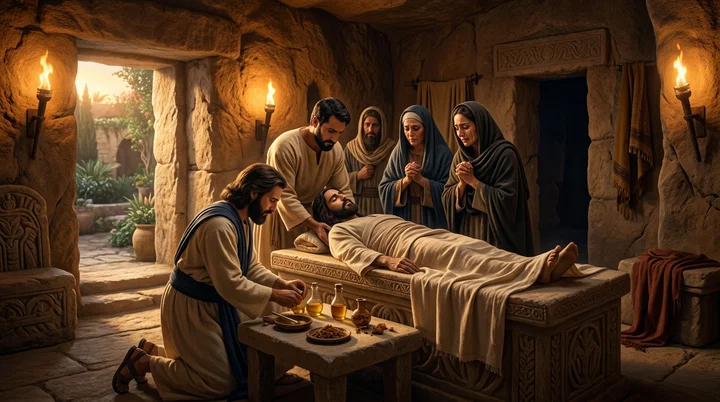
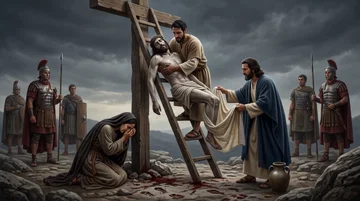
And when Joseph had taken the body, he wrapped it in a clean linen cloth,
Translations
American King James Version, King James Version, KJV Cambridge Paragraph Bible, Webster Bible
And when Joseph had taken the body, he wrapped it in a clean linen cloth,
Revised Version, American Standard Version
And Joseph took the body, and wrapped it in a clean linen cloth,
And having taken the body, Joseph wrapped it in clean linen,
And Joseph having got the body, wrapped it in a clean linen cloth,
And Joseph, taking the body, wrapped it up in a clean Indian-cloth,
Berean Standard Bible, Majority Standard Bible
So Joseph took the body, wrapped it in a clean linen cloth,
Joseph took the body and wrapped it in a clean linen cloth
And Joseph took the body, folding it in clean linen,
So Ioseph tooke the body, and wrapped it in a cleane linnen cloth,
Douay-Rheims (Challoner revision)
And Joseph taking the body, wrapped it up in a clean linen cloth.
Pictures
Cross-references 20 of 26
- John 19:40
Then took they the body of Jesus, and wound it in linen clothes with the spices, as the manner of the Jews is to bury.
Describes Jesus’ body being wrapped in linen with spices for burial.
- Mark 15:46
And he bought fine linen, and took him down, and wrapped him in the linen, and laid him in a sepulchre which was hewn out of a rock, and rolled a stone unto the door of the sepulchre.
Joseph wraps Jesus’ body in linen and lays it in a tomb.
- Luke 23:53
And he took it down, and wrapped it in linen, and laid it in a sepulchre that was hewn in stone, wherein never man before was laid.
Joseph wraps Jesus in linen and lays him in a tomb.
- Matthew 28:6
He is not here: for he is risen, as he said. Come, see the place where the Lord lay.
The angel announces that Jesus has risen and is no longer in the tomb.
- Isaiah 53:9
And he made his grave with the wicked, and with the rich in his death; because he had done no violence, neither was any deceit in his mouth.
Jesus’ burial with the rich fulfilled the prophecy of his grave.
- Luke 23:55-56
And the women also, which came with him from Galilee, followed after, and beheld the sepulchre, and how his body was laid.
The women saw where Jesus was laid, prepared spices, and rested on the Sabbath.
- Romans 6:4
Therefore we are buried with him by baptism into death: that like as Christ was raised up from the dead by the glory of the Father, even so we also should walk in newness of life.
Baptism represents being buried with Christ and rising to new life.
- John 19:38
And after this Joseph of Arimathaea, being a disciple of Jesus, but secretly for fear of the Jews, besought Pilate that he might take away the body of Jesus: and Pilate gave him leave. He came therefore, and took the body of Jesus.
Joseph takes Jesus’ body for burial.
- 1 Corinthians 15:4
And that he was buried, and that he rose again the third day according to the scriptures:
Jesus’ burial is followed by his rising on the third day.
- John 19:39
And there came also Nicodemus, which at the first came to Jesus by night, and brought a mixture of myrrh and aloes, about an hundred pound weight.
Nicodemus joined Joseph in preparing Jesus’ body for burial.
- Mark 15:42-43
And now when the even was come, because it was the preparation, that is, the day before the sabbath,
Both accounts place Jesus’ burial on the day before the Sabbath.
- John 20:5-7
And he stooping down, and looking in, saw the linen clothes lying; yet went he not in.
Describes the linen cloths and face cloth left in the tomb.
- John 19:42
There laid they Jesus therefore because of the Jews’ preparation day; for the sepulchre was nigh at hand.
Jesus was laid in Joseph’s nearby tomb on the preparation day.
- John 19:30
When Jesus therefore had received the vinegar, he said, It is finished: and he bowed his head, and gave up the ghost.
Jesus declares his work finished before his body is prepared for burial.
- Colossians 2:12
Buried with him in baptism, where in also ye are risen with him through the faith of the operation of God, who hath raised him from the dead.
Baptism portrays burial and rising with Christ.
- Matthew 27:63-66
Saying, Sir, we remember that that deceiver said, while he was yet alive, After three days I will rise again.
The authorities secure and guard Jesus’ tomb after his burial.
- Matthew 28:2
And, behold, there was a great earthquake: for the angel of the Lord descended from heaven, and came and rolled back the stone from the door, and sat upon it.
An earthquake accompanies the events at the guarded tomb.
- Matthew 28:12-13
And when they were assembled with the elders, and had taken counsel, they gave large money unto the soldiers,
The guards and priests spread the lie that Jesus’ disciples stole his body.
- Matthew 27:52-53
And the graves were opened; and many bodies of the saints which slept arose,
Many saints rise from their graves after Christ’s resurrection.
- Mark 15:47
And Mary Magdalene and Mary the mother of Joses beheld where he was laid.
Mary watches where Jesus is laid.
Commentary
Each commentary is drawn from primary sources: the writings of Ellen G. White and Adventist pioneers and periodicals. Each commentary is separate. Its own words are not a quotation; follow the references to read the source passages.
Ellen G. White
21 sources
Joseph of Arimathea, a rich and honored ruler and true disciple, boldly begged Pilate for the body of Jesus and received permission to take it when the poor disciples could not for sorrow, fear and lack of influence.COS 167.1–168.4SG1 64.1DA 773.3–4 By securing the body in this way he saved it from dishonored handling by soldiers and burial in a criminals' ground as one executed for treason against Rome.ST Aug 1, 1878COS 166.1–2 Joined by Nicodemus, he reverently took down the bruised and torn body, cleansed it, wrapped it in clean fine linen with about a hundred pounds of costly myrrh and aloes, and laid it in his own new rock-hewn tomb near Calvary wherein no man had lain.COS 167.1–168.4EW 148.23SP 176.1DA 773.3–4COS 166.3–5 Though neither Joseph nor Nicodemus had openly confessed Christ in life for fear of the Sanhedrin, the scenes of His death convinced them He was the Messiah, and they now no longer hid their faith but courageously gave their dead Master an exceptionally honored burial.COS 167.1–168.4DA 773.3–43SP 188.3–190.1 That tomb where the women lingered and the angels watched became the place of triumph, for Christ rose from it as conqueror and the resurrection and the life, while many rose with Him to testify He was risen.SG1 64.1Ms 80, 1886, par. 3–5ST Mar 26, 1894Ms 81, 1909, par. 23–24
Honorable Burial Accomplished
Matthew 27:59 belongs to the history of professedly pious Jews given in Matthew 27 and 28, to be read with Christ's commission to His disciples in Matthew 28.Ms 150, 1906, par. 1–3
Joseph of Arimathea was a rich and honored ruler, an honorable counsellor with influence and a true disciple, who went privately yet boldly to Pilate to beg for Jesus' body and returned with Pilate's order granting it.COS 167.1–168.4SG1 64.1DA 773.3–4
This was a task the poor disciples could not do, for though they loved, respected and honored Jesus they did not know how to obtain His body, were overwhelmed with sorrow, had forgotten His words, were without hope and feared to show themselves openly, and John had no influence with Pilate to prevent dishonor.COS 167.1–168.4SG1 64.1DA 773.3–4COS 166.1–2
Securing the body in this way saved Jesus from a dishonored burial, for as one executed as an alleged traitor and for treason against the Roman government He would otherwise have been handled by unfeeling soldiers and taken to a burial ground set apart for such criminals.ST Aug 1, 1878COS 166.1–2
Joseph, joined by Nicodemus, with his own hands gently and reverently took down the bruised, torn and lacerated body from the cross with tears of sympathy, bathed and cleansed it from the stain of blood, and wrapped it in a clean, fine linen sheet or cloth together with the spices Nicodemus had brought.COS 167.1–168.43SP 176.1ST Aug 1, 1878DA 773.55RED 95.2
The linen wrapping was the customary way of preparing the dead, done here with precious ointments and spices.COS 166.3–5
The preparation used about a hundred pounds' weight of costly myrrh and aloes for embalming, and Jesus was given in death respect equal to the most honored in Jerusalem, an exceptionally honored burial.DA 773.3–4COS 166.3–5
He was borne with two others to Joseph's own new tomb hewn from rock near Calvary, built and reserved for Joseph's own use and wherein no man had ever lain.COS 167.1–168.43SP 176.1ST Aug 1, 18785RED 95.2Ms 11, 1893, par. 1
There His mangled limbs were straightened and His bruised hands folded upon His pulseless breast, and then a stone of great weight was rolled against the entrance.SG1 64.15RED 95.2
The Galilean women who had humbly followed Jesus in life, including Mary Magdalene and the other Marys, stayed near after His death, drew near to see that all was done, would not leave until they saw His sacred body laid there, and lingered about the tomb shedding tears into the gathering evening shades as those last at the cross and last at the tomb, fearing lest enemies should seek to obtain His body.SG1 64.15RED 95.2
The body was hastily placed in Joseph's tomb as the Sabbath approached so the disciples could keep the Sabbath according to the commandment.3SP 186.3–187.1
His death and burial fulfilled the Passover symbolism, for the antitypical Lamb had been slain and lay in the tomb.3SP 186.3–187.1
Sorrow, Faith, and Victory
After His agonizing death on Calvary as a criminal and His laying in the tomb, the disciples renewed their sorrow and mourned in deep anguish with terrible grief because their hopes had died with Him and they had lost their Lord, while seeking to give Him an honored resting-place.SG1 64.1EW 148.2EW 206.4Ms 80, 1886, par. 3–5 Their anguish after the burial was terrible, for with the crucifixion the hopes of His followers died.Ms 80, 1886, par. 3–5 The burial belongs to the account of His laying in the tomb after that agonizing death, when grief followed because hope had died with Him.EW 206.4
Neither Joseph nor Nicodemus had openly accepted the Saviour while He lived, knowing it would exclude them from the Sanhedrin and hoping to protect Him by influence in its councils.COS 167.1–168.4DA 773.3–4 They had listened to His teachings and remembered His foretelling of His death, and were proved by the scenes of His death that He was the true Messiah.COS 167.1–168.4 So now that He was dead they no longer concealed their attachment, to the astonishment of the disciples, and Joseph's previously quiet belief was acted on with courage and firm faith as they took their stand firmly as believers.COS 167.1–168.4DA 773.3–43SP 188.3–190.1 While the disciples feared to show themselves openly, these men came forward openly for their dead Master.DA 773.3–4
As rich and honored men their wealth and influence enabled them to do for their dead Master what the poor disciples could not do and in great measure protected them from the malice of the priests and rulers.DA 773.3–4 Fear for the body was needless, for the angelic host watched the resting place with untold interest and guarded the sepulchre, earnestly waiting the command to act their part in liberating the King of glory.SG1 64.1 Angels watched the tomb while Roman guards also kept careful watch over it.Ms 80, 1886, par. 3–5 The body lying in Joseph's tomb became a source of fear for the priests and rulers because they knew Jesus had raised the dead and feared He would rise Himself.6RED 3.1
The tomb in Joseph's sepulchre became the place over which He rose from the dead.ST Mar 26, 1894 The angel of God rolled back the stone, a voice from heaven woke the Sleeper, and Christ walked forth a triumphant conqueror while the guards fell to the ground as dead men.Ms 80, 1886, par. 3–5 His burial after suffering and death was followed by triumphant resurrection, which shows His power as the resurrection and the life.Ms 80, 1886, par. 3–5Ms 81, 1909, par. 23–24 When the disciples came and found the tomb empty they were amazed and could hardly believe the testimony that He had indeed risen, and at His rising a multitude arose with Him and went into the city testifying that Christ was risen and they were risen with Him, so the lying report bribed from the guards that the disciples had stolen Him had little effect.Ms 80, 1886, par. 3–5 While His body lay in Joseph's tomb after His execution, the sick who had hoped for His healing now had no access to Him.ST Nov 8, 1883
Sources
Pioneers and periodicals
79 sources
Joseph of Arimathea obtained the dead body of Jesus from Pilate and took it down from the cross into his own care, wrapping it tenderly and reverently in a clean fine linen cloth with spices and laying it in his own new rock-hewn tomb near Calvary.RH May 5, 1874ST Dec 23, 1897ST Feb 16, 1882ST May 24, 1905ST Feb 1, 1899 That honorable burial in a rich man's tomb fulfills Isaiah 53:9, though His enemies intended disgrace with criminals.RH Nov 18, 1862RH Sep 16, 1902ST Jul 4, 1905RH Oct 29, 1914 It was done in haste on Friday the preparation day before the Sabbath began, and His followers rested on the Sabbath according to the commandment.RH Apr 12, 1860ST Aug 12, 1880ST Aug 27, 1885RH Apr 7, 1851 He truly died and lay asleep in death, and His repose blesses the grave while His rising bursts its chain to give hope of eternal life.RH Jul 9, 1857ST Mar 29, 1899ST Mar 7, 1906ST Jan 31, 1911ST Apr 11, 1911 His wrapping and burial show bold faith grown courageous under hatred and contempt, set forth for believers to imitate.RH Jul 1, 1902RH Feb 26, 1901ST Jul 19, 1883RH Jul 1, 1902
Burial Words and Setting
The taking belongs to the crucifixion at the last Passover attended by Jesus, in A.D. 31.ST Dec 23, 1897 Joseph of Arimathea obtained the dead body after the crucifixion by request to Pontius Pilate as Roman governor of Judea, and took it down from the cross into his own care.RH Feb 11, 1862RH Oct 29, 1914ST Jan 31, 1911 The body was given to friends for burial by sentence of one holding power of life and death, and was thus placed in Joseph's care after the crucifixion for burial in Joseph's tomb.RH Feb 11, 1862ST Dec 9, 1880ST Jan 31, 1911
Joseph wrapped the body tenderly, reverently and carefully in a clean, fine, soft linen cloth.ST Aug 1, 1878RH May 5, 1874ST Feb 16, 1882ST Aug 21, 1907 The wrapping was done with aromatic spices brought by Nicodemus, about one hundred pounds of myrrh and aloes placed with the body, and a linen napkin bound around the head.ST Aug 1, 1878ST Feb 16, 1882ST Apr 8, 1903 Loving disciples so continued their care for His body even in the grief of burial.ST Apr 8, 1903
The wrapped body was carried to Joseph's own new, unused, rock-hewn tomb near Calvary in a garden and laid there, where no one had yet been laid.ST Aug 1, 1878ST Mar 20, 1901ST Feb 1, 1899RH Oct 13, 1874 The burial in the new tomb was understood as a temporary accommodation, with expectation of a permanent resting-place afterward.ST May 24, 1905 It was a lonely, borrowed grave, for He was so poor on earth that He could not buy Himself a grave or a coffin when He died.ST Dec 17, 1912RH Nov 18, 1909
The tomb was closed with a great stone door at its entrance.ST Nov 15, 1910 It was laid in a rock tomb under pagan Roman rule, sealed with the Roman seal and set with a guard of Roman soldiers in a rock-bound sepulcher.ST Oct 25, 1905ST Feb 7, 1911ST Nov 7, 1906ST Oct 6, 1914 The sealing and guarding followed the taking and wrapping and laying in the tomb.ST Jan 31, 1911
The burial was done in haste because the Sabbath was drawing near, beginning at sundown on Friday.ST Feb 1, 1899ST Aug 12, 1880 Mary Magdalene stayed until Joseph and Nicodemus took Him down from the cross, then followed with other friends to see where He was laid.ST Apr 10, 1901ST Aug 26, 1880 They laid Him in Joseph's new tomb at eventide amid soft weeping, a few friends remaining to mourn until the Sabbath's requirements called them home.ST Feb 1, 1899RH Jan 12, 1860ST Sep 9, 1930
Joseph and Nicodemus were men of wealth and influence who risked public disapproval to care for Jesus and to procure the body, possibly by offering money.ST Feb 1, 1899 By their influence they secured an honorable, decent, kingly burial in a new tomb belonging to a wealthy ruler, rather than leaving Him unburied with criminals.ST Aug 1, 1878RH Oct 29, 1914ST Dec 7, 1882 An executed alleged traitor would otherwise have been taken by the soldiers to a burial ground reserved for criminals, to the disgraceful burial given in the Valley of Hinnom, and Joseph's prompt action with Nicodemus prevented that dishonor.ST Aug 1, 1878ST Feb 1, 1899RH Oct 29, 1914
The granting of the body to friends accords exactly with the known law and custom of all Roman governors to give up the dead for burial to friends unless the criminal was infamous.RH Feb 11, 1862 Its exact agreement with known Roman manners and institutions stands together with the surrounding details of derision, scourging, bearing the cross, and the accusation in three languages.RH Feb 11, 1862 Such minute accuracy and consistency flows naturally and without forced design out of the narrative, giving a presumption of truth beforehand and strong added evidence that the story was not fabricated, since an inventor would not hazard so many points of comparison and truth would not be so artfully blended with falsehood.RH Feb 11, 1862
Prophecy of Rich Burial
The wrapping in clean linen was preparation for laying in a rich man's tomb, fulfilling Isaiah 53:9 that the suffering Servant would be with the rich in His death.RH Nov 18, 1862RH Sep 16, 1902ST Jul 4, 1905 That prophecy declared He had done no violence and spoken no deceit, yet His grave would be appointed with the wicked and with the rich.ST Jul 4, 1905RH Aug 21, 1866 On one side stood crucifixion between two thieves on Golgotha, and on the other burial in the rich man's tomb, with Joseph of Arimathea taking the body and laying it in his own new tomb.RH Aug 21, 1866
This burial is one of at least twenty-four Old Testament prophecies concerning betrayal, trial, death and burial.ST Oct 21, 1930 They were spoken by different prophets between about 1000 and 500 B.C. and were all literally fulfilled within twenty-four hours on the day of crucifixion.ST Oct 21, 1930 Together they mark Calvary as climax and crisis in God's plan for the earth.ST Oct 21, 1930
His enemies intended a dishonorable grave with criminals, but their purpose was thwarted and He received an honorable, kingly burial instead of being left unburied.RH Oct 29, 1914ST Dec 7, 1882 The tomb was new and rock-hewn, belonging to Joseph of Arimathea, a wealthy ruler who stepped forward to obtain the body and provide decent burial when the disciples lacked influence to do so.RH Oct 29, 1914ST Dec 7, 1882 Such perfect agreement of writers living in different ages and countries proves the Bible a true and connected record.RH Aug 21, 1866
Joseph's coming forward to secure burial fulfilled Scripture and exemplified sacrifice in service to God's work. His deed is preserved in heaven's record as important.
Sabbath Timing and Rest
Joseph took the body at evening in the preparation time called even, distinguished from evening, on the preparation day, Friday the sixth day of the week.RH Apr 12, 1860ST Aug 27, 1885RH Apr 7, 1851 He wrapped it in clean linen and laid it in his new tomb before the high ceremonial Sabbath began.RH Apr 12, 1860RH Apr 7, 1851 The women had about three hours before the Sabbath began to prepare spices and ointments after seeing how the body was laid.ST Aug 27, 1885RH Apr 7, 1851
That Friday was not the first day of unleavened bread observed as a Sabbath, for the burial setting shows it was not marked by that festival Sabbath's sacredness.RH Apr 15, 1873 The burial was already tender, careful and costly, done in haste before the Sabbath yet with fine linen, about one hundred pounds of myrrh and aloes, and a linen napkin bound around the head, which had provided a decent burial before the Sabbath began.RH May 5, 1874ST Feb 16, 1882 The women's later wish to anoint the body more fully was therefore an act of love, not necessity or mercy to one suffering, and no necessary burial work remained.RH May 5, 1874ST Feb 16, 1882
The burial was hurried because the Sabbath began at sundown on Friday, and the disciples considered it wrong to use the holy day for further burial preparations.ST Aug 12, 1880 They rested on the Sabbath according to the commandment and intended to return Sunday to complete the work, which identifies the New Testament Sabbath with the Sabbath commanded in the Old Testament as the seventh day of the week.ST Aug 12, 1880ST Aug 27, 1885 Read continuously into Matthew 28, the sealing of the tomb and setting of the guard fall in the closing part of the Sabbath, and the dawn is the approaching light part of the first day after the Sabbath ended at sunset.ST Jul 16, 1912 Jesus lay dead in the new tomb during that one seventh day over eighteen hundred years ago, for a full twenty-four hours.RH May 7, 1872RH Mar 21, 1865
This laying in the tomb marks the start of the three days and three nights counted to the resurrection at evening on the seventh day.RH Apr 12, 1860 As Christ's body was taken and buried, God's Sabbath may appear to perish beneath human tradition and be trampled, vilified and seemingly buried.ST Jul 26, 1910ST Oct 11, 1899 Like its Lord it cannot be destroyed, because its life and foundation are in God and His enduring Word, not in human laws or protection.ST Jul 26, 1910ST Oct 11, 1899
Doctrinal Meaning and Hope
Jesus truly died, and the wrapping in clean linen was the laying of His real, material, mangled body gently in the tomb near Calvary, where He lay peacefully asleep in death.ST Jan 31, 1911ST Aug 15, 1916ST Sep 18, 1884 His soul, the whole living person, went into the grave, life having ceased after He committed His life to the Father, and He lay dead for three days as the result of human sin.ST Mar 7, 1906
He who was wrapped and buried is the same person who had glory with the Father before the world was, who was born as a human and then crucified; His nature and mode of existence changed but His personal identity did not.RH Nov 14, 1854 He rose the third day and is now exalted at the Father's right hand as the same Jesus who rose, ascended, and will come again.RH Nov 14, 1854RH Mar 21, 1912
His death satisfied the law broken by mortals, for the sinless Christ bore death's penalty to fulfill God's purpose and conquer what had triumphed over humanity.ST Mar 29, 1899 Lying enwrapped in gloom in Joseph's tomb alone after crying It is finished and dying bearing human sin and sorrow on the cross, He as the Prince of Light was under the power of death for us until He rose and burst the grave's chain for us.RH Nov 12, 1872 His body was placed in a grave among sinful people on this sin-cursed earth, His death on the cross endured in bodily pain and mental agony being the Creator's death for humanity.ST Sep 10, 1896
His repose in the grave makes the grave blessed, and His resurrection gives hope that the dead will rise at God's command to a nobler, eternal life.RH Jul 9, 1857 Joseph's tomb is now empty because Christ is risen, and His resurrection brings freedom from death and sin and freedom to worship and obey God, demonstrating righteousness over sin and life over death.ST Mar 29, 1899ST Apr 11, 1911 The same Jesus who died and was buried rose again triumphant over death and the grave, for Himself and for us.ST Apr 15, 1897
Death and the sealed tomb with the Roman seal did not prevent His being caught up to God and His throne.ST Oct 25, 1905 Though laid in a stone sepulcher sealed by Roman authority and guarded while Satan still hoped to triumph over Him, Jesus soon rose, defeating the enemy and showing Himself the living Lord with authority over death.ST Oct 6, 1914 Coming forth from Joseph's sepulcher as the Prince of Life, He proclaimed Himself the resurrection and the life and assured His triumph in the contention between the Prince of Light and the prince of darkness, making certain the end of Satan's reign on the earth.ST Jul 9, 1912ST Mar 12, 1894
Christ laid in the tomb on His back is the pattern for baptism: as Christ died the believer dies to sin, as Christ was buried in the tomb the believer is buried beneath the watery grave by immersion, and as Christ was raised the believer is raised to walk in newness of life in public acknowledgment of faith in a buried and risen Lord.ST Aug 16, 1905 That burial posture is copied when the administrator leads the candidate down into water of suitable depth and plunges him backward until his position in the water resembles Christ lying in the sepulcher, showing faith in Christ's death, burial, and resurrection, rather than by sprinkling which is no burial, or by pouring, or by plunging face first.ST Aug 16, 1905ST Jan 17, 1878RH Jun 29, 1869 Baptism is the divinely appointed memorial of the burial and resurrection, not a day of rest, since a day of rest cannot fittingly commemorate the resurrection day of most intense activity among the heavenly hosts and the church on earth.ST Aug 16, 1905
His submission in Gethsemane and His burial in Joseph's new tomb show immeasurable love that awakens gratitude and reveals the sinfulness of sins that grow from self-will, and baptism portrays the believer's surrender as buried with Christ and risen to live a new life.ST Mar 27, 1893
After the disciples had expected Him to take the kingdom, He was instead dead and laid in Joseph's new tomb, and their disappointed expectations did not cancel the blessing they had received through the truths they heard.ST Jul 27, 1882 His lifeless body in the tomb became a measure of the bitter disappointment experienced in 1844, when believers expected Christ to come but He did not appear, like those who expected Him to restore Israel's kingdom facing the loss of their expectation.RH Nov 19, 1872
The Jesus who faced the tomb after Gethsemane and Calvary and came forth from it a conqueror, wrapped and laid in the tomb, is the same living Pilot today, not as a passenger but with His hand on the helm, directing and steadying His people through darkness and tempest and driving the ship on by divine providence to the land of promise.RH Feb 4, 1915 That real, material body laid in Joseph's tomb continues in heaven, even as His blood remains the enduring price of redemption and the objective ground of faith.ST Sep 18, 1884
One proposed explanation of a Sabbath change treats that day in the grave, when His dead body lay a full twenty-four hours in Joseph of Arimathea's grave, as having dropped out of time, so that the first day when Jesus rose became the old Sabbath's successor and the resurrection's anniversary.RH May 7, 1872 That one seventh day over eighteen hundred years ago when the Jews met with a dead Saviour before them does not mean those who now keep the seventh day have a dead Saviour before them.RH Mar 21, 1865
After His execution His body lay in Joseph's tomb in death until the resurrection morning, while His followers mourned and remembered the good He had done.ST Jul 7, 1914 During that lying there the sick who had hoped for His healing had no access to Him.ST Nov 8, 1883
Example for Believers
Joseph's taking down and wrapping of the body shows clearness of faith, boldness of conviction and fidelity of character.RH Jul 1, 1902 By nature he was cautious, conservative and timid through fear of men and regard for reputation, yet his love and faith grew courageous amid public hatred and contempt surrounding a crucified man.RH Jul 1, 1902RH Jul 1, 1902 With Nicodemus he stepped forward when the followers were scattered and powerless, and as men of wealth and influence they used their means and influence to sustain Christ's cause through crisis and to give Him honorable burial when His cause was in disrepute.RH Feb 26, 1901ST Jul 19, 1883 His course together with that of Nicodemus is held forth for contemplation and emulation, for believers of the present day will be called to imitate such boldness and fidelity before the end of their experience.RH Jul 1, 1902
The careful, tender wrapping was a sacred privilege, for He who died for the world was treated with reverence even in death.RH Oct 4, 1870 Loving disciples wrapped the body in linen and spices and laid it in the new rock-hewn tomb, their care continuing even in the grief of burial. Amid soft weeping at eventide the disciples and women laid Him in Joseph's new tomb, showing their love, and Joseph's loving, reverent preparation honored Jesus after death.ST Sep 9, 1930RH Apr 16, 1867 Those who so cared for Him in His shame will be remembered by Him when He returns in glory.RH Oct 4, 1870
Contemplating the suffering and burial to which this wrapping belongs subdues pride and casts out discontent.ST Apr 17, 1879 The women who remained near the cross and the tomb, enduring sorrow while waiting in hope for the promised redemption, exemplify patience.RH Jan 12, 1860 Joseph's act took place when Jesus' earthly mission appeared to end in defeat, yet that apparent outcome did not make it a failure.ST Feb 4, 1913
The lonely, borrowed grave in which the wrapped body was laid, following death on the cross, proves deep love and a mission to save.ST Dec 17, 1912 That tomb is recalled as the place where His body lay before the resurrection, the sepulcher over which He later rose.ST Mar 26, 1894ST Jan 24, 1911 The body taken down from the cross and wrapped in clean linen was laid to rest in Joseph's tomb, now empty because Christ is risen.ST Aug 5, 1913
Sources