John 20:5
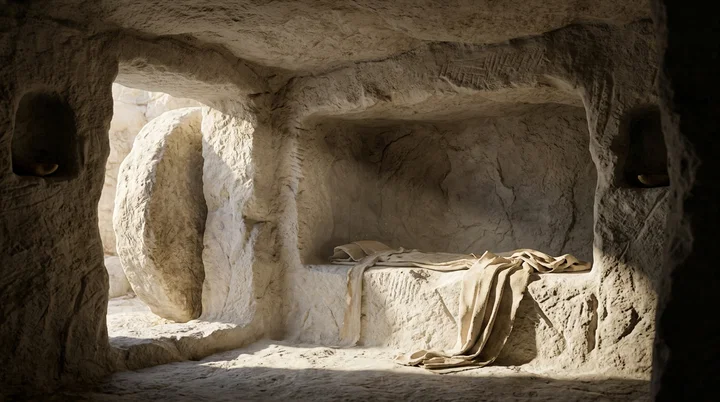
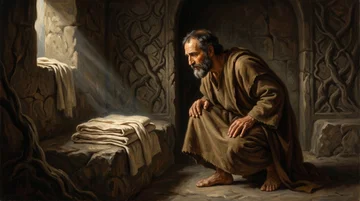
And he stooping down, and looking in, saw the linen clothes lying; yet went he not in.
Translations
American King James Version, King James Version, KJV Cambridge Paragraph Bible
And he stooping down, and looking in, saw the linen clothes lying; yet went he not in.
And he stooping down, saw the linen cloths lying; yet he went not in.
Revised Version, American Standard Version
and stooping and looking in, he seeth the linen cloths lying; yet entered he not in.
and having stooped down, seeth the linen clothes lying, yet, indeed, he entered not.
and stooping down he sees the linen cloths lying; he did not however go in.
and, stooping aside, beholdeth, lying, the linen-bandages, nevertheless, he entered not.
Berean Standard Bible, Majority Standard Bible
He bent down and looked in at the linen cloths lying there, but he did not go in.
Stooping and looking in, he saw the linen cloths lying there; yet he didn’ t enter in.
And looking in, he saw the linen bands on the earth; but he did not go in,
And he stouped downe, and sawe the linnen clothes lying: yet went he not in.
Douay-Rheims (Challoner revision)
And when he stooped down, he saw the linen cloths lying; but yet he went not in.
Pictures

Cross-references 20 of 26
- Luke 24:1-12
Now upon the first day of the week, very early in the morning, they came unto the sepulchre, bringing the spices which they had prepared, and certain others with them.
Women find the empty tomb and hear that Jesus has risen.
- Matthew 28:1
In the end of the sabbath, as it began to dawn toward the first day of the week, came Mary Magdalene and the other Mary to see the sepulchre.
A parallel first-day resurrection account.
- Mark 16:2-4
And very early in the morning the first day of the week, they came unto the sepulchre at the rising of the sun.
Women arrive early on the first day and find the tomb open.
- Luke 24:12
Then arose Peter, and ran unto the sepulchre; and stooping down, he beheld the linen clothes laid by themselves, and departed, wondering in himself at that which was come to pass.
Peter stoops to look into the tomb and sees the linen cloths.
- Luke 24:10
It was Mary Magdalene, and Joanna, and Mary the mother of James, and other women that were with them, which told these things unto the apostles.
Names the women who reported the empty tomb.
- Matthew 27:59
And when Joseph had taken the body, he wrapped it in a clean linen cloth,
Jesus is wrapped in linen before being placed in the tomb.
- John 19:38-40
And after this Joseph of Arimathaea, being a disciple of Jesus, but secretly for fear of the Jews, besought Pilate that he might take away the body of Jesus: and Pilate gave him leave. He came therefore, and took the body of Jesus.
Describes Jesus being wrapped and laid in the tomb.
- Matthew 28:6
He is not here: for he is risen, as he said. Come, see the place where the Lord lay.
The angel declares that Jesus has risen and invites the women to see the empty tomb.
- John 20:1
The first day of the week cometh Mary Magdalene early, when it was yet dark, unto the sepulchre, and seeth the stone taken away from the sepulchre.
Mary finds the tomb open before the disciples arrive.
- John 20:11-18
But Mary stood without at the sepulchre weeping: and as she wept, she stooped down, and looked into the sepulchre,
Mary remains at the tomb, meets the risen Jesus, and carries his message.
- John 20:9
For as yet they knew not the scripture, that he must rise again from the dead.
The disciples had not yet understood Scripture teaching that Jesus must rise from the dead.
- Luke 23:53
And he took it down, and wrapped it in linen, and laid it in a sepulchre that was hewn in stone, wherein never man before was laid.
Describes Jesus being wrapped in linen and placed in a tomb.
- Mark 15:45-46
And when he knew it of the centurion, he gave the body to Joseph.
Describes Jesus being wrapped in linen and laid in a tomb.
- Psalms 16:10
For thou wilt not leave my soul in hell; neither wilt thou suffer thine Holy One to see corruption.
God promises that his Holy One will not see corruption.
- 1 Corinthians 15:20
But now is Christ risen from the dead, and become the firstfruits of them that slept.
Christ is risen from the dead, assuring the resurrection of those who belong to him.
- John 20:26
And after eight days again his disciples were within, and Thomas with them: then came Jesus, the doors being shut, and stood in the midst, and said, Peace be unto you.
Jesus appears again to the disciples after his resurrection.
- Mark 16:5-6
And entering into the sepulchre, they saw a young man sitting on the right side, clothed in a long white garment; and they were affrighted.
The women find the tomb empty and hear that Jesus has risen.
- Luke 24:22
Yea, and certain women also of our company made us astonished, which were early at the sepulchre;
Both recount women visiting the tomb and reporting what they found.
- Mark 16:1
And when the sabbath was past, Mary Magdalene, and Mary the mother of James, and Salome, had bought sweet spices, that they might come and anoint him.
Places the women’s visit to the tomb after the Sabbath.
- Mark 16:8
And they went out quickly, and fled from the sepulchre; for they trembled and were amazed: neither said they any thing to any man; for they were afraid.
angel seen by the women before disciples arrived
Commentary
Each commentary is drawn from primary sources: the writings of Ellen G. White and Adventist pioneers and periodicals. Each commentary is separate. Its own words are not a quotation; follow the references to read the source passages.
Ellen G. White
13 sources
John hastened to the tomb with such zeal that he outran Peter and arrived first, and stooping down he looked in and saw the linen burial clothes lying there, yet he remained outside and did not go in until Peter had entered.Ms 155, 1904, par. 1–2Ms 115, 1897, par. 4–6ST Dec 14, 1882AA 539.2BS 45.1–3 He had been laid in Joseph's new tomb with a great stone before the door, and when they looked His body was gone while the linen clothes remained lying by themselves, apart from Him.ST Dec 14, 1882ST Aug 22, 18786RED 18.3Ms 3, 1890, par. 29–30 The empty tomb with the burial cloths left without the body was evidence of the resurrection, and seeing them led John to believe that Jesus had risen, trusting what Jesus Himself had said even though he and the other disciples did not yet understand the Old Testament prophecies that Christ would rise.Ms 115, 1897, par. 4–6ST Dec 14, 1882ST Aug 22, 1878Ms 94, 1897, par. 28–30 Grief and perplexity after the crucifixion had kept the disciples from taking in His repeated promise that He would rise, so others saw the same empty tomb and clothes but still could not believe and went away marveling at what they had seen.Ms 155, 1904, par. 1–2SG1 71.2EW 153.2–154.1 He did not remain buried but is risen as a living Saviour, Head of the church and Good Shepherd, so to act as if He is still in the tomb is unbelief that spreads discouragement like a deadly malady when things become entangled, while faith proclaims that He is risen and trusts Him to set things straight.Ms 3, 1890, par. 29–30
Scene at the Tomb
John hastened to the tomb with such zeal that he outran Peter and arrived first.AA 539.2BS 45.1–3ST Nov 23, 1915 Stooping down, he looked in and saw the linen burial clothes lying there, yet he remained outside and did not go in until Peter had entered.Ms 155, 1904, par. 1–2Ms 115, 1897, par. 4–6ST Dec 14, 1882ST Aug 22, 18786RED 18.3 The same looking without entering is seen in the disciple who stooped to view the linen clothes but held back from going inside.SG1 71.2
Jesus had been laid in Joseph's new tomb with a great stone rolled before the door.Ms 3, 1890, par. 29–30 When they looked, the body was gone while the linen clothes remained lying by themselves, apart from the missing body.ST Dec 14, 1882ST Aug 22, 18786RED 18.33SP 200.2EW 153.2–154.1 The empty tomb held the burial cloths but not the body, with the linen left lying where the body had been.3SP 200.2EW 153.2–154.1Ms 94, 1897, par. 28–30
John afterward entered and saw the separate, folded head napkin.Ms 115, 1897, par. 4–6
Believing the Resurrection Evidence
The empty tomb with the linen burial cloths lying there without the body was evidence that Jesus had risen.Ms 94, 1897, par. 28–30 Stooping to look in without yet entering, then entering afterward and seeing the separate folded head napkin, John believed when he saw the empty tomb.Ms 115, 1897, par. 4–6 What he saw — the burial clothes remaining after the body was gone, lying by themselves apart from the missing body — helped lead him to believe that Jesus had risen.ST Aug 22, 18786RED 18.33SP 200.2
His belief rested on trusting what Jesus himself had said to the disciples, even though he and the other disciples did not yet understand the Old Testament prophecies that Christ would rise from the dead.ST Dec 14, 1882ST Aug 22, 18786RED 18.33SP 200.2 Grief and perplexity after the crucifixion had kept the disciples from taking in the repeated promise that he would rise from the dead.Ms 155, 1904, par. 1–2 Others saw the same empty tomb and clothes but still could not believe he had risen, and returned marveling at what they had seen.SG1 71.2EW 153.2–154.1
John's arriving first at the tomb and looking in at the linen clothes without entering did not keep Peter from being named personally in the first message sent to the disciples after the resurrection.ST Nov 23, 1915 The account shows that though laid in Joseph's new tomb with a great stone rolled before the door and the linen clothes left lying there, he did not remain buried but is risen as a living Saviour, Head of the church and Good Shepherd.Ms 3, 1890, par. 29–30 To act as if he is still in the tomb is unbelief that spreads discouragement like a deadly malady when things become entangled, while faith proclaims that he is risen and trusts him to set things straight.Ms 3, 1890, par. 29–30
Sources
Pioneers and periodicals
51 sources
John reached the tomb before Peter on the resurrection morning, stooped down to look inside through the low entrance, saw the linen burial clothes lying there, and did not go in before Peter entered afterward.RH Jan 17, 1856RH Jan 11, 1906ST Nov 17, 1898 The clothes lying in order with the body gone showed the removal was not the hurried work of grave robbers, and seeing them helped lead John to believe that Jesus had risen.ST Dec 14, 1882ST Aug 22, 1878ST Feb 8, 1899ST Aug 12, 1880 The discovery belongs to Christ's resurrection as conqueror over sin and death, the fact on which Christian hope rests that those who die in Christ will also live and rise with him.ST Apr 8, 1903ST Feb 28, 1911RH Aug 8, 1907 The account records what happened on the first day of the week when Christ rose, but it gives no command to observe that day as a Sabbath and no example of the church setting it apart for sacred worship.ST Sep 9, 1880RH Jan 17, 1856ST Feb 8, 1883RH Mar 18, 1862 John's hastening to the tomb and outstripping even Peter shows ardent devotion from love to his Master, as an example of sanctification.ST Oct 16, 1884
Tomb Arrival Details
The disciple whom Jesus loved, John, the other disciple, came first to the tomb, stooped down to look inside, saw the linen clothes lying there, and did not go in, while Peter coming afterward went in.ST Dec 14, 1882RH Jan 17, 1856ST Apr 3, 1901 The sight of the cloths belonged to the disciples' examination of the empty tomb after Mary reported that the body was gone. It belonged to the first-day account of the discovery of the empty tomb, recording what was found and not an observance of the day as a Sabbath or a celebration of the resurrection.RH Jan 17, 1856 The body was gone, and John believed Jesus had risen, trusting Jesus' own words even though he and the other disciples did not yet understand the Old Testament prophecies of the resurrection.ST Dec 14, 1882 On the resurrection morning John was swifter in the race to the tomb and outran Peter, hastening together through the city gate and over the valley seeking the living among the dead without yet knowing He was alive, while Peter lagged behind, and John's zeal in outstripping even the impetuous Peter came from ardent devotion, clinging to his Master as the vine clings to the pillar, from the love of a repentant sinner redeemed by Christ's blood who esteemed it the highest honor to serve his Lord.ST Oct 16, 1884RH Jan 11, 1906RH Mar 30, 1916
The entrance was low enough that a person had to stoop down to look inside.ST Nov 17, 1898 The Greek for coming to the tomb means motion toward it and never actual going into it, and the added words yet went he not in show he did not enter, whereas actual entrance would require eis repeated, once in composition with the verb and once governing the noun, as in the description of Peter going into the tomb.ST May 17, 1883 The parallel account in Luke says Peter also stooped and saw the cloths by themselves.ST Apr 3, 1901 John's account of the resurrection gives particulars Matthew does not give, but differences between the Gospel accounts do not by themselves mean they contradict one another.ST Mar 5, 1912
On one reading it was Peter who stooped to look into the empty tomb and saw the linen burial clothes lying there without entering, looking for his Lord with devotion and wonder and joy, yet not seeing all that was present, for Mary later saw angels and Jesus there whom Peter and John had not recognized.RH Jun 5, 1913RH Jun 5, 1913RH Aug 13, 1872 On another reading the stooping without entering was a second visit distinct from the first visit with John: the first visit followed Mary Magdalene's report that the stone was rolled away and the body taken, when Peter and John came, went in, saw the grave clothes lying and the body gone, and went away to their houses, and the stooping without entering happened afterward, after Joanna with the other Galilean women bringing spices reported a vision of angels, when Peter went again alone, did not go in as before but stooped far enough to see the linen clothes, and departed wondering in himself at what had come to pass.RH Sep 11, 1860 In the same empty-tomb account Mary stoops to look inside, where she sees two heavenly messengers, but her attention remains on finding Jesus.ST Apr 25, 1906 The burial had been completed tenderly and at great expense before the Sabbath, with Jesus' body carefully wrapped in linen and laid in a rock-hewn tomb, and the linen cloths were already lying there when the disciples came to see where He had been buried, the tomb becoming the place from which He rose as conqueror over sin and death.RH May 5, 1874ST Feb 16, 1882ST Apr 8, 1903
Grave Clothes Evidence
John stooping to look into the tomb saw the linen burial clothes still lying there while he remained outside, the body gone and the grave-clothes left behind in the sepulcher rather than taken up, Jesus no longer resting there.ST Dec 14, 1882ST Aug 22, 1878RH Oct 21, 1862RH Nov 26, 1872ST Oct 24, 1895 The empty tomb showed only the absence of the body, and that absence by itself did not convince the disciples that Jesus had risen.RH Oct 21, 1862
The orderly arrangement of the burial clothes, with the separate folded napkin and the shroud each lying in its place, revealed Christ's familiar habits and showed the removal of the body was not the work of grave robbers nor a hurried, indiscriminate act.ST Feb 8, 1899RH Mar 30, 1916 That order makes implausible the claim that the disciples stole the body in haste and darkness, and John's surprised visit beholding them shows he knew nothing of any planned theft.ST Aug 12, 1880 Seeing the linen clothes thus lying with the body gone led John to believe Jesus had risen, trusting Jesus' own words even though he and the other disciples did not yet understand the Old Testament prophecies and Scripture foretelling the resurrection.ST Dec 14, 1882ST Aug 22, 1878RH Mar 30, 1916
The linen clothes lying in the empty tomb stand as a token that Christ's death paid the price and the prisoner was released, signifying together with the empty tomb and folded napkin that the pains of death are loosed forever for those who died in Christ.ST Aug 23, 1899
Resurrection Hope Doctrine
The stooping to see the linen clothes lying in the tomb belongs to the discovery of the empty tomb that accompanies the resurrection, in which the one whose body had been wrapped in linen and laid in a rock-hewn tomb rose as conqueror over sin and death by the power of God, triumphing over death and the grave.ST Apr 8, 1903RH Aug 8, 1907RH Aug 5, 1873 The disciples ran to the sepulcher after hearing it was empty, and the one who stooped to look inside and saw the linen clothes without entering found with the burial clothes the discovery that Christ had risen.ST Feb 28, 1911RH Aug 8, 1907 That empty tomb is the fact on which Christian hope rests, giving hope that those who die in Christ will also live and rise with him.ST Feb 28, 1911RH Aug 8, 1907
The visit to the tomb early on the resurrection morning brought the sorrowing disciples news of the resurrection and prepared them for later encounters with the risen Lord.ST Nov 11, 1908 Hastening early to where Jesus had been laid lifeless, finding solitude and gloom and asking who had taken him away, his followers found the risen Christ meeting their eyes to teach them how to rise.RH Mar 26, 1861 The grave and the events surrounding it are set forth as matters of fact, not merely as the birthplace of a belief that death is vanquished and eternal life exists.ST Jan 25, 1905 Those who so hold it do not present the empty-tomb story as the primary evidence for the resurrection, pointing instead to the existence and spiritual vitality of the Christian church.RH May 11, 1916
The risen Christ presented himself to his disciples in the immortalized state of being born of the Spirit, moving and appearing as the wind whose coming and going cannot be traced.RH Sep 15, 1874 That state was also true of Enoch and Elijah and of the saints raised when Christ arose, giving the pattern for what every immortalized saint will be, while the other dead saints await the resurrection.RH Sep 15, 1874 The resurrection belongs to the same person who came from the Father, the Word who was with God and was God, who became flesh, taught and worked miracles, was crucified and buried, and shared glory with him before the world existed.RH Apr 14, 1874
The orderly arrangement of the linen clothes with the separate napkin, seen with the body gone, revealed familiar habits and helped lead to belief that Jesus had risen even though the Scripture foretelling the resurrection was not yet understood. The verse thus supports the assurance that the risen Christ retained his identity and that God's people will recognize one another in the resurrection. The tomb was illuminated by angelic forms and by the presence of Christ, who brought life and immortality to light, yet Peter and John saw only the burial clothes and did not recognize the angels or Jesus whom Mary later saw there in her search for Jesus.RH Jun 5, 1913RH Jun 5, 1913RH Sep 4, 1855 The grave clothes left in the tomb are connected with baptism as a memorial of the resurrection, and their care is an example for the care given to baptismal robes, with baptism presented as the appointed way to commemorate the event first announced on the morning of the first day of the week.RH Mar 11, 1909RH Oct 4, 1864
First Day Sabbath Claim
John 20:5 belongs to the record of the first day of the week when Christ rose from the dead on the third day as He had promised, and to the story of the first day after the resurrection with His meetings with the disciples.ST Sep 9, 1880ST Dec 15, 1881ST Jun 2, 1909ST Oct 21, 1897RH Jun 20, 1871 It is part of the account of finding the tomb empty on that morning after the Sabbath, when the resurrection was first known and the risen Christ was announced.ST Feb 8, 1883ST Jul 24, 1884RH May 3, 1864RH Oct 4, 1864 The account records what happened that day, namely the disciples' examination and discovery of the empty tomb after Mary reported the body was gone, with the disciple whom Jesus loved reaching the tomb before Peter, stooping to look inside, and seeing the linen burial cloths lying there without entering.ST Sep 9, 1880RH Jan 17, 1856 It records that discovery, not an observance of the day as a Sabbath or a celebration of the resurrection.ST Sep 9, 1880RH Jan 17, 1856ST Oct 21, 1897
That record gives no command to observe the first day as a Sabbath and no divine example of Sunday observance.ST Sep 9, 1880ST Oct 21, 1897 As part of the resurrection-morning account in John 20:1-18, it contains no appointment of the first day of the week for the solemn celebration of public worship and gives no example of the church at Jerusalem setting apart that day for sacred purposes.ST Feb 8, 1883RH Mar 18, 1862 It therefore furnishes no support for consecration of Sunday by apostolic appointment or by example, and the first-day resurrection does not make that day a Sabbath or establish a command to observe it, for the disciples continued to observe the Sabbath as before.ST Feb 8, 1883RH Mar 18, 1862
The passage is cited as evidence offered for changing the Sabbath, but it describes events surrounding the resurrection when the disciples had not yet believed the resurrection, not an apostolic change of the Sabbath.ST Dec 15, 1881RH Jan 17, 1856 The next day after the Sabbath is presented as the most important reason for substituting the first day for the Sabbath and for weekly observing Sunday to commemorate the resurrection, because it was the morning that announced the risen Christ.ST Jul 24, 1884RH May 3, 1864RH Oct 4, 1864 Baptism is also presented as an appointed way to commemorate that event.RH Oct 4, 1864
Devotion and Christian Example
John's hastening to the tomb and outstripping even the impetuous Peter shows ardent devotion, clinging to his Master as the vine clings to the pillar.ST Oct 16, 1884 This zeal at the tidings that Christ had risen came not from mere human friendship but from the love of a repentant sinner who felt redeemed by the precious blood of Christ and esteemed it the highest honor to serve his Lord, as an example of sanctification.ST Oct 16, 1884 Peter lagged behind because guilt over denying his Lord made him feel untrue and cowardly.RH Mar 30, 1916 John arrived first and, beholding the napkin and the shroud each lying in its place, believed, while Peter only wondered in his heart and felt afraid.RH Mar 30, 1916
Mary Magdalene's devotion is shown in following and serving Jesus in Galilee, witnessing His death, seeing where He was buried, and coming early on the first day of the week to the tomb.ST Jul 7, 1898 When she did not find Him she lingered there weeping, seeking His body and finding the tomb open and the body gone.ST Jul 7, 1898ST Mar 23, 1915 Her perseverance and effort to honor Him whom she believed dead, without yet knowing He was alive, led her to find the living Saviour close beside her, for the risen Jesus appeared to her first, and she carried the news to the disciples.ST Jul 7, 1898ST Mar 23, 1915ST Apr 10, 1901 The women who came to Joseph's tomb where Jesus rose became tellers of that good news, and their loving service is an example for women who carry the message of Christ through hardship.ST Aug 26, 1880
Looking for the Lord in the tomb, following the gaze upon the cross, beheld with rapt devotion and wonder and joy, is a fact to be fixed indelibly upon the mind not as mere opinion but as a living reality.RH Aug 13, 1872 It is to be much thought of and realized so as to leaven the whole character and life, renewing and strengthening all that is holy and pure and uprooting all that is wicked.RH Aug 13, 1872 The empty sepulcher with the linen clothes lying there, while Jesus is not resting in the tomb, stands as an image of Christ's empty tomb, not as a call to avenge Him with force.ST Oct 24, 1895 John's arriving first and looking in at the linen clothes without entering did not prevent Peter from being named personally in the first message Christ sent to the disciples after His resurrection.ST Nov 23, 1915
Sources