Matthew 7:5
Thou hypocrite, first cast out the beam out of thine own eye; and then shalt thou see clearly to cast out the mote out of thy brother’s eye.
Translations
You hypocrite, first cast out the beam out of your own eye; and then shall you see clearly to cast out the mote out of your brother’s eye.
King James Version, KJV Cambridge Paragraph Bible
Thou hypocrite, first cast out the beam out of thine own eye; and then shalt thou see clearly to cast out the mote out of thy brother’s eye.
Thou hypocrite, first cast out the beam out of thy own eye; and then shalt thou see clearly to cast out the mote out of thy brother's eye.
Revised Version, American Standard Version
Thou hypocrite, cast out first the beam out of thine own eye; and then shalt thou see clearly to cast out the mote out of thy brother’s eye.
Hypocrite, cast out first the beam out of thine own eye, and then thou shalt see clearly to cast out the mote out of thy brother's eye.
Hypocrite, cast out first the beam out of thine eye, and then thou wilt see clearly to cast out the mote out of the eye of thy brother.
Hypocrite! cast first, out of thine own eye, the beam,—and, then, shalt thou see clearly to cast the mote, out of the eye of thy brother.
Berean Standard Bible, Majority Standard Bible
You hypocrite! First take the beam out of your own eye, and then you will see clearly to remove the speck from your brother’s eye.
You hypocrite! First remove the beam out of your own eye, and then you can see clearly to remove the speck out of your brother’s eye.
You false one, first take out the bit of wood from your eye, then will you see clearly to take out the grain of dust from your brother's eye.
Hypocrite, first cast out that beame out of thine owne eye, and then shalt thou see clearely to cast out the mote out of thy brothers eye.
Douay-Rheims (Challoner revision)
Thou hypocrite, cast out first the beam in thy own eye, and then shalt thou see to cast out the mote out of thy brother’s eye.
Pictures
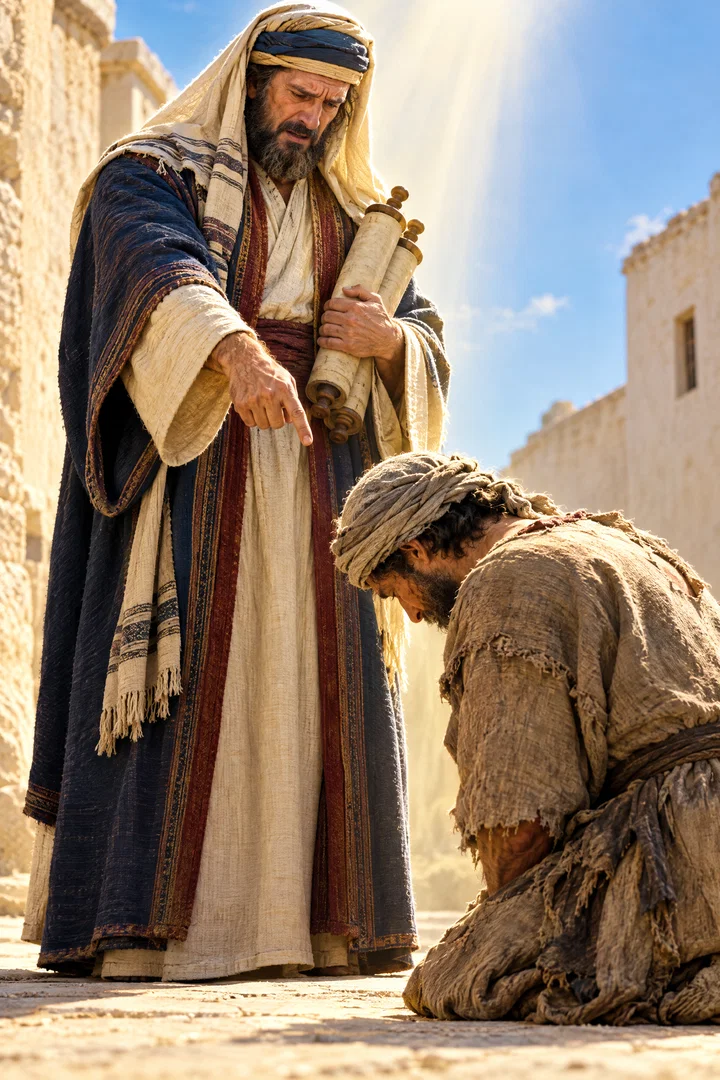

Cross-references
- Galatians 6:1
Brethren, if a man be overtaken in a fault, ye which are spiritual, restore such an one in the spirit of meekness; considering thyself, lest thou also be tempted.
Both teach correcting an erring person gently while considering one’s own vulnerability.
- Luke 6:41-42
And why beholdest thou the mote that is in thy brother’s eye, but perceivest not the beam that is in thine own eye?
Both teach removing one’s own beam before helping a brother with his mote.
- Romans 2:1
Therefore thou art inexcusable, O man, whosoever thou art that judgest: for wherein thou judgest another, thou condemnest thyself; for thou that judgest doest the same things.
Judging another while doing the same things condemns the judge.
- John 8:7
So when they continued asking him, he lifted up himself, and said unto them, He that is without sin among you, let him first cast a stone at her.
Jesus tells the accusers to examine their own sin before judging another.
- Revelation 3:18
I counsel thee to buy of me gold tried in the fire, that thou mayest be rich; and white raiment, that thou mayest be clothed, and that the shame of thy nakedness do not appear; and anoint thine eyes with eyesalve, that thou mayest see.
Eye ointment is urged as the means of gaining clear sight.
- James 4:11-12
Speak not evil one of another, brethren. He that speaketh evil of his brother, and judgeth his brother, speaketh evil of the law, and judgeth the law: but if thou judge the law, thou art not a doer of the law, but a judge.
Both warn against judging and condemning a brother.
- Matthew 23:24
Ye blind guides, which strain at a gnat, and swallow a camel.
Both warn against condemning others over lesser faults while overlooking greater ones.
- Luke 18:9-14
And he spake this parable unto certain which trusted in themselves that they were righteous, and despised others:
The Pharisee trusts in his own righteousness and looks down on others, unlike the humble publican.
- Romans 14:4
Who art thou that judgest another man’s servant? to his own master he standeth or falleth. Yea, he shall be holden up: for God is able to make him stand.
It warns against condemning another person who answers to God.
- 2 Corinthians 13:5
Examine yourselves, whether ye be in the faith; prove your own selves. Know ye not your own selves, how that Jesus Christ is in you, except ye be reprobates?
Calls believers to examine themselves before judging others.
- Matthew 7:1
Judge not, that ye be not judged.
same judge-not command explained together
- Matthew 23:27
Woe unto you, scribes and Pharisees, hypocrites! for ye are like unto whited sepulchres, which indeed appear beautiful outward, but are within full of dead men’s bones, and of all uncleanness.
Both condemn hypocrisy that hides inward uncleanness behind outward appearance.
- Luke 6:37
Judge not, and ye shall not be judged: condemn not, and ye shall not be condemned: forgive, and ye shall be forgiven:
Both teach against condemning others and call for forgiveness.
- Romans 14:10-13
But why dost thou judge thy brother? or why dost thou set at nought thy brother? for we shall all stand before the judgment seat of Christ.
All must answer to God, so believers should not judge one another or cause another to fall.
- Romans 2:21
Thou therefore which teachest another, teachest thou not thyself? thou that preachest a man should not steal, dost thou steal?
Both condemn teaching others while failing to practice it.
- 1 Corinthians 4:5
Therefore judge nothing before the time, until the Lord come, who both will bring to light the hidden things of darkness, and will make manifest the counsels of the hearts: and then shall every man have praise of God.
God will reveal hidden things and judge each person at the appointed time.
- 1 Corinthians 11:31
For if we would judge ourselves, we should not be judged.
Judging oneself prevents condemnation with the world.
- Luke 6:20-31
And he lifted up his eyes on his disciples, and said, Blessed be ye poor: for yours is the kingdom of God.
The passage says Luke records the same blessed truths taught in Matthew 5–7.
- 1 Samuel 16:7
But the LORD said unto Samuel, Look not on his countenance, or on the height of his stature; because I have refused him: for the Lord seeth not as man seeth; for man looketh on the outward appearance, but the LORD looketh on the heart.
God sees the heart, unlike people who judge by outward appearance.
Commentary part 1 of 2
Each commentary is drawn from primary sources: the writings of Ellen G. White and Adventist pioneers and periodicals. Each commentary is separate. Its own words are not a quotation; follow the references to read the source passages.
Ellen G. White
90 sources
Christ's command exposes the hypocrisy of overlooking grave faults in oneself while fixing on a brother's lesser fault, calling hypocrite the one who offers to remove the other's mote while keeping his own beam.Ms 113, 1907, par. 2SPBC 170.3–4Lt 229, 1905, par. 19–21Lt 67, 1905, par. 16–19Ms 113, 1907, par. 3 It requires first confronting and casting out one's own faults, for only after that self-correction can one see clearly to help the brother rightly and without hypocritical judgment.8T 85.1–2Ms 34, 1901, par. 14Ms 75a, 1900, par. 8 That clear sight is spiritual eyesight guided by the Holy Spirit, exercised in humility, pitying tenderness, love and meekness, restoring by kindly direct dealing and forgiveness rather than by censure that drives souls from Christ.Ms 75a, 1900, par. 8Lt 229, 1905, par. 19–21Lt 67, 1905, par. 16–19Ms 62, 1899, par. 9–12Lt 67, 1905, par. 11–15 The beam to be cast out is above all the censorious, unforgiving spirit itself — suspicion, evil speaking, envy, selfishness and magnifying small mistakes — which unfits the soul for communion with God, wounds those for whom Christ died, and spreads division.Ms 164, 1898, par. 16–17Lt 29, 1903, par. 9–12Lt 23, 1903, par. 9–10Ms 21, 1889, par. 40–44 Therefore daily life must leave the judgment seat to God, search one's own heart by the Word, confess one's own wrongs, and strengthen and lift others by example and encouragement instead of tearing down.Ms 62, 1899, par. 9–12Ms 115, 1905, par. 7–9Ms 149, 1897, par. 8–11Ms 7, 1898, par. 17–20Ms 141, 1902, par. 20–21
Sermon Setting and Imagery
The saying belongs to the Sermon on the Mount, spoken especially to the disciples while the listening multitude also heard.DA 298.2–3 That sermon sets forth a right conception of Christ's kingdom and of His own character and undoes false education, not by direct attack on error or by vivid delineation of human wretchedness because of sin, but by declaring the conditions of entrance into the kingdom of God and leaving hearers to draw their own conclusions about its nature.DA 299.3 It states foundation principles of the kingdom no less important now than for the multitude on the hillside.DA 299.3 In every way it opposed the theories and practice of the religious leaders who had long set human ideas before the people, virtually contradicting the doctrines of the self-righteous scribes and Pharisees.FE 309.1 Its far-reaching principles must be impressed on new converts when taught the claims of God's law, for the state of the heart regulates life and character and the spirit of the law must be present in the heart.Lt 7, 1886, par. 34 It shows that failure to walk in given light separates from God and darkness grows in proportion to refused light, for God's requirements are reasonable and just and call for perfect obedience to His commandments, which Israel's disobedience to revealed will kept them from living out in character and works as their accumulated light required.ST Mar 26, 1896
The beam is one's own serious, greater, large fault and hidden defect of character, and the mote is a brother's or sister's smaller, lesser fault.Ms 113, 1907, par. 2Lt 229, 1905, par. 19–21Lt 67, 1905, par. 16–19Ms 107, 1903, par. 25–27Lt 81, 1896, par. 9–11 The comparison exposes overlooking grave defects in oneself while focusing on another's lesser fault, warning against self-deception and judging others without seeing evil in one's own heart.Lt 229, 1905, par. 19–21Lt 9, 1892, par. 58–63 It teaches confronting and correcting one's own faults first before correcting another's, since removal of the beam enables clear, fair, wise and rightly directed help rather than hypocritical judgment and unwise accusation.Lt 229, 1905, par. 19–21Lt 67, 1905, par. 16–19Lt 81, 1896, par. 9–11 Such correction is to follow Christ's instruction and loving discipline, preserving the church and not turning a member's errors into public gossip or accusations.Lt 229, 1905, par. 19–21Lt 67, 1905, par. 16–19 The saying especially warns those who seek to rule others against hypocritical judgment.Lt 81, 1896, par. 9–11
Hypocrite names the one who offers to remove the small fault from a brother while having the large fault himself and must first remove his own fault to see clearly to help with the brother's smaller fault.Ms 113, 1907, par. 2SPBC 170.3–4 It condemns exalting self as judge among the people while excusing forbidden actions, being rigid in rules, severe in judgment, unmerciful in condemning, justifying one's own wrong course while quick to condemn others with scornful, severe, denouncing words that place them in false light, even those God is using.Ms 113, 1907, par. 3 It exposes the reversal by which a person treats his own sins as the mote and what he condemns in others as the beam, treating his own sins as small while magnifying another's, as the scribes and Pharisees did in condemning Christ and His disciples.Ms 113, 1907, par. 3 The zealous pointer-out of another's fault must first face the greater fault in himself, a censorious conceited spirit lacking forbearance and love, which is far greater than the defect criticized, magnifies a small flaw and adds conceit and condemnation to the same sin. Such pointing out of small fault while ignoring great fault in self forbids thoughtless judging, bitter envying, strife and evil speaking, and calls instead for meekness, purity, peaceableness, mercy and good fruits, with thoughts and words brought into subjection to Christ's will; honest self-examination exposes one's own defects and mistakes and only then gives clear sight to help a brother.RH Oct 29, 1901
The very discovery of a mote in a brother's eye is the sign of a beam in one's own eye.Ms 164, 1898, par. 16–17 Keen sight for others' defects comes from guilt, for he who is guilty of wrong is first to suspect wrong, and by condemning another tries to conceal or excuse the evil of his own heart. This comes from sin itself, through which men gained knowledge of evil, so that as soon as the first pair sinned they began to accuse each other, as human nature uncontrolled by Christ's grace inevitably does. Indulging a cold, critical, unforgiving spirit is pharisaism with most unhappy results, showing love is gone and Jesus with the light and sunshine of His presence is gone, a lack no busy activity or zeal without Christ can supply. Educating the mind to look for defects unfits the soul for communion with God, removes safeguard after safeguard from the sanctuary of conscience, leaves the soul unguarded through failure to overcome, and becomes a leaven of evil developing defects in the looker and, if not firmly resisted, strengthening evil habit into chains of steel binding the whole man with little freedom and sanctification left; such slipshod religion is dangerous in home, church or anywhere, and the facts stand registered against such critics in the books of heaven.Ms 164, 1898, par. 16–17
A mote can obscure vision, so those focusing on others' faults should remove their own obstruction to see clearly and see the glory beyond.STGC 74.1 Held close to the eye it becomes a mountain so that nothing but the fault can be seen, making mountains out of molehills and picking at straws, blinding to the glory beyond and to how the Lord regards such attitude; unjust criticism, evil surmisings and gathering titbits of evil to tear down God's work is such hypocritical fault-finding.Ms 151, 1902, par. 5–7 Removing the mote is an act of mercy to self, done by ceasing discouraging talk and obstruction and submitting to God's will, on which one's own spiritual condition depends.Ms 151, 1902, par. 5–7 The mote can become a mountain while a mountain of goodness and grace dwindles to a mote, magnifying a small fault in another while making his goodness seem insignificant, calling for removing hindrances and bitterness rather than letting them distort regard for fellow believers.Ms 167, 1904, par. 12–15 Christ removes the mote obscuring people's view when they seek security in earthly riches and mistake wealth for lasting reality and lose sight of the eternal world, the earthly-minded outlook hiding the greater lasting riches; He enables them to see eternal glory, to recognize earthly riches as phantoms rather than true security, to look beyond the present and include eternity in view.STB 678.420MR 89.7–90.1Lt 264, 1903, par. 20–22
First Remove the Beam
Thou hypocrite must first confront and remove his own faults before correcting a brother, for to condemn another while neglecting one's own failings is hypocrisy, and only after self-correction can he see clearly to help his brother rightly, wisely, and without hypocritical judgment.8T 85.1–2Ms 34, 1901, par. 14Ms 75a, 1900, par. 8Ms 113, 1907, par. 2Ms 75, 1909, par. 1 Jesus calls hypocrite the one who offers to remove the small fault from a brother while having the large fault himself, and commands removal of the large fault from oneself first, after which one will see clearly to help remove the small fault from the brother.Ms 34, 1901, par. 14Ms 75a, 1900, par. 8Ms 113, 1907, par. 2Ms 75, 1909, par. 1STGC 45.2–3 The warning against hypocrisy applies to how erring brethren are treated, so that correction comes with humility and sincere sympathy, not suspicion, envy, or strife.Ms 34, 1901, par. 14Ms 75a, 1900, par. 8Ms 75, 1909, par. 1
Casting out the beam requires comparing words, spirit, and actions with the Word of God as God's great moral looking glass and perfect law of liberty, to see what manner of person one is, and unless that self-examination and obedience is done all direction about action for others is labor in vain.Ms 149, 1897, par. 8–11Ms 7, 1898, par. 17–20ST Dec 11, 1901 Obeying these principles, which must be read and obeyed in order to have the life to come, calls for humble learning at Christ's feet and asking Him to cleanse the heart and remove defects of character, through daily connection with God and Christian experience and guidance by God's Spirit and the Holy Spirit so that correction is wise and fitting rather than mistaken human judgment.Ms 115, 1905, par. 7–9Ms 149, 1897, par. 8–11Ms 7, 1898, par. 17–203T 465.2Lt 75, 1894, par. 2 A thorough, critical examination of oneself by God's Word is required, since refusing to see one's own faults bars entry into the kingdom of heaven.Ms 115, 1905, par. 7–9ST Dec 11, 19013T 465.2
The instruction in Matthew 7 must be studied most critically again and again for one's own enlightenment and not to prove supposed faults discerned in other church members, for it points out very serious defects in those whose thoughts are absorbed with the faults of others.Lt 8, 1910, par. 1417MR 343.2Lt 32, 1908, par. 25 It means leaving a brother's faults alone, asking God to reveal one's own wrongs, taking one's own individual case before the Lord and studying one's own faults and weakness instead of judging the fancied shortcomings of a brother, humbling oneself before Him rather than exposing another's heart.Lt 8, 1910, par. 1417MR 343.2Lt 32, 1908, par. 25Lt 2, 1852, par. 6–7Lt 13, 1871, par. 16–20 Each person must handle his own case first, look to self, correct own errors, and perfect holiness in the fear of God, letting everyone else alone until his own way is clear, for as long as he remains at variance with brethren and ready to complain he stays weak and beyond help, and looking honestly at one's own defects makes ready to receive cleansing and righteousness with answered prayer.STB 61.217MR 343.2Lt 32, 1908, par. 25Lt 2, 1852, par. 6–7Lt 13, 1871, par. 16–20
Reform must begin with oneself before undertaking to reform or correct others, for this is the first principle of true religion.GC 191.14SP 149.2 Münzer imagined himself called to reform the world but neglected this principle by failing first to reform himself.GC 191.14SP 149.2
The warning stands under God's judgment according to truth, where people who judge others are themselves condemned when they do the same things and each person's life will come under God's review.8T 85.1–2STGC 45.2–3Ms 164, 1898, par. 16–17 Facts against critics who educate the mind to look for defects are registered in the books of heaven, guilt will be seen in the judgment, and to educate the mind thus unfits the soul for communion with God and strengthens evil habit into chains of steel.8T 85.1–2STGC 45.2–3Ms 164, 1898, par. 16–17 Hatred, emulation, wrath, strife, seditions, heresies, and envyings are as truly works of the flesh as lasciviousness, adultery, drunkenness, and murder, and will as surely close the gate of heaven against the guilty.Ms 115, 1905, par. 7–9ST Dec 11, 1901
See Clearly to Help
Seeing clearly after the beam is removed is correction with spiritual eyesight under the guidance of the Holy Spirit and with wisdom from God, so that help given to a brother is wise and fitting and clear-sighted rather than mistaken human judgment.Lt 229, 1905, par. 19–21Lt 67, 1905, par. 16–19Ms 149, 1897, par. 8–11Lt 75, 1894, par. 2Lt 48, 1894, par. 3–6 The beam is one's own serious error and failure to heed Christ's way while the mote is the fault seen in another, and self-correction enables clear, fair and helpful correction instead of hypocritical or unwise accusation.Lt 229, 1905, par. 19–21Lt 67, 1905, par. 16–19Lt 67, 1905, par. 11–15 Removing the beam means heeding Christ's remedy and dealing faithfully and kindly, and being led by God's Spirit brings recognition that God's ways and thoughts are higher than one's own.Lt 67, 1905, par. 11–15Lt 75, 1894, par. 2 Selfishness and covetousness can go unrecognized as sin, so removing the beam requires heeding the Spirit's reproof, along with spiritual growth, before undertaking to correct fellow believers.Lt 48, 1894, par. 3–6
Only then is a person prepared to help a brother, to approach him and touch his heart, and the help must come with humility and sincere sympathy rather than suspicion, envy or strife.Ms 75a, 1900, par. 8 It requires love growing through contemplation of God's love, with meekness, mercy, pitying tenderness, and a gentle, winning deportment, dealing with one another exactly as one wishes the Lord to deal with him in his own errors and weaknesses.Ms 62, 1899, par. 9–12TCBMP 109.1–111.1 Casting out the beam means reaching a love for the erring so complete as to sacrifice self-dignity and even lay down life to save him. No one was ever reclaimed from a wrong position by censure and reproach, which only drive from Christ and seal hearts against conviction, while such tenderness may save the erring and hide a multitude of sins, because Christ revealed in character has transforming power upon all with whom one comes in contact, manifesting through him the silent, gentle, persuasive yet mighty creative energy of His word to re-create other souls. Dwelling on others' imperfections instead breeds harshness, self-centeredness, suspicion and censorious judgment, turning believers toward harsh criticism and away from the love Christ taught.Ms 62, 1899, par. 9–128T 241.3
Right correction follows Christ's instruction for dealing with the erring and aims at restoring the person and protecting the church, while failure to heed it fosters discord.Lt 67, 1905, par. 16–1915MR 170.2–171.1 It means first speaking kindly directly with the person and hearing his explanation before accusation, dealing faithfully and kindly rather than with quick accusation.Lt 67, 1905, par. 11–1515MR 170.2–171.1 It forbids turning a member's errors into public gossip or distorted accusations, speaking evil, nurturing suspicion, and presenting a brother's actions in a distorted light, which does not restore him but alienates believers and harms faith.Lt 229, 1905, par. 19–21Lt 97, 1896, par. 27–33 It forbids being pitiless toward one another's errors, making prominent defects in organization, and exposing or reproving weaknesses, especially keeping ministers' mistakes within as small a circle as possible and never exposing them to unbelievers, because love has greater power than censure to melt barriers and uphold confidence.TCBMP 109.1–111.1 Plain speaking of truth and facts to make the erring see and feel error that they may reform is not forbidden, but it must be done with pitying tenderness, not harshness or severity, and with Christ's sympathy and love; when fault is seen and acknowledged, comfort is to be given instead of grieving him and pressing the thorn deeper to weaken faith, courage and confidence, forgiving as Christ forgave.15MR 201.4–202.2TCBMP 109.1–111.13T 92.2–93.3
Self-watchfulness and a sincere, consistent daily life give weight to advice, encouragement and reproof, so they can be received as the words of a friend rather than an enemy.Ms 172, 1905, par. 10 A holy example is the greatest corrector of small faults, and better habits are taught by one's own example rather than by faultfinding after self-examination.CH 483.1–2Lt 5, 1864, par. 5Lt 5a, 1864, par. 7 Making much of small faults in others while treating matters of utmost importance with indifference is wrong, as in noticing articles of dress, little acts, words and other minor things and spending many words in reproof and irritation over them when such things should not call forth reproof or remarks, especially when arbitrarily bearing down upon others while being more faulty in many things.Lt 5, 1864, par. 5Lt 5a, 1864, par. 7 Teachers must examine their own hearts and become examples of the character they want pupils to develop, since people may notice objectionable traits in others while overlooking similar faults in themselves, or may reject correction because they believe they have been misjudged.Ms 43, 1892, par. 14 The beam includes the neglected garden of the soul, an un-Christlike life, unlovely words and actions, and a home life that is not circumspect and holy; going to correct a neighbor while leaving vines trailing, rubbish obstructing and beds choked with thistles at home destroys influence, makes profession a farce, and leaves the worker unfit to save souls and hide a multitude of sins.Lt 16a, 1891, par. 23–24
No one should appoint himself to watch for or correct supposed errors, to sit in judgment on a brother or define the character of his sin, to bear the people's sins, to act as detective watching and accusing, or to decide who among church members are tares and who are wheat.Ms 62, 1899, par. 9–12Lt 48, 1894, par. 3–65T 333.3 Getting up out of the chair of judgment is required, for the fierce criticizing spirit is not in harmony with Christian work; sitting in judgment hurts the judger while thrusting at friend or brother, warfare with one another must cease, and calling a brother a sinner shows the accuser to be a sinner himself.Ms 141, 1902, par. 20–21 Each worker should make sure his own work can bear inspection by God, who judges righteously, and those who cannot take part in another's labor without judging it should decline that responsibility and devote themselves to work they can do faithfully.Lt 195, 1902, par. 11–12 Correcting fellow believers requires wisdom from God and spiritual growth, with selfishness and covetousness recognized only as the person heeds the Spirit's reproof.Lt 48, 1894, par. 3–613MR 270.2–3
Hypocrisy and Faultfinding
Indulging a cold, critical, unforgiving spirit toward others is pharisaism, showing that love is gone and with it the light and sunshine of Christ's presence, which no busy activity or zeal without Him can supply. Such censure misrepresents the gentle spirit of the gospel and wounds those for whom Christ died.Ms 101, 1894, par. 11 It cloaks itself by calling unkind thoughts, envy, evil surmising, jealousy, pride, love of authority and desire for pre-eminence by the names of zeal for truth, faithfulness, special foresight, discrimination and discernment to detect guilt.Ms 11, 1888, par. 22–24Lt 5, 1864, par. 75MR 215.3 Opening the heart in this way to the enemy's suggestions shuts it against brethren with whom there should be harmony, sets the critic upon the judgment seat as though above temptation, and leaves him to walk in the sparks of his own kindling.Ms 11, 1888, par. 22–24 Keen sight for the defects of others comes from guilt itself, for he who is guilty is first to suspect wrong and by condemning another tries to conceal or excuse the evil of his own heart, as the first pair after sinning began to accuse each other.Ms 101, 1894, par. 11
The beam to be first cast out is this censorious, conceited spirit lacking forbearance and love, which is far greater than the defect criticized because it magnifies a small flaw and adds conceit and condemnation to the same sin.5T 92.2STMW6 45.2 It is the unruly, diseased tongue and the suspicious, talkative, fault-finding spirit that watches for faults, thinks and speaks evil of brethren, separates friends, makes a mountain out of a molehill, drives out joy, and produces ill feeling and lack of confidence.Lt 29, 1903, par. 9–12Lt 23, 1903, par. 9–10 It includes envy and jealousy defiling the soul, selfish prejudice and covetousness, harsh dictatorial misuse of power, irritability and exaggerated blame, neglect of duty and of the soul's garden, and continual picking at flaws like birds of prey watching for dead bodies.5T 92.2TBC1882 76.35MR 215.3 Curing it requires passing over little differences and mistakes without comment, thinking of the good in others instead of talking about their faults, cleansing envy and jealousy, and attending to self first.Lt 29, 1903, par. 9–12Lt 23, 1903, par. 9–10TBC1882 76.3
Educating the mind to look for defects unfits the soul for communion with God, removes safeguard after safeguard from the sanctuary of conscience, and leaves the soul unguarded through failure to overcome.Ms 164, 1898, par. 16–17Ms 21, 1889, par. 40–44 Looking for evil in others acts as a leaven that develops defects in the looker and, if not firmly resisted, strengthens one evil habit into chains of steel binding the whole man.Ms 164, 1898, par. 16–17Ms 11, 1888, par. 3–5 Such criticizing and thinking evil is the work of unsanctified, fruitless professors, creating sorrow in households and churches, retarding God's work, alienating believers and harming their faith by presenting a brother's actions in a distorted light.Ms 21, 1889, par. 40–44Lt 97, 1896, par. 27–33 No one was ever reclaimed by censure and reproach, which only drive from Christ and seal hearts against conviction, while facts against such critics are registered in the books of heaven.Ms 164, 1898, par. 16–17Ms 21, 1889, par. 40–44
Criticizing others is easier and causes less self-humiliation than judging oneself fairly, for others' faults are easier to see than one's own.TBC1872 6.24T 485.25T 418.3 Hence trifles such as articles of dress, little acts and words are made the subject of many words of reproof and irritation when they should call forth no remark, while matters of utmost importance are treated with indifference.RH Nov 7, 1912Lt 5, 1864, par. 5 Recognizing one's own mistakes and failures makes the faults of others seem insignificant, but jealousy distorts vision until a mote becomes a mountain and a mountain of goodness dwindles to a mote.RH Nov 7, 1912Lt 5, 1864, par. 5Ms 167, 1904, par. 12–15 A holy example is the greatest corrector of these small things, for arbitrarily bearing down upon others for small matters while being more faulty in many things is itself the greater sin.5T 418.3Lt 5, 1864, par. 5
Church and Daily Life
In church life the command is to stop criticism forever, for watching for a brother's small fault while ignoring one's own great fault is the work of unsanctified, fruitless professors that brings sorrow into households and churches and holds back God's work.Ms 21, 1889, par. 40–44Lt 12, 1861, par. 2–3Lt 2, 1852, par. 6–7 Each person is to take his own individual case before the Lord, ask Him to reveal personal wrongs rather than expose another's heart, examine the heart and attend to the soul instead of watching others to find fault, and study personal faults and weakness instead of judging a brother's fancied shortcomings.Lt 12, 1861, par. 2–3Lt 32, 1908, par. 25Lt 2, 1852, par. 6–7 When one believes another has wronged him he is to go directly to that person, acknowledge his own unchristian feelings, ask forgiveness, and forgive as Christ has forgiven, so that humility and mutual forgiveness restore unity and shared prayer.STB 60.2–3 Looking honestly at one's own defects and dangers of character instead of dwelling on fellow workers' errors would have made believers ready for cleansing and Christ's righteousness, with prayers answered and victories through Christ's personal intercession, while faultfinding and refusing to yield individual independence only deepen division.STB 61.2STB 60.2–3Lt 12, 1861, par. 2–3 Only by thus stopping criticism can a person see his own beam, cast it out, and begin the faith that works by love and purifies the soul, becoming a fruitful tree known by good fruit, then seeing clearly to help his brother and understanding and obeying what follows about the golden rule and the narrow way.Ms 21, 1889, par. 40–44Lt 32, 1908, par. 25 Constant guard is needed because Satan watches to take people unawares, many are ignorant of their own defects, and when the Holy Spirit molds heart and life confidence is expressed toward workers struggling in hard places rather than criticism.Lt 32, 1908, par. 25
For ministers the command forbids rash judgment, quick censure, pitiless dealing with one another's errors, making prominent defects in organization, and exposing or reproving weaknesses, requiring instead that ministers' mistakes be kept within as small a circle as possible and never exposed before unbelievers, since love has greater power than censure to melt barriers and uphold confidence.TCBMP 109.1–111.1 One quick to discern a brother's errors is frequently in greater faults himself and blind to his own errors, so he must first consider his own weakness and deal with others exactly as he wishes the Lord to deal with him; when one has done his best and another sees improvement, he should kindly and patiently give the benefit of his judgment and not censure or question integrity sooner than he would wish to be suspected himself.TCBMP 109.1–111.1Ms 26, 1905, par. 2 Plain speaking of truth and facts to make the erring see and feel error that they may reform is not forbidden, but it must be done with pitying tenderness, not harshness or severity, and when fault is seen and acknowledged comfort is to be given instead of grieving him and pressing the thorn deeper to weaken faith, courage and confidence.TCBMP 109.1–111.1 Teachers must recognize and correct their own faults before judging another, for irritability leading to exaggerated blame and cutting reproof shows failure to see one's own injustice, and refusing to admit it can cost opportunity to show Christ's spirit and help a student.STSE 66.1–2 Those who exercise authority while failing to address their own harshness, dictatorial conduct, or misuse of power are not fit to deal with others' faults and may harm God's people, so self-examination and correction must be carried out under the Holy Spirit with meekness and holiness, searching the heart and studying Christ's life instead of judging brethren, and ceasing to carry the burden of setting everyone right in order to do one's own work nobly and well.STB 186.6Lt 408, 1906, par. 8–9Ms 26, 1905, par. 2
Making a world of a mote in board meetings is sin, taking a little speck, item or quibble that does not meet the mind and hanging on and holding and quizzing and spreading it until meetings are wearisome and nothing can move without sanction, like keeping a foot on the brake.Ms 152, 1904, par. 17–20 That sharp criticism does the greatest injury to the man himself, does more harm to the cause, hinders and carries back the work, does not honor God, is heard by angels, and its guilt will be seen in the judgment, when it would have been better for such a hinderer if he had never been born.Ms 152, 1904, par. 17–20 A man whose special character is to criticize in this way must not be put or kept as a board member, the board must go to him to ask about his education and training, and boards must consecrate soul, body and spirit to see how the work has been hindered, for right criticism shows mercy and honors God.Ms 152, 1904, par. 17–20 Medical students likewise are not ready to manage others but must accept instruction, and all are to remember that in the great day of atonement the work is heart-searching, self-abasement and confession, each humbling his own soul, seeking pardon individually, searching what sins lurk to shut out Jesus, being jealous of self lest the divine standard be missed, and finding so much work at home that others are esteemed better than self without criticism and condemnation.HSFM 213.2–3
At home the neglected garden of the soul, an un-Christlike life, unlovely words and actions, and a home life not circumspect and holy must be set in order first, for going to correct a neighbor while leaving vines trailing, rubbish obstructing and beds choked with thistles destroys influence, makes profession a farce, and leaves the worker unfit to save souls and hide sins.Lt 16a, 1891, par. 23–24 Watching a spouse or neighbor to find fault while neglecting personal faults is hypocrisy that distracts from becoming like God, weakens power to bear righteous fruit, and loses sight of God so one cannot lead another rightly.20MR 326.216MR 340.1–2 The neighbor and brother must instead be regarded as redeemed and purchased by Christ's blood, with love for Christ helping to see good in others and keeping help from becoming faultfinding.20MR 326.216MR 340.1–2 Those directing or working alongside young women in need must see and correct their own selfish neglect instead of closing eyes to their needs, caring for them as for self.Lt 71, 1897, par. 8–12 Those with greater advantages must not be ready to find fault with, condemn or separate their colored brethren for objectionable actions and failures, since judges often cherish evils themselves they would not tolerate in others; first facing one's own faults and remembering one's own errors and others' disadvantages, then helping with Christ's wisdom, kindness rather than censure, desire to help them reach the highest standard, tender compassion for the suffering, sympathy for the unfortunate, generous consideration for misdemeanors, and exact impartial justice.Ms 129, 1902, par. 5–6
Obedience means getting up out of the judgment chair, for the fierce criticizing spirit coming in for more than twenty years is not in harmony with Christian or medical missionary work, sitting in judgment hurts the judger while thrusting at friend or brother, calling a brother a sinner shows the accuser to be a sinner himself, and warfare with one another must cease.Ms 141, 1902, par. 20–21 It is the command of One of authority against speaking criticism and faultfinding, requiring first removing fault from one's own eye to see clearly to help a brother, refraining from words that stir antagonism or retaliation, remaining silent when irritated, and not abusing the precious gift of speech to stir the worst passions.Ms 109, 1906, par. 23–24 God gives no one the work of watching for and talking about others' faults, bringing test and trial Himself without laying on men the work of confusing, perplexing and discouraging workers, leaving them hopeless when down, misinterpreting words and actions and exaggerating mistakes.5MR 215.3Ms 167, 1902, par. 27–28 Seeing clearly means clear eyesight and unselfish hearts, commending good accomplished and praising God for it instead of picking flaws like buzzards and vultures watching for dead bodies, lifting the fallen, bringing Christ's pity and self-sacrifice into the church as the court of holy love through the baptism of the Holy Spirit, and attending to self first as all the work one has to do.5MR 215.3Ms 167, 1902, par. 27–28 Believers must wake to work for souls instead of finding fault, accusing brethren, giving way to anger when misunderstood, speaking doubt and unbelief, and talking of difficulties until they appear larger; they must accuse themselves rather than brethren, never tear down reputation, remember they might not have done so well in another's place, and use every effort to build up not tear down, strengthen and encourage rather than spend energies in Satan's cause, grieve the Lord by standing aloof, and weaken brethren's hands.Ms 158, 1902, par. 55–56Lt 94, 1901, par. 3
Sources