1 Kings 11:6
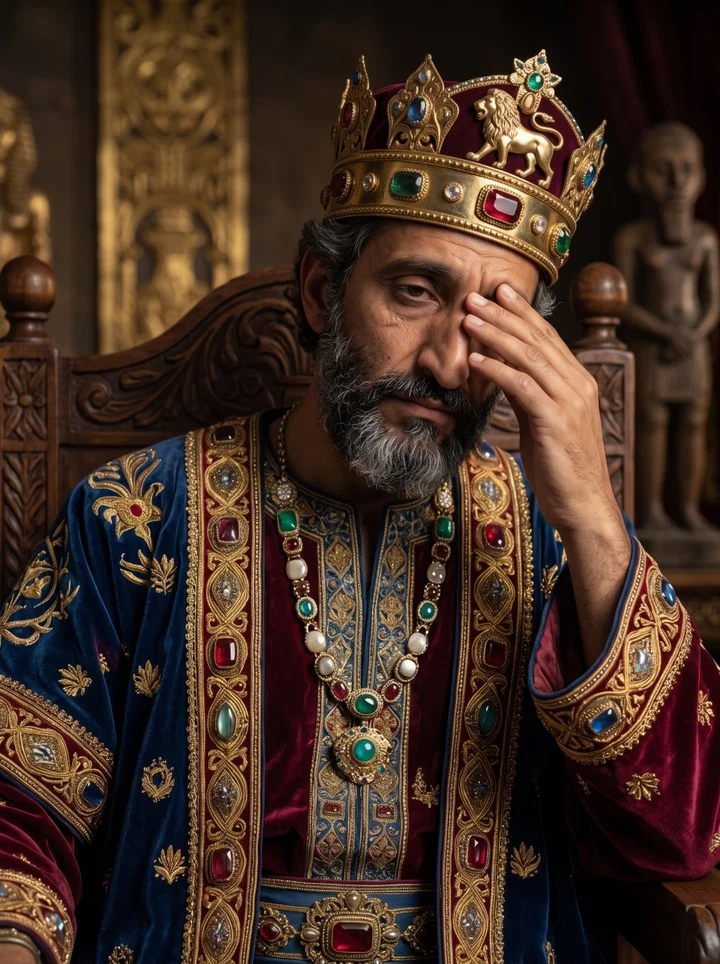
And Solomon did evil in the sight of the LORD, and went not fully after the LORD, as did David his father.
Translations
American King James Version, King James Version, Webster Bible
And Solomon did evil in the sight of the LORD, and went not fully after the LORD, as did David his father.
And Solomon did evil in the sight of the Lord, and went not fully after the Lord, as did David his father.
And Solomon did that which was evil in the sight of the LORD, and went not fully after the LORD, as did David his father.
And Solomon did that which was evil in the sight of Jehovah, and went not fully after Jehovah, as did David his father.
and Solomon doth the evil thing in the eyes of Jehovah, and hath not been fully after Jehovah, like David his father.
And Solomon did evil in the sight of Jehovah, and followed not fully Jehovah, as David his father.
Thus Solomon did the thing that was wicked in the eyes of Yahweh,—and went not fully after Yahweh, as did David his father.
Berean Standard Bible, Majority Standard Bible
So Solomon did evil in the sight of the LORD; unlike his father David, he did not follow the LORD completely.
Solomon did that which was evil in the LORD’s sight, and didn’t go fully after the LORD, as David his father did.
And Solomon did evil in the eyes of the Lord, not walking in the Lord's ways with all his heart as David his father did.
So Salomon wrought wickednesse in the sight of the Lord, but continued not to follow the Lord, as did Dauid his father.
Douay-Rheims (Challoner revision)
And Solomon did that which was net pleasing before the Lord, and did not fully follow the Lord, as David his father.
Pictures

Cross-references 20 of 41
- Deuteronomy 17:17
Neither shall he multiply wives to himself, that his heart turn not away: neither shall he greatly multiply to himself silver and gold.
Warns that many wives could turn a king’s heart from God, as happened to Solomon.
- 2 Kings 23:13
And the high places that were before Jerusalem, which were on the right hand of the mount of corruption, which Solomon the king of Israel had builded for Ashtoreth the abomination of the Zidonians, and for Chemosh the abomination of the Moabites, and for Milcom the abomination of the children of Ammon, did the king defile.
Josiah defiles the high places Solomon built for foreign gods.
- Deuteronomy 7:3-4
Neither shalt thou make marriages with them; thy daughter thou shalt not give unto his son, nor his daughter shalt thou take unto thy son.
Foreign marriages turned Solomon from following the Lord to other gods.
- 2 Samuel 11:2-4
And it came to pass in an eveningtide, that David arose from off his bed, and walked upon the roof of the king’s house: and from the roof he saw a woman washing herself; and the woman was very beautiful to look upon.
David’s sin with Bath-sheba exemplifies his failure to follow the LORD fully.
- 1 Kings 3:9-12
Give therefore thy servant an understanding heart to judge thy people, that I may discern between good and bad: for who is able to judge this thy so great a people?
Solomon asked God for wisdom, which he received.
- 1 Kings 8:61
Let your heart therefore be perfect with the LORD our God, to walk in his statutes, and to keep his commandments, as at this day.
Solomon later failed to follow his own charge to serve God wholeheartedly.
- 1 Kings 12:16-20
So when all Israel saw that the king hearkened not unto them, the people answered the king, saying, What portion have we in David? neither have we inheritance in the son of Jesse: to your tents, O Israel: now see to thine own house, David. So Israel departed unto their tents.
The kingdom divides after Solomon’s unfaithfulness.
- 1 Kings 3:14
And if thou wilt walk in my ways, to keep my statutes and my commandments, as thy father David did walk, then I will lengthen thy days.
God’s promise conditioned blessing on Solomon walking in his ways, which he later failed to do.
- 1 Kings 9:4-7
And if thou wilt walk before me, as David thy father walked, in integrity of heart, and in uprightness, to do according to all that I have commanded thee, and wilt keep my statutes and my judgments:
God’s promise to Solomon was conditional on faithful obedience, unlike his later turning to idols.
- 1 Kings 11:33
Because that they have forsaken me, and have worshipped Ashtoreth the goddess of the Zidonians, Chemosh the god of the Moabites, and Milcom the god of the children of Ammon, and have not walked in my ways, to do that which is right in mine eyes, and to keep my statutes and my judgments, as did David his father.
Solomon’s departure from God is given as the reason for the kingdom’s division.
- Deuteronomy 17:18-20
And it shall be, when he sitteth upon the throne of his kingdom, that he shall write him a copy of this law in a book out of that which is before the priests the Levites:
The king is to keep the law and not turn aside from the Lord’s commandment.
- Exodus 34:16
And thou take of their daughters unto thy sons, and their daughters go a whoring after their gods, and make thy sons go a whoring after their gods.
Foreign marriages can lead Israel to worship other gods.
- 2 Samuel 12:7-9
And Nathan said to David, Thou art the man. Thus saith the LORD God of Israel, I anointed thee king over Israel, and I delivered thee out of the hand of Saul;
David’s evil is exposed and rebuked despite God’s gifts to him.
- 2 Samuel 12:24
And David comforted Bath-sheba his wife, and went in unto her, and lay with her: and she bare a son, and he called his name Solomon: and the LORD loved him.
Solomon was beloved by the Lord, unlike his later unfaithful course.
- Deuteronomy 17:16
But he shall not multiply horses to himself, nor cause the people to return to Egypt, to the end that he should multiply horses: forasmuch as the LORD hath said unto you, Ye shall henceforth return no more that way.
Solomon disregarded the command not to multiply horses.
- 1 Kings 4:29-34
And God gave Solomon wisdom and understanding exceeding much, and largeness of heart, even as the sand that is on the sea shore.
Solomon’s great God-given wisdom and fame preceded his departure from God.
- 2 Samuel 24:1-10
And again the anger of the LORD was kindled against Israel, and he moved David against them to say, Go, number Israel and Judah.
David’s census is identified as another wrong deed and sin.
- Joshua 23:12
Else if ye do in any wise go back, and cleave unto the remnant of these nations, even these that remain among you, and shall make marriages with them, and go in unto them, and they to you:
Close ties and marriages with other nations can turn Israel from God.
- 1 Kings 11:11-13
Wherefore the LORD said unto Solomon, Forasmuch as this is done of thee, and thou hast not kept my covenant and my statutes, which I have commanded thee, I will surely rend the kingdom from thee, and will give it to thy servant.
Solomon’s unfaithfulness brings judgment and the loss of most of the kingdom.
- 1 Kings 15:5
Because David did that which was right in the eyes of the LORD, and turned not aside from any thing that he commanded him all the days of his life, save only in the matter of Uriah the Hittite.
David’s general faithfulness contrasts with Solomon’s failure to follow the LORD fully.
Commentary
Each commentary is drawn from primary sources: the writings of Ellen G. White and Adventist pioneers and periodicals. Each commentary is separate. Its own words are not a quotation; follow the references to read the source passages.
Ellen G. White
55 sources
Solomon after a promising beginning of obedience, divine favor and worldwide renown for wisdom turned in his old age from wholehearted devotion to failure to follow God fully as David his father had done.Ms 1, 1912, par. 5–6PK 402.6RH Dec 21, 1905RH Aug 17, 1905PK 51.2 His evil was the worship of Ashtoreth and Milcom and Chemosh and Molech, building high places, groves and shrines for his foreign wives' gods on the Mount of Olives opposite the temple.Ms 1, 1912, par. 5–6RH Jul 29, 1915RH Dec 21, 1905 Love of many heathen women, pride in prosperity and power, and political and commercial alliance with idolatrous nations led him step by step to mingle pagan worship with true religion and to sacrifice principle to worldly custom.2T 305.3CTBH 128.2RH Mar 10, 1910RH Dec 21, 1905FE 499.1 Through that apostasy he broke his connection with heaven, changed from a just and compassionate ruler into an oppressive despot, and led multitudes of Israel into intermarriage, idolatry and national downfall.Ms 1, 1912, par. 5–6RH Dec 28, 19057T 217.4–218.2FE 499.1ED 48.3–4 His fall is faithfully recorded to warn that even great wisdom does not protect one who yields to passion and worldliness, that the wages of sin is death, and that those who waver and fall may yet by grace rise and conquer.2T 305.3CTBH 128.22T 306.2ST May 31, 19104T 12.1–3
Wording and Historical Setting
The verse records the apostasy of Solomon in his old age and in the later years of his reign, after a beginning marked by obedience, by heeding wise counsel, and by bringing glory to God.Ms 1, 1912, par. 5–6RH Aug 17, 1905ED 48.3–4 He had been honored with remarkable divine favor, called Jedidiah, Beloved of the Lord, and had gained worldwide fame for wisdom and uprightness.RH Aug 17, 1905PK 51.2 He had led others to honor Israel's God and had begun as a just, compassionate, and God-fearing ruler.PK 51.2ED 48.3–4 His turning from the Lord to false worship therefore came after a promising early reign of loyalty.RH Aug 17, 1905PK 51.2ED 48.3–4
To do evil in the sight of the Lord was to fail to follow Him wholeheartedly, in contrast to David who had followed Him wholly.PK 402.6RH Dec 21, 1905RH Dec 21, 1905 It meant not remaining wholly faithful, loyal, and devoted to God, but turning from wholehearted obedience to what was evil in His sight.PK 402.6RH Dec 21, 1905 Prosperity and honored position had led Solomon to lose sight of the need to obey Scripture until he no longer followed fully as David his father had done.RH Dec 21, 1905RH Dec 21, 1905
The evil consisted in a heart turned after other gods, in worshiping Ashtoreth and Milcom and in building high places for Chemosh and Molech.Ms 1, 1912, par. 5–6RH Dec 21, 1905 He prepared groves and places for idols and built idolatrous shrines, high places, and images to please his idolatrous foreign wives and to sustain the worship of their gods.RH Jul 29, 1915RH Dec 21, 1905Ms 40, 1898, par. 14–16 Those shrines were erected on the southern slopes of Olivet, on the Mount of Olives opposite the temple of Jehovah on Mount Moriah in Jerusalem, after he turned in his later years from God's temple.RH Jul 29, 1915RH Dec 21, 19056T 249.4–250.2Ms 169, 1899, par. 25 His pagan marriage alliances and alliances with idolatrous nations thus led him away from God into idolatry and damaged the wisdom and clear judgment he had once shown.6T 249.4–250.2Ms 169, 1899, par. 25Ms 40, 1898, par. 14–16
The shrines he was persuaded by his heathen wives to build stood for generations as visible evidence of his apostasy.RH Mar 10, 1910 The faithful in Israel called the place the Mount of Offense, where great misshapen images stood as mute witnesses to the apostasy of Israel's wisest king.RH Jul 29, 19157MR 74.1–3 They remained there for more than three centuries until Josiah removed and destroyed them.RH Jul 29, 1915PK 402.6 Solomon did not think they would outlive his reign, yet their ruins were still seen in the days of Christ when He looked upon them, so that though Solomon repented the harm he had done endured and testified against him.RH Mar 10, 19107MR 74.1–3
Causes of Solomon's Apostasy
Love of women became the sin that drew Solomon into displeasure and idolatry and kept him from following the Lord fully.2T 305.3CTBH 128.22RED 32.2 Though beloved of God, exceptionally favored, and given wisdom, he yielded principle to lustful passion and to indulgence of appetite and passion, married many women including daughters of heathen kings, and they turned his heart after other gods.2T 305.3CTBH 128.22T 306.22RED 32.2ST Feb 22, 1883 In doing so he lost firmness of character, wavered between right and wrong, became corrupt, and separated himself from God the source of his strength.2T 305.32T 306.2 Even great wisdom and strength do not protect one who gives in to lust, impurity cannot stand in God's presence, and strength from God with strict integrity must be guarded by dependence on God throughout life.2T 305.3CTBH 128.22T 306.2
Prosperity and his honored position led him to lose sight of Scripture and the need to obey God's law, to conform to surrounding customs, to forget God and the conditions of success, and to look to heathen standards of right.RH Dec 21, 1905RH Aug 17, 1905 After a promising beginning in obedience, wisdom, and bringing glory to God, he chose his own way and became proud, self-sufficient, and self-exalted, pursuing political power, self-enrichment, self-aggrandizement, greater wealth, and worldly grandeur.7T 217.4–218.2RH Aug 17, 1905ST Jul 1, 1903 That ambition led him to form marriage and political alliances with heathen nations, to marry worshipers of false gods, to deal with idolaters, and to sacrifice principle and integrity at the cost of sacred trust in procuring the silver of Tarshish and the gold of Ophir.RH Mar 10, 19107T 217.4–218.2RH Aug 17, 1905ST Jul 1, 1903 Constant indulgence weakened his moral power, association corrupted his faith, his once noble character and the mind once given to God to write Proverbs deteriorated and were degraded, and idolatry became mingled with his religious principles until he gave himself up to false worship, changed from a just, compassionate, God-fearing ruler into an oppressive despot and slave to passion, and dishonored himself, Israel, and God.RH Mar 10, 1910RH Aug 17, 1905ED 48.3–4ST Jul 1, 1903
Alliances, intermarriage, commerce, and close contact with idolatrous nations — mingling Israel in marriage with Phoenicia, Egypt, Edom, Moab, and Ammon, nations bowing at idolatrous shrines with licentious and cruel rites — corrupted his faith, weakened love for God, deadened the sense of His high and holy character, and broke down the safeguards and barriers God had erected for His people.ED 48.3–4PK 58.27MR 74.1–3 He married women raised in heathen worship, left the temple of God to build places for their idols, countenanced and sustained their worship, and erected groves and idol shrines for his wives on what the true-hearted called the Mount of Offense.7MR 74.1–3Lt 209, 1899, par. 19 Through that union of interests his own religion was corrupted step by step by the evils of paganism in direct opposition to the law of Jehovah, and Israel's rapid spiritual decline followed as love for God lessened, abhorrence of idol worship was lost, intermarriage with idolaters became common, polygamy was countenanced, idolatrous mothers brought up children in heathen rites, and national apostasy advanced.FE 499.1PK 58.27MR 74.1–3
The fall was gradual, developing from one wrong step that made the next easier until character was progressively weakened and barriers were broken down.RH Dec 21, 1905Lt 21, 1894, par. 6–9 It began when he worshiped and offered sacrifice at high places not made sacred by the Lord's presence but dedicated to idol worship, and by his own example encouraged Israel to do the same.Ms 5, 1912, par. 8–9 That mingling of the sacred and the profane removed something of the repulsion for idolatrous practices and led him to suppose the Lord was not so particular in regard to worship.Ms 5, 1912, par. 8–9 Little by little his heathen wives then led him to greater departures until he made altars for them on which to sacrifice to their gods, dishonoring God and Israel and harming the nation by example and by the burdens his self-indulgence imposed.Lt 21, 1894, par. 6–9Ms 5, 1912, par. 8–9
He turned from earnest prayer and dependence on God, by which his wisdom had been obtained, to reliance on himself and to seeking wisdom from other sources.GC 509.3FE 414.2 When he turned from God he became vulnerable to temptation despite divine light, privileges, gifts, and remarkable powers, and those very powers then made him a more effective agent and instrument of the adversary.GC 509.3GC88 509.2–34SP 329.1Ms 16, 1889, par. 17–18 In that departure he violated the law against marrying heathen women, his idolatrous wives led him away, and even the wisest king was seduced into building places for their idols and worshiping them.Ms 94, 1899, par. 20
One principal cause of the fall was a far-reaching influence that permeated all branches of the Lord's service and extended throughout the kingdom.PK 64.3 The grasping pursuit of high wages demanded and received in the temple work replaced self-denial and self-sacrifice with covetousness, gave opportunity for luxury and extravagance, and helped bring corruption, loss of devotion, and turning from the Lord.SSP 7.2–3PK 64.3STB 782.2–3 That same spirit fostered oppression of the poor by the rich.SSP 7.2–3PK 64.3STB 782.2–3
He further departed from right ways, after God had promised to bless him with wisdom, riches, and honor on condition of walking in God's ways and keeping His statutes and judgments, by going to other nations to secure workmen and facilities for building the temple when he could have built it with what the Lord had provided.19MR 53.4–5Ms 169, 1902, par. 8–919MR 39.3–40.1 That was an idolatrous connection with the world that greatly displeased God.19MR 53.4–5 While he kept separate from the world he was blessed, for God desires to encircle His people with His protecting arm, bless them above all others, and preserve them in purity while closely connected with Him, but departure as Solomon's brought sorrow.19MR 53.4–5Ms 169, 1902, par. 8–919MR 39.3–40.1
Nature of Solomon's Evil
Solomon's wisdom and earlier devotion did not keep him faithful, for ambition for worldly grandeur led him to form marriage alliances with heathen nations, let his wives draw him from God, and build altars for their idols, so that idolatry became mingled with his religious principles and his once noble character deteriorated into apostasy.RH Mar 10, 1910RH Mar 10, 1910Ms 47, 1898, par. 33–37RH Mar 10, 1910 Once dedicated to God and a leader in worship, he let pagan beliefs and idolatry mingle with his religion and became an apostate who no longer treated the Lord as the only true and living God.RH Mar 10, 1910RH Mar 10, 1910Ms 47, 1898, par. 33–37 He mingled error with truth, betrayed sacred trusts, and united his interests with satanic agencies.PK 58.27MR 74.1–3RH Mar 10, 1910 The idol shrines he built for his wives remained visible into Christ's time at the Mount of Offense.RH Mar 10, 1910 His history warns those who profess to serve God not to mingle error with truth or cherish worldly false doctrines, which can obscure the landmarks of truth, weaken faith, and lead them away from right principles.RH Mar 10, 1910
Doing evil meant that through alliance with heathen nations multitudes became contaminated with heathen principles and practices, polygamy was introduced, the pure religious service instituted by God was replaced by idolatry of the darkest hue, human sacrifices were offered to idols, and licentious heathen rites were countenanced.RH Dec 28, 1905PK 58.2RH Dec 21, 1905 It meant consenting to erect an idol to whom children were offered as living sacrifices and countenancing the licentious, revolting rites connected with Chemosh and Ashtoreth.RH Dec 28, 1905RH Dec 21, 1905 In the rejection of the ways of God for the ways of men the downfall of Israel began, continuing until the people became a prey to the very nations whose practices they had chosen to follow.RH Dec 28, 1905PK 58.2 Through him the enemy confused Israel about true and false worship, close contact with nations that had no love for God lessened love for Him and deadened the sense of His high, holy character, refusal of obedience transferred allegiance to the enemy of righteousness, intermarriage with idolaters became common, abhorrence of idol worship was rapidly lost, polygamy was countenanced, and idolatrous mothers brought up children to observe heathen rites.RH Dec 28, 1905PK 58.2
Going not fully after the Lord meant in heart and life denying his own dedication word that hearts be perfect with God, mistaking license for liberty, and trying to unite light with darkness, Christ with Belial, purity with impurity, and good with evil.RH Dec 21, 1905 He stood in disobedience by following a course of action God had forbidden instead of receiving the testimonies God sent him.Ms 168, 1905, par. 33–34Ms 58, 1904, par. 6Ms 135, 1906, par. 27–30 He turned aside to work contrary to God's designs.Ms 58, 1904, par. 610MR 357.1–358.1RCOC 61.4–5 God's blessing and presence remain only as long as a person looks steadfastly to Him as Teacher and Example and does the work He assigns, but when one turns aside as Solomon did God cannot cooperate or work with him.Ms 58, 1904, par. 610MR 357.1–358.1RCOC 61.4–5
He misused the talents God had given him and let the evils of paganism corrupt his religion step by step.7MR 74.1–3Ms 40, 1898, par. 20 Going step by step into political alliance by polygamy, which was directly opposed to the law of Jehovah, he mingled Israel in marriage with Phoenicia, Egypt, Edom, Moab, and Ammon, nations bowing at idolatrous shrines with licentious and cruel rites greatly dishonoring to God, and he countenanced and sustained their worship, erecting groves and idol shrines for his wives on what the true-hearted in Israel called the Mount of Offense.7MR 74.1–3 He did not think those shrines would outlive his reign, yet their ruins were still seen in the days of Christ when Shiloh came and looked on them.7MR 74.1–3 The case stands as a warning to beware cherishing the errors of the world, which Satan presents in attractive style to deceive and destroy simplicity of faith and mar the precious landmarks of truth.7MR 74.1–3 His history warns that prosperity can lead people to trust in money and position for respect, become careless, follow their own desires, weaken their faith, and decline in religious experience.Ms 40, 1898, par. 20
Consequences for Solomon and Israel
The evil broke his connection with heaven and set Israel a misleading example that God could not vindicate, so God broke His covenant with him because of disloyalty.Ms 1, 1912, par. 5–6 Had he heeded instruction, God would have worked through him to reveal divine power and majesty to the world, and the rending of the kingdom was the chastisement of this apostasy in his old age when his heart was not perfect like David's but turned after Ashtoreth and Milcom.Ms 1, 1912, par. 5–6
Through him the enemy confused Israel about true and false worship, lessened their love for God and deadened their sense of His high and holy character until refusing obedience they transferred allegiance to the enemy of righteousness and became an easy prey.PK 58.2 Commerce and alliance with nations that had no love for God brought close contact that contaminated multitudes with heathen principles and practices, introduced polygamy into Palestine, and replaced the pure religious service instituted by God with idolatry of the darkest hue.RH Dec 28, 1905PK 58.2 Human sacrifices were offered to idols and licentious heathen rites were countenanced, abhorrence of idol worship was rapidly lost, intermarriage with idolaters became common, and idolatrous mothers brought up children to observe heathen rites.RH Dec 28, 1905PK 58.2 His alliances and intermarriage thus helped produce rapid spiritual decline and national apostasy, and in the rejection of the ways of God for the ways of men the downfall of Israel began and continued until the people became a prey to the very nations whose practices they had chosen to follow.RH Dec 28, 1905FE 499.1
From a just, compassionate and God-fearing ruler of promise, wisdom, discretion and devotion he was changed into a selfish, proud and self-sufficient seeker of political power and self-enrichment whose self-indulgence imposed burdens through oppressive taxation, despotism and tyranny.7T 217.4–218.2ED 48.3–4RH Dec 21, 1905 His alliances with heathen nations, dealings with idolaters, polygamy and worship of false gods corrupted his faith, weakened his character and dishonored God and Israel, while pride and desire for greater wealth and power led him to sacrifice principle and integrity until he became a slave to passion.7T 217.4–218.2ST Jul 1, 1903 From being one of the greatest and most renowned kings he became a profligate, a tool and slave of others, with early justice and magnanimity changed to despotism and tyranny.RH Dec 21, 1905
He lost firmness of character, yielded principle to lustful passion, wavered between right and wrong, and separated himself from God the source of his strength, showing the need to guard against temptation and depend on God throughout life.2T 305.3 His wisdom had been obtained through earnest prayer and dependence on God, but when he turned to reliance on himself and sought wisdom from other sources he became vulnerable to temptation, and wisdom and gifts did not protect him.GC 509.3GC88 509.2–34SP 329.1 The mind once given to God to write the wisdom of Proverbs became degraded, clear judgment was damaged, faith in the living God was shaken and supplanted by atheistic doubts, happiness was marred by unbelief, principles were weakened, life was degraded, and the mind was troubled night and day with gloomy thoughts.RH Aug 17, 1905RH Dec 21, 1905 His remarkable powers and abilities then made him a more effective agent and instrument of the adversary and of temptation, and he dishonored himself, dishonored Israel, and dishonored God.RH Aug 17, 1905GC 509.3GC88 509.2–34SP 329.1
Though he repented, the harm he had done endured and testified against him, for the shrines his heathen wives persuaded him to build for idol worship stood for generations as visible evidence of his apostasy. His unfaithfulness influenced the people by example and by the burdens his self-indulgence imposed, dishonoring God and Israel and harming the nation.7T 217.4–218.2Lt 21, 1894, par. 6–9 That example and those unions with idolatrous women had lasting consequences in Rehoboam, whose neglected early training and surrounding influences helped shape his vacillating character and eventual apostasy.PK 88.2
God gave wisdom, riches and honor on condition of walking in His ways and keeping His statutes and judgments, desiring to encircle His people by His protecting arm, bless them above all other people, and preserve them in all purity while they remain closely connected with Him.Ms 169, 1902, par. 8–919MR 39.3–40.1 God's blessing and presence remain only as long as a person looks steadfastly to Him as Teacher and Example and does the assigned work, but if they depart from Him as Solomon did they will share the sorrows of Solomon.Ms 169, 1902, par. 8–919MR 39.3–40.1Ms 58, 1904, par. 6 When one turns aside to work contrary to God's designs, as in going to other nations to secure workmen and facilities for building the temple when it could have been built with what the Lord had provided, God cannot cooperate or work with him.Ms 169, 1902, par. 8–919MR 39.3–40.1Ms 58, 1904, par. 610MR 357.1–358.1RCOC 61.4–5
Warnings and Present Applications
The failure is faithfully kept on record because justice requires a true narration of facts for the benefit of all who read the sacred history.ST May 31, 1910 It stands as a warning to avoid unbelief and disobedience, declaring that the wages of sin is death and that retributive justice never fails but exacts strict regard for the commandments.ST May 31, 19104T 12.1–3 It is also preserved as a lesson for later generations of how believers can be overcome and need to learn from the failures of others.4T 12.1–3 At the same time it encourages desponding hearts, showing that those who strive and waver and fall into error can by grace gain fresh vigor to rise above evil nature, take heart again and conquer and renew the conflict.ST May 31, 1910 Seeing where Solomon struggled and fell and where others recovered ground leads on to press on and surmount obstacles.ST May 31, 1910
His fall warns that even great wisdom and strength do not protect the person who yields to lustful passion.2T 305.3CTBH 128.2 Though beloved and exceptionally favored and given wisdom, love of women became sin that led into idolatry and away from fully following God, and indulgence of lustful passion made him corrupt.2T 305.32T 306.2 He yielded principle, lost firmness of character, wavered between right and wrong, and separated himself from God the source of strength.2T 305.3 No one is safe from corruption, and impurity cannot stand in God's presence.2T 306.2 Strength from God and strict integrity must therefore be guarded and depended on throughout life.2T 305.3CTBH 128.2
The later years after a beginning of obedience warn followers of Christ to refuse conformity to the world's standard of right and to hold the standard given in Scripture.RH Aug 17, 1905 Christ is to be honored by studying and obeying His teachings, beware of departing from simplicity of faith, and guard constantly against every worldly influence that weakens moral power.RH Aug 17, 1905 Gradual apostasy came through pride, self-sufficiency, self-exaltation, and desire for political power and self-aggrandizement, leading to alliances with heathen nations, marriage to worshipers of false gods, conformity to worldly customs, and looking to heathen standards until sight of the law was lost.RH Aug 17, 1905 Association with idolaters corrupted faith, constant indulgence weakened moral power, and one false step made the next easier until the barriers erected for the people were broken down and integrity and sacred trust were sacrificed for the silver of Tarshish and the gold of Ophir.RH Aug 17, 1905
His history warns those who profess to serve God not to mingle error with truth or to cherish worldly false doctrines.7MR 74.1–3RH Mar 10, 1910 Step-by-step political alliance by polygamy, directly opposed to the law, mingled Israel in marriage with Phoenicia, Egypt, Edom, Moab, and Ammon, countenanced and sustained worship with licentious and cruel rites, and erected groves and idol shrines on what the true-hearted called the Mount of Offense.7MR 74.1–3 Errors that appear attractive can corrupt faith and damage the precious landmarks of truth, so those who know the word must neither cherish nor introduce them.7MR 74.1–3Ms 47, 1898, par. 39–40 Satan presents such errors in attractive style to deceive, to obscure the landmarks, to weaken faith, and to destroy simplicity of faith.7MR 74.1–3RH Mar 10, 1910
Blessing comes while God's people remain separate, distinct, and peculiar, closely connected with Him under His encircling protecting arm, blessed above all other people and preserved in all purity.19MR 53.4–5Ms 169, 1902, par. 8–9Ms 169, 1902, par. 61–63 Solomon was blessed while he kept separate from the world, having received wisdom, riches, and honor on condition that he walk in the ways of the Lord and keep His statutes and judgments, but he broke that condition and departed and suffered sorrow.19MR 53.4–5Ms 169, 1902, par. 8–919MR 39.3–40.1 His departure to gain something included marrying idolatrous women and going to other nations to secure workmen and facilities for building the temple when he could have built it with what had been provided, an idolatrous connection with the world that greatly displeased God.19MR 53.4–5Ms 169, 1902, par. 8–919MR 39.3–40.1 If His people depart as Solomon did they will share the sorrows of Solomon.Ms 169, 1902, par. 8–919MR 39.3–40.1 The same departure happens when brethren declare sanitariums and other institutions undenominational, link up with unbelievers, and do not follow the way of the Lord instead of remaining forever a peculiar people holding the beginning of confidence steadfast to the end.19MR 41.3–42.2Ms 169, 1902, par. 15–16 To do so is to fail to stand through institutions established for proclaiming it as representatives of His special message of truth in the last days.19MR 41.3–42.2Ms 169, 1902, par. 15–16
Sources
Pioneers and periodicals
69 sources
Solomon turned from wholehearted loyalty to the Lord to build high places, shrines, altars and images for the gods of his foreign wives, including Chemosh, Molech, Ashtoreth, Milcom and Ashtaroth, which were abominations as idol worship and false-god worship.RH Dec 21, 1905RH May 6, 1909ST Nov 19, 1896ST Nov 19, 1896RH Mar 31, 1910 His going not fully after the Lord was divided loyalty rather than outright denial, for he set up and countenanced their worship to please his wives, and that partial following was still evil in the Lord's sight.RH Dec 21, 1905ST Nov 19, 1896ST Nov 19, 1896 Unlike Solomon, David his father remained wholly faithful in that he never turned to honor other gods but acknowledged the Lord as supreme and repented sincerely when he sinned.ST Nov 19, 1896ST Nov 19, 1896 The fall came because Solomon multiplied horses, wealth, and seven hundred wives and three hundred concubines against God's warning, and his heart was divided among a thousand women until little was left for God, with prosperity, pride and self-exaltation leading him step by step away from obedience.RH Dec 21, 1905RH Aug 17, 1905ST Dec 9, 1889RH Jan 12, 1869ST May 20, 1913 His disobedience brought judgment that the kingdom would be torn from his son's house and divided into Judah and Israel under Jeroboam, yet wisdom and knowledge by themselves could not save him, and in his last days he repented and penned Ecclesiastes as evidence he was forgiven.ST Nov 19, 1896ST Sep 24, 1902ST May 20, 1913ST Dec 9, 1889RH Aug 31, 1869
Words and Historical Setting
The verse records Solomon's relapse into idolatry during his reign over the undivided kingdom. It belongs to the history in 1 Kings 1 to 11, which covers the same events as 2 Chronicles 1 to 9 in chronological order.RH May 11, 1916 It shows that he did evil in the Lord's sight and did not follow the Lord fully, unlike David his father.RH Dec 21, 1905 Doing evil meant turning from wholehearted loyalty to build high places, shrines, altars and images for the gods of his foreign wives.RH Dec 21, 1905RH May 6, 1909ST Dec 10, 1896 Those gods included Chemosh and Molech, called abominations because they are idols and false-god worship, and Ashtoreth, Milcom and Ashtaroth.RH Dec 21, 1905RH May 6, 1909RH Mar 31, 1910ST Dec 10, 1896
Going after the gods of the Zidonians, Ammonites and Moabites was degraded worship of the same nature as the Egyptian gods later imaged in Jeroboam's golden calves, except for burning children in the fire.ST Jul 2, 1885 The gods named around the verse were forms of planet worship, chiefly sun worship.ST Dec 9, 1889 Ashtoreth represented the female principle in production and Baal the male, Chemosh was another form of Baal worship, and Molech was essentially identified with Chemosh, whose licentious rites appealed to carnal desires.ST Dec 9, 1889
The idolatrous worship defiled the southernmost, lowest summit of the Mount of Olives opposite the temple on Mount Moriah, where shrines and images were placed to please his idolatrous wives.RH Jul 29, 1915RH Jan 6, 1859 That height became known as the Mount of Offense, formerly called the Mount of Corruption, for the degrading rites practiced there.RH Jul 29, 1915RH Jan 6, 1859RH Mar 31, 1910 The great misshapen images stood there more than three centuries as mute witnesses to the apostasy of Israel's wisest king until Josiah removed and destroyed them, remaining visible into Christ's time.RH Jul 29, 1915RH Mar 10, 1910
He multiplied wives, many of them idolaters, favored their worship, and his divided devotion marked the decline of his career, accompanied by revolts of Syria and Edom and Jeroboam's rebellion.ST Dec 10, 1896 Going not fully after the Lord meant divided loyalty rather than complete denial of the Lord.ST Nov 19, 1896ST Nov 19, 1896 He set up altars to other gods and recognized their worship to please his wives, and that partial loyalty was still abhorrent and evil in the Lord's sight even if he did not personally worship them.ST Nov 19, 1896ST Nov 19, 1896
Causes of Solomon's Fall
The fall was the exact result God had predicted when He directed Israel to remain a peculiar people unspotted from the world and warned a future king not to multiply horses, wealth and wives lest his heart turn away after their gods.ST Dec 9, 1889RH Jan 12, 1869RH Mar 10, 1874 Solomon multiplied horses, wealth and wives despite that warning, acquiring horses from Egypt against God's command and taking seven hundred wives and three hundred concubines whose influence turned his heart after other gods.ST Dec 9, 1889RH Jan 12, 1869RH Mar 10, 1874 His presumption in doing so led to a shameful end in idolatry and departure from full obedience.RH Jan 12, 1869RH Mar 10, 1874
Trade with surrounding nations brought heathen royal marriages, and ambition for worldly grandeur led him to form marriage alliances with heathen nations to gain wealth, power and political advantage.RH Mar 10, 1910RH Aug 17, 1905ST Oct 30, 1884 In this way he married worshipers of false gods and welcomed into his court women whose worship would estrange him from God.RH Mar 10, 1910RH Aug 17, 1905RH Mar 31, 1910 Political alliance with idolatrous nations and the corrupting influence of paganism led him to sacrifice principle and integrity, to conform to the customs and standards of surrounding nations and to look to heathen standards of right.RH Dec 21, 1905RH Aug 17, 1905ST Jul 1, 1903 Pride and desire for greater wealth and power made him a slave to passion and a despot.RH Aug 17, 1905ST Jul 1, 1903
His wives and concubines turned his heart toward their gods, dividing his heart among a thousand women until little was left for God, so that he did not fully follow the Lord.ST May 20, 1913ST Dec 5, 1911ST Jul 21, 1898 Seductive influences at his court, including wine and idolatrous women, drew him into evil despite his wisdom.ST May 20, 1913ST Dec 5, 1911ST Sep 18, 1901 Pride expressed in glorious apparel, ivory, gold and pearls helped draw even the wisest man from the loftiest faith and most exalted communion with God into the most abominable idolatry.RH Jan 21, 1909ST Dec 5, 1911 The fall thus warns that wisdom and knowledge by themselves do not protect one who yields to temptation, calling for dependence on Christ and for humility, simplicity and sobriety.RH Jan 21, 1909ST Dec 5, 1911ST Sep 18, 1901
The apostasy developed gradually after a beginning of obedience in which he brought glory to God, for prosperity and honored position led him to lose sight of the need to obey Scripture and to forget God and the conditions of success.RH Dec 21, 1905RH Aug 17, 1905RH Aug 12, 1875 Pride, self-sufficiency, self-exaltation and desire for political power and self-aggrandizement led him to conform to worldly customs until he lost sight of God's law.RH Dec 21, 1905RH Aug 17, 1905 Association with idolaters corrupted his faith, constant indulgence weakened his moral power, and one false step led more easily to another until the barriers God erected for His people were broken down.RH Dec 21, 1905RH Aug 17, 1905 Great blessings forgotten as to their source, and a heart lifted up by wealth and honor, had a tendency to cause his fall and ruin.RH Aug 17, 1905RH Jun 9, 1868RH Aug 12, 1875 Procuring the silver of Tarshish and the gold of Ophir at the cost of integrity and sacred trust, the mind once given to God became degraded, and he dishonored himself, Israel and God.RH Aug 17, 1905RH Jun 9, 1868
He repeatedly treated God's commands as unnecessary for himself, multiplying horses, wealth and wives despite the law's warnings because he believed his wisdom, strength and experience made him safe.RH Jan 12, 1869RH Jan 12, 1869 He trusted his own wisdom to explore folly and avoid its consequences, and he failed to learn from Israel's history in the wilderness.RH Jan 12, 1869RH Jan 12, 1869 His conduct thereby became evil in God's sight, breaking the first commandment and likely the second as well.RH Jan 12, 1869
He came to the throne without being raised in poverty, affliction and humiliation, showing the incapacity of man to bear honor and high position without preparation by humility.ST Dec 8, 1881ST Jul 28, 1881ST Dec 16, 1880 His reign began brightly like the sun mounting at once to its meridian but ended darkly like a sun hidden by a disastrous eclipse.ST Dec 8, 1881ST Dec 16, 1880 His decline from great honor illustrates that one unprepared by humility may be unable to withstand prosperity and high position.ST Dec 8, 1881ST Jul 28, 1881ST Dec 16, 1880
Though especially favored by God, he was led by Satan into displeasing God through indulgence of appetite and passion.RH Dec 21, 1905ST Feb 22, 1883ST Oct 30, 1884 He went from worshiping the Lord to serving idols and joining in the nations' sinful and cruel rites.RH Dec 21, 1905ST Oct 30, 1884 Doing evil included consenting to erect an idol to whom children were offered as living sacrifices and countenancing the licentious, revolting rites connected with Chemosh and Ashtoreth.RH Dec 21, 1905ST Oct 30, 1884
His failure to heed God's instruction against multiplying wives, and his marriages to women who did not share his faith and love the same truth, turned him toward idols so that he did evil and did not remain fully faithful to the Lord as David had.RH Jul 2, 1914RH Aug 3, 1911ST Jul 21, 1898 His course illustrates the warning that marriage with unbelievers can lead God's people into unfaithfulness.RH Jul 2, 1914RH Aug 3, 1911 Choosing a companion who does not love and follow the same truth carries the same danger of turning away from wholehearted obedience.RH Jul 2, 1914RH Aug 3, 1911ST Jul 21, 1898
Contrast with David
Solomon's course was evil because he did not remain wholly loyal to the Lord as David his father had.ST Nov 19, 1896ST Nov 19, 1896ST Nov 19, 1896 David made serious mistakes, but he never turned to worship or honor other gods, and his heart was called perfect in the sense that he continued to acknowledge the Lord as supreme and repented sincerely when he sinned.ST Nov 19, 1896ST Nov 19, 1896 Solomon did not completely deny or reject the Lord; rather he set up altars to other gods and recognized their worship to please his wives, and that divided loyalty and partial following was still abhorrent and evil in the Lord's sight even if he did not personally worship those gods.ST Nov 19, 1896ST Nov 19, 1896
His heart had turned toward other gods, and he supported his foreign wives' worship by building places for their gods and allowing sacrifices and incense.ST Nov 19, 1896 His disobedience and transgression brought the judgment that the kingdom would be torn from his son.ST Nov 19, 1896 That rending was not brought during Solomon's own lifetime, for David's sake and for Jerusalem's sake.ST Nov 19, 1896
His failure to follow the Lord fully as David his father did belongs to the sad historical record in which the general moral tendency from the time of David was downward in Judah and Israel.ST Apr 26, 1910 There were times of reviving whenever the people sought God and God wrought for them and through them abundantly.ST Apr 26, 1910 The record teaches the responsibility resting upon leaders, that whenever king and priest are faithful to God and strong for Him they mold the people immensely, but whenever leaders fail to lead in right ways the people fail with them.ST Apr 26, 1910
Consequences for the Kingdom
Solomon's failure to remain wholly faithful as David had was evil because his heart turned toward other gods, supporting his foreign wives' worship by building places for their gods and allowing sacrifices and incense, and multiplying wives to himself until his heart was divided among a thousand women with little left for God.ST Nov 19, 1896ST May 20, 1913ST Apr 26, 1910 His disobedience brought the judgment that the kingdom would be torn from his son and given in large part to Jeroboam, yet not during his own lifetime for David's sake and for Jerusalem's sake.ST Nov 19, 1896ST Apr 23, 1912 After his death the kingdom was divided between Judah with two and a half tribes and Israel with ten tribes, bringing war and strife between the two divisions from that time on, and his once magnificent reign ended under a cloud of transgression.ST May 20, 1913ST Apr 26, 1910ST Apr 23, 1912 In his last days he repented of this course when he penned Ecclesiastes.ST May 20, 1913
His course began the leading of Israel and Judah into idolatry through alliances with heathen peoples and with the idolatrous nations around him.RH Dec 28, 1905ST Jul 19, 1905ST Apr 26, 1910 Alliance with heathen nations brought evils that led many of the children of Israel to violate the law of God, and multitudes became contaminated with heathen principles and practices.RH Dec 28, 1905 Polygamy was introduced into Palestine, the pure religious service instituted by God was replaced by idolatry of the darkest hue, human sacrifices were offered to idols, and licentious heathen rites were countenanced.RH Dec 28, 1905 In the rejection of the ways of God for the ways of men the downfall of Israel began, and it continued until the Jewish people became a prey to the very nations whose practices they had chosen to follow.RH Dec 28, 1905
Departure from God's wisdom and righteousness brought adversaries and the loss of Israel's peaceful empire, and his divided devotion marked the decline of his career and was accompanied by revolts of Syria and Edom and Jeroboam's rebellion.ST Dec 10, 1896ST Jan 27, 1904 Luxury and lust led him astray and weakened his power and wisdom, for his heart was lifted up by wealth and honor and great prosperity had a tendency to cause his fall and ruin.RH Jun 9, 1868 With all his wisdom he hardly saved his soul from ruin and his kingdom from an usurper.RH Jun 9, 1868 Had he used his wisdom for God throughout his reign, he would not have left Israel a weak, vacillating son, and the kingdom would not have been divided.
His unfaithfulness helped lead to the division of the kingdom and to generations of suffering, illustrating that sin bears a harvest and cannot be committed without consequence.ST Jun 25, 1885 His trust in wealth, wisdom, and foreign wives did not protect him from influences that led to his ruin, but brought the loss of the kingdom from his descendants.ST Jun 25, 1885ST Oct 8, 1902 His grand, elaborately ornamented buildings did not mean he was faithful to God, for while expressing outward splendor in worship he was sinking into idolatry and was not wholly devoted to the Lord as David had been.ST Jun 12, 1907 He was persuaded by his heathen wives to build shrines for idol worship, and though he repented, those shrines stood for generations as visible evidence testifying against his apostasy and the harm he had done endured.
Warnings from Wisdom and Wealth
Solomon did evil and failed to follow fully despite the wisdom God had given him, including ability to speak proverbs and compose many songs, knowledge of nature and human character, experience of grace and knowledge of God's Spirit.ST Sep 24, 1902ST Dec 9, 1889RH Aug 31, 1869 That wisdom, even when given directly by God, cannot by itself save a sinner or keep a professed Christian from falling, for justification is by faith and the just live by faith.ST Sep 24, 1902ST Dec 9, 1889 Without a true spirit of obedience a person may fail in God's service and be rejected, no matter how great the gifts and experience.ST Sep 24, 1902ST Dec 9, 1889RH Aug 31, 1869
His abilities and attainments fostered pride, which led him into sin and helped him escape its consequences, leaving him despite gifts and experience in danger of being lost.RH Aug 31, 1869 When he slighted wisdom he apostatized and his reign ended in gloom.RH Aug 31, 1869RH May 2, 1865 Devotion did not keep pace with wisdom, his end was clouded, and he did evil and did not follow wholeheartedly as David had.RH Aug 31, 1869RH May 2, 1865RH Mar 15, 1864
Luxury and lust led him astray and weakened his power and wisdom, so that had he used his wisdom for God throughout he would not have left Israel a weak, vacillating son and the kingdom would not have been divided. His heart was lifted up by wealth and honor, and great prosperity and blessings had a tendency to cause his fall and ruin because he forgot their source, turned to idols and departed instead of following fully.RH Jun 9, 1868RH Aug 12, 1875 Pride and desire for greater wealth and power led him through political alliances with idolatrous nations and the corrupting influence of paganism to sacrifice principle and integrity, becoming a slave to passion and a despot, with early justice and magnanimity changed to despotism and tyranny.ST Jul 1, 1903RH Jun 9, 1868RH Aug 12, 1875
His fall came after many years of walking uprightly, when he yielded to allurements of wealth and popularity, took seven hundred wives and three hundred concubines whose hearts turned him after other gods, and turned to other gods instead of following completely as David did.ST Dec 9, 1889 Old age did not excuse the wrongdoing, though God had favored him with wisdom, riches and honor and had appeared to him twice, and God was angry and His frown came upon him.ST Dec 9, 1889RH May 27, 1873 His ruin came because he trusted his own wisdom, believing he could explore folly and avoid its consequences and failing to learn from Israel's history in the wilderness, warning even those who think they stand securely to beware lest they fall.RH Jan 12, 1869RH Feb 6, 1879 Past wisdom and obedience do not protect one who turns away but make the departure more condemnable, and danger can come after great service, honor or spiritual consolation when vigilance is needed.RH Jan 12, 1869RH Feb 6, 1879RH May 30, 1865
The verse teaches responsibility resting on leaders and possessors of ability, that whenever king and priest are faithful and strong for God they mold the people immensely, but whenever leaders fail to lead rightly the people fail with them, as seen in the sad record of general downward moral tendency from David's time with times of reviving whenever the people sought God.ST Apr 26, 1910 Great ability and riches bring serious responsibility, for talents are received from God and must be used faithfully in His service, not selfishly or ambitiously, and each must give account of their use.ST Apr 26, 1910RH Aug 31, 1869
As a professed friend of God's cause who took in immoral principles, his errors were faithfully recorded and left a stain on his character bringing great reproach on the truth for enemies to feed upon.ST Apr 7, 1881 Yet he could ruin himself but not defile or overthrow God's cause, which remained in native purity.ST Apr 7, 1881
His conduct broke the first commandment and likely the second, for though once beloved of the Lord he multiplied horses, wealth and wives against the law's warnings, believing wisdom and strength made him safe, until foreign wives turned his heart and he built altars for their worship.RH Jan 12, 1869 The later division with ten tribes separated from his son's house and given to Jeroboam, and Jeroboam's golden calves as representations intended to direct worship to the true God rather than at first replacing Him, illustrate violation of the second commandment, while Ahab's later substitution of Baal for Jehovah violated the first.RH Jan 12, 1869ST Sep 8, 1881RH Aug 1, 1871 That history shows how image worship can prepare the way for abandoning God altogether.ST Sep 8, 1881
His later years after a beginning of obedience in which he heeded wise counsels and brought glory to God became gradual apostasy through pride, self-sufficiency, self-exaltation and desire for political power and self-aggrandizement, leading to alliances with heathen nations, marriage to worshipers of false gods, conformity to worldly customs, looking to heathen standards of right, loss of sight of God's law, corruption of faith by association with idolaters, weakening of moral power by constant indulgence, breaking down of barriers God erected, procuring silver of Tarshish and gold of Ophir at cost of integrity and sacred trust, and degradation of the mind once given to write Proverbs, dishonoring himself, Israel and God.RH Aug 17, 1905 The wisest of men fell from loftiest faith and most exalted communing into most abominable idolatry through pride, glorious apparel, ivory, gold and pearls, a lesson that the same temptations can cause fall today.RH Aug 17, 1905RH Jan 21, 1909 His history therefore warns followers of Christ to refuse conformity to the world's standard of right, hold the standard in Holy Writ, honor Christ by studying and obeying His teachings, beware departing from simplicity of faith, guard constantly against every worldly influence, sense the fallen condition and great need of and dependence on Christ, clothe themselves with humility, simplicity and sobriety, and not mingle error with truth or cherish worldly false doctrines that obscure landmarks, weaken faith and lead away from right principles.RH Aug 17, 1905RH Mar 10, 1910RH Jan 21, 1909
Doing evil meant consenting to erect an idol to whom children were offered as living sacrifices and countenancing licentious, revolting rites connected with Chemosh and Ashtoreth.RH Dec 21, 1905 Going not fully after the Lord meant in heart and life denying his own dedication word that hearts be perfect with God, mistaking license for liberty, and trying to unite light with darkness, Christ with Belial, purity with impurity, good with evil.RH Dec 21, 1905 From being one of the greatest and most renowned kings he became a profligate, a tool and slave of others, with character enervated and effeminate, faith shaken and supplanted by atheistic doubts, happiness marred by unbelief, principles weakened, life degraded, mind troubled night and day with gloomy thoughts, and early justice and magnanimity changed to despotism and tyranny, showing how little God can do for men who lose dependence on Him.RH Dec 21, 1905
Scripture's Record and Repentance
The record does not gloss over or conceal Solomon's faltering weakness and sin, but sets it down faithfully even though he was among the wisest and noblest of men.ST May 1, 1907ST His idolatry and failure to follow the Lord fully stand alongside the failings of other servants of God, portrayed impartially rather than hidden.ST May 1, 1907STST Dec 21, 1915 These honest accounts encourage readers and testify to the truthfulness of the Bible.ST Dec 21, 1915
That the departure stands in inspired Scripture means the record is correct, not that God moved him to do it or approved it.RH Jul 9, 1908 His conduct must be measured by the divine standard of righteousness and the fundamental principles of righteousness set forth in Scripture.RH Jul 9, 1908 Measured so, it stands condemned as contrary to them, belonging to the side of evil in the great controversy between good and evil.RH Jul 9, 1908 Such sins that God did not approve are recorded to warn later generations, as a father tells a younger child of an older child's wrongdoing and its resulting punishment.ST Jan 29, 1885
His failure is faithfully recorded because the principles of justice require a true narration of facts for the benefit of all who read the Sacred Record.ST May 31, 1910 The record is given as a warning to avoid unbelief and disobedience, and to know that the wages of sin is death and that God's retributive justice never fails and exacts strict regard for His commandments.ST May 31, 1910 It is given also for encouragement to desponding hearts, to show that those who strive and waver and fall into error can through grace gain fresh vigor to rise above their evil nature, take heart again and conquer and renew the conflict.ST May 31, 1910 Seeing where Solomon struggled and fell, and where others recovered ground, leads on to press on and surmount obstacles.ST May 31, 1910
In his last days he repented of multiplying wives and turning away, dividing his heart among a thousand women until little was left for God.ST May 20, 1913 He penned Ecclesiastes after his fall, and that book gives evidence that he repented and was forgiven.ST May 20, 1913ST Jun 29, 1904 Even a sinner who did evil in the sight of the Lord could thus be made a saint by God's saving grace.ST Nov 1, 1910 He had turned from fully following the Lord and was punished for leaving the path of obedience.RH Mar 17, 1904
Despite his former standing as a child of God, his heart was turned to idolatry through the influence of his wives and concubines.RH May 13, 1875 His later attempt to kill Jeroboam belongs to that same fallen condition.RH May 13, 1875 Judged by the principle in Ezekiel 18:26, he faced the second death.RH May 13, 1875
Despite being Israel's wisest king and a man favored of God and entrusted with great responsibility, he was overcome by temptation, failed to follow fully as David had, and did evil.RH Mar 10, 1910ST May 31, 1910 His ambition for worldly grandeur led him to form marriage alliances with heathen nations, let his wives draw him from God, and build altars for their idols.RH Mar 10, 1910 Idolatry became mingled with his religious principles until, though once dedicated to God and a leader in worship, he no longer treated the Lord as the only true and living God and his once noble character deteriorated into apostasy.RH Mar 10, 1910RH Mar 10, 1910 The idol shrines he built for his wives remained visible into Christ's time at the Mount of Offense.RH Mar 10, 1910
Sources