1 Kings 12:31
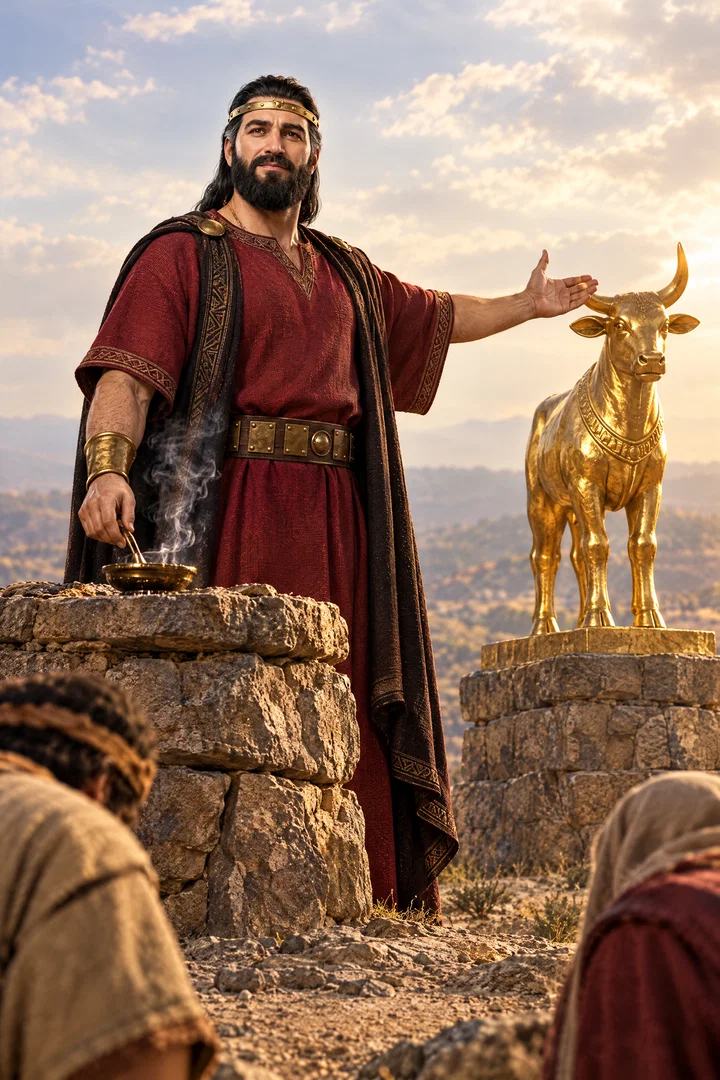
And he made an house of high places, and made priests of the lowest of the people, which were not of the sons of Levi.
Translations
American King James Version, King James Version
And he made an house of high places, and made priests of the lowest of the people, which were not of the sons of Levi.
And he made a house of high places, and made priests of the lowest of the people, which were not of the sons of Levi.
And he made a house of high places, and made priests of the lowest of the people, who were not of the sons of Levi.
And he made houses of high places, and made priests from among all the people, which were not of the sons of Levi.
And he made houses of high places, and made priests from among all the people, that were not of the sons of Levi.
And he maketh the house of high places, and maketh priests of the extremities of the people, who were not of the sons of Levi;
And he made a house of high places, and made priests from all classes of the people, who were not of the sons of Levi.
And he made a house of high-places,—and made priests from the whole compass of the people, who were not of the sons of Levi.
Berean Standard Bible, Majority Standard Bible
Jeroboam also built shrines on the high places and appointed from every class of people priests who were not Levites.
He made houses of high places, and made priests from among all the people, who were not of the sons of Levi.
And he made places for worship at the high places, and made priests, who were not Levites, from among all the people.
Also he made an house of hie places, and made Priestes of the lowest of the people, which were not of the sonnes of Leui.
Douay-Rheims (Challoner revision)
And he made temples in the high places, and priests of the lowest of the people, who were not of the sons of Levi.
Pictures
Cross-references
- 1 Kings 13:1-2
And, behold, there came a man of God out of Judah by the word of the LORD unto Beth-el: and Jeroboam stood by the altar to burn incense.
A man of God confronts Jeroboam’s rebellious worship and foretells judgment on his altar.
- Amos 7:13
But prophesy not again any more at Beth-el: for it is the king’s chapel, and it is the king’s court.
Bethel is identified as the king’s sanctuary.
- 2 Chronicles 11:13-16
And the priests and the Levites that were in all Israel resorted to him out of all their coasts.
Levites and faithful Israelites leave Jeroboam’s realm for Judah and Jerusalem.
- 1 Kings 13:33
After this thing Jeroboam returned not from his evil way, but made again of the lowest of the people priests of the high places: whosoever would, he consecrated him, and he became one of the priests of the high places.
Jeroboam continued appointing priests for the high places from among the people.
- 2 Kings 17:7-8
For so it was, that the children of Israel had sinned against the LORD their God, which had brought them up out of the land of Egypt, from under the hand of Pharaoh king of Egypt, and had feared other gods,
Israel followed foreign religious practices and built high places against the LORD.
- 1 Kings 16:31-33
And it came to pass, as if it had been a light thing for him to walk in the sins of Jeroboam the son of Nebat, that he took to wife Jezebel the daughter of Ethbaal king of the Zidonians, and went and served Baal, and worshipped him.
Ahab’s Baal worship continued Israel’s corruption through idolatry.
- 2 Kings 23:15-20
Moreover the altar that was at Beth-el, and the high place which Jeroboam the son of Nebat, who made Israel to sin, had made, both that altar and the high place he brake down, and burned the high place, and stamped it small to powder, and burned the grove.
Josiah fulfilled the prophecy against Jeroboam’s altar and its priests.
- Numbers 3:10
And thou shalt appoint Aaron and his sons, and they shall wait on their priest’s office: and the stranger that cometh nigh shall be put to death.
The law reserved priestly service for Aaron and his sons.
- Amos 7:9
And the high places of Isaac shall be desolate, and the sanctuaries of Israel shall be laid waste; and I will rise against the house of Jeroboam with the sword.
Israel’s idolatrous places of worship are called sanctuaries.
- 1 Kings 12:27
If this people go up to do sacrifice in the house of the LORD at Jerusalem, then shall the heart of this people turn again unto their lord, even unto Rehoboam king of Judah, and they shall kill me, and go again to Rehoboam king of Judah.
Jeroboam feared worship at Jerusalem would turn the people back to Rehoboam.
- Exodus 32:4
And he received them at their hand, and fashioned it with a graving tool, after he had made it a molten calf: and they said, These be thy gods, O Israel, which brought thee up out of the land of Egypt.
Jeroboam’s calves echo Israel’s earlier calf worship.
- Deuteronomy 12:5-6
But unto the place which the LORD your God shall choose out of all your tribes to put his name there, even unto his habitation shall ye seek, and thither thou shalt come:
The passage contrasts Jerusalem, the place the Lord appointed, with Jeroboam’s alternatives.
- 1 Kings 13:5
The altar also was rent, and the ashes poured out from the altar, according to the sign which the man of God had given by the word of the LORD.
The altar’s destruction signifies God’s displeasure at Jeroboam’s false worship.
- 1 Kings 14:9
But hast done evil above all that were before thee: for thou hast gone and made thee other gods, and molten images, to provoke me to anger, and hast cast me behind thy back:
Jeroboam’s apostasy brings God’s judgment.
- 1 Kings 11:37-38
And I will take thee, and thou shalt reign according to all that thy soul desireth, and shalt be king over Israel.
Jeroboam is promised Israel’s throne and a lasting house if he obeys God.
- Judges 18:30
And the children of Dan set up the graven image: and Jonathan, the son of Gershom, the son of Manasseh, he and his sons were priests to the tribe of Dan until the day of the captivity of the land.
It describes the earlier priesthood and image worship established by the Danites.
- Amos 8:14
They that swear by the sin of Samaria, and say, Thy god, O Dan, liveth; and, The manner of Beer-sheba liveth; even they shall fall, and never rise up again.
The people swear by the god of Dan.
- 1 John 5:21
Little children, keep yourselves from idols. Amen.
The lesson on Jeroboam’s idolatry is paired with the warning to keep from idols.
- 2 Kings 17:19
Also Judah kept not the commandments of the LORD their God, but walked in the statutes of Israel which they made.
Israel and Judah followed unlawful religious practices and commands.
Commentary
Each commentary is drawn from primary sources: the writings of Ellen G. White and Adventist pioneers and periodicals. Each commentary is separate. Its own words are not a quotation; follow the references to read the source passages.
Ellen G. White
3 sources
Jeroboam built houses for worship on high places at Bethel and Dan as a rival system set up in opposition to the worship of God at the temple in Jerusalem.PK 101.1PK 102.3 When he could not persuade the Levites living in his territory to serve in those shrines, he made priests from the lowest of the people, men who were not of the sons of Levi.PK 101.1 Many faithful people, including Levites, left his territory and fled to Jerusalem so they could worship according to God's requirements.PK 101.1
His course in making this false priesthood and sanctuary sprang from selfishness and rebellion.Lt 113, 1903, par. 14 His plans led Israel away from God and away from true worship into idolatry and into performing and permitting terrible evils.Lt 113, 1903, par. 14PK 102.3 His attempt to make the dedication of the strange altar solemn and impressive could not make that worship right.PK 102.3 The prophet's message against this worship should have led him to repent and abandon his wicked purposes, but he hardened his heart and chose his own way.PK 102.3
Men today are in danger of manifesting the same spirit of selfish rebellion and of doing a work similar in character to the work he did.Lt 113, 1903, par. 14 The Judge of all the earth lays the awful results of his course to his charge, and to the charge of those who follow his example will be laid the results of their own wrong course.Lt 113, 1903, par. 14
Sources
Pioneers and periodicals
42 sources
After the ten tribes revolted under Jeroboam against Rehoboam, Jeroboam ruled the northern kingdom of Israel apart from Judah.RH May 25, 1916ST Apr 28, 1909
He built shrines of high places with a temple at Bethel as a center of apostasy, and made priests from the lowest and ordinary ranks of the people who were not sons of Levi, contrary to God's established order.RH May 5, 1868ST Dec 7, 1882ST Sep 7, 1904
In jealousy and fear that worship in Jerusalem as God appointed would draw the people away from his influence, he set up calf worship at Bethel and Dan as a political measure to strengthen his authority and keep Israel from Jerusalem.ST Dec 7, 1882RH Sep 8, 1853ST Sep 7, 1904ST Apr 26, 1910ST Apr 24, 1901
That house at Bethel was a rival sanctuary to the temple of Jehovah at Jerusalem, and though claiming to worship the God who brought Israel out of Egypt, it used an image to represent Him and thus violated the second commandment and turned the people from true worship.RH Sep 1, 1863ST Aug 3, 1915RH Aug 1, 1871
This institution was a great sin that led Israel into persistent compromise and finally into captivity, showing that choosing worship for convenience and by human preference instead of as the Lord directed is turning from God's commandments to a human way.RH May 13, 1875ST Apr 28, 1909ST Jul 2, 1885ST Apr 26, 1910RH May 5, 1868
Divided Kingdom Setting
The verse belongs to the history of the divided kingdom after the ten tribes revolted under Jeroboam against Rehoboam, with Jeroboam ruling the ten tribes of Israel.ST Apr 28, 1909ST May 20, 1913 That history of the two kingdoms of Judah and Israel covers about eighty years, through Jehoshaphat's death.RH May 25, 1916 It is the account of Jeroboam's revolt and idolatry after the division, in which the strong young man who induced Israel to revolt against the weak king Rehoboam committed his great mistake of setting up altars against the altar of God.ST May 20, 1913 It shows the fruits of backsliding and sin and God's rebuke against Jeroboam, for he built shrines at high places and appointed priests who were not Levites, departing from the order God had established.ST Apr 28, 1909
The verse records a further preparation for carrying on the worship of the golden calves at Bethel and Dan.RH May 5, 1868ST Jun 29, 1904ST Jun 29, 1904 That preparation included making houses of high places and making priests from among all the people who were not sons of Levi.RH May 5, 1868ST Jun 29, 1904RH May 5, 1868 He devised this worship system after Israel's revolt, setting up golden calves and other gods, discouraging worship in Jerusalem, and instituting a feast like Judah's but on a different date of his own choosing.RH May 5, 1868RH May 5, 1868RH May 5, 1868 The appointment of unauthorized priests thus belongs within his effort to separate Israel's worship from the worship centered at Jerusalem and to maintain Israel's separation from God's people.RH May 5, 1868RH May 5, 1868 In reshaping Israel's worship by this departure from God's order, he set up rival religious observances instead of keeping God's institutions.RH May 5, 1868RH May 5, 1868
Houses and Unauthorized Priests
He built a house of high places, shrines for his new religion to carry on the worship of the golden calves at Bethel and Dan.ST Dec 7, 1882ST Sep 7, 1904 A temple was likely erected at Bethel for the idol, making Bethel a center of apostasy.ST Sep 29, 1898 He made priests from the lowest and ordinary ranks of the people, taken from among all the people, who were not sons of Levi and not of the prescribed Levitical priesthood.RH May 5, 1868ST Dec 7, 1882RH Sep 8, 1853ST Sep 7, 1904 This appointment of unauthorized priests departed from the order God had established and showed deliberate disregard for God's requirements.ST Dec 7, 1882RH Sep 8, 1853 It belonged to his effort after Israel's revolt to separate Israel's worship from the worship centered at Jerusalem, including setting up golden calves, discouraging going to Jerusalem, and instituting a feast like Judah's but on a different date of his own choosing.RH May 5, 1868ST Dec 7, 1882
He removed the regularly appointed priests and chose men he could control to serve his religious policy.RH Apr 7, 1910 The Levites generally refused to serve in this false religion, rejecting it as contrary to the law.RH Jul 17, 1913RH Sep 8, 1853 The Levites and others who remained faithful left his kingdom and fled to Judah and Jerusalem to worship according to God's requirements.RH Jul 17, 1913RH Sep 8, 1853
In the setting of his golden calves at Bethel and Dan he also acted as high priest himself, replacing the worship and priestly service God had appointed with arrangements of his own.ST Dec 7, 1882 The independent worship earlier established at Dan by the Danites was later carried into the worship of the northern kingdom set up at Dan.RH Dec 22, 1910
Motives for False Worship
Jeroboam feared that if his people continued to go up to Jerusalem to worship in God's appointed way, their hearts would return to Judah and they would be drawn away from his influence and rule.ST Dec 7, 1882RH Sep 8, 1853ST Sep 7, 1904 In jealousy and fear for his kingdom he therefore departed from God's way in order to keep the people from going to Jerusalem.ST Dec 7, 1882ST Sep 7, 1904 That departure took the form of unauthorized worship, building a house of high places and appointing ordinary priests from among the people who were not Levites, contrary to the prescribed Levitical priesthood and in deliberate disregard of God's requirements.ST Dec 7, 1882RH Sep 8, 1853ST Sep 7, 1904 This religious apostasy established a rival center at Bethel with a golden calf to hold Israel from Jerusalem, and it led Israel into continuing sin and became a curse to the ten tribes, persisting despite solemn warnings and contributing to their eventual removal from the land.RH Sep 8, 1853ST Apr 26, 1910ST Feb 14, 1884
The calf worship and its rival system were a political measure devised to strengthen his authority and keep Israel from Jerusalem.ST Apr 26, 1910ST Apr 24, 1901 The worship set up at Bethel and Dan, with priests who were not Levites, served the interests of the state rather than faithful worship of God.ST Apr 26, 1910ST Apr 24, 1901
He drew the people by offering a more convenient substitute near their homes that was easier than going to Jerusalem as the Lord had directed.ST Jul 2, 1885ST Jul 2, 1885 That easier arrangement changed the appointed way of worship.ST Jul 2, 1885ST Jul 2, 1885
Rival Sanctuary and Sin
The house of high places at Bethel was a rival sanctuary and rival place of worship set up against the temple of Jehovah at Jerusalem built by Solomon on Mount Moriah.RH Sep 1, 1863RH Mar 11, 1858RH Jan 6, 1853ST Jul 1, 1880 The chapel at Bethel was called a sanctuary, which shows that idolatrous worship also has sanctuaries, yet it was not a sanctuary of the Lord.ST Aug 3, 1915RH Jan 6, 1853 That rival sanctuary drew the ten tribes away from worship of the living God at the sanctuary of Jehovah toward the golden calves, turning them from its worship.RH Sep 1, 1863RH Mar 11, 1858RH Feb 3, 1853RH Feb 15, 1870 This turning of the people from God's sanctuary is an example of God's sanctuary being trodden under foot and of opposition to God's sanctuary.ST Jul 1, 1880
The work was unauthorized worship that dishonored true worship, built by erecting high places and appointing ordinary priests from among all the people who were not Levites and not of the prescribed Levitical priesthood.ST Dec 7, 1882RH Sep 8, 1853RH May 12, 1868RH May 5, 1868RH May 5, 1868 It showed deliberate disregard for God's law, requirements, and established order, as part of a departure from God to keep the people from going to Jerusalem.ST Dec 7, 1882RH Sep 8, 1853RH May 12, 1868RH May 5, 1868 That departure included setting up other gods and appointing a festival like Judah's but on a different, newly chosen day of his own choosing, establishing an alternative system and rival religious observances instead of keeping God's institutions.RH Jul 17, 1913RH May 5, 1868RH May 5, 1868
While claiming to worship the God who brought Israel out of Egypt, the calf worship made an image to represent the true God and thus violated the second commandment.RH Aug 1, 1871 That use of images did not at first replace God with another god, but it prepared the way for abandoning God altogether.RH Aug 1, 1871 The attempt to retain the worship of Jehovah while altering it turned Bethel, the house of God, into his own house instead of serving as God's chapel and court.STRH Dec 23, 1915 Even a small departure from God, especially in worship, can widen into open paganism, for the departure extended beyond setting up symbols to increasingly corrupt worship culminating within less than fifty years in the worship of Sidonian Baal in Samaria.ST
From Jeroboam onward began persistent compromise in which the people tried to worship Jehovah while also serving Baal, and this divided service corrupted the worship of Jehovah.ST Jun 17, 1886 That continued mixture of true worship with Baal worship ultimately led to captivity.ST Jun 17, 1886 Against such turning from God's commandments to a human religious way, God's people must stand by His straight standard, like a wall measured by a plumb line.RH Dec 23, 1915 The religious institution itself usurps what belongs to God and is wrong in itself, even though God may bless people who honor it sincerely, not because of the institution but in spite of it.ST Sep 10, 1894
Consequences for Israel
The setting up of worship at Bethel and Dan with houses of high places and priests who were not Levites was a great sin against God, belonging to the idolatry of Jeroboam with his golden calves at Bethel and Dan while he ruled the ten tribes after the division of the kingdom.RH May 13, 1875ST Apr 28, 1909ST Apr 26, 1910RH Mar 4, 1873 That history shows the fruits of backsliding and sin and God's rebuke and displeasure against Jeroboam for his alternative worship.RH May 13, 1875ST Apr 28, 1909ST Apr 26, 1910 What was meant as a political measure to keep Israel from going to Jerusalem to worship became a curse to the ten tribes rather than a blessing, and left a shameful mark on history.ST Apr 26, 1910RH Mar 4, 1873
His act led Israel into persistent and continuing sin despite solemn warnings from God, establishing unauthorized worship contrary to the prescribed Levitical priesthood out of fear that worship in Jerusalem would reunite Israel with Judah.RH Sep 8, 1853ST Apr 26, 1910RH May 9, 1871 From Jeroboam onward the people tried to worship Jehovah while also serving Baal, and that divided service corrupted the worship of Jehovah.ST Apr 26, 1910ST Jun 17, 1886 This continuing apostasy and mixture of true worship with Baal worship ultimately led to removal from the land and captivity.RH Sep 8, 1853RH May 9, 1871ST Jun 17, 1886
Even a small departure from God, especially in worship, can widen into open paganism, for the departure extended beyond setting up symbols to high-place worship and non-Levitical priests in an attempt to retain the worship of Jehovah while altering it.ST That altered worship led toward increasingly corrupt worship, culminating within less than fifty years in the worship of Sidonian Baal in Samaria.ST The miraculous rending of the altar was a sign of God's displeasure with this apostasy that dishonored true worship and drew Israel away from the temple in Jerusalem, given as a warning meant to lead the king and people to repentance.RH Jul 17, 1913 A temple was likely erected at Bethel for the idol, making Bethel a center of apostasy, yet Jerusalem and Solomon's temple were visible from that area, continually reminding worshipers of what they had turned from.ST Sep 29, 1898
Modern Lessons and Warnings
Building houses for worship on high places and appointing priests who were not Levites stands as a case of rulers imposing religious arrangements contrary to God's law, showing that obeying civil authority becomes sinful when it conflicts with obeying God.RH May 12, 1868 The arrangement placed substitute worship near the people's homes that was easier than going to Jerusalem to worship as the Lord had directed, changing the appointed way of worship, and choosing worship for convenience and according to one's own preferences is not worshiping the Lord but worshiping oneself.ST Jul 2, 1885 That same pattern of drawing people away from faithful worship by offering a more convenient alternative applies to leaders who discourage keeping the Sabbath and expecting Christ's return by appealing to ease and social standing and desire for entertainment rather than obedience to God's commands.ST Jul 2, 1885
The golden calves set up alongside that unauthorized priesthood are a likeness for professed Christians who claim zeal for God while replacing true worship with idolatry and seeking earthly power.ST Dec 4, 1893 The use of unauthorized means to establish worship reflects the principle that a desired end justifies the means, and such religious methods can degrade God's character and corrupt the church, since practices intended to secure unity or retain influence may undermine faith and lead people into sin and ruin.RH Apr 7, 1910 Reshaping worship by establishing high places and appointing priests who were not Levites, together with new gods and a newly chosen festival day, provides an example of setting up rival religious observances instead of keeping God's institutions, turning from God's commandments to a human religious way.RH May 5, 1868RH Dec 23, 1915 In that turning, Bethel the house of God was made into a man's own house instead of serving as God's chapel and court, and God's people must stand by His straight standard, like a wall measured by a plumb line.RH May 5, 1868RH Dec 23, 1915
Establishing that rival religious system at Bethel and Dan to strengthen political authority served the interests of the state rather than faithful worship of God.ST Apr 24, 1901 That establishing of a religious system to support political power connects the act with the use of religion to strengthen the state, a practice that promotes union of church and state.ST Apr 24, 1901ST Apr 24, 1901
Sources