Daniel 3:17
If it be so, our God whom we serve is able to deliver us from the burning fiery furnace, and he will deliver us out of thine hand, O king.
Translations
If it be so, our God whom we serve is able to deliver us from the burning fiery furnace, and he will deliver us out of your hand, O king.
King James Version, KJV Cambridge Paragraph Bible
If it be so, our God whom we serve is able to deliver us from the burning fiery furnace, and he will deliver us out of thine hand, O king.
If it is so, our God whom we serve is able to deliver us from the burning fiery furnace, and he will deliver us out of thy hand, O king.
If it be so, our God whom we serve is able to deliver us from the burning fiery furnace; and he will deliver us out of thine hand, O king.
If it be so, our God whom we serve is able to deliver us from the burning fiery furnace; and he will deliver us out of thy hand, O king.
Lo, it is; our God whom we are serving, is able to deliver us from a burning fiery furnace; and from thy hand, O king, He doth deliver.
If it be [ so], our God whom we serve is able to deliver us from the burning fiery furnace, and he will deliver [us] out of thy hand, O king.
If it is, our God, whom we serve, is able to deliver us,—out of the burning furnace of fire, and out of thy hand, O king, he will deliver.
Berean Standard Bible, Majority Standard Bible
If the God whom we serve exists, then He is able to deliver us from the blazing fiery furnace and from your hand, O king.
If it happens, our God whom we serve is able to deliver us from the burning fiery furnace; and he will deliver us out of your hand, O king.
If our God, whose servants we are, is able to keep us safe from the burning and flaming fire, and from your hands, O King, he will keep us safe.
Beholde, our God whom we serue, is able to deliuer vs from the hote fierie fornace, and hee will deliuer vs out of thine hand, O King.
Douay-Rheims (Challoner revision)
For behold our God, whom we worship, is able to save us from the furnace of burning fire, and to deliver us out of thy hands, O king.
Pictures
Cross-references 20 of 37
- Acts 5:29
Then Peter and the other apostles answered and said, We ought to obey God rather than men.
Both teach that God must be obeyed rather than human rulers when commands conflict.
- Daniel 6:16-23
Then the king commanded, and they brought Daniel, and cast him into the den of lions. Now the king spake and said unto Daniel, Thy God whom thou servest continually, he will deliver thee.
Daniel remains faithful under threat, and God delivers him from the lions.
- Daniel 3:24-27
Then Nebuchadnezzar the king was astonied, and rose up in haste, and spake, and said unto his counsellors, Did not we cast three men bound into the midst of the fire? They answered and said unto the king, True, O king.
God is present with the faithful in the furnace and brings them out unharmed.
- Acts 4:19
But Peter and John answered and said unto them, Whether it be right in the sight of God to hearken unto you more than unto God, judge ye.
Both show that God must be obeyed over human rulers.
- Daniel 3:28
Then Nebuchadnezzar spake, and said, Blessed be the God of Shadrach, Meshach, and Abed-nego, who hath sent his angel, and delivered his servants that trusted in him, and have changed the king’s word, and yielded their bodies, that they might not serve nor worship any god, except their own God.
Nebuchadnezzar praises God for rescuing the servants who trusted Him.
- Exodus 20:4-5
Thou shalt not make unto thee any graven image, or any likeness of any thing that is in heaven above, or that is in the earth beneath, or that is in the water under the earth:
They refused the king’s demand to bow to an image, obeying God’s command against idolatry.
- Daniel 3:4-6
Then an herald cried aloud, To you it is commanded, O people, nations, and languages,
The king commands worship of the image on pain of death.
- Jeremiah 27:6-8
And now have I given all these lands into the hand of Nebuchadnezzar the king of Babylon, my servant; and the beasts of the field have I given him also to serve him.
God grants Nebuchadnezzar rule over nations, but his authority is limited.
- Hebrews 11:34
Quenched the violence of fire, escaped the edge of the sword, out of weakness were made strong, waxed valiant in fight, turned to flight the armies of the aliens.
Faith quenches the violence of fire and delivers from danger.
- Daniel 6:7-10
All the presidents of the kingdom, the governors, and the princes, the counsellors, and the captains, have consulted together to establish a royal statute, and to make a firm decree, that whosoever shall ask a petition of any God or man for thirty days, save of thee, O king, he shall be cast into the den of lions.
Daniel continued praying despite the king’s decree.
- Daniel 3:27
And the princes, governors, and captains, and the king’s counsellors, being gathered together, saw these men, upon whose bodies the fire had no power, nor was an hair of their head singed, neither were their coats changed, nor the smell of fire had passed on them.
The men emerge from the furnace unharmed, proving complete deliverance.
- Isaiah 43:2
When thou passest through the waters, I will be with thee; and through the rivers, they shall not overflow thee: when thou walkest through the fire, thou shalt not be burned; neither shall the flame kindle upon thee.
God promises to be with and protect his people through fire.
- Daniel 6:16
Then the king commanded, and they brought Daniel, and cast him into the den of lions. Now the king spake and said unto Daniel, Thy God whom thou servest continually, he will deliver thee.
Both face punishment for refusing an unrighteous decree.
- Daniel 3:29
Therefore I make a decree, That every people, nation, and language, which speak any thing amiss against the God of Shadrach, Meshach, and Abed-nego, shall be cut in pieces, and their houses shall be made a dunghill: because there is no other God that can deliver after this sort.
The king confesses that God’s deliverance of the three men proves no other god can deliver.
- Daniel 6:26-27
I make a decree, That in every dominion of my kingdom men tremble and fear before the God of Daniel: for he is the living God, and stedfast for ever, and his kingdom that which shall not be destroyed, and his dominion shall be even unto the end.
A Gentile king proclaims God’s power after Daniel’s deliverance.
- Daniel 4:37
Now I Nebuchadnezzar praise and extol and honour the King of heaven, all whose works are truth, and his ways judgment: and those that walk in pride he is able to abase.
Nebuchadnezzar praises God after learning that God humbles the proud.
- Hebrews 7:25
Wherefore he is able also to save them to the uttermost that come unto God by him, seeing he ever liveth to make intercession for them.
Both affirm God's power to save and deliver fully.
- Matthew 4:10
Then saith Jesus unto him, Get thee hence, Satan: for it is written, Thou shalt worship the Lord thy God, and him only shalt thou serve.
Commands worship and service to God alone, contrasting Babylon’s demand for image worship.
- Daniel 3:26
Then Nebuchadnezzar came near to the mouth of the burning fiery furnace, and spake, and said, Shadrach, Meshach, and Abed-nego, ye servants of the most high God, come forth, and come hither. Then Shadrach, Meshach, and Abed-nego, came forth of the midst of the fire.
The king acknowledges the Most High God after their deliverance.
- Revelation 13:15
And he had power to give life unto the image of the beast, that the image of the beast should both speak, and cause that as many as would not worship the image of the beast should be killed.
A coercive decree threatens death for refusing to worship an image.
Commentary
Each commentary is drawn from primary sources: the writings of Ellen G. White and Adventist pioneers and periodicals. Each commentary is separate. Its own words are not a quotation; follow the references to read the source passages.
Ellen G. White
52 sources
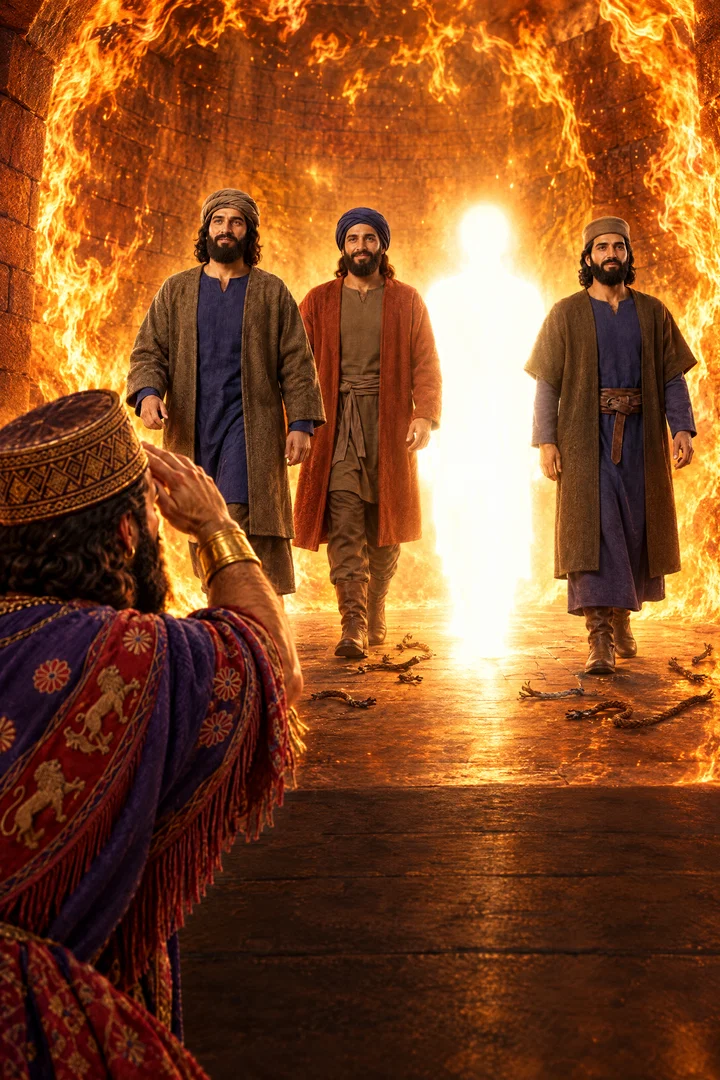
Faced with a royal decree to worship a golden image on pain of death in a burning furnace, three faithful men refused to yield and declared that the God they served was able to rescue them from both the fire and the king's power.ST Dec 24, 1912Lt 151, 1904, par. 6–8BS 32.1–3 Their trust did not depend on being spared, for they were resolved to remain loyal even if God did not deliver them, valuing obedience to God above life itself.ST Dec 24, 1912ST Sep 2, 1897SPBC 160.5–161.1 God did deliver them, preserving them unharmed in flames heated seven times hotter than usual while their persecutors perished, and Christ himself was seen walking with them in the fire.Ms 16, 1896, par. 31–34STE 212.2–214.13MR 95.4 Their stand and rescue honored the only true God before an idolatrous nation, revealing His supremacy over earthly kings and leading Nebuchadnezzar to acknowledge Him.SPBC 161.2ST Nov 5, 18965T 453.1–4 That same faith must be repeated when human laws again demand false worship, especially in the coming test over the Sabbath, when God's commandment-keeping people will trust Him to rescue them yet remain true even unto death.Ms 32, 1898, par. 15–17PK 512.1Ms 40a, 1890, par. 101–10212MR 218.2–220.1
Setting and Wording
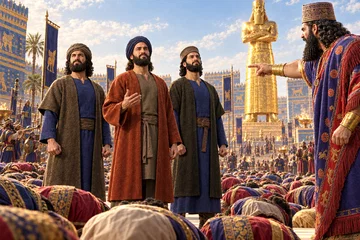
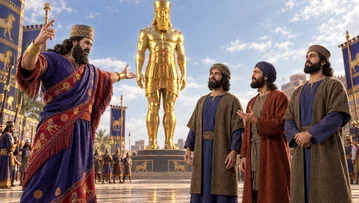
The declaration stands at the moment when Shadrach, Meshach, and Abednego refuse to obey a decree requiring worship of Nebuchadnezzar's golden image, under threat of the burning fiery furnace and death.ST Dec 24, 1912Lt 151, 1904, par. 6–8BS 32.1–35T 453.1–45T 42.2–43.2 It is the answer of Hebrew captives who will not bow the knee to the idolatrous image set up in the plain of Dura, though placed in a most critical and trying position where faithfulness may cost life itself.BS 32.1–35T 453.1–4Lt 109a, 1898, par. 5–8 Their confidence is that the God they serve has power to rescue them from the fiery furnace and from the king's authority and hand, yet that confidence does not depend on being rescued.ST Dec 24, 1912Lt 151, 1904, par. 6–85T 42.2–43.2
The opening words mean if this is your decision, addressed to the king in settled refusal to dispute the matter with him.Ms 32, 1898, par. 15–17Ms 163, 1898, par. 5–11 They are not afraid to answer, for their minds are made up, but they will have no controversy with opposers because dispute would only increase fury.Ms 32, 1898, par. 15–17Ms 163, 1898, par. 5–11 That restraint is itself the language of faith.Ms 32, 1898, par. 15–17
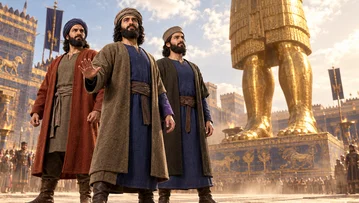
The image they refuse stands on the plain of Dura, set up to represent the kingdom of Babylon and more particularly Nebuchadnezzar himself and the glory of himself and his kingdom.Lt 109a, 1898, par. 5–8Ms 47a, 1898, par. 2–513MR 60.1–61.2 It was made all of gold to take the place of God and be worshiped as God after he was told he was the head of gold, and his advisers schemed to ensnare the Hebrew captives by leading the king to proclaim that every knee should bow to it.12MR 218.2–220.113MR 60.1–61.2 The three young men had been educated that the fear of the Lord is the beginning of wisdom and to worship and serve God only, so they would not turn from allegiance to Him.Ms 163, 1898, par. 5–1113MR 60.1–61.2
Though innocent of wrongdoing and obedient to the laws of Babylon in all else, they meet the threat with a refusal that is respectful but decided.BS 32.1–3PK 512.1 They will never serve the king's gods nor worship his image, and will not be moved a hair's breadth from duty to their Creator when human law conflicts with God's claims.BS 32.1–3 The king's threats cannot turn them, and they look with calmness on the furnace and the idolatrous throng because they have trusted in God and are certain He will not fail them.BS 32.1–3
Trust Without Conditions
The declaration is one of trust that the God they serve has power to rescue them from the burning fiery furnace and to deliver them out of the king's hand, authority, control, and power.ST Dec 24, 1912ST Sep 2, 1897SPBC 160.5–161.1Ms 16, 1896, par. 31–34Lt 132, 1901, par. 7–15 In beholding Christ and His presence they could endure even a cruel death, and God did in fact rescue them with His presence with them in the fire.ST Sep 2, 1897Ms 16, 1896, par. 31–34Lt 132, 1901, par. 7–15 Their answer displayed faith in the living God and unwavering rejection of idolatry even at the cost of their lives.SPBC 160.5–161.1Ms 16, 1896, par. 31–3419MR 119.1–120.2
Their confidence and loyalty did not depend on being rescued or spared, for even facing death they remained determined and resolved not to worship the image even if God did not deliver them.ST Dec 24, 1912ST Sep 2, 1897SPBC 160.5–161.1Ms 16, 1896, par. 31–34Lt 132, 1901, par. 7–15 They committed themselves to God even if He did not deliver them, choosing faithfulness to Him over obedience to a human command that violated conscience.Lt 132, 1901, par. 7–1519MR 119.1–120.2Lt 90, 1897, par. 19–20 Guided by duty and conscience, they were resolved not to worship the image even if deliverance did not come.Lt 132, 1901, par. 7–1519MR 119.1–120.2Lt 90, 1897, par. 19–20
They refused because they understood that bowing to the image was worship and that worship belongs to God alone, whom they honored and worshiped alone as the only true and living God.Lt 132, 1901, par. 7–15PK 507.1SPBC 161.2 They held allegiance to God as the great Ruler of nations because they had learned that disobedience to God is dishonor, disaster, and ruin and that the fear of the Lord is the beginning of wisdom and the foundation of all true prosperity.PK 507.1BS 32.1–3SPBC 161.2 Their willingness to face death rather than worship shows that obedience to God and the life to come mattered more to them than preserving their present lives.Lt 90, 1897, par. 19–20Ms 10, 1885, par. 11BS 32.1–3
Deliverance and Divine Presence
God did rescue, preserve and vindicate his faithful servants in the fire, which had been heated seven times hotter than usual.Ms 16, 1896, par. 31–34Lt 132, 1901, par. 7–15STE 212.2–214.1Ms 40a, 1890, par. 101–102 They came forth without even the smell of fire upon their garments, showing how complete the deliverance was.Ms 16, 1896, par. 31–34Lt 132, 1901, par. 7–15Ms 40a, 1890, par. 101–102 The haste and flame killed those who put them in, so that the men who sought to destroy them were themselves destroyed and the accusers were cast into the furnace.Ms 16, 1896, par. 31–34Lt 132, 1901, par. 7–15STE 212.2–214.15T 453.1–4 Their confidence had not depended on being spared, for they were resolved not to worship the image even if he did not deliver them, yet he honored their faithfulness by preserving them and showing his power over the human king.Ms 16, 1896, par. 31–34Lt 132, 1901, par. 7–15STE 212.2–214.13MR 95.45T 453.1–4
Christ himself was with them in the furnace, the form of the Fourth walking with them in the flames.Ms 40a, 1890, par. 101–102Ms 168, 1898, par. 1–3Ms 44, 1886, par. 8–10Lt 109a, 1898, par. 5–8Ms 47a, 1898, par. 2–5 The king saw them unharmed and walking loose with the three, a fourth figure like the Son of God and the Son of Man.3MR 95.4Ms 168, 1898, par. 1–3Ms 44, 1886, par. 8–10Lt 109a, 1898, par. 5–8 He recognized who it was because Daniel and these men had talked to him of God and of Christ.Ms 168, 1898, par. 1–3Lt 109a, 1898, par. 5–8Ms 47a, 1898, par. 2–5 In this he manifested himself as promised to those who have his commandments and keep them.Ms 168, 1898, par. 1–3Ms 44, 1886, par. 8–10Lt 109a, 1898, par. 5–8
God does not promise exemption from trials but promises what is far better, his own presence and strength in them.4SP 120.14SP 160.1 Those called to go through the fiery furnace for Christ have Jesus by their side, even as he was with the faithful three in Babylon, with strength as their days and grace sufficient and made perfect in weakness.SG4 275.3–276.34SP 120.1 Trust in this delivering God does not depend on being rescued, for if he does not save a servant from death the servant may still remain faithful and give his life rather than let the truth and the gospel be dishonored or exposed to insult.SG4 275.3–276.34SP 120.14SP 160.1 Those who love their Redeemer rejoice at every opportunity to share his humiliation and reproach, caring not for self or personal ease and safety but for the truth, and love for him makes suffering for his sake sweet.SG4 275.3–276.34SP 120.1
Witness to King and Nation
Their trust that God was able to rescue them from the furnace and from the king's hand and control was itself a public testimony to the nation that the God they worshiped was the only true and living God.SPBC 161.2ST Nov 5, 1896Ms 16, 1896, par. 35 They honored Him by giving worship to Him alone and by refusing to yield to idolatry even to save their lives.SPBC 161.2ST Nov 5, 1896Ms 16, 1896, par. 35 That refusal of even the smallest concession to idolatry, whatever the cost, is how His servants honor Him before idolaters.SPBC 161.2Ms 16, 1896, par. 35 Their test of integrity before an idolatrous nation displayed His power and faithfulness, since loyalty to God must not be surrendered even to preserve life.ST Nov 5, 1896BS 29.1
Their faithfulness led Him to preserve them in the flames, and that deliverance demonstrated His power to the nation.ST Nov 5, 18965T 453.1–4 The attempt to force idolatry thus brought the knowledge of the true God before Babylon's princes and leaders, spreading it abroad throughout the length and breadth of Babylon.5T 453.1–4Ms 2b, 1895, par. 25–26 The miracle proved Jehovah more powerful than earthly kings and magnified God, revealing His superior power over every other kingdom.Ms 168, 1898, par. 1–3Lt 109a, 1898, par. 5–8Ms 47a, 1898, par. 2–5 It wrought upon Nebuchadnezzar's heart so that he believed in God and acknowledged His superior power.Ms 168, 1898, par. 1–3Lt 109a, 1898, par. 5–8Ms 47a, 1898, par. 2–5 Time after time such a stand for truth brought the Hebrew exiles face to face with kings and rulers so that those rulers and their peoples might receive the light, leading the greatest monarchs to proclaim the supremacy of the God whom their Hebrew captives worshiped.DA 28.3
The setting discloses His purpose to come into close contact with human minds, even idolaters, and to give light to Nebuchadnezzar through Daniel and through providence always at work in human affairs.Ms 47a, 1898, par. 2–5 For that purpose He had permitted them to be carried captive to that heathen land, and by their vindication that purpose was accomplished.Ms 47a, 1898, par. 2–5Ms 2b, 1895, par. 25–26 King and subjects were thereby taught not to read the Scriptures and His providences in the light of their dreams and fancies but to read their dreams in the light of the living oracles.Ms 47a, 1898, par. 2–5 Their wonderful deliverance brings out important principles regarding the working out of the Lord's purpose for the children of obedience and for the children of disobedience.Lt 118, 1910, par. 2
End-Time Parallel and Prophecy
The faith shown by the Hebrew youth on the plain of Dura must be repeated in this day.PK 512.1 It is purpose to be true to principle let come what may through continual sharp contests before the controversy between good and evil ends.Ms 40a, 1890, par. 101–102 That means not turning aside from allegiance to truth even when threatened with the flaming fiery furnace heated seven times hotter than usual.Ms 40a, 1890, par. 101–102 It means standing firm in the time of trial even to being cast into the furnace, in self-denial and loyalty to God rather than yielding to pressure.Ms 40a, 1890, par. 101–10220MR 113.3–114.1 With them is the assurance that God does not forsake His faithful servants but is with them in the flames, the form of the Fourth walking with them, and delivers them so completely that they come forth without even the smell of fire upon their garments.Ms 40a, 1890, par. 101–102
Especially the wrath of man will be aroused against those who hallow the Sabbath of the fourth commandment.PK 512.1 Opposition will rise to a fiercer height until at last a universal decree denounces them as deserving of death.PK 512.1GC 610.1 Though innocent of wrongdoing, many of God's servants will be given over to suffer humiliation and abuse at the hands of those inspired by Satan and filled with envy and religious bigotry.PK 512.1 In that final crisis they will be perplexed, thinking they have brought the crisis upon themselves.GC 610.1
The same pattern applies when union of church and state sets up a Sunday idol where God's holy Sabbath should be and human laws demand it be worshiped as sacred, striving to turn God's people from their allegiance.12MR 218.2–220.1 The declaration that the God served is able to deliver from the burning fiery furnace and from the king's hand is the language of faith.Ms 32, 1898, par. 15–17 It is the pattern for God's commandment-keeping people in the coming test upon the Sabbath question, who will take God's Word for their guide and have no controversy with opposers, refusing to dispute because dispute would only increase fury.Ms 32, 1898, par. 15–17
In that crisis conscience and the word of God assure them their course is right.GC 610.1 They uphold His whole law rather than divide it into essential and non-essential parts or tamper with His word to gain the favor of the world.4SP 428.1GC 610.1 They hold that the Lord they serve is able to rescue them, and since Christ has conquered the powers of earth they need not be afraid of a world already conquered.4SP 428.1GC 610.1 Although trials continue they are strengthened to bear them, with faith and courage rising with the emergency.GC 610.1 They continue to proclaim the truth without fear of consequences, trusting God's power to deliver when persecution threatens.GC88 609.1–2
A crisis can require a decision for or against God's commandments, as shown by the three worthies who refused to bow to Nebuchadnezzar's image.Lt 35, 1895, par. 1–3 Human rulers cannot rightfully claim the authority that belongs to God alone.Ms 78, 1897, par. 40 When authorities try to force the conscience through laws restricting religious liberty, God will interpose for His commandment-keeping people who trust His power to deliver from mortal danger and from rulers who threaten them.Ms 78, 1897, par. 40 Refusal to bow to earthly decrees that stand against the King of heaven marks the loyal and true in the patience of the saints in keeping the commandments of God and the faith of Jesus.12MR 218.2–220.1 Those who make cruel enactments seeking to destroy God's people will be destroyed by the recoil of their own actions, as the men who sought to destroy the three Hebrews were themselves destroyed.12MR 218.2–220.1
The trust of the three worthies in God's power to preserve them in the fiery furnace is the same trust Luther placed in God while facing threats of death for defending the truth.1T 373.2–375.1 The Hebrew exiles in Babylon refused to disregard the Sabbath and to observe heathen festivals even when persecution cost many their lives.DA 28.3 Their stand for truth brought them face to face with kings and rulers so that those rulers and their peoples might receive the light.DA 28.3 Time after time this witness led the greatest monarchs to proclaim the supremacy of the God whom their Hebrew captives worshiped.DA 28.3
Faithful Obedience in Life
The verse teaches the duty never to sacrifice principle even in the slightest particular, rooted in an earlier determination to be true whatever the consequences and to let God be their judge rather than men.Ms 2b, 1895, par. 25–263T 22.3Ms 8a, 1891, par. 2–5 It is better to incur the displeasure of men than to surrender loyalty to God, serving Him with undivided heart under all circumstances.Ms 2b, 1895, par. 25–26Ms 2b, 1895, par. 17–18 Compliance with human authority and wishes is right only in what does not conflict with service to Christ, letting no one come between the soul and God.Ms 2b, 1895, par. 25–26Ms 2b, 1895, par. 17–18Ms 15, 1896, par. 33–34 This faithfulness holds firm whatever the consequences, even in the very face of death in open disregard of the king's requirements, preferring death to violating conscience.Ms 2b, 1895, par. 25–263T 22.3Ms 8a, 1891, par. 2–5
Such loyalty becomes clear when a ruler commands worship contrary to God's commandments, and the servants of God remain faithful rather than yield.Ms 2b, 1895, par. 17–18Ms 15, 1896, par. 33–34 It holds firm convictions of duty such as Sabbath observance and keeps it the best possible in every situation, loving the Lord with all heart and soul without swerving from allegiance whatever the circumstances, even when meeting opposition, trials and temptations never met before.Ms 2b, 1895, par. 17–18Ms 15, 1896, par. 33–34 By such steadfast truth to principle an influence for good is gained.Ms 2b, 1895, par. 17–18 God vindicates and honors such faithfulness by deliverance, and through it the knowledge of the true God is spread abroad throughout Babylon, accomplishing His purpose in permitting His people to be carried captive to that heathen land.Ms 2b, 1895, par. 25–26
Their stand means self-denial and self-sacrifice, standing on the Lord's side and refusing all excuses.Lt 73, 1896, par. 39–42STMW9 56.1–2 It refuses enslavement to any hereditary or cultivated habit or tendency, ruling animal passions, appetites and passions so that they are servants and not rulers rather than being held in bondage of habit.Lt 73, 1896, par. 39–42STMW9 56.1–2 It controls circumstances by an inwrought principle learned from the greatest Teacher rather than being controlled by circumstances, surroundings, will or convenience, not waiting until will and circumstances are adjusted.Lt 73, 1896, par. 39–42STMW9 56.1–2 That principle cuts like a plowshare through hereditary and cultivated habits and through all circumstances and surroundings, making every circumstance and habit and surrounding a servant to a God-fearing man.STMW9 56.1–2
Trust in God's word enables men utterly helpless in themselves to withstand the power of the whole world, even in the king's court, when it supports evil.MYP 27.4–28.1RH Dec 24, 1908ED 254.2–3 They receive strength from heaven to confess allegiance to God and to proclaim the truth without fear of consequences, trusting God's power to save them rather than obeying a human command that dishonors Him.MYP 27.4–28.1RH Dec 24, 1908ED 254.2–3GC88 609.1–2RH Nov 11, 1915 They belong to the world's true nobility, its royal line, in which the youth of today are called to take their places.ED 254.2–3 That same delivering God, able to deliver His servants from the furnace and from the king's hand, can be trusted by a fearless advocate of truth in feeble health when summoned before powerful enemies determined to stop his mouth and crying for his blood.SG4 275.3–276.3
Trust in this delivering God means not excusing oneself from danger, not seeking personal ease or safety, and caring not for self but for the truth that it not be exposed to insult.SG4 275.3–276.3 It is readiness to die rather than allow enemies of truth to triumph.SG4 275.3–276.3 God does not promise exemption from trials but promises what is far better, His own presence and strength in them, with strength as their days and grace sufficient and made perfect in weakness, as Jesus was by the side of the faithful three in Babylon and is by the side of those called to go through the fiery furnace for Christ. Those who love their Redeemer rejoice at every opportunity to share His humiliation and reproach, and love for Him makes suffering for His sake sweet.
Sources
Pioneers and periodicals
125 sources
Shadrach, Meshach and Abednego answered Nebuchadnezzar's threat to cast them that same hour into the burning fiery furnace for refusing to worship his golden image by declaring that the God whom they served was able to rescue them from the furnace and would rescue them from his hand.ST Jun 28, 1899ST Jan 9, 1912RH Aug 13, 1908ST Jun 28, 1899ST Dec 11, 1893 Their confidence did not depend on being rescued, for even if He left them to die in the fire they would still serve Him and would not serve his gods nor bow to the image.ST Jan 29, 1908ST Jan 9, 1912ST Jun 28, 1899 God went with them into the fire by His angel and brought them out unharmed without even the smell of smoke, publicly vindicating them and compelling the king to confess that no other god can deliver in this way.ST Oct 11, 1905ST Dec 11, 1893ST Oct 13, 1909RH Oct 7, 1902ST Nov 8, 1905 Their stand asserts that when human law commands idolatry God must be obeyed rather than men, for civil rule is limited to temporal affairs and cannot compel worship, and refusal under penalty is loyal faithfulness and not rebellion.ST Jan 29, 1908RH Aug 13, 1908ST Jul 11, 1911ST Jul 24, 1884ST Apr 23, 1912 Their experience foreshadows the final test when worship of the beast's image is enforced on pain of death, in which God will likewise be with His people and deliver them after the time of trouble has fully come.RH May 1, 1855ST Oct 5, 1882RH Aug 27, 1908RH May 12, 1868RH May 12, 1868
Words and Historical Setting
The reply was given by Shadrach, Meshach and Abednego, whose Hebrew names were Hananiah, Mishael and Azariah, when Nebuchadnezzar threatened to cast them that same hour into the burning fiery furnace for refusing to serve his gods and worship the golden image he had set up on the plain of Dura.RH Aug 13, 1908ST Jun 3, 1913ST Jul 27, 1904ST Nov 28, 1895 They told the king they were not careful to answer him in this matter, but declared that the God whom they served was able to deliver them from the burning fiery furnace and would deliver them out of his hand, while still refusing to serve his gods or worship the image even if He did not.ST May 6, 1897ST Dec 11, 1893ST Jul 27, 1904ST Nov 28, 1895 It was spoken with the furnace in sight, with firm triumphant implicit trust rising with knowledge that God would be glorified in the trial, and it stands as an assertion of the rights of conscience.ST May 6, 1897RH Aug 13, 1908ST Dec 11, 1893
The declaration means that their God, who is in the heavens, has power to rescue those who serve Him both from the furnace and from the king's hand and authority.ST Jun 28, 1899ST Jan 9, 1912ST Jun 28, 1899ST Oct 11, 1905RH Apr 13, 1869 That confidence in His ability to save did not depend on whether He chose to rescue them, and it did not weaken their determination to obey Him rather than worship the image under decree and threat of death.ST Dec 24, 1912ST Jan 9, 1912ST Jun 28, 1899RH Apr 13, 1869 He goes with His servants and delivers them unharmed, as He did when He went with the three into the fire.ST Oct 11, 1905
Nebuchadnezzar had erected the image as one grand patriotic demonstration to assure perpetuation of his kingdom and to prove untrue God's revelation through Daniel that his kingdom would be overcome and another would arise after him.ST Jun 3, 1913 The setting thus contrasts God's representation of human kingdoms in the dream with human ideas of the kingdom of men, with human patriotism trying to defy God's prophecy that earthly kingdoms would decline and pass away.ST Jan 9, 1912ST Jun 3, 1913ST Dec 3, 1912 The image embodied Babylonian patriotism, and the three whom the king had advanced to posts of honor stood erect when commanded to bow when the music sounded, standing right while all Babylon, patriotic as they were, was wrong.ST Jun 3, 1913ST May 6, 1913ST Jun 25, 1912
For that disobedience the furnace was heated seven times hotter than usual, or seven times more than it was wont to be heated, and they were bound in their coats, hosen, hats and other garments and cast into the midst of the burning fiery furnace, falling down bound in the midst of the fire.ST Nov 8, 1905ST Jul 27, 1904ST Jun 3, 1913 The men sent to carry out the sentence died, while the servants of God were miraculously preserved without even the smell of smoke upon their garments, because Jesus was with them during that trying hour.ST Jun 3, 1913ST Their preservation exposed the failure of the attempt to force worship, reversed the king's decree, changed his word, and made the circumstance a lesson to all kings and combines forever.ST Nov 8, 1905ST
What is inspired is the word that records this history in Daniel chapters 1, 2, 3 and 4, not the man Nebuchadnezzar, for he was not inspired as Daniel and the other prophets were.ST Jul 16, 1912 He came to see that God was just and right and his own ways evil, and he submitted to God and sent out his own great conception of God and God's goodness and power.ST Jul 16, 1912 Through that record, and through Gentile kings, God made His truth and the gospel of the kingdom known, as officials carried the report back to their provinces and proclaimed it to the world, teaching trust in God and remembrance of His works and commands.RH Nov 11, 1902RH Feb 27, 1900RH May 29, 1900
The chapter presents Jehovah as Deliverer above all other gods, the God who delivers and has power to deliver His children and faithful servants from danger and a ruler's power.ST Jul 16, 1912ST Oct 21, 1908ST Dec 1, 1914 There is no other god able to deliver after this sort, as Nebuchadnezzar himself was taught when the three trusted that their God had power to rescue them from the furnace and free them from the king's power.ST Jul 16, 1912RH Aug 27, 1908ST Jan 16, 1912 That deliverance was put on record so all may have confidence in the God of heaven to deliver from the power of darkness and translate into the kingdom of the Son of His love, which must first be revealed as salvation from sin, and the same God alone is able to deliver from the coming universal conflagration when the whole earth will be a burning fiery furnace reserved against the day of judgment and destruction of ungodly men.RH Aug 27, 1908
Trust Without Conditions
Their confidence did not depend on being rescued, for they trusted that the God whom they served was able to deliver them from the burning fiery furnace and out of the king's hand, yet they were resolved to serve Him still even if He did not deliver them and the furnace devoured them.ST Jan 29, 1908ST Jan 9, 1912ST Jun 28, 1899RH Apr 13, 1869ST Dec 11, 1893 Even facing death they would not serve the king's gods nor worship the golden image, and their refusal to bow did not weaken whether God chose to rescue them or not.ST Dec 24, 1912ST Jun 28, 1899RH Apr 13, 1869ST Dec 11, 1893 Their trust was unconditional, not that they would serve Him only because He would deliver them, but that they would serve Him still if He did not, for He is Lord of life whose power reaches beyond the furnace ashes.ST Jan 29, 1908
That unconditional trust rested on principle rather than expediency, and not on patriotism, fear for life, desire to avoid discord, courtesy, or outward compliance with inward reservation while worshiping God privately.ST Jan 29, 1908ST Aug 29, 1895ST Jan 22, 1894 They stood erect because they were in Babylon to witness for God and preach to Babylon and her subject nations, because Israel had compromised truth and righteousness in the past and they must not compromise in mind or heart or even seem to compromise, because they were ready to lose life for truth, because their Ruler was greater than the king of Babylon and their mission greater than the king's herald, and because God had chosen them to answer the king's challenge and demonstrate His power to deliver.ST Jan 29, 1908 It was the one simple immediate answer of every true child of the kingdom to anyone from a king on his throne to the humblest peasant who would turn him from loyalty to God, joined to absolute refusal to serve false gods or worship a false image and living by the motto faithful unto death.RH Apr 24, 1900 It came from a heart that knows righteousness and has God's law within, filled with hope and courage and not fearing human reproach and reviling, because human opposers perish like a garment eaten by moth and worm while God's righteousness and salvation endure forever.RH Apr 24, 1900 Their faith did not depend on changing the king's law or knowing how events would turn out, but worshiped God and left the outcome to Him, standing alone for present duty and asking not whether obedience was expedient or profitable but whether it was right and true and duty to God, doing right whatever might come.ST Nov 28, 1900
Their bold yet humble faith rose with the knowledge that God would be glorified in the trial, and they spoke with firm, triumphant, implicit trust and confidence, yielding the body to the burning fiery furnace even at the cost of bodily destruction.ST May 6, 1897RH Apr 14, 1874RH Aug 27, 1908 That trust did not come from a miraculous exhibition of the divine presence but from knowing God through His Word and His works as One able to save the soul from death, and choosing to remain loyal in His service as King.RH Aug 27, 1908 It rested on God's promise to protect through the fire, taught to them from childhood, and on what God had already done for them with Daniel when they fasted and earnestly prayed and sought the God of heaven to reveal Nebuchadnezzar's dream and its interpretation.RH Apr 2, 1914ST Jun 3, 1913 That remarkable answer to prayer brought increased confidence in God and great joy and put them in the audience-chamber with God, so that to bow then would have denied the experiences of Daniel 1 and 2 as a farce and wronged the Spirit of God.ST Jun 3, 1913 Their earlier choice to keep their minds clear had prepared them to meet this later test of refusing false worship and standing for the one true God in a foreign land, and it modeled thorough earnestness, fearless confidence and determination of purpose in God while facing a heated furnace, battling for the right and standing in defense of truth regardless of persecution.RH Apr 14, 1874RH Jul 31, 1913
True faith does not look for results in a way that doubts the rightness of the course, does not experiment with eternal interests about which God has plainly spoken, and does not measure God's work by human standards, because the human mind cannot estimate the value of obedience or comprehend God's methods.RH Nov 20, 1900 It leaves the outcome to God and trusts Him to care for the results, worshiping regardless of the king's will and without being swayed by the multitude or coerced by wrath, because it knows the God it trusts who is able to remove and to set up kings.ST Dec 16, 1897ST Sep 18, 1893 With such faith the commandment of God is always held above any civil law, no matter what the penalty may be, refusing to disobey God even when the law requires it.ST Dec 16, 1897RH Oct 21, 1862 This confidence was the first and ruling thought as they faced the threat of death for refusing to worship the image, choosing obedience to God without hesitation whatever the outcome.RH Jul 22, 1902
Their courage came from a life of faithful service to God, not from obstinacy, rebellion, fanaticism, or national pride, and for one serving God an invitation to sin remains clear even when it carries a threat.ST May 13, 1886ST May 13, 1886 Their refusal to worship the idol was the natural result of godly service, and the furnace was no reason to hesitate or sin and had no terror for them.ST May 13, 1886ST May 13, 1886 In beholding Christ and His presence they could endure even a cruel death.ST Sep 2, 1897
Divine Deliverance and Presence
God went with the three into the fire and brought them through unharmed, sending His angel, even Jesus Christ the Archangel Himself, to stand with them in the flames.ST Oct 11, 1905ST Oct 13, 1909ST Nov 8, 1905ST Jan 9, 1907 The fire was robbed of its power so that it did not harm them though the furnace had been heated seven times hotter than usual, they were kept without injury and without even the smell of smoke, and the king's decree was reversed.ST Nov 8, 1905ST Jan 9, 1912ST Feb 24, 1881 Their preservation was by direct intervention that answered their trust that the God whom they served could rescue them from the furnace and from the king's hand, even as they stood firm rather than worship the image.ST Oct 11, 1905ST Oct 13, 1909ST Jan 9, 1907ST Feb 24, 1881
The deliverance publicly vindicated them and showed that civil rulers have no authority from God to compel worship.ST Dec 11, 1893RH Oct 7, 1902 It changed the king's word and humbled him and proud Babylon with him for stepping beyond rightful civil rule into God's place by directing worship and punishing dissent.RH Apr 25, 1912ST Jul 11, 1911ST Dec 3, 1896ST Jul 1, 1903 Nebuchadnezzar was led to recognize them as servants of the Most High God, to confess that there is no other god able to deliver after this sort, and to acknowledge a King above himself.RH Oct 7, 1902RH Apr 25, 1912RH Aug 27, 1908
The same power that delivered the captives from the furnace later rescued Nebuchadnezzar from the violence of his own passions and brought him into God's kingdom.RH May 15, 1900 By delivering their bodies from fire God revealed Himself as ruler over the most destructive element and as above all other gods.RH Aug 27, 1908 That display of creative power working beyond the elements of nature was a healing message to Babylon calling its people to forsake other gods, submit to Him, and serve Him to the glory of God and the extension of His kingdom, turning human wrath into an occasion for praise.RH Aug 27, 1908ST Nov 26, 1912ST Jan 3, 1905
Through the visible deliverance of the body God proclaimed His ability to deliver souls from the power of sin, guilt, and bondage when men surrender and trust Him.RH Aug 15, 1907RH Aug 27, 1908ST Feb 17, 1904 That deliverance was put on record so that all may have confidence in the God of heaven to deliver from the power of darkness and to translate into the kingdom of the Son of His love, which must first be revealed as salvation from sin and as power to keep God's law and live the Christ life through His life and death.RH Aug 27, 1908ST Dec 7, 1915 The same God is the only one able to deliver from the coming universal conflagration when the whole earth will be a burning fiery furnace reserved for the judgment and destruction of ungodly men.RH Aug 27, 1908 In the last day the positions are reversed from Babylon, for then those who did not worship were cast into the furnace, but those who do worship the image will perish in the fires while the faithful are promoted in the kingdom of heaven.RH Aug 27, 1908
God delivers when it is for His glory, and that deliverance may come only after His people have been brought to terrible extremity.ST Sep 6, 1899ST Oct 5, 1882 If He does not spare them from suffering He is still with them in it, for the furnace of affliction with the angel of the Lord present is better than pleasure at a distance from God.ST Sep 6, 1899ST Mar 16, 1882 His care for martyrs remains real even when they are not spared temporary suffering or death, for the divine presence is with them and life and immortality await beyond death.ST Jan 9, 1912 Faithfulness that honors God will itself be honored by Him, bringing deliverance in this life or honor in the world to come, whether death or deliverance follows present loyalty without compromise.ST Sep 6, 1899RH Oct 21, 1862RH Oct 21, 1862
Conscience and Civil Authority
The reply to the threat of the burning fiery furnace for refusing to serve the king's gods and worship the golden image set up on the plain of Dura is an assertion of the rights of conscience.RH Aug 13, 1908ST Apr 23, 1912 When the commands of civil authorities conflict with God's laws, Christians need not obey, but must obey God rather than men.ST Jul 24, 1884 Obedience to civil government is limited to rightful civil affairs and does not require idolatry, and the three declared that the God whom they served was able to deliver them from the furnace and would deliver them out of the king's hand.RH Aug 13, 1908ST Nov 28, 1895 Such conscientious refusal is not anarchy and not violent resistance to the powers that be, but loyal faithfulness that refuses compliance and meekly submits to the penalty, without taking up arms in violent rebellion.ST Jul 24, 1884ST Nov 28, 1895 God set His seal of approval on that course by sending His angel to deliver them, proving that human authority must not take the place of conscience or God and that the powers that be have no right to intermeddle in religious things or to compel worship in violation of duty to God.ST Apr 23, 1912ST Nov 28, 1895ST Apr 14, 1898
Nebuchadnezzar stepped beyond legitimate civil government ordained of God to restrain evil when he took God's place by directing and controlling worship and punishing those who would not worship as he decreed.ST Jul 11, 1911ST Jul 1, 1903 Rulers are God's servants to rule in civil and temporal things, while authority over man's relationship to God and requirement of religious conformity belongs to God alone, and those who refuse such laws are innocent before Him and do no harm to ruler, state, or society.ST Jul 1, 1903ST Sep 13, 1899 A ruler who takes God's place by uniting religion with the state to supply power lost by disconnecting from God, turning pride and exaltation of self into a legal creed enforced by persecution, is subject to God's judgment.ST Dec 3, 1896ST Dec 24, 1896 God humbled him and proud Babylon with him for it, and the chapter is a lesson for statesmen showing that God's deliverance and the rights of those who serve Him matter even under a king's power.ST Jan 29, 1908ST Jul 11, 1911ST Jul 1, 1903
Their refusal to bow was a crime under human law but not sin against God, while bowing would have been sin.ST Jan 23, 1912ST Jun 11, 1912ST Jan 20, 1898ST Aug 6, 1896ST Jul 23, 1912 They were treated as criminals and condemned to death for refusing the king's evil decree, yet their obedience to God rather than the king was right and God vindicated them despite the punishment men sought to impose.ST Jan 23, 1912ST Jun 11, 1912 Human laws can be unjust and can condemn people for obeying God, and an act a civil government treats as a crime may be obedience to God rather than sin, including violation of the first and second commandments.ST Jan 20, 1898ST Jun 24, 1897 Sin is transgression of God's law in spirit, thought, motive, and intent, while crime is transgression of civil law regulating only the outward act, so obedience to God can require becoming a criminal before men, and when forced to choose it is always better to be a criminal than a sinner.ST Aug 6, 1896
The decree was not a merely civil statute in harmony with the majority for the good and stability of Babylon that could be obeyed without compromising faith, though it did not forbid them to worship their own God and required only outward obedience.ST May 12, 1890 Worship of God forbids worship of anything besides Him, so a human worship law is not a neutral extra that leaves worship of God untouched but is against the law of God.ST Dec 10, 1885 They could not add worship of the image to worship of God, could not worship idols and keep the second commandment, could not treat outward compliance with inward reservation as compatible with praying to God privately, and could not serve two masters or bear the badges of two opposing powers.ST Dec 10, 1885ST Jan 22, 1894ST Dec 5, 1895 No one can have the seal of God while receiving the mark of the beast, and trying to do both shows lack of intelligent faith.ST Dec 5, 1895 By the same principle the Sunday rest requirement cannot be kept together with the Sabbath of the Lord as commanded, because Sunday was designed as a human substitute for the Sabbath and compelling rest on the first day forces labor on the seventh or loss of support with pains and penalties for obeying God, and no power on earth can compel a true Christian to disobey God in this any more than Nebuchadnezzar could compel the three on the plain of Dura.ST Dec 10, 1885ST Dec 5, 1895 A state-demanded salute to a national flag is likewise faithfulness to God to refuse when the salute is idolatry, for such homage to an emblem is a sort of state-religion fetish and idolatry like the image, obedience to a country's laws does not require an act of worship that forswears true allegiance, and forcing it does not make patriots or better citizens.ST Oct 10, 1911
Their stand teaches that what is right, not what is popular, governs life, and that numbers and majorities are no standard of right and wrong. Large numbers and majorities do not make religious worship right, and religious truth has ever been in the minority, as when all Babylon stood wrong while the three stood right against the exaltation of patriotism in the image.ST Jun 25, 1912 Majorities cannot rule in questions of conscience, truth, and right, and individuals must not trust numbers or votes to determine how to worship God but must make the Bible the standard that will judge majorities and minorities at the last day, remembering that the broad way has many travelers while few find the narrow way.ST Oct 17, 1916 They were governed not by fear of man but by fear of God, caring most whether God approved their conduct and little whether men, even kings, thought well or ill, since man at his worst can only destroy the body while God can destroy both body and soul. It is better to be hurled into a fiery furnace with God's favor and a good conscience than to live with the flattery of kings in a palace, for though right may seem to die in dungeon or grave, right has triumphed, does triumph, and will triumph because the grave has been tunneled by the Prince of Life, and God's work is wrought not by army nor by human power but by His Spirit, so enforced worship by civil law is not God's way.ST Jun 25, 1912 One faithful stand more than conquered a host, and faithfulness even unto death overcomes.ST Oct 17, 1916
The deliverance account presents God as the one who delivers those who serve Him from danger and from a ruler's power, and teaches a religious-liberty lesson applicable in every age.ST Aug 9, 1910ST Aug 9, 1910 Rulers cannot force genuine worship, for conscience and conviction can withstand threats and violence.ST Jan 9, 1912 Governments should protect people as people, whether they worship or not, but should not interfere in religion or impose worship.ST Jan 9, 1912 People are free to worship or not worship, earthly rulers have no authority to interfere with a person's choice to worship the Creator, and the liberty God grants to serve Him under all circumstances is one no ruler may rightfully take away.RH Aug 13, 1908RH Aug 13, 1908
Prophecy of Final Crisis
The three Hebrews facing the image foreshadow the church's final test when worship of the beast's image is enforced on pain of death, and their confidence that God is able to deliver from the death decree and from the persecutor's power is the pattern for that hour.RH May 1, 1855ST Oct 5, 1882RH May 12, 1868RH May 12, 1868 Deliverance then will come by direct divine intervention, but only after terrible extremity, only after the time of trouble has fully begun and God's people have cried to Him for help.RH May 1, 1855ST Oct 5, 1882RH May 12, 1868 The record was put on file so that all may have confidence in the God of heaven to deliver from the power of darkness and to translate into the kingdom of the Son, a deliverance that must first be revealed as salvation from sin.RH Aug 27, 1908 The same God alone is able to deliver from the coming universal conflagration when the whole earth will be a burning fiery furnace reserved for the judgment and destruction of ungodly men.RH Aug 27, 1908 That faith and loyalty in continual service must be learned now to pass safely through the final crisis, with this reversal: then those who did not worship were cast into the furnace, but in the last day those who do worship will perish in the fires while the faithful will be promoted in the kingdom of heaven.RH Aug 27, 1908
Ancient Babylon's demand that all bow to the golden image on pain of the furnace defines beast worship as service and obedience to its laws even when those laws are contrary to God's laws, for the beast power has always demanded the worship that belongs to God alone.ST Oct 7, 1913 That oppression through compulsory worship of false gods belongs to Babylon's moral character and attitude toward God's people, marked by power and strength and occasional ferocity combined with soaring pride, as pictured by a lion with eagle's wings.ST Jul 13, 1915ST Nov 28, 1895 Ancient Babylon claimed universal spiritual jurisdiction and demanded submission under pains and penalties by making idolatry the national religion, and modern Babylon does the same.ST Jul 13, 1915RH Apr 10, 1916 Babylon is the first of the seven heads of beast rule and the beginning of all symbolic prophecy, where the great and final overthrow of temporal rule at God's earthly center began when Jerusalem was overthrown, and the persecution of God's faithful servants there was instigated by fallen Lucifer, the king of Babylon.ST Mar 30, 1915 Its attempt is therefore prophecy of persecution by modern Babylon.RH Apr 10, 1916ST Mar 30, 1915
Daniel and the three worthies represent the latter-day remnant, who will refuse to bow to the image or receive the beast's mark despite coercion through a universal Sunday law and despite a death sentence in the time of trouble.RH May 12, 1868RH May 12, 1868 God will be for them and deliver them from mortal danger and from the ruler's power, as He did for the three worthies who trusted Him when facing death for refusing to worship the image.RH May 12, 1868RH May 12, 1868 In the fearful day coming when the decrees of the two-horned beast go forth, believers must stand by faith as the Hebrew children did, trusting that the living God who is able to deliver those who serve Him and keep His commandments will shelter them and keep destruction from coming near them.RH Mar 28, 1854 If necessary He will rain manna from heaven and work the same deliverance for them.RH Mar 28, 1854
The furnace is one battle in the continual controversy between Christ and Satan, between Christianity and the Babylonian system, over the commandments of God and the testimony of Jesus Christ, a warfare that began in heaven and lasts to the close of time.ST Nov 8, 1905 The state in ancient Babylon was used to propagate a false system of religion by ordering all who would not worship as demanded into the furnace heated sevenfold hotter than usual, yet Christ Himself was present in the fire with His faithful followers so that it did not harm them.ST Nov 8, 1905 That reversal of the king's decree rebuked the state for misusing its authority and demonstrated the superior power by which Christ conducts His work.ST Nov 8, 1905 Defying the ruler's command brought persecution framed as loyalty to the state and not religion alone, because the heathen religion was united to the Babylonian government, proving that union of church and state in principle always results in persecution regardless of what church and state are united.ST Oct 1, 1896ST Dec 12, 1895
The Hebrews' danger is the pattern for the deadly trial faced by true believers when a persecuting power demands worship of its image.RH Jul 14, 1904ST Nov 1, 1905 Their refusal to worship the golden image is the example of loyalty to God when an apostate civil government demands worship, and the same test of devotion applies to God's loyal people in the last days.RH Jul 14, 1904ST Nov 1, 1905 Their steadfastness under threat shows that loyalty to God in such trials and refusal of false worship under persecution is possible through His power alone, by confidence that He could rescue them from the furnace and the king's power.ST May 6, 1897RH Jul 14, 1904 Their unflinching stand for God amid idolatry and slavery is the type of the loyal servants of Jesus who will remain faithful when the world follows the beast and calls for their execution.ST May 6, 1897RH Jan 18, 1912
Witness and Faithful Living
Their steadfast loyalty turned into a witness that made the true God known through a heathen monarchy to its provinces and to the world.ST Jun 21, 1905RH Nov 11, 1902RH Feb 27, 1900RH May 29, 1900 Their stand became an example of Christian fortitude that helped bring the king and Babylon to hear of Jehovah, because they worshiped God and left the outcome to Him rather than waiting for the law to change. Their refusal to let king or worshiping majority decide conscience received divine approval and proclaimed the gospel of the kingdom in fact, not theory, in Babylon.RH Aug 13, 1908RH May 29, 1900 Reports of their refusal and deliverance were carried back by officials to their provinces, teaching trust in God and remembrance of His works and commands.RH Feb 27, 1900RH May 29, 1900
Their answer is the one simple immediate answer every true child of the kingdom gives to anyone from king to peasant who would turn him from loyalty to God, trusting God's power to rescue from violent death and from the persecutor's hand while absolutely refusing to serve false gods or worship a false image, faithful unto death.RH Apr 24, 1900 It models thorough earnestness, fearless confidence and determined purpose in God while facing a heated furnace, battling for the right and standing in defense of truth regardless of persecution, the spirit marking those who will stand acquitted at last.RH Apr 14, 1874 It shows love for God's law stronger than love for life, delighting in the law after the inward man and willing to have every jot and tittle written in forehead and heart as the rule of conduct even at cost of life, because keeping His commandments is love and not grievous.RH Jun 24, 1852RH Apr 24, 1900 It is true religion as determined purpose to live for God come what may, standing firm when flames flash in the face and refusing to be terrified into bowing at the shrine of any idol of this vain world.ST Mar 26, 1896 It was not childish stubbornness but the faithful right course of God-fearing men obeying God above human law even under death threat, governed not by fear of man but by fear of God, caring most for His approval and little for the opinion of men even kings.RH Feb 28, 1907 Since man at his worst can only destroy the body while God can destroy both body and soul, it is better to be hurled into a furnace with God's favor and a good conscience than to live with flattery in a palace, with right not popularity governing life and numbers no standard of right and wrong.
That same refusal lives on in souls who do not and will not bow when all around bow, trusting God in noble self-sacrifice, zeal, earnestness and devotion. It is seen in businessmen who dare be honest, preachers who proclaim the message God speaks to them, statesmen who cannot be bought for gold, humble ones in whom God's excellency is manifest, and noble workers who do not yet see all light in every phase of reform. The burning furnace represents many forms of pressure including scorn, contempt, insult and ridicule when Christians resist customs opposing God, and Sabbath-breaking, deceit, impurity, fraud, lying and intrigue are forms of idolatry turning people from God toward ambition or carnality, giving opportunity to triumph in faith and know standing with God.ST Jul 8, 1886 It means standing alone for God now on present message and present duty, asking not whether obedience is expedient or profitable but whether it is right and true and duty to God, and doing right whatever may come.ST Nov 28, 1900 It means walking in the good old way built on prophets and apostles with Christ as chief cornerstone, finding rest and refusing shame for truth even when it leads to the furnace.ST Sep 21, 1904 It means daring to stand alone instead of waiting until it is safe, agreed with, understood and popular, refusing to wait for a favorable day, kind audience, congenial music or crowded band with drums and horns, but holding the right position when people disagree, the world is unwilling, knees weaken, and misunderstanding and danger follow, thereby raising true followers for the King.RH Aug 31, 1905ST Mar 17, 1898
The same trust encouraged a woman threatened by her husband with burning to remain faithful, believing God would either deliver her or receive her into heaven if she died, whereupon her husband repented and she was spared.RH Oct 25, 1864 It was reflected in Josefa in Porto Rico refusing to worship images despite her father's threat of death, remaining faithful rather than yielding to idolatry like the three Hebrews.RH Jul 27, 1916 It was shown when Buzugherian refused to promise to abandon the Sabbath or stop preaching even when the governor threatened exile, and he was allowed to go free.RH Mar 22, 1906 It encouraged three young men in Japan studying the chapter that God is able to deliver His servants from danger and from enemies' power.RH Jul 2, 1908 That same faith choosing death over giving up Jehovah's worship for paganism kept the Jews as Jews through 164 years of Greek rule that tried to wipe out God's worship for Greek mythology, and though Persian failure was followed by Greek culture, military glory and enchanting myth, the effort failed and the Jews came out more decided monotheists than before, still loving temple service and hoping for a better time for the fathers' faith, wanting the Greeks gone and ready to die rather than become cultivated pagans, so God preserved a remnant through eastern conquerors and Greeks as the starting point of a new dispensation.ST Apr 10, 1884
The verse teaches that God is able to deliver faithful servants from danger and free them from threatening power, and He has the same care for His true servants now as for the three facing the decree, so fiery trials testing work and faith can be faced with joy because He sustains His people through them.RH Sep 2, 1862 The same firm unwavering trust is needed by the remnant preparing for translation when facing trials, for God is able and willing to deliver those who trust and serve Him.RH Jul 3, 1866 Their ordeal gave opportunity to exercise and strengthen faith through trial, trusting God's power to save from furnace and from the king's hand.RH May 12, 1910 Trust in God's word enables the helpless to withstand worldly power when it supports evil, as shown by firmness in the fire.RH Dec 24, 1908 In times of trial God gives wisdom, courage and strength to uphold allegiance when threatened for refusing to honor what He forbids, trusting Him to deliver while remaining loyal.RH May 4, 1911 Faithfulness may require standing firm against a king's command in trust that God has power to deliver from danger and human authority, pointing to glorious deliverance.RH Jan 9, 1900
Their refusal was not simply disobedience to a civil rule, because the decree required conduct conflicting with worship of God.ST Sep 9, 1889 It is the example of faithfulness when a ruler commands what God forbids, refusing the king's command to worship the image and trusting God rather than submitting. It teaches choosing obedience to God over human law when they conflict, supporting keeping God's Sabbath even when national laws require otherwise.ST Sep 30, 1880 The same refusal of a religious act against conscience parallels refusal to appear to honor Sunday as a rival Sabbath when civil law enforces it, a matter of faith not courtesy or expediency.ST Aug 29, 1895 Their experience illustrates the final test by fire in which the righteous will endure God's presence while those identified with sin perish, showing God's people can endure fire as the three did.ST Dec 1, 1914 Their case of rulers forcing disobedience to God differs from a government draft intended to defend the people, because rulers' motives matter when judging an action.RH Sep 23, 1862
Sources