Genesis 16:12
And he will be a wild man; his hand will be against every man, and every man’s hand against him; and he shall dwell in the presence of all his brethren.
Translations
And he will be a wild man; his hand will be against every man, and every man’s hand against him; and he shall dwell in the presence of all his brothers.
King James Version, KJV Cambridge Paragraph Bible
And he will be a wild man; his hand will be against every man, and every man’s hand against him; and he shall dwell in the presence of all his brethren.
And he will be a wild man; his hand will be against every man, and every man's hand against him; and he shall dwell in the presence of all his brethren.
And he shall be as a wild-ass among men; his hand shall be against every man, and every man’s hand against him; and he shall dwell in the presence of all his brethren.
And he shall be as a wild ass among men; his hand shall be against every man, and every man’s hand against him; and he shall dwell over against all his brethren.
and he is a wild-ass man, his hand against every one, and every one's hand against him — and before the face of all his brethren he dwelleth.'
And he will be a wild-ass of a man, his hand against every man, and every man's hand against him; and he shall dwell before the face of all his brethren.
But, he, will be a wild ass of a man, his hand, against every one, and every one’s hand against him—yet, in presence of all his brethren, shall he have his habitation.
Berean Standard Bible, Majority Standard Bible
He will be a wild donkey of a man,
and his hand will be against everyone,
and everyone’s hand against him;
he will live in hostility
toward all his brothers.”He will be like a wild donkey among men. His hand will be against every man, and every man’s hand against him. He will live opposed to all of his brothers.”
And he will be like a mountain ass among men; his hand will be against every man and every man's hand against him, and he will keep his place against all his brothers.
And he shalbe a wilde man: his hande shall be against euery man, and euery mans hand against him. and he shall dwell in the presence of all his brethren.
Douay-Rheims (Challoner revision)
He shall be a wild man: his hand will be against all men, and all men’s hands against him: and he shall pitch his tents over against all his brethren.
Pictures
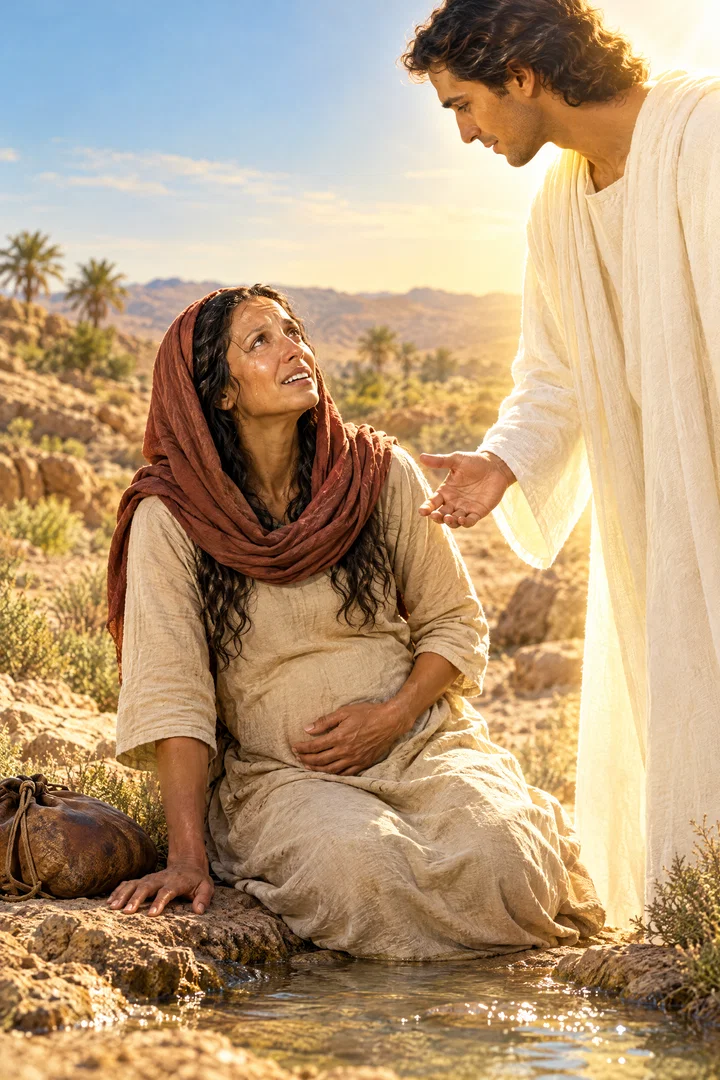
Cross-references
- Galatians 4:22-24
For it is written, that Abraham had two sons, the one by a bondmaid, the other by a freewoman.
Hagar and Ishmael, Abraham’s flesh-born son, represent the covenant of bondage.
- Genesis 21:10
Wherefore she said unto Abraham, Cast out this bondwoman and her son: for the son of this bondwoman shall not be heir with my son, even with Isaac.
quoted to show Ishmael as heir not property
- Genesis 17:20
And as for Ishmael, I have heard thee: Behold, I have blessed him, and will make him fruitful, and will multiply him exceedingly; twelve princes shall he beget, and I will make him a great nation.
God promises Ishmael a great nation, fulfilling the prophecy about his descendants.
- Genesis 21:20-21
And God was with the lad; and he grew, and dwelt in the wilderness, and became an archer.
Ishmael’s wilderness life fulfills the prediction of his wild, wilderness dwelling.
- Romans 9:7-8
Neither, because they are the seed of Abraham, are they all children: but, In Isaac shall thy seed be called.
Ishmael’s descent from Abraham did not make him a child of the promise.
- Genesis 16:1
Now Sarai Abram’s wife bare him no children: and she had an handmaid, an Egyptian, whose name was Hagar.
Both texts concern Hagar, the servant mother of Ishmael.
- Genesis 25:18
And they dwelt from Havilah unto Shur, that is before Egypt, as thou goest toward Assyria: and he died in the presence of all his brethren.
Both describe Ishmael’s descendants dwelling in relation to their brothers.
- Genesis 17:18
And Abraham said unto God, O that Ishmael might live before thee!
Abraham hoped the promise would be fulfilled through Ishmael.
- Genesis 21:13
And also of the son of the bondwoman will I make a nation, because he is thy seed.
Ishmael becomes a nation, though Isaac is the covenant heir.
- Genesis 16:4
And he went in unto Hagar, and she conceived: and when she saw that she had conceived, her mistress was despised in her eyes.
Hagar’s changed behavior begins the household friction described around the prophecy.
- Genesis 21:1-7
And the LORD visited Sarah as he had said, and the LORD did unto Sarah as he had spoken.
Isaac’s miraculous birth contrasts with Ishmael’s.
- Genesis 21:9
And Sarah saw the son of Hagar the Egyptian, which she had born unto Abraham, mocking.
illustrates wild character foretold
- Galatians 4:24
Which things are an allegory: for these are the two covenants; the one from the mount Sinai, which gendereth to bondage, which is Agar.
identifies Hagar and Sarah as the two covenants
- Genesis 37:25-28
And they sat down to eat bread: and they lifted up their eyes and looked, and, behold, a company of Ishmeelites came from Gilead with their camels bearing spicery and balm and myrrh, going to carry it down to Egypt.
Ishmaelites bought and sold Joseph
- Genesis 15
After these things the word of the LORD came unto Abram in a vision, saying, Fear not, Abram: I am thy shield, and thy exceeding great reward.
God’s promise to Abraham continues in the account of Ishmael.
- Hebrews 11:11
Through faith also Sara herself received strength to conceive seed, and was delivered of a child when she was past age, because she judged him faithful who had promised.
It gives background to Abraham’s family history.
- Genesis 22:2
And he said, Take now thy son, thine only son Isaac, whom thou lovest, and get thee into the land of Moriah; and offer him there for a burnt offering upon one of the mountains which I will tell thee of.
Isaac is distinguished from Ishmael as the son in the line of promise.
- Genesis 25:9
And his sons Isaac and Ishmael buried him in the cave of Machpelah, in the field of Ephron the son of Zohar the Hittite, which is before Mamre;
shows Ishmael's prosperity at burial
Commentary
Each commentary is drawn from primary sources: the writings of Ellen G. White and Adventist pioneers and periodicals. Each commentary is separate. Its own words are not a quotation; follow the references to read the source passages.
Ellen G. White
3 sources
The verse was spoken by the Lord to Hagar when she was in the desert, promising that Ishmael's descendants would become exceedingly numerous.PP 145.2–3 His name, meaning God shall hear, was given to keep God's mercy toward Hagar in remembrance.PP 145.2–3 It portrays Ishmael as living a wild, marauding life as a desert chief in mutual hostility with other people, his hand against them and theirs against him.PP 174.1Lt 107, 1898, par. 20–21 Ishmael himself later repented and returned to his father's God, yet the character formed in him persisted in his descendants.PP 174.1 Those descendants became a powerful, turbulent, heathen nation that troubled and afflicted the descendants of Isaac.PP 174.1 The same picture of mutual opposition illustrates the spirit of those who cling to fretfulness and querulous complaints, which damages both their own lives and the lives of others.Lt 107, 1898, par. 20–21
Sources
Pioneers and periodicals
57 sources
Spoken to Hagar in the wilderness before Ishmael was born, the word was a promise from God who saw her distress that she would become mother of a multiplied nation, foretelling three things about her son and his posterity, their character, their hostile relations to others, and their continuance.ST Jun 3, 1913ST Feb 20, 1901ST Nov 8, 1899ST Jun 3, 1908RH Jun 19, 1900 He would be fierce, independent, bold and obstinate, living a wandering tent life, with his hand against every man and every man's hand against him in mutual opposition lived out in robbery, plunder and exaction from travelers.RH Jun 25, 1867ST Jun 3, 1913STST Feb 20, 1901ST Apr 9, 1902 He would dwell in the presence of all his brethren, adjoining Israel to the south and east, fulfilled in the Arabs, Hagarenes, Saracens and Bedouin tribes of the deserts who raid and resist conquest yet abide with the Jew while great empires pass away as a living witness that what God says comes true.RH Jun 25, 1867ST Jun 3, 1913STSTST Feb 20, 1901 The birth came through the unbelief of Abram and Sarai in seeking the promised heir by human scheming through the bondwoman, bringing trouble that exposes the harm of self-reliance instead of trusting God's power to fulfill His promise.ST Apr 11, 1900ST Sep 23, 1913ST Mar 1, 1905 In that family history begins the teaching of the two covenants in Galatians 4:21-30, Hagar representing the covenant from Sinai and Ishmael its children born after the flesh into bondage, who expect the promise through the flesh and cannot keep righteousness, in contrast to Isaac the free-born child of promise through the freewoman by the Spirit through faith, shut out as Ishmael was from heirship with Isaac.RH May 29, 1900RH Jun 26, 1900ST Sep 28, 1915ST Apr 29, 1908RH Jun 19, 1900
Setting and Wording
The word was spoken before Ishmael was born, to Hagar in the wilderness when she felt driven out to die.ST Feb 20, 1901ST Nov 8, 1899ST Mar 23, 1915 It was a promise only God could make and keep, assuring her that the Lord saw her and knew her distress and had not forgotten her and would supply her need.ST Feb 20, 1901ST Nov 8, 1899ST Jun 3, 1908 She named Him by a name meaning God sees me, and this became comfort that God sees the discouraged soul not to condemn but to save.ST Nov 8, 1899ST Jun 3, 1908 An angel gave her in loneliness and despair a message of hope about her future, that she would become mother of a nation, so that His presence brought hope rather than terror.ST Nov 8, 1899ST Jun 3, 1908ST Mar 23, 1915 It foretells not Ishmael alone but Ishmael and his posterity.ST Feb 20, 1901
The rescue of Hagar and her child in the desert in Genesis 16:7-12 is true spirit communication by angelic ministration to people on earth. The angel is not the spirit of a dead person. Angels, good and evil, are a distinct order of beings from humans, existing before man and the earth were created, before man sinned or any soul died.
The verse belongs to Abram and Sarai's unbelief, for because Sarai was barren they tried by human scheming through Hagar to secure the promised heir, and Abram accepted the arrangement.ST Apr 11, 1900ST Mar 1, 1905ST Sep 28, 1915 Hagar conceived Ishmael and then despised Sarai, and when Sarai drove her away the conflict exposed the trouble and harm of relying on human schemes and self-reliance instead of trusting God's power to fulfill His promise.ST Apr 11, 1900ST Mar 1, 1905ST Sep 28, 1915 Hagar's child represents bondage, born after the flesh into bondage through a slave mother, in contrast to the promised child to come through Sarah.ST Sep 23, 1913ST Mar 1, 1905ST Sep 28, 1915 Abraham's experience in trying through human effort and temporary lack of faith to obtain what God had promised is compared with the old and new covenants.ST Sep 23, 1913
The verse holds three specific and precise predictions about Ishmael and his posterity: their character, their relations to others, and their continuance.ST Jun 3, 1913ST Feb 20, 1901 Wild man is also rendered wild ass man and wild ass among men, with wild ass meaning unruly and vicious.ST Jun 3, 1913RH Jun 19, 1900 The nation springing from Ishmael shares that character.ST Jun 3, 1913
Dwelling in the presence of or over against all his brethren means living in the country adjoining his brethren the Jews, to the south and the east.ST Jun 3, 1913STST It is fulfilled in remaining in the presence of Israel and continuing among relatives alongside Israel, with both peoples persisting and passing their characteristics to their descendants.ST Jun 3, 1913STST
In his own life Ishmael became an archer dwelling in the wilderness and in the wilderness of Paran, took a wife out of Egypt, and joined the mixed races of Arabia as the sons of Keturah and later the sons of Esau did.STST Apr 9, 1902 He became very early a leader among those peoples with armed retainers around him, a bold, adventurous desert prince and leader of wild tribes living by plunder.STST Apr 9, 1902 At nearly ninety he stood in the height of prosperity beside Isaac the peaceful shepherd at Abraham's burial, though Isaac was heir to his father's wealth and head of the hundreds of trained servants born in his house.ST Apr 9, 1902 Though son of an Egyptian handmaid he was regarded as free and as heir and co-heir alongside Isaac, not as chattel property.RH Oct 1, 1861 His wildness appeared when he mocked and ridiculed Isaac his brother and co-heir, and when Abraham sent him and his mother away he did not sell them but sent them off free to become the wild, free Arab, later wandering after separation from Abraham.ST Apr 1, 1875RH Oct 1, 1861ST Apr 9, 1902
The verse stands within God's providential dealings with Abraham's chosen family through whom the Seed would come.ST It belongs to the account of Ishmael's birth and Sarai's jealousy and the sending away of Hagar and her son, which comes immediately before God's next appearance to Abram.STST Jan 29, 1894
Character and Conflict Foretold
The verse foretells Ishmael himself as fierce and independent, bold and adventurous, with a strong, obstinate disposition resistant to restraint, living a nomadic tent life moving from place to place.RH Jun 25, 1867ST Feb 20, 1901ST Apr 9, 1902 He was the child of doubt and impatience at the long delay of the promise, in contrast to Isaac the child of promise, and the word was fulfilled both in him and in his descendants.ST Apr 9, 1902 As a bold desert prince he dwelt in the wilderness, in the wilderness of Paran, grew up as an archer, took a wife out of Egypt, and joined the mixed races of Arabia as the sons of Keturah and later the sons of Esau did.STST Apr 9, 1902 Very early he became a leader among those peoples with armed retainers around him, and at nearly ninety stood in the height of prosperity beside Isaac the peaceful shepherd at Abraham's burial, though Isaac was heir to his father's wealth and head of the hundreds of trained servants born in his house.ST Apr 9, 1902
His hand against every man and every man's hand against him means mutual opposition and hostility, that he would oppose everyone and everyone would oppose him.ST Jun 3, 1913STST Sep 8, 1898 The wild ass in the description means unruly and vicious, and the nation springing from him shares that character.ST Jun 3, 1913 That hostility marked his own life under the effect of what Hagar endured, the treatment she suffered leaving its stamp upon her child.ST Sep 8, 1898
The same conflict continues in his descendants as wandering, independent tribes, hostile to others and met with hostility in return.RH Jun 25, 1867STST Feb 20, 1901 They are the wild roving tribes of the desert, the Bedouins of the Syrian and Arabian deserts and the wandering Arabian and Syrian tribes, living fiercely and independently in conflict with surrounding peoples while dwelling among their relatives.RH Jun 25, 1867STST Feb 20, 1901 They live by robbery, rapine, and plunder, by taking from passing travelers and caravans, claiming the great stretches of desert land to the south and east of Palestine and laying tribute on all caravans and travelers that pass, with harm to anyone who refuses payment unless strong enough to resist them.ST Jun 3, 1913STST Feb 20, 1901 The same hostile dealing with others was shown when they engaged in merchandise and trafficked in slaves, even buying and selling Joseph, one of their own kin.ST Feb 20, 1901 Their history of raiding neighboring nations and resisting conquest across many centuries fulfills what was foretold and shows that what was spoken endures and comes true.RH Jun 25, 1867
Enduring Arab Fulfillment
The descendants foretold are the Arabs, including the Hagarenes, the Saracens, the Bedouin, and the wandering tribes of the Arabian and Syrian deserts.RH Jun 25, 1867ST Jun 3, 1913STSTST Feb 20, 1901 They are the same race already in the country in Solomon's time, briefly summed up as the story of the Arabian nation, nomads without settled homes who move from place to place and live in tents.ST Jun 3, 1913ST Feb 20, 1901RH Nov 27, 1866 They live fiercely and independently in conflict with surrounding peoples while dwelling among their relatives, adjoining the Jews their brethren to the south and to the east, continuing alongside Israel and passing their characteristics to their descendants.RH Jun 25, 1867ST Jun 3, 1913STST They live by robbery, rapine, plunder and tribute laid on passing travelers and caravans, yet are fiercely loyal to guests sharing bread and salt, claiming Isaac unjustly deprived their ancestor of Abraham's property, and the promise includes their great multiplication.RH Jun 25, 1867ST Jun 3, 1913ST
Their history of raiding neighboring nations and resisting conquest across many centuries fulfills what was foretold and is presented as evidence of the divine origin of the Pentateuch.RH Jun 25, 1867 Their continued existence through the ages, unlike nations that disappeared, demonstrates the truth of God's word.ST What God said concerning Ishmael was fulfilled, showing that what God has said endures and comes true.ST
While nation after nation has gone to destruction, two nations abide, the Jew and the Arab, the descendants of Isaac and the descendants of Ishmael, and they will continue even to the very end.ST Jun 3, 1913 The Philistines who gave Palestine its name, the Hittites, ancient Babylon, Assyria, Media, and Egypt as nations have passed away and become only memories of history, while countless revolutions have swept over the land raising nations, kingdoms, tribes and peoples to short-lived fame and sinking them to oblivion.ST Feb 20, 1901 Yet he whose hand is against every man remains, and the Ishmaelite still lives before the Jew, the legal descendants of Abraham who themselves abide.ST Jun 3, 1913ST Feb 20, 1901 This unbroken survival makes him a living witness to the truthfulness of God's Word, even the part of the Word called wholly mythical or traditional.ST Feb 20, 1901
The promise concerning Ishmael was made solely for Abraham's sake and was fulfilled in his becoming a great and wicked nation, shut out from heirship with Isaac and from the covenant established with Isaac.RH Nov 13, 1856 The same pattern of conflict and persistence is applied to Mohammed and his followers as the people of Ishmael's son, possessing the Holy Land including the Jordan and Jerusalem while the descendants of Isaac live as strangers in other lands.ST Feb 3, 1904 It is applied also to Turkey as the Ottoman power facing hostility on every side yet continuing to endure, marked by repeated losses of territory and national prestige and being driven back to its native territory in Asia.RH Sep 25, 1913 Related claims trace the Bantu race of fifty tribes living mostly north of the Zambezi to Ishmael as forefather.ST Jan 16, 1896 Lack of unity, division into independent states and tribes, and continual fighting among themselves are traced to the foretold hostility, as seen in the Berbers whose weak point is lack of homogeneity, working out in the vendetta growing from eye for eye and tooth for tooth, where a young man is not counted to have reached full manhood until he has killed his man and the greatest insult is to say his father died in bed.
Covenant Typology and Promise
The history in which this prediction stands is where the subject of the two covenants begins, in Abraham's family with Hagar the bondwoman and Sarah the freewoman as the two covenants and their two sons as the children of the two covenants.RH May 29, 1900RH Jun 26, 1900 For that reason Genesis 16 must be studied repeatedly together with Genesis 15, Genesis 17, and Genesis 21:1-21, and with Genesis 15:18 and Genesis 17 and Genesis 21 read with Galatians 4:21-30, especially the statement that these are the two covenants, as the history that teaches the covenant question.RH May 29, 1900RH Jun 26, 1900
Ishmael was the child of doubt, impatience and human planning, when Abraham and Sarah distrusted God's promise and tried by human effort and fleshly arrangement through Hagar to secure an heir, and that scheme led to trouble.ST Mar 1, 1905ST Sep 28, 1915ST Apr 29, 1908 He was Abraham's son by Hagar the Egyptian maidservant and slave mother, in contrast to Isaac the son by Sarah the freewoman, and as son of the handmaid he was born after the flesh only into bondage, since children of a slave woman are slaves even when the father is a freeman.ST Mar 22, 1899ST Jan 24, 1900 By contrast Isaac was the free-born child of promise through the freewoman, born by promise through the Spirit by faith, and God had already shown when Abraham asked for Eliezer his house-born bond-servant to be heir that the heir would not be a bond-servant but a free-born son.ST Apr 29, 1908ST Mar 22, 1899 This difference between the two sons supplies the illustration used in Galatians 4 for the two covenants, the typical and antitypical systems, and literal Israel and true Israel as representatives of the Lord and His work in two special periods, showing that human effort cannot fulfill God's work or earn His grace.ST Apr 29, 1908ST Jan 24, 1900
Hagar represents the covenant from Sinai, and Ishmael before his birth, described as a wild man, a wild ass man, a wild ass among men, represents the children of that covenant.RH Jun 19, 1900 He was the fruit of Sarai's distrust and unbelief, intended and expected by Sarai and Abraham to be accepted by God as the promised son in whom God's covenant with Abraham would be fulfilled, and like him those children are born only after the flesh and expect God's promise and covenant with Abraham to be fulfilled through the flesh.RH Jun 19, 1900 Righteousness and keeping God's commandments are essential to the covenant with Abraham, which Abraham kept, but Ishmael could not keep them because the minding of the flesh is enmity against God and is not subject to the law of God.RH Jun 19, 1900 His hand against every man breaks the principle of the law, thou shalt love thy neighbour as thyself, just as the children of the Sinai covenant, knowing only the birth of the flesh and the minding of the flesh, still covenanted to keep God's law.RH Jun 19, 1900
That Ishmael as Abraham's son was against every man shows that descent from or founding by a righteous man such as Abraham does not guarantee lasting righteousness.ST Feb 27, 1896 His descendants, included among the Arabs, raise the same question whether ancestry alone entitles anyone to Israel's promises.ST Feb 27, 1896RH Jan 16, 1872
Marriage and Sacred Institutions
The history surrounding this prediction includes a patriarch's departure from the marriage institution.RH Feb 3, 1852ST Jun 10, 1875ST May 18, 1882RH Jan 21, 1875 That human failure does not make marriage itself any less sacred.RH Feb 3, 1852ST Jun 10, 1875ST May 18, 1882RH Jan 21, 1875 What a man does in violation of the institution is to be distinguished from the sanctity of the institution itself.RH Feb 3, 1852ST Jun 10, 1875 Just as a violation of the Sabbath would not destroy the Sabbath or diminish its sacred character, so a violation of marriage does not destroy marriage or lessen its sacredness.RH Feb 3, 1852RH Jan 21, 1875
Marriage was made for man before the fall.RH Feb 3, 1852 Its holiness is not derived from the Decalogue.RH Feb 3, 1852 The seventh commandment guards its sacredness.RH Feb 3, 1852
Figurative and Moral Applications
The hostile man foretold is the robber and leader of sedition feared in Galilee and Judea, whose hand is against everyone.ST Aug 16, 1910 The same hostility marks the Arabian slanderer who attacks God's servants with lies and hostile speech.RH May 9, 1871 It also marks the self-important person who feels slighted, grows envious and irritable, and acts as though all are against him even when others mean him well.RH Nov 25, 1873 Selfishness itself is that Ishmaelite passion, setting a person against all and bringing the hostility of all in return.ST Jan 22, 1880 Alcohol too bears that hand-against-everyone character, as an enemy of society breeding crime, poverty and death, to be excluded from public streets by law and from homes and social life by public opinion and conscience.ST Mar 4, 1889
The outcast condition grows from a wrong start when a child enters the world as an unwelcome guest, received ungraciously and denied the full measure of parental love and protection due to every child, until mutual estrangement between parents and child ripens into antagonism toward all. Boys treated as social outcasts are made into Ishmaelites, left to an independent, roving, selfish existence and to disruptive behavior instead of being guided into useful activities.ST Jul 3, 1879 So the neglected street boy, bullied and regarded with suspicion while himself in conflict with others, shows how hardship and rejection shape an outcast.ST Jan 5, 1882 The fighting boy follows Ishmael as his pattern for evil, in contrast to the praying boy who follows Samuel for good, and whether a boy's life counts for good or evil, proclaiming the gospel and carrying peace or not, depends largely on his mother's wise training, tender guidance and earnest prayer.
Homelessness belongs to the same picture, for the Ishmaelites are wandering nomads without settled homes, set over against domestic life as the mark of human fellowship and well-being.ST Jan 24, 1900 Where every hand is against every other, the home itself becomes quarrelsome, irreverent, and without love or harmony.RH Jun 30, 1904
Mutual opposition once marked men in a mission whose hands were against others and others' hands against them, until they were redeemed through Jesus' blood.RH Oct 13, 1904 Trials can produce the same embittered life, making people distrustful, convinced others are against them, and drawing them away from God and truth. The world itself is called Ishmaelite where people pursue their own interests and advance themselves by pulling others down.ST Feb 17, 1888 Disappointed Adventists who reject the Sabbath live that opposed lot, hated by the world, persecuted, opposed, disappointed in expectation, overrun with new messages and schismatics, left without unity and without saving influence and with a dark future.RH May 19, 1863 Church discipline used only to smite makes the same kind of Ishmaelites, hostile and contentious toward one another, instead of protecting the tempted, supporting the weak, leading home the erring, and comforting the penitent.RH Sep 2, 1873
When every hand is turned against others, growing violence and disregard for restraint signal the final destruction approaching as in Noah's days.RH Jul 21, 1903 Man's hand against his brother shows evening-time with the day closing, in colossal commercial greed and unholy competition grinding flesh and blood and muscle, demanding labor at starvation wages and casting aside men made prematurely old and poisoned by manufacture in order to get fresh hands, until hatred turns to violence against a brother's breast.ST Oct 25, 1899
The opposed condition also describes a political state of having the hand against every man and every man's hand in return, meaning to be theologically alone and opposed on every side while striving for a holy life, cut off from brethren, surrounded only by worldly associations, away from the Father's house with dearest relations far from truth, lonely and often dejected yet pressing onward because to go back is certain death.RH Feb 18, 1858 Yet the words about a hand against every man stand alongside this witness, that Arabic-speaking peoples have preserved the name Sabbath for God's seventh day while other peoples replaced it with names of idols.ST Jan 14, 1875
Sources