Translations
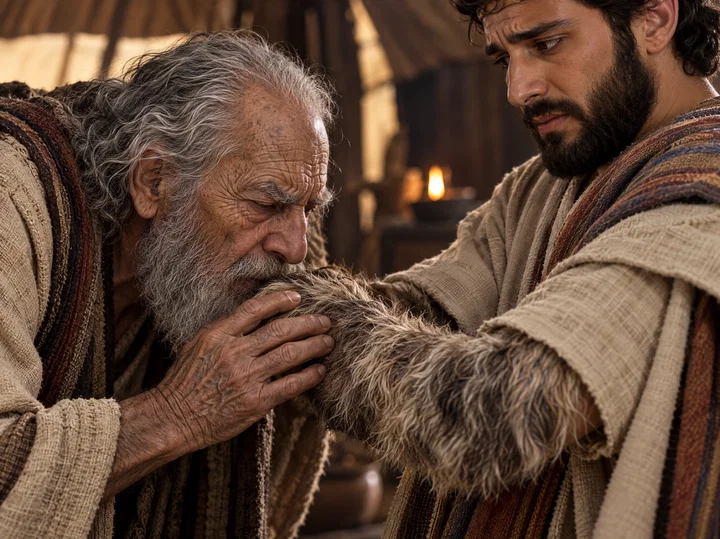
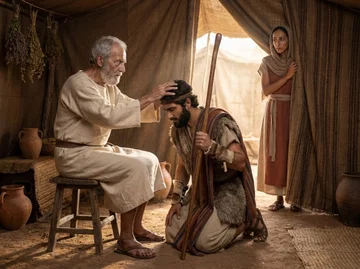
And he said, Are you my very son Esau? And he said, I am.
King James Version, KJV Cambridge Paragraph Bible, Webster Bible, Revised Version, American Standard Version
And he said, Art thou my very son Esau? And he said, I am.
and saith, 'Thou art he — my son Esau?' and he saith, 'I [am].'
And he said, Art thou really my son Esau? And he said, It is I.
And he said, Thou thyself, art my son Esau? And he said, I am!
Berean Standard Bible, Majority Standard Bible
Again he asked, “ Are you really my son Esau?”And he replied, “ I am.”
He said, “ Are you really my son Esau?”He said, “ I am.”
And he said, Are you truly my son Esau? And he said, I am.
Againe he sayd, Art thou that my sonne Esau? Who answered, Yea.
Douay-Rheims (Challoner revision)
He said: Art thou my son Esau? He answered: I am.
Pictures
Cross-references
- Genesis 25:29-34
And Jacob sod pottage: and Esau came from the field, and he was faint:
Esau sold his birthright before Jacob deceived Isaac for the blessing.
- Genesis 25:23
And the LORD said unto her, Two nations are in thy womb, and two manner of people shall be separated from thy bowels; and the one people shall be stronger than the other people; and the elder shall serve the younger.
God foretold that the elder would serve the younger, a promise Jacob tried to secure by deception.
- Hebrews 12:16-17
Lest there be any fornicator, or profane person, as Esau, who for one morsel of meat sold his birthright.
Esau sold his birthright and was later rejected when he sought the blessing.
- Genesis 27:6-17
And Rebekah spake unto Jacob her son, saying, Behold, I heard thy father speak unto Esau thy brother, saying,
Rebekah arranges Jacob’s deception of Isaac.
- Genesis 37:31-33
And they took Joseph’s coat, and killed a kid of the goats, and dipped the coat in the blood;
Jacob’s sons deceive him with Joseph’s bloodied coat, recalling Jacob’s deception of Isaac.
- Genesis 28:11
And he lighted upon a certain place, and tarried there all night, because the sun was set; and he took of the stones of that place, and put them for his pillows, and lay down in that place to sleep.
Jacob’s flight after deceiving Isaac leads to his lonely night on a stone pillow.
- Genesis 25:28
And Isaac loved Esau, because he did eat of his venison: but Rebekah loved Jacob.
Isaac favored Esau for venison, while Rebekah favored Jacob.
- Genesis 27:41-45
And Esau hated Jacob because of the blessing wherewith his father blessed him: and Esau said in his heart, The days of mourning for my father are at hand; then will I slay my brother Jacob.
Jacob’s deception in taking the blessing leads to Esau’s anger and threat.
- Genesis 28:5
And Isaac sent away Jacob: and he went to Padan-aram unto Laban, son of Bethuel the Syrian, the brother of Rebekah, Jacob’s and Esau’s mother.
Jacob fled to Padan-aram after deceiving Isaac.
- Genesis 27:35-36
And he said, Thy brother came with subtilty, and hath taken away thy blessing.
Isaac and Esau describe Jacob’s deceit and taking of the blessing.
- Malachi 1:2-3
I have loved you, saith the LORD. Yet ye say, Wherein hast thou loved us? Was not Esau Jacob’s brother? saith the LORD: yet I loved Jacob,
Contrasts God’s treatment of Jacob and Esau.
- Hebrews 12:16
Lest there be any fornicator, or profane person, as Esau, who for one morsel of meat sold his birthright.
Esau is cited as one who traded away his birthright.
- Genesis 32:9-11
And Jacob said, O God of my father Abraham, and God of my father Isaac, the LORD which saidst unto me, Return unto thy country, and to thy kindred, and I will deal well with thee:
Jacob fears Esau after deceiving him and stealing his blessing, and pleads with God for deliverance.
- Hebrews 11:20
By faith Isaac blessed Jacob and Esau concerning things to come.
Isaac’s blessings of his sons concerned things to come.
- Romans 9:13
As it is written, Jacob have I loved, but Esau have I hated.
God’s choice of Jacob contrasts with Esau.
- Genesis 33:1-4
And Jacob lifted up his eyes, and looked, and, behold, Esau came, and with him four hundred men. And he divided the children unto Leah, and unto Rachel, and unto the two handmaids.
Jacob and Esau were reconciled after Jacob’s long exile.
- Genesis 48:14-20
And Israel stretched out his right hand, and laid it upon Ephraim’s head, who was the younger, and his left hand upon Manasseh’s head, guiding his hands wittingly; for Manasseh was the firstborn.
Jacob blesses the younger son first, showing God’s direction despite human expectations.
- Genesis 28:13-14
And, behold, the LORD stood above it, and said, I am the LORD God of Abraham thy father, and the God of Isaac: the land whereon thou liest, to thee will I give it, and to thy seed;
God repeats Abraham’s land and seed promise after Jacob’s deception.
Commentary
Each commentary is drawn from primary sources: the writings of Ellen G. White and Adventist pioneers and periodicals. Each commentary is separate. Its own words are not a quotation; follow the references to read the source passages.
Ellen G. White
19 sources
The question belongs to Jacob's disguised visit to his father, when Isaac intended to bless Esau whom he favored while Rebekah remembered that the elder would serve the younger.SG3 114.1 When Isaac asked again and again whether he was truly his son Esau, Jacob knowingly answered with a direct falsehood that he was Esau in order to take the blessing belonging to another.ST Apr 17, 1879SG3 133.24SP 432.3 He had not set out to speak so plain a lie but went on because he felt too far committed to turn back, seeking by his own scheming what was already his by divine promise instead of trusting God to fulfill it in His own time and way.ST Apr 17, 1879ED 147.1–2Ms 139, 1899, par. 17–21 God did not prompt the fraud and does not work out His purposes by such means, for He could have provided for Jacob Himself and dealt with Esau according to his conduct.1SP 107.1SG3 115.1Ms 139, 1899, par. 17–21 The lie recoiled upon Jacob in guilt that burdened his conscience for a lifetime, in Esau's hatred, in flight and twenty years of exile in which he was himself wronged, and in evils of his own character reappearing in his sons, yet having repented with humiliation his sin was set before him and pardoned until his name was changed from Jacob to Israel in token of victory and peace.ST Apr 17, 1879ED 147.1–2SG3 133.2GC 616.2–3PP 197.2–198.1 That anguish and wrestling, when Satan accused him and even the Angel reminded him of his guilt until he cast himself on mercy and prevailed, represents the experience of God's people in the time of trouble, whose sins though once real have been confessed, have gone beforehand to judgment and been blotted out, leaving no hidden wrong to overwhelm their faith when they plead for deliverance.GC 619.2–620.14SP 437.2GC 616.2–3GC88 616.1–2PP 201.3–202.2
The Deceptive Answer
The question belongs to Jacob's disguised visit to his father to receive the blessing, when Isaac favored Esau and intended to bless him while Rebekah remembered God's word that the elder would serve the younger and urged Jacob to act.SG3 114.1 When Isaac repeatedly pressed him whether he was truly his son Esau, Jacob knowingly answered with a direct falsehood, presenting himself as Esau in order to obtain the blessing and birthright that belonged to another.ST Apr 17, 1879SG3 133.24SP 432.3GC 619.2–620.14SP 437.2 That false affirmation of identity when his identity was questioned was the fraud by which he secured what was intended for his brother, a wrong that required repentance.SG3 133.24SP 432.3GC 619.2–620.14SP 437.217MR 196.2–197.1
He had not set out intending to utter a direct falsehood, but once engaged he felt too far committed to retreat and so continued the deception.ST Apr 17, 1879 In doing so he resorted to fraud to gain what was already his by God's promise, seeking by his own efforts and schemes to bring about what God would have accomplished in His own time and way rather than trusting God's power to fulfill it.ED 147.1–2PP 197.2–198.1ST Jan 29, 1880 The deception, carried out with Rebekah's help, was not prompted by God, for God does not carry out His plans through such schemes but could have provided for Jacob by His own means.Ms 139, 1899, par. 17–21
A father's blessing could not guarantee God's favor, for Esau would have been blessed or would have faced adversity according to his conduct.1SP 107.1SG3 115.1 Jacob, for his part, could have received God's blessing through righteous living even without the privileges of the firstborn, if Rebekah and he had trusted God to fulfill His purpose in His own way and time instead of using deception.1SP 107.1SG3 115.1
Results and Repentance
The false claim to be Esau cost Jacob his nobility and truth and left him under self-condemnation.ST Apr 17, 1879 That fraud reacted upon the doer, reaping Esau's hatred and deadly threats, forcing Jacob to flee for his life and to remain an exile for many years.ED 147.1–2GC 616.2–3GC88 616.1–2 For twenty years he himself was wronged and defrauded, at last forced to find safety in flight.ED 147.1–2 A second harvest came when the evils of his own character cropped out in his sons.ED 147.1–2
The sin burdened his conscience for a lifetime with fear, terror, self-reproach, doubt, perplexity and remorse that embittered his existence.ST Apr 17, 18794SP 432.3GC 616.2–3GC88 616.1–2PP 197.2–198.1 Twenty years later, leaving Padan-aram in obedience to God, it remained ever before him as, now a returning man, he retraced the road he had trodden as a fugitive.PP 195.1 The reproaches of an accusing conscience made him ponder day and night.PP 195.1 His journey was very sad with misgivings, even while he remembered God's favor toward him and the promises of divine help and guidance.PP 195.1
The wrong was real guilt requiring repentance with humiliation.SG3 133.2GC 616.2–3PP 201.3–202.2 Jacob did previously repent of it and learned that God is merciful.SG3 133.2PP 201.3–202.2 His sin was set before him and pardoned.PP 197.2–198.1 The name Jacob remained a reminder of it until it was changed to Israel to commemorate victory, bringing sweet peace of reconciliation with God and freedom from fear to meet Esau, whose heart God could move to accept Jacob's humiliation and repentance.PP 197.2–198.1
Because he had repented, God heard his prayer and mercifully saved his life and did not forsake him despite his wrongdoing.SG3 133.2ST Feb 13, 1901PP 201.3–202.2 Without that prior repentance God would not have heard him or spared his life.SG3 133.2PP 201.3–202.2 Yet hope remains, for God will not contend forever nor be always wroth, but sees the ways of the covetous and wayward, heals him, leads him, and restores comforts to him and to his mourners, giving peace to him that is far off and to him that is near.ED 147.1–2
That guilt gave Satan the right to accuse Jacob before God and to press despair upon him in his night of wrestling, when even the Angel reminded him of it to try his faith.PP 201.3–202.2 Reviewing his life almost to despair, he cast himself on mercy, pointed back to his repentance, and pleaded with humiliation for deliverance and the assurance of pardon, holding fast until he prevailed.GC 616.2–3PP 201.3–202.2 Repented sin, blotted out by the atoning blood of Christ, leaves a deep sense of unworthiness but no concealed wrong that can be brought to remembrance to overwhelm faith.PP 201.3–202.2
Warning and Final Application
The answer given to obtain another's blessing stands as a warning against all dishonest dealings to gain an advantage over others.Ms 139, 1899, par. 17–21 It exposes secret working by deceptive reasoning, with partiality and hypocrisy, to harness men and drive them as horses, to handle them as machinery, to bind their freedom, to turn man from his rights, and to grasp all that can be gotten irrespective of agreements and the wrong and disappointment caused to others.Lt 7, 1896, par. 1–4 All such secret deception is open to God's eye and causes angels to veil their faces, and God will in no case justify it nor excuse it.Lt 7, 1896, par. 1–4 Because deceptions similar to Jacob's are practiced, the time has come to investigate Christ's teachings to ancient Israel.Lt 7, 1896, par. 1–4
By that deception Jacob secured the blessing his father intended for Esau, and that sin of his own brought the danger upon him.GC 616.2–3GC88 616.1–2 It forced him to flee for his life alarmed by his brother's deadly threats and to remain an exile for many years, and later filled him with terror at Esau's vengeful approach and with crushing self-reproach.GC 616.2–3GC88 616.1–2 His anguish over that sin, confessed with humiliation and repentance while pleading for mercy and the assurance of pardon, represents the experience of God's people in the time of trouble.GC 616.2–3GC88 616.1–2 They too must do all they can to right wrongs, to disarm prejudice, and to meet danger by prayer alone.GC 616.2–3
In that time they can plead for deliverance because their sins, though once real, have been confessed and forgiven and are not concealed.GC 619.2–620.14SP 437.2PP 201.3–202.2 Their confessed sins have gone beforehand to judgment and been blotted out, leaving no concealed wrong to accuse them.4SP 437.2PP 201.3–202.2 Jacob's prior repentance was essential to God hearing his prayer and preserving his life, for had he not repented God would not have heard him and spared him.4SP 437.2PP 201.3–202.2 Repented sin leaves a deep sense of unworthiness but no concealed wrong, because it is blotted out by the atoning blood of Christ and cannot be brought to remembrance to overwhelm faith.PP 201.3–202.2
Sources
Pioneers and periodicals
60 sources
The aged and nearly blind father directly asks whether the son before him is his elder son, and the younger son falsely claims to be him in order to receive the firstborn blessing while his brother is away.ST Apr 17, 1879ST Jul 31, 1901ST Sep 22, 1898ST Mar 30, 1888ST The falsehood completes his mother's plan to have him impersonate his hairy brother with skins on his hands and neck and with prepared food, though he hesitates before yielding.RH Nov 16, 1916ST Oct 1, 1902RH Jul 8, 1915 The scheming springs from lack of faith that God would fulfill His word that the elder should serve the younger in His own time and way, trying to secure by craft what God had already promised.ST Feb 24, 1887ST Jul 31, 1901ST The lie is deliberate and inexcusable disobedience rooted in coveting what belonged to another, and though it gains the coveted blessing it brings hatred, flight, separation, and long years of hardship, with the deceiver later deceived in kind.ST Jul 31, 1901STST Jan 9, 1912ST Feb 28, 1906RH Apr 26, 1870 God never approved the duplicity, yet He regarded the desire for the promise and the repentance, granting the blessing in spite of the deception and not because of it, and through chastening and mercy changing the supplanter into Israel.STST Mar 31, 1881RH Dec 30, 1915ST Feb 26, 1894ST Oct 4, 1905
Words and Narrative Setting
When Isaac put the direct question whether the son before him was truly his son Esau, Jacob answered that he was, completing his impersonation in order to take the blessing meant for Esau the firstborn while Esau was away in the fields hunting.ST Jul 31, 1901ST Sep 22, 1898ST Mar 30, 1888ST Jan 9, 1912ST Sep 22, 1898 The false answer was the center of a gross deception by which a blessing already promised by God to Jacob as heir of what had been decreed upon Abraham and Isaac was obtained while Isaac was arranging to pronounce it upon Esau.ST Feb 24, 1887ST Jul 31, 1901 Isaac's questioning showed suspicion, and Jacob's claim continued deliberate falsehood and selfish plotting to receive what had been intended for Esau.ST Feb 24, 1887ST Mar 30, 1888ST Jan 9, 1912
Isaac was aged and blind, and he asked repeatedly to confirm identity, yet dimness of sight led him to mistake Jacob for Esau and to bless Jacob while believing he was blessing Esau.ST Apr 17, 1879STST Feb 17, 1914RH Nov 4, 1858ST Sep 22, 1898 Time, place, speech, and apparel could obscure human eye and ear, so ignorance and forgetfulness in the creature estranged love and knowledge in this meeting.RH Nov 4, 1858 The confirmation was sought as part of the scheme Rebekah helped arrange, with mother-love ceasing to trust God to resolve the circumstances.ST Feb 17, 1914
The lie carried out Rebekah's plan after Isaac told Esau to prepare venison and receive the blessing.ST Oct 1, 1902RH Jul 8, 1915RH Jul 4, 1865 Rebekah had Jacob kill kids, cooked them for Isaac, put the kid skins on Jacob's hands and neck to imitate Esau's hairy skin, and sent him to personate Esau and deceive Isaac.RH Nov 16, 1916ST Oct 1, 1902 Jacob had scruples about the counsel but yielded to it, and the deception was urged upon him from fear that God's promise needed human ingenuity to help fulfill it.ST Jul 31, 1901RH Nov 16, 1916
The episode fits Jacob's God-given name Jacob, meaning supplanter, since names given of God show character.ST Jan 14, 1913ST Apr 1, 1897 That character appeared in overreaching, mercenary plotting and covetous taking advantage of others, first of Esau's appetite to purchase the birthright and then by fraud to obtain the father's blessing designed for his brother.ST Apr 1, 1897 Family division and material overreaching thus marked an unsatisfactory experience in attempting to obtain what was promised, without fully appreciating its spiritual blessings.ST Jan 14, 1913
The blessing at stake went with the birthright already sold and purchased by Jacob, and God meant both for Jacob because of his superior character.ST May 17, 1910ST Mar 31, 1881ST Feb 26, 1894 It included heirship of the promise to Abraham and Isaac, a double share of property, authority in the family, the priesthood, the line through which Christ would come with hope of salvation and a home in the kingdom, and temporal blessing on labor.ST Jul 31, 1901ST May 17, 1910RH Dec 30, 1915 A fair representation of the rightful claim was all that was needed, and God approved and sanctified the consecration while the intrigue and falsehood remained abhorrent.ST Mar 31, 1881
Unbelief and Sinful Scheming
Rebekah and Jacob did not believe God could carry out His own word that the elder shall serve the younger in His own time and way, but feared the promise would be frustrated unless helped out by human ingenuity.ST Feb 24, 1887ST Jul 31, 1901STST Feb 17, 1914 The blessing had already been promised by God to Jacob as heir of the blessing decreed upon Abraham and Isaac, even while Isaac was arranging to pronounce it upon Esau out in the fields hunting, and they tried to secure by craft, intrigue and human works what God had already ordained for him.ST Jul 31, 1884ST Jul 31, 1901ST Nov 21, 1906 When God promises a thing He will perform it at the proper time without impatient human scheming, and His blessings are promptly bestowed when men are ready to receive them and quietly wait on Him, so Jacob should have trusted God to fulfill His purpose in its proper time instead of taking matters into his own hands and pretending to be Esau.ST Feb 24, 1887ST Jul 31, 1884ST Jul 31, 1901 Rebekah urged the deception upon Jacob, and her mother-love led her to stop trusting God to resolve the circumstances, with Jacob yielding and falsely answering that he was Esau when Isaac questioned his identity.ST Feb 24, 1887ST Jul 31, 1901ST Feb 17, 1914ST Nov 21, 1906 That deceit was not approved by God and showed lack of faith in His power, and the scheme to secure by intrigue what God had ordained brought trouble and delay rather than success.ST Feb 24, 1887ST Jul 31, 1884ST Nov 21, 1906
The false claim, I am, in answer to Art thou my very son Esau, was deliberate, inexcusable wrong and disobedience and transgression, a fraud to obtain the blessing intended for his brother by dishonorable means.ST Feb 28, 1906RH Apr 26, 1870RH Aug 17, 1869ST Apr 6, 1888 It was sin against father and brother and self and God, using guile and dissimulation to obtain his father's inheritance, and a good man's sinful act committed through weakness gives no allowance for others to deliberately imitate vice.ST Jul 31, 1884RH Aug 17, 1869 Covetous desire for what belonged to another led directly to deception and taking the blessing, just as he had coveted the birthright, for covetousness is idolatry and violates the command against coveting and the command against falsehood, indeed the first and second commandments as well.
The lie grew out of divided favoritism in the home, with Isaac favoring Esau because he was a cunning hunter whose savory dishes appealed to his appetite, and Rebekah favoring Jacob as the handsome son who was her constant companion and humored and petted best-loved son.STST Feb 11, 1913 Esau had already foolishly sold his birthright without valuing it yet hoped by ministering to his father's appetite to still secure the blessing, while Rebekah by deceit and double-dealing sought to give it to her favored son instead.STRH Oct 3, 1907 At her suggestion and urging Jacob joined her in selfishness and fraud and claimed to be Esau to gain the blessing, and her interference shows how human plans can cross the course of providence.RH Oct 3, 1907ST Feb 11, 1913
Esau lightly esteemed the birthright and sold it for a mess of pottage to gratify appetite, and Jacob took advantage of that hunger to purchase it, living out his God-given name Jacob, meaning supplanter, in overreaching, mercenary plotting.ST Apr 1, 1897ST Jul 27, 1904ST Feb 26, 1894 Jacob was greatly superior to Esau in morality, integrity and faith in God and his desire for the birthright was directed toward God's plan, for Esau lacked faith while Jacob possessed faith, although it was crude and uninstructed.ST Oct 6, 1914ST Mar 30, 1888ST Feb 26, 1894 Yet he wrongly tried to secure it through worldly, selfish means and by fraud, seeking the family blessing for temporal rather than spiritual ends, though God never approved that course.ST Apr 1, 1897ST Oct 6, 1914ST Oct 4, 1905ST Mar 30, 1888 Though better than Esau in principle he was still selfish and sinful, and his designedly deceiving and cheating Esau out of his blessing was sin and wrongdoing that separated him from Heaven like a great gulf.ST Jul 27, 1904ST Feb 26, 1894
Human attempts to secure what God had promised brought sorrow, care and anxiety rather than success, though God's purposes remain sure and from that time Esau grew worse and Jacob grew better because through Jacob's faith God could work for his complete moral reformation.ST Nov 21, 1906RH Oct 3, 1907ST Oct 4, 1905ST Mar 30, 1888 The same lack of faith first seen in Abraham, that God could not fulfill His promises without help in bringing the Promised Seed through its chosen channel, is found at the basis of all union of church and state.ST
Bitter Consequences and Retribution
The false answer secured the coveted blessing, but under sad circumstances and at great cost.ST Jul 31, 1901STST Jan 3, 1911ST Jan 9, 1912 It aroused Esau's hatred and vengeance while he was away in the fields hunting, forcing Jacob to flee home as a lonely wanderer to a distant country and a strange land.ST Jul 31, 1901ST Jan 3, 1911RH Nov 16, 1916ST Oct 1, 1902 That flight separated Rebekah from Jacob so that she never saw him again on earth and lost the comfort of her son's companionship in her old age, delayed even formal reconciliation for more than twenty years, and plunged Jacob into many long years of difficulty, hardship, distress, sorrow, care, anxiety, troubled conscience, self-reproach and condemnation, with selfish plotting followed by suffering.ST Jul 31, 1901STRH Nov 16, 1916ST Oct 1, 1902 The scheming came from fear that God needed human ingenuity to help Him fulfill His promise that the elder should serve the younger, yet when God promises a thing He performs it at His proper time without impatient human scheming, and His blessings are promptly bestowed when men are ready to receive them and quietly wait on Him.ST Jul 31, 1901STST Oct 1, 1902 Only after great hardship, trials and victories was the supplanter brought to complete change of heart placing him among the Israel of God.STST Jan 9, 1912
The overreacher was later overreached himself and reaped in kind.ST Jan 9, 1912ST Jun 9, 1881RH Mar 30, 1869ST Apr 20, 1888ST Mar 31, 1881 Laban deceived him by giving him Leah instead of Rachel, and his own sons deceived him about Joseph, making him believe Joseph had been killed and causing him the loss of his beloved son.RH Mar 30, 1869ST Apr 20, 1888ST Apr 20, 1888 This suffering was the sorrowful consequence and calamity of his own sin toward his father, illustrating that people reap the kind of evil they do to others and that others may repay them in kind.ST Apr 20, 1888ST Mar 31, 1881ST Apr 20, 1888 These consequences showed God's abhorrence of deception.ST Jun 9, 1881RH Mar 30, 1869ST Jun 9, 1881
Evil actions set consequences in motion that repentance cannot undo and that live on to harm others.ST Apr 20, 1888RH Jan 7, 1873ST Jun 9, 1881 Even when Jacob was penitent, forgiven, granted mercy and life in the world to come, God allowed him to suffer bitterly in this life.ST Jun 9, 1881RH Mar 30, 1869ST Jun 9, 1881RH Mar 30, 1869 Deception is abhorrent to God and cannot succeed before Him who knows the heart.ST Jun 9, 1881ST Jun 9, 1881 The wrong act, done in sympathy with his mother on the wrong side, did not end with the act but lived on to destroy precious souls for whom Christ died until the Judgment makes manifest eternal loss, and even when forgiven through pardoning love leaves a loss where eternal gain might have been.RH Jan 7, 1873
The sin's effects were shown extending far beyond Jacob himself.RH Oct 4, 1864ST Oct 1, 1902 He was favored with a view of its direful effect upon his posterity to the latest generation, being made to see and discover more clearly than ever its heinousness as centuries passed and his posterity became more and more deceitful and covetous and wicked until the end, and even then it could not have been put away had he not repented of it previously.RH Oct 4, 1864 When Isaac told Esau to prepare venison and receive the blessing, Rebekah feared the promise would be frustrated, had Jacob kill two kids, cooked them, put the kid skins on his neck and hands to imitate Esau's hairy skin, and sent him to deceive Isaac by personating Esau, so supplementing God's promise with human works and craft brought disaster to the whole family.ST Oct 1, 1902 That family disaster entailed centuries of enmity in which Edom refused Israel passage from Egypt to Canaan and Israel never could wield moral influence over Esau's descendants.ST Oct 1, 1902
Being led into error and exile through his mother's influence and siding with her on the wrong side shows that people are accountable for the influence they exert on the conduct of others and cannot evade the consequences of causing others to do wrong.ST Apr 12, 1883RH Jan 7, 1873 Many will be lost through the negligence or misconduct of others.ST Apr 12, 1883 For Jacob it meant being obliged to flee for his life to a stranger's land, and in after years such sympathy on the wrong side nearly proved his ruin and the ruin of his family and of his substance.ST Apr 12, 1883RH Jan 7, 1873
Repentance Mercy and Blessing
Jacob's direct lie cost him his nobility and truth and left him burdened with self-condemnation, remorse, fear and a guilty conscience.ST Apr 17, 1879ST Nov 20, 1879RH Jul 4, 1865 He recognized his exile as the result of his wrongdoing, and with weeping and deep humiliation he confessed his sin, having lost all confidence in himself.ST Nov 20, 1879RH Jul 4, 1865ST Feb 26, 1894 Brought to penitence and humility as his sin was pressed upon him, he felt his need of God's protection as never before.ST Oct 6, 1914RH Jul 4, 1865ST Feb 26, 1894 Thorough repentance and perfect trust had to be developed in him and his error remitted, and his later heartfelt repentance and surrender to God marked a change in his character.ST Oct 6, 1914RH Apr 8, 1875
God never approved Jacob's duplicity and could not approve his method, and his falsehood and intrigue were abhorrent.ST Mar 31, 1881ST Oct 4, 1905ST Mar 30, 1888 Yet God regarded his desire for the promise and blessing, his crude and uninstructed faith, and his repentance.ST Oct 4, 1905ST Mar 30, 1888 Jacob's claim had already been purchased and God meant both birthright and blessing for him because of his superior character, but to bestow them in His own way, so a fair representation of his rightful claim was all that was needed.ST Mar 31, 1881ST Feb 26, 1894 He obtained the blessing not because of his deception but in spite of it.ST Feb 26, 1894 From that time, through faith God could work for his complete moral reformation, so that while Esau grew worse Jacob grew better.ST Mar 30, 1888
His sin brought long-continued afflictions as God's chastisement, and he was subjected to many perplexing trials to develop thorough repentance and trust.RH Apr 8, 1875ST Jul 21, 1881 Driven into exile as a lonely wanderer in a strange and barren land, lying weary and homesick with his staff by his side and a cold rock for a bolster, he was still under the eye of a pitying God who sent angels to him that night in a dream at Bethel.ST Feb 11, 1913ST Feb 26, 1894 The greatest of those trials was wrestling with the angel, which placed him among the heroes of faith and turned his failure into victory.RH Apr 8, 1875 Only later through faith and prayer did he really obtain the spiritual blessing when he prevailed with God and received the name Israel, his scheming and supplanting forgiven through humble confession and seeking pardon.RH Dec 30, 1915 When he went down into Egypt his captivity turned, his afflictions were closed up forever and the rod of God was withdrawn, for his sojourn there was the time appointed for ripening him for the kingdom of God until his life ended in heavenly brightness and his trials and victories brought complete change of heart placing him among the Israel of God.STST Jul 21, 1881
The deception remained before his mind as he wrestled for deliverance, even after he had deeply repented, its wrongfulness becoming clearer to him as he grew in holiness.RH Oct 4, 1864 His earlier repentance for this sin was essential, so that God heard his later prayer and preserved his life.RH Nov 14, 1912 Though he knew he had sinned before fleeing his brother's anger and feared that the God of his fathers had cast him off, entreating for evidence that he was not utterly forsaken, God did not forsake him.ST Feb 13, 1901ST Feb 26, 1894 The Lord was near him even when He seemed farthest away.ST Feb 26, 1894
Typology Doctrine and Warning
Jacob's false claim to be Esau in order to take his brother's blessing stands as a figure of professed believers who try to gain the Lord's blessing by deceit, expediency and worldly advantage rather than by principle.ST Nov 18, 1897ST Sep 1, 1909 They sacrifice principle for temporal position and gain, valuing earthly standing above spiritual things, and seek divine favor through selfish advantage and compromise.ST Nov 18, 1897ST Sep 1, 1909 Their scheming course ends in disappointment.ST Sep 1, 1909
Coming before his father in his elder brother's garments points to the need to come before God clothed in Christ's righteousness.ST Dec 13, 1883 The blessing given to Jacob was spoken in God's name and was spiritual and prophetic in character.ST Sep 22, 1898 By contrast the blessing pronounced upon Esau was spoken in Isaac's own name.ST Sep 22, 1898
The fraud and the need for it to have been repented of and confessed beforehand foreshadow what God's people will face in the coming time of trouble when they must plead with God for deliverance.RH Nov 14, 1912 Those whose sins have been confessed beforehand so as to be blotted out in judgment will have no concealed wrongs rising to confront them then and can keep confidence in prayer.RH Nov 14, 1912 Unconfessed sins at that time would bring despair and overwhelm faith, while prior repentance secures a hearing and preservation of life.RH Nov 14, 1912
Isaac's mistaking of Jacob for Esau through dimness of sight shows how time, place, speech or apparel can obscure human eye and ear through ignorance and forgetfulness, estranging love and knowledge in the creature.RH Nov 4, 1858 The Lord is not so limited, for He knows who are His, His eye is always over them, and it cannot be darkened.RH Nov 4, 1858 The same false assurance of friendship for selfish ends reappears in Judas approaching Jesus with a loving greeting while pretending to be His friend.RH Sep 27, 1870 The record of a good man's sin through weakness and guile gives no permission for others to copy it, for deliberate imitation of vice is not excused by another's fall.RH Aug 17, 1869
Sources