Leviticus 16:7
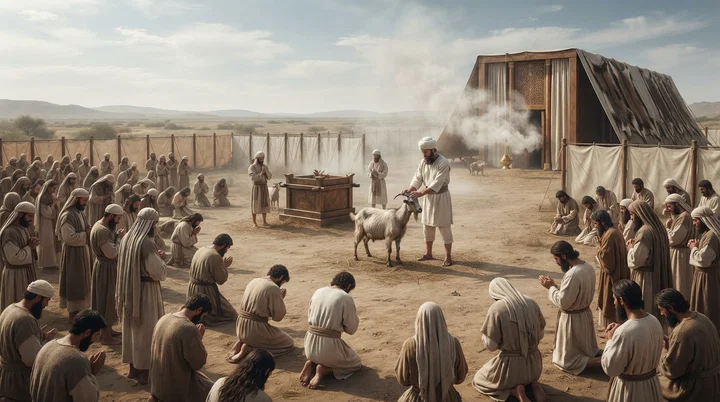
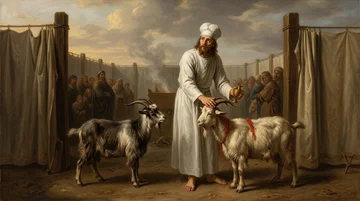
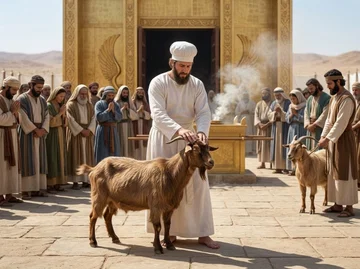
And he shall take the two goats, and present them before the LORD at the door of the tabernacle of the congregation.
Translations
American King James Version, King James Version, Webster Bible
And he shall take the two goats, and present them before the LORD at the door of the tabernacle of the congregation.
And he shall take the two goats, and present them before the Lord at the door of the tabernacle of the congregation.
And he shall take the two goats, and set them before the LORD at the door of the tent of meeting.
And he shall take the two goats, and set them before Jehovah at the door of the tent of meeting.
and he hath taken the two goats, and hath caused them to stand before Jehovah, at the opening of the tent of meeting.
And he shall take the two goats, and set them before Jehovah, before the entrance of the tent of meeting.
Then shall he take the two goats,—and cause them to stand before Yahweh, at the entrance of the tent of meeting.
Berean Standard Bible, Majority Standard Bible
Then he shall take the two goats and present them before the LORD at the entrance to the Tent of Meeting.
He shall take the two goats, and set them before the LORD at the door of the Tent of Meeting.
And he is to take the two goats and put them before the Lord at the door of the Tent of meeting.
And he shall take the two hee goates, and present them before the Lord at the doore of the Tabernacle of the Congregation.
Douay-Rheims (Challoner revision)
He shall make the two buck goats to stand before the Lord in the door of the tabernacle of the testimony:
Pictures
Cross-references 20 of 63
- Hebrews 9:23-24
It was therefore necessary that the patterns of things in the heavens should be purified with these; but the heavenly things themselves with better sacrifices than these.
Christ’s sacrifice fulfills the cleansing pictured by the earthly sanctuary service.
- Hebrews 8:4-5
For if he were on earth, he should not be a priest, seeing that there are priests that offer gifts according to the law:
Earthly priestly service follows a pattern and shadow of Christ’s heavenly ministry.
- Leviticus 16:20-22
And when he hath made an end of reconciling the holy place, and the tabernacle of the congregation, and the altar, he shall bring the live goat:
The other goat bears Israel’s confessed sins into the wilderness.
- Hebrews 9:7
But into the second went the high priest alone once every year, not without blood, which he offered for himself, and for the errors of the people:
The high priest enters the most holy place yearly with blood for the people’s sins.
- Leviticus 16:15-16
Then shall he kill the goat of the sin offering, that is for the people, and bring his blood within the vail, and do with that blood as he did with the blood of the bullock, and sprinkle it upon the mercy seat, and before the mercy seat:
The Lord’s goat is slain, and its blood makes atonement and cleanses the sanctuary.
- Leviticus 23:26-32
And the LORD spake unto Moses, saying,
fuller account of the same day
- Hebrews 8:1-2
Now of the things which we have spoken this is the sum: We have such an high priest, who is set on the right hand of the throne of the Majesty in the heavens;
Christ ministers as High Priest in the heavenly sanctuary foreshadowed by the earthly service.
- Hebrews 9:11-12
But Christ being come an high priest of good things to come, by a greater and more perfect tabernacle, not made with hands, that is to say, not of this building;
Christ’s entry into the greater sanctuary fulfills the earthly priestly service.
- Leviticus 16:30
For on that day shall the priest make an atonement for you, to cleanse you, that ye may be clean from all your sins before the LORD.
priest cleanses people from sins
- Hebrews 10:4
For it is not possible that the blood of bulls and of goats should take away sins.
Bull and goat blood could not take away sins.
- Hebrews 9:24-25
For Christ is not entered into the holy places made with hands, which are the figures of the true; but into heaven itself, now to appear in the presence of God for us:
The earthly sanctuary service prefigures Christ appearing for his people in the heavenly sanctuary.
- Hebrews 10:1
For the law having a shadow of good things to come, and not the very image of the things, can never with those sacrifices which they offered year by year continually make the comers thereunto perfect.
The two goats belong to the yearly sanctuary service, a shadow of Christ’s work.
- John 1:29
The next day John seeth Jesus coming unto him, and saith, Behold the Lamb of God, which taketh away the sin of the world.
Christ is the Lamb who bears away the world’s sin, prefigured by the goat offering.
- Leviticus 16:15
Then shall he kill the goat of the sin offering, that is for the people, and bring his blood within the vail, and do with that blood as he did with the blood of the bullock, and sprinkle it upon the mercy seat, and before the mercy seat:
The Lord’s goat is slain for the people, and its blood is brought within the veil.
- Leviticus 16:33
And he shall make an atonement for the holy sanctuary, and he shall make an atonement for the tabernacle of the congregation, and for the altar, and he shall make an atonement for the priests, and for all the people of the congregation.
The priest makes atonement for the sanctuary and its vessels.
- Hebrews 9:26
For then must he often have suffered since the foundation of the world: but now once in the end of the world hath he appeared to put away sin by the sacrifice of himself.
Christ put away sin through his once-for-all sacrifice, unlike the yearly ceremony.
- Hebrews 9:22
And almost all things are by the law purged with blood; and without shedding of blood is no remission.
The law’s blood offerings provide remission and cleansing.
- Hebrews 9:1-5
Then verily the first covenant had also ordinances of divine service, and a worldly sanctuary.
Describes the earthly tabernacle and its services.
- Leviticus 17:11
For the life of the flesh is in the blood: and I have given it to you upon the altar to make an atonement for your souls: for it is the blood that maketh an atonement for the soul.
Blood represents life and makes atonement for the soul.
- Leviticus 16:19
And he shall sprinkle of the blood upon it with his finger seven times, and cleanse it, and hallow it from the uncleanness of the children of Israel.
The altar is cleansed and hallowed from Israel’s uncleanness.
Commentary
Each commentary is drawn from primary sources: the writings of Ellen G. White and Adventist pioneers and periodicals. Each commentary is separate. Its own words are not a quotation; follow the references to read the source passages.
Ellen G. White
17 sources
On the yearly Day of Atonement the high priest brought the two goats to the entrance of the tabernacle and set them before the Lord as part of the cleansing of the earthly sanctuary when its most holy place was opened.GC88 683.4–684.54SP 498.6ST Mar 4, 1903Ms 6, 1876, par. 5–617MR 242.1–2 It was the one solemn day in the year when the high priest alone entered with trembling before the visible glory of God while the priests ceased their ministry and the people waited in silent awe for his return with blessing.8T 284.3–285.1ST Mar 4, 1903 That service was a type foreshadowing Christ's closing work of atonement in cleansing the heavenly sanctuary by virtue of His own blood.5T 420.3Ms 81, 1886, par. 9GC88 433.1Ms 6, 1876, par. 5–6 That great antitypical Day is now accomplished in the most holy place, where Christ as great High Priest blots out the sins of His faithful ones, while the goat chosen to bear away the sins represents Satan himself who must at last bear the sins of all who come to Jesus.4SP 499.3–500.1Ms 194, 1901, par. 1 It is therefore the last solemn time of repentance, humility, heart-searching and full confession of sin, that all may be cleansed through the blood of Jesus and stand ready when every deed is brought into review before the judgment.8T 284.3–285.1Ms 81, 1886, par. 9Lt 53, 1886, par. 4Lt 55, 1886, par. 9–10Ms 52, 1905, par. 10
Earthly Day of Atonement
Leviticus 16:7 is part of the instructions in Leviticus 16 for the great Day of Atonement, describing the process of cleansing the sanctuary when the most holy place of the earthly sanctuary was opened.GC88 683.4–684.54SP 498.6GC88 433.1Lt 253, 1903, par. 17 The sanctuary so cleansed was the earthly tabernacle made in the desert of Sinai under the command to make a sanctuary, whose vessels were afterward transferred to Solomon's temple in Canaan, which then became the sanctuary, the dwelling-place of God's glory upon the earth.GC88 683.4–684.5
It belonged to the yearly ministry in the most holy place of the earthly sanctuary and temple, which were symbols of God's dwelling-place.8T 284.3–285.1 One apartment was sacred to His presence, with a veil inwrought with cherubim at its entrance that no hand save one might lift, and to lift that veil and intrude unbidden into its sacred mystery was death.8T 284.3–285.1 Above the mercy-seat and the bowed, worshiping angels dwelt the glory of the Holiest, glory upon which no man might look and live.8T 284.3–285.1
On that one day of the year appointed for ministry in the most holy place, the high priest alone entered once a year with trembling to stand before God's visible glory while clouds of incense veiled the glory from his sight.8T 284.3–285.1ST Mar 4, 1903 The service took place amid solemn preparation and prayer, while throughout the courts every sound was hushed, no priests ministered at the altars, and the hosts of worshipers bowed in silent awe sending up petitions for mercy.8T 284.3–285.1ST Mar 4, 1903 The people waited anxiously for his return and blessing.ST Mar 4, 1903
The verse itself describes the high priest presenting the two goats before the Lord at the door of the tabernacle of the congregation as part of that Day of Atonement.ST Mar 4, 1903Ms 6, 1876, par. 5–617MR 242.1–2
Heavenly Fulfillment in Christ
The Day of Atonement service is an example and type foreshadowing Christ's work in the great antitypical Day of Atonement.5T 420.3Ms 81, 1886, par. 9GC88 433.1 It points to work in the heavenly sanctuary and to the judgment, and specifically to the cleansing of the heavenly sanctuary in Christ's closing work of atonement.5T 420.3GC88 433.1 That work concerns every person and should be kept continually in mind and urged upon the conscience.5T 420.3
Its antitypical fulfillment is Christ's entry into the heavenly sanctuary to cleanse it from the people's sins by virtue of His own blood, as prefigured by placing the two goats before the Lord at the sanctuary.Ms 6, 1876, par. 5–6 That antitypical Day of Atonement is now accomplished in the most holy place of the temple of God within the second veil.4SP 499.3–500.1 There Christ as great High Priest blots out the sins of all His faithful ones from Abel to the present time.4SP 499.3–500.1 The first veil or door is shut and the second is opened, and faith enters by that open door which no man can shut until the work therein is fully done, when probation closes and the ministry of the gospel ends.4SP 499.3–500.1
The presenting of the two goats shows Jesus as the great High Priest now serving in heaven dressed like the Jewish high priest during the Day of Atonement service.WLF 9.1 This priestly attire belongs to His work of atonement in the Most Holy Place.WLF 9.1 It is different from the crown holding many crowns He wears when He stands up as King of kings.WLF 9.1
The high priest's typical work for Israel, standing before the Lord while Satan pointed to the defilement of God's people and triumphed in their discomfiture, points to Christ's actual ministry for His people now, when Satan is doing the same work of accusation.Ms 124, 1901, par. 18–1917MR 242.1–2 Christ is the Sin-bearer and Substitute for the offender to whom all the types point.Ms 124, 1901, par. 18–1917MR 242.1–2 Unlike sinful Joshua He cannot be accused as a sinner, and He takes away the sin of the repentant, believing transgressor.Ms 124, 1901, par. 18–1917MR 242.1–2
The presenting of the two goats on the Day of Atonement is a symbol with a bearing on Satan's life.Ms 194, 1901, par. 1 The scapegoat chosen to bear the sins of the people represents Satan himself.Ms 194, 1901, par. 1 He must bear the sins of all who come to Jesus, while those who continue in transgression must bear their own sins.Ms 194, 1901, par. 1
Judgment and Personal Preparation
The solemn sanctuary service for cleansing points to work in the heavenly sanctuary and to the judgment, and that work concerns every person and should be kept continually in mind and urged upon the conscience.5T 420.3 These things happened by way of example and were written for admonition upon those on whom the ends of the ages have come.8T 284.3–285.1
The ritual of presenting the two goats belongs to the Day of Atonement that prefigures the present antitypical Day of Atonement.Lt 53, 1886, par. 4 This present time is the last great antitypical Day of Atonement, a solemn time of repentance, humility, heart-searching, and purification before God, with eternal consequences.Lt 55, 1886, par. 9–10 It is a time to consider how each person's case will stand in the judgment and to seek cleansing from defilement through the blood of Jesus.Lt 53, 1886, par. 4
That foreshadowed closing work calls for preparation in which sins are to be confessed so they may go beforehand to judgment.Ms 81, 1886, par. 9 In that preparation Christ cleanses the repentant from unrighteousness.Ms 81, 1886, par. 9 The preparation calls for humility, for putting away sin, which is transgression of the law, and for drawing near to God in faith for pardon.Ms 81, 1886, par. 9
The present last great day of atonement is a day of confession coming just before the books are opened and every person is judged by the things written in the books.Ms 52, 1905, par. 10 Then every deed is tried and every act is brought into review before the heavenly universe, so covering wrongs gives no vantage ground.Ms 52, 1905, par. 10 Only full confession and forsaking of sin, faith that Christ died on Calvary to forgive sins and pardon transgressions, and the rectitude and grace in Christ's disciples that leads the world to believe, bring the salvation of God and readiness to stand in the judgment.Ms 52, 1905, par. 10
Sources
Pioneers and periodicals
101 sources
On the yearly Day of Atonement on the tenth day of the seventh month the high priest presents two young goats alive before the Lord at the entrance of the tent of meeting.ST Jun 19, 1907RH Jan 11, 1870ST Apr 3, 1879ST Dec 12, 1916RH Feb 2, 1911 The two are chosen alike in value and counted together as one sin offering, yet their opposite work is fixed not by the priest but by casting lots, one for the Lord and one for Azazel.ST Jun 19, 1907RH Oct 31, 1854RH Dec 24, 1908RH Mar 24, 1863 The goat on which the Lord's lot falls is slain as a sin offering for the people and its blood alone is carried within the veil to cleanse the sanctuary, typifying Jesus Christ the innocent substitute who died for sinners and ministers His own blood in the true heavenly sanctuary.RH Dec 29, 1904RH Jan 11, 1870RH Oct 31, 1854RH May 18, 1869 The other goat is kept alive until the cleansing is finished, is not slain and has no priestly work done upon it, typifying Satan the originator of sin upon whom confessed sins finally are laid to be borne into a desolate land.RH Dec 29, 1904RH May 9, 1871ST Mar 11, 1875ST Nov 29, 1905 Its antitype is the closing work begun on the tenth day of the seventh month in 1844 at the end of the 2300 days, when Christ passed into the most holy place for the investigative judgment to blot out the sins of the penitent, close probation, and cast their guilt upon Satan to end sin forever.RH Dec 29, 1904ST Mar 23, 1904RH Mar 22, 1870RH Feb 22, 1870RH Nov 8, 1906
Ritual Setting and Procedure
The verse opens the yearly Day of Atonement on the tenth day of the seventh month Tishri, the closing work of the yearly round after the year-round daily ministration in the first apartment.ST Apr 3, 1879ST Dec 12, 1916ST Nov 20, 1879RH Feb 3, 1853 Until that day no one entered within the second veil where the ark and mercy-seat were, but on that day the high priest alone entered the most holy place once a year to make atonement in both apartments for the whole house of Israel that they might be cleansed from all their sins before the Lord.ST Apr 3, 1879RH Feb 2, 1911 The presentation of the two goats is the opening act that transfers the ministration from the first apartment to the most holy place and begins the work that completes what was partially accomplished there, where sins had been transferred to the sanctuary through the blood of sin offerings, by removing them so they are blotted out.ST Nov 20, 1879RH Feb 3, 1853 It belongs to the record of the day of final cleansing and remission of sins for the sanctuary and the people, a decisive judgment work in which in figure all past remitted sins were borne out of the sanctuary by the high priest, placed on the head of the scapegoat, and sent away to a land not inhabited, as the example and shadow of heavenly things.ST Apr 3, 1879ST Dec 12, 1916
The high priest takes two young kids or he-goats of the goats from the congregation of Israel as the people's offerings for the yearly national atonement and presents them alive before the Lord at the door or entrance or court gate of the tabernacle of the congregation or tent of meeting.ST Jun 19, 1907RH Jan 11, 1870RH Nov 17, 1863RH Dec 24, 1908RH Sep 16, 1852 They are brought to the tabernacle entrance and presented for acceptance to God at the start of the service before lots are cast to assign their roles.ST Jun 19, 1907RH Oct 31, 1854RH Nov 17, 1863 One goat is then selected for sacrifice as a sin offering and the other as the live goat, which after the sanctuary is cleansed receives Israel's transgressions confessed over it and is sent into the wilderness bearing the people's iniquities away.RH Jan 11, 1870RH Oct 31, 1854RH Dec 24, 1908
Which goat serves which purpose is not left for Aaron to decide but is fixed by the Lord through the lot that Aaron casts upon the two goats, one lot for the Lord or Jehovah and the other lot for the scapegoat or Azazel.ST Jun 19, 1907RH Oct 31, 1854RH Dec 24, 1908ST Aug 15, 1878 The lots designate one for the Lord and one as the scapegoat, an appeal to God that divides their work and distinguishes them into two opposite figures.ST Jun 19, 1907RH May 9, 1871ST Mar 11, 1875 The goat on which the Lord's lot falls is offered as a sin offering, while the other goat is not called the Lord's and is not offered as a sacrifice.RH May 9, 1871ST Mar 11, 1875RH Dec 24, 1908 Its only office comes after the high priest has made an end of cleansing the sanctuary, to receive all the iniquities of Israel from the hand of the priest and bear them alive into a land not inhabited, leaving sanctuary, priest, and people behind and free from iniquities.RH May 9, 1871ST Mar 11, 1875
The two goats are presented as exact counterparts alike in value, size, age and color, taken together as a sin-offering pair and together counted as one sin offering, yet distinguished by lot into two opposite figures with distinct roles.RH Dec 24, 1908ST Mar 11, 1875RH Jan 18, 1870ST Sep 5, 1900 The high priest places the goats before him and draws lots from an urn containing two golden lots, one in each hand, one engraved La-Yehova for Jehovah and the other La-Azazel for Azazel.ST Mar 11, 1875RH Jan 18, 1870 Only the goat assigned to the Lord is used as the sin offering, so both goats do not represent the Lord in the same way.RH Mar 24, 1863 The one goat offered as a sacrifice for sins makes propitiation by the blood of atonement and redeems the congregation, while the other goat is the type of evil and the Evil One himself.RH Mar 24, 1863
The presentation follows atonement for the priest himself and his house by a bullock, so he can act as mediator between God and the people.ST Nov 29, 1905ST Sep 6, 1910ST Jul 4, 1911 It comes after the high priest has bathed and robed himself in the holy white linen garments peculiar to the service of the day, brought a young bullock for a sin offering and made atonement for himself and for his house, entered the most holy place with a censer of burning coals and sweet incense veiling the mercy-seat with smoke that he die not, and sprinkled the blood upon the mercy-seat seven times.ST Sep 6, 1910ST Jul 4, 1911ST Apr 8, 1913 Having thus been cleansed from every stain of sin for himself and his family, the high priest is prepared to enter into the presence of God to perform the most solemn service of the year and make an atonement for the whole people, into which he went alone once every year.ST Nov 20, 1879ST Apr 8, 1913 Atonement is made first for the priests by a bullock and then for the people by a goat, with the high priest alone entering the most holy place containing the ark of the covenant and the Ten Commandments transgressed in every sin.ST Sep 6, 1910ST Jul 4, 1911
The goat on which the Lord's lot falls is slain as a sin offering for the people, its life serving as a substitute and its blood making atonement for their sins.RH Dec 29, 1904RH Oct 31, 1854ST Mar 23, 1904RH May 9, 1871 Its blood alone is carried within the veil and sprinkled with the finger upon the mercy seat and before the mercy seat seven times and on the altar to cleanse the sanctuary, while the other goat is kept alive at the door and presented alive until the cleansing is finished.RH Jan 11, 1870ST Mar 23, 1904ST Mar 11, 1875ST Jul 4, 1911 The Lord's goat was slain for the people and the scapegoat bore their sins away, the two goats having distinct roles in the final disposition of sin on the day of judgment in type.RH Dec 29, 1904ST Mar 23, 1904RH May 9, 1871
The day is Israel's yearly judgment day and most solemn day, the final balancing of accounts with God and final disposition of sin and its record after the daily record of sin and its remedy made in the sanctuary through blood all year.ST Sep 6, 1910 It is heralded by the Feast of Trumpets on the first day of the seventh month and comes less than a week before the Feast of Tabernacles, when the congregation refrains from labor, ordinary individual offerings cease, all refrain from work, fast, afflict their souls, confess, search their hearts, and make every wrong right, with the tribes represented by the breastplate.ST May 27, 1897ST Sep 6, 1910ST Jul 9, 1894 While the high priest makes atonement the people confess their sins and afflict their souls, and after the scapegoat is removed they are free from sin and rejoice before the Lord; every individual life must compare perfectly with the law in the ark, and those who confessed and put away their sins stand clear before God while any who fail or do not afflict the soul are cut off and destroyed from among God's people.ST Mar 23, 1904ST Sep 6, 1910
Azazel is a proper name for a person or being and not a name for the goat itself, meaning the strong one who revolted, the Mighty Receder or Powerful Apostate, with the same preposition used on both lots showing that if one is for Jehovah as a person the other is for some other person or being.ST Sep 26, 1911ST Mar 11, 1875RH Jan 18, 1870 The marginal name Azazel refers to Satan, while the goat on which Azazel's name is placed bears the sins due to him away into a land of forgetfulness or oblivion.ST Nov 29, 1905ST Sep 26, 1911ST Feb 8, 1899 The goat for Azazel is presented alive to make atonement upon instead of with him and is sent by an appointed man to Azazel in the wilderness to a barren, separated, uninhabited land, bearing upon its head all the sins of all Israel confessed by the high priest after those sins had been atoned for in the most holy place by the sprinkling of the blood of the Lord's goat.ST May 27, 1897ST Sep 26, 1911 Atonement means to cover with the senses of expiating, purging, pardoning and appeasing, and the land not inhabited means a barren, separated, desolate land of forgetfulness or oblivion.ST May 27, 1897ST Sep 26, 1911
The presentation of the goats occurs on a day when the high priest continues priestly duties rather than bringing them to a close.ST Jun 19, 1879
Identity of the Two Goats
The goat on which the Lord's lot falls, slain for the people as a sin offering, typifies Jesus Christ the innocent substitute whose precious blood ministers for sinners.RH Dec 29, 1904RH Oct 31, 1854RH May 9, 1871ST Mar 11, 1875ST May 27, 1897 He voluntarily took the world's sins upon Himself, died as the sin offering with His life serving as substitute and His blood making atonement, and rose victorious to minister as priest in the sanctuary until it is cleansed.RH Dec 29, 1904RH Oct 31, 1854RH May 9, 1871ST May 27, 1897 The two goats presented alive before the Lord at the door of the tabernacle represent together the Lord's work of atonement through Christ and the final punishment of Satan typified by Azazel, pointing to the last work of Christ when atonement will be complete for those who have made peace with Him.RH Dec 29, 1904RH Oct 31, 1854RH May 9, 1871ST May 27, 1897 The Lord's goat was killed and offered for a sin offering after lots were cast, one to be God's lot and the other Azazel's lot, one to represent God and the other Azazel, while the goat for Azazel was presented alive to make atonement upon instead of with him.RH Dec 29, 1904RH Oct 31, 1854RH May 9, 1871ST Mar 11, 1875ST May 27, 1897
The scapegoat or Azazel goat is distinct from Christ, is not called the Lord's, is not taken for the sin offering, is not slain or sacrificed, and has no priestly work done upon it until after the sanctuary atonement is fully made.RH May 9, 1871ST Mar 11, 1875ST Nov 29, 1905ST Feb 8, 1899RH Feb 3, 1853 Both goats are taken together and set before the Lord at the door of the tent of meeting to divide their work by lot, one lot for the Lord and the other for the scapegoat, but only the Lord's goat represents Christ while the other represents Satan.RH May 9, 1871ST Mar 11, 1875ST Nov 29, 1905ST Feb 8, 1899RH Feb 3, 1853 Its only office comes after the high priest has made an end of cleansing the sanctuary, to receive all the iniquities of Israel from the hand of the priest and bear them alive into a land not inhabited, leaving sanctuary, priest and people behind and free from iniquities.RH May 9, 1871ST Mar 11, 1875RH Mar 24, 1863ST Feb 8, 1899RH Feb 3, 1853 This proves the scapegoat is not Christ the priest but something else besides Himself that He can send away from His people.RH May 9, 1871ST Mar 11, 1875ST Nov 29, 1905RH Mar 24, 1863RH Feb 3, 1853
That other goat typifies Satan, the devil, the Evil One and originator and author of sin who revolted, led God's people into sin, and persisted in rebellion.RH May 9, 1871ST Mar 11, 1875ST Nov 29, 1905ST May 27, 1897 As two opposite figures distinguished by lot, the one goat offered as a sacrifice for sins makes propitiation by the blood of atonement and redeems the congregation, while the other goat is the type of evil and the Evil One himself, Azazel.RH May 9, 1871ST Mar 11, 1875ST Nov 29, 1905ST May 27, 1897RH Mar 24, 1863 When the sanctuary work is fully done the priest comes out and places all the sins upon the scapegoat to bear them into a land not inhabited, fulfilled when Christ finishes His work in the heavenly sanctuary and at His second coming the sins of His people are placed upon Satan and he is cast into the bottomless pit.RH Dec 29, 1904RH May 9, 1871ST Mar 11, 1875ST Feb 8, 1899 Letting the second goat go alive is a studied negation of any sacrifice to Satan, declaring that sacrifice belongs to God alone and contradicting Egyptian and Gentile practice of sacrificing to the evil power under the name Typhon, since sacrifice implies the taking of life.RH Mar 13, 1866 One position held that leading the scapegoat bearing Israel's sins into the wilderness was a type of Christ who bore human sins and sorrows.RH Aug 27, 1857
Cleansing and Making Atonement
The cleansing is cleansing from the sins and uncleanness of Israel, not cleansing from physical impurity, dirt, wear, or contact as a room or garment would be cleansed.ST May 1, 1879ST Oct 25, 1883RH Jan 1851RH Mar 22, 1870RH Jan 9, 1855 Through the year confessed guilt was transferred to the victim and by its blood borne by the priest as the people's representative into God's dwelling place, though the people themselves never entered, and the sanctuary became unclean in this sense only that sins had been borne into it through the blood of the sin offering and must be removed.ST May 1, 1879ST Oct 25, 1883RH Mar 22, 1870RH Jan 9, 1855 On the Day of Atonement the high priest alone uses sacrificial blood to make atonement for the sanctuary, its furnishings, the priests, and the people, entering the Most Holy Place and sprinkling upon and before the mercy seat and then sprinkling the altar and putting blood on its horns, after which the sins borne in are placed on the scapegoat and carried away.ST Oct 25, 1883RH Nov 24, 1874RH Jan 9, 1855 This yearly blood-based service prefigures the final cleansing of the heavenly sanctuary and the blotting out of God's people's sins with the better sacrifice of Christ's own blood as the perfect sacrifice, since the blood of bulls and goats could not take away sin; it does not point to the earth's later purification by fire nor to cleansing by burning the earth or destroying oppressive powers.ST May 1, 1879RH Jan 9, 1855
Cleansing the sanctuary and making atonement are the same appointed work of the high priest on the tenth day of the seventh month, done with blood in both apartments and on the altar to remove sins from God's presence and from the throne of judgment.RH May 14, 1867ST Sep 9, 1875RH Jan 1851RH Dec 1, 1863RH Nov 24, 1874 The rite joins the cleansing of the sanctuary with making atonement, for the high priest removes the people's sins from the sanctuary by blood and transfers them to the scapegoat, which is sent away bearing their iniquities.RH May 14, 1867RH Oct 30, 1855 Reconciliation precedes that final work of his priesthood, in that sinners who confess and forsake their sins receive forgiveness and have their sins blotted out, while those who remain opposed to God do not, and the atoning blood remains available to the people while that work is carried out.RH Oct 30, 1855RH Dec 1, 1863 Its heavenly counterpart is accomplished by Jesus the High Priest through His own blood before the second advent, and its decisions must transpire while He is priest in the sanctuary above before He is revealed from heaven in flaming fire.ST Sep 9, 1875RH Nov 24, 1874
The slaying of the offering did not make atonement but was preparatory to making the atonement, for atonement was always made in the sanctuary and the offering was never slain in the sanctuary.RH Nov 24, 1874RH Sep 6, 1870RH Jul 6, 1869ST Jan 28, 1875ST Mar 29, 1883 It is the blood that atones and cleanses, but it is the priest presenting that blood before the shekinah who makes the atonement, taking the blood into the sanctuary after the offering was slain and making the atonement there.RH Sep 6, 1870ST Mar 29, 1883 This shows Christ is both sacrifice and priest but not both at the same time, and He was not acting as priest when He died on the cross.RH Nov 24, 1874ST Jan 28, 1875ST Mar 29, 1883 He shed His blood without the gate as the offering, where the cross was only the offering of the sacrifice and not the making of the atonement, and as priest He ministers that blood in the heavenly sanctuary where the sanctuary of the new covenant is and where His priesthood is exercised.RH Nov 24, 1874ST Jan 28, 1875ST Mar 29, 1883 By His death reconciliation is given and salvation is made possible, and by His life and priesthood the atonement is made and salvation is made positive, fixed, and certain, the Levitical offering making atonement in figure and Christ's blood making atonement in fact as the very last portion of His work as priest and only mediator.RH Nov 24, 1874RH Sep 6, 1870ST Jan 28, 1875ST Mar 29, 1883
The blood of bulls and goats could not take away sin nor equal the value of a person, much less an entire nation, and repeating the sacrifice could not make it an adequate payment or remove sin.ST May 1, 1879ST Feb 17, 1890RH Sep 6, 1870ST Jan 21, 1886 The yearly sacrifices instead reminded the people of their sins and of sin's penalty, expressed faith in the Redeemer to come and the availing sacrifice, and cleansed only in figure.ST May 1, 1879ST Feb 17, 1890RH Sep 6, 1870ST Jan 21, 1886 The earthly sanctuary and high priest were types of Christ and the sanctuary in heaven, where the atonement that cleanses is completed by applying the better blood in the most holy place over the ark of the testament to truly blot out sin.ST May 1, 1879RH Aug 22, 1912ST Oct 25, 1883
The chapter presents a twofold work of cleansing the sanctuary and cleansing the people, reversing the daily ministration by which sins were borne into the sanctuary and providing the means by which they are borne out.ST Sep 6, 1910ST Jul 4, 1911RH Apr 6, 1869RH Oct 30, 1855 Its two stated purposes are cleansing and hallowing the sanctuary and altar from uncleanness and the record of sin and cleansing the children of Israel from sin itself and freeing them forever from condemnation.ST Sep 6, 1910ST Jul 4, 1911ST Sep 9, 1875RH Apr 6, 1869 Coming out bearing the sins of all the people in figure, the high priest confesses all iniquities and transgressions upon the head of the scapegoat and sends it by a fit man into the wilderness to bear upon him all their iniquities unto a land not inhabited, where he disappears forever, completing the round of service in the example and shadow of heavenly things.ST Sep 6, 1910RH Apr 6, 1869ST Feb 17, 1890 It is final for every member of Israel, requiring affliction of soul on pain of being cut off, for only confessed sins could be put away, and it has its antitype when God shall close the record of sin for the whole world by the atonement of the blood of Christ forgiving sins, cleansing the soul temple, and sealing the sinner for eternity.ST Sep 6, 1910ST Sep 9, 1875ST Feb 17, 1890
Pardon during probation is conditional and relative rather than absolute, because God does not overlook or lightly pass over sin but transfers it to another who bears it in the sinner's stead.ST Oct 12, 1876RH Aug 30, 1864RH Jun 30, 1874 Forgiven sin still exists as an offense against Heaven's King and as a recognized fact in the government of God, only removed from God's presence to another object instead of being set aside or annihilated at the moment of forgiveness.ST Oct 12, 1876RH Jun 30, 1874 The blood sprinkled upon the mercy seat blots out the sins of the people in the most holy place and removes those sins from the presence of Jehovah from before the throne of judgment and sets the people forever free from condemnation, but it does not end the work or annihilate sin, for sins still exist after atonement.ST Oct 12, 1876RH Aug 30, 1864RH Jun 30, 1874 This is shown by the order that no priestly work is done upon the live goat until after the blood has been taken into the sanctuary and the atonement fully made in cleansing the sanctuary and blotting out the sins of the people from the book of judgment, proving that pardon does not erase sin by setting aside law and justice and that the one who ultimately bears it is not thereby pardoned.ST Oct 12, 1876RH Aug 30, 1864RH Jun 30, 1874
Heavenly Fulfillment and Judgment
The yearly closing service is the example and shadow and pattern of Christ's priestly ministry in the true heavenly sanctuary, where with His own blood He mediates, completes the service, removes sins transferred there, and blots them out.ST Apr 3, 1879ST Nov 20, 1879RH May 18, 1869ST Dec 10, 1912ST May 1, 1879 Until the tenth day of the seventh month at the close of the yearly round no one entered within the second veil where the ark and mercy-seat were, but on that day atonement was made in both apartments for the whole house of Israel that they might be cleansed from all their sins before the Lord.ST Apr 3, 1879ST Nov 20, 1879RH May 18, 1869 Through the year sins had been transferred to the sanctuary through the blood of sin offerings borne by the priest into God's dwelling, defiling it not by contact but by uncleanness, and the final work removed those sins from it so they were blotted out.ST Nov 20, 1879ST May 1, 1879ST Sep 9, 1875RH Apr 6, 1869 That cleansing was wrought with blood applied in the most holy place over the ark of the testament, because the blood of bulls and goats could not take away sin but cleansed only in figure, while the heavenly sanctuary must be cleansed with the better sacrifice of His own blood as the perfect sacrifice.ST Dec 10, 1912ST May 1, 1879 In figure all past remitted sins were borne out by the high priest, placed on the head of the scapegoat, and sent away to a land not inhabited, completing what was partially accomplished in the first apartment.ST Apr 3, 1879ST Nov 20, 1879ST Sep 9, 1875
Its great antitype once for all is the closing work of Christ beginning at the end of the 2300 days on the tenth day of the seventh month in 1844, when ministration passed from the holy place to the most holy place.RH Feb 22, 1870RH Nov 8, 1906RH Apr 6, 1869RH Mar 28, 1854RH Apr 6, 1869 The yearly service on that day, when the high priest passed from the holy place into the most holy place to cleanse the sanctuary with its principal work wrought there, supplied the seasonal pattern for the predicted cleansing of the sanctuary.RH Feb 22, 1870RH Nov 8, 1906RH Apr 6, 1869RH Mar 28, 1854 At that time the temple of God was opened in heaven under the seventh angel and the ark of His testament was seen, the reckoning proving His entrance upon this antitypical sanctuary work, showing the time of the first angel's message was right and that the hour of God's judgment had come, with God's law in the heavenly ark binding upon men.RH Apr 6, 1869RH Apr 6, 1869 After the sanctuary had been cleansed the priest transferred Israel's iniquities to the living goat and sent it away to an uninhabited wilderness, leaving sanctuary, priest, and people free, and its departure is linked to Satan's binding and confinement after Christ's appearing, an event placed after the 2300 days when the antitypical scapegoat shall receive the sins of the righteous and be cast into the desolated earth during the one thousand years.RH Mar 22, 1870RH Apr 6, 1869
That cleansing is the investigative judgment and finishing of the mystery of God, which is the judgment of the Lord's people and the vindication of God's justice in dealing with the righteous and the wicked.RH Dec 29, 1904ST Mar 23, 1904ST Sep 9, 1875 It is a day of judgment for Israel in which every individual life had to compare perfectly with the law in the ark, every wrong made right and every sin put away and cleansed before the Lord, bringing the sins represented in the sanctuary into final review before God. Those duly interested who afflict their souls and confess and put away their sins have them blotted out and forever removed and borne away upon the head of the scapegoat, which is their acquittal in the judgment, standing clear before God, while those who do not afflict their souls are cut off and destroyed from among God's people.RH Dec 29, 1904ST Mar 23, 1904ST Sep 9, 1875 By an investigation of character from the books men are judged according to their deeds, deciding who is worthy of translation and part in the first resurrection and the marriage supper of the Lamb, retaining the names of the repentant in the Lamb's book of life, acquitting them from violations of the Ten Commandments beneath the mercy seat, and exempting them from the second death.ST Sep 9, 1875RH Apr 6, 1869RH Apr 2, 1861 The presentation of the two goats thus opens the yearly closing service that types the judgment at the close of Christ's priesthood in the sanctuary in heaven.RH Dec 29, 1904ST Sep 9, 1875
The decisions must transpire while Jesus is priest in the sanctuary above before He is revealed from heaven in flaming fire taking vengeance and descends as King of kings and Lord of lords.ST Sep 9, 1875RH Apr 6, 1869RH Dec 5, 1854 That opening of the temple is the precursor of the close of probation and the signal for Christ's final work as High Priest, after which there is no longer an intercessor, followed by the seven last plagues, while the third angel's warning is given while that last work of mercy is being performed.RH Apr 6, 1869ST Sep 4, 1879 The cleansing of the earthly sanctuary at the conclusion of its annual round is the pattern for a single cleansing of the heavenly sanctuary, which takes place at the close of Christ's priesthood as its concluding work and marks the end of human probation.ST Jun 27, 1878RH Apr 2, 1861ST Sep 4, 1879 It foreshadows the last work of Christ as mediator before the close of probation and the marriage of the Lamb, when He lays off His priestly robe for kingly vesture and comes the second time without sin unto salvation; when the sanctuary is cleansed the gospel is finished, this priestly work concludes before Christ's second advent, and when it is complete and God's people are sealed God's wrath is poured out without mercy and the messengers of wrath come from the temple where He had ministered as merciful High Priest.ST Sep 9, 1875RH Dec 5, 1854RH Apr 2, 1861ST Sep 4, 1879
The sanctuary to be cleansed is the heavenly holy place where Christ has ministered since His ascension, cleansed by means of blood and cleansed of sin and not of sinners, not by the destruction of wicked cruel powers or governments that oppressed it, for sinners are never permitted to inhabit God's sanctuary.RH Jan 9, 1855RH Apr 28, 1853RH Jan 24, 1856RH Oct 30, 1855 The sinner's confessed guilt was represented as transferred to the victim brought before the tabernacle, the victim slain and its blood carrying that guilt into the sanctuary, and on the Day of Atonement the high priest used sacrificial blood to make atonement for the sanctuary, its furnishings, the priests, and the people before placing those sins on the scapegoat to be carried away.RH Jan 9, 1855RH Oct 30, 1855 This service prefigured the final cleansing of the heavenly sanctuary and the blotting out of God's people's sins for the same reason as the earthly one; it does not point to the earth's later purification by fire, and the sanctuary is cleansed or justified by blood, not by consuming it with fire.RH Jan 9, 1855RH Apr 28, 1853RH Oct 30, 1855 Those who held otherwise taught that the sanctuary is the earth, or the land of Palestine, and its cleansing is the burning of the earth, or the purification of Palestine, at the coming of Christ, when the great High Priest would leave the tabernacle of God in heaven and descend in flaming fire on the tenth day of the seventh month in the autumn of 1844 when the 2300 days would terminate.RH Dec 23, 1852 The earthly tenth-day cleansing on the last day of the Jewish religious year, including atonement for the altar, is the type of the cleansing of the heavenly sanctuary, which is the judgment for the whole earth.RH Apr 6, 1869RH Sep 27, 1906 Joshua's work as high priest on the great day of atonement serves as a sign of Christ's final high-priestly work of blotting out His people's sins at the end of His priestly service.ST Apr 26, 1883
Removal and End of Sin
When the work of cleansing the holy place, the tabernacle and the altar is finished, the high priest comes out bearing the sins of the people in figure, lays both hands on the head of the live goat, confesses over it all the iniquities, transgressions and sins of Israel, and puts them upon it.RH Jan 11, 1870RH May 9, 1871ST Mar 11, 1875ST May 27, 1897ST Sep 6, 1910 He then sends it away by a fit or appointed man into the wilderness, to bear upon itself all their iniquities into a barren, separated, uninhabited land, leaving sanctuary, priest and people behind and free from iniquities.RH Jan 11, 1870ST Mar 11, 1875ST May 27, 1897ST Sep 6, 1910RH Mar 22, 1870 This sending follows the slaying of the Lord's goat and the sprinkling of its blood seven times upon the mercy-seat to make complete satisfaction for every repentant sinner, so the scapegoat receives sins only after they have been atoned for in the most holy place and has no sacrificial office of its own.ST Mar 23, 1904RH May 9, 1871ST Mar 11, 1875ST May 27, 1897ST Sep 6, 1910 While this atonement was made the congregation refrained from labor, confessed, afflicted their souls on pain of being cut off, and after the goat was removed they were free from sin and rejoiced before the Lord.ST Mar 23, 1904ST May 27, 1897ST Sep 6, 1910
In the antitype, when Christ finishes His work in the heavenly sanctuary He comes to the door bearing His people's sins and lays them upon the antitypical scapegoat, Satan.RH May 9, 1871ST Apr 20, 1904ST Sep 26, 1911RH Mar 22, 1870ST Feb 8, 1899 Satan, the strong one who revolted and led God's people into sin, bears the sins due to him, both the sins of his own life and the sins he induced others to commit, into a land of forgetfulness or oblivion.RH May 9, 1871ST Apr 20, 1904ST Sep 26, 1911 This is fulfilled at Christ's appearing and at the beginning of the thousand years, when Satan is bound and cast into the bottomless pit or abyss to remain with that guilt upon the desolate earth.RH May 9, 1871ST Sep 26, 1911RH Mar 22, 1870ST Feb 8, 1899ST There he stays during the thousand years while the saints judge angels and the wicked.RH May 9, 1871
The sending of the Azazel goat typifies Satan's part in the finishing of the atonement through his binding and his destruction with sin, for atonement in the universe of God is not complete till sin is destroyed.ST Feb 8, 1899ST Dec 12, 1916 The two-goat ritual thus figures both the blotting out of confessed and forgiven sins taken out of the sanctuary and the eventual removal of sin and sinners from the universe, when Christ's work cleanses the people and the heavenly sanctuary and the scapegoat bears the penalty for the sins Satan instigated.ST Feb 8, 1899ST Dec 12, 1916RH Sep 28, 1916 The final destruction of Satan and the wicked with sin ends sin forever, completing the atonement for those who have made peace with Him.ST Feb 8, 1899ST Dec 12, 1916 Letting the second goat go alive is a studied negation of any sacrifice to Satan, declaring that sacrifice belongs to God alone.RH Mar 13, 1866 Its fate is also a type of the final condition of those who die in sin after propitiation has been made for them, answering to the last-day separation between the righteous and the wicked as sheep and goats.RH Mar 24, 1863
Contact with the scapegoat defiles, as the laying of hands, confessing and sending it free is the congregation's acknowledgment that they put away the evil of their doings to live a righteous and godly life in holiness.RH Mar 24, 1863ST Mar 11, 1875RH Jan 18, 1870 Therefore both the fit man who leads it into the wilderness and Aaron himself must wash clothes and person, change vestments, and be purified before returning to the camp, the congregation, or approaching the altar.RH Mar 24, 1863ST Mar 11, 1875RH Jan 18, 1870
Scripture Connections and Application
The service centers on the mercy seat above the ark containing the Ten Commandments transgressed in every sin, the central point where pardon is sought and atonement is made for transgression of God's law.ST Sep 6, 1910RH Apr 15, 1862RH Mar 4, 1862 On the tenth day of the seventh month the high priest alone enters the most holy place, first with a bullock for the priests and then with a goat for the people, and sprinkles the blood of atonement seven times upon and before the mercy seat to show complete satisfaction for all transgressions of every repentant sinner.ST Sep 6, 1910ST Feb 7, 1906ST Jan 21, 1886 That blood upholds the law underneath the mercy seat while justifying the penitent, gathering up in the person of the priest all transgressions previously transferred in figure to the sanctuary through daily blood ministration and bringing them out to the door to be confessed upon the goat for Azazel and sent away into a land of forgetfulness.ST Sep 6, 1910ST Feb 7, 1906 The blood of goats could not equal the value of a person much less a nation and could not actually take away sin or make adequate payment, but in figure it reminded of sin and its penalty, showed that disobedience had forfeited eternal life, and expressed faith in the promised Redeemer's atonement to save.ST Jan 21, 1886ST Apr 1, 1886 The veil, the altar, victim and ark stand inseparably connected and are fulfilled at Calvary, where the sanctuary hallowed from uncleanness is cleansed from the record of sin and the people are cleansed from sin itself in the final balancing of accounts and final disposition of sin when God closes the record for the whole world, not by any righteousness of man's own but only by the blood of Christ forgiving, cleansing the soul temple, and sealing the sinner for eternity.ST Sep 6, 1910ST Apr 1, 1886
While the high priest makes atonement the people cooperate by confessing, fasting, searching the heart, humbling themselves, praying, afflicting their souls, making every wrong right and putting away every sin to compare perfectly with the law in the ark.ST Mar 23, 1904ST Jul 9, 1894 Only confessed sins put away in that final review stand clear before God and are blotted out and forever removed and borne away upon the head of the scapegoat, which is acquittal in the judgment and leaves the people free and rejoicing before the Lord.ST Mar 23, 1904ST Sep 9, 1875 Those duly interested who afflict their souls have their sins removed from them in figure from sinner to sanctuary in the blood of the sin offering and then to the scapegoat, vindicating God's justice toward righteous and wicked while Jesus is still priest above before He is revealed in flaming fire as King of kings.ST Sep 9, 1875 Every soul that does not afflict itself and does not avail itself of the provision fails the judgment for Israel and is cut off and destroyed from among God's people.ST Sep 6, 1910ST Sep 9, 1875
The two goats together are a perpetual memorial that sin can not only be forgiven but taken away so as to be remembered against the sinner no more forever, giving brokenhearted penitents longing for mercy like David in his guilt over Bathsheba and Uriah hope to draw near to God in trust.ST Mar 23, 1904RH Jan 15, 1861 The high priest's coming out to bless the waiting congregation after intercession in the holy of holies prefigures Christ completing His intercession and coming from heaven to appear the second time to those waiting for Him.ST Mar 23, 1904RH Aug 27, 1857 On that once-a-year work no eye but the high priest's may look into the inner apartment where God's visible glory dwells and where God converses with him before the mercy seat, and he enters there only after most careful and solemn preparation and special purification, going in with trembling while the people wait outside in solemn silence with hearts uplifted in earnest prayer for the divine blessing.ST Jun 24, 1880ST Mar 21, 1911RH Mar 3, 1904 If he remains an unusual time the people are terrified that because of their sins or some sin of the priest the glory of the Lord has slain him, and when the sound of the tinkling bells upon his garments is heard they are greatly relieved, and when he comes forth he blesses the people.ST Jun 24, 1880ST Mar 21, 1911 His work does not save individuals unless they faithfully carry out their required part, teaching that salvation requires cooperating with Christ the great High Priest as He pleads His blood in the heavenly sanctuary.RH Aug 27, 1857RH Mar 3, 1904
The work and lessons of that day, distinct from the daily ministration in the holy place, mean everything to the generation living today, for the yearly closing work cleansing the sanctuary from all remembrance of sin typified in its entirety Christ's work in this dispensation in its entirety.ST Oct 25, 1905ST Mar 28, 1911 That yearly judgment day among God's people typified the final judgment and the finishing of the mystery of God, an investigation of the righteous dead remembered in the sanctuary not made with hands in which sins are put away and it is decided who truly belongs to God.ST Mar 28, 1911ST Sep 21, 1915 In the antitype Christ's closing ministry began in the most holy place in 1844, cleansing the heavenly sanctuary, acquitting His faithful people, entering before God's commandments to perform the closing work while people await the final adjustment of their cases before probation closes, and preparing for His return.ST Jan 3, 1911ST Sep 21, 1915ST Jul 17, 1901 Therefore the sanctuary teaching must be made plain anew and the judgment-hour message of the first angel announcing that the hour is come must be proclaimed at the time that ministration begins, calling each person to live as standing before the Eternal with every sin confessed and pardoned.ST Mar 28, 1911ST Jul 17, 1901RH Sep 21, 1911
The earthly high priest first makes atonement for himself and his house so he might appear sinless before God when he stands for the people, but that first act has no counterpart in Christ who was separate from sinners and needed no offering for Himself.ST Jan 17, 1884RH Jan 11, 1870 When he enters the most holy he lays aside the splendid dress prescribed for other occasions and puts on the plainest and humblest dress and publicly acknowledges his own sinfulness by offering a sin offering for himself, a display expressly designed to impress the infirmity and sinfulness of the earthly high priest who was high priest only in a typical sense and not in reality.ST Jan 17, 1884RH Jan 11, 1870 All who serve in the priest's office are required to have perfect holiness because God Himself is holy and will not receive the unholy into His presence, and the order requires the sin offering first to be recognized and accepted, with putting off garments, washing, and putting on consecrated garments before any burnt offering for himself and for the people can be offered.RH Dec 4, 1860ST Sep 5, 1900 To profess consecration while still full of sin and fit only for repentance, like Cain bringing a meat offering without a sin offering, is hypocrisy that brings rejection and Cain's curse.RH Dec 4, 1860ST Sep 5, 1900 Bringing and presenting the goats is of no use without a high priest to offer the blood and cleanse the sanctuary, proving that blood to cleanse is not enough without a priest to atone, so Christ as great High Priest must now be ministering in the heavenly sanctuary by virtue of the blood shed on Calvary, for without a priest to offer His blood there will be no King to reign; and on that day ordinary individual offerings at the entrance cease because the people are represented in the priest's offering within and separate offerings would draw attention away from the atonement.RH Aug 5, 1851
The verse belongs to the ceremonial law of sacrifices and offerings and to the principal ordinances of divine service belonging to the first covenant with its worldly sanctuary, which is why that ministration is called a ministration of death.ST Feb 7, 1911ST Aug 5, 1889 Its details have meaning, and their fuller meaning is found in the sacrifice, life and work of Jesus Christ, teaching the gospel and the meaning of atonement through the sanctuary's symbolism.ST Feb 7, 1911ST Nov 27, 1884 The high priest's work of atonement through blood, not the people's affliction of soul, made atonement, while their penitence and humility related them to God so the priest's work could avail for them.ST Nov 27, 1884RH Mar 9, 1905 The atonement there is a new institution originating from Abraham's time onward with its command, circumstances and rites plainly brought to view, and the high priest could enter the holiest only on the tenth day of the seventh month, so no inference about Aaron entering at other times before that requirement can be drawn from it.ST Jul 17, 1879RH Mar 9, 1905 That work in the holiest was the most important service of the earthly sanctuary, and the absence of any recorded instance of its observance does not show it was not observed.ST Jul 17, 1879RH Dec 10, 1861
The day of atonement and the sacrifices offered on that day in the account here are the same day and sacrifices noted in Leviticus 23.ST Feb 25, 1913
Sources