Leviticus 23:28
And ye shall do no work in that same day: for it is a day of atonement, to make an atonement for you before the LORD your God.
Translations
And you shall do no work in that same day: for it is a day of atonement, to make an atonement for you before the LORD your God.
And ye shall do no work in that same day: for it is a day of atonement, to make an atonement for you before the LORD your God.
And ye shall do no work in that same day: for it is a day of atonement, to make an atonement for you before the Lord your God.
And ye shall do no work in that same day; for it is a day of atonement, to make an atonement for you before the LORD your God.
And ye shall do no manner of work in that same day: for it is a day of atonement, to make atonement for you before the LORD your God.
And ye shall do no manner of work in that same day; for it is a day of atonement, to make atonement for you before Jehovah your God.
and ye do no work in this self-same day, for it is a day of atonements, to make atonement for you, before Jehovah your God.
And ye shall do no manner of work on that same day; for it is a day of atonement, to make atonement for you before Jehovah your God.
And, no work, shall ye do, on this selfsame day,—for a day of propitiation, it is, to put a propitiatory-covering over you before Yahweh your God.
Berean Standard Bible, Majority Standard Bible
On this day you are not to do any work, for it is the Day of Atonement, when atonement is made for you before the LORD your God.
You shall do no kind of work in that same day, for it is a day of atonement, to make atonement for you before the LORD your God.
And on that day you may do no sort of work, for it is a day of taking away sin, to make you clean before the Lord your God.
And ye shall doe no worke that same day: for it is a day of reconciliation, to make an atonement for you before the Lord your God.
Douay-Rheims (Challoner revision)
You shall do no servile work in the time of this day: because it is a day of propitiation, that the Lord your God may be merciful unto you.
Pictures
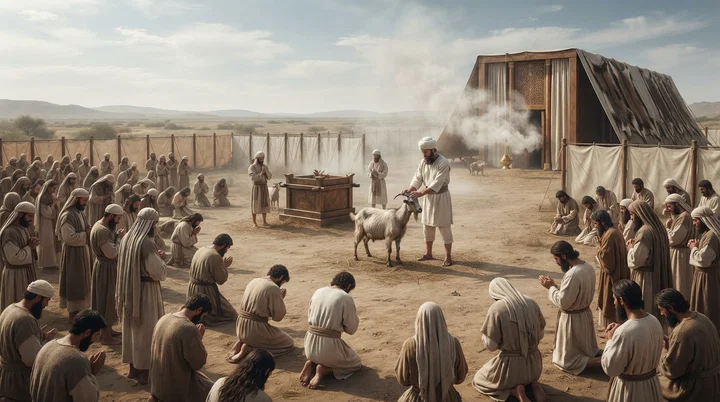
Cross-references 20 of 54
- Colossians 2:14-17
Blotting out the handwriting of ordinances that was against us, which was contrary to us, and took it out of the way, nailing it to his cross;
Connects the sabbaths in Leviticus 23 with ordinances made obsolete by Christ.
- Leviticus 16:29-30
And this shall be a statute for ever unto you: that in the seventh month, on the tenth day of the month, ye shall afflict your souls, and do no work at all, whether it be one of your own country, or a stranger that sojourneth among you:
Both describe the Day of Atonement, its rest from work, and cleansing from sin.
- Leviticus 23:38
Beside the sabbaths of the LORD, and beside your gifts, and beside all your vows, and beside all your freewill offerings, which ye give unto the LORD.
Distinguishes the feast-day sabbaths from the Lord’s weekly Sabbath.
- Hebrews 9:23-26
It was therefore necessary that the patterns of things in the heavens should be purified with these; but the heavenly things themselves with better sacrifices than these.
Christ’s once-for-all sacrifice and heavenly ministry fulfill the yearly atonement pattern.
- Exodus 20:8-11
Remember the sabbath day, to keep it holy.
The weekly Sabbath command is distinguished from the annual ceremonial sabbaths.
- Hebrews 9:7
But into the second went the high priest alone once every year, not without blood, which he offered for himself, and for the errors of the people:
The high priest entered the inner sanctuary yearly with blood for the people’s errors.
- Leviticus 16:21-22
And Aaron shall lay both his hands upon the head of the live goat, and confess over him all the iniquities of the children of Israel, and all their transgressions in all their sins, putting them upon the head of the goat, and shall send him away by the hand of a fit man into the wilderness:
Describes the scapegoat ceremony performed as part of the day’s atonement.
- Numbers 29:7-11
And ye shall have on the tenth day of this seventh month an holy convocation; and ye shall afflict your souls: ye shall not do any work therein:
Both prescribe the Day of Atonement and its offerings.
- Leviticus 23:3
Six days shall work be done: but the seventh day is the sabbath of rest, an holy convocation; ye shall do no work therein: it is the sabbath of the LORD in all your dwellings.
The weekly Sabbath is distinguished from the annual observances.
- Leviticus 23:32
It shall be unto you a sabbath of rest, and ye shall afflict your souls: in the ninth day of the month at even, from even unto even, shall ye celebrate your sabbath.
It calls the Day of Atonement a Sabbath of rest observed from evening to evening.
- Hebrews 9:11-12
But Christ being come an high priest of good things to come, by a greater and more perfect tabernacle, not made with hands, that is to say, not of this building;
Christ’s heavenly ministry fulfills the Day of Atonement type.
- Hebrews 9:22
And almost all things are by the law purged with blood; and without shedding of blood is no remission.
Connects atonement and remission with the shedding of blood.
- Leviticus 16:7-10
And he shall take the two goats, and present them before the LORD at the door of the tabernacle of the congregation.
Describes the two goats and their selection for the Day of Atonement service.
- Leviticus 16:19
And he shall sprinkle of the blood upon it with his finger seven times, and cleanse it, and hallow it from the uncleanness of the children of Israel.
Connects atonement with cleansing Israel’s uncleanness.
- Hebrews 9:26
For then must he often have suffered since the foundation of the world: but now once in the end of the world hath he appeared to put away sin by the sacrifice of himself.
Christ’s once-for-all sacrifice puts away sin, fulfilling atonement before God.
- Hebrews 10:1-3
For the law having a shadow of good things to come, and not the very image of the things, can never with those sacrifices which they offered year by year continually make the comers thereunto perfect.
The yearly atonement sacrifices were shadows and could not perfect worshipers.
- Leviticus 16:30
For on that day shall the priest make an atonement for you, to cleanse you, that ye may be clean from all your sins before the LORD.
The day’s atonement cleanses the people from their sins.
- Leviticus 16:33-34
And he shall make an atonement for the holy sanctuary, and he shall make an atonement for the tabernacle of the congregation, and for the altar, and he shall make an atonement for the priests, and for all the people of the congregation.
Describes the annual atonement for the sanctuary, priests, and people.
- Hebrews 10:3
But in those sacrifices there is a remembrance again made of sins every year.
The yearly Day of Atonement recalled sins each year, unlike Christ’s once-for-all offering.
- Colossians 2:17
Which are a shadow of things to come; but the body is of Christ.
The atonement service is a shadow of things to come, fulfilled in Christ.
Commentary
Each commentary is drawn from primary sources: the writings of Ellen G. White and Adventist pioneers and periodicals. Each commentary is separate. Its own words are not a quotation; follow the references to read the source passages.
Ellen G. White
18 sources
Leviticus 23:28 commands complete rest from all work on the tenth day of the seventh month as the Day of Atonement for making atonement before the Lord, to be kept in solemn humility with prayer, fasting, and deep searching of heart.PK 665.1HSFM 213.2–3RH Nov 8, 19155MR 5.2 In its type Israel was to gather at the sanctuary to afflict their souls, remember and repent of sins, confess them and seek pardon individually in order to be atoned for and blotted out, learning God's holiness and abhorrence of sin, while those who would not humble themselves were to be cut off and all was to be done with reverence and care.ST May 17, 1883GC 430.2–315MR 21.44SP 270.1HSFM 213.2–3 It foreshadows the antitypical Day of Atonement now present, when Christ ministers as High Priest in the heavenly sanctuary and judgment decides each person's case finally, which began in 1844 with the righteous dead and will pass to the living to be judged each according to deeds done in the body.ST May 17, 1883GC 430.2–34SP 270.1Lt 37, 1887, par. 8–11Ms 38, 1903, par. 47 It therefore calls for afflicting the soul, humbling the heart, examining self, confessing and forsaking sins, and depending on Christ's sacrifice to receive justifying grace and the Holy Spirit's sanctifying work unto a new nature clothed in Christ's righteousness and renewed in holiness after His image.GC 430.2–315MR 21.44SP 270.1Lt 37, 1887, par. 8–11Lt 22, 1892, par. 11 It forbids contention over opinions, striving for prominence, and stirring discord, requiring anything between brethren to be removed and confession of one's own sins rather than demanding it of others, while those who minister in sacred things must like the high priest guard against all contamination and be holy and pure ensamples, and all must with contrition, watchfulness and prayer come off conquerors and get ready for the great conflict.15MR 21.4Lt 37, 1887, par. 8–11STB 58.3Ms 187, 1905, par. 31RH Dec 31, 1901
The Type's Solemn Service
The command belongs to the Day of Atonement, whose solemn services were appointed for the tenth day of the seventh month.PK 665.1 It forbids all work on that same day and sets it apart as a day of rest for making atonement before the Lord.HSFM 213.2–35MR 5.2GC88 419.3Ms 38, 1903, par. 47 The day was to be spent in solemn humility before God, with prayer, fasting, and deep searching of heart, while the work of atonement went forward.RH Nov 8, 1915GC88 419.3Ms 38, 1903, par. 47
Its typical service required Israel to gather at the sanctuary and afflict their souls.ST May 17, 1883GC 430.2–315MR 21.44SP 270.1Lt 37, 1887, par. 8–11 There they were to humble themselves, remember their sins and repent of them, confess them, and seek pardon individually with heart-searching.15MR 21.4Lt 37, 1887, par. 8–11HSFM 213.2–35MR 5.2Ms 3, 1885, par. 23 That humiliation and confession was the appointed means to be atoned for, to receive pardon, and to have sins blotted out before God.ST May 17, 1883GC 430.2–34SP 270.1 This observance impressed upon Israel God's holiness and His abhorrence of sin, and the pollution that comes from contact with sin.RH Nov 8, 1915
Those who failed on that day to humble and afflict the soul were to be cut off from the people.GC 430.2–34SP 270.1HSFM 213.2–3 Every part of the service was to be attended to with reverence and with the greatest care, lest the anger of the Lord be displayed.5MR 5.2Ms 3, 1885, par. 23
The Antitype's Present Call
The command foreshadows the antitypical Day of Atonement, when Christ ministers as High Priest for His people in the heavenly sanctuary and each person's case is decided in judgment.ST May 17, 1883GC 430.2–34SP 270.1 In that antitype men must understand the work of their High Priest and the duties required of them.GC 430.2–34SP 270.1 Forgiveness of sins, iniquities, and transgressions has special importance in this present application.Lt 22, 1892, par. 11
The present time is that solemn antitypical day, when judgment is hastening.ST May 17, 1883Ms 3, 1885, par. 23 The heavenly judgment began in 1844 with the cases of the righteous dead, and when that work is completed the living will be judged.ST May 17, 1883 Each is judged according to deeds done in the body, and the decision in each case is final.ST May 17, 1883 This present great day of atonement is a day of rest from work, when atonement is made before the Lord.Ms 38, 1903, par. 47
It calls for afflicting the soul, humbling the heart before God, confessing and forsaking sins, examining oneself, and depending on the efficacy of Christ's sacrifice.15MR 21.4Lt 37, 1887, par. 8–11Ms 187, 1905, par. 315MR 446.2–3Ms 38, 1903, par. 47 Each person is to humble himself before God and seek pardon, accepting Christ's justifying grace and the Holy Spirit's sanctifying work to receive a new nature.Lt 22, 1892, par. 11 In this way he puts on Christ's righteousness, and the carnal nature is renewed in holiness after Christ's image.Lt 22, 1892, par. 11 Confession of one's own sins and humility before God open the way for the Lord to work and bring spiritual victory, rather than fixing attention on the acknowledgments or confessions others ought to make.STB 58.3
It is too late in the day for contention and disputations over differences of opinion, so divisive speculative ideas must be kept in the background.Lt 37, 1887, par. 8–11 Confusion that distracts from a living experience with God must be set aside.15MR 81.2 The day is not for contending for prominence or stirring up discord, for humility before God brings His merciful lifting up.RH Dec 31, 1901 It is a time to remove anything that remains between brothers.Ms 187, 1905, par. 31
As the high priest was required to make careful and solemn preparation and guard himself with utmost diligence from all contamination, so now those who minister in sacred things while the atonement goes on in heaven must be holy, pure in life and conversation, and ensamples to the flock.5MR 5.2Ms 3, 1885, par. 23 God's people must with real contrition confess sins and through watchfulness and prayer come off conquerors.Ms 3, 1885, par. 23 They are to look beyond earthly gain and worldly advantage to the great beyond, hesitating at no sacrifice for Christ who paid the penalty of the transgressed law.Ms 3, 1885, par. 23 It is a time to afflict the soul, confess sins, humble the heart before God, and get ready for the great conflict.15MR 21.4Lt 37, 1887, par. 8–11
Sources
Pioneers and periodicals
113 sources
The tenth day of the seventh month was a day of atonement on which no work was to be done because atonement was made for the people before the Lord.LDT 35.1RH Feb 2, 1911ST Jul 3, 1879 It was an annual ceremonial Sabbath and holy convocation, distinct from and beside the weekly seventh-day Sabbath of the Lord.ST Dec 13, 1905ST Jun 4, 1902ST Jul 17, 1879 Its atonement was made by the high priest alone entering the most holy place once a year with sacrificial blood to cleanse the sanctuary from the sins of Israel.RH Feb 2, 1911ST Mar 23, 1904ST May 7, 1912ST Oct 25, 1905RH Jan 6, 1916 That yearly work typified Christ's final work of atonement in the most holy place of the heavenly sanctuary, the investigative judgment and blotting out of sin that began in 1844.ST May 27, 1908ST May 7, 1912RH Jan 6, 1916RH Dec 8, 1915 It therefore calls for affliction of soul in deep repentance, confession, fasting, putting away sin and ceasing from sinful works, while whoever refuses to humble himself is cut off and destroyed from among the people.ST May 7, 1912RH Mar 3, 1904RH Sep 4, 1900
Date and Literal Observance
The Day of Atonement is fixed to the tenth day of the seventh month, when no work is to be done because atonement is made for the people before the Lord.LDT 35.1RH Feb 2, 1911ST Jul 3, 1879RH Oct 15, 1903ST Dec 13, 1905 It is an annual sabbath on that date, and the command to rest is emphatic, with the requirement to afflict the soul making it no less a Sabbath.ST Jul 3, 1879ST Jul 17, 1879ST Dec 13, 1905 The yearly atonement is made by the high priest alone entering the most holy place once a year, and the people enter into it through repentance, confession, afflicting the soul, and earnest seeking of God rather than indifference or carelessness.RH Feb 2, 1911RH Oct 15, 1903ST Dec 13, 1905
It is a holy convocation and a Sabbath of solemn rest, kept as a lasting statute forever throughout generations in all dwellings.ST Jan 21, 1886RH Jan 14, 1862 Keeping it requires afflicting the soul, which means fasting and humbling oneself with abstinence from food, presenting an offering made by fire to the Lord, and doing no manner of work.ST Jan 21, 1886RH Jan 14, 1862ST May 27, 1897 The service applies to all the people including the resident sojourner, brings the sins of the preceding year into account for removal, and on it sins are blotted out so the people are cleansed and justified.ST May 27, 1897 Whoever refuses to humble himself is cut off from among the people and punished with death, and whoever works is destroyed from among the people.ST Jan 21, 1886ST May 27, 1897
The Day of Atonement runs from evening on the ninth day to evening on the tenth, observed from evening to evening.RH Apr 7, 1851ST Nov 25, 1886ST Apr 13, 1882ST Mar 8, 1883 Evening here means the late hours of the day, yet the ninth day at evening is the start of the tenth day, so the observance remains the tenth-day atonement kept for twenty-four hours from the previous evening.RH Apr 7, 1851ST Apr 13, 1882RH Jan 2, 1908 This evening-to-evening reckoning shows that in Bible time each day begins at sunset, with night as its first part.ST Nov 25, 1886RH Dec 15, 1863ST Mar 8, 1883 That sunset-to-sunset keeping agrees with how the Jews kept the seventh-day Sabbath and with how God kept the first Sabbath in creation week, proving sunset reckoning dates back to creation.RH Dec 15, 1863RH Mar 25, 1909 The day is fixed to a date in the year rather than to a particular weekday, so it need not coincide with the weekly Sabbath.ST Jul 15, 1880ST Jul 3, 1879ST Jun 17, 1903 As a yearly sabbath observed in addition to the Lord's weekly Sabbaths, it could fall on different weekdays and could at times fall on the weekly Sabbath, while the weekly Sabbath remains eternal and always the seventh day in constant succession.ST Jul 17, 1879RH Aug 24, 1905ST Jun 17, 1903RH Aug 13, 1857
The tenth-day solemnity is announced by the Feast of Trumpets on the first day of the same seventh month, the most solemn day of the year when all were required to confess sins and make every wrong right.RH Feb 2, 1911ST Sep 9, 1880GSAM 91.1 From the first to the tenth day the shofar trumpet is blown every morning in warning to prepare, beginning ten penitential days from Tishri 1 to Tishri 10, called by the Jews the great day of judgment and the ten days of penitence leading to that day.RH Feb 2, 1911ST Sep 9, 1880GSAM 91.1RH Jan 2, 1908 The New Year falls in the seventh month because it marks the civil year, while the first month Nisan is tied to Passover and Israel's independence from Egyptian slavery.ST Sep 9, 1880 The fast is kept twenty-four hours from the previous evening as the White Fast, in contrast to the Black Fast of Ab 9.RH Jan 2, 1908 In the Septuagint Leviticus 23:32 uses the Greek genitive plural form for Sabbath for this tenth-day rest, showing that form can refer to a sabbath other than the seventh-day Sabbath of the Decalogue.ST Jul 15, 1880 The plural term sabbaths can include annual feast days as well as the weekly Sabbath, the word Sabbath is applied in Scripture to great festival days as well as to the seventh day, and the festival days and sabbaths of the land belong to nonweekly uses distinguished from the weekly Sabbath of the Lord.RH Nov 8, 1853ST Aug 25, 1881ST May 16, 1878 Leviticus 23 is also an example where the Hebrew definite article may be used or omitted at the writer's option, so its omission does not establish that the Sabbath is indefinite.RH Nov 12, 1872
Earthly Sanctuary Ritual
The atonement of that day was made by the high priest alone entering the most holy place once a year, on one special annual day unlike ordinary days.RH Feb 2, 1911ST Oct 25, 1905RH Dec 15, 1868 He entered only after making offerings for himself and his household and taking two goats for the congregation, and the work and ceremonies formed the typical picture of Christ's ministry for sinners.ST Oct 25, 1905RH Feb 2, 1911 It was the most solemn day of the year, announced by the feast of trumpets on the first day of the same seventh month, when all were required to confess sins and make every wrong right, called the great day of judgment.RH Feb 2, 1911 During the year the sins of those who brought sacrifices had been transferred to the sanctuary by the blood of the sin-offerings, and on this day he went in bearing incense and carrying the blood of atonement to sprinkle on and before the mercy-seat and before the ark containing the law that condemned the transgressor.ST Mar 23, 1904RH Feb 2, 1911 Its ancient service belongs to the service of the most holy place in the heavenly sanctuary, not to a future age in a sanctuary yet to be built by human hands.RH Mar 17, 1853
He took the blood of the goat on which the Lord's lot fell into the second apartment before the mercy-seat to make atonement for all the sins of the people while they stood confessing and afflicting their souls.ST Mar 23, 1904ST Feb 7, 1906 He sprinkled its blood before and upon the mercy-seat and upon the horns of the altar to make atonement and cleanse the sanctuary, bringing the sins represented in the holy place into the most holy and confessing them before the ark.ST Jun 19, 1907ST Feb 7, 1906 Then he came out, laid the sins upon the scapegoat, and sent it by a fit man into a desolate wilderness to perish and never return to the camp.ST Mar 23, 1904ST Jun 19, 1907 After the scapegoat was separated the people and camp were left free from sin and guilt, and the penitent were cleared, reconciled to God, and rejoiced before the Lord, while those who had not confessed beforehand would bear iniquity and be separated.ST Mar 23, 1904ST Apr 29, 1913ST Feb 7, 1906
The rite cleansed and hallowed the sanctuary from the uncleanness of Israel by removing the sins conveyed there through the year's priestly service, confessions, and sacrifices.ST May 7, 1912ST Sep 16, 1886ST Nov 23, 1904 Those sins had been transferred by the daily ministration through blood sprinkled before the veil or through the priest eating the flesh to bear iniquity, and the day's service blotted out confessed sins, brought the people and God's dwelling into harmony with God, and gave final riddance of sin from people and sanctuary every year, with sin perishing with the scapegoat in the wilderness.ST Sep 16, 1886ST Jun 19, 1907 It was a day of fasting and affliction and rest, set apart for the sanctuary's cleansing and the final removal of sin.ST May 7, 1912ST Jul 11, 1911 It stood at the close of the complete yearly round as the year's special closing service, the final work of that year and the yearly cleansing of the sanctuary, presented as a day of final review before God.ST Sep 16, 1886ST Oct 25, 1905ST Nov 23, 1904RH Sep 18, 1900
Fasting and prayer did not make atonement or remove past guilt, and the people's observance and the offerings alone were not enough, for atonement depended on the high priest presenting the sacrificial blood and cleansing the sanctuary.ST Oct 18, 1883RH Aug 5, 1851 The special yearly work in the most holy for the sins of the people and for the cleansing is distinct from the continual daily service in the holy place, to which belongs the special work prescribed for the Lord's Sabbaths and for the annual sabbaths, new moons, and feasts.RH Mar 8, 1870RH Feb 3, 1853 The Feast of Tabernacles soon followed the tenth-day atonement, placing that feast after the day of atonement as the type of the Holy Spirit's work in the latter part of the gospel age just before the harvest, whose joy celebrated deliverance from the bondage of sin after penitence had been accepted and pardon assured through the high priest's mediation.RH Sep 2, 1851ST Sep 11, 1884 That annual system was marked by prescribed forms and order, so that departing from its requirements even in a small detail was blameworthy.ST Mar 24, 1887
Annual Sabbath Distinguished
The tenth day of the seventh month is an annual ceremonial Sabbath, one of the yearly sabbaths and holy convocations of Leviticus 23, distinct from and beside the weekly seventh-day Sabbath of the Lord in the fourth commandment.ST Dec 13, 1905ST Jun 4, 1902ST Jul 17, 1879RH Aug 24, 1905ST Dec 13, 1905 No work was to be done on that day because atonement was made for the people before the Lord, with afflicting the soul and confessing sins, and it belonged to the yearly feast-day sabbaths including the first and tenth days of the seventh month.ST Dec 13, 1905ST Jun 4, 1902ST Jun 10, 1886ST Dec 13, 1905 The Day of Atonement could fall on the weekly Sabbath but did not regularly do so, for it was fixed to a date and not to a weekday, standing as an additional prescribed Sabbath besides the regular Sabbaths called the Sabbaths of the Lord.ST Jul 17, 1879RH Aug 24, 1905ST Jun 10, 1886 It belongs to the typical system of feasts, offerings, meats and drinks, new moons, and Levitical priesthood, connected with the law of Moses and classed as your sabbaths and her sabbaths rather than the Sabbath of the Lord.RH Oct 21, 1851RH Oct 7, 1851ST Nov 10, 1914RH Feb 21, 1854 It is one of four yearly Jewish sabbaths on the first, tenth, fifteenth, and twenty-second days of the seventh month, falling nine days apart or only four days apart and therefore unlike the weekly Sabbath that comes every seventh day, and it stands in the midst of the ordinances of Moses with meat-offering, sacrifice, and drink-offerings, of the same nature, origin, and end as them.RH Oct 21, 1851RH Feb 21, 1854 It is the kind of sabbath meant in the warnings about meat, drink, holy day, new moon, and sabbaths, and in the discussions of days in Romans 14 and Galatians 4, the plural sabbaths fixing the meaning to these ceremonial days and leaving the weekly Sabbath untouched.RH Oct 21, 1851RH Dec 20, 1853RH Feb 21, 1854ST Sep 16, 1875
As a shadow and type pointing forward to Christ and his mediatorial work, dealing with sin and the putting away of sin, it expired by limitation when the substance was reached, was taken out of the way, blotted out, nailed to the cross, and caused to cease at Christ's death.ST Sep 21, 1876ST Aug 10, 1882RH May 3, 1860 These annual sabbaths fell on certain days of certain months and feasts and so naturally fell on all days of the week, typified certain events in the work of redemption, and expired when the thing typified was reached, even as the shadow is lost in the substance.ST Sep 21, 1876ST Aug 18, 1909 They belonged to the ceremonial law with the feasts and new moons, came because of sin as types and prophecies pointing forward to Christ and fulfilled in him, and were distinct from the weekly Sabbath which always fell on the seventh day.ST Aug 10, 1882RH May 3, 1860ST Aug 18, 1909 Unlike the creation Sabbath, the tenth-day rest grew out of man's actions as a sinner and would never have existed but for sin, originating this side of the fall after types and shadows were introduced, so it is shadowy and typical, ceremonial and temporal and for one nation only.ST Feb 25, 1875RH Oct 21, 1851ST Nov 10, 1914 It was given at Mount Sinai twenty-five hundred years after the Sabbath instituted at creation before the fall for the whole human race and placed in the midst of the ten moral commandments, while the weekly Sabbath is unchangeable, perpetual and for all people, weekly and kept wherever people are without circumcision or going up to Jerusalem.ST Feb 25, 1875RH Oct 21, 1851ST Nov 10, 1914 It carries none of the marks of the seventh day blessed and sanctified at creation, spoken by God's voice, written on stone, and deposited in the ark, but belongs to Israel's earthly inheritance in Canaan that could not be kept when the land was overrun by Gentiles, is yearly rather than weekly, local and temporary, and, like all shadows, types, rites, and ceremonies that came in consequence of sin and pointed forward to Christ, was lost in Him; these ceremonial observances could be judicially taken away from the wicked, just as a person may now be excluded from the Lord's Supper.ST Nov 16, 1876ST Feb 25, 1875RH Oct 21, 1851RH Aug 29, 1871
After the cross its ceremonial observance is no longer obligatory and keeping it is a matter of Christian liberty, the ceremonial day having lost its former significance and the ceremonial law having been abolished without establishing or abolishing the weekly Sabbath.ST Dec 13, 1905RH Jul 16, 1861ST Sep 16, 1875ST Feb 7, 1911 One believer may regard it as holy from old association and another treat it as an ordinary working day without sin and without judging one another, each being persuaded in his own mind, so long as no one seeks justification through it and so rejects the sacrifice of the Saviour.ST Dec 13, 1905RH Jul 16, 1861ST Sep 16, 1875ST Feb 7, 1911 The days in Romans 14 are these feast-days and those only, entirely separate from the weekly Sabbath spoken by God's own voice and written on the tables of stone, and those feast-days with their distinctions of meats and drinks hold together as a whole.RH Jul 16, 1861ST Sep 16, 1875ST Feb 7, 1911 The weight of teaching holds that the sabbath-days in Colossians 2:16 are these annual sabbaths of Leviticus 23, grouped with meat, drink, holy day and new moon ordinances and distinct from the Sabbath of the Lord our God, not the weekly seventh-day Sabbath.RH Oct 21, 1851RH Dec 20, 1853RH Feb 21, 1854 Those who so hold teach that Colossians 2:16 says nothing about abolishing them, while those who hold the opposing position teach that the chapter classifies the seventh-day Sabbath itself with the appointed feasts and holy convocations as the first of them, and that these observances were abolished together.RH Dec 20, 1853RH Mar 8, 1864
Israel's appointed religious observances were positive institutions which God could set on particular days and appropriately connect with memorable events, showing that God could make any day of the week a Sabbath and that such observances are commemorative.ST Apr 1, 1875RH Jun 24, 1873 Instituting time does not determine observing time, and Leviticus 23 states both times unlike the Lord's Supper; rest days show God does not intend harmful overwork or idleness, and their underlying principles remain though not legally binding on other nations.ST Apr 1, 1875RH Aug 3, 1916RH Jun 24, 1873 The people of God for ages held holy convocations on days besides the seventh-day Sabbath, even a full day of worship without servile work on the Day of Atonement when no work was commanded, so meeting together for worship on a day does not make that day the rest-day or Sabbath and does not cancel the command to work six days and rest on the seventh.ST Apr 1, 1875RH Mar 18, 1862RH Dec 17, 1857 Yearly types would imply yearly rather than weekly Sunday observance; the eighth day shifts weekdays like New Year's Day; Pentecost's antitype honored the feast not the first day; one annual Sabbath could have fallen between the Sabbath at the Antioch meeting and the next seventh-day Sabbath; silence about its observance does not prove nonobservance; the firstfruits count depended on harvest readiness; and Sabbath sanctification consists in resting from ordinary labor because God commanded it.ST Apr 1, 1875RH Jun 24, 1873RH Mar 18, 1862RH Dec 5, 1871RH Dec 17, 1857 A contrary explanation treats the fourth-commandment Sabbath itself as falling on fixed dates shifting weekdays, so that the true Sabbath Christ kept fell twenty-eight times on Thursday in the Gospels, once on Friday, and a number of times on Saturday during the last year of his public teaching, showing that no one now keeps the Sabbath in the manner in which Christ kept it.ST Apr 15, 1897
The tenth-day rest is more sacred than the other annual sabbaths such as the fifteenth of Abib, coming once a year and not once a week like the Sabbath of the Lord.ST Jul 17, 1879 Leviticus 23 gives instruction regarding the yearly feasts, with Deuteronomy 16 giving a somewhat parallel account, and the Day of Atonement was one of the three occasions when the people gathered at the sanctuary under the law concerning Israel's yearly gatherings.RH Aug 3, 1916ST Mar 18, 1913 Observance of the annual sabbaths was not pleasing to God when accompanied by sin.RH Apr 28, 1874
Type of Heavenly Ministry
The yearly Day of Atonement with its feasts and ceremonies finds its fulfillment in Christ and his work as priest, typifying his final work of atonement in the most holy place of the heavenly sanctuary.ST May 27, 1908ST May 7, 1912ST Feb 7, 1911 That antitypical atonement is now taking place, and its fulfillment will be complete when the antitypical day of atonement is over.ST May 27, 1908 The day was a solemn day of rest when no work was to be done because atonement was made for the people before God, a day of fasting and affliction when the sanctuary was cleansed from the people's sins.ST May 7, 1912ST Apr 2, 1912 Those who did not humble themselves and have faith in the services of that day were cut off from among the people, and the yearly service cleansing sanctuary and people pointed forward to the great antitypical Day of Atonement.ST May 7, 1912ST Apr 2, 1912 The sanctuary service of the tenth day of the seventh month prefigured Christ the great High Priest coming from heaven to bless his waiting people, and every detail of the yearly feasts finds its fuller meaning in the sacrifice, life, and work of Jesus Christ.RH Mar 31, 1868ST Feb 7, 1911
As Passover on the fourteenth of the first month, the sheaf of firstfruits on the sixteenth, and the feast of weeks on the fiftieth day were fulfilled exactly as to time in Christ sacrificed as Passover, Christ risen as firstfruits, and the outpouring of the Holy Spirit on Pentecost, so the grand work performed in the holiest on the tenth day of the seventh month must have its antitype commence on the tenth day of the seventh month of some year.RH Mar 31, 1868RH Oct 30, 1855 The antitype once commenced may then extend forward a great distance, as feeding on Christ our Passover, keeping unleavened bread, and the abiding of the Spirit given at Pentecost continue.RH Oct 30, 1855 The 2300 prophetic days terminate on that autumn day in 1844, beginning on the corresponding Day of Atonement in 457 B.C.RH Mar 31, 1868ST Sep 18, 1901 Jesus as High Priest ministers in the most holy place of the heavenly sanctuary from October 10, 1844, until the consummation, having ministered in the holy place since his ascension and entering the most holy in 1844.RH May 13, 1862ST Feb 7, 1906ST Mar 31, 1909 This closing work is contemporary with the third angel's work to finish the gospel dispensation.RH May 13, 1862
The antitypical cleansing of the heavenly sanctuary is the investigative judgment and final removal of sin.RH Dec 8, 1915ST Feb 7, 1906ST Feb 17, 1898 Cases are investigated and decided before the Father's tribunal in a work of judgment and review of the heavenly record, corresponding to the cleansing of the earthly sanctuary.RH Jan 6, 1916RH Dec 8, 1915 Sins borne by Christ for believers are blotted out forever, transferred from the sanctuary to the scapegoat in type, while names in the book of life are examined and the unworthy are removed.RH Dec 8, 1915ST Feb 7, 1906ST Nov 28, 1895 The present heavenly judgment began in 1844 with the cases of the righteous dead, and after that work is completed the living will be judged, each person judged according to deeds done in the body with the decision in each case final.ST May 17, 1883ST Nov 28, 1895 That yearly type points to the final judgment work to which the prophetic period of 2300 days reaches, ending with the taking away of the sins of the penitent and the condemnation of the wicked.RH Jan 6, 1916ST Feb 17, 1898
The two goats typify the just suffering for the unjust and the final punishment of sin's instigator.ST Apr 20, 1904 The Lord's goat typifies Christ who knew no sin made sin and suffering death for the guilty race, the Lamb who takes away the world's sin.ST Apr 20, 1904 The Azazel scapegoat represents Satan, the author of sin and the devil, who is at last destroyed in the proper time.ST Apr 20, 1904 On that day the people's sins remembered in the sanctuary throughout the year were placed on the scapegoat and sent away, a type of the final judgment.ST Apr 20, 1904
The yearly cleansing of the sanctuary was not the removal of physical uncleanness but the removal of the remembrance of sin, determining the people's standing before God and bringing sanctuary and people into harmony.ST Mar 28, 1911 Each person among God's professed people faced approval or condemnation, for past faithfulness and daily sacrifices did not prevent bearing iniquity and being cut off if the day's requirements were neglected.ST Mar 28, 1911 The Day of Atonement began the completion of that year's sanctuary work, and each yearly service typified Christ's saving work in its entirety.ST Mar 28, 1911
The typical Day of Atonement and Feast of Tabernacles do not belong to immortal saints and follow the Third Angel's Message.RH Sep 11, 1856
Judgment and Human Response
The day was a solemn judgment and final review before God, closing the yearly round of sanctuary service, when every case was decided and each life examined against the law in the ark.ST Sep 11, 1884ST Oct 25, 1905 The people waited penitent and prayerful while the high priest's final service in the most holy place determined whether the yearly atonement was accepted and whether God showed favor toward them.ST Sep 11, 1884ST Apr 2, 1912ST Oct 25, 1905 On that day the sins represented in the holy place were brought into the most holy place and confessed before the ark, the atonement-goat's blood was sprinkled, and the sins were placed on the other goat and carried away to destruction. Past faithfulness and daily sacrifices did not prevent a person from bearing iniquity and being cut off if the day's requirements were neglected, for the yearly cleansing was not removal of physical uncleanness but removal of the remembrance of sin, determining standing before God.ST Apr 2, 1912 Wrongs had to be made right and sins put away before the service closed, and refusal to humble oneself and have faith in the services ratified the judgment.ST Apr 2, 1912
Each person had an active, individual part while the priest ministered, gathering around the sanctuary to enter the closing atonement through repentance, confession, and earnest seeking of God rather than indifference or carelessness.RH Oct 15, 1903RH Mar 3, 1904ST May 9, 1916 All ordinary work and business with selfish interests stopped, and the soul was to be afflicted with fasting, prayer, humility, and confession, with sins put away and wrongs made right and no work done.ST May 7, 1912RH Mar 3, 1904RH Sep 4, 1900RH May 26, 1874 Confession of past sins alone was not enough, for each one had faithfully to do the part required, and the high priest's sanctuary work did not save apart from that cooperation.ST May 7, 1912RH Mar 3, 1904 The yearly cleansing made atonement a personal matter for individuals and not for families, communities, or nations, requiring each soul to afflict himself and present the appointed offering, proving redemption is individual.RH Oct 15, 1903RH May 26, 1874ST May 9, 1916 It was a test of faithfulness in which those who humbled themselves and accepted the atoning blood remained among God's people.ST May 7, 1912RH Sep 4, 1900
Whoever refused to humble, repent, and be reconciled was cut off from Israel and from the congregation, destroyed from among the people and put to death.ST May 7, 1912ST Jan 21, 1886ST Apr 2, 1912 The unrepentant were left to bear iniquity with sins unconfessed over the scapegoat, their choice of sin rather than God's atonement ending probation and leaving them lost.ST Apr 2, 1912 This purging kept Israel holy, and a decision about the person had to precede the cutting off. Keeping the day required afflicting the soul, presenting an offering made by fire, and doing no manner of work as a lasting statute kept as a Sabbath of solemn rest, under penalty of being cut off and destroyed.ST Jan 21, 1886
The atonement was not general and automatic for all, though the sin-offering goat was slain for all the people as preparation without condition.RH Nov 24, 1863ST Sep 21, 1876RH Jun 16, 1874 Its blood was applied to the full removal and blotting out of sin only for those who came as humble penitents, reconciled and converted, while for the unrepentant no atonement was made and sins were not blotted out.ST Jan 24, 1884RH Nov 24, 1863ST Feb 7, 1906ST Sep 21, 1876RH Jun 16, 1874 The priest's work applied to those who humbled themselves before God while he made atonement, so those whose sins were blotted out could not be among those cut off.ST Jan 24, 1884 Through the rite the year's transgressions of repentant people were dealt with by blood brought into the most holy place and sprinkled on the mercy seat, then placed on the Azazel goat representing Satan and sent away, clearing penitent people and reconciling them to God.ST Feb 7, 1906
Those who humbled themselves, confessed, and put sins away stood clear before God, freed from sin when the scapegoat was separated to perish in a desolate land and never return to the camp, and then rejoiced before the Lord.ST Mar 23, 1904ST Sep 11, 1884 Through the high priest's mediation their penitence was accepted with assurance of pardon, and those who responded around the sanctuary received the high priest's blessing when he completed his work and came out.RH Feb 14, 1854ST Sep 11, 1884RH Nov 19, 1857 That cleansing or judgment was followed by the ingathering of the righteous, preparing spiritual Israel to receive Jesus' blessing and inherit the kingdom.ST May 7, 1912RH Mar 31, 1868RH Nov 19, 1857 The solemn day of reckoning with sorrow for errors, weakness, and neglect and renewed consecration was followed by the Feast of Tabernacles, whose joy celebrated deliverance from the bondage of sin.RH Mar 31, 1868ST Sep 11, 1884
Antitypical Call Today
The present judgment in heaven began in 1844 with the cases of the righteous dead, and when that work is completed the living will be judged, each person separately according to deeds done in the body with a final decision in each case.ST May 17, 1883 This antitypical Day of Atonement, with Christ as High Priest in the most holy place nearing the end of His intercession, calls for afflicting the soul through deep repentance, thorough confession and forsaking of every sin, fasting, weeping and mourning, searching of heart, humility without strife, and full surrender to finish transgression as probation nears its end.ST May 17, 1883RH Mar 3, 1904RH Dec 3, 1857 Confession of past sins alone is not enough, for each person has an active part in the atoning service and must faithfully do what is required in cooperation with Christ while He pleads His blood.RH Mar 3, 1904RH Sep 4, 1900 Solemn self-humbling before God is therefore required, with business and selfish interests set aside for the appointed day of atonement before the Lord.RH Sep 4, 1900
As all ordinary work stopped on the type, laying aside ordinary work now types keeping business secondary and giving the work of God first place in the heart during the antitypical Day of Atonement.RH Mar 3, 1904RH Mar 3, 1904 Acceptance is an individual work and not as a whole congregation, so each person must answer for himself before God and faithfully fulfill his part on earth rather than expect Christ to plead his case while ignoring what is enjoined on the antitypical congregation.RH Oct 17, 1912 Those who did not cease from their works and humble themselves on that day were cut off from the people, for the day was one of final cleansing and remission of sins for the sanctuary and the people.ST Dec 12, 1916 In its antitypical meaning this outward rest teaches that God's people must wholly cease from sinful works before the day of atonement is over, confessing every sin until fully made one with God, resting in soul and no longer needing Christ as priestly mediator.
Neglect in the antitype leaves sins unconfessed over the scapegoat by the High Priest, for salvation is by faith in the High Priest but faith without works is dead.RH Oct 17, 1912 Sins must be confessed and forsaken to find mercy, otherwise a person's name will be erased and blotted out from the book of life, which is the investigative judgment and cleansing of the heavenly sanctuary near the close of Christ's ministry.ST Feb 7, 1906ST Nov 28, 1895 Refusal of the commands to do no work, come to the sanctuary, and humble the soul brings being cut off from the people, meaning probation has ended and the person is lost, with each case decided by the course pursued that day in judgment and sealing.ST May 17, 1883ST Oct 25, 1905 Those cut off sink with the world at Christ's appearing to pronounce blessing, facing the shaking time, the time of trouble, and the close of human probation when Christ ceases pleading.ST May 17, 1883RH Oct 17, 1912ST Oct 25, 1905
The annual feasts and ceremonies were fulfilled in Christ and His work as priest, and the antitypical fulfillment will be complete when the day of atonement is over.ST May 27, 1908 The feast therefore need not be celebrated year by year until then, since its fulfillment is found in Christ's ministry and in a life of walking in newness of life.ST May 27, 1908
Sources