Leviticus 25:10
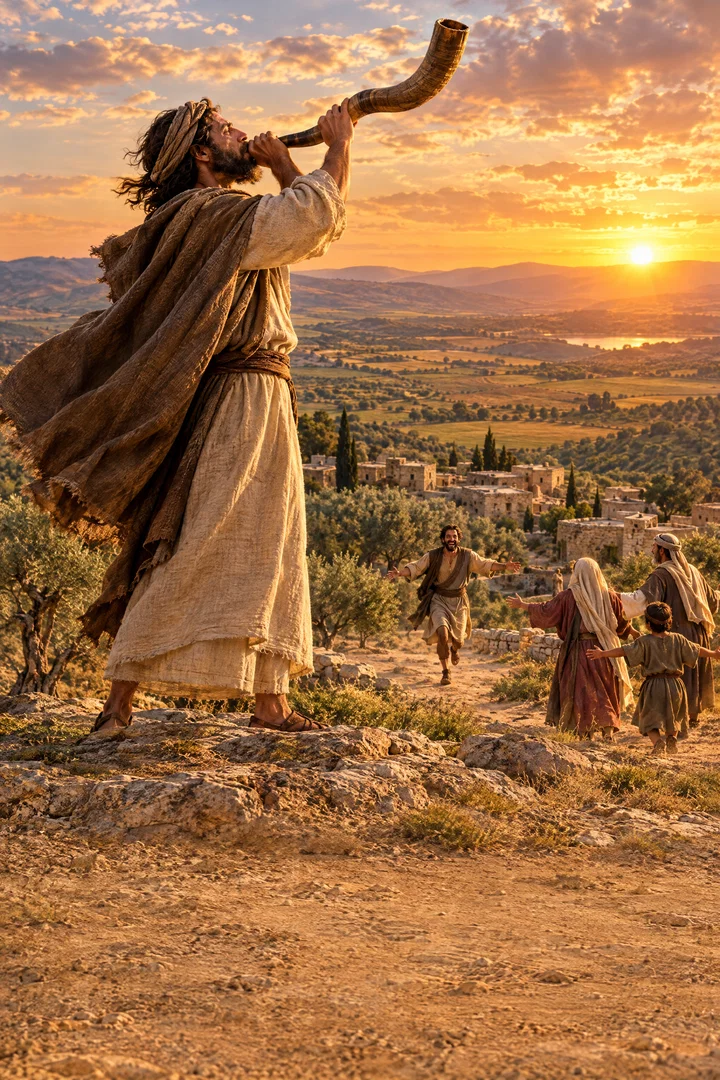
And ye shall hallow the fiftieth year, and proclaim liberty throughout all the land unto all the inhabitants thereof: it shall be a jubile unto you; and ye shall return every man unto his possession, and ye shall return every man unto his family.
Translations
And you shall hallow the fiftieth year, and proclaim liberty throughout all the land to all the inhabitants thereof: it shall be a jubilee to you; and you shall return every man to his possession, and you shall return every man to his family.
King James Version, KJV Cambridge Paragraph Bible
And ye shall hallow the fiftieth year, and proclaim liberty throughout all the land unto all the inhabitants thereof: it shall be a jubile unto you; and ye shall return every man unto his possession, and ye shall return every man unto his family.
And ye shall hallow the fiftieth year, and proclaim liberty throughout all the land to all its inhabitants: it shall be a jubilee to you; and ye shall return every man to his possession, and ye shall return every man to his family.
And ye shall hallow the fiftieth year, and proclaim liberty throughout the land unto all the inhabitants thereof: it shall be a jubile unto you; and ye shall return every man unto his possession, and ye shall return every man unto his family.
And ye shall hallow the fiftieth year, and proclaim liberty throughout the land unto all the inhabitants thereof: it shall be a jubilee unto you; and ye shall return every man unto his possession, and ye shall return every man unto his family.
and ye have hallowed the year, the fiftieth year; and ye have proclaimed liberty in the land to all its inhabitants; a jubilee it is to you; and ye have turned back each unto his possession; yea, each unto his family ye do turn back.
And ye shall hallow the year of the fiftieth year, and proclaim liberty in the land unto all the inhabitants thereof; a [ year of] jubilee shall it be unto you, and ye shall return every man unto his possession, and ye shall return every man unto his family;
So shall ye hallow the fiftieth year, and proclaim freedom throughout the land to all the dwellers thereof,—a jubilee, shall it be unto you, and ye shall return, every man unto his possession, and every man unto his family, shall ye return.
Berean Standard Bible, Majority Standard Bible
So you are to consecrate the fiftieth year and proclaim liberty in the land for all its inhabitants. It shall be your Jubilee, when each of you is to return to his property and to his clan.
You shall make the fiftieth year holy, and proclaim liberty throughout the land to all its inhabitants. It shall be a jubilee to you; and each of you shall return to his own property, and each of you shall return to his family.
And let this fiftieth year be kept holy, and say publicly that everyone in the land is free from debt: it is the Jubilee, and every man may go back to his heritage and to his family.
And ye shall halowe that yeere, euen the fiftieth yeere, and proclaime libertie in the lande to all the inhabitants thereof: it shalbe the Iubile vnto you, and ye shall returne euery man vnto his possession, and euery man shall returne vnto his familie.
Douay-Rheims (Challoner revision)
And thou shalt sanctify the fiftieth year, and shalt proclaim remission to all the inhabitants of thy land: for it is the year of jubilee. Every man shall return to his possession, and every one shall go back to his former family:
Pictures
Cross-references 20 of 30
- Isaiah 61:1-2
The Spirit of the Lord GOD is upon me; because the LORD hath anointed me to preach good tidings unto the meek; he hath sent me to bind up the brokenhearted, to proclaim liberty to the captives, and the opening of the prison to them that are bound;
Proclaims liberty and the Lord’s favorable year, echoing the Jubilee.
- Luke 4:18
The Spirit of the Lord is upon me, because he hath anointed me to preach the gospel to the poor; he hath sent me to heal the brokenhearted, to preach deliverance to the captives, and recovering of sight to the blind, to set at liberty them that are bruised,
Jesus proclaims liberty and release to captives.
- Leviticus 16:30
For on that day shall the priest make an atonement for you, to cleanse you, that ye may be clean from all your sins before the LORD.
The jubilee trumpet sounded on the Day of Atonement, when sins were blotted out.
- John 8:36
If the Son therefore shall make you free, ye shall be free indeed.
Christ gives true freedom, echoing the Jubilee proclamation of liberty.
- Leviticus 25:39-41
And if thy brother that dwelleth by thee be waxen poor, and be sold unto thee; thou shalt not compel him to serve as a bondservant:
Both describe Hebrew service and release at the Jubilee.
- Leviticus 25:23
The land shall not be sold for ever: for the land is mine; for ye are strangers and sojourners with me.
The land belongs to God, and it reverts to its holder in the jubilee.
- Isaiah 35:10
And the ransomed of the LORD shall return, and come to Zion with songs and everlasting joy upon their heads: they shall obtain joy and gladness, and sorrow and sighing shall flee away.
The ransomed return with joy, echoing the jubilee return to family and possession.
- Leviticus 25:28
But if he be not able to restore it to him, then that which is sold shall remain in the hand of him that hath bought it until the year of jubile: and in the jubile it shall go out, and he shall return unto his possession.
Sold land returns to its owner at Jubilee.
- Jeremiah 34:8
This is the word that came unto Jeremiah from the LORD, after that the king Zedekiah had made a covenant with all the people which were at Jerusalem, to proclaim liberty unto them;
Zedekiah’s covenant to free servants echoes the jubilee command to proclaim liberty.
- Leviticus 25:4
But in the seventh year shall be a sabbath of rest unto the land, a sabbath for the LORD: thou shalt neither sow thy field, nor prune thy vineyard.
The seventh-year rest is counted toward the jubilee.
- Leviticus 25:21
Then I will command my blessing upon you in the sixth year, and it shall bring forth fruit for three years.
God promises an abundant sixth-year harvest to sustain the people through the fallow years.
- Exodus 21:2
If thou buy an Hebrew servant, six years he shall serve: and in the seventh he shall go out free for nothing.
Both texts provide for Hebrew servants to go free.
- 2 Chronicles 36:21
To fulfil the word of the LORD by the mouth of Jeremiah, until the land had enjoyed her sabbaths: for as long as she lay desolate she kept sabbath, to fulfil threescore and ten years.
The land’s desolation allowed it to enjoy the sabbaths it had missed.
- Leviticus 26:34-35
Then shall the land enjoy her sabbaths, as long as it lieth desolate, and ye be in your enemies’ land; even then shall the land rest, and enjoy her sabbaths.
The land observed its neglected sabbaths during desolation.
- 2 Corinthians 3:17
Now the Lord is that Spirit: and where the Spirit of the Lord is, there is liberty.
The Spirit of the Lord is associated with liberty.
- Galatians 5:1
Stand fast therefore in the liberty wherewith Christ hath made us free, and be not entangled again with the yoke of bondage.
Both proclaim freedom from bondage.
- Romans 8:21
Because the creature itself also shall be delivered from the bondage of corruption into the glorious liberty of the children of God.
Creation’s release from bondage is described as glorious liberty.
- Leviticus 25:40-41
But as an hired servant, and as a sojourner, he shall be with thee, and shall serve thee unto the year of jubile:
Both set Jubilee release of servants.
- Leviticus 25:15
According to the number of years after the jubile thou shalt buy of thy neighbour, and according unto the number of years of the fruits he shall sell unto thee:
The sale price depended on the years remaining until jubilee.
- Isaiah 61:2
To proclaim the acceptable year of the LORD, and the day of vengeance of our God; to comfort all that mourn;
Proclaiming liberty echoes the Jubilee proclamation.
Commentary
Each commentary is drawn from primary sources: the writings of Ellen G. White and Adventist pioneers and periodicals. Each commentary is separate. Its own words are not a quotation; follow the references to read the source passages.
Ellen G. White
20 sources
The fiftieth year is hallowed as the jubilee after seven sabbaths of years, and its trumpet sounds on the Day of Atonement throughout all the land to call the people to gladness because satisfaction has been made for sin.13MR 135.3Lt 221, 1899, par. 2–5MH 184.2–185.2 The liberty it proclaims is that every man returns to his possession and to his family, with landed property reverting to the family of the original possessor so no one can permanently barter away his children's inheritance, while the land rests unsown, its increase belongs to the poor, and Hebrew slaves are set free.MH 184.2–185.2PP 533.2–4HSFM 164.4–165.1 It teaches that the Lord is Householder and owner of the whole earth and the people are His tenants, and He makes the land productive by His blessing when they are obedient.13MR 135.3Lt 221, 1899, par. 2–513MR 136.1 It pictures the final jubilee and deliverance at Christ's return, commencing when God speaks deliverance to His people, when the pious slave rises in triumph and shakes off his chains while the wicked master is left in confusion, and the land rests.LSEGW 103.1CET 96.1RH Jul 21, 1851 Its principles for the distribution of property and care for the poor apply to the world today, and carried out now they would prevent oppression of the poor by the rich and hatred of the rich by the poor, hinder the amassing of great wealth in ill-paid servitude, and bring a peaceful solution to problems that threaten anarchy and bloodshed.13MR 135.3Lt 221, 1899, par. 2–5ED 44.113MR 136.1
Meaning of Jubilee Year
The fiftieth year is hallowed as the jubilee, the great year of release coming after seven sabbaths of years, seven times seven years.13MR 135.3Lt 221, 1899, par. 2–5MH 184.2–185.2PP 533.2–4ED 43.2 Its trumpet sounds on the tenth day of the seventh month, the Day of Atonement, throughout all the land wherever the people dwell, calling all to welcome the year of release with gladness of heart because satisfaction has been made for sin.PP 533.2–4 The liberty then proclaimed means that every man returns to his possession and to his family, with all landed property reverting to the family of the original possessor to whom it was divided by lot.MH 184.2–185.2PP 533.2–4ED 43.2RH Jul 21, 1851 Though one might for a time dispose of his possession, he cannot permanently barter away his children's inheritance, and by this every family is secured in its possession as a safeguard against the extremes of wealth and want.MH 184.2–185.2PP 533.2–4ED 43.2
In that year the land rests, is not sown or reaped, and all it produces belongs to the poor, while Hebrew slaves not freed in the sabbatical year are set free.PP 533.2–4 The arrangement rests on the fact that the Lord is Householder and owner over the whole earth and owner of the land while the people are His tenants, and He makes the land productive by His blessing when they are obedient.13MR 135.3Lt 221, 1899, par. 2–513MR 136.1 To prevent beggary and suffering for food, as well as selfishness, oppression, and dissension, the land was divided by lot according to number, so that none could join field to field and take what money could buy, or choose the fertile parts for himself and leave the poor portions to a brother.PP 533.2–4HSFM 164.4–165.1 No one was to trade his estate from love of change or desire for money nor sell his land unless compelled by poverty, and when he or any of his kindred wished to redeem it the purchaser must not refuse to sell it.PP 533.2–4HSFM 164.4–165.1 If he had no one to redeem it for him and was unable to redeem it himself, it reverted to him in the jubilee so he could return home and enjoy it again, giving the poor and unfortunate an equal chance with their more fortunate neighbors.PP 533.2–4HSFM 164.4–165.1
Final Great Jubilee
The fiftieth year is the final jubilee of deliverance at Christ's return.LSEGW 103.1CET 96.1RH Jul 21, 1851EW 245.1ExVEGW 17.2–18.1 It commences when God speaks deliverance to His people, speaking the day and hour of Jesus' coming.LSEGW 103.1CET 96.1ExVEGW 17.2–18.1EW 28.1 At that speaking He pronounces the never-ending blessing on those who honored Him in keeping the Sabbath holy, and then the land rests.LSEGW 103.1CET 96.1RH Jul 21, 1851EW 245.1ExVEGW 17.2–18.1 In that proclaimed liberty the pious slave rises in triumph and victory and shakes off the chains that bound him, set free from bondage.LSEGW 103.1CET 96.1EW 245.1ExVEGW 17.2–18.1EW 28.1 His wicked master is left in confusion and knows not what to do, for the wicked cannot understand the words of the voice of God.LSEGW 103.1CET 96.1EW 245.1ExVEGW 17.2–18.1EW 28.1
This jubilee liberation leads directly into the coming of the Son of Man on the great white cloud.ExVEGW 17.2–18.1 Then come the resurrection and immortality of the sleeping saints, the instant change and catching up of the living saints, and their entrance into the Holy City.ExVEGW 17.2–18.1 Because that Jubilee is coming very soon, the present is a critical place, especially for youth tempted to go back.Ms 5, 1849, par. 9 If they give up after receiving knowledge of the truth there will be no more hope, and it is too late to be entangled.Ms 5, 1849, par. 9 So every hindrance must be cut loose, idols such as tobacco must be laid aside, God must be called upon, and the truth must be carried swiftly to hungry souls here and elsewhere.Ms 5, 1849, par. 9
The verse does not mean the Jubilee has already arrived so that labor is sin, the land must rest, property must be sold and given as alms, and the poor must be supported without work.SG2 75.1LS 231.1–232.1 To claim to be in that jubilee is error that confuses and distracts, deceives some, cannot prosper, and will be brought down while truth triumphs in the end.LS 231.1–232.1 Those who hold it dishonestly and continue to despise teaching and reproof will be left in total darkness until their folly is made manifest to all.LS 231.1–232.1
Present Principles and Application
The fiftieth year hallowed as jubilee teaches liberality and generosity, overcoming stinginess, selfishness, and hardness of heart toward brethren in need.13MR 135.3Lt 221, 1899, par. 2–513MR 136.1 It teaches that the land belongs to the Lord, who stands over the whole earth as Householder and owner while the people are His tenants, and who makes the land productive by His blessing when they are obedient.13MR 135.3Lt 221, 1899, par. 2–513MR 136.1 It teaches that the Lord takes care of the poor and makes special provision for them by His own interposition, connected with the spontaneous crops in the seventh year and the sixth year's yield of food for three years.Lt 221, 1899, par. 2–513MR 136.1 These lessons are to be worked intelligently and obeyed in practical life now.Lt 221, 1899, par. 2–5
The same hallowing gives practical missionary work and the duties of people to one another, which are the principles of Christianity and the gospel of the Old Testament given to the Hebrews.Lt 221, 1899, par. 2–5 It lays down principles for the distribution of property that apply to the world today.ED 44.1 Carried out now, those principles would change the condition of the people by preventing oppression of the poor by the rich and hatred of the rich by the poor.ED 44.1 They would hinder the amassing of great wealth while preventing the ignorance and degradation of tens of thousands held in ill-paid servitude to build colossal fortunes, and would bring a peaceful solution to problems that threaten to fill the world with anarchy and bloodshed.ED 44.1
The command to proclaim liberty throughout all the land to all its inhabitants is the work of religious liberty, to be done wise as serpents and harmless as doves.9T 227 The jubilee as a year of liberty, when every man returns to his family and to his possession, with its song of freedom, applies to the relief of the schools and educational institutions from debt and reproach.ROTS 8.2RH Jun 3, 1902 Willing, self-sacrificing help and work for their support will lift the reproach and bring freedom and rejoicing to be heard throughout the church and community.ROTS 8.2RH Jun 3, 1902
Sources
Pioneers and periodicals
149 sources
The fiftieth year after seven weeks of years was set apart as the jubilee, proclaimed by trumpet throughout the land on the tenth day of the seventh month when sins had been forgiven and borne away on the Day of Atonement.ST Feb 10, 1914ST Sep 26, 1911ST Feb 10, 1914 Liberty was announced to every inhabitant, with each man returning to his possession and to his family, sold land reverting to its original possessor and those bound in service going free.ST Sep 26, 1911RH Mar 12, 1901RH Apr 24, 1900RH Jan 26, 1905RH Oct 8, 1861 This prevented a permanent servile class and the gathering of land into few hands, setting a limit to service and to the transfer of inheritances.RH Oct 8, 1861ST Dec 12, 1895ST Nov 20, 1901ST Jun 18, 1885RH Feb 10, 1903 It foreshadows the time when God frees His children from all bondage, including death, and brings them from the slavery of this world into the liberty and glory of His kingdom with their eternal inheritance restored.ST Oct 3, 1895 That freedom is already entered through faith in Christ as Redeemer and near Kinsman, who looses the bonds of sin, and it is to be proclaimed to Jew and Gentile as present liberty and coming deliverance.ST Nov 1, 1910ST Jun 30, 1909ST Nov 11, 1908
Jubilee Year and Timing
The fiftieth year is hallowed as jubilee after seven weeks of years, seven times seven years or seven sabbatical cycles, making forty-nine years with the fiftieth as jubilee, a year coming at least once in the lifetime of anyone who lived a natural life.ST Feb 10, 1914ST Sep 26, 1911ST Feb 10, 1914RH Jan 14, 1862RH Jan 22, 1857 It belongs to the pattern of time measured in sevens, commencing at the end of seven times seven years following the order in which every seventh year is a year of rest, with the fiftieth year following the sabbatic year as a year of release.RH Jan 14, 1862RH Jan 22, 1857ST Aug 1, 1911 It was the most joyful feast, restoring property and freedom when people who had sold land holdings returned to possessions and those who had sold service to fellow Israelites were freed, with each person restored to inheritance, family, and ancestral property.ST Feb 10, 1914ST Sep 26, 1911RH Jan 14, 1862ST Feb 10, 1914
The jubilee was proclaimed with a trumpet throughout the land on the tenth day of the seventh month, Tisri, when the Day of Atonement ended and Israel's sins had been forgiven and borne away.ST Feb 10, 1914ST Sep 26, 1911ST Feb 10, 1914RH Aug 27, 1857RH Mar 12, 1901 That tenth day ushered in the fiftieth year to be hallowed and proclaimed as jubilee bringing liberty to inhabitants and return of each to family and inherited possession, when every man was restored to possession and all bondmen went free.ST Sep 26, 1911ST Feb 10, 1914RH Aug 27, 1857 The sounding on the Day of Atonement meant release from debts and return to possession and family, pointing to sins blotted out for those seeking pardon and to return to the purchased possession in reunion with loved ones.ST Feb 10, 1914RH Mar 12, 1901
The year of jubilee was proclaimed by priests with silver trumpets, whose likenesses with the table of shewbread and the seven-branched golden candlestick taken from the temple at Jerusalem are preserved in the sculptures on the triumphal arch of Titus at Rome.RH Dec 8, 1859 The fiftieth year was a sabbath year picturing gracious rest, in which the land rests.ST Aug 1, 1911RH Jul 20, 1876 That rest is applied to the coming time when all will rest, the wicked in dishonorable graves and the righteous in glorious light.RH Jul 20, 1876
The Bible records no instance of the jubilee's observance, yet that absence does not prove it was never observed.ST Dec 7, 1915RH Dec 10, 1861RH Oct 31, 1854 It was a prominent part of Israel's typical and ceremonial system established in Leviticus 25:8-13, and silence about its keeping is cited as an example where lack of a recorded observance proves nothing against observance.ST Dec 7, 1915RH Dec 10, 1861RH Oct 31, 1854 The jubilee law was tied to Israel's possession and cultivation of its own land, following seven sabbatical years for the land, with each person returning to his inheritance and family estate from which he had been separated.ST Feb 10, 1914RH Jan 14, 1862RH Aug 12, 1875 In Zedekiah's time the king undertook to follow the command to release servants and people in debt or otherwise oppressed and restore them to possessions and families, a kind of observance not carried out since the time of Moses.RH Jan 2, 1900
Liberty and Restoration Provisions
The verse commands liberty to be proclaimed throughout all the land unto all its inhabitants, with every man returning to his possession and to his family.ST Sep 26, 1911RH Mar 12, 1901RH Apr 24, 1900RH Sep 23, 1902ST Feb 10, 1914 The proclamation was made by trumpet on the tenth day of the seventh month, Tisri, when the Day of Atonement ushered in the hallowed fiftieth year.ST Sep 26, 1911ST Feb 10, 1914 Those who had sold their land holdings returned to their possessions, and those who had sold their service to fellow Israelites were freed, so that property and freedom were restored to their former owners and families.ST Sep 26, 1911ST Jul 4, 1905 It is set forth as an example of liberty in God.ST Jul 4, 1905
The jubilee was the most joyful feast, a year of gladness, holy joy, domestic happiness, and freedom.ST Feb 10, 1914RH Sep 23, 1902RH Jan 17, 1856 It came at least once in the lifetime of anyone who lived a natural life, after sins had been forgiven and borne away, leaving those who understood what God had done ready to forgive debts, free people from servitude, and willingly restore each person to his land.ST Feb 10, 1914 Debts and loss of property were therefore not to leave people permanently burdened or separated from their inheritance.RH Apr 24, 1900 That gladness in the typical dispensation pointed to the great ingathering and reunion of God's people when probation is past and crowns are given, whose glory cannot be pictured.RH Sep 23, 1902
Land that had been sold returned to its original possessor, family, and tribe, so that transfers, mortgages, or leases were temporary.RH Jan 26, 1905ST Apr 3, 1884ST Jun 18, 1885ST Jul 16, 1912 The price depended on how many years of use remained before the near return, with more paid when many years remained and less when the return was near.ST Apr 3, 1884 This return of land to the family of its original owner prevented monopolies and oppression.ST Jun 18, 1885 Those who had sold their service were freed, and claims requiring people to serve were canceled, preventing a permanent servile class and opposing both land monopoly and labor oppression.ST Sep 26, 1911RH Oct 8, 1861
The release from debt in the jubilee was linked to the blotting out of sins on the Day of Atonement, making both occasions times of freedom and release from oppression.RH Apr 24, 1900RH Jul 24, 1900RH Mar 12, 1901RH Apr 24, 1900 The jubilee brought release from debts and obligations so people could enjoy their property freely, applied as a present spiritual and practical experience in which the antitypical day of atonement blots out sins and the antitypical jubilee wipes out debts.RH Jul 24, 1900 Beginning with the trumpet on the Day of Atonement, it meant release from debts and return to possession and family, pointing to Christ's closing-time work of blotting out the sins of those seeking pardon and wiping away debts that reproach His cause, when the redeemed return to Zion, their purchased possession, and are reunited with loved ones.RH Mar 12, 1901 Its antitypical fulfillment is sung through real experience of sins forgiven and debts wiped out, leaving people free before God and others.RH Apr 24, 1900
The jubilee's restoration rule applies when its trumpets sound, with property to be returned to its original owner and possessions restored without oppressing one another at home as well as in other lands.ST Sep 1, 1898ST Feb 10, 1914 In its fullest sense it is connected with the end of Satan's rule.ST Feb 10, 1914 The verse gives the Lord's standard of Sabbath keeping and reverence, calling each person to examine how his own life conforms to that standard.RH Feb 10, 1916
Servitude Land and Justice
The liberty is universal for all inhabitants of the land, canceling claims to service for Hebrew and foreign servants alike and restoring to the poor the homes lost through poverty, so that no permanent servile class could arise and land and labor could not be concentrated in a few hands.RH Oct 8, 1861ST Dec 12, 1895RH Oct 8, 1861 Service described as lasting forever meant service only until the jubilee, when every person returned to family and ancestral possession.RH Oct 8, 1861RH Oct 8, 1861 As those principles of social equality and protection of servants take root, the distinction between master and slave gives way to brotherhood in freedom, opposing the enslaving of kindred.ST Dec 12, 1895RH Oct 8, 1861
No Jew could be held as a chattel slave after the pattern of American slavery, for every Jew held a right in the soil and was restored at the jubilee to a freehold estate and to family.RH Mar 17, 1863 Every Hebrew servant was set free at the seventh year or at farthest at the jubilee, when liberty was proclaimed to all inhabitants.RH Mar 17, 1863 The jubilee marks the limit of service: a hired servant or sojourner could serve until that year but never beyond it, and even service called forever ended there, setting the longest period retainable under one contract.RH Oct 1, 1861RH Oct 1, 1861RH Nov 11, 1862
A heathen servant could contract for more than six years and be held as an inheritance, but the longest service allowed ended at death or the jubilee.RH Oct 1, 1861 Both Hebrew and non-Hebrew servants were free at that time, because what was bought was service and not the body, both standing as voluntary contractors.RH Oct 1, 1861 A Hebrew servant serves six years and goes free in the seventh, but if he loves his master, wife, and children and chooses not to go out free rather than be separated from a wife and children whom the master has the right to retain, he may extend service, which is forever meaning until the jubilee.RH Mar 17, 1863 The law is for the benefit and protection of the servant, giving him the choice to stay and requiring the master to keep him, while giving the master no power to hold him past six years against his will or to separate husband from wife and children, since even voluntary extended service stops at the fiftieth year when liberty is proclaimed throughout the land.RH Mar 17, 1863
Those who say it is morally right to hold slaves now because slaves were held in patriarchal times and under the ceremonial law must carry it out fully and give the slaves a jubilee every seventh year, when every slave could go free and return to possession and family unless he loved his master and wanted to abide with him.RH Jul 2, 1857 The jubilee safeguarded against land monopoly and oppression, for sold land had to return to its original possessor, family, and tribe to whom God had originally given it.ST Jun 18, 1885RH Feb 10, 1903 Land transfers were therefore temporary, preventing the accumulation of vast estates to the injury of the less fortunate and offsetting the covetous increase of land and houses through sharp dealing.ST Nov 20, 1901ST Jun 18, 1885RH Feb 10, 1903
The fiftieth-year tenure held land under a fifty-year tenure that balanced concentrated private ownership with social ownership and helped prevent the agrarian conflicts common among other ancient nations, a land-tenure provision not stated in the Decalogue.ST Jan 16, 1907 The verse states a good and righteous principle of duty toward poor fellow men, proclaiming liberty throughout the land and returning every man to possession and family.ST Apr 15, 1913 Even Israel under direct guidance failed to meet the ideal by trying to carry it out according to the letter without the spirit, seeking righteousness by works and not by faith; when hearts were in tune with God the principles were carried out, but as soon as God was left out and men depended on themselves or on laws they failed.ST Apr 15, 1913
No law can make men righteous or enable them to do righteous things, and any society endeavoring to bring ideal conditions through law or human organization will fail; never until selfishness is taken out of human hearts can there be the ideal society, and Christ only can remove that selfishness through faith in Christ Jesus and the regenerating power of the divine life.ST Apr 15, 1913 Its principle applies in the present that every man should have a plot of ground from which he can support himself.RH Aug 31, 1905 That is realized when a family fully pays for its land and returns to secure possession of its own home, released from the bondage of debt, to sit under its own vine and fig tree with none to molest and make afraid.RH Aug 31, 1905ST Apr 14, 1898
Future Redemption Foreshadowed
The jubilee points forward to the time when God will free His children from bondage, including the bondage of death, and give them eternal freedom. It is the pledge of final deliverance and complete freedom, when His people rise victorious over death and every wicked opposing power.ST Oct 3, 1895 It points beyond Israel's practice to the time when God's people pass from the bondage and slavery of this world into the liberty and glory of God's kingdom.
It was a year of gladness in the typical dispensation, a type of the great ingathering and reunion of the people of God when probation is past and crowns are given, whose glory cannot be pictured.RH Sep 23, 1902 Its promised return of every man to possession and family points to the reunion at the Lord's coming, when the dead saints are raised and the living saints are gathered with them, and those separated by death meet again.RH Sep 23, 1902 It is a type of the new creation, when the seventh millennium ends and the renewed earth becomes the home of the redeemed.RH Jan 26, 1905 It typifies the final redemption of God's people and their inheritance now groaning under the curse, and unlike the seventh-year release for the debtor's benefit, it would have had nothing to release if man had remained obedient, holy and happy with the earth very good and free from curse.RH Feb 24, 1859
The coming jubilee removes the curse from the earth and restores its Eden life under its rightful Lord, a redemption sealed through the healing balm found in Christ and brought in the resurrection life as the promised rest, the sweet Eden home of peace waited for in hope and given when Jesus returns to dwell forever with His own in the re-genesis of rest and heavenly bliss and glory.ST Jul 16, 1885 The world's great jubilee means no war, no sorrow, no pain, no tears, no death, no curse, but the Sabbath of rest, the new heaven and the new earth, the final restoration and the fullness of ages.RH Aug 30, 1864 It is the triumph of the Lion of the tribe of Judah, sung by angels and filling heaven with joy, redemption completed with Christ its author and finisher, toward which the race is rushing as sin's long typical week nearly closes and the latter day draws nigh.RH Aug 30, 1864 The jubilee supports the pattern of six thousand years in the earth's present state followed by a seventh thousand-year period of rest.RH Nov 26, 1872
The jubilee trumpet means the trumpet at Christ's coming that wakes the dead, awakening from earth and sea all the sleeping saints of God and clothing them in immortality, marking the grand sabbatical year when the nearness of the Messiah's kingdom is loudly proclaimed.RH Apr 23, 1861 Its liberty points to the final release from bondage, oppression and the sorrows of a world under sin, when the ransomed return to Zion with everlasting joy and enter rest and bliss in which sorrow and death are gone.RH Oct 19, 1869 The year of the great jubilee is when the Saviour comes and gathers His people home to the kingdom to see the King in His beauty and be with Him forever, to receive crown and kingdom and harp and palm and a blessed inheritance in Eden's domain where Jesus reigns, to drink from the pure river of water of life and live by the tree of life, to dwell in mansions in glory with patriarchs and prophets, and as the ransomed to be ever free.RH Jan 16, 1866
As a type of eternity it gives a present foretaste of freedom through release from sin in Christ, potentially secured when He rose victorious from the grave, with full realization when the redeemed enter their eternal inheritance.ST Nov 11, 1908 The great world jubilee is to be entered at the right time and by the right course, guided by the plain statements of Scripture rather than speculative claims about Christ's return or the establishment of His kingdom.RH May 27, 1915
Jubilee Prophetic Periods
The verse belongs to a complete order of seven Sabbaths: the seventh day, the fiftieth day, the seventh week, the seventh month, the seventh year, the seven times seven years with the fiftieth jubilee, and the seven times seven jubilees with the fiftieth jubilee bringing the complete or perfect Sabbath, the great Jubilee of Jubilees.SMV 22.1–24.1 That great Jubilee is 49 times 50 years, or 2450 years.SMV 22.1–24.1 The typical jubilee has an antitype when God's people come into the inheritance of the purchased possession with redemption of their bodies and the trumpet proclaims glorious liberty through all the land.SMV 22.1–24.1
No year of release or jubilee was kept after the reign of Josiah, the last obedient king of Jerusalem, which ended in B.C. 607, when the Jews had kept no more than 21 jubilees and lacked 23 of coming to the great Jubilee, and the land was to lie desolate while the people were in their enemies' land.SMV 22.1–24.1 Counting the 2450 years from B.C. 607 brings the Jubilee of Jubilees in A.D. 1843.SMV 22.1–24.1 A great jubilee of 2450 years commenced with Jehoiakim's captivity in B.C. 607; subtracting 607 from 2450 gives A.D. 1843, but completing 2450 full years requires 607 full years before Christ and 1843 full years after, so the period extends beyond A.D. 1843 into A.D. 1844 by as much as its beginning fell after the commencement of B.C. 607.RH Dec 1850
The great jubilee of 2450 years beginning in B.C. 607 and extending into A.D. 1844 is reckoned with the 2520 years and the 2300 years to mark the expected deliverance, though because the starting point in B.C. 607 was unknown its completion in 1844 could not be exactly marked.RH Aug 27, 1857 The fiftieth-year jubilee timing is also used to identify a prophetic Great Jubilee reckoned as 2,460 years from Jehoiakim's captivity dated here to 607 B.C., with differing chronologies placing the start between 607 and 605 B.C. and leaving the endpoint within disputed years after 1844.RH Sep 10, 1857
The year of jubilee with its trumpet blown on the tenth day of the seventh month points to the second coming of Christ.RH Aug 27, 1857RH Aug 27, 1857 The blowing of the great trumpet is the type of the trump of God, the last trump, and the release of all captives, the canceling of all debts, and the restoration of every man to his possession is the type of the great release at the advent.RH Aug 27, 1857 The day thus set apart for so many ceremonies pointing to the greatest event must be honored by the event itself in the completion of salvation, with Christ finishing his intercession and coming out of heaven to bless the waiting people and appear the second time without sin unto salvation, at the time where all the prophetic periods center in complete fulfillment.RH Aug 27, 1857 The seventh-month observances including the jubilee are typical of events in immediate connection with the second advent and may be fulfilled chronologically, making the seventh month worthy of prayerful consideration as the time in the year of the Lord's advent.RH Aug 27, 1857
The blowing of the jubilee trumpet and deliverance of captives belonged to the seventh month as a type shadowing the second advent.RH Sep 10, 1857 Since other types of the same event were observed at other seasons, the feast of the wheat harvest for the resurrection of the righteous in the third month and the deliverance from Egypt and slaying of the Egyptians in the first month, they cannot all be fulfilled chronologically, so no certain day for the advent can be fixed from them.RH Sep 10, 1857 The day of the Lord may therefore come on any day and continual watching is required, yet the anniversaries of the Mosaic observances, especially those never yet honored by an antitypical fulfillment, may be regarded with peculiar interest.RH Sep 10, 1857
Ceremonial Sabbath Distinction
The year of jubilee belongs to a class of sabbaths distinct from the seventh-day Sabbath, and that distinction authorizes keeping the seventh day without keeping the seventh year and the jubilee. Like the seven annual ceremonial sabbaths, these year sabbaths were not commanded in the Ten Commandments but stand beside the Sabbaths of the Lord. The chapter describes the land's sabbath as the seventh year, distinguishing that sabbath from the seventh-day Sabbath of the Lord.RH Aug 31, 1905 The fiftieth-year jubilee coming after seven sabbaths of years was peculiarly Jewish, belonging with the seventh year apart from the weekly seventh-day Sabbath called the Sabbaths of the Lord.ST Dec 18, 1893 The seven annual sabbaths and feast days of Leviticus 23 are likewise distinct from the weekly Sabbath.ST Dec 18, 1893
It belonged among the ceremonial observances described as shadows, a national sabbath given for a specific time and purpose that was abolished at the cross.ST Jun 9, 1914 Its provisions were national laws for the Jewish nation and its land that expired when Christ died and are not binding today, though an individual may choose to observe them. As a theocratic regulation tied to Israel it is not of permanent or universal obligation, is not in force today, and does not determine present duty to keep the Sabbath.RH Oct 4, 1906
It was with the other land sabbaths an observance peculiar to the Hebrews, associated with the earthly inheritance of Canaan.RH Aug 29, 1871RH Mar 31, 1863 When the land was trodden down by Gentiles after the people's dispersion, these sabbaths could not be kept, while unlike them the weekly Sabbath remained unaffected and belonged to a higher order of institutions.RH Aug 29, 1871 The seventh year is called a Sabbath year without being tied to one particular year.RH Jan 10, 1856
Christ Gospel and Freedom
Under the law the right to redeem belonged to the one nearest of kin, foreshadowing that to be man's Redeemer the Son of God had to become man's near Kinsman by becoming Son of Man in flesh and blood.ST Nov 1, 1910 The sounding of the trumpet to announce freedom was a shadow of Calvary and a compacted prophecy of the gospel, with every jubilee trumpet sounding Christ's name and revealing the infinite love shown where Christ's infinite love met Satan's unbounded selfishness.RH Nov 8, 1915 Together with the sacrifices showing His death, the incense showing His righteousness, and the holy of holies showing His glory, it stands among the interpreting lights of the types and symbols that give depth and richness to the New Testament and give exalted views of Christ's atoning work.RH Nov 8, 1915
The freedom proclaimed in the fiftieth year was a type of the fuller liberty had through faith in Christ, and the jubilee year typified the joys of the redeemed in the heavenly land. Israel's failure to obey brought bondage and affliction, showing that true liberty is found in obedience to God's just laws. The glad festival when liberty was proclaimed and slaves returned to possessions and families illustrates the greater freedom from sin that only the Son can give.RH Aug 16, 1870 Christ gives a present foretaste of that eternal freedom through release from sin, with full realization when the redeemed enter their eternal inheritance, blessings potentially secured when He rose victorious from the grave.ST Nov 11, 1908
The proclamation to all inhabitants means freedom is available to sinners among both Jews and Gentiles, including professed Christians still living under bondage. The bonds are loosed, but those unaware of their freedom must rise from bondage and accept the liberty already proclaimed. The liberty emphasized is freedom of conscience, for God's word received by faith frees from human traditions and superstition, while compulsion and counterfeit religious laws bind.ST Jul 10, 1893 God is the Author of liberty, who after bringing Israel out of Egypt arranged their institutions to guarantee it and commanded freedom to be announced to all, a liberty continued and made real when Jesus Christ came on His mission of salvation to make people truly free.ST Jun 30, 1909
That freedom belongs to the gospel and the Third Angel's Message, including the promised freedom song when debts are removed from the schools and the reproach of debt is rolled back.RH Mar 12, 1901 Its antitypical fulfillment belongs to the present time of atonement and the coming of Christ for the remnant church, sung through real experience of sins forgiven and debts wiped out that leaves people free before God and others.RH Apr 24, 1900 The jubilee proclamation of liberty means being entirely out of debt, cause to sing the song of freedom with thankfulness to God when every debt is paid and swept away.RH Oct 30, 1900RH Mar 5, 1901 That complete release comes with the last debt swept into the bottom of the sea, calling for steady work and prayer with good cheer until freedom soon comes.RH Mar 5, 1901
To claim to be in the jubilee so that it is sin to labor, the land must rest, and the poor must be supported without work, joined to selling what is owned and giving alms, twists the command into error.LS 231.1–232.1ST Jun 6, 1878 That teaching confuses and distracts, deceives some, cannot prosper, and will be brought down while truth triumphs in the end.LS 231.1–232.1 Those who hold it dishonestly and continue to despise teaching and reproof will be left in total darkness until their folly is made manifest to all.LS 231.1–232.1
Liberty Applied Today
The verse records God's message to Moses at Sinai proclaiming liberty throughout the land to all its inhabitants, a message of hope and promised deliverance in a world where people oppressed one another and part of God's purpose to free humanity from bondage. It was God's trumpet announcement to be sounded in Judea every fiftieth year, strange to Jew and Gentile in an age ground between civil tyranny and lordly hierarchies when even enslaving one's own kindred was thought right.ST Jun 30, 1909 It was not the people's declaration of independence but God's proclamation in their behalf, giving principles of the greatest freedom and every measure of freedom possible and consistent with their condition, with laws of human rights and freedom greatly superior to surrounding nations where freedom religiously or civilly was unknown.ST Jun 30, 1909
God's people were not prepared for the fullest freedom and knew little of the liberty later vouchsafed through the centuries because of bondage to sin, in which one given power often becomes the worst tyrant, yet God planted the greatest freedom there, later uttered by Christ as each man's right to believe or disbelieve and receive or reject without present judgment.ST Jun 30, 1909 Liberty is a gift God values and provides as part of His purpose for human happiness, set alongside the choice of life or death and freedom from bondage to show people must be free to choose, for without that freedom they would be in bondage and unhappiness.RH Feb 9, 1905 The verse holds the first recorded use of the word liberty, spoken in the days of Moses after a people had been delivered from involuntary servitude, ordering freedom to be announced to every inhabitant of the land.RH Mar 13, 1913ST Jul 4, 1905 Those same words were cast on the bell that rang out the American people's proclamation of freedom from rule by a country beyond the sea and announced American liberty, linking the biblical proclamation with the colonies' declaration of independence.RH Mar 13, 1913ST Jul 4, 1905
Its liberty proclamation commanding the fiftieth year set apart as jubilee with return to possessions and families was inscribed on Philadelphia's Old Liberty Bell, whose making was prophetic of the results of the American Revolution.ST Dec 22, 1914 The Bell later gave public voice to those words spoken to Moses at Sinai as the words of the Author of universal freedom, and their proclamation is linked to recognition of human equality and inalienable rights in the early nineteenth century.ST Dec 22, 1914 The verse supplies the Liberty Bell words applied to civil and religious freedom, especially that conscience must not be controlled by civil government or state church, expressing freedom for all against restrictions on conscience and religious liberty.ST Jul 10, 1893 It is presented as God's proclamation applied to religious liberty, that people be free to worship according to conscience without civil coercion, in harmony with securing the blessings of liberty to ourselves and posterity as stated in the preamble to the United States Constitution.RH Jun 8, 1916RH Aug 11, 1910 Its declaration is applied to freedom of religious opinion and worship according to each person's conscience, including the choice not to worship.ST Jul 3, 1907
Its proclamation from heaven extends universal freedom as a divine principle and the source of individual liberty in civil government, affirmed by a legislative body after 3,268 years to make it possible in government. The verse expresses individual liberty for every man, not one man alone, given voice by the old bell in the state house after many years of deprivation and sacrifice, the right of labor to work unmolested and be paid for toil, and the liberty, peace, and union bought by devoted patriotism.ST Jul 6, 1904 Its language of liberty to be proclaimed throughout the land to all inhabitants applies to the last-day message to be sounded throughout the land as a message of liberty.RH Mar 3, 1904 Its jubilee image calls Christians to carry the gospel to waiting nations and help fallen sinners escape Satan's power, since Christ's coming makes the hour of jubilee.RH Sep 6, 1906
The verse is invoked as a call for the United States to commit openly to emancipation rather than merely preserve the Union or prevent slavery's spread.RH Nov 12, 1861 It points to a near great Jubilee at the coming of the Messiah as the true hope of those in slavery, so the enslaved should not be content to remain in bondage but should escape whenever they can and should be aided and have the evil resisted, yet not despair under accumulated woes but look to that nearness.RH Mar 10, 1859 The emancipation of enslaved people in the United States is described as a jubilee for an oppressed race and emblem of victory, liberty, and hope.ST Nov 28, 1900 That was fulfilled when slavery as the peculiar institution was abolished effective Dec. 18, 1865, which freedmen celebrated at Christmas as their jubilee of freedom and final stunning blow to slavery and proud Southern oppressors.RH Jan 23, 1866 Earlier at Charleston deliverance from bondage and ostracism was proclaimed as liberty throughout the land to all inhabitants, ending enslavement with the long downtrodden bondman newly set free to full standing, marked with public joy, procession, and praise for deliverance.RH Apr 25, 1865 In this passage the jubilee is invoked as the hoped-for liberation of enslaved people.RH Aug 12, 1858
The approaching jubilee applies to hoped-for freedom from worldly obligations, especially schools' debts, when people will be free and self-sacrificing work for their support will make it possible for a song of freedom to be heard throughout the community and throughout the church's borders.RH Jun 3, 1902RH Aug 26, 1902RH Dec 29, 1904 The year 1902 is presented as that jubilee when all institutions are made free from debt as each does what he can, with proceeds of missionary acre work assisting the medical missionary college, a blessing to be prayed for before grace.RH Apr 1, 1902 By united effort that year 1902 can become the long-looked-for year of jubilee clearing debts on schools already established and founding new schools without debt, bringing peace, hope, and joy and victory and freedom from debt. It can become such a jubilee by sale of "Christ's Object Lessons" and Missionary Acre work to relieve schools and secure buildings for the medical college, bringing sweet blessing from above, putting away of sins and humble seeking of God, continuing fathers' struggles who accomplished much but left something undone, and looking to the kingdom where full reward is given to all who fought loyally beneath Prince Immanuel.RH Apr 22, 1902
A threefold jubilee is freedom from debt for schools, then sanitariums, then publishing houses by united book sales, and when all three debts are removed there is glorious jubilee.RH Apr 8, 1902 Jubilee means freeing God's institutions from crushing interest-bearing indebtedness so they can spend energies in soul-saving instead of debt-paying service.RH Jun 11, 1914 It comes when God's people give liberal gifts and lend without interest to lift debt, when institutions pay what is owed and refuse new obligations, ending debt-making policy and commercial methods, resolutely refusing to extend enterprises or enter new ones on borrowed capital, and waiting until the providence that points the way provides means, for God's work can never be carried forward successfully on a commercial basis.RH Jun 11, 1914 Jubilee means release from long heavy indebtedness and darkness into freedom and light, expressed as singing the song of jubilee and victory, coming through favoring providence when friends rally and managers and workers labor earnestly in consecration to reduce debt.RH Mar 14, 1912 One institution's deliverance gives inspiration and courage for others still in darkness to dedicate anew until victory arises elsewhere.RH Mar 14, 1912
Specific debt releases are hailed as jubilee songs: Union College's $70,000 debt paid May 3, twenty-six years after its foundation stone, starting its greatest usefulness for the third angel's message by presidents, teachers, students, officers, brethren, sisters, and business men working and giving; Oklahoma's freedom from debt to Keene Academy; Keene Academy singing with debt paid looking to improvements; Mount Vernon Academy freed; St. Helena Sanitarium hoping; colleges fully paid; sanitariums freed; and promotion of books freeing from reproach with help to homes.RH Sep 7, 1905RH Jun 2, 1910RH Mar 4, 1915RH Jun 15, 1916RH Jan 27, 1916 Coming to owing no one anything greatly enhances usefulness and good influence when the glad day of release dawns.ST Sep 28, 1904 The long-looked-for day comes when God sets His hand to free schools from debt and moves hearts to give freely and generously to sustain them, and giving to sustain God's schools hastens studying in schools above.RH Nov 6, 1900 Doing this work brings blessing, putting away of sins, humble seeking of God, continuing fathers' unfinished struggles, and looking to full reward under Prince Immanuel.RH Apr 22, 1902 When everyone does part in the work all share its blessing.RH May 6, 1902
The Portland church's rededication and celebration of its "jubilee" applies the word to renewal and rejoicing, not literal return of property or family, though the verse establishes the fiftieth-year celebration with return to possessions and families.RH Mar 11, 1915 The verse serves as image of a rare eagerly awaited opportunity to approach God in prayer, naming the Jubilee as holy year associated with liberty.ST Jun 12, 1879 The coming great jubilee is foreshadowed by the present struggle reaching its climax.RH Dec 20, 1906 The great year is very near, bringing final liberty and close of salvation, so worldly treasure fast loses value.RH Aug 31, 1916 As the antitypical jubilee nears, property becomes less valuable in God's sight and to those loving His closing message, for land sold returned to its original possessor and price depended on years remaining before near return, and earthly possessions will be worthless to those clinging to them when liberty is proclaimed and earth given to its rightful owner.ST Apr 3, 1884RH May 16, 1907 Coming nearer to judgment is coming nearer to jubilee, and nearness of Christ's coming and new order should shape valuing of temporary things and living.RH Dec 13, 1906
Satan tries to make the world attractive with visions of earthly glory in dress, amusements, riches, pleasure, and gain to keep Seventh-day Adventists, especially youth, from whole-hearted service until probation passes, but God foretells it so people may defeat him by Christ's grace, refuse distraction, and be ready with no time to lose.RH Aug 31, 1916 The coming Jubilee as year of release to the oppressed at hand means conflict with darkness soon ends and the faithful receive the victor's crown, giving lone pilgrims reason to endure rougher way, severer conflict, trouble, persecution, perils, abounding iniquity, and cold love with patience and cheerfulness as preparation, for he that endures shall be saved.RH Mar 31, 1859ST Aug 5, 1886ST Jan 12, 1882ST Oct 30, 1879 It promises oppressed people release and homeward return when the stronger overcomes the oppressor, and that the oppressed and captive will be released and brought home to houses and families.ST Oct 30, 1879RH Mar 31, 1859 The jubilee year points to the Lord's coming as the church's completeness, triumph, day of salvation and redemption, and earth's great restitution and blessing for every land, celebrated while looking for Jesus.ST Nov 15, 1910ST Nov 9, 1882RH Jul 31, 1900ST Jun 1, 1876
The jubilee is not far away, meaning God has heard prayers and is about to revive His cause and work mightily, giving hope, courage, calm reliance, and trust in promises.RH Jun 5, 1866 A day when people sing the freedom song may be hastened, linked with Israel's song after the Day of Atonement, and the approaching song raises whether probation is about to end.RH Dec 4, 1900RH Dec 18, 1900 To sound the jubilee is to proclaim the Saviour at hand to reward the faithful and take them to glory in unbroken harmony where the wicked cannot enter.RH Jun 26, 1860RH Jun 19, 1856 It means leaving Egypt, the world, Babylon, old companions, scoffing brethren, painted synagogues, and sectarian prejudice to join a praying united company on the way to Canaan, growing in love and unity, resisting Satan, singing as conquerors though weak, passing unharmed through the furnace, and at last rising to reign eternally.RH Jun 26, 1860RH Jun 19, 1856 Its proclamation is a prophetic note of joyful hope, part of the gospel as joyful anthem from heaven rang by prophets like a clarion about the Anointed's coming and his people's redemption.RH Jun 24, 1873ST Feb 7, 1878
God's full year of jubilee is the breaking dawn when freedom, truth, and right win by the Son's merit, sin ceases, faith increases, night is banished, answering fear that holiness will cease or the Prince of Peace will not reign, and calling each to stand strongly for virtue and light.ST May 5, 1909 It foreshadows the final jubilee of heaven and earth, the grand sabbatic year about to break when Jesus, after nearly two thousand years away and nearly six thousand years as the Lamb newly slain before a fallen redeemed race, comes to claim kingdoms as He whose right it is to reign.ST Aug 13, 1874RH Dec 16, 1873 His people are prepared through a short sharp crisis with the man of sin even through seas of blood while they keep lamps burning and cry for Him to come quickly.ST Aug 13, 1874RH Dec 16, 1873 Beauties of nature as symbols of God's love point beyond this world to realms above and to the long-promised jubilee of liberty and restoration.ST May 1, 1907
The coming grand jubilee is the time of liberty for which believers pray as earth's drama closes and eternity approaches, with the pious slave rising free while the wicked master is left confused.RH Jul 21, 1851ST Nov 9, 1915 The jubilee as year of liberty is applied to Christ's coming and new order near at hand.RH Dec 13, 1906 Its jubilee is linked with hope of sharing its song both in this life and in the earth made new.RH Jan 15, 1901 The passage invokes the coming day of jubilee as future when past sorrows end and brighter day comes.ST Feb 20, 1879 The verse presents the jubilee as example of liberty in God, a year proclaimed throughout the land for all inhabitants with each returning to family and possession.ST Jul 4, 1905 Its call illustrates outcome of social equality and protection of servants, as these principles take root the master-slave distinction gives way to brotherhood in freedom.RH Oct 8, 1861 Its language of jubilee song of freedom is applied to hope that promoting books will free from reproach and bring help and courage to homes, with completion prompting the song.RH Aug 5, 1902RH Feb 9, 1905 The year of jubilee with land resting is applied to coming time when all rest, the wicked in dishonorable graves and the righteous in glorious light.RH Jul 20, 1876 The ransomed shall come with joy to see the heavenly home and rest in jubilee, belonging to those whose trust is stayed on God.
Sources