Luke 18:20
Thou knowest the commandments, Do not commit adultery, Do not kill, Do not steal, Do not bear false witness, Honour thy father and thy mother.
Translations
You know the commandments, Do not commit adultery, Do not kill, Do not steal, Do not bear false witness, Honor your father and your mother.
King James Version, KJV Cambridge Paragraph Bible
Thou knowest the commandments, Do not commit adultery, Do not kill, Do not steal, Do not bear false witness, Honour thy father and thy mother.
Thou knowest the commandments, Do not commit adultery, Do not kill, Do not steal, Do not bear false witness, Honor thy father and thy mother.
Thou knowest the commandments, Do not commit adultery, Do not kill, Do not steal, Do not bear false witness, Honour thy father and mother.
Thou knowest the commandments, Do not commit adultery, Do not kill, Do not steal, Do not bear false witness, Honor thy father and mother.
the commands thou hast known: Thou mayest not commit adultery, Thou mayest do no murder, Thou mayest not steal, Thou mayest not bear false witness, Honour thy father and thy mother.'
Thou knowest the commandments: Do not commit adultery, Do not kill, Do not steal, Do not bear false witness, Honour thy father and thy mother.
The commandments, thou knowest:—Do not commit adultery, Do not commit murder, Do not steal, Do not bear false witness,—Honour thy father and mother,
Berean Standard Bible, Majority Standard Bible
You know the commandments: ‘ Do not commit adultery, do not murder, do not steal, do not bear false witness, honor your father and mother.’”
You know the commandments: ‘Don’ t commit adultery,’ ‘Don’ t murder,’ ‘Don’ t steal,’ ‘Don’ t give false testimony,’ ‘ Honor your father and your mother.’”
You have knowledge of what the law says: Do not be untrue to your wife, Do not put anyone to death, Do not take what is not yours, Do not give false witness, Give honour to your father and mother.
Thou knowest the comandements, Thou shalt not commit adulterie: Thou shalt not kill: Thou shalt not steale: Thou shalt not beare false witnes: Honour thy father and thy mother.
Douay-Rheims (Challoner revision)
Thou knowest the commandments: Thou shalt not kill: Thou shalt not commit adultery: Thou shalt not steal: Thou shalt not bear false witness: Honour thy father and mother.
Pictures
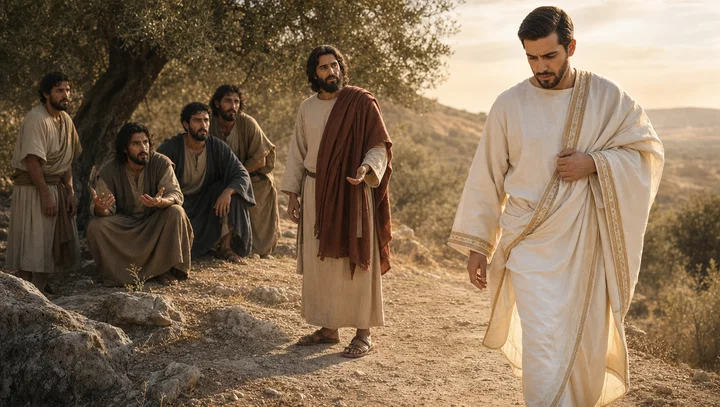
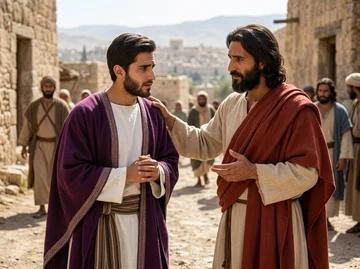
Cross-references 20 of 31
- Matthew 19:16-22
And, behold, one came and said unto him, Good Master, what good thing shall I do, that I may have eternal life?
Parallel account of Jesus’ exchange with the ruler.
- Mark 10:17-22
And when he was gone forth into the way, there came one running, and kneeled to him, and asked him, Good Master, what shall I do that I may inherit eternal life?
parallel account of same conversation
- Exodus 20:12-16
Honour thy father and thy mother: that thy days may be long upon the land which the LORD thy God giveth thee.
Gives the commandments Jesus lists.
- Matthew 22:37-40
Jesus said unto him, Thou shalt love the Lord thy God with all thy heart, and with all thy soul, and with all thy mind.
Jesus summarizes the law in love for God and neighbor, the duties tested in the ruler’s response.
- James 2:11
For he that said, Do not commit adultery, said also, Do not kill. Now if thou commit no adultery, yet if thou kill, thou art become a transgressor of the law.
listed together as quoting the later commandments
- Exodus 20:8-11
Remember the sabbath day, to keep it holy.
The Sabbath command is part of the commandments listed as a moral code.
- Revelation 14:12
Here is the patience of the saints: here are they that keep the commandments of God, and the faith of Jesus.
The saints are identified by keeping God’s commandments and the faith of Jesus.
- Romans 13:9
For this, Thou shalt not commit adultery, Thou shalt not kill, Thou shalt not steal, Thou shalt not bear false witness, Thou shalt not covet; and if there be any other commandment, it is briefly comprehended in this saying, namely, Thou shalt love thy neighbour as thyself.
Lists commandments Jesus named and connects them with love.
- Mark 10:21
Then Jesus beholding him loved him, and said unto him, One thing thou lackest: go thy way, sell whatsoever thou hast, and give to the poor, and thou shalt have treasure in heaven: and come, take up the cross, and follow me.
Jesus adds what the man lacks and calls him to follow, having loved him.
- Romans 7:7
What shall we say then? Is the law sin? God forbid. Nay, I had not known sin, but by the law: for I had not known lust, except the law had said, Thou shalt not covet.
Both texts quote commandments from the law, including the command against coveting.
- Mark 10:19
Thou knowest the commandments, Do not commit adultery, Do not kill, Do not steal, Do not bear false witness, Defraud not, Honour thy father and mother.
listed together as quoting the later commandments
- Matthew 19:18-19
He saith unto him, Which? Jesus said, Thou shalt do no murder, Thou shalt not commit adultery, Thou shalt not steal, Thou shalt not bear false witness,
listed together as quoting the later commandments
- Ephesians 6:2-3
Honour thy father and mother; ( which is the first commandment with promise;)
listed together as quoting the later commandments
- Matthew 5:27
Ye have heard that it was said by them of old time, Thou shalt not commit adultery:
listed together as quoting the later commandments
- Matthew 5:21
Ye have heard that it was said by them of old time, Thou shalt not kill; and whosoever shall kill shall be in danger of the judgment:
listed together as quoting the later commandments
- Deuteronomy 4:13
And he declared unto you his covenant, which he commanded you to perform, even ten commandments; and he wrote them upon two tables of stone.
Identifies the commandments as ten.
- Matthew 19:21-22
Jesus said unto him, If thou wilt be perfect, go and sell that thou hast, and give to the poor, and thou shalt have treasure in heaven: and come and follow me.
Jesus’ demand and the young man’s response are recounted in parallel.
- Romans 13:10
Love worketh no ill to his neighbour: therefore love is the fulfilling of the law.
Love fulfills the commandments of the law.
- Leviticus 19:18
Thou shalt not avenge, nor bear any grudge against the children of thy people, but thou shalt love thy neighbour as thyself: I am the LORD.
Christ sums up the commandments cited with the command to love one’s neighbor.
- 1 John 2:3-4
And hereby we do know that we know him, if we keep his commandments.
Keeping God’s commandments shows that a person knows him.
Commentary
Each commentary is drawn from primary sources: the writings of Ellen G. White and Adventist pioneers and periodicals. Each commentary is separate. Its own words are not a quotation; follow the references to read the source passages.
Ellen G. White
29 sources
Jesus named the commandments against adultery, killing, stealing, false witness, and dishonoring parents as the standard and condition for entering eternal life, defining duty toward others as an expression of God's character to guide every action.Lt 116, 1896, par. 14–17COL 390.1COL 390.2–391.1 He spoke them to a sincere, kneeling ruler who ran to ask what he must do to inherit eternal life and who claimed to have kept them from his youth, yet felt he still lacked something.DA 518.1–3Lt 116, 1896, par. 14–17DA 518.6DA 518.5DA 519.2 That claim did not settle the question, because obedience is not mere outward rule-keeping but a life and character shaped from the heart by supreme love to God and love to others.ST Oct 29, 1912COL 392.1ST Oct 22, 1894DA 519.2 Jesus exposed the ruler's lack by requiring him to sell his possessions, give to the poor, and follow Him, showing that attachment to wealth breaks love to neighbor and makes covetousness a transgression of the commandments.Lt 116, 1896, par. 14–172T 679.1–680.1RH Jan 12, 19054T 49.3–50.11T 207.2 The ruler went away sorrowful, loving riches and standing more than God and choosing the world over eternal treasure, a warning that professing to keep the commandments is vain while retaining wealth above God and refusing to surrender all to Christ.RH Feb 18, 1902CET 164.3ST Oct 28, 19084T 50.22T 680.2
Setting and Commandments Named
The verse belongs to the meeting with a ruler who sincerely asked what he must do to inherit eternal life.DA 518.1–3 Moved by tenderness shown toward children, he ran after Jesus, knelt before Him, and desired to become His disciple.DA 518.1–3 He thought highly of his own righteousness, yet he felt that he lacked something and wanted his longing satisfied.DA 518.5
When he addressed Jesus as Good Master, the answer that none is good but God tested his sincerity.DA 518.4 It drew out how he regarded Jesus as good, whether he realized He was the Son of God, and what was the true sentiment of his heart.DA 518.4
The verse names God's commandments as the standard of obedience and the condition for entering into life.Lt 116, 1896, par. 14–17COL 390.1COL 390.2–391.1 It lists do not commit adultery, do not kill, do not steal, do not bear false witness, and honour father and mother.Lt 116, 1896, par. 14–17 Those precepts define duty toward other people.DA 518.6RH Jan 12, 1905 God's character is expressed in His law, and living in harmony with God means its principles are the source and guide of every action.COL 390.1COL 390.2–391.1
The ruler claimed to have kept these commandments from his youth and asked what he still lacked.Lt 116, 1896, par. 14–17DA 518.6 That claim did not settle the question of eternal life.Lt 116, 1896, par. 14–17ST Oct 22, 1894 His confidence in outward obedience did not mean he understood or truly kept them in their full depth and significance.ST Oct 22, 1894
True Obedience From Heart
The ruler's confident claim to have kept the commandments from his youth did not mean he understood them or truly kept them.ST Oct 29, 1912ST Oct 22, 1894DA 519.2 His confidence in outward obedience masked self-deception, which was exposed when he was told to sell his possessions, give to the poor, and follow, and he went away sorrowful.ST Oct 29, 1912ST Oct 22, 1894 Sincere outward obedience had not given him discernment of his need for heart devotion and Christian goodness.DA 519.2 Obedience to God's law is not merely outward rule-keeping but obedience that enters the life and appears in the character.DA 523.2 The commandments have depth and significance, and a life of disobedience reveals ignorance of their principles and of God's character expressed in the law, which is the standard for all who would belong to His kingdom.ST Oct 29, 1912ST Oct 22, 1894DA 523.2
Love is the principle and life of the commandments.COL 392.1 Through love of self and worldly gain the ruler was a transgressor of the law, for outward obedience did not mean he had their true spirit.COL 392.1 He lacked genuine love for God and for other people, and without that love he was out of harmony with heaven and unfit for its kingdom.COL 392.1 What was needed was a humble, contrite heart that gives supreme love to God, recognizes its lack, and finds perfection in Christ.COL 392.1DA 519.2
His attachment to wealth revealed that he failed to keep the commandments in the heart, for he would not give to the poor or turn his affections from earthly treasure toward God and his neighbor.2T 679.1–680.14T 49.3–50.1 His selfish attachment to riches showed that he did not love his neighbor as himself.4T 49.3–50.1 Keeping the commandments does not excuse covetousness, as his sorrow at the demand to sell his possessions and give to the poor revealed his attachment to wealth and his still-lacking obedience.2T 679.1–680.11T 207.2 True commandment keeping includes sharing with the poor and using one's means to help others with willing sacrifice, and economy without that spirit becomes meanness.4T 49.3–50.11T 207.2 Following requires surrendering all that one is and has and joining in His work, and obeying His words was the ruler's only hope of salvation and of forming a Christian character.DA 520.2DA 523.2 Anything cherished that would corrupt the whole person must be given up, because nothing less can save, while riches and high position threatened to take God's place in his affections and holding back anything from God weakened his moral strength and devotion.DA 520.2DA 523.4
Wealth Tested and Applied
Jesus tested the ruler's claim to have kept the commandments by commanding him to sell what he had, give to the poor, and follow Him for treasure in heaven, showing that keeping the commandments includes using entrusted possessions to relieve suffering and to serve others rather than excusing covetousness.Lt 116, 1896, par. 14–17RH Jan 12, 19051T 207.2Lt 354, 1905, par. 27 That demand exposed his attachment to wealth and whether he would choose Christ above riches and standing, for willing sacrifice belongs to obedience and economy without it becomes meanness.Lt 116, 1896, par. 14–17RH Jan 12, 19051T 207.2 To give in this way is part of following Christ and is joined to receiving the bread of life and having Christ dwell as the life-giving current in the soul.Lt 354, 1905, par. 27
He went away sorrowful because he valued his riches more and chose earthly wealth over eternal treasure.RH Feb 18, 1902CET 164.3CET 166.2 He loved God's gifts more than the Giver, putting riches and position in the world before God with the world first in his affections, and while the world held that place he could not keep the commandments but chose the world over eternal life.ST Oct 28, 19084T 50.2 His desire for eternal life was outweighed by love of possessions, revealing what he still lacked.RH Feb 18, 1902CET 164.3CET 166.2
Jesus loved him and desired to make him a co-worker in the work of salvation, for he possessed qualities that under Christ's guidance could have made him a power for good.DA 519.3 Had he given himself to Christ his character would have been developed and sanctified for service, and obeying Christ's words was his only hope of salvation and of forming a Christian character, since riches and high position threatened to take God's place in his affections and holding back anything from God weakens moral strength and devotion.DA 520.2DA 519.3
Many who profess to keep all the commandments do the same, wanting heaven while desiring to retain wealth, loving riches more than God or neighbor and thereby endangering heaven.4T 50.22T 680.2 To turn sorrowfully away for love of money and power is to renounce immortal life in a miserable exchange, for wealth is lent to be used for God's glory.4T 50.22T 680.2 Mere earnest desire for eternal life is not enough when one is unwilling to surrender earthly treasures and interests to obtain it, and to choose the world instead is to refuse Christ as leader.Ms 87, 1897, par. 18DA 523.1
The verse therefore calls for rightly estimating the value of the soul, turning away from the attractions of the world and fixing the eyes upon heaven.Ms 10, 1885, par. 4 This comes only by studying and striving to understand the great plan of redemption.Ms 10, 1885, par. 4 Realizing something of the cost of Christ's sacrifice to uplift and ennoble the human race leads to counting no sacrifice too great to fulfill His purpose of love to save from perishing unto eternal life, laying at His feet all that one is and possesses with the highest aim of being a doer of His Word.Ms 10, 1885, par. 4
Sources
Pioneers and periodicals
46 sources
Jesus names five duties to others from the second table of the Ten Commandments given at Sinai, speaking to a rich young ruler who kneels and asks what good to do to inherit eternal life and claims to have kept them from his youth.ST Aug 27, 1894ST Sep 26, 1906ST Feb 10, 1898ST Aug 30, 1905 He directs him to keep the commandments as the way to enter into life, for the law must be obeyed as a whole and breaking even one point makes a person guilty of all.ST Feb 10, 1898ST Jan 16, 1912ST Aug 4, 1914ST Jul 22, 1880 His quoting only some commandments does not abolish the Sabbath or the rest, since the commandments named cover love to neighbor while the call to follow Him covers love to God, and the same omission would otherwise make idolatry and blasphemy no sin.RH Oct 26, 1911RH Oct 21, 1851RH Jan 28, 1873ST Dec 6, 1883RH Feb 23, 1905 The ruler had in fact failed to keep them, for his selfish use of wealth and neglect of the poor showed covetousness, love of possessions more than God and neighbor, and pride in outward righteousness.ST Oct 28, 1908ST Oct 29, 1912ST Oct 22, 1894RH Sep 4, 1900RH Feb 17, 1859 Jesus therefore tells him he lacks one thing — to sell what he has, give to the poor, lay up treasure in heaven, and follow Him — a requirement not for him alone but for all, showing how hardly the rich enter the kingdom when they choose earthly wealth over eternal life.ST Mar 5, 1902ST Feb 10, 1898ST Sep 26, 1906RH Jul 31, 1856
Wording and Narrative Setting
Jesus answers by naming five specific requirements: no adultery, no killing, no stealing, no false witness, and honoring father and mother.ST Aug 27, 1894ST Jan 16, 1912ST Sep 26, 1906 The list is given as prohibitions against adultery, murder, theft, and false witness together with the positive duty toward parents.ST Aug 27, 1894ST Jan 16, 1912ST Sep 26, 1906 Only five of the Ten are briefly referred to in this reply.
Those five are the fifth, sixth, seventh, eighth, and ninth commandments. They belong to the moral code of the Ten Commandments given at Sinai and recorded in Exodus 20:1-17, distinct from ceremonial laws.RH Jan 28, 1873ST Feb 14, 1878RH Feb 1851 They concern duties to other people and form the second table of the law.ST Feb 14, 1878RH Feb 23, 1905 The inquirer's question about "which" commandments is plural and points to his knowledge of different classes of commandments.ST Feb 14, 1878
The setting is the coming of a rich young ruler deeply concerned about salvation who eagerly seeks eternal life and how to inherit it.RH Feb 18, 1902ST Sep 26, 1906ST Feb 10, 1898ST Aug 30, 1905 He runs to Jesus and kneels before Him, showing his question is earnest and important.ST Sep 26, 1906 He asks what good thing he must do to have eternal life.ST Feb 10, 1898 He wants to become a disciple while holding his wealth, which Jesus will not accept on those terms.ST Mar 24, 1881
The ruler answers that he has kept these commandments from his youth up.RH Jan 12, 1905ST Aug 27, 1894RH Jul 29, 1909 His claim does not show his heart is right, for a practical test still exposes what is lacking.RH Jan 12, 1905ST Apr 15, 1880 Jesus then tells him he lacks one thing: to sell what he has, give to the poor and needy, lay up treasure forever safe in heaven, and come follow Him in a self-denying life.ST Feb 10, 1898RH Jul 29, 1909ST Sep 26, 1906 The ruler turns away sorrowful, sad and grieving, because he is very rich and has great possessions.RH Feb 18, 1902ST Feb 10, 1898RH Jul 29, 1909ST Sep 26, 1906 That encounter leads directly to the parable of the laborers in the vineyard.ST Mar 5, 1902
Jesus is enforcing obedience to commandments the inquirer already knew, understood as coming from the former dispensation.RH Oct 10, 1865ST May 30, 1878 His quotation is not a word-for-word repetition of the whole law and not a re-enactment of a new code.RH Jan 28, 1873 The whole law was endorsed because it had never been repealed.ST Dec 6, 1883
Entering Life Through Obedience
Jesus answered the inquirer's question about what good thing to do to have eternal life and how to inherit it by telling him to keep the commandments, naming no adultery, no killing, no stealing, no bearing false witness, honoring father and mother, and loving neighbor as self.ST Feb 10, 1898ST Jan 16, 1912ST Aug 4, 1914RH Jul 10, 1860 Keeping the commandments is the way to enter into life, joined to being perfect by selling what he has, giving to the poor, having treasure in heaven, and following Christ.ST Feb 10, 1898ST Apr 15, 1880 Those words give eternal truth with practical lessons for every age, especially days of peril, spoken to one who represents the respectable wealth-loving of every age and land.ST Feb 10, 1898 Keeping the commandments in this answer is something to be attended to carefully.RH Jul 10, 1860
The law must be obeyed as a whole, not merely in selected parts.ST Jan 16, 1912 The young man's claim to have kept the rest of the law did not save him, because covetousness still made him guilty, and breaking even one command makes a person guilty of the whole law.ST Jul 22, 1880 A sin considered smaller than murder by the harm it causes can still shut a person out of heaven.ST Jul 22, 1880 Commendable conduct in many respects does not excuse failure in a particular point of obedience, as shown when Christ loved the rich young ruler who believed he had done all he could, yet sent him away sorrowing because he lacked one thing.RH Aug 15, 1871
Harmony with God's commandments is itself the law of life.ST Sep 26, 1906 Life is not a prize at the end of keeping the commandments but is present in the way of keeping them, so as soon as a person truly enters that way he enters life.ST Sep 26, 1906 God's life flows in purity and power in the channel of His law, and outside that channel it is perverted into vain human life.ST Sep 26, 1906 The encounter in which the young man was told to sell what he had, give to the poor, and follow Jesus led to the parable of the laborers in the vineyard, which taught that the reward is given by grace, not earned by works, even while Jesus demanded obedience without making obedience earn eternal life.ST Mar 5, 1902ST Sep 26, 1906
The commandments have depth and significance beyond outward morality, involving far more than confidence in outward obedience and holiness.ST Oct 29, 1912ST Oct 22, 1894 The ruler's claim that he had kept them from his youth did not mean he understood or truly kept them, and did not show that his heart was right.ST Oct 29, 1912ST Oct 22, 1894ST Apr 15, 1880ST Sep 26, 1906 True keeping of the commandments listed is possible only through simple, childlike, submissive, obedient faith in God and in Christ, and without that faith obedience stays outward, selfish, self-righteous, and unsatisfying, as the formalists had not taught.ST Sep 26, 1906 A life of disobedience reveals ignorance of their principles and of God's character expressed in the law, and Jesus exposed the ruler's self-deception and selfishness by the practical test to sell possessions, give to the poor, and follow Him, showing lack of self-devotion to God's glory essential to true religion, a deficiency that outweighed his other virtues, undermined his confidence in God's favor, and sent him away sorrowful.ST Oct 29, 1912ST Oct 22, 1894ST Apr 15, 1880
Sabbath Omission Explained
Jesus named only some of the commandments in answering how to inherit eternal life, and that partial quotation does not abolish the Sabbath or leave only the named precepts binding, for New Testament references likewise often quote only part of the ten.RH Oct 21, 1851RH Jan 28, 1873ST Feb 27, 1912 He quoted enough to identify the existing moral law and singled out duties to other people that exposed what the inquirer was failing to keep, yet omission of the Sabbath and the command against coveting does not make either nonbinding because the commandments stand as a whole.RH Oct 26, 1911ST Dec 6, 1883 The quotation is not a word-for-word repetition of Exodus 20:1-17 and not the enactment of a new code, but a reference to law already in force that had never been repealed, so the whole law was endorsed rather than re-enacted.RH Jan 28, 1873ST Dec 6, 1883 To argue abolition from silence would equally abolish the unmentioned first, second, and third commandments and make idolatry, image worship, blasphemy, and profaning God's name no sin.RH Oct 26, 1911RH Jan 28, 1873ST Feb 27, 1912
The commandments named belong to love to man and to the second table of the law, while the call to follow Him belongs to love to God and to the first table where the Sabbath precept belongs, and all the law hangs on those two commands to love God and love neighbor.RH Oct 21, 1851ST Dec 6, 1883RH Feb 23, 1905 Jesus kept His Father's commandments, which include the fourth commandment proclaimed by Jehovah on Mount Sinai, the original seventh-day Sabbath of creation on which God rested, so the fourth cannot be excepted from His reply.ST Dec 6, 1883 His answer directing the inquirer to keep the commandments to enter into life treats these as God's enduring Ten Commandments, distinct from ceremonial laws and still binding in both Old and New Testament times, not as a law abolished at the cross.RH Jun 24, 1852RH Feb 1851
That law is the same and never needs alteration, so the commandments He pointed to stay binding exactly as given for all time.ST May 27, 1908 This includes the precept to keep holy the Sabbath day, which cannot be changed to mean sanctify Sunday, for to change it declares that the law does need alteration and sets changing uncertain traditions of men against unchanging truth.ST May 27, 1908ST Dec 6, 1883 Knowing God's requirements does not make obedience optional, and a heart cannot be right with God while a known command such as the seventh-day Sabbath is neglected.ST May 30, 1878
Ruler's Failure Exposed
The ruler had in fact failed to keep the commandments named to him, because he used his possessions for himself and neglected the poor and needy.RH Sep 4, 1900 His attachment to wealth proved that he did not love God or his needy neighbor, and love for God and for other people is what fulfills the law.RH Sep 4, 1900RH Feb 17, 1859 Obedience is the test of love, for the commandments embrace duties to God and to other people, and to keep the law means to fulfill it rather than to transgress it.RH Feb 17, 1859
Enough of the law was quoted to identify which law was meant, and the precepts named were those the ruler was especially transgressing.RH Oct 26, 1911 The commands listed concerned duties toward other people, and his question about eternal life brought out the part of the law he was failing to keep, for he loved his possessions more than his neighbor and was covetous and selfish. The remedy suited to his need was therefore to surrender his property to God's cause, give to the poor and follow Jesus, reaching the selfishness and covetousness that stood between him and eternal life.
His claim to have kept God's law from his youth was false, because he put his riches, standing, position, and the praise of men before God.ST Oct 28, 1908ST Sep 26, 1906 He loved God's gifts more than the Giver, with the world holding first place in his affections, so he could not keep the commandments while so attached.ST Oct 28, 1908 He wanted eternal life but wanted his great possessions more, valuing them above eternal life and refusing salvation at so high a price, allowing the lust of gold and gain to wind about his heart and bind him fast.ST Sep 26, 1906RH Dec 2, 1873 He wanted to keep his money to do as he pleased with it while still having the credit of giving himself to the Lord, and by refusing its right use he lost all hope of the blessing offered through it.ST Feb 14, 1884 His pride in his own righteousness led him to suppose that doing duties and obeying divine injunctions would secure eternal life, when thorough Christianity required being saved from love of the world and all undue esteem and affection for earthly things.RH Dec 2, 1873
Jesus exposed that self-deception by telling him to sell his possessions, give to the poor, and follow Him, whereupon he went away sorrowful.ST Oct 29, 1912ST Oct 22, 1894 The further demand laid bare his covetousness and showed that he did not meet the law's standard, despite his confidence in his own righteousness, holiness, and outward obedience.ST Oct 22, 1894 His claim did not mean he understood or truly kept the commandments, for they have depth and significance beyond outward morality, and a life of disobedience reveals ignorance of their principles and of God's character expressed in the law.ST Oct 29, 1912ST Oct 22, 1894
Selfish possession of wealth is a positive bar to the portals of the everlasting kingdom.ST Aug 27, 1902 The practical test exposed his selfishness and lack of self-devotion to God's glory, which is essential to true religion, and that deficiency outweighed his other virtues and undermined his confidence in God's favor.ST Apr 15, 1880 Keeping the commandments as he claimed did not address his attachment to wealth, and because he refused to sell and give to the poor he lost eternal life.ST Mar 24, 1887 His refusal proved a covetous love of this world holding him like a bird with a string tied round its leg, able to fly only so far, and because he would not cut that string he turned back from Christ sorrowful for the sake of his great possessions, to drop out of sight like a stone in the ocean with no crown or throne in the kingdom.RH Nov 4, 1873
Wealth Discipleship and Wider Lessons
The one thing still lacking after outward keeping of the commandments was met by selling property, distributing to the poor and needy so as to receive their blessing, laying up treasure forever safe in heaven, and coming to follow in a self-denying life.ST Sep 26, 1906RH Jul 31, 1856RH Dec 2, 1873 Wealth is a trust to be used as God directs and surrendered to relieve distress rather than spent for vain indulgence and luxury, and keeping the commandments does not excuse anyone from that duty.RH Jul 31, 1856 Jesus knew the heart, pitied and loved the inquirer and saw his possibilities for good, yet would not make the way easier but gave the remedy suited to his need.RH Jul 29, 1909ST Sep 26, 1906 For this man selling all and distributing to the poor was an absolute duty to free his affections from earthly possessions, with treasure in heaven promised in return, together with taking up the cross and following as a constant companion even at the expense of life.ST Sep 26, 1906RH Dec 2, 1873 He wanted eternal life but wanted his great possessions and the position and praise of men that wealth brings more, and his claim to have kept all from childhood showed pride in his own righteousness and belief that doing duties and obeying divine injunctions would secure eternal life.ST Sep 26, 1906RH Dec 2, 1873
By refusing and turning away sorrowful he chose earthly wealth over eternal treasure and the reward, valuing great possessions more than eternal life and proving unwilling to have salvation at so high a price.RH Feb 18, 1902RH Jul 29, 1909ST Mar 24, 1887RH Dec 2, 1873ST Oct 12, 1904 His going away sorrowful proves his bosom sin was love of his worldly possessions, a covetous love of this world that held him like a bird with a string tied round its leg, able to fly only so far, and when told to cut that string he would not.ST Sep 26, 1906RH Nov 4, 1873RH Dec 2, 1873 For the sake of his great possessions he turned back, allowing the lust of gold and gain to wind about his heart and bind him fast, a sad decision perhaps for eternity.ST Sep 26, 1906RH Nov 4, 1873RH Dec 2, 1873 His attachment to riches kept him from choosing the riches of heaven and illustrates how hardly those who have riches enter the kingdom, showing how love of earthly wealth binds a person to what is temporary and hinders entry into God's kingdom.RH Jul 29, 1909ST Mar 24, 1887ST Oct 12, 1904 His end is to drop out of sight like a stone in the ocean, with his name not found among the saints and the apostles and prophets, and with no crown or throne for him in the kingdom where the apostles shall reign.RH Nov 4, 1873
The demand was not a special hardship imposed on this man alone, but showed that denial of the world and affection for heaven are necessary Christian qualities for all, since real thorough Christianity requires being saved from love of the world and all undue esteem and affection for earthly things.RH Jul 3, 1856RH Jul 31, 1856RH Dec 2, 1873 A life spent in luxury and worldly pleasure is not a life of working out salvation, for commandment-keeping must reach the selfishness and covetousness that can prevent a person from receiving eternal life.RH Jul 31, 1856 A morally blameless and amiable ruler, useful to the church and of good character, is still lost without the one thing needful, for usefulness and good character do not by themselves make a person a Christian.RH Jul 3, 1856RH May 18, 1876
His choice warns talented, naturally good people in the closing message who will be tested the same way, for had he obeyed he could have stood high as one of the apostles with part in the great reward hereafter.RH Jul 29, 1909 If unwilling to transfer property to support God's cause and proclaim the message, clinging to possessions with love of riches supplanting love of truth will shut them out of eternal life.RH Jul 29, 1909 Jesus did not exempt a wealthy person from the plain requirements of the gospel.RH Jul 29, 1909RH Feb 3, 1910 The verse is one of the passages describing conditions in the last days, which together with other warnings supports that the world will not be converted before the second advent.RH Jul 4, 1871 In the encounter Jesus did not make explicit recognition of His deity a condition of regeneration.ST Nov 23, 1915
Sources