Luke 22:18
For I say unto you, I will not drink of the fruit of the vine, until the kingdom of God shall come.
Translations
American King James Version, Webster Bible
For I say to you, I will not drink of the fruit of the vine, until the kingdom of God shall come.
For I say unto you, I will not drink of the fruit of the vine, until the kingdom of God shall come.
for I say unto you, I will not drink of the fruit of the vine, until the kingdom of God shall come.
for I say unto you, I will not drink from henceforth of the fruit of the vine, until the kingdom of God shall come.
for I say unto you, I shall not drink from henceforth of the fruit of the vine, until the kingdom of God shall come.
for I say to you that I may not drink of the produce of the vine till the reign of God may come.'
For I say unto you, that I will not drink at all of the fruit of the vine until the kingdom of God come.
For, I say unto you—In nowise shall I drink henceforth of the fruit of the vine, until, the kingdom of God, shall come.
For I tell you that I will not drink of the fruit of the vine from now on until the kingdom of God comes.”
For I tell you that I will not drink of the fruit of the vine until the kingdom of God comes.”
for I tell you, I will not drink at all again from the fruit of the vine, until God’s Kingdom comes.”
For I say to you, I will not take of the fruit of the vine till the kingdom of God has come.
For I say vnto you, I will not drinke of the fruite of the vine, vntill the kingdome of God be come.
Douay-Rheims (Challoner revision)
For I say to you, that I will not drink of the fruit of the vine, till the kingdom of God come.
Pictures
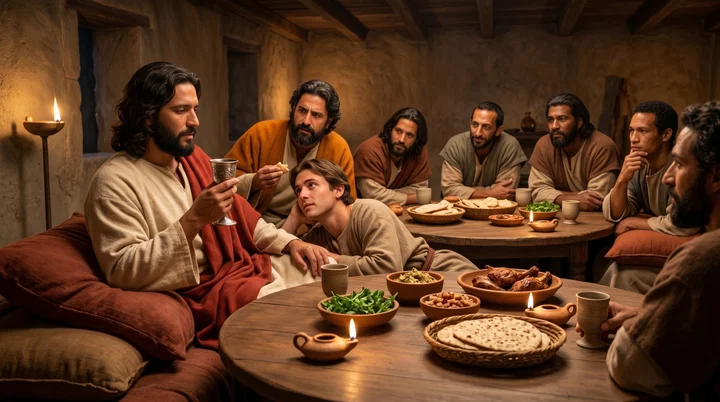
Cross-references 20 of 43
- Matthew 26:29
But I say unto you, I will not drink henceforth of this fruit of the vine, until that day when I drink it new with you in my Father’s kingdom.
Jesus likewise promises to drink the fruit of the vine anew in the Father’s kingdom.
- 1 Corinthians 11:26
For as often as ye eat this bread, and drink this cup, ye do shew the Lord’s death till he come.
The supper proclaims Christ’s death until he comes.
- Mark 14:25
Verily I say unto you, I will drink no more of the fruit of the vine, until that day that I drink it new in the kingdom of God.
Both record Jesus’ promise not to drink the fruit of the vine until God’s kingdom comes.
- 2 Timothy 4:1
I charge thee therefore before God, and the Lord Jesus Christ, who shall judge the quick and the dead at his appearing and his kingdom;
Christ’s appearing and kingdom are joined with his judgment.
- 1 Corinthians 15:50-52
Now this I say, brethren, that flesh and blood cannot inherit the kingdom of God; neither doth corruption inherit incorruption.
The kingdom is inherited when the dead are raised and the living are changed to immortality.
- Acts 1:6
When they therefore were come together, they asked of him, saying, Lord, wilt thou at this time restore again the kingdom to Israel?
The disciples ask whether the kingdom will be restored, showing it had not yet come.
- Exodus 12:6
And ye shall keep it up until the fourteenth day of the same month: and the whole assembly of the congregation of Israel shall kill it in the evening.
The Passover lamb’s appointed slaughter prefigures Christ’s atoning sacrifice and deliverance.
- Acts 14:22
Confirming the souls of the disciples, and exhorting them to continue in the faith, and that we must through much tribulation enter into the kingdom of God.
Both place the kingdom’s coming ahead, after Christians pass through tribulation.
- Luke 12:32
Fear not, little flock; for it is your Father’s good pleasure to give you the kingdom.
Both promise the future kingdom to waiting disciples.
- Matthew 6:10
Thy kingdom come. Thy will be done in earth, as it is in heaven.
Both present God’s kingdom as still future.
- 1 Corinthians 11:25
After the same manner also he took the cup, when he had supped, saying, This cup is the new testament in my blood: this do ye, as oft as ye drink it, in remembrance of me.
Both describe Jesus’ cup at the ordinance and its connection to his blood.
- Exodus 12:15
Seven days shall ye eat unleavened bread; even the first day ye shall put away leaven out of your houses: for whosoever eateth leavened bread from the first day until the seventh day, that soul shall be cut off from Israel.
The unleavened Passover bread corresponds to the unfermented fruit of the vine.
- John 13
Now before the feast of the passover, when Jesus knew that his hour was come that he should depart out of this world unto the Father, having loved his own which were in the world, he loved them unto the end.
John’s account is a parallel of Jesus’ final meal with his disciples.
- Revelation 19:7-9
Let us be glad and rejoice, and give honour to him: for the marriage of the Lamb is come, and his wife hath made herself ready.
Describes the supper Christ celebrates with his saints.
- James 2:5
Hearken, my beloved brethren, Hath not God chosen the poor of this world rich in faith, and heirs of the kingdom which he hath promised to them that love him?
Both present the kingdom as a promised future inheritance.
- Matthew 26:28
For this is my blood of the new testament, which is shed for many for the remission of sins.
The cup signifies Christ’s blood shed for remission of sins.
- Luke 22:30
That ye may eat and drink at my table in my kingdom, and sit on thrones judging the twelve tribes of Israel.
Jesus promises his disciples a place at his table in the kingdom.
- Revelation 11:15
And the seventh angel sounded; and there were great voices in heaven, saying, The kingdoms of this world are become the kingdoms of our Lord, and of his Christ; and he shall reign for ever and ever.
The kingdom comes when the kingdoms of the world become Christ’s.
- Daniel 7:27
And the kingdom and dominion, and the greatness of the kingdom under the whole heaven, shall be given to the people of the saints of the most High, whose kingdom is an everlasting kingdom, and all dominions shall serve and obey him.
The saints receive an everlasting kingdom, corresponding to the coming kingdom of God.
- Luke 23:42
And he said unto Jesus, Lord, remember me when thou comest into thy kingdom.
The thief asks to be remembered when Jesus comes into his kingdom.
Commentary
Each commentary is drawn from primary sources: the writings of Ellen G. White and Adventist pioneers and periodicals. Each commentary is separate. Its own words are not a quotation; follow the references to read the source passages.
Ellen G. White
15 sources
In the upper chamber at the Passover meal just before His suffering, after sharing the cup with His disciples He declared that He would drink of the fruit of the vine no more until the kingdom of God should come.5RED 4.2–5.13SP 83.2–84.1Ms 54, 1897, par. 1–2Ms 106, 1903, par. 8–11 That meal was virtually the last Passover ever kept, for type was to meet antitype in the death of the Lamb of God for the sins of the world, and in so speaking He closed the old feast.5RED 4.2–5.13SP 83.2–84.1ST May 23, 1878 At that same supper He instituted the Lord's Supper to take the place of the Passover as He was about to offer Himself as the sacrifice to which all the old ceremonies pointed.5RED 4.2–5.13SP 83.2–84.1Ms 35, 1897, par. 1–2 The cup represents His blood shed to cleanse from sin and save all who receive Him, keeping His followers' dependence on that sacrifice in remembrance until He drinks it new with them in God's kingdom.1SP 202.2–203.2Ms 19, 1897, par. 30–33Ms 35, 1897, par. 1–2DA 652.1–2 The cup He gave contained pure, sweet, unfermented juice of the grape, even as the Passover bread was unleavened, for He would place no intoxicating drink before any, in harmony with His whole life of self-denial against appetite.Ms 106, 1903, par. 8–11COS 106.1–5SG3 227.1
Setting and Words
The words were spoken to the disciples in the upper chamber at the Passover meal eaten just before His suffering and crucifixion, after sharing the cup with them.5RED 4.2–5.13SP 83.2–84.1Ms 54, 1897, par. 1–2Ms 19, 1897, par. 30–33DA 642.3–4 At that supper He took the cup, gave thanks, and told the disciples to divide and share it among themselves.Ms 54, 1897, par. 1–2Ms 106, 1903, par. 8–11COS 106.1–5Ms 19, 1897, par. 30–33 He then declared that He would not drink of the fruit of the vine again until the kingdom of God should come.5RED 4.2–5.1Ms 54, 1897, par. 1–2Ms 106, 1903, par. 8–11COS 106.1–5DA 642.3–4
He spoke while troubled in spirit and weighed down by what lay ahead.3SP 83.2–84.1ST May 23, 1878 Something weighed heavily on His mind as He foresaw His coming baptism of suffering.3SP 83.2–84.1ST May 23, 1878 He grieved over the ingratitude and cruelty of those He came to save and the terrible fate awaiting them.3SP 83.2–84.1ST May 23, 1878 Christ was soon to receive His full baptism of suffering, and the few quiet hours between Him and Gethsemane were to be spent for the benefit of His disciples.ST May 23, 1878
Passover Fulfilled and Replaced
This meal was virtually the last Passover ever to be celebrated, because type was to meet antitype in the slaying and death of the Lamb of God for the sins of the world and the redemption of fallen humanity.5RED 4.2–5.13SP 83.2–84.1ST May 23, 1878SG3 225.1 In saying he would not drink of the fruit of the vine until the kingdom of God should come, he closed the old feast.ST May 23, 1878
At this same last Passover he instituted the Lord's Supper to take the place of the Passover.5RED 4.2–5.13SP 83.2–84.1Ms 35, 1897, par. 1–2ST May 23, 1878SG3 227.1 The new service was established as the enduring memorial of his sacrifice for his followers, looking toward the coming kingdom as its future fulfillment.Ms 35, 1897, par. 1–2DA 652.1–2SG3 227.1 He connected the new service with the old as he was about to offer himself as the sacrifice to which the old ceremonies pointed.DA 652.1–2
By observing the divinely appointed Passover in obedience to Jewish law and all its ordinances and connecting the Lord's Supper with it, he identified himself with the paschal lamb as its great antitype.5RED 48.1ST Jul 4, 1878 The Passover commemorated Israel's deliverance from Egypt and typified the great salvation he brings.SG3 225.15RED 48.1ST Jul 4, 1878 As the innocent lamb slain in Egypt whose blood sprinkled on the doorposts caused the destroying angel to pass over the homes of Israel, so he as the sinless Lamb of God by his merits alone averts the judgment and condemnation of fallen man.5RED 48.1ST Jul 4, 1878
Cup, Kingdom and Purity
The cup stands for His blood, shed to cleanse from sin and to save all who come to Him for pardon and receive Him as Saviour.1SP 202.2–203.2 The supper keeps His followers' dependence on that cleansing blood and His sacrifice in remembrance.1SP 202.2–203.2DA 652.1–2 It replaced the Passover and became the enduring memorial of His sacrifice, looking toward the coming kingdom as its future fulfillment.Ms 35, 1897, par. 1–2DA 652.1–2 The saying points forward to a future time when He will again drink the fruit of the vine new with them in God's kingdom, and will not drink again until that kingdom comes.1SP 202.2–203.2Ms 19, 1897, par. 30–33Ms 35, 1897, par. 1–2SG3 227.1
The cup He gave as the symbol of His own blood contained pure, sweet, unfermented juice of the grape with no fermentation.Ms 106, 1903, par. 8–11COS 106.1–5SG3 227.1 Just as the Passover bread contained no leaven, so the wine was without fermentation.Ms 106, 1903, par. 8–11 It was the same pure juice He had provided at the marriage feast at the beginning of His ministry.Ms 106, 1903, par. 8–11 At that last Passover He took that sweet wine, gave thanks, and told the disciples to divide and share it among themselves.Ms 106, 1903, par. 8–11COS 106.1–5
He would not place intoxicating drink before anyone, because it tempts and ministers to evil.Ms 106, 1903, par. 8–11 The sacramental service was designed to be soul-refreshing and life-giving.Ms 106, 1903, par. 8–11 His refusal agrees with His warning that wine mocks and strong drink rages.Ms 106, 1903, par. 8–11 It agrees also with His whole life of self-denial, teaching subjection of the lower nature and breaking the power of appetite that beclouds reason and benumbs spiritual perception.Ms 106, 1903, par. 8–11
Sources
Pioneers and periodicals
73 sources
At the Passover supper on the night he was betrayed, Jesus told his disciples he would drink no more of the cup before him until the kingdom of God should come, thereby closing the old Passover feast as type met antitype in his death and giving the Lord's Supper in its place.ST May 23, 1878ST Nov 19, 1912ST Mar 3, 1909RH Jan 28, 1862ST Jan 25, 1910 The drink he named the fruit of the vine is simply the pure, unfermented juice of the grape, not intoxicating wine, for fermentation is decay and alcohol is no more the fruit of the vine than whisky is the fruit of the cornfield.ST Feb 10, 1881ST Jun 9, 1890ST Jul 8, 1889ST Aug 24, 1888ST Feb 7, 1878 The kingdom he meant had not yet come, but is the future everlasting kingdom of glory to be set up at his return when the saints are made immortal and inherit it.RH May 9, 1854RH Dec 23, 1852RH Oct 31, 1854RH Feb 10, 1874RH Apr 9, 1857 He will then drink it new with his people at the marriage supper of the Lamb in the Father's kingdom, in the New Jerusalem, after he has received them into his presence.ST Oct 22, 1894ST Sep 26, 1878ST May 25, 1882ST Apr 5, 1883RH Dec 23, 1862 Until then his followers are to keep the bread and the pure cup often as a solemn memorial of his broken body and shed blood, showing his death till he come.ST May 27, 1880ST Dec 30, 1889RH May 27, 1873RH Dec 13, 1870ST Dec 11, 1879
Setting at Passover
The words were spoken in the upper chamber at the Passover supper on the night of betrayal, identified as Thursday night, the night before the crucifixion.ST May 23, 1878RH Jan 28, 1862ST Jan 25, 1910ST May 11, 1915 Jesus was troubled in spirit and weighed down by what lay ahead, with only a few quiet hours between him and Gethsemane to spend for the benefit of his disciples, soon to receive his full baptism of suffering.ST May 23, 1878 His death the next day completed the greatest act in the plan of salvation, without making that sixth day sacred.ST May 11, 1915 They belong to the account of his eating the Passover with his disciples at its appointed time, after the lambs had been slain on the fourteenth day, and their place there helps establish that chronology but gives no further explanation of the kingdom or the promised abstinence.RH Feb 5, 1914ST Apr 2, 1912
The Passover account continues through this verse and the institution of the Lord's Supper follows afterward.ST Nov 19, 1912 This cup comes before the bread and before the separate cup after supper that he identifies with the new covenant in his blood, and it is identified as one of the Passover cups with his promise not to drink the fruit of the vine again until the kingdom of God comes.ST Nov 22, 1883 In saying he would not drink again until the kingdom comes, he closed the old feast at virtually the last Passover ever celebrated, because type was to meet antitype in the slaying of the Lamb of God for the sins of the world, and at this last Passover the Lord's Supper was instituted.ST May 23, 1878 The promise refers to not again eating and drinking with the disciples in that particular meal and fellowship, not to the Passover institution or its fulfillment as a type, since the Passover sacrifice was fulfilled in his death.RH May 10, 1864
Wine was used in the later observance of the Passover, though wine was not required by the original instructions for the Passover.ST Feb 22, 1899 The supper with its bread and cup, his words over them giving the meaning of his broken body and blood of the new testament to be remembered and shown forth till he come, and his betrayal that same night, is recorded in all four Gospels, distinctly in three with the sharing of bread and wine and his language concerning it and his betrayal that same night, and confirmed by Paul with the same bread, cup, words, and night directly from the Lord, and the precise agreement of these separate witnesses proves their competence to testify to its truth.RH Jan 28, 1862 The passage is part of the chapter recounting the institution, which grew out of that farewell meeting rather than beginning with a formal proclamation or written rule.ST Oct 28, 1913ST Jul 21, 1898
At first reading the united testimony of Matthew, Mark, and Luke indicates Judas was present at the institution and partook, so settling the question requires careful comparison to fix the relative time when the Passover was eaten and when the memorial was instituted after Judas received the sop and went out immediately.RH Jul 29, 1873 By another comparison the institution is placed when Judas was not present and had no part in it, the memorial of the Lord's death, a conclusion bearing on close communion as an objection sometimes urged against it.RH Jul 29, 1873 He shared that Passover with his disciples including Judas despite knowing his deceit and unfaithfulness, showing that sharing a meal with someone does not mean approving that person's wrongdoing.RH Jan 8, 1914
Fruit of the Vine
The drink Jesus shared and promised to refrain from is named the fruit of the vine, meaning simply and only grapes, that is grape juice, the grape's natural product and pure blood of the grape.ST Feb 10, 1881ST Jun 9, 1890ST Jul 8, 1889ST Aug 24, 1888ST Feb 6, 1879 The wording calls it the cup and the fruit of the vine, not wine, distinguishing the grape drink from the broad category of wines that included intoxicating beverages, and it does not sanction intoxicating wine.ST Jul 13, 1915ST May 20, 1880ST Mar 6, 1893 The phrase can mean fresh, unfermented juice pressed from grapes that does not make men drunken, and is consistent with a wholesome drink made from grapes.ST Jul 13, 1915ST Mar 6, 1893
Because the Supper was a substitute for and immediately followed the Jewish Passover, from which all ferment and leaven were put away from the houses and only unleavened bread was eaten, the drink was also without fermentation.ST Jul 13, 1915ST Oct 8, 1894ST Feb 7, 1878 Jews never use any kind of fermented drink for sacred purposes including feasts, marriage feasts, oblations and libations, but employ fresh grapes, unfermented grape juice and raisins as the symbol of benediction, with all fermented things carefully excluded.ST Feb 7, 1878 Fermentation is decomposition, decay, corruption and rottenness, so fermented wine is decomposed wine that could only be called the product of the vine if made from rotten grapes.ST Feb 7, 1878ST Feb 10, 1881ST Jun 9, 1890 The name Jesus gives can never describe fermented wine.ST Feb 10, 1881
Alcohol is not the fruit of the vine but a dangerous deadly evil destroying hundreds of thousands every year and bringing misery to users and to women and children.ST Jul 8, 1889ST Aug 24, 1888 Alcoholic wine is no more the fruit of the vine than whisky is the fruit of the corn-field, and brandy made from grapes is the same in kind though stronger.ST Aug 24, 1888ST Jul 8, 1889 The alcohol in wine is exactly the same as the alcohol in brandy, differing only in quantity, about 14 percent in good wine and about 50 percent in brandy with amounts also varying among wines.ST Aug 24, 1888ST Jul 8, 1889 Therefore no rule can fix how much alcohol may be taken and no fixed alcoholic mixture can qualify as the drink Jesus named.ST Aug 24, 1888ST Jul 8, 1889
Only pure unfermented juice fittingly represents his pure blood without blemish and without spot shed for the remission of sins, and its resemblance to blood made it fitting for the symbolism.ST Oct 8, 1894ST Feb 10, 1881ST Jun 9, 1890 Because fermentation is a process of decay, fermented wine would not properly represent that blood, and to represent so pure a thing by what has decayed would be sacrilege.ST Feb 10, 1881ST Jun 9, 1890 The verse therefore shows what the cup contained at its institution, which Paul does not state when he says Jesus took the cup and called it the new testament in his blood, and it identifies the cup his followers are to use.ST Aug 24, 1888ST Nov 27, 1879RH Apr 16, 1867 The juice should be kept from fermenting and should be known to come from grapes.RH Apr 16, 1867
Those who insist on pure fermented wine claim to use the fruit of the vine yet cannot have assurance they do so, because wine sold as pure wine can contain not a single drop of grape juice.ST Jan 5, 1882 The verse authorizes only unfermented wine for the Lord's Supper and gives no Scriptural foundation for fermented or intoxicating wine for sacramental purposes.ST Feb 22, 1877ST Feb 23, 1915 A manufactured intoxicating compound is excluded, while pure grape juice is suitable.ST Feb 22, 1877 In sacramental practice many churches used unfermented grape juice as the true fruit of the vine free from alcohol, while others preferred alcohol because they considered simple grape juice insufficient to represent Christ's blood.ST Jan 18, 1883ST Oct 24, 1878
Kingdom Still Future
The kingdom of God had not come when Jesus spoke these words just before his death at the last Passover with his disciples, and its coming was still future.RH May 9, 1854RH Dec 23, 1852RH Oct 31, 1854RH Feb 1, 1870ST Jun 25, 1874 He said he would not drink of the fruit of the vine again until it came, which shows the immortal kingdom was not yet set up at that time.RH Feb 10, 1874RH Feb 1, 1870ST Mar 30, 1876RH Sep 22, 1863 The kingdom meant is the kingdom of glory, the future immortal state, distinct from the present means and work of grace.RH Feb 10, 1874ST Mar 30, 1876
It is a future everlasting kingdom to be set up when Christ returns, when the saints receive immortality and inherit it, and it was not established at his first advent.RH Apr 9, 1857RH Oct 27, 1874 It is established when Christ returns, the saints are raised and changed to immortality, judgment takes place, Christ welcomes the saints to inherit the earth, and those who have no share in it are punished.RH Apr 9, 1857RH Oct 27, 1874
Jesus looked forward to that coming kingdom when God will be re-enthroned over His world.RH Jul 24, 1855 That kingdom is wholly God's, not a reform of human kingdoms, its coming marks the passing away of the old and the making of all things new, and Jesus looked toward this reign as the joy set before Him as He endured the cross.RH Jul 24, 1855 The promise points the disciples forward to His coming kingdom where He will drink the fruit of the vine with them, making the kingdom and the Lord's coming future and not events completed at Jerusalem's destruction in A.D. 70, and the continuing practice of the gospel ordinances and preaching confirms that the gospel age had not ended then.ST Nov 25, 1889
Drinking Anew in Kingdom
The promise looks forward to the coming kingdom of God, when Jesus will again drink the fruit of the vine together with his people, placing that drinking in that future kingdom and not in the present state.ST Oct 22, 1894ST May 25, 1882RH Dec 23, 1862 The ordinance itself therefore looks forward to the coming of that kingdom, and it will reach its final fulfillment when those who have received by faith the virtue of his blood are saved and with him in God's kingdom.ST May 25, 1882 The parallel account places this promise at the Passover table and identifies the future occasion as drinking it new with his disciples in his Father's kingdom.ST May 12, 1898
That future drinking is the marriage supper of the Lamb, the feast in the kingdom when the redeemed drink the fruit of the vine with Christ in his heavenly kingdom.ST Sep 26, 1878ST Apr 5, 1883RH Dec 23, 1862 It will take place immediately after the saints are made immortal and received into his presence, when he brings them to the Father's presence in the Father's house, the New Jerusalem, near the throne of God in the holy city.RH Mar 1, 1870ST Sep 26, 1878ST Apr 5, 1883ST Mar 6, 1879 He drinks it anew there with his immortal saints at the marriage supper after bringing them into his Father's presence.ST Mar 6, 1879
It will be the first time he drinks it again since giving the cup representing the new covenant in his blood, thus fulfilling his words about that cup.ST Apr 5, 1883ST Mar 6, 1879 It is the grand celebration of his assumption of his own throne and his royal city as the metropolis of his everlasting kingdom, and when it is past he and his saints enter upon the judgment of the wicked.RH Mar 1, 1870ST Sep 26, 1878 This points to the marriage feast after the King comes, raises his people, and takes them to the New Jerusalem, where the resurrected children are guests who witness and share in the feast.ST Aug 22, 1878
Supper Covenant and Passover
Jesus closed the Passover supper and instituted the Lord's Supper in its place, because the Passover pointed back to deliverance from Egypt and forward to deliverance from sin and eternal death and was to end when type met antitype in the slaying of the Lamb of God for the sins of the world.ST May 23, 1878ST Mar 3, 1909 That closing made this virtually the last Passover ever celebrated.ST May 23, 1878 He identified himself as the great antitype of the Passover lamb while obeying the law and observing its divinely appointed ordinances.ST Jul 4, 1878ST Sep 30, 1886 Israel's deliverance typified the salvation he brought, and the lamb's blood that spared Israel, sprinkled on the doorposts in Egypt so the destroying angel passed over the homes of Israel, prefigured the sinless Lamb of God whose merits alone avert the judgment and condemnation of fallen humanity, so that the Passover observance of the priests who rejected him was bitter mockery.ST Jul 4, 1878ST Sep 30, 1886
As part of his words at the covenant meal, this with what follows shows his blood confirmed and ratified the everlasting covenant; because shed after the blood of the old covenant it is called the new covenant, and the cross sealed it forever.ST Jan 16, 1893 The institution records the Supper as a memorial of his broken body and shed blood, meant to bring his death vividly before the mind and to show it till he comes.RH May 27, 1873 Before his death it was observed in faith that he would die for them, and after his death it is observed in memory of him who has already died.RH May 27, 1873ST Dec 11, 1879 Jesus commanded the disciples to eat the bread and drink the fruit of the vine in remembrance of him, making the Supper an outward duty plainly enjoined, not to be rejected for an inward form of worship.ST May 27, 1880ST Nov 3, 1909
He first drank himself and so set an example, and his promise of abstinence until the kingdom of God comes does not cancel the ordinance, for he commanded his followers to keep eating the bread and drinking the cup to show his death till he comes when about to leave them without his bodily presence.ST Nov 3, 1909 Partaking according to the gospel plan commemorates the Saviour's death but does not earn pardon, justification, or salvation; it acknowledges the believer's need for them.ST Aug 13, 1896 The ordinance is designed for his true followers alone, the true children of God and true Christians, not for worldlings nor for those living in sin and disgracing his name.RH May 27, 1873 He gave the emblems only to his own chosen disciples on a special private occasion in a private room apart from the crowd, not as a promiscuous meal open to all like the feeding of the five thousand with five loaves and two fishes.RH May 27, 1873
Together with the ordinance of humility it is what Christians should celebrate instead of the Passover whose time has served, or Easter which is a heathen institution.ST Mar 3, 1909ST Mar 3, 1909 It is to be celebrated acceptably only by those living in obedience to God and at peace with the brethren.ST Mar 3, 1909 It is a memorial of both his crucifixion and his coming, to be kept with unleavened bread and unfermented wine representing his body and blood, with no fixed time appointed for its celebration.ST Mar 3, 1909 Because explicitly described and instructed, it serves as an example of an established Christian ordinance, unlike baptism on behalf of the dead, for which no apostolic instruction or practice is recorded.ST May 13, 1903
Observance and Application
The verse belongs to the account of the Lord's Supper as an ordinance commanded to be kept in remembrance, whose emblems recall death and suffering and which is to be observed often as a solemn memorial.ST Dec 30, 1889RH Dec 13, 1870 The breaking of bread was celebrated on Thursday evening, which proves it was not confined to the first day of the week and that there is no requirement to break bread on that day.ST Jan 13, 1881 Instituted on a week-day night and not on Sunday, its timing gives no command and no precedent binding communion or worship to Sunday, a church has the right to celebrate on Saturday or any week-day, and celebration on Sunday is as acceptable as any other day but cannot be imposed as church duty on a scriptural basis.ST May 27, 1875
The communion emblems commemorate death until the coming rather than commemorating the resurrection, and the supper is not confined to a particular day of the week. Celebrated on the night before the crucifixion, identified as Thursday night, it was followed the next day by death completing the greatest act in the plan of salvation, and those events did not make that sixth day sacred.ST May 11, 1915 What was in the cup at its institution was the fruit of the vine, which is simply and only grapes, and to drink of it is to drink grape juice.ST Aug 24, 1888 Market wine is not the fruit of the vine but a mixture of grape or other vegetable juice with water and sugar partly turned into alcohol by fermentation, and alcohol is not the fruit of the vine, being no more the fruit of the vine than whisky is the fruit of the corn-field, while brandy made from grapes is the same in kind though stronger, so no rule can fix how much alcohol may be taken.ST Aug 24, 1888
Alcohol is a dangerous deadly evil destroying hundreds of thousands every year and bringing misery to users and to women and children, and alcoholic wine at what was called the Supper has ruined souls by arousing uncontrollable appetite.ST Aug 24, 1888 To make an alcoholic mixture that prepares multitudes for drunkards' graves represent the sacred blood of the everlasting covenant of peace and good-will is shocking, and such an element must not be brought to holy communion lest it prove a snare to a soul.ST Aug 24, 1888 The Supper was a substitute for and immediately followed the Jewish Passover, from which all fermented things are carefully excluded, and no kind of fermented drink is ever used for sacred purposes including feasts, marriage feasts, oblations and libations, but fresh grapes, unfermented juice and raisins are employed as the symbol of benediction.ST Feb 7, 1878 Fermentation is always a symbol of corruption, decay and rottenness, indeed decomposition and decay, so fermented wine is decomposed wine that could only be called the product of the vine if made from rotten grapes, and the name given to the contents of the cup can never describe fermented wine.ST Feb 7, 1878ST Feb 10, 1881ST Jun 9, 1890 The claim that Christ in this cup provided or encouraged the drunkard's drink must be abandoned, for he came to save that which was lost.ST Feb 7, 1878
Only pure unfermented juice fittingly represents pure blood without blemish and without spot shed for remission of sins, and its resemblance to blood made it fitting for the symbolism, while to represent so pure a thing by what has decayed would be sacrilege.ST Feb 10, 1881ST Jun 9, 1890 Christ's words and example therefore call for keeping the ordinance in the proper manner as he walked, with what is pure and unfermented.ST Feb 10, 1881ST Jun 9, 1890 The promise also points to the coming kingdom of God as the time when believers who part now may meet again, with no more painful partings.RH Nov 25, 1858
Sources