Mark 14:25
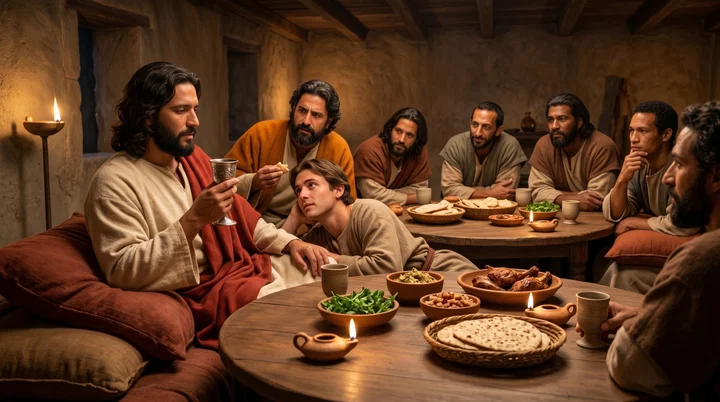
Verily I say unto you, I will drink no more of the fruit of the vine, until that day that I drink it new in the kingdom of God.
Translations
Truly I say to you, I will drink no more of the fruit of the vine, until that day that I drink it new in the kingdom of God.
King James Version, KJV Cambridge Paragraph Bible
Verily I say unto you, I will drink no more of the fruit of the vine, until that day that I drink it new in the kingdom of God.
Verily I say to you, I will drink no more of the fruit of the vine, until that day that I drink it new in the kingdom of God.
Verily I say unto you, I will no more drink of the fruit of the vine, until that day when I drink it new in the kingdom of God.
Verily I say unto you, I shall no more drink of the fruit of the vine, until that day when I drink it new in the kingdom of God.
verily I say to you, that no more may I drink of the produce of the vine till that day when I may drink it new in the reign of God.'
Verily I say to you, I will no more drink at all of the fruit of the vine, until that day when I drink it new in the kingdom of God.
Verily, I say unto you—No more, will I in anywise drink of the fruit of the vine, until that day when I shall be drinking it new, in the kingdom of God.
Berean Standard Bible, Majority Standard Bible
Truly I tell you, I will no longer drink of the fruit of the vine until that day when I drink it anew in the kingdom of God.”
Most certainly I tell you, I will no more drink of the fruit of the vine until that day when I drink it anew in God’s Kingdom.”
Truly I say to you, I will take no more of the fruit of the vine till the day when I take it new in the kingdom of God.
Verely I say vnto you, I wil drinke no more of the fruit of ye vine vntill that day, that I drinke it newe in the kingdome of God.
Douay-Rheims (Challoner revision)
Amen I say to you, that I will drink no more of the fruit of the vine, until that day when I shall drink it new in the kingdom of God.
Pictures
Cross-references
- Matthew 26:29
But I say unto you, I will not drink henceforth of this fruit of the vine, until that day when I drink it new with you in my Father’s kingdom.
Jesus promises to drink the fruit of the vine anew in his Father’s kingdom.
- Luke 22:18
For I say unto you, I will not drink of the fruit of the vine, until the kingdom of God shall come.
Records the same promise not to drink the fruit of the vine until God’s kingdom comes.
- 1 Corinthians 11:26
For as often as ye eat this bread, and drink this cup, ye do shew the Lord’s death till he come.
The Supper proclaims Christ’s death until he comes.
- Revelation 19:9
And he saith unto me, Write, Blessed are they which are called unto the marriage supper of the Lamb. And he saith unto me, These are the true sayings of God.
The coming kingdom feast is the Lamb’s marriage supper, where the invited are blessed.
- 1 Corinthians 11:25
After the same manner also he took the cup, when he had supped, saying, This cup is the new testament in my blood: this do ye, as oft as ye drink it, in remembrance of me.
Refers to the cup at the Lord’s supper.
- Luke 22:19-20
And he took bread, and gave thanks, and brake it, and gave unto them, saying, This is my body which is given for you: this do in remembrance of me.
Parallel account of Jesus instituting the supper.
- Matthew 26:28
For this is my blood of the new testament, which is shed for many for the remission of sins.
Christ identifies the cup with his blood shed for remission of sins.
- 1 Corinthians 10:16
The cup of blessing which we bless, is it not the communion of the blood of Christ? The bread which we break, is it not the communion of the body of Christ?
Defines the cup as a blessing shared in communion with Christ.
- Exodus 12:14
And this day shall be unto you for a memorial; and ye shall keep it a feast to the LORD throughout your generations; ye shall keep it a feast by an ordinance for ever.
The Passover feast memorialized Israel’s deliverance, which Jesus connects with drinking anew in God’s kingdom.
- Luke 22:30
That ye may eat and drink at my table in my kingdom, and sit on thrones judging the twelve tribes of Israel.
Describes the redeemed eating and drinking at Christ’s table in his kingdom.
- John 13:18-30
I speak not of you all: I know whom I have chosen: but that the scripture may be fulfilled, He that eateth bread with me hath lifted up his heel against me.
Cited as an account of the same meal.
- Revelation 19:7
Let us be glad and rejoice, and give honour to him: for the marriage of the Lamb is come, and his wife hath made herself ready.
same marriage completion Mark 14:25 fulfills
- 1 Corinthians 10:21
Ye cannot drink the cup of the Lord, and the cup of devils: ye cannot be partakers of the Lord’s table, and of the table of devils.
Contrasts the Lord’s cup with the cup of devils.
- Deuteronomy 32:14
Butter of kine, and milk of sheep, with fat of lambs, and rams of the breed of Bashan, and goats, with the fat of kidneys of wheat; and thou didst drink the pure blood of the grape.
Names the pure blood of the grape, used to explain the fruit of the vine.
Commentary
Each commentary is drawn from primary sources: the writings of Ellen G. White and Adventist pioneers and periodicals. Each commentary is separate. Its own words are not a quotation; follow the references to read the source passages.
Ellen G. White
2 sources
Mark 14:25 belongs to the establishing of the Lord's Supper as the great memorial.Ms 19, 1897, par. 1–2DA 652.1–2 It was spoken within the Passover meal at the transition from the old Passover festival to the new service Jesus instituted.DA 652.1–2 As He spoke, He gave bread as His body and the cup as His blood of the new covenant shed for many.Ms 19, 1897, par. 1–2
The new service instituted there is a memorial of His sacrifice.Ms 19, 1897, par. 1–2DA 652.1–2 That memorial is to be observed by His followers in all lands and through all ages.DA 652.1–2 In it He promised that He would drink no more of the grape product until He drinks it new in the kingdom of God.Ms 19, 1897, par. 1–2DA 652.1–2 What that promised future drinking in the kingdom will involve is not further explained.DA 652.1–2
The institution was closed with a hymn rising heavenward from the disciples before they went out to the Mount of Olives.Ms 19, 1897, par. 1–2 In that going forth, Christ as leader of salvation made Himself a sacrificial offering, the giver of life becoming the leader of martyrs.Ms 19, 1897, par. 1–2
Sources
Pioneers and periodicals
46 sources
At his final Passover meal on the night before his crucifixion, Jesus took bread as his body and the cup as his blood of the new testament shed for many, and instituted the Lord's Supper as a memorial of his death to be observed until he comes.ST May 13, 1889CO 42.7–43.1ST Jan 3, 1884ST Mar 10, 1909RH Jan 28, 1862 The cup he called the fruit of the vine is the pure blood of the grape, fresh unfermented grape juice, not fermented alcoholic wine which is produced by decay and is no longer simply fruit.ST Feb 10, 1881ST Jul 8, 1889ST Jun 9, 1890ST Aug 24, 1888ST Feb 6, 1879 That pure juice fittingly represents his pure, spotless blood shed for the remission of sins and his life given for mankind.ST Oct 5, 1882ST Oct 8, 1894ST Nov 27, 1879ST Jul 13, 1915 In vowing to drink no more of it until he drinks it new in the kingdom of God, he pointed the ordinance forward to the future shared banquet with his disciples, the marriage supper of the Lamb at his second coming and everlasting kingdom of glory.ST Mar 25, 1880ST Jul 7, 1890RH Dec 23, 1862ST May 12, 1898ST May 13, 1889 The ordinance therefore is to be kept with unfermented juice only, with no intoxicating liquor in the cup, as a witness to his death and to his promised return.ST Aug 24, 1888ST May 20, 1880RH Sep 3, 1908ST Feb 23, 1915ST Jan 18, 1883
Passover Setting and Sequence
The saying belongs to the final Passover meal just before Jesus' death.ST May 13, 1889 That Passover recalled Israel's deliverance from Egypt and pointed to the fuller deliverance from sin the Messiah would bring.ST May 13, 1889 At this meal Jesus established a memorial to show his death until he returns.ST May 13, 1889
It is part of the Last Supper account when Jesus shared bread and wine with his disciples before his betrayal that same night.RH Jan 28, 1862 It is part also of the account of his last hours, crucifixion and resurrection giving clear, definite particulars not given by the other evangelists.ST Mar 10, 1909 It belongs to his celebration of the Supper with the disciples on the night before his crucifixion, identified as Thursday night.ST May 11, 1915 The next day, Friday, he died, completing the greatest act in the plan of salvation, which did not make that day sacred.ST May 11, 1915
It belongs to the Supper portion of the Passover night that comes after sitting down to supper and after the designation of the betrayer.ST Nov 15, 1883 Matthew and Mark give these events in proper order though omitting much else, Luke records the strife among the disciples which they omit, John records the washing of feet which the others omit, and John's account is the most complete in detail and gives the framework for ordering the whole evening.ST Nov 15, 1883 These events immediately connected with Christ's death are of the greatest interest in his earthly ministry because everything centers on his death and all hope depends on it.ST Nov 15, 1883 Like every act of Christ it is important and to be studied most carefully and reverently, with the order of the last supper located by careful study to realize its full import.ST Nov 15, 1883
It was spoken within the final meal shared with the disciples, after which they joined in singing a solemn hymn about Christ's redeeming love.STST Jun 18, 1885 Judas had stayed for the meal but did not remain to sing, and this was the last hymn they sang with Jesus.STST Jun 18, 1885 It belongs to Christ's institution of the supper, the divine memorial of the Lord's death also called the communion.RH Jul 29, 1873 Those who held that Judas had no part in it taught that he was not present when Christ instituted it, raised as an objection against close communion.RH Jul 29, 1873
Meaning of Fruit of Vine
The communion cup is the fruit of the vine, meaning the pure blood of the grape, pure unfermented grape juice, and it is not called wine.ST Feb 10, 1881ST Jun 9, 1890ST Feb 6, 1879ST Feb 22, 1877ST Jan 18, 1883 That plain juice fully represents the blood of Christ, so fermented wine containing alcohol is unnecessary, and what is used is true fruit of the vine free from alcohol.ST Feb 6, 1879ST Jan 18, 1883ST Oct 24, 1878 The fruit of the vine means grapes or their juice, freshly pressed unfermented grape juice.ST Jul 8, 1889ST Aug 24, 1888ST Feb 6, 1879ST Jul 13, 1915 Alcoholic wine made by fermentation is not the fruit of the vine even when made from grapes, because alcohol is produced by fermentation rather than being the fruit itself, just as whisky is not the fruit of the cornfield and brandy made from grapes is not therefore the fruit of the vine for the Supper.ST Jul 8, 1889ST Aug 24, 1888ST Feb 6, 1879ST Jul 8, 1889 Since the alcohol in wine and brandy is the same and wines vary in alcohol content, there is no basis for deciding how much alcohol would be acceptable in the communion cup.ST Jul 8, 1889
The wording avoids the broad term wine, which can include both intoxicating and nonintoxicating grape beverages, and does not sanction intoxicating wine.ST Jan 5, 1882ST Mar 6, 1893ST May 20, 1880 Wine made without any grape juice cannot be assured to be the drink named, since the drink named is wine made from grapes.ST Jan 5, 1882 The words fruit of the vine do not by themselves settle fresh juice versus fermented wine, though a wholesome health-giving drink is more likely than liquor that could make people drunk.ST Mar 6, 1893ST May 20, 1880 The cup held unleavened, unfermented grape juice and certainly no fermented wine, because the Supper was held in connection with Passover when leaven and ferment were removed from Jewish homes.ST Oct 8, 1894ST Jul 13, 1915ST Oct 8, 1894ST Feb 7, 1878 The Levitical law permitted no leaven or ferment as processes of decay, consistent with the Jewish use of unfermented wine, fresh grapes and raisins at sacred feasts, and the liquid is called cup and fruit of the vine, not wine.ST Oct 8, 1894ST Oct 8, 1894ST Feb 7, 1878
The pure juice fittingly pictures and represents Christ's blood shed for mankind for the remission of sins, as a fitting symbol of his life-giving blood.ST Oct 8, 1894ST Nov 27, 1879ST Jul 13, 1915ST May 20, 1880 It matches blood in the element that holds it together and in the nourishing element in nearly the same proportion.ST Oct 8, 1894 Fermented wine has begun to decay and cannot properly represent Christ's pure, spotless, unblemished blood.ST Nov 27, 1879ST Feb 10, 1881ST Jun 9, 1890 Alcoholic wine is poison and can awaken the appetite for drink, and using decomposed wine to represent that blood would be sacrilegious.ST Nov 27, 1879ST Jun 9, 1890 The fruit of the vine was taken in a cup and given by Jesus to all the disciples to drink as an emblem of his blood, and together with unleavened bread broken and given as an emblem of his broken body this act instituted the Lord's Supper.ST Oct 5, 1882
Institution of Communion Ordinance
The verse is part of the account of how the communion ordinance was delivered to the church, and its form is to be followed when communion is celebrated.CO 42.7–43.1 It records the institution with literal emblems of his literal death, so observing the ordinance means following that example and partaking of those emblems.ST Jan 3, 1884 With its context it shows Jesus instituting his supper in the evening as they ate, taking bread and giving it as his body, taking the cup and giving it as his blood of the new testament shed for many, and vowing to drink no more of the fruit of the vine until he drinks it new in the kingdom of God. It is one of the accounts to be searched to decide whether Jesus commanded the supper to be commemorated in the evening and in the evening only.
The verse identifies the Lord's Supper as an ordinance Jesus commanded his disciples to observe in remembrance of him.ST Dec 30, 1889 Its observance is commanded and consists of bread and the fruit of the vine and is to continue, but the verse is not used to establish when or how often it must be celebrated.ST Dec 30, 1889 It belongs to the institution of the Lord's Supper as a memorial of Jesus' death given privately to his chosen disciples, not a meal for the crowd.RH May 27, 1873 The emblems are intended for his true followers, not for worldlings or those living in sin and disgracing his name.RH May 27, 1873 The account shows the Lord's Supper instituted on a weeknight, and supplies no command or precedent requiring communion to be observed on Sunday.ST May 27, 1875
Christ ate and drank at the first supper and left an example to follow.ST Nov 3, 1909 His word about drinking no more until the kingdom was spoken because he was about to leave his followers and they would be without his bodily presence.ST Nov 3, 1909 It does not end the Lord's Supper, for his command to eat the bread and drink the cup in remembrance of him and to show his death till he comes keeps the ordinance alive as a religious duty until he comes again, which those who truly love him must obey.ST Nov 3, 1909 The Lord's Supper points forward to Christ's coming and kingdom, when Jesus said he would drink the fruit of the vine again with his disciples in his kingdom.ST Nov 25, 1889 The ordinance therefore witnesses to his future coming and remains part of the gospel until then, rather than having become obsolete at the destruction of Jerusalem in A.D. 70.ST Nov 25, 1889
Future Kingdom Banquet
At the institution of the Lord's Supper Christ pointed forward to a shared meal with his disciples in God's kingdom, looking forward to drinking the fruit of the vine anew with them in fellowship there.ST Mar 25, 1880ST Jul 7, 1890ST May 12, 1898 That occasion is the great supper associated with his second coming, when his people will eat in the kingdom, and the saying sets the Lord's Supper before them as a service pointing ahead to that future gathering and fellowship.ST Jul 7, 1890ST May 12, 1898 The cup then given was the fruit of the vine, unfermented wine, pure unfermented grape juice, consistent with the Passover exclusion of fermented things and the use of unfermented wine, fresh grapes and raisins at sacred feasts.ST Mar 25, 1880ST Feb 7, 1878 It points to the future marriage supper of the Lamb, when the redeemed will drink the fruit of the vine anew with Christ in his heavenly kingdom.RH Dec 30, 1902RH Dec 23, 1862ST May 13, 1889
It is Christ's promise to his disciples that he will drink no more until he drinks it new in the kingdom of God, to be fulfilled at the marriage supper of the Lamb when those called to the supper have so accepted the call as to be entitled to a seat at the banquet.RH Dec 30, 1902 Then they will enter fully into its blessedness and royal bounty with him, a blessedness possessed even now but realized fully then.RH Dec 30, 1902 He looked forward to that drinking anew in view of his promised return to receive his people, and that day will bring the everlasting kingdom of glory, the end of the struggle against sin and eternal victory.ST May 13, 1889 It is also the marriage supper of the Lamb, where the invited guests must be clothed in the wedding garment.ST May 13, 1889
Temperance and Faithful Observance
The verse belongs to the church's use of wine in the sacred ordinance of communion, a use set apart from and contrasted with the condemnation of alcoholic wine as a beverage.ST Jan 26, 1882 It names the drink Jesus will share in the kingdom of God as the fruit of the vine, meaning grape juice, and therefore directs the Lord's Supper to unfermented grape juice rather than alcoholic wine.ST Aug 24, 1888 Alcohol is not the fruit of the vine even when made from grapes, and the wording fruit of the vine avoids the broad term wine, which can cover both intoxicating and nonintoxicating grape beverages.ST Aug 24, 1888ST May 20, 1880 It does not sanction intoxicating wine for the Supper, and fermented wine for sacramental use has no foundation in Scripture.ST May 20, 1880ST Feb 23, 1915
Jesus instituted the Lord's Supper with unfermented wine and authorizes only unfermented wine for that ordinance.ST Feb 23, 1915 The communion cup described does not require fermented wine, for unfermented wine fulfills its meaning and is what churches should use.RH Sep 3, 1908 Plain unfermented grape juice, the true fruit of the vine free from alcohol, fully represents the blood of Christ, so fermented wine containing alcohol is unnecessary.ST Jan 18, 1883ST Oct 24, 1878 Churches should therefore use no intoxicating liquor in the Supper, seek no legal exception to use it, and lead in practical temperance.ST Feb 23, 1915
The cup at the Lord's Supper is the fruit of the grapevine, an emblem of Christ's blood shed for the remission of sins.ST May 20, 1880RH Apr 16, 1867 The grape juice should be pure and as far as possible kept from fermenting.RH Apr 16, 1867 Those who cannot conscientiously use it may use cold water.RH Apr 16, 1867
Sources