Matthew 26:28
For this is my blood of the new testament, which is shed for many for the remission of sins.
Translations
American King James Version, King James Version
For this is my blood of the new testament, which is shed for many for the remission of sins.
for this is my blood of the new testament, which is shed for many for the remission of sins.
For this is my blood of the new testament, which is shed for many for the remission of sin.
for this is my blood of the covenant, which is shed for many unto remission of sins.
for this is my blood of the covenant, which is poured out for many unto remission of sins.
for this is my blood of the new covenant, that for many is being poured out — to remission of sins;
For this is my blood, that of the [new] covenant, that shed for many for remission of sins.
For, this, is my blood of the covenant, which, for many, is to be poured out, for remission of sins.
This is My blood of the covenant, which is poured out for many for the forgiveness of sins.
This is My blood of the new covenant, which is poured out for many for the forgiveness of sins.
for this is my blood of the new covenant, which is poured out for many for the remission of sins.
Take of it, all of you, for this is my blood of the testament, which is given for men for the forgiveness of sins.
For this is my blood of the Newe Testament, that is shedde for many, for the remission of sinnes.
Douay-Rheims (Challoner revision)
For this is my blood of the new testament, which shall be shed for many unto remission of sins.
Pictures
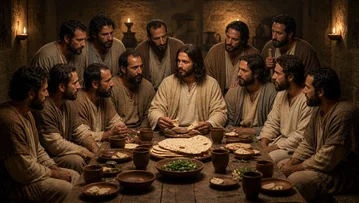
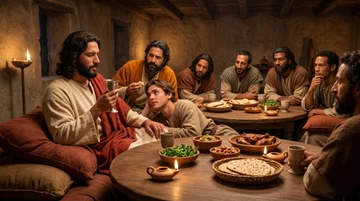
Cross-references 20 of 90
- 1 Corinthians 11:25-26
After the same manner also he took the cup, when he had supped, saying, This cup is the new testament in my blood: this do ye, as oft as ye drink it, in remembrance of me.
The cup recalls Christ’s blood, and eating and drinking proclaim his death.
- Luke 22:19-20
And he took bread, and gave thanks, and brake it, and gave unto them, saying, This is my body which is given for you: this do in remembrance of me.
Jesus institutes the Supper with bread and cup, linking the cup to his sacrificial death and covenant.
- Mark 14:24
And he said unto them, This is my blood of the new testament, which is shed for many.
Jesus identifies the cup as his covenant blood, shed for many.
- Hebrews 9:15
And for this cause he is the mediator of the new testament, that by means of death, for the redemption of the transgressions that were under the first testament, they which are called might receive the promise of eternal inheritance.
Christ mediates the new covenant through his death, redeeming transgressions.
- Hebrews 9:22
And almost all things are by the law purged with blood; and without shedding of blood is no remission.
Remission of sins requires the shedding of blood.
- Exodus 12:13
And the blood shall be to you for a token upon the houses where ye are: and when I see the blood, I will pass over you, and the plague shall not be upon you to destroy you, when I smite the land of Egypt.
Passover blood marked the houses spared from judgment, prefiguring Christ’s blood.
- Jeremiah 31:31-34
Behold, the days come, saith the LORD, that I will make a new covenant with the house of Israel, and with the house of Judah:
Promises the new covenant, including inwardly written law and forgiveness of sins.
- 1 Corinthians 5:7
Purge out therefore the old leaven, that ye may be a new lump, as ye are unleavened. For even Christ our passover is sacrificed for us:
Calls Christ the Passover sacrifice, connecting his death with the Passover meal.
- 1 Corinthians 11:25
After the same manner also he took the cup, when he had supped, saying, This cup is the new testament in my blood: this do ye, as oft as ye drink it, in remembrance of me.
The cup is identified as the new testament in Christ’s blood.
- Hebrews 8:10
For this is the covenant that I will make with the house of Israel after those days, saith the Lord; I will put my laws into their mind, and write them in their hearts: and I will be to them a God, and they shall be to me a people:
Both describe the new covenant and God’s law written in the heart.
- 1 Peter 1:19
But with the precious blood of Christ, as of a lamb without blemish and without spot:
Christ’s precious blood is the spotless sacrifice shed for redemption.
- Daniel 9:27
And he shall confirm the covenant with many for one week: and in the midst of the week he shall cause the sacrifice and the oblation to cease, and for the overspreading of abominations he shall make it desolate, even until the consummation, and that determined shall be poured upon the desolate.
The Messiah confirms the covenant with many.
- Leviticus 17:11
For the life of the flesh is in the blood: and I have given it to you upon the altar to make an atonement for your souls: for it is the blood that maketh an atonement for the soul.
Blood carries life and is given to make atonement.
- Romans 3:25
Whom God hath set forth to be a propitiation through faith in his blood, to declare his righteousness for the remission of sins that are past, through the forbearance of God;
Faith in Christ’s blood brings remission of sins.
- John 1:29
The next day John seeth Jesus coming unto him, and saith, Behold the Lamb of God, which taketh away the sin of the world.
Jesus is the Lamb of God whose shed blood takes away sin.
- John 13:1-17
Now before the feast of the passover, when Jesus knew that his hour was come that he should depart out of this world unto the Father, having loved his own which were in the world, he loved them unto the end.
Foot washing precedes the supper and is linked with communion.
- Exodus 24:8
And Moses took the blood, and sprinkled it on the people, and said, Behold the blood of the covenant, which the LORD hath made with you concerning all these words.
Moses seals the covenant with blood, echoed in Christ’s covenant blood.
- Hebrews 9:16-17
For where a testament is, there must also of necessity be the death of the testator.
The new covenant takes effect through Christ’s death.
- Ephesians 1:7
In whom we have redemption through his blood, the forgiveness of sins, according to the riches of his grace;
Christ’s blood brings redemption and forgiveness of sins.
- 1 John 1:7
But if we walk in the light, as he is in the light, we have fellowship one with another, and the blood of Jesus Christ his Son cleanseth us from all sin.
Christ’s blood cleanses believers from sin.
Commentary
Each commentary is drawn from primary sources: the writings of Ellen G. White and Adventist pioneers and periodicals. Each commentary is separate. Its own words are not a quotation; follow the references to read the source passages.
Ellen G. White
23 sources
At the Passover supper He took the cup, gave thanks, and gave it to the disciples as the emblem of His own blood poured out for many for the forgiveness of sins, the blood that establishes, ratifies, and seals the new covenant.Ms 106, 1903, par. 27–28ST Dec 23, 1908Lt 45, 1896, par. 1–2DA 652.1–2DA 653.2–3 The bread and wine are symbols of His broken body and spilled blood, not changed into His actual body and blood, and the cup is pure unfermented juice of the grape, for fermentation stands for sin and death.Ms 106, 1903, par. 27–28DA 653.2–3GC 59.2HL 113.14SP 63.1 In that meal He set apart the Lord's Supper as the memorial of His sacrifice in place of the Passover and its system of types, to be kept often by His followers in all lands until He comes, keeping His death in remembrance and His return vivid.ST Dec 23, 1908DA 652.1–2DA 659.3–660.1DA 148.4–149.2Ms 35, 1897, par. 8 That death is a full, free, and perfect sin-offering for whoever believes, whose shed blood washes away guilt, cleanses, sanctifies, and renews the soul, and through it reconciliation with God, union with Him through Christ alone, and lasting love between brethren are made possible.ST Dec 23, 1908Lt 45, 1896, par. 1–21SP 201.12SP 103.3–104.2SG3 227.2 It is spoken for the comfort of every needy, tempest-tossed soul, inviting sinners to receive Him, repent, and be cleansed, as shown when even Judas the betrayer was allowed to partake, yet none cherishing pride, variance, and strife can enter its fellowship until every difference is removed in humility and love, and each is to partake publicly and often as a witness that He gave His life to rescue them from death.Ms 106, 1903, par. 27–28Lt 45, 1896, par. 1–2Ms 106, 1903, par. 24–26Ms 35, 1897, par. 8DA 655.4
Institution and Emblems
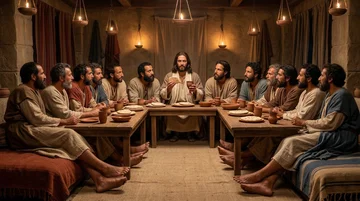
The words were spoken while eating the Passover supper with the disciples, when the cup was taken, thanks given, and it was given to all as the emblem of spilled blood shed for many for the remission of sins.Ms 106, 1903, par. 27–28DA 659.3–660.1COS 113.2 The cross stood just before Him and He walked in its shadow as He spoke.Lt 45, 1896, par. 1–2 After the supper He went with them to Gethsemane where He often prayed, talking with them and teaching them as they walked but becoming strangely silent as they neared the garden.COS 113.2
By connecting the Lord's Supper with the Passover just before His condemnation, He identified Himself as the great antitype of the paschal lamb in full obedience to the Jewish law.3SP 128.1 Israel's deliverance from Egypt typified the great salvation He brought.3SP 128.1 The innocent lamb slain in Egypt whose blood on the doorposts turned away the destroying angel prefigured the sinless Lamb of God whose merits alone avert judgment and condemnation, and whose atoning death fulfilled the type.1SP 201.13SP 128.1
The bread and wine are emblems or symbols representing His broken body and spilled blood.Ms 106, 1903, par. 27–284SP 63.1SG3 227.2Ms 106, 1903, par. 24–26 They are not changed by priests into His actual body and blood.GC 59.24SP 63.1GC88 59.2 The claim that they are so changed is a blasphemous heresy that supplanted the scriptural ordinance with the sacrifice of the mass.GC 59.2GC88 59.2
The cup represents His own unblemished sacrifice by pure juice of the grape untouched by fermentation.DA 653.2–3HL 113.1 Fermentation symbolizes sin and death, so the Passover wine was untouched by it.DA 653.2–3 He did not make intoxicating wine, since doing so would have contradicted His teachings and example, so the wine at the Lord's table should be unfermented.HL 113.1
In the setting of the Passover meal He instituted the Lord's Supper as the memorial of His sacrifice.DA 652.1–2 It replaced the Jewish national festival and the system of types and ceremonies that had pointed to His death.DA 652.1–2 The ordinance is to be observed by His followers in all lands and through all ages and commemorated often, showing forth His death until He comes.DA 652.1–2DA 148.4–149.2Ms 35, 1897, par. 8
Covenant and Forgiveness
The blood spoken of is the blood of the new covenant or testament, and by its shedding that covenant is established, ratified, and sealed for the remission or forgiveness of sins for many.ST Dec 23, 1908DA 652.1–2DA 653.2–3Ms 35, 1897, par. 8Lt 108, 1899, par. 26 The cup received in faith carries power to make peace and cleanse the soul and to restore those afflicted by sin.Lt 108, 1899, par. 26 The supper is to be commemorated often so that believers remember that Christ gave His life for the remission of sins, and each person is to participate publicly as a witness that Christ is a personal Saviour who gave His life to rescue from death.Ms 35, 1897, par. 8
The verse teaches divine redemption through the sacrifice of His own life upon the cross as a sin-offering, a full, free, abundant, and perfect offering shed for the remission of sins.Lt 45, 1896, par. 1–2 That offering is for whosoever believes, including each needy soul, so that believers should not perish but have everlasting life.Lt 45, 1896, par. 1–2 As the provision at the wedding was ample, so salvation provides abundantly for blotting out human iniquity, for the wine there symbolized this shedding of blood which purifies from sin.2SP 103.3–104.2
That shed atoning blood washes away guilt, cleanses, purifies from sin, blots out iniquity, sanctifies, renews and sustains the soul, makes peace, restores those afflicted by sin, and brings final redemption.2SP 103.3–104.2SG3 227.2DA 148.4–149.2Ms 106, 1903, par. 24–26Ms 5, 1889, par. 8–10 Through it fallen people receive redemption and safety from Satan, and the Passover blood that protected Israel prefigured continual dependence on its merits.1SP 201.1 The rites that point to His death nourish the soul only through His power working through faith, and His grace blots out iniquity and renews and sustains the soul.DA 148.4–149.2 Followers learn continual dependence on His blood for salvation when they come to Christ for pardon and receive Him as Saviour, and even the betrayer would have been received and pardoned if he had repented.SG3 227.2Ms 106, 1903, par. 24–26 Sinners may trust the merits of the crucified and risen Saviour rather than wait for a dream or other special sign, for the cross is evidence that Jesus forgives those who repent and His blood cleanses and sanctifies them.Ms 5, 1889, par. 8–10
Through His death reconciliation with God is obtained and His love is made effective, becoming the center of hope.ST Dec 23, 1908 Only His death makes His love efficacious, makes union between souls and God possible through Christ alone, cements love between brother and brother for eternity, and makes His death the ground of joy in looking with joy to His coming and fixing faith upon His sacrifice.DA 659.3–660.1 The words were spoken for the comfort and assurance of every tempest-tossed soul that feels need of a Redeemer and Saviour, when the cross was just before Him and He walked in its shadow.Lt 45, 1896, par. 1–2 Doubting His forgiving love pains His heart that is full of mercy and sympathy, because He gave His precious life that sinners should not perish.Lt 45, 1896, par. 1–2
Remembrance and Participation
The communion service commemorates His death and sacrifice, His betrayal and crucifixion, and was designed to keep His death in remembrance and to keep the hope of His return vivid.ST Dec 23, 1908DA 659.3–660.1SG3 227.2 Remembering that sacrifice sustains the hope of His return, and that hope comforted the disciples in tribulation.ST Dec 23, 1908DA 659.3–660.1 His death is the center of hope and the ground of joy in His second coming, for only through it is reconciliation with God obtained and His love made effective.ST Dec 23, 1908DA 659.3–660.1 The wine symbolizes the blood that cleanses those who come for pardon and receive Him as Saviour, teaching continual dependence on His blood for salvation.ST Dec 23, 1908SG3 227.2
Believers are to look with joy to His coming and fix faith upon His sacrifice.DA 659.3–660.1 He promised He would not drink of the fruit of the vine again until He drinks it new with them in His Father's kingdom.DA 659.3–660.1DA 148.4–149.2 That promise comforts with the hope of reunion, while the rite shows forth His death until He comes and nourishes the soul only through His power working through faith.DA 659.3–660.1DA 148.4–149.2
The blood and the sacrament invite sinners to receive Him, repent, and be cleansed from sin.Ms 106, 1903, par. 24–26DA 655.4 Even Judas the betrayer was present, received the emblems of the broken body and spilled blood, and heard the command to do this in remembrance.Ms 106, 1903, par. 27–28DA 655.4 He sat in the very presence of the Lamb of God brooding over dark purposes and cherishing sullen, revengeful thoughts, yet was allowed to share, showing patience and mercy toward the erring.Ms 106, 1903, par. 27–28DA 655.4 Even Judas would have been received and pardoned if he had repented, for the atoning blood washes away guilt.Ms 106, 1903, par. 24–26
No one cherishing pride, variance, and strife for supremacy can enter into fellowship with God in this communion of His body and blood.Ms 106, 1903, par. 24–26 Before the emblems are partaken every difference between brother and brother must be removed, evil thoughts cleansed, and misunderstandings swept away.Ms 106, 1903, par. 24–26 Christ appointed the ordinance of humility, the memorial of His humiliation, to be observed first to bring the heart into humility and love.Ms 106, 1903, par. 24–26 It gives true appreciation of the service and fitness and preparation to sit with Christ in His kingdom.Ms 106, 1903, par. 24–26 Each person is to participate publicly and often as a witness that Christ is their personal Saviour and gave His life to rescue them from death, remembering that He gave His life for the remission of sins.Ms 35, 1897, par. 8
The verse stands with the sufferings leading to His crucifixion, including His agony in Gethsemane and His betrayal.Ms 43, 1909, par. 8 It stands in the history of Christ falling into the hands of Caiaphas and Pilate.GC 198.2 He falls into those same hands again when earthly power annuls liberty of conscience and brings indignation, alarm, and violence upon those who hold the gospel.GC 198.2
Sources
Pioneers and periodicals
148 sources
On the night he was betrayed at the close of the Passover meal he took the cup as his own blood poured out as life given in death for many to bring forgiveness and release from sin.ST May 18, 1904ST May 12, 1898ST May 17, 1883RH Jul 21, 1868ST May 12, 1898 The word rendered testament means covenant, so he was naming his death the blood by which the new covenant is established, sealed and made effective.ST Jun 6, 1878ST Sep 23, 1913ST Jan 29, 1908RH Jun 9, 1874ST Dec 9, 1897 In that same act he set aside the typical sacrifices and instituted the bread and cup as a continuing memorial to be eaten and drunk in remembrance of him until he comes.RH Jan 8, 1867ST Jan 1, 1885ST Jun 21, 1905ST Mar 27, 1901ST Jan 3, 1884 The bread and wine are emblems and not changed into literal flesh and blood, and the cup is the pure unfermented fruit of the vine fitting to represent blood that is spotless, incorruptible and living.RH Nov 6, 1900ST Apr 19, 1877ST May 18, 1904RH Dec 24, 1914RH May 5, 1874 Through that shed blood sins are forgiven, blotted out and forgotten, the law is upheld rather than abolished, and believers are given a new heart to love and do his will in hope of drinking it new with him in the Father's kingdom.RH Jun 9, 1874ST Aug 17, 1904ST Dec 14, 1904RH Oct 31, 1854
Cup, Blood, and Setting
The cup is the emblem of Jesus' blood, which is his life poured out for many to bring remission or forgiveness of sins, and his death so given is identified as the blood of the covenant.ST May 18, 1904ST May 12, 1898ST May 12, 1898ST May 18, 1904ST May 18, 1904 The wine of the cup is not his literal blood, for his blood had not yet been shed when he spoke, but a memorial sign of the life to be poured out and of the new, everlasting covenant confirmed thereby.ST May 18, 1904ST Oct 5, 1882 The word testament means covenant, so the verse speaks of the blood of the new covenant, shed for many for remission of sins.ST Jun 6, 1878ST Sep 23, 1913ST Jan 29, 1908 It is called new because Christ confirmed it later by his death, not because God's loving purpose began then, for covenant blessings given throughout the ages were already covenant blessings sealed forever by that death.ST Sep 23, 1913ST Jan 29, 1908
The words were spoken at the Passover when Christ instituted the Lord's Supper, after the typical Passover sacrifice was fulfilled.ST Jun 9, 1914ST Jun 21, 1905ST Jun 9, 1898ST May 12, 1898ST Jun 15, 1904 The Passover lamb was the type and Christ himself the real Passover, so when he the Antitype came the type gave way to a memorial of his sacrifice, replacing earlier sacrifices that pointed forward to a Saviour to come with an ordinance showing that a Saviour has come.ST Jun 9, 1898ST Jun 15, 1904ST Aug 13, 1896 At the close of the Passover supper Jesus instituted the cup with the bread as that memorial, identifying it with the new covenant in his blood shed for many for remission of sins.ST Jun 9, 1914ST Jun 21, 1905ST Apr 19, 1877
It was spoken on the night he was betrayed, in an upper chamber in Jerusalem at the close of the Passover meal.RH Jul 8, 1875RH Mar 11, 1862RH Feb 3, 1852RH Jan 28, 1862 It was Thursday evening, the evening beginning the day of crucifixion, after washing the disciples' feet and breaking the bread, with the cup following immediately after the bread with nothing between, and immediately before singing a hymn and going to Gethsemane.RH Jul 8, 1875RH Mar 11, 1862RH Feb 3, 1852ST Feb 4, 1903RH Jan 28, 1862 Jesus himself partook with his disciples, and with all the apostles present, giving by words and example authority for its continued practice.RH Jul 8, 1875RH Feb 13, 1872RH Mar 11, 1862
The institution belongs with betrayal, agony, arrest, trial and crucifixion, and solemnly predicted his death in fulfillment of ancient prophecies of betrayal, suffering and crucifixion exactly fulfilled.ST Mar 27, 1901ST Jan 3, 1884RH Feb 13, 1872ST Sep 3, 1896 The bread and wine are literal emblems of his literal tragic death, and partaking as he and his disciples did proclaims the Lord's death till he come.ST Mar 27, 1901ST Jan 3, 1884ST Dec 30, 1889 The Supper so instituted is a Christian institution given by precept and example, a new institution plainly brought to view and commanded like baptism and foot-washing, to be observed in remembrance of him among all things he commanded to be taught.ST Dec 30, 1889RH Dec 2, 1909RH Mar 9, 1905
Lord's Supper Ordinance
At the close of the Passover supper Jesus instituted the cup together with the bread as a memorial ordinance and Christian institution to be kept in remembrance of him.RH Jan 8, 1867ST Jun 21, 1905RH Oct 21, 1873RH Apr 9, 1872 The cup is the emblem of his blood shed for many for remission of sins, and with the bread it proclaims his suffering and death until he comes, not as a feast but as a solemn memorial.RH Jan 8, 1867ST Jan 1, 1885 It belongs to the Christian faith as baptism does, for believers, and is not for civil government to impose on unbelievers.ST Sep 14, 1882
The Lord's Supper consists simply in partaking of the bread and the wine with nothing more added, and was instituted after the Passover meal was over as something entirely distinct from that supper.ST Jan 1, 1885ST Nov 22, 1883 Eating the bread and drinking the cup are ordinary eating and drinking given a new sacred religious direction as representations of his body and blood, and the express injunction is to use bread and wine in the supper.ST Jun 29, 1882RH Jul 29, 1873 It is a memorial of his offering and not a type like the Passover, recalling his sacrifice and binding his people in life communion while pointing forward to his return to meet his disciples again in God's kingdom.ST Sep 20, 1910
Christ himself partook of the ordinance with his disciples, and his words and example give authority for its continued practice.RH Jul 8, 1875 The eating of bread and wine with baptism by water are the two religious ceremonies from antiquity that he endorsed, the bread and wine kept in memory of him as reformer and Saviour.ST Jun 3, 1875 Its setting no later than Thursday evening, and perhaps Wednesday evening, does not establish a required day or time, for his example and Paul's occur at different times and neither makes the time important or binding.RH Feb 3, 1852ST Jul 12, 1905RH Nov 14, 1865 Observance is to continue as often as believers eat and drink, but when and how often is not told and therefore is not a subject of faith or religious duty, and breaking of bread begun on a weekday evening and afterward celebrated daily does not make a day holy or prove the first day holy.RH Feb 3, 1852 No specific direction fixes the mode of partaking whether kneeling or standing or sitting, nor requires receiving from a priest's hand, though the example favors an evening supper in an upper lighted room with guests reclining and the Master as central figure with no servant in attendance.ST Jun 3, 1875
Every individual who partakes is to drink of the cup as well as eat of the bread, for the supper was instituted under both kinds of bread and cup.RH May 5, 1874RH Nov 29, 1870ST Sep 23, 1875RH Feb 24, 1874 Withholding the wine from the people while the priest alone drinks it and giving communicants only a wafer contradicts the original institution.RH May 5, 1874ST Sep 23, 1875RH Feb 24, 1874 Partaking is a personal duty that another cannot perform by proxy or thereby supply one's spiritual needs, and priests eating and drinking in place of others has no warrant.RH Feb 6, 1879ST Jun 3, 1875
Judas the traitor was pointed out at that last Passover feast and left the company, and those who hold he was absent teach that he left immediately after receiving the dipped sop before the memorial was instituted and alone did not join the hymn.ST Jun 15, 1904STRH May 27, 1873 Those who hold he was present teach that Jesus gave the cup to erring disciples including Judas who had already agreed to betray him and others striving for greatness, not limiting the emblems to those free from every sin but offering them as an appeal to receive him, repent and be cleansed.RH Dec 28, 1911ST Mar 20, 1907 Another person's presence does not make one unworthy to partake, for each must examine his own heart before eating and drinking, and if taken wrongly the responsibility rests with the taker and not with Christ or those administering.RH Nov 20, 1856ST Mar 20, 1907
Pure Unfermented Emblems
The cup is the fruit of the vine, and that means pure unfermented grape juice, never intoxicating wine that makes men drunken, and only such pure juice belongs in the communion cup.RH Nov 6, 1900ST Apr 19, 1877ST Jul 13, 1915ST Oct 8, 1894ST Oct 8, 1894 Because the Supper was instituted during Passover, when leaven and fermented things were forbidden in the home, the wine used was free from fermentation and alcohol.RH Nov 6, 1900ST Apr 19, 1877ST Jul 13, 1915ST Oct 8, 1894ST Oct 8, 1894 Fermented drink was excluded from sacred Jewish feasts, and fermentation symbolized corruption, so no intoxicating wine was provided or encouraged.ST Apr 19, 1877ST Jul 13, 1915ST Feb 7, 1878 The sacred symbol therefore was unfermented grape juice, clarified and refined, not fermented or adulterated.ST Jul 13, 1915ST Feb 7, 1878ST Dec 30, 1880
Fermented wine was shut out because God commanded all leaven in every form to be put out of the homes at Passover, shutting out fermented wine as well as leavened bread.ST Jun 9, 1914ST Jun 18, 1885ST Oct 8, 1894ST Oct 8, 1894 Fermented liquor counts as leaven, which the Old Testament law forbids at Passover, so as an observant Jew Jesus drank no fermented wine at that meal and kept the feast only where everything fermented had been removed.ST Jun 9, 1914ST Jun 18, 1885 The later Jewish custom of drinking fermented wine at the Passover feast, introduced after the return from Babylonian captivity, was a human tradition of the kind that lays aside God's commandment.ST Jun 9, 1914 The bread likewise should be unleavened and the drink unfermented, as fitting symbols of a pure and perfect offering.ST Jun 9, 1914
The cup represents blood shed for many for the remission of sins, and that blood was perfectly pure as of a lamb without blemish and without spot, precious and without blemish, incorruptible and living, so it must be represented by what is most pure.ST Jun 9, 1890ST Feb 10, 1881ST Nov 28, 1892ST May 20, 1880 Fermentation is a process of decomposition and decay, so fermented wine is decomposed wine and cannot truly be called the fruit of the vine unless made from rotten grapes.ST Jun 9, 1890ST Feb 10, 1881ST May 20, 1880 It is sacrilege to represent so pure a thing as Christ's blood by what has decayed, while sweet unfermented wine fittingly represents incorruptible blood.ST Jun 9, 1890ST Feb 10, 1881ST Nov 28, 1892 Blood signifies life, while fermentation is associated with death and corruption, so the living unfermented fruit of the vine appropriately represents the precious blood poured out for forgiveness and for purifying sins and blotting out iniquities.ST Nov 28, 1892ST May 20, 1880ST Dec 30, 1880 The prohibition against offering sacrificial blood with leavened bread in Exodus 23:18 applies to this cup, which represents His blood both before and after His death, and the water made wine points to the same means of salvation, with water representing baptism into His death and pure juice bringing taste into harmony with healthful appetite.ST Dec 30, 1880
Keeping the ordinance in the proper manner is part of walking even as He walked, and this requires preserving grape juice sealed from air to prevent fermenting as much as possible.ST Jun 9, 1890ST Feb 10, 1881RH Apr 16, 1867 The juice is made and preserved in fruit season like other fruit juices, and where it cannot be procured clean good raisins may be boiled and the juice strained out.RH Apr 16, 1867ST Sep 15, 1909 The Supper requires unleavened bread only, never yeast-bread or sponge-bread or sponge-cake, made from flour shortened with olive oil, salted, rolled into thin cakes, cut into half- or three-quarter-inch squares, and baked moderately to be crisp and palatable.ST Sep 15, 1909
The unfermented communion wine contrasts with the fermented wine of the ancient drink-offering, which was added to the sacrifices as a sign that the worshiper welcomed the atoning blood and wholly dedicated the redeemed life to God.ST May 19, 1914 It also contrasts with intoxicating drink forbidden to priests and described as poison, whereas the wine of the Supper is harmless and useful.ST Feb 6, 1879ST May 19, 1914 Alcohol is produced by fermentation or distillation and is not the fruit of the vine, so fermented wine is not what was used or referred to at the Supper.ST Feb 6, 1879ST May 19, 1914ST Feb 23, 1915 Serving fermented wine can endanger people recovering from drunkenness or keep them from the communion table, the verse gives no foundation for using fermented intoxicating liquor in the sacrament, and churches should use only unfermented wine and lead the way in practical temperance instead of seeking an exception for sacramental liquor.ST Feb 6, 1879ST May 19, 1914ST Feb 23, 1915
Symbol Not Literal Change
The bread and the wine are emblems, symbols and memorial signs of a broken body and shed blood, not that literal blood itself.ST May 18, 1904RH Dec 24, 1914RH May 5, 1874RH Jul 11, 1912ST Dec 12, 1911 The cup signifies blood rather than containing it literally, for that blood had not yet been shed when the words were spoken and therefore could not have been physically present in what was handed to the disciples.ST May 18, 1904RH Dec 24, 1914RH Jul 27, 1876 The wine was a memorial to keep the cost of salvation in mind, and partaking is communion with Christ that becomes real and precious when God abides in the life through the Holy Spirit.RH Dec 24, 1914RH Jul 11, 1912
The wording is figurative representation, as in the companion words over the bread, and is not to be pressed into a literal transformation in every case.ST Jun 29, 1882RH Jul 11, 1912RH Jun 17, 1873 Eating and drinking keep their ordinary meaning as actions, while the sacred purpose of the ordinance gives them a new religious direction.ST Jun 29, 1882 Believers feed spiritually by receiving his word, Spirit, mind, principles and life into the soul, and the Supper is an occasional emblem of that continual spiritual feast of feeding on his word and drinking in his Spirit.RH Jul 11, 1912ST Dec 12, 1911ST Jan 9, 1896 That receiving calls for faith that sees his real, divine presence as a present blessing for souls hungering for him.ST Mar 27, 1907
The verse therefore rejects transubstantiation and the real presence, whether in the form that holds his real body present without defining how, or in the form that teaches an inward change by consecration.ST Jan 27, 1914RH May 5, 1874RH Jul 27, 1876ST Nov 18, 1889ST Jan 9, 1896 The fuller definition rejected is that by the priest's words or ceremony of consecration the bread and wine undergo an inward change or conversion into the very flesh and blood of Christ, so that what appears to remain bread and wine is no longer bread and wine but his body and blood with soul and divinity inseparable from them, containing him truly, really and substantially though not perceptibly to the senses, with only the outward qualities or species remaining.ST Mar 4, 1897 The bread and wine remain signs pointing to him and his sacrifice, memorializing it and showing his death until he comes, not a repeated sacrifice that itself saves.ST Jan 9, 1896
The particular Roman claim rejected is that the words Hoc Est enim Corpus Meum over the bread and the words over the wine give the priest power in the sacrifice of the mass to change bread into the true and living body and wine into true blood, to call the God of heaven and earth down from heaven upon the altar to dwell in the tabernacle, to touch Christ with hands, to offer him to the Father, to carry him through the streets to the sick and dying, to receive him into the heart, to nourish the faithful with his precious blood, and to give him to whom they will.RH Aug 4, 1910 That claim is held to make the priest greater than the patriarchs, greater than the prophets who beheld the Redeemer only from afar, and greater than angels and archangels, placing Almighty God in the priest's hands to be handled, carried about and dispensed at pleasure, and bringing Christ down from his place as the one true Mediator between God and man.RH Aug 4, 1910 Against this, the verse concerns blood once given for remission of sins under the new covenant, and it establishes no unbloody sacrifice repeatedly offered by priests nor any wafer to be made an object of worship.ST Mar 4, 1897
Christ instituted the Supper to be administered under both kinds, so that every individual partaking is to drink of the cup as well as eat of the bread.RH May 5, 1874RH Nov 29, 1870 Withholding the cup from the people while the priest drinks it all and giving communicants only a wafer breaks that original institution, as does departing from the instituted form of bread and wine.RH Nov 29, 1870ST Sep 23, 1875RH Feb 24, 1874 The instituted emblems are bread and the fruit of the vine, in contrast with putting water in place of the fruit of the vine.ST Nov 18, 1886 Yet the chalice represents the gift of blood shed for remission of sins, and taking the chalice away cannot take away the believer's hope in his salvation.ST Sep 23, 1875ST Oct 17, 1916
New Covenant Ratified
The blood spoken of is the blood that establishes, dedicates, seals and ratifies the new covenant, just as the blood of sacrificial animals ratified the first covenant, and because a testament is of force only after men are dead the death of the testator was necessary to make it effective, so when Christ died the new testament or covenant was ratified and made of force and the typical sacrifices were brought to an end.RH Jun 9, 1874ST Nov 10, 1881RH Jan 19, 1860ST Oct 1, 1885RH Oct 11, 1915 Since life is in the blood and man by transgression has forfeited life, blood is given to make atonement, and without shedding of blood there is no remission, so his shed blood brings remission and is the basis of the new covenant's blessing.RH Jun 9, 1874RH Jan 19, 1860ST Oct 1, 1885 Therefore the new covenant is already made, forgiveness of sins is already available, whereas no sin was ever taken away by the first covenant.RH Jun 9, 1874
The new covenant was made at the institution of the supper, when God set forth Christ as Saviour of the world and proposed to all that if they would receive him and his offering on the conditions set before them in his three and a half years of divine teaching they should receive remission of sins.ST Jun 6, 1878 The disciples present were Jews, and as representatives of the whole Christian church they entered into the new covenant with the Lord by accepting the arrangement and partaking of the bread and cup as emblems.ST Jun 6, 1878 Although held out to God's children from the beginning, it was not dedicated until Christ was nailed to the cross, so it was made at the supper and confirmed later by death on the cross.ST Jun 6, 1878ST Aug 11, 1909 It was therefore established and completed, not left for a future mediator or sacrifice, and its many are the people of the new-covenant church brought by his sacrifice into connection with the true heavenly sanctuary.ST Nov 10, 1881RH Mar 1, 1870RH Oct 11, 1915
Testament and everlasting covenant are the same covenant because both are dedicated by this same blood shed for many for remission of sins, which dedicates the new covenant and makes people perfect in every good work to do God's will.ST Sep 23, 1913ST Jan 29, 1908ST Aug 11, 1909 It is called new because Christ confirmed it later by his death, not because God's loving purpose began then, for the blessings God had given throughout the ages were covenant blessings.ST Sep 23, 1913ST Jan 29, 1908 Christ's death sealed God's unchanging promises forever and made their certainty clear, carrying out the provisions of the renewed or everlasting covenant through which the Holy Spirit and the blood of Christ are available to humanity.ST Sep 23, 1913ST Jan 29, 1908 Salvation does not depend on the date when Christ began his high-priestly ministry, for people who lived before his death and ascension could also be saved through faith in his work.RH Feb 16, 1869
Christ is already its mediator and high priest, and because the covenant is ratified by his blood it is bound up in Christ himself and is between Christ and the saints.RH Jun 9, 1874ST Dec 9, 1897RH Aug 14, 1868RH Apr 30, 1872 The Bible is the charter of that covenant whose assurance of forgiven sins is sealed with blood, its laws extend from heaven to the whole world in contrast to the animal blood that ratified the old covenant, its seal is circumcision of the heart, and its promised inheritance is the new heaven and new earth with New Jerusalem.RH Aug 8, 1865RH Sep 17, 1908RH Apr 30, 1872 Pardon is received through his atoning blood while he serves as mediator for those entering the covenant.RH Aug 14, 1868
Christ's death manifested and sealed the new covenant to the nations, completing it so that no one can annul or add to it.ST Mar 11, 1889 Through this covenant those who seek pardon through his blood receive forgiveness for past transgressions and have God's law written in their hearts, gaining a new disposition to love and do his will.RH Apr 2, 1867 This covenant includes God writing his law in believers' hearts and minds by the Holy Spirit and putting it in the inward parts, giving the law a more conspicuous place enshrined within like its Mediator, so the law remains a living part of the gospel covenant and is restored in the heart of every true believer by Christ's death for sin together with his resurrection and present intercession.ST Dec 5, 1916ST Apr 3, 1928ST Dec 14, 1904 Its moral duties did not begin after Christ's death, and the new covenant was made with the house of Israel and the house of Judah just as the old was made with their fathers, fulfilling the new covenant predicted in Jeremiah 31 so that it was not unheralded.ST Mar 11, 1889ST Dec 14, 1904 Partaking intelligently means accepting its conditions by repenting of known transgression, putting sins away through confession and prayer, and trusting humbly in Christ to become a new person in him, and those who do may claim and enjoy its blessings.ST May 13, 1889
The striking difference is that the blood of beasts under the old covenant could never take away sin but brought sin to remembrance, whereas by virtue of the blood of Christ under the new covenant sins are forgiven, forever blotted out and forgotten as promised in I will remember their sins no more, and by that provision even sins committed under the old covenant were forgiven.RH Jun 9, 1874ST Dec 14, 1904 It fulfills in reality what the Mosaic sacrifices represented, a life given in the sinner's place accepted by God as an atoning sacrifice, for Christ is the true sacrifice to whom the temple victim pointed forward and whose blood he now presents before the Father on behalf of humanity, opening the way into the heavenly sanctuary.ST Jun 3, 1886RH Oct 31, 1854 By that blood past sin is forgiven, the carnal mind that is enmity to the law is removed, those forgiven are reconciled to God and at peace with him, the law is written in the heart by the Spirit of God, and they are changed into the same image from glory to glory as partakers of his glory.ST Jun 12, 1879
Remission Through Shed Blood
Christ's blood was shed for many to bring remission of sins, and remission means forgiveness and release.ST May 17, 1883ST Feb 11, 1897ST Sep 13, 1899ST Mar 31, 1887 That release is the same as release from debts owed by a fellow citizen, covering both forgiveness of sins by God and release from debts between people.ST Feb 11, 1897 He bears the curse due to those who have broken the covenant and failed to obey the law, giving his life in their place to make remission possible, and his sacrifice bore the guilt that would otherwise keep people from heaven.RH Jul 21, 1868ST Sep 30, 1889 He came down from heaven from the Father to be Saviour of sinners and to suffer and die in their behalf, pouring out his blood in atoning work on the cross for a lost and guilty world.ST Mar 31, 1887
Since life is in the blood and man by transgression has forfeited his life, blood or life is given to make atonement, and without shedding of blood there is no remission.RH Jun 9, 1874RH Jan 19, 1860ST Feb 17, 1890RH Mar 12, 1861 Cleansing before the law still depends on his blood, because only blood, or life, can atone for life forfeited to the law.ST Feb 17, 1890 His real human blood through Mary makes him the seed of Abraham able to reconcile as High Priest.RH Jun 9, 1874RH Jan 19, 1860ST Feb 17, 1890RH Mar 12, 1861 His death therefore ratified the new covenant and brought it into force, magnified the law and upheld its claims rather than abolishing it, for he died for transgressors.RH Jun 9, 1874RH Jan 19, 1860RH Mar 12, 1861
His blood with his death and his resurrection to die no more is the point out of which all develops and the fact from which all the energy he wields in the world springs.ST May 9, 1906 Everything blessed and powerful and deep and wise and illuminating in Christian teaching derives from it, and it stands central above his words of wisdom, the light and healing influence of his personality, and his works of power.ST May 9, 1906 It is the sure remedy for sin and death, through which the world is bought and sinners are healed and redeemed, with pardon freely offered.ST Sep 13, 1899 Safety rests on the perfection of his sacrifice as God sees it, not on the believer's ability to perceive it or on the perfection of faith, so that even when faith cannot clearly see the blood, God sees it and those in Christ are safe and accepted in the Beloved.ST Aug 5, 1886 Through him mercy and justice meet in God's rule, for the mercy-seat over the broken law represented Christ who paid the penalty for humanity's transgression, and he is presented as the sacrifice for human transgressions whose death brings remission.RH Apr 24, 1913RH Mar 30, 1916
Its washing cleanses a person only when that person believes every drop of it was poured out for him, with each believer recognizing by faith that it was shed for them to remove guilt.ST Sep 30, 1889ST Feb 27, 1893 He shed his blood at his first advent to bring remission to those who believe and obey him, receiving him as Saviour.ST Jan 2, 1879 The speaker appeals to that sacrifice for forgiveness, rescue from sin, and new life.ST Jun 5, 1879 Receiving that remission requires leaving exaction of every debt owed by a fellow citizen, expecting God to forgive only when debts to others are forgiven.ST Feb 11, 1897 That forgiveness belongs to the year of forgiveness at the Feast of Tabernacles only days after the Day of Atonement, a solemn season for having sins forgiven and for studying the law while knowing the forgiveness of the gospel.ST Feb 11, 1897
His blood is one appointed means for remission within God's whole arrangement, which also includes the knowledge of salvation, his suffering and rising to open the preaching of repentance and remission, repentance with baptism, resurrection and faith.ST Jan 17, 1878 Baptism is also for the remission of sins and holds its own place within that whole, but sins are not remitted by the sole act of baptism.ST Jan 17, 1878 Baptism after the cross points back to his redeeming act and signifies remission through him, and unlike John's baptism which pointed forward to the cross, it also looks forward to the resurrection and includes the promise of the Holy Spirit.ST Apr 29, 1897 Because sin is transgression of the law, invalidating the law nullifies the gospel as a means of remission.ST May 25, 1882 He shed his blood for many for remission because he came to seek and save the lost and not to destroy men's lives or condemn them, to save adulterers and Sabbath-breakers and sinners of every class, keeping the Sabbath as it should be observed while he dwelt among men and not having violators put to death; death is the penalty for sin, but execution of vengeance waits for his own appointed day to judge the world in righteousness, and even he will not execute vengeance on the ungodly until he leaves the mediatorial throne.ST Aug 13, 1902
Links to Other Scriptures
At the Supper Jesus established the new covenant with his blood in language like that Moses used when the first covenant was made, for remission requires shedding of blood because life is in the blood and only blood, or life, can atone for life forfeited to the law, so cleansing before the law still depends on his blood.ST Feb 17, 1890 The cup represents his blood both before and after his death, and the prohibition in Exodus 23:18 against offering sacrificial blood with leavened bread applies to it.
The Supper introduces the new covenant predicted in Jeremiah 31, so it was not unheralded and leaves no confusion about the two covenants.ST Dec 14, 1904 That new covenant was made with the house of Israel and the house of Judah, just as the old covenant was made with their fathers, not with the Gentiles apart from them.ST Dec 14, 1904 It does not change or abolish the law but gives the law a more conspicuous place by putting it in the inward parts and writing it in the heart, so that all its members have God's law enshrined within like its Mediator.ST Dec 14, 1904 The striking difference is that the blood of beasts under the old covenant could never take away sin but brought sin to remembrance, whereas by virtue of Christ's blood under the new covenant sins are forever blotted out and forgotten as promised in I will remember their sins no more, and by that provision even sins committed under the old covenant were forgiven.ST Dec 14, 1904
His blood is the blood of the new covenant shed for many for forgiveness of sins, and the Messiah's covenant with the many is the covenant confirmed with them.RH Jan 20, 1853 Those many are the people of the new-covenant church, and that covenant is bound to the Messiah's sacrifice which stands at the center of the transition from the earthly sanctuary and its services to the true heavenly sanctuary.RH Mar 1, 1870 By shedding his blood for remission he confirmed the covenant with many, his death at the cross brought the typical sacrifices and ordinances to an end, and he became minister of the true sanctuary in heaven.RH Oct 11, 1915
The bread and fruit of the vine point to his death as the great sacrifice for sin, and the same saving hope was present from the beginning.ST Apr 26, 1883 Abel offered a lamb in faith and through its blood looked forward to Jesus, just as Christians look back to Christ crucified through these emblems.ST Apr 26, 1883ST May 27, 1889RH Apr 23, 1908 His faith in the future sacrifice was represented by the blood of the lamb he offered, for he saw in it the same Redeemer and sacrifice represented by the Supper's emblems.ST May 27, 1889ST Feb 22, 1877ST Jan 22, 1880 The blood of the lamb Abel offered pointed by faith to Jesus' blood and his future sacrifice, just as the bread and fruit of the vine at the Lord's Supper point to the dying Savior.RH Apr 23, 1908 At the Lord's Supper believers see Christ shedding his blood on the cross for human sin, with the dying Saviour as truly present to faith as in the broken bread, even as Abel saw that same blood of Jesus in the blood of the bleeding, dying firstling he offered in faith of the great future Sacrifice for sin.ST Feb 22, 1877ST Jan 22, 1880 Abraham's acceptance of Melchizedek's wine likewise reflected it as an emblem of the blood of the eternal Son, through whom the world would be blessed.ST Apr 28, 1914
The sanctuary sacrifices pointed forward to this saving blood shed at Calvary for remission for many.RH Apr 24, 1913 The sacrificial victim in the temple service pointed forward to him as the true sacrifice whose blood was shed for remission, and after his sacrifice Christ presents his blood before the Father on behalf of humanity.ST Jun 3, 1886 The mercy-seat over the broken law represented Christ, who paid the penalty for humanity's transgression, and through him mercy and justice meet in God's rule.RH Apr 24, 1913 The unfermented wine of communion representing his atoning blood contrasts with the fermented wine of the ancient drink-offering, which was added to the sacrifices as a sign that the worshiper welcomed the atoning blood and wholly dedicated the redeemed life to God.ST May 19, 1914
Remembrance and Christian Hope
The bread and the wine recall suffering on the night of betrayal, broken body and spilled blood, and keep the gift fresh in mind to the end.RH Jul 21, 1868RH Apr 16, 1867RH Mar 13, 1913 They are to be celebrated often so that followers remember betrayal and crucifixion and their continual dependence on blood for salvation.ST Mar 25, 1880RH Jul 21, 1868 Solemnly seeing what is tangible brings the spiritual reality to mind, teaching by the lower to remind of the higher and lifting from what is tangible into what is spiritual.RH Mar 13, 1913ST Aug 13, 1912 In this way the cup recalls death and sacrifice through which reconciliation is obtained, and partaking proclaims that death and celebrates that a Saviour has come.ST Dec 23, 1908RH Apr 16, 1867RH Dec 2, 1862
The ordinance looks forward with joy to drinking the cup anew with him in his Father's kingdom, free from sin.RH Dec 2, 1862RH Feb 16, 1864ST Sep 20, 1910 This is his promise to drink the fruit of the vine new with his people, to be fulfilled at the marriage supper of the Lamb where those invited are blessed and he himself serves them.ST Aug 17, 1904RH Dec 2, 1862 It also points forward to the second coming, when followers will see him and be with him.ST Jul 2, 1885ST Sep 20, 1910RH Nov 1, 1853 Then the emblems will no longer be needed.RH Nov 1, 1853
In the Supper believers renew covenant with Christ and the baptismal vow, trusting his expiatory sacrifice at Calvary.RH Mar 13, 1913RH Mar 7, 1912 The bread and wine are sacred covenant seals and emblems of his life, and they have no merit or power in themselves.RH Mar 13, 1913RH Mar 7, 1912 Partaking intelligently means accepting its conditions, repenting of known transgression, putting sins away through confession and prayer, and trusting humbly in Christ to become a new person in him, with God's law written in the heart.ST May 13, 1889ST May 13, 1889 So received, the cup that recalls shame and sacrifice becomes joy and salvation to the sinner who comes in repentance, offering grace and banishing fear.ST May 13, 1889RH Jul 2, 1901
Partaking is a public badge of faith in the saving efficacy of body and blood.ST May 13, 1889ST Aug 30, 1905 It was instituted for true disciples, not as a meal open to the crowd.ST Mar 25, 1880RH May 27, 1873 It joins outward emblems with inwardly receiving Christ by faith, so that he dwells in believers and their lives show his presence, with fellowship among one another.ST May 13, 1889ST May 13, 1889 It brings melting power, with Jesus present to strengthen and confirm his people, and it requires cleanness of heart and fellowship free from alienation, prepared by humility, new life, and confession; to receive unmercifully contradicts it.ST Mar 25, 1880ST May 13, 1889
Remembering this sacrifice sustains the hope of his return.ST Dec 23, 1908ST Sep 3, 1912 His death makes his love effective and is the center of hope.ST Dec 23, 1908RH Nov 10, 1904 His solemn prediction of his own death at its institution belongs with his repeated predictions and with ancient prophecies of betrayal, suffering, and crucifixion exactly fulfilled, and reading them strengthens faith that Jesus is Son of God and Saviour, so that fallen man believes and is saved.ST Sep 3, 1896ST Sep 3, 1912 The rite given on Passover night before going up Olivet remains a blessed sign to cheer followers in earthly strife and a symbol of better life, even as he faced the bitter cup of wrath and sacrifice and joined in song on the way.RH Nov 10, 1904
As a gospel ordinance for believers it belongs to the Christian faith and not to civil government, and it cannot be imposed by law upon unbelievers.ST Sep 14, 1882ST Sep 14, 1882RH Apr 8, 1909 Like baptism and the Lord's prayer it belongs to religion, so that to require Sunday observance by civil law would logically require the state to enforce the Supper as well.ST Sep 14, 1882RH Apr 8, 1909 Nor can Sunday observance or prayer be so imposed.ST Sep 14, 1882RH Apr 8, 1909
The feet-washing ordinance was instituted on the same occasion to commemorate humility of life.ST Mar 27, 1901ST Oct 17, 1900 Its command is as plain and positive as the command to observe the Supper.ST Mar 27, 1901ST Oct 17, 1900 The scriptural warrant for holy communion as a permanent rite is no stronger than the warrant for feet-washing as a permanent rite from Christ's example, so the two stand together.ST Mar 27, 1901ST Oct 17, 1900
Sources