Luke 24:6
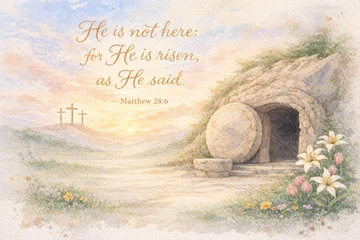
He is not here, but is risen: remember how he spake unto you when he was yet in Galilee,
Translations
He is not here, but is risen: remember how he spoke to you when he was yet in Galilee,
King James Version, KJV Cambridge Paragraph Bible, Revised Version, American Standard Version
He is not here, but is risen: remember how he spake unto you when he was yet in Galilee,
He is not here, but is risen. Remember how he spoke to you when he was yet in Galilee,
he is not here, but was raised; remember how he spake to you, being yet in Galilee,
He is not here, but is risen: remember how he spoke to you, being yet in Galilee,
[[He is not here, but hath arisen:]] Remember how he spake unto you while yet he was in Galilee:
Berean Standard Bible, Majority Standard Bible
He is not here; He has risen! Remember how He told you while He was still in Galilee:
He isn’ t here, but is risen. Remember what he told you when he was still in Galilee,
He is not here, he has come back to life: have in mind what he said to you when he was still in Galilee, saying,
He is not here, but is risen: remember how he spake vnto you, when he was yet in Galile,
Douay-Rheims (Challoner revision)
He is not here, but is risen. Remember how he spoke unto you, when he was in Galilee,
Pictures
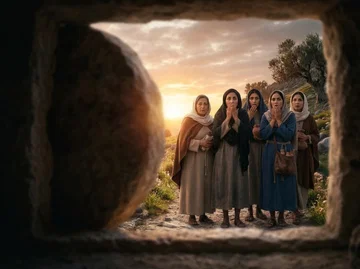
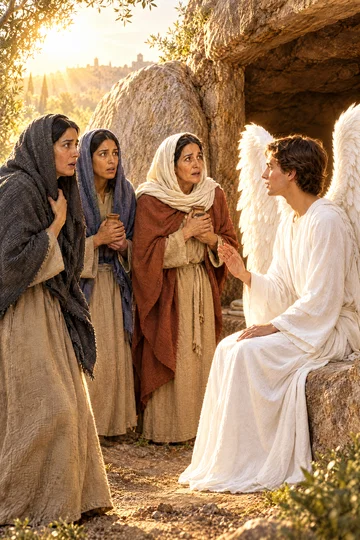
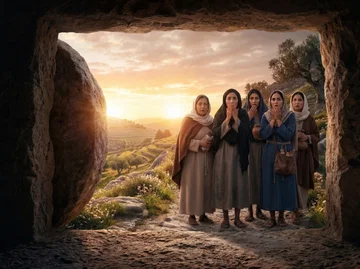
Cross-references 20 of 80
- Matthew 28:5-7
And the angel answered and said unto the women, Fear not ye: for I know that ye seek Jesus, which was crucified.
same angel announcement of the risen Jesus
- John 20:1
The first day of the week cometh Mary Magdalene early, when it was yet dark, unto the sepulchre, and seeth the stone taken away from the sepulchre.
Mary’s early visit finds the tomb empty on the first day after Jesus’ resurrection.
- Mark 16:1-6
And when the sabbath was past, Mary Magdalene, and Mary the mother of James, and Salome, had bought sweet spices, that they might come and anoint him.
Also reports the empty tomb and Jesus’ resurrection.
- Luke 24:13-35
And, behold, two of them went that same day to a village called Emmaus, which was from Jerusalem about threescore furlongs.
The risen Jesus meets the Emmaus disciples, who identify it as the third day.
- Luke 23:56
And they returned, and prepared spices and ointments; and rested the sabbath day according to the commandment.
The women rested on the Sabbath before visiting the tomb.
- Mark 16:9-11
Now when Jesus was risen early the first day of the week, he appeared first to Mary Magdalene, out of whom he had cast seven devils.
Mary reports the risen Jesus, but the disciples do not believe her.
- John 20:19
Then the same day at evening, being the first day of the week, when the doors were shut where the disciples were assembled for fear of the Jews, came Jesus and stood in the midst, and saith unto them, Peace be unto you.
Jesus appears to the gathered disciples that evening after his resurrection.
- Luke 9:22
Saying, The Son of man must suffer many things, and be rejected of the elders and chief priests and scribes, and be slain, and be raised the third day.
Jesus foretells his suffering, death, and resurrection on the third day.
- Matthew 28:1
In the end of the sabbath, as it began to dawn toward the first day of the week, came Mary Magdalene and the other Mary to see the sepulchre.
Records the women coming to the tomb at dawn on the first day, after the Sabbath.
- Mark 16:14
Afterward he appeared unto the eleven as they sat at meat, and upbraided them with their unbelief and hardness of heart, because they believed not them which had seen him after he was risen.
The risen Jesus appears to the disciples and rebukes their unbelief.
- Luke 24:1
Now upon the first day of the week, very early in the morning, they came unto the sepulchre, bringing the spices which they had prepared, and certain others with them.
The women came to the tomb early on the first day, when the risen announcement was made.
- Mark 16:2
And very early in the morning the first day of the week, they came unto the sepulchre at the rising of the sun.
Both identify the first day of the week as the women’s visit to the tomb.
- Luke 18:33
And they shall scourge him, and put him to death: and the third day he shall rise again.
Jesus foretold his death and rising on the third day.
- Matthew 16:21
From that time forth began Jesus to shew unto his disciples, how that he must go unto Jerusalem, and suffer many things of the elders and chief priests and scribes, and be killed, and be raised again the third day.
Jesus foretells his suffering, death, and resurrection on the third day.
- Luke 24:36-43
And as they thus spake, Jesus himself stood in the midst of them, and saith unto them, Peace be unto you.
The risen Jesus appears to the disciples and shows that he is bodily alive.
- Acts 1:11
Which also said, Ye men of Galilee, why stand ye gazing up into heaven? this same Jesus, which is taken up from you into heaven, shall so come in like manner as ye have seen him go into heaven.
The same Jesus who rose will return in like manner.
- 1 Corinthians 15:20
But now is Christ risen from the dead, and become the firstfruits of them that slept.
Names Christ as risen from the dead.
- Revelation 1:18
I am he that liveth, and was dead; and, behold, I am alive for evermore, Amen; and have the keys of hell and of death.
Christ declares that he is alive forevermore and holds authority over death and the grave.
- 1 Corinthians 15:4
And that he was buried, and that he rose again the third day according to the scriptures:
Christ was buried and rose again on the third day, fulfilling Scripture.
- Matthew 27:63
Saying, Sir, we remember that that deceiver said, while he was yet alive, After three days I will rise again.
The priests recall Jesus’ prediction that he would rise after three days.
Commentary
Each commentary is drawn from primary sources: the writings of Ellen G. White and Adventist pioneers and periodicals. Each commentary is separate. Its own words are not a quotation; follow the references to read the source passages.
Ellen G. White
26 sources
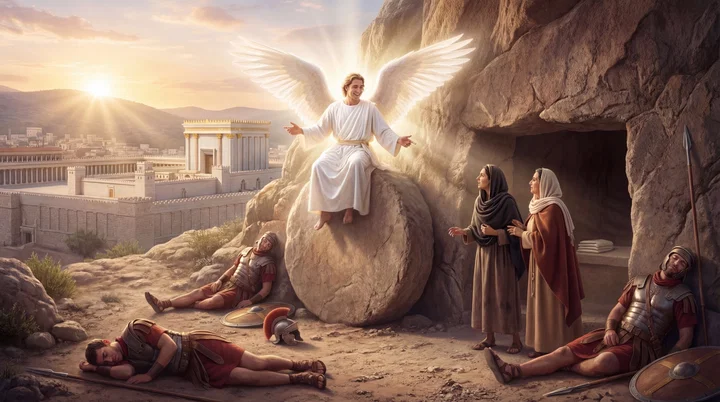
In the early morning a shining angel met the frightened women who came with spices to anoint Jesus, showed them the rolled-away stone and the empty place where He had lain, and sent them quickly to tell His mourning disciples that anointing was no longer needed.COS 176.5–177.1EW 153.2–154.1DA 788.4–789.1
He is not here means He is no longer lying dead in Joseph's tomb but has come to life again at His Father's call as a mighty Conqueror over death and the grave.Ms 115, 1897, par. 1–2ST Nov 8, 1883COS 173.5–174.1
Remember points back to what He had plainly told them while still in Galilee, that He must be delivered into the hands of sinful men and crucified and rise the third day, and His rising fulfilled that prediction and confirmed Him as the Son of God and Redeemer of the world.COS 176.5–177.1Ms 115, 1897, par. 1–2Ms 115, 1897, par. 9–143SP 199.1–200.1ST Dec 14, 1882
His followers had forgotten those words and buried their hopes with Him, so the report seemed too good to be true, yet remembering them afterward brought understanding, courage, comfort, and rejoicing instead of sorrow.COS 176.5–177.1Ms 115, 1897, par. 1–2Ms 115, 1897, par. 9–143SP 199.1–200.1Ms 113, 1897, par. 1
Because He suffered, died, and lives again, forgiveness, conversion, and sanctification are possible for all who repent and come to the Father through Him, and believers still have a living Saviour who intercedes for them by name and calls them to a joyful, praising life.Lt 100, 1910, par. 18Ms 126, 1906, par. 19Ms 83, 1910, par. 33–34Ms 2, 1893, par. 17–19Ms 4, 1888, par. 22–23
Angel Announcement at Tomb
In the morning light inside the tomb a shining angel in human form met the women who had come before daylight with sweet spices to anoint Jesus.COS 176.5–177.1DA 788.4–789.1SG1 71.2 They found the heavy stone rolled away and the body gone.DA 788.4–789.1SG1 71.2 He knew they were seeking Jesus, calmed their fear, and invited them to look again at the place where He had lain.COS 176.5–177.1DA 788.4–789.1SG1 71.2
He is not here means He is living and not dead nor among the dead, no longer lying in the tomb.COS 176.5–177.1Ms 115, 1897, par. 1–2DA 788.4–789.1ST Nov 8, 1883Ms 203, 1898, par. 9 He is not lying in Joseph's new tomb because He came to life again.Ms 115, 1897, par. 1–2SG1 71.2Ms 126, 1906, par. 19 He came forth at His Father's call as a mighty Conqueror over death and the grave, when life from heaven entered Him and angels rolled back the stone.COS 173.5–174.1Ms 83, 1910, par. 33–34 In rising He proclaimed Himself the resurrection and the life.COS 173.5–174.1Ms 83, 1910, par. 33–34
The angel charged the women to go quickly and tell His mourning disciples that He is risen from the dead and will go before them into Galilee.COS 176.5–177.1EW 153.2–154.1DA 788.4–789.1SG1 71.2 Anointing spices are no longer needed, and sorrow turns to repeating joy.DA 788.4–789.1 The women left frightened and astonished to carry what they had seen and heard.SG1 71.2Ms 113, 1897, par. 1 That included a vision of angels and seeing Jesus Himself alive in the garden.Ms 113, 1897, par. 1
Galilee Words Remembered Fulfilled
The call to remember points to what Jesus spoke while yet in Galilee, that the Son of man must be delivered into the hands of sinful men, be crucified, and rise again the third day.COS 176.5–177.1Ms 115, 1897, par. 1–23SP 199.1–200.1DA 788.4–789.1ST Dec 14, 1882 Those words were spoken beforehand to prepare His followers and to make His death and resurrection plain.COS 176.5–177.1Ms 115, 1897, par. 9–143SP 199.1–200.1DA 788.4–789.1ST Dec 14, 1882 His rising fulfilled His own prediction, confirming His claim to be the Son of God and the Redeemer of the world.3SP 199.1–200.1ST Dec 14, 18826RED 17.1–18.2ST Aug 22, 1878 That fulfillment is also set forth as completing two-thirds of the prophecy concerning the Messiah.ST Aug 15, 1878
That the crucified Jesus of Nazareth had indeed risen is confirmed by the empty tomb with the stone removed, by the guards' report of the angelic messenger, by the burial shroud left behind, and by the disciples afterward seeing and speaking with Him.ST Aug 15, 1878Ms 113, 1897, par. 1ST Nov 8, 1883Ms 203, 1898, par. 9 The women themselves carried what they had seen and heard, including a vision of angels and seeing Jesus alive in the garden.Ms 113, 1897, par. 1 The empty sepulcher together with those encounters leaves no doubt that He who was crucified was alive.ST Aug 15, 1878ST Nov 8, 1883Ms 203, 1898, par. 9
The disciples had forgotten those plain words about rising from the dead and did not understand or believe them, being perplexed to know what rising from the dead could mean.Ms 115, 1897, par. 1–2Ms 115, 1897, par. 9–14Ms 113a, 1897, par. 1Ms 72, 1897, par. 3–6 They expected Him to free them from Roman rule and could not accept His death, so when He died they were unprepared and their hopes collapsed.RH Jun 7, 19066RED 23.2–24.1Ms 72, 1897, par. 3–6 Their hopes were buried with Him in the tomb, sorrow overwhelmed them, and their faith could not penetrate the shadow cast across their horizon.Ms 113a, 1897, par. 16RED 23.2–24.1Ms 72, 1897, par. 3–6 Exposure to Sadducean teaching and supposed scientific theories had left their belief in resurrection vague, so the women's report seemed too good to be true.Ms 113, 1897, par. 1Ms 113a, 1897, par. 1 Their unbelief in that testimony and the uncertainty, confusion, and perplexity it brought showed how low their faith had sunk.Ms 115, 1897, par. 1–2Ms 113, 1897, par. 1Ms 113a, 1897, par. 1
Remembering His words brings understanding, fresh hope and courage, light, comfort, and rejoicing instead of discouragement.COS 176.5–177.1Ms 115, 1897, par. 9–143SP 199.1–200.16RED 17.1–18.2ST Aug 22, 1878 If they had believed and remembered His word and searched the Scriptures for what was written concerning Him while He lay in the tomb, they would have been saved much sorrow and would have found comfort and hope.Ms 115, 1897, par. 9–14Ms 72, 1897, par. 3–6 They only remembered His spoken words afterward, when He was seen and glorified before them at His ascension.Ms 72, 1897, par. 3–6 Angels work upon human minds entrusted to them by bringing precious remembrances fresh before the mind, as at the sepulcher.Lt 116, 1899, par. 13–14 The call to remember likewise illustrates the need to understand and retain plainly revealed prophetic warnings such as the close of probation and preparation for the time of trouble, since those who neglect these truths will be unready when that time comes.RH Jun 7, 1906
Living Saviour Applied Today
He is not here, but is risen means his suffering and death made salvation possible, so that those who repent and are converted may receive salvation, and those who come to the Father through faith in Christ and follow his example may receive forgiveness of sins, while his suffering also makes sanctification possible through belief in the truth.Lt 100, 1910, par. 18 He is not in Joseph's new tomb because he is risen and alive, and as the Lamb of God he draws sinners to look and live, saving everyone who comes to him by forgiving sins and taking away unrighteousness.Ms 2, 1893, par. 17–19 His resurrection brings joy in the presence of the angels over every sinner who turns to God, putting a new song of praise to God in the mouth and melody in the heart, for mercy and truth have met together and righteousness and peace have kissed each other at the cross.Ms 2, 1893, par. 17–19 He is risen and is not in Joseph's tomb, but is a living Saviour whose blood can be pleaded and whose promises can be trusted now, through whom believers may ask the Father for sanctification and accept his righteousness, purity, love, kindness, and goodness as theirs.Ms 4, 1888, par. 22–23
He is not lying in Joseph's tomb but is risen, and this truth gives hopefulness and calls for loving the Lord, praising him, and proclaiming the risen Saviour to all the world with voice and soul.Ms 126, 1906, par. 19 He was not left in the grave but came forth as a mighty Conqueror when angels rolled back the stone, life from heaven entered him, and he walked out proclaiming himself the resurrection and the life, a fact the women who came to anoint him could hardly believe.Ms 83, 1910, par. 33–34 His rising proves he is a living Saviour with the same power now as then and not dead, so believers must trim their lamps and keep them burning and by living faith grasp infinity to meet the living issues of this world.Ms 83, 1910, par. 33–34 His being risen and alive and not remaining in Joseph's tomb calls for a religious life marked by peace, happiness, joy, and attractiveness rather than gloomy rigor, since believers have a living Saviour who intercedes for them and presents their cases by name before the Father.Lt 84, 1886, par. 7–8
Sources
Pioneers and periodicals
104 sources
He is not there but risen was spoken very early on the first day of the week to the women who came with spices to anoint the body, found it gone, and were met by two angels in shining garments.RH Jun 6, 1865RH Jan 17, 1856RH Feb 11, 1858 The angels bade them remember what he had said while yet in Galilee, that the Son of man must be delivered into the hands of sinful men, be crucified, and rise again the third day, which the women remembered and carried to the eleven and others who thought it idle tales.ST Dec 3, 1894ST Apr 3, 1901RH Jun 6, 1865RH Oct 23, 1856 He had already risen that first-day morning after resting in the tomb through the seventh day, the third day since his sufferings and crucifixion counting parts of days as whole days.RH Jun 6, 1865RH Jun 24, 1873RH Apr 7, 1851RH Jan 1851 The same Jesus of Nazareth who died and was laid in the tomb came to life again in body with flesh and bones that may be seen and handled, not as a spirit, bursting death's prison as conqueror never to die again.RH Nov 21, 1854ST Jan 9, 1893RH Apr 20, 1905ST May 24, 1905RH Sep 8, 1853 Their waiting until the Sabbath was past to bring the spices shows the seventh day, the day before the first day, remained binding after the cross, while his rising on the first day gave no command, sacred title, or Sabbatical act to keep that day.RH Apr 7, 1851RH Jan 1851ST Dec 10, 1902ST Feb 8, 1883ST Dec 15, 1881 The vacant place confirms the literal resurrection as the foundation of faith and assures that as he rose by his own power as first-begotten of the dead, so those who are his will rise bodily immortal at his coming, without which faith would be vain.ST Jun 26, 1901RH Nov 3, 1904ST Jul 1, 1908RH Sep 16, 1915
Scene at Empty Tomb
The women came very early on the first day of the week with prepared spices to anoint the body, having rested the Sabbath according to the commandment before coming.RH Jun 6, 1865RH Feb 11, 1858 They found the body gone and were told by two men in shining garments, the angels attending the tomb, that he was not there but had risen.RH Jun 6, 1865RH Jan 17, 1856ST Feb 22, 1899 Their devotion led them to be the first to see him alive, and Mary Magdalene with Peter and John also testified that the tomb was empty.ST Feb 22, 1899 He had burst the prison-house of the tomb where a guard had been set to keep anyone from stealing his body, and the claim that the disciples stole the body conflicts with the testimony that he is risen.ST Aug 8, 1878ST Feb 22, 1899
The angels directed them to remember what he had spoken while yet in Galilee.ST Dec 3, 1894ST Apr 3, 1901 That word was that the Son of man must be delivered into the hands of sinful men, be crucified, and rise again on the third day.ST Apr 3, 1901RH Jun 6, 1865 His rising fulfilled what he had foretold, showing his own word sufficient proof and supporting his claim to be the Son of God and Redeemer of the world.ST Dec 14, 1882ST Aug 22, 1878ST Apr 3, 1901 Remembering those words helped the women understand, turning sorrow to hope and courage, while the sadness and surprise of the disciples showed they had not understood the resurrection or the plan of salvation through his death.ST Aug 22, 1878ST Dec 3, 1874
The women remembered his words and carried the report to the eleven and others.RH Jun 6, 1865ST Feb 22, 1899 The disciples thought their words were idle tales and did not believe, not having gathered to celebrate the resurrection.RH Jun 6, 1865RH Oct 23, 1856ST Mar 18, 1889 Their amazement, sorrow and confusion belong to this early-morning visit when the women found his body gone and said they had seen a vision of angels declaring him alive.ST Apr 4, 1900RH Apr 20, 1905ST Dec 3, 1874 That same report was later repeated on the way to Emmaus, where he was made known in the breaking of bread when the day was nearly spent, and the travelers returned quickly to Jerusalem to tell the eleven they had seen the risen Lord, but still were not believed, leaving the disciples in mourning and disbelief near the close of the day.ST Apr 4, 1900ST Mar 18, 1889ST Jul 1, 1880
His enemies had sealed the tomb and set a guard to prevent theft, yet God's power overcame seal, stone and guards to bring him to life, for death could not hold the sinless Jesus.RH Apr 20, 1905 The empty tomb with the guards' report of the heavenly messenger and the removed stone confirms that Jesus of Nazareth, though crucified, had indeed risen, and Roman soldiers witnessed the messenger's arrival.ST Aug 15, 1878ST Feb 7, 1911 The triumph was the triumph of righteousness, confirming his power as the resurrection and the life.RH Apr 20, 1905 The Gospel accounts of this resurrection may include different details, omit events reported elsewhere, and emphasize different particulars without contradicting one another, each stating what is true, and their credibility as witnesses to his bodily resurrection stands or falls together.ST Mar 5, 1912RH Jan 1, 1914ST Jun 14, 1877
Day of Rising
He had already risen when the women came very early on the first day of the week with prepared spices, and the empty tomb found that morning dates his rising to that first-day morning after he had rested in the grave through the seventh day.RH Jun 24, 1873RH Apr 7, 1851RH Jan 1851RH Aug 13, 1857ST Feb 8, 1883 The sequence shows the resurrection did not take place on the Sabbath, for the followers rested the Sabbath day according to the commandment between burial and resurrection and waited until it was past before bringing spices to anoint the body.RH Apr 7, 1851RH Jan 1851 That keeping proves the Sabbath remained binding after the cross and was not nailed to it, giving the rule for keeping the true seventh day after sacrifice and oblation ceased, while distinguishing the day of resurrection from the Sabbath of creation without identifying the first day as the Sabbath.RH Apr 7, 1851RH Jan 1851RH Aug 13, 1857 The preceding Sabbath is the seventh day commonly called Saturday and the day of the visit is Sunday, yet the fact of a first-day rising gives no commandment or hint to observe it and does not affect Sabbath sacredness in the least.ST Feb 8, 1883 To deny the first-day resurrection wastes time and strengthens Sunday keepers, while admitting it and showing Sabbath sacredness untouched is the better course, since from the crucifixion onward the disciples observed the Sabbath just as before.ST Feb 8, 1883
The rising on that first day is the third day since his betrayal, sufferings, and crucifixion, in keeping with his prediction that the Son of man must be delivered into sinful hands, be crucified, and rise again the third day.RH Jun 6, 1865ST Mar 3, 1890 The Emmaus disciples’ statement that it was the third day since these things happened counts betrayal and sufferings as well as crucifixion, showing the third day does not mean three complete twenty-four-hour periods or seventy-two hours.ST Mar 3, 1890 Parts of days are counted as full days, so the third day was the first day and not the Sabbath, with the expressions in three days, after three days, and on the third day treated as compatible ways of dating the same resurrection.RH Jun 24, 1873ST Mar 3, 1890 The women found the body gone, were told by two men in shining garments that he had risen, remembered his words, and carried the report to the eleven who thought it idle tales, proving he arose on the morning of the first day on the third day since his crucifixion.RH Jun 6, 1865 He rose on that third day in triumph over death to die no more, holding the keys of death and the grave, and later that same Sunday he preached to the apostles at Emmaus and in Jerusalem.RH Sep 16, 1915ST Jul 2, 1894
Luke as historian writing decades later deliberately points out the first day of the week in uniform formal language as the day of rising, rather than simply saying he rose on the third day as promised.RH Apr 1, 1873 Inside the history Christ himself, the chief priests and Pharisees, the angels at the tomb, and the two disciples on the way to Emmaus call it only the third day, while Luke calls it the first day of the week.RH Apr 1, 1873 This concurrent prominent naming of the first day by all four Gospel writers differs from the language of the persons they record and shows the first day had become an honored and noted day among Christians when the Gospels were written.RH Apr 1, 1873 Those who hold a narrower reading teach that the verse records only the women’s arrival on the first day and their discovery that he was not there, reminded of the Galilee word about delivery, crucifixion, and rising on the third day, but does not itself state that he rose on that day.RH Jan 17, 1856
His appearances that day began with meeting the women at the tomb as his first appearance on the first day of the week.RH Sep 10, 1857 That afternoon he was made known to two disciples at Emmaus in the breaking of bread when the day was nearly spent, and they returned to Jerusalem where he had been seen by Peter just before sunset.RH Apr 12, 1860ST Mar 24, 1909 He then met the eleven after their return near sunset, an interview also described in Mark 16:14 and John 20:19, counted here as his fourth appearance to his followers.RH Apr 12, 1860RH Feb 25, 1862 They first gathered near the close of that day, and when he met them the day had passed toward the second day of the week, establishing that he met them after his resurrection and not to institute observance of the first day.ST Mar 24, 1909RH Feb 25, 1862 The whole account of announcement and meetings belongs to the events of that first day when he made himself known to his disciples.ST Oct 28, 1913
The crucifixion, resurrection, and ascension occurred in A.D. 31, and the resurrection day in Palestine was a definite twenty-four-hour day like the seventh day.RH Apr 14, 1874ST Sep 22, 1909 Placing the resurrection very early on the first day of the week as the third day exposes a chronology built on a Thursday Sabbath, which would leave him resting in the tomb for part of five days and require abolishing two weekly Sabbaths.RH Mar 23, 1869
Bodily Risen Jesus
The identical Jesus of Nazareth who died on the cross and was wrapped in linen and laid in the stone sepulchre came to life again on the first day of the week, and he is no longer to be sought among the dead.RH Nov 21, 1854ST Jan 9, 1893RH Sep 8, 1853 No soul or spirit or intelligent part escaped death to stay alive apart from the body, but the whole man died a literal death and the same whole man lived again.RH Nov 21, 1854ST Jan 9, 1893 While he remained in the grave he had no consciousness, thought, or activity, which is the condition of the dead generally.ST Jan 9, 1893 The living one is the same Lord Jesus with hands and feet and flesh and bones that can be handled and seen, not a spirit or apparition, for Christ himself and not merely his soul or spirit had been in the tomb and was no longer there because he had risen.RH Nov 21, 1854ST Jan 9, 1893 He rose bodily on the third day after death and went on to heaven, leaving vacant the tomb where he had lain, so his resurrection was not a temporary restoration followed by a natural death nor merely the survival and ascent of his spirit.RH Sep 8, 1853ST Oct 14, 1889 The angel's announcement that he was risen, with the invitation to examine the empty place, proves the resurrection was literal and physical and not the rising of the spirit out of the body at death, since his spirit did not take three days to leave his body.ST Oct 14, 1889
His resurrection is literal bodily historical fact, an event that actually happened at the grave when Jesus came to life again and was no longer in the tomb.ST Aug 15, 1878ST Jan 25, 1905RH Sep 8, 1853 It is not merely the birthplace of an indestructible belief that death is vanquished and eternal life exists, nor a view or idea about death and rising again that may be accepted or set aside.ST Jan 25, 1905 It is not a temporary restoration followed by natural death, nor merely the survival and ascent of his spirit, but a true rising from the dead in body unto heaven.RH Sep 8, 1853 The empty tomb and the guards' report of the angelic messenger and the removed stone confirm that Jesus of Nazareth, though crucified, had indeed risen and was alive.ST Aug 15, 1878ST Nov 8, 1883 The vacant place with the invitation to examine it proves the rising was literal and bodily, and in that bodily rising he is the surety and first-fruit of the rising of those who are his at his coming, when this mortal shall put on immortality, so their resurrection will be literal and bodily as his was.ST Oct 14, 1889
He who died and was laid in a tomb came forth alive as conqueror over sin and death, bursting the prison-house.RH Apr 20, 1905ST Apr 8, 1903 The women came expecting to find his body, and their sorrow and confusion gave way to astonishment when they learned he was not dead but risen and no longer among the dead.RH Apr 20, 1905 His enemies had sealed the tomb and set a guard, yet God's power overcame the seal, stone, and guards and brought the sinless Jesus to life.RH Apr 20, 1905 Death could not hold him, for his resurrection was the awakening of his divine life and power that kept his promise, triumphed over the grave, and was the triumph of righteousness bringing hope to those he came to save.ST May 24, 1905 He came out of the tomb never to die again and holds the keys of death and the grave, confirming his power as the resurrection and the life.RH Apr 20, 1905RH Sep 16, 1915 Because Christ rose the dead will also be raised, for as death came through Adam, resurrection comes through Christ.RH Sep 16, 1915 The risen Jesus is the mighty Prince of David whose victory over death angels announce, and the same Jesus will come again bringing joy and everlasting life.RH Jan 9, 1900
Prophecy Remembered and Fulfilled
He is no longer in the tomb because he has risen, exactly as he had said beforehand while still in Galilee that the Son of man must be delivered into the hands of sinful men, be crucified, and rise again on the third day.ST Dec 14, 1882ST Aug 22, 1878ST Apr 3, 1901 His rising therefore fulfilled his own foretelling, showing the event was part of God's plan and could afterward be remembered and understood as fulfilled prophecy.ST Dec 14, 1882ST Apr 3, 1901ST Jan 9, 1912 His own word is itself sufficient proof for believers, and remembering and believing it turns grief to joy and despair to hope, giving hope and courage.ST Aug 22, 1878ST Apr 3, 1901
His resurrection supports his claim to be the Son of God and the Redeemer of the world.ST Aug 22, 1878 It also fulfilled two-thirds of the prophecy concerning the Messiah.ST Aug 15, 1878
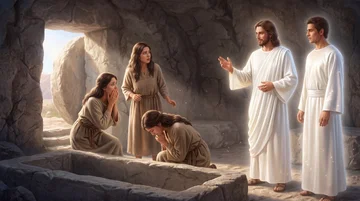
His disciples had been told beforehand that he would die and rise again, but they forgot his words because they expected an earthly kingdom and an earthly king who would free them from Roman rule, and they could not accept his death.RH Jun 7, 1906RH Dec 8, 1874ST Dec 3, 1874 When he was crucified they were therefore unprepared, perplexed, disheartened, astonished at the report that he was alive, and their hopes collapsed, showing they had not understood the resurrection or the plan of salvation through his death.RH Jun 7, 1906RH Dec 8, 1874ST Dec 3, 1874 Had they believed his instruction they would have been at the tomb earlier that morning expecting to see him arise and come forth, but unbelief of his word left Mary Magdalene weeping bitterly over the empty tomb and failing at first to recognize the living Jesus when he appeared and spoke, and the same lack of implicit confidence in the Scriptures still keeps professed followers mourning over troubles instead of realizing they have a living Saviour who is a very present help in trouble.ST Apr 10, 1901 Disappointment does not prove a true teaching false, as his crucifixion was only fulfillment of prophecy and does not disprove the doctrine of Christ's soon coming from the Millerite disappointment, and his rising after the unexpected crucifixion revived the cast-down hopes of the disciples just as hope was revived among Adventists after the disappointment in 1844.RH Dec 8, 1874ST Feb 9, 1882 The call to remember his words likewise illustrates the need to understand and retain plain prophetic warnings, for the close of probation and the preparation for the time of trouble are plainly revealed, yet those who neglect these truths will be unready when that time comes.RH Jun 7, 1906
The story of the empty tomb and the accounts of his appearing in Jerusalem and in Galilee are not the primary evidence for the resurrection.RH May 11, 1916 The primary evidence is the New Testament itself and the existence of the Christian church in extraordinary spiritual vitality, since faith in the resurrection was believed, preached, propagated, and bore fruit and effect in the new phenomenon of the Christian church long before any Gospel was written.RH May 11, 1916
Sabbath and First Day
The order of burial, rest, and rising shows the seventh-day Sabbath remained binding after the cross and was not nailed to it, because between burial and resurrection the followers rested the Sabbath day according to the commandment.RH Apr 7, 1851RH Jan 1851ST Dec 10, 1902 They kept it so strictly that they waited until it was past before bringing the prepared spices to anoint the body, coming very early on the first day of the week to find he had already risen.RH Apr 7, 1851RH Jan 1851RH May 20, 1909 That sequence identifies the Sabbath as the day before the first day, commonly called Saturday, distinct from Sunday, so that keeping Sunday week by week breaks one of the commandments.ST Dec 10, 1902 It gives the New Testament rule for keeping the true Sabbath after sacrifice and oblation of beasts ceased at the cross, and the visit that morning was to anoint his body, not to observe the first day as a Sabbath.RH Apr 7, 1851RH May 20, 1909 The record calls the previous day the Sabbath and gives no word changing the Sabbath from the seventh day to the first.ST Feb 4, 1903
The fact of rising on the morning of the first day has nothing to do with the Sabbath question, giving no commandment to observe the resurrection day nor even a hint that the first day was henceforth to be the Sabbath.ST Feb 8, 1883 It confers on that day no sacred title and sets it apart for no sacred purpose, and it does not identify that day as the Sabbath or as a replacement for the seventh day commanded in the fourth commandment.RH Feb 13, 1872ST Dec 15, 1881RH Oct 4, 1864 No declaration in Scripture gives the first day the character of holy rest, so the fact alone is not a reason for substituting it for the Sabbath.ST Mar 9, 1882ST Jul 24, 1884 Christ that day expounded Scripture, showed his wounds, and commissioned the disciples, but said and did nothing to make it a Sabbath.RH Feb 13, 1872 From the crucifixion onward the disciples observed the Sabbath just as before, and denying the first-day resurrection only wastes time and strengthens Sunday keepers, while admitting it and showing Sabbath sacredness unaffected is the better course.ST Feb 8, 1883
That first day was not kept as holy worship but was one of secular activity, anxiety, unrest, mourning, doubt, and unbelief.ST Dec 15, 1881RH Oct 23, 1856ST Mar 18, 1889ST Jul 1, 1880 The women reported the risen announcement recalling what he had spoken in Galilee, but the disciples did not believe them and had not gathered to celebrate the resurrection.ST Dec 15, 1881RH Oct 23, 1856 Their journey to Emmaus that day, about seven and a half miles, with Jesus traveling with them and made known in breaking of bread when the day was nearly spent, shows they did not treat the day as a Sabbath and that he was not resting on it.ST Mar 18, 1889ST Jul 1, 1880RH Dec 16, 1858 They returned quickly to Jerusalem to tell the eleven, yet were still mourning, perplexed, and disbelieving near its close, and if they changed the Sabbath at the evening meeting they would have done so in unbelief.ST Dec 15, 1881ST Jul 1, 1880 The chapter is therefore examined as the account of what happened on the first day after the Sabbath.ST Jul 2, 1894
The crucifixion and resurrection have their appropriate memorials in the Lord's supper and in baptism, not in keeping the days on which they occurred.RH Feb 13, 1872 His great loving act above all other days was his death, pouring out his soul unto death and being made a curse for man, and his exaltation was not at resurrection but at ascension on the fortieth day after, the resurrection being only necessary to that glorification.RH Feb 13, 1872 If the resurrection were to be commemorated by keeping a day, only that morning when the fact became known could properly be used, not the day before while it was still unknown, since a memorial memorializes an event by observance of the very day on which it happened.RH Oct 4, 1864RH Mar 26, 1872 The resurrection should be celebrated, but by baptism, the divine institution appointed for that purpose, not by observance of the first day.RH Oct 4, 1864
Those who held the opposing position teach that the first day should be kept as the Sabbath and Lord's day in honor of the resurrection, with proof drawn from the resurrection with other first-day texts.RH Oct 4, 1870RH Sep 26, 1912 They say the day of resurrection was set apart in its honor and became the reason and starting point for a divinely authorized change of Sabbath to the first day.RH Sep 26, 1912ST Apr 9, 1896RH Jun 17, 1873 They distinguish it as the Lord's day by the resurrection together with the forming of the elements of the world and creation of angels on the first day of the age and the descent of the Holy Spirit upon the apostles as manna came in the wilderness, transferring all glory of the Jewish Sabbath to it as ancients were commanded to keep the Sabbath.ST Sep 24, 1894 They honor it as the eighth day joyfully observed and as the weekly commemoration distinct from the annual celebration, fitting for redemption, eternal things, and foretaste of heavenly rest, and explain the honoring of the Lord's day as the day of resurrection.ST Sep 24, 1894RH Apr 20, 1911 One quoted Sunday argument claims Christians rejoiced on resurrection day because he had lain in the tomb the previous day and therefore replaced the old weekly rest with a new one, while acknowledging that no divine command or prophetic utterance authorized the change.ST Aug 8, 1900
In this history the resurrection is the stated reason some keep the first day or claim Sunday sacredness, completing his work of redemption, yet it does not make the first day the Sabbath nor show the Sabbath commandment changed.ST Dec 15, 1881RH Apr 14, 1874 It does not itself establish a change, does not identify that day as replacement for the seventh day commanded, and supplies no authority for changing it.ST Dec 15, 1881ST May 19, 1914 The day after the Sabbath honored as the day of the Lord's resurrection became a rival to the true Sabbath, and gave Gentile sun-honorers a pretext for a Christian festival.ST Oct 24, 1911 The new covenant was finished and sealed by blood late Friday afternoon, so no man can disannul or add to it afterward, and the first day coming three days too late cannot be the Sabbath of the new covenant.ST Sep 23, 1913 Claiming a weekly observance begun at that morning visit and continued unbroken to the present contradicts the simultaneous claim that reckoning is disarranged so none can tell the seventh day, while invoking the empty tomb to count resurrection day as seventh from creation is disputed.RH May 3, 1864RH Aug 14, 1860 Teaching that the seventh day cannot be identified yet all must keep Sunday is inconsistent, and since resurrection Sunday is known and agreed upon by all with no doubt when the first day comes, the seventh as the day just before it is known by counting to seven, so the lost-time excuse counts equally against the first day.RH Jul 25, 1865
Those who held another position teach that the resurrection marks the end and completion of the true rest foreshadowed by the ancient Sabbath, bringing its shadows to an end and warning against clinging to a shadowy ceremony.ST Jan 2, 1879 He is risen and therefore remains a risen Saviour on every day, not only on Sunday, so his resurrection does not make Sunday uniquely necessary for honoring him.ST Apr 3, 1893
Resurrection Hope Secured
The empty tomb declares that he is risen and no longer lies where he was laid, and that vacancy establishes his resurrection as a foundation of Christian faith.RH Nov 3, 1904RH Dec 5, 1865 Because he has authority over death and the grave, the dead are assured to rise when he calls them from their graves.ST Jun 26, 1901RH Nov 3, 1904 Loved ones who have died will therefore not remain in their tombs, and this gives comfort in grief.RH Nov 3, 1904
He foretold this rising while yet in Galilee, so the announcement explains why he is not to be sought among the dead.ST Jul 1, 1908ST Oct 14, 1889 He rose by his own almighty power, breaking the bonds of death, coming out never to die again and holding the keys of death and the grave.ST Jul 1, 1908RH Sep 16, 1915 As the first-begotten of the dead and the believer's Head he rose to bring immortal life, and though his followers die they share his victory, for he will raise their sleeping bodies.ST Jul 1, 1908RH Sep 16, 1915 As death came through Adam, resurrection comes through Christ.RH Sep 16, 1915 The invitation to examine the empty place proves the rising was literal and bodily, leaving vacant the tomb where he had lain on the third day after death, not the rising of the spirit out of the body at death, since his spirit did not take three days to leave his body.ST Oct 14, 1889 As his rising was literal and bodily so will be the rising of those who are his at his coming, when this mortal shall put on immortality.ST Oct 14, 1889
Without the resurrection of the dead he would not have been raised, and the resurrection of the dead is the hope of the gospel.ST Jun 26, 1901 Without it faith would be vain, believers would remain in their sins, and those who died in him would have perished.ST Jun 26, 1901 His rising is therefore the ground of hope that he will come again and take his people home, when they will rise to meet him.RH Dec 5, 1865RH Jan 9, 1900 The risen one is the same Jesus who was crucified, the mighty Prince of David, whose victory over death the angels announce, and the same Jesus will come again bringing joy and everlasting life.RH Dec 5, 1865RH Jan 9, 1900 The angel's message of his rising stands alongside the angelic announcement of his return as authority for believing that he will come back.ST Jul 29, 1913 His great loving act for man was not his rising but his death, pouring out his soul unto death and being made a curse for man, which above all else showed his love; his exaltation was not at his resurrection but at his ascension on the fortieth day after, the resurrection being only necessary to that glorification.RH Feb 13, 1872 That rising was accompanied by a great earthquake and the rolling away of the stone, with many saints also coming out of their graves and appearing to many, and with his appearing to the Marys, to those on the way to Emmaus, and then to the eleven, Thomas excepted.RH Feb 13, 1872
The tomb had been sealed and guarded, yet God's power overcame seal and guards and brought him to life, for death could not hold him. His resurrection was the triumph of righteousness.ST Mar 29, 1899 It gives freedom from death, from sin, and for worship and obedience to God, so his followers need not seek him in a tomb.ST Mar 29, 1899 The gloom of the cross was followed by resurrection morning after the sorrow and suffering of Calvary, giving hope that the cross is not the end.RH May 28, 1901 His resurrection, fulfilling what he told his followers while in Galilee, is cause for Christian joy and gratitude, and it serves as a symbol of a future resurrection and a day of reunion.
Seeking Living Saviour
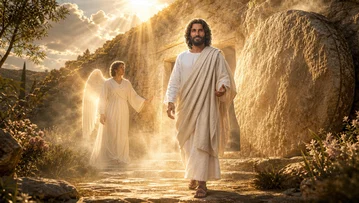
He is the Living One risen from the tomb and no longer to be sought among the dead, not in tomb or shrine or claimed relics, not in dead doctrines and human traditions, not in cold resolutions and worn-out forms of worship and institutions, and not in the dead past.ST Mar 5, 1902ST Nov 6, 1901ST Apr 8, 1903 His truth and His work cannot be imprisoned or bound or stayed by stone or creed or tradition or resolution, and no place where Christ abides can be bound by man even when outward life is crushed out and only the dead grave remains.ST Mar 5, 1902ST Apr 8, 1903 Faith does not cling to places where He has been or to methods and forms that once served useful work but have become empty, for success comes from divine life rather than from repeating a method, and the risen Christ leads onward into clearer light and new fields of service among those in need. Reverence for material things of the past departs from the true way and loses the power of the Spirit of life, since such relics need only be claimed, traced back a century or more, and supported by an alleged miracle or so to draw worship without proof of genuineness.ST Nov 6, 1901
He lives again after living and dying, and His living and dying and rising were for each person, personally meaningful to the reader.RH Nov 16, 1916ST Aug 8, 1878 He is directly accessible through faith and is Himself priest, and His own word remembered and believed is sufficient proof that turns grief to joy and despair to hope.ST Apr 3, 1901 His resurrection gives freedom from death and from sin and for worship and obedience, so believers need not submit faith to human creeds and institutions.ST Mar 29, 1899 Mary Magdalene's bitter weeping over the empty tomb and failure to recognize Him when He appeared came from unbelief of His word spoken beforehand in Galilee, and the same lack of implicit confidence keeps professed followers mourning over troubles today instead of fully realizing they have a living Saviour who is a very present help in trouble; had they believed they would have been at the tomb expecting Him to come forth.ST Apr 10, 1901
Devotion like that of the women who came with spices led them to be first to see Him alive, and for His sake women still go forth as myrrh-bearers by twos and threes at home and abroad, leaving ease behind to minister through tragic darkness wherever any rim of promise appears and counting it joy to retell the joyful tale, bringing votive gifts whose chief worth is that they have been bruised for Christ.ST Aug 26, 1880 He is a living Saviour whose continuing works and care for His people should stir them daily to faithful service.RH Mar 12, 1914 The rolled-away stone means the Lord has done His part to open the way, answering prayer for open doors by sending the Holy Spirit into heathen hearts to arouse them so that they cry out what they must do to be saved and beg and plead and pray for the good news of a risen Saviour.ST Apr 16, 1894
The angels reminded the women of His words and charged them to tell the sorrowing disciples that He is risen and will meet them in Galilee, and the news brought great joy.ST Mar 29, 1899 That blessing came first to the women, then through His appearances and the disciples' renewed joy as a preparation for the Pentecostal baptism.ST Nov 11, 1908 In the showers before Pentecost the inspiring message established wavering faith and filled recipients with hope and courage and great joy in giving it from lip to lip, and the Pentecostal outpouring did not change that message but sent it to the whole world with the added truth that He has ascended to glory.ST Nov 11, 1908 It is proclaimed as Christ is risen even at midnight when mourning gives way to celebration and people greet one another with the announcement, though at Jerusalem the public Easter celebration is presented as mere formalities that leave people without inner spiritual life.ST Mar 16, 1915
His death and rising belong to the simple gospel story whose power is clear without added commentary, and His rising from the dead belongs to the account of His life.ST Oct 10, 1878ST Nov 28, 1906
Witnesses and Appearances
The angels in shining garments announced that he was no longer in the tomb because he had risen as he had said, reminding the women of his words in Galilee that he must suffer, be crucified, and rise on the third day.ST Mar 29, 1899ST Feb 22, 1899 They charged the women to carry the news to the sorrowing disciples that he was risen and would meet them in Galilee, and the women remembered his words and reported what they had seen and heard.ST Mar 29, 1899ST Feb 22, 1899ST Nov 11, 1908 That message brought blessing first to the women themselves, filling them with great joy, and then through his appearances renewed the disciples' joy as preparation for the Pentecostal baptism.ST Mar 29, 1899ST Nov 11, 1908 In those showers of blessing before Pentecost the inspiring announcement established wavering faith and filled its recipients with hope and courage and great joy in passing it from lip to lip with ecstatic joy.ST Nov 11, 1908 The Pentecostal outpouring did not change that message but sent it to the whole world with the same announcement together with the added truth that he has ascended to glory.ST Nov 11, 1908
The resurrection was proclaimed through the women's testimony that they had found the tomb empty and had seen their risen Lord, joined by the testimony of Mary Magdalene, Peter, and John that the tomb was empty, and by reports from Roman soldiers, despite efforts to suppress them.ST Feb 22, 1899ST Feb 7, 1911 These reports confirm the angels' announcement, while the claim that the disciples stole his body conflicts with the testimony that he is risen.ST Feb 22, 1899 He is risen and living, and the message also points to him going ahead of his followers, for he was alive and going before them to Galilee where they would see him.ST Mar 18, 1913 The disciples were thereby taught not to seek the living Christ among the dead nor to look to the tomb for power or blessing.ST Mar 18, 1913 The risen Lord still goes before his church and bids it follow, leading his people onward into new fields of service among those in need, which gives the church a living, forward-looking hope.ST Apr 2, 1902 That hope is reason not to cling to outdated beliefs or past mistakes, nor to seek spiritual power in methods or forms that once served useful work but have become empty, but to welcome clearer light from the same Word, since success comes from divine life and not from repeating a method.ST Apr 2, 1902
Sources