Translations
American King James Version, King James Version, KJV Cambridge Paragraph Bible, Webster Bible, Revised Version, American Standard Version
And they remembered his words,
And they remembered his sayings,
And they remembered his words;
And they remembered his sayings;
Berean Standard Bible, Majority Standard Bible
Then they remembered His words.
They remembered his words,
And his words came back into their minds,
And they remembred his wordes,
Douay-Rheims (Challoner revision)
And they remembered his words.
Pictures
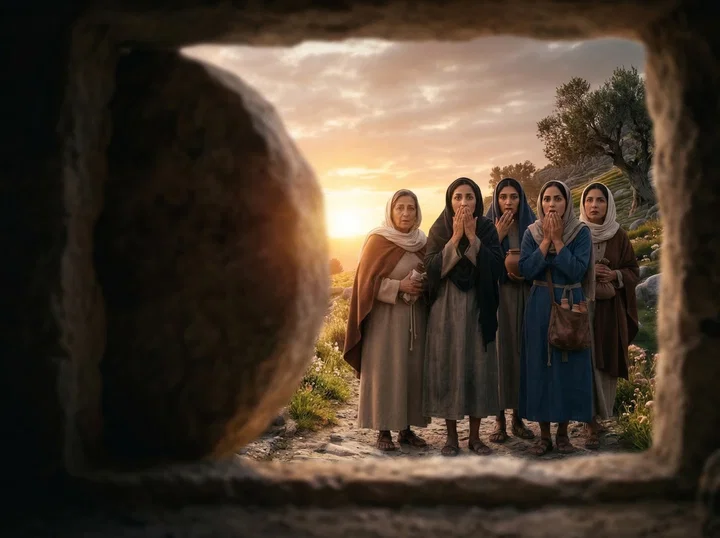
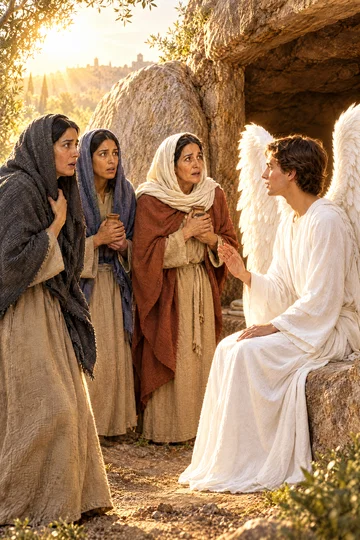
Cross-references 20 of 46
- Matthew 28:6
He is not here: for he is risen, as he said. Come, see the place where the Lord lay.
The angel announces that Jesus has risen, as he said.
- Mark 16:1-6
And when the sabbath was past, Mary Magdalene, and Mary the mother of James, and Salome, had bought sweet spices, that they might come and anoint him.
Women arrive at the tomb and receive the angel’s message that Jesus is risen.
- John 20:1-18
The first day of the week cometh Mary Magdalene early, when it was yet dark, unto the sepulchre, and seeth the stone taken away from the sepulchre.
Mary discovers the empty tomb and encounters the risen Jesus.
- Luke 24:13-35
And, behold, two of them went that same day to a village called Emmaus, which was from Jerusalem about threescore furlongs.
The risen Christ explains the Scriptures to two disciples on the Emmaus road.
- Mark 16:9-11
Now when Jesus was risen early the first day of the week, he appeared first to Mary Magdalene, out of whom he had cast seven devils.
The disciples initially disbelieved Mary’s report that Christ had risen.
- John 20:19
Then the same day at evening, being the first day of the week, when the doors were shut where the disciples were assembled for fear of the Jews, came Jesus and stood in the midst, and saith unto them, Peace be unto you.
The risen Jesus appears to the gathered disciples on the first day of the week.
- Luke 24:1
Now upon the first day of the week, very early in the morning, they came unto the sepulchre, bringing the spices which they had prepared, and certain others with them.
Names the resurrection morning as the first day of the week.
- Mark 16:7
But go your way, tell his disciples and Peter that he goeth before you into Galilee: there shall ye see him, as he said unto you.
The message recalls Jesus’ promise to meet the disciples in Galilee.
- Matthew 28:9-10
And as they went to tell his disciples, behold, Jesus met them, saying, All hail. And they came and held him by the feet, and worshipped him.
The risen Jesus meets the women and tells them to inform his disciples.
- Mark 8:31
And he began to teach them, that the Son of man must suffer many things, and be rejected of the elders, and of the chief priests, and scribes, and be killed, and after three days rise again.
Jesus foretells his death and rising again.
- Luke 23:56
And they returned, and prepared spices and ointments; and rested the sabbath day according to the commandment.
The women rested on the Sabbath before going to the tomb.
- John 20:11-18
But Mary stood without at the sepulchre weeping: and as she wept, she stooped down, and looked into the sepulchre,
The risen Jesus appears to Mary Magdalene after she sees two angels at the tomb.
- Luke 24:12
Then arose Peter, and ran unto the sepulchre; and stooping down, he beheld the linen clothes laid by themselves, and departed, wondering in himself at that which was come to pass.
Peter runs to the tomb and finds the linen clothes.
- Luke 24:36-43
And as they thus spake, Jesus himself stood in the midst of them, and saith unto them, Peace be unto you.
The risen Jesus appears to the disciples and shows that he has flesh and bones.
- John 2:22
When therefore he was risen from the dead, his disciples remembered that he had said this unto them; and they believed the scripture, and the word which Jesus had said.
After Jesus rose, his disciples remembered his words.
- Luke 9:22
Saying, The Son of man must suffer many things, and be rejected of the elders and chief priests and scribes, and be slain, and be raised the third day.
Jesus foretold his suffering, death, and resurrection.
- Matthew 16:21
From that time forth began Jesus to shew unto his disciples, how that he must go unto Jerusalem, and suffer many things of the elders and chief priests and scribes, and be killed, and be raised again the third day.
Jesus foretells his suffering, death, and resurrection.
- 1 Corinthians 15:20
But now is Christ risen from the dead, and become the firstfruits of them that slept.
Christ’s resurrection assures the hope of resurrection.
- Matthew 28:1
In the end of the sabbath, as it began to dawn toward the first day of the week, came Mary Magdalene and the other Mary to see the sepulchre.
Describes the women arriving at Jesus’ tomb on the first day.
- Acts 1:3
To whom also he shewed himself alive after his passion by many infallible proofs, being seen of them forty days, and speaking of the things pertaining to the kingdom of God:
Jesus appeared to his disciples after rising.
Commentary
Each commentary is drawn from primary sources: the writings of Ellen G. White and Adventist pioneers and periodicals. Each commentary is separate. Its own words are not a quotation; follow the references to read the source passages.
Ellen G. White
12 sources
It was early morning on the first day of the week after the crucifixion when the women bringing spices found the stone rolled away and the body gone, and two bright angels told them Jesus had risen and charged them to tell His disciples He would go before them into Galilee; the frightened women carried what they saw and heard to the mourning disciples, but the disciples could not believe He had risen, and though with the women they ran to the tomb and found truly He was not there, only His linen clothes, and returned home marveling at what they saw and at the women's report, they remained unbelieving, while Mary lingered at the tomb distressed and weeping, fearing she had been deceived and that new trials awaited her.SG1 71.2 The words remembered were what Jesus had said in Galilee, that He would be handed over, crucified, and rise on the third day, for His words had foretold His death and resurrection.Ms 115, 1897, par. 1–2 The women remembered His words about what would happen to Him, and that remembering was important for recognizing the meaning of His resurrection, while the disciples, overwhelmed by sorrow over His death, could not recall His predictions that these events would take place.Ms 113a, 1897, par. 15RED 94.2 On the day He rose the disciples struggled to believe the women's report that He was alive, because their hopes had died with Him and the news was unlike what they expected, and their faith in the resurrection was weakened by Sadducean teaching and so-called scientific theories, leaving them unsure what resurrection from the dead meant.Ms 113a, 1897, par. 1
Heavenly messengers work upon the human minds given to their charge by bringing precious remembrances fresh before the mind, as they did for the women at the tomb in causing them to recall Christ's words, cooperating with human agencies for conversion and sanctification in condescension to human weakness.Lt 116, 1899, par. 13–14 When the disciples heard the women's report, they recalled Jesus' words foretelling His resurrection, which should have prepared them to rejoice, yet their faith was weakened by the disappointment of His death, so they struggled to accept that He had risen.6RED 23.2–24.1 They had forgotten His words that He would rise from the dead on the third day, and so had lost the comfort His promise should have given them.Ms 189, 1907, par. 24 Though they had everything to fill their hearts with rejoicing, to some it was a day of uncertainty, confusion, and perplexity; the women brought tidings that a vision of angels had appeared and positively affirmed that Christ had risen and that they themselves had seen Jesus alive in the garden, while the disciples' apparent unbelief in that testimony shows how low their faith had sunk.Ms 113, 1897, par. 1
The morning news about the removal of Christ's body and the women's report of seeing angels and meeting Jesus had already reached the two earnest believing disciples who had come to Jerusalem to keep the Passover before they set out late in the afternoon for Emmaus eight miles away, yet as they walked and talked over the trial and crucifixion they remained greatly perplexed, sad, hopeless, and faithless.DA 795.1 The account of the resurrection morning, when the disciples remembered Jesus' words, was confirmed by later appearances of the risen Christ; their testimony that they found the tomb empty, saw the burial shroud, and then saw and spoke with Jesus established that He had risen and that His body had not seen corruption.Ms 203, 1898, par. 9 The chapter shows God's love in giving His Son to save sinners; salvation is offered to all who repent and are converted, made possible because Christ suffered the penalty of death, and those who come to the Father through faith in Christ, rely on Him, and follow His example receive assurance of forgiveness, while His suffering makes sanctification through belief in the truth possible.Lt 100, 1910, par. 18 The chapter shows the work Christ gave His followers and calls God's people to understand and carry out that work by bearing witness and taking the gospel to others.RH Jan 26, 1905
Sources
Pioneers and periodicals
41 sources
At the empty tomb the angels reminded the women of what he had spoken in Galilee, and they remembered his words and connected the empty tomb and the announcement that he had risen with what he had said beforehand.ST Dec 3, 1894ST Apr 3, 1901RH Jun 6, 1865 What they remembered was his prediction that the Son of man must be delivered into the hands of sinful men and be crucified and rise again the third day.ST Dec 3, 1894ST Apr 3, 1901RH Jun 6, 1865 They had not believed and looked forward to that day beforehand, but remembering and believing his word changed their grief to joy and despair to hope and sent them quickly to report to the eleven and the rest that he was alive.ST Apr 3, 1901RH Jun 6, 1865ST Nov 11, 1908ST Apr 3, 1901 The one who rose was the same identical Jesus of Nazareth who had died on the cross and been laid in the sepulchre, proving his resurrection bodily, literal and physical, and giving assurance that his own will rise likewise at his coming.RH Nov 21, 1854ST Jun 26, 1901ST Oct 14, 1889 His appearances and words on that first day showed he was alive and gave the resurrection as an event to remember, but they did not make the first day holy or set it apart as a day of worship and rest in place of the seventh-day Sabbath.RH Feb 13, 1872ST Jul 2, 1894ST Aug 6, 1912ST Mar 9, 1882RH Nov 21, 1871
Setting at the Empty Tomb
Early in the morning on the first day of the week after the crucifixion, after resting on the Sabbath according to the commandment, the women came to anoint the body and found the stone rolled away and the body of the Lord Jesus gone, leaving them perplexed.ST Oct 21, 1886RH Nov 21, 1854RH Oct 23, 1856RH Feb 11, 1858ST Sep 10, 1896 That first day belongs to the account after Christ rose from the dead, a day of secular activity, anxiety, and unrest on the part of the apostles, never a holy day or day of worship.RH Oct 23, 1856ST Sep 10, 1896 The remembering took place within those events of the first day after the crucifixion, at the sepulchre.RH Nov 21, 1854RH Oct 23, 1856
Two men in shining raiment sat within the tomb, angels in dazzling white apparel, who declared he is not within the tomb, that Jesus the Nazarene who was crucified was risen and not there.ST Oct 21, 1886RH Nov 21, 1854RH Dec 5, 1865 They asked why the living was sought among the dead, with the message He is not here but is risen.ST Oct 21, 1886RH Nov 21, 1854 Their announcement was joined with an invitation to examine the place where he had lain, so assurance could be given that he was not there but had risen and had left the tomb vacant.ST Oct 14, 1889 The word given was to go tell John and Peter that their Jesus lives again, to run to tell his disciples that he goes before them into Galilee, directing believers away from seeking Christ among the dead and toward following the living, risen Saviour who goes before them and ministers to people in need.ST Oct 21, 1886RH Dec 5, 1865ST Feb 17, 1898
When the angels reminded them of what he had spoken in Galilee, the women remembered his words, connecting the empty tomb and the announcement that he had risen with what he had said beforehand.ST Dec 3, 1894ST Apr 3, 1901ST Oct 21, 1886 They recalled that he had foretold his suffering, crucifixion, and resurrection on the third day, that the Son of man must be delivered to sinful men, crucified, and rise on the third day.ST Dec 3, 1894ST Apr 3, 1901RH Jun 6, 1865ST Oct 21, 1886 The encounter with the empty tomb and being told that he had risen was thus joined to his prediction, helping them understand that he had risen as he said.
Remembering his prediction led them to leave the tomb and tell the disciples what had happened.ST Apr 3, 1901ST Feb 22, 1899 They departed quickly from the tomb with fear and great joy and returned and told all these things to the eleven and to the rest, reporting what they had seen and heard.ST Apr 3, 1901RH Jun 6, 1865ST Oct 21, 1886RH Jan 17, 1856ST Feb 22, 1899 Their report included a vision of angels declaring that he was alive, and others of the company afterward went to the tomb and found it just as the women said, though they did not see him.ST Apr 4, 1900 That report from the tomb amazed the company and was repeated to Jesus on the way to Emmaus, and began to circulate widely.ST Apr 4, 1900
The disciples at first dismissed the women's report as an idle tale and did not believe them.RH Jun 6, 1865RH Jan 17, 1856RH Sep 11, 1860 Though the women heard the angels announce that Jesus has risen and reported what they heard to the eleven and the others, their words seemed as idle tales.RH Jan 17, 1856RH Sep 11, 1860 The morning report that Jesus was risen was true, yet those shut in the upper room on Sunday night in Jerusalem remained disheartened, hopeless, faithless, and filled with doubts and fears, having not believed the women.ST Mar 8, 1905
Words They Remembered
The words they remembered were what he had spoken in Galilee, that the Son of man must be delivered into the hands of sinful men and be crucified and rise again the third day, foretelling his suffering, crucifixion, and resurrection.ST Dec 3, 1894ST Apr 3, 1901RH Jun 6, 1865ST Oct 21, 1886RH Nov 21, 1854 They recalled this prediction when the two men in dazzling white apparel reminded them of it, while they were perplexed at finding the stone rolled away and the body of the Lord Jesus gone and hearing that Jesus of Nazareth who was crucified was risen and was not there.ST Oct 21, 1886RH Nov 21, 1854RH Jan 17, 1856 The body that had died on the cross and that Joseph had taken down and wrapped in linen and laid in the hewn stone sepulchre was not there, and the announcement that he is not here but is risen means this identical personage arose from the dead.RH Nov 21, 1854 The one afterward remembered is the same Jesus of Nazareth who drew near on the road, sat at meat and broke bread, returned to Jerusalem, and stood among them showing his hands and his feet with flesh and bones as himself, proving a literal death with no soul or spirit escaping and no change to another person in death, burial, and resurrection.RH Nov 21, 1854 Remembering led them to depart quickly from the tomb with fear and great joy and run to tell his disciples that he goes before them into Galilee, and to return and tell all these things to the eleven and to the rest, though their words seemed as idle tales and they were not believed.ST Apr 3, 1901RH Jun 6, 1865ST Oct 21, 1886RH Jan 17, 1856
He had already instructed Mary Magdalene and the other disciples that he would rise, including that he would rise from Joseph's tomb.ST Aug 26, 1880ST Apr 10, 1901 The Marys remembered that word at the empty tomb and then told that tale to others, and telling it was great joy.ST Aug 26, 1880 If they had believed his instruction they would have been at the tomb earlier that morning expecting him to arise and come forth, and their trouble and weeping and failure to recognize Jesus alive came from unbelief of his word.ST Apr 10, 1901
The phrases after three days and in three days and three days and three nights are general expressions as used today and do not mean exactly seventy-two hours, since day and night was a Jewish expression for a day even when lacking several hours. The three days include his sufferings and betrayal as well as his crucifixion, as shown when the two men going to Emmaus told him at the very close of the first day that it was the third day since those things were done. His resurrection occurred in A.D. 31, the same year as his crucifixion.ST Sep 22, 1909
Belief After Forgetting
The disciples had not beforehand remembered and believed his words about his death and resurrection, and they did not look forward with joyous hope to the third day to see him again, for they failed to remember his prediction that he would rise on the third day.ST Jul 29, 1908ST Dec 3, 1874 Their mourning in sadness, their sore disappointment, their disappointed talk on the way to Emmaus, and their astonishment at the women's report of angels saying he was alive proved they did not understand God's plan for the salvation of lost men through Christ's death and intercession and had no real faith in his resurrection.ST Dec 3, 1874 Their trust that he would redeem Israel meant they supposed he would free them from under the hand of the Romans by then establishing his kingdom and being crowned as king, and instead they saw him crucified on the cross.RH Dec 8, 1874ST Dec 3, 1874 Therefore Jesus had to begin at Moses and all the prophets and expound to them in all the Scriptures the things concerning himself and show that his suffering was fulfillment of prophecy.RH Dec 8, 1874ST Dec 3, 1874 As their disappointment over seeing him crucified instead of crowned did not prove Christianity false, so the disappointment of the Millerites over Christ's soon coming does not prove that doctrine false.RH Dec 8, 1874
Their trouble and weeping and failure to recognize Jesus alive came from unbelief of his word, for if they had believed his instruction they would have been at the tomb earlier that morning expecting him to arise and come forth.ST Apr 10, 1901 When the angels reminded them of what he had spoken in Galilee — that he would be delivered into sinful hands and be crucified and rise on the third day — the women remembered his words, and remembering his prediction helped them understand that he had risen as he said. Believing his word changed their grief to joy and despair to hope, gave them confidence, turned sorrow to joy, and revived hopes that had been cast down by his unexpected crucifixion.ST Nov 11, 1908ST Apr 3, 1901ST Feb 9, 1882 That remembering was a shower of blessing, one of the showers that fell before the early rain to prepare the early church for the pentecostal baptism, and with it they were entrusted with the risen message to carry to the sorrowing disciples.ST Nov 11, 1908
Prophecy often serves not to disclose future details in advance, but, when fulfilled, to show that the event was already within God's knowledge and eternal plan.ST Jan 9, 1912 His words about the resurrection were as certain to be fulfilled as his prediction of his suffering and death.ST Jul 29, 1908 His own word is sufficient proof of the resurrection, with Scripture as the enduring proof while no further evidence can persuade the unbeliever.ST Apr 3, 1901 The angel's announcement that he was risen was joined with an invitation to examine the place where he had lain, so the disciples could be assured he was not there but had risen and had left the tomb vacant.ST Oct 14, 1889
Bodily Resurrection and Hope
The announcement that he is not here but is risen means that this identical personage arose from the dead.RH Nov 21, 1854 The body that died on the cross, which Joseph took down and wrapped in linen and laid in the hewn stone sepulchre, was not there with the stone rolled away.RH Nov 21, 1854 The one who afterward drew near on the road, sat at meat and broke bread, returned with the disciples to Jerusalem, and stood among them showing his hands and his feet with flesh and bones as I myself, is the same Jesus of Nazareth.RH Nov 21, 1854 That proves a literal death with no soul or spirit escaping and no change to another person in death, burial, and resurrection.RH Nov 21, 1854
The invitation to examine the place where he had lain assured that he was not there but had risen and had left the tomb vacant.ST Oct 14, 1889 The resurrection was bodily, literal and physical, not spiritual.ST Oct 14, 1889 As his resurrection was, so will be the resurrection of those who are his at his coming, when this mortal shall put on immortality.ST Oct 14, 1889 That proves his coming to raise the dead is literal and personal.ST Oct 14, 1889
The resurrection is the hope of the gospel.ST Jun 26, 1901 Christ's resurrection is assurance that the dead will rise.ST Jun 26, 1901 The remembering of his words is joined to that resurrection hope.ST Jun 26, 1901
Luke's account of the bodily resurrection gives true details that the other Gospel accounts may omit, without contradicting them.ST Mar 5, 1912 It stands alongside the other accounts of Christ's birth and resurrection with all their divergences and contrasts, with no editorial explanation, weighing of conflicting statements, or harmonizing comment added.ST Jun 14, 1877 This perfect simplicity and guileless confidence in spreading apparently conflicting statements without attention or anxiety shows artlessness of conscious truth, solemn divine truthfulness, and sublime consciousness of integrity.ST Jun 14, 1877 Rejecting that Gospel testimony while accepting the rest of the record undermines confidence in its witnesses.RH Jan 1, 1914
First Day and Sabbath
The record of that first day after the resurrection shows how the disciples actually spent it, for two traveled from Jerusalem to Emmaus while the rest were in secular activity, anxiety and unrest, and the women who remembered his words at the sepulchre returned and told all these things to the eleven and to the rest, but their words seemed as idle tales and were not believed, proving they did not believe he was risen.RH Jan 17, 1856ST Mar 18, 1889ST Sep 10, 1896 They did not treat that day as a Sabbath or gather to celebrate it, did not observe it in honor of the resurrection or as a Sabbath, and did not keep Sunday as a Sabbath.RH Jan 17, 1856ST Jul 2, 1894ST Mar 18, 1889 No obligation to observe the first day is expressed or implied, and the account leaves no Biblical support for setting aside the seventh-day Sabbath of Jehovah in favor of the first day.RH Jan 17, 1856ST Jul 2, 1894ST Sep 10, 1896
That resurrection day was an eventful day in Christ's history, when he was seen by the women at the sepulchre, by the two disciples at Emmaus, and by Peter at Jerusalem just before sunset, and when he expounded the Scriptures concerning himself, showed he was the very one who had been slain, and gave the apostles their commission and invested them with authority.RH Feb 13, 1872RH Nov 21, 1871ST Apr 13, 1882 All this was done on the first day, not to the first day, doing nothing to the day itself and giving it no rest, no blessing, no appointment to holy use, no act of a Sabbatical character, and not even taking up the day into words.RH Nov 21, 1871 It did not make the first day a Sabbath, did not make it preferable to the Sabbath made by rest, blessing and appointment, did not honor it above other days, and did not give it the title of Lord's day.RH Feb 13, 1872RH Nov 21, 1871
Those appearances on the first day showed that he was alive and had risen, and the resurrection is an event to remember, but they did not declare the first day holy or set it apart as a day of worship or rest, establish it as sacred, or appoint it as a day of rest.ST Jul 2, 1894ST Aug 6, 1912ST Mar 9, 1882RH Nov 21, 1871 The first-day sightings did not make the first day sacred, since the ascension forty days later on Thursday was in some respects the most important manifestation and was not in honor of the first day.ST Apr 13, 1882 His first meeting with the disciples after the Emmaus disciples returned to Jerusalem occurred near sunset at the close of the resurrection day, or possibly after the second day had begun, and this timing shows the meeting does not establish the first day of the week as sacred.RH Feb 25, 1862
Luke 24 belongs with Matthew 28, Mark 16, and John 20 and 21 as the full account of that first first day, and it stands as part of the final two chapters of Luke dealing with the trials of the Lord, his crucifixion, his triumph over death, and his parting instruction to his disciples.ST Oct 4, 1910ST Jul 2, 1894 Luke 24:1-23 gives light from God that the seventh-day Sabbath must be kept, so that a Christian who has seen this light must either keep the Sabbath in obedience to God or give up all claim to Christianity, choosing obedience to God over opposition from relatives and friends.ST Dec 10, 1902
Witness and Christian Life
Luke 24 shows the work Christ gave His followers, and calls God's people to understand that work and to carry it out by bearing witness and taking the gospel to others.RH Jan 26, 1905 The sad-hearted sisters came early in the morning to anoint the body of Jesus and met two shining angels at the sepulcher who told them He was risen, and then they remembered His words.ST Nov 11, 1908 That remembering was a shower of blessing that turned sorrow to joy, and with it they were entrusted with the risen message to carry to the sorrowing disciples.ST Nov 11, 1908 It was one of the showers that fell before the early rain to prepare the early church for the pentecostal baptism.ST Nov 11, 1908 Their morning report that Jesus was risen and that they had seen Him was true, yet on Sunday night in Jerusalem the disciples shut in the upper room were utterly disheartened, hopeless, faithless, and filled with doubts and fears and had not believed the women.ST Mar 8, 1905 The two disciples returning from Emmaus confirmed that Jesus was risen and that they had seen Him, and then the risen Jesus Himself appeared to the amazed disciples, dissipating all doubt and sorrow and filling them with faith and hope.ST Mar 8, 1905
The eagerness of the women who hurried to Jesus' tomb after His death contrasts with the disciples at Emmaus, who were sad and despondent. After the angel told them He had risen the women remembered Jesus' words, and the message of the empty tomb directs believers away from seeking Christ among the dead and toward following the living, risen Saviour.ST Feb 17, 1898 He goes before them and ministers to people in need.ST Feb 17, 1898 The Marys remembered His words that He would rise from Joseph's tomb, and then told that tale to others, and telling it was great joy.ST Aug 26, 1880 Women still have just that joy when they go forth by twos and threes through tragic darkness wherever they see the faintest rim of promise, ministering for His sake at home and abroad, burdened with votive gifts for God whose chief worth is that their spices have been bruised for Christ.ST Aug 26, 1880
Jesus had already instructed Mary Magdalene and the other disciples that He would rise, yet they remembered His words only at the empty tomb.ST Apr 10, 1901 Their trouble and weeping and failure to recognize Jesus alive came from unbelief of His word, for if they had believed His instruction they would have been at the tomb earlier that morning expecting Him to arise and come forth.ST Apr 10, 1901 The same unbelief and lack of implicit confidence in the Scriptures of truth keeps professed followers today mourning over troubles and failing to fully realize they have a living Saviour.ST Apr 10, 1901 After His resurrection Jesus met disciples who were sorely disappointed because they had expected Him to be crowned as king and instead saw Him crucified on the cross, and He showed them that His suffering was fulfillment of prophecy, so their disappointment did not prove Christianity false.RH Dec 8, 1874 So the disappointment of the Millerites over Christ's soon coming does not prove that doctrine false.RH Dec 8, 1874
Sources