Mark 15:43
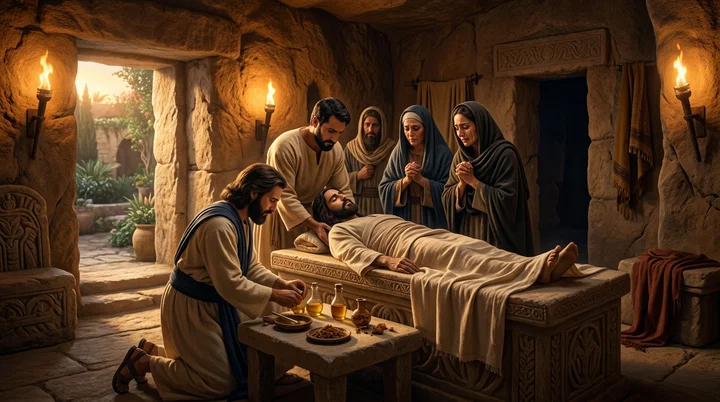
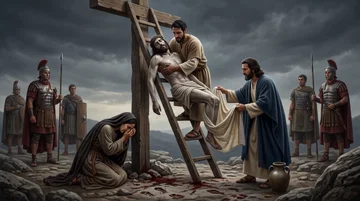
Joseph of Arimathaea, an honourable counsellor, which also waited for the kingdom of God, came, and went in boldly unto Pilate, and craved the body of Jesus.
Translations
Joseph of Arimathaea, an honorable counselor, which also waited for the kingdom of God, came, and went in boldly to Pilate, and craved the body of Jesus.
Joseph of Arimathaea, an honourable counsellor, which also waited for the kingdom of God, came, and went in boldly unto Pilate, and craved the body of Jesus.
Joseph of Arimathea, an honourable counseller, which also waited for the kingdom of God, came, and went in boldly unto Pilate, and craved the body of Jesus.
Joseph of Arimathea, an honorable counselor, who also waited for the kingdom of God, came, and went in boldly to Pilate, and craved the body of Jesus.
there came Joseph of Arimathaea, a councillor of honourable estate, who also himself was looking for the kingdom of God; and he boldly went in unto Pilate, and asked for the body of Jesus.
there came Joseph of Arimathæa, a councillor of honorable estate, who also himself was looking for the kingdom of God; and he boldly went in unto Pilate, and asked for the body of Jesus.
Joseph of Arimathea, an honourable counsellor, who also himself was waiting for the reign of God, came, boldly entered in unto Pilate, and asked the body of Jesus.
Joseph of Arimathaea, an honourable councillor, who also himself was awaiting the kingdom of God, coming, emboldened himself and went in to Pilate and begged the body of Jesus.
Joseph of Arimathaea, a noble counsellor, who, also himself, was awaiting the kingdom of God, came; and, venturing, went in unto Pilate, and claimed the body of Jesus.
Berean Standard Bible, Majority Standard Bible
Joseph of Arimathea, a prominent Council member who himself was waiting for the kingdom of God, boldly went to Pilate to ask for the body of Jesus.
Joseph of Arimathaea, a prominent council member who also himself was looking for God’s Kingdom, came. He boldly went in to Pilate, and asked for Jesus’ body.
There came Joseph of Arimathaea, a responsible man in high honour, who was himself waiting for the kingdom of God; and he went in to Pilate without fear, and made a request for the body of Jesus.
Ioseph of Arimathea, an honorable counsellour, which also looked for the kingdome of God, came, and went in boldly vnto Pilate, and asked the body of Iesus.
Douay-Rheims (Challoner revision)
Joseph of Arimathea, a noble counsellor, who was also himself looking for the kingdom of God, came and went in boldly to Pilate, and begged the body of Jesus.
Pictures
Cross-references
- John 19:38-42
And after this Joseph of Arimathaea, being a disciple of Jesus, but secretly for fear of the Jews, besought Pilate that he might take away the body of Jesus: and Pilate gave him leave. He came therefore, and took the body of Jesus.
Joseph obtains Jesus’ body and buries it with Nicodemus.
- Luke 23:50-53
And, behold, there was a man named Joseph, a counsellor; and he was a good man, and a just:
Describes Joseph’s request and Jesus’ burial.
- Matthew 27:57-60
When the even was come, there came a rich man of Arimathæa, named Joseph, who also himself was Jesus’ disciple:
Joseph asks Pilate for Jesus’ body and places it in his tomb.
- Luke 23:54-56
And that day was the preparation, and the sabbath drew on.
The women saw Jesus’ burial before the Sabbath and rested when it began.
- Isaiah 53:9
And he made his grave with the wicked, and with the rich in his death; because he had done no violence, neither was any deceit in his mouth.
Jesus’ burial with the rich fulfilled the prophecy.
- John 19:39-40
And there came also Nicodemus, which at the first came to Jesus by night, and brought a mixture of myrrh and aloes, about an hundred pound weight.
Nicodemus joins Joseph in preparing Jesus’ body for burial.
- John 19:33
But when they came to Jesus, and saw that he was dead already, they brake not his legs:
Jesus is confirmed dead before his body is taken down.
- Mark 16:1-2
And when the sabbath was past, Mary Magdalene, and Mary the mother of James, and Salome, had bought sweet spices, that they might come and anoint him.
The women visit Jesus’ tomb after the Sabbath, on the first day of the week.
- Matthew 27:60
And laid it in his own new tomb, which he had hewn out in the rock: and he rolled a great stone to the door of the sepulchre, and departed.
body laid in rich man's rock tomb with stone
- Mark 15:47
And Mary Magdalene and Mary the mother of Joses beheld where he was laid.
shares Mary's seeing where He was laid
- Matthew 27:66
So they went, and made the sepulchre sure, sealing the stone, and setting a watch.
official sealing of the grave stone
- Luke 23:56
And they returned, and prepared spices and ointments; and rested the sabbath day according to the commandment.
The women rested on the Sabbath during Jesus’ burial.
- Colossians 2:12
Buried with him in baptism, where in also ye are risen with him through the faith of the operation of God, who hath raised him from the dead.
Baptism is connected with Christ’s burial and resurrection.
- Matthew 28:1
In the end of the sabbath, as it began to dawn toward the first day of the week, came Mary Magdalene and the other Mary to see the sepulchre.
The account places the Sabbath before the first day of the week.
- Matthew 27:50
Jesus, when he had cried again with a loud voice, yielded up the ghost.
Jesus yields up the ghost at the cross.
Commentary
Each commentary is drawn from primary sources: the writings of Ellen G. White and Adventist pioneers and periodicals. Each commentary is separate. Its own words are not a quotation; follow the references to read the source passages.
Ellen G. White
16 sources
Joseph of Arimathea was a wealthy and honorable member of the Jewish council who was a true disciple waiting for the kingdom of God.SG1 64.1EW 148.2ST Aug 1, 1878 He and Nicodemus had kept their faith hidden while Jesus lived in hope of using their influence to protect Him, and though they opposed His arrest their plans were thwarted when He was condemned by a secret council held in their absence, so once He was dead they no longer hid but came forward openly.ST Aug 1, 1878DA 773.3–43SP 175.1–2 While the other disciples were too fearful and without influence to act, Joseph went in boldly to Pilate to crave the body of Jesus to save it from the burial ground for criminals and give it an honored burial.SG1 64.1EW 148.2ST Aug 1, 1878ST Aug 1, 1878DA 772.4–773.1 Pilate was surprised that Jesus was already dead, since the crucified often lived for days, and only granted the body after the centurion in charge of the crucifixion confirmed His death.DA 773.23SP 173.3–174.2COS 166.3–5 Their wealth and honored standing obtained from Pilate what the poorer disciples could not, and secured for Jesus a burial of highest honor with fine linen and about one hundred pounds of costly spices in Joseph's own new tomb near Calvary.SG1 64.13SP 173.3–174.2ST Aug 1, 1878DA 772.4–773.1DA 773.3–4
Joseph's Identity and Courage
Joseph of Arimathea was a wealthy, influential and honorable Jewish counsellor, a member of the Sanhedrin, and a true disciple who waited for the kingdom of God.SG1 64.1EW 148.2COS 166.3–5ST Aug 1, 1878DA 772.4–773.1 He is known as a respected councillor waiting for God's kingdom.SG1 64.1EW 148.2ST Aug 1, 1878
He and Nicodemus had believed but had not openly declared or accepted faith in Jesus while He lived.ST Aug 1, 1878DA 773.3–43SP 175.1–2 They held back because open acceptance would have excluded them from the Sanhedrin, and they hoped to retain their place and influence in its councils in order to protect Jesus.ST Aug 1, 1878DA 773.3–43SP 175.1–2
They had opposed the grounds for His condemnation and protested His arrest, and for a time seemed to succeed.DA 773.3–43SP 175.1–2 Their plans were thwarted when the leaders secured His condemnation in their absence through a secret council that did not summon him or Nicodemus.DA 773.3–43SP 175.1–2
Once Jesus was dead they no longer hid their attachment but came forward openly to help Him.ST Aug 1, 1878DA 773.3–43SP 175.1–2 Though Joseph approached Pilate privately because of the Jews' hatred and hostility and fear of it, he acted boldly in asking for the body.SG1 64.1EW 148.2ST Aug 1, 1878 He did so at a time when the other disciples were too afraid, intimidated and disheartened to show themselves openly as His followers.ST Aug 1, 1878DA 773.3–43SP 175.1–2
Pilate's Grant and Honored Burial
Jesus had been condemned as if for treason and opposition to the Roman government, and those so executed were to be handled by soldiers and laid in a burial ground reserved for criminals.ST Aug 1, 1878DA 772.4–773.1COS 166.1–2 John and the disciples treasured His body and feared such a dishonored burial, yet they had no influence with Pilate and could obtain no help from the Jewish authorities to prevent it.ST Aug 1, 1878DA 772.4–773.1COS 166.1–2 Joseph went in boldly to Pilate and craved the body of Jesus so that it could be taken down and receive burial, an honored burial.DA 773.2SG1 64.13SP 173.3–174.2EW 148.2ST Aug 1, 1878
Pilate had not known Jesus was dead and was surprised at the request, since crucified persons often lived for days.DA 773.23SP 173.3–174.2ST Aug 1, 1878 He therefore sent for the centurion who had overseen the crucifixion and who was in charge of the soldiers, and confirmed the death from the centurion's testimony, which agreed with Joseph's account and with what had been seen at Calvary.DA 773.23SP 173.3–174.2COS 166.3–5ST Aug 1, 1878 Jesus had died just as the mysterious darkness over the earth ended, and the report of that early death strengthened Pilate's conviction that Jesus was no ordinary man and deepened his regret for having condemned Him.3SP 173.3–174.2ST Aug 1, 1878 Pilate then officially granted the request and gave Joseph his commission and order, allowing the disciples to take the body down from the cross.SG1 64.13SP 173.3–174.2EW 148.2ST Aug 1, 1878DA 773.3–4
The wealth and honored, influential standing of Joseph and Nicodemus enabled them to do for their dead Master what the poorer disciples could not do, to influence Pilate when the disciples could obtain no help, and largely protected them from blame, protest, censure and the malice of the priests and rulers.ST Aug 1, 1878DA 772.4–773.1DA 773.3–43SP 175.1–2 The burial they secured was exceptionally honored, for the body was wrapped in fine linen and treated with the honor given to a person of the highest standing.SG1 64.13SP 173.3–174.2ST Aug 1, 1878 Nicodemus joined Joseph with about one hundred pounds of costly myrrh and aloes for the embalming, to the astonishment of the disciples.ST Aug 1, 1878DA 773.3–4 The body was laid in Joseph's own new tomb near Calvary that had been reserved for himself, Joseph and the others carefully placing Him there, while the women who had followed Jesus stayed until He was buried and then left Him there at rest.SG1 64.15RED 95.2DA 773.3–4ST Nov 8, 1883
Sources
Pioneers and periodicals
28 sources
Joseph of Arimathaea was an honourable counsellor, a wealthy and influential ruler of his own nation and member of the council, who waited in faith for the kingdom of God on the ground of the ancient prophets.ST Aug 1, 1878ST Oct 26, 1904RH Jul 1, 1902 He went in boldly to Pilate and asked for and procured the body of Jesus, receiving the governor's official grant to take it.ST Aug 1, 1878ST Aug 1, 1878ST Oct 26, 1904 This was done on the evening of the preparation day before the Sabbath, with the burial hurried and completed before the Sabbath began, which was Friday before the seventh-day Saturday Sabbath immediately preceding the first day of the week.ST Jan 17, 1911RH Jun 2, 1851ST Apr 8, 1903ST May 13, 1903ST Aug 27, 1885 Though he and Nicodemus had kept their discipleship secret while Jesus lived, they now came forward openly while the disciples had fled, and their wealth and honored position enabled them to do what the poorer disciples could not and shielded them from blame.ST Aug 1, 1878ST Aug 1, 1878RH Jul 1, 1902ST Apr 6, 1888ST Nov 30, 1882 By giving Jesus a decent and honorable burial alone in Joseph's own new rock tomb instead of with criminals, they fulfilled Isaiah's prophecy that His grave would be with the rich, showing courage and love that grew through His shame and leaving an example of bold fidelity for believers to imitate.RH Jul 1, 1902ST Feb 1, 1899RH Oct 29, 1914ST Nov 30, 1882RH Jul 1, 1902
Burial Request and Setting
Joseph of Arimathaea was an honourable counsellor, a respected and influential member of the council or Sanhedrin, a wealthy ruler and gentleman of Jesus' own nation who was waiting for the kingdom of God in faith grounded in the ancient prophets.ST Aug 1, 1878ST Aug 1, 1878ST Aug 1, 1878RH Jul 1, 1902ST Apr 8, 1903 He went in boldly to Pilate and craved, asked for, and procured the body of Jesus, and Pilate officially granted the request so that Joseph returned with the governor's commission.ST Aug 1, 1878ST Aug 1, 1878ST Oct 26, 1904ST Apr 6, 1888ST Mar 12, 1894 Pilate verified death through the centurion in charge of the soldiers, supported by Joseph's testimony and the centurion's account of Calvary.ST Aug 1, 1878 He was surprised that Jesus was already dead, since crucified people often lingered for days and victims did not usually die in under two or three days.ST Aug 1, 1878ST May 13, 1903
Jesus died just as the darkness over the earth ended, unusually soon, of a broken heart shown by his piercing cry when his Father's face was hidden and by the blood and water that gushed when his side was pierced by the spear.ST Aug 1, 1878ST May 13, 1903 The report strengthened Pilate's belief that Jesus was no ordinary man and deepened his regret for condemning him.ST Aug 1, 1878 The giving of the body at the request of friends accords with Roman law or custom, under which a governor allowed a criminal's body to be buried unless the criminal was considered infamous.RH Feb 11, 1862 The evening associated with the burial is the first of the two evenings reckoned by the Jews, the period beginning about the ninth hour and ending at sunset, and it does not establish that the evening began at sunset.RH Jan 17, 1856
The body was gently removed from the cross, wrapped in clean linen with about a hundred pounds of costly myrrh, aloes, and other aromatic substances, treated with the honor given to a person of the highest standing, and tenderly borne by a few near friends a short distance to the tomb.ST Aug 1, 1878ST Aug 1, 1878ST Apr 8, 1903ST Feb 1, 1899ST Mar 12, 1894 The tomb was Joseph's own new tomb, cut out of rock and never used, belonging to the rich man.ST Apr 8, 1903ST Feb 1, 1899ST Apr 6, 1888ST Jan 31, 1911ST Jan 31, 1911 The grave was closed by a great stone and officially sealed with the government seal, which seemed to close the incident forever but only began it, and Mary Magdalene and Mary the mother of Joses saw where he was laid.ST Apr 8, 1903ST Mar 12, 1894
Joseph, joined by Nicodemus, acted to give Jesus a decent and honorable burial by himself rather than with the thieves, when followers feared the body would be handled by soldiers and placed in a burial ground reserved for executed criminals.ST Aug 1, 1878RH Oct 29, 1914ST Nov 30, 1882 The burial spared Jesus the ignominy appointed for Jewish criminals, who were denied the common burial-place and buried in the Valley of Hinnom amid the unclean dust heaps of Jerusalem and the ashes of burned temple offal.ST Feb 1, 1899 Joseph procured the body possibly by offering money for it.ST Feb 1, 1899
Sabbath Timing and Prophecy
Joseph came to Pilate on the evening of the day Jesus was crucified, near the close of the sixth day, the preparation day before the Sabbath, and Jesus was then taken down and laid in the tomb before the Sabbath began.ST Jan 17, 1911ST May 13, 1903ST Aug 27, 1885 The surrounding chronology places that Sabbath immediately before the first day of the week and identifies it as the seventh day.ST Aug 27, 1885 The day before the Sabbath is treated as the only proof that the crucifixion occurred on Friday, with the Sabbath understood to fall on Saturday.RH Jun 2, 1851ST Aug 27, 1885
As the day of the crucifixion wore to its close Joseph came forward with another wealthy friend to beg the governor for the body, bought a linen cloth and about a hundred pounds of aloes, myrrh, and other aromatic substances, wrapped the body in them, and laid it in a rock-hewn tomb belonging to the rich man.ST Apr 8, 1903 The grave was closed by a great stone and officially sealed with the government seal, which seemed to close the incident forever but only began it.ST Apr 8, 1903 Pilate was surprised Jesus was already dead and called the centurion in charge to ask if it was really true, since victims of crucifixion did not usually die in under two or three days.ST May 13, 1903 Jesus died unusually soon, of a broken heart shown by His piercing cry when His Father's face was hidden and by the blood and water that gushed when His side was pierced by the spear.ST May 13, 1903 The two criminals crucified with Him were not dead, and though the Jews asked that their legs be broken and that they be removed because they hung in a very public place and the next day was a high Sabbath, breaking their legs would not kill them that day and not necessarily at all, but only prevent escape, leaving no evidence the thief died the same day Christ died.ST May 13, 1903
The burial account expressly mentions the Sabbath, showing that the seventh day had not disappeared from the week.ST Mar 4, 1889 It belongs to the sequence showing that Christ's followers observed the seventh-day Sabbath, since after Joseph, an honourable council member waiting for the kingdom of God, boldly asked Pilate for the body and Jesus was buried, the women rested on the Sabbath according to the commandment.ST Oct 26, 1904ST Mar 4, 1889 The burial was hurried because the deepening shadows of the Sabbath were drawing on, and the mourners lingered only until Sabbath requirements drew them to their homes.ST Feb 1, 1899 Jesus lay in Joseph's new tomb at rest on the Sabbath, sleeping through God's appointed rest after winning for the world the way into eternal joy.ST Feb 1, 1899ST Jan 31, 1911
By preventing Jesus from being cast out with criminals and securing burial alone by Himself rather than with the thieves, with the rich, Joseph's action helped fulfill Isaiah's prophecy that His grave would be with the rich.RH Oct 29, 1914ST Nov 30, 1882 Joseph, a wealthy and influential ruler who awaited God's kingdom, boldly asked Pilate for the body so it could receive honorable burial, having the influence and means to secure a proper burial while the disciples lacked influence with the authorities and may not have dared to ask.RH Oct 29, 1914ST Nov 30, 1882
Courage, Witness, and Example
Joseph and Nicodemus had kept their discipleship secret and had not openly declared faith while Jesus lived, yet they now came forward to help him when the disciples had fled or shrunk from the cross.ST Aug 1, 1878RH Jul 1, 1902ST Apr 6, 1888 Their coming at that hour stood out because those who had openly followed Jesus drew back, while these hidden followers stepped in to claim and care for him.ST Aug 1, 1878ST Apr 6, 1888
Joseph and Nicodemus were two rich and honorable men whose wealth and honored, influential positions enabled them to do what the poorer disciples could not.ST Aug 1, 1878ST Aug 1, 1878ST Nov 30, 1882 The disciples lacked influence with the authorities and may not have dared to ask, whereas rank and means gave Joseph access to Pilate and in large measure protected both men from blame and protest.ST Aug 1, 1878ST Nov 30, 1882 Their standing thus secured for Jesus an honorable burial by himself rather than with the thieves, when followers feared the body would be handled by soldiers and placed in a burial ground reserved for executed criminals.ST Aug 1, 1878ST Nov 30, 1882
Joseph's courage and love for Jesus increased rather than diminished through Jesus' suffering and shame.RH Jul 1, 1902 Impressed to brave public sentiment and the reproach he could expect, he challenged Pilate's treatment of a man condemned as a criminal and honored Jesus by arranging a costly burial.RH Jul 1, 1902ST Feb 1, 1899 The request was made during the darkest time of Christ's cause on earth.ST Mar 12, 1894
Joseph's waiting for the kingdom of God is the same kind of looking as Simeon's waiting for the consolation of Israel, and it stands among examples of people waiting for the coming Redeemer.ST Dec 13, 1883ST Dec 22, 1898 Waiting for the kingdom of God is a mark of belief in the coming kingdom, applied to a lifelong believer in the second advent. Joseph was a cautious man whose faith became clear and whose convictions he acted on boldly, and his fidelity at the close of his career makes him an example for believers to imitate.RH Jul 1, 1902
The death and burial are to be told to children as the cruel death of the kind Jesus they had come to love.ST Sep 16, 1897 That witness was followed by Mary Magdalene of Magdala, out of whom Christ had cast seven devils.ST Jul 7, 1898 She had followed him and ministered to him in Galilee, was present on his last visit to Jerusalem, followed him to the cross and watched in silence under his agonies, and followed him to the sepulcher, and her devoted and faithful following through crucifixion and burial surpassed that of the disciples called from the shores of Galilee.ST Jul 7, 1898
Sources