Mark 2:25
And he said unto them, Have ye never read what David did, when he had need, and was an hungred, he, and they that were with him?
Translations
And he said to them, Have you never read what David did, when he had need, and was an hungered, he, and they that were with him?
And he said unto them, Have ye never read what David did, when he had need, and was an hungred, he, and they that were with him?
And he said unto them, Have ye never read what David did, when he had need, and was a hungred, he, and they that were with him?
And he said to them, Have ye never read what David did, when he had need, and was hungry, he and they that were with him?
And he said unto them, Did ye never read what David did, when he had need, and was an hungred, he, and they that were with him?
And he said unto them, Did ye never read what David did, when he had need, and was hungry, he, and they that were with him?
And he said to them, 'Did ye never read what David did, when he had need and was hungry, he and those with him?
And he said to them, Have ye never read what David did when he had need and hungered, he and those with him,
And he saith unto them—Have ye never read what David did, when he had need and hungered,—he, and they who were with him:
Berean Standard Bible, Majority Standard Bible
Jesus replied, “ Have you never read what David did when he and his companions were hungry and in need?
He said to them, “ Did you never read what David did when he had need and was hungry— he, and those who were with him?
And he said to them, Have you no knowledge of what David did, when he had need and was without food, he, and those who were with him?
And he saide to them, Haue yee neuer read what Dauid did when he had neede, and was an hungred, both he, and they that were with him?
Douay-Rheims (Challoner revision)
And he said to them: Have you never read what David did when he had need, and was hungry himself, and they that were with him?
Pictures
Cross-references
- Matthew 12:1-8
At that time Jesus went on the sabbath day through the corn; and his disciples were an hungred, and began to pluck the ears of corn, and to eat.
Jesus uses David’s example to defend his hungry disciples against Sabbath accusations.
- 1 Samuel 21:1-6
Then came David to Nob to Ahimelech the priest: and Ahimelech was afraid at the meeting of David, and said unto him, Why art thou alone, and no man with thee?
David and his companions receive and eat the consecrated bread when hungry.
- Luke 6:1-5
And it came to pass on the second sabbath after the first, that he went through the corn fields; and his disciples plucked the ears of corn, and did eat, rubbing them in their hands.
Jesus answers the Sabbath accusation by citing David’s hunger and the showbread.
- Exodus 20:10
But the seventh day is the sabbath of the LORD thy God: in it thou shalt not do any work, thou, nor thy son, nor thy daughter, thy manservant, nor thy maidservant, nor thy cattle, nor thy stranger that is within thy gates:
The Sabbath commandment is the standard by which their action is judged.
- Deuteronomy 23:25
When thou comest into the standing corn of thy neighbour, then thou mayest pluck the ears with thine hand; but thou shalt not move a sickle unto thy neighbour’s standing corn.
The law permitted plucking grain by hand in a neighbor’s field; the dispute concerned the Sabbath.
- Matthew 12:3-4
But he said unto them, Have ye not read what David did, when he was an hungred, and they that were with him;
Jesus cites David’s hunger and the showbread to defend the disciples’ Sabbath action.
- Leviticus 24:9
And it shall be Aaron’s and his sons’; and they shall eat it in the holy place: for it is most holy unto him of the offerings of the LORD made by fire by a perpetual statute.
The holy bread reserved for priests was eaten by David when he was hungry.
- Matthew 12:10
And, behold, there was a man which had his hand withered. And they asked him, saying, Is it lawful to heal on the sabbath days? that they might accuse him.
Both show what is lawful on the Sabbath.
- Hosea 6:6
For I desired mercy, and not sacrifice; and the knowledge of God more than burnt offerings.
God desires mercy rather than sacrifice.
- Matthew 12:5
Or have ye not read in the law, how that on the sabbath days the priests in the temple profane the sabbath, and are blameless?
Priests perform temple service lawfully on the Sabbath.
- Mark 3:1-7
And he entered again into the synagogue; and there was a man there which had a withered hand.
same lesson on true use of Sabbath
Commentary
Each commentary is drawn from primary sources: the writings of Ellen G. White and Adventist pioneers and periodicals. Each commentary is separate. Its own words are not a quotation; follow the references to read the source passages.
Ellen G. White
8 sources
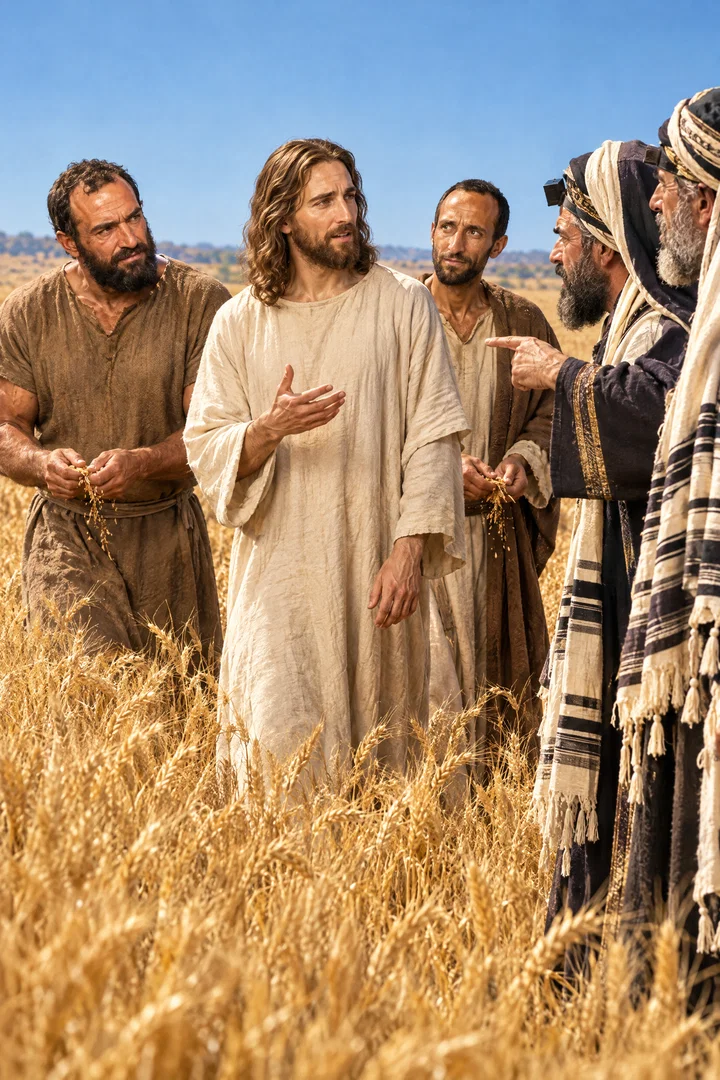
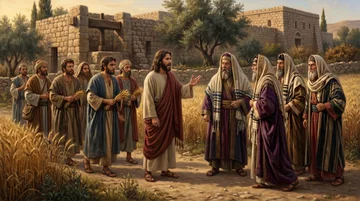
The question belongs to a Sabbath controversy in which the disciples, passing through standing grain, plucked heads of wheat, rubbed the kernels in their hands, and ate them, while the scribes and Pharisees watched to accuse and charged them with breaking the Sabbath.PP 531.1–2ST Sep 16, 1913Ms 43b, 1891, par. 9 It recalls David when he had need and was hungry with his men, how he went into the house of God in the days of Abiathar the high priest, ate the shewbread that was lawful only for priests, and gave it to those with him.2SP 195.2–197.14RED 48.2–49.1 The same setting illustrates the ancient provision that a hungry person passing through another person's field or vineyard could take grain or fruit to eat, which allowed David with his companions and the disciples, in contrast with laws that denied the poor even access to wild flowers.PP 531.1–2HSFM 165.2
Urgent and excessive hunger and need can excuse an act otherwise forbidden, so that David's eating of bread ordinarily reserved for priests was therefore guiltless, even though it violated the holiness of the sanctuary.2SP 195.2–197.14RED 48.2–49.1 By that example the disciples were much more excusable and guiltless in plucking and eating grain on the Sabbath to sustain bodily strength for God's service, and their act was in harmony with the Sabbath commandment, so the charge of Sabbath-breaking was denied, repelled, and their innocence established.2SP 195.2–197.14RED 48.2–49.1ST Sep 16, 1913Ms 43b, 1891, par. 9 Service to God comes first, so when fatigue and hunger attend that work it is right to satisfy human need even on the Sabbath, because the Sabbath was made for man to give rest and peace and not to interfere with the needs of his being.2SP 195.2–197.1
Those who condemned Him and charged Him with transgression of the Sabbath did so though He is the one who made the Sabbath and is its Lord.STMW6 43.2Ms 43b, 1891, par. 1 In answering He covered the disciples with the shield of His own prerogatives, acting with a dignity He alone possesses as God in the flesh in whom dwells all the fullness of the Godhead bodily, to whom all things are delivered of the Father, who has life in Himself and authority to execute judgment because He is the Son of man.Ms 43b, 1891, par. 9 Their condemnation exposes the folly and weakness of human judgment and complete spiritual blindness, as if people put out their own eyes, condemning Christ despite evidence He was sent by God, and the same loss of bearings recurs when workers insist on carrying the work in America in their own way.STMW6 43.2Ms 43b, 1891, par. 1
Sources
Pioneers and periodicals
48 sources
Jesus defended his hungry disciples for plucking grain on the Sabbath by pointing to David when he was hungry and ate the consecrated sanctuary bread reserved for priests and shared it with those with him.ST Oct 22, 1894RH Oct 30, 1860ST Sep 19, 1911RH Sep 1, 1859 Their urgent need excused David's setting aside of the ceremonial rule, and the disciples' satisfying hunger was even more guiltless, because God's laws are not meant to destroy people but to show mercy rather than sacrifice.ST Apr 14, 1881ST Oct 22, 1894RH Feb 4, 1862RH Apr 5, 1860ST Oct 22, 1894 The Sabbath was made in the beginning for humanity's good to bless and refresh, so meeting genuine human need on that day is lawful necessity and mercy, not violation.ST Oct 22, 1894RH Sep 2, 1851ST Jan 6, 1881RH Jun 24, 1858RH Oct 14, 1873 The disciples broke only human tradition, not God's commandment, and Jesus as Lord of the Sabbath acquitted them and interpreted the law against the Pharisees' burdensome restrictions.ST Apr 14, 1881ST May 17, 1910ST Mar 12, 1894ST Jan 30, 1879RH May 13, 1875 His defense did not set aside or change the Sabbath but honored and upheld it as the binding seventh day made by sanctifying the seventh day at creation, freeing it from tradition without authority to transfer it to another day.RH Nov 1850RH Oct 24, 1871ST Dec 17, 1894RH Nov 14, 1871
Setting on Sabbath Day
The question was put on a Sabbath shortly after the Passover after the return to Galilee, on a walk of less than three-quarters of a mile through ripening barley fields near a town, likely Capernaum, in Nisan the month of earing when the first sheaf had been offered on the second day of the feast.ST Apr 14, 1881 The grain the disciples ate was likely ripening in its milky stage, when its kernels were sweet, juicy, and easily digested.RH Jun 26, 1900 They were hungry because no Jew could break fast till after the morning synagogue service, and they plucked ears of barley and rubbed them in their hands to eat, which by law and Eastern custom was free to all to supply hunger.ST Apr 14, 1881
Watching rabbis and priests accused them because plucking was reaping and rubbing was grinding or threshing and preparing food that was required to be prepared Friday before sunset, and to break the Sabbath rather than suffer hunger a few hours was counted guilt worthy of stoning.ST Apr 14, 1881 The Pharisees treated rubbing the grain to remove its kernels as forbidden threshing, showing how human restrictions made the Sabbath a burden rather than refreshing rest.ST Apr 14, 1881 Mark 2:23-28 gives the same account as Matthew 12:1-13 about Jesus and the Sabbath.ST Feb 17, 1898 Mark's parallel account adds the detail of David's need and hunger, and the episode presents the disciples' hunger and the criticism of plucking grain as the setting for the reply.RH Apr 21, 1863ST Nov 26, 1894
The incident took place on the seventh day, the Sabbath, not on Sunday or the first day of the week.ST Apr 15, 1886ST Jul 23, 1912 The Pharisees' accusation that the disciples broke the Sabbath confirms which day it was.ST Apr 15, 1886 The account shows Jesus recognized the Sabbath as the day then observed by the Jews.ST Nov 17, 1881 David's receiving the holy showbread probably took place on the Sabbath, when the old showbread was removed and fresh bread set before the Lord, which would make the reference doubly appropriate, but that timing is not essential to the argument.RH Jan 21, 1862ST Apr 14, 1881
David Cited in Defense
When challenged over what his followers had done in plucking grain on the Sabbath, Jesus answered the Pharisees' objection by recalling what David did when he had need and was hungry, he and those who were with him.ST Oct 22, 1894RH Oct 30, 1860ST Nov 11, 1897RH Oct 21, 1858 It was the disciples, not Jesus himself, who plucked the ears, and they did so because they were hungry.RH Oct 21, 1858 That hunger and need made David's case a fitting answer to the charge that the disciples had broken the Sabbath by plucking and eating as they passed through the field.RH Oct 30, 1860ST Nov 11, 1897RH Oct 21, 1858
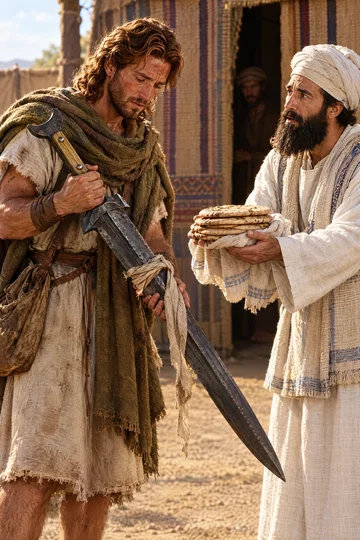
David's example introduces the account of eating the sanctuary, consecrated and sacred showbread that was ordinarily reserved for priests.ST Nov 11, 1897RH Sep 1, 1859 When hungry, David ate that bread and fed those who were with him, and their eating together when in need is what Jesus recalled.ST Sep 19, 1911RH Sep 1, 1859 In that grainfield incident the disciples' picking and eating was likewise an act of necessity, eating their own meal as they went, and Christ recalled David's eating to show that need mattered in judging Sabbath conduct.ST Sep 19, 1911
In the episode surrounding this reply, his actions display power joined with love, benevolence, justice, humility, and respect for the needs of others.RH Oct 30, 1860 He defended the disciples for plucking grain and eating it on the Sabbath day by pointing to David's need and hunger with his companions.ST Apr 14, 1881 He crowns the argument as Lord of the Sabbath, One above all question and above all law, acquitting the disciples from blame by appealing to the very statutes they were accused of violating.ST Apr 14, 1881
Need Mercy and Law
David's need for food mattered when he and his men ate sanctuary bread reserved for the priests, and their urgent need and hunger excused the act and outweighed the ceremonial rule about who could eat it.ST Oct 22, 1894RH Feb 4, 1862RH Apr 5, 1860RH Sep 2, 1851ST Oct 22, 1894 Their need took priority over that rule, and they were not rebuked for eating what was ordinarily for priests alone.ST Oct 22, 1894RH Apr 5, 1860ST Oct 22, 1894 Satisfying hunger in necessity was not blameworthy even in that sacred case.RH Feb 4, 1862RH Sep 2, 1851
Excessive hunger excused David for violating even the holiness of the sanctuary and made his act guiltless, so the disciples' simple act of eating grain is much more excusable.ST Apr 14, 1881RH Feb 4, 1862 The disciples were even less at fault because they had not violated a ceremonial rule.RH Feb 4, 1862 David, esteemed as a model of Jewish piety, did not hesitate to break the rules and violate the sanctity of the holy place to meet hunger, showing the principle that the pressure of hunger vindicates setting aside for the time even the strictest of temple regulations.ST Apr 14, 1881 God's laws are not meant to destroy people, for he does not intend his laws to bring about people's destruction; he desires mercy rather than sacrifice.ST Oct 22, 1894ST Oct 22, 1894
The Sabbath was made for humanity's good, to bless people and give rest and peace and remind of the Creator's work, not to burden them with rules that deny their needs or interfere with the needs of being with pain and discomfort as a grievous burden.ST Apr 14, 1881ST Jan 6, 1881RH Jun 24, 1858ST Mar 28, 1878 Jesus vindicates the Sabbath as a merciful institution made in the beginning for humanity's good.ST Jan 6, 1881RH Oct 14, 1873ST Mar 28, 1878 The Sabbath was made to bless people, not to burden them, so rubbing grain and eating to satisfy hunger did not violate it but supported its proper, humane use.RH Jun 24, 1858
The disciples' hunger likewise outweighed the Pharisees' traditions about the Sabbath.ST Oct 22, 1894ST Oct 22, 1894ST Mar 12, 1894 Picking and eating grain to satisfy hunger and sustain bodily strength was an act of necessity, mercy, and genuine human need, not needless work or a violation of the Sabbath, and human need matters in applying the Sabbath law.RH Sep 2, 1851RH Jun 24, 1858ST Oct 22, 1894ST Sep 19, 1911 They were eating their own meal as they passed through the field, and that was not sin but an act of necessity.ST Sep 19, 1911 The service of God is first of all, and it is right to satisfy fatigue and hunger attending that work even upon the Sabbath day.ST Apr 14, 1881 Plucking and eating grain to sustain bodily strength to be used in God's service is right and lawful, like the work done in the temple upon the Sabbath which is in harmony with the law though the same labor in ordinary business would violate it.ST Apr 14, 1881
Meeting genuine needs and doing beneficial work on the Sabbath does not abolish the Sabbath law or diminish its sacredness and continuing obligation.RH Apr 5, 1860ST Nov 18, 1880 Christ's allowing hungry disciples relief fulfilled the law and showed that mercy and necessary care are allowed and proper.RH Apr 5, 1860ST Nov 18, 1880 The Lord does not forbid necessary work or acts of mercy on the Sabbath. Necessary household work should be kept as light as possible, and what is truly necessary must be settled by each person's conscience before God.
Sabbath Remains Seventh Day
The plucking of grain on the Sabbath gives no ground for saying the Sabbath was set aside, broken, changed or abolished, for the disciples acted to meet urgent hunger and did not violate the commandment, and what was done on that Sabbath was lawful, honored the Sabbath and defended rather than abolished it.RH Nov 1850ST Dec 17, 1894RH Oct 21, 1858ST Jun 6, 1878 The appeal to what David did when he had need and was hungry belongs to the answer to the charge of Sabbath-breaking, with the disciples, not Jesus, plucking the ears because they were hungry.RH Oct 21, 1858ST Jun 6, 1878 That defense presents their conduct as lawful under the Sabbath law, using David's need and hunger as the relevant example.RH Nov 1850RH Oct 21, 1858ST Jun 6, 1878
Perfect obedience upheld the law, and authority as Lord of the Sabbath means protecting the Sabbath and enforcing an enlightened, strict obedience to it.RH Nov 1850 That lordship means loving and protecting the Sabbath as a merciful institution made for humanity's good, vindicated in Mark 2:23-28.RH Nov 1850ST Jan 6, 1881 The same lordship dearly loved the Sabbath institution, bitterly attacked the counterfeit Sabbath of the Pharisees while highly respecting the real Sabbath of Sinai, spent the day chiefly in the synagogues unfolding the Scriptures, and taught by life to revere the institution.ST Sep 15, 1887
Special pains were taken to teach what is lawful on the Sabbath day, and that teaching proves the Sabbath law remains binding in the gospel age and shows duty in regard to it, making the Bible a sufficient rule of faith and practice on the Sabbath question.RH Apr 18, 1871 The Sabbath remains sacred, works of necessity are permitted, it was made for humanity as a merciful provision, and faithful rest supports physical, intellectual and moral well-being.RH Apr 18, 1871ST Mar 28, 1878 The appeal to the Sabbath as a merciful institution made for humanity in the beginning supports that it was defended rather than abolished.RH Oct 14, 1873
The Sabbath meant by the Pharisees in their accusation of doing what was not lawful on the Sabbath day could only be the seventh day of the week, never the first day. The answer, including the question about what David did and the declaration that the Son of man is Lord of the Sabbath day, therefore has reference to the seventh day alone and to no other day. That seventh day is the Sabbath of which Christ is Lord, the Sabbath day of the fourth commandment openly claimed by the Lord as his, while the first day is not claimed in this way.RH Dec 18, 1860
The affirmation that the Sabbath was made for humanity and that Christ is its Lord supports the seventh day's divine authority and continuing obligation.ST Jan 28, 1903 The day before the first day is identified as the Sabbath, distinct from the first day of the week, with the disciples' actions in Mark 2:23-28 cited in support of that distinction.ST Sep 9, 1880 When it was said the Sabbath was made for man, the subject was observance of the definite seventh day.RH Oct 24, 1871 Institution and day are inseparable because it was made by sanctifying the seventh day tied to God's rest after creation, so abolishing that day abolishes the institution rather than leaving an abstract Sabbath that can be transferred to another day.RH Oct 24, 1871
As Lord of the Sabbath there is regulation of the Sabbath generally and freeing of it from human traditions, restoring man and the Sabbath to the relative places designed by the Creator in the beginning because the Sabbath was made for man and not man for the Sabbath.RH Nov 14, 1871 Nothing there, directly or indirectly, speaks of a right to change the days on which the Sabbath should be held.RH Nov 14, 1871 The dispute corrects restrictive human traditions and teaches proper observance, upholding sacredness while showing it is lawful to do good, with the Sabbath a test of obedience to God's commandments.ST Jun 11, 1894RH Oct 14, 1873
Sabbath observance was jealously watched, and every supposed desecration brought collision and debate, trial and even violence, as seen when hungry disciples eating standing corn and healings on that day drew condemnation and anathemas from fanatical rabbis.ST Oct 19, 1882 If after the resurrection the early Christians had abolished the seventh-day Sabbath and kept Sunday instead, uniformly observing Sunday and teaching others to do so while devoting the old Sabbath to secular purposes, they would have been watched at every turn and subjected to heated contests, frequent arrests and violence from the Jews.ST Oct 19, 1882 Those collisions would necessarily have found recognition in the thirty-year record of Acts, and the perfect absence of everything of the kind proves such collisions never took place and the early disciples were not Sabbath-breakers but continued to hallow the seventh-day Sabbath.ST Oct 19, 1882
Tradition Challenged and Applied
The disciples were not breaking God's Sabbath law at all, but only Jewish tradition and traditional punctilios.ST May 17, 1910 Mark 2:23-28 does not set the spirit of the law against the letter of the law, but the truth of God's law against human tradition.ST May 17, 1910 Jesus never broke the Sabbath law; He interpreted it and did only what is lawful and in perfect harmony with law, while refusing to follow tradition.ST May 17, 1910 Christ and His followers were guided by the Bible while the caviling Jews were governed by the Mishna and their own corruptions of the Scriptures, so the whole exchange sets Scripture against human tradition rather than setting aside the Sabbath.RH Feb 11, 1858 The accusation that He broke the Sabbath concerned added Pharisaic traditions, not the commandment, and His manner of keeping the Sabbath differed from those traditions.RH May 31, 1864 That comparison supports the distinction between the Lord's Sabbath and the Pharisees' man-made restrictions, which treated even satisfying hunger as forbidden.ST Mar 12, 1894
Jesus has authority to interpret the law and reject traditions that distort its intent, and human need matters in applying the Sabbath law without abolishing the Sabbath or changing its original purpose.ST Jan 30, 1879 He denied the charge of Sabbath-breaking and declared the hungry disciples who rubbed grain in their hands and ate to be guiltless, because their action was in harmony with the Sabbath commandment.ST Sep 16, 1913RH May 13, 1875 Their actions were lawful, contrary to their accusers' charge that they violated the Sabbath law.RH May 13, 1875 Small duties should not be left undone, but judgment and mercy and faith are the weightier matters of the law that must come first, with all else following in harmony with those great principles.ST May 17, 1910
The episode illustrates the danger of using religious laws to compel others to follow one's own ideas of religious duty, and calls for respect for individual rights.ST Feb 2, 1915 It challenges the use of religious rules to coerce others, since need and hunger matter when judging such actions as David eating the sacred showbread and feeding those with him and the disciples plucking grain.RH Sep 1, 1859 Christ rejected the Pharisees' straight-jacketed rules about the Sabbath and exposed their prosecution as human enforcement of their own ideas rather than God's law.ST Nov 21, 1895 That same spirit is at work when Adventists are prosecuted for doing quiet Sunday work that is no nuisance and offends no one, simply because they do not observe rest according to the strict ideas of those who would force Sunday observance contrary to God's positive command.ST Nov 21, 1895
Sources