Matthew 12:7
But if ye had known what this meaneth, I will have mercy, and not sacrifice, ye would not have condemned the guiltless.
Translations
But if you had known what this means, I will have mercy, and not sacrifice, you would not have condemned the guiltless.
King James Version, KJV Cambridge Paragraph Bible, Webster Bible
But if ye had known what this meaneth, I will have mercy, and not sacrifice, ye would not have condemned the guiltless.
Revised Version, American Standard Version
But if ye had known what this meaneth, I desire mercy, and not sacrifice, ye would not have condemned the guiltless.
and if ye had known what is: Kindness I will, and not sacrifice — ye had not condemned the blameless,
But if ye had known what is: I will have mercy and not sacrifice, ye would not have condemned the guiltless.
If, however, ye had known what this meaneth—Mercy, I desire, and not, sacrifice, ye would not have condemned the blameless;
Berean Standard Bible, Majority Standard Bible
If only you had known the meaning of ‘ I desire mercy, not sacrifice,’ you would not have condemned the innocent.
But if you had known what this means, ‘ I desire mercy, and not sacrifice,’ you wouldn’ t have condemned the guiltless.
But if these words had been in your minds, My desire is for mercy and not for offerings, you would not have been judging those who have done no wrong.
Wherefore if ye knewe what this is, I will haue mercie, and not sacrifice, ye would not haue condemned the innocents.
Douay-Rheims (Challoner revision)
And if you knew what this meaneth: I will have mercy, and not sacrifice: you would never have condemned the innocent.
Pictures
Cross-references 20 of 43
- Hosea 6:6
For I desired mercy, and not sacrifice; and the knowledge of God more than burnt offerings.
Jesus cites God’s preference for mercy over sacrifice to show the disciples were guiltless.
- Mark 2:23-28
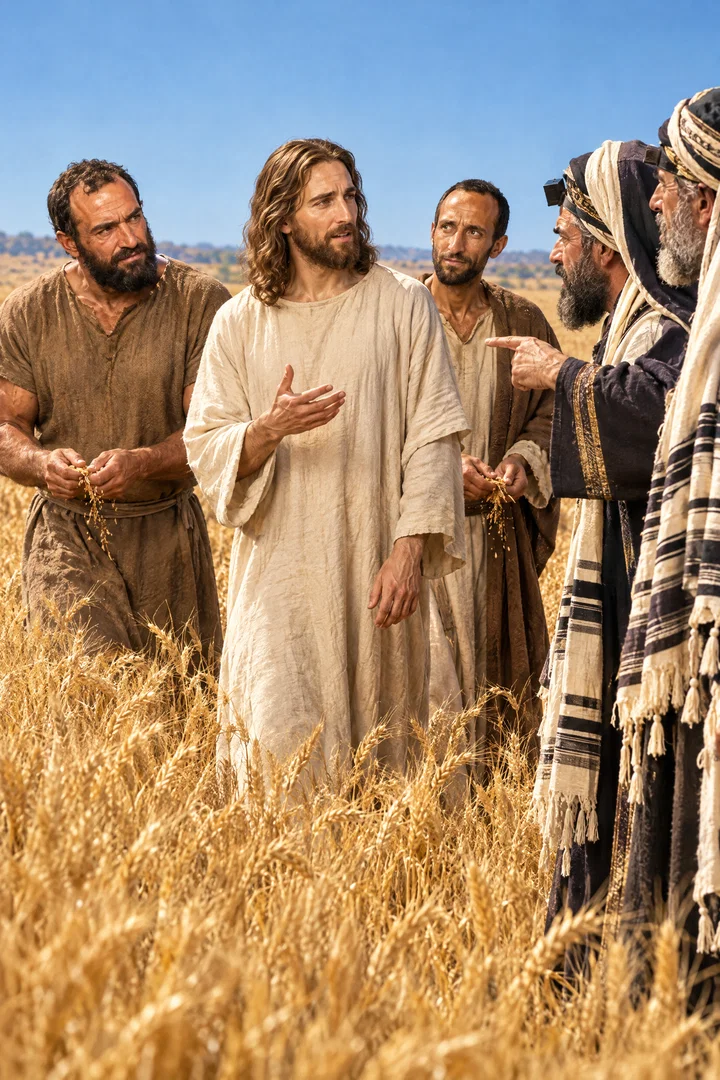
And it came to pass, that he went through the corn fields on the sabbath day; and his disciples began, as they went, to pluck the ears of corn.
Parallel account of the Sabbath dispute and Jesus’ defense of his disciples.
- 1 Samuel 21:4-6
And the priest answered David, and said, There is no common bread under mine hand, but there is hallowed bread; if the young men have kept themselves at least from women.
David received and ate the showbread in need, illustrating mercy over strict observance.
- Luke 6:1-5
And it came to pass on the second sabbath after the first, that he went through the corn fields; and his disciples plucked the ears of corn, and did eat, rubbing them in their hands.
Jesus defends the disciples’ Sabbath grain-plucking and teaches that mercy outweighs sacrifice.
- Matthew 12:12
How much then is a man better than a sheep? Wherefore it is lawful to do well on the sabbath days.
Jesus declares that doing good and relieving need are lawful on the Sabbath.
- Matthew 5:17
Think not that I am come to destroy the law, or the prophets: I am not come to destroy, but to fulfil.
Christ came not to destroy the law.
- Luke 13:15-16
The Lord then answered him, and said, Thou hypocrite, doth not each one of you on the sabbath loose his ox or his ass from the stall, and lead him away to watering?
Jesus defends acts of mercy on the Sabbath.
- Mark 3:1-6
And he entered again into the synagogue; and there was a man there which had a withered hand.
Jesus heals on the Sabbath, showing mercy rather than condemning the guiltless.
- Luke 14:1-5
And it came to pass, as he went into the house of one of the chief Pharisees to eat bread on the sabbath day, that they watched him.
Jesus treats helping on the Sabbath as permitted.
- Deuteronomy 23:25
When thou comest into the standing corn of thy neighbour, then thou mayest pluck the ears with thine hand; but thou shalt not move a sickle unto thy neighbour’s standing corn.
It permits plucking grain by hand; the Pharisees’ charge concerned Sabbath observance, not theft.
- Mark 2:23-24
And it came to pass, that he went through the corn fields on the sabbath day; and his disciples began, as they went, to pluck the ears of corn.
The Pharisees challenge the disciples for plucking grain on the Sabbath.
- Exodus 20:10
But the seventh day is the sabbath of the LORD thy God: in it thou shalt not do any work, thou, nor thy son, nor thy daughter, thy manservant, nor thy maidservant, nor thy cattle, nor thy stranger that is within thy gates:
Jesus interprets the Sabbath commandment in addressing the disciples’ actions.
- Matthew 12:1-2
At that time Jesus went on the sabbath day through the corn; and his disciples were an hungred, and began to pluck the ears of corn, and to eat.
The disciples are accused of unlawful Sabbath conduct, though Jesus calls them guiltless.
- Matthew 23:23
Woe unto you, scribes and Pharisees, hypocrites! for ye pay tithe of mint and anise and cummin, and have omitted the weightier matters of the law, judgment, mercy, and faith: these ought ye to have done, and not to leave the other undone.
Names mercy among the law’s weightier matters.
- John 7:22-23
Moses therefore gave unto you circumcision; ( not because it is of Moses, but of the fathers;) and ye on the sabbath day circumcise a man.
Jesus defends healing on the Sabbath as lawful.
- John 5:8-11
Jesus saith unto him, Rise, take up thy bed, and walk.
Jesus heals on the Sabbath, and his mercy is challenged over the man’s carrying his bed.
- Numbers 28:9-10
And on the sabbath day two lambs of the first year without spot, and two tenth deals of flour for a meat offering, mingled with oil, and the drink offering thereof:
Sabbath offerings show that those serving on the Sabbath are blameless.
- Luke 6:9-10
Then said Jesus unto them, I will ask you one thing; Is it lawful on the sabbath days to do good, or to do evil? to save life, or to destroy it?
Jesus teaches that doing good on the Sabbath includes healing.
- Mark 7:1-13
Then came together unto him the Pharisees, and certain of the scribes, which came from Jerusalem.
Human traditions are exalted over mercy, leading to condemnation of the guiltless.
- John 9:13-17
They brought to the Pharisees him that aforetime was blind.
Jesus heals on the Sabbath, challenging false restrictions.
Commentary
Each commentary is drawn from primary sources: the writings of Ellen G. White and Adventist pioneers and periodicals. Each commentary is separate. Its own words are not a quotation; follow the references to read the source passages.
Ellen G. White
21 sources
The disciples who rubbed grain in their hands and ate on the Sabbath to satisfy hunger were guiltless, because the law gave a hungry person the right to eat from a neighbor's standing grain.Ms 31a, 1898, par. 1–3Ms 12, 1894, par. 8–10ST Jul 29, 1897 The Pharisees and scribes followed to oppose and charged them with Sabbath-breaking, even accusing the Maker of the Sabbath himself of transgressing it.Ms 31a, 1898, par. 1–3Ms 12, 1894, par. 8–10STMW6 43.2 He defended their innocence by his own authority as one greater than the temple and Lord of the Sabbath, who spoke the law from Sinai and kept every commandment without fault.Ms 31a, 1898, par. 1–3Ms 12, 1894, par. 8–10PK 183.1 To have mercy and not sacrifice means God values mercy, love, and knowledge of him above religious ceremony and outward offering, for sacrifices were only a means to direct people to the Saviour.DA 285.4–286.14RED 49.22SP 197.2 Condemning the guiltless comes from not knowing that saying and from ignorance of the Scriptures and the true import of the law.Ms 12, 1894, par. 8–10ST Jan 16, 1896 Relieving the sick and suffering on the Sabbath is therefore a work of mercy and necessity in harmony with the commandment, and those in authority must be governed by justice and mercy rather than condemn the guiltless by harsh human restrictions.4T 539.3–4STMW6 43.2ST Jan 16, 1896ST May 25, 1882Ms 43b, 1891, par. 9
Sabbath Accusation and Defense
On the Sabbath the disciples passing through a field rubbed wheat in their hands and ate the kernels to satisfy hunger, and they were guiltless because the law gave a hungry person the right to eat a portion of a neighbor's standing grain, fruit, orchard or vineyard.Ms 31a, 1898, par. 1–3Ms 12, 1894, par. 8–10ST Jul 29, 1897HSFM 165.2PP 531.1–2 Their act of plucking and eating grain as they went was in harmony with the Sabbath commandment, so the accusation that they broke it was false.ST Jul 29, 1897ST Sep 16, 1913PP 531.1–2 If the saying about mercy rather than sacrifice had been known, they would not have been condemned as guilty.Ms 31a, 1898, par. 1–3Ms 12, 1894, par. 8–10ST Sep 16, 1913
The same controversy included going through the cornfield and healing on the Sabbath.Ms 31a, 1898, par. 1–3ST Jan 16, 1896Lt 13, 1876, par. 1–3 This included healing the man with the withered hand and healing the sick while preaching the gospel to the poor.Ms 31a, 1898, par. 1–3ST Jan 16, 1896Lt 13, 1876, par. 1–3
The Pharisees and scribes continually tracked to oppose, charged the disciples with Sabbath-breaking, and accused the Lord who made the Sabbath of transgressing it while acting blindly.Ms 31a, 1898, par. 1–3Ms 12, 1894, par. 8–10STMW6 43.2Ms 43b, 1891, par. 1 If the charge against the disciples for rubbing the ears of corn in the wheat fields had held, they could have condemned him as a Sabbath-breaker without getting false witnesses.Ms 12, 1894, par. 8–10 Their judgment shows how people can condemn even the greatest Teacher despite clear evidence he was sent by God.STMW6 43.2
He defended their innocence from his own authority as one greater than the temple and as Lord of the Sabbath.Ms 31a, 1898, par. 1–3 He made the Sabbath himself, spoke the law from Sinai enshrouded in the pillar of cloud, and kept every commandment of the Decalogue without fault according to God's law.Ms 12, 1894, par. 8–10PK 183.1ST Jan 16, 1896 The charge of Sabbath-breaking could not be proved, and his Sabbath works were in perfect harmony with the law.ST Sep 16, 1913ST Jan 16, 1896RH May 28, 1901
Mercy Above Empty Sacrifice
To have mercy and not sacrifice means that mercy, love, and knowledge of God stand above religious ceremony, ritual offerings, and outward sacrifice in His sight.DA 285.4–286.14RED 49.22SP 197.2ST May 21, 1902Ms 44, 1901, par. 11 Sacrifices were given as a means of directing minds to the Saviour, not as an end in themselves.DA 285.4–286.14RED 49.2 Heartless religious rites do not express true worship, and ceremony without truthful integrity and tender love is offensive to God.DA 285.4–286.14RED 49.22SP 197.2
The Sabbath was designed to bring people into communion with God and to reflect His character in truthful integrity and tender love, not in selfish and arbitrary demands.DA 285.4–286.14RED 49.22SP 197.2PK 183.1 Wearisome human rites and restrictions that absorb the mind misrepresent God, thwart that purpose, and turn outward observance into a mockery.DA 285.4–286.1PK 183.1 Maxims and traditions handed from rabbi to rabbi, repeated and enlarged until the specifications were buried in rubbish, had hidden the law which is the transcript of the Father's character so that people could not tell whether they were keeping it.Ms 12, 1894, par. 8–10
Condemning the guiltless came from not knowing what this saying means and from ignorance of the Scriptures, the power of God, and the true import of the law.Ms 12, 1894, par. 8–10ST Jan 16, 1896 To know it is to go back to the law and to the testimony, to the principles spoken enshrouded in the pillar of cloud.Ms 12, 1894, par. 8–10ST Jan 16, 1896 Mercy itself is kind and compassionate and reflects divine love; it purifies the soul, beautifies the heart, and cleanses life from selfishness, and those who serve God show it by reflecting heaven's light to others.ST May 21, 1902
Honoring the Guiltless Today
Relieving the sick and suffering on the Sabbath is a work of mercy and necessity in harmony with the commandment, not a violation of it, and mercy is central to rightly understanding the Sabbath.4T 539.3–4ST Jan 16, 1896ST May 25, 1882 This applies to suffering whether in man or in beast, for to relieve such suffering on the Sabbath day accords with God's commandment.ST Jan 16, 1896ST May 25, 1882 The rebuke to those who accused Christ of breaking the Sabbath because He healed a man on that day is that they were ignorant of the Scriptures and the power of God and ignorant of the true import of the law of God.ST Jan 16, 1896 To know what mercy rather than sacrifice means is to go back to the law and to the testimony, to the principles of the law spoken by Christ Himself when enshrouded in the pillar of cloud.ST Jan 16, 1896 He had not violated God's command but had kept every commandment of the Decalogue without fault, so He was guiltless.ST Jan 16, 1896
Mercy matters more than ritual observance, and the guiltless are not to be condemned for honoring God.ST May 25, 1882Ms 3, 1879, par. 4–5 Sabbath instruction need not take place within enclosed walls but may be given outdoors, following the example of teaching the disciples outside, and the Sabbath is not meant to prevent joyful, wholesome activity.Ms 3, 1879, par. 4–5 By contrast, regularly spending the Sabbath in ordinary writing or working without making a special change harms the soul and fails to honor God.4T 539.3–4
The condemnation of the guiltless came from harsh human restrictions rather than God's purpose for the Sabbath, and the appeal to mercy over sacrifice rebukes condemnation that ignores mercy.Ms 43b, 1891, par. 9Ms 44, 1901, par. 11 The disciples were guiltless when they plucked and ate grain on the Sabbath, and Christ defended their innocence with His own authority.Ms 43b, 1891, par. 9 The same wrongful judgment appeared when the Pharisees accused Jesus, the Lord of the Sabbath, of breaking it, showing how people can condemn even the greatest Teacher despite clear evidence that He was sent by God.STMW6 43.2 Those who hold authority must be governed by justice and mercy, and until they learn this they should step down, for a hard, cruel spirit that judges and condemns is contrary to the mercy God requires.Ms 44, 1901, par. 11
Sources
Pioneers and periodicals
98 sources
Christ spoke the words when the hungry disciples plucked grain on the Sabbath and were condemned for breaking it, with the healing of the withered hand following at once as part of the same dispute over doing good on the Sabbath. ST Apr 14, 1881ST Nov 11, 1897ST Nov 11, 1897RH May 17, 1906ST Sep 8, 1881
God desires mercy above ritual offerings, for mercy with judgment and faith is among the weightier matters of the law and no act consistent with mercy violates the law. RH Nov 15, 1906RH Jun 10, 1852RH Feb 3, 1852RH Feb 3, 1852RH Oct 29, 1914
The disciples were guiltless because they had broken only human tradition and not God's law, and Christ's defense left the Sabbath unchanged and still binding rather than abolishing or transferring it. ST Jul 8, 1897ST May 20, 1875ST Mar 10, 1898ST Apr 19, 1883RH May 19, 1851
Meeting hunger, healing the sick, relieving suffering and saving life are lawful works of necessity and mercy in perfect harmony with the fourth commandment, while ordinary business, selfish profit and unnecessary labor remain forbidden. RH Aug 15, 1854RH Mar 1, 1864ST Mar 30, 1888RH Jul 25, 1912RH Aug 27, 1914
The Sabbath was made for man as a merciful and good institution, and as its Lord Christ freed it from burdensome traditions to restore its original purpose rather than lessen its holiness. ST Jan 31, 1911RH Jan 28, 1873ST Jun 4, 1874ST Mar 11, 1889
Sabbath Setting Identified
The saying belongs to a Sabbath in Passover season when the hungry disciples plucked ears of barley and rubbed them in their hands to eat.ST Apr 14, 1881RH May 17, 1906ST Sep 8, 1881 Their critics treated the plucking as reaping, the rubbing as threshing, and the eating as preparing food, and condemned the act as violating the sacred day.ST Apr 14, 1881ST Sep 8, 1881
The grain-field incident stands in immediate connection with going directly from the field to the synagogue and healing the man with the withered hand.ST Nov 11, 1897 Both are explained together by the declaration that it is lawful to do well on the Sabbath days, by the Sabbath being made for man and not man for the Sabbath, and by the Son of man being Lord of the Sabbath.ST Nov 11, 1897ST Nov 11, 1897 The disciples were guiltless in satisfying hunger on the Sabbath, and condemnation fell on them only from ignorance of what requiring mercy and not sacrifice means.ST Nov 11, 1897
The disciples were traveling through with Jesus to or from the synagogue in obedience to God for holy convocation to hear the law read.RH Aug 27, 1857RH Feb 4, 1862 The case was decided by scriptural precedent rather than independent assertion, by one competent because He was with the Father when the Sabbath was made and because the Sabbath was made for man.RH Feb 4, 1862 David rightly ate the shewbread belonging only to priests when fleeing for his life on the Sabbath, with even less blame resting on disciples who broke no ceremonial precept, and the priests laboring in the temple on the Sabbath in making offerings profane the Sabbath in appearance yet are blameless because their work is not the thy work forbidden by the fourth commandment.RH Aug 27, 1857RH Feb 4, 1862 Together these prove that satisfying hunger in this way does not violate the Sabbath, does not relax the claims of the law, and does not make the Sabbath any less binding or sacred.RH Aug 27, 1857RH Feb 4, 1862
The day in dispute was the seventh day, Saturday, made at creation, not Sunday or Friday and not the sixth day.RH Nov 5, 1861ST Apr 15, 1886 The Pharisees’ accusation that the Sabbath had been broken, the reply about the Son of man being Lord of the Sabbath, and the disciples’ meal of plucked grain or wheat all show this.ST Apr 15, 1886 That Sabbath is the genuine seventh day, the day before the Roman Sunday, distinct from the counterfeit man-made first-day sabbath, so to call the disciples’ meal a Sunday dinner perverts the truth.ST Jul 23, 1912 The account therefore gives no support to Sunday and has no application to Sunday.ST Apr 11, 1900ST Apr 15, 1886
When Christ came the Jews were very strict and particular about keeping the Sabbath, which shows the Sabbath had not been lost. Christ and His followers were guided by Scripture, while those who objected to the disciples’ conduct in the cornfield were governed by the Mishna and corruptions of Scripture.RH Feb 11, 1858 The account therefore does not argue against keeping the Bible Sabbath.RH Feb 11, 1858
Mercy Over Sacrifice
Mercy stands with judgment and faith among the weightier matters of the law, which come first while even the smallest duties are still to be done in harmony with those great principles.RH Jun 10, 1852RH Feb 3, 1852RH Feb 3, 1852ST May 17, 1910 An act consistent with mercy does not violate the law, and the call for mercy rather than sacrifice was no new doctrine.RH Jun 10, 1852RH Feb 3, 1852RH Feb 3, 1852 This is seen in the priests who offered sacrifices on the Sabbath, in David who when fleeing for his life from Saul ate the shewbread because he had need and there was no other bread, and in the disciples who satisfied hunger from heads of wheat, all guiltless because under those circumstances their acts were not contrary to God's law but in accordance with mercy.RH Jun 10, 1852RH Feb 3, 1852 The priests were not doing thy work forbidden on the seventh day but work for God in obedience to God, and David's act was an act of mercy according to the law.RH Jun 10, 1852 Christ appealed to those cases to declare the disciples guiltless, not to excuse wrongdoing, not to show the law had always been relaxed or abolished, and not to justify any amount of labor or open willful violation of the fourth commandment, since under other circumstances the same acts would have been wrong.RH Jun 10, 1852RH Feb 3, 1852RH Feb 3, 1852
God values mercy, truthful integrity, tender love, and kind help to those in need above heartless religious rites and ritual offerings.RH Nov 15, 1906ST May 21, 1902RH Oct 29, 1914ST Nov 11, 1897 Sacrifices were means intended to direct people to the Saviour and bring them into harmony with God, not ends in themselves, and ceremony without love is an offense to God.RH Nov 15, 1906 God is not like heathen gods to be propitiated by human suffering, for He has no delight in seeing people suffer but only in seeing them happy.ST Nov 11, 1897 Mercy is kind and compassionate, reflecting divine love, purifying the soul, beautifying the heart, and cleansing life from selfishness, and those who serve God show it by reflecting heaven's light to others.ST May 21, 1902 Applied to the Sabbath, this means keeping the day must not become a burden through human traditions but remain for acts of mercy and doing good, including relieving hunger, relieving the sick, and tending suffering animals.RH Oct 29, 1914ST Nov 11, 1897 The disciples quietly satisfying hunger on the Sabbath therefore did not break it but only broke Pharisaic tradition, fasting is right in its place and acceptable to God but when done as penance and made a virtue is an abomination, and obedience to God's law in mercy magnifies the law and makes it honorable.RH Nov 15, 1906ST Nov 11, 1897
The Pharisees condemned the guiltless because they did not know what I will have mercy and not sacrifice means.ST Feb 10, 1904RH Feb 4, 1862ST Feb 17, 1898RH Jan 8, 1857RH Jan 13, 1852 Their condemnation of the hungry disciples for plucking ears of corn on the Sabbath, after the examples of David eating the showbread when hungry and the priests who labor in the temple on the Sabbath and are blameless and after the declaration that one greater than the temple is present, showed ignorance of Scripture and the power of God and of the true import of the law.RH Feb 4, 1862ST May 17, 1910 They failed to understand God's purpose and the law of love, treated human traditions as the measure, and put traditional punctilios above character.RH Jan 8, 1857RH Jan 13, 1852ST May 17, 1910 Had they understood the centrality of mercy rather than mere ritual sacrifice, with hunger making the disciples' act a matter of necessity, they would not have condemned the guiltless disciples and the healing work.ST Feb 10, 1904ST Feb 17, 1898RH Jan 8, 1857ST Mar 13, 1907 To know it is to go back to the law and to the testimony, to the principles spoken by Christ Himself when enshrouded in the pillar of cloud, exposing the inconsistency of those who would help animals yet forbid doing good to people on the Sabbath and affirming the Sabbath's continuing validity rather than its abolition.RH Jan 13, 1852
Mercy belongs in the category of moral principles while Sabbath observance belongs in the category of a positive requirement, so mercy takes precedence over the positive requirement when the hungry are being fed.RH Nov 12, 1872 By this principle the disciples were shown to be guiltless and not to be condemned.RH Nov 12, 1872
Sabbath Upheld Unchanged
Jesus declared the disciples guiltless when they were accused of breaking the Sabbath, and affirmed that what they did in his presence and under his sanction was lawful, meaning according to the law and not a violation or transgression of the Sabbath law.ST May 20, 1875ST Apr 19, 1883RH May 13, 1875 The question was whether their conduct violated the law, and his answer was that it did not, for eating when hungry and doing merciful good were lawful and not exceptions created by relaxing the commandment.RH May 19, 1851RH May 13, 1875RH Aug 27, 1857 He did not excuse them for breaking the Sabbath but declared they had not broken it, having broken only Jewish tradition, for what was unlawful was so only by Pharisaic tradition and not by God's law.RH May 19, 1851RH Nov 2, 1911RH Aug 27, 1857 The same vindication shows that Christ himself was guiltless, kept every commandment of the Decalogue without fault, committed no sin, did only that which was lawful without breaking his Father's law, and remains the pattern to follow.ST Apr 19, 1883RH Aug 27, 1857 The Sabbath was still in full force at that time before the crucifixion, and his defense taught that doing good on the Sabbath was lawful under a law governing its observance.ST Apr 19, 1883RH Nov 2, 1911RH Aug 27, 1857
His defense is grounded in Scripture and gives no ground for saying he changed, relaxed, abolished, or transferred the Sabbath from the seventh day to the first.ST Jul 8, 1897ST Mar 10, 1898RH Jan 13, 1852 He brought over none of the commandments on a new score but quoted them on the authority of the original law, so what Matthew 12:1-13, especially verses 7, 10, 12, shows about the Sabbath is as true as what his quotations show about the other nine commandments, including Thou shalt not steal, and the Sabbath remains binding with the whole ten.ST Jul 8, 1897RH Jan 13, 1852 He kept the Sabbath himself and taught its proper observance to others, clearing it of errors and traditions, and gave no suggestion that the day of its observance would be changed to another day after his death.ST Mar 10, 1898RH Jan 13, 1852RH May 20, 1909 That liberty to do well on the Sabbath days does not lessen the holiness of the day and does not mean the day is not to be kept in a special manner, for as Lord of the Sabbath he had no intention of abolishing his memorial of creation and of redemption.ST Mar 16, 1904RH Jan 13, 1852 Jesus still recognized the Sabbath and required his disciples to observe it, telling them to pray that their flight at the destruction of Jerusalem about thirty-six years later would not be on the Sabbath day, and it will be kept substantially in force under the Christian dispensation in the gospel age.ST Mar 16, 1904
As Lord of the Sabbath he acted as its Creator, protector, and reformer to free it from abuses, austerities, and burdensome human traditions, restore it to its simple meaning and original purpose in God's order, make it honorable, add to its sanctity by beneficent acts, and teach how it should be observed according to God's commandment.ST Aug 6, 1912STST Dec 5, 1892 His rebuke of slavish Sabbath-keeping showed by his own example how the Sabbath should be observed, correcting the false view that treated human traditions as the measure of Sabbath-keeping.ST Jan 31, 1911ST Jun 11, 1894 By precept and example he stripped its observance of burdensome traditions and brought it back to the place and use appointed for it in the beginning, a day of joy and delight, showing that Sabbath observance is meant to bless, not burden.ST Jan 31, 1911STST Dec 5, 1892 This asserted authority to correct tradition and restore the proper relation between people and the Sabbath, not a right to change the day or lessen its holiness, and faithful keeping according to God's word could still be denounced as breaking.ST Aug 6, 1912ST Mar 16, 1904ST Jun 11, 1894
The Sabbath was made for man as a merciful, just, good, and spiritual institution for humanity's good, blessing, joy, delight, and enjoyment in God's works, a memorial of creation and of redemption and a sign of sanctifying power.RH Jan 28, 1873ST Jun 4, 1874ST Mar 11, 1889 It was not meant to be buried under traditions, a yoke of bondage, a day for human profit, or a reason to condemn the guiltless, and honoring mercy rather than sacrifice means upholding it in a way consistent with mercy.ST Jan 6, 1881ST Jun 4, 1874ST Jul 18, 1878 God values mercy over sacrifice and this principle applies to the Sabbath, for Jesus vindicated the Sabbath as a merciful institution and taught that it was given as a blessing, not as a reason to condemn the guiltless.RH Jan 28, 1873ST Jun 4, 1874ST Jan 6, 1881 Sabbath observance should therefore be guided by mercy and by what is lawful, observed through deeds of mercy and benevolence, with doing good on the Sabbath lawful as its Creator and Lord knew its purpose.ST Mar 11, 1889ST Jan 6, 1881ST Jul 18, 1878
Lawful Sabbath Works
God's law contains nothing contrary to mercy, so an act of mercy on the Sabbath is lawful under God's instruction.RH Jul 25, 1912RH Aug 27, 1914ST Jan 7, 1889RH May 5, 1874ST Nov 18, 1889 Lawful means according to the Sabbath law and in perfect harmony with the fourth commandment.RH Jul 25, 1912ST Apr 10, 1893RH Aug 27, 1914ST Jan 25, 1910 Doing good, doing well, relieving need, distress, and suffering, and saving life on the Sabbath days exactly accords with the design of the sabbatic institution and is exactly adapted to it.RH Jul 25, 1912RH Aug 27, 1914ST Jan 7, 1889RH May 5, 1874 True observance does not preclude acts of mercy and necessity, but rejects senseless traditions that hedged the Sabbath about and made it a burden instead of the joyful service God designed it to be.RH Aug 27, 1914RH May 5, 1874ST Nov 18, 1889
Meeting hunger by plucking and eating grain, healing the sick, and ministering to sufferers are works of necessity and mercy that do not violate the Sabbath.RH Aug 15, 1854RH Mar 1, 1864ST Mar 30, 1888RH Jan 8, 1857RH Sep 2, 1851 The Sabbath law permits eating when hungry, healing, worship, and direct service to God, and does not forbid necessary food or work that ministers to the sick and suffering.RH Aug 15, 1854ST Mar 30, 1888RH Jul 18, 1912RH Sep 2, 1851ST Jul 1, 1908 It allows time for ordinary meals and permits relieving sickness, performing burial rites, and caring for oneself, dependents, and domestic animals.RH Aug 15, 1854ST Jul 1, 1908ST Jan 6, 1888RH Apr 8, 1915ST Feb 2, 1915 What may rightly be done for an animal may be done for a fellow human being, for the law's demands lead people to help those made in their Maker's image just as concern for an animal leads them to rescue and care for it.RH Jul 18, 1912ST Jan 6, 1888
David eating the shewbread when he had need and there was no other bread, the priests who labor in the temple on the Sabbath offering sacrifices and doing double regular work yet are blameless, and the disciples satisfying hunger from heads of wheat were all guiltless because under those circumstances their acts were not contrary to God's law but in accordance with mercy.RH Jun 10, 1852ST Sep 10, 1902RH Feb 4, 1862RH Apr 21, 1863 The priests were not doing thy work forbidden on the seventh day, but work for God in obedience to God, while work belonging to the worship of God is permitted.RH Jun 10, 1852RH Jan 17, 1871 God commanded Sabbath labor for offerings to Himself, so He certainly does not condemn works bringing mercy and relief to the distressed.ST Sep 10, 1902RH Feb 4, 1862 Jesus and His disciples carrying forward the greater real work represented by the priests' service shows why the disciples were not to be condemned.RH Apr 21, 1863RH Jan 17, 1871
Work to relieve suffering is lawful, such as pulling a sheep from a pit, leading an ox to water, loosing a woman bound eighteen years, building a fire to keep the freezing from suffering, cooking to feed the starving, and giving dependent animals food and water like relieving the sick.ST Apr 10, 1893ST Jul 1, 1908ST Jan 6, 1888 Caring for oneself, one's dependents, or domestic animals does not violate the commandment, and the burden and oppression came from the religious teachers' interpretation, not from the commandment itself.ST Jul 1, 1908ST Jan 6, 1888 But where such work is unnecessary, as building fire was for Israel in the wilderness, doing it is just as sinful now as then.ST Apr 10, 1893 Sabbath rest still excludes ordinary business, selfish profit, pleasure, and trade for personal gain, which profane the day, while work required for religious duties is accounted for.ST Jul 1, 1908RH Apr 8, 1915ST Feb 2, 1915
The verse does not excuse wrongdoing, relax the claims of the law, or justify any amount of labor or open willful violation.RH Jun 10, 1852RH Apr 5, 1860 Under other circumstances the same acts would have been wrong.RH Jun 10, 1852 Acts of mercy and necessity were always allowable, but work not really necessary that might have been done before with proper pains, such as farm chores after the Sabbath commences, washing dishes, sweeping, boiling, frying, baking, reaping and storing a harvest rather than eating food already available, and use for personal pleasure or business, are not in accordance with the fourth commandment.RH Apr 5, 1860RH Jul 29, 1862
Pharisees Condemned Guiltless
The verse teaches that mercy rather than sacrifice is the principle by which Sabbath conduct is to be judged, and the disciples were guiltless while the Pharisees condemned them unjustly from an accusatory, fault-finding spirit.ST Mar 19, 1894RH Nov 4, 1858ST Mar 19, 1894 Their strict attention to Sabbath rules lacked genuine regard for the Sabbath and was driven more by hostility toward Jesus than by zeal for the day, turning observance into harsh, merely outward rule-keeping contrary to its true moral and spiritual purpose.ST Mar 19, 1894RH Nov 4, 1858 They watched Him to find grounds for accusing Him for healing, condemned Him for healing and then plotted to destroy Him, which exposed hypocrisy and the wickedness behind their claims of sacredness.RH Sep 19, 1854ST Apr 9, 1894ST Mar 19, 1894 Faithful keeping according to God's word could thus be denounced as breaking, as the Pharisees condemned the guiltless.RH Sep 19, 1854ST Mar 12, 1894ST Apr 9, 1894
Their traditions had made the Sabbath a burden and a yoke by valuing the rule above human need, so that the offense was breaking rabbinical restriction and not God's law.ST Mar 21, 1878ST Mar 3, 1890ST Oct 29, 1896 They called rubbing grain threshing and forbade killing a flea as hunting, held every act of healing unlawful, and condemned as guilt acts that broke only such human restrictions.RH May 5, 1874ST Mar 21, 1878 The charge of Sabbath-breaking therefore could not be proved, for what Jesus and the disciples did in plucking ears when hungry and in working miracles was lawful, agreeable to law and in perfect harmony with the fourth commandment, which Jesus acknowledged as still binding.ST Mar 21, 1878ST Mar 3, 1890 The Sabbath was made for man and was not to be loaded against him with such traditions, and Jesus did not rebuke the guiltless disciples for relieving hunger.ST Mar 21, 1878ST Oct 29, 1896
To refrain from relieving the sick on that ground would make the Sabbath a yoke not made for man's good, putting sacrifice and rules above mercy.RH May 5, 1874ST Oct 8, 1894 The verse rebukes those who would help an animal in danger but refuse aid to a suffering person because of human tradition, for performing deeds of mercy to the afflicted exactly accords with the design of the sabbatic institution and is exactly adapted to it.RH May 5, 1874ST Oct 8, 1894 Jesus vindicated the disciples in eating ears of corn when hungry and justified healing the man with the withered hand, showing that relieving suffering is part of God's work of mercy and love and that the Sabbath was not meant to be a day of misery.RH May 5, 1874ST Oct 8, 1894 None of these acts was done in a careless or irreverent manner but had the relief of suffering and the honor of God in view, correcting the rigorous and burdensome errors by which its design had been perverted, so the charges of violation have no weight.RH May 5, 1874ST Oct 8, 1894
Applying Mercy Today
The sacred day is not a yoke of bondage nor a day for human profit, but was made for people as rest and blessing and enjoyment in God's works, and meeting human need and doing good on it is lawful, so providing a needed fire in a cold climate for comfort, health, or lives does not break its law.RH Jan 21, 1915 A restriction suited to Israel's circumstances for a particular time need not be imposed on all peoples and ages, and the governing rule is mercy that relieves the sick and suffering rather than a rigid forbidding of every kind of work.RH Jan 21, 1915ST Apr 14, 1898 Kindling a fire when needed for health or to provide warm food for the sick or feeble is therefore permitted, while kindling merely to satisfy appetite is not justified by that need, since to refuse an ordinary fire in cold conditions would needlessly sacrifice welfare.ST Apr 14, 1898
Travel to church or Sabbath school by horse, ox, or ass when distance or age makes walking impractical is not condemned when it serves the Lord's glory rather than personal profit, provided the animals are properly fed, cared for, and rested during the week.ST Sep 7, 1904ST Apr 5, 1883 Such additional work for God's glory is like the priests' additional sanctuary work on the Sabbath, and Sabbath keeping is to be joyful and faithful to God's Word and Christ's example, not a burden or a day for sensual pleasure.ST Sep 7, 1904 The Sabbath does not forbid necessary work or works of mercy, and deciding how much work or how much Sabbath travel is necessary is left to individual conscience before God.RH Mar 11, 1873 Caring for dependent animals by giving them food and water is an act of mercy like relieving the sick and does not violate the day, though unnecessary work should still be avoided, and obtaining mail may be permissible in a genuine case of necessity to be judged by conscience, while ordinary secular transactions not necessary should otherwise be omitted.ST Apr 5, 1883RH Mar 11, 1873
God values mercy above sacrifice, so abstaining from food is not required when it would harm the body, and fasting should not be a mere form or outward display.RH Jan 26, 1860 He does not require His servants to exhaust themselves in service, and Christ's call for the disciples to rest shows that caring for physical and mental strength was duty and not failure of devotion.ST Apr 30, 1912 The rubbing of grain in the hands to eat on the Sabbath by guiltless disciples warns against judging others by rigid religious rules and supports respect for individual rights in matters of religious duty.ST Feb 2, 1915 Forcing outward keeping of a day cannot make people worship or love it, for worship of God must be voluntary, and Pharisaic observance is condemned when it condemns the guiltless.ST Feb 2, 1915ST May 28, 1912
Two divergent readings are recorded beside this weight of teaching: that the plucking of grain shows Jesus set aside the Jewish priesthood and transferred its role to His disciples and thus abolished the Jewish Sabbath, and that Christ commanded His disciples to labor on the Sabbath so that labor on it is permitted and men are not forbidden to labor on it.RH Sep 30, 1858RH Apr 19, 1870
Condemning people for meeting a human religious rule while neglecting mercy repeats the Pharisees' error, for the guiltless who act mercifully should not be condemned as guilty.RH Dec 29, 1904RH Oct 15, 1857 Laws restricting activity on a weekly rest should therefore allow works of mercy or necessity and should not condemn the guiltless, with necessity or mercy justifying exception and with charity, necessity, sickness, burial, and care of animals treated as exceptions rather than criminalized by rigid enforcement.ST Sep 23, 1889RH Jul 27, 1905 A law making selling bread to the hungry on Sunday a crime is pharisaical, like the guiltless plucking of grain, and those who worship in His name yet have conscientious keepers of the seventh day arrested for quiet work on Sunday without nuisance condemn the guiltless.RH Dec 29, 1904ST Sep 22, 1909 Keeping Saturday holy fulfills the law of God and of man, so earnest, sincere Christians who keep Saturday and work on Sunday should be left unfettered instead of being meddled with by prosecution, and the verse bears on the condemnation of those who conscientiously observe the seventh day rather than Sunday.RH Oct 15, 1857ST Sep 22, 1909
Liberty to do well on the Sabbath does not lessen the holiness of the day and does not mean it is not to be kept in a special manner.ST Mar 16, 1904 Jesus refused to condemn His guiltless disciples yet still recognized the Sabbath and required its observance, telling them to pray that their flight at the destruction of Jerusalem about thirty-six years later would not be on the Sabbath day, and as Lord of the Sabbath He had no intention of abolishing His memorial of creation and of redemption.ST Mar 16, 1904ST Feb 18, 1886 Public worship on that day was His own custom, and mercy governs its keeping rather than rigid sacrifice, so it remains in force and lawful to observe.ST Feb 18, 1886 The grain-field and healing account belongs to the last apostasy of the Jewish church in its rejection of Christ and the calling out of a remnant by reform in Christ Jesus, standing as the Jewish-era parallel to the last apostasy in the Christian era with persecution of Christ again in His followers and the calling out of a remnant who by faith in Christ Jesus keep all the commandments of God and bear the stamp of the Creator's authority, His Sabbath.ST Jan 30, 1896
Sources