Matthew 24:20
But pray ye that your flight be not in the winter, neither on the sabbath day:
Translations
But pray you that your flight be not in the winter, neither on the sabbath day:
King James Version, KJV Cambridge Paragraph Bible
But pray ye that your flight be not in the winter, neither on the sabbath day:
But pray ye that your flight may not be in the winter, neither on the sabbath:
Revised Version, American Standard Version
And pray ye that your flight be not in the winter, neither on a sabbath:
and pray ye that your flight may not be in winter, nor on a sabbath;
But pray that your flight may not be in winter time nor on sabbath:
But be praying that your flight, may not happen in winter, nor on sabbath;
Berean Standard Bible, Majority Standard Bible
Pray that your flight will not occur in the winter or on the Sabbath.
Pray that your flight will not be in the winter nor on a Sabbath,
And say a prayer that your flight may not be in the winter, or on a Sabbath.
But pray that your flight be not in the winter, neither on the Sabbath day.
Douay-Rheims (Challoner revision)
But pray that your flight be not in the winter, or on the sabbath.
Pictures
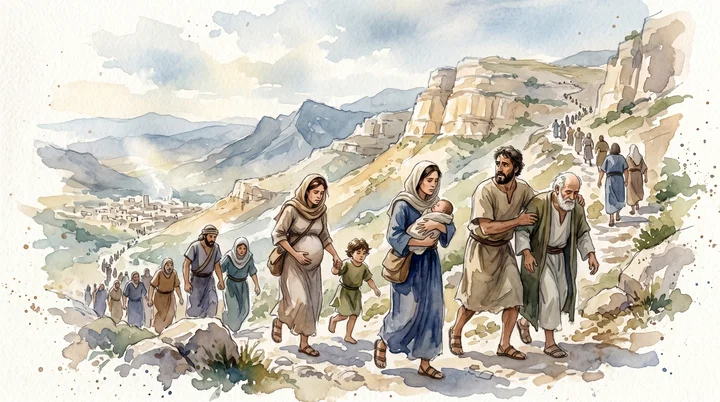
Cross-references 20 of 39
- Luke 21:20-21
And when ye shall see Jerusalem compassed with armies, then know that the desolation thereof is nigh.
Luke gives the parallel sign of Jerusalem surrounded by armies and the command to flee.
- Mark 13:18
And pray ye that your flight be not in the winter.
Jesus warns that the disciples’ flight should not occur in winter.
- Exodus 20:10
But the seventh day is the sabbath of the LORD thy God: in it thou shalt not do any work, thou, nor thy son, nor thy daughter, thy manservant, nor thy maidservant, nor thy cattle, nor thy stranger that is within thy gates:
Identifies the Sabbath as the seventh day commanded by God.
- Luke 23:56
And they returned, and prepared spices and ointments; and rested the sabbath day according to the commandment.
Jesus’ followers rested on the Sabbath according to the commandment.
- Genesis 2:2-3
And on the seventh day God ended his work which he had made; and he rested on the seventh day from all his work which he had made.
God rested on the seventh day, blessed it, and set it apart.
- Mark 2:27-28
And he said unto them, The sabbath was made for man, and not man for the sabbath:
Jesus teaches that the Sabbath was made for humanity and is under his lordship.
- Matthew 24:15-16
When ye therefore shall see the abomination of desolation, spoken of by Daniel the prophet, stand in the holy place, ( whoso readeth, let him understand:)
The abomination of desolation is the sign that prompts the flight from Judea.
- Daniel 9:27
And he shall confirm the covenant with many for one week: and in the midst of the week he shall cause the sacrifice and the oblation to cease, and for the overspreading of abominations he shall make it desolate, even until the consummation, and that determined shall be poured upon the desolate.
Daniel’s abomination of desolation is the sign that prompts the flight.
- Isaiah 58:13
If thou turn away thy foot from the sabbath, from doing thy pleasure on my holy day; and call the sabbath a delight, the holy of the LORD, honourable; and shalt honour him, not doing thine own ways, nor finding thine own pleasure, nor speaking thine own words:
Calls the Sabbath the Lord’s holy day and urges honoring it.
- Matthew 12:8
For the Son of man is Lord even of the sabbath day.
Jesus is Lord of the Sabbath, the day kept in view.
- Luke 21:21
Then let them which are in Judæa flee to the mountains; and let them which are in the midst of it depart out; and let not them that are in the countries enter thereinto.
Jesus tells those in Judea to flee when they see the sign.
- Mark 2:28
Therefore the Son of man is Lord also of the sabbath.
Jesus is identified as Lord of the Sabbath.
- Matthew 24:16
Then let them which be in Judaea flee into the mountains:
It commands the flight from Judea that the prayer concerns.
- Exodus 31:13
Speak thou also unto the children of Israel, saying, Verily my sabbaths ye shall keep: for it is a sign between me and you throughout your generations; that ye may know that I am the LORD that doth sanctify you.
Both texts address the Sabbath and its observance.
- Matthew 24:2
And Jesus said unto them, See ye not all these things? verily I say unto you, There shall not be left here one stone upon another, that shall not be thrown down.
Jesus’ warning concerns flight associated with Jerusalem’s destruction.
- Exodus 16:29
See, for that the LORD hath given you the sabbath, therefore he giveth you on the sixth day the bread of two days; abide ye every man in his place, let no man go out of his place on the seventh day.
The Sabbath command restricts leaving one’s place on the seventh day.
- Matthew 12:12
How much then is a man better than a sheep? Wherefore it is lawful to do well on the sabbath days.
Jesus calls Sabbath actions lawful.
- Exodus 20:8
Remember the sabbath day, to keep it holy.
Both are cited in connection with keeping the Sabbath holy.
- Mark 13:32-33
But of that day and that hour knoweth no man, no, not the angels which are in heaven, neither the Son, but the Father.
The prophetic discourse warns that the time is unknown and calls for prayer and watchfulness.
- Exodus 16:23
And he said unto them, This is that which the LORD hath said, To morrow is the rest of the holy sabbath unto the LORD: bake that which ye will bake to day, and seethe that ye will seethe; and that which remaineth over lay up for you to be kept until the morning.
Israel is instructed to keep the Sabbath.
Commentary
Each commentary is drawn from primary sources: the writings of Ellen G. White and Adventist pioneers and periodicals. Each commentary is separate. Its own words are not a quotation; follow the references to read the source passages.
Ellen G. White
18 sources
Christ spoke these words on the Mount of Olives shortly before Gethsemane in answer to questions about the destruction of the temple, the sign of His coming, and the end of the world.DA 627.1–3ST Nov 20, 1884GC88 393.1–394.1 He warned believers who would have to flee Judea and Jerusalem to pray that their escape would not come in winter or on the Sabbath day.Ms 78, 1897, par. 46ST Nov 12, 1894Ms 91, 1894, par. 3–5 About forty years later His followers heeded that warning when Jerusalem was besieged, fleeing to the mountains without traveling in winter or on the Sabbath, and none of them perished in the city's destruction.Ms 78, 1897, par. 46ST Nov 12, 1894Ms 91, 1894, par. 3–5 The warning shows the Sabbath remained sacred and binding after Christ's death and resurrection, for He who made it did not abolish it, nail it to His cross, or announce another day in its place.ST Nov 12, 1894Ms 77, 1899, par. 4–5ST Feb 20, 1901Ms 91, 1894, par. 3–5Ms 78, 1897, par. 47–48 That overthrow of Jerusalem was only a partial fulfillment and stands as a type of the final ruin by fire that shall overwhelm the world, so the prophecy has a more direct application to the last days and calls all to study its signs, watch and be ready, for the Son of man comes in an hour they think not.ST Apr 21, 1898Ms 77, 1899, par. 4–5STB 362.1–2Lt 48, 1876, par. 9–10
Setting and Immediate Fulfillment
The instruction belongs to the discourse recorded in Matthew 24-25, spoken from the Mount of Olives shortly before Gethsemane.DA 627.1–3ST Nov 20, 18844SP 39.1 It was given in answer to the disciples' questions about the destruction of the temple, the sign of His coming, and the end of the world.DA 627.1–3GC88 393.1–394.1 That discourse blends the destruction of Jerusalem with the final judgment.DA 627.1–3 It traces important events in the history of the world and the church from Christ's first advent to His second, including Jerusalem's destruction, persecution, signs in the heavens, and His coming in His kingdom.GC88 393.1–394.14SP 39.1 It describes the persecution and suffering His followers would face from His departure until His return in power and glory.4SP 39.1 It was given both for the disciples and for those who would afterward believe, living in the last scenes of earth's history, to instruct them about the signs of the times and help them prepare for the great conflict.DA 627.1–3STB 362.1–2
The verse warns believers facing flight from Judea and Jerusalem to pray that their escape not come in winter or on the Sabbath day.Ms 78, 1897, par. 46ST Nov 12, 1894Ms 91, 1894, par. 3–5 The warning was to be heeded about forty years later, at the fall and destruction of Jerusalem when the city was besieged.Ms 78, 1897, par. 46ST Nov 12, 1894Ms 91, 1894, par. 3–5DA 630.2–3 Christ's followers obeyed by leaving the city and fleeing to the mountains, escaping from the besieged city without traveling in winter or on the Sabbath.ST Nov 12, 1894Ms 91, 1894, par. 3–5DA 630.2–3 None perished in the city's destruction.Ms 78, 1897, par. 46DA 630.2–3
The ruin of Jerusalem warned of in the prophecy received a partial fulfillment in the overthrow of Jerusalem. That ruin was a symbol of the final ruin by fire that shall overwhelm the world.Ms 77, 1899, par. 4–5 The prophecies of that ruin have a more direct application to the last days.
Sabbath Remains Binding
The prayer that flight from Judea and Jerusalem not fall on the Sabbath treats that day as sacred and binding after death and resurrection.ST Nov 12, 1894Ms 77, 1899, par. 4–5Ms 91, 1894, par. 3–5DA 630.2–3 The warning looked forward about forty years beyond ascension to the destruction of Jerusalem, and for those forty years the disciples were to pray that their escape would not come on that day.ST Nov 12, 1894Ms 77, 1899, par. 4–5DA 630.2–3 When the city was besieged, followers were able to leave and flee to the mountains without traveling in winter or on the Sabbath.ST Nov 12, 1894Ms 91, 1894, par. 3–5DA 630.2–3 The Sabbath so honored was still the creation Sabbath, and the command to pray thus upholds the continuing obligation of the Sabbath commandment.ST Nov 12, 1894Ms 77, 1899, par. 4–5
He who made the Sabbath did not abolish it in dying and did not nail it to His cross.ST Feb 20, 1901Ms 78, 1897, par. 47–48DA 630.2–3 No new Sabbath was announced in its place.Ms 77, 1899, par. 4–5DA 630.2–3 The fourth commandment retained its claim forty years afterward at the fall of Jerusalem.ST Feb 20, 1901Ms 78, 1897, par. 47–48DA 630.2–3
His death confirms rather than sets aside the unchanging character of the law.Ms 78, 1897, par. 47–48 The fourth commandment and the seventh-day Sabbath therefore continue to hold their claim upon His followers and upon the human family as long as heaven and earth remain.ST Feb 20, 1901Ms 78, 1897, par. 47–48
Prophecy and Final Preparation
Matthew 24 is the great prophecy of the history of the present dispensation through to the complete restitution of all things.GC88 bC.1 It begins with the church in warfare and suffering on the way to promised redemption.GC88 bC.1 It dwells especially on the thrilling and momentous closing scenes of this world's history, the final triumph of God's people, the destruction of Satan and all his followers, the total and eternal extirpation of evil from the universe, and the renovation of the earth as the everlasting inheritance of the saints.GC88 bC.1
Matthew 24-25 describes Christ's second coming to the world with power and great glory to send His angels with a great sound of a trumpet and gather His elect from the four winds.ST Apr 21, 1898 Of that day and hour no one knows, not even the angels of heaven, but the Father only.ST Apr 21, 1898 As in the days of Noah before the flood men were eating and drinking, marrying and giving in marriage until the flood came and took them all away, so believers must watch and be ready, for in such an hour as they think not the Son of man comes.ST Apr 21, 1898 Blessing and rulership over all goods await the faithful and wise servant found giving meat in due season, while cutting asunder and a portion with the hypocrites with weeping and gnashing of teeth await the evil servant who says in his heart that his lord delays his coming and smites his fellow servants and eats and drinks with the drunken.ST Apr 21, 1898 This portrayal of the condition of the church at Christ's coming is to arouse earnest zeal in the true believer.ST Apr 21, 1898
The prophecies of Matthew 24, including this verse, must be studied and brought to the attention of all.Ms 62, 1903, par. 9–12 Ministers and teachers must present these prophecies to those they instruct, leaving matters of lesser consequence, because the truths they contain decide the eternal destiny of souls.Ms 62, 1903, par. 9–12 They are to be explained to people as part of the sure word of prophecy.GW 148.1–2 Their predictions are being fulfilled in the present time, and their unmistakable fulfillment shows that Christ's coming is at hand and calls the church to arouse.Ms 62, 1903, par. 9–12GW 148.1–2
The verse belongs to what Christ foretold while on earth to His disciples about the signs of the times that precede His revelation in heaven.STB 362.1–2AA 259.4–260.2 Those signs were given to instruct those who would afterward believe and to warn people to prepare for the revelation of the Son of man in heaven and to help them prepare for the great conflict.STB 362.1–2AA 259.4–260.2 Indifference to them is sinful, while discerning them in this age of the world calls for reaching a higher standard, with watchfulness and readiness so that day does not overtake believers unexpectedly.STB 362.1–2AA 259.4–260.2 The verse is connected with the perils of the last days and the shortness of time.Lt 48, 1876, par. 9–10
The ruin of Jerusalem warned of in the prophecy received a partial fulfillment in the overthrow of Jerusalem and was a symbol of the final ruin by fire that shall overwhelm the world, with a more direct application to the last days. Its warning now stands on the threshold of great and solemn events and a crisis such as the world has never witnessed. In that crisis comes the assurance that God's kingdom rules over all, that the program of coming events is in the hands of the Maker, and that the destiny of nations as well as the concerns of His church are in His own charge.
Sources
Pioneers and periodicals
234 sources
Christ told His hearers to flee from Judea to the mountains without delay for possessions when they saw Jerusalem surrounded by armies as the sign of its desolation.ST Jul 29, 1913ST Sep 13, 1910 They were to pray beforehand that God would so order events that their flight would not come in winter, when cold and mountain travel would bring suffering too great for the feeblest to endure.RH Feb 17, 1853ST Jan 24, 1906ST Apr 29, 1913 They were to pray likewise that it would not fall on the Sabbath, when hard travel and needless labor would break its rest and worship and force violation of conscience.RH Feb 17, 1853ST Jan 24, 1906ST Apr 29, 1913 That prayer shows the seventh-day Sabbath of the fourth commandment still existed and bound His followers about forty years after His death, with no hint of change to another day.RH Nov 15, 1853RH Jul 11, 1854RH Jul 1, 1873RH Jun 12, 1860RH Jul 23, 1857 Those who believed watched for the sign and escaped to the mountains and to Pella on an autumn weekday when the army withdrew in A.D. 66, so the prayer was answered before Jerusalem fell in A.D. 70.ST Nov 12, 1894RH Apr 15, 1909RH May 30, 1912ST Nov 15, 1899ST Sep 24, 1912
Discourse Setting and Context
The verse is part of Christ's answer to the disciples' question about the sign of His coming and of the end of the world, giving events and signs by which to know when that coming is near, even at the doors.ST May 24, 1910ST Jun 27, 1900ST Sep 9, 1886RH Mar 17, 1904ST Nov 28, 1911 It belongs to His instruction about the events and signs leading to His coming and the end of the age, concerning the circumstances of flight rather than the nature of His coming.ST May 24, 1910ST Jun 27, 1900ST May 20, 1880 No question about the nature of His coming was asked, and no answer about its personal visibility was in view.ST Sep 9, 1886
The discourse was spoken privately on the Mount of Olives overlooking Jerusalem to the west, from where the temple and its courts and a large part of the city could be seen.ST Mar 30, 1915RH Jan 8, 1901 It was given late in the afternoon of the third day of the crucifixion week, the week in which Christ completed His work on earth for redemption, two days before the feast of the Passover at which He was betrayed and crucified, and shortly before entering Gethsemane.ST Nov 20, 1884ST Mar 30, 1915RH Jan 8, 1901 It came after Christ had for the last time left the temple saying their house was left desolate, after the disciples failed to understand those words while expecting Him to sit upon the throne of David in Jerusalem, after they showed Him the massive temple buildings with stones forty feet long, eight feet wide, and ten feet thick, and after He declared not one stone would be left upon another, which led them to ask when these things would be and what would be the sign of His coming and of the end of the world.RH Jan 8, 1901 It is one continued discourse comprising Matthew 24 and 25, a prophetic address concerning the time and manner of His second coming and the events surrounding the Lord's return, outlining the history of the whole Christian dispensation down to when sin is no more.RH Jan 8, 1901ST Jan 14, 1889ST Oct 28, 1889 His teaching about His second coming to receive His people and return in the same visible manner as He ascended is to be studied together with Mark 13 and Luke 21, whose signs show that His coming is near, even at the doors, and call for readiness.ST Oct 26, 1904
Matthew gives the fullest account, but Mark and Luke also preserve portions needed to grasp the discourse's full meaning.ST Jan 17, 1906 The discourse is also reported in Mark 13 and Luke 21, and especially Luke 21:20-36 must be studied and explained together with it to grasp its full meaning about Jerusalem's destruction, signs of coming, and the end.ST Jan 17, 1906ST Aug 4, 1914 It covers events affecting God's people between His first and second advent, including Jerusalem's destruction, persecution of the Christian church, and signs of Christ's return, with verses 15-20 looking back to what lay just before the Jewish nation and giving directions about fleeing Jerusalem when surrounded by armies and praying that escape would not happen in winter or on the Sabbath.RH May 7, 1867ST Mar 4, 1903 The flight and the Sabbath are distinct things: the disciples are to flee, but pray that they will not have to do so on the Sabbath.RH Aug 20, 1857
Its object is not to prove that Christ's coming is literal, personal and visible, though that coming is literal, personal and visible to reward His saints and take vengeance on His foes at the end of the world.ST Nov 20, 1879ST Sep 9, 1886ST Dec 2, 1889 Proving that nature was not the chapter's purpose, since no question about its nature was asked.ST Sep 9, 1886ST Dec 2, 1889 Instead He answered the question about the sign of His coming and the end of the world by giving events and signs through which they could know when His coming was near, though not its day or hour.ST Sep 9, 1886ST Dec 2, 1889
The prophecy is stated in plain terms without symbolic imagery whose fulfillment can be compared with history in consecutive order.RH Jun 22, 1905RH Nov 26, 1914ST Jan 17, 1906 History gives evidence of the accurate fulfilment of the prophecies recorded in this chapter, and its fulfilled prophecy shows that the coming of Christ is near.RH Jun 22, 1905RH Nov 26, 1914 Every prophecy except the final act is fulfilled, from A.D. 70 through Vesuvius, Pompeii, Mont Pelee, St. Pierre, Papeete, McKinley's assassination and present disturbances, proving that the generation now living is the last one before Christ comes again.ST Mar 21, 1906ST May 25, 1904ST Aug 10, 1904RH Dec 31, 1903
The verse belongs to a prophecy concerning both Jerusalem's destruction and Christ's second coming and the end of the world.ST Nov 27, 1879ST Sep 16, 1889ST Sep 16, 1889 These are distinct events separated by a long period, not necessarily fulfilled in the order presented, and the correct application of some statements must be learned by comparing Scripture with Scripture.ST Nov 27, 1879ST Sep 16, 1889ST Sep 16, 1889ST Nov 27, 1879 The chapter was not all fulfilled when Jerusalem was destroyed, since Christ's coming described in it did not occur then and has not yet occurred.ST Nov 27, 1879ST Nov 20, 1879ST Dec 4, 1879 It is not fulfilled altogether in the past at the destruction of Jerusalem but reaches beyond that destruction into the yet future.ST Nov 20, 1879
The phrase end of the world means the end of an age or dispensation, not the destruction of the earth itself, which passes out of its former state or condition.ST Dec 4, 1879
Meaning of Flight Prayer
The instruction concerns urgent flight from Judea to the mountains when the sign of desolation appears and Jerusalem is surrounded by Roman armies, addressed to Christ's hearers for their time.ST Jul 29, 1913ST Sep 13, 1910RH Sep 3, 1872RH Oct 22, 1872 Those in Judea were to flee without delay and without returning for possessions or clothes, and to pray beforehand that the flight would not come in winter or on the Sabbath.ST Nov 14, 1900ST Jun 3, 1913ST Feb 11, 1875RH Jan 31, 1865 It belongs to the answer about the destruction of the temple and the end of the Jewish nation's civil, political and religious order, not to the second coming itself, though the same kind of hardship in flight would occur amid the increasing troubles of the last days.RH Sep 3, 1872RH Oct 22, 1872
The flight would bring severe hardship, as shown by the mention of burdened women with child, while childless people would be counted fortunate.RH May 13, 1909ST Jun 3, 1913 The woe upon pregnant and nursing women is lamentation for those unfit to flee, not God's curse, and Jerusalem's fall is a type of punishment of apostate nations at the close of probation.RH May 13, 1909ST Feb 19, 1885ST Jun 3, 1913 Winter is mentioned because cold weather, travel in the mountains, and severe Judean winters would add suffering too great for the feeblest to endure and expose fugitives to death.ST Jun 3, 1913ST Jan 24, 1906RH Sep 2, 1851ST Feb 11, 1875RH Oct 21, 1873 For this they were to pray for forty years that God would ordain circumstances otherwise, that the opportunity for escape when the armies withdrew would come at a time when all could get away.ST Jun 3, 1913ST Apr 29, 1913ST Jun 11, 1894
Fleeing on the Sabbath would require hard, avoidable travel and unnecessary labor contrary to its prohibition of servile work, traveling and arranging provisions.RH Feb 17, 1853ST Apr 29, 1913RH Sep 2, 1851ST Feb 11, 1875ST Jun 11, 1894 It would force violation of conscience, profane God's law, disturb rest, worship and refreshment, and bring spiritual loss, while the warning accounts for both physical and spiritual needs and safeguards the Sabbath as sacred even in dire circumstances.ST Jan 24, 1906ST Apr 29, 1913RH Sep 2, 1851ST Jun 11, 1894 No trivial circumstance justifies breaking it, including visiting, traveling and feasting, and the verse teaches the duty to remember the Sabbath and keep it holy.RH Feb 17, 1853RH Feb 11, 1862ST Jan 24, 1906 The Sabbath petition is not merely about closed city gates or danger from Jews, for the warning applies throughout Judea not only Jerusalem, and Judea had no gates.RH Jun 12, 1860RH Jul 12, 1864RH Feb 11, 1862ST Feb 16, 1882RH May 5, 1874 Jews left the Feast of Tabernacles to fight Romans on the Sabbath, and if flight on the Sabbath were impossible there would be no need to pray; it expresses Christ's sacred regard for the day and care for His people.RH Jul 12, 1864RH Feb 11, 1862ST Jun 3, 1913
The verse teaches the duty to pray for heavenly guidance and protection to obey God when the time to act arrives.RH May 13, 1909ST Feb 19, 1885 Since calamity cannot be prevented but escape can be prayed to come when less difficult, believers were to pray that deliverance would not fall when flight would be especially difficult, treating flight and Sabbath as distinct things to flee but pray not on the Sabbath.RH May 13, 1909ST Feb 19, 1885RH May 7, 1867ST Aug 4, 1914 Kindling fires in cold Judean weather can be an act of mercy, supporting that the wilderness ban on kindling fires on the Sabbath was temporary rather than permanent.RH Mar 21, 1865RH Oct 21, 1873 The mention of winter supports the need to kindle fires on the Sabbath in Palestine when severe cold made travel dangerous and difficult and fires an act of mercy, which Sabbath observance does not forbid.RH Mar 21, 1865RH Oct 21, 1873
Jerusalem Destruction Fulfilled
The Roman standards planted around the temple were the appointed signal of desolation, and when the armies compassed the city those who believed were to flee at once to the mountains without delay and without turning back for possessions.RH Apr 15, 1909RH May 30, 1912ST Nov 15, 1899ST Jul 24, 1884RH Jun 30, 1904 In God's providence Cestius and his army suddenly withdrew without reason when all could get away, opening the way of escape before flight became perilous, and the obedient fled to the mountains and to Pella at least sixty miles away when the armies surrounded the city.RH Apr 15, 1909RH May 30, 1912ST Jul 24, 1884RH Jun 30, 1904RH Sep 24, 1857 Christians watched for the sign and fled promptly upon that unexpected withdrawal before the city fell, with none left in the city, while unbelieving Jews who remained suffered siege, slaughter, slavery, scattering and obliteration under Titus.ST Nov 12, 1894ST Sep 24, 1912ST Oct 20, 1914ST May 4, 1904RH Jun 17, 1915 The signal came at the Feast of Tabernacles when Cestius encompassed the city and then retreated, while the Jewish forces rushed out after the retreating Romans; when they saw Daniel's abomination in the holy place they left and were kept safe.RH Apr 28, 1863RH May 30, 1912RH Sep 18, 1860ST May 29, 1901
Their flight took place after the Feast of Tabernacles sometime in October, in autumn on a weekday, upon the Roman withdrawal in late October A.D. 66 about three and one-half years before Titus destroyed Jerusalem in A.D. 70.ST Nov 12, 1894ST Nov 19, 1912ST Sep 24, 1912ST Oct 20, 1914RH Jun 17, 1915 The Jews pursued the Romans at a time not placed on the Sabbath though they had fought on the Sabbath days earlier, so the prayer to flee neither in winter nor on the Sabbath was answered and the followers escaped the besieged city for the mountains without fleeing on the Sabbath or in winter.ST Nov 12, 1894ST Nov 19, 1912ST Sep 24, 1912ST Oct 20, 1914RH Jun 17, 1915 The journey to refuge required travel that would violate rest, so the prayer kept the Sabbath in mind and helped preserve its observance in the apostolic church through the forty years before destruction.RH Jul 12, 1864RH May 5, 1874RH Feb 11, 1862ST Feb 16, 1882 It was not needed merely to protect from Jews blocking escape, since the people had gathered at Jerusalem for the Feast and had disregarded the Sabbath to fight the Romans and would likely have pursued on that day, while Cestius's retreat drew enemies away and left no Jewish enemies in the country to hinder flight.RH Jul 12, 1864RH May 5, 1874RH Feb 11, 1862ST Feb 16, 1882 The warning applied throughout Judea and not only to Jerusalem, and the historical circumstances indicate they could have fled even on the Sabbath, for Judea had no gates to be shut; thus the prayer taught them to honor the Sabbath while seeking God's protection and deepened their love and reverence for the day hallowed at creation.RH Jul 12, 1864RH May 5, 1874RH Feb 11, 1862ST Feb 16, 1882
Others held the prayer was also needed because Sabbath flight would have exposed disciples to attack by Jews in city and country who had shown violent zeal for the Sabbath days before.RH Apr 28, 1863RH Apr 28, 1863 Had the retreat that opened the way fallen upon the Sabbath, the Jews both in city and country would have used the occasion against Sabbath-keeping fugitives, so they were bidden to pray for another day to spare Sabbath conflict and to show watchful care.RH Apr 28, 1863RH Apr 28, 1863 The Hebrew church obeyed while Jerusalem still stood, at the time Paul wrote Hebrews and Romans, praying their flight would not be on the Sabbath, which shows the Hebrew Christians kept the ancient Sabbath in apostolic times.ST Sep 11, 1879RH Aug 9, 1870 The Nazarenes who retained the Sabbath into the fourth century appear to have belonged to that early Jerusalem church that fled about forty years after the death of Christ, leaving as Sabbath keepers.ST Sep 11, 1879ST Oct 22, 1896
Verses 15-21 describe God's execution of His judgments on the wicked at the destruction of Jerusalem, in the same line as His judgments in the days of Noah and Lot and His future judgments on the living wicked at the pouring out of the seven last plagues.ST Feb 17, 1881RH Oct 18, 1870RH Jul 21, 1851 None of these is the final execution of the judgment, which takes place at the second death when the devil, his angels and all the wicked are burned up root and branch and God makes all things new.RH Jul 21, 1851 Their expectation of a peaceful, happy time did not prevent the predicted judgment, which came in famine, sword, fire, destruction and scattering when they thought tribulation far off, showing the word cannot fail.RH Feb 20, 1866ST Feb 17, 1881RH Oct 18, 1870
Prophecy Beyond Jerusalem Tribulation
Verses 15-20 belong to a second going-over of the prophecy beginning at verse 15 and running to verse 28, distinct from the first going-over from verse 3 to verse 15 and from the signs and coming described from verse 29 onward.RH May 2, 1854RH Sep 3, 1872 Within that second section verses 15-20 cover the siege and overthrow of Jerusalem and the Jewish nation under Titus, fulfilled when the city fell to the Romans in A.D. 70, while the verses after cover later events.RH Sep 3, 1872ST Apr 6, 1915 Those later events are the long persecution of the church, the shortening of that persecution, false christs showing great signs and wonders, the literal visible personal coming of Christ, and the destruction of the living wicked.RH Sep 3, 1872 The chapter's answer thus moves from Jerusalem's destruction through the 1,260 years of papal persecution to Christ's coming, and tells followers to recognize when these events are near.RH May 2, 1854
The flight to the mountains and the tribulation that follows it began with Christians fleeing Jerusalem and extended through later persecutions of the Christian church.RH Oct 8, 1857RH May 7, 1867ST Feb 11, 1875 That history of persecution began under Nero, continued through the Inquisition, and culminated in the 1,260 years of papal persecution.ST Mar 18, 1889RH May 2, 1854 The urgent escape of believers in Judea when Jerusalem was threatened by the Roman armies, with prayer that flight would not come in winter or on the Sabbath day, therefore leads directly into the tribulation Christians would suffer from then onward.RH Oct 8, 1857STST Feb 11, 1875 The prophecy describes events from Jerusalem's destruction to Christ's second coming, giving signs of the approaching end foretelling conditions evident in the present age.ST
The surrounding prophecy points to the great tribulation of the Dark Ages, the papal supremacy from A.D. 538 to 1798 when millions sealed faith with blood, so severe that except those days had been shortened no flesh would be saved.LDT 46.1RH Apr 27, 1916ST Apr 21, 1909 It was shortened when religious toleration began to restrain persecution around 1773 and in 1776, before the persecutors lost civil power and before the full period expired, with the full 1,260 years ending amid the French Revolution which gave the papal power a deadly wound in the last decade of the eighteenth century.LDT 46.1ST Oct 28, 1889RH Apr 27, 1916ST Apr 21, 1909 Immediately after the tribulation of those days the signs of the end would begin to appear, with the darkening of the sun following the ended persecution.ST Oct 28, 1889RH Apr 27, 1916ST Apr 21, 1909 By comparing this discourse with the vision of the book with seven seals, the tribulation dates the signs in sun and moon and stars that follow it.ST Apr 21, 1909
The discourse lists wars and rumors of wars and nation rising against nation and kingdom against kingdom as only the beginning of sorrows with the end not yet, followed by the destruction of Jerusalem, the running of its course by the great tribulation, the work of false christs and false prophets showing signs, then definite specific signs in the sun, moon and stars immediately after the tribulation standing between it and the coming, then worldwide trouble and perplexity with men's hearts failing for fear as the powers of heaven are shaken, and then the Son of man seen coming in a cloud with power and great glory to possess the kingdom.ST Dec 11, 1879ST Jul 30, 1902ST Apr 15, 1903ST Jun 11, 1874RH Oct 8, 1857 That coming with the gathering of the saints is the same event described in 2 Thessalonians 2, and it is not due until the man of sin is revealed.ST Nov 27, 1879 The signs in the heavens come after the tribulation and stand between it and Christ's coming, as proof He is near even at the door as surely as summer is near when trees put forth leaves.ST Dec 11, 1879ST Apr 15, 1903 The mistaken expectation that He would come in the apostles' time was therefore contrary to the order of the signs.ST May 28, 1894
The first fulfillment in the generation that heard it, when the gospel of the kingdom was preached in all the world for a testimony and then Jerusalem lay in ruins, was a true and typical picture with a definite fulfillment over again.RH Feb 6, 1855RH Aug 4, 1904ST Apr 15, 1903 This present generation is the second edition of that first generation, in which the gospel of the kingdom, the message to fear God because the hour of His judgment is come, will be preached in all the world for a witness unto all nations, and the end will come before this generation passes off the stage of action.ST Apr 15, 1903 The great prophecy spanning from Jesus' time to His coming in the clouds of heaven has been fulfilled up to its final specifications, while the remaining events including the coming of the Son of man will be fulfilled soon.RH Aug 4, 1904 This generation will not pass away till all is fulfilled, with this pointing to a future generation as this generation in Psalm 95:10 referred to five centuries before, this night in Exodus 12:12 referred to a night two weeks away, and this day in Psalm 2:7 met its application a thousand years later.ST Jul 30, 1902
The chapter is closely allied to Daniel and Revelation as revelation of the future, given so God's people can understand the times and know what they ought to do, with neglect of its prophetic signs meriting Christ's rebuke as failing to discern the signs of the times.ST Nov 27, 1879 Verses 15-22 are built upon the prophetic words of Daniel found in no other Old Testament prophetic book, by which Jesus recognized Daniel as a genuine prophet, and history has corroborated the accuracy of Daniel's political predictions in all their general aspects despite the absence of Daniel's name from some older manuscripts of Matthew 24:15.RH Jul 13, 1911 Its language that sounds addressed to those then present uses the present for the future, as is common in prophecies, as Isaiah 9 speaks of the birth of the Messiah as already past more than half a millennium before He appeared and Isaiah 53 speaks of His sufferings and death as already past.ST Nov 18, 1889
The interpretation making Matthew 24 relate wholly to events connected with Jerusalem's destruction, so that the Second Advent took place about 1,800 years earlier, is rejected.ST Feb 27, 1879RH Jun 18, 1861 If the chapter proved such a coming at A.D. 70, together with the claim that the transfiguration was also Christ's second coming, it would imply two second comings.RH Jun 18, 1861 Part belongs to a later generation, for Christ's prediction of His second glorious coming is future, not expected in the lifetime of His disciples, in an indeterminate time that would seem long deferred, following foretold events such as a falling away and the revealing of the man of sin.ST Mar 3, 1909ST Feb 6, 1896 The day and hour are not revealed, yet the signs in the sun, moon and stars and other signs show that Christ and the day of vengeance are at hand, as surely as summer is known by budding trees, and as Noah warned of the flood so the world must now be warned of its approaching doom from the prophecies of Daniel and John. The apostles' writings about the second coming were written not only for their own time but for believers at the end of the age when His coming is near.ST Feb 6, 1896
The prayer for a favorable time to flee belongs within Jesus' warning about end-time tribulation following the sign of the abomination of desolation, marking the first great epoch between His first and second advents.ST Oct 19, 1915RH Oct 13, 1859 It treats the Sabbath as a time when fleeing would be especially difficult and connects it with God's true Sabbath, while people will be proclaiming peace and safety while walking contrary to it as signs of Christ's coming are being fulfilled.RH Oct 13, 1859 This warning belongs to the events surrounding Christ's return, not to literal death.RH Oct 13, 1859
Sabbath Identity and Permanence
The prayer looks forward to the flight at Jerusalem's destruction in A.D. 70, about thirty-seven to forty years, at least thirty-nine years, after death, resurrection, crucifixion or ascension, and treats the Sabbath as still existing then and continuing to exist, giving sanction to its continued observance in the Christian dispensation.RH Nov 15, 1853RH Jul 1, 1873RH Jun 12, 1860RH Dec 23, 1851ST Aug 22, 1916
The instruction to pray that flight would not occur on the Sabbath shows regard for the Father's holy day and the command to keep it holy, identifying continued observance as observance of the seventh day.RH Jun 12, 1860ST Aug 22, 1916RH Mar 20, 1856
The Sabbath meant is a particular definite day still known and observed, the seventh day blessed and set apart at creation, not any seventh part of time, not an unspecified one day in seven, not merely the day happened to be observed, not the first day, and not the idea that every day is alike.RH Jul 11, 1854RH Jul 23, 1857ST Aug 10, 1904ST Feb 11, 1875
Replacing it with any seventh part of time would make the prayer impossible to answer, for the disciples could never leave and would perish in the destruction, so the verse treats it as a definite day on which flight could occur.RH Jul 23, 1857
Praying to avoid the Sabbath would be meaningless if every day were the Sabbath, which rules out both the every-day idea and substitution of Sunday, and there is no hint of change to another day, with the warning recognizing the seventh-day Sabbath still in force about forty years after the ascension while not endorsing rigid rules.ST Aug 10, 1904ST Dec 11, 1884
The reference is to the Lord's weekly Sabbath of the fourth commandment and moral law, the only day made sacred, distinct from temporary festival and ceremonial sabbaths that ceased, established as creation's memorial blessed and sanctified with blessings and curses, while winter had none of these features.ST Jun 23, 1887RH Oct 7, 1851RH Jul 13, 1869RH Oct 7, 1851
The duty rests not on precept alone but on God making heaven and earth in six days and resting, blessing, and hallowing the seventh day, honoring the rest day hallowed for mankind in Eden as a merciful rest, not a burden of Pharisaic tradition, and an ordinance Christians ought to practise.ST Jun 23, 1887RH Jul 13, 1869RH Dec 2, 1909
The mention shows the fourth commandment remains part of God's perpetual moral law even as sacrificial and ceremonial ordinances end, for Christ removed human traditions burdening the Sabbath, not the commandment itself, including that relieving suffering of people and animals is lawful.RH Dec 6, 1864
Naming winter alongside the Sabbath does not prove the Sabbath's sanctity any more than it proves winter's sanctity, yet the instruction gives no hint of changing the Sabbath from seventh to first day as would naturally have been mentioned, proving no change was made, and the Sabbath is as real as the seasons.RH Feb 8, 1870RH Mar 8, 1864RH Apr 25, 1854RH Jun 26, 1900
The reference recognizes the Sabbath as an ongoing sacred day at least thirty-five years after death and resurrection and as an existing day of religious significance that would not cease to be the Sabbath.RH Apr 25, 1854RH Oct 13, 1874
The seventh-day Sabbath continues into the gospel dispensation as law from the original constitution needing no re-enactment, spoken of as certainly existing then as winter itself, and whatever reason for so praying does not change the point that it then existed and received sanction, as in the declaration that the Sabbath was made for man.RH May 6, 1852RH Dec 9, 1852RH Jan 1851
Like marriage preserved from Eden after the Fall it remains binding until the realities fulfilled at the Advent, a type of the rest remaining for God's people, made for all men Jews and Gentiles and continuing while men exist, with the flight having two times, first destruction thirty years ahead and second the great and terrible day of the Lord and time of trouble such as never was, so the Sabbath is recognized thirty if not eighteen hundred twenty years beyond the crucifixion and cannot be abolished while He has a follower to keep it.RH May 6, 1852RH Dec 9, 1852RH Jan 1851
Jesus treated the Sabbath as a real definite constraint like winter when flight would be especially difficult, as a known continuing day assuming observance would still matter, counting keeping it so important they should pray to have no occasion for breaking it forty years after death.RH Feb 1851RH Nov 28, 1871RH Aug 5, 1852RH Jun 5, 1860
The disciples were to remember the Sabbath in prayer even as late as A.D. 70, honoring the rest day hallowed in Eden as merciful rest not Pharisaic burden, supplying the want of an express Sabbath command in the New Testament after so many in the Old.RH Feb 1851RH Nov 28, 1871RH Jul 13, 1869
The prayer taught disciples to remember the Sabbath and helped preserve its observance in the apostolic church until destruction, assuming it mattered as the Lord's Sabbath not merely Mosaic custom or fear of Jews, since immediate flight requiring travel would break it.RH Feb 11, 1862RH Mar 3, 1853ST Nov 21, 1900RH Apr 9, 1872ST Sep 16, 1875
Rejecting the true Sabbath meant rejecting Jesus the Lord of the Sabbath, and that rejection led to ruin, while keeping it throughout this dispensation is part of the condition of eternal life, with the expectation that followers would keep it about forty years after resurrection.ST Nov 21, 1900RH Apr 9, 1872ST Jan 6, 1881
Applied to Jerusalem it proves the Sabbath remained about forty years after feasts were abolished; applied to papal persecution it proves it existed more than five hundred years after the crucifixion; applied to the time of trouble such as never was just before the Second Advent at the end of probation it proves perpetuity through the entire gospel dispensation at least, as surely as winter continues, even into restored Paradise.RH Jun 2, 1851RH Dec 12, 1854ST Mar 18, 1889RH Aug 19, 1852RH Aug 23, 1870
Whether the flight refers to destruction or future final conflict, the instruction shows perpetuity, with winter bringing physical hardship and Sabbath flight preventing worship and bringing spiritual loss, showing regard requiring reverent observance thirty-nine years after death and hence for all time.ST Mar 18, 1889RH Aug 19, 1852RH Jan 1851
Jesus did not abolish the Sabbath at the cross; the fourth commandment retained its claim forty years later at destruction and for as long as heaven and earth remain, remaining binding, sacred and observed after death, resurrection and ascension, up to A.D. 70 nearly forty years after crucifixion, confirming it as the Lord's Sabbath in the new covenant.ST Feb 20, 1901RH May 2, 1854RH Apr 16, 1861RH Dec 16, 1858ST Jan 22, 1885
The day is treated as distinct from ordinary days, its continued existence beyond Pentecost supporting that the seventh-day Sabbath was not abolished, recognizing a commandment disciples must not violate.RH May 2, 1854RH Apr 16, 1861RH Apr 18, 1871
The weight of teaching holds the verse proves Christ taught the Sabbath obligatory at the flight, reflecting regard and expectation followers would keep it, not merely shut gates preventing escape, since people could go out to battle then and the command was to those in Judea.RH Oct 14, 1873RH Mar 8, 1864RH Oct 27, 1859RH Jul 7, 1859
Beside it stands the opposing reply that He referred to it because Jews customarily shut gates and kept it then, and the objection that it proves only difficulty for Jews who regarded it as the Lord's Sabbath, not its force after abolition at the cross, while the verse alone is not always claimed as sole proof.RH Mar 8, 1864RH Oct 27, 1859RH Oct 27, 1859
The appeal is used to argue any change must have come after the resurrection, with the instruction assuming disciples knew when it came and supporting continuity of timing, since scattered Jews carried observance among nations whose agreement is taken as evidence no change occurred; a Catholic reader understood fleeing on the Sabbath to mean Saturday is the day to keep.RH Apr 10, 1900RH Mar 27, 1856RH Jan 23, 1866
During the coming destruction the Sabbath would remain a vital concern when people fled after seeing the city surrounded, and Jesus told them to pray flight would not fall on the Sabbath or winter, presenting the Sabbath as the Lord's true Sabbath in contrast with human ideas and as a continuing institution after crucifixion and resurrection.RH Feb 7, 1916ST Nov 14, 1900
Jesus recognized the perpetuity and binding obligation of the seventh-day Sabbath forty years after death in instructing concerning destruction to pray flight would not fall on the Sabbath, proving the seventh day was still to be honored in the future while the first day was never spoken of by Him as to be honored.RH Jun 17, 1873
Signs of Second Coming
Matthew 24-25 describes Christ's literal, personal, visible second coming to the world with power and great glory, when He will descend with the heavenly hosts and send His angels with a great sound of a trumpet to gather His elect from the four winds from one end of heaven to the other.ST Apr 21, 1898RH Mar 17, 1853AUST Jul 12, 1920RH Sep 17, 1857 The day and hour of that coming no man knows, no, not the angels of heaven, but the Father only, and when it is pending conditions on earth will be as in the days of Noah before the flood when men were eating and drinking, marrying and giving in marriage until the flood came and took them all away, with violence filling the land.ST Apr 21, 1898ST Jun 17, 1913RH Oct 18, 1870 Believers must therefore watch and be ready, for in such an hour as they think not the Son of man comes, and the day of judgment is near.ST Apr 21, 1898RH Oct 18, 1870RH Sep 17, 1857 Blessing and rulership over all goods belongs to the faithful and wise servant found giving meat in due season, while cutting asunder and a portion with the hypocrites with weeping and gnashing of teeth belongs to the evil servant who says in his heart his lord delays his coming and smites his fellow servants and eats and drinks with the drunken, portraying the condition of the church at His coming to arouse earnest zeal in the true believer.ST Apr 21, 1898
The discourse predicts signs in the natural world before the great and notable day of the Lord, adding the falling of the stars to the sun turned into darkness and the moon into blood, and tells when these signs were to take place.RH Feb 19, 1861ST May 2, 1906ST Jun 13, 1906 Those same phenomena foretold by John of a great earthquake with the sun become black as sackcloth of hair and the moon become as blood and the stars falling were fulfilled minutely and magnificently by the great Lisbon earthquake in 1755, the dark day and night of 1780, and the falling stars and meteors of 1833.RH Feb 19, 1861ST May 2, 1906ST Jun 13, 1906 When these signs appear His coming is near, even at the doors, as surely as the putting forth of leaves on the trees indicates summer, and Christians are commanded, not merely permitted, to know it.RH Feb 19, 1861RH Mar 18, 1909GSAM 117.1–3 The coming of the Son of man in power and great glory is connected with these events so closely as to leave no room for many intervening years.RH Feb 19, 1861
Matthew 24 plainly and abundantly sets forth the signs that precede and usher in His coming in the social, moral, political, civil, ecclesiastical, and spiritual spheres, forecasting the present condition of Christendom.ST Jun 30, 1914RH Jan 27, 1910 The present external facts of strife between capital and labor in the industrial and social world are the Biblical sign that the second coming of Jesus Christ is near at hand, when the invisible Leader will return as visible King, and that coming is the Biblical solution to that strife, so the trend of church thought should be distinctively and altogether toward the second coming rather than toward a social message.ST Jun 30, 1914 The chapter describes temptation, tribulation, and death before those signs, with no period of earthly prosperity before the second advent, and depicts the last days as evil, not as world conversion.RH Dec 27, 1853ST Jul 1, 1908 Its theme is His coming as desirable hope, the Son of man coming in the clouds of heaven with power and great glory, toward which thought should turn.RH Mar 17, 1853RH Feb 9, 1905
Religious persecution caused by putting institutions and other things above people is foretold, partly fulfilled in the persecution of Christ, His apostles, and His disciples, and beginning its final fulfillment in Sunday laws, growing intolerance, and persecution, including persecution of those who obey God as the Sunday-sabbath movement reaches its end.ST Oct 29, 1896ST Dec 26, 1892 The discourse covering the entire Christian age speaks of the tribulation of the church under papal persecutions and warns of false Christs and false prophets who will show great signs and wonders and deceive about the second advent in the present time.RH Oct 20, 1874RH Dec 24, 1872 Satan will flood the last days with counterfeit prophets and deceptive visions and spiritual manifestations through instruments with doctrines contrary to the Bible and practices abhorrent to true religion, to prejudice candid minds against all such claims.RH Jun 2, 1874 The presence of so many counterfeits does not prove there is no true work of prophecy, but proves genuine gifts still exist in the last true church.RH Jun 2, 1874
The discourse lists wars and rumors of wars and nation rising against nation and kingdom against kingdom as only the beginning of sorrows with the end not yet, followed by the destruction of Jerusalem, the running of its course by the great tribulation, the work of false christs and false prophets, definite specific signs in the sun, moon, and stars, and worldwide trouble and perplexity with men's hearts failing them for fear as the powers of heaven are shaken, and then the Son of Man seen coming in a cloud with power and great glory.ST Jul 30, 1902 The world is thereby placed in the generation that will not pass before all the prophecy is fulfilled, so its fulfillment may come at any moment.ST Sep 14, 1882 This generation that sees the culmination of these things will not pass away till all is fulfilled, with this pointing to a future generation as this generation in Psalm 95:10 referred to five centuries before, this night in Exodus 12:12 referred to a night two weeks away, and this day in Psalm 2:7 met its application a thousand years later, proving He did not place His second coming eighteen hundred years ago.ST Jul 30, 1902 That last generation is the one living in the time of the end and facing His soon return in power and glory, and every such sign being fulfilled proves earth's last generation has been reached.ST Oct 19, 1915RH May 11, 1916ST Apr 27, 1904
The prophecies about the signs preceding His coming had all been given, while the prophecies concerning His coming itself remained unfulfilled.RH May 15, 1856 The signs He gave before His coming have already appeared and can be recognized by those who prayerfully seek understanding in Scripture, with some already passed and nearly all past.ST Apr 27, 1904ST Feb 11, 1875RH Jul 16, 1861 Those who held that the signs in Matthew 24 to be seen by the last generation of the church before He comes have not yet been fulfilled stand apart from the weight holding every sign fulfilled.RH Feb 2, 1864
Some prophetic times and events are knowable through His instruction rather than all being hidden, for He gave explanations of future times and circumstances with signs by which they could be recognized. When the stated signs are fulfilled the Son of man is near, even at the doors, and God's children can recognize when His coming is near.ST Jun 30, 1909RH Jun 30, 1874 Yet the day or even the year of His second advent is not revealed in the Bible, so no time is to be set for the end of the world, and the surrounding prophecy gives signs by which people can know the end is near but does not reveal how long near means.RH Jan 21, 1873RH Jun 2, 1874 Attempts to set a definite date for the second advent are thereby challenged.RH Jan 21, 1873
He leads through the gospel age down to His second coming by a clearly defined order of events, with unmistakable signs to show when His coming is at the door, moving from the church's persecution under papal rule to the present age.RH Dec 14, 1869RH Mar 18, 1873 The word then in the surrounding warning marks a specific period when claims that Christ is here or there would be heard.RH Dec 14, 1869 Matthew 24 is closely allied to Daniel and Revelation so people can understand the times, and is identified as one of the prophetic histories whose fulfillment shows the world is in the closing years of the present age.ST Sep 10, 1894 Its truth remains binding against interpretations that make Him king of an earthly world kingdom and thereby set aside what the chapter teaches, and its passages rule out the conversion of the world before He comes.ST Jan 8, 1902RH Oct 21, 1862
The verse does not teach that half of mankind will be saved and half lost.ST Sep 15, 1909 It illustrates the clear, final division made when human cases are decided at the close of probation, when He leaves His mediatorial seat, not when He comes.ST Sep 15, 1909 The division is not based on worldly position or on what people happen to be doing, and nothing is said about the numbers on either side.ST Sep 15, 1909
The prophecy about the end of the age is one of several prophetic lines whose converging course points toward the second coming.ST Nov 28, 1900 Beginning with Jerusalem's destruction and ending with His return in the clouds, it shows the church should expect sorrow and tribulation, not triumph or joy, until He appears, describing the church's experience from the destruction until He appears and the events and signs during the great tribulation that would come upon the church before His return.RH Jul 27, 1869ST Mar 1, 1877GSAM 67.2–68.1RH Apr 7, 1874 A series of events whose fulfillment before the sign of the Son of man is declared complete leaves the remaining expectation of His coming, visible like lightning shining from east to west.RH Dec 13, 1853
The warnings and calls to watch in Matthew 24-25 are connected with the signs of His second advent and apply especially to the period just before it.RH Oct 15, 1872 They belong to the believers' waiting and watching time after the 1844 disappointment, when they are to watch and pray without a definite date until the moral and spiritual darkness ends at His coming.RH Oct 15, 1872 Both the faithful servants who give timely spiritual guidance and the evil servant who says his master delays his coming have appeared in Advent experience.RH Mar 18, 1909
His teaching about His second coming and the signs before it shows that the work of reform associated with Elijah, left incomplete at the first advent, will be resumed near the close of the present age.RH Jan 19, 1869 The verse is connected with the Sabbath in the setting of His soon coming.RH Apr 1, 1862
The experience just described before the parable of the ten virgins provides the setting for when that parable applies. The chapter leading into the closing work and experience of the church compared in Matthew 25 to the movements of an eastern marriage portrays the condition of the church at His coming to arouse earnest zeal in the true believer.ST Apr 21, 1898RH Mar 18, 1873
Watchfulness and Final Application
The answer about coming signs given while looking over Jerusalem belongs to every person and reaches into the present day, culminating in the present generation.ST Nov 1, 1910RH Mar 10, 1904ST Oct 14, 1913 The conditions surrounding the flight stand connected with today, where fulfilled signs, unprecedented trouble and the nearness of the Saviour meet.ST Oct 14, 1913RH Jul 2, 1861 Matthew 24 lays out signs by which nearness of the Lord's coming may be known and explains the manner of that coming, guarding those who heed from deception in the last days.RH Apr 14, 1910ST Apr 15, 1889 Those signs of the second coming can be discerned through prophecy and they call for a work of warning to awaken the church and warn the world.RH Jan 9, 1866RH May 25, 1876
The signs of the last days carry human responsibility to recognize them.ST Jun 25, 1894ST Jul 9, 1896ST Jan 23, 1893 A clear vision of those times counters the worldly commercial spirit.RH Apr 14, 1910 Attention to those coming events is joined to recognizing the duty to keep the seventh-day Sabbath, a truth that may be avoided as inconvenient but whose light does not remove accountability, so that knowing refusal will be answered for in judgment.ST Aug 31, 1882ST Sep 2, 1886
The flight commanded concerns God's people fleeing persecutors, applying first to the early church in Judea before destruction by the Romans and holding special application ahead when the remnant who keep God's commandments must flee.RH Sep 17, 1872RH Aug 13, 1872 As the early church fled to the mountains leaving little property behind, so the last church will likewise flee in the approaching time of trouble.RH Sep 17, 1872RH Aug 13, 1872 Earthly possessions are therefore no lasting security, and what is held should be used to prepare for the crisis and to store treasure in heaven.RH Aug 13, 1872
The prophecy of coming and its signs of nearness, though spoken to those then living, applies also to later generations, giving assurance that the coming is near and the words trustworthy.ST Jan 7, 1889ST Nov 21, 1911ST Mar 11, 1908 It belongs to the discourse on Jerusalem's fall that also looks ahead to the end of the world.ST Nov 21, 1911RH Jun 17, 1915 It stands among the sure prophetic signs heralding the glad morning when strife ceases and peace and happiness reign forever, with some of the Saviour's given signs already passed.ST Apr 14, 1909RH Jul 2, 1861RH Jul 16, 1861 There Christ remains the Friend of sinners and hope of His children and refuge from last-day deceptions.ST Apr 14, 1909
Sources