Revelation 1:10
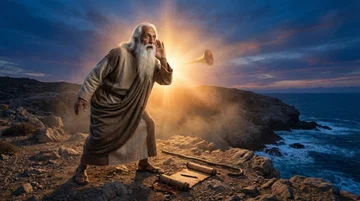
I was in the Spirit on the Lord’s day, and heard behind me a great voice, as of a trumpet,
Translations
American King James Version, King James Version
I was in the Spirit on the Lord’s day, and heard behind me a great voice, as of a trumpet,
KJV Cambridge Paragraph Bible, Douay-Rheims (Challoner revision)
I was in the spirit on the Lord’s day, and heard behind me a great voice, as of a trumpet,
I was in the Spirit on the Lord's day, and heard behind me a great voice, as of a trumpet,
Revised Version, American Standard Version
I was in the Spirit on the Lord’s day, and I heard behind me a great voice, as of a trumpet
I was in the Spirit on the Lord's-day, and I heard behind me a great voice, as of a trumpet, saying,
I became in [ the] Spirit on the Lord's day, and I heard behind me a great voice as of a trumpet,
I came to be, in Spirit, in the Lord’s Day, and heard, behind me, a loud voice, as of a trumpet,
Berean Standard Bible, Majority Standard Bible
On the Lord’s day I was in the Spirit, and I heard behind me a loud voice like a trumpet,
I was in the Spirit on the Lord’s day, and I heard behind me a loud voice, like a trumpet
I was in the Spirit on the Lord's day, and a great voice at my back, as of a horn, came to my ears,
And I was rauished in spirit on the Lordes day, and heard behinde me a great voyce, as it had bene of a trumpet,
Pictures




Cross-references 20 of 34
- Exodus 20:10
But the seventh day is the sabbath of the LORD thy God: in it thou shalt not do any work, thou, nor thy son, nor thy daughter, thy manservant, nor thy maidservant, nor thy cattle, nor thy stranger that is within thy gates:
Identifies the seventh day as the Lord’s Sabbath.
- Revelation 1:17-18
And when I saw him, I fell at his feet as dead. And he laid his right hand upon me, saying unto me, Fear not; I am the first and the last:
John falls before Christ, who tells him not to fear and declares that he lives forever.
- Acts 20:7
And upon the first day of the week, when the disciples came together to break bread, Paul preached unto them, ready to depart on the morrow; and continued his speech until midnight.
The gathering is identified as the first day of the week, linked with the Lord’s day.
- Revelation 1:1-3
The Revelation of Jesus Christ, which God gave unto him, to shew unto his servants things which must shortly come to pass; and he sent and signified it by his angel unto his servant John:
Introduces the revelation John received and the blessing for reading, hearing, and keeping it.
- Isaiah 58:13
If thou turn away thy foot from the sabbath, from doing thy pleasure on my holy day; and call the sabbath a delight, the holy of the LORD, honourable; and shalt honour him, not doing thine own ways, nor finding thine own pleasure, nor speaking thine own words:
Calls the Sabbath the Lord’s holy day, identifying the day of John’s visions.
- Matthew 28:1
In the end of the sabbath, as it began to dawn toward the first day of the week, came Mary Magdalene and the other Mary to see the sepulchre.
Both identify the first day as the day of Christ’s resurrection.
- Revelation 4:2
And immediately I was in the spirit: and, behold, a throne was set in heaven, and one sat on the throne.
John is in the Spirit again as another vision begins.
- Exodus 19:19
And when the voice of the trumpet sounded long, and waxed louder and louder, Moses spake, and God answered him by a voice.
God’s voice at Sinai sounded like a trumpet.
- Luke 24:1
Now upon the first day of the week, very early in the morning, they came unto the sepulchre, bringing the spices which they had prepared, and certain others with them.
Both identify the first day of the week as the day of Christ’s resurrection.
- John 20:1
The first day of the week cometh Mary Magdalene early, when it was yet dark, unto the sepulchre, and seeth the stone taken away from the sepulchre.
John names the first day of the week, the day of Christ’s resurrection, while Revelation calls it the Lord’s day.
- 1 Corinthians 16:2
Upon the first day of the week let every one of you lay by him in store, as God hath prospered him, that there be no gatherings when I come.
Names the first day without assigning it a sacred title.
- Mark 16:2
And very early in the morning the first day of the week, they came unto the sepulchre at the rising of the sun.
Both identify the first day of the week as the Lord’s day.
- Revelation 1:19
Write the things which thou hast seen, and the things which are, and the things which shall be hereafter;
Christ tells John to write what is present and what is to come.
- Revelation 8:6
And the seven angels which had the seven trumpets prepared themselves to sound.
The seven trumpets begin another prophetic sequence of events.
- Revelation 4:1
After this I looked, and, behold, a door was opened in heaven: and the first voice which I heard was as it were of a trumpet talking with me; which said, Come up hither, and I will shew thee things which must be hereafter.
The trumpet-like voice speaks again before John’s vision.
- Revelation 17:3
So he carried me away in the spirit into the wilderness: and I saw a woman sit upon a scarlet coloured beast, full of names of blasphemy, having seven heads and ten horns.
John is carried in the Spirit to see a vision.
- Revelation 1:14-15
His head and his hairs were white like wool, as white as snow; and his eyes were as a flame of fire;
Describes Christ’s glorious appearance and voice.
- Mark 16:9
Now when Jesus was risen early the first day of the week, he appeared first to Mary Magdalene, out of whom he had cast seven devils.
The first day commemorates Jesus’ resurrection and is associated with the Lord’s day.
- John 20:19
Then the same day at evening, being the first day of the week, when the doors were shut where the disciples were assembled for fear of the Jews, came Jesus and stood in the midst, and saith unto them, Peace be unto you.
John identifies the resurrection day as the first day of the week, the Lord’s day.
- Revelation 1:18
I am he that liveth, and was dead; and, behold, I am alive for evermore, Amen; and have the keys of hell and of death.
identifies the trumpet voice as the One who lives and was dead
Commentary part 1 of 2
Each commentary is drawn from primary sources: the writings of Ellen G. White and Adventist pioneers and periodicals. Each commentary is separate. Its own words are not a quotation; follow the references to read the source passages.
Ellen G. White
70 sources
On the lonely isle of Patmos, the aged John, banished for his faithfulness, was in the Spirit on the Sabbath day when heaven was opened before him.AA 581.4–582.2Ms 59, 1911, par. 11Ms 150, 1899, par. 13–15Lt 43, 1905, par. 2–3Ms 92, 1891, par. 9–11 The Lord's day is the seventh-day Sabbath, instituted at creation when God rested and blessed and hallowed the seventh day as His memorial, not the first day of the week.Ms 159, 1904, par. 4Ms 150, 1899, par. 13–15Ms 92, 1891, par. 9–11ST Feb 27, 1912Lt 60, 1898, par. 31 While in the Spirit he heard behind him a great voice as of a trumpet calling him to attend, which was Christ Himself in glorified humanity declaring Himself the Alpha and Omega, the first and the last.AA 581.4–582.2Ms 131, 1903, par. 11–15Ms 46, 1904, par. 3–6Ms 53, 1890, par. 46–47 The voice commanded him to write what he saw in a book and send it to the seven churches, and turning to see, John beheld one like the Son of Man in the midst of seven golden candlesticks, fell at His feet as dead, and was revived by His touch and told to fear not.Ms 46, 1904, par. 3–6ST Feb 4, 1903Lt 91, 1896, par. 2–6ST Feb 27, 1912 This begins the revelation God gave to Jesus to show His servants what must soon take place, concerning the closing scenes of earth's history just before the coming of the Son of man with power and great glory.Ms 131, 1903, par. 11–15Ms 92, 1891, par. 1–4ST Jan 28, 19036T 128.2Lt 126, 1906, par. 5
John's Exile on Patmos
John was Christ's faithful witness, and he speaks of himself as brother and companion in tribulation and in the kingdom and patience of Jesus Christ.Ms 59, 1911, par. 11Ms 46, 1904, par. 3–6Lt 43, 1905, par. 2–3 He was banished to the barren, lonely, desert Isle of Patmos for the word of God and for the testimony of Jesus Christ, sent there by Satan-inspired persecutors in a time of fierce persecution and great darkness.Lt 91, 1896, par. 2–6ST Feb 27, 1912Ms 100, 1893, par. 2–3 Cut off from the world by the broad ocean, he was separated from companions in faith and cut off from gospel labor.Lt 91, 1896, par. 2–6Ms 100, 1893, par. 2–3 He was an old man, nearly one hundred years old, grown old in the service of the Lord.Ms 92, 1903, par. 2–7Ms 63, 1906, par. 12–13 Yet he was preserved as a witness, and even in old age and isolation he still received communications from heaven, receiving on that lonely isle more communications than during the rest of his lifetime.Ms 92, 1891, par. 9–11RH Jul 26, 1906Ms 63, 1906, par. 12–13
He was not alone or forsaken or separated from God's presence in exile.Lt 91, 1896, par. 2–6Ms 100, 1893, par. 2–3 Christ knew just where to find him and came personally to him there, with visitation by the heavenly messenger and by Jesus Himself.Ms 59, 1911, par. 11Lt 91, 1896, par. 2–6Ms 21, 1895, par. 16–17 Light from the Son of God shone on Patmos and made the desolate place of exile a heaven to the lonely exile and the gate of heaven to him.Lt 91, 1896, par. 2–6Ms 100, 1893, par. 2–3 No man could deprive him of the light and revelation of Christ, for Christ who rules the earth manifested Himself to him in tribulation as He will to all faithful in their warfare.Ms 21, 1895, par. 16–1718MR 77.1–2 There Christ gave him a revelation of Himself and divine truth to enlighten the churches.AA 581.1–3
On Patmos he sacredly observed the Sabbath as he had in Judea and while preaching among the people and worshiping with the churches in the cities and towns.AA 581.4–582.2ST Nov 16, 1882ST Feb 5, 1885BS 63.1–2 It was as precious to him in exile as with his companions, and the precious promises God had given concerning that day he repeated and claimed as his own.AA 581.4–582.2Ms 150, 1899, par. 13–15 He was on the Sabbath in the Spirit when the Lord visited him, and heard behind him a great voice like a trumpet.AA 581.4–582.2Ms 81, 1900, par. 49–53 While in the Spirit he communed with God, studying His creation and nature, with Jesus as his Teacher unfolding things to take place in the future.STE 50.2–3FE 423.2–3 He was filled with unspeakable joy because heaven seemed open before him.Ms 99, 1902, par. 75–77 Contemplating Horeb, he reflected on humanity's transgression of God's law and God's immense love in giving His Son to redeem the lost.BS 63.3
Lord's Day Is Sabbath
The Lord's day of Revelation 1:10 is the seventh-day Sabbath, the Sabbath of the Lord, not the first day of the week.Ms 159, 1904, par. 4ST Feb 27, 1912Lt 60, 1898, par. 31Lt 87, 1896, par. 3Ms 193, 1905, par. 1–4 There is only one day called the Lord's day, God's one specified day, the last day of the week.Ms 159, 1904, par. 4ST Feb 27, 1912 On that day John was in the Spirit and received the vision, and Jesus as Lord of the Sabbath met him there with important messages.Lt 60, 1898, par. 31Lt 87, 1896, par. 3 The day there called the Sabbath of the Lord is the Lord's day, and it belongs to the message Christ gave John whose counsel to the churches is to be heeded.STB 404.5–405.1Ms 193, 1905, par. 1–4
It is the Sabbath instituted in Eden and at creation, when God made the world in six days and rested on the seventh day and was refreshed.Ms 159, 1904, par. 4ST Feb 27, 1912Lt 60, 1898, par. 31 He blessed the seventh day and hallowed it, sanctified it and set it apart as a memorial to keep Him as Creator in the minds of His people.Ms 159, 1904, par. 4Ms 92, 1891, par. 9–11ST Feb 27, 1912 John was in the Spirit on that seventh day when Christ revealed through His angel events before the close of the world's history, and on it he heard behind him a loud trumpet-like voice declaring Alpha and Omega and commanding what he saw to be written and sent to the seven churches.ST Feb 27, 19126T 128.2Lt 60, 1898, par. 31 Turning he saw seven golden candlesticks with one like the Son of Man in their midst, showing Christ honored John for steadfast obedience.ST Feb 27, 1912 It was as precious to John in exile on Patmos as when he was with his companions in the cities and towns, and the precious promises God had given regarding this day he repeated and claimed as his own.Ms 150, 1899, par. 13–15
It was the sign to him that God was his, because God had declared the Sabbath a sign between Himself and His people throughout their generations forever, a perpetual covenant showing that He is the Lord who sanctifies them.Ms 150, 1899, par. 13–15 God created only one Sabbath, and that Sabbath lasts through eternal ages, and to John it was a wonderful Sabbath.Lt 60, 1898, par. 31 The great voice like a trumpet recalls God's proclamation of His law at Horeb amid thunder, lightning, thick cloud and a loud trumpet voice, which John contemplated and remembered as commanding Sabbath-keeping.ST Nov 16, 1882ST Feb 5, 1885 The Spirit who sanctified the seventh day came upon John as he contemplated Horeb, where God spoke the Sabbath commandment, and John kept it sacred while exiled on Patmos as he had while preaching among the people.ST Nov 16, 1882ST Feb 5, 1885BS 63.1–2 The rocky mountain and the solid-rock tablets signify the power of God and the unchanging nature of His law and precepts.ST Nov 16, 1882BS 63.1–2
Observance of the first day as Sabbath is a spurious human substitution with not one thread of sanctity in it, the first day being a common working day.Ms 163, 1897, par. 14–15 The Catholic church set aside the day God gave as a memorial of creation, the day that defines its Author as the living God who created the world in six days and rested and sanctified and blessed the seventh day of rest.Ms 163, 1897, par. 14–15 The Protestant world has taken this child of papacy and cherished it and called it Christ's day, the Christian Sabbath, but it is a spurious sabbath, an idol placed where the Lord's day should be.Ms 163, 1897, par. 14–15 Like Cain, its defenders are exceedingly angry because the whole world does not regard it with the sacredness of the Sabbath of the Lord, while transgressors of the fourth commandment make the Sabbath fit their own maxims by declaring the first day is the Sabbath.Ms 163, 1897, par. 14–15 One account applies the phrase Lord's day to Sunday as the day Christians substituted for God's seventh-day Sabbath, which was consecrated by God and observed by His worshipers, so that changing it tampered with divine law and exalted human authority above God.4SP 395.1 When believers keep the Sabbath holy and meet in Christ's name, they may be in the Spirit as John was.Ms 161, 1904, par. 23–25
Great Trumpet Voice
While in the Spirit on the Lord's day John heard behind him a great, loud voice as of a trumpet, calling him to attend to what was to be written.AA 581.4–582.2Ms 131, 1903, par. 11–15Ms 59, 1911, par. 11ST Feb 4, 1903 The revelation given then was intended for the church and for readers seeking latter-day truth, beginning the wonderful instruction given on Patmos and introducing the description of Christ in the first chapter.Ms 131, 1903, par. 11–15Ms 106, 1897, par. 26–28 The voice called him to write what he saw and send it to the seven churches in Asia.ST Feb 4, 1903
The voice is Christ's own voice, the voice of the One John honored and loved above all others, presenting Himself in His glorified humanity.Ms 46, 1904, par. 3–6Ms 53, 1890, par. 46–47 It is the same voice that spoke to John from the cross.Ms 53, 1890, par. 46–47 John first saw Him in human form bearing the nail marks in His hands and feet, and then beheld Him in glory beyond what a human being could ordinarily endure.Ms 94, 1897, par. 38–39
The voice declares Him Alpha and Omega, the first and the last, the beginning and the end.Ms 46, 1904, par. 3–6Lt 43, 1905, par. 2–3Lt 91, 1896, par. 2–6ST Feb 27, 1912 It commands what John sees to be written in a book and sent to the seven churches in Asia, at Ephesus, Smyrna, Pergamos, Thyatira, Sardis, Philadelphia and Laodicea, leading to Christ's message for the churches.Ms 46, 1904, par. 3–6ST Feb 4, 1903Lt 43, 1905, par. 2–3Lt 8a, 1890, par. 34–37 What was to be written is the word of God found in the book of Revelation, not a sealed book but a mystery unfolded to be understood concerning scenes to take place in the last days of this earth's history.Ms 46, 1904, par. 3–6
Turning to see the voice, John saw seven golden candlesticks with One like the Son of Man in their midst.Lt 91, 1896, par. 2–6ST Feb 27, 1912Ms 92, 1903, par. 2–7 He fell at His feet as dead because his humanity could not endure the glory, and was touched by His right hand and revived and strengthened.Ms 92, 1903, par. 2–7Ms 165, 1904, par. 12–13 He was told to fear not by Him who lives and was dead and is alive forevermore and has the keys of hell and of death, and was commanded to write the things seen and present and hereafter.Ms 92, 1903, par. 2–7 The episode shows God can communicate divine messages through human messengers, who are then to make the message known to the churches.Ms 165, 1904, par. 12–13
The Christ who thus appears glorified and speaks is the same Master with whom John had walked and talked in Judea and on whose breast he had leaned.Ms 99, 1902, par. 75–7718MR 77.1–2 He is the same Jesus whom John had almost last seen hanging in human agony upon the cross while the priests and rulers who caused His death mocked Him.Ms 97, 1906, par. 55–56 Hidden as it were on the desert island, deprived of the society of his brethren, John beheld Him come to open heavenly mysteries to him and to give a more wonderful revelation of Himself and what was to come upon the earth.Ms 165, 1904, par. 3–5Ms 97, 1906, par. 55–5618MR 77.1–2Ms 165, 1904, par. 6–8
Revelation for Last Days
This verse begins the wonderful instruction given on Patmos and introduces the description of Christ in the first chapter.Ms 131, 1903, par. 11–15 It belongs to the opening that presents the Revelation as a message God gave to Jesus, sent through an angel to John to show God's servants things that must soon take place, whose words are to be read, heard, and kept.ST Jan 28, 1903 It is part of the vision in which Christ revealed Himself to John in the glory of the holy sanctuary to give a message for the churches, with figures and words of explanation giving what is of greatest importance for the present, reaching from time into eternity.Ms 175, 1903, par. 10Ms 168, 1907, par. 15 On that day Christ revealed through His angel events that would occur before the close of the world's history, matters to be studied and understood.6T 128.2
Christ Himself came from heaven in person to the lonely isle to speak to John, working him by the Holy Spirit to write what he was told.Ms 139, 1903, par. 33–3418MR 37.1 He came personally to educate John and give him instruction to be given to the churches, commanding him to write these things because they are of vast importance to His people.Lt 311, 1905, par. 5–7Ms 136, 1902, par. 1–2 As Captain of the Lord's host He veiled His own glory through His highest angels while showing John the things that must be, things of the highest importance, and this message is to come straight, sharp, and clean from all mixture of human wisdom and tradition.18MR 33.2–34.1 The revelation then given is a wonderful, dignified, exalted, solemn message, and to present it with decided emphasis demands all the talents and capabilities God has given.Ms 139, 1903, par. 33–3418MR 37.1 That account is to be taught in camp-meetings to people unacquainted with the truth and to be studied, believed, and preached, while the work He has given for these last days remains under His supervision against Satan, who is not dead or palsied but prepares minds by degrees to work against responsibility-bearers and will carry out his last exploits with more power than ever through full scientific scheming.Lt 110, 1902, par. 9–10Lt 311, 1905, par. 5–7
The revelation is instruction about events leading up to the close of the world's history, to be read, understood with the Holy Spirit's help, heard attentively, and put into practice.Ms 92, 1891, par. 1–4 It places John in the Spirit as Christ came to give warning about the closing scenes of earth's history, with the voice beginning the message commanded to be written and sent to the seven churches, whose warnings are to be proclaimed widely and continued today.Lt 126, 1906, par. 5 It concerns the last days of earth's history, portraying events that will occur then which John was directed to communicate to the churches.Ms 99, 1909, par. 42–47Lt 303, 1903, par. 1–2 Its chapters give earnest warning to prepare to meet the Lord coming in the clouds with power and great glory, confronting indifference to foretold signs as evidence the end is right upon us.Lt 386, 1904, par. 1 The view extends through future ages to Christ's coming, with views of the heavenly home, God's throne, the redeemed made clean by the Lamb's blood, and songs of victory.Lt 303, 1903, par. 1–2
The voice commands what is seen to be written in a book and sent to the seven churches in Asia at Ephesus, Smyrna, Pergamos, Thyatira, Sardis, Philadelphia, and Laodicea, which represent the complete church of God, all who shall be saved.Ms 161, 1904, par. 14–16 The messages to the churches in the first, second, and third chapters give the history of Satan's effort to bring dissension into the church that must be met today.Lt 31, 1903, par. 6 Through the list of the churches, representing the churches in the land, a call is made reaching to the latest call, the third angel's message to be proclaimed under the banner of the commandments of God and the faith of Jesus.Ms 188, 1905, par. 28–30 That call rejects spiritualistic ideas that there is no personal Christ and no personal God, and holds fast to the sanctuary, to Christ Jesus and to the Father, proclaiming every experienced point of present truth wherever one goes.Ms 188, 1905, par. 28–30 Therefore labor must not be confined to those nominally united with the church and no Jerusalem center must be made in any place, but the power of the Holy Spirit must be earnestly sought to give the message to every nation until salvation is accomplished.Ms 161, 1904, par. 14–16
The testimony then given was intended for the church and for readers seeking to understand what would come in the last days, when the risen Christ made His presence known on the holy Sabbath.Ms 106, 1897, par. 26–28 There He gave a revelation of Himself and divine truth to enlighten the churches and strengthen the church until the end of time.AA 581.1–3 Hidden as it were on the desert island, deprived of brethren, John could not be deprived of the light and revelation of Christ, and Christ visited His richly favored servant to give a more wonderful revelation of Himself, a most wonderful view of His glory, and what was to come upon the earth, with great light to shine from Christ for the world.18MR 77.1–2 That testimony given to John is also given now, and the Scriptures are to be searched to know what will be in the last days, for its truths concern people living in the last days and have a sanctifying influence.ST Jan 28, 190318MR 77.1–2 This same testimony is for isolated believers and for all who will be alive to hear and receive it, to comfort and encourage in banishment.Ms 106, 1897, par. 23–25Ms 38, 1905, par. 8
In exile John beheld his glorified Redeemer and saw more distinctly than ever what will be at the close of history.Ms 38, 1905, par. 8 He saw the mercy, tenderness, and love of God blending with holiness, justice, and power, so sinners find a Father in Him of whom their sins had made them afraid, with mercy and truth meeting together and righteousness and peace kissing each other, so that instead of fleeing from God because of sin they flee to His arms for protection and pardon and the throne terrible in unbelief becomes a place of refuge in repentance.Ms 38, 1905, par. 8 The revelation Jesus Christ gave repeats what Moses recorded in Exodus and in the plagues brought upon Egypt.Ms 132, 1898, par. 1 The great light from Jesus Christ reveals solemn truths and events preceding His second coming, making truth known and leaving no excuse for claiming spiritual insight while secretly practicing impurity and evading truth.SLP 10.1–13.1 With the verses that follow it shows how to escape the perils of the last days, where to place dependence, to make no gods of men, to worship the Lord God with all heart and mind and soul and strength and to love neighbor as self, because all the law and the prophets hang on these two great principles.Ms 159, 1904, par. 5 The trumpet voice is linked to the final day when at the sound of the trumpet and the voice of God Christ calls the dead to life and the persecuted Waldenses who died in the mountains rise from their burial places.Lt 97, 1886, par. 3–5
Studying and Sharing Message
The opening chapter is important and solemn and is to be clearly understood, marked verse by verse and interpreted without mistake.Ms 88, 1910, par. 3 It is to be studied carefully, prayerfully and diligently, read and heard attentively and kept with the help of the Holy Spirit and put into practice.Ms 92, 1891, par. 1–4ST Jan 28, 1903Lt 43, 1905, par. 2–3 Its true meaning is to be taken in with an open heart, bringing solemn humility and awe matching the vision.Ms 88, 1910, par. 3 Its truths concern those living in the last days and have a sanctifying influence on them.ST Jan 28, 1903 The account is worthy of careful study and contemplation because it contains broad lessons the angels are seeking to communicate.6T 58.2–59.1
The message then given is wonderful, dignified, exalted and solemn.Ms 139, 1903, par. 33–3418MR 37.1 Presenting it with decided emphasis demands all the talents and capabilities God has given.Ms 139, 1903, par. 33–3418MR 37.1 Ministers and lay members must become acquainted with Christ's instruction for these last days and have more to say about it.Lt 5, 1903, par. 12–14 That instruction is to be taught in camp-meetings to those unacquainted with truth, and to be studied, believed and preached.Lt 110, 1902, par. 9–10
It was given to John to give to the people in truth and righteousness as words of warning, to be given to all who will be alive to hear and receive it.Ms 88, 1910, par. 3 It is to be made known to the world, its warnings proclaimed widely and continued today.Lt 126, 1906, par. 5ACSMHFP 3.7 It is to come to God's people straight, sharp and clean from all mixture of human wisdom and tradition.18MR 33.2–34.1 The voice heard began the message commanded to be written and sent to the seven churches at Ephesus, Smyrna, Pergamos, Thyatira, Sardis, Philadelphia and Laodicea, and those seven represent the complete church of God, all who shall be saved.Ms 161, 1904, par. 14–16 Therefore labor must not be confined to those nominally united with the church and no Jerusalem center is to be made in any place, but the power of the Holy Spirit must be earnestly sought to give the message to every nation until the work of salvation is accomplished.Ms 161, 1904, par. 14–16
The vision gives the church living power and assurance that the risen Christ is present with His people. In oppression and persecution He reveals Himself to His chosen, even in prison or at the stake, and God's glory shines most clearly in the deepest gloom. Light from the Son of God shone on Patmos and made the barren place of exile a heaven to the lonely exile, proving the all-sufficient One is present with isolated believers.Lt 91, 1896, par. 2–6 That same Jesus visits homes that keep close to Him as Elder Brother, keep eyes uplifted to Him, and bring Him all griefs and troubles in childlike trust, honoring the home by the divine presence.Lt 91, 1896, par. 2–6 God leads His children by a way they do not know yet does not forget or cast them off, but by permission permits trials so that by constancy and obedience they may be spiritually enriched and their example may strengthen others to lay burdens at His feet and receive His peace.PP 129.2
The work He gave for these last days remains under His supervision, as it was when He came in person to educate John and give him instruction for the churches.Lt 311, 1905, par. 5–7 Satan is not dead or palsied but has learned much and prepares minds by degrees to become imbued with his spirit and to work against those who bear responsibilities in that work.Lt 311, 1905, par. 5–7 His last exploits to make of no effect the work under Christ's supervision will be carried out with more power than ever through full scientific scheming.Lt 311, 1905, par. 5–7
John had grown old in the service of the Lord when exiled, yet on that lonely isle he received more communications from heaven than during the rest of his lifetime.Ms 63, 1906, par. 12–13 This proves that ministers who have faithfully done their work and borne its burdens are still honored by God when feeble in health.Ms 63, 1906, par. 12–13 They must not be forgotten or neglected but must have their needs cared for by the conferences.Ms 63, 1906, par. 12–13
When Christ revealed Himself, John fell as dead because his humanity could not endure the glory.Ms 165, 1904, par. 12–13 Christ touched him with His right hand, revived and strengthened him, then gave him a message to make known to the churches.Ms 165, 1904, par. 12–13 The episode shows that God can communicate divine messages through human messengers.Ms 165, 1904, par. 12–13
Sources