John 19:11
Jesus answered, Thou couldest have no power at all against me, except it were given thee from above: therefore he that delivered me unto thee hath the greater sin.
Translations
Jesus answered, You could have no power at all against me, except it were given you from above: therefore he that delivered me to you has the greater sin.
King James Version, KJV Cambridge Paragraph Bible
Jesus answered, Thou couldest have no power at all against me, except it were given thee from above: therefore he that delivered me unto thee hath the greater sin.
Jesus answered, Thou couldst have no power against me; except it were given thee from above: therefore he that delivered me to thee hath the greater sin.
Revised Version, American Standard Version
Jesus answered him, Thou wouldest have no power against me, except it were given thee from above: therefore he that delivered me unto thee hath greater sin.
Jesus answered, 'Thou wouldest have no authority against me, if it were not having been given thee from above; because of this, he who is delivering me up to thee hath greater sin.'
Jesus answered, Thou hadst no authority whatever against me if it were not given to thee from above. On this account he that has delivered me up to thee has [ the] greater sin.
Jesus answered him—Thou couldst have had no authority against me, at all, if it had not been given unto thee from above. Therefore, he that delivered me unto thee, hath, greater sin.
Berean Standard Bible, Majority Standard Bible
Jesus answered, “ You would have no authority over Me if it were not given to you from above. Therefore the one who handed Me over to you is guilty of greater sin.”
Jesus answered, “ You would have no power at all against me, unless it were given to you from above. Therefore he who delivered me to you has greater sin.”
Jesus gave this answer: You would have no power at all over me if it was not given to you by God; so that he who gave me up to you has the greater sin.
Iesus answered, Thou couldest haue no power at all against me, except it were giuen thee from aboue: therefore he that deliuered me vnto thee, hath the greater sinne.
Douay-Rheims (Challoner revision)
Jesus answered: Thou shouldst not have any power against me, unless it were given thee from above. Therefore, he that hath delivered me to thee, hath the greater sin.
Pictures
Cross-references 20 of 32
- John 18:36
Jesus answered, My kingdom is not of this world: if my kingdom were of this world, then would my servants fight, that I should not be delivered to the Jews: but now is my kingdom not from hence.
Jesus tells Pilate his kingdom is not of this world and his servants do not fight for it.
- Romans 13:1
Let every soul be subject unto the higher powers. For there is no power but of God: the powers that be are ordained of God.
Both teach that earthly authority depends on God.
- Matthew 27:24-25
When Pilate saw that he could prevail nothing, but that rather a tumult was made, he took water, and washed his hands before the multitude, saying, I am innocent of the blood of this just person: see ye to it.
Pilate disclaims responsibility while the people accept responsibility for Jesus’ blood.
- Luke 23:14
Said unto them, Ye have brought this man unto me, as one that perverteth the people: and, behold, I, having examined him before you, have found no fault in this man touching those things whereof ye accuse him:
Pilate declares Jesus innocent while the people demand his death.
- John 18:31-32
Then said Pilate unto them, Take ye him, and judge him according to your law. The Jews therefore said unto him, It is not lawful for us to put any man to death:
The Jewish authorities cannot execute Jesus, explaining Roman crucifixion.
- Matthew 27:2
And when they had bound him, they led him away, and delivered him to Pontius Pilate the governor.
Jesus is delivered to Pilate for trial.
- Mark 15:1-15
And straightway in the morning the chief priests held a consultation with the elders and scribes and the whole council, and bound Jesus, and carried him away, and delivered him to Pilate.
Pilate questions Jesus and delivers him to be crucified under pressure from the crowd.
- John 19:4
Pilate therefore went forth again, and saith unto them, Behold, I bring him forth to you, that ye may know that I find no fault in him.
Pilate declares that he finds no fault in Jesus.
- Acts 4:10
Be it known unto you all, and to all the people of Israel, that by the name of Jesus Christ of Nazareth, whom ye crucified, whom God raised from the dead, even by him doth this man stand here before you whole.
Both texts hold people responsible for Jesus’ crucifixion.
- Luke 12:47-48
And that servant, which knew his lord’s will, and prepared not himself, neither did according to his will, shall be beaten with many stripes.
Greater knowledge brings greater responsibility and accountability.
- Acts 3:13-14
The God of Abraham, and of Isaac, and of Jacob, the God of our fathers, hath glorified his Son Jesus; whom ye delivered up, and denied him in the presence of Pilate, when he was determined to let him go.
Peter condemns the people for rejecting Jesus and choosing a murderer instead.
- Acts 2:23
Him, being delivered by the determinate counsel and foreknowledge of God, ye have taken, and by wicked hands have crucified and slain:
Both texts affirm human responsibility for Jesus’ delivery and crucifixion.
- John 19:7
The Jews answered him, We have a law, and by our law he ought to die, because he made himself the Son of God.
The Jewish authorities press their charge against Jesus before Pilate.
- John 19:15-18
But they cried out, Away with him, away with him, crucify him. Pilate saith unto them, Shall I crucify your King? The chief priests answered, We have no king but Cæsar.
Continues the account of the Son’s rejection.
- Psalms 62:11
God hath spoken once; twice have I heard this; that power belongeth unto God.
Both affirm that all power ultimately belongs to God.
- Matthew 26:53
Thinkest thou that I can not now pray to my Father, and he shall presently give me more than twelve legions of angels?
Though able to summon angelic hosts, Christ submitted calmly to the power given from above.
- Matthew 27:11-14
And Jesus stood before the governor: and the governor asked him, saying, Art thou the King of the Jews? And Jesus said unto him, Thou sayest.
grouped as answering or refusing to answer
- Luke 23:22
And he said unto them the third time, Why, what evil hath he done? I have found no cause of death in him: I will therefore chastise him, and let him go.
Pilate finds Jesus innocent, but the people demand his death.
- Job 1:12
And the LORD said unto Satan, Behold, all that he hath is in thy power; only upon himself put not forth thine hand. So Satan went forth from the presence of the LORD.
Satan can act against God’s servant only within limits God permits.
- Daniel 2:21
And he changeth the times and the seasons: he removeth kings, and setteth up kings: he giveth wisdom unto the wise, and knowledge to them that know understanding:
God removes and sets up kings.
Commentary
Each commentary is drawn from primary sources: the writings of Ellen G. White and Adventist pioneers and periodicals. Each commentary is separate. Its own words are not a quotation; follow the references to read the source passages.
Ellen G. White
15 sources
Jesus told Pilate that his power to judge him was not his own but only what had been granted from above.3SP 145.1–2DA 736.1–737.1ST Jul 11, 1878 The greater wrong belonged to the high priest and the Jewish rulers who condemned him and handed him over for execution, because they acted against full light from prophecy, teaching, and miracles, while Pilate and the Roman soldiers were comparatively ignorant, and guilt is measured by the light received.3SP 145.1–2DA 736.1–737.1ST Jul 11, 1878 Even while suffering he eased Pilate's fault as far as possible and laid the heavier burden on those judges.3SP 145.1–2DA 736.1–737.1ST Jul 11, 1878 That did not excuse Pilate, who declared him innocent yet sacrificed him to the mob to protect his position and honor, and brought ruin on himself by compromising with evil.DA 736.1–737.1ST Jun 3, 1889Ms 74, 1911, par. 17
Words and Trial Setting
Pilate's power over Jesus was not independent, absolute, or self-originating, but existed only as given, granted, and permitted from above.3SP 145.1–2DA 736.1–737.1ST Jul 11, 1878ST Jun 3, 1889ST Nov 2, 1882 His authority to condemn or release stood only by divine permission and not by his own right.DA 736.1–737.1ST Jun 3, 1889Ms 95, 1897, par. 1–2
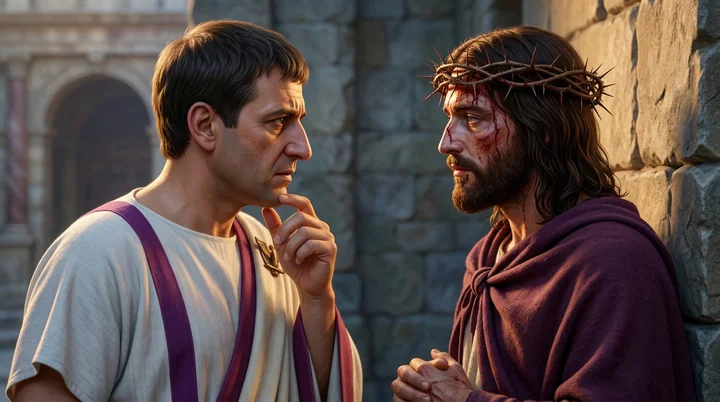
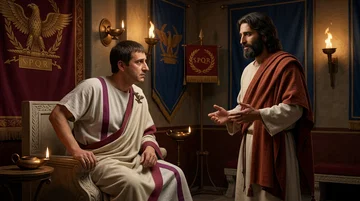
The words were spoken when Jesus stood bound as a prisoner in Pilate's judgment-hall, surrounded by a guard of soldiers with spectators filling the hall.DA 723.1–724.1 The judges of the Sanhedrin, priests, rulers, elders and the mob stayed just outside the entrance, having already condemned Him and come for Pilate to confirm and execute the sentence.DA 723.1–724.1 They would not enter the Roman hall lest ceremonial defilement keep them from the feast of the Passover, blind that murderous hatred had defiled their hearts and that Christ was the real Passover lamb, so that in rejecting Him the great feast had lost its significance for them.DA 723.1–724.1 Pilate had been called hastily from his bedchamber to do his work quickly with magisterial severity, looking on Jesus with no friendly eyes and demanding the charges the authorities were anxious to have tried and punished in haste.DA 723.1–724.1 He had dealt with all kinds of criminals but never a man bearing such goodness and nobility, with no sign of guilt or fear and no boldness or defiance, but calm and dignified bearing whose face bore the signature of heaven.DA 723.1–724.1 Christ's appearance made a favorable impression that roused Pilate's better nature, reviving what his wife had told him and rumors he had heard from several sources of the Galilean prophet who cured the sick and raised the dead.DA 723.1–724.1
The verse belongs to the trial and condemnation when Jesus was humiliated and the crowd that had once hailed Him as king called for His crucifixion.4RED 102.2–103.1 The disciples had been prepared for this rejection so they would not be overwhelmed when it came.4RED 102.2–103.1 Pilate publicly declared to the maddened throng that he found no fault in Christ, yet delivered Him into their hands to be crucified while they demanded His death and called for the release of Barabbas, a robber and murderer.Lt 12, 1911, par. 8–11 Satan stood at the head of those who reviled and crucified Him and led the cruel mob in abuse of the Saviour to provoke Him to retaliation or to drive Him to perform a miracle to release Himself and thus break up the plan of salvation.Lt 12, 1911, par. 8–11
Christ's forbearance was shown toward Judas and His accusers, for although the people recognized that He was more than mortal and wondered why He did not free Himself, He remained bound and did not use His power to escape.DA 722.3 Though by a command He could have brought the heavenly hosts to His aid and by flashing forth His divine majesty could have driven that mob in terror from His sight, He submitted with perfect calmness to the coarsest insults and outrage.Lt 12, 1911, par. 8–11 From the manger to the cross He kept a sinless life with no stain and no failure to endure the test.Lt 12, 1911, par. 8–11
Guilt Measured by Light
The one who delivered Jesus to Pilate and bears the greater sin is Caiaphas, the high priest representing the Jewish nation, that is, the Jewish judges and rulers who condemned Jesus and brought Him to Pilate to confirm and execute the sentence.3SP 145.1–2DA 736.1–737.1ST Jul 11, 1878ST Nov 2, 1882Ms 95, 1897, par. 5–6 Their guilt is greater because they condemned Him despite unmistakable and abundant light and clear evidence of His divinity in the prophecies and the written Word, in His teachings, and in His miracles.3SP 145.1–2DA 736.1–737.1ST Jul 11, 1878ST Jun 3, 1889ST Nov 2, 1882 Guilt is measured according to light received, and by that measure Pilate and the Roman soldiers were comparatively ignorant.DA 736.1–737.1Ms 95, 1897, par. 5–6
Even while suffering, Jesus extended compassion by excusing Pilate's act as far as possible and placing the heavier burden on the judges, since Pilate could have released Him.3SP 145.1–2DA 736.1–737.1ST Jun 3, 1889ST Nov 2, 18825RED 65.2 That lesser guilt did not excuse Pilate's choice, for though he declared Jesus innocent and recognized what was right, he abused his office by yielding to the mob.DA 736.1–737.1ST Jun 3, 1889Ms 74, 1911, par. 173SP 147.1 He sacrificed an innocent life to protect his position, honor, and office, becoming guilty by compromise with evil and bringing ruin upon himself.ST Jun 3, 1889Ms 74, 1911, par. 173SP 147.1
Jesus' words made Pilate fear that his authority to condemn or release stood in relation to a higher authority and moved him to seek release.Ms 95, 1897, par. 5–6Ms 51, 1897, par. 33–34 But fear for his position and pressure over loyalty to Caesar led him to hand Jesus over.Ms 95, 1897, par. 5–6Ms 51, 1897, par. 33–34
Sources
Pioneers and periodicals
38 sources
Jesus answered Pilate's boast that he could free Him or put Him to death by declaring that Pilate could have no authority over Him at all unless it had been permitted from above.ST Jul 11, 1878ST Jun 3, 1889ST Oct 7, 1886 All civil power exists only by God's providence and permission, even when held by sinful rulers, and it remains limited, accountable to His supreme law, and legitimate only as it accords with justice.ST Aug 29, 1895ST Jul 26, 1899ST May 15, 1901ST May 28, 1912ST Jan 23, 1912 God's granting of that power does not approve its misuse, and Pilate misused his entrusted authority when, though repeatedly declaring Jesus innocent and just, he yielded to the mob from fear of Caesar and sacrificed principle to self-interest.ST Jul 14, 1881RH Dec 9, 1858ST Aug 13, 1896RH Dec 30, 1915 The heavier guilt rests on those who handed Jesus over to Pilate, especially the Jewish judges and Caiaphas and Judas, because they acted against greater light of prophecy, teaching, miracle, and knowledge of God and His law.ST Jul 11, 1878ST Jun 3, 1889ST Oct 7, 1886ST May 15, 1901RH Oct 29, 1861 Even in suffering Jesus spoke respectfully and without fear, excusing Pilate as far as possible while reminding him of judgment to come, and this gives comfort that no power of darkness, not even Satan, can act against God's people beyond what He permits for their good and the fulfillment of His purpose.ST Jul 11, 1878ST Jun 3, 1889ST Oct 7, 1886ST May 13, 1897ST May 15, 1901
Pilate's Trial and Claim
Jesus spoke these words in answer to Pilate's boast that he had power to release Him or to put Him to death, while Pilate held stately power to decide whether He would live or die standing face to face with incarnate Truth from the court on high.ST Oct 7, 1886 In that setting Pilate knew Jesus was innocent, repeatedly declared Him innocent and just, had a troubled conscience, and was troubled when he heard that Jesus claimed to be the Son of God.ST Jul 14, 1881RH Dec 9, 1858RH Jun 15, 1911
Though he could have released Jesus from His enemies, he yielded to pressure from the accusers and the mob, ordered His execution, and surrendered Him to abuse, scourging, and crucifixion without repentance.ST Jul 14, 1881RH Dec 9, 1858RH Jun 15, 1911 He did so from fear of losing favor with Caesar, putting worldly interest, position, honor, and self-interest ahead of conscience.ST Jun 3, 1889ST Jul 14, 1881RH Dec 9, 1858 This revealed weakness, cowardice, and a wavering indecision that repeatedly violated conscience, compromised with evil, and sacrificed principle to avoid unwelcome consequences.ST May 13, 1897
The trial shows the Jews rejecting allegiance to God by declaring Caesar their king. Jesus was crucified under Roman authority at a time when no other earthly power had authority to carry out the death penalty.ST Feb 10, 1898 The passage illustrates that Jesus answered some questions at His trial and refused to answer others, refusing one of Pilate's questions and then answering another.ST May 6, 1897
Power Given From Above
Jesus answered Pilate's claim to have power to release Him or to put Him to death by declaring that no power at all could be held against Him except as given from above.ST Jul 11, 1878ST Jun 3, 1889ST Nov 2, 1882ST Oct 7, 1886ST Apr 6, 1888 Pilate's authority was not his own independent or supreme power but was allowed, limited, and permitted, existing only by permission from God.ST Jul 11, 1878ST Jun 3, 1889ST Nov 2, 1882ST Apr 6, 1888RH Jun 29, 1916 Human authority could prevail against Him only because that power had been granted from above, and His suffering and death took place within the fulfillment of Scripture.ST Apr 6, 1888RH Jun 29, 1916 Earthly governments and rulers are likewise permitted because of human sin and rebellion, as a restraint preferable to anarchy.RH Jun 29, 1916 Even Satan's rule is allowed only temporarily, after humanity came under his power through sin, to show that no fallen creature has the right or ability to rule in the Creator's kingdom of righteousness and love.RH Jun 29, 1916
All power is of God, and every power in the world depends on Him and His will, so that no one has power apart from Him.ST Aug 29, 1895ST Jul 26, 1899ST Jan 23, 1912 Civil rulers hold their power under His providence even when they are sinful, as Pilate's authority over Jesus came from above.ST Aug 29, 1895ST Jul 26, 1899ST Jan 23, 1912 God's giving or appointing of power does not mean He approves every act done through it.ST Aug 13, 1896 Pilate's power to condemn and crucify was granted by God, yet his use of that authority was wrong, for he misused that entrusted power and acted unjustly.ST Aug 13, 1896RH Dec 30, 1915 Human thoughts and actions are uses of power received from God and help shape a person's destiny.RH Dec 30, 1915
The powers of evil could act against Jesus only within what God allowed.ST Apr 6, 1888ST Nov 14, 1895 Though the events of His trial were driven by human envy and the powers of darkness, they could not defeat God's eternal purpose.ST Apr 6, 1888ST Nov 14, 1895
Greater Sin and Guilt
The one who delivered Jesus to Pilate bears the greater sin, while Pilate's sin is less yet not removed into sinlessness.ST Jul 11, 1878ST Mar 28, 1911ST Aug 29, 1895ST Jun 2, 1909 Pilate's lesser knowledge does not make his act sinless, for entrusted authority misused unjustly remains accountable in judgment.ST May 15, 1901 The Jews demanded the crucifixion even when Pilate declared Him innocent, and although Romans carried out the crucifixion, the Jews secured the conviction and are therefore held responsible for His death.ST Mar 28, 1911ST May 6, 1897
The heaviest guilt rests on the Jewish judges, because they condemned Him after receiving unmistakable evidence and greater light of His divinity.ST Jul 11, 1878ST Jun 3, 1889ST Nov 2, 1882ST Oct 7, 1886ST May 13, 1897 That evidence came through the prophecies, through His own teachings, and through His miracles.ST Jul 11, 1878ST Jun 3, 1889ST Nov 2, 1882ST Oct 7, 1886ST May 13, 1897 In this measure Caiaphas bore greater sin in handing Jesus to Pilate because he knew more of God and His law.ST May 15, 1901
Judas also bore guilt greater than Pilate's because Judas delivered Jesus to him.RH Oct 29, 1861 Guilt is measured in light of a person's opportunities to know and to do what is right.RH Oct 29, 1861
Jesus' Spirit Under Trial
Even in the midst of intense suffering and grief He answered as the pitying Saviour, excusing Pilate's act as far as possible.ST Jul 11, 1878ST Jun 3, 1889ST Nov 2, 1882ST Oct 7, 1886ST May 13, 1897 He placed the heavier responsibility and burden of guilt on those who delivered Him to Pilate, declaring their sin greater.ST Jul 11, 1878ST Jun 3, 1889ST Nov 2, 1882ST Oct 7, 1886ST May 13, 1897 This was true though Pilate could have released Him from the power of His enemies.ST Jul 11, 1878ST Nov 2, 1882ST Oct 7, 1886ST May 13, 1897ST May 13, 1897 Yet Pilate still chose to sacrifice an innocent life rather than risk his position and honor.ST Jun 3, 1889
His words to Pilate were respectful, not defiant.ST May 15, 1901 Even so they reminded Pilate that civil authority is accountable to a higher authority.ST May 15, 1901 Trusting that God was with Him, He did not fear the governor or the death he could impose.ST Jun 12, 1901 He therefore faced His prosecutors and the prospect of death calmly and without defending Himself.ST Jun 12, 1901
He was innocent, yet He endured unmerited torture, mockery, scourging, and crucifixion.RH Jun 15, 1911ST Mar 13, 1901 Pilate repeatedly declared Him innocent and just, but pressure from the mob led him to allow Him to be taken away and crucified.RH Jun 15, 1911 Pilate was troubled when he heard the claim to be the Son of God.RH Jun 15, 1911 He endured that abuse without complaint and sacrificed His life so that human lives might be saved.RH Jun 15, 1911ST Mar 13, 1901
Civil Rule Accountable to God
The authority of earthly rulers comes from heaven, for no power could be exercised over Christ except as it had been given from above.ST Dec 20, 1905 That heavenly origin was acknowledged, and even when life itself was at stake there was no resistance to the government's judgment against personal rights.ST Dec 20, 1905
Earthly governments and rulers are permitted because of human sin and rebellion, as a restraint preferable to anarchy.RH Jun 29, 1916 Revolutions and dethronements carried out by rulers and other human agents happen only because their power is permitted or given from above, making their actions instruments of a higher authority even when explained by human causes.ST Apr 23, 1912 Even Satan's rule is allowed only temporarily, after humanity came under his power through sin, so that it may be shown that no fallen creature has the right or ability to rule in the Creator's kingdom of righteousness and love.RH Jun 29, 1916
The power over Jesus did not come from Rome alone but from God, and therefore it was not supreme or independent.ST May 15, 1901ST May 28, 1912 Because it came from above it was subject to God's supreme law and limited by justice.ST May 15, 1901ST May 15, 1901 Human governments and laws are legitimate only insofar as they accord with justice, and those faithful to God must judge whether those laws and governments are just.ST May 15, 1901
Power to condemn and crucify was granted, but that entrusted power was misused when used unjustly.RH Dec 30, 1915 Rulers who so misuse their power by acting unjustly are accountable to God in the Judgment, and lesser knowledge does not leave their actions sinless.ST May 15, 1901 Human thoughts and actions themselves are uses of power received from God and help shape a person's destiny.RH Dec 30, 1915
The trial shows persecution carried out in the name of religion through human agents and the power of the State.ST Oct 2, 1893 Religious leaders who hated His teachings demanded His blood and appealed to civil authority, which granted their demand.ST Oct 2, 1893 Religious complaints about His teachings and Sabbath observance thus led to the sentence of death, making Him a victim of religious legislation.ST May 19, 1914
That acknowledgment of authority has been distorted into an argument that submission was owed to the Roman power represented by him.ST Mar 2, 1904 In that distorted application the words about power given from above were treated as support for the Papacy's claim to continue Rome's authority and rule.ST Mar 2, 1904
The answer to the threat points also to each person's responsibility to God.ST May 28, 1912 Justice and true conviction required the use of the word to stay the mad mob and save an innocent life from crucifixion, yet conviction was denied and the dreaded sentence was spoken, followed by scourging and crucifixion without repentance. The same sentence upon Jesus must still be passed by every reader, who must decide whether to take Him as leader.
Providence Comfort and Fulfillment
No power can act against God's cause or people except what the Lord permits, and He permits it for the good of those who love Him.ST May 13, 1897ST May 13, 1897 This gives comfort to those facing temptation and persecution, for temptation, persecution and the powers of darkness can act only within what God permits.ST May 13, 1897ST May 13, 1897 Pilate's authority over Jesus existed only by such permission from above.ST May 13, 1897ST May 13, 1897
Earthly governments and rulers are likewise permitted because of human sin and rebellion, as a restraint preferable to anarchy.RH Jun 29, 1916 Even Satan's rule is allowed only temporarily, after humanity came under his power through sin, so that it may be shown that no fallen creature has the right or ability to rule in the Creator's kingdom of righteousness and love.RH Jun 29, 1916 Even Satan's power is under God's authority and not absolute, so its attacks need not ultimately harm the faithful and can serve their good.RH Jul 8, 1858 Victory over the enemy comes through faith, not by facing him with unaided resolve.RH Jul 8, 1858
No hostile power has any power except as given from above by God's permission, and no trouble befalls Zion except by that permission.RH Nov 13, 1856 Nothing is permitted out of which God will not bring much ultimate good to His people, since He can bring good out of the greatest evil of sin and much more out of temporal affliction.RH Nov 13, 1856 Infinite wisdom, power and love sway all creatures and guide all actions for the church, whose affairs are in a good hand, and this should calm the heart and produce resignation to the will that made and disposes of all.RH Nov 13, 1856 This applies to Zion plowed as a field with her stones in the dust, to Antichrist raging longer and wearing out the saints of the Most High, to a day of trouble and treading down and perplexity upon the valley of vision, to the wicked devouring the man more righteous than he, to the carrying of the best into captivity for their good, and to God taking the Assyrian as a staff to beat His people until He accomplishes His whole work upon Mount Zion.RH Nov 13, 1856
Recognizing God's power rather than seeing only human authorities helps build character, for even in suffering God is at work in what He permits.RH Oct 8, 1903 Human authority over Christ was limited and permitted by God.RH Oct 8, 1903 His death is the fulfillment of the Passover lamb sacrifice on the fourteenth day of the first month.ST Aug 13, 1874
Sources