Daniel 3:2
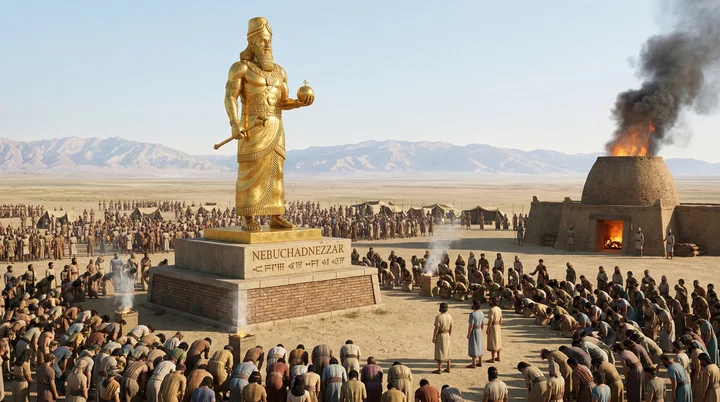
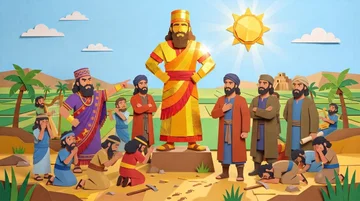
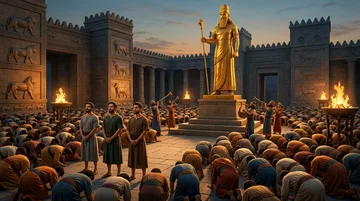
Then Nebuchadnezzar the king sent to gather together the princes, the governors, and the captains, the judges, the treasurers, the counsellors, the sheriffs, and all the rulers of the provinces, to come to the dedication of the image which Nebuchadnezzar the king had set up.
Translations
American King James Version, King James Version
Then Nebuchadnezzar the king sent to gather together the princes, the governors, and the captains, the judges, the treasurers, the counsellors, the sheriffs, and all the rulers of the provinces, to come to the dedication of the image which Nebuchadnezzar the king had set up.
Then Nebuchadnezzar the king sent to gather together the princes, the governors, and the captains, the judges, the treasurers, the counsellers, the sheriffs, and all the rulers of the provinces, to come to the dedication of the image which Nebuchadnezzar the king had set up.
Then Nebuchadnezzar the king sent to convene the princes, the governors, and the captains, the judges, the treasurers, the counselors, the sherifs, and all the rulers of the provinces, to come to the dedication of the image which Nebuchadnezzar the king had set up.
Revised Version, American Standard Version
Then Nebuchadnezzar the king sent to gather together the satraps, the deputies, and the governors, the judges, the treasurers, the counsellors, the sheriffs, and all the rulers of the provinces, to come to the dedication of the image which Nebuchadnezzar the king had set up.
and Nebuchadnezzar the king hath sent to gather the satraps, the prefects, and the governors, the honourable judges, the treasurers, the counsellors, the sheriffs, and all the rulers of the province, to come to the dedication of the image that Nebuchadnezzar the king hath raised up.
And Nebuchadnezzar the king sent to gather together the satraps, the prefects, and the governors, the judges, the treasurers, the counsellors, the justices, and all the rulers of the provinces, to come to the dedication of the image that Nebuchadnezzar the king had set up.
And, Nebuchadnezzar the king, sent to gather together the satraps, the nobles and the pashas, the chief judges, the treasurers, the judges, the lawyers, and all the rulers of the province,—to come to the dedication of the image, which Nebuchadnezzar the king, had set up.
Berean Standard Bible, Majority Standard Bible
Then King Nebuchadnezzar sent word to assemble the satraps, prefects, governors, advisers, treasurers, judges, magistrates, and all the other officials of the provinces to attend the dedication of the statue he had set up.
Then Nebuchadnezzar the king sent to gather together the local governors, the deputies, and the governors, the judges, the treasurers, the counselors, the sheriffs, and all the rulers of the provinces, to come to the dedication of the image which Nebuchadnezzar the king had set up.
And Nebuchadnezzar the king sent to get together all the captains, the chiefs, the rulers, the wise men, the keepers of public money, the judges, the overseers, and all the rulers of the divisions of the country, to come to see the unveiling of the image which Nebuchadnezzar the king had put up.
Then Nebuchad-nezzar ye King sent foorth to gather together the nobles, the princes and the dukes, the iudges, the receiuers, the counsellers, the officers, and all the gouernours of the prouinces, that they should come to the dedication of the image, which Nebuchad-nezzar the King had set vp.
Douay-Rheims (Challoner revision)
Then Nabuchodonosor the king sent to call together the nobles, the magistrates, and the judges, the captains, the rulers, and governors, and all the chief men of the provinces, to come to the dedication of the statue which king Nabuchodonosor had set up.
Pictures
Cross-references 20 of 29
- Daniel 3:16-18
Shadrach, Meshach, and Abed-nego, answered and said to the king, O Nebuchadnezzar, we are not careful to answer thee in this matter.
The Hebrews refuse the king’s command to worship the image, trusting God to deliver them.
- Daniel 2:37
Thou, O king, art a king of kings: for the God of heaven hath given thee a kingdom, power, and strength, and glory.
Nebuchadnezzar’s authority and kingdom are described as granted by God.
- Revelation 13:14-15
And deceiveth them that dwell on the earth by the means of those miracles which he had power to do in the sight of the beast; saying to them that dwell on the earth, that they should make an image to the beast, which had the wound by a sword, and did live.
Both describe enforced image worship, with death for refusing.
- Daniel 4:34-37
And at the end of the days I Nebuchadnezzar lifted up mine eyes unto heaven, and mine understanding returned unto me, and I blessed the most High, and I praised and honoured him that liveth for ever, whose dominion is an everlasting dominion, and his kingdom is from generation to generation:
Nebuchadnezzar acknowledges God’s sovereignty and power to humble the proud.
- Daniel 3:24-27
Then Nebuchadnezzar the king was astonied, and rose up in haste, and spake, and said unto his counsellors, Did not we cast three men bound into the midst of the fire? They answered and said unto the king, True, O king.
God preserves the faithful men in the furnace after they refuse to worship the image.
- Exodus 20:4-5
Thou shalt not make unto thee any graven image, or any likeness of any thing that is in heaven above, or that is in the earth beneath, or that is in the water under the earth:
God’s command forbids bowing to or worshiping the image.
- Jeremiah 27:6
And now have I given all these lands into the hand of Nebuchadnezzar the king of Babylon, my servant; and the beasts of the field have I given him also to serve him.
God grants Nebuchadnezzar authority over kingdoms as his servant.
- Daniel 3:6
And whoso falleth not down and worshippeth shall the same hour be cast into the midst of a burning fiery furnace.
Refusal to worship the image brought the fiery furnace penalty.
- Revelation 14:9-11
And the third angel followed them, saying with a loud voice, If any man worship the beast and his image, and receive his mark in his forehead, or in his hand,
The warning against worshiping the beast’s image echoes the Babylonian test.
- Daniel 3:28
Then Nebuchadnezzar spake, and said, Blessed be the God of Shadrach, Meshach, and Abed-nego, who hath sent his angel, and delivered his servants that trusted in him, and have changed the king’s word, and yielded their bodies, that they might not serve nor worship any god, except their own God.
Nebuchadnezzar praises God for delivering the Hebrews who refused idolatry.
- Daniel 2:31
Thou, O king, sawest, and behold a great image. This great image, whose brightness was excellent, stood before thee; and the form thereof was terrible.
The golden image recalls the image Nebuchadnezzar saw in his vision.
- Daniel 2:47
The king answered unto Daniel, and said, Of a truth it is, that your God is a God of gods, and a Lord of kings, and a revealer of secrets, seeing thou couldest reveal this secret.
Nebuchadnezzar acknowledges Israel’s God before returning to idolatry.
- Daniel 3:12
There are certain Jews whom thou hast set over the affairs of the province of Babylon, Shadrach, Meshach, and Abed-nego; these men, O king, have not regarded thee: they serve not thy gods, nor worship the golden image which thou hast set up.
The three men refuse to worship the king’s image, remaining loyal to God.
- Daniel 2:38
And wheresoever the children of men dwell, the beasts of the field and the fowls of the heaven hath he given into thine hand, and hath made thee ruler over them all. Thou art this head of gold.
The king’s golden image reflects his identification as the head of gold.
- Daniel 5:22-30
And thou his son, O Belshazzar, hast not humbled thine heart, though thou knewest all this;
Belshazzar disregarded Nebuchadnezzar’s example and was judged as Babylon fell.
- Daniel 4:30
The king spake, and said, Is not this great Babylon, that I have built for the house of the kingdom by the might of my power, and for the honour of my majesty?
Nebuchadnezzar’s self-exaltation displays Babylon’s pride.
- Daniel 3:29
Therefore I make a decree, That every people, nation, and language, which speak any thing amiss against the God of Shadrach, Meshach, and Abed-nego, shall be cut in pieces, and their houses shall be made a dunghill: because there is no other God that can deliver after this sort.
The king’s decree follows and acknowledges God’s deliverance.
- Jeremiah 25:9
Behold, I will send and take all the families of the north, saith the LORD, and Nebuchadrezzar the king of Babylon, my servant, and will bring them against this land, and against the inhabitants thereof, and against all these nations round about, and will utterly destroy them, and make them an astonishment, and an hissing, and perpetual desolations.
Babylon’s conquests display its power and ferocity under God-ordained government.
- Daniel 3:27
And the princes, governors, and captains, and the king’s counsellors, being gathered together, saw these men, upon whose bodies the fire had no power, nor was an hair of their head singed, neither were their coats changed, nor the smell of fire had passed on them.
Gathered officials saw the men unharmed by the fire.
- Daniel 3:7
Therefore at that time, when all the people heard the sound of the cornet, flute, harp, sackbut, psaltery, and all kinds of musick, all the people, the nations, and the languages, fell down and worshipped the golden image that Nebuchadnezzar the king had set up.
The assembled peoples bow to the image when the music sounds.
Commentary
Each commentary is drawn from primary sources: the writings of Ellen G. White and Adventist pioneers and periodicals. Each commentary is separate. Its own words are not a quotation; follow the references to read the source passages.
Ellen G. White
44 sources
Nebuchadnezzar summoned every rank of rulers and officials to the dedication of his golden image on the plain of Dura, making its worship a public act of the state enforced by death in the fiery furnace for refusal.ST Sep 2, 1897BS 31.2–3Ms 110, 1904, par. 50–51ST Dec 24, 1912Ms 7a, 1896, par. 6–7 The image was made wholly of gold to exalt Babylon and the king himself and to set aside the prophecy that other kingdoms would follow his.PK 505.2Ms 168, 1898, par. 1–3Lt 109a, 1898, par. 5–8 It was forced worship of a human invention by civil power, compelling conscience and punishing loyalty to God in place of obedience to His law.Ms 136, 1899, par. 14–1612MR 218.2–220.119MR 243.1–4 The same coercion will be repeated in the last days when human authority exalts a spurious Sunday sabbath in place of the seventh-day Sabbath of the fourth commandment and enforces it by law with penalties including death.19MR 243.1–411MR 354.2–355.1Ms 7a, 1896, par. 6–719MR 183.1–2Ms 127, 1897, par. 20–21 Against such decrees God's people are to show unyielding loyalty to His commandments, as the three Hebrews refused to bow and Christ Himself delivered them in the furnace.ST Sep 2, 1897Ms 168, 1898, par. 1–313MR 60.1–61.2Ms 47a, 1898, par. 2–5Ms 15, 1896, par. 33–34
Setting and Historical Details
Nebuchadnezzar summoned every rank of provincial officials and rulers to the dedication of the image he had set up on the plain of Dura, making the dedication a public, government-sponsored act of worship.ST Sep 2, 1897Ms 110, 1904, par. 50–51ST Dec 24, 1912ST Sep 2, 1897Lt 351, 1905, par. 9 The officials called were the princes, governors, captains, judges, treasurers, counsellors, sheriffs, and all the rulers of the provinces, gathered to give universal homage to the image.11MR 354.2–355.1Ms 24, 1891, par. 18–21Ms 78, 1897, par. 40 Their assembly was part of his effort to glorify Babylon and himself, to suppress the prophecy of kingdoms that would follow Babylon, to exalt the king, and to make image worship the established religion of the country by law.Ms 110, 1904, par. 50–51ST Dec 24, 1912ST Sep 2, 1897
The image was golden, made from treasures obtained in war to represent the one he had seen in his dream, about ninety feet high and nine feet broad, exceedingly costly, magnificent, imposing and majestic in the eyes of an idolatrous people.BS 31.2–3ST Oct 19, 188213MR 60.1–61.2 In general form it resembled the image of his vision, but it was made entirely of gold.PK 505.2Ms 168, 1898, par. 1–3 It represented Babylon's glory, magnificence and power, and more particularly the king himself, the kingdom of Babylon, and the excellence of Babylon.PK 505.2Ms 168, 1898, par. 1–3Lt 109a, 1898, par. 5–813MR 60.1–61.2Ms 47a, 1898, par. 2–5
Attendance was enforced by proclamation and decree: at the sound of the musical instruments all the rulers and people were to bow down and worship, and anyone who failed would be immediately cast into the midst of a burning fiery furnace, killed, or otherwise put to death on pain of death.BS 31.2–3ST Oct 19, 1882Ms 7a, 1896, par. 6–7 The gathering came after Nebuchadnezzar had been influenced by light direct from Heaven, the fear of God, and an acknowledgment of the living God's power, but after a few years of prosperity he became filled with pride and self-exaltation, forgot his acknowledgment, and resumed idol worship with increased zeal and bigotry.BS 31.2–3Ms 136, 1899, par. 14–16PK 503.2 In that pride he set up a golden image representing himself in the plain and gathered the rulers to compel all to bow down to it.Ms 136, 1899, par. 14–16
By Daniel's interpretation of the dream Jehovah had been exalted as more powerful than earthly kings, and things foretold against Babylon and other kingdoms to come hereafter had been presented to him.Ms 168, 1898, par. 1–313MR 60.1–61.2Ms 47a, 1898, par. 2–5 Nebuchadnezzar read that interpretation through his own idolatrous mind, understanding and ambitions instead of reading his dream in the light of the living Oracles, flattered by the honor that Babylon was gold while each later kingdom was a baser metal showing decrease in value as nations separate from God, and urged by heathen counselors he placed himself before the people as an object of worship to convert all nations to its worship, and God let him follow his own invention.Ms 168, 1898, par. 1–3Lt 109a, 1898, par. 5–813MR 60.1–61.2Ms 47a, 1898, par. 2–5 His proud spirit was later humbled before the multitude at Dura, where he again acknowledged that God's kingdom is an everlasting kingdom and His dominion is from generation to generation, having lost sight of the noble conception of God's purpose concerning the nations given him in the dream of the great image.PK 514.2 An idolater by birth and training at the head of an idolatrous people, he still had an innate sense of justice and right, and God was able to use him as an instrument for the punishment of the rebellious and for the fulfillment of the divine purpose, giving him Tyre after years of patient and wearing labor to conquer it and giving him Egypt also, so that as nation after nation was added to Babylon he grew in fame as the greatest ruler of the age.PK 514.2
Motives Behind the Gathering
The summons of every provincial rank to Dura was to glorify Babylon and the king himself, to suppress the prophecy that kingdoms would follow Babylon, to demand supreme loyalty to Babylon, and to convert all nations to worship the image.Ms 110, 1904, par. 50–51PK 505.2Ms 168, 1898, par. 1–3Ms 47a, 1898, par. 2–5Ms 65, 1897, par. 7–9 The image resembled the king's dream-image in general form but was made entirely of gold, representing Babylon's glory, magnificence and power, and more particularly the king himself and the excellence of Babylon.PK 505.2Ms 168, 1898, par. 1–3Ms 47a, 1898, par. 2–5 He had read Daniel's interpretation, which exalted Jehovah above earthly kings and foretold things against Babylon and other kingdoms, through his own idolatrous mind, understanding and ambitions instead of accepting it.Ms 168, 1898, par. 1–3Ms 47a, 1898, par. 2–5 The dedication with its decree to worship or be thrown into the fiery furnace was therefore his effort to display an idolatry supposed to be of sufficient authority to turn all nations to its worship.Ms 110, 1904, par. 50–51Ms 168, 1898, par. 1–3Ms 47a, 1898, par. 2–5
The assembly was a scheme to exalt the king and to make image worship the established religion of the country by law.ST Dec 24, 1912ST Sep 2, 1897 That law enforced obedience to human enactments in opposition to God's law and compelled even the Hebrew captives to choose between human laws and God's law.ST Dec 24, 1912ST Sep 2, 1897 The officials' scheme stirred enmity against the Hebrew captives, but the youths were determined to serve the Creator, the King of kings, whatever the cost.ST Sep 2, 1897 The verse thus means forced worship of an idol of man's creating through civil power.Ms 136, 1899, par. 14–16 It stands for using authority to compel religious allegiance, to punish loyalty to God, to elevate human laws in place of God's law, and to attempt control of conscience, which belongs to God alone.12MR 218.2–220.119MR 243.1–414MR 93.1–94.1Ms 24, 1891, par. 18–21Ms 78, 1897, par. 40
That false worship depended on position and authority to compel those who acknowledge God as Creator and Sovereign to bow to human enactments.12MR 220.2–3 It depended also on outward display and outward beauty to influence the senses, for the image was impressive and attractive, and with beautiful music to charm the senses it did honor to the prince of darkness.12MR 220.2–3 It had no inward purity and beauty, running counter to the commandments of God.12MR 220.2–3 The same principle operates when churches depend on parade, ceremonies, display, ornaments, shrines, embroidered altars, and magnificent architecture to attract and hold the senses, entrapping men by the enemy, while the attractive outside makes up for the absence of the Spirit of God and conceals spiritual poverty and apostasy.12MR 220.2–3
The gathering teaches that king and subjects must read dreams in the light of the living Oracles, and must not read the Scriptures and God's providences in the light of their dreams and fancies.Ms 168, 1898, par. 1–3Ms 47a, 1898, par. 2–5 Nebuchadnezzar was flattered that Babylon was gold while each later kingdom was a baser metal showing decrease in value as nations separate from God, and urged by heathen counselors he placed himself before the people as an object of worship, and God let him follow his own invention.13MR 60.1–61.2 The image was exceedingly costly and magnificent, magnifying the kingdom of Babylon and the king who ruled it, with all commanded to bow down before it.13MR 60.1–61.2 The gathering therefore warns against setting God aside, trusting human wisdom, and cherishing self-exalting feelings like Nebuchadnezzar's, which brings a trying experience.13MR 60.1–61.2
Last-Day Parallel to Sunday Laws
The gathering on the plain of Dura for the dedication of the image is a lesson and pattern for the last days, and the enforced worship there will be repeated when God's servants, though innocent of wrongdoing, are given over to suffer humiliation and abuse at the hands of those inspired by Satan and filled with envy and religious bigotry.PK 512.1 The wrath aroused against the three Hebrews will especially be aroused against those who hallow the Sabbath of the fourth commandment, ending at last in a universal decree denouncing them as deserving of death.PK 512.1
As Nebuchadnezzar exalted his golden image and required all to bow down and worship it, representative leaders will exalt Sunday and seek to have all people observe and honor it.Ms 127, 1897, par. 20–21Lt 21, 1902, par. 10–113MR 314.3–315.1Ms 27, 1900, par. 32–34 That Sunday so presented as sacred and placed before people for universal honor has no sanctity, not a vestige of sanctity, and is nowhere commanded in God's Word to be reverenced on the first day of the week.11MR 354.2–355.119MR 183.1–2Ms 88, 1897, par. 19–20 As the image on the plain of Dura was set up by human authority, so this spurious rest day has been exalted by human authority.11MR 354.2–355.1
The golden image set up by human authority foreshadows the setting up of an idol Sunday sabbath, a false Sabbath and spurious rest day, in place of the seventh-day Sabbath of the fourth commandment which God hallowed and blessed as His memorial of creation and sign between Him and His people, His commandment-keeping people.11MR 354.2–355.1Ms 7a, 1896, par. 6–7Ms 56, 1902, par. 23–24Ms 110, 1904, par. 58–61 The seventh-day Sabbath identifies God as Creator, while the counterfeit sabbath is exalted in its place and men are commanded to keep it holy.19MR 243.1–411MR 354.2–355.1 To accept the rival day in place of God's Sabbath is to transgress His law, break His covenant, and trample upon His Sabbath, trampling the Sabbath of the Lord and His law underfoot.Ms 32, 1898, par. 11–1211MR 354.2–355.1
That trampling makes Sunday a false Sabbath and an idol, and includes exalting the papal spurious sabbath and the papacy's image and observing the world's sabbath.Ms 24, 1891, par. 18–21Lt 60, 1898, par. 28–30Ms 56, 1902, par. 23–24Ms 71, 1896, par. 10 In this age men claiming to be Christians call the world to worship the image they have made, and this is the mystery of iniquity, the devising of satanic agencies, carried into effect by the man of sin and promoted by Papal power.Ms 32, 1898, par. 11–12Ms 71, 1896, par. 10 As Babylon enforced worship of the image, a corrupt union will enforce reverence for the Sunday institution.Ms 7a, 1896, par. 6–7
That enforcement will come by oppressive laws placing all who will not observe the spurious sabbath under oppression, as all who would not bow to the image were to be killed.Ms 32, 1898, par. 11–12Ms 7a, 1896, par. 6–7 The law of God will be made void by a national act exalting Sunday by law and sustaining it by law, counting keeping the seventh day as the Sabbath disloyal to the laws of the land and compelling conscience.Ms 15, 1896, par. 33–3413MR 71.1–72.1 A proclamation and future decree compelling worship of the Sunday institution will punish refusal with imprisonment and death, and oppressive laws will compel worship of the rival sabbath with restrictions on buying and selling.14MR 90.3–91.4Ms 7a, 1896, par. 6–7Ms 110, 1904, par. 58–61 The ceremony and formalism, vainglory and oppression seen in the course pursued by the heathen king is being, and will continue to be manifested in our day.Ms 32, 1898, par. 11–12
Those who now oppress and punish people for refusing false worship, who bruise and imprison their fellow men to force worship of an idol sabbath without one text of Scripture for its authority, repeat what Nebuchadnezzar did in gathering the rulers to enforce worship of his golden image by oppression, imprisonment, and suffering of body and mind to compel God's chosen ones to be untrue to God.14MR 93.1–94.1Ms 7a, 1896, par. 15–17 Instead of following Christ and the Lamb, they follow the leader expelled from Eden and heaven, develop the attributes of Satan, and show guile in their mouths.Ms 7a, 1896, par. 15–17
The coercive dedication foreshadows the end of the world, when Babylon falls in an hour of feasting and reveling.Ms 168, 1898, par. 1–3Ms 47a, 1898, par. 2–5 Students of God's Word must work away from the customs and appointments of the world's great counselors and be prepared like the wise virgins with oil in their vessels to meet the Bridegroom.Ms 168, 1898, par. 1–3 When rulers support the spurious sabbath promoted by Papal power and suppress religious liberty by legislation to compel conscience, God will act in judgment.Ms 71, 1896, par. 10
Loyalty and Deliverance Lessons
The gathering belongs to the history of the Lord's wonderful deliverance of the three Hebrew worthies.Lt 118, 1910, par. 2Lt 122, 1910, par. 7–9 That deliverance sets forth important principles regarding the working out of His purpose for the children of obedience and the children of disobedience.Lt 118, 1910, par. 2Lt 122, 1910, par. 7–9 The events tested the integrity of Daniel and his companions and showed an idolatrous nation the power and faithfulness of Israel's God.BS 29.1
The officials summoned to the dedication were part of a plan to exalt the king and establish image worship as the country's religion, compelling obedience to human laws that opposed God's law.ST Sep 2, 1897 Against that compulsion the three faithful servants were determined to serve the Creator, the King of kings, whatever the cost, and refused to bow the knee.ST Sep 2, 1897Ms 168, 1898, par. 1–3 In their refusal they made manifest the principle that actuates God's people, unyielding loyalty to the commandments of God when human law commands disobedience rather than yield.Ms 15, 1896, par. 33–3413MR 71.1–72.1
Christ Himself walked with the three in the fiery furnace, preserved them from harm, and manifested Himself to them.Ms 168, 1898, par. 1–313MR 60.1–61.2Ms 47a, 1898, par. 2–5 That presence so wrought upon Nebuchadnezzar's heart that he was moved to acknowledge God and His superior power, believed in God, and learned that their God is the living God.Ms 168, 1898, par. 1–313MR 60.1–61.2Ms 47a, 1898, par. 2–5 Yet Babylon's fall still came.Ms 47a, 1898, par. 2–5
The same principle will be made manifest by God's people when truth is overborne by falsehood.Ms 15, 1896, par. 33–3413MR 71.1–72.1 Duty then is not to give up loyalty to God but with increased zeal to hold fast to Him.Ms 15, 1896, par. 33–3413MR 71.1–72.1 They are to make manifest the value of His law as a rule of conduct and not yield conscience.Ms 15, 1896, par. 33–3413MR 71.1–72.1
Their refusal is the pattern for a coming period in work among the colored people in the Southern States, when decisions will be made for or against the commandments of God.Lt 35, 1895, par. 1–3 Until that period comes believers must not act presumptuously.Lt 35, 1895, par. 1–3 They must not be encouraged in defiance and resistance, lest the way be closed to fields of work not yet touched.Lt 35, 1895, par. 1–3
Sources
Pioneers and periodicals
139 sources
Nebuchadnezzar summoned the princes, governors, captains, judges, treasurers, counsellors, sheriffs and all the rulers of the provinces to the dedication of the image he had set up, making it a great public political occasion with the leading representatives of the kingdom present.ST Sep 2, 1897ST Jan 29, 1908RH Apr 13, 1869 By making the image all gold from head to foot he rejected the revelation that Babylon would fall and be succeeded by other kingdoms, declaring that his golden kingdom would endure forever.ST Oct 11, 1905ST Oct 13, 1909ST Dec 16, 1897 The dedication was commanded worship on pain of being cast the same hour into the burning fiery furnace, required of rulers and people at the sound of the musical instruments, with force as the last resort of false religion.ST May 6, 1897ST Oct 19, 1882ST Jan 29, 1908 The command to worship the golden image on pain of death is a precise pattern of the end-time decree that all shall worship the image of the beast on pain of death, when the church will stand where the three worthies stood.RH Jul 14, 1904ST Oct 5, 1882RH May 1, 1855 The gathering shows civil government leaving its God-ordained sphere of restraining evil and entering religious enforcement by directing worship and punishing dissent, a union of church and state that always leads to persecution for conscience' sake.ST Nov 8, 1905ST Apr 23, 1912ST Jul 11, 1911 God is presented as the Deliverer who delivers faithful people who trust Him and stand against worship exalting worldly power and human ambition, just as able and willing to deliver from sin today.RH Aug 22, 1907ST Aug 9, 1910
Gathering and Historical Setting
The king sent to bring together the princes, the governors, and the captains, the judges, the treasurers, the counsellors, the sheriffs, and all the rulers of the provinces to come to the dedication of the image he had set up.ST Sep 2, 1897ST Jan 29, 1908RH Apr 13, 1869RH Mar 6, 1900ST Oct 9, 1901 The summons made the dedication a great public occasion, a political and government-sponsored ceremony attended by the chief officials and leading men of the kingdom and by the leading representatives of all nations.ST Sep 2, 1897ST Jan 29, 1908RH Apr 13, 1869RH Mar 6, 1900ST Oct 9, 1901 The decree gathering them was civil in form, in harmony with the majority, and put forth for the good of the people and for the maintenance and stability of the government.ST May 12, 1890
The image was covered with burnished gold, made entirely and of pure gold, and with its pedestal was set on an eminence so that its glittering splendor could be seen from all parts of the vast throng of representatives of all nations standing before it.ST Oct 19, 1882ST Jan 29, 1908 It was over one hundred feet in height and over ten feet across its shoulders, elsewhere given as about ninety feet high and nine feet broad.ST Oct 19, 1882ST Jan 29, 1908 It was made from treasures taken in war to represent the image seen in the dream, imposing and majestic in the eyes of an idolatrous people, and it was set up in the plain of Dura.ST Oct 19, 1882ST Jan 29, 1908
The gathering displayed the king's absolute power and claim to supremacy, for he controlled the offices of the kingdom and could require his subjects to follow his religious example.ST May 6, 1897ST Jun 28, 1899 He assembled prominent officials from across the provinces and empire, with representatives of different nations, peoples and languages, officers of his government, Chaldeans, and distinguished and great men from many countries.ST May 6, 1897ST Jun 28, 1899 The display was meant to show before those nations that he was the greatest king in the universe, whose slightest wish must be respected, and that all must bow low to his supremacy and submit as slaves to his will, while also serving his purpose of establishing worship of the image and promoting the idea that Babylon's kingdom should endure forever.ST May 6, 1897ST Jun 28, 1899
The Hebrew word for the image in the verse is tzeh-lem, and here it refers to a hand-made physical image.RH Jan 5, 1860 The events belong about twenty years after Daniel 2, during which interval the kingdom grew in power and glory through conquest, administration, and major building projects.RH Aug 6, 1908 The fact that two or three musical instruments in Daniel 3 have Greek names does not demand a date after Alexander's conquest in 332 B.C., since Greek instruments of music, culture, and traders were in Mesopotamia in Nebuchadnezzar's time and in the eighth century under Sargon and Sennacherib, just as names of Indian animals and of an Indian tree reached Jerusalem under Solomon.ST Jan 11, 1916
An inscribed cylinder of Nebuchadnezzar referring to his restoration of the tower of Babel and his building of edifices in Babylon confirms the biblical record, and the bringing to light of the records of old Babylon, Assyria, and Egypt fulfils the Word of God and silences infidels and critics.RH May 13, 1909 The image stood on a tower associated with the temple of Bel and is identified as a lofty statue of Bel Merodach.ST Feb 6, 1893RH Oct 17, 1865 Ancient Babylon was the first to make idolatry the national religion, with image worship beginning there in its earliest history, and idol worship was also a means of obtaining much gold, since money given to the god Bel as an offering was supposed to gain mercies for the suppliant worshipers.ST Jan 18, 1883ST Feb 6, 1893RH Oct 17, 1865
The record of the king's actions is inspired, but this does not mean the king himself or his words were inspired.ST Jan 9, 1912ST Jul 16, 1912 The chapter belongs together with Daniel 2 as prophecy concerning human rule and God's kingdom, presenting men's idea of the kingdom of men set over against God's idea given in dream and vision.ST Jan 9, 1912ST Sep 8, 1909 It gives earthly kingdoms from the human perspective in contrast with Daniel 2's view of earthly kingdoms from God's perspective, and it belongs to the revelation of Jehovah as Deliverer following Jehovah as Revealer, illustrating one of the two lines of duty taught by Daniel 3 as contrasted with Daniel 6.ST Jan 9, 1912ST Sep 8, 1909RH Jan 9, 1900 The rulers of the world gathered under earthly kingship are massed on Satan's side.ST Nov 5, 1894
King's Defiant Purpose
The all-gold image was a deliberate rejection of the revelation that Babylon would fall and be succeeded by other kingdoms.ST Oct 11, 1905ST Oct 13, 1909ST Dec 16, 1897ST Dec 3, 1912 Though pleased with the reproduction of the dream, the king rejected the interpretation that another kingdom would arise after him.ST Jun 3, 1913 By making the image gold from head to foot he declared that his golden kingdom would endure forever and absorb the later kingdoms.ST Oct 11, 1905ST Oct 13, 1909ST Dec 16, 1897RH Oct 22, 1901 It was a futile attempt to prove God's revelation through Daniel untrue by denying that his kingdom would finally be overcome and superseded by another, a grand patriotic demonstration to assure himself that his kingdom would be perpetuated and thus to show the Lord's word false.ST Jun 3, 1913ST Dec 3, 1912
The dedication they were summoned to was the worship of Babylon, the king and state deified.ST Jan 29, 1908RH Apr 24, 1900 It was the expression of Chaldean patriotism and the apotheosis of patriotism, with Nebuchadnezzar as the one law and the image representing him and the kingdom as the one god for that occasion.ST Jan 29, 1908 Its purpose was the exaltation of the creature to the throne of the Creator, the exaltation of man in the place of God.ST Jan 29, 1908RH Jul 3, 1900ST Oct 11, 1905 That same worship that exalted the human and lost sight of the divine continues in modern ultra patriotism that puts one's own country above moral right, making one's own nation supreme and defending it whether it is morally right or wrong.ST Oct 11, 1905ST Oct 13, 1909
Because the image personified Babylon and its king, honoring it meant acknowledging Babylon and its religion as superior to every other kingdom and religion.RH Apr 24, 1900RH Jul 14, 1904 It meant pledging cooperation with Babylon's claim to future greatness.RH Jul 14, 1904 Worshiping the image served as an oath of allegiance and a pledge to support the king's vision for the future, made an affair of state so the whole kingdom would know and acknowledge his view of himself and his kingdom.RH Aug 6, 1908 Refusal to worship was therefore high treason against the state to be punished with death in a burning fiery furnace, for in Babylon conscience and free will are denied and religion is prescribed by the state as acknowledgment of the greatness of the state and its right to undisputed control over both bodies and souls.RH Apr 24, 1900
The gathering inaugurated the demand for universal worship of the image.ST Sep 6, 1899ST Oct 19, 1904 It embodied the king's effort to receive universal worship as king and his attempt to direct the people's religion.ST Sep 6, 1899ST Oct 19, 1904 This assembly was part of a scheme to exalt the king and make image worship the established religion of the country, enforcing it through laws that opposed God's law.ST Dec 24, 1912ST Sep 2, 1897 It did not forbid worship of the true God but commanded worship of the golden image, making duty to God secondary and demanding recognition of the right of some men not to be servants of God but to show themselves that they are gods.RH Jul 3, 1900
The act sprang from pride, arrogance, idolatry, and self-exaltation that loses sight of God.ST Jun 3, 1913ST Nov 28, 1895ST Oct 11, 1905 It means the same pride and exaltation of self manifest in Lucifer and Nimrod and in the king's boast.ST Dec 24, 1896 Forcing people in matters of worship reflected pride, not an enlightened conscience, and was not religious liberty.RH Oct 22, 1901 It illustrates the Babylonian principle of uniting religion with the state to supply the power lost by disconnecting from God to follow a perverted way, making the nations drunken that Babylon as a harlot might obtain her hire.ST Dec 24, 1896 Its final result is the destruction of the proud city.ST Dec 24, 1896
The gathering for the dedication and the throwing of the three into the furnace was done to test the relative power of the gods of Babylon against the Creator whom the Hebrews worshiped.ST Dec 12, 1911 Worship and domination in religious matters was a basic principle of despotic rule, for world dominion in matters of religion was at the very foundation of spreading the dominion of the state into every part of the world.ST Dec 12, 1911 Battles were fought to show that the gods adopted by Babylon were more powerful than any gods that could be brought against them.ST Dec 12, 1911 The king used apparent religious zeal to assert mastery: he demanded worship not because his god is truly God, but because the god is his.ST Oct 10, 1895 The refusal to worship as he did angered him as an insult to his will, more than as an offense against God.ST Oct 10, 1895
Enforced Worship Test
The gathering summoned for the dedication was not mere ceremony but commanded worship, required of rulers and people alike at the sound of the musical instruments, on pain of being cast the same hour into the midst of a burning fiery furnace for refusal.ST Oct 19, 1882ST Jan 29, 1908ST Jul 27, 1904 It was a vast throng of representatives of all nations standing before the image in the plain of Dura, an image covered with burnished gold, erected on an eminence so its glittering splendor could be seen from all parts, over one hundred feet in height and over ten feet across its shoulders, elsewhere reckoned about ninety feet high and nine feet broad, made from treasures taken in war to represent the image seen in the dream and imposing and majestic to an idolatrous people.ST Oct 19, 1882ST Jan 29, 1908 The method was first to try attraction through music and outward show and then to hold the hungry flames ready, for force is the last resort of every false religion.ST May 6, 1897 The summons thus led to a decree requiring everyone to worship the image under threat of death, illustrating the coercive spirit of national religion and religious legislation, and setting the king's command directly against God's commandment not to bow down.ST Aug 24, 1904ST Jul 27, 1904
The command was general and not aimed specifically at the three Hebrews, yet it put them to a public choice between bowing for personal safety and remaining faithful to God despite the furnace and death.RH May 9, 1871RH Oct 21, 1862RH Oct 21, 1862 Obeying it would have required idolatry forbidden by the Ten Commandments, so they refused even an outward show of obedience, honored God's law despite the threat, and were honored by God, whether in deliverance in this life or honor in the life to come.RH Oct 21, 1862RH Oct 21, 1862 The furnace was used to punish defiance of the ruler's command, presented as an offense against the state and not merely as a religious offense.ST Oct 1, 1896
Bowing before the image would publicly acknowledge its claim to be an object of worship even without prayer, and therefore the three could not comply even in appearance.ST Aug 29, 1895ST May 20, 1889 They could have joined the multitude without praying to the idol, but they refused to bow, obeying God's command even with their lives at stake.RH Jul 13, 1916 Praying to God while performing the outward act of bowing would not have been faithful obedience, since the demand was for outward worship.ST Jan 22, 1894 Their refusal to take part in a religious ceremony contrary to conscience parallels all such refusal, including refusal to honor a rival sabbath enforced by civil law, and violence, fine, or imprisonment for such refusal is an abridgment of religious liberty and religious persecution.ST Aug 29, 1895
All of that great assembly of dignitaries representing the greatest earthly kingdom the world has known fell down and worshiped except three.ST Feb 24, 1881ST Three Jewish officers set over the affairs of the province of Babylon, Shadrach, Meshach, and Abednego, whom the king had educated for positions in the government, stood as only three, a little minority for the commandments of God, while the multitude bowed.ST Feb 24, 1881ST Their refusal stands as a flash of genuine loyalty breaking through general backsliding into worldliness, adoption of sinful customs, and dead ritualism.ST Feb 27, 1901 The same assembled officials later saw those three come forth unharmed from the fiery furnace, with no hurt, no hair singed, no coats changed, and no smell of fire upon them.ST
The royal decree carried to all peoples, nations, and languages required falling down to worship, compelling everyone regardless of personal belief or conviction.ST For a time the opposing power seemed triumphant, since all present with the exception of three young men were ready to bow down, but the three withstood the idolatrous decree and under God brought the attempt to naught, divine providence so changing the king's word that the king himself was forced to confess defeat.ST Unlike Darius, who regretted a decree that threatened the faithful for obeying God, Nebuchadnezzar became angry and hurried to destroy men who refused worship because they were loyal to God's law.ST Oct 19, 1904
The required worship was an act to establish idolatry in direct violation of God's law and the Ten Commandments, an attempt to change the law of God and lead men into idolatry and transgression.RH Oct 21, 1862RH Oct 21, 1862ST It may have been directed against the worshipers of the God of heaven, though that does not seem probable.RH Oct 21, 1862 In its application, the three were described as required both to honor the image and to observe what they believed was the true Sabbath.ST Aug 29, 1895
Prophecy of Last Days
The command to worship the golden image on pain of death is a precise pattern of the end-time decree that all shall worship the image of the beast on pain of death.RH May 1, 1855 The public dedication to which the officials and rulers of the provinces were summoned sets the scene for that test of worship, in which loyalty to God will again face conflict with an apostate civil government.RH Jul 14, 1904ST Oct 5, 1882 The church will then stand exactly where the three Hebrew worthies stood, and as God saved them by direct interposition so He will interpose to save His people.RH May 1, 1855 That deliverance may come only after they have been brought to terrible extremity, and not until the time of trouble such as never was has fully opened upon the world.ST Oct 5, 1882RH May 1, 1855 The episode therefore sets the pattern for a later test in which true believers are forced to choose between worshiping an image and obeying God.ST Nov 1, 1905
That enforced worship is the same test that will face believers in this generation when the image to the beast is made and refusal to worship it is punished with death.RH Aug 27, 1908 History will be repeated when the first day of the week, a common working day possessing no sanctity whatever, will be set up as was the image at Babylon, and all nations and tongues and peoples will be commanded to worship this spurious sabbath.ST May 6, 1897 Sunday, a child of the Papacy with not a vestige of sanctity, is thus placed before the people to be regarded as sacred and held up to be honored by all in place of God's holy Sabbath.RH Apr 27, 1911 This is Satan's plan to make of no account the day instituted by God and given to the world as a memorial of creation.ST May 6, 1897 The decree enforcing worship of this day is to go forth to all the world and in a limited degree has already gone forth, with civil power speaking with the voice of a dragon just as the heathen king spoke to the Hebrew captives.ST May 6, 1897
Trial and persecution will come to all who in obedience to the Word of God refuse to worship this false sabbath.ST May 6, 1897 Force is the last resort of every false religion, first trying attraction as the king of Babylon tried the power of music and outward show and then holding the hungry flames of the furnace ready, and the Papacy that has exercised her power to compel men to obey her will continue to do so, requiring the same steadfast loyalty to God manifested in the conflict with paganism.ST May 6, 1897 The image worship introduced at the dedication exalts human authority above God and serves as a type of the enforced worship associated with spiritual Babylon in the latter days.RH Aug 6, 1908 It illustrates the conflict between obedience to a human decree that requires idolatry and faithfulness to the King of heaven, with ancient Babylon's religion and persecution of those who refused its worship standing as the historical pattern of modern Babylon.RH Aug 6, 1908RH Oct 11, 1915 The Babylonian persecuting system at work in gathering all rulers to enforce compulsory worship of false gods is the oppression of the people of God seen in Shadrach, Meshach, and Abednego.ST Jul 13, 1915
Ancient Babylon claimed universal spiritual jurisdiction and demanded submission under pains and penalties when all the rulers of the provinces were gathered to the dedication of the image, and the same claim to universal spiritual authority with enforced submission is revived in modern Babylon, the Church of Rome, the Papacy.RH Apr 10, 1916 The golden image serves as a comparison for the false system set up at Rome, whose martyrs refused to bow to that image and stood instead for the gospel and purity of doctrine and practice, bringing persecution and death upon themselves while their enemies falsely represented them as criminals.RH May 28, 1872 That image was the apotheosis or deification of patriotism, a union of religion and the state whose laws were treated as divine, so that transgression was counted as both blasphemy and treason worthy of death.ST Mar 16, 1915 The same logic will repeat in the later Babylon, when religious patriotism is again deified and its worship is enforced by law on pain of death.RH Aug 27, 1908ST Mar 16, 1915
The whole earth is about to become a burning fiery furnace reserved for fire against the day of judgment and destruction of ungodly men, and the God of Shadrach, Meshach, and Abednego is the only one able to deliver from that universal conflagration, but that deliverance must first be revealed as salvation from sin and translation from the power of darkness into the kingdom of the Son of His love.RH Aug 27, 1908 The difference is that in the olden time those who did not worship were consigned to the burning fiery furnace, while in this time those who do worship will perish in the fires of the last day.RH Aug 27, 1908 Just now is the time to learn the lessons of faith and loyalty in continual service from the three captives so as to pass safely through the final crisis, with promotion in the kingdom of heaven for every faithful one.RH Aug 27, 1908 The gathering and the demand to bow down are the same kind of coercion as a Sunday law that claims to protect the laboring man's right to one day's rest in seven, yet no power on earth can compel a true Christian to break the Sabbath any more than it could compel the three Hebrew worthies to bow down to the image. True religion lives by principle and moral courage, not by feeling and policy propped up by the arm of civil law.
The same enforced kneeling happens when at a given signal a multitude kneels together in an open place to worship an image as it is brought before them, as when an archbishop sounds a gong and thousands in the streets kneel to worship the host carried in procession, and faithfulness means refusing to bow the knee to Baal even when law officers use force to make people religious.ST Jun 11, 1896 Turning a national symbol into a compelled act of homage, as when a schoolchild is forced to salute the flag or an anarchist is forced to kiss it, turns a banner meant to stand for civil and religious liberty, freedom of conscience, freedom and equality into a fetish and an idol and a symbol of tyranny and oppression.ST Jul 9, 1912 By providence such a symbol is meant to win respect and honor by the intrinsic worth and beauty of the freedom it represents, not by force, and those who use it to protect local tyranny and intolerance and to promote a church-and-state order bring reproach upon it and reduce it at best to mere bunting and at worst to a badge of tyranny.ST Jul 9, 1912 Babylon was the first great organized power to overthrow and persecute God's organized church, enforcing religious worship by royal decree upon the provinces' officials at the dedication on the plain of Dura, and it illustrates how earthly governments imposed religious beliefs by law and acted as persecutors when God did not restrain them.ST Sep 8, 1914ST Oct 15, 1894
Babylon's cruel persecuting power against God's people stands as the first of the seven heads of beast rule, which began when Jerusalem was utterly overthrown, a work done at the instigation of fallen Lucifer, the king of Babylon.ST Mar 30, 1915 The Babylonian pontiff gathering the rulers of the provinces to the dedication continued his pontifical office through pagan Rome to the pope, who is successor to the pagan Roman pontiff and through him to the Babylonian pontiffs of old.ST May 14, 1896 Rome is thus a continuation of Babylon, still proved by the pope perpetuating in his attire the costume of the Babylonian kings — the ring, the slipper on the foot whose toe tributary kings bowed to kiss, the white cassock hanging to the feet, the white cloak open to the shoulder, the high round cape with pendant fillets, and attendants clothed in scarlet with chains of gold about the neck.ST May 14, 1896 The three Hebrew children enduring the fiery furnace illustrates that God's people will endure the final test by fire.ST Dec 1, 1914 Their refusal to bow provides an example for a future time in the Southern States when decisions will be made for or against the commandments of God.RH Apr 13, 1911
Limits of Civil Authority
The gathering shows civil government leaving its God-ordained sphere and entering religious enforcement.ST Apr 23, 1912ST Jul 11, 1911ST Dec 3, 1896ST Mar 6, 1907ST Jul 1, 1903 Ruling powers are servants of God only to restrain evil and prevent incivility, not to aid religion or coerce conscience in any way.ST Jul 11, 1911ST Jul 1, 1903 By summoning the rulers of the provinces to dedicate the image he had set up, Nebuchadnezzar aspired to take God's place by directing and controlling worship and punishing those who would not worship as he decreed.ST Nov 8, 1905ST Jul 11, 1911ST Dec 3, 1896ST Mar 6, 1907ST Jul 1, 1903 That union of church and state, religion enforced by law, always leads to persecution for conscience' sake, and for it God humbled Nebuchadnezzar and proud Babylon with him.ST Jul 11, 1911ST Dec 3, 1896ST Jul 1, 1903 Although God had appointed him as ruler, he exceeded civil authority when he tried to direct the worship of God's people, and Christ's presence in the furnace reversed his decree and demonstrated superior power.ST Nov 8, 1905ST Mar 6, 1907
The decree was civil in form, in harmony with the majority, and put forth for the good of the people and for the maintenance and stability of Babylon.ST May 12, 1890 It required only outward obedience to a civil statute and did not forbid the Hebrews to worship their own God, so on the plea that it was only civil they could have obeyed without compromising faith.ST Sep 9, 1889ST May 12, 1890 Faithfulness to Jehovah required refusing to bow even with certain death before them, and God vindicated their refusal, proving the law religious and not merely civil.ST Sep 9, 1889ST May 12, 1890 Permission also to worship God did not make it neutral, since worship of God forbids worship of anything besides Him.ST Dec 10, 1885 As with Sunday laws that permit keeping the seventh day while requiring the first-day substitute designed as a human substitute for the Sabbath of the Lord, it is impossible to keep both, for no man can serve two masters, and compulsion to rest the first day infringes religious rights as much as compulsion to labor on the seventh.ST May 12, 1890ST Dec 10, 1885
Refusing to bow was crime under human law but not sin against God, while bowing would have been sin.ST Jun 11, 1912ST Jan 20, 1898ST Aug 6, 1896ST Jul 23, 1912ST Sep 25, 1901 Sin is transgression of God's spiritual law pertaining to spirit, thought, motive and intent, while crime is transgression of civil law regulating only the outward act.ST Aug 6, 1896ST Jun 24, 1897 Civil government makes even a good practice a crime by passing a law against it, while sin is departure from God's eternal principles of right.ST Aug 6, 1896ST Jun 24, 1897 Thus Meshach, Shadrach and Abednego were criminals before human government but not sinners before God, and their course honored God as faithfulness to His law.ST Jan 20, 1898ST Jun 24, 1897ST Jul 23, 1912ST Sep 25, 1901
When human statutes are in open conflict with the rights of conscience and the plain laws of God, obedience to God comes first.RH Feb 20, 1900ST Jul 24, 1884ST Apr 14, 1898RH Mar 1, 1860 This obedience is by passive violation while meekly suffering the penalty, suffering wrong without doing wrong and without violent rebellion.ST Jul 24, 1884 God's law is supreme, and those refusing should meekly accept penalty and seek amendment or repeal through lawful means.RH Feb 20, 1900ST Jul 24, 1884 Christians are therefore not to actively do all that pagan governments require and abstain from all they forbid, and Daniel 3 is an example of civil powers acting contrary to God's will in which God's children are not required to obey them.ST Jul 24, 1884ST Apr 14, 1898
The king's authority over the provinces and the world-wide importance claimed for the decree did not justify requiring disobedience to God.ST Oct 30, 1901ST Dec 20, 1899 When he commanded people to worship the image, God's servants refused because worship belongs to God rather than earthly rulers.ST Oct 30, 1901ST Dec 20, 1899 Serving God is both a person's right and duty, and no civil power has the right to interfere with it.ST Jun 18, 1912RH Jul 14, 1904 Christians are to obey civil government when it does not try to take God's place, but each person is responsible to God and should be free to follow conscience.ST Jun 18, 1912RH Jul 14, 1904
The summoning of all rulers to the dedication means the State taking guardianship of the religious interests of the nation and forming laws directly opposed to the laws of Jehovah to compel obedience.ST May 13, 1897 It is the example states follow when they try to force conscience, manifest intolerance toward those who practice truth found in God's Word, compel homage to man-made statutes, and control the minds and consciences of those Christ died to make free.ST May 13, 1897 As Nebuchadnezzar tried to force his subjects to obey his mandates, so men will try to force God's people to disregard the Word of God.ST May 13, 1897 Every man has a right to worship God according to his own convictions, earthly laws are to be obeyed only when they do not conflict with the laws of God, laws that trample God's law are contemptible in His sight, and the only right position of the State is to guard the rights of every individual and permit no oppression because of religious belief.ST May 13, 1897ST May 13, 1897ST May 21, 1912ST May 21, 1912 The king's authority gave him no more right to threaten death for refusing to worship the image than to compel abandonment of idol worship for the true God, yet the Hebrews maintained their right and God upheld them in what appeared disobedience to the highest civil authority.ST May 13, 1897ST May 21, 1912ST May 21, 1912
Belief in error leads to compulsion, forcing men to comply when persuasion fails, with the church reaching for the strong arm of the state to enforce dogma and execute decrees.ST Nov 23, 1904ST Nov 27, 1893 Men work hardest to have enforced by law the greatest error in their creed, and the farther belief gets from truth the more state aid is required, like enforced homage to the Papacy and enforced observance of the first day against the command that the seventh day is the Sabbath.ST Nov 23, 1904 Governmental authority, custom, and law can thus be marshaled behind a human decree opposed to obedience to God, as in the most positive and insistent decree commanding universal worship of the golden image.ST Nov 15, 1899ST Nov 23, 1904ST Nov 27, 1893 The law commanding all rulers to come to the dedication thereby demanded submission to his authority, and the three Hebrew children broke that law by refusing submission.RH Sep 23, 1862ST Jan 21, 1903 Nebuchadnezzar cast them into the furnace not to change their ideas but to exact submission to his law, and in doing so he did wrong.ST Jan 21, 1903 Punishing men for breaking a law does not justify religious persecution, and those who execute unrighteous laws will give an account to God of their stewardship.RH Sep 23, 1862ST Jan 21, 1903
Deliverance and Faithful Witness
Daniel 3 shows God as the Deliverer who delivers faithful people standing against worship that exalts worldly power and human ambition.ST Aug 9, 1910ST Dec 1, 1914 The chapter teaches that God is able to deliver His children from the trial connected with the gathering of provincial rulers for the dedication of the image, and that He delivers those who trust in Him.ST Aug 9, 1910ST Oct 21, 1908RH Aug 15, 1907 It belongs with the contrast between the human effort to establish the kingdom of man and the prediction that earthly kingdoms are insecure, containing a lesson about religious liberty applicable in every age.ST Aug 9, 1910ST Oct 21, 1908 God is just as able and willing to deliver people from sin today when they trust in Him.RH Aug 15, 1907 The threefold message proclaimed in Babylon included these events and preached righteousness by faith, that God brings human pride and self-glory low and does for people what they cannot do for themselves, changing the heart so that those in Babylon could be saved from foretold destruction.RH Aug 22, 1907
The account belongs personally to those threatened with death for doing duty in conscience.RH Oct 25, 1864 It fills the soul with love for God and gives willingness to lay down a thousand lives for Him.RH Oct 25, 1864 The faithful leave the event to God with sure confidence and rejoicing that His will be done, nothing doubting that He will either take them to heaven if suffered to be burned to death or in some way deliver them even as He delivered His three servants that trusted in Him.RH Oct 25, 1864 The trial required obeying God rather than submitting to the king's demand even at the cost of the fiery furnace.ST Mar 7, 1878
The chapter is part of God's education of the king and a lesson for statesmen with warning about respecting the rights of others, set in a public political gathering of provincial officials and rulers.ST Jan 29, 1908 Through the events connected with the summons God's power was made known throughout the Babylonian kingdom.RH Sep 11, 1900 The experience convinced the great king there was a King higher than himself and led him again to acknowledge the supremacy of the true God.RH Apr 25, 1912RH May 4, 1869 He was forced to acknowledge the God of the Hebrews as a deliverer above all other gods.ST Jul 16, 1912 That deliverance was one of the experiences through which the gospel of the kingdom was made known, and its lesson was proclaimed to the world by royal decree.RH May 29, 1900
God made truth known through a Gentile king when Israel failed to carry the gospel to the nations, and the gathering of rulers for the dedication belongs to this Gentile setting.RH Nov 11, 1902 The presence of the officials of the provinces meant that when the faithful men refused to worship, the event and their witness became known throughout the provinces as the officials returned home.RH Feb 27, 1900 The episode made the whole kingdom face a direct appeal to submit to the God whose creative power exceeds nature and who delivers those who serve Him.ST Nov 26, 1912 God offered Babylon the same salvation and healing He had given the Hebrews.ST Nov 26, 1912
The gathering for the dedication set the test of loyalty in which Shadrach, Meshach, and Abednego chose obedience to God rather than worshiping the image, and God stood by them and preserved them in the furnace.ST Jul 27, 1904 They were Hebrew captives under an idolatrous king who refused to worship an idol.RH Jun 8, 1916 The king's command that everyone bow required idolatry forbidden by the Ten Commandments and by the second commandment in particular.RH Oct 21, 1862RH Jan 15, 1867 The command was general and not aimed specifically at the three, yet it put them to a choice between obeying the king and obeying God.RH Oct 21, 1862 They refused even outward show of obedience and honored God's law despite the threat of the furnace, and God honored them, showing that faithfulness may bring deliverance in this life or honor in the life to come.RH Oct 21, 1862 Their example shows obedience must not be abandoned to avoid danger, inconvenience, or pressure of circumstances.RH Jan 15, 1867ST Feb 3, 1881 They prayed with faith to God, prayer was their shield, God delivered them, and the nation was moved by their deliverance.ST Nov 11, 1886
Right and not popularity is the governing principle of life, and numbers are no standard of right or wrong because majorities are seldom right. The majority summoned to the dedication bowed before the image, while faithfulness meant refusing to follow the crowd.RH May 17, 1860ST Mar 6, 1893 The gathered majority was wrong to worship it while the three who stood apart were right, showing that numbers and patriotic feeling do not make religious error right and that truth can triumph even when its faithful are a small minority.ST Jun 25, 1912 The faithful are to fear only God, who can destroy both body and soul, and not to fear man even kings who at worst can only destroy the body. It is better to be hurled into a fiery furnace with the favor of God and a good conscience than to live with the flatteries of kings in a palace. The same stand against compromise, worldliness, popular acclaim, and the multitude is required in everyday Christian living in relation to truth and error.
The refusal stands as a flash of genuine loyalty to God breaking through Israel's general backsliding into worldliness, adoption of sinful customs, and dead ritualism, when all around bowed and the three Hebrew children refused to kneel.ST Feb 27, 1901 It is an example of resistance to a higher conception of right living and of faithfulness and trust in God while obeying Him.RH Jan 10, 1871ST May 5, 1909
The display of God's power in the golden image and furnace had been a lesson to Babylon's leaders less than fifty years before Belshazzar's feast, yet many who witnessed it failed to heed its lesson or honor the God whose power it showed.ST Oct 23, 1901 The royal effort to compel worship on the plain of Dura utterly failed, the servants remained loyal, the warriors who attempted to execute the sentence died, and the servants were miraculously preserved.STST Aug 13, 1896 This history was matter of public record that Belshazzar knew or had opportunity to know, yet he did not take it to heart.ST Aug 13, 1896 Nobles at his feast had seen the image, the furnace, and God's power yet failed to heed the lesson.ST Oct 23, 1901
Sources