Daniel 3:7
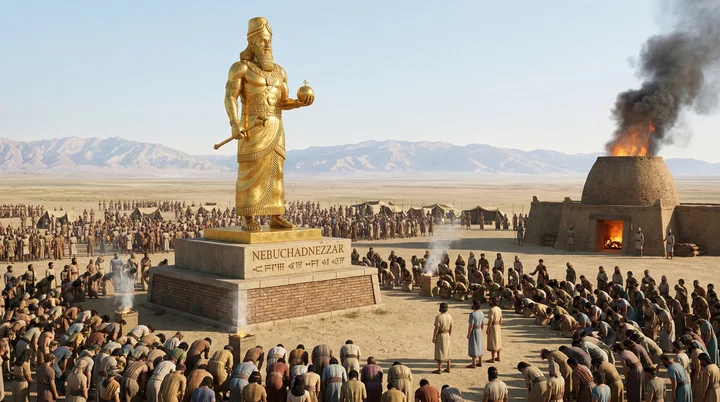
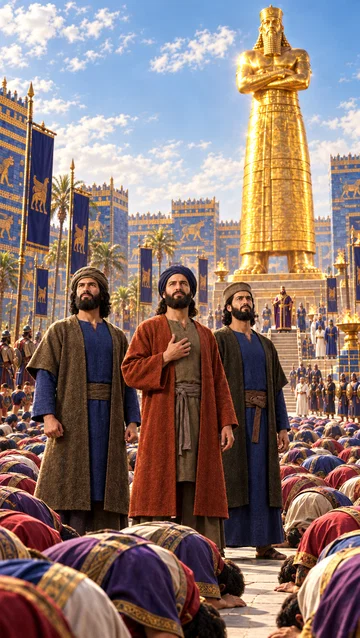
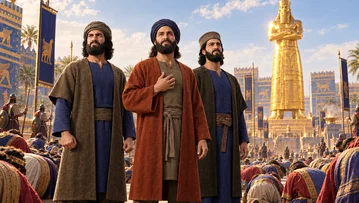
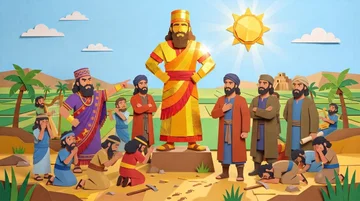
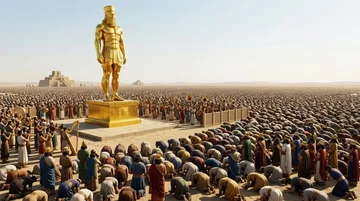
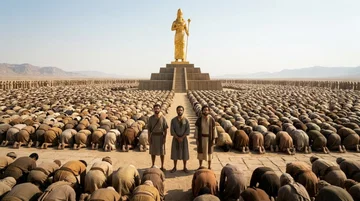
Therefore at that time, when all the people heard the sound of the cornet, flute, harp, sackbut, psaltery, and all kinds of musick, all the people, the nations, and the languages, fell down and worshipped the golden image that Nebuchadnezzar the king had set up.
Translations
Therefore at that time, when all the people heard the sound of the cornet, flute, harp, sackbut, psaltery, and all kinds of music, all the people, the nations, and the languages, fell down and worshipped the golden image that Nebuchadnezzar the king had set up.
King James Version, KJV Cambridge Paragraph Bible
Therefore at that time, when all the people heard the sound of the cornet, flute, harp, sackbut, psaltery, and all kinds of musick, all the people, the nations, and the languages, fell down and worshipped the golden image that Nebuchadnezzar the king had set up.
Therefore at that time, when all the people heard the sound of the cornet, flute, harp, sackbut, psaltery, and all kinds of music, all the people, the nations, and the languages, fell down and worshiped the golden image that Nebuchadnezzar the king had set up.
Revised Version, American Standard Version
Therefore at that time, when all the peoples heard the sound of the cornet, flute, harp, sackbut, psaltery, and all kinds of music, all the peoples, the nations, and the languages, fell down and worshipped the golden image that Nebuchadnezzar the king had set up.
Therefore at that time, when all the peoples are hearing the voice of the cornet, the flute, the harp, the sackbut, the psaltery, and all kinds of music, falling down are all the peoples, nations and languages, doing obeisance to the golden image that Nebuchadnezzar the king hath raised up.
Therefore at that time when all the peoples heard the sound of the cornet, pipe, lute, sambuca, psaltery, and all kinds of music, all the peoples, the nations, and the languages fell down [ and] worshipped the golden image that Nebuchadnezzar the king had set up.
Wherefore, at the same time—when all the peoples heard the sound of the horn, the pipe, the lyre, the harp, the psaltery, and all kinds of instruments of music, they were falling down—even all the peoples, the races, and the tongues,—adoring the image of gold, which Nebuchadnezzar the king, had set up.
Berean Standard Bible, Majority Standard Bible
Therefore, as soon as all the people heard the sound of the horn, flute, zither, lyre, harp, and all kinds of music, the people of every nation and language would fall down and worship the golden statue that King Nebuchadnezzar had set up.
Therefore at that time, when all the peoples heard the sound of the horn, flute, zither, lyre, harp, pipe, and all kinds of music, all the peoples, the nations, and the languages fell down and worshiped the golden image that Nebuchadnezzar the king had set up.
So at that time, all the people, when the sound of the horn, pipe, harp, trigon, psaltery, and all sorts of instruments, came to their ears, went down on their faces in worship before the image of gold which Nebuchadnezzar the king had put up.
Therefore assoone as all the people heard the sound of the cornet, trumpet, harpe, sackebut, psalterie, and all instruments of musike, all the people, nations, and languages fell downe, and worshipped the golden image, that Nebuchad-nezzar the King had set vp.
Douay-Rheims (Challoner revision)
Upon this therefore, at the time when all the people heard the sound of the trumpet, the flute, and the harp, of the sackbut, and the psaltery, of the symphony, and of all kind of music: all the nations, tribes, and languages fell down and adored the golden statue which king Nabuchodonosor had set up.
Pictures
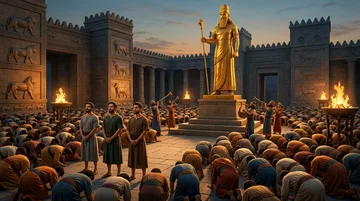
Cross-references 20 of 28
- Daniel 3:16-18
Shadrach, Meshach, and Abed-nego, answered and said to the king, O Nebuchadnezzar, we are not careful to answer thee in this matter.
The three Hebrews refuse the king’s command to worship the image.
- Daniel 2:31-45
Thou, O king, sawest, and behold a great image. This great image, whose brightness was excellent, stood before thee; and the form thereof was terrible.
The all-gold image defies the dream’s sequence of kingdoms and asserts Babylon’s permanence.
- Daniel 3:24-25
Then Nebuchadnezzar the king was astonied, and rose up in haste, and spake, and said unto his counsellors, Did not we cast three men bound into the midst of the fire? They answered and said unto the king, True, O king.
The fourth figure joins the faithful men in the furnace, where they are unharmed.
- Revelation 13:15
And he had power to give life unto the image of the beast, that the image of the beast should both speak, and cause that as many as would not worship the image of the beast should be killed.
Both accounts describe image worship enforced by threat of death.
- Exodus 20:4-5
Thou shalt not make unto thee any graven image, or any likeness of any thing that is in heaven above, or that is in the earth beneath, or that is in the water under the earth:
The commanded bowing to the image violated God’s prohibition of making and worshiping idols.
- Jeremiah 27:6-7
And now have I given all these lands into the hand of Nebuchadnezzar the king of Babylon, my servant; and the beasts of the field have I given him also to serve him.
God grants Nebuchadnezzar rule over nations as his servant.
- Daniel 4:37
Now I Nebuchadnezzar praise and extol and honour the King of heaven, all whose works are truth, and his ways judgment: and those that walk in pride he is able to abase.
Nebuchadnezzar praises God’s rule and acknowledges that he humbles the proud.
- Matthew 4:10
Then saith Jesus unto him, Get thee hence, Satan: for it is written, Thou shalt worship the Lord thy God, and him only shalt thou serve.
Both texts contrast worship of God alone with a demand to worship another.
- Revelation 14:9-10
And the third angel followed them, saying with a loud voice, If any man worship the beast and his image, and receive his mark in his forehead, or in his hand,
Warns of God’s wrath against worshiping the beast and its image.
- Daniel 3:29
Therefore I make a decree, That every people, nation, and language, which speak any thing amiss against the God of Shadrach, Meshach, and Abed-nego, shall be cut in pieces, and their houses shall be made a dunghill: because there is no other God that can deliver after this sort.
Nebuchadnezzar's confession after furnace
- Daniel 3:19
Then was Nebuchadnezzar full of fury, and the form of his visage was changed against Shadrach, Meshach, and Abed-nego: therefore he spake, and commanded that they should heat the furnace one seven times more than it was wont to be heated.
The king intensifies the furnace’s heat as punishment for their refusal to bow.
- Revelation 13:8
And all that dwell upon the earth shall worship him, whose names are not written in the book of life of the Lamb slain from the foundation of the world.
Both describe the people of the earth worshipping a ruler’s image or beast.
- Daniel 3:15
Now if ye be ready that at what time ye hear the sound of the cornet, flute, harp, sackbut, psaltery, and dulcimer, and all kinds of musick, ye fall down and worship the image which I have made; well: but if ye worship not, ye shall be cast the same hour into the midst of a burning fiery furnace; and who is that God that shall deliver you out of my hands?
The king repeats the instruments and gives the three men another chance to worship the image.
- Daniel 3:1
Nebuchadnezzar the king made an image of gold, whose height was threescore cubits, and the breadth thereof six cubits: he set it up in the plain of Dura, in the province of Babylon.
Identifies the golden image worshiped in verse 7.
- Daniel 3:26-27
Then Nebuchadnezzar came near to the mouth of the burning fiery furnace, and spake, and said, Shadrach, Meshach, and Abed-nego, ye servants of the most high God, come forth, and come hither. Then Shadrach, Meshach, and Abed-nego, came forth of the midst of the fire.
God preserves the obedient Hebrews, who emerge from the furnace unharmed.
- Daniel 4:30-32
The king spake, and said, Is not this great Babylon, that I have built for the house of the kingdom by the might of my power, and for the honour of my majesty?
Nebuchadnezzar’s boast leads to humiliation under God’s rule.
- Daniel 3:28
Then Nebuchadnezzar spake, and said, Blessed be the God of Shadrach, Meshach, and Abed-nego, who hath sent his angel, and delivered his servants that trusted in him, and have changed the king’s word, and yielded their bodies, that they might not serve nor worship any god, except their own God.
The king acknowledges their refusal to worship any god except their own.
- Daniel 3:27
And the princes, governors, and captains, and the king’s counsellors, being gathered together, saw these men, upon whose bodies the fire had no power, nor was an hair of their head singed, neither were their coats changed, nor the smell of fire had passed on them.
fire left no smell of smoke on garments
- Revelation 9:20
And the rest of the men which were not killed by these plagues yet repented not of the works of their hands, that they should not worship devils, and idols of gold, and silver, and brass, and stone, and of wood: which neither can see, nor hear, nor walk:
Both condemn unrepented image worship bringing judgment.
- Daniel 3:17
If it be so, our God whom we serve is able to deliver us from the burning fiery furnace, and he will deliver us out of thine hand, O king.
contrasts compromisers with faithful who risk life
Commentary
Each commentary is drawn from primary sources: the writings of Ellen G. White and Adventist pioneers and periodicals. Each commentary is separate. Its own words are not a quotation; follow the references to read the source passages.
Ellen G. White
23 sources
At the appointed time on the plain of Dura, when the instruments sounded, all the assembled peoples and nations together bowed down before the golden image the king had set up in obedience to law.PK 503PK 503.1PK 503.2ST Dec 24, 1912PK 506.1 The image exalted Babylon and Nebuchadnezzar himself, for flattered over being shown as the head of gold, he perverted the light and determined to make an image all of gold to be worshiped as God.12MR 218.2–220.1Ms 168, 1898, par. 1–3Lt 109a, 1898, par. 5–8Ms 47a, 1898, par. 2–5 That falling down was false worship and homage belonging to God alone, honoring darkness with outward display and music to charm the senses and compel obedience against God's commandments.Ms 84b, 1897, par. 9–1121MR 59.1–60.112MR 220.2–3 Shadrach, Meshach and Abednego refused to dishonor God, and though cast into the fiery furnace for their loyalty, Christ walked with them and preserved them unharmed until the king acknowledged the superior power of God.PK 503Lt 118, 1910, par. 2Ms 84b, 1897, par. 9–1121MR 59.1–60.1Ms 168, 1898, par. 1–3 Their enforced bowing stands as the model for the last conflict, when church and state will unite to demand universal honor to Sunday as an idol sabbath in place of God's holy Sabbath, and God's people will manifest the same principle of holding God's law as the rule of conduct above every human law.PK 512.112MR 218.2–220.119MR 243.1–4Ms 15, 1896, par. 33–34
Setting and Enforced Worship
This moment belongs to the account of the golden image set up on the plain of Dura, coming after the dream in which it was revealed that God would establish an everlasting kingdom.PK 503PK 503.1 On the appointed day, when the cornet, flute, harp, sackbut, psaltery and all kinds of music sounded, the assembled peoples, nations and language groups fell down together before the image Nebuchadnezzar had set up.PK 503PK 506.1Lt 351, 1905, par. 9 Their bowing was universal and law-commanded, for the people were commanded by law to worship it when the music sounded.PK 503.212MR 218.2–220.1Lt 351, 1905, par. 9 Nebuchadnezzar's renewed idolatry had made worship of the image the country's established state religion through laws devised to compel obedience in direct opposition to God's law, a human law designed to exalt the king and to compel action against God's law.ST Dec 24, 1912PK 506.1ST Sep 2, 1897
The golden image represented the kingdom of Babylon and more particularly Nebuchadnezzar himself, his glory and the excellency of Babylon.Ms 168, 1898, par. 1–3Lt 109a, 1898, par. 5–8Ms 47a, 1898, par. 2–5 It was exceedingly costly, magnificent, impressive and attractive, magnifying the king who ruled over that kingdom.12MR 220.2–313MR 60.1–61.2 He had been told he was the head of gold in the dream of earthly kingdoms passing away before the kingdom of heaven fills the earth, yet flattered by heathen counselors over that head of gold, he placed himself before the people as an object of worship.12MR 218.2–220.113MR 60.1–61.2 He perverted the light by reading the interpretation through his own idolatrous mind and ambitions instead of reading his dream in the light of the living oracles.Ms 168, 1898, par. 1–3Ms 47a, 1898, par. 2–5 He determined to make an image all of gold to take the place of God and be worshiped as God, supposing its display was sufficient authority to convert all nations to its worship.12MR 218.2–220.1Ms 168, 1898, par. 1–3Ms 47a, 1898, par. 2–5
Falling down before the image was an act of worship and homage, but such homage belonged to God alone.Ms 84b, 1897, par. 9–1121MR 59.1–60.1 It was false religion honoring the prince of darkness, running counter to the commandments of God, with no inward purity and beauty and no inward holiness.12MR 220.2–3 It depended on position of authority to compel without question those who acknowledge God as Creator and Sovereign to bow to human enactments.12MR 220.2–3 It depended also on beautiful music to charm the senses, and on parade, ceremonies, outward display and outward beauty to entrap men and hold their senses.12MR 220.2–3 That outward display was used to make up for the absence of the Spirit of God and to conceal spiritual poverty and apostasy.12MR 220.2–3 The mass worship seemed to give idolatry a lasting place as the state religion, and by it Satan hoped to thwart God's purpose of using captive Israel in Babylon to bless the nations.PK 506.1
Faithful Refusal and Deliverance
Daniel 3:7 belongs to the history of the Lord's wonderful deliverance of the three Hebrew worthies, and the falling down of all peoples, nations and languages to worship the golden image shows the course of the children of disobedience in contrast to the obedience of the three Hebrews, teaching principles regarding the working out of the Lord's purpose for both the children of obedience and the children of disobedience.Lt 118, 1910, par. 2 When the music sounded the peoples, nations and languages bowed down to worship the image Nebuchadnezzar had set up, but that bowing was an act of worship and homage which belonged to God alone.Ms 84b, 1897, par. 9–1121MR 59.1–60.1 Shadrach, Meshach and Abed-nego refused to join them and to dishonor God, remaining loyal to the God of heaven rather than worshiping the idol, serving Him as King of Kings and Lord of Lords whatever the cost, even though the king's command threatened them with the fiery furnace and worship of the image had been made the country's established religion through laws devised to compel obedience in direct opposition to God's law.Ms 84b, 1897, par. 9–11Ms 110, 1904, par. 52–56ST Dec 24, 1912 The three Hebrew captives who cherished the knowledge of the true God refused to worship the exceedingly costly and magnificent image that represented the kingdom of Babylon and magnified the king who ruled over it, after heathen counselors flattered him over the head of gold representing Babylon and caused him to place himself before the people as an object of worship.13MR 60.1–61.2
The events severely tested the integrity of Daniel and his companions and showed an idolatrous nation the power and faithfulness of the God of Israel.BS 29.1 For their loyalty they were cast into the burning fiery furnace.21MR 59.1–60.113MR 60.1–61.2 Christ Himself walked with them through the fire as an angelic presence beside them, and the Lord Jesus was with them and preserved them from all harm so they were unharmed.PK 503Ms 84b, 1897, par. 9–1121MR 59.1–60.1Ms 168, 1898, par. 1–313MR 60.1–61.2 Daniel's three faithful companions refused to bow when the decree demanded that people of every nation and language worship the golden image representing Babylon and more particularly its king, and Christ walked with them in the fiery furnace.Lt 109a, 1898, par. 5–8
The miracle so wrought upon Nebuchadnezzar's heart that he believed in God and acknowledged His superior power.Ms 168, 1898, par. 1–3Ms 47a, 1898, par. 2–5 As Nebuchadnezzar's advisers schemed to ensnare the Hebrew captives by getting the king to decree that every knee should bow to the image, so men now strive to turn God's people from their allegiance.12MR 218.2–220.1 Those who make cruel enactments to destroy God's people are destroyed by the recoil of their own actions, as those who sought to destroy Shadrach, Meshach and Abednego were themselves destroyed.12MR 218.2–220.1
Final Conflict Over Worship
The bowing on the plain of Dura when the music sounded was universal, law-commanded worship demanded from all peoples, nations and languages, and it stands as a lesson for this day as a model for laws that exalt human authority over God's law and demand worship from everyone.PK 512.112MR 218.2–220.119MR 243.1–4Ms 24, 1891, par. 18–21 That enforced bowing is repeated when church and state unite and human laws demand that all honor Sunday as a sacred idol sabbath in the place where God's holy Sabbath of the fourth commandment should be, just as the image demanded homage from people of every rank.12MR 218.2–220.1Ms 24, 1891, par. 18–21 As advisers schemed to ensnare the Hebrew captives by getting the king to decree that every knee should bow to the image, so men now strive to turn God's people from their allegiance, and those who make cruel enactments to destroy God's people are destroyed by the recoil of their own actions as those who sought to destroy Shadrach, Meshach and Abednego were themselves destroyed.12MR 218.2–220.1
It will be repeated when the law of God is made void by a national act, when Sunday is exalted and sustained by law, and when keeping the seventh day as the Sabbath is counted disloyal to the laws of the land.Ms 15, 1896, par. 33–34 At that time the world and the church unite in making void the law, while wolves in sheep's clothing through blindness of mind and hardness of heart seek with satanic hatred to compel conscience against those loyal to the commandments.Ms 15, 1896, par. 33–34 Though innocent of wrongdoing, many of God's servants will be given over to suffer humiliation and abuse at the hands of those inspired by Satan and filled with envy and religious bigotry.PK 512.1 Especially the wrath of man will be aroused against those who hallow the Sabbath of the fourth commandment, and at last a universal decree will denounce these as deserving of death.PK 512.1
The refusal of the three worthies to bow when peoples, nations and languages bowed at the sound of the music marks the contrasting choice to obey God.Lt 35, 1895, par. 1–3 That episode illustrates that a time would come in the Southern States when people would face decisions for or against God's commandments.Lt 35, 1895, par. 1–3 Then the same principle the three Hebrews manifested will be made manifest in God's people when truth is overborne by falsehood.Ms 15, 1896, par. 33–34 Duty then is not to give up loyalty to God, but to hold God's law as the rule of conduct, to make its value manifest, and with increased zeal to love God's commandments above gold.Ms 15, 1896, par. 33–34
Men, whether king or subjects, must not read the Scriptures and God's providences in the light of their dreams and fancies, but must read their dreams in the light of the living oracles.Ms 47a, 1898, par. 2–5 Nebuchadnezzar perverted the light given in the interpretation of his dream by reading it to fit his own idolatrous mind and ambitions, setting up an image representing his own glory and the excellency of Babylon in hope its display would convert all nations to its worship.Ms 47a, 1898, par. 2–5 The same pattern of false religion, which runs counter to the commandments of God and has no inward purity, holiness or beauty, continues when churches depend not on Christ the divine Teacher but on ornaments and shrines, embroidered altars and magnificent architecture to attract and hold the senses.12MR 220.2–3 It depends on authority to compel without question those who acknowledge God as Creator and Sovereign, and on beautiful music, parade, ceremonies and outward display to charm and entrap the senses, hold the senses, and conceal spiritual poverty and apostasy for lack of the Spirit of God.12MR 220.2–3
Sources
Pioneers and periodicals
107 sources
At the dedication of the golden image on the plain of Dura, the sounding of the cornet, flute, harp, sackbut, psaltery and all kinds of music was the appointed signal, and all the peoples, nations and languages fell down and worshipped in almost unanimous obedience.ST Jan 29, 1908ST Jan 29, 1908RH Apr 13, 1869ST Oct 11, 1905RH Aug 6, 1908 The image being made entirely of gold defied the dream in Daniel 2, demanding loyalty to Babylon as supreme and everlasting and refusing God's revelation that it would be followed by inferior kingdoms.ST Oct 11, 1905ST Oct 13, 1909ST Oct 9, 1901ST Dec 3, 1912RH Oct 22, 1901 The worship was compelled by a sweeping civil decree commanding all who heard the music that same hour to bow on pain of being cast into the burning fiery furnace.RH Mar 6, 1900ST May 21, 1912ST Jun 3, 1913 All bowed except Shadrach, Meshach and Abednego, who refused because bowing would be idolatry forbidden by God's law, chose to obey God rather than men and accept death, and were miraculously delivered by One like the Son of God so that the fire had no power upon them.RH Mar 6, 1900ST Jan 9, 1907RH May 9, 1871RH Oct 21, 1862ST Jun 3, 1913 The enforced worship is the pattern for the last days, when an apostate civil power will again demand worship of the image to the beast under threat of death, especially by enforcing the spurious Sunday sabbath, and God will likewise deliver those who refuse and keep His commandments.ST May 6, 1897RH Jul 14, 1904ST Oct 5, 1882RH May 1, 1855ST Apr 24, 1893
Language and Occasion
The signal for worship was the sound of the cornet, flute, harp, sackbut, psaltery and all kinds of music, an orchestra with many instruments as complete as a modern one.ST Jan 11, 1916ST Jul 23, 1885RH Feb 19, 1914 The Greek names of the instruments belong to Nebuchadnezzar's time, for Greek culture and traders with such instruments were known in the region centuries earlier and could have been present in his Babylon.ST Jan 11, 1916 The list fits that period in its details and is historically accurate, not something imagined three centuries later after Alexander's conquest.ST Jan 11, 1916ST Jul 23, 1885
The word for time means a definite time or season, including times appointed by God or by people. The word for image means a physical object made by human hands, here the golden image that Nebuchadnezzar set up and that the people worshipped.RH Jan 5, 1860
The bowing took place at the dedication of the golden image on the plain of Dura, a great public occasion and state affair attended by the chief men and officials of the kingdom.RH Apr 13, 1869RH Aug 6, 1908RH Oct 21, 1862ST Jan 18, 1883ST Aug 13, 1896 The sound of the music was the signal for worship, stirring the senses and drowning conscience so that the demanded act became easier, while the king's command with its penalty of death in the burning fiery furnace made the public act compulsory.RH Apr 13, 1869RH Aug 6, 1908ST Jan 9, 1912 The six named instruments together with the dimensions of the image mark the scene with the number six, which signifies opposition to God.RH Aug 6, 1908 The effort shows how pleasure through music and outward show and fear through threat of death are used to drive false worship, and how much effort may be expended to uphold idolatrous systems.RH Apr 13, 1869
When the music sounded, the assembled peoples, nations and languages fell down and worshipped the golden image Nebuchadnezzar had set up, in almost unanimous obedience to the king's command.ST Jan 29, 1908ST Jan 29, 1908ST Oct 11, 1905ST Oct 13, 1909ST Oct 9, 1901 The command applied to everyone as part of an idolatrous policy making idolatry the national religion beginning on the plain of Dura, and was not aimed specifically at the three Hebrews, though it pressed upon God's loyal servants and brought the test upon them.RH Oct 21, 1862ST Jan 18, 1883ST Aug 13, 1896 The attempt to force that worship utterly failed, for the warriors who carried out the sentence died while God's servants were miraculously preserved in the furnace.ST Aug 13, 1896 Idol worship at Babylon also served to obtain much gold, with money given to the god Bel as an offering supposed to gain mercies for the suppliant worshippers.ST Jan 18, 1883
Daniel is not mentioned among those present at the gathering of peoples and languages bowing before the image when the orchestra sounded.ST Jan 9, 1912ST Jan 9, 1912 The reason for his absence or exemption is unknown and is not given.ST Jan 9, 1912ST Jan 9, 1912 The multitude obeyed with only three, or with four exceptions counting Daniel, dissenting by refusal.ST Jan 9, 1912ST Jan 9, 1912
Rebellion Against Revealed Prophecy
The image being wholly of gold declared resistance to the dream in Daniel 2, defying the prophecy that Babylon would be followed and succeeded by inferior kingdoms and asserting instead that Babylon's rule would have no successor and would last forever.ST Oct 9, 1901ST Dec 3, 1912RH Oct 22, 1901ST Jun 28, 1899ST Feb 13, 1907 It was made all gold because Nebuchadnezzar would not accept the succession of kingdoms shown in Daniel 2, and the forced universal worship was meant to support Babylon's rule forever rather than to allow religious liberty.RH Oct 22, 1901ST Jun 28, 1899ST Feb 13, 1907RH Aug 6, 1908 By erecting the image and commanding all peoples, nations and languages to worship it at the sound of music, he demanded loyalty to Babylon and its human power and claimed his kingdom would remain supreme and everlasting, refusing God's revelation that it would be overcome and succeeded by another.ST Oct 11, 1905ST Oct 13, 1909ST Jun 3, 1913RH Apr 17, 1900ST Sep 6, 1899 Though pleased with Daniel's reproduction of his dream, he refused to admit its message and staged a proud, arrogant, idolatrous patriotic demonstration to assure himself his kingdom would be perpetuated and to prove that revelation false.ST Jun 3, 1913
The public ceremony was Babylonian patriotism and man's idea of the kingdom of men, set opposite God's idea of the kingdoms of men in Daniel 2.ST Jan 9, 1912ST Jan 29, 1908ST Oct 21, 1908 It presented the choice between God's kingdom that will never be destroyed and Babylon's human kingdom, a question for the whole world with judgment approaching.ST Sep 8, 1909RH Apr 17, 1900 The bowing belonged to the revelation of Jehovah as Deliverer and contrasted His power to deliver His children with human efforts to establish an earthly kingdom demanding worship of an earthly image.ST Jan 9, 1912ST Oct 21, 1908ST Sep 8, 1909 The image represented Nebuchadnezzar and his kingdom and the deification of king and state, exalting created power in place of the Creator.ST Jan 29, 1908ST Oct 9, 1901RH Jul 14, 1904 Bowing to it acknowledged Babylon's superiority and its religion and claimed supreme distinction above all gods, aspiring to take God's place by directing and controlling worship and punishing disobedience.ST Jul 11, 1911ST Dec 3, 1896ST Jul 1, 1903RH Jul 3, 1900RH Jul 14, 1904 Here worship of the true God was not forbidden, but worship of the golden image was commanded, making duty to God secondary and demanding recognition that some men are not servants of God but are gods, wholly contrary to the principles of the gospel of the kingdom of God.RH Jul 3, 1900
The image's splendor could command attention but could not inspire the voluntary love and devotion required for true worship, so fear rather than freely given submission drove the people, with the threat of death supplying force.ST Jan 29, 1908ST Oct 9, 1901RH Aug 6, 1908 Pleasure and fear were both used to drive false worship, with music and outward show invented by men and a great public state occasion on one side and the hungry flames of the furnace on the other, showing how much effort is expended to uphold idolatrous systems.ST May 6, 1897RH Apr 13, 1869RH Aug 6, 1908 Music stirred the senses and emotions, drowned conscience, and made the demanded worship easier, while worship served as an oath of allegiance pledging support for the king's vision of the future.ST May 6, 1897RH Aug 6, 1908ST Jan 9, 1912 Force is the last resort of every false religion, which first tries attraction through music and outward show and then turns to punishment when attraction fails to make men worship.ST May 6, 1897 Nebuchadnezzar's pride, arrogance and exaltation of self produced a legal creed requiring all peoples, nations and languages to fall down and worship, which is religious persecution and union of religion with the state to enforce worship.ST Jun 3, 1913ST Dec 24, 1896ST Nov 28, 1895 That course revealed Babylon's moral character of power, strength and occasional ferocity combined with soaring pride, pictured by the lion with eagle's wings in Daniel 7, and for this usurpation God humbled Nebuchadnezzar and proud Babylon with him, which fell to a baser, inferior kingdom and ends in destruction of the proud city.ST Jul 11, 1911ST Dec 3, 1896ST Dec 24, 1896ST Jul 1, 1903ST Nov 28, 1895
Compulsion by Decree and Furnace
The decree was most positive and sweeping, commanding that in that same hour when all heard the sound of the cornet, flute, harp, sackbut, psaltery and all kinds of music, all peoples, nations and languages should fall down and worship the golden image Nebuchadnezzar had set up on pain of being cast into the burning fiery furnace.RH Mar 6, 1900ST May 21, 1912ST Nov 8, 1905RH Apr 10, 1916ST Jan 9, 1907 It made worship a public, empire-wide compulsory act, a state-enforced demand for universal submission to religious authority enforced by penalties, and a proud idolatrous patriotic demonstration meant to assure the perpetuation of his kingdom.ST May 21, 1912ST Jun 3, 1913ST Nov 8, 1905RH Apr 10, 1916ST Jan 9, 1907 When the music sounded the gathered peoples were required to bow or face death, and all bowed except the three Hebrews who refused to worship any but God, so that the decree became a test of their loyalty and of the right to choose whom to worship, which God miraculously upheld.RH Mar 6, 1900ST May 21, 1912ST Nov 8, 1905ST Jan 9, 1907 The chapter thus presents the misuse of state authority to compel worship, with refusal threatened by the furnace but faithfulness protected by Christ's presence.ST May 21, 1912ST Nov 8, 1905ST Jan 9, 1907
The command stood as a civil statute in harmony with the majority, claimed to be for the good of the people and necessary for the maintenance and stability of the government of Babylon.ST Sep 9, 1889ST May 12, 1890ST Dec 5, 1895 It required only outward obedience to a public institution and to the image, and did not explicitly forbid the Hebrews to worship their own God, offering a claimed liberty to worship any other god.ST Sep 9, 1889ST May 12, 1890ST Dec 5, 1895 That liberty was false, for Shadrach, Meshach and Abednego could not obey it as a merely civil duty without compromising faith, breaking the second commandment and ceasing at the same time to worship the true God.ST Sep 9, 1889ST May 12, 1890ST Dec 5, 1895 They refused to bow even with certain death before them, proving that obedience to a rival power's worship law cannot be joined with faithful worship of God, just as keeping Sunday cannot be joined with keeping the fourth commandment and holding God's seal without receiving the mark of the beast, and God vindicated their refusal.ST May 12, 1890ST Dec 5, 1895
The command applied to everyone as part of the king's idolatrous policy and was not aimed specifically at the three Hebrews, yet because bowing was idolatry forbidden by God's law they had to choose between obeying the king and obeying God.RH Oct 21, 1862RH Aug 27, 1908RH Oct 21, 1862 It pressed upon God's loyal servants and brought the test upon them through their refusal to perform even the outward act of worship, for even that act without prayer would acknowledge the image as a proper object of worship.RH Oct 21, 1862RH Aug 27, 1908RH Oct 21, 1862 God honored their faithfulness, delivering them from the burning fiery furnace to prove there is no other god able to deliver after this sort, giving confidence in deliverance from the power of darkness as salvation from sin first and then from judgment, and afterward promoting them in the province of Babylon.RH Oct 21, 1862RH Aug 27, 1908 The same test will come again when the image to the beast is made and those who will not worship it are to be killed, while the whole earth becomes a burning furnace reserved for fire against the day of judgment, with this difference that then those who refused were cast into the furnace but in the last day those who do worship will perish in the fires from which only their God can deliver.RH Aug 27, 1908
Ancient Babylon thus made idolatry the national religion, the first to do so, with image worship beginning in its earliest history when the golden image was erected on the plains of Dura and all peoples, nations and languages were required to fall down and worship it.ST Jan 18, 1883 Idol worship there was also a means of obtaining much gold, with money given to the god Bel as an offering supposed to gain mercies for the suppliant worshipers.ST Jan 18, 1883 The attempt to force that worship utterly failed.STST Aug 13, 1896 The king's warriors who tried to carry out his sentence died, while God's loyal servants pressed by the order on the plains of Dura were miraculously preserved in the furnace of fire, a public record Belshazzar knew or had opportunity to know yet did not take to heart.STST Aug 13, 1896
Faithfulness and Deliverance of Three
When the music sounded the peoples, nations and languages fell down to the golden image on pain of the burning fiery furnace, and the obedience was almost unanimous, but a very small minority of only three persons dissented and prevented unanimous assent.ST Jan 9, 1907RH May 9, 1871ST Jun 3, 1913ST Aug 24, 1904 All bowed except Shadrach, Meshach and Abednego, who feared the true God and would worship none but Him, and who stood erect instead of falling prostrate when commanded to bow.ST Jan 9, 1907RH May 9, 1871ST Feb 24, 1881ST Jun 3, 1913 No power on earth could compel them to worship it, and their stand was principle and moral courage.RH Oct 25, 1864ST May 12, 1890 Those who held that the multitude bowed with four exceptions taught that Daniel is not mentioned among those present and the reason for his absence or exemption is not given.ST Jan 9, 1912
They refused because bowing would be idolatry and false worship forbidden by God's law and second commandment, which they regarded as binding upon them.RH Mar 6, 1900RH Oct 21, 1862ST Feb 24, 1881RH Jul 13, 1916RH Jan 15, 1867 The required worship established idolatry in direct violation of God's law, whether commanded in ignorance or, as was likely, in defiance of that law.RH Oct 21, 1862ST Feb 24, 1881RH Oct 21, 1862 Even the outward act without prayer would in the eyes of the people acknowledge the image as a proper object of worship, and they could not seem to sanction it or join it with worship of the true God.ST Aug 29, 1895RH Oct 21, 1862ST May 20, 1889 The command applied to everyone as part of an idolatrous policy and was not aimed specifically at the three Hebrews, yet it pressed upon God's loyal servants and brought the test upon them through their refusal.RH Oct 21, 1862RH Aug 27, 1908ST Aug 13, 1896 The same principle applies to Sabbath observance, for treating a civil authority's chosen day as religious rest would give to that authority a claim belonging to God the Creator.ST Aug 29, 1895ST May 20, 1889
Their refusal was not a matter of human courtesy or expediency but a matter of conscience, and they would not set aside faithfulness to God's law for convenience or fear though they stood alone before the crowd.ST Aug 29, 1895RH May 9, 1871RH Jan 15, 1867 The command was a civil statute in harmony with the majority, claimed to be for the good and stability of Babylon and requiring only outward obedience without explicitly forbidding worship of their own God, yet they could not obey it as merely civil without compromising faith.ST May 12, 1890ST Aug 29, 1895ST May 20, 1889 They were willing to suffer death in the furnace rather than worship falsely, even with certain death before them, showing faithfulness when obedience brings unpopularity and danger.RH Oct 25, 1864ST May 12, 1890RH May 9, 1871RH Jan 15, 1867 God honored their faith and vindicated their refusal.ST May 12, 1890RH Oct 21, 1862ST Feb 24, 1881ST May 20, 1889
For their disobedience the furnace was heated seven times hotter and they were cast into the seething fire.ST Jul 27, 1904RH Aug 27, 1908ST Jun 3, 1913 Jesus was with them during that trying hour, loosing them in the midst of the fire and walking with them as one like the Son of God beside them.ST May 21, 1912ST Jul 27, 1904ST Jun 3, 1913 God miraculously preserved His loyal servants so the fire had no power upon their bodies, not a hair singed and not even the smell of smoke upon their garments.ST Jul 27, 1904RH Aug 27, 1908ST Jun 3, 1913ST Nov 11, 1886 Their deliverance proves there is no other god able to deliver after this sort, and stands on record to give confidence in the God of heaven to deliver from the power of darkness as salvation from sin first and then from judgment.RH Oct 25, 1864ST May 21, 1912RH Aug 27, 1908 Their faithfulness was rewarded with promotion in the province of Babylon, and their faithfulness moved the nation.RH Aug 27, 1908ST Nov 26, 1912ST Nov 11, 1886
Through the image Nebuchadnezzar was again led to acknowledge the supremacy of the true God, to see that God was just and right and his own ways evil, and to submit to God.ST Jul 16, 1912ST Nov 26, 1912RH May 4, 1869 The lesson that the Most High rules over human kingdoms, revealed in the deliverance from the furnace, was proclaimed to the world by royal decree so all people everywhere had opportunity to learn it.ST Jul 16, 1912ST Nov 26, 1912RH May 29, 1900 The king's attempt to set aside truth by compelling worship became a kingdom-wide appeal to submit to the God whose creative power could deliver those who served Him, and the same salvation and healing offered to the Hebrews was offered to the whole Babylonian empire.ST Nov 26, 1912RH May 29, 1900 Those who witnessed God's power in that episode later dishonored Him and failed to heed its lesson.ST Oct 23, 1901ST Aug 13, 1896 The nobles at Belshazzar's feast had seen that demonstration less than fifty years earlier, yet ignored it, and Belshazzar knew or had opportunity to know it all as public record yet did not take it to heart, while the warriors who carried out the sentence had died in the attempt to force worship that utterly failed.ST Oct 23, 1901ST Aug 13, 1896
Limits of Civil Power
Civil government is ordained by God only to restrain evil and prevent incivility, to regulate outward civil conduct and keep people from harming life and property, but never to aid religion or coerce conscience in any way.ST Apr 23, 1912ST Jul 11, 1911ST Jul 1, 1903 A ruler may govern civil affairs yet has no right to direct worship, to touch conscience and the soul, or to take God's place, for worship belongs to God and not to the ruler.ST Apr 23, 1912ST Mar 6, 1907ST Oct 30, 1901 In commanding public worship of the golden image at the sound of the instruments, with punishment for those who would not worship as decreed, Nebuchadnezzar overstepped that legitimate sphere and aspired to direct and control worship itself.ST Jul 11, 1911ST Mar 6, 1907ST Jul 1, 1903 That church-and-state course of enforcing religion by law always leads to persecution for conscience' sake, and for this usurpation God humbled Nebuchadnezzar and proud Babylon with him.ST Jul 11, 1911ST Jul 1, 1903
When a ruler commands what is contrary to God's law, as in the universal command to bow before the image when the music was heard, God's servants are justified and required not to obey it.ST Sep 10, 1885ST Oct 30, 1901 They must obey God rather than men, refusing disobedience to God and holding to the duty to worship God regardless of the king's will and threatened consequences.RH Feb 20, 1900ST Sep 10, 1885ST Mar 6, 1907ST Oct 30, 1901 Such refusal is to be borne meekly by accepting the penalty while seeking lawful change, and God approved and honored the three Hebrews' disobedience by protecting them in the fiery furnace.ST Mar 6, 1907ST Oct 30, 1901 Their course shows the limit of civil authority: refusal to obey an idolatrous command is itself obedience to God.ST Sep 10, 1885RH Mar 1, 1860ST Oct 30, 1901
Refusal to bow was an offense against the king's civil law, but it was not sin against God, while bowing down would have been sin as transgression of God's law.ST Jun 11, 1912ST Jan 20, 1898ST Aug 6, 1896ST Jul 23, 1912 The three worshipers were condemned under human law for their refusal, yet they were free from blame before God and were vindicated by Him.ST Jun 11, 1912ST Jan 20, 1898ST Apr 14, 1898 The verse thus proves the difference between sin and crime, that an act can be criminal yet obedient to God, so that one may stand as a criminal before men but not as a sinner before God.ST Aug 6, 1896ST Jun 24, 1897ST Jul 23, 1912 When forced to choose, it is always better to be a criminal than a sinner.ST Aug 6, 1896
Conscience is individual and personal, and no human authority may impose a final rule of religious belief on everyone or control another's faith.RH Aug 13, 1908ST Jun 25, 1912 The overwhelming majority of peoples, nations, and languages bowed to the image, but their numbers, popularity, and patriotic loyalty did not make their worship right or give them right over the three Hebrews' conscience.RH Aug 13, 1908ST Mar 6, 1893ST Jun 25, 1912 Numbers do not decide right or wrong and majorities are seldom right, for the multitude was governed by fear of man and the spirit of compromise instead of fear of God.ST Mar 6, 1893 The governing question is whether God approves or disapproves, not whether men or kings think well or ill, and it is better to be cast into the furnace with God's favor and a good conscience than to live in comfort by flattery, since man at worst can only destroy the body while God can destroy body and soul in hell.ST Jun 25, 1912
The episode is an example of persecution, in which religious dissent was treated as defiance of the state and idolatrous rulers oppressed God's people through compulsory worship of false gods.ST Jul 24, 1884ST Oct 1, 1896ST Jul 13, 1915RH Jun 8, 1916 It belongs with the accounts of persecutors who compelled worship of the image, distinguished from legitimate civil acts intended to defend the people rather than oppress them.ST Sep 8, 1914ST Jul 13, 1915RH Sep 23, 1862 Those who refuse an unjust religious law are not guilty of real crime, while the guilt belongs to its makers and enforcers who must give account to God, for enforcing an unrighteous law to exact submission does not make it just.ST Oct 1, 1896ST Jul 13, 1915RH Jun 8, 1916
Prophetic Pattern for Last Days
The bowing at the signal of the music, with only three refusing, shows loyalty to God tested by a government demanding false worship, and its principles apply in the last days when God's loyal people face conflict with an apostate civil government.RH Jul 14, 1904ST Nov 1, 1905 The event is the pattern for the coming conflict over the beast and its image, when a decree will go forth commanding all to worship the image of the beast on pain of death, precisely as all peoples were commanded to worship Nebuchadnezzar's golden image on pain of death in the fiery furnace.ST Oct 5, 1882RH May 1, 1855ST Nov 1, 1905 It illustrates that worldly powers demand service and obedience even when their laws conflict with God's laws, which is the demand the beast power has always made, in contrast to the worship due to the Lord God alone.ST Oct 7, 1913
As God saved the three by direct interposition only after they were brought to extreme danger, so He will interpose to save His people, but not until the time of trouble such as never was has fully opened upon the world.ST Oct 5, 1882RH May 1, 1855 Their deliverance from the burning fiery furnace proves there is no other god able to deliver after this sort, and stands to give confidence in the God of heaven to deliver from the power of darkness and to translate into the kingdom of the Son of His love, a deliverance first revealed as salvation from sin and then from the final fire reserved for judgment.RH Aug 27, 1908 The same test will come again in the present generation when the image to the beast is made and another beast causes as many as will not worship the image of the beast to be killed, while the whole earth becomes a burning fiery furnace, the heavens and earth stored up for fire and reserved against the day of judgment and destruction of ungodly men, from which only their God can deliver.RH Aug 27, 1908
The commanded worship, marked by six named instruments together with the image's dimensions with the number six signifying opposition to God, exalts human authority above God and foreshadows the enforced worship of spiritual Babylon.RH Aug 27, 1908RH Aug 6, 1908 True worshipers of God must refuse such a decree when it requires idolatry.RH Aug 6, 1908 The difference is that then those who refused to worship were cast into the furnace, but in the last day those who do worship will perish in the fires of the last day.RH Aug 27, 1908
The universal enforced worship, where all nations and tongues and peoples are commanded to worship a false religious institution set up by civil power, will be repeated when the first day of the week, a common working day possessing no sanctity whatever, is set up as was the image at Babylon and all are commanded to worship this spurious sabbath.ST May 6, 1897 This is the plan to make of no account the day instituted by God and given as a memorial of creation, and the decree enforcing worship of this day is to go forth to all the world, having already gone forth in a limited degree where civil power speaks with the voice of a dragon just as the heathen king spoke.ST May 6, 1897 The method of every false religion is that force is the last resort, at first trying attraction, as the king tried the power of music and outward show invented by men inspired by Satan, and when attraction fails to make men worship the image the hungry flames of the furnace are ready to consume them, so trial and persecution will come to all who in obedience to the Word refuse the false sabbath while the Papacy continues her power to compel obedience, requiring the same spirit shown in conflict with paganism, with the eye single to God's glory and the soul steadfast, held firmly to allegiance by truth and by God's power alone.ST May 6, 1897 Their deliverance proves God will likewise deliver those who now remain loyal by refusing to keep the enforced spurious first-day sabbath.ST Apr 24, 1893
Bowing could express homage even without prayer, for in the eyes of the people it would acknowledge the image as a proper object of worship, and the faithful refusal confirmed by deliverance shows the same principle applies to Sabbath observance, where treating a civil authority's chosen day as religious rest would give that authority a claim belonging to God the Creator.ST May 20, 1889 The decree claimed to leave liberty to worship any other god, but that liberty was false, for the three could not obey it and still worship the true God at the same time, and could not worship the idol and keep the second commandment, proving obedience to a rival worship law breaks God's commandment just as keeping Sunday cannot be joined with keeping the fourth commandment and holding the seal of God without receiving the mark of the beast.ST Dec 5, 1895 Their stand is principle and moral courage, the same uncompellable loyalty by which no earthly power can compel a true Christian to break the Sabbath even under a Sunday law.ST May 20, 1889
The universal bowing at the sound of the music means a state-enforced test of worship presenting a decision for or against the commandments of God.RH Apr 13, 1911 The three who refused to bow are the model for believers in the Southern States when that period comes, who must then refuse to bow as they did.RH Apr 13, 1911 Until that time comes there is to be no presumptuous defiance or resistance that would close the way, and the objectionable features of faith are not to be made prominent until people have had a fair chance to know believers are believers in Christ.RH Apr 13, 1911
The mass bowing to an image set up in opposition to truth applies to the papal system at Rome, whose victims refused to submit to it and were persecuted for faithfulness.RH May 28, 1872 It is also the picture of all being led to worship at the behests of men.ST Jan 17, 1911 Making a national emblem an idol by compulsory reverence turns a symbol into tyranny, oppression, and idolatry, so compelling a schoolchild to salute the flag or compelling an anarchist to kiss it repeats that compulsion, turning a banner designed by God to be only a symbol of freedom and equality, never a fetish or idol, into at best a piece of bunting and at worst a symbol of tyranny that brings reproach upon itself and loses true respect and honor.ST Jul 9, 1912
Witness and Daily Application
The chapter is a lesson for statesmen about respecting the rights of others and a lesson for every age about religious liberty, for it records peoples and language groups falling down to worship the golden image at the sound of the music because rulers commanded it and tested faithfulness to God.RH Oct 25, 1864ST Jan 29, 1908ST Aug 9, 1910 It reveals Jehovah as Deliverer who supports those who remain faithful under threat of death in a fiery furnace, giving confidence that they must be willing to suffer or die and yet can be delivered.RH Oct 25, 1864ST Oct 21, 1908RH Aug 15, 1907 He delivered His servants who trusted in Him then, and He is still able and willing to deliver people from sin when they trust in Him, in contrast to human efforts to establish an earthly kingdom.ST Oct 21, 1908ST Dec 1, 1914RH Aug 15, 1907 Those who endured the furnace illustrate that God's people will endure the final test by fire.ST Dec 1, 1914
What happened at the dedication became a public testimony and a means of making knowledge of the true God known to the world through Daniel's position in Babylon and through Gentile kings when Israel failed to carry the truth to the nations.ST Jun 21, 1905RH Nov 11, 1902RH Feb 27, 1900 The king's attempt to set aside truth by erecting the image and compelling worship became an occasion for a kingdom-wide appeal to submit to the God whose creative power could deliver those who served Him, so that the same salvation and healing offered to the Hebrews was offered to the whole empire.ST Nov 26, 1912RH May 29, 1900 The event became widely known because the officials who witnessed it carried the news back throughout their provinces, and the lesson that the Most High rules over human kingdoms was proclaimed to the world by royal decree so people everywhere had opportunity to learn it.ST Nov 11, 1886RH Feb 27, 1900RH May 29, 1900 The faithfulness of the three companions who refused to worship, prayed in faith, and were delivered moved the nation.ST Nov 11, 1886
The account belongs to the threefold message proclaimed by Daniel and his companions in Babylon, a message of the kingdom of God and righteousness by faith intended to save those who accepted it from the city's impending destruction.RH Aug 22, 1907 The falling down when all kinds of music sounded pictures a class of professed disciples who shape their religion to suit the times and worship the most popular invention of men.RH Jun 24, 1852 They are hardened in sin, which is transgression of the law, with conscience seared and forehead hardened against the truth and against the law of the Lord which is perfect, holy, just, good and converting the soul, because they delight not in the law of God after the inward man, so the seal of the living God makes no impression on them.RH Jun 24, 1852 The general bowing shows Israel slipping into worldliness and taking up the customs of sinful nations, while the refusal of the three shows genuine loyalty to God holding firm against idolatry in the midst of backsliding.ST Feb 27, 1901
That universal bowing shows the spirit of compromise, the spirit of the world, popular acclaim and the multitude, governed by fear of man instead of fear of God. Numbers do not decide right or wrong, majorities are seldom right and may oppose what is true, and popularity is no standard; the governing question is whether God approves or disapproves, not whether men or kings think well or ill.ST Mar 6, 1893ST Jun 25, 1912 It is better to be cast into the fiery furnace with God's favor and a good conscience than to live in palace comfort by flattery, since man at worst can only destroy the body while God can destroy body and soul in hell, and Christians who may not be tested in the same way must demonstrate the same refusal to compromise in everyday living in relation to truth and error. The three Hebrews were right to refuse to bow though they stood against all Babylon, and their number and patriotic loyalty did not make the worship of the obedient nations right.RH May 17, 1860ST Mar 6, 1893ST Jun 25, 1912
The verse is an example of a ruler using authority to compel people of every nation and language to worship an image, imposing religious observance, with the majority following a command that is wrong.ST Nov 5, 1894ST Aug 29, 1895ST Mar 6, 1893 The three Hebrews were likewise required to honor a rival institution after observing what they believed to be God's true requirement, illustrating pressure to act against conscience.ST Aug 29, 1895 Their refusal to follow the crowd and bow despite the furnace illustrates faithfulness to God when obedience makes a person unpopular or puts them in danger, showing that God's servants may have to stand on the unpopular side.RH May 17, 1860ST Mar 6, 1893ST Jun 25, 1912 The method is that of every false religion: at first it tries attraction, as the king tried the power of music and outward show invented by men, and when attraction fails to make men worship the image the hungry flames are ready to consume them, for force is the last resort.ST May 6, 1897 What is needed is the same spirit manifested by God's servants in conflict with paganism, with the eye single to the glory of God and the soul steadfast, held firmly to allegiance to God by the power of truth and by the power of God alone.ST May 6, 1897
Sources