Exodus 29:41
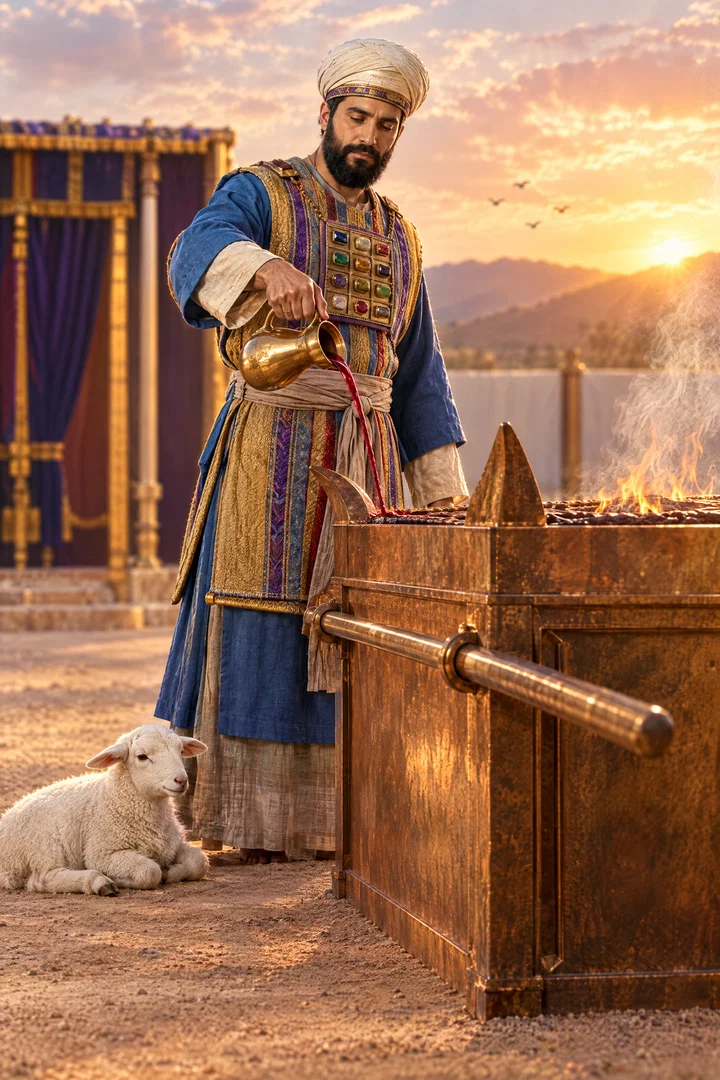
And the other lamb thou shalt offer at even, and shalt do thereto according to the meat offering of the morning, and according to the drink offering thereof, for a sweet savour, an offering made by fire unto the LORD.
Translations
And the other lamb you shall offer at even, and shall do thereto according to the meat offering of the morning, and according to the drink offering thereof, for a sweet smell, an offering made by fire to the LORD.
And the other lamb thou shalt offer at even, and shalt do thereto according to the meat offering of the morning, and according to the drink offering thereof, for a sweet savour, an offering made by fire unto the LORD.
And the other lamb thou shalt offer at even, and shalt do thereto according to the meat offering of the morning, and according to the drink offering thereof, for a sweet savour, an offering made by fire unto the Lord.
And the other lamb thou shalt offer at evening, and shalt do thereto according to the meat-offering of the morning, and according to the drink-offering thereof, for a sweet savor, an offering made by fire to the LORD.
And the other lamb thou shalt offer at even, and shalt do thereto according to the meal offering of the morning, and according to the drink offering thereof, for a sweet savour, an offering made by fire unto the LORD.
And the other lamb thou shalt offer at even, and shalt do thereto according to the meal-offering of the morning, and according to the drink-offering thereof, for a sweet savor, an offering made by fire unto Jehovah.
'And the second lamb thou dost prepare between the evenings; according to the present of the morning, and according to its libation, thou dost prepare for it, for sweet fragrance, a fire-offering, to Jehovah: —
And the second lamb shalt thou offer between the two evenings; as the oblation in the morning, and as its drink-offering shalt thou offer with this, for a sweet odour, an offering by fire to Jehovah.
And the second lamb, shalt thou offer between the evenings,-according to the meal-offering of the morning, and according to the drink-offering thereof, shalt thou offer with it, for a satisfying odour, an altar-flame, to Yahweh:
And offer the second lamb at twilight with the same grain offering and drink offering as in the morning, as a pleasing aroma, an offering made by fire to the LORD.
And offer the second lamb at twilight with the same grain offering and drink offering as in the morning, as a pleasing aroma, a food offering to the LORD.
The other lamb you shall offer at evening, and shall do to it according to the meal offering of the morning and according to its drink offering, for a pleasant aroma, an offering made by fire to the LORD.
And the other lamb is to be offered in the evening, and with it the same meal offering and drink offering, for a sweet smell, an offering made by fire to the Lord.
And the other lambe thou shalt present at euen: thou shalt doe thereto according to the offring of the morning, and according to the drinke offring thereof, to be a burnt offring for a sweete sauour vnto, the Lord.
Douay-Rheims (Challoner revision)
And the other lamb thou shalt offer in the evening, according to the rite of the morning oblation, and according to what we have said, for a savour of sweetness:
Pictures
Cross-references 20 of 37
- Exodus 30:7-8
And Aaron shall burn thereon sweet incense every morning: when he dresseth the lamps, he shall burn incense upon it.
Incense was offered at the same morning and evening hours as the daily sacrifices.
- Numbers 28:3-8
And thou shalt say unto them, This is the offering made by fire which ye shall offer unto the LORD; two lambs of the first year without spot day by day, for a continual burnt offering.
Prescribes the daily morning and evening lamb offerings with their accompanying offerings.
- Hebrews 8:5
Who serve unto the example and shadow of heavenly things, as Moses was admonished of God when he was about to make the tabernacle: for, See, saith he, that thou make all things according to the pattern shewed to thee in the mount.
Earthly sanctuary service is a pattern and shadow of heavenly things.
- John 1:29
The next day John seeth Jesus coming unto him, and saith, Behold the Lamb of God, which taketh away the sin of the world.
The daily lambs foreshadow Jesus, the Lamb who takes away sin.
- Romans 12:1
I beseech you therefore, brethren, by the mercies of God, that ye present your bodies a living sacrifice, holy, acceptable unto God, which is your reasonable service.
The daily burnt offering illustrates believers presenting themselves to God as a living sacrifice.
- Numbers 28:9-10
And on the sabbath day two lambs of the first year without spot, and two tenth deals of flour for a meat offering, mingled with oil, and the drink offering thereof:
Distinguishes Sabbath offerings from the continual daily offerings.
- Hebrews 9:22-23
And almost all things are by the law purged with blood; and without shedding of blood is no remission.
copies cleansed by such blood offerings
- Hebrews 10:10
By the which will we are sanctified through the offering of the body of Jesus Christ once for all.
Christ’s once-for-all offering fulfills and ends the continual sacrifices.
- Leviticus 2
And when any will offer a meat offering unto the LORD, his offering shall be of fine flour; and he shall pour oil upon it, and put frankincense thereon:
Both describe the grain offering accompanying the daily lamb sacrifices.
- 1 Peter 1:19
But with the precious blood of Christ, as of a lamb without blemish and without spot:
The spotless lamb offered in sacrifice prefigures Christ.
- 1 Kings 18:36
And it came to pass at the time of the offering of the evening sacrifice, that Elijah the prophet came near, and said, LORD God of Abraham, Isaac, and of Israel, let it be known this day that thou art God in Israel, and that I am thy servant, and that I have done all these things at thy word.
Elijah prays at the evening sacrifice hour prescribed for the offering.
- Hebrews 9:12
Neither by the blood of goats and calves, but by his own blood he entered in once into the holy place, having obtained eternal redemption for us.
Christ’s once-for-all sacrifice fulfills the earthly sanctuary service and obtains eternal redemption.
- Hebrews 10:4
For it is not possible that the blood of bulls and of goats should take away sins.
Animal sacrifices cannot take away sins.
- Hebrews 10:19-22
Having therefore, brethren, boldness to enter into the holiest by the blood of Jesus,
The offerings point to the Mediator through whom sinners approach God.
- Leviticus 1
And the LORD called unto Moses, and spake unto him out of the tabernacle of the congregation, saying,
These chapters describe sacrifices and their symbolism of Christ’s work.
- Hebrews 7:24-25
But this man, because he continueth ever, hath an unchangeable priesthood.
The continual service points to Christ’s everlasting priesthood and intercession.
- Leviticus 6:12-13
And the fire upon the altar shall be burning in it; it shall not be put out: and the priest shall burn wood on it every morning, and lay the burnt offering in order upon it; and he shall burn thereon the fat of the peace offerings.
Requires the altar fire to burn continually.
- Hebrews 10:11-12
And every priest standeth daily ministering and offering oftentimes the same sacrifices, which can never take away sins:
Repeated priestly offerings contrast with Christ’s once-for-all sacrifice.
- Hebrews 10:14
For by one offering he hath perfected for ever them that are sanctified.
ends pleasure in animal offerings
- Leviticus 17:5
To the end that the children of Israel may bring their sacrifices, which they offer in the open field, even that they may bring them unto the LORD, unto the door of the tabernacle of the congregation, unto the priest, and offer them for peace offerings unto the LORD.
Both direct offerings to the LORD at the tabernacle door.
Commentary
Each commentary is drawn from primary sources: the writings of Ellen G. White and Adventist pioneers and periodicals. Each commentary is separate. Its own words are not a quotation; follow the references to read the source passages.
Ellen G. White
9 sources
The verse commands the evening lamb answering to the morning lamb, offered with its grain offering and its drink offering as a pleasing offering made by fire to the Lord.MH 392.2–393.1CE 220.1–222.1ST Aug 8, 1878 The evening lamb was laid on the altar in the court while the priests entered the holy place morning and evening at the time of incense, and with the morning burnt offering it forms the daily service.PP 353.2PP 353.3PP 352.2 That daily service also includes sweet incense on the golden altar and special offerings for individual sins, and it stands distinct from the offerings for sabbaths, new moons, and special feasts.PP 352.2
The daily offering was an atoning offering that prefigured the promised Saviour, symbolizing the death of Jesus as the Lamb of God for human sins, with worshipers joining their prayers in faith to His merits.COS 32.1–2PP 353.2 The morning and evening burnt offering of a year-old lamb symbolized the daily consecration of the nation to God and their constant dependence on the atoning blood of Christ.PP 352.3 The lamb's freedom from blemish symbolized His perfect purity as One offered without blemish and without spot.PP 352.3 The regular morning and evening sacrifices prefigured Jesus as the antitypical Passover Lamb and continued to be offered in the temple while He lay in the tomb after His death.ST Aug 8, 1878
The appointed morning and evening hours became sacred set times for worship, when worshipers searched the heart, confessed sin, and united in silent prayer with faces toward the holy place, their petitions ascending with the cloud of incense while faith laid hold on the merits of the promised Saviour.PP 353.3 Those hours remained sacred throughout the nation, so that later, when scattered as captives in distant lands, the people still turned toward Jerusalem and prayed at the appointed hour.PP 353.3 The appointment gives Christians an example for morning and evening prayer, bowing in love to seek pardon for sins committed and to present requests for needed blessings, since God condemns a mere round of ceremonies without the spirit of worship but looks with great pleasure on such worship.PP 353.3
The verse calls followers of Christ to present their bodies as a living sacrifice, giving themselves to the service of God and making the offering as nearly perfect as possible by giving God nothing less than the best.PP 352.3 That means loving Him with all the heart, giving Him the best service of life, and bringing every power of the being into harmony with the laws that promote ability to do His will.PP 352.3 The morning and evening sacrifice is the pattern for worship in the home, where every house is to be a house of prayer with an altar erected to the Lord and the father as priest of the household lays the morning and evening sacrifice upon the altar in prayer while wife, children, and family unite in prayer and praise.MH 392.2–393.1CE 220.1–222.1PP 143.3–144.1 This worship is not to be neglected for lack of time or labor but gives thanksgiving for mercies and seeks divine help, guidance, and the abiding presence of Jesus in the household, so that from a faithful home prayer rises like sweet incense and mercies and blessings descend, and Jesus will love to tarry there.CE 220.1–222.1PP 143.3–144.1
Sources
Pioneers and periodicals
55 sources
The verse prescribes the second lamb of the continual daily burnt offering, to be offered in the evening with the same grain offering and drink offering as the morning, for a sweet savour by fire unto the Lord.ST Jun 26, 1901 The accompanying offering was a tenth of flour mingled with beaten oil and wine, the grain burned with the lamb and the drink poured in the Holy Place, with evening understood as between the two evenings from the ninth hour toward sunset.ST Jun 26, 1901ST Jan 14, 1886RH Sep 16, 1852RH Mar 19, 1861 Together the morning and evening lambs formed the continual burnt offering signifying Israel's daily consecration to God, renewed surrender of life, and constant dependence on Christ's atoning blood.ST Nov 19, 1902ST May 29, 1901 The earthly daily service was a copy and shadow of the heavenly sanctuary where Jesus now ministers, for the animal offerings in themselves could not take away sin or make perfect but pointed forward to the spotless Lamb whose blood alone brings remission.ST Jan 24, 1911ST Jun 26, 1901ST Nov 19, 1894 The evening lamb was offered while the priest burned incense and the people prayed outside, fixing sacred hours of morning and evening worship that give the pattern for continual prayer, family worship, and the Christian's daily presenting of the body as a living sacrifice.RH Sep 12, 1871ST Jul 8, 1930RH Feb 19, 1901RH Jul 2, 1914ST Apr 1, 1913
Wording and Historical Setting
The verse prescribes the other, second, evening lamb of the continual daily burnt offering, one yearling lamb in the morning and the other at even, day by day continually throughout generations, offered with the same grain offering and drink offering as the morning for a sweet savour, an offering made by fire unto the Lord.ST Jun 26, 1901RH Sep 12, 1871ST Feb 17, 1890 It is the evening half of the regular daily offering and service of the sanctuary, with sweet incense burned every morning when the lamps were dressed and at evening when the lamps were lighted, a perpetual incense before the Lord throughout generations.ST Jun 26, 1901RH Sep 12, 1871ST Jan 14, 1886 The accompanying offering is a tenth deal of flour mingled with the fourth part of a hin of beaten oil for the meal offering and the fourth part of a hin of wine for the drink offering.ST Jun 26, 1901ST Jan 14, 1886RH Sep 16, 1852 The grain offering was burned with the lamb, and the drink offering was poured in the Holy Place.ST Jun 26, 1901ST Jan 14, 1886RH Sep 16, 1852
At even means between the two evenings.RH Mar 19, 1861 The Hebrews reckoned two evenings in each day: the first evening began at the ninth hour, 3 P.M., when the sun inclined to descend more rapidly, and the second or real evening began at sunset.RH Mar 19, 1861 In the time of Christ the hour of evening sacrifice and prayer was the ninth hour, and the paschal lamb was killed between the ninth and eleventh hours, so there were two evenings belonging to the same day, one occupying the closing hours of the same day and the other marking the commencement of the day.RH Mar 19, 1861 One teaching presents the order differently, stating that the second lamb of the continual burnt offering was offered in the morning with the same grain and drink offerings as the first lamb.RH Aug 15, 1865 In that teaching the evening lamb burned through the night and the morning lamb through the day while the altar fire was kept continually burning.RH Aug 15, 1865
The verse belongs to the minute instructions for the sanctuary, offerings, and consecration of the priests given to Moses on the mount during the forty days on Sinai after the covenant was ratified, in Exodus 25-31 and 35-40.ST Jan 29, 1908ST May 20, 1880ST Oct 29, 1894RH Aug 4, 1863ST Mar 25, 1889 Moses was to make all exactly according to the pattern shown him, and afterward erected the tabernacle and offered the burnt and grain offerings on the altar before its entrance as commanded.ST May 20, 1880ST Oct 29, 1894RH Aug 4, 1863 Within those writings the verse falls after the moral law in Exodus 19-30 among the laws of offerings and sacrifices given through Moses.ST Apr 15, 1886ST May 6, 1875RH Jul 26, 1864 Those laws are described as ceremonial, burdensome, imposed until the time of reformation, and as an example of sanctification meaning to set apart for religious use, while God was particular about the details of worship to bring people into harmony with His holy law.ST Mar 25, 1889ST Apr 15, 1886RH Jul 26, 1864
The full description to which the verse belongs presents a wilderness tabernacle later succeeded by Solomon's temple, with upright boards closely joined set in silver sockets and held by outside bars, roofed with curtains, closed at the east by fine-twined linen hangings, divided into two apartments with the outer twice as large as the other.ST Jun 19, 1907ST Mar 10, 1898 Its gold-covered inner walls and angel-wrought linen ceiling reflect God's glory and heaven's angels.ST Mar 10, 1898 Priestly rites in this chapter were committed to Aaron and his sons, so others were not to perform them unless the Lord especially directed; Saul, who had not been ordained and had been told to wait for Samuel, is judged by this rule.ST Mar 3, 1914 The evening service corresponds to the whole action of slaying the lamb and placing it on the altar.ST Apr 24, 1879
Place in Daily Service
The morning and evening lamb formed the first part of the daily ministration carried on continually through the year by the Levitical priesthood in the first apartment, or holy place, of the earthly sanctuary.RH Feb 3, 1853RH Mar 28, 1854ST Jun 26, 1901ST Oct 25, 1905 That daily work was distinct from the special offerings for individual sins and from the yearly work in the most holy place and its cleansing at the end of the year.RH Feb 3, 1853RH Mar 28, 1854ST Jun 26, 1901ST Jun 26, 1901 With the offerings of individuals it transferred sins into the sanctuary itself, creating the need for its cleansing, and as example and shadow it reveals the ministration carried on in the heavenly sanctuary and in the true tabernacle.RH Feb 3, 1853RH Mar 28, 1854ST Jun 26, 1901 The evening lamb was the other lamb offered at even with its meal offering and drink offering for a sweet savor by fire to the Lord, according to the morning offering, as part of the sanctuary's daily services continuing throughout the year in the holy place.ST Jun 26, 1901ST Oct 25, 1905ST Jun 26, 1901
That daily round consisted of the morning and evening burnt offering, two lambs of the first year offered day by day continually, one in the morning and the other at evening.ST Jun 26, 1901ST Jan 14, 1886ST Jun 26, 1901ST Jun 26, 1901 The evening lamb was offered according to the meat offering of the morning and according to the drink offering thereof, a tenth deal of flour mingled with the fourth part of a hin of beaten oil and the fourth part of a hin of wine for a drink offering, for a sweet savour, an offering made by fire unto the Lord, offered at the door of the tent of meeting where the Lord meets to speak.ST Jun 26, 1901ST Jan 14, 1886 With the morning and evening lambs sweet incense was burned on the golden altar every morning when the lamps were dressed and at evening when the lamps were lighted, a perpetual incense before the Lord throughout generations.ST Jun 26, 1901ST Jan 14, 1886RH Apr 17, 1879 Besides these there were the special offerings for individual sins, with additional offerings for sabbaths, new moons, and special feasts.ST Jun 26, 1901ST Jun 26, 1901
This daily offering continued on the Day of Atonement alongside its other sacrifices.RH Aug 15, 1865 In that reckoning the second lamb of the continual burnt offering was offered in the morning with the same grain and drink offerings as the first lamb, the evening lamb burning through the night and the morning lamb through the day while the altar fire was kept continually burning.RH Aug 15, 1865 The evening lamb was kept burning all day, including while the high priest was offering the blood of the goat to blot out sins, with the ram for burnt offering burning at the same time and other burnt offerings made after he came out.RH Aug 15, 1865 So the entire day was a time when pardon for sins could be found, and mercy for sinners continued during the whole work of blotting out sins.RH Aug 15, 1865
The sanctuary's daily sacrifice, including the evening lamb with its grain and drink offerings as a pleasing offering to the Lord, accompanied Israel's Sabbath worship, with smoke rising from the sanctuary.RH Oct 23, 1866 The offerings and consecration laid out in Exodus 29 for the high priest are the same offerings and consecration required of the cleansed leper. Blood touched on the right ear means hearing is consecrated to God to know no voice but His, blood on the thumb and toe means the service of hands and feet is for Him alone, and oil placed upon the blood means the presence of the Holy Spirit goes with cleansing and consecration, showing the humblest child of God must be as devoted and consecrated as Christ.
Meaning and Symbolism
The morning and evening lambs together formed the continual burnt offering, which symbolized Israel's daily consecration to Jehovah and constant dependence on Christ's atoning blood.ST Nov 19, 1902ST May 29, 1901 The service was established through cooperation between God and His people as an object lesson of His plan for dealing with sin and saving sinners. That daily worship was renewed consecration of life to God, offered through Christ's merit as prayer ascended while the smoke of the offerings rose with the incense, and Christ's life in the soul enabled that consecration.ST Sep 12, 1900
The continual burnt offering signifies an ongoing life-union and service between God and His people, a continual channel of life, light, power, and service centered in Jesus Christ, with its morning and evening offerings and accompanying meal and drink offerings.ST Mar 12, 1912 Perpetual worship of this kind depends on faithfulness, for transgression breaks the bond and makes way for the removal of what the continual offerings represent.ST Mar 12, 1912
The lamb had to be without blemish as a symbol of the perfect purity of Him who would offer Himself as a Lamb without blemish and without spot.ST Nov 19, 1894 The daily morning and evening sacrifices expressed the deep conviction that shedding of blood is necessary to expiate sin and that without shedding of blood is no remission.ST Nov 19, 1894
This daily sacrifice helped sanctify the whole congregation, the priests, and the tabernacle so that God might dwell among Israel, offered as a fragrant offering made by fire with the same grain and drink offerings at evening as in the morning.RH May 5, 1851ST May 29, 1901 At these morning and evening sacrifices God met His people at the door of the tent of meeting to speak with them at the entrance of the tabernacle.RH May 5, 1851RH Sep 8, 1904 This meeting proves He is a personal being dwelling in a particular habitation called the sanctuary, where true worship must recognize His personal presence in that particular place, so that failure to bring offerings to Him there is evidence of idol worship.RH Sep 8, 1904
No one conscious of sin could share even in this communal burnt offering until pardoned through a personal sin offering or trespass offering, and after being accepted and pardoned could join the others in consecrating a renewed life to God and find peace.ST Sep 12, 1900ST Sep 19, 1900 The burnt offering then represented yielding the carnal nature to be crucified, presenting one's life in Christ's merit to be renewed by His power, and pouring it out in service.ST Sep 12, 1900
The accompanying incense represented the righteousness of the coming Messiah imputed to the people by faith.ST Apr 1, 1913 The continual burnt offering and priestly service taught the gospel of the true offering for sin, the true Bread from heaven, everlasting righteousness, forgiveness of sin, and God's glory revealed in living temples, showing that those who give themselves as God's temples are to serve Him continually and Him alone.ST Apr 1, 1913RH Aug 27, 1908
Type of Christ and Heaven
The earthly sanctuary and its daily service were a copy and shadow of heavenly things and of the heavenly sanctuary where Jesus now ministers.ST Jan 24, 1911ST Jun 26, 1901ST Jun 26, 1907RH Feb 3, 1853ST Jun 26, 1901 Its rites were object lessons pointing to Christ, whose sacrifice gives them their significance and efficacy, and the earthly sanctuary with its typical service passed away when He suffered and died once for all.ST Jan 24, 1911ST Jun 26, 1907 The evening lamb was the second yearling lamb of the continual daily burnt offering, offered at even with the same tenth-ephah of flour mingled with beaten oil for the meal offering and fourth part of a hin of wine for the drink offering as in the morning, for a sweet savour, an offering made by fire unto the Lord.ST Jun 26, 1901ST Jun 26, 1901 It was offered day by day continually throughout the generations at the door of the tent of meeting where the Lord meets to speak, accomplished continually by the priests in the first tabernacle, the first apartment or holy place, as part of the ordinances of divine service of the worldly sanctuary, which required shedding of blood for remission and cleansing.ST Jun 26, 1901RH Feb 3, 1853ST Jun 26, 1901 It belongs to the laws given through Moses concerning offerings and sacrifices, to the old dispensation's types and shadows whose substance is to be traced in the new dispensation, with the daily offerings of Israel's earthly sanctuary serving as a type of the heavenly sanctuary and its service.ST Jun 26, 1907
As example and shadow, the regular morning and evening burnt offering belonging to the daily ministration in the holy place, performed continually through the year by the Levitical priesthood with its meat offering and drink offering like the morning, reveals the ministration carried on in the heavenly sanctuary.RH Feb 3, 1853RH Mar 28, 1854 That daily ministration, with the offerings of individuals, transferred sins into the sanctuary itself, creating the need for its cleansing at the end of the year.RH Mar 28, 1854 The animal ordinances of the first covenant concerned sin but could not take sins away, take away no sin in themselves, or make the people perfect.ST Aug 5, 1889ST Jul 8, 1886RH Dec 12, 1854 They could only exhibit human guilt and point penitent sinners forward to the great Sacrifice, Christ the life-giving Spirit and great High Priest who died for the human family and now stands before the ark of God's testament in the heavenly sanctuary to give pardon, hope, and salvation and to save to the uttermost all who come to God through Him.ST Jul 8, 1886RH Dec 12, 1854 The evening lamb offering belonged to a ministration of condemnation and death, showing sinful people exposed to the just penalty of the holy law with no promise of pardon in itself.RH Dec 12, 1854
The Mosaic tabernacle is a shadow of heavenly things where the real work is performed, and the throne of God that John saw in the outer apartment in heaven is shadowed forth in this type.RH Nov 6, 1900 As the work of Christ is carried forward in the heavenly sanctuary, the work of regeneration goes on in the hearts of God's people, pertaining to their physical and spiritual natures just as the typical work did, to enable them to become the temple of God and be fitted for a habitation of God through the Spirit.RH Nov 6, 1900 The regular morning and evening sacrifices, offered with grain and drink offerings, continued in the temple while Jesus, the antitypical Passover Lamb they prefigured, lay in the tomb after His death.ST Aug 8, 1878
Worship and Christian Life
The evening lamb was offered as the atoning sacrifice on the altar in the court at the same time the priest entered the holy place, or first apartment, to burn incense morning and evening, while the whole multitude prayed outside. ST Jul 8, 1930RH Feb 19, 1901RH Jul 2, 1914ST Nov 19, 1894 The lamb offering, the incense offered by the priest, and the prayers of the people were thus all associated together, with the congregation gathered at the entrance of the court with faces toward the holy place. ST Jul 8, 1930RH Feb 19, 1901RH Jul 2, 1914 Their petitions ascended with the cloud of incense while faith laid hold on the merits of the promised Saviour prefigured by the atoning sacrifice. RH Jul 2, 1914ST Nov 19, 1894 The daily sacrifices and incense accompanied morning and evening worship as prayers and thanksgiving rose to God, acknowledging Jehovah as Israel's covenant God. RH Jul 2, 1914ST Oct 24, 1900
It was a time of intense interest to the worshipers assembled, who before entering into God's presence through the ministration of the priest engaged in earnest searching of heart and confession of sin and united in silent prayer. RH Jul 2, 1914ST Nov 19, 1894 One office of the Levites was to stand every morning and every evening to praise and thank God for His goodness and mercy. RH Jul 2, 1914 The hours appointed for the morning and the evening sacrifice were regarded as sacred and came to be observed as the set time for worship throughout the Jewish nation. RH Jul 2, 1914ST Nov 19, 1894 When the Jews were scattered as captives in distant lands they still at the appointed hour turned their faces toward Jerusalem and offered up their petitions to the God of Israel, giving Christians an example for morning and evening prayer. RH Jul 2, 1914ST Nov 19, 1894
The verse fixes a morning and an evening hour of sacrifice and prayer, when the priests interceded for the people through sacrifice and incense while the pious prayed, and now gives the pattern for morning and evening family prayer around the family altar. RH Sep 12, 1871ST Apr 1, 1913 There husband and wife and children offer grateful praise and earnest supplication through Scripture, praise, and prayer, rising sweeter than any offering by fire, and there the Lord meets His children as He met Israel before the door of the tabernacle. RH Sep 12, 1871ST Apr 1, 1913 The morning and evening lambs represented Israel's daily consecration to God and complete dependence on Him, and the accompanying incense represented the righteousness of the coming Messiah imputed to the people by faith. ST Apr 1, 1913ST Nov 19, 1894 Its fragrant incense pictures the lasting influence of morning and evening family worship and prayer, which students' morning and evening worship is to match by being as regular as those sacrifices. ST May 21, 1912ST Aug 16, 1883
The father is in one sense the priest of the household, laying the morning and evening sacrifice upon the altar of God by confessing to God morning and evening the sins committed through the day by himself and his children, both those that have come to his knowledge and those that are secret and known only to God's eye, with the mother doing this when the father is absent. RH Jul 2, 1914 Zealously keeping this rule brings blessing to the family, and children thus dedicated to God will be protected in the hour of temptation. ST Nov 19, 1894RH Jul 2, 1914 It is the Christian example for morning and evening prayer to seek pardon for sins committed and to present requests for needed blessings. ST Nov 19, 1894 For God condemns a mere round of ceremonies without the spirit of worship, yet looks with great pleasure on those who love Him bowing morning and evening. ST Nov 19, 1894
Through that typical continual ministry, centered in Jesus Christ, provision is made for the individual Christian to render a continual service to God by the indwelling presence of the eternal Son of God. RH Nov 25, 1902 When Christ dwells in the heart by faith, man is restored to being the temple of the living God, and the continual service is carried forward in that temple. RH Nov 25, 1902 The old daily sacrifice offered morning and evening means the Christian now presenting the body as a living sacrifice, not made once for all time but every day. RH Nov 25, 1902RH Oct 23, 1913 That is denying every harmful thing so God can make the person acceptable, an absolute surrender of all that a person is, dying daily and returning to God what already belongs to Him because He bought it with a price, made now before the time comes to gather those who have made a covenant with God by sacrifice. RH Oct 23, 1913
Sources