John 13:24
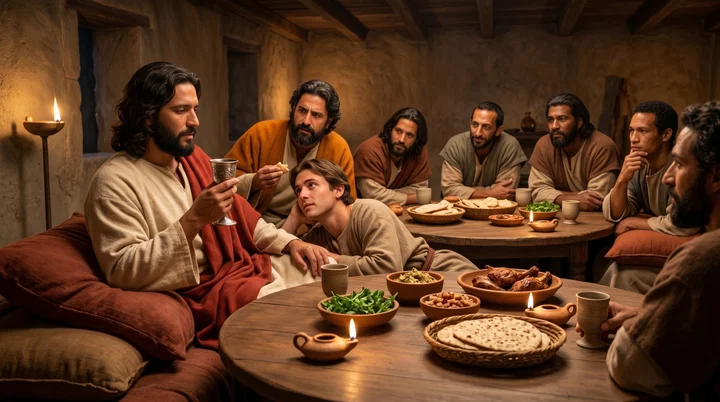
Simon Peter therefore beckoned to him, that he should ask who it should be of whom he spake.
Translations
Simon Peter therefore beckoned to him, that he should ask who it should be of whom he spoke.
King James Version, KJV Cambridge Paragraph Bible
Simon Peter therefore beckoned to him, that he should ask who it should be of whom he spake.
Simon Peter therefore beckoned to him, to ask who it should be of whom he spoke.
Revised Version, American Standard Version
Simon Peter therefore beckoneth to him, and saith unto him, Tell us who it is of whom he speaketh.
Simon Peter, then, doth beckon to this one, to inquire who he may be concerning whom he speaketh,
Simon Peter makes a sign therefore to him to ask who it might be of whom he spoke.
so Simon Peter beckoneth unto the same, and saith unto him—Say, Who is it? concerning whom he speaketh.
Berean Standard Bible, Majority Standard Bible
So Simon Peter motioned to him to ask Jesus which one He was talking about.
Simon Peter therefore beckoned to him, and said to him, “ Tell us who it is of whom he speaks.”
Making a sign to him, Simon Peter said, Who is it he is talking about?
To him beckened therefore Simon Peter, that he should aske who it was of whom he spake.
Douay-Rheims (Challoner revision)
Simon Peter therefore beckoned to him, and said to him: Who is it of whom he speaketh?
Pictures
Cross-references
- Matthew 26:21-25
And as they did eat, he said, Verily I say unto you, that one of you shall betray me.
Jesus announces the betrayal, and the disciples ask who it is.
- Mark 14:18-20
And as they sat and did eat, Jesus said, Verily I say unto you, One of you which eateth with me shall betray me.
Jesus announces a betrayal during the meal, and the disciples ask who it will be.
- Luke 22:21-23
But, behold, the hand of him that betrayeth me is with me on the table.
Jesus announces a betrayer at supper, and the disciples ask who will betray him.
- John 13:2
And supper being ended, the devil having now put into the heart of Judas Iscariot, Simon’s son, to betray him;
The supper setting places the foot washing before the exchange about the betrayer.
- John 13:18
I speak not of you all: I know whom I have chosen: but that the scripture may be fulfilled, He that eateth bread with me hath lifted up his heel against me.
Jesus foretold that a companion at the meal would betray him.
- Matthew 26:22-24
And they were exceeding sorrowful, and began every one of them to say unto him, Lord, is it I?
The disciples ask who will betray Jesus, and He warns the betrayer.
- Psalms 41:9
Yea, mine own familiar friend, in whom I trusted, which did eat of my bread, hath lifted up his heel against me.
Jesus identifies a close companion’s betrayal as foretold.
- John 13:30
He then having received the sop went immediately out: and it was night.
Judas leaves immediately after receiving the sop.
- John 6:70
Jesus answered them, Have not I chosen you twelve, and one of you is a devil?
Jesus had earlier revealed that one of the Twelve was a devil.
- John 13:4-11
He riseth from supper, and laid aside his garments; and took a towel, and girded himself.
Describes the foot washing that preceded the exchange.
- John 13:33
Little children, yet a little while I am with you. Ye shall seek me: and as I said unto the Jews, Whither I go, ye cannot come; so now I say to you.
Jesus tells Peter he cannot follow him then, but will follow later.
Commentary
Each commentary is drawn from primary sources: the writings of Ellen G. White and Adventist pioneers and periodicals. Each commentary is separate. Its own words are not a quotation; follow the references to read the source passages.
Ellen G. White
18 sources
At the Passover meal on the night He was betrayed as He instituted the memorial of His sacrifice, Peter did not ask Jesus directly who would betray Him but silently signaled to John, who was leaning on Jesus' breast in close love and intimacy, to ask for him.Ms 106, 1903, par. 31–35Lt 117, 1897, par. 8–10DA 652.1–2RH Nov 4, 1902 Jesus had been troubled in spirit by declaring that one of them would betray Him, and the disciples looked on one another in fear, self-distrust and deep distress to learn whom He meant.Ms 106, 1903, par. 31–35RH Nov 4, 1902ST May 23, 1878 He identified the betrayer as the one sharing the dish with Him, the one to whom He would give the dipped sop, and He gave it to Judas Iscariot, after which Satan entered Judas and he went out immediately into the night.RH Nov 4, 19023SP 86.13SP 85.1–2 Though He alone could read Judas's secret purpose, He gave no rebuke and did not expose him, but treated him with goodness, humility and love, washing his feet and letting him remain at the table and share the sacrament as a tender final appeal to repent.MH 493.3–4Ms 35, 1897, par. 11–12Ms 19, 1897, par. 56–5720MR 149.2–4ST Feb 9, 1915 His long patience with false believers warns against striving for first place or betraying the Lord, and calls all believers to live with genuine faith in Christ as a personal Saviour and to bear patiently with the faulty since hearts cannot be read.Lt 117, 1897, par. 8–10MH 493.3–420MR 149.2–4Ms 102, 1904, par. 39
Passover Supper Exchange
The setting is the Passover meal on the night Christ was betrayed, when He instituted the Lord's Supper to commemorate His sacrifice.DA 652.1–2 Peter did not ask Jesus directly who the betrayer was but silently beckoned to John, the disciple lying on Jesus' breast beside Him, to ask for him.Ms 106, 1903, par. 31–35Lt 117, 1897, par. 8–10RH Nov 4, 1902ST May 23, 1878DA 720.2 John's place leaning on Jesus' breast shows his close love and intimacy with Jesus, and his eagerness to receive His teaching and companionship.ST Nov 23, 1915
After Jesus was troubled in spirit and said one of the disciples would betray Him, the disciples looked on one another doubting whom He meant.RH Nov 4, 1902 They searched one another's faces and in fear, self-distrust and deep distress sought to learn who it was.Ms 106, 1903, par. 31–35RH Nov 4, 1902ST May 23, 1878 At Peter's prompting the disciple on His breast asked, Lord, who is it.Ms 106, 1903, par. 31–35RH Nov 4, 19023SP 85.1–2DA 654.1–2
Jesus identified the betrayer as the one sharing the dish with Him and dipping his hand with Him in the dish.3SP 85.1–2DA 654.1–2 More specifically, He said it was he to whom He would give a sop when dipped.RH Nov 4, 1902 He then gave it to Judas Iscariot the son of Simon, after which Satan entered Judas and Jesus told him to do quickly what he did, and Judas went immediately out into the night to carry out his plan.RH Nov 4, 19023SP 86.1
Judas's silence while the others sought the betrayer's identity, together with Jesus' answer, exposed his guilt.ST May 23, 1878 Judas then asked whether he was the one, which revealed his guilt to the disciples and led him to leave the room.3SP 85.1–2
Christ's Patient Knowledge of Judas
None of the disciples knew the purposes of Judas, for Jesus alone could read his secret.Ms 19, 1897, par. 56–57 Peter's silent beckoning to learn who the betrayer would be arose from that shared ignorance among the eleven.Ms 19, 1897, par. 56–57 Judas did not look or act like a villain, but was regarded by his fellow disciples as a man of great capabilities, with breadth of knowledge and valuable qualifications.Ms 19, 1897, par. 56–57
Though He knew Judas would betray Him, Jesus gave him no word of rebuke and did not expose him.Ms 35, 1897, par. 11–12Ms 19, 1897, par. 56–57 He treated him with goodness, humility and love, washing his feet, even washing them first, and letting him remain at the table.Ms 35, 1897, par. 11–12Ms 19, 1897, par. 56–57 The touch of Christ's hands thrilled his heart with an impulse to confess.Ms 19, 1897, par. 56–57 His dealings with Judas at the supper showed He knew the hidden purpose and gave him a tender, final appeal of love and opportunity to repent through His ministry to the disciples.3SP 86.1DA 720.2Ms 120, 1897, par. 9 Judas was surprised and alarmed but did not repent.3SP 86.1Ms 19, 1897, par. 56–57
He braced his soul against light, fought away from the working of the Holy Spirit, rejected the appeal, and went out to betray Jesus.3SP 86.1Ms 120, 1897, par. 9Ms 19, 1897, par. 56–57 Jesus thus revealed to Judas that He knew his intent, so that when Judas came to the garden he knew Jesus was not ignorant of his action.Ms 149, 1904, par. 13–15 Jesus knew Judas, one of His chosen apostles, would betray Him, yet washed his feet and allowed him to share in the sacrament.MH 493.3–420MR 149.2–4 The scene shows Christ's long patience with human perversity and His willingness to bear patiently with false believers rather than lose a soul.MH 493.3–420MR 149.2–4ST Feb 9, 1915
Warning and Example Today
John 13:24 belongs to the account where Peter signals to the disciple beside Jesus to ask who He means when He says one will betray Him, and that chapter calls for careful study of Christ's example and warns against striving for first place or acting like Judas in betraying the Lord.Lt 117, 1897, par. 8–10 Jesus knew Judas, one of His chosen apostles, would betray Him and still bore patiently with him, showing that even those who know another's heart should treat people at fault with patience.MH 493.3–4 Jesus knew Judas would betray Him, yet washed his feet and allowed him to share in the sacrament at the final meal where Judas was present among the disciples, showing that those who claim to be Christians should not be excluded from the service, since people cannot read hearts or reliably distinguish the unfaithful from the faithful.20MR 149.2–4 Working out salvation with fear and trembling means youth and all believers live with genuine religious influence and unwavering faith in Christ as a personal Saviour so they will never betray Him as Judas betrayed his Master.Ms 102, 1904, par. 39
Sources
Pioneers and periodicals
40 sources
Simon Peter silently signaled to the disciple reclining next to Jesus to ask whom He meant when He said one of them would betray Him.ST Oct 31, 1878ST Jan 10, 1900RH Aug 4, 1868 He did not ask Jesus directly but prompted the beloved disciple John, who was leaning on Jesus' breast, to ask for him.RH Nov 4, 1902ST May 23, 1878RH Dec 23, 1858 The signal came after Jesus declared He was troubled in spirit that one would betray Him, when the disciples looked at one another in doubt about whom He meant.RH Nov 4, 1902 They did not suspect Judas, but each wondered in fear and self-distrust whether he himself was the one.ST May 23, 1878ST Oct 31, 1878RH May 18, 1869 At Peter's prompting John asked who it was, and Jesus answered that it was he to whom He would give the dipped sop, which He gave to Judas Iscariot the son of Simon.RH Nov 4, 1902ST Oct 5, 1882ST Nov 15, 1883ST Aug 12, 1886
Peter's Silent Request
Simon Peter silently signaled to the disciple beside Jesus to ask whom He meant when He said one of them would betray Him.ST Oct 31, 1878ST Jan 10, 1900RH Aug 4, 1868 He did not ask Jesus directly but prompted the disciple reclining on Jesus' breast to ask for him.RH Nov 4, 1902ST May 23, 1878RH Dec 23, 1858ST Jan 10, 1911 That disciple was the beloved disciple John, reclining near Jesus, sitting beside Him and leaning near Him on His breast.RH Nov 4, 1902ST May 23, 1878RH Dec 23, 1858ST Jan 10, 1911RH Mar 16, 1916
The signal came after Jesus testified, troubled in spirit, that one of the disciples would betray Him.RH Nov 4, 1902 Then the disciples looked on one another, doubting whom He meant.RH Nov 4, 1902 They did not yet understand the significance of what was unfolding in the upper room.ST Oct 31, 1878
They did not suspect Judas, and each wondered whether he himself was the betrayer.RH May 18, 1869 Their questioning came in fear and self-distrust and self-examination.ST May 23, 1878ST Aug 12, 1886 At Peter's prompting the disciple on Jesus' breast asked, Lord, who is it.RH Nov 4, 1902ST Aug 12, 1886 Jesus answered by identifying the one with whom He shared the dish and the dipped sop, he to whom He would give a sop when dipped, and gave it to Judas Iscariot the son of Simon.RH Nov 4, 1902ST Aug 12, 1886
Passover Meal Sequence
John 13:24 belongs to Jesus' final Passover supper with His disciples, eaten on the appointed day and time, on the night of the Passover and the Lord's supper before He went to Gethsemane and was betrayed that night.ST Apr 2, 1912ST Nov 4, 1897ST Aug 12, 1886RH Jan 28, 1862 The accounts of that last supper and betrayal agree substantially with Matthew's account and with Paul's account.ST Apr 2, 1912RH Jan 28, 1862 It was virtually the last Passover celebration, because its type was to meet its antitype when the Lamb of God was slain for the sins of the world.ST Aug 12, 1886
The verse falls within the upper-room discourse extending through John 13-17, described by John alone though all four evangelists heard it.ST Mar 9, 1888 In John it belongs to the Gospel's emphasis on Christ's divine glories and the subject of life.ST Mar 9, 1888 The instruction in John 13 and 14 was given in the upper chamber before He and the disciples left it.ST Mar 18, 1897
It is part of a parallel account of the Lord's Supper, belonging to the chapter's account of the supper at which Jesus ate the Passover with His disciples and then instituted the Lord's Supper.ST May 12, 1898ST Nov 19, 1912 That upper-room gathering at Passover is where Jesus instituted the Lord's Supper and foot washing, which were to remind His disciples of His humility and saving work.ST May 21, 1896
The signaling took place while the disciples were still reclining at table and eating after Jesus had sat down again following the foot washing, instead of singing a hymn and going out.RH Jul 21, 1868RH Dec 23, 1858 This shows the washing took place during or near the beginning of the meal, not after it was entirely finished.ST Nov 15, 1883ST Jul 30, 1885 The disciples had bathed before they came, the Passover supper had already ended before the washing, and the meal eaten afterward was the Lord's Supper.ST Jul 12, 1905RH Jul 21, 1868 Judas was with Jesus and the disciples through these Passover events and washing.ST Jul 12, 1905
The exchange explains how the betrayer would be identified, for Jesus identified Judas by giving him the sop and Judas went out.ST Nov 15, 1883 In this way the verse places the disciples' question about the betrayer during the Passover meal, before the Lord's Supper was instituted, and after the foot washing came Jesus' announcement that one of them would betray Him.ST Nov 22, 1883RH Jul 21, 1868 Its sequence in which Judas receives a portion from Christ and then goes out is relevant to the disputed timing of Judas's departure and whether he was present at the institution of the Lord's Supper and the memorial meal, which remains unsettled.RH Jul 29, 1873
Ordinance of Humility Established
John 13, where the silent signal occurs, gives the true historical record of Jesus instituting the foot-washing ceremony, commonly called the ordinance of humility and emblematic of his humility.STST Jan 3, 1884 Its minute description of the proceedings shows a very literal transaction.ST Jan 3, 1884
The washing is not a lesson in hospitality, for Jesus enforced great moral lessons by acts only when surrounding circumstances called for such an exhibition, and no such circumstances existed here.RH Feb 24, 1859 The disciples had shown no inhospitableness and stood in no need of hospitality being shown them, so to view the transaction as hospitality makes it a strange digression from the course of events then transpiring.RH Feb 24, 1859 The instruction commands the act of foot washing itself, not merely being humble enough to do it, because Christ told them to wash one another's feet as he had given them an example to follow.RH Jun 23, 1910ST Jul 15, 1886 That detailed record proves the ordinance is to be obeyed literally by doing as Jesus did to his disciples.ST Jan 3, 1884
The instruction was given when the disciples had been disputing about which should have the highest place in the kingdom and were not clean of heart, alienated and in dissension, without true communion and unfit to receive the bread and the wine as emblems of true communion.RH Jun 23, 1910 Jesus gave the washing to wash away those feelings and to establish an ordinance for the church that always takes away similar feelings and conditions and prepares the participants for the communion service.RH Jun 23, 1910 Following that example prepares his followers for humble self-examination before they partake of the emblems of his broken body and shed blood, leading to heartfelt confession and blessing.RH Jan 14, 1858
The ordinance is a memorial of the humility of the Lord and Master, the Prince of glory, just as the bread and wine is a memorial of his death and baptism is a memorial of his resurrection.RH Jun 16, 1868 With the Lord's Supper it was instituted at the upper-room Passover gathering to remind his disciples of his humility and saving work.ST May 21, 1896 It was practiced in the earlier and purer ages of this dispensation, then its real signification was forgotten and overloaded with superstitious feelings and mere outward practices, until Rome laid polluting hands on the ordinances of the church and abolished or perverted them.RH Jun 16, 1868 Now the perverted or neglected ordinances must be restored, and this link must occupy its appropriate place, so that this age closes with as pure a gospel as that with which it began.RH Jun 16, 1868 The teaching and example enforced the principle that his disciples must not claim supremacy over one another, which is the opposite of chattelism in enslaving others and despising labor and laborers.RH Oct 8, 1861
Betrayer Exposed and Departure
Peter's silent signal set in motion the open identification of the betrayer, for when the beloved disciple asked at his prompting, Jesus answered that it would be he to whom He would give a sop when dipped, and He gave it to Judas Iscariot the son of Simon, thereby showing He fully knew his treachery.RH Nov 4, 1902ST Oct 5, 1882ST Nov 15, 1883 This answering by the sop belonged to the meal scene after the foot washing, which had taken place during or near the beginning of the meal, and Judas received the portion and went out immediately.ST Oct 5, 1882ST Nov 15, 1883
After the sop Satan entered Judas, Jesus told him to do quickly what he did, and Judas went immediately out into the night to carry out the work he had engaged to do.RH Nov 4, 1902ST Oct 5, 1882 In thus uncovering his secret thoughts and purposes Jesus dealt with him with touching forbearance and infinite mercy, giving him one more chance for repentance before his treachery was finished.ST Aug 12, 1886 That uncovering was a final convincing proof of Christ's divinity meant to turn him from his purpose while repentance was not yet too late, and it shows Christ's long patience with human perversity in bearing long with false believers rather than lose a soul.ST Feb 9, 1915ST Aug 12, 1886
Judas was surprised and alarmed by the exposure but was not moved to repentance, and his silence itself exposed his guilt while the fear and self-distrust of the others led them to seek the betrayer's identity.ST May 23, 1878ST Aug 12, 1886 When his guilt was made apparent he became only more firmly settled in his plan and persisted in it, going forth to carry out what he had engaged to do.ST Aug 12, 1886 The question that drew out the answer reflected the disciples' fear and self-examination, for Jesus identified the betrayer as the one sharing the dish with Him while Judas remained silent.ST May 23, 1878ST Aug 12, 1886
The supper at which this occurred was virtually the last Passover celebration because its type was to meet its antitype when the Lamb of God was slain for the sins of the world.ST Aug 12, 1886 At that final Passover supper Jesus was troubled and the disciples sensed His grief without knowing its cause.ST Aug 12, 1886 In that setting Judas's betrayal stands as the failure of one disciple, contrasted with the faithfulness of the other eleven and their Master.
Example for Believers Today
John 13 belongs to the true historical record of Christ washing His disciples' feet and telling them to wash one another's feet because He had given them an example to follow.ST Jul 15, 1886 Though stated only once in the Bible, the record is completely trustworthy and its authority is just as valid as if it had been repeated fifty times.ST Jul 15, 1886 It gives a stronger argument for foot washing than exists for Sunday-keeping or infant baptism.ST Jul 15, 1886 It requires adoption of foot washing as a humiliating ordinance rather than its rejection because it is unpalatable.ST Jul 15, 1886 The supper scene there shows Jesus sorrowful because of the coming betrayal, yet calm, humble, and loving toward His disciples while He tenderly serves them and announces that one of them will betray Him.ST Aug 28, 1879 His conduct teaches how to bear suffering without self-pity or resentment.ST Aug 28, 1879
The chapter shows John the Beloved in close, tender friendship with Jesus at the supper, sitting beside Him and leaning near Him on His breast.ST Nov 23, 1915ST He was eager to receive His teaching and companionship, and was known as the disciple Jesus loved.ST Nov 23, 1915ST Jesus did not rebuke him or send him away for this intimacy.ST This particular friendship did not mean that Jesus loved the other disciples less or excluded them from His love.ST
The last-supper scene includes Peter among the disciples gathered with Jesus when He said that one of the disciples would betray Him.ST The disciples asked whether they themselves were the one.ST Judas receives the sop and leaves, after which the others sing a solemn hymn.ST
Sources