Matthew 26:21
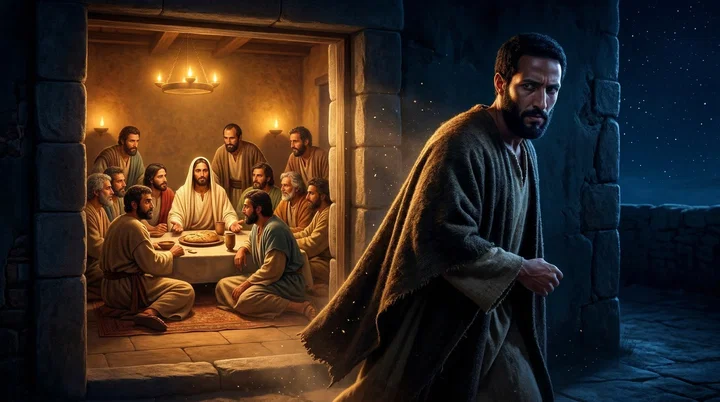
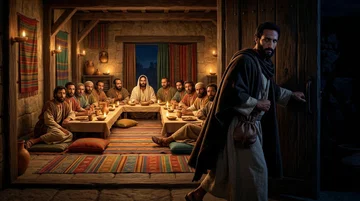
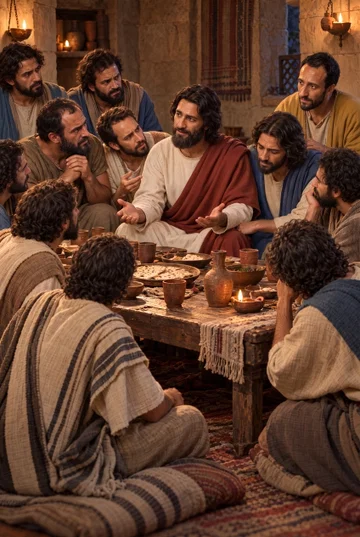
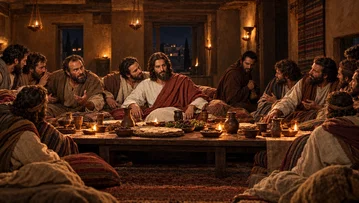
And as they did eat, he said, Verily I say unto you, that one of you shall betray me.
Translations
And as they did eat, he said, Truly I say to you, that one of you shall betray me.
King James Version, KJV Cambridge Paragraph Bible
And as they did eat, he said, Verily I say unto you, that one of you shall betray me.
And as they were eating, he said, Verily I say to you, that one of you will betray me.
Revised Version, American Standard Version
and as they were eating, he said, Verily I say unto you, that one of you shall betray me.
and while they are eating, he said, 'Verily I say to you, that one of you shall deliver me up.'
And as they were eating he said, Verily I say to you, that one of you shall deliver me up.
and, as they were eating, he said—Verily, I say unto you, One from among you, will deliver me up.
Berean Standard Bible, Majority Standard Bible
And while they were eating, He said to them, “Truly I tell you, one of you will betray Me.”
As they were eating, he said, “ Most certainly I tell you that one of you will betray me.”
And while they were taking food, he said, Truly I say to you that one of you will be false to me.
And as they did eate, he sayde, Verely I say vnto you, that one of you shall betraie me.
Douay-Rheims (Challoner revision)
And whilst they were eating, he said: Amen I say to you, that one of you is about to betray me.
Pictures
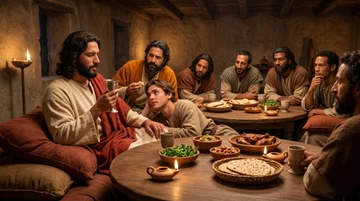
Cross-references 20 of 37
- Mark 14:18-21
And as they sat and did eat, Jesus said, Verily I say unto you, One of you which eateth with me shall betray me.
Jesus announces during the meal that one of those eating with him will betray him.
- John 13:21
When Jesus had thus said, he was troubled in spirit, and testified, and said, Verily, verily, I say unto you, that one of you shall betray me.
Jesus announces at the meal that one of the disciples will betray him.
- Luke 22:21
But, behold, the hand of him that betrayeth me is with me on the table.
Jesus identifies a betrayer present at the supper.
- John 13:18
I speak not of you all: I know whom I have chosen: but that the scripture may be fulfilled, He that eateth bread with me hath lifted up his heel against me.
Jesus identifies the betrayer as the companion who shared his bread, fulfilling Scripture.
- Psalms 41:9
Yea, mine own familiar friend, in whom I trusted, which did eat of my bread, hath lifted up his heel against me.
A trusted companion who shared bread turns against Jesus.
- 1 Corinthians 11:23-26
For I have received of the Lord that which also I delivered unto you, That the Lord Jesus the same night in which he was betrayed took bread:
Identifies the supper as a memorial of Jesus’ death.
- Matthew 26:49
And forthwith he came to Jesus, and said, Hail, master; and kissed him.
Judas identifies Jesus with a kiss, fulfilling his betrayal.
- John 13:30
He then having received the sop went immediately out: and it was night.
Judas leaves immediately after receiving the sop, and both place the supper at night.
- John 13:2-5
And supper being ended, the devil having now put into the heart of Judas Iscariot, Simon’s son, to betray him;
Jesus washes the disciples’ feet at the supper, even though Judas is among them.
- Matthew 26:26-30
And as they were eating, Jesus took bread, and blessed it, and brake it, and gave it to the disciples, and said, Take, eat; this is my body.
Follows the announcement with bread and wine as memorials.
- Matthew 26:25
Then Judas, which betrayed him, answered and said, Master, is it I? He said unto him, Thou hast said.
Judas’s question and Jesus’s reply identify him as the betrayer.
- Luke 22:3-6
Then entered Satan into Judas surnamed Iscariot, being of the number of the twelve.
Judas had agreed to betray Jesus and sought an opportunity.
- John 13:23-26
Now there was leaning on Jesus’ bosom one of his disciples, whom Jesus loved.
John describes how Jesus identified the betrayer at the meal.
- John 6:71
He spake of Judas Iscariot the son of Simon: for he it was that should betray him, being one of the twelve.
Jesus identifies Judas as the one who would betray him.
- Matthew 27:3-5
Then Judas, which had betrayed him, when he saw that he was condemned, repented himself, and brought again the thirty pieces of silver to the chief priests and elders,
Judas returns the payment for betraying Jesus and hangs himself.
- Luke 22:14
And when the hour was come, he sat down, and the twelve apostles with him.
Jesus sits down with the apostles for the Passover meal.
- John 18:2
And Judas also, which betrayed him, knew the place: for Jesus ofttimes resorted thither with his disciples.
Judas knew the place where Jesus often went, leading to his betrayal and arrest.
- Mark 14:21
The Son of man indeed goeth, as it is written of him: but woe to that man by whom the Son of man is betrayed! good were it for that man if he had never been born.
Also speaks of the betrayer at the meal.
- John 13:26
Jesus answered, He it is, to whom I shall give a sop, when I have dipped it. And when he had dipped the sop, he gave it to Judas Iscariot, the son of Simon.
Jesus identifies Judas as the betrayer by giving him the dipped piece of bread.
- Matthew 26:14-16
Then one of the twelve, called Judas Iscariot, went unto the chief priests,
Judas arranges to betray Jesus for thirty pieces of silver.
Commentary
Each commentary is drawn from primary sources: the writings of Ellen G. White and Adventist pioneers and periodicals. Each commentary is separate. Its own words are not a quotation; follow the references to read the source passages.
Ellen G. White
11 sources
The words were spoken while eating the Passover supper with the disciples on the night of the betrayal.COS 110.1–6Ms 64, 1897, par. 9DA 652.1–2DA 654.1–23SP 85.1–2 He spoke while still greatly troubled and depressed, with a cloud of premonition of some dreadful calamity whose character was not understood settling over all, and the meal eaten in silence.COS 110.1–65RED 6.1 Its meaning is that one of the twelve disciples eating with Him, one of the favored twelve privileged above all others to hear His teachings and experience His marvelous love and brought into close communion with their divine Teacher, would betray Him.COS 110.1–6DA 654.1–23SP 85.1–25RED 6.1
The announcement grieved, amazed, stunned and filled the disciples with amazement, fear and consternation, because they could not imagine or comprehend how any one of them could act treacherously toward their beloved Teacher, for what cause and to whom and from whose heart such a design could come.COS 110.1–6DA 654.1–23SP 85.1–2ST May 23, 18785RED 6.1 It led each disciple to examine his own heart for any shadow of evil thought against his Master and to ask one after another whether he himself was the one and whether they were guilty.COS 110.1–6DA 654.1–23SP 85.1–2ST May 23, 1878 None of them thought it was Judas, while Judas knew he was the one meant.Ms 64, 1897, par. 9 Judas alone remained silent, which drew the eyes of all to him, and when he then asked, Master, is it I, the solemn answer was, Thou hast said.COS 110.1–6
The verse shows that Jesus knew Judas's hidden purpose, thoughts and plan.Ms 64, 1897, par. 9ST May 23, 18783SP 86.1DA 655.4 The warning and disclosure gave Judas a final chance and opportunity to repent, and it gave the faithful disciples evidence of Jesus' divine foreknowledge, divinity and Messiahship to strengthen their faith when His betrayal and humiliation came, serving as convincing proof of His divinity.ST May 23, 18783SP 86.1 Judas was alarmed but did not repent; he became more settled in his plan, pressed close beside Christ at that supper in order to disguise his designs, and went out to carry it through.Ms 64, 1897, par. 93SP 86.1
Though Judas was the betrayer, Christ bore long with him to the last, washing his feet and sharing the sacramental supper with him, giving him every opportunity to receive Him, repent and be cleansed from sin.Ms 64, 1897, par. 9DA 655.4 His patient kindness toward a known sinner teaches that faults are a reason to serve, not to carelessly separate from someone believed to be in error and leave that person exposed to temptation or drive them toward evil; all but one were brought to repentance.DA 655.4 The verse exposes a class bearing the name Christian who are no more worthy of the name than Judas was, who instead of reforming under evidence gradually grew less and less in harmony with truth and with Christ while excusing their own course.Ms 64, 1897, par. 9
The meal stood at the transition from the Passover and its system of types, which pointed to Christ's death, to the Lord's Supper, which Christ established as a memorial of His sacrifice to be observed by His followers in every land and age.DA 652.1–2 After that supper He went with them to the garden of Gethsemane, where He often went to pray.COS 113.2 Judas was the disciple whose heart Satan had prepared for betrayal: although he had witnessed Jesus' mighty works and the evidence that Jesus was the Messiah, he remained carnal and covetous.SG1 44.1 His anger over Mary's costly gift exposed his selfishness, which he disguised as concern for the poor.SG1 44.1
Sources
Pioneers and periodicals
50 sources
As they ate the Passover together in the evening, His last feast with them the night before He died, Jesus declared that one of the twelve with Him would betray Him.ST Dec 14, 1915ST May 12, 1898RH Feb 13, 1872 The warning came after they sat down to supper and before He blessed and gave the bread and the cup, and Judas was pointed out by the dipped sop and left forever before the memorial was instituted, without partaking or joining the closing hymn.CO 45.1–2ST Nov 22, 1883RH Jul 21, 1868ST Jun 15, 1904ST Those who held the other teach that the warning was spoken while Judas was still present and had received the emblems of His body and blood, secretly cherishing his purpose.RH Nov 20, 1913 He knew the traitor and his hidden intent, yet He spoke with sorrow and a troubled appearance without exposing him by name, and the disciples who could not imagine such treachery among themselves were startled and grieved.ST May 23, 1878ST May 23, 1878RH Jan 8, 1914RH Nov 16, 1916 Each one in fear and distrust of his own heart examined himself and asked whether he himself was the one, and His restraint in warning all alike gave Judas a final merciful call to repent with convincing proof of divine foreknowledge, which Judas refused and went out hardened to carry out his plan.ST May 23, 1878ST May 12, 1898RH Mar 6, 1866ST Jun 3, 1897
Passover Meal Setting
As they were eating the Passover with the twelve disciples in the evening, Jesus declared that one of them would betray Him.ST Dec 14, 1915ST Apr 2, 1912ST May 12, 1898RH Feb 5, 1914ST May 18, 1904 This was His last feast with them before His death, eaten the night before He died, the beginning of His final agony and one of the final events before His death on the cross.ST Dec 14, 1915ST Jun 15, 1904ST Sep 3, 1912ST Oct 13, 1898 It belongs to the day of His crucifixion, which also encompassed the Lord's supper, His agony, arrest, trial, condemnation, mocking, scourging and death, the most memorable events in His history and above all His love for humanity.RH Feb 13, 1872 The announcement grieved and distressed the disciples with deep sorrow, so that each asked whether he himself was the one, after which Judas the traitor left the company forever.ST May 12, 1898ST Jun 15, 1904ST May 18, 1904
The eating itself proves He kept the Passover on the regular day of the feast and at the regular time of day, in the evening when the lamb was commanded to be killed between three o'clock and sunset.ST Apr 2, 1912 The meal took place on the day the lamb was killed, identified as Thursday the fourteenth day of Abib, just after the sun had sunk behind the hills of Judea.RH Feb 5, 1914ST Oct 13, 1898 As one born under the law He kept it at its appointed season in obedience to the law and fulfilled all righteousness.RH Jun 24, 1873 After eating, depressed by the bitter cup of agony He must soon drink, He went with His little band of followers to the Garden of Gethsemane, His accustomed quiet place of retreat and communion with His Father, while Judas, possessed by an evil purpose, went through the streets and alleys of Jerusalem to the palace of the high priest where the secret plan to apprehend and destroy Jesus that night had been formed.ST Oct 13, 1898
The account stands in Matthew 26 with the parallel accounts in Mark 14, Luke 22 and John 13, coming in order after the triumphal entry.ST It was a memorial service from which gospel lessons were drawn.RH Jun 10, 1915 As events immediately connected with Christ's death they are of the greatest interest in His ministry, the center around which everything turns and on which all hope depends, to be studied most carefully and reverently, with careful comparison of the four evangelists making the narrative seem more real, bringing clearer understanding of His life and causing the important truths He taught to make a deeper impression.ST Nov 15, 1883
Order at Supper
The announcement that one would betray came before the blessing and giving of the bread and wine, after sitting down to supper and before the Lord's Supper in the proper order of Matthew and Mark.CO 45.1–2RH Jul 21, 1868ST Nov 15, 1883 Because John places this announcement after the washing of feet, feet-washing preceded the communion ordinances.CO 45.1–2 The announcement is connected with the coming death and leads into the memorials of the broken body and shed blood, making the danger plain to disciples slow to understand the suffering.RH Jul 21, 1868
The announcement was fulfilled when Judas was identified by the dipped sop.ST Nov 22, 1883 After receiving the sop at the Passover feast Judas left the company forever before the institution of the Lord's Supper, going out and not partaking at the Lord's table.ST Nov 22, 1883ST Jun 15, 1904RH Jul 14, 1863 He stayed for the meal but did not remain to sing the solemn hymn with the others, while each disciple asked whether he himself was the one.ST
On a casual reading the disputed sequence appears to place Judas at the meal and to suggest that he shared in it, but the verse alone does not settle whether he was present when the memorial supper was instituted.RH Jul 29, 1873 The announcement was made during the supper while Judas was present and had received the emblems of the body and blood, secretly cherishing his purpose, with Jesus knowing his character and intent and making the impending betrayal plain though the disciples did not yet understand who would do it.RH Nov 20, 1913 The disciples were astonished and searched their own hearts, each asking whether he might be the one.RH Nov 20, 1913
Foreknown Betrayal Suffered
The Messiah was to be betrayed by an intimate friend, and Jesus was betrayed by one of the disciples He had chosen.RH Nov 18, 1862 The declaration that one of them would betray Him was part of His solemn repeated predictions to disciples and others that He must suffer and die, given while instituting the Lord's supper.ST Sep 3, 1896 Reading it strengthens faith in Him as the divine Son of God and Saviour.ST Sep 3, 1896
Jesus knew the traitor was among them and knew his hidden purpose.ST May 23, 1878ST May 23, 1878 Still troubled, with a troubled depressed appearance, He sorrowfully and sadly announced it during the meal, after the disciples had disputed which should be greatest.ST Aug 12, 1886ST Jan 10, 1911 The disciples were astonished because they could not imagine any of the twelve who had received His teaching, love and close fellowship acting treacherously.ST Aug 12, 1886
Jesus knew Judas was deceitful, unfaithful and a thief with growing treachery, yet ate the Passover with him at the same table.RH Jan 8, 1914RH Nov 16, 1916 He did not expose his failures or hint at his identity, so that He did not arouse the others' suspicions against Judas.RH Nov 16, 1916 His restraint is a lesson in keeping silent for His followers.RH Nov 16, 1916
Jesus faced the betrayal of one of His own disciples as part of the suffering He bore for humanity.ST Jan 20, 1914 Together with the denial and desertion of the others it pierced Him, because those He loved and had undertaken to save were joining in Satan's plots.ST Jan 20, 1914 This deepened His agony as the sins of His nation, His accusers, His betrayer and the whole world weighed upon Him.ST Jan 20, 1914 The warning and disclosure gave the faithful disciples evidence of His divine foreknowledge and Messiahship, strengthening their faith when His betrayal and humiliation came.ST May 23, 1878
Disciples' Sorrowful Questioning
The announcement that one of the twelve would betray Him startled and astonished the disciples, grieving and distressing them with deep sorrow.ST May 12, 1898ST May 23, 1878RH Nov 20, 1913ST May 18, 1904 His troubled and depressed appearance had already filled them with foreboding, yet they could not imagine that any of the twelve who had received His teaching, love and close fellowship would act treacherously, or why anyone would do so.ST Aug 12, 1886 All twelve without exception turned pale with anxiety.RH Sep 9, 1858
His words made them fear and distrust their own hearts, so each examined himself and searched his own heart, anxiously asking whether he himself was the one.ST May 23, 1878RH Mar 6, 1866ST Aug 12, 1886ST May 23, 1878RH Nov 20, 1913 The occasion called for serious self-examination, showing that even those close to Jesus needed to examine their own loyalty.ST May 12, 1898ST Aug 12, 1886 The warning and disclosure gave the faithful evidence of His divine foreknowledge and Messiahship that would strengthen their faith when His betrayal and humiliation came.ST May 23, 1878 Though the announcement made the impending betrayal plain, they did not yet understand who would do it.RH Nov 20, 1913
Judas alone at first remained silent, sitting among the others outwardly faithful although he had already agreed to betray Jesus for thirty pieces of silver and had arranged to identify Him with a friendly salute.ST Oct 20, 1898ST Aug 12, 1886 Then, after seeing the others looking upon him, Judas of Kerioth joined in with Rabbi, is it I.ST Jan 10, 1911 Jesus answered him, Thou hast said, declaring that the Son of Man goes as it is written of Him but woe unto that man by whom He is betrayed, for it were better for that man if he had not been born.ST Jan 10, 1911 Afterward Judas arose and went out in horror but without repentance, hardened by persistent selfishness until he carried it out despite the announcement and warnings.ST Oct 20, 1898RH Mar 6, 1866ST Jan 10, 1911
The warning left Peter filled with self-contentment and boastfulness, saying in his heart that he was better than Judas.ST Jan 10, 1911 He declared readiness to follow to prison and to death, and that though all should be offended yet would he never be offended.ST Jan 10, 1911 The fear of the eleven who had nothing to fear rebukes habitual sinners who feel no misgiving about themselves even though the great majority of those living in sin must finally perish.RH Sep 9, 1858
Supper Doctrine Established
The saying belongs to the Lord's Supper instituted at the Passover table before Christ's departure.ST Jun 9, 1898 The Passover lamb was a type of Christ the true Passover, and once Christ the Antitype had come the old type was no longer appropriate.ST Jun 9, 1898 He therefore instituted a memorial to show His death until He comes, serving as an object lesson of His great sacrifice for frail humanity.ST Jun 9, 1898 It is a remedial work by which believers celebrate His death and show that the Saviour has come, replacing the sacrifices that pointed forward to a coming Saviour.ST Aug 13, 1896
Because it was given at the final Passover when the Lord's Supper was instituted, the bread used was unleavened. The cup then used was unfermented wine, shown from the connection in which it is given.ST Jun 9, 1914 Fermented liquor counted as leaven and was forbidden at Passover, since God had commanded that all leaven of every form be excluded from homes.ST Jun 9, 1914ST Jun 18, 1885 As an observant Jew Jesus would neither have drunk fermented wine nor celebrated the meal in a house where fermented things remained.ST Jun 18, 1885
He instituted communion so that each person partaking both eats the bread and drinks the cup.RH May 5, 1874 Communion under both forms belongs to every individual believer.RH May 5, 1874 Withholding the wine from the people while the priest alone drinks violates His institution.RH May 5, 1874 The supper thus eaten was eaten at evening, at night.RH Aug 19, 1858
The betrayal announced at that meal did not make the divinely ordained office of apostle unholy.ST Jun 4, 1912 Judas was false to his trust, and holding a sacred position did not make him holy or cleanse his heart.ST Jun 4, 1912 An office in Christ's work without Christ is empty and cannot save.ST Jun 4, 1912 His example as an administrator who later proved unfaithful does not change the heart obedience of one who received baptism in faith and piety or make it unacceptable to God.RH Sep 6, 1870
Mercy Warning and Application
By revealing that He knew the hidden purpose, thoughts, plans, character and intent of Judas, Jesus dealt with him in patient mercy, giving him one final, last chance to repent and turn from his purpose of betrayal.ST May 23, 1878ST Aug 12, 1886 That disclosure was convincing proof of His divinity and divine foreknowledge, given both to move Judas and to strengthen the faith of the faithful disciples when His betrayal and humiliation came.ST May 23, 1878 Judas was surprised and alarmed by being thus known, yet he was not moved to repentance but became more firmly set on his plan and went out to carry it through.ST Aug 12, 1886 In so seeking to help him, the Lord also fulfilled Scripture.ST Jun 3, 1897
He spoke the warning to all the disciples rather than singling out Judas, so that it might move Judas to repent, and this showed mercy. He made His knowledge clear before the betrayal was carried out without exposing Judas's failures or hinting at his identity, so that He did not arouse the others' suspicions against him, for they asked whether they themselves were the one.RH Nov 16, 1916ST Aug 12, 1886 His restraint in not exposing the thief among them, whose treachery was growing, is a lesson in keeping silent for His followers.RH Nov 16, 1916
Jesus had called Judas as a disciple because He loved him and wanted to save him, giving him responsibility and the best instruction and example with great opportunity to overcome.ST Jun 3, 1897 Judas refused to be taught, cherished love of money, stole from the poor, and sold his Master.ST Jun 3, 1897 He remained responsible for his choice, as his return of the money and suicide showed.ST Jun 3, 1897
Being the one who fails Christ takes more than open betrayal by a friend who ate bread with Him and relied upon Him and then betrays his Master with a kiss.RH Nov 17, 1910 It means deserting Him and leaving Him alone and forsaken in His hour of pain while foes press thick and fast shouting for crucifixion.RH Nov 17, 1910 It means idleness in making no reply to His command to work, standing all day in the marketplace while the sun looks down on harvest fields white for harvest.RH Nov 17, 1910 It means thoughtlessness in taking no heed of those who faint and starve and forgetting those bowed down beneath heavy loads all along the road, each way of failing putting the hearer in the place of the one and calling for the question Lord, is it I.RH Nov 17, 1910
Judas's covetousness, which is idolatry, led him to perdition after Jesus at His last feast with His disciples before His death pointed him out as the traitor who would betray Him and he left the company forever, and the same covetousness will bring perdition to everyone else who yields to it.ST Jun 15, 1904 Judas held a trusted position among the disciples and was considered loyal almost until the end, yet he betrayed Jesus.ST Jun 1, 1904 His past service and responsibility did not prove his present loyalty, so the disciples' response of each asking whether it might be himself makes the warning a call for personal self-examination whether believers will turn from God and be rejected.RH Jun 4, 1867ST Jun 1, 1904
The ordinances observed by the disciples on that night of eating when He solemnly told them one of them would betray Him conveyed lessons Jesus intended for His trusting followers.RH Dec 3, 1908 These events immediately connected with Christ's death are of the greatest interest in His earthly ministry, the center around which everything turns and on which all hope depends, and like every act in His life are to be studied most carefully and reverently.ST Nov 15, 1883 Careful study of the different accounts given by the four evangelists, and of the order among the events of the last supper, makes the narrative seem more real, brings clearer understanding of His life, and causes the important truths He taught to make a deeper impression.ST Nov 15, 1883
The presence of Judas in question on the night of the betrayal at the institution of the Lord's supper raises whether Christ and His apostles drove him away from the table instead of letting him examine himself and so let him eat.RH Nov 4, 1873 It raises whether any man or set of men has power and right to say to this and that one, You are not worthy, and drive them away from the Lord's table.RH Nov 4, 1873
Sources