John 13:2
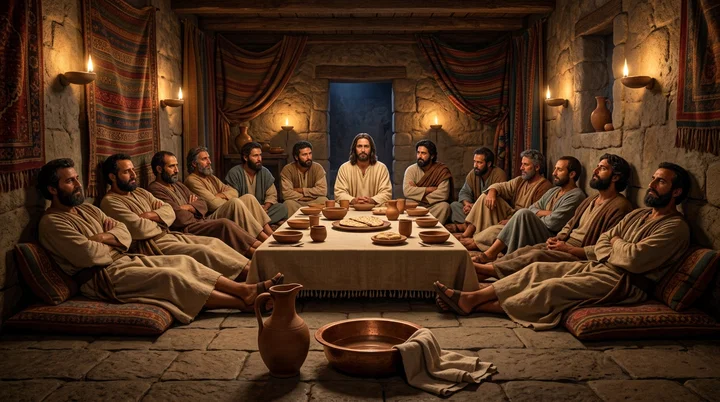
And supper being ended, the devil having now put into the heart of Judas Iscariot, Simon’s son, to betray him;
Translations
American King James Version, King James Version, KJV Cambridge Paragraph Bible
And supper being ended, the devil having now put into the heart of Judas Iscariot, Simon’s son, to betray him;
And supper being ended (the devil having now put into the heart of Judas Iscariot, Simon's son, to betray him;)
Revised Version, American Standard Version
And during supper, the devil having already put into the heart of Judas Iscariot, Simon’s son, to betray him,
And supper being come, the devil already having put [it] into the heart of Judas of Simon, Iscariot, that he may deliver him up,
And during supper, the devil having already put it into the heart of Judas [son] of Simon, Iscariote, that he should deliver him up,
And, supper, being in progress, the adversary, having already thrust into the heart of Judas son of Simon Iscariot, that he should deliver him up,—
The evening meal was underway, and the devil had already put into the heart of Judas, the son of Simon Iscariot, to betray Jesus.
By the time the evening meal had ended, the devil had already put into the heart of Judas, the son of Simon Iscariot, to betray Jesus.
During supper, the devil having already put into the heart of Judas Iscariot, Simon’s son, to betray him,
So while a meal was going on, the Evil One having now put it into the heart of Judas Iscariot, Simon's son, to be false to him,
And when supper was done (and that the deuill had now put in the heart of Iudas Iscariot, Simons sonne, to betray him)
Douay-Rheims (Challoner revision)
And when supper was done, ( the devil having now put into the heart of Judas Iscariot, the son of Simon, to betray him,)
Pictures
Cross-references 20 of 30
- 1 Corinthians 11:23
For I have received of the Lord that which also I delivered unto you, That the Lord Jesus the same night in which he was betrayed took bread:
Both texts place Jesus’ institution of the Supper on the night he was betrayed.
- Luke 22:19-20
And he took bread, and gave thanks, and brake it, and gave unto them, saying, This is my body which is given for you: this do in remembrance of me.
Jesus institutes the Lord’s Supper after the Passover meal.
- John 13:10-11
Jesus saith to him, He that is washed needeth not save to wash his feet, but is clean every whit: and ye are clean, but not all.
Jesus identifies Judas as unclean among the disciples because he knows Judas will betray him.
- John 13:27
And after the sop Satan entered into him. Then said Jesus unto him, That thou doest, do quickly.
Satan enters Judas as he sets out to betray Jesus.
- Matthew 26:21-25
And as they did eat, he said, Verily I say unto you, that one of you shall betray me.
Jesus announces the betrayal and identifies Judas at the meal.
- Luke 22:3
Then entered Satan into Judas surnamed Iscariot, being of the number of the twelve.
Satan enters Judas before he betrays Jesus.
- John 13:21
When Jesus had thus said, he was troubled in spirit, and testified, and said, Verily, verily, I say unto you, that one of you shall betray me.
Jesus announces that one of his disciples will betray him, astonishing the others.
- Matthew 26:26-29
And as they were eating, Jesus took bread, and blessed it, and brake it, and gave it to the disciples, and said, Take, eat; this is my body.
Jesus institutes the Lord’s supper after Judas’s betrayal is contemplated.
- John 13:18
I speak not of you all: I know whom I have chosen: but that the scripture may be fulfilled, He that eateth bread with me hath lifted up his heel against me.
Judas’s betrayal fulfills Scripture and is foretold by Jesus.
- Mark 14:17-18
And in the evening he cometh with the twelve.
Both accounts place Judas’s betrayal in the evening supper setting.
- Luke 22:21
But, behold, the hand of him that betrayeth me is with me on the table.
The betrayer is identified as present at the supper.
- Matthew 26:15
And said unto them, What will ye give me, and I will deliver him unto you? And they covenanted with him for thirty pieces of silver.
Judas agrees to betray Jesus for thirty pieces of silver.
- John 13:11
For he knew who should betray him; therefore said he, Ye are not all clean.
Jesus knew Judas would betray him, so not all the disciples were clean.
- John 12:4-6
Then saith one of his disciples, Judas Iscariot, Simon’s son, which should betray him,
Judas’s greed and rebuke of Mary are linked to his betrayal of Jesus.
- John 13:30
He then having received the sop went immediately out: and it was night.
Judas leaves after receiving the sop, and it is night.
- Matthew 26:50
And Jesus said unto him, Friend, wherefore art thou come? Then came they, and laid hands on Jesus, and took him.
Jesus addresses Judas as friend after the betrayal.
- Mark 14:22-25
And as they did eat, Jesus took bread, and blessed, and brake it, and gave to them, and said, Take, eat: this is my body.
Records Jesus instituting the bread and cup at the supper.
- Mark 14:18-21
And as they sat and did eat, Jesus said, Verily I say unto you, One of you which eateth with me shall betray me.
Jesus warns that one of his disciples will betray him.
- Luke 22:47-48
And while he yet spake, behold a multitude, and he that was called Judas, one of the twelve, went before them, and drew near unto Jesus to kiss him.
Judas identifies Jesus with a kiss before betraying him.
- Psalms 41:9
Yea, mine own familiar friend, in whom I trusted, which did eat of my bread, hath lifted up his heel against me.
The betrayal by Judas fulfills the betrayal described in the verse.
Commentary
Each commentary is drawn from primary sources: the writings of Ellen G. White and Adventist pioneers and periodicals. Each commentary is separate. Its own words are not a quotation; follow the references to read the source passages.
Ellen G. White
35 sources
As the Passover supper in the upper chamber was ending on His last evening before death, the devil had already put it into the heart of Judas Iscariot, Simon's son, to betray Him, a bargain already made for thirty pieces of silver though not yet carried out.Ms 35, 1897, par. 9–10Ms 19, 1897, par. 3–5Ms 102, 1904, par. 1–3 At that hour Jesus knew His time had come to leave this world for the Father, that all things had been given into His hands, that He had come from God and went to God, and having loved His own He loved them to the end, knowing who would betray Him.Ms 35, 1897, par. 9–10Ms 19, 1897, par. 3–5 Though He knew Judas would leave to betray Him, He rose, kept him at the table, washed his soiled feet first with His own hands and let him share the sacrament as a final appeal of love to convict him and bring him to repentance and cleansing while he was not yet beyond hope.Ms 35, 1897, par. 9–10Ms 19, 1897, par. 3–5DA 655.4DA 720.2DA 645.1 Judas felt the impulse to confess on the spot but hardened his heart in pride, rejected the last tender appeal, and the very feet Jesus had washed went out to betray Him under Satan's control of heart and mind.DA 645.1Ms 19, 1897, par. 56–57Ms 106, 1903, par. 54–55 His patient bearing with Judas without rebuke or exposure teaches humility, loving unselfish service and patience with the faulty, shows that known unworthiness is no ground for human exclusion from feet-washing and the supper, and warns that false believers may share these ordinances to their own condemnation until God makes them known.Ms 19, 1897, par. 3–5DA 655.4MH 493.3–4Ms 35, 1897, par. 11–12Ms 47, 1897, par. 18–20
Supper Setting and Betrayal
The supper was ending, the Passover feast eaten with the disciples in the upper chamber on the last evening before death, within the final week and under the shadow of betrayal, crucifixion, desertion and suffering.Ms 35, 1897, par. 9–10Ms 19, 1897, par. 3–5Ms 102, 1904, par. 1–321MR 346.1–3Lt 336, 1906, par. 5–9 It was before the feast of the Passover in the larger sense, at the close of that last meal together before the cross and the prayer to the Father.Ms 19, 1897, par. 3–521MR 346.1–3Lt 336, 1906, par. 5–9 The rising to wash feet belongs to that moment after supper had ended.Ms 35, 1897, par. 9–10Ms 19, 1897, par. 3–5Ms 54, 1897, par. 4
The washing was the customary courtesy performed by a servant after guests removed their sandals, and though the preparations were ready no servant was present and the disciples failed to render the expected service.Ms 35, 1897, par. 9–10Ms 19, 1897, par. 3–5Ms 54, 1897, par. 4 Instead they were disputing who should be greatest and were unready to grasp the solemn events ahead.Ms 102, 1904, par. 1–3Ms 43, 1897, par. 24 Though He knew He would be deserted and suffer humiliation, His concern was for them and the temptations they would face.Lt 336, 1906, par. 5–9Ms 54, 1897, par. 10
At that time Jesus knew His hour had come to depart out of this world to the Father, that the Father had given all things into His hands, and that He had come from God and went to God.Ms 35, 1897, par. 9–10Ms 19, 1897, par. 3–5 Having loved His own who were in the world, He loved them to the end.Ms 19, 1897, par. 3–5 He knew who would betray Him and therefore said, Ye are clean, but not all.Ms 35, 1897, par. 9–10
The devil had already put it into the heart of Judas Iscariot, Simon's son, to betray Him, so that the betrayal was the work, plan and prompting of Satan and the enemy.Ms 35, 1897, par. 9–10Ms 19, 1897, par. 3–5Lt 117, 1897, par. 8–10Ms 113, 1899, par. 24 Judas had already agreed and negotiated the betrayal for thirty pieces of silver and continued to act innocent among disciples who did not know his purpose, though the act itself was not yet fully carried out.Ms 102, 1904, par. 1–3DA 645.1
Jesus Washes Judas's Feet
Though He knew the betrayer and that He would be denied by the words that not all were clean, Jesus rose from supper while it was ending and washed the disciples' feet, keeping Judas Iscariot, Simon's son, at the table though he would leave it to betray Him.Ms 35, 1897, par. 9–10Ms 19, 1897, par. 3–5Ms 35, 1897, par. 11–12 He bathed Judas's soiled feet first with His own precious hands and wiped them with the towel, and He allowed him to share in the sacrament despite the devil having put betrayal into his heart.DA 655.420MR 149.2–4Ms 19, 1897, par. 56–57Ms 106, 1903, par. 54–55 Jesus alone could read that secret purpose while the others knew nothing of it.Ms 19, 1897, par. 56–57
That washing and sharing was a final, tender appeal of enduring divine love, offering every inducement to receive Christ, repent, confess on the spot, and be cleansed from sin.DA 655.4Ms 19, 1897, par. 56–57Ms 106, 1903, par. 54–55 Judas was not yet wholly hardened nor beyond repentance, even after twice agreeing to betray, but still had opportunity when Jesus revealed his purpose and included him.DA 720.2Ms 106, 1903, par. 54–55Ms 120, 1897, par. 9 His heart was thrilled through and through and convicted, with a felt impulse to confess, yet pride led him to harden his heart and resist.DA 645.1Ms 19, 1897, par. 56–57Ms 106, 1903, par. 54–55 He rejected that last appeal, his case was decided, and the feet Jesus had washed went out to betray Him under Satan's control of heart and mind.DA 720.2DA 645.1Ms 120, 1897, par. 9
Jesus bore patiently with him, treating him with goodness and humility, giving no word of rebuke and not exposing him.MH 493.3–4Ms 19, 1897, par. 56–57 By that humble service He taught true humility and unselfish ministry, that brother is not to exalt himself above brother but to understand his brother's feelings.Ms 19, 1897, par. 3–5Ms 43, 1897, par. 24 His example shows patience with the faulty and care not to withdraw from one believed to be in error, lest careless separation leave that person exposed to temptation, and all but one of His erring disciples were thus brought to repentance.DA 655.4MH 493.3–4
As the pure, spotless Lamb presenting Himself as a sin-offering, He thereby put an end to the sacrifices offered for four thousand years.Ms 43, 1897, par. 24 In place of the national festival He instituted the memorial of feet-washing and the sacramental supper to be observed by followers through all time in every country.Ms 43, 1897, par. 24 It was His last established ordinance, discharging the cares and burdens of ancient Jewish rites and ceremonies whose virtue ceased when type met antitype in Him as the authority, foundation, and only efficacious offering for the sins of the world.Ms 35, 1897, par. 9–10Ms 19, 1897, par. 18–19 God is brought sacredly near in it, and Christ Himself is always present at this special season to revive memory, awaken understanding of the lessons symbolized, convict of sin, receive penitential offerings, disentangle from disunion and strife, and teach that eating His body and drinking His blood means daily partaking of the bread of life by receiving His Word and doing His will, speaking not to intellect alone but to heart and to the moral and spiritual nature.Ms 35, 1897, par. 9–10Ms 19, 1897, par. 18–19Lt 189, 1897, par. 15Lt 164, 1897, par. 4–5
Known unworthiness is no reason for human exclusion from feet-washing and the Lord's Supper, for human beings cannot read the secrets of the soul nor reliably judge who is worthy.Ms 35, 1897, par. 11–12Ms 47, 1897, par. 18–20 No one may stay away because an unworthy person is present, and no one may decide who shall come, nor single out any for special favor or dishonor, since all are Christ's purchased possession for whom He died alike.Ms 35, 1897, par. 11–12Ms 8, 1897, par. 14 Serving even a known betrayer who had sold Him for thirty pieces of silver is impartial ministry to be taken in all its bearings, giving insight into God's workings whose ways and thoughts are not human.Ms 47, 1897, par. 18–20Ms 8, 1897, par. 14 Unseen witnesses were present, with angels watching the disciples while messengers of the prince of darkness attend those who refuse the Holy Spirit.Ms 47, 1897, par. 18–20
Judas's Hardening and Warning
Judas was chosen as one of the apostles and numbered among them, capable of taking a leading place, yet his hidden purposes were ripening while he scarcely realized how far they would develop.MH 493.3–4ED 86.2 The other disciples knew nothing of his secret purpose and still looked upon him as a man of great capabilities and breadth of knowledge that would be valuable if sanctified, for he was not villainous in appearance or deportment.Ms 19, 1897, par. 56–57ST Feb 9, 1915 His recorded experience shows Christ's long patience with perverse human nature.ST Feb 9, 1915
Covetousness led him to steal from the Lord's treasury, carrying the bag of gifts for the work and appropriating money that never appeared on the account, while reasoning that his labor was not sufficiently appreciated and that he had a right to pay himself.Ms 91, 1899, par. 37–38 That first act of dishonesty perverted his conscience and began the deterioration of his character, taking him from under God's protection and costing him peace and happiness.Ms 91, 1899, par. 37–38 His secret misappropriation and robbery turned all his work against God to forward the work of the great deceiver, and such a course ends in loss of eternal life and loss of the soul even if never discovered.6MR 39.3Ms 91, 1899, par. 37–38
He became a blind traitor through self-chosen deception and yielded temptation, being content with little things and refusing to receive in a good and honest heart the messages sent to elevate, ennoble, and sanctify him.Ms 38, 1897, par. 1–2Ms 2, 1900, par. 5–6 He caviled and gossiped over them because they cut across inclination and appetite, failed to see the need of conversion, treated the means God provided to change character as idle tales, and let habit stand stronger than truth until he wrapped himself in deception and betrayed Christ.Ms 38, 1897, par. 1–2 He cherished wilful dishonesty and selfishness that robs God by taking means from His treasury for self while harder workers receive less, and such selfishness is idolatry that dishonors God's name, which God will not endure in His dominion.6MR 39.3 Those who cherish it become spiritually blind with insensitive consciences, and God will remove His Spirit from them.Ms 2, 1900, par. 5–66MR 39.3
He allowed himself to become a channel of darkness and sold himself to Satan to carry out his suggestions and betray the cause of God into the hands of sinners.Ms 19, 1897, par. 56–57Ms 91, 1899, par. 37–38 He took Christ's humility in taking a servant's place as proof that He would not become an earthly king, and having given up all hope of temporal preferment and worldly honor he resented that place and resolved to disown and betray Him.DA 645.1Ms 19, 1897, par. 56–57COS 110.7–9Ms 54, 1897, par. 13 Had he yielded to the Holy Spirit he would have kept righteousness and integrity and would not have accused Mary of extravagance in anointing Christ with precious ointment.Ms 91, 1899, par. 37–38 He had already negotiated the betrayal, though the arrangement was not yet fully carried out, and he continued to act innocent among the disciples who did not know his purpose.DA 645.1Ms 54, 1897, par. 13
As Jesus washed his feet, bathing his soiled feet first and wiping them, Judas's heart was thrilled through and through with an impulse to confess on the spot.DA 645.1Ms 19, 1897, par. 56–57Ms 106, 1903, par. 54–55 He knew better than the enemy's presentation that Jesus was a pretence and not the Son of God, and he had often been deeply impressed by the working of the Holy Spirit, but pride led him to harden his heart and he braced his soul against the light.Ms 19, 1897, par. 56–57Ms 106, 1903, par. 54–55 Even after twice agreeing to betray Jesus he was not yet wholly hardened and still had opportunity to repent, for Jesus patiently gave him every opportunity and tenderly included him in the washing as the last appeal of love.Ms 106, 1903, par. 54–55Ms 120, 1897, par. 9 He rejected that appeal, turned the wrong way and fought away from Jesus until his case was decided, and the feet Jesus had washed then went out to betray Him under Satan's control of heart and mind.Ms 19, 1897, par. 56–57Ms 120, 1897, par. 9 Even when he knew his purpose was exposed he did not fear or turn back but angrily left to carry out his plan, and his departure relieved the others as the shadow lifted and Jesus' face brightened.COS 110.7–9
Acting Judas's part means betraying the Lord under the prompting of the enemy.Lt 117, 1897, par. 8–10Lt 16, 1888, par. 56–57 The spirit of Judas is the opposite of the spirit of Jesus, revealing itself in a threatening attitude and in abusive letters, and in turning traitor for self-purpose or conspicuousness when loyalty is most needed.Lt 16, 1888, par. 56–57 His example warns that a Judas may appear to belong among Christ's followers while sharing in the foot-washing and communion, eating and drinking to his own condemnation, and that false brethren and false believers will remain in the church until the close of time.12MR 247.1–2ST Feb 9, 1915 But God will soon make them known and remove them from among His people.12MR 247.1–2 Christ's prayer to the Father before His betrayal and crucifixion represents unity and love as God's will and instruction for resisting Satan's attacks, and living out that prayer brings oneness with one another and with Christ and gives strength to withstand them.21MR 346.1–3Lt 131, 1900, par. 1–3
Sources
Pioneers and periodicals
76 sources
The supper was still in progress in the upper room on the night Jesus was betrayed, at His final Passover with the disciples shortly before His departure from the world.RH Dec 23, 1858RH Jan 20, 1853RH Jan 8, 1867ST Apr 2, 1912 During that supper the devil had already put it into the heart of Judas Iscariot, Simon's son, to betray Him, a purpose Judas had formed and fully determined upon.ST Mar 29, 1899STST Jun 7, 1899RH Apr 1, 1858ST Feb 11, 1897 Jesus knew who would betray Him, which is why He said they were clean but not all.ST Jul 26, 1883ST Mar 29, 1899ST Feb 11, 1897 Rising from the meal He washed the disciples' feet, even the feet of Judas the betrayer, and thereby instituted foot-washing as an ordinance to be observed by His followers.RH Apr 22, 1862ST Oct 20, 1898ST Oct 24, 1900RH Nov 6, 1900 That washing came first as a preparatory service, humbling the disputing disciples, cleansing pride and alienation, and making them ready for communion.RH Jun 23, 1910RH Feb 10, 1916ST Feb 4, 1903
Words and Order of Supper
The phrase rendered supper being ended means supper was ready, being prepared, or in progress, not finished and eaten.RH Dec 23, 1858ST Nov 15, 1883ST Jul 30, 1885 Jesus rose to wash feet during the Passover supper, near its beginning, while the disciples were seated or reclining, and they continued eating afterward.RH Dec 23, 1858ST Nov 15, 1883ST Jul 30, 1885 Judas was present at that washing, and sharing in Jesus depended on more than undergoing the outward ceremony, for Jesus knew Judas was not clean though he was there.RH Dec 23, 1858 Jesus washed the disciples' feet, returned to the table, and later identified the betrayer by giving him the sop, which shows the supper was still in progress and the washing preceded the eating of the supper.RH Dec 23, 1858
The same phrase is taken to state that supper had ended before Jesus rose, so the washing took place after the paschal meal had begun, after He had sat down to eat, and perhaps several hours after entering the upper room.ST Oct 24, 1878RH Jun 16, 1868ST Feb 7, 1884ST Oct 24, 1878 The devil had already put into the heart of Judas Iscariot the intention to betray Jesus when this washing occurred.ST Oct 24, 1878RH Jun 16, 1868ST Oct 24, 1878 This timing distinguishes it from the customary washing of guests' feet upon entering a house, which came before the meal, and shows the act was not a customary provision for guests or a lesson about hospitality.ST Feb 7, 1884ST Oct 24, 1878ST Oct 24, 1878ST Oct 24, 1878
The supper that had ended was the Passover supper, not the Lord's Supper.ST Apr 29, 1897RH Jul 21, 1868ST Nov 19, 1912 Jesus washed feet after the Passover meal was finished but before He instituted the bread and wine of the Lord's Supper.RH Jul 21, 1868 The Passover supper is distinct from the Lord's Supper and preceded its institution.ST Apr 29, 1897ST Nov 19, 1912 After eating the Passover with His disciples, Jesus instituted the Lord's Supper as a remembrance to continue until He comes again.ST Nov 19, 1912
The evening proceeded in this order: preparation of the Passover, then washing of feet, then breaking of bread, then the announcement that one would betray Him with the questioning and the departure of Judas and the warning to Peter.ST Feb 4, 1903 The blessing of the cup followed immediately after the breaking of bread and was not separated from it.ST Feb 4, 1903 The washing came first in the celebration of the ordinances, before the emblems of the Lord's table were received.ST Feb 4, 1903RH Mar 18, 1909
Historical Setting That Night
The setting is supper with Jesus and His disciples in the upper room in Jerusalem on the evening of the night He was betrayed, at their final Passover supper together shortly before He was to depart from the world.RH Jan 20, 1853RH Jan 8, 1867 It was on the feast's appointed day and evening, and that same night He was taken and later crucified as the Passover Lamb.ST Apr 2, 1912 This Passover was shared with His disciples before the feast's appointed time, one day before the Passover lamb was slain.RH Apr 7, 1851
It was virtually the last Passover ever celebrated, within twenty-four hours of His being in the tomb, when type was to meet antitype in the slaying of the Lamb of God for the sins of the world.ST Feb 11, 1897ST Aug 12, 1886 His love for His disciples was felt at its intensest, yet He was troubled in spirit in the few quiet hours between Him and Gethsemane, just before His full baptism of suffering.ST Feb 11, 1897ST Aug 12, 1886 The disciples sympathized with His grief although they knew not its cause, and those hours were to be spent for their benefit.ST Aug 12, 1886
The instruction of John 13 and 14 was given at the Passover supper before Jesus and the disciples left the upper chamber and crossed the brook Cedron toward Gethsemane.ST Mar 18, 1897 That night after instructing and praying for them He went to Gethsemane to pray for strength before His trial.ST Nov 4, 1897 Judas came with a mob and handed Him over to His enemies, a deed suited to the darkness of night.ST Nov 4, 1897
The evening moved from the Passover supper to the dispute over who was greatest, to the foot-washing, to the Lord's Supper, and Judas remained with Jesus and the disciples through these events.ST Jul 12, 1905 Jesus, as host, took the first place while the disciples disputed who should have the place of honor nearest Him.ST Nov 15, 1883 He answered their rivalry by washing their feet and afterward resumed His garments and sat down again.ST Nov 15, 1883
In this setting Jesus told the disciples that one of them would betray Him, and He knew that before morning one disciple would betray Him.RH May 18, 1869ST Mar 29, 1899 The announcement astonished and troubled them.RH May 18, 1869 They each asked if it was he and did not suspect Judas.RH May 18, 1869
Judas and Satan's Prompting
During the supper the devil had already put into the heart of Judas Iscariot, Simon's son, the intention to betray Jesus, an evil design arising from Satan's influence, though the betrayer identified is Judas himself.ST Mar 29, 1899ST Jun 7, 1899RH Apr 1, 1858ST Apr 19, 1905RH Jun 27, 1878 Judas had now fully determined upon his course, for his purpose had formed before that night.ST Feb 11, 1897ST Apr 19, 1905 He had contemplated betrayal after being rebuked at the supper in Bethany where Mary anointed Jesus' feet, and after the Jews resolved to kill Jesus following the resurrection of Lazarus he saw opportunity to gain money and to retaliate for his humiliation.ST Apr 19, 1905 He had sold Jesus for thirty pieces of silver, yet Jesus still served him at the washing, and he later used a kiss, a customary greeting, to conceal an unfriendly heart as he betrayed Him.STRH Sep 10, 1901 The danger of this betrayal explains why Jesus kept the supper location from Judas.ST May 18, 1904
Jesus knew who would betray Him, which explains why He said the disciples were clean every whit but not all, and that not all were clean.ST Mar 29, 1899ST Jul 30, 1885ST Feb 11, 1897 Judas was present but was not clean in the inner person, and sharing in Jesus depended on more than undergoing the outward ceremony.ST Jul 26, 1883 The uncleanness was not physical but related to his betrayal that night, and the washing Jesus performed was not merely bodily cleansing.ST Jul 26, 1883RH Apr 22, 1862 During supper before the feast of the Passover, when Jesus knew His hour to depart out of this world to the Father had come and loved His own in the world unto the end, He knew the Father had given all things into His hands and that He came forth from God and went to God.ST Feb 11, 1897 Knowing who would betray Him, He said the Scripture must be fulfilled that he that eats bread with Him has lifted up his heel against Him.ST Feb 11, 1897
Satan prompted Judas, but the betrayal was not God's plan or a necessary part of salvation.ST May 5, 1909 Prophecies that Jesus would be betrayed and killed foretold what God knew ungodly people would do, but they did not decree that they must do it, and Jesus taught that no one should betray Him and that it would be better for the betrayer never to have been born.ST May 5, 1909 The devil's putting of betrayal into Judas' heart was not the first thing Satan had put there, for Satan does not begin by putting in such monstrous thoughts.ST Feb 11, 1897 Anything that is in the heart is the heart's own and could not be there at all if the heart had not consented, so it is with sinful volitions at the present day: men choose to do evil; they are not made to do it.ST Feb 11, 1897
Judas treated the humble service of foot-washing as proof that Jesus would not become a king and that following Him would bring no earthly honor or gain.RH Jan 4, 1906 He therefore decided to leave with his sins unconfessed, and was lost.RH Jan 4, 1906 While the others recognized their selfishness and learned a lasting lesson of humility and loving service, he did not share that change.ST Apr 11, 1906 Judas Iscariot was numbered among the apostles despite being a false believer, and his recorded experience shows Christ's long patience with perverse human nature and teaches that false brethren will remain in the church until the close of time.ST Feb 9, 1915 The verse belongs to the account of the occasion for washing feet and places Judas' betrayal within the setting of the supper at which Jesus washed His disciples' feet.RH Jul 28, 1863
Foot Washing as Ordinance
Rising from the Passover supper to wash feet, Jesus set apart foot washing then and there as an ordinance to be observed by His disciples.RH Apr 22, 1862ST Oct 24, 1900 John 13:1-17 records the act, and His example and command that disciples wash one another's feet give literal biblical authority in harmony with Scripture that is to be followed.RH Apr 22, 1862ST Oct 20, 1898RH Mar 26, 1867 John alone among the evangelists records the instituting of feet-washing, commonly called the ordinance of humility, while the institution of the Lord's Supper stands alongside Matthew 26, Mark 14, and Luke 22.ST
The washing came first in the celebration of the ordinances, just before the Lord's Supper was instituted, as a divinely appointed preparatory service.RH Feb 10, 1916ST Feb 4, 1903CO 43.8–44.3 The disciples were divided and disputing over who would be greatest and have the highest place; they were not clean of heart or ready for communion.RH Jun 23, 1910RH Feb 10, 1916 Jesus answered their selfishness, discord, jealousy, and desire for supremacy by humbling them, cleansing their hearts from pride and alienation, putting away differences through confession and forgiveness, and preparing them for communion and service.RH Jun 23, 1910ST May 13, 1875CO 43.8–44.3 For three and one-half years He had taught the twelve meekness and humility, yet carnal desire for supremacy remained so each criticized the others to disqualify them for the highest place.RH Aug 3, 1916 At the ordinance they began to see the sinfulness of their ambition; all except Judas were softened, brought to repentance, and made meek, teachable, and loving.RH Nov 20, 1913RH Aug 3, 1916
John 13:1-17 presents foot-washing as an ordinance and memorial of the humility and humiliation of Christ the Lord and Master, commemorating not only that act but His whole humble life.ST Jun 14, 1905ST Feb 7, 1884RH Jan 8, 1867 As the Lord's Supper shows the Lord's death till He come, so foot washing commemorates His humility of life until that time.ST Oct 24, 1900 The observances in the upper room at Passover were to continue until He returned and remind followers of His taking human nature, His humble work of salvation, and His body and blood given for the world.ST May 21, 1896 It was practiced in the early church but later neglected or burdened with superstition and outward forms, and is to be restored in original purity.ST Feb 7, 1884 It remains necessary for those coming into the church afterward, especially in the last days of falling away when professed Christians are more willing to die for religion than to imitate His humility in living.ST Oct 24, 1900
The act was not a lesson in hospitality and leaves no occasion for one.RH Feb 24, 1859ST Feb 7, 1884 The disciples had shown no inhospitable spirit and were not in need of hospitality, and hosts did not wash guests' feet.RH Feb 24, 1859ST Mar 9, 1888 Its timing after sitting down to eat, after supper was ready, was later than the customary washing upon entering a house, which came before the meal.ST Feb 7, 1884ST Oct 24, 1878ST Oct 24, 1878 To make it hospitality leaves it without occasion and turns it into a strange digression, contrary to Christ's way of enforcing a lesson by an act when circumstances called for it.RH Feb 24, 1859 It is more than hospitality and teaches that Christian fellowship calls for serving one another in humble, loving service.ST Mar 9, 1888ST Feb 20, 1901
The washing was ordinary servant's work and faces disciples as a practical test of humility in daily service rather than merely as a church rite.RH May 30, 1912 It is a practice of the Lord's house that expresses the Master's spirit.RH Jul 4, 1912 Both it and the Lord's Supper are to be celebrated together by believers even when few and scattered; celebrating them brings encouragement, and keeping these solemn ordinances instituted the night of betrayal brings the blessing presence of the Comforter.RH Aug 31, 1905ST Oct 3, 1895RH Dec 17, 1901RH Dec 10, 1901 Jesus washed Judas' feet, including the betrayer, though Judas would not repent and was in fact the first disciple washed.RH Nov 6, 1900RH Nov 20, 1913 Even knowing Judas would betray Him, Jesus served him and shared company and love freely with him.STRH Sep 10, 1901 The act shows profound love and humility toward the traitor and love toward even the ungodly and those who mistreat Him, expressing love and making faith visible to others.RH Nov 6, 1900RH Sep 10, 1901
Christ's Example for Believers
John 13:2 places Jesus at supper as betrayal approaches, with Judas already moved to betray Him and with Jesus knowing the horrors of the near future.ST Aug 28, 1879 He bears the traitor's touch with calm, regal self-possession and continues to love and serve, even stooping to wash His disciples' feet.ST Aug 28, 1879 His sorrow and vulnerability do not lead to self-pity or resentment, and His conduct shows how to endure suffering with humility, tenderness, and concern for others.ST Aug 28, 1879
The washing followed the disciples' strife over greatness, for Jesus as host had taken the first place while they disputed who should have the place of honor nearest Him.ST May 21, 1896ST Nov 15, 1883 Though greater than the disciples and by right Lord of all whom all creatures should serve and obey, He emptied Himself of rights and power, did not seek a high estate, took the form of a servant, and served them.ST May 21, 1896 He answered their rivalry by washing their feet, teaching that humility was the only ground of preferment in His kingdom, and afterward He resumed His garments and sat down again.ST May 21, 1896ST Nov 15, 1883 This serving is Christianity and the mind He wants His followers in all ages to have, the course that overcomes the world, with a kingdom and a table therein prepared for those who continue with Him in this way.ST May 21, 1896
The act belongs to the upper-room setting of the footwashing, which the ordinance commemorates as an emblem of what the Saviour did.RH Jun 27, 1878 By taking a servant's place He teaches humility and self-abasement, and His example gives His followers authority and reason to serve one another.RH Jun 27, 1878 His humble service at the final gathering before crucifixion, when the disciples disputed who was greatest, taught humility and loving service.RH Jun 27, 1878 His followers show Christian maturity by becoming less eager to honor or exalt themselves and giving glory to God. What He did was an expression of humility, but to Judas, whose pride resisted the servant's work, it was a humiliation.RH May 30, 1912
Sources