Matthew 26:22
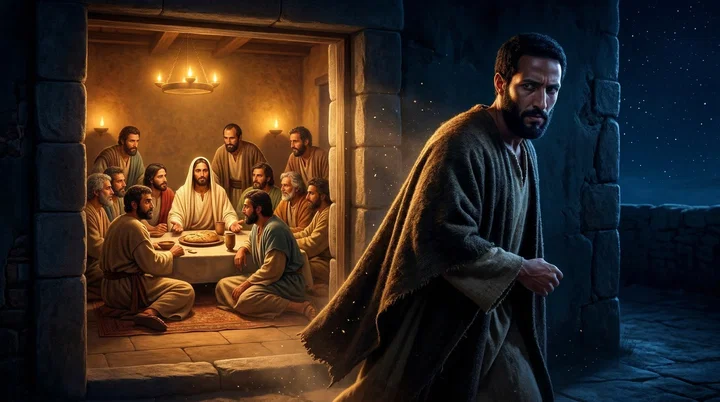
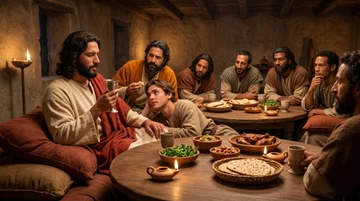
And they were exceeding sorrowful, and began every one of them to say unto him, Lord, is it I?
Translations
American King James Version, Webster Bible
And they were exceeding sorrowful, and began every one of them to say to him, Lord, is it I?
King James Version, KJV Cambridge Paragraph Bible
And they were exceeding sorrowful, and began every one of them to say unto him, Lord, is it I?
Revised Version, American Standard Version
And they were exceeding sorrowful, and began to say unto him every one, Is it I, Lord?
And being grieved exceedingly, they began to say to him, each of them, 'Is it I, Sir?'
And being exceedingly grieved they began to say to him, each of them, Is it I, Lord?
And, being exceedingly grieved, they began to be saying to him, each one—Can it be, I, Lord?
Berean Standard Bible, Majority Standard Bible
They were deeply grieved and began to ask Him one after another, “ Surely not I, Lord?”
They were exceedingly sorrowful, and each began to ask him, “ It isn’t me, is it, Lord?”
And they were very said, and said to him, one by one, Is it I, Lord?
And they were exceeding sorowfull, and began euery one of them to say vnto him, Is it I, Master?
Douay-Rheims (Challoner revision)
And they being very much troubled, began every one to say: Is it I, Lord?
Pictures
Cross-references
- Mark 14:19
And they began to be sorrowful, and to say unto him one by one, Is it I? and another said, Is it I?
The disciples sorrowfully ask Jesus whether each might betray him.
- Luke 22:21-23
But, behold, the hand of him that betrayeth me is with me on the table.
Jesus announces a betrayer at the meal, prompting the disciples to ask which of them it is.
- John 13:21-26
When Jesus had thus said, he was troubled in spirit, and testified, and said, Verily, verily, I say unto you, that one of you shall betray me.
Jesus announces the betrayal, and the disciples ask who will do it.
- John 13:18
I speak not of you all: I know whom I have chosen: but that the scripture may be fulfilled, He that eateth bread with me hath lifted up his heel against me.
Jesus identifies the betrayer as fulfilling Scripture’s prediction.
- Psalms 41:9
Yea, mine own familiar friend, in whom I trusted, which did eat of my bread, hath lifted up his heel against me.
A trusted companion sharing bread turns against Jesus, fulfilling the prophecy of his betrayal.
- John 13:2-5
And supper being ended, the devil having now put into the heart of Judas Iscariot, Simon’s son, to betray him;
Jesus washes the disciples’ feet, including Judas’s, before the betrayal.
- John 13:21-22
When Jesus had thus said, he was troubled in spirit, and testified, and said, Verily, verily, I say unto you, that one of you shall betray me.
Jesus announces the betrayal, and the disciples react with distress and uncertainty.
- John 13:30
He then having received the sop went immediately out: and it was night.
Judas leaves immediately after receiving the sop.
- John 13:25
He then lying on Jesus’ breast saith unto him, Lord, who is it?
John asks Jesus to identify the betrayer.
- Luke 22:21
But, behold, the hand of him that betrayeth me is with me on the table.
Places the betrayer’s hand at the table and prompts the question.
- John 13:22
Then the disciples looked one on another, doubting of whom he spake.
The disciples look at one another, uncertain whom Jesus means.
- John 6:70
Jesus answered them, Have not I chosen you twelve, and one of you is a devil?
Jesus had warned that one of the Twelve was a devil.
- John 13:27
And after the sop Satan entered into him. Then said Jesus unto him, That thou doest, do quickly.
Satan enters Judas after his betrayal is exposed.
- Matthew 26:49
And forthwith he came to Jesus, and said, Hail, master; and kissed him.
Judas identifies Jesus to the arresting party with a kiss, betraying him.
- Mark 14:21
The Son of man indeed goeth, as it is written of him: but woe to that man by whom the Son of man is betrayed! good were it for that man if he had never been born.
Jesus warns that it would have been better for the betrayer not to be born.
- Matthew 26:15
And said unto them, What will ye give me, and I will deliver him unto you? And they covenanted with him for thirty pieces of silver.
Judas sells Jesus for pieces of silver.
- Matthew 26:28
For this is my blood of the new testament, which is shed for many for the remission of sins.
shows cup blessed after bread
- Matthew 27
When the morning was come, all the chief priests and elders of the people took counsel against Jesus to put him to death:
Continues the account through Christ’s condemnation and death.
- John 13:3-17
Jesus knowing that the Father had given all things into his hands, and that he was come from God, and went to God;
Jesus washed the disciples’ feet at the same occasion as the Supper.
Commentary
Each commentary is drawn from primary sources: the writings of Ellen G. White and Adventist pioneers and periodicals. Each commentary is separate. Its own words are not a quotation; follow the references to read the source passages.
Ellen G. White
14 sources
At the Passover table Jesus declared in troubled spirit that one of His own twelve would betray Him, and the eleven were exceeding sorrowful, grieved and amazed that one so favored could do such a thing.COS 110.1–6Ms 106, 1903, par. 31–35ST Dec 23, 1908COS 113.2 Instead of suspecting one another, each looked inward with fear and painful self-distrust, unwilling to assume himself incapable of treachery against the Master.COS 110.1–6ST Dec 23, 1908DA 654.1–2 With sorrowful hearts they looked at one another and searched each face for guilt, then one after another asked Him if it was themselves.COS 110.1–6Ms 106, 1903, par. 31–355RED 6.2–7.2 Judas alone sat silent and unconcerned until scrutiny drew all eyes to him, and only then repeated their question to escape detection while Jesus still bore with him in patient mercy to give him a final chance to repent.Ms 64, 1897, par. 93SP 86.15RED 6.2–7.2DA 655.4 That sorrowful question stands as the pattern for every believer to examine himself whether his own perversity has burdened God's people, and if so to seek mercy and salvation.RH Sep 24, 1903Ms 34, 1900, par. 37
Sorrow at the Supper
The words were spoken at the Passover supper table with Jesus, when He still seemed greatly troubled and a cloud settled over all so that they ate in silence.COS 110.1–6 That supper was eaten before going with them to the garden of Gethsemane where He often went to pray, and as He walked with them toward the garden He talked with them and taught them, but He became strangely silent as they neared the garden.COS 113.2
When in troubled spirit He announced that one of them would betray Him, the eleven were exceeding sorrowful, grieved, amazed and deeply distressed.COS 110.1–6Ms 106, 1903, par. 31–35ST Dec 23, 1908DA 654.1–25RED 6.2–7.2 They realized the full import of His words and remembered how true His sayings were.DA 654.1–25RED 6.2–7.2 They could not believe that one of the favored twelve who had eaten bread with Him and been treated as beloved friends could do such a thing.Ms 106, 1903, par. 31–35
With fear and painful self-distrust rather than suspicion of another, each examined his own heart to see if even one thought against the Master found lodging there.COS 110.1–6ST Dec 23, 1908DA 654.1–2ST May 23, 18783SP 85.1–2 They could not imagine which of them would act treacherously, yet they did not assume themselves incapable of it.DA 654.1–23SP 85.1–23SP 86.1 Remembering that His words were true, they asked whether they might harbor even one shadow of an evil thought against their Master.COS 110.1–6DA 654.1–25RED 6.2–7.2
With sorrowful hearts they looked at one another, questioned one another, and searched one another's faces closely to see if any face showed signs of guilt.Ms 106, 1903, par. 31–355RED 6.2–7.2 Then one after another they asked Him whether it was themselves, with John asking in deep distress.COS 110.1–6Ms 106, 1903, par. 31–355RED 6.2–7.2 They did not suspect Judas and could not imagine which of them could betray Jesus, while Judas alone at first remained silent as if unconcerned and spellbound, until his silence drew all eyes to him.COS 110.1–6Ms 106, 1903, par. 31–35Ms 64, 1897, par. 9DA 654.1–2ST May 23, 1878
Betrayal, Mercy, and Warning
One of the twelve at the table was Judas, counted among the disciples yet selfish and covetous in heart and being led by Satan toward betrayal.SG1 44.1 His protest over Mary's costly gift was not care for the poor but a cover for his own greed, and her generous act stood as a rebuke to him.SG1 44.1 While the other disciples met the announcement that one would betray Christ with sincere self-examination, Judas knew the warning pointed to himself.Ms 64, 1897, par. 93SP 86.1 Instead of reforming he excused himself and grew increasingly out of harmony with Christ and with truth, remaining fixed in his plan, which Jesus fully knew.Ms 64, 1897, par. 93SP 86.1
Even so, Jesus dealt with him in patient mercy and gave him a final opportunity to repent.3SP 86.1 That same patient service at the supper, washing the feet of his erring and faulty disciples and permitting them to share in the sacrament, opened to them all an opportunity to repent.DA 655.4 All but one were brought to repentance, while Judas held to his course.3SP 86.1DA 655.4 The difference appeared also in their manner, for the eleven asked at once in sincere self-distrust, whereas Judas first sat silent under their searching scrutiny and only afterward repeated their question to escape detection.5RED 6.2–7.2
The sorrowful question, Lord, is it I, is the pattern for personal self-examination in the church.RH Sep 24, 1903Ms 34, 1900, par. 37 Each person should ask whether his own perversity has burdened and discouraged God's people.RH Sep 24, 1903Ms 34, 1900, par. 37 Each should ask also whether it has given their enemies cause to triumph.RH Sep 24, 1903Ms 34, 1900, par. 37 Whoever finds this to be so should seek God's mercy and salvation.RH Sep 24, 1903Ms 34, 1900, par. 37
Sources
Pioneers and periodicals
65 sources
At the last Passover feast before His death, as He instituted the Lord's Supper, Jesus announced during the meal that one of the twelve with Him would betray Him, and every disciple became deeply sorrowful and distressed and began anxiously to ask whether he himself was the one.ST May 18, 1904ST Jun 9, 1914STST May 12, 1898 Each searched his own heart in fear and distrust of himself rather than in suspicion of another, with every eye fixed on the Lord, while Judas alone remained silent at first and then asked last only when all eyes turned toward him, using the colder title Rabbi where the others said Master.ST Dec 23, 1908ST May 23, 1878ST Oct 20, 1898RH Mar 6, 1866ST Aug 12, 1886 Jesus designated Judas as the traitor by giving him the dipped sop in fulfillment of Psalm 41:9, and Judas left at once to carry out the betrayal and was absent when the memorial supper was instituted for the eleven.ST Nov 22, 1883ST Jun 15, 1904ST Aug 12, 1886RH Aug 2, 1906 A searching warning should therefore prompt each hearer to turn the truth inward and examine his own heart rather than applying it only to others, an attitude especially fitting at the Lord's Supper.ST Mar 27, 1901ST May 12, 1898RH Mar 6, 1866RH Jun 4, 1867ST Aug 26, 1875 Asking the question alone does not prove faithfulness, since Judas too asked it, so human hearts remain deceitful and even those appalled by his course may betray the Lord now by professing present truth while failing to live it.RH Mar 6, 1866RH Sep 26, 1871
Passover Night Setting
The verse belongs to the last Passover feast Jesus ate with His disciples before His death, at which He instituted the Lord's Supper.ST Jun 9, 1914STST Jun 15, 1904ST Sep 3, 1912 The account is evidence that unleavened bread was used at its institution, and that the wine of that cup was pure unfermented wine, because all leaven in any form was commanded to be excluded from homes at Passover so that fermented drink was removed with leavened bread.ST Jun 9, 1914 At that same feast, when Judas the traitor was pointed out and left the company forever, were instituted the ordinance of the Lord's Supper in commemoration of the death of Christ who is the Passover sacrificed for us, and the ordinance of feet-washing as a memorial of His humble life.ST Jun 15, 1904 It was the eventful night on which He was betrayed, when He sought to teach His trusting disciples lessons connected with the ordinances.ST Sep 3, 1912RH Dec 3, 1908
The announcement that one would betray Him and the sorrowful questioning took place during the Passover meal itself, after the foot-washing and before the institution of the memorial supper.ST Nov 22, 1883RH May 27, 1873 Matthew and Mark place this announcement before the Supper, and their accounts follow the same order of events.ST Nov 15, 1883 In detailed order the question came after Jesus washed the disciples' feet and after He broke the bread, and before Judas left and before the warning to Peter, with the blessing of the cup coming immediately after the breaking of the bread.ST Feb 4, 1903 The questioning designated Judas as the traitor by Jesus giving him the dipped sop, fulfilling Psalm 41:9, and Judas went out immediately after receiving it, so he was absent when Jesus instituted His memorial supper and did not share the Lord's table with the eleven.ST Nov 22, 1883RH May 27, 1873
The scene was on the night of the full moon after the disciples had disputed which should be greatest.ST Jan 10, 1911 The last supper was celebrated just after the sun had sunk behind the hills of Judea, while Jesus was weighed down by the thought of the bitter cup of agony He must soon drink.ST Oct 13, 1898 After the supper He went with His little band of followers to the quiet retreat of Gethsemane, where He had often enjoyed communion with His Father and where floods of light from heaven had often filled His soul and strengthened Him for the conflicts of His ministry.ST Oct 13, 1898
The full record of the table conversation about the betrayer is obtained by putting Matthew 26:21-25 together with Mark 14:18-21 and Luke 22:21-23. The Passover table as spread in the days of Jesus gives gospel lessons proving Jesus is the true Messiah, the only Saviour of Jew and Gentile.RH Jun 10, 1915 The verse belongs to His solemn repeated predictions of His own death made as He instituted the Lord's Supper, which strengthen faith in Him as Saviour and Son of God.ST Sep 3, 1896 Matthew 26:20-75 identifies those events — the institution, the agony and arrest, the trial and condemnation, and the suffering and death — as occurring on the day before the Sabbath, and that day was made memorable and showed His love without thereby being set apart as sacred or given the title Lord's day.RH Feb 13, 1872 If the Passover was eaten at the proper time, Pentecost that year fell on the Sabbath.ST Apr 15, 1889
Sorrowful Self-Questioning Disciples
Jesus' announcement that one of them would betray Him made every disciple deeply sorrowful, distressed and shocked.ST May 18, 1904ST May 12, 1898ST Oct 20, 1898ST May 23, 1878 Each began anxiously to ask Him whether he himself was the one who would do it.ST May 18, 1904ST May 12, 1898RH Mar 6, 1866ST May 23, 1878 Their questioning reflected the shock and earnestness with which they received His warning, and their distrust of their own hearts even as they loved and revered Him.ST May 12, 1898RH Mar 6, 1866ST May 23, 1878
Each searched his own heart for any thought against Him.ST Dec 23, 1908ST May 23, 1878ST Aug 12, 1886 Their questions arose from fear and painful self-distrust rather than from suspicion of another disciple.ST Dec 23, 1908ST May 23, 1878RH Mar 6, 1866ST Aug 12, 1886 They examined themselves one after another instead of accusing one another.ST Dec 23, 1908ST Aug 12, 1886
All spoke in consternation with every eye on the Lord, looking from one to another in solemnity.STRH Aug 2, 1906 Even John, the beloved disciple, was horrified and asked the same question.STRH Aug 2, 1906 Peter's asking was joined with a contented and boastful heart that counted himself better than Judas and ready to follow Jesus to prison and to death and never to be offended though all others were offended.ST Jan 10, 1911
Judas Revealed and Departing
Up to that decisive moment Judas had passed as one of the twelve, treated as an intimate and trusted companion and never singled out, so that not one of the others thought him disloyal and each instead asked whether he himself was the betrayer.RH Aug 2, 1906 All eyes were on the Lord in solemn consternation as they looked from one to another around the table, and Judas was still regarded as loyal almost to the end despite his trusted place as treasurer.RH Aug 2, 1906ST Jun 1, 1904
While the eleven sorrowfully asked one after another whether each was the one, searching his own heart in fear and self-distrust, Judas alone at first remained silent.ST May 23, 1878ST Aug 12, 1886ST Aug 12, 1886 He asked only last, when he saw them all looking at him, joining their outward show of concern as if astonished though he had already arranged the betrayal, and doing so to escape their scrutiny.ST Oct 20, 1898ST Aug 12, 1886RH Aug 2, 1906 His question used the colder title Rabbi, is it I, whereas the eleven said Master, is it I, and their questioning arose from painful concern rather than suspicion of him.ST Jan 10, 1911RH Nov 20, 1913
Jesus answered him directly and designated him as the traitor by giving him the dipped sop, in fulfillment of Psalm 41:9, and then told him to act quickly.ST Nov 22, 1883ST Aug 12, 1886 That clear disclosure of knowledge of his hidden purpose and thoughts gave Judas a final chance to repent and stood as a sign of divinity and great mercy.ST Aug 12, 1886 Judas was only surprised and alarmed and became more settled in his plan to carry it out, and the revelation of his guilt did not turn him from it.ST Aug 12, 1886
Immediately after receiving the sop he left and went through Jerusalem to the palace of the high priest to effect Jesus' destruction, leaving the company forever.ST Nov 22, 1883ST Jun 15, 1904ST Aug 12, 1886 He was therefore absent when Jesus instituted His memorial supper and did not share the Lord's table with the eleven, the sorrowful questioning having taken place during the Passover meal after the announcement of the traitor and before the Supper was instituted.ST Nov 22, 1883RH Jul 14, 1863RH May 27, 1873 A casual reading of Matthew, Mark, and Luke appears to show that he was present and partook, so the sequence and timing of the meal and the Supper must be examined carefully.RH Jul 29, 1873
Jesus shared the Passover table with Judas despite knowing beforehand his deceit, unfaithfulness, and false character.ST Jun 3, 1897RH Jan 8, 1914 He had not exposed Judas's failings nor hinted to the others that Judas was the betrayer, but remained silent while the treachery developed, and that restraint teaches followers not to disclose another person's weaknesses needlessly.RH Nov 16, 1916 His covetousness, which is idolatry, led him to perdition, as it will everyone else who yields to it.ST Jun 15, 1904 His divinely ordained apostleship did not make him faithful or holy, for only Christ can save and cleanse, and his past service and trusted office did not prove continuing loyalty; yet the later unfaithfulness of such an administrator does not make a faithful recipient's heart obedience unacceptable to God.ST Jun 4, 1912ST Jun 1, 1904RH Sep 6, 1870
Doctrines and Ordinances Confirmed
The verse belongs to the account of the last Passover that Jesus ate with His disciples before His death, in connection with which He instituted the Lord's Supper, and that account is evidence that unleavened bread was used at its institution. The same supper belongs to the time of the Passover when the Saviour instituted the Lord's Supper, and the wine used in that cup was pure unfermented wine.ST Jun 9, 1914ST Jun 18, 1885 God had commanded that all leaven in any form be excluded from homes at that time, so fermented drink was treated as leaven and, with leavened bread, was excluded and removed.ST Jun 9, 1914ST Jun 18, 1885
At that same feast were instituted the ordinance of the Lord's Supper in commemoration of the death of Christ, who is the Passover sacrificed for us, and the ordinance of feet-washing as a memorial of His humble life.ST Jun 15, 1904 The Lord's Supper is a remedial work commemorating the Lord's death and showing that the Saviour has come.ST Aug 13, 1896 The chapter is evidence that the Messiah was betrayed by an intimate friend, by one of the disciples He had chosen.RH Nov 18, 1862 Matthew 26:20-75 identifies the day of Christ's betrayal, trial, and crucifixion as the day before the Sabbath, whose events were the institution of the Lord's Supper, Christ's agony and arrest, His trial and condemnation, and His suffering and death.RH Feb 13, 1872 These events made the day of His death more memorable than any other day in His history and showed His love for humanity, yet the day itself was not thereby set apart as sacred or given the title Lord's day.RH Feb 13, 1872
Pattern of Personal Examination
The sorrow and questioning at the table show that a searching warning should lead each hearer to examine himself, and that self-examination is the fitting attitude at the Lord's Supper.ST Mar 27, 1901ST May 12, 1898RH Jun 4, 1867 When the announcement that one would betray him made the disciples deeply sorrowful, each anxiously asked whether he himself was the one, making their response a model for solemn self-examination about falling away and being rejected.ST Mar 27, 1901ST May 12, 1898RH Jun 4, 1867 Searching truth is to be turned inward in trembling personal inquiry rather than applied only to others or to a group in general.RH Mar 6, 1866ST Aug 26, 1875RH Jan 10, 1854 Each person is to examine his own heart rather than accuse neighbors or fellow believers, fixate on a brother's failings, or seek to glorify and vindicate himself, letting love cover the sins of fellow believers.RH Mar 6, 1866RH Apr 18, 1854RH Jan 10, 1854RH Jan 25, 1906 As Peter could deny the Lord under trial and Judas could betray him for gain, the inquiry becomes a personal appeal to recognize one's own possible unfaithfulness and seek salvation.RH Mar 6, 1866
When plain preaching lays sinful self open to view, honest turning of cutting truth inward brings the convicting answer that one is the guilty man and reveals how unlike the Master one is.RH Nov 23, 1869 That conviction weans affection from this vain world of affliction, stays thought on the Lord, moves to humble seeking of the prayers of brethren and sisters, to wanting the love of God applied to the heart for perfect cleansing from love of worldly treasures and everything of sinful character, and to striving to overcome by living out God's word in keeping His commandments while waiting for church organization.RH Nov 23, 1869 The Spirit so applies the plain gospel personally that sin is brought to the hearer's attention, and hearers respond by asking whether they themselves are implicated.ST Jul 16, 1885RH Feb 4, 1904 Those who may have a name to live while spiritually dead should therefore with open hearts ask whether the description applies to them and keep searching until sure it does not, feeling the fear one should feel at sharing the fate of the ungodly.RH Jun 4, 1867ST Jul 16, 1885RH Sep 9, 1858
The inquiry expresses painful concern and desire to know whether one might fail, calling Christians to examine their spiritual condition and heed warnings rather than assume they do not apply.RH Apr 21, 1868RH Sep 22, 1868RH Jan 25, 1906 It belongs especially to the fear that severe trials and persecution will reveal who can stand.RH Apr 21, 1868 Yet asking alone does not prove faithfulness, since Judas also asked whether he was the one; human nature remains deceitful, so even those appalled by his betrayal may repeat his course by loving the present world and turning back. In this way it remains a soul-stirring inquiry for everyone including the remnant, whether despite high hopes of heaven they are on the way to destruction.RH Feb 10, 1859
Specific Applications for Today
The question presses each person to examine whether he is proving unfaithful to Jesus through fear, denial, forgetfulness, coldness, or love of worldly pleasures and riches. It likewise probes whether love for Christ has faded under cares and trials.ST Mar 30, 1904
Like Peter, a person may deny the Lord when trial comes, and like Judas betray Him for gain.RH Mar 6, 1866 Human nature remains deceitful, so even those appalled by the betrayal may repeat his course by loving the present world and turning back, and asking the question alone does not prove faithfulness since Judas also asked it. To betray the Lord now is to profess the truth He is leading out while failing to live it, turning back like Israel toward Egypt, loving this present world like Demas, and saying without doing instead of walking in received light with faith shown by works.RH Sep 26, 1871
The same inquiry searches whether one is robbing God by withholding tithes and offerings that belong to Him.RH Dec 22, 1904 That includes withholding offerings even while paying a faithful tithe.RH Sep 9, 1909
Each should ask whether he has surrendered himself for service wherever God calls, and whether he is failing the call to soul-saving work, especially canvassing.RH Sep 14, 1916 He should ask whether he is responsible for people perishing without hope, whether he is using for self-gratification resources that should carry the gospel to those in darkness, and whether he is sacrificing according to ability.RH Aug 14, 1900 The examination extends further to whether, after doing what he can, he trusts God to bless the work and strengthen the messengers, and whether his heart is clean so God's power can rest on His people.RH Aug 14, 1900
Parents are to ask whether they are responsible for their children's waywardness when they drift into the world, choose public school over church-school, go to picnics and theaters and the grange, and neglect the Sabbath-school lesson.RH Aug 10, 1911 Such asking belongs with renewing the covenant to cooperate with God for their children's salvation.RH Aug 10, 1911
When professed Christians seem disagreeable and fellowship fails, each should consider that the fault may be his own at least in part instead of judging others as insincere, since if each were like Christ all would enjoy each other's company, and the more like Christ others become the more they are loved.RH Jan 1, 1901 In the same way each in the church should ask whether his own perversity has discouraged God's people or given enemies cause to triumph, and seek mercy and salvation if so.RH Sep 24, 1903
The question is a present personal inquiry about readiness for the day of the Lord, to be asked now rather than waiting until that day.ST Jul 11, 1878 It expresses desire to know whether one might fail, with fear that severe trials and persecution will reveal who can stand.RH Apr 21, 1868 Sabbath-keepers should therefore take warnings about pride, selfishness, and losing a sense of the nearness of Christ's coming to heart and ask whether they themselves are in danger.RH Nov 17, 1910
At the critical test of faith in the third angel's message many will fail by profession without practice, which is sad but not necessary, for by grace those who ask the question of themselves can stand.RH Sep 26, 1871 The parable's equal number of wise and foolish virgins does not predict the proportion of faithful and unfaithful but leaves the division indefinite, with the solemn point that some who hear the call will prove untrue and fail at last.ST Nov 22, 1899
Sources