John 19:32
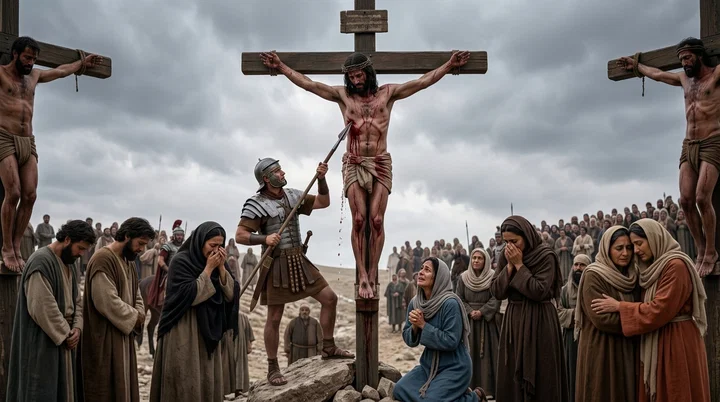
Then came the soldiers, and brake the legs of the first, and of the other which was crucified with him.
Translations
Then came the soldiers, and broke the legs of the first, and of the other which was crucified with him.
King James Version, KJV Cambridge Paragraph Bible
Then came the soldiers, and brake the legs of the first, and of the other which was crucified with him.
Then came the soldiers, and broke the legs of the first, and of the other who was crucified with him.
The soldiers therefore came, and brake the legs of the first, and of the other which was crucified with him:
The soldiers therefore came, and brake the legs of the first, and of the other that was crucified with him:
The soldiers, therefore, came, and of the first indeed they did break the legs, and of the other who was crucified with him,
The soldiers therefore came and broke the legs of the first and of the other that had been crucified with him;
The soldiers, therefore, came; and, of the first, indeed, brake the legs, and of the other who was crucified with him,—
Berean Standard Bible, Majority Standard Bible
So the soldiers came and broke the legs of the first man who had been crucified with Jesus, and those of the other.
Therefore the soldiers came and broke the legs of the first and of the other who was crucified with him;
So the men of the army came, and the legs of the first were broken and then of the other who was put to death on the cross with Jesus:
Then came the souldiers and brake the legges of the first, and of the other, which was crucified with Iesus.
Douay-Rheims (Challoner revision)
The soldiers therefore came; and they broke the legs of the first, and of the other that was crucified with him.
Pictures
Cross-references 20 of 21
- Exodus 12:46
In one house shall it be eaten; thou shalt not carry forth ought of the flesh abroad out of the house; neither shall ye break a bone thereof.
The Passover lamb’s bones were not to be broken, a pattern fulfilled in Christ.
- Numbers 9:12
They shall leave none of it unto the morning, nor break any bone of it: according to all the ordinances of the passover they shall keep it.
It commands that no bone of the Passover lamb be broken.
- Mark 15:44-45
And Pilate marvelled if he were already dead: and calling unto him the centurion, he asked him whether he had been any while dead.
Pilate verifies Jesus’ unexpectedly early death before releasing his body.
- Psalms 34:20
He keepeth all his bones: not one of them is broken.
Jesus’s unbroken bones fulfill the prophecy that none of the righteous sufferer’s bones would be broken.
- 1 Corinthians 5:7
Purge out therefore the old leaven, that ye may be a new lump, as ye are unleavened. For even Christ our passover is sacrificed for us:
Identifies Christ as the Passover sacrifice.
- John 19:36
For these things were done, that the scripture should be fulfilled, A bone of him shall not be broken.
Jesus’ unbroken bones fulfilled Scripture.
- Luke 23:44-46
And it was about the sixth hour, and there was a darkness over all the earth until the ninth hour.
Reports the darkness and Jesus’ death at the cross.
- Deuteronomy 21:23
His body shall not remain all night upon the tree, but thou shalt in any wise bury him that day; (for he that is hanged is accursed of God;) that thy land be not defiled, which the LORD thy God giveth thee for an inheritance.
The rule against leaving a body hanging overnight explains the urgency of burial.
- Matthew 27:45-50
Now from the sixth hour there was darkness over all the land unto the ninth hour.
Reports the darkness and Jesus’ death at the cross.
- Isaiah 53:5
But he was wounded for our transgressions, he was bruised for our iniquities: the chastisement of our peace was upon him; and with his stripes we are healed.
The suffering servant is wounded and bruised for others, yet his body is not broken.
- Psalms 22:16
For dogs have compassed me: the assembly of the wicked have inclosed me: they pierced my hands and my feet.
The pierced hands and feet are among the predicted wounds of Christ.
- Isaiah 53:12
Therefore will I divide him a portion with the great, and he shall divide the spoil with the strong; because he hath poured out his soul unto death: and he was numbered with the transgressors; and he bare the sin of many, and made intercession for the transgressors.
Jesus poured out His soul unto death and was numbered with transgressors.
- Zechariah 12:10
And I will pour upon the house of David, and upon the inhabitants of Jerusalem, the spirit of grace and of supplications: and they shall look upon me whom they have pierced, and they shall mourn for him, as one mourneth for his only son, and shall be in bitterness for him, as one that is in bitterness for his firstborn.
Christ was pierced, while his bones were not broken.
- Luke 23:54
And that day was the preparation, and the sabbath drew on.
Places Jesus’ burial on the preparation day before the Sabbath.
- John 20:1-9
The first day of the week cometh Mary Magdalene early, when it was yet dark, unto the sepulchre, and seeth the stone taken away from the sepulchre.
The empty tomb and the disciples’ response affirm Jesus’ resurrection.
- Acts 2:23
Him, being delivered by the determinate counsel and foreknowledge of God, ye have taken, and by wicked hands have crucified and slain:
Jesus was put to death by human hands.
- 1 John 5:6
This is he that came by water and blood, even Jesus Christ; not by water only, but by water and blood. And it is the Spirit that beareth witness, because the Spirit is truth.
Jesus’ blood and water bear witness, as blood and water flowed at his crucifixion.
- Mark 15:25
And it was the third hour, and they crucified him.
gives third-hour start of same day
- Mark 15:37
And Jesus cried with a loud voice, and gave up the ghost.
Jesus gives up his life on the cross.
- Acts 3:15
And killed the Prince of life, whom God hath raised from the dead; whereof we are witnesses.
Both describe Jesus’ death by crucifixion.
Commentary
Each commentary is drawn from primary sources: the writings of Ellen G. White and Adventist pioneers and periodicals. Each commentary is separate. Its own words are not a quotation; follow the references to read the source passages.
Ellen G. White
3 sources
This verse belongs to the account of Jesus' death and the soldiers' actions at the cross.5RED 93.2–3 He died unusually soon, just after the darkness passed, while those crucified often lingered for days.5RED 93.2–3 The soldiers broke the legs of the two men crucified with Him to hasten their deaths.5RED 90.4–91.1Ms 91, 1897, par. 10–11 His own legs were left unbroken because He was already dead.5RED 90.4–91.1Ms 91, 1897, par. 10–11
The centurion in command of the soldiers confirmed to Pilate that Jesus was dead and recounted the scenes at Calvary.5RED 93.2–3 Leaving His bones unbroken fulfilled the prophecy that none of His bones would be broken.5RED 90.4–91.1Ms 91, 1897, par. 10–11 Leaving Him whole also met the Passover requirement that the sacrificial victim remain whole.5RED 90.4–91.1
Sources
Pioneers and periodicals
43 sources
At the Jews' request the soldiers broke the legs of the two men crucified with Jesus to hasten their deaths so the bodies could be taken down and buried that same crucifixion day before the Sabbath drew on.RH Dec 9, 1858ST May 20, 1897ST Jul 14, 1881 When they came to Jesus they found Him already dead within a few hours, so they did not break His legs, but to make sure He was really dead one soldier pierced His side with a spear, from which blood and water came out.RH Dec 9, 1858ST Sep 12, 1911ST Jun 3, 1897 His bones being left unbroken fulfilled the Scripture, He keepeth all his bones: not one of them is broken, even the Passover rule that no bone of the sacrificial lamb be broken.ST May 20, 1897ST Sep 12, 1911ST Jun 3, 1897RH Sep 16, 1902 In this He is shown to be the sinless, perfect Lamb of God represented by that lamb, stricken, wounded, bruised and pierced yet kept whole as a whole offering, so that Christ cannot be divided but each believer receives a whole Saviour.ST May 20, 1897ST Jun 3, 1897ST Apr 23, 1912ST Jul 14, 1898 His death was the sin-atoning sacrifice of the divine Word made flesh, who truly died on the cross with His blood shed and lay dead before burial and rising, bearing the world's woe as the central figure in the plan of redemption.RH Oct 14, 1862RH Jan 16, 1908RH Nov 10, 1863ST Apr 3, 1901
Breaking Legs Practice
At the Jews' request the soldiers broke the legs of the first man and of the other who was crucified with Jesus.ST Jul 25, 1878RH Dec 9, 1858ST May 20, 1897ST Jul 14, 1881ST May 20, 1897 They did this to hasten their deaths so the bodies could be taken down and buried on the day of crucifixion before the Sabbath, as was required among the Jews and as part of the request to remove the bodies from the crosses.ST Jul 25, 1878RH Dec 9, 1858ST May 20, 1897ST Jul 14, 1881ST Apr 3, 1901 Jesus had already died within a few hours, so no such hastening was necessary in His case, and instead one of the soldiers pierced His side with a spear to be sure He was really dead, and the wound confirmed His death.ST Jul 25, 1878RH Dec 9, 1858ST Jul 14, 1881ST Apr 3, 1901
Breaking the bones with a mallet was one of the usual means used to hasten death for same-day burial, along with kindling a fire under the cross or letting wild beasts loose upon the sufferers.RH Dec 9, 1858 The same practice appears later in a Chinese crucifixion, where after the condemned man remained alive for several days the soldiers broke both his legs at sunset and then strangled him.RH May 10, 1864
The crucifixion took place on the day before the Sabbath, commonly called Friday.ST Apr 21, 1914 The breaking of the legs occurred as the Sabbath drew near, showing the rulers scrupulous about desecrating the Sabbath while taking part in the death of its Lord.RH Dec 12, 1912
Jesus Already Dead
Jesus had already died within a few hours, so no hastening of His death was necessary in His case.ST May 20, 1897RH Dec 9, 1858ST Sep 12, 1911ST Jun 3, 1897ST Jul 14, 1881 When the soldiers came to Him and found Him already dead, they did not break His legs, while they broke the legs of the first man and of the other who was crucified with Him, the two men crucified beside Him, the two thieves.ST May 20, 1897RH Dec 9, 1858ST Sep 12, 1911ST Jun 3, 1897ST Jul 14, 1898 This sparing of His legs fulfilled the Scripture that none of His bones would be broken and the Passover requirement that the sacrificial lamb remain whole, identifying Him as the sinless, perfect Lamb of God.ST May 20, 1897ST Sep 12, 1911ST Jun 3, 1897ST Jul 14, 1898
Instead, to be sure He was really dead, one of the soldiers pierced His side with a spear.RH Dec 9, 1858ST Sep 12, 1911 Blood and water came out from the wound, and the eyewitness record is set forth as true so that people might believe.ST Sep 12, 1911
The soldiers' actions and the wound they made in His side confirmed His death, providing testimony from hostile witnesses that He had truly died.RH Oct 14, 1862RH Nov 10, 1863ST Apr 3, 1901 The one so confirmed dead is the Christ who came from heaven, the Son of God, whose death was a sin-atoning sacrifice.RH Nov 10, 1863 He is the divine Word made flesh, the Word who was God in the beginning and by whom all things were made, the same person who came from the Father and returned to Him, who had taught, worked miracles, been falsely accused, humbled Himself in obedience to death on the cross in the form of God and equal with God made in the likeness of men, shed His blood, then hung dead upon the Roman cross in the sight of those who crucified Him and lay dead within the tomb before burial and rising.RH Nov 10, 1863RH Apr 14, 1874ST May 25, 1904
He had died sooner than expected, since crucifixion ordinarily caused a lingering death and what the soldiers did to the others hastened it.ST Sep 4, 1907 He gave His own life and died of a broken heart, though the Romans effectively killed Him as a supposed rebel.ST Sep 4, 1907
Passover Lamb Prophecy
The soldiers broke the legs of the two men crucified with Jesus to hasten their deaths, but when they came to Jesus and found Him already dead they did not break His legs.ST May 20, 1897ST Jul 25, 1878ST Sep 12, 1911ST Jun 3, 1897RH Sep 16, 1902 This leaving of His bones unbroken fulfilled the Scripture, He keepeth all his bones: not one of them is broken.ST May 20, 1897ST Jul 25, 1878ST Sep 12, 1911ST Jul 14, 1898RH Sep 16, 1902 With the piercing of His side by a spear, from which blood and water came out, recorded by an eyewitness as true so that people might believe, it fulfilled the words about being pierced.ST Sep 12, 1911ST Nov 30, 1882 This fulfilled the Passover rule that no bone of the sacrificial lamb be broken, identifying Jesus as the sinless, perfect Lamb of God represented by that lamb, whose body must remain whole.ST May 20, 1897ST Jul 25, 1878ST Jun 3, 1897ST Apr 23, 1912ST Nov 30, 1882
His body was stricken, wounded, bruised and pierced, but it was not broken, given for sinners as a whole offering.ST Jul 14, 1898 This means Christ cannot be divided among believers, but each receives a whole Saviour.ST Jul 14, 1898 Nothing less would suffice as substitute, since the whole offering was required to save one sinner as much as the whole world, the just suffering for the unjust.ST Jul 14, 1898 The soldiers acted without intending it yet served prophecy.ST Nov 30, 1882 The spear wound fulfilled the words about looking upon the one who was pierced, which will be fulfilled when Christ returns in glory.ST Nov 30, 1882
His death was the antitype of the Passover lamb slain on the fourteenth day of the first month, Christ the Passover sacrificed on that day.RH Oct 30, 1855ST Aug 13, 1874RH Dec 15, 1868 It was fulfilled exactly as to time at the Passover feast in Jerusalem in A.D. 31.ST Apr 23, 1912RH Oct 30, 1855RH Dec 15, 1868 The spring types were fulfilled exactly as to time, and mere preliminary and circumstantial offerings did not prevent the grand event of the day from meeting its antitype on the very day of the type.RH Oct 30, 1855 This exact-time fulfillment proves the same principle for the grand work of the tenth day of the seventh month, whose antitypical work in the holiest must commence on its typical day and could begin on that day and continue beyond it.RH Oct 30, 1855RH Dec 15, 1868
Time and Parallels
The soldiers came and broke the legs of the first man and then of the other man crucified with Jesus.RH Mar 10, 1859 Taken with John 19:31-42 as a whole, this belongs to a same-day timeline in which Jesus was crucified at the third hour, darkness covered the land from the sixth to the ninth hour, and He gave up the ghost at the ninth hour.RH Mar 10, 1859 It proves that Jesus and those crucified with Him did die that same day, against the claim that the thief did not die that day but went alive with Christ to paradise.RH Mar 10, 1859
The verse is part of John's account of Jesus crucified and buried.ST Mar 20, 1901 That account parallels the account in Luke 23:35-53 and the accounts in Matthew 27:31-66 and Mark 15:21-47.ST Mar 20, 1901 Together they show that Christ died for sins according to the Scriptures.ST Mar 20, 1901
Thieves Death Debate
The breaking of the legs proves that Jesus and those crucified with Him did die that same day, against the claim that the thief did not die that day but went alive with Christ to paradise.RH Mar 10, 1859 The whole account shows Jesus crucified at the third hour, darkness covering the land from the sixth to the ninth hour, and Jesus giving up the ghost at the ninth hour, with the soldiers coming and breaking the legs of the first and of the other crucified with Him.RH Mar 10, 1859 Both criminals probably died before the day ended while Jesus was still hanging on the cross, so the promise to the penitent thief to be with Him that day was fulfilled before the day expired.RH Mar 4, 1862
The legs were broken because both men were still alive when taken down near the close of the day before sunset at the beginning of the Sabbath, while Jesus was already dead and His legs were not broken.ST Nov 30, 1915ST Feb 24, 1898RH Sep 25, 1913 The breaking was done at the Jews' request to hasten death so the men could be taken down from a very public place before the high Sabbath day, and so they could not escape after being removed from the crosses.ST May 13, 1903RH Jun 8, 1911 For this reason the thief did not, likely did not, or may not have died that day he asked Jesus to remember him.ST Nov 30, 1915ST Feb 24, 1898RH Sep 25, 1913RH Jun 8, 1911ST Apr 16, 1896
The breaking did not kill them that day and would not necessarily kill them at all, since if outright killing had been intended a more effectual means would have been taken.ST May 13, 1903 Victims of the cross often lived for many hours, commonly two or three days, or several days, so the thieves lingered on alive after their legs were broken at the close of that day to hasten death and prevent escape.ST Apr 28, 1898ST May 13, 1903RH Jun 8, 1911ST Sep 4, 1907ST Apr 16, 1896 What was done to Jesus would have resulted in His death, but He had already died sooner than expected.ST Sep 4, 1907
In all probability the penitent thief did not die that same day and did not enter Paradise that day, since departure to Paradise would require death and he was still living at the end of that day when the soldiers broke his legs to hasten his death.ST Apr 28, 1898RH Apr 8, 1858 This detail supports distinguishing the day Christ made His promise from the later time of its fulfillment when His kingdom is established.RH Jun 8, 1911ST Apr 16, 1896 The promise therefore concerned the future establishment of His kingdom rather than an entrance into Paradise on the day of the request.RH Jun 8, 1911ST Apr 16, 1896
Atonement and Example
The death at the center of the verse was the sin-atoning sacrifice of the Christ who came from heaven, the Son of God who truly died on the cross.RH Nov 10, 1863 He is the Word who was God in the beginning and by whom all things were made, made flesh and put to death with His blood shed, then buried and risen, after teaching, working miracles, and being falsely accused by the Jews.RH Apr 14, 1874 The one crucified between the two whose legs were broken is the same person who came from the Father and returned to Him and prayed for the glory He had with the Father before the world was, with no other person introduced; the one in the form of God and equal with God is the same one made in the likeness of men who humbled Himself in obedience to death on the cross.RH Apr 14, 1874
On the cross He bore the world's woe and suffered for souls as the Father beheld Him.RH Jan 16, 1908 Hanging on the cross at Calvary He is the central figure in the plan of redemption, whose provision reaches back through human history to the first sin and the fall.ST Apr 3, 1884 At Golgotha death claimed to have chilled the Nazarene's heart, but His rising from the tomb shows death did not win the final victory.ST Jul 30, 1912 He hung dead upon the Roman cross in the sight of those who crucified Him and afterward lay dead within the tomb, yet His death did not end the power of His name, which still wielded mighty influence over many followers and won believers to the truth.ST May 25, 1904
Calvary shows the way to the throne for a redeemed world was through suffering, seen in His pierced hands and feet.RH Feb 4, 1904 That suffering included hatred, abandonment, thirst, and the violence of crucifixion, faced without seeking escape.ST Feb 11, 1903ST May 7, 1902 His resolute endurance is the example for standing through trial and continuing to serve when better times return, with a life of service shaped by His spirit.ST Feb 11, 1903ST May 7, 1902 Reading the chapter of His sufferings subdues pride and casts out discontent, commended as remedy for fretful, gloomy, or discontented Christians.ST Apr 17, 1879 Remembering the bitter depths of human woe He suffered here below in pitying love to share every burden and care — the heavy cross He bore, the piercing crown of thorns He wore, and the nails, the spear, and the blood — leaves no room to murmur or complain, no room to ask a life of ease or live to please self, and makes pain sweet as bringing the sufferer lower at His feet in closer sympathy with Him. The suffering and death surrounding the breaking of the legs of the two men crucified beside Him came before His promised return in glory.ST Dec 7, 1904
Sources