John 19:36
For these things were done, that the scripture should be fulfilled, A bone of him shall not be broken.
Translations
American King James Version, King James Version, KJV Cambridge Paragraph Bible, Webster Bible
For these things were done, that the scripture should be fulfilled, A bone of him shall not be broken.
Revised Version, American Standard Version
For these things came to pass, that the scripture might be fulfilled, A bone of him shall not be broken.
For these things came to pass, that the Writing may be fulfilled, 'A bone of him shall not be broken;'
For these things took place that the scripture might be fulfilled, Not a bone of him shall be broken.
For these things came to pass, that, the Scripture, might be fulfilled—A bone thereof, shall not be crushed;
Berean Standard Bible, Majority Standard Bible
Now these things happened so that the Scripture would be fulfilled: “ Not one of His bones will be broken.”
For these things happened that the Scripture might be fulfilled, “ A bone of him will not be broken.”
These things came about so that the Writings might be true, No bone of his body will be broken.
For these things were done, that the Scripture shoulde be fulfilled, Not a bone of him shalbe broken.
Douay-Rheims (Challoner revision)
For these things were done, that the scripture might be fulfilled: You shall not break a bone of him.
Pictures
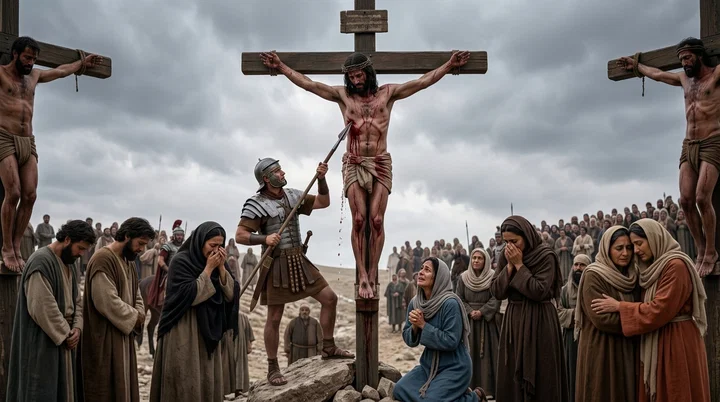
Cross-references
- Exodus 12:46
In one house shall it be eaten; thou shalt not carry forth ought of the flesh abroad out of the house; neither shall ye break a bone thereof.
The Passover lamb’s bones were not to be broken, fulfilled in Jesus.
- Psalms 34:20
He keepeth all his bones: not one of them is broken.
The righteous one’s unbroken bones are fulfilled in Jesus.
- Numbers 9:12
They shall leave none of it unto the morning, nor break any bone of it: according to all the ordinances of the passover they shall keep it.
The Passover lamb’s bones were to remain unbroken.
- 1 Corinthians 5:7
Purge out therefore the old leaven, that ye may be a new lump, as ye are unleavened. For even Christ our passover is sacrificed for us:
Christ is identified as the Passover Lamb sacrificed for believers.
- Matthew 27:50
Jesus, when he had cried again with a loud voice, yielded up the ghost.
Jesus’ death fulfills the Scripture that none of his bones would be broken.
- Exodus 12:5-6
Your lamb shall be without blemish, a male of the first year: ye shall take it out from the sheep, or from the goats:
The Passover lamb’s sacrifice prefigures Christ’s death.
- Psalms 22:17
I may tell all my bones: they look and stare upon me.
The Messiah’s exposed bones are seen during his sufferings.
- Mark 15:37
And Jesus cried with a loud voice, and gave up the ghost.
Jesus gives up the ghost at the ninth hour.
- Luke 23:52-56
This man went unto Pilate, and begged the body of Jesus.
Its account places Jesus’ burial on the day before the Sabbath.
- Psalms 16:10
For thou wilt not leave my soul in hell; neither wilt thou suffer thine Holy One to see corruption.
both foretell God preserving Jesus' body
- Mark 15:44-45
And Pilate marvelled if he were already dead: and calling unto him the centurion, he asked him whether he had been any while dead.
Pilate verifies Jesus’ death with the centurion.
- Exodus 12:10
And ye shall let nothing of it remain until the morning; and that which remaineth of it until the morning ye shall burn with fire.
No part of the Passover lamb was to remain until morning.
- John 1:29
The next day John seeth Jesus coming unto him, and saith, Behold the Lamb of God, which taketh away the sin of the world.
Jesus is identified as the Lamb who takes away the world’s sin.
- John 19:24
They said therefore among themselves, Let us not rend it, but cast lots for it, whose it shall be: that the scripture might be fulfilled, which saith, They parted my raiment among them, and for my vesture they did cast lots. These things therefore the soldiers did.
Both Scriptures were literally fulfilled in Christ’s death.
- 1 Peter 1:19
But with the precious blood of Christ, as of a lamb without blemish and without spot:
Both identify Christ as the spotless sacrificial lamb.
- Isaiah 53:7
He was oppressed, and he was afflicted, yet he opened not his mouth: he is brought as a lamb to the slaughter, and as a sheep before her shearers is dumb, so he openeth not his mouth.
The lamb led to slaughter points to Jesus’ sacrificial death.
- 1 John 5:6-8
This is he that came by water and blood, even Jesus Christ; not by water only, but by water and blood. And it is the Spirit that beareth witness, because the Spirit is truth.
The Spirit, water, and blood bear witness to Jesus Christ.
- Leviticus 23:5
In the fourteenth day of the first month at even is the LORD’s passover.
Sets the date of the Passover type that Christ fulfilled.
- John 20
The first day of the week cometh Mary Magdalene early, when it was yet dark, unto the sepulchre, and seeth the stone taken away from the sepulchre.
The following chapter records Jesus’ resurrection.
Commentary
Each commentary is drawn from primary sources: the writings of Ellen G. White and Adventist pioneers and periodicals. Each commentary is separate. Its own words are not a quotation; follow the references to read the source passages.
Ellen G. White
13 sources
At Calvary the two men crucified with Jesus were still alive so soldiers broke their legs to hasten their deaths, but Jesus was already dead so His legs were left unbroken.12MR 387.1Ms 91, 1897, par. 10–11DA 771.3–4 This fulfilled the Scripture that none of His bones would be broken, with the events of His crucifixion occurring literally and exactly as declared.12MR 387.1Ms 91, 1897, par. 10–11Ms 139, 1907, par. 7ST Aug 31, 1915 It also fulfilled the Passover ordinance that no bone of the sacrificial lamb be broken, which required the sacrifice to remain whole.DA 771.3–45RED 91.2–92.13SP 171.1–172.1 The unbroken, whole and perfect lamb identifies Him as the Lamb of God who died for humanity, and represents the completeness of His sacrifice.PP 277.33SP 171.1–172.1
What Happened at Calvary
The two men crucified with Jesus were still alive, so the soldiers broke their legs to hasten their deaths, but Jesus was already dead and His legs were left unbroken.12MR 387.1Ms 91, 1897, par. 10–115RED 91.2–92.13SP 171.1–172.15RED 90.4–91.1 His limbs were not broken while those crucified beside Him had their legs broken.12MR 387.1Ms 91, 1897, par. 10–11DA 771.3–45RED 90.4–91.1 His sudden death came from a supernatural cause, which seemed a great mystery to onlookers who could not reason it out or explain it.12MR 387.1
He had truly died, as the centurion confirmed to Pilate.5RED 93.2–3 His hands and feet were nailed, and after death a soldier pierced His side with a spear.12MR 387.1Ms 73, 1911, par. 15–16 Blood and water came out from His pierced side.12MR 387.1
That outflow from His side was recorded by an eyewitness as true so that readers might believe.12MR 387.1 His suffering came as Satan raged against God and people treated the Son of God cruelly.Ms 73, 1911, par. 15–16
Prophecy Fulfilled in Christ
His legs were left unbroken while the legs of the two thieves crucified with Him were broken because they were still alive and He was already dead, and this fulfilled the Scripture that not a bone of Him should be broken.12MR 387.1Ms 91, 1897, par. 10–11ST Aug 31, 1915 The events of His crucifixion occurred in keeping with that prophecy.12MR 387.1Ms 91, 1897, par. 10–11ST Aug 31, 1915 The prophecy of His sufferings and death was fulfilled in Him literally and exactly as declared, and He pointed to His own death as the fulfillment of what was written of Him.Ms 139, 1907, par. 7
This also fulfilled the Passover ordinance concerning the sacrificial lamb that none of its bones was to be broken and that the sacrifice was to remain whole.DA 771.3–45RED 91.2–92.13SP 171.1–172.15RED 90.4–91.1 Although the soldiers broke the legs of the two men crucified beside Him to hasten their deaths, they left His body unbroken because He was already dead.DA 771.3–45RED 91.2–92.13SP 171.1–172.15RED 90.4–91.1 His death therefore fulfilled the Passover pattern.DA 771.3–45RED 91.2–92.1
His unbroken body met the requirement that the Passover sacrifice be whole and perfect, identifying Him as the Lamb of God who died for humanity.PP 277.33SP 171.1–172.1 No bone of Christ was broken, fulfilling the Passover-lamb pattern.PP 277.33SP 171.1–172.1 The unbroken lamb represented the completeness of His sacrifice.PP 277.33SP 171.1–172.1
Wounds Beheld in Glory
Those who drove the nails through His hands and feet and the soldier who pierced His side will behold those very wounds when Christ appears in glory.EW 43.3GC 643.1–2
This beholding takes place at the close of the thousand years, when the wicked dead are raised and see Him descending in glory.EW 43.3
The marks left by the nails and the spear are then His glory.EW 43.3
They are beheld with terror and remorse.GC 643.1–2
Sources
Pioneers and periodicals
35 sources
Jesus was already dead when the soldiers came to him, so they broke the legs of the two men crucified with him to hasten death before the Sabbath but left his unbroken and pierced his side with a spear instead.ST Jul 25, 1878ST May 20, 1897ST Sep 12, 1911RH Oct 29, 1914ST Jul 14, 1898 This fulfilled the Scriptures that none of his bones would be broken, namely Psalm 34:20 and Exodus 12:46, as one of many prophecies fulfilled in the events of the crucifixion day.ST May 20, 1897ST Jul 14, 1898RH Sep 16, 1902ST Oct 14, 1913 It identifies him as the complete and whole sinless Paschal Lamb of God, sacrificed for humanity, in whom what was commanded for the Passover lamb that no bone be broken held true.ST Jul 25, 1878ST May 27, 1897ST Jun 3, 1897ST Apr 23, 1912ST Jul 14, 1898 As the paschal lamb was slain on the fourteenth day of the first month, he died on that day at the Passover in A.D. 31, fulfilling the type exactly as to time.ST Apr 23, 1912RH Oct 30, 1855RH Feb 3, 1853 That exact-day fulfillment proves the rule that feast types meet their antitypes on their appointed day, so the antitype of the tenth day of the seventh month must commence on that typical day.RH Oct 30, 1855RH Nov 8, 1906
Crucifixion Events Described
John 19:36 means Jesus was already dead when the soldiers came to him, so they did not break his legs, while they broke the legs of the two men crucified with him, the two thieves on either side.ST Jul 25, 1878ST May 20, 1897ST Sep 12, 1911ST Jul 14, 1898RH Sep 16, 1902 His legs were left unbroken in fulfillment of Scripture that none of his bones would be broken.ST Jul 25, 1878ST May 20, 1897ST Sep 12, 1911RH Sep 16, 1902 His unbroken body also answered the Passover requirement that no bone of the sacrifice be broken.ST Jul 25, 1878RH Oct 29, 1914ST Nov 30, 1882
The breaking of the legs was to hasten death so the bodies could be taken down before the Sabbath.RH Mar 10, 1859ST Apr 3, 1901ST Nov 30, 1882 The legs of the other crucified men were broken for that purpose, but Christ had already died.RH Mar 10, 1859ST Apr 3, 1901ST Nov 30, 1882 The breaking, the piercing, and the burial all happened on that same crucifixion day, proving death occurred before the Sabbath and answering the claim that they did not die that day.RH Mar 10, 1859ST Apr 3, 1901ST Nov 30, 1882
Instead of breaking his bones, a soldier pierced his side with a spear.RH Oct 29, 1914RH Dec 12, 1912ST Nov 30, 1882 His body was stricken, wounded, bruised and pierced, yet not broken, with wounded hands and feet and side and with shedding of blood.RH Oct 29, 1914ST Jul 14, 1898ST Jul 1, 1886RH Oct 10, 1871 God's most careful protection kept the bones of his Holy One from corruption even at the thrust of the spear.RH Oct 29, 1914RH Dec 12, 1912ST Nov 30, 1882
The verse belongs to the full record of Jesus as a suffering man bearing his own cross, wearing the piercing crown of thorns, and enduring nails and spear.ST Apr 8, 1903RH Feb 4, 1904 He was led in a half military, half mob procession from the city bearing his cross while taunted, reviled, mocked, spit upon and smitten, sinking under exhaustion until a strong countryman was pressed to carry it to a skull-like hill near the city, where he was nailed to the cross and died amid wonders and convulsions in heaven and earth in glorious triumph of eternal righteousness.ST Apr 8, 1903RH Feb 4, 1904 Then wealthy men of his own nation begged the body from the governor, bought linen cloth and a hundred pounds of aloes, myrrh and aromatics, wrapped the body with spices and linen, and laid it in a rock-hewn tomb closed by a great officially sealed stone.ST Apr 8, 1903RH Jul 16, 1861 On the morning after the Sabbath he was called forth as Son of God as mighty Conqueror over sin and death, the empty sepulcher was discovered, and he was proclaimed risen as he had foretold.ST Apr 8, 1903RH Jul 16, 1861
Prophecy Fulfilled at Calvary
The saying was fulfilled when Jesus was crucified, for the Scriptures had predicted that none of the Messiah's bones would be broken.ST May 20, 1897RH Sep 16, 1902RH Jun 24, 1858RH Nov 18, 1862 His legs were not broken because this word had to come to pass, while the legs of the two men crucified with him were broken because he was already dead and they were not.ST May 20, 1897RH Sep 16, 1902RH Nov 18, 1862ST Oct 21, 1930 No bone of his body was broken at his death, and his unbroken bones were the fulfillment of the prophecy that not one of his bones would be broken.RH Sep 16, 1902RH Jun 24, 1858RH Nov 18, 1862ST Oct 21, 1930 This was one of many Old Testament prophecies fulfilled during the day of his crucifixion, with all the events of the crucifixion occurring in keeping with prophecy.ST Aug 31, 1915ST Oct 21, 1930
The fulfillment is identified as Psalm 34:20, given also as the promise to the poor and righteous man, together with Exodus 12:46.ST Jul 14, 1898RH Sep 16, 1902ST Oct 14, 1913 When the officers came to break the legs of those crucified, they broke the legs of the two thieves but found Jesus already dead and did not break his legs.ST Jul 14, 1898RH Sep 16, 1902 His body was stricken, wounded, bruised and pierced, but not broken.ST Jul 14, 1898 In the parable Lazarus represents Christ, who became poor and suffered judgment at the nation's gate, fulfilling the scripture associated with the poor man.ST Oct 14, 1913
The fulfillment shows God's most careful protection of the body of Jesus, keeping the bones of his Holy One from corruption even at the thrust of the spear.RH Oct 29, 1914 The soldiers had been softened by what they witnessed and did not break his limbs, refraining from breaking him because he was already dead.ST May 20, 1897 The thieves' legs were broken to hasten their deaths, but Christ had already died and a soldier pierced him with a spear instead, opening the way for the companion prophecy about looking upon the one pierced.ST Nov 30, 1882 That prophecy about the pierced one was opened at the cross and will be fulfilled when Christ returns in the clouds with power and great glory.ST Nov 30, 1882
Passover Lamb Antitype
The unbroken bones answer to the Passover ordinance that not one bone of the lamb was to be broken.ST May 27, 1897ST Jun 3, 1897ST Apr 23, 1912ST Jan 14, 1897ST Dec 7, 1882 What was commanded for the lamb was true of Christ, whose legs were left unbroken when the soldiers came to break them.ST May 27, 1897ST Jun 3, 1897ST Apr 23, 1912ST Dec 7, 1882RH Feb 19, 1901 The lamb was a type and prophecy of His death, making Him its exact counterpart.ST Jun 3, 1897ST Apr 23, 1912ST Jan 14, 1897ST Dec 7, 1882RH Feb 19, 1901
He was offered as the complete and whole Lamb of God, prepared whole as the type required.ST Jul 25, 1878ST Jun 3, 1897ST Apr 23, 1912ST Jan 14, 1897RH Feb 19, 1901 The unbroken bones pointed to Him as the sinless Paschal Lamb sacrificed for humanity.ST Jul 25, 1878ST Jun 3, 1897ST Apr 23, 1912ST Jan 14, 1897ST Dec 7, 1882
As the paschal lamb was slain on the fourteenth day of the first month, Christ the Lamb of God died on that day.RH Oct 30, 1855RH Feb 3, 1853ST Aug 13, 1874RH Nov 8, 1906RH Dec 15, 1868 He was slain at the Passover in Jerusalem in A.D. 31, fulfilling the Passover type exactly as to time.ST Apr 23, 1912RH Oct 30, 1855RH Feb 3, 1853ST Aug 13, 1874RH Nov 8, 1906 The grand event for which the day was noted met its antitype on the very day pointed out in the type.RH Oct 30, 1855RH Feb 3, 1853ST Aug 13, 1874RH Nov 8, 1906RH Dec 15, 1868 Mere preliminary and circumstantial offerings did not prevent that exact-time fulfillment.RH Oct 30, 1855
That fulfillment proves the rule that feast types meet their fulfillment on their appointed day.RH Oct 30, 1855RH Nov 8, 1906 So the antitype of the tenth day of the seventh month must commence on that typical day.RH Oct 30, 1855RH Nov 8, 1906
Doctrinal Meaning of Wholeness
The unbroken bone fulfills Exodus 12:46 and Psalm 34:20 at the crucifixion, when officers came to break the legs of those crucified and broke the legs of the two thieves but found Jesus already dead and did not break His legs.ST Jul 14, 1898 His body was stricken, wounded, bruised and pierced, but not broken, which proves He is everywhere a whole offering like the Passover lamb whose bone was not to be broken.ST Jul 14, 1898 He cannot be divided among believers, for each one receives a whole Saviour, and nothing short of this whole offering would suffice as a substitute for the sinner, since one sinner's salvation required the whole offering just as much as the salvation of the whole world.ST Jul 14, 1898
No bone in His body broken makes Him a perfect and complete sacrifice answering to the red heifer being burned entirely, and shows that Christ Jesus ascended wholly to heaven.RH Apr 11, 1871 The death on the cross is that of the same single person traced through the whole Gospel, the Word who was God in the beginning, by whom all things were made, who was made flesh and dwelt among men.RH Apr 14, 1874 He is the one who came from the Father and returned to Him, who taught and worked miracles, was falsely accused by the Jews, was put to death on the cross with shedding of blood, was buried and rose again from the dead, with no other person introduced, so the one who humbled Himself is the one who became obedient unto death.RH Apr 14, 1874 His crucifixion fulfilled Scripture, and the chapter's account of what He did and said offers life to every believing soul.
Devotional Application and Hope
The verse belongs to the record of Jesus as a man of sorrows who in pitying love came to share every human burden and care through days of toil and nights of prayer. It stands among the memories of His bearing the heavy cross, wearing the piercing crown of thorns, and enduring the nails and the spear with the shedding of blood. Remembering these sufferings leaves no room to murmur or complain in grief and pain, no room to ask for a life of ease or to live to please self. Since Jesus suffered, pain becomes sweet, bringing the sufferer lower at His feet in closer sympathy with Him. His wounded hands and feet and side and His death on the cross are the ground for sharing His pain and bearing hardship for His sake.ST Jul 1, 1886
The ascending Lord reached the throne for a redeemed world through suffering, with pierced hands and feet and a brow scarred by the crown of thorns.RH Feb 4, 1904 The way to God's throne is the way of Calvary, where His death fulfilled Scripture.RH Feb 4, 1904 His precious side pierced by the spear shows that one sin goes like that spear to His side, and the sins of a lifetime wound Him far more.RH Oct 10, 1871 Every sin should therefore bring deep regret and drive immediate war against every sin, to be ripe and ready for coronation day.RH Oct 10, 1871 Then with all the saints in love and gratitude to crown Him Lord of all.RH Oct 10, 1871
He hung dead upon a Roman cross and lay dead within the tomb.ST May 25, 1904 His crucifiers saw Him dead there and expected His influence to end.ST May 25, 1904 Yet power remained in His name after His death and burial to hold His followers and win believers to the truth.ST May 25, 1904 His bones were not broken when He was taken down from the cross, fulfilling Scripture even as a soldier pierced His side.RH Dec 12, 1912 That fulfillment stands in contrast to the rulers' concern not to desecrate the Sabbath while they had arranged the death of its Lord.RH Dec 12, 1912
Sources