Matthew 14:16
But Jesus said unto them, They need not depart; give ye them to eat.
Translations
But Jesus said to them, They need not depart; give you them to eat.
King James Version, KJV Cambridge Paragraph Bible
But Jesus said unto them, They need not depart; give ye them to eat.
But Jesus said to them, They need not depart; give ye them to eat.
Revised Version, American Standard Version
But Jesus said unto them, They have no need to go away; give ye them to eat.
And Jesus said to them, 'They have no need to go away — give ye them to eat.'
But Jesus said to them, They have no need to go: give ye them to eat.
But, Jesus, said unto them, No need, have they to go away,—give, ye, them to eat.
Berean Standard Bible, Majority Standard Bible
“ They do not need to go away,” Jesus replied. “ You give them something to eat.”
But Jesus said to them, “ They don’ t need to go away. You give them something to eat.”
But Jesus said to them, There is no need for them to go away; give them food yourselves.
But Iesus saide to them, They haue no neede to goe away: giue yee them to eate.
Douay-Rheims (Challoner revision)
But Jesus said to them, They have no need to go: give you them to eat.
Pictures
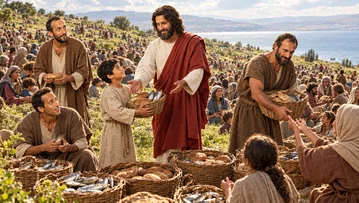
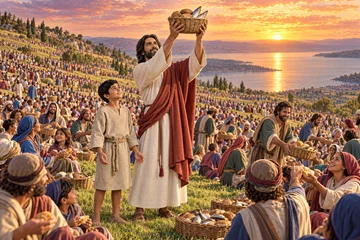
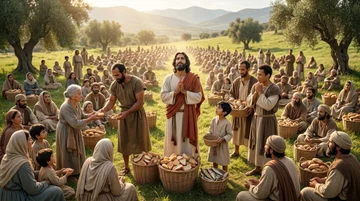
Cross-references 20 of 26
- John 6:5-13
When Jesus then lifted up his eyes, and saw a great company come unto him, he saith unto Philip, Whence shall we buy bread, that these may eat?
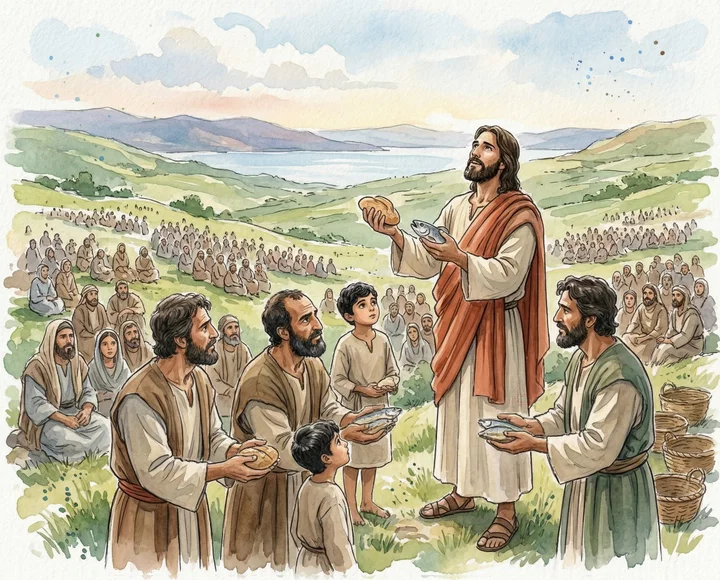
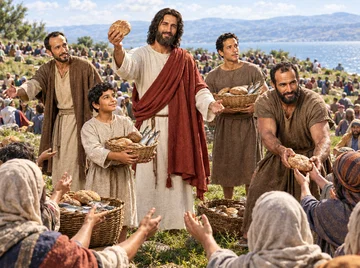
Jesus tells his disciples to feed the crowd, then miraculously provides food.
- Mark 6:35-44
And when the day was now far spent, his disciples came unto him, and said, This is a desert place, and now the time is far passed:
Jesus commands the disciples to feed the crowd and miraculously provides food for them.
- Luke 9:13
But he said unto them, Give ye them to eat. And they said, We have no more but five loaves and two fishes; except we should go and buy meat for all this people.
Jesus commands the disciples to feed the crowd before the miraculous meal.
- John 6:35
And Jesus said unto them, I am the bread of life: he that cometh to me shall never hunger; and he that believeth on me shall never thirst.
Jesus identifies himself as the bread of life who satisfies spiritual hunger.
- John 6:9
There is a lad here, which hath five barley loaves, and two small fishes: but what are they among so many?
Andrew identifies the small supply of loaves and fish available to feed the crowd.
- Matthew 15:32-38
Then Jesus called his disciples unto him, and said, I have compassion on the multitude, because they continue with me now three days, and have nothing to eat: and I will not send them away fasting, lest they faint in the way.
Jesus again has the disciples bring their food and feeds a large crowd.
- 2 Kings 4:42-44
And there came a man from Baal-shalisha, and brought the man of God bread of the firstfruits, twenty loaves of barley, and full ears of corn in the husk thereof. And he said, Give unto the people, that they may eat.
God multiplies limited food to feed a crowd, with food left over.
- Exodus 16:14-15
And when the dew that lay was gone up, behold, upon the face of the wilderness there lay a small round thing, as small as the hoar frost on the ground.
The crowd’s hunger and God’s provision recall manna in the wilderness.
- Mark 6:42-43
And they did all eat, and were filled.
The crowd eats its fill, and twelve baskets of leftovers are gathered.
- John 6:5
When Jesus then lifted up his eyes, and saw a great company come unto him, he saith unto Philip, Whence shall we buy bread, that these may eat?
Jesus asks where bread can be obtained to feed the crowd.
- 1 Kings 17:14-16
For thus saith the LORD God of Israel, The barrel of meal shall not waste, neither shall the cruse of oil fail, until the day that the LORD sendeth rain upon the earth.
God miraculously sustains the widow’s household with an unfailing supply of food.
- Mark 6:39-40
And he commanded them to make all sit down by companies upon the green grass.
Parallel account describes Jesus seating the multitude.
- Exodus 16:4
Then said the LORD unto Moses, Behold, I will rain bread from heaven for you; and the people shall go out and gather a certain rate every day, that I may prove them, whether they will walk in my law, or no.
Jesus’ feeding recalls God providing food for Israel in the wilderness.
- Luke 9:16-17
Then he took the five loaves and the two fishes, and looking up to heaven, he blessed them, and brake, and gave to the disciples to set before the multitude.
Parallel account of the feeding miracle.
- Matthew 16:9-10
Do ye not yet understand, neither remember the five loaves of the five thousand, and how many baskets ye took up?
Jesus recalls the feeding miracles and the baskets gathered to rebuke dullness.
- Matthew 14:20
And they did all eat, and were filled: and they took up of the fragments that remained twelve baskets full.
twelve baskets gathered in this feeding
- John 6:7
Philip answered him, Two hundred pennyworth of bread is not sufficient for them, that every one of them may take a little.
disciples object about cost of bread
- John 6:10
And Jesus said, Make the men sit down. Now there was much grass in the place. So the men sat down, in number about five thousand.
Records Jesus telling the crowd to sit down before feeding them.
- Mark 6:52
For they considered not the miracle of the loaves: for their heart was hardened.
The disciples fail to understand the loaves miracle because their hearts are hardened.
- John 6:26-27
Jesus answered them and said, Verily, verily, I say unto you, Ye seek me, not because ye saw the miracles, but because ye did eat of the loaves, and were filled.
Links the crowd’s seeking Jesus after the meal to his teaching about lasting food.
Commentary
Each commentary is drawn from primary sources: the writings of Ellen G. White and Adventist pioneers and periodicals. Each commentary is separate. Its own words are not a quotation; follow the references to read the source passages.
Ellen G. White
74 sources
Jesus refused to send the hungry multitude away to the villages to buy food lest they faint by the way, and He charged the disciples themselves to feed the crowd with what they had instead of waiting for another agency.MH 45.1–4ST Aug 15, 19166T 345.1–3Ms 197, 1907, par. 1–4ST May 10, 1883 His question about obtaining bread was asked only to test their faith, though He already knew how He would provide.ST May 20, 18862SP 261.2–262.2ST May 10, 1883 He had the small store of five barley loaves and two fishes brought to Him, blessed and broke it, and placed it in the disciples' hands to distribute until more than ten thousand ate and were filled and twelve baskets of fragments were gathered.MH 45.1–4Lt 318, 1908, par. 7–11Ms 197, 1907, par. 1–4MH 49.2–43RED 55.2 The act reveals His compassionate care for bodily need, His dependence on His heavenly Father in strait places, and His creative, divine power as the great Provider.MH 48.2–3ST Aug 19, 1897Ms 186, 1907, par. 8–93RED 53.32SP 262.3–263.1 He still makes His followers the channel between Himself and the people, receiving the bread of life from Him and imparting it to starving souls, so that even a slender gift brought to Him in faith is multiplied to satisfy many.6T 345.1–3MH 49.2–4ST Aug 15, 19166T 263.1ST Jan 22, 1902
Setting and Circumstances
The command belongs to the feeding of the five thousand in a desert place beyond the sea from Capernaum, near Galilee and by the Sea of Galilee.Lt 318, 1908, par. 7–11ST May 20, 18866RED 64.26RED 44.23SP 226.1–2 Jesus had sought seclusion there with His disciples, and in the evening He led the gathered multitude to a grass plot and had them seated before He afterward sent the crowd away and went apart to pray.Lt 318, 1908, par. 7–11DA 364.1ST May 20, 1886 The place was secluded and deserted, far from villages where food could be bought, and night was at hand.Lt 318, 1908, par. 7–11MH 48.2–3ST May 20, 1886
Those present were five thousand men besides women and children, thus more than ten thousand people in all.Lt 318, 1908, par. 7–11DA 364.1ST May 20, 18866RED 64.26RED 44.2 Among them were pilgrims traveling to Jerusalem for the Passover, who with the rest had pressed about Him all day eager to hear His words, see His works, and be taught and healed.Ms 47, 1894, par. 1–2DA 364.1ST May 20, 1886 They had come without invitation or command to be in His presence, had listened all day to His instruction and received His compassionate healing of their sick, and were now far from home, hungry, faint and weary.MH 45.1–4Ms 47, 1894, par. 1–2Lt 318, 1908, par. 7–11MH 48.2–3ST May 20, 1886 Many had no means to purchase food, and no food was nigh at hand.MH 48.2–3ST May 20, 1886
The only food to be found was five small barley loaves and two small fishes belonging to a lad.MH 45.1–4Lt 318, 1908, par. 7–11ST May 20, 1886RH Apr 8, 1909 That store was barely enough for a score of people, so that apparently there was no means at command to feed so many and the disciples thought feeding them impossible.MH 45.1–4MH 48.2–33RED 55.2 In one account the people are described as having followed Him into a secluded place and having been with Him for three days when the available food was only five loaves and a few small fish.Ms 64, 1910, par. 10–11
Meaning of the Command
They need not depart means He would not send the hungry multitude away fasting to the villages to buy food, to find refreshment, or to fend for themselves, lest they go home unrefreshed and faint by the way.MH 45.1–46T 345.1–319MR 360.1–3Lt 318, 1908, par. 7–11ST May 20, 1886 The disciples had come asking permission to dismiss the crowds who had pressed about Him all day eager to hear His words and see His works and who were now faint and weary as evening fell, for they thought feeding so many impossible with only five small barley loaves and two small fishes at hand.MH 45.1–4Ms 47, 1894, par. 1–2Lt 318, 1908, par. 7–11 He amazed them by refusing and directing that the small amount of food available be brought to Him to be blessed and used.MH 45.1–4ST Aug 15, 1916Lt 318, 1908, par. 7–11
Give ye them to eat charged the disciples themselves to feed the crowd and provide for them with what they had, entrusting them with serving the people and putting them to work.ST Aug 15, 1916Ms 197, 1907, par. 1–4ST May 10, 1883ST Aug 15, 1916ST Jan 22, 1902 They were to serve the people rather than eat themselves first or send them away, and were not to wait for someone of greater ability, for an organization, or for someone to come from afar to do it.ST May 10, 1883MH 49.2–4 Though their strength and resources seemed feeble and slender against the need, they were to use the means, time, and ability possessed now and bring them to Jesus.MH 49.2–4
The command tested their faith, for His question to Philip about obtaining bread was asked only to test them, since He already knew how He would provide.ST May 20, 18862SP 261.2–262.2ST May 10, 1883STST Mar 1, 1877 Their earlier experience at Bethsaida had not overcome unbelief, and prejudice also hindered them from offering what they had in faith.ST May 20, 1886DA 365.3–366.1 The food they found appeared far too little for five thousand men besides women and children, yet they were to seat the people in order and receive food from His hands after He gave thanks.ST May 20, 1886DA 365.3–366.1
Christ does not send needy people away, and He does not Himself pass among them to place supply in their hands, but blesses what is brought to Him and gives it to His disciples to place in the hands of the hungry.Ms 47, 1894, par. 1–2ST May 20, 1886ST Those men minister for Him, so the people take provision from His appointed agencies as if taking it from His own hand, and grateful thanks spoken to them is accepted by Him as given to Himself.Ms 47, 1894, par. 1–2 Ministers, evangelists, teachers, friends and companions, all as various instrumentalities, thus become workers together with God to carry what He provides, receiving from the Father through Christ and passing it to the multitude.Ms 47, 1894, par. 1–2RH Apr 8, 1909ST Aug 15, 1916
How the Multitude Was Fed
Jesus had the scanty supply — five barley loaves and two small fishes belonging to a lad — brought to Him, and He led the people to a grassy plot and had them seated in orderly companies of fifty and one hundred so that all could witness what was done.Lt 318, 1908, par. 7–11ST May 20, 1886Ms 186, 1907, par. 8–9Ms 123, 1909, par. 32–34Ms 182, 1907, par. 21–23 A hymn was sung, and He gave thanks, asked the blessing, blessed, broke, and divided the food into small pieces.Ms 197, 1907, par. 1–4ST May 20, 1886Ms 186, 1907, par. 8–9Ms 123, 1909, par. 32–34Ms 182, 1907, par. 21–23 He divided it to His disciples and told them to distribute it to the multitude.Ms 186, 1907, par. 8–9Ms 123, 1909, par. 32–34Ms 182, 1907, par. 21–23
He placed the pieces in the disciples' hands, and they carried them to the people and put food in the hands of the hungry, serving the people rather than eating themselves first.Ms 197, 1907, par. 1–4MH 49.2–4ST May 20, 1886 The store multiplied in His hands and kept increasing by continual imparting as they distributed it, never diminishing as often as they returned for fresh supply.Ms 197, 1907, par. 1–4MH 49.2–4ST May 20, 18863RED 55.2 The hands of the disciples as they reached out to Christ were never left empty, and they came back for more until all ate and were filled and satisfied.Ms 197, 1907, par. 1–4MH 49.2–4ST May 20, 18863RED 55.2RH Apr 8, 1909
When all had eaten, twelve baskets full of fragments were gathered in this feeding, and seven baskets full in the other feeding, with as much left as at the start.ST May 20, 18863RED 55.2RH Apr 8, 1909Ms 123, 1909, par. 32–34Ms 182, 1907, par. 21–23 Christ and the disciples afterward ate of the heaven-supplied food.MH 49.2–4 The gathering showed that nothing was to be lost or wasted.STB 772.1–2ST Dec 15, 1909Ms 123, 1909, par. 32–34
What the Miracle Reveals
“They need not depart; give ye them to eat” reveals compassionate concern, tender care, benevolence and pity for bodily need, for He would not send the hungry crowd away but charged His disciples to feed them themselves.Ms 186, 1907, par. 8–92SP 262.3–263.1STB 438.1CT 34.1Ms 55, 1901, par. 22–23 Wherever He went He was attentive to those needing help as their sanctuary, helper and great leading Physician, and on this occasion with five thousand men besides women and children, some fainting, He led them to a grassy plot to be seated and had the disciples distribute what He divided until there was enough for all.Ms 186, 1907, par. 8–9CT 34.1Ms 55, 1901, par. 22–23 Though exhausted and hungry Himself He would not leave while people still needed mercy, but continued to care for the crowd, fed the hungry, and worked for their comfort rather than His own distinction or benefit.3RED 53.3STB 438.1Ms 55, 1901, par. 22–23 His generous feeding shows tender care and benevolence, His care for the hungry and sick sets an example of practical compassionate service, His tender pity rebukes selfishness and heartlessness, and His care exemplifies ministry to the poor and needy.2SP 262.3–263.1CT 34.1Ms 55, 1901, par. 22–23
Though providence had placed Him where He was in the wilderness with five thousand men besides women and children far from home with night at hand, He who for their sake had fasted forty days in the wilderness would not suffer them to return fasting to their homes.MH 48.2–3ST Aug 19, 1897DA 368.2–3 They had come eager to be in His presence without invitation or command, and after listening all day to His instruction they were hungry and faint, many with no means to purchase food and with food not nigh at hand and apparently no means at His command, yet He depended on His heavenly Father for means to relieve their necessity.MH 48.2–3ST Aug 19, 1897 When brought into strait places help is to be sought from God who has infinite resources at His command, and after following Christ’s direction His workers are in every emergency and in difficulties to seek help from God, trusting His provision.MH 48.2–3DA 368.2–3 He came to minister to the suffering and needy, using His Father’s power to work miracles for the help and uplifting of mankind, though He left the royal courts, laid off His kingly crown and royal robes, and clothed His divinity with humanity, suffering the inconveniences of poverty so He could discern the needs of the poor.Ms 1, 1909, par. 5–6
The miracle reveals creative, almighty, divine power continually at work in the harvest and in daily bread, proving Him the great Provider and heavenly Provider who knows and meets His followers’ bodily needs.ST May 10, 1883ED 107.3ST Aug 12, 1897 The power that multiplied the loaves also multiplies seed and provides food from the earth every day, and the same divine care works in the harvest people use for daily bread and in the miracle that fed the multitude, though human work in caring for grain and making bread can obscure God’s agency and God’s gifts can be turned to selfish uses instead of blessings.ED 107.3ST Aug 12, 1897 The disciples distributed the small supply He blessed and it proved sufficient for everyone with food left over, showing His power and care for the people, and His generous feeding convinced the people that He is the Messiah and that His power is divine.ST May 10, 18832SP 262.3–263.1 The feeding was a miracle like the multiplication of food for a hundred men in the time of Elisha, where God’s power made a small supply sufficient for many, and people should recognize God as the giver of their provision and give Him the glory.Ms 114, 1899, par. 1–3ST Aug 12, 1897 He used that power to bless suffering humanity, meeting the crowd’s genuine need for food and involving His disciples in providing it.ST Aug 12, 18972RED 39.1–41.2
The food was plain and simple and sufficient for need, showing His power and tender care in ordinary necessities rather than luxury to attract or indulge or a desire to indulge luxury.6T 345.1–3ST Aug 12, 1897DA 367.1–2 The simple meal assured them of His power and care in life’s common needs, and as He fed the crowd with physical food He also gave them the bread of life.6T 345.1–3DA 367.1–2 Following Him does not guarantee worldly luxuries, for His followers may have plain or scanty food and live in poverty, but He pledges to supply their needs and gives them the greater comfort of His abiding presence.DA 367.1–2
He who had refused to work a miracle to satisfy His own hunger in the wilderness would work one rather than let the multitude suffer for lack of food, lest the five thousand men besides women and children who had followed Him to a desert place and been with Him all day while He taught and healed them should go home unrefreshed and faint by the way.ST May 20, 1886ST May 10, 18832RED 39.1–41.2ST Jun 25, 1874 He fed five thousand with five loaves and two small fish, showing He had power to satisfy His own hunger in the wilderness, but using that power for Himself would not have accorded with the plan of salvation, for He used that power to bless others and to bless suffering humanity, not to relieve His own hunger.ST May 10, 18832RED 39.1–41.2ST Jun 25, 1874 He did not use His power to lessen the burdens of His own daily labor, though by divine power with a few loaves and fishes He supplied the needs of a multitude faint with hunger.RH Oct 3, 1912Ms 1, 1909, par. 5–6 His life proves that higher education does not mean gaining popularity, securing worldly advantages, having all temporal wants abundantly supplied, or being honored by the titled and wealthy of earth.Ms 1, 1909, par. 5–6
Bread of Life Shared
As He fed the crowd with physical food He also gave them the bread of life, refusing to send the hungry multitude away without food but charging that they be cared for with what was available even when resources seemed small.6T 345.1–3DA 365.3–366.12T 579.2–580.2 He met genuine physical need as well as spiritual need, for He would not dismiss the five thousand after teaching them but provided for bodily need while giving spiritual instruction.DA 365.3–366.1RH May 30, 18712T 579.2–580.2 He knew a tired, hungry throng could not receive spiritual good in that condition, so He did not forget their physical hunger but wrought a miracle to feed them and make His teachings interesting to them.DA 365.3–366.1RH May 30, 18712T 579.2–580.2 The food was plain and sufficient for need, showing His power and tender care in ordinary necessities rather than desire to indulge luxury.6T 345.1–3
Christ made the disciples the channel of communication between Himself and the people, for Christ receives from the Father and gives to the disciples and the disciples give to the multitude.ST Aug 15, 1916ST Jan 22, 1902ST Mar 16, 1915 So all who are united to Him receive from Him the bread of life, the heavenly food, and impart it to others, passing on to those in need what they receive from Him unto both temporal and spiritual blessing.ST Aug 15, 19166T 263.1ST Jan 22, 1902 Even the most intelligent and spiritually minded can supply nothing for the needs of the soul of themselves, but can bestow only as they receive and can receive only as they impart, and as they continue to impart they continue to receive, receiving more the more they impart.ST Jan 22, 1902ST Mar 16, 1915 In full reliance on God He took the small store and set the disciples to serve the people first rather than eating themselves, and the food multiplied in His hands so that the hands of the disciples reaching out to Christ, Himself the Bread of Life, were never empty until the little store was sufficient for all.ST Aug 15, 19166T 263.1ST Jan 22, 1902 Christ and His disciples ate afterward from the gathered fragments, for He is the great Center and Source of all strength whose gift is increased in its distribution.6T 263.1ST Jan 22, 190216MR 70.1–2Lt 7, 1901, par. 1–3 Those who thus work with God lift up, encourage, and restore others, reflecting His care for human souls.16MR 70.1–2Lt 7, 1901, par. 1–3
The food represents the word of life shared with perishing, starving souls, who in turn can reach out to feed other hungry souls, and God does not forget those who labor in love to do this.STB 148.2–3DA 370.1STB 119.3–4 When people use what they have as well as they can, God can enable them to feed multitudes who are spiritually hungry for the bread of life, for what is given to the disciples is multiplied and blessed by the Lord.STB 148.2–3DA 370.1STB 119.3–4 His command still binds His followers to feed the multitude now starving for the Bread of Life, so that the small means believers have, when given with thanksgiving and prayer and used to the best of their ability in intelligent, self-denying, self-sacrificing medical missionary work for soul-saving, will be multiplied and blessed as the food put into the disciples' hands was multiplied.STB 148.2–3STB 119.3–4Lt 218, 1908, par. 42–43 In this way God supplies the means and sends earnest disciples whose hands are filled to give food to the starving, enabling His people to supply what the spiritually hungry need and to fulfill the gospel commission even when the work appears slow or impossible.DA 370.1Lt 218, 1908, par. 42–43
His power to furnish food in a miraculous way did not teach that people are to put forth no effort to provide the necessities of life, for through the miracles He was seeking to impart spiritual truths of vital importance to the salvation of their souls.Lt 93, 1892, par. 4–5ST Aug 12, 1897 In the same way the fact that the Lord heals the sick in answer to prayer is no sign that institutions for the suffering should be abolished, for the Lord will not always work miracles to keep people alive.Lt 93, 1892, par. 4–5 The sick are to be placed where they can have the benefit of hygienic living and treatment, and these agencies must not be despised.Lt 93, 1892, par. 4–5 His disciples, in His almighty power and compassion, must care for people seeking salvation by making practical efforts so the weary and hungry can hear the word of life without being neglected or discouraged.Lt 93, 1892, par. 4–5ST Aug 12, 1897
Practical Lessons for Service
“Give ye them to eat” means to take up the work at hand with the means, time and ability now possessed and bring them to Jesus, instead of sending the needy away or waiting for someone of greater ability, an organization, or help from afar.6T 345.1–3MH 49.2–4ST Aug 15, 1916 Even when strength and resources seem feeble and slender against the needs of the poor, ignorant and afflicted, what is available is to be used faithfully, thankfully and prayerfully to care for those in need, trusting Christ to supply what is lacking.MH 49.2–4ST Aug 15, 19166T 467.1 Though the store may seem enough for only one, placed in His hands five small barley loaves sufficed to feed the multitude, for the food multiplied in His hands and the disciples’ hands reaching out to Him were never left empty until all ate and were satisfied.MH 49.2–4ST Mar 7, 1906Ms 66a, 1900, par. 24–27 In this way He multiplies the gift and rewards honest, simple reliance, turning a meager supply into a rich feast that satisfies, leaves twelve baskets full, and leaves something to share with others.MH 49.2–4ST Aug 15, 1916Lt 121, 1904, par. 14–16 The same lesson is that He can do great things for His people even when what they have seems far too little, and that the little offered becomes abundant to meet many needs and to give others the bread of life.6T 467.16T 465.4Ms 66a, 1900, par. 24–27
The feeding teaches not to worry and fret over what cannot be helped but to go from strength to strength in trust that Christ will supply need from a meager supply.ST Mar 7, 1906Ms 123, 1909, par. 32–34 With only five loaves and two fishes for five thousand men besides women and children, seated on a grassy spot and fed through the disciples until all had enough, it proves what Christ can do with little when trusted and calls for more faith in Him.ST Mar 7, 1906Ms 123, 1909, par. 32–34Lt 121, 1904, par. 14–16 What seems a meager supply becomes abundant through Christ, satisfying those who receive it and leaving something to share.Ms 66a, 1900, par. 24–27Lt 121, 1904, par. 14–16 When His people give and serve from pure, unselfish motives He blesses and multiplies what little they have until it meets the needs of many and advances His work, and He gives tact, skill and understanding to those who work in line with Him.Ms 66a, 1900, par. 30–31Ms 14, 1902, par. 4
The command to gather the fragments is as essential as creating the food and is striking evidence of divinity.ST Dec 15, 1909 It teaches God’s standard of economy in saving food as well as money, that the bounties of Providence are not to be squandered or used in an aimless or wasteful manner because there is use for it all.ST Dec 15, 1909Ms 182, 1907, par. 21–23 His workers are to build plainly and simply with no extravagance, waste nothing, take nothing by wrong means, let no temporal opportunity or spiritual advantage slip, and lose nothing that would benefit a human being or relieve the necessities of the hungry, in spiritual as in temporal things.Ms 197, 1907, par. 1–4ST Dec 15, 1909Ms 182, 1907, par. 21–23 The remaining food was carefully gathered rather than wasted, with twelve baskets full in this feeding and seven in the other, and the lesson applies in difficult times when close economy is necessary.STB 772.1–2Ms 123, 1909, par. 32–342T 435.3 In this He leaves a model for practical, economical service and a lasting impression of truth, that every such work be done by self-denial and willing sacrifice to supply the wants and necessities of needy and suffering ones.Ms 197, 1907, par. 1–4Lt 302, 1906, par. 5Ms 73, 1909, par. 20–21
The baskets of fragments were distributed among the eager throng and carried away into all the region round about for friends at home to share in the blessed bread.ST Dec 15, 1909 This means those fed by Christ are to give to others the bread that comes down from heaven to satisfy hunger of soul and to repeat what they learned of His wonderful things, sharing what they possess including the truth with those who lack it.ST Dec 15, 1909Ms 180, 1907, par. 27–28 In spiritual as in temporal things nothing that would benefit or relieve the hungry is to be lost, and those in right relation to God will know self-denial and willing sacrifice to supply the needy.ST Dec 15, 1909Ms 73, 1909, par. 20–21 The miracle shows dependence on God for life, means, health, food and the very air breathed, and His own industry and frugality require careful use of every gift, saving in order to give.ST Dec 15, 1909
The feeding shows the heavenly Provider supplies necessities and gives His people knowledge of how to prepare suitable food for different times and occasions.7T 114.3CH 599.1–2 His benevolence continues in imparting knowledge by which they find ways to obtain food, for He knows and meets His followers’ bodily needs.CH 599.1–217MR 252.3 His command is also a promise that disciples giving what they have for others in faith will have their hands filled, and in this giving the gift is increased.16MR 70.1–2DA 369.1 Those softened and subdued and sanctified by His Holy Spirit are to work the works He worked, and if dedicated to the Lord God of heaven He will give them of His Holy Spirit so they can communicate to those in necessity what they need in Jesus Christ, lifting up, encouraging and restoring others.Ms 186, 1907, par. 8–916MR 70.1–2
Sources
Pioneers and periodicals
118 sources
When the disciples wanted to send the hungry crowd away to buy food, Jesus refused and told them to feed the people themselves.RH Mar 16, 1905 About five thousand men besides women and children had been with him all day in a desert place, and the only food at hand was five barley loaves and two small fishes.ST May 20, 1886ST Sep 18, 1893ST Dec 22, 1887 As the disciples gave out what he had blessed, the food multiplied in his hands and in theirs until all ate and were filled and twelve baskets of fragments remained.ST May 20, 1886RH Mar 16, 1905ST Jul 26, 1905ST Oct 12, 1904ST Dec 22, 1887 The command shows his tender care for bodily need joined to spiritual teaching, for he would not send them away faint and hungry.STST May 20, 1886RH Jul 28, 1903ST Nov 14, 1906RH Dec 4, 1860 It also calls his followers to bring their small supply to him and give freely to the hungry and to spiritually starving souls, trusting his power to multiply their effort.STSTRH Jan 7, 1915ST Nov 15, 1899
Setting and Details
The place was a desert place in the sense of an uninhabited region, not necessarily a barren sandy waste, for grass was there where the crowd sat down.ST Jun 7, 1883ST May 20, 1880 Jesus had taken the disciples by boat across the sea from Capernaum to a desert place beyond the sea for rest, both for his own repose and for their benefit.ST Dec 22, 1887 The people searching for him saw the boat leave the shore and watched it go, and the news that he was crossing spread from city to city.ST Dec 22, 1887 Many eager to see and hear him hurried by land to the place where the boat would land, while others followed over the water in boats, so that when he and the disciples landed they were met by a multitude pressing forward on all sides.ST Dec 22, 1887
About five thousand men besides women and children were present after being with him all day without food, while he welcomed them, taught them the kingdom, and healed the sick.ST May 20, 1886ST Sep 18, 1893ST May 20, 1886 The only food to be found was five barley loaves and two small fishes belonging to a lad, a meager store scarcely enough for about twenty.ST May 20, 1886ST Sep 18, 1893ST Dec 22, 1887 The people were seated on the grass in orderly companies of fifty and one hundred to preserve order and let all witness the miracle.ST May 20, 1886ST Dec 22, 1887 After all ate and were filled, twelve baskets of fragments were gathered.ST May 20, 1886RH Mar 16, 1905ST Feb 1, 1899ST Mar 11, 1908
The saying stands between two distinct evenings of the same day: a first evening beginning much earlier, about three o'clock, while he divided the food, and a second true evening beginning at sunset that marks the next day. That second evening came after he sent the multitude away and went up into a mountain apart to pray alone.ST Dec 29, 1887 The command came when the place was deserted and the day was far spent.ST Jun 14, 1899ST May 20, 1886 Though he asked Philip where bread should be bought, he did it only to test the faith of the disciples because he already knew how he would provide.ST May 20, 1886ST May 10, 1883STST Mar 1, 1877ST Feb 1, 1899 The disciples objected that two hundred shillings' worth of bread would not give each a little.ST May 20, 1886
The feeding took place shortly before a Passover, the Passover before the last one, and after the disciples rubbed the ears of corn at a time near a Passover after John had been cast into prison.RH Apr 2, 1908 This order of Passovers proves the ministry lasted somewhat above three years.RH Apr 2, 1908 After feeding them he sent them away and went into the mountain to pray while the disciples crossed the sea, were caught in a storm, and he came walking on the water, stilled the tempest, and Peter also walked on the water.ST Jul 7, 1898 The feeding beside the Sea of Galilee near Bethsaida Julia is thus followed by the night crossing and the stilling of the storm.ST Dec 29, 1887ST Jul 7, 1898
Women and children were also present, Judas helped supply the food, and the crowd sought to make Jesus king because they thought his power to provide food could equip an army against the Romans.ST Oct 25, 1910 One who had gone to Bethsaida to catch him in his words stayed and ate from his bounty.ST Nov 1, 1910 The feeding beside the Sea of Galilee near Bethsaida Julia is also described as feeding twelve thousand on the shores of Galilee with food that took away physical hunger.RH May 27, 1858ST Jul 31, 1901 The loaves there fed the hungry multitude.RH May 27, 1858
Command to Disciples
When the disciples urged that the hungry crowd be sent away into the villages and country round about to lodge and buy food for themselves, Jesus refused and declared they need not depart.RH Mar 16, 1905ST Mar 16, 1904ST Jul 26, 1905 He laid the care of the multitude in the disciples' own hands, commanding them themselves to give the people to eat rather than turning needy people away to fend for themselves.RH Mar 16, 1905ST Mar 16, 1904ST Jan 3, 1905 Though they had only a small amount of food and could not meet so great a need by ordinary means, He directed them to provide for the multitude under every circumstance, knowing their every need and calling them to trust and obey His word.ST Mar 16, 1904ST Jul 26, 1905ST Jan 3, 1905 The command set up the lesson that He had creative power to provide what they lacked and to supply their spiritual needs as well.ST Mar 16, 1904
The command placed responsibility on them before they could see how they would meet the need, thereby calling them to experience and faith.ST Aug 15, 1916ST Oct 12, 1904RH Aug 29, 1912ST Mar 11, 1908 They were entrusted with serving the people even though they saw no way to feed so many and had barely enough food for themselves.ST Aug 15, 1916ST Oct 12, 1904ST Mar 11, 1908 They knew they could not feed the multitude from their own small supply, yet He took what they had and fed everyone abundantly, with more left over than they had begun with.ST Aug 15, 1916ST Oct 12, 1904 God's power thus multiplies responsive human effort, and the disciples failed at first to see that heaven's abundance could meet the need before them.ST Oct 12, 1904ST Mar 11, 1908
His word tested their faith, for a command from Christ carries with it the power to obey, and He does not require the impossible.ST Mar 11, 1908RH Apr 15, 1909 God does not ask His children to give without making provision for their need, so when they acted in faith the supply would be ready.ST Mar 11, 1908 Human effort depends on His power, for apart from Him people can do nothing, but through Christ they can do what He strengthens them to do.RH Apr 15, 1909 Their own resources were insufficient, but placed in His hands their small supply could bless the multitude.
The command meant they were to bring to Him the only food to be found, the five barley loaves and two small fishes scarcely enough for about twenty, seat the people on the grass in orderly companies of fifty and one hundred to preserve order and let all witness the miracle, and then receive the food from His hands after He gave thanks and carry it to the multitudes until the store sufficed for all.ST May 20, 1886ST Aug 15, 1916STST Dec 22, 1887 A fresh supply was furnished as often as they returned, so the vast assembly was fed from the slender store and the supply never diminished.ST May 20, 1886STST Dec 22, 1887 They were appointed the means through whom Christ supplied the crowd, illustrating how those united to Him receive from Him and pass on to others.ST Aug 15, 1916ST They had at first focused on the size of the need and their limited resources and judged their ability by their small supply, forgetting that Jesus was with them as the sufficient source of supply.RH Aug 29, 1912
Miraculous Provision
Jesus told the disciples to feed the hungry crowd themselves, and when they brought him their small supply he multiplied it as they distributed it until all ate and were satisfied, with twelve baskets of fragments left over, more taken up than there was at first.RH Mar 16, 1905ST Jul 26, 1905ST Oct 12, 1904ST Oct 22, 1902 Though they had only five barley loaves and two small fishes and could not meet the need by ordinary means, he blessed and broke the food and gave it to them to carry to the multitudes in quantities enough to satisfy appetite.ST Jul 26, 1905ST Mar 11, 1908ST Dec 22, 1887 The meager store was brought to him, and the five thousand were fed abundantly from it until the vast assembly was full.ST Oct 12, 1904ST Mar 11, 1908
The bread multiplied as it left his hands and continued multiplying in the disciples' hands, so the store never diminished as often as they returned for fresh supply until all had eaten.ST May 20, 1886ST Dec 22, 1887ST Feb 13, 1912 The food did not diminish in his hands, but a fresh supply was furnished as often as the disciples returned, and with it the slender store fed the whole assembly.ST May 20, 1886ST Dec 22, 1887 This feeding was by his own creative power, not performed by angels, though he may use angels and people to share in his work.ST Feb 13, 1912
That same creative power brings food from the earth and sustains living creatures, so feeding five thousand in the wilderness was not contrary to experience.ST Oct 22, 1902RH May 20, 1858 The same divine power that in an instant multiplied one loaf into fifty loaves takes one kernel of wheat and makes fifty out of it over several months in a Kansas or Dakota wheat field.RH Feb 8, 1906RH Apr 9, 1901 The instant multiplication is called a miracle because it is uncommon, while the wheat harvest and the daily multiplication of seed into ears of grain are regarded as commonplace only from familiarity with daily occurrence, though one is as inexplicable as the other and both are the working of God.ST Aug 26, 1880RH Feb 8, 1906RH Apr 9, 1901 He is the source of food and the power behind both miraculous provision and the ordinary growth of bread through sunshine, rain, sowing, and harvest.RH Feb 8, 1906RH Apr 9, 1901
As builder of worlds and Creator of the universe, with all the powers of those worlds at his command, he could have swept aside the few loaves and small fishes as insufficient and made the desert burst into orchards and fish pools and crystal water, and no one could have questioned it.RH Apr 10, 1900 He did not do this, but took the little remnant of food, so little that no one even mentioned it until he asked for it, and with it satisfied the hunger of the famished ones, so there would be a lesson of hope and trust.RH Apr 10, 1900 Though he could provide a lavish meal, he supplied simple food sufficient for need, ordinary bread and fish such as they were accustomed to and desired, and the meal displayed God's power and benevolence without luxury, directing attention to spiritual refreshment and God's provision rather than an elaborate feast.RH Jan 9, 1908ST Aug 12, 1897RH Oct 22, 1901RH Dec 21, 1905 Lasting reform must grow from conviction and education rather than forced dietary change, and food's value depends on whether it satisfies the mind as well as the body.RH Dec 21, 1905
After all were satisfied he commanded that all left over from the feast be carefully gathered up so that nothing would be lost, and they filled twelve baskets with broken fragments.RH Mar 16, 1905ST Dec 22, 1887ST Jan 11, 1877 That command to gather the fragments is as essential as creating the food and is striking evidence of his divinity, teaching God's standard of economy in saving food as well as money, that the bounties of Providence are not to be squandered or used in an aimless or wasteful manner because there is use for it all.ST Dec 15, 1909 The lesson is twofold, that in spiritual as in temporal things nothing is to be wasted, no temporal opportunity or spiritual advantage let slip, and nothing that would benefit a human being or relieve the necessities of the hungry lost, requiring his own industry and frugality and careful use of every gift, saving in order to give, in dependence on God for life, means, health, food and the very air breathed.ST Dec 15, 1909 The baskets of fragments were distributed among the eager throng and carried away into all the region round about for friends at home to share in the blessed bread, which means those fed by Christ are to give to others the bread that comes down from heaven to satisfy hunger of the soul and to repeat what they learned of the wonderful things of God.ST Dec 15, 1909
The feeding was a real bodily event and genuine history, in which the people were fed bodily and a few loaves and fishes became abundant food for thousands, not merely a symbolic feeding of souls nor myth, allegory, or fancy.ST Jul 25, 1911RH Dec 8, 1859 It belongs to the infallible Bible whose every word is trustworthy and manifests the mighty miraculous power of God toward fallen man, displaying his godlike benevolence and confirming his divine mission.RH Dec 8, 1859 It is no more improbable than Jonah's survival after being swallowed by a sea monster and is less wonderful than Christ's virgin birth, showing that Christianity depends on the possibility of miracles and that rejecting a biblical event because it is contrary to nature undermines belief in Christianity.ST May 13, 1897 Denying this supernatural miracle calls the truthfulness of the Bible's credible record into question, rejects the Book that regenerates men, changes the world, brings hope to souls, and lights the dark valley of death, and leads at last to denying every essential saving truth, though human reasoning cannot explain it naturally and it is accepted through faith in God's word.RH May 10, 1906ST Mar 1, 1899
The disciples should have remembered two miraculous feedings: with Jesus present, the small amount of food they had did not limit his ability to feed a multitude or leave abundant fragments.ST Jun 28, 1899ST Sep 22, 1881 When they reasoned anxiously because they had forgotten to take bread, his later reminder of the five loaves of the five thousand and how many baskets were taken up proved his power to provide and rebuked their little faith and failure to perceive.ST Jun 28, 1899 That reminder showed they should have trusted him and understood he was not speaking concerning literal bread but warning them to beware of the teaching of the Pharisees and Sadducees.ST Jun 28, 1899
Character of Christ
The command not to send the crowd away but to feed them shows tender compassion for ordinary bodily need, refusing to let five thousand men besides women and children who had followed to a desert place beyond the sea from Capernaum and been all day without food while being taught and healed go home unrefreshed lest they faint by the way, so that no one was turned away without counsel, forgiveness, blessing, or healing.STST May 20, 1886ST Nov 14, 1906ST Mar 26, 1912RH Dec 4, 1860 He knew a tired hungry throng could not receive spiritual good in that condition, and therefore did not forget physical hunger but wrought a miracle to make his teachings interesting and accessible.RH May 30, 1871RH Jul 28, 1903RH Dec 4, 1860 His compassion becomes a charge to provide for people in need, including downtrodden women and child widows, showing that what workers have however little can become enough through his touch.ST Nov 14, 1906ST Mar 26, 1912
After feeding them spiritually with his word he also provided food for their bodies, joining spiritual teaching with practical kindness and caring for both spiritual and physical needs.RH May 30, 1871RH Jul 28, 1903RH Dec 4, 1860 Such temporal relief served the greater purpose of leading people to salvation, and the simple food supplied taught that the same divine care works in the harvest used for daily bread as in the miracle, so that people should recognize God as giver and give him glory.ST Aug 12, 1897ST Aug 12, 1897 His disciples must therefore care for people seeking salvation, making practical efforts so the weary and hungry can hear the word of life without being neglected or discouraged.ST Aug 12, 1897ST Aug 12, 1897
The feeding reveals divine power as Creator and Master of the sea, whose spoken word can when necessary take material form as nourishing substance, so that where he is there can be no lack and recognizing that evidence leads to faith.RH Feb 8, 1906ST Dec 17, 1885ST Jun 28, 1899ST May 24, 1905 Multiplying bread shows he is the source of food and the power behind both miraculous provision and ordinary growth through sunshine, rain, sowing and harvest, and like walking on the waves it points to authority over death and power to raise the dead.RH Feb 8, 1906RH Sep 14, 1911ST May 24, 1905 His blessing turning a few loaves and fishes into abundant food for thousands displays godlike benevolence and confirms his divine mission.ST Dec 17, 1885RH Sep 14, 1911RH Dec 8, 1859 Living as a man he could feed hungry thousands in the wilderness, showing he met the test of human life without failing.RH Dec 8, 1859ST May 11, 1904
Having all power he used it to feed multitudes yet would not use that same power to supply even one meal for himself, revealing self-denying love that felt alone for the needs of others and never for its own, with self-restraint passing all human thought to have all power and be as having none.ST May 10, 1883ST Nov 15, 1905ST Jun 16, 1898 Though he had refused to work a miracle to satisfy his own hunger in the wilderness, he would work one rather than let the multitude suffer for lack of food, and his question about available bread tested faith while he already knew how he would provide.ST May 20, 1886ST May 10, 1883ST Jun 25, 1874 His power to provide for others was a power he did not use to lessen the burdens of his own daily labor, for using it for himself would not have accorded with the plan of salvation, though he himself knew hunger.RH Oct 3, 1912ST Jun 25, 1874ST Jun 16, 1898
He met the need by depending on his heavenly Father for the means to provide when facing a hungry crowd in a wilderness with no food readily available and many lacking means to buy it.ST Aug 19, 1897ST In emergencies and strait places people are therefore to seek help from God, whose resources are infinite.ST Aug 19, 1897ST The feeding in the wilderness presents a picture of heaven where everyone is sure to have ample food.RH Mar 9, 1916RH Oct 28, 1915 The account records both the work he performed and the methodical way it was carried out, presenting his work as an example of orderly, carefully recorded service.RH Aug 10, 1916
The disciples witnessed this miracle of feeding from five loaves and two fishes yet did not take its meaning to heart, their hearts having become hardened through contact with influences around them, showing that witnessing goodness does not by itself keep people from becoming spiritually unresponsive.ST Feb 11, 1886 The miracle, which he could perform because humanity and divinity were combined in him, illustrates the need for faith that lays hold of Christ with self-denial and self-sacrifice cutting away wrong habits and practices so people may be united with him.ST Feb 11, 1886RH May 20, 1909 He fed the multitude from nothing by his personal presence, which comforted the disciples and bound them to him as children to a parent and enabled them to do wondrous things while he was with them.ST Jun 26, 1893 His bodily presence being confined to one locality at a time limited his direct influence, while the Holy Spirit as his successor and representative can dwell at the same time with all who desire it and be to each believer all that Christ in person had been to those with him in feeding the multitude, healing the sick, quieting the sea, raising the dead, instructing them, and giving power to cast out devils.ST Jun 26, 1893 The same Jesus who fed the multitudes continues the same earthly ministry, and his followers love and expect him to return, giving them comfort and hope.RH Mar 21, 1912
Bread of Life
The command to feed the hungry crowd also lays on disciples the duty to bring Jesus himself, the bread of life and only Saviour, to souls that are spiritually starving and would otherwise die.RH Jan 7, 1915ST Nov 15, 1899 The food to be given is heavenly bread, God's sweet manna, the bread and water of life, the gospel of salvation that satisfies and sustains mind, heart and will, given so that no one departs with longing heart and unfilled hunger.ST Nov 15, 1899ST Mar 11, 1908 Those who possess him are bound to impart him to others, and heaven's storehouse stands open to his servants so they can expect and ask for the supply needed for the work, opened by prayer.RH Jan 7, 1915ST Mar 11, 1908 The suffering multitude to be fed is everywhere life's food is hungered for — at home, abroad, on lonely road, on crowded street, and in distant lands beyond the seas where feeble knees, trembling hands and dying multitudes wait — and the bread is to be shared now in discreet love because time is short.ST Nov 15, 1899ST Mar 11, 1908 The few loaves and fishes that fed thousands who had followed to hear show that God can bless a small gift so it supplies many hungry souls with the bread of life, for the disciples' own resources were insufficient but their small supply could bless the multitude when given into his hands.RH Nov 1, 1906
Christ receives from the Father and gives to the disciples, the disciples give to the multitude, and the people share with one another, and so all united to him receive the bread of life and heavenly food in order to impart it to others.ST Aug 15, 1916ST Jan 22, 1902RH Nov 17, 1910 He kept the multitude from leaving and charged the disciples to feed them themselves, giving the food into their hands to pass to others, making them the channel of communication between himself and the people and the appointed means through whom he supplies the crowd.ST Aug 15, 1916ST Jan 22, 1902ST Apr 11, 1906 They were to bring what they had to Jesus and serve the people first rather than eating themselves, and as the food multiplied in his hands their supply remained sufficient, with hands reaching out to him, himself the Bread of Life, never empty.ST Aug 15, 1916STST Jan 22, 1902 Followers live in constant need of heavenly grace for their own soul experience and for all dealings with others, and it is their privilege to receive in rich measure so others share the bounty, for God's giving is limited only by lack of faith.ST Jan 22, 1902ST Apr 11, 1906 He waits to impart rich gifts, special strength for every time of need, and a word of encouragement for the faltering, weary and heavy-laden beside them, that through earnest faith and prayer they may receive the gift and impart rest in Christ to others; even the most intelligent and spiritually minded can supply nothing for the needs of the soul of themselves but can bestow only as they receive, can receive only as they impart, and as they continue to impart they continue to receive, receiving more the more they impart.ST Jan 22, 1902ST Apr 11, 1906 Those who would give spiritual help to others must first receive what they need from Christ, for the church cannot give what it does not possess, and spiritual power and concern for others come through close consecration, prayer and repentance before undertaking public work.ST Apr 11, 1906RH Jan 1, 1914
The feeding miracle is repeated spiritually when people feed on Christ and God's Word, becoming living witnesses who give that Word to others, and its life-giving food multiplies through people renewed by Christ.RH Jan 9, 1908ST May 13, 1880 The bread taken to share multiplied as it was distributed, showing that God's gifts are not meant to be selfishly hoarded but shared, and the loaves accompany the spiritual lesson of the bread of life.RH Jan 9, 1908ST May 13, 1880 Christ himself is living bread and those who possess him can never hunger, and the creating of food for the multitude was to impress that where he is there can be no lack, because his spoken word can when necessary take material form and become nourishing substance for the body.ST Jun 28, 1899
Feeding means preaching the Word, teaching all nations, rightly dividing the Word of truth, and giving saint and sinner their portion in due season.ST Jan 10, 1906 Leading belongs to Jesus alone as the good Shepherd who brings his sheep into green pastures and beside still waters, while believers are co-workers with him in feeding while he does the leading.ST Jan 10, 1906 Prayer-meeting members fulfill the same command by offering the bread of life, not gall and wormwood through fault-finding and accusations, and earnest prayer beforehand can help bring a sweeter spirit to the meeting.ST Jun 4, 1885
The disciples distributed the five loaves and two fish and gathered the fragments, but Jesus supplied what made the feeding possible.ST Jan 9, 1907 Their service did not make them the source of the food or entitle them to praise, for the essential work and all praise belonged to the Lord.ST Jan 9, 1907 The loaves brought by a lad — and made through the unnoticed work of a woman — became food for the multitude at the meal over which Christ presided that refreshed the gathered companies, showing how a small act can serve a far greater purpose than its doer knows.ST May 29, 1884
Service and Trust
The command teaches that hungry people are not to be sent away but to have their practical needs met with compassion, making care for the hungry part of doing good and of active Christian work.RH Mar 20, 1900RH Mar 10, 1863ST Aug 27, 1885RH Nov 25, 1902 Those who have food are to let God's provision reach the hungry through their own willing service rather than dismissing the need.ST Aug 27, 1885RH Nov 25, 1902 Help and food are to be given freely to all who need, without asking whether the sufferer is Gentile or Jew, whether want came through misfortune or through folly, without scanning frailties or worthiness, without asking the cause of hunger, sickness and poverty, and without limiting the bounty to the faithful and true or expecting thanks.ST Apr 29, 1908ST Nov 20, 1901
Believers are not to send the need away or wait for others to act, but to use the means, time and ability at hand and bring what little they have to Christ.STSTST Aug 15, 1916 Even a small gift can help one person, and in His hands it can serve many, for He multiplies the gift, makes a meager supply abundant, and rewards simple trust and reliance on Him.STSTST Aug 15, 1916 As the food multiplied in Christ's hands the disciples' supply remained sufficient while they served the people.ST God's power multiplies responsive human effort, taking a supply barely enough for the workers themselves and feeding everyone abundantly with more left over than at first.ST Oct 12, 1904RH Jul 11, 1912
He blesses small resources and efforts to make them sufficient for a great task, supplying the divine grace, wisdom and power needed for carrying the bread of life to all the world, opened by prayer.RH Jul 11, 1912RH Sep 14, 1911RH Apr 14, 1910 That same blessing enables the mission work of a small people with meager resources to carry the last gospel message, can use newly distributed papers such as Samoan papers to feed people spiritually, and shows the Lord bringing great results from little beginnings.RH Sep 14, 1911RH Aug 11, 1910 Fifteen dollars a week spent for tracts and other ways of helping others becomes like the blessed food, never quite empty because God keeps increasing it.ST Feb 27, 1893 A sixpence saved by living on oatmeal porridge and going without meat for years, given in love to missions, is still blessed by Him who fed thousands from a few loaves and fishes and multiplied into thousands of dollars to send the gospel to the heathen.ST Apr 29, 1903
The command to feed five thousand men besides women and children when there were only five loaves and two fishes teaches trust in Christ to supply need from a meager supply, satisfying all and leaving twelve baskets full of fragments.ST Mar 7, 1906ST Sep 18, 1893 Lack of apparent resources does not remove the duty to give when the cry of hunger is heard, for God's supply is always at hand, He can feed a multitude without a wheat crop, and His power and resources do not change when natural supplies fail.ST Sep 18, 1893RH Oct 7, 1902 Christ does not want His children to worry and fret over things they cannot help but to go on from strength to strength in trust.ST Mar 7, 1906 In hard times with scarce money, stinted crops, failing banks, closing mines, and hushed factories and mills, the greater the need the greater the necessity to enlarge plans and keep working rather than slacken effort.ST Sep 18, 1893 To curtail effort because people have no money makes it look as though money is what is wanted, while such a time is the time to manifest God's power by seeking His blessing on the little store and going on giving to the suffering, hungry world in faith in Him who never fails.ST Sep 18, 1893
The direction to provide food applies to practical care that nourishes people in soul, body and spirit, including educating people to eat healthful food and making such food available in a way they can receive.RH Nov 19, 1901RH Nov 19, 1901RH Nov 12, 1901RH Nov 19, 1901 It means providing suitable food for physical, mental and moral needs, including wholesome food that can help cleanse harmful diets.RH Nov 19, 1901RH Nov 19, 1901 Applied to the poor, it means planning ways to provide wholesome, nourishing food at a price they can afford, while avoiding indiscriminate handouts that encourage idleness; meeting physical need in this way can help overcome harmful habits and prepare people to learn the way of life.RH Mar 20, 1900 Forced dietary reform does not benefit people, for He fed them bread and fish they were accustomed to and desired by taking what they had and multiplying it; lasting reform must grow from conviction and education, and food's value depends on whether it satisfies the mind as well as the body.RH Dec 21, 1905
The feeding is a model of temperance in eating and of hospitality that meets guests' needs simply with limited means, supplying ordinary food by miraculous multiplication in a barren place.RH Oct 22, 1901RH Oct 22, 1901 The meal displayed power and benevolence without luxury, directing attention to spiritual refreshment and God's provision rather than an elaborate feast.RH Oct 22, 1901 God's standard of economy requires saving food as well as money and using the bounties of Providence without squandering or waste, because there is use for it all.ST Dec 15, 1909 In spiritual as in temporal things nothing is to be wasted, no temporal opportunity or spiritual advantage let slip, and nothing that would benefit a human being or relieve the necessities of the hungry lost, saving in order to give; the command to gather the fragments is as essential as creating the food and is striking evidence of divinity.ST Dec 15, 1909 The baskets of fragments were distributed among the eager throng and carried into all the region for friends at home to share, which means those fed by Christ are to give to others the bread from heaven to satisfy hunger of the soul and to repeat what they learned of the wonderful things of God, in dependence on God for life, means, health, food and the very air breathed.ST Dec 15, 1909
His example of welcoming children and feeding the hungry instead of sending them away or leaving their care to others calls followers to receive and care for needy children even when the work is difficult.RH Jun 22, 1905 His words about giving the hungry food become a call to bring the gospel and practical help to downtrodden women and child widows, showing that what workers have, however little, can become enough through His touch.ST Mar 26, 1912 His command made the disciples co-workers in His gracious work rather than doing the work alone, a pattern continued when He told them to take away the stone at Lazarus's tomb.RH May 18, 1911 That cooperation with God is a pattern of wise, practical care for the earth and its people in which people take part in providing for others.RH May 18, 1911RH Jun 17, 1902 A moment spent speaking or serving at His direction can become a means of blessing thousands, and feeding the crowd was part of bringing in the kingdom.RH May 27, 1909RH Aug 22, 1912
The command places responsibility on disciples to provide rather than send away, which applied to mission work means actively helping meet the world's spiritual needs, sharing spiritual blessings generously with those who have not yet received them, seeking the workers needed to carry the work forward, and not passively waiting for God to act or evading overwhelming need.RH May 27, 1909RH Aug 22, 1912 Those who held that the charge does not lay a literal duty on every disciple teach that, like fasting forty days and nights, raising the dead, being crucified and rising again, feeding the five thousand belongs to what Christ did in His own place and power.ST Jun 23, 1909 According to that teaching, following Him means sharing His submission to the Father's will, implicit obedience, overcoming appetite and the dominion of sin in the flesh and walking above sin, with His fast and His works becoming ours by faith laying hold of Him as mighty Helper rather than by literal repetition as works of supererogation.ST Jun 23, 1909 The feeding of thousands from a few loaves demonstrates the kind of faith Jesus had, a faith His followers will have when He comes.ST May 5, 1914
Sources