Leviticus 16:22
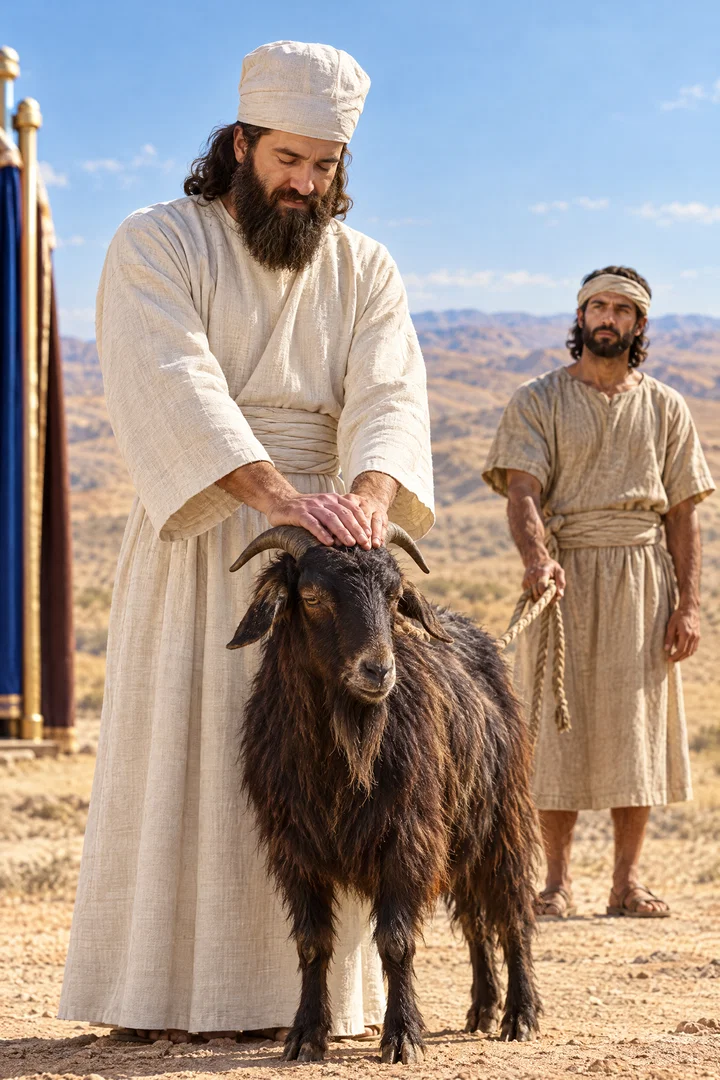
And the goat shall bear upon him all their iniquities unto a land not inhabited: and he shall let go the goat in the wilderness.
Translations
And the goat shall bear on him all their iniquities to a land not inhabited: and he shall let go the goat in the wilderness.
And the goat shall bear upon him all their iniquities unto a land not inhabited: and he shall let go the goat in the wilderness.
and the goat shall bear upon him all their iniquities unto a land not inhabited: and he shall let go the goat in the wilderness.
And the goat shall bear upon him all their iniquities to a land not inhabited: and he shall let go the goat in the wilderness.
Revised Version, American Standard Version
and the goat shall bear upon him all their iniquities unto a solitary land: and he shall let go the goat in the wilderness.
and the goat hath borne on him all their iniquities unto a land of separation. 'And he hath sent the goat away into the wilderness,
that the goat may bear upon him all their iniquities to a land apart [ from men]; and he shall send away the goat into the wilderness.
so shall the goat bear upon him all their iniquities into a lone land,—and he shall set the goat free, in the desert.
Berean Standard Bible, Majority Standard Bible
The goat will carry on itself all their iniquities into a solitary place, and the man will release it into the wilderness.
The goat shall carry all their iniquities on himself to a solitary land, and he shall release the goat in the wilderness.
And the goat will take all their sins into a land cut off from men, and he will send the goat away into the waste land.
So the goate shall beare vpon him all their iniquities into the land that is not inhabited, and he shall let the goate go into the wildernesse.
Douay-Rheims (Challoner revision)
And when the goat hath carried all their iniquities into an uninhabited land, and shall be let go into the desert,
Pictures
Cross-references 20 of 82
- Hebrews 9:23-24
It was therefore necessary that the patterns of things in the heavens should be purified with these; but the heavenly things themselves with better sacrifices than these.
Christ cleanses the heavenly sanctuary through his sacrifice, fulfilling the earthly atonement pattern.
- Hebrews 9:7
But into the second went the high priest alone once every year, not without blood, which he offered for himself, and for the errors of the people:
Describes the high priest’s yearly entry into the most holy place with blood.
- Leviticus 16:7-10
And he shall take the two goats, and present them before the LORD at the door of the tabernacle of the congregation.
Describes the two goats, their lots, and the scapegoat’s distinct role.
- Hebrews 8:1-5
Now of the things which we have spoken this is the sum: We have such an high priest, who is set on the right hand of the throne of the Majesty in the heavens;
The earthly priestly service foreshadows Christ’s ministry as High Priest in the heavenly sanctuary.
- Leviticus 16:29-30
And this shall be a statute for ever unto you: that in the seventh month, on the tenth day of the month, ye shall afflict your souls, and do no work at all, whether it be one of your own country, or a stranger that sojourneth among you:
The annual atonement cleanses the people from all their sins.
- John 1:29
The next day John seeth Jesus coming unto him, and saith, Behold the Lamb of God, which taketh away the sin of the world.
Christ bears away the world’s sin, like the scapegoat bearing Israel’s iniquities.
- 1 Peter 2:24
Who his own self bare our sins in his own body on the tree, that we, being dead to sins, should live unto righteousness: by whose stripes ye were healed.
Christ bears sins in his body on the tree, distinct from the scapegoat sent away.
- Hebrews 9:12
Neither by the blood of goats and calves, but by his own blood he entered in once into the holy place, having obtained eternal redemption for us.
Christ’s own blood accomplishes the atonement represented by the scapegoat.
- Hebrews 10:4
For it is not possible that the blood of bulls and of goats should take away sins.
Animal blood could not take away sins.
- Leviticus 23:27-32
Also on the tenth day of this seventh month there shall be a day of atonement: it shall be an holy convocation unto you; and ye shall afflict your souls, and offer an offering made by fire unto the LORD.
Describes the annual Day of Atonement, its observance, and the penalty for refusal.
- Leviticus 16:16
And he shall make an atonement for the holy place, because of the uncleanness of the children of Israel, and because of their transgressions in all their sins: and so shall he do for the tabernacle of the congregation, that remaineth among them in the midst of their uncleanness.
The Lord’s goat’s blood atoned for and cleansed the sanctuary before the sins were placed on the scapegoat.
- Hebrews 9:28
So Christ was once offered to bear the sins of many; and unto them that look for him shall he appear the second time without sin unto salvation.
Christ bears many sins once, then appears again without sin to bring salvation.
- Hebrews 9:24-26
For Christ is not entered into the holy places made with hands, which are the figures of the true; but into heaven itself, now to appear in the presence of God for us:
The yearly sanctuary service prefigures Christ’s once-for-all sacrifice and appearance before God for us.
- Hebrews 10:1
For the law having a shadow of good things to come, and not the very image of the things, can never with those sacrifices which they offered year by year continually make the comers thereunto perfect.
The scapegoat ritual belongs to the law’s sacrificial system, a shadow of coming realities.
- Hebrews 9:26
For then must he often have suffered since the foundation of the world: but now once in the end of the world hath he appeared to put away sin by the sacrifice of himself.
Christ’s once-for-all sacrifice puts away sin.
- Leviticus 16:33-34
And he shall make an atonement for the holy sanctuary, and he shall make an atonement for the tabernacle of the congregation, and for the altar, and he shall make an atonement for the priests, and for all the people of the congregation.
Summarizes the yearly atonement and cleansing for the sanctuary, priests, and people.
- Hebrews 9:22
And almost all things are by the law purged with blood; and without shedding of blood is no remission.
Blood shedding is required for remission and the removal of sin.
- Leviticus 16:10
But the goat, on which the lot fell to be the scapegoat, shall be presented alive before the LORD, to make an atonement with him, and to let him go for a scapegoat into the wilderness.
Identifies the live goat as the scapegoat sent into the wilderness.
- Leviticus 16:26
And he that let go the goat for the scapegoat shall wash his clothes, and bathe his flesh in water, and afterward come into the camp.
The scapegoat’s handler washes after leading it away before returning to camp.
- 1 John 2:2
And he is the propitiation for our sins: and not for ours only, but also for the sins of the whole world.
Christ is the propitiation for sins, though not the scapegoat.
Commentary part 1 of 2
Each commentary is drawn from primary sources: the writings of Ellen G. White and Adventist pioneers and periodicals. Each commentary is separate. Its own words are not a quotation; follow the references to read the source passages.
Ellen G. White
44 sources
On the Day of Atonement the high priest laid both hands on the live goat and confessed over him all the iniquities of Israel, putting them on his head, and the goat bore them into an uninhabited wilderness never to return to the camp.GC88 419.1–24SP 263.2–265.1PP 355.2–4GC 419.1–3RH Nov 8, 1915 Its departure showed the sins as forever separated from the people and their release from guilt, in fulfillment of the promise to forgive and remember sin no more.PP 355.2–4GC88 485.1GC88 420.1RH Nov 8, 1915 The goat represents Satan himself, the author of sin, upon whom Christ by virtue of His own blood will at the close of His heavenly ministration place the sins of the truly penitent removed from the sanctuary, to bear the final penalty.GC 485.2–3GC88 485.2–3GC 422.2GC88 422.2Ms 194, 1901, par. 1 Its sending into a land not inhabited means Satan will be banished to the desolate earth and confined there a thousand years, and at last be destroyed with the wicked in cleansing fire so that sin and sinners are blotted from existence.GC 485.2–3GC88 485.2–3GC 422.2GC 658.1 Those who held otherwise taught that the goat borne into the wilderness represents Christ alone as Sin-bearer and Substitute who takes away the sin of the repentant believer.Ms 112, 1897, par. 47Ms 124, 1901, par. 18–1917MR 242.1–2 The ritual marks the present as the antitypical Day of Atonement now going on in the sanctuary above, when every person must afflict the soul in solemn humiliation with prayer, searching of heart and departure from iniquity.4SP 263.2–265.1GC 419.1–35T 420.3Ms 81, 1886, par. 9Lt 53, 1886, par. 4
The Atonement Ceremony Described
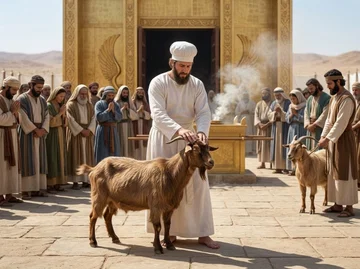
On the Day of Atonement the live goat bears all the confessed iniquities of Israel into a wilderness land not inhabited and never returns to the camp.GC88 419.1–2PP 355.2–4RH Nov 8, 1915RH Nov 8, 1915PP 355.5 After atonement has been made for the holy place with the blood of the goat for the Lord, the high priest in his character as mediator takes the sins upon himself and bears them from the sanctuary.4SP 263.2–265.1GC 419.1–3 He lays both his hands upon the head of the live goat and confesses over him all the iniquities and transgressions in all the sins of Israel, putting them upon the head of the goat.4SP 263.2–265.1GC 419.1–3 He then sends him away by the hand of a fit man into the wilderness to a land not inhabited.4SP 263.2–265.1GC 419.1–3
The blood of the substitute offered for the sinner does not itself cancel sin but transfers it to the sanctuary.GC88 420.1GC 420.1 There the sinner by his offering acknowledges the authority of the law, confesses his guilt, and expresses faith in a coming Redeemer, while still remaining under condemnation.GC 420.1 On the Day of Atonement the high priest carries the blood of the congregation's offering into the most holy place and sprinkles it upon the mercy seat directly over the law to make satisfaction for its claims.GC 420.1 Then in his character of mediator he takes the sins upon himself and bears them from the sanctuary, and by laying his hands upon the head of the live goat and confessing all the sins over him transfers them in figure from himself to the goat.GC88 420.1GC 420.1
The sanctuary thus cleansed is the earthly dwelling place of glory made for God to dwell among Israel.GC88 683.4–684.5 At first it was the movable tabernacle erected in the desert of Sinai with its holy and most holy place, and afterward it was Solomon's temple in Canaan to which its vessels were transferred, not the earth itself and not the church.GC88 683.4–684.5 Its yearly cleansing opened the most holy place, and the earthly service was an example and shadow of the heavenly ministry.GC88 433.1 On that day the high priest entered the most holy place after solemn preparation and stood before the mercy seat, while the people waited in silence and prayer, fearing if he remained unusually long that sin had brought death, and taking reassurance from the bells on his garments when he came out to bless them.ST Mar 4, 1903
Contact with sin pollutes, so no one can come in contact with sin without becoming polluted, and the man who led the goat away must wash himself and his clothing with water before returning to the camp.4SP 263.2–265.1GC 419.1–3RH Nov 8, 1915 The goat is led away to the land of forgetfulness, and its removal takes time.Ms 15, 1850, par. 8–1119MR 131.3Lt 8, 1850, par. 7–8 Though it struggles to escape, it is held fast, for if it escaped Israel would be destroyed.Ms 15, 1850, par. 8–11
What The Removal Signified
The sending away of the live goat bore all the confessed iniquities, transgressions and sins of Israel upon its head into an uninhabited wilderness, never to return again to the camp.PP 355.2–4GC88 420.1RH Nov 8, 1915PP 355.5 The people did not regard themselves as freed from the burden of their guilt until the goat had been sent away, for its departure represented their sins as forever separated from them and their release from guilt.PP 355.2–4GC88 420.1PP 355.5 The blood of the offering did not itself cancel sin but transferred it to the sanctuary, where on the Day of Atonement satisfaction was made for the claims of the law before the sins were carried from the sanctuary to the goat, and the yearly service was a pattern of heavenly things.GC88 420.1RH Nov 8, 1915PP 355.5
The whole ceremony impresses the holiness of God and His abhorrence of sin, and shows that no one can come in contact with sin without becoming polluted.4SP 263.2–265.1GC 419.1–3RH Nov 8, 1915 After atonement was made for the holy place with the blood of the Lord's goat, the high priest as mediator took the sins upon himself and bore them from the sanctuary, laying both his hands upon the head of the live goat and confessing over him all the iniquities and transgressions in all the sins of Israel, putting them upon the head of the goat and sending him away by the hand of a fit man into a land not inhabited.4SP 263.2–265.1GC 419.1–3RH Nov 8, 1915 Because contact with sin pollutes, the man who led the goat away had to wash himself and his clothing with water before returning to the camp, and while this work went forward every man was to afflict his soul and lay aside all business, spending the day in solemn humiliation before God with prayer, fasting and deep searching of heart.4SP 263.2–265.1GC 419.1–3RH Nov 8, 1915
The removal shows the complete fulfillment of the promise to forgive iniquity and remember sin no more, when the iniquity of Israel shall be sought for and there shall be none and the sins of Judah shall not be found, and in that day the branch of the Lord shall be beautiful and glorious for the escaped of Israel and every one left in Zion and remaining in Jerusalem who is written among the living shall be called holy.GC88 485.1 The image of the goat bearing another's fault is also used for laying upon somebody or something else, such as circumstances, occasions or other people, the blame for being brought into unworthy feeling and speech instead of censuring one's own defects of character, so that the guilty escapes self-censure.2T 571.3
Christ And Satan Antitype
The live goat that bears all iniquities into a land not inhabited represents Satan himself, the author, originator and instigator of sin, and the Day of Atonement has a bearing on his life.GC 422.2GC88 422.2Ms 194, 1901, par. 1 As the high priest removed the sins from the sanctuary by virtue of the blood of the sin offering and placed them upon the goat, so Christ by virtue of His own blood will remove the sins of His people from the heavenly sanctuary at the close of His ministration and place them upon Satan, who must bear the final penalty in the execution of the judgment.GC 485.2–3GC88 485.2–3GC 422.2GC88 422.2 The last act after the sins of Israel had been removed from the sanctuary by the blood of the sin offering is their placement upon Satan in the presence of God and heavenly angels and the host of the redeemed, where he is declared guilty of all the evil which he caused them to commit.GC 485.2–3GC88 485.2–3GC 658.1 This act represents the final removal of the sins of the truly penitent from heaven's records and their placement on Satan who bears the final penalty, and it points to the closing of Christ's work of redemption and the purification of the universe from sin.GC 422.2GC88 422.2PP 358.1–3
Only the sins of the truly penitent are laid back on Satan, namely the sins of those redeemed by Christ who come to Jesus, confess, and are victorious over sin, including the sins confessed during His ministry in the Most Holy Place and after He finishes His work of mediation.EW 146.2SG1 61.1SG1 198.1EW 239.4Ms 194, 1901, par. 1 Those who reject salvation through Jesus and those who continue in transgression must bear their own sins and suffer their own punishment.EW 146.2SG1 61.1Ms 194, 1901, par. 1 In an opposite position held by some, the goat borne into the wilderness represents Christ alone as Sin-bearer and Substitute to whom all the types point, for only He over whom death had no power was able to bear our sins.Ms 112, 1897, par. 47Ms 124, 1901, par. 18–1917MR 242.1–2 In that understanding Satan cannot be represented by the goat, for he cannot bear even his own sins, while Christ takes away the sin of the repentant believing transgressor while Satan accuses them of defilement and unworthiness.Ms 112, 1897, par. 47Ms 124, 1901, par. 18–1917MR 242.1–2
The antitypical work taking place in the most holy place of the heavenly sanctuary is the blotting out of the sins of the faithful from Abel onward by Christ as their High Priest.PP 358.1–34SP 499.3–500.1Ms 6, 1876, par. 5–6 It began in 1844 when Christ entered the heavenly sanctuary to cleanse it from the sins of the people by virtue of His own blood, which sanctuary to be cleansed is in heaven and not the earth to be purified by fire at the second coming to punish its inhabitants and destroy the wicked.PP 358.1–3Ms 6, 1876, par. 5–6 In mercy and loving-kindness this heavenly work gives still time to repent of sins and prepare for His coming.Ms 6, 1876, par. 5–6
Satan's Final Banishment And Doom
The sending away into a land not inhabited means that after the sins of God's people are removed from the sanctuary they will be placed upon Satan, the originator and instigator of sin, in the presence of God and heavenly angels and the host of the redeemed, and he will be declared guilty of all the evil he caused them to commit.GC 485.2–3GC88 485.2–3GC 658.1 The wilderness to which the goat bears the iniquities is the earth made desolate and without inhabitant, a dreary uninhabited wilderness, to which Satan will be banished and confined for a thousand years.GC 485.2–3GC88 485.2–3GC 658.1 This is the final disposal of sin after atonement is made and after the investigative judgment and the blotting out of sins before the second advent.GC 485.2–3GC88 485.2–3
He is made to suffer not only for his own rebellion but for all the sins he caused God's people to commit, including the sins of the redeemed laid upon him and the guilt of the souls he ruined.SG1 217.1–218.1GC88 672.2–673.14SP 487.2–488.1 His punishment is therefore far greater than that of those he deceived.GC88 672.2–673.14SP 487.2–488.1 After all who fell by his deceptions have perished according to their deeds he still lives and suffers on.GC88 672.2–673.14SP 487.2–488.1
At last he is destroyed with the wicked in the cleansing fires that destroy all the wicked, Satan the root with his followers the branches.SG1 217.1–218.1GC88 672.2–673.14SP 487.2–488.1 Then the full penalty of the law is visited and the demands of justice are met.GC88 672.2–673.1 As the goat was sent never to come again into the congregation of Israel, so Satan will be forever banished from the presence of God and His people and will be blotted from existence in the final destruction of sin and sinners, accomplishing the final eradication of sin and the deliverance of all who renounce evil.GC 485.2–3GC88 485.2–3GC 422.2GC88 422.2 He suffers and is finally consumed.SG1 217.1–218.1
All the iniquities of those who accept Christ will finally be laid upon Satan and his angels, bringing their rule to an end.Ms 194, 1901, par. 3 He has fought the law of God with tradition and prejudice since his expulsion from heaven, and he knows this doom.Ms 194, 1901, par. 3 In 1844 attention was directed to the sanctuary and the first angel's message was proclaimed, and the speedy spread of the knowledge of the binding claims of God's law will raise up a vast army to enter the dark places of the earth, leaving his time very short and hastening that laying of sins upon him.Ms 194, 1901, par. 3
At the close of the sanctuary work the sins are confessed onto the goat, then the garments of vengeance are put on and the plagues fall.Ms 15, 1850, par. 8–11
Present Solemn Preparation Required
The live goat carrying iniquities to a land not inhabited marks the present as the antitypical Day of Atonement, the solemn work now going on in the sanctuary above, which is the Judgment.5T 420.3Ms 81, 1886, par. 9Lt 53, 1886, par. 4Lt 55, 1886, par. 9–10 It concerns every individual and is a solemn hour with eternal consequences, marking the present as the great day of preparation.5T 420.3Lt 55, 1886, par. 9–10 It must be kept constantly before the mind and urged upon the conscience with earnestness and power, and must not be lightly regarded because of absorbing business cares.5T 420.3 Preparation means confessing sins so they may go beforehand to judgment and receive pardon, putting away sin and drawing near to God for cleansing, each person considering how his case will stand in the judgment and seeking cleansing from defilement through the blood of Jesus.Ms 81, 1886, par. 9Lt 53, 1886, par. 4Lt 55, 1886, par. 9–10 The church is to begin purification before God through repentance, humility, deep self-examination and departure from iniquity, in a final day of confession before the books are opened and every person is judged by the record of deeds.Lt 55, 1886, par. 9–10Ms 52, 1905, par. 10
While this work goes forward every person must afflict the soul and lay aside all business.4SP 263.2–265.1GC 419.1–3 The whole congregation is to spend the time in solemn humiliation before God with prayer, fasting and deep searching of heart.4SP 263.2–265.1GC 419.1–3RH Nov 8, 1915 That humbling includes repentance, humility, deep self-examination, departure from iniquity and cleansing from defilement, each considering how his case will stand in the judgment.4SP 263.2–265.1Lt 53, 1886, par. 4Lt 55, 1886, par. 9–10
Sins must be confessed now at the sanctuary so they may go beforehand to judgment and receive pardon and cleansing.Ms 81, 1886, par. 9Ms 1, 1852, par. 4 Every sin must be confessed at the sanctuary now, before the time when every secret thing comes to light and before the books are opened and every person is judged by the record of deeds.Ms 6, 1849, par. 8Ms 1, 1852, par. 4Ms 52, 1905, par. 10 Confessed sins are placed upon the scapegoat and borne away into the land of forgetfulness, forever separated from the people.Ms 6, 1849, par. 819MR 131.3Lt 8, 1850, par. 7–8 Much prayer is needed that sins may be so confessed and removed, because the sanctuary work will soon be finished.19MR 131.3Lt 8, 1850, par. 7–8
A correct view of the solemn work gives correct views of the importance of the work for this time, the wants of the cause, and the perils attending every soul.5T 420.3 It leads those employed in institutions, including publishing houses, to greater energy and zeal.5T 420.3 It leads them to seek to be a watchful channel of light rather than careless and blinded.5T 420.3
Sources
Pioneers and periodicals
259 sources
On the yearly Day of Atonement the high priest laid both his hands on the head of the live goat, confessed over it all the iniquities and sins of Israel, put them upon its head, and sent it away by the hand of a fit man into a solitary land not inhabited.RH Sep 1, 1863RH Nov 17, 1863RH Mar 8, 1870 Through the year the confessed sins of penitents had been borne by blood into the sanctuary where they accumulated, and on that day they were borne out, placed on the goat and removed, which cleansed the sanctuary and left priest and people free.ST Jul 4, 1911RH Nov 17, 1863RH Mar 8, 1870 The live goat is Azazel, Satan the originator of sin and not Christ, receiving sins from the priest's hand after the cleansing is finished to bear them away alive; those who held otherwise taught it as a type of Christ bearing human sins as sacrifice.ST Nov 29, 1905RH Feb 3, 1853RH Aug 27, 1857ST Feb 3, 1904 In antitype Christ as High Priest ministers in the heavenly sanctuary, and at the close He blots out the forgiven sins of believers and places them upon Satan, a final atonement and investigative judgment typified by the seventh-month service and begun at the end of the 2300 days in 1844.RH May 9, 1871ST Mar 11, 1875ST Feb 28, 1884RH Nov 8, 1906 Satan then bears the guilt he caused into the desolate uninhabited earth, bound a thousand years with no one to deceive and afterward destroyed in fire, so sin is forever separated and remembered no more, while those who humble themselves, confess and forsake sin receive the blessing.RH Nov 8, 1915RH Dec 29, 1904ST Nov 23, 1904ST Dec 12, 1916ST Oct 21, 1930
Ritual Words and Setting
The live goat receives upon its head all the iniquities, transgressions and sins of Israel when the high priest lays both his hands upon it and confesses them over it, putting them there, and then it is sent away by the hand of a fit appointed man into the wilderness to a land not inhabited.RH Sep 1, 1863RH Nov 17, 1863RH Mar 8, 1870RH Feb 3, 1853ST Nov 20, 1879 This placing follows the completed ministry in the Most Holy Place, after the sins borne in through the year have been removed from the sanctuary, and the goat bears them away from the sanctuary so it is heard of no more.RH Sep 1, 1863RH Nov 17, 1863RH Mar 8, 1870RH Feb 3, 1853ST Nov 20, 1879 The sending completes the cleansing of the earthly sanctuary, which is an example and shadow of Christ's ministry, and in the type sin is removed from the people's presence and its reminders banished.RH Nov 17, 1863ST Nov 20, 1879ST Dec 12, 1916
The sending belongs to the yearly Day of Atonement on the tenth day of the seventh month Tishri, the closing and most impressive act ending the annual round after 364 days of ministry in the first apartment.RH Mar 8, 1870ST Nov 20, 1879RH Feb 2, 1911ST Dec 12, 1916ST May 27, 1897 On that day the high priest alone entered once a year into the second apartment within the veil, the most holy place containing the ark, after daily ministration through the year, to make atonement for the people, the sanctuary and the altar.RH Mar 8, 1870ST Nov 20, 1879RH Feb 2, 1911ST May 27, 1897ST Mar 11, 1875 The blood of the bullock and the blood of the Lord's goat is brought within the veil and sprinkled upon the mercy-seat and before the mercy-seat seven times for himself, the congregation and the sanctuary itself, and atonement already made by that blood is then confessed upon the scapegoat.RH Mar 8, 1870ST Nov 20, 1879ST May 27, 1897 Atonement is thus made upon the goat instead of with him, completing cleansing and justification before God.ST May 27, 1897ST Mar 11, 1875
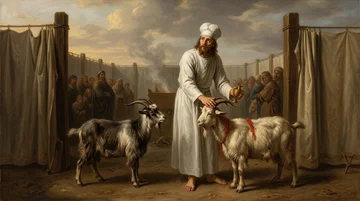
Two goats are set alive before the Lord at the door of the tabernacle of the congregation, alike in value, and chosen by lots drawn from an urn, one engraved La Yehovah for Jehovah and the other La Azazel for Azazel.ST Nov 29, 1905RH May 9, 1871ST Mar 11, 1875ST Sep 26, 1911ST Apr 20, 1904 The Lord's goat is slain and its blood is used in cleansing the sanctuary, while the live scapegoat is distinct from the goat allotted to the Lord, is not offered as a sacrifice, and is sent away alive.RH Feb 3, 1853RH May 9, 1871ST Mar 11, 1875ST Sep 26, 1911ST Apr 20, 1904 The Day reverses the daily service by showing how sins borne into the sanctuary are borne out, and this naming of the scapegoat belongs to that reversal.ST Jul 4, 1911RH May 9, 1871ST Sep 26, 1911
A land not inhabited means a solitary wilderness land of separation, separated from the people and camp to come no more into it, a land of oblivion and forgetfulness where reminders are banished.ST Dec 12, 1916ST Mar 11, 1875ST Jun 19, 1907 The sins borne there are forever separated from the people to appear no more against them, blotted out and remembered no more, leaving the sanctuary, priest and people behind and free and clear.ST Dec 12, 1916ST Mar 11, 1875ST Jun 19, 1907ST Mar 23, 1904 Until the goat is sent the people are not free, but with its sending they become free from the effect of those sins and rejoice before the Lord.ST Jun 19, 1907ST Mar 23, 1904
Geographically that uninhabited land is the stony desert going down from Jerusalem to Jericho toward the Dead Sea, a sun-scorched waste of dry torrent-beds and yellow naked hills.RH Jan 2, 1866 The goat hurries through that dry country toward the edge of the sea, drawn by distant blue water shining beyond the hills above Jericho that looks cool and alluring and promises rest to man and beast and bird crossing the desert.RH Jan 2, 1866 In that waste it goes into the mountains to overhanging cliffs above the far-off tents, where glory covers men and women and children dancing joyfully out from under the pillar from the sanctuary.ST May 13, 1913
The goat is let go and abandoned and miserably perishes in the wilderness with the load of guilt upon him, and is destroyed so as never to return and never to be heard of more, with the guilt perishing with him.ST Jun 19, 1907ST Mar 23, 1904ST Nov 28, 1892 Tradition holds that the fit man led him to a precipice and hurled him over to break his neck and kill him, so that by sunset only ashes remained.RH Feb 25, 1858ST Nov 28, 1892 That departure is the typical system's remission of sin, so the sins are no longer brought back into Israel or remembered against the people and the yearly service is complete.RH Feb 25, 1858ST Nov 28, 1892
Even the fit man who leads the goat away to final destruction must cleanse himself and his clothes by thorough washing of clothes and person before he can re-enter the camp of the Lord's people.RH Nov 8, 1915ST Nov 29, 1905ST Nov 29, 1905ST Mar 11, 1875ST Aug 26, 1913 This washing is required after the reconciling or cleansing of the holy place and the tabernacle of the congregation and the altar, when the live goat has been brought forward and sent into the wilderness.ST Nov 29, 1905ST Aug 26, 1913ST May 17, 1877 The ceremony teaches that God is holy and sin pollutes those who come in contact with it, and calls the people to humble themselves during the atonement service.RH Nov 8, 1915ST Nov 29, 1905
The Day of Atonement is not a cessation of priestly service but its culmination, with the high priest officiating in both holy places while ordinary daily service continues.ST Jun 19, 1879 The day involves cleansing the people from sin and remains a time of probation, when they are required to afflict their souls.ST Jun 19, 1879 Every particular of that typical yearly series requires exact obedience, and departure in the least particular is worthy of blame, showing God is not the author of confusion but brings harmony and order as in the six days of creation, in the salvation of Noah and the ark, and in leading Israel out of Egypt.ST Jun 19, 1879ST Aug 18, 1881
The high priest first makes atonement for himself and his house with special offerings taken with two goats from the entire congregation, so he can stand sinless before God for the people.ST Oct 25, 1905ST Jan 17, 1884ST Apr 26, 1883 That first act has no counterpart in Christ because He was separate from sinners and needed no offering for Himself.ST Jan 17, 1884 After completing his intercession in the most holy place he changes all his garments before coming out.ST Jan 17, 1884ST Apr 26, 1883
The earthly atonement on the tenth day of the seventh month is made for the sanctuary and for all the sins of the children of Israel through the year, especially their sins of ignorance.RH Feb 26, 1867 The work in the holiest place is the most important service of the sanctuary, yet although observances of other seventh-month festivals closely connected with that day are recorded, no specific instance of the day of atonement being observed is recorded.RH Feb 26, 1867RH Dec 10, 1861
The corresponding service and the being represented by this ceremony, and the particular action of the goat bearing iniquities in this verse, are left without further specific explanation and do not by themselves identify its antitype.RH Sep 1, 1863RH Feb 22, 1870ST Jul 8, 1880RH Dec 15, 1868RH Sep 27, 1906 The yearly type of sanctuary cleansing on the tenth day of the seventh month, when the high priest enters the most holy place to cleanse the sanctuary and put away the sins of a penitent people forgiven and represented there by sprinkled blood, is Israel's day of judgment and blotting out of sin.RH Feb 22, 1870ST Jul 8, 1880RH Dec 15, 1868ST Dec 21, 1915 The scapegoat belongs to that ceremony as part of the cleansing of the altar and the type of the cleansing of the heavenly sanctuary and the judgment of the whole earth.ST Jul 8, 1880RH Sep 27, 1906ST Dec 21, 1915
Yearly Cleansing of Sanctuary
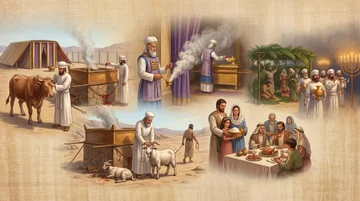
Through the year the sins of penitent Israel were carried into the sanctuary by the blood of confessed sin offerings sprinkled before the veil, where they accumulated and were deposited and defiled the holy apartments so that atonement was required.RH Nov 17, 1863RH Mar 8, 1870ST Nov 20, 1879ST Jun 19, 1907 On the Day of Atonement on the tenth day of the seventh month that ministration was reversed, so those accumulated sins since the previous atonement were borne out, placed on the goat and removed.ST Jul 4, 1911RH Nov 17, 1863RH Mar 8, 1870ST Nov 20, 1879 After the Lord's goat was slain and its blood presented in the most holy place upon the mercy-seat to make atonement for the people and to cleanse the sanctuary, the high priest came out, laid both hands on the live goat, confessed over him all the iniquities and transgressions in all their sins, put them upon his head, and sent him away by a fit man into the wilderness to a land not inhabited.RH Mar 8, 1870ST Nov 20, 1879ST Jun 19, 1907 This completed the work partially accomplished in the first apartment, brought final riddance of sin from people and sanctuary for that year, and was the typical remission completing that year's atonement in a single day.ST Jul 4, 1911RH Nov 17, 1863ST Nov 20, 1879ST Jun 19, 1907
The sanctuary was made unclean because the priest as representative bore the people's judgment and sins by blood into God's dwelling, since the people themselves never entered, and not by their physical contact.ST Oct 25, 1883ST May 1, 1879 Its cleansing is cleansing from sin recorded there and conveyed into it, not from impurity of its own or physical impurity, and not from sins committed within it.ST Oct 25, 1883RH Sep 1, 1863ST Dec 17, 1894 That cleansing work by the high priest alone with the blood of a goat slain as a sin offering for the people, sprinkled upon and before the mercy-seat in the most holy and upon the altar and its horns in the holy to make atonement because of uncleanness and to cleanse and hallow it, is entirely different in form and object from dedicating the covenant, which occurred once and not in the sanctuary and not yearly by sin-offering blood.ST Oct 25, 1883ST May 1, 1879
The cleansing is the high priest's work of mediation by the blood of the sacrifice, sprinkled and anointed upon the holy and most holy places, the mercy-seat and the horns of the altar, to cleanse them from uncleanness and sins.RH Nov 24, 1874RH Jan 24, 1856RH Jun 2, 1874ST Feb 7, 1884 Cleansing the sanctuary and making atonement are the same work, serving both to forgive iniquity and to cleanse the sanctuary.RH Mar 22, 1870RH Nov 24, 1874RH Jun 2, 1874 The recognized method is cleansing by blood, not by burning the sanctuary and not by destruction of wicked cruel powers or governments that oppressed and trod it down.RH Jan 24, 1856RH Apr 28, 1853 It is cleansed of sin and not of sinners, for sinners are never permitted to inhabit God's sanctuary.RH Jan 24, 1856RH Sep 1, 1863ST Dec 17, 1894
Blood represents life forfeited by sin and given for atonement, which is not arbitrary because life is in the blood, and the victim's life was taken so its blood could be presented on the altar.RH Sep 6, 1870ST Jan 21, 1886 The blood of the sin offering sprinkled on and before the mercy seat atoned in figure, sharing the object of atonement with Christ's blood which atones in fact.RH Sep 6, 1870ST Jan 21, 1886 A goat killed with blood sprinkled on and before the mercy seat could not truly pay for human sin, because an animal was not an equal or sufficient substitute for a person or nation, could not take away sin or perfect the offerers or truly cleanse, but continually reminded of sin and illustrated God's justice and deserved penalty.ST Jan 21, 1886RH Dec 1, 1863ST Jan 21, 1886RH Mar 4, 1862ST Feb 7, 1884
The work was done only in figure, with pardon real only in virtue of the promised offering of Christ, since the blood of bulls and goats could not take away sins.ST Mar 25, 1889 Unlike the repeated earthly service, Christ's ministry completes each part of the work once for all.RH Mar 10, 1874 The passage belongs to the laws relating to sacrifices and offerings and to consecration and duties of priests, where each detail has meaning found in fuller form in the sacrifice, life and work of Jesus Christ.ST Feb 7, 1911RH Nov 8, 1915ST Jun 4, 1874 Those types and symbols shadowed the cross and compactly foretold the gospel, and the daily offerings with the special Day together taught distinct features of the Saviour's work of atoning for sin and ministering for sinners, with Aaron alone typifying Christ but needing Melchizedek for the full priesthood.ST Mar 29, 1883RH Nov 8, 1915ST Oct 25, 1905
The purification of the two apartments and the altar with the blood of calves and goats was the pattern of things in the heavens, proving a greater and more perfect heavenly tabernacle with two holy places, the true sanctuary which the Lord pitched and not man.RH Dec 15, 1868RH Aug 18, 1863RH Feb 18, 1858 The first-covenant sanctuary was cleansed with blood at the end of the yearly cycle because the people's sins had been borne there, as the high priest's concluding work before he left God's tabernacle, and therefore preceding his public revelation.RH Dec 15, 1868RH Oct 30, 1855 Blood sprinkled upon the mercy-seat directly over the law fully satisfied its demands, so the law released its hold on the sins in the sanctuary and on the sinners from whom they came. Then the high priest gathered those sins upon himself, bore them from the sanctuary, and by laying on hands and confessing transferred them to the goat, which bore them away and perished with them, which is remission as absolute disposal forever so they never again appear against the sinner, while daily pardon was only conditional.RH Mar 10, 1874
The high priest alone came to the mercy-seat covering the ark holding the moral law including the Sabbath, with sin-offering blood that typified Christ's own blood, without which not one Sabbath-breaker can be saved.ST Dec 13, 1883 That typical atonement could not truly remove sin but pointed to Christ's real atonement, and its cleansing at the close stands connected with the 2300 days.RH Mar 4, 1862RH Mar 10, 1874 The service taught that God could show mercy to transgressors while upholding His law, pointing forward to a greater atonement through richer sacrifice and more precious blood.RH Apr 4, 1871 Complete satisfaction was shown by sevenfold sprinkling on the mercy-seat above the broken law after atonement for priests by a bullock and for the people by a goat, cleansing the sanctuary from the record of sin and the people from sin itself, final under penalty of being cut off for failure to afflict the soul.ST Sep 6, 1910RH Apr 15, 1862
The ordinances belong to the old covenant and its worldly sanctuary, showing why its ministration was a ministration of death.ST Aug 5, 1889 The live goat belongs to that first-covenant system of religious ordinances and ceremonies, which also required observance of the seventh-day Sabbath, though the verse by itself does not establish Sabbath observance.RH Jun 28, 1864RH Jun 28, 1864 That earthly work of atonement and sin offering related to God's law of which the Sabbath was one of the ten precepts.RH Apr 28, 1874 Under the first covenant sins were carried into the wilderness on the head of a live goat but not taken away, for sins are taken away through Christ's blood purging the conscience under the new covenant, when people can know for themselves whether they are God's children.RH Jun 21, 1864RH Jun 28, 1864 The atonement is a new institution originating from Abraham's time onward, with its command and rites plainly shown, unlike tithing which reaches back to the beginning when its necessity arose at the fall and hope was offered to a lost world.RH Mar 9, 1905 The verse is part of the instruction in Leviticus 16 dealing with the cleansing of the sanctuary, belonging to the description of ceremonies by which the worldly sanctuary was cleansed.RH Feb 3, 1916ST Feb 13, 1912ST Apr 1, 1886
Identity of the Scapegoat
The goat is the scapegoat, Azazel in the margin, and Azazel is Satan, the instigator, originator and author of sin, not Christ.ST Nov 29, 1905RH Feb 3, 1853RH May 9, 1871ST Mar 11, 1875 He is the enemy whom Christ as God's champion died to avenge and destroy.ST Nov 29, 1905 After the sanctuary has been cleansed the high priest places Israel's iniquities on the living goat and sends it away from the camp into an uninhabited wilderness, bearing the sins away from sanctuary, priest and people, and it is not offered as a sacrifice.RH Feb 3, 1853RH May 9, 1871ST Mar 11, 1875 The goat for the Lord's lot that is slain and whose blood cleanses the sanctuary typifies Christ and His precious blood, while the priest who ministers that blood typifies Christ as Saviour and High Priest in the heavenly sanctuary; when that atoning work is finished He does not take the sins back upon Himself but places them upon Satan to bear into the uninhabited wilderness.RH May 9, 1871ST Mar 11, 1875 Unlike the Lord's goat the scapegoat represents Satan, and its removal points to the time at the beginning of the thousand years when Satan will bear responsibility for his own sins and the sins he induced others to commit.ST Sep 26, 1911 Its dispatch is fulfilled by Satan's binding and casting into the bottomless pit at the appearing of Christ.RH May 9, 1871ST Mar 11, 1875
Azazel is a proper name of a person or being opposed to Jehovah, not a name for the goat itself or for Christ.ST Mar 11, 1875ST Jun 13, 1878RH Jan 18, 1870 He is Satan, the devil, a malign deity, one of the fallen angels, the evil spirit, Sammael, meaning Powerful Apostate or Mighty Receder.ST Mar 11, 1875RH Jan 18, 1870 This is shown by the same preposition La used for Jehovah and for Azazel in casting lots from the urn, with one lot engraved La-Yehova for Jehovah and the other La-Azazel for Azazel.ST Mar 11, 1875RH Jan 18, 1870 It is shown by the ancient paraphrases and targums leaving it untranslated as a name, by the Septuagint rendering apopompaios applied to a malign deity, by the form Azalzel given to a fallen angel in the book of Enoch, and by its use in Arabic and Jewish writings as the name of the evil spirit.ST Mar 11, 1875RH Jan 18, 1870 The word elsewhere translated devils literally means goats.RH Mar 24, 1863 Two goats exactly alike in value, size, age and color are presented alive before the Lord as counterparts, and the rite is the intimation of the serpent's existence in the sacrificial system, set on the great day of atonement.ST Mar 11, 1875RH Jan 18, 1870
The goat cannot represent Christ because the priest transfers the sins to the goat only after the cleansing is finished, while Christ at His second appearing will be without sin.RH Feb 3, 1853ST Mar 11, 1875RH Mar 22, 1870 He is sent away alive from Israel and from his people into a separate uninhabited wilderness, not into heaven which is not uninhabited.ST Mar 11, 1875RH Mar 22, 1870 He receives the sins from the hand of the priest and is sent away by Him, so as Christ is the High Priest the goat must be someone else distinct from Him; if High Priest and goat were the same the transfer would be without meaning.ST Mar 11, 1875ST Jul 8, 1880RH Jul 28, 1863 Unlike the Lord's goat he is not called the Lord's and is not offered as a sacrifice, his only office being to bear iniquities away, and he has no part in making the atonement which the High Priest alone makes.ST Mar 11, 1875RH Jul 28, 1863 The scapegoat let go alive is never heard of more and perishes in the wilderness, so it does not represent Jesus Christ, who though put to death appeared again on the third day and soon afterward took up His work as High Priest of the heavenly sanctuary, having borne sin on the cross before His priesthood and not laying sins on Himself or sending Himself away.ST Mar 11, 1875ST Nov 29, 1905 Its role occurs after the 2300 days when the sanctuary is cleansed, and therefore rejects Christ's sacrifice at the crucifixion as its antitype and identifies the goat with the devil whom Christ sends away.ST Jul 8, 1880RH Sep 1, 1863
The goat is called their Saviour only as a pointed description of how people under the old covenant learned whether they were accepted by God through the high priest's yearly service, not as a claim that the goat was their true Saviour.RH Jun 28, 1864 Its bearing of sins is compared with Christ bearing the world's sin, but its ritual is a distinct service to be fulfilled after the sanctuary cleansing, where it is heard of no more, not Christ's sacrifice at the crucifixion.RH Mar 18, 1858 In a differing view held by some, the scapegoat bearing the sins of all Israel and being led away into the wilderness was a type of Christ, who bore human sins and carried human sorrows.RH Aug 27, 1857 In that view bearing sin means bearing in a sacrificial sense, that Christ died as a sacrifice and ransom for the sins of mankind and not as a mere example of holy living or as a mere martyr showing constancy in death.RH Jan 30, 1866 As offered once to bear the sins of many He completes His sanctuary work and appears to bring salvation to those waiting for Him, as the high priest came out to bless the waiting congregation, and the two goats with the other symbols of priesthood, temple and sanctuary are revealed and fulfilled in Jesus and understood only in the light of Calvary and its consummation.ST Feb 3, 1904RH Sep 25, 1900RH Jul 7, 1853RH Dec 8, 1874
Sources