Leviticus 16:10
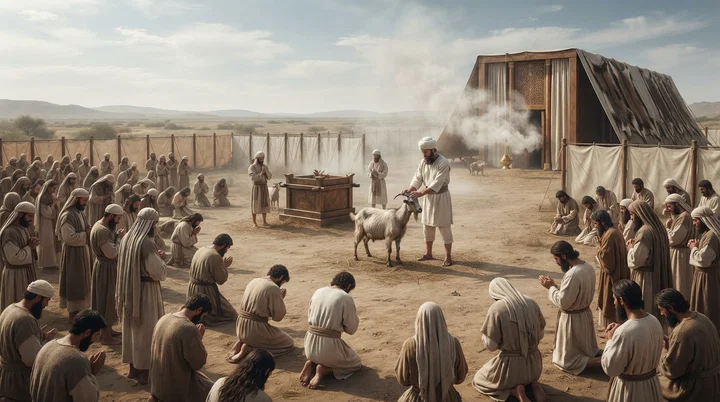
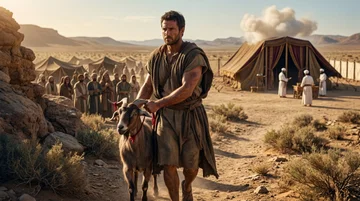
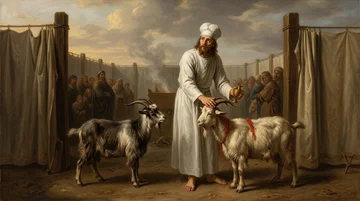
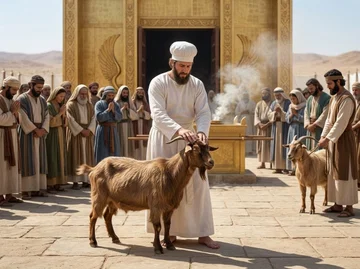
But the goat, on which the lot fell to be the scapegoat, shall be presented alive before the LORD, to make an atonement with him, and to let him go for a scapegoat into the wilderness.
Translations
American King James Version, King James Version
But the goat, on which the lot fell to be the scapegoat, shall be presented alive before the LORD, to make an atonement with him, and to let him go for a scapegoat into the wilderness.
But the goat, on which the lot fell to be the scapegoat, shall be presented alive before the Lord, to make an atonement with him, and to let him go for a scapegoat into the wilderness.
But the goat on which the lot fell to be the scape-goat, shall be presented alive before the LORD, to make an atonement with him, and to let him go for a scape-goat into the wilderness.
But the goat, on which the lot fell for Azazel, shall be set alive before the LORD, to make atonement for him, to send him away for Azazel into the wilderness.
But the goat, on which the lot fell for Azazel, shall be set alive before Jehovah, to make atonement for him, to send him away for Azazel into the wilderness.
'And the goat on which the lot for a goat of departure hath gone up is caused to stand living before Jehovah to make atonement by it, to send it away for a goat of departure into the wilderness.
And the goat upon which the lot fell for Azazel shall be set alive before Jehovah, to make atonement with it, to send it away as Azazel into the wilderness.
but, the goat over which came up the lot for Azazel, shall he cause to stand alive—before Yahweh to put a propitiatory-covering over him,—to send him away unto Azazel, towards the desert.
Berean Standard Bible, Majority Standard Bible
But the goat chosen by lot as the scapegoat shall be presented alive before the LORD to make atonement by sending it into the wilderness as the scapegoat.
But the goat on which the lot fell for the scapegoat shall be presented alive before the LORD, to make atonement for him, to send him away as the scapegoat into the wilderness.
But the goat for Azazel is to be placed living before the Lord, for the taking away of sin, that it may be sent away for Azazel into the waste land.
But the goate, on which the lot shall fall to be the Scape goate, shalbe presented aliue before the Lord, to make reconciliation by him, and to let him go (as a Scape goate) into the wildernes.
Douay-Rheims (Challoner revision)
But that whose lot was to be the emissary goat, he shall present alive before the Lord, that he may pour out prayers upon him, and let him go into the wilderness.
Pictures
Cross-references 20 of 73
- Hebrews 9:23-24
It was therefore necessary that the patterns of things in the heavens should be purified with these; but the heavenly things themselves with better sacrifices than these.
Christ’s better sacrifice cleanses the heavenly sanctuary, where he ministers for us.
- Leviticus 16:20-22
And when he hath made an end of reconciling the holy place, and the tabernacle of the congregation, and the altar, he shall bring the live goat:
Describes the priest placing Israel’s sins on the goat and sending it away.
- Hebrews 9:7
But into the second went the high priest alone once every year, not without blood, which he offered for himself, and for the errors of the people:
The high priest enters yearly with blood for the people’s errors.
- Hebrews 8:5
Who serve unto the example and shadow of heavenly things, as Moses was admonished of God when he was about to make the tabernacle: for, See, saith he, that thou make all things according to the pattern shewed to thee in the mount.
Earthly priestly service is a pattern and shadow of Christ’s heavenly ministry.
- Leviticus 16:15-16
Then shall he kill the goat of the sin offering, that is for the people, and bring his blood within the vail, and do with that blood as he did with the blood of the bullock, and sprinkle it upon the mercy seat, and before the mercy seat:
The Lord’s goat is slain, and its blood makes atonement and cleanses the sanctuary.
- Leviticus 23:26-32
And the LORD spake unto Moses, saying,
Describes the day’s observance alongside Leviticus 16.
- Hebrews 9:11-12
But Christ being come an high priest of good things to come, by a greater and more perfect tabernacle, not made with hands, that is to say, not of this building;
Christ’s heavenly priestly ministry fulfills the earthly atonement pattern.
- Leviticus 16:30
For on that day shall the priest make an atonement for you, to cleanse you, that ye may be clean from all your sins before the LORD.
The day’s atonement cleanses the people from all their sins.
- Hebrews 10:4
For it is not possible that the blood of bulls and of goats should take away sins.
Animal blood could not take away sin, unlike Christ’s offering.
- John 1:29
The next day John seeth Jesus coming unto him, and saith, Behold the Lamb of God, which taketh away the sin of the world.
Jesus is the Lamb who bears the world’s sin, while the scapegoat carries sin away.
- Hebrews 9:24
For Christ is not entered into the holy places made with hands, which are the figures of the true; but into heaven itself, now to appear in the presence of God for us:
Christ appears for his people in the true heavenly sanctuary.
- Hebrews 10:1
For the law having a shadow of good things to come, and not the very image of the things, can never with those sacrifices which they offered year by year continually make the comers thereunto perfect.
The law’s ceremonies are shadows of good things to come.
- Hebrews 9:22
And almost all things are by the law purged with blood; and without shedding of blood is no remission.
Both connect atonement and remission with the shedding of blood.
- Leviticus 16:33-34
And he shall make an atonement for the holy sanctuary, and he shall make an atonement for the tabernacle of the congregation, and for the altar, and he shall make an atonement for the priests, and for all the people of the congregation.
Summarizes the yearly Day of Atonement cleansing of the sanctuary and people.
- 1 Peter 2:24
Who his own self bare our sins in his own body on the tree, that we, being dead to sins, should live unto righteousness: by whose stripes ye were healed.
Christ bore sins in his body on the tree, unlike the scapegoat sent away.
- Leviticus 16:29
And this shall be a statute for ever unto you: that in the seventh month, on the tenth day of the month, ye shall afflict your souls, and do no work at all, whether it be one of your own country, or a stranger that sojourneth among you:
Sets the annual Day of Atonement on the tenth day of the seventh month.
- Leviticus 17:11
For the life of the flesh is in the blood: and I have given it to you upon the altar to make an atonement for your souls: for it is the blood that maketh an atonement for the soul.
Blood makes atonement because it represents the victim’s life.
- Hebrews 9:1-5
Then verily the first covenant had also ordinances of divine service, and a worldly sanctuary.
Describes the earthly sanctuary and its furnishings as a figure of the heavenly.
- Leviticus 16:5
And he shall take of the congregation of the children of Israel two kids of the goats for a sin offering, and one ram for a burnt offering.
Provides the two goats for the sin offering.
- Leviticus 16:22
And the goat shall bear upon him all their iniquities unto a land not inhabited: and he shall let go the goat in the wilderness.
It describes the scapegoat bearing Israel’s iniquities away.
Commentary
Each commentary is drawn from primary sources: the writings of Ellen G. White and Adventist pioneers and periodicals. Each commentary is separate. Its own words are not a quotation; follow the references to read the source passages.
Ellen G. White
22 sources
On the yearly great Day of Atonement two goats were brought and lots cast, and the live goat was kept alive to be presented before the Lord as the last solemn service after the work in the most holy place was done, when the sins of Israel were confessed over its head and it was led by a fit man into a land not inhabited to come no more into the camp.GC88 657.3GC 419.1–3GC 658.1 It represented the final removal of sin from the people, borne away to be regarded as forever separated from them.GC88 420.1 When the work of atonement in the heavenly sanctuary is completed the sins of God's people will be placed upon Satan, the scapegoat, in the presence of God and angels and the redeemed, he will be declared guilty of all the evil he caused them to commit, and he will be banished to the desolate earth as to an uninhabited wilderness, bearing the sins of all who come to Jesus while those who continue in transgression bear their own.GC88 657.3Ms 194, 1901, par. 1GC 658.1 Those who held the different position taught that Christ, not Satan, is the scapegoat presented alive and let go, because He alone could bear human sins since death had no power over Him.Ms 112, 1897, par. 47 The earthly service was a pattern of Christ's closing work begun in 1844 within the second veil to cleanse the heavenly sanctuary and blot out the sins of His faithful ones by His own blood, and its antitype is now taking place as the last great day of atonement calling every person to solemn preparation, confession, repentance and turning from sin before the judgment.Ms 81, 1886, par. 94SP 499.3–500.1GC88 433.1Ms 6, 1876, par. 5–6Lt 53, 1886, par. 4
Ritual Setting and Procedure
The verse belongs to the process for cleansing the sanctuary.GC88 683.4–684.54SP 498.6 That sanctuary was God's dwelling-place on earth, first the earthly tabernacle made in the wilderness at Sinai and afterward housed with its vessels in Solomon's temple in Canaan as His glory dwelling-place upon the earth.GC88 683.4–684.54SP 498.6 It belongs to the yearly great Day of Atonement, the one day each year when the most holy place was opened and the high priest, after careful preparation, entered it to stand before God's presence at the mercy seat and complete the yearly round of ministration.8T 284.3–285.1GC 419.1–3ST Mar 4, 1903GC88 433.1
Two kids of the goats were brought to the door of the tabernacle and lots were cast upon them, one lot for the Lord and the other lot for the scapegoat.GC 419.1–3 The live goat was kept alive to be presented alive and sent away into the wilderness bearing sins.GC 419.1–3 Aaron laid both hands on the head of the live goat and confessed over him all the iniquities and transgressions of Israel in all their sins, putting them upon the goat.GC 419.1–3 It was sent by a fit man into the wilderness to a land not inhabited and came no more into the camp of Israel, while the man who led him away had to wash himself and his clothing with water before returning.GC 419.1–3
The ministry went forward in awe of God's presence, with incense veiling the glory while the people waited in silent prayer seeking mercy.8T 284.3–285.1ST Mar 4, 1903 They feared that unusually long delay inside meant sin had brought death to the priest, and were reassured by the sound of the bells on his garments when he came out to bless them.ST Mar 4, 1903 Every man was required to afflict his soul while the atonement went forward, laying aside all business and spending the day in solemn humiliation before God with prayer, fasting, and deep searching of heart.GC 419.1–3 The whole ceremony was designed to impress Israel with the holiness of God and His abhorrence of sin and to show that contact with sin pollutes.GC 419.1–3
The priestly attire worn in making atonement before the Lord on the Day of Atonement is the present attire of Jesus as great High Priest.WLF 9.1 It is distinct from what follows when the priestly attire is laid off for many crowns in one crown, when Michael stands up to reign as King of kings.WLF 9.1 The service stands in connection with the ark, the mercy seat, and the heavenly sanctuary.Lt 253, 1903, par. 17
Scapegoat and Removal of Sin
The scapegoat represented the final removal of sin from the people, for after the high priest had removed the sins from the sanctuary by the blood of the sin offering and confessed them over the goat, the goat bore them away and they were regarded as forever separated from the people.GC88 420.1 The presenting alive of the live goat before the Lord was the last solemn service of the day of atonement, done after the ministration in the holy of holies was completed and the sins of Israel were removed from the sanctuary, in the presence of the congregation.GC88 657.3GC 658.1 As the goat was let go into a land not inhabited, when the work of atonement in the heavenly sanctuary is completed the sins of God's people will be placed upon Satan in the presence of God and heavenly angels and the host of the redeemed, he will be declared guilty of all the evil he caused them to commit, and he will be banished to the desolate earth, an uninhabited and dreary wilderness.GC88 657.3GC 658.1
The scapegoat chosen to bear the sins of the people represents Satan, and the day of atonement bears on his life: he must bear the sins of all who come to Jesus, while those who continue in transgression must bear their own sins.Ms 194, 1901, par. 1 By what those who held it taught as a different position, Christ, not Satan, is the scapegoat presented alive before the Lord and let go into the wilderness, because Satan cannot fulfill the type since he cannot bear even his own sins.Ms 112, 1897, par. 47 In that teaching Christ alone fulfills it as borne into the wilderness because death had no power over Him and He alone was able to bear human sins, taking the guilt invoked at the choosing of Barabbas when Pilate washed his hands.Ms 112, 1897, par. 47
The day-of-atonement ministry, typified by Joshua ministering in behalf of Israel and of the children of Israel while Satan stood by to point to defilement and to the defilement of God's people and to triumph in discomfiture as he still does now, points to Christ's actual ministry for His people.Ms 124, 1901, par. 18–1917MR 242.1–2 Christ is the Sin-bearer and Substitute for the offender to whom all the types point, and unlike sinful Joshua He cannot be accused as a sinner.Ms 124, 1901, par. 18–1917MR 242.1–2 He takes away the sin of the repentant, believing transgressor.Ms 124, 1901, par. 18–1917MR 242.1–2
Heavenly Atonement and Preparation
The earthly cleansing of the sanctuary was the pattern of Christ's closing work of atonement in the most holy place of the heavenly sanctuary.4SP 499.3–500.1GC88 433.1 After the prophetic period ended in 1844 He entered within the second veil and pleaded His blood for sinners before the ark.4SP 499.3–500.1GC88 433.1Ms 6, 1876, par. 5–6 There He cleanses the sanctuary from the people's sins by virtue of His own blood, blotting out the sins of all His faithful ones from Abel to the present time.4SP 499.3–500.1Ms 6, 1876, par. 5–6 At that time one door was shut and the other was opened.4SP 499.3–500.1 By faith believers seek entrance into the most holy place through the open door which no man can shut until the work there is fully done, and the invitation to sinners to come to that open door continues until He declares probation closed and the ministry of the gospel ended.4SP 499.3–500.1
The solemn work of the great day of atonement is connected with the sanctuary above and the judgment.5T 420.3 It concerns every person and is to be kept in mind as a time of preparation.5T 420.3 Its antitype is now taking place as the last great day of atonement, when sins go beforehand to judgment and are to be confessed and taken away.Ms 81, 1886, par. 9Lt 53, 1886, par. 4Ms 52, 1905, par. 10 It is a day of confession before the books are opened, meaning living just before every man is judged by the things written in the books, when every deed is tried and every act is brought into review before the heavenly universe.Ms 52, 1905, par. 10
That antitypical day calls for special preparation and purification before God because it is a solemn time with eternal consequences.Ms 81, 1886, par. 9Lt 55, 1886, par. 9–10 Each person must consider how his case will stand in the judgment and be cleansed from defilement by the blood of Jesus.Lt 53, 1886, par. 4 This means turning from sin, seeking cleansing and pardon from Christ, and drawing nearer to God in humility, repentance, and deep self-examination.Ms 81, 1886, par. 9Lt 55, 1886, par. 9–10Lt 53, 1886, par. 4 Such preparation does not cover wrongs or make religion play-work, but confesses and forsakes sin.Ms 52, 1905, par. 10 It believes Christ died on Calvary to forgive sins and pardon transgressions, and reveals rectitude and grace by which the world is led to believe in Him.Ms 52, 1905, par. 10
Sources
Pioneers and periodicals
92 sources
On the yearly Day of Atonement two live goats were brought to the door of the tabernacle and lots were cast, one for the Lord and one for the scapegoat, and the goat that received the scapegoat lot was kept alive and presented alive before the Lord while the blood atonement with the Lord's goat was finished, then all the sins of Israel were confessed over it and it was sent by a fit man into the uninhabited wilderness to bear them away and perish there.RH Oct 31, 1854ST Jun 4, 1885ST Mar 23, 1904ST Jul 4, 1911 The live goat is wholly distinct from the Lord's goat, for the Lord's goat alone is slain as the people's sin offering to cleanse the sanctuary by blood, while the scapegoat is never slain, never enters the sanctuary, and only after that cleansing receives and bears away the sins brought out by the priest.RH Oct 31, 1854ST Mar 11, 1875RH Dec 29, 1904RH Jul 7, 1874 Azazel is the proper name of a personal being set over against Jehovah, namely Satan the originator of sin, so the scapegoat represents Satan and not Christ, who is the Priest who sends it away.ST Jul 9, 1894ST Mar 11, 1875RH May 9, 1871ST Feb 28, 1884 In the antitype Christ entered the most holy place of the heavenly sanctuary at the end of the 2300 days on October 22, 1844, to cleanse the heavenly sanctuary with his own blood in the investigative judgment in which the sins of the penitent are blotted out and cases are decided for life or death.RH Dec 29, 1904ST Jun 6, 1878RH Mar 22, 1870RH Feb 3, 1853RH Aug 22, 1912 When that work is finished he will place those sins upon Satan, who will be bound on the desolated earth through the thousand years and then perish with his angels in the lake of fire so sin is remembered no more, while every soul must now afflict himself in fasting, confession, and putting away sin and cooperate with the High Priest by his blood.ST Mar 11, 1875ST Sep 6, 1910ST Sep 26, 1911RH Mar 22, 1870
Day of Atonement Setting
The verse belongs to the yearly closing service on the tenth day of the seventh month, Tisri, the most solemn annual Sabbath when all work was forbidden and the yearly round of sanctuary service was finished.ST Apr 3, 1879ST Sep 6, 1910ST Dec 12, 1916RH Feb 3, 1853 Until that day no one entered within the second veil where the ark and mercy-seat were, and on that day ministration changed from the holy place to the most holy place for the sins of the people and for the cleansing of the sanctuary.ST Apr 3, 1879RH Feb 3, 1853ST Nov 20, 1879 A sin-offering was made in both apartments for the whole house of Israel that they might be cleansed from all their sins before the Lord, a decisive judgment work in which in figure all past remitted sins were borne out of the sanctuary by the high priest, placed on the head of the scapegoat, and sent away to a land not inhabited.ST Apr 3, 1879ST Nov 20, 1879 After atonement was made inside the most holy place by sprinkling blood seven times upon the mercy-seat over the broken law to show complete satisfaction for every repentant sinner, Aaron comes out bearing the sins of the people in figure to present the live goat, and this day cleanses both the sanctuary from the record of sin and the people from sin itself, final for every member, requiring each soul to be afflicted or be cut off.ST Sep 6, 1910ST Nov 20, 1879 This work was the example and shadow of heavenly things, the final balancing of accounts and final disposition of sin and its record.ST Apr 3, 1879ST Sep 6, 1910
Two kids of the goats were brought alive to the door of the tabernacle and lots were cast over them, one lot for the Lord and the other lot for the scapegoat, to determine which portion fell to each goat.RH Oct 31, 1854ST Jul 4, 1911ST Nov 29, 1905 The children of Israel provided the two goats for a sin-offering from the entire congregation, and after special offerings for himself and his household the high priest presented them alive before the Lord at the door of the tent of meeting.RH Feb 3, 1853ST Oct 25, 1905 The goat on which the Lord's lot fell was offered as a sin offering for the people, while the goat on which the scapegoat lot fell was kept alive and presented alive before the Lord to make an atonement with him and then to be let go alive as the scapegoat into the wilderness.ST Nov 29, 1905 This service reversed the daily ministration, bearing out of the sanctuary the sins that the daily service had borne in, principally through ministry in the second apartment or most holy place.ST Jul 4, 1911
The Lord's goat was offered after the high priest's bullock for himself, and its blood was carried within the veil and sprinkled seven times upon and before the mercy-seat over the broken law in the ark and upon the altar to cleanse the holy place, tabernacle, and altar.ST Jul 4, 1911RH Sep 16, 1852ST Nov 20, 1879ST Aug 15, 1878ST May 27, 1897 The scapegoat was kept alive and presented before the Lord while that sanctuary-cleansing service was completed, and only after the blood atonement for the holy place, tabernacle, and altar was finished was the live goat brought forward.RH Dec 24, 1908RH Nov 17, 1863ST Nov 20, 1879 Then the high priest laid both hands on its head, confessed over it all the iniquities, transgressions, and sins of Israel already atoned for by that blood, put them upon it, and sent it away by the hand of a fit man into the wilderness to a land not inhabited, a land of separation and forgetfulness.ST Jun 4, 1885RH Dec 24, 1908RH Nov 17, 1863ST Nov 20, 1879 The goat bore all the iniquities away unto that land, never to come again into the camp, so the sins he bears are forever separated from the people to appear no more against them, and only with its departure are the people free from the effect of those sins.ST Mar 23, 1904RH Dec 24, 1908
The goat miserably perishes in the desolate wilderness never to return to the camp, and the load of guilt he bore away perishes with him, after which the people separated from sin rejoice before the Lord.ST Mar 23, 1904 The man who led him away is defiled by contact with sin and must wash himself and his clothes with water before returning into the camp, and Aaron himself must wash and change before returning to the altar, for contact with sin greatly defiles and impresses the holiness of God and his abhorrence of sin.RH Mar 24, 1863 The high priest entered the most holy place alone on the tenth day of the seventh month to intercede for the sins of all Israel, going in with trembling and with incense after the most careful and solemn preparation while the people waited outside in solemn silence with hearts uplifted in earnest prayer.ST Mar 21, 1911ST Apr 26, 1883 If he remained an unusual time the people were terrified, fearing the glory of the Lord had slain him because of their sins or some sin of the priest, and when the sound of the tinkling bells upon his garments was heard they were greatly relieved, after which he came forth and blessed the people.ST Mar 21, 1911 The two goats were counterparts exactly alike in value, size, age and color with two golden lots drawn, and the route lay from Jerusalem toward Jericho over stony desert toward the Dead Sea.ST Mar 11, 1875
The high priest who presented the live goat before the Lord was overseer of the other priests and chief man of the nation and final judge, acting alone once a year when he went into the most holy place.ST Mar 21, 1911RH Feb 2, 1911ST Apr 26, 1883 On the Day of Atonement ordinary priestly service also continued; the day was not a cessation of priestly work or a close of probation but the culmination of that service while the people were still called to turn from sin.ST Jun 19, 1879 The whole work of atonement and sin-offering related to the law of God placed beneath the mercy-seat in the ark, of which the Sabbath of the Lord constituted one-tenth part.RH Apr 28, 1874 The day included the usual daily sacrifices and special offerings besides its specific atonement service, in which the people were represented so that ordinary individual offerings at the door were not made and attention remained on the atonement. The law is held in the ark kept in the holy of holies, the presence-chamber of Jehovah, and there is no way of reaching the ark but by the altar of sacrifice, so altar, victim, and ark are inseparably connected.ST Oct 7, 1897
Two Goats Distinguished
The live goat is wholly set apart from the goat marked for the Lord, for two kids were brought alive to the door of the tabernacle and lots cast over them to fix which portion fell to each.RH Oct 31, 1854 The goat on which the Lord's lot fell was killed and offered as a sin offering for the people to make atonement, while the goat on which the lot for Azazel fell was kept alive and presented alive before the Lord to be let go into the wilderness.RH Oct 31, 1854ST Aug 15, 1878ST Apr 20, 1904 The scapegoat is not called the Lord's, is not slain, is not offered as a sacrifice, never enters the sanctuary, and its blood makes no atonement and takes no part in cleansing by blood, for blood alone makes atonement.ST Mar 11, 1875RH Jul 7, 1874ST Aug 15, 1878 This contrast sets death for guilty humanity over against the author of sin, since the Lord's goat sacrificed points to Christ who suffered death while the live goat kept alive and sent away points to the devil and his eventual destruction.ST Apr 20, 1904 The day to which this sending belongs is the Day of Atonement, which represents the judgment.RH Dec 29, 1904ST Apr 20, 1904
Its only office comes after the high priest has made an end of cleansing the sanctuary, when atonement by the sin offering's blood is fully finished.ST Mar 11, 1875RH May 9, 1871ST Feb 28, 1884 Then the sins borne out from the sanctuary are gathered up in the person of the priest, brought to the door, confessed over the live goat, placed upon its head, and retained by it.RH May 9, 1871ST Jun 6, 1878ST Feb 7, 1906 It bears them alive, soul and body, away from Israel and from heaven into a land not inhabited, a land of separation and forgetfulness, and is destroyed there never to return.ST Mar 11, 1875ST Jun 6, 1878ST Feb 7, 1906 By that removal sanctuary, priest, and people are left free and clear from sin, at one with God.ST Mar 11, 1875ST Feb 7, 1906 The goat has no merit in this work and no share in saving work, for its sending is the final disposal, blotting out, and obliteration of sin after blood has secured release and acquittal, and the word for atonement with it can mean to do away with, obliterate, purge, pardon, appease, or cover.RH Jul 7, 1874ST Feb 28, 1884
Together the sacrificed goat and the live goat teach that God both forgives sin and takes it away so as to be remembered against the sinner no more forever.RH Jan 15, 1861 The slain sin-offering goat typifies Christ's death on Calvary, and the priest carrying its blood into the sanctuary and sprinkling it seven times upon the mercy-seat over the transgressed law typifies the risen Saviour entering heaven itself by his own blood to appear in God's presence for his people.ST Feb 7, 1906RH Jan 15, 1861 Only after the holies are reconciled, which typifies the future cleansing of the heavenly sanctuary, is the live goat brought, hands laid on it, and the iniquities, transgressions, and sins of those who afflicted their souls put upon it to remain in a land not inhabited.RH Jan 15, 1861 Both goats were counted as one sin offering before any burnt offering, yet the slaying of the offering did not itself make atonement but was only preparatory to the priest presenting the blood before God, and animal blood in itself could not take away sin or purge the conscience.RH Mar 4, 1862ST Mar 29, 1883ST Apr 15, 1886
Scapegoat Means Satan
Azazel is not a description of the goat but the proper name of a personal being set over against Jehovah, namely Satan, the devil, the evil one, the originator and instigator of sin.ST Jul 9, 1894ST Mar 11, 1875RH May 9, 1871RH Mar 24, 1863ST Nov 29, 1905 He is the strong one who revolted, the mighty receder, the powerful apostate.ST Sep 26, 1911RH Jan 18, 1870 Of the two goats set alive before the Lord at the door of the tent of meeting, one is for the Lord and is offered as a sin offering, but the other is for Azazel and is presented alive before the Lord to be let go into the wilderness.ST Mar 11, 1875RH May 9, 1871ST Nov 29, 1905 The slain goat's blood represents Christ's blood used in the priest's sanctuary ministry, while the live goat receives the sins only after that work is finished and the sanctuary is cleansed, then carries them away to an uninhabited land, a land of separation and forgetfulness, so that it does not return.ST Jul 9, 1894ST Mar 11, 1875RH May 9, 1871 The congregation, redeemed by the blood of atonement through the other goat slain for their sins, thereby declares willingness to put away the evil of their doings and live a righteous and godly life, to forsake sin, walk in God's ordinances, and be holy as the Lord God is holy.RH Mar 24, 1863 Its fate types the final condition of those who die in sin after propitiation has been made, when righteous and wicked are separated as sheep and goats, and contact with it defiles so that the man who leads it and Aaron himself must wash and change before returning to camp and altar.RH Mar 24, 1863
The two goats were counterparts exactly alike in value, size, age and color, with two golden lots in an urn engraved La-Yehovah and La-Azazel drawn one in each hand.ST Mar 11, 1875RH Jan 18, 1870 The same preposition La on both lots shows both mark a person, one for Jehovah and the other for another being, not the goat itself.RH Jan 18, 1870ST Mar 11, 1875RH Mar 13, 1866ST Jun 13, 1878RH Jan 18, 1870 The oldest paraphrases and translations leave Azazel untranslated as a proper name, the Greek renders it by a word applied to a malign deity, it is corrupted as Azalzel for a fallen angel in Enoch, and in Arabic it is the name of the evil spirit, a desert demon dwelling in the desert.RH Jan 18, 1870ST Mar 11, 1875RH Mar 13, 1866RH Jan 18, 1870 The word occurs only in the law of the Day of Atonement and originally stood for an idol appeased with sacrifices, as Saturn and Mars, and as names of idols were transferred to demons it denotes a desert demon placated with victims.RH Jan 18, 1870 Thus the great Day of Atonement contains an intimation of the serpent's existence, with his baleful shadow falling here.ST Mar 11, 1875
Keeping the goat alive proves it is no sacrifice to Satan, since sacrifice requires the taking of life.RH Mar 13, 1866 Casting lots for both goats by appeal to God, sacrificing the first goat to Jehovah and letting the second go alive, declares that sacrifice belongs to God alone and contradicts the Gentile custom of sacrificing to the evil one.RH Mar 13, 1866 The goat still has a relation to Satan, but not a sacrificial one, and its place at the center of the sacrificial system on the great Day of Atonement points to Christ's death to destroy him as God's chosen champion avenging God's cause against the enemy and seducer of man.RH Mar 13, 1866
The scapegoat therefore represents Satan, not Christ, while the goat for Jehovah represents Christ who saves from sin.ST Feb 28, 1884ST Sep 26, 1911RH Feb 3, 1853RH Oct 14, 1852 Because Christ is the priest, the goat must be something else besides himself which he can send away; because Christ bore sin before his priestly work and at his second appearing will be without sin, he cannot be the goat that receives and retains sin only after the cleansing is ended.ST Mar 11, 1875 Its only office comes after the high priest has made an end of cleansing the sanctuary, when with hands laid on its head and the sins of the congregation confessed over it, it receives all the iniquities of Israel from the hand of the priest and retains them and bears them alive, soul and body, away from Israel and from heaven into a land not inhabited, leaving sanctuary, priest, and people free from their iniquities.ST Mar 11, 1875ST Feb 28, 1884RH Feb 3, 1853RH Oct 14, 1852 The word translated atonement can also mean doing away with or obliterating, and the goat has no merit and no share in Christ's saving work, for Christ alone bears the people's sins and meets the demands of the law for them.ST Feb 28, 1884 The sins due to Satan are thus laid upon his head, so that he finally bears the sins of which he is guilty, not only in his own life but those he induced others to commit, and after judgment is rendered in favor of those who have made peace with Christ he receives the sins he instigated and is ultimately destroyed, and sin is thereby obliterated.ST Feb 28, 1884ST Sep 26, 1911
Removal of Sin
Through the year confessed sins were conveyed in figure from the sinner into the sanctuary by the blood of the sin offering borne in by the priest, defiling God's dwelling not by contact but by bearing sin and judgment into His presence, and on the tenth day of the seventh month, until which no one entered within the second veil where the ark and mercy seat were, a sin offering was made in both apartments for the whole house of Israel that they might be cleansed from all their sins before the Lord.ST Apr 3, 1879ST May 1, 1879ST Sep 9, 1875RH Jan 1851 That closing work reversed the daily ministration, bearing out of the sanctuary what the daily service had borne in, principally through ministry in the second apartment or most holy place, when the blood atonement for the holy place, tabernacle, and altar was finished by carrying the slain goat's blood within the veil and sprinkling it upon and before the mercy seat seven times.ST Jul 4, 1911ST Sep 9, 1875 Then the live goat chosen by lot was presented alive before the Lord, and Aaron laid both his hands upon its head and confessed over it all the iniquities, transgressions, and sins of Israel, putting them upon its head, and sent it away by the hand of a fit man into the wilderness unto a land not inhabited, a land of separation, never to come again into the camp.ST Apr 3, 1879RH Jan 1851 There the goat miserably perished and the load of guilt he bore perished with him, so the sins he bore were forever separated from the people to appear no more against them, and the sanctuary, altar, vessels, and people were cleansed.ST May 1, 1879RH Jan 1851 As Christ our High Priest takes our sins into God's presence, the earthly sanctuary defiled by the uncleanness of Israel and its high priest were types of Christ and the sanctuary in heaven, which must be cleansed with the better sacrifice of His own blood that cleanses from all unrighteousness, whereas the blood of bulls and goats could not take away sin.ST Apr 3, 1879ST May 1, 1879
Cleansing the sanctuary and making atonement were parts of the same work, done by the high priest with sacrificial blood sprinkled on the mercy seat and altar to remove sin from God's presence and throne of judgment.RH May 14, 1867RH Dec 1, 1863RH Jun 2, 1874 It is cleansing of sin by blood, not cleansing of wicked powers or governments by destroying them; it is cleansed of sin, not of sinners, for sinners are never permitted to dwell in God's sanctuary, nor is it washing dirt or consuming the sanctuary by fire.RH Jan 24, 1856RH Dec 1, 1863 The earthly rite with animal blood was appointed for the tenth day of the seventh month as the type of the sanctuary's cleansing at the end of the 2300 days, but that blood could not truly take away sin, so the earthly sanctuary was never cleansed from sin in the full sense.RH Dec 1, 1863RH Dec 1, 1863RH Jun 2, 1874 That bearing away of sin already removed from the sanctuary upon the head of the live goat sent into the wilderness is the blotting out and forever removing of sins, equivalent to acquittal in the judgment.RH May 14, 1867ST Sep 9, 1875
The word rendered atonement with the live goat can mean to do away with, obliterate, purge, pardon, appease, or cover, and after atonement is made inside the most holy place by sprinkling blood seven times upon the mercy seat over the broken law to show complete satisfaction for every repentant sinner, the remaining sin is placed on the scapegoat and ultimately perishes when he is destroyed.ST Sep 6, 1910RH Jul 7, 1874ST Feb 28, 1884 The priest alone makes atonement; the goat has no merit, takes no part in cleansing the sanctuary or the people, never enters the sanctuary, is not slain, is not offered as a sacrifice, and its blood does not make atonement, for blood alone makes atonement.RH Jul 7, 1874ST Feb 28, 1884 Its sending away is the final balancing of accounts and final disposition of sin and its record, cleansing both the sanctuary from the record of sin and the people from sin itself, belonging only to those who afflict their souls while those who do not are cut off.ST Sep 6, 1910ST Sep 9, 1875 For God's people the scapegoat's role concerns only the final disposal of sin after the blood has secured their release and they are acquitted at the judgment; it represents sin removed from God's people and placed on Satan its instigator, which does not make Satan a participant in atonement or a substitute suffering sin's penalty, for Christ alone bears the people's sins and meets the demands of the law for them.RH Jul 7, 1874ST Feb 28, 1884 As soon as sin is removed from the people and from God's presence in the most holy place of judgment, the work is finished for them and they are secure and acquitted by the blood on the mercy seat, where blood is sprinkled between God above and His violated law beneath to honor justice and release the sinner, whether the sin is laid on Satan or disposed of another way, while the priest no longer bears sin to represent them but only to place their removed sins on the head of their originator.
Pardon during probation is relative and conditional, not absolute: God does not overlook crime or treat sin lightly, but forgives the sinner by transfer, counting the sin as still existing as an offense against Heaven's King even though the people are cleansed, removing it from the presence of God to another object. Sin forgiven and removed from God's people still exists and falls somewhere else, in the type on the scapegoat and in the antitype on Satan its originator, father and promoter of all sin, upon whom the sins of overcomers will be laid after atoning for His people with His own blood and removing their sins from the heavenly sanctuary.ST Dec 12, 1892 It is literally done away only when he is destroyed and sin perishes with him, when goat and sins perish together in the land of separation where they are troubled by guilt no more forever. The sanctuary's cleansing and the people's cleansing from sin were completed through the slain goat's blood before the live goat was brought, and the live goat did not complete or supplement that atonement, for Christ's one sacrifice is sufficient to cleanse the heavenly sanctuary and make the sanctified complete, and Satan's death has no part in that work.ST Dec 21, 1915ST Dec 12, 1916 Those who held that the scapegoat pictures Satan bearing the penalty for the sins of those who are lost and destroyed with his angels in the lake of fire placed this after the people of God have been taken to heaven and their confessed sins blotted out, so the chapter pictures both the cleansing of the heavenly sanctuary and the final removal of sin and sinners from the universe.ST Dec 12, 1916
Only with the sending away of the goat are the people free from the effect of the sins to which the atonement related, at one with God, free from sin forever and rejoicing before the Lord, their guilt remembered no more.ST Mar 23, 1904RH Jan 6, 1916 Once the goat was separated from the camp into the desolate land where it perished and never returned, the sins borne by the sanctuary were removed from it and sent outside the camp into the wilderness forever.ST Mar 23, 1904RH Jan 6, 1916ST Mar 25, 1889 That final review of the people's cases required each soul to be afflicted or be cut off, for those who humbled themselves, confessed and put away their sins stood clear, while those who did not were cut off from God's people, and in its antitype the whole congregation must finish transgression and make an end of sins not by any righteousness of their own but only by the atonement of the blood of Christ, by which sins are forgiven, the soul temple cleansed, and the sinner sealed for eternity.ST Sep 6, 1910 The man who led him away was defiled by contact with sin and must wash himself and his clothes with water before returning into the camp, for contact with sin greatly defiles, and the whole service impresses the holiness of God and His abhorrence of sin and the death penalty it brings, since forgiveness under the old covenant rested on Christ's promised sacrifice.ST Mar 25, 1889
Heavenly Cleansing and Judgment
The whole yearly round is the example and shadow of heavenly things, the type of Christ's ministry as sacrifice, priest and High Priest in the true tabernacle.ST Apr 3, 1879RH Feb 3, 1853RH Aug 3, 1916ST Jan 17, 1884 Through the year the ministration stood in the holy place, and on the tenth day of the seventh month it changed to the most holy place for the closing work of the first-covenant sanctuary, when until that day no one had entered within the second veil where the ark and mercy-seat were.ST Apr 3, 1879RH Feb 3, 1853RH Aug 28, 1853 On that day a sin offering was made in both apartments for the whole house of Israel that they might be cleansed from all their sins before the Lord, the Lord appearing between the cherubim, following the order of sacrifice, then service in the first apartment, then service in the second.ST Apr 3, 1879RH Aug 3, 1916RH Feb 22, 1870 The statute fixed this atonement for all the people for all their sins once a year, and its prescribed order typified the work of Christ as High Priest and Saviour and supplied the type for understanding the cleansing of the heavenly sanctuary.ST Jan 17, 1884RH Feb 22, 1870RH Aug 28, 1853
As the earthly high priest entered the most holy place in the Mosaic tabernacle to complete the service of atonement and remove sin from the sanctuary, Christ ministers as High Priest in heaven to make atonement and remove believers' sins.RH Aug 22, 1912ST May 1, 1879ST Oct 25, 1883 The earthly sanctuary was defiled by the uncleanness of Israel, not by their contact with it but by the priest as representative bearing their sins and judgment into God's dwelling place, and the high priest cleansed and hallowed it from that uncleanness by taking the blood of a bull and of a goat slain as a sin offering for the people into the sanctuary, sprinkling it upon and before the mercy-seat in the most holy and putting it on the horns of the altar in the holy.ST May 1, 1879ST Oct 25, 1883RH Nov 24, 1874 That earthly yearly cleansing, wrought by the high priest alone and belonging not to the one-time dedication of the covenant, is the pattern for Christ as High Priest purifying the heavenly sanctuary and true tabernacle with better sacrifices, by His own blood offered once for all and not repeated.ST Oct 25, 1883RH Nov 24, 1874RH Mar 22, 1870 Without that heavenly ministration His Calvary blood would lack virtue to save to the uttermost and to cleanse from all unrighteousness, whereas the blood of bulls and goats could not take away sin, and whether by actual presentation of it or by virtue of its merits He accomplishes a twofold work of forgiveness of iniquity and cleansing of the sanctuary.ST May 1, 1879RH Aug 22, 1912RH Mar 22, 1870 The cleansing of the sanctuary is the work of the priest in mediation, so the 2300 days of Daniel 8:14 reach not to the coming of the Lord but to His entering upon the last work of mediation, the antitypical atonement day accomplished in heaven before the second advent, occupying a brief but indefinite period begun in 1844 at whose conclusion the work of mercy for the world ends and Christ returns.RH Aug 22, 1912RH Nov 24, 1874RH Aug 22, 1912
That cleansing is the judgment, the hour of God's judgment in the days of the voice of the seventh angel when he begins to sound and under the first angel's message, typifying not the events of the whole gospel dispensation but that part of Christ's work embraced in the hour of God's judgment.RH May 18, 1869RH Jan 11, 1870RH Nov 24, 1874 The day of atonement with its live goat remaining alive distinct from the slain Lord's goat illustrates the final disposition of sin and is a type of the day of judgment, in which sins conveyed in figure from the sinner into the sanctuary by the blood of the sin offering are finally removed from that sacred place, borne out by the high priest, placed on the head of the scapegoat presented before the Lord, and sent away by a fit man into the wilderness.ST Apr 3, 1879RH Dec 29, 1904ST Jun 6, 1878ST Sep 9, 1875 That bearing away is the blotting out and forever removing of sins from God's remembrance and from the presence of His throne, equivalent to acquittal in the judgment when cases are weighed from the books, sins of the penitent are blotted out, names are retained in the Lamb's book of life while others are blotted out, and worthiness for translation and the first resurrection is determined.ST Sep 9, 1875RH Nov 24, 1874 It belongs only to those who humbled themselves, afflicted their souls, confessed and put away their sins and stood clear, while those who did not were cut off from God's people with no judgment afterward when the high priest came out and the work for Israel was finished.RH May 18, 1869ST Sep 9, 1875 The cleansing is thus a representation of the judgment of the Lord's people carried on by the great High Priest in the sanctuary above while He is still priest, a weighing of character in the balances of justice whose final decisions vindicate the justice of God toward righteous and wicked before He is revealed from heaven in flaming fire taking vengeance and descends as King of kings and Lord of lords.RH May 18, 1869ST Sep 9, 1875
The earthly sanctuary was cleansed at the conclusion of its yearly cycle in the second apartment, providing the pattern for a single cleansing of the heavenly sanctuary at the close of Christ's priesthood as His concluding work before His coronation, the end of human probation, and the marriage of the Lamb.RH Feb 26, 1867RH Apr 6, 1869 Its antitype is the final work of Christ in the most holy place of the heavenly temple, opened under the sounding of the seventh trumpet at the end of the 2300 days, the precursor of the close of probation and the signal for the High Priest's last work of mercy and the finishing of the mystery of God.RH Apr 30, 1857RH Feb 26, 1867RH Apr 6, 1869 When that blood-wrought cleansing is finished and God's people are sealed, placing the sins thus removed upon the head of the scapegoat to be borne away forever completes the work of Christ as High Priest in the heavenly tabernacle and makes Him ready to appear without sin unto salvation, laying aside priestly robes for kingly attire.ST Sep 9, 1875RH Apr 30, 1857RH Mar 22, 1870 Afterward there is no longer an intercessor, the restraint of intercession ends, and wrath without mercy follows in the seven last plagues desolating the world, ending with an earthquake such as never was and great hail.ST Sep 9, 1875RH Apr 30, 1857RH Apr 6, 1869
One early holding made the sanctuary the earth or the land of Palestine and its cleansing the burning of the earth or the purification of Palestine at the coming of Christ, so that the great High Priest would leave the tabernacle of God in heaven and descend in flaming fire on the tenth day of the seventh month in the autumn of 1844.RH Dec 23, 1852 That expectation ended in painful disappointment while the termination of the 2300 days at that time remained unoverthrown.RH Dec 23, 1852RH Feb 3, 1853 The cleansing at the end of the 2300 days in 1844 is done by Christ in the heavenly sanctuary where He has ministered since entering heaven, entering the second apartment to minister before the ark and cleanse the sanctuary with blood in the same sanctuary building where He performed year-round service in the first apartment, not by leaving heaven to come cleanse the earth or to burn the earth, and that heavenly sanctuary truly needs cleansing.RH Feb 3, 1853RH Feb 14, 1854
The service belongs to the principal ordinances of divine service connected with the old covenant and its worldly sanctuary, with Exodus 29:38-42 and Leviticus 4 showing why the ministration of the first covenant was called a ministration of death.ST Aug 5, 1889 The ark of God's testament was kept in the second apartment of the sanctuary, so when the temple of God is opened in heaven and the ark of His testament is seen in Revelation 11:19 the second apartment of that heavenly temple is opened.RH Dec 30, 1873
Prophetic Time and Millennium
The tenth day of the seventh month is the type whose antitype falls in the seventh month of 1844, when the 2300 days ended and Christ entered the most holy place of the heavenly sanctuary to begin the antitypical Day of Atonement and judgment.ST Mar 11, 1875RH Mar 22, 1870RH Feb 3, 1853RH Apr 6, 1869RH Nov 8, 1906 That cleansing was understood as the heavenly reality of the high priest's passing from the holy place into the most holy place, beginning in A.D. 1844 as High Priest of the true tabernacle to cleanse it from the iniquities and uncleanness of God's people.RH Apr 6, 1869RH Nov 8, 1906RH Jan 10, 1854 As Passover, firstfruits, and Pentecost were fulfilled chronologically at the first advent, so the Day of Atonement service is fulfilled chronologically at the close of the 2300 days on October 22, 1844, when the real investigative judgment of the Lord's people began.ST Mar 11, 1875RH Apr 4, 1907RH Jan 29, 1857 The live goat kept alive and presented before the Lord until the sanctuary was cleansed, then sent into the wilderness bearing iniquities away, shows that this final removal follows the end of the 2300 days and does not belong to Christ's death or work as the sin-bearing priest.RH Mar 22, 1870RH Feb 3, 1853RH Oct 14, 1852
The same Hebrew word for lot in Leviticus 16:8-10 and Daniel 12:13 connects the lots cast over the two goats with Daniel standing in his lot at the end of the prophetic days.RH Apr 4, 1907RH Jan 29, 1857 Lot there means a providential determination and not a parcel of inherited land, illustrating how a case receives its decision.RH Jan 29, 1857 Daniel's standing in his lot is therefore his case receiving its decision in the judgment of the righteous dead.RH Apr 4, 1907RH Jan 29, 1857 That judgment began at the end of the 1335 days, identified with the end of the 2300 days and the Midnight Cry in 1844.RH Apr 4, 1907RH Jan 29, 1857
When the cleansing is accomplished, Christ as High Priest places the sins of the righteous upon the antitypical scapegoat and sends him away.ST Mar 11, 1875RH Mar 22, 1870RH Feb 3, 1853RH Apr 6, 1869 The goat for Jehovah is offered as a sin offering, but the other goat is not called the Lord's and is not offered as a sacrifice; its only office comes after the high priest has made an end of cleansing the sanctuary, when it receives all the iniquities of Israel from the priest's hand and retains them and bears them alive, soul and body, away from Israel and from heaven into a land not inhabited, a land of separation, leaving sanctuary, priest, and people free.ST Mar 11, 1875RH Oct 14, 1852RH Apr 6, 1869 Because Christ is the priest who sends it away, and because at His second appearing He will be without sin, He cannot be the goat that receives and retains sin.ST Mar 11, 1875ST Sep 26, 1911 That goat is Satan, Azazel, the strong one who revolted, the devil who led God's people into sin, who finally bears the sins of which he is guilty, not only in his own life but those he induced others to commit.ST Mar 11, 1875ST Sep 26, 1911RH Feb 3, 1853
Its sending into an uninhabited place pictures Satan bound and cast into the bottomless pit at Christ's appearing, upon the desolated earth during the one thousand years bearing that terrible load.ST Mar 11, 1875RH Mar 22, 1870RH Feb 3, 1853RH Oct 14, 1852RH Apr 6, 1869 That fulfillment comes at the beginning of the thousand years, after the sanctuary is cleansed from the sins and uncleannesses of Israel by the blood of the Lord's goat.ST Sep 26, 1911RH Mar 22, 1870RH Feb 3, 1853 While he is bound there the saints judge angels and the wicked, and afterward he perishes with his angels in the lake of fire so that sin and sinners are removed from the universe.ST Mar 11, 1875RH Apr 6, 1869 The day of atonement includes the cleansing of the sanctuary together with other services performed on that same day, yet those other services do not put years between the expiration of the 2300 days and the antitypical cleansing, for all belong to the antitypical day of atonement beginning at the termination of that period, just as the other services of the day of Passover besides the slaying of the paschal lamb, the type of Christ's death, do not put years between the termination of the sixty-nine and a half weeks and the cutting off of the Messiah.RH Feb 21, 1856
Call to Afflict Soul
The live goat stands in the closing part of the yearly ministration on the tenth day of the seventh month, when the sanctuary, tabernacle, altar, vessels and people are cleansed from uncleanness and the sins conveyed in figure into the sanctuary by blood through the year are gathered up, borne out and forever removed.ST Sep 9, 1875ST Feb 17, 1890 After atonement is finished inside by blood sprinkled seven times upon and before the mercy-seat over the broken law to show complete satisfaction, the priest comes out bearing the sins in figure, presents the live goat alive before the Lord, lays both hands on its head, confesses over it all the iniquities, transgressions, sins and uncleannesses of Israel, puts them upon it, and sends it by a fit man into the wilderness unto a land not inhabited, a land of separation never to come again into the camp.ST Sep 6, 1910ST Feb 17, 1890 There it bears all iniquities away and miserably perishes, and the load of guilt perishes with it, while the man who led it is defiled by contact with sin and must wash himself and his clothes with water before returning.ST Sep 9, 1875 That bearing away is the blotting out, final balancing of accounts, final disposition of sin and its record, and acquittal in judgment, cleansing both the sanctuary from the record of sin and the people from sin itself so they are free from its effect forever and it appears no more against them.ST Sep 6, 1910ST Sep 9, 1875 The day is therefore most solemn, a judgment work and a type of the final judgment in which every member's case is reviewed, and every soul must come before God with humility, fasting, prayer, confession and putting away of sin while the work goes forward, for only confessed sins can be put away and whoever does not afflict his soul is cut off from Israel so that the last offering avails him nothing.ST Sep 6, 1910ST Sep 9, 1875ST Feb 17, 1890 The whole service impresses the holiness of God and His abhorrence of sin and shows that contact with sin greatly defiles, and the sacrifices and slain animals point forward to Jesus the Lamb of God who takes away the sin of the world.ST Feb 17, 1890
In the antitype the whole congregation on earth must finish transgression and make an end of sins, not by any righteousness of their own but only by the atonement of the blood of Christ, by which sins are forgiven, the soul temple cleansed, and the sinner sealed for eternity.ST Sep 6, 1910 The priest alone makes atonement through blood, and the people's penitence and humiliation do not make atonement but prepare them to relate to God so the priest's work may avail for them.ST Nov 27, 1884 The high priest's service did not save an individual who failed to cooperate faithfully in the work required of the people, and so in the antitypical Day of Atonement salvation depends on cooperating with the great High Priest as He pleads His blood in the heavenly sanctuary.RH Mar 3, 1904 Every person called Israel has a part requiring the living to give best effort throughout the day and not merely await its final decision, illustrating that the final judgment calls for active personal preparation and faithful living.RH Dec 10, 1901
The yearly round of religious service was given in fixed form and order to bring Israel nearer to God and to make them a mighty people and a praise in all the earth, and to depart from it in the least particular was worthy of blame.ST Aug 18, 1881 It shows God is not the author of confusion but brings harmony and order, and He has not changed.ST Aug 18, 1881 The scapegoat is the one made to bear and carry away what belongs to others, and to misuse that image by treating Jerusalem as a convenient bearer of the Bible's threatenings and judgments while claiming the promises and mercies for others is to deny that the Lord will come to take vengeance on His foes.ST May 13, 1880ST Nov 25, 1889
Sources