Luke 14:4
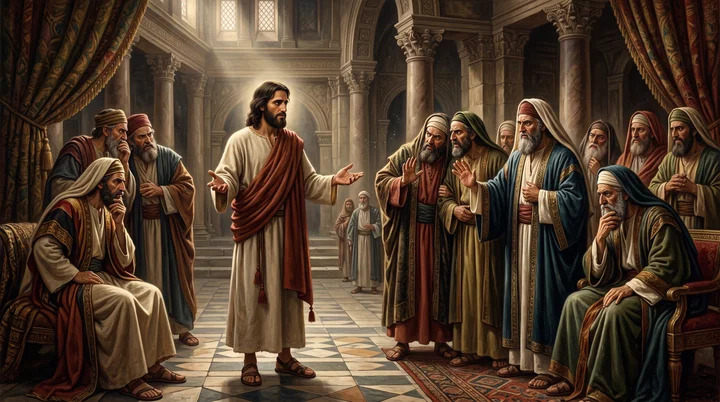
And they held their peace. And he took him, and healed him, and let him go;
Translations
American King James Version, King James Version, KJV Cambridge Paragraph Bible
And they held their peace. And he took him, and healed him, and let him go;
And they held their peace. And he took him and healed him, and let him go;
Revised Version, American Standard Version
But they held their peace. And he took him, and healed him, and let him go.
and they were silent, and having taken hold of [him], he healed him, and let [him] go;
But they were silent. And taking him he healed him and let him go.
And taking hold [of him] he healed and dismissed him,—
Berean Standard Bible, Majority Standard Bible
But they remained silent.Then Jesus took hold of the man, healed him, and sent him on his way.
But they were silent.He took him, and healed him, and let him go.
But they said nothing. And he made him well and sent him away.
And they held their peace. Then he tooke him, and healed him, and let him goe,
Douay-Rheims (Challoner revision)
But they held their peace. But he taking him, healed him, and sent him away.
Pictures
Cross-references
- Matthew 12:10-13
And, behold, there was a man which had his hand withered. And they asked him, saying, Is it lawful to heal on the sabbath days? that they might accuse him.
Jesus teaches that healing and doing good are lawful on the Sabbath.
- Luke 13:10-17
And he was teaching in one of the synagogues on the sabbath.
same contention over healing on Sabbath
- Mark 3:1-5
And he entered again into the synagogue; and there was a man there which had a withered hand.
Both accounts show Jesus healing on the Sabbath despite opposition.
- John 9:1-16
And as Jesus passed by, he saw a man which was blind from his birth.
another merciful Sabbath healing showing no violation
- John 5:8-9
Jesus saith unto him, Rise, take up thy bed, and walk.
Jesus heals a man on the Sabbath.
- Luke 6:6-10
And it came to pass also on another sabbath, that he entered into the synagogue and taught: and there was a man whose right hand was withered.
Jesus heals a man on the Sabbath amid dispute over proper Sabbath keeping.
- Matthew 12:1-8
At that time Jesus went on the sabbath day through the corn; and his disciples were an hungred, and began to pluck the ears of corn, and to eat.
Christ’s Sabbath teaching answers accusations based on human rules.
- Exodus 31:15
Six days may work be done; but in the seventh is the sabbath of rest, holy to the LORD: whosoever doeth any work in the sabbath day, he shall surely be put to death.
states Sabbath rest that Luke 14:1-5 qualifies
- John 5:10-17
The Jews therefore said unto him that was cured, It is the sabbath day: it is not lawful for thee to carry thy bed.
Both accounts show Jesus healing on the Sabbath despite objections.
- John 9:1-7
And as Jesus passed by, he saw a man which was blind from his birth.
Jesus heals a man born blind.
- Exodus 23:12
Six days thou shalt do thy work, and on the seventh day thou shalt rest: that thine ox and thine ass may rest, and the son of thy handmaid, and the stranger, may be refreshed.
states Sabbath rest that Luke 14:1-5 qualifies
- Mark 2:27-28
And he said unto them, The sabbath was made for man, and not man for the sabbath:
cited together to show Sabbath is beneficent
- Mark 1:29-31
And forthwith, when they were come out of the synagogue, they entered into the house of Simon and Andrew, with James and John.
Jesus heals Peter’s mother-in-law that Sabbath day.
- John 7:19-24
Did not Moses give you the law, and yet none of you keepeth the law? Why go ye about to kill me?
listed together as lawful Sabbath works of Jesus
Commentary
Each commentary is drawn from primary sources: the writings of Ellen G. White and Adventist pioneers and periodicals. Each commentary is separate. Its own words are not a quotation; follow the references to read the source passages.
Ellen G. White
3 sources
Jesus had accepted an invitation to a meal and turned the gathering into an occasion for teaching lessons suited to his hearers.MYP 406.2 This friendly engagement with others, including people who were not religious, is the setting of the verse.MYP 406.2 The verse belongs within Luke 14:2-14, which warns against the danger of striving for the highest place and teaches humility in place of exalting self, spoken as a parable yet describing scenes actually witnessed in life.Ms 58, 1895, par. 1–3 That wider passage calls for blessing by inviting the poor, the maimed, the lame, and the blind who cannot repay, with recompense at the resurrection of the just.Ms 58, 1895, par. 1–3
Their holding their peace was a deliberate refusal by the lawyers and Pharisees to answer Jesus' question whether it was lawful to heal on the Sabbath day.ST Feb 6, 1896 Honesty would have required them to admit that the law does not forbid work that relieves the suffering of man or beast on the Sabbath.ST Feb 6, 1896 They also kept silent because they knew Jesus understood the law perfectly and would make plain their misrepresentations and unveil their subterfuges before the guests.ST Feb 6, 1896 Their silence removed any immediate ground to charge him with Sabbath-breaking.ST Feb 6, 1896
He then took the man with dropsy, restored him to health as evidence that life was in him, and let him go.ST Feb 6, 1896 The healing together with the teaching answered that healing on the Sabbath is lawful and showed the fallacy of the argument that such mercy violated the Sabbath.ST Feb 6, 1896 His opponents were left constrained to silence, with no answer that would not place them in an unfavorable light.ST Feb 6, 1896
Sources
Pioneers and periodicals
24 sources
On the Sabbath in the house of a chief Pharisee where He was watched with malicious intent, Jesus asked if healing was lawful, met deliberate silence, then took the dropsical man set before Him as a trap, restored him to health and sent him away.RH Feb 3, 1852RH Feb 11, 1862RH May 5, 1874ST Nov 14, 1900ST Mar 2, 1882 The lawyers and Pharisees held their peace because to answer Yes would condemn their own tradition and to answer No could not be sustained by fair argument, and honesty would have required admitting the law does not forbid relieving man or beast.ST Feb 6, 1896RH Feb 11, 1862ST Mar 2, 1882 Healing the sick and doing good to relieve suffering on the Sabbath is lawful, fitting and worthy of the Sabbath and its Lord, in keeping with the true letter and spirit of the law and not a violation of the command to rest.RH Feb 3, 1852RH Feb 11, 1862RH May 5, 1874 The act did not abolish, weaken or relax the fourth commandment, for as Lord of the Sabbath He kept it inviolate and magnified the law, while vindicating it as a merciful institution and ridding it of burdensome human traditions against healing that obscured its original purpose.ST Feb 6, 1896RH Feb 11, 1862RH Apr 7, 1851 His Sabbath keeping after He became the Son of Man is the example for those in whom the Spirit dwells to follow, showing the Sabbath to be a sign and channel of God's creating and recreating power to deliver and heal, a day of refreshment, delight and holy joy, and making its proper keeping the test of lawful obedience.ST Jun 11, 1894ST Jul 8, 1897RH Jan 7, 1862
Setting and Immediate Action
The healing took place on the Sabbath in the house of a chief Pharisee, a ruler of the Pharisees, where Jesus was being watched with intense malicious observation.RH Feb 11, 1862ST Jul 23, 1894ST Mar 2, 1882 He had been invited with profession of friendship and affection so that He could be observed privately and insidiously in the freer talk of eating and drinking.ST Mar 2, 1882 The watching was meant to turn His conduct to accusation against Him and to take His life.ST Mar 2, 1882
The man with dropsy stood before Him because he had been brought there by the host to trap Him.ST Mar 2, 1882 The certainty was that Jesus' compassion would move Him to heal the man at once, giving plausible ground to charge Him with Sabbath-breaking.ST Mar 2, 1882 The watchers were looking to see whether He would do good, and His Sabbath healing increased His favor with the people while increasing antagonism from the religious leaders.ST Nov 14, 1900ST Mar 2, 1882
When Jesus asked whether it was lawful to heal on the Sabbath day, the lawyers and Pharisees deliberately held their peace and remained silent.ST Feb 6, 1896RH Feb 11, 1862ST Mar 2, 1882ST Jul 23, 1894 To answer Yes would have condemned their own tradition, while to answer No could not be sustained by fair argument.RH Feb 11, 1862 Honesty would have required admitting that the law does not forbid work that relieves the suffering of man or beast on the Sabbath.ST Feb 6, 1896 They knew He understood the law perfectly and would make plain their misrepresentations and unveil their subterfuges before the guests, and they did not dare to answer in any way that would not place them in an unfavorable light.ST Feb 6, 1896RH Apr 28, 1863RH Apr 28, 1863 Their silence removed any immediate ground to charge Him with Sabbath-breaking.ST Feb 6, 1896
He then took the man with dropsy who was before Him, restored him to health as evidence that life was in Him, healed him, and let him go or sent him away.ST Feb 6, 1896RH Feb 3, 1852RH May 5, 1874RH Apr 25, 1854ST Jul 23, 1894 The healing was a lawful act of mercy and well-doing under the commandment to rest, not a violation of it.RH May 5, 1874RH Apr 25, 1854RH Oct 21, 1851RH May 5, 1874 It exposed the hypocrisy of those who condemned such acts.RH Oct 21, 1851
Afterward He silenced them further with the question which of them would not straightway pull an ox or ass fallen into a pit out on the Sabbath, which they could not answer.RH Feb 11, 1862RH Apr 28, 1863 The healing in Luke 14:1-6 is the last recorded Sabbath healing, a glorious act with which Jesus honored the Sabbath.RH Apr 28, 1863RH Apr 28, 1863 He performed this cure as one of several Sabbath miracles, and He did not refrain from healing on the holy day merely to avoid offending Pharisaic prejudice.ST Apr 14, 1881 The act belongs to His long continued and powerful effort in behalf of the Sabbath.RH Apr 28, 1863
Sabbath Law and Mercy
Healing the sick and doing good to relieve suffering and distress on the Sabbath is lawful, fitting, and worthy of the Sabbath and its Lord.RH Feb 3, 1852RH Feb 11, 1862RH May 5, 1874ST Jun 11, 1894ST Feb 16, 1882 Such mercy is consistent with the law and its true letter and spirit, and is not a violation of the commandment to rest.RH May 5, 1874ST Jun 11, 1894RH Apr 7, 1851ST Feb 16, 1882RH May 19, 1851 It is lawful according to the law to do well on the Sabbath days by healing the sick, for the day was hallowed for humanity and is honored by acts of mercy.RH Feb 3, 1852ST Jun 11, 1894RH Apr 7, 1851 The healing did not abolish, weaken, violate, or relax the fourth commandment.RH Apr 7, 1851 As Lord of the Sabbath from the seventh day of creation He kept it inviolate and kept His Father's commandments in which the Sabbath is embraced, and did not re-enact it under the gospel, but magnified the law and restored the commandment's spirit by removing human traditions that obscured it.RH Apr 7, 1851
By such acts and teaching He vindicated the Sabbath as a merciful institution and rid it of Pharisaic human traditions and burdensome prohibitions, especially against healing, that voided the commandments and perverted its original purpose.ST Feb 6, 1896RH Feb 11, 1862ST Jun 11, 1894 The healing with the teaching answered the lawfulness question and showed the fallacy of the argument that such mercy violated the Sabbath.ST Feb 6, 1896RH Feb 11, 1862ST Jun 11, 1894 The Sabbath law forbids all labor not required by necessity or mercy, and Luke 14:1-5 lays down those as the only exceptions to the command to do no work on the Sabbath.RH Jun 18, 1861 Healing on the Sabbath is conformable to the Sabbath commandment as doing good and doing well, not an exception or relaxation of it.RH May 19, 1851
The account in Luke 14:1-5 shows how Jesus kept the Sabbath after He became the Son of Man, and His Sabbath keeping is the example those in whom the Spirit of God dwells will follow. Keeping it after that example brings delight in the Lord and understanding that the Sabbath is a sign between God and His people that He is the Lord their God and that the creating power is sufficient to recreate them as new creatures in Christ Jesus. Christ's healing showed the Sabbath is a sign and channel of God's power to deliver and heal, revealing God's purpose against human traditions.ST Jul 8, 1897 The Sabbath is merciful and beneficent, not a cause of distress but a day of refreshment, delight, blessing and holy joy, made for the refreshment and delight of His people.ST Jun 11, 1894ST Jul 8, 1897RH Jan 7, 1862 God regards even animal suffering and wants it relieved on the Sabbath, much more the distress and needs of His people.RH Jan 7, 1862
Proper keeping of the Sabbath became the chief point of contention between Christ and His disciples and the Jews and Pharisees, who complained and accused Him for deeds of mercy and goodness.ST Jun 11, 1894 By precept and example He taught how to properly observe it, thus making proper Sabbath keeping the test of lawful obedience to God's commandments.ST Jun 11, 1894
Prophetic and Chapter Context
Luke 14 belongs with the second call to the supper, which was to be made quickly to the wounded in the streets and lanes.LDT 192.4–193.2 That call is the message given after the disappointment of April 1844.LDT 192.4–193.2 Luke 14 also teaches the parable of the first call to the marriage supper, which tests the heart so that none who in heart reject it shall ever appear as guests at the table.RH Mar 6, 1855
The preaching of the hour of God's judgment and the immediate coming of the Lord was that first call to the churches.RH Mar 6, 1855 Its scornful rejection showed their hearts were with the world and not with the Lord, and refused the healing it would have brought from temporal hopes, false views of the Second Advent, justification of oppression, pride and conformity to the world.RH Mar 6, 1855 This left Babylon given up to its own desire.RH Mar 6, 1855 The verse stands in a section where miracle and teaching are interspersed, leading to the parable of the great supper in which the conditions of salvation are laid down strongly and clearly.ST Apr 7, 1909
Sources