Matthew 26:53
Thinkest thou that I can not now pray to my Father, and he shall presently give me more than twelve legions of angels?
Translations
Think you that I cannot now pray to my Father, and he shall presently give me more than twelve legions of angels?
Thinkest thou that I can not now pray to my Father, and he shall presently give me more than twelve legions of angels?
Thinkest thou that I cannot now pray to my Father, and he shall presently give me more than twelve legions of angels?
Thinkest thou that I cannot now pray to my Father, and he will presently give me more than twelve legions of angels?
Revised Version, American Standard Version
Or thinkest thou that I cannot beseech my Father, and he shall even now send me more than twelve legions of angels?
dost thou think that I am not able now to call upon my Father, and He will place beside me more than twelve legions of messengers?
Or thinkest thou that I cannot now call upon my Father, and he will furnish me more than twelve legions of angels?
Or thinkest thou that I cannot call upon my Father, and he will set near me, even now, more than twelve legions of messengers?
Are you not aware that I can call on My Father, and He will at once put at My disposal more than twelve legions of angels?
Are you not aware that I can call on My Father right now, and He will at once put at My disposal more than twelve legions of angels?
Or do you think that I couldn’ t ask my Father, and he would even now send me more than twelve legions of angels?
Does it not seem possible to you that if I make request to my Father he will even now send me an army of angels?
Either thinkest thou, that I can not now pray to my Father, and he will giue me moe then twelue legions of Angels?
Douay-Rheims (Challoner revision)
Thinkest thou that I cannot ask my Father, and he will give me presently more than twelve legions of angels?
Pictures
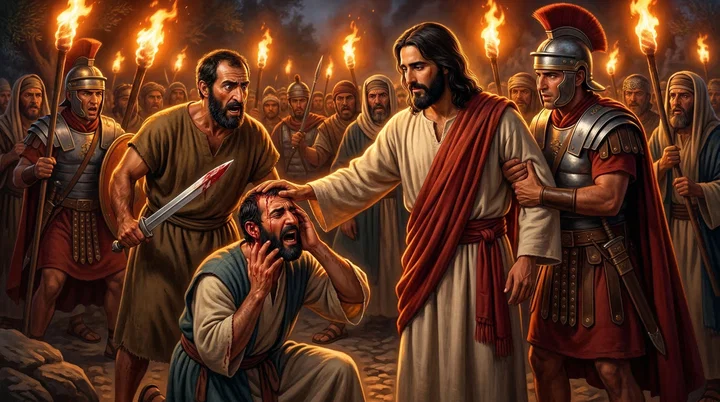
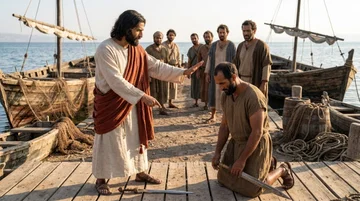
Cross-references 20 of 22
- John 18:11
Then said Jesus unto Peter, Put up thy sword into the sheath: the cup which my Father hath given me, shall I not drink it?
Jesus rebukes Peter’s sword and accepts the cup given by his Father.
- Luke 22:51
And Jesus answered and said, Suffer ye thus far. And he touched his ear, and healed him.
Jesus heals the servant’s ear while refusing angelic rescue.
- John 18:36
Jesus answered, My kingdom is not of this world: if my kingdom were of this world, then would my servants fight, that I should not be delivered to the Jews: but now is my kingdom not from hence.
Jesus says his kingdom is not defended by fighting or worldly force.
- Matthew 26:39
And he went a little further, and fell on his face, and prayed, saying, O my Father, if it be possible, let this cup pass from me: nevertheless not as I will, but as thou wilt.
Jesus submits to the Father’s will rather than escape suffering.
- Mark 14:48-49
And Jesus answered and said unto them, Are ye come out, as against a thief, with swords and with staves to take me?
Jesus addresses the crowd arresting him and says Scripture must be fulfilled.
- Hebrews 1:14
Are they not all ministering spirits, sent forth to minister for them who shall be heirs of salvation?
Angels are ministering spirits who serve and deliver people.
- John 10:18
No man taketh it from me, but I lay it down of myself. I have power to lay it down, and I have power to take it again. This commandment have I received of my Father.
Jesus had power to avoid death but willingly laid down his life.
- Psalms 34:7
The angel of the LORD encampeth round about them that fear him, and delivereth them.
The Lord’s angel protects and delivers those who fear him.
- John 18:6
As soon then as he had said unto them, I am he, they went backward, and fell to the ground.
His power to make the arresting mob fall shows the power he chose not to use.
- Revelation 5:11
And I beheld, and I heard the voice of many angels round about the throne and the beasts and the elders: and the number of them was ten thousand times ten thousand, and thousands of thousands;
Both describe a vast number of angels.
- Matthew 4:11
Then the devil leaveth him, and, behold, angels came and ministered unto him.
Angels ministered to Christ after his victory, though he could have summoned them.
- Luke 9:54-55
And when his disciples James and John saw this, they said, Lord, wilt thou that we command fire to come down from heaven, and consume them, even as Elias did?
Jesus rebukes his disciples’ proposal to use retaliatory force.
- 1 Peter 2:23
Who, when he was reviled, reviled not again; when he suffered, he threatened not; but committed himself to him that judgeth righteously:
Christ did not threaten or resist, though he could have summoned angelic power.
- Luke 22:36-38
Then said he unto them, But now, he that hath a purse, let him take it, and likewise his scrip: and he that hath no sword, let him sell his garment, and buy one.
Jesus’ sword instruction accompanies his prophecy of being counted among transgressors.
- Luke 4:10
For it is written, He shall give his angels charge over thee, to keep thee:
Christ refused to presume on angelic protection, though angels were at his Father's command.
- Matthew 27:41-44
Likewise also the chief priests mocking him, with the scribes and elders, said,
The mockers challenged Jesus to come down from the cross, though he could have summoned angels.
- 2 Kings 19:35
And it came to pass that night, that the angel of the LORD went out, and smote in the camp of the Assyrians an hundred fourscore and five thousand: and when they arose early in the morning, behold, they were all dead corpses.
An angel’s destruction of the Assyrian army illustrates the angels’ power.
- John 18:22-23
And when he had thus spoken, one of the officers which stood by struck Jesus with the palm of his hand, saying, Answerest thou the high priest so?
Jesus endures an insult without calling on angels for rescue.
- Revelation 19:14
And the armies which were in heaven followed him upon white horses, clothed in fine linen, white and clean.
Angelic armies follow Christ as their commander.
- Luke 22:44
And being in an agony he prayed more earnestly: and his sweat was as it were great drops of blood falling down to the ground.
Both describe Christ’s agony in Gethsemane before his arrest.
Commentary
Each commentary is drawn from primary sources: the writings of Ellen G. White and Adventist pioneers and periodicals. Each commentary is separate. Its own words are not a quotation; follow the references to read the source passages.
Ellen G. White
64 sources
Spoken as He was seized in Gethsemane after Peter cut off the servant's ear, it means He could then have prayed to His Father and at once have been given more than twelve legions of angels to protect and deliver Him from His captors.5RED 24.2–3ST Aug 21, 1879Ms 29, 1909, par. 10–11Ms 42, 1897, par. 23–27COS 123.2 The number speaks of an immense host at His bidding, a legion for each disciple and armies ready to do His will.DA 696.3Lt 232, 1903, par. 31–34Lt 20, 1895, par. 11 His capture was voluntary submission and not force, for He had full power to resist and escape yet made no effort to deliver Himself.5RED 24.2–3COS 123.3–4ST Dec 9, 1897 He withheld that prayer and refused rescue by miracle because the Scriptures that He must suffer thus had to be fulfilled in His being taken.5RED 24.2–3ST Aug 21, 1879Ms 113, 1899, par. 24 He chose to drink the cup His Father had given Him and to die rather than call the heavenly host, because only His life could pay the ransom to rescue humanity from ruin and one failure to bear the test would have made the offering imperfect and the redemption fail.5RED 59.13SP 139.1EW 139.1SG1 50.23SP 122.1–3
Arrest In Gethsemane
The saying belongs to the night of His last agony when He went with His disciples to the garden of Gethsemane.DA 685.2DA 685.1 That was Passover night, under a broad full moon shining from a cloudless sky while the city of pilgrims' tents was hushed into silence.DA 685.1 He who had always walked in the light of God's presence and always did what pleased Him then came to feel shut out from the Father's sustaining presence as He was numbered with transgressors, taking the guilt and iniquity of fallen humanity upon Himself though He knew no sin, with sin appearing dreadful and God's wrath against transgression terrible, and His soul exceeding sorrowful even unto death.DA 685.2
It was spoken at the moment He was seized by the band led by Judas, after Satan had put it into Judas's heart to betray Him and had entered into him.Ms 113, 1899, par. 24 Judas betrayed Him with expressions of love, with a kiss, and all His disciples forsook Him and fled.Ms 95, 1897, par. 10–12 It belongs to the scene in which He is seized in Gethsemane and taken away for trial, betrayed and subjected to mockery and violence as Satan works upon human hearts.Ms 113, 1899, par. 24ST Nov 30, 1882
It was spoken to Peter after Peter in anger rashly drew his sword and cut off the high priest's servant's ear.5RED 24.2–3ST Jun 6, 1878COS 122.5–123.1 Though held firmly by Roman soldiers, He freed His own hands to touch the wound and instantly heal the ear.5RED 24.2–3ST Jun 6, 1878COS 122.5–123.1 He told Peter to put away the sword because those who use the sword perish by it, and so rebuked violent defense, though He had taught openly daily in the temple yet was arrested with swords and clubs by chief priests and temple officers.5RED 24.2–3COS 123.2COS 122.5–123.1
He had prepared His faithful and true disciples beforehand for the betrayal, condemnation, rejection, agony, and crucifixion, so that the trial of their faith would not take them by surprise or cause loss of faith.4RED 102.2–103.1DA 394.2–3 After the long agony in the Garden He was betrayed by Judas, one of His professed disciples, and arrested by a band of men and soldiers with staves and spears.Ms 107, 1893, par. 2Ms 95, 1897, par. 10–12 Through insult, mockery, scourging, and the disgraceful farce of a trial from Annas to Caiaphas to Pilate to Herod and back to Pilate, He bore Himself with dignity, failing not, speaking no word except what was essential and tended to glorify God.Ms 95, 1897, par. 10–12 Before Pilate the accusers' testimony contradicted one another and was valueless, and Pilate declared he found no fault in Him.Ms 107, 1893, par. 2
Offer Of Angelic Help
At that moment He could pray to His Father and would presently and at once be given more than twelve legions of angels to protect, rescue and deliver Him from arrest and from His captors.ST Aug 21, 1879Ms 29, 1909, par. 10–11Ms 42, 1897, par. 23–27Ms 113, 1899, par. 24ST Dec 9, 1897 He had power to ask for that help and escape arrest, yet withheld that prayer and did not use that power to escape the trial and suffering before Him.ST Aug 21, 1879Ms 29, 1909, par. 10–11Ms 42, 1897, par. 23–27Ms 113, 1899, par. 24ST May 20, 1889 He chose not to call on them while being seized and would not have His followers defend Him with swords, accepting capture rather than being forced.ST Dec 9, 1897ST May 20, 1889
The number means an immense host under His authority and ready at His bidding, armies of angels standing ready to do His bidding.DA 696.3Lt 232, 1903, par. 31–34Lt 20, 1895, par. 11Lt 58, 1906, par. 4–5 It is described as a legion for each disciple, as ten thousand angels that could have been brought, and as heaven's armies He could command.DA 696.3Lt 232, 1903, par. 31–34Lt 20, 1895, par. 11 With that host Christ is always with the majority.Lt 20, 1895, par. 11
The same divine power that struck the armed mob prostrate and helpless on the ground could have kept them helpless until He and His companions passed unharmed beyond their reach.5RED 24.2–3COS 122.5–123.1 He had power to strike the mob down as dead men and hold them helpless until escape, and to strike revilers and blasphemers as dead men by angelic presence and brightness.COS 122.5–123.13SP 139.13SP 122.1–3 Even the least and weakest angel if summoned could have instantly overpowered and dispersed the cruel mob and insulting throng and delivered Him.3SP 139.1SG1 50.23SP 122.1–3 Unseen angels also surrounded Him when enemies threatened to stone Him, and He stood calm and unafraid knowing they could stop the attack.ST Nov 27, 1893
As Commander in the heavenly courts accustomed to receive attendance, adoration and homage, He had angels of God ready to come at His bidding right to this small world.Ms 16, 1893, par. 6Ms 72, 1902, par. 17Lt 7, 1900, par. 13–22 The angels wanted to surround their Commander and disperse the attackers, sympathizing with Him as their loved Commander.SG1 48.1EW 137.1Ms 72, 1902, par. 17 They were eager to break ranks to go to His assistance.SG1 48.1EW 137.1Ms 72, 1902, par. 17
Willing Refusal To Escape
His seizure was voluntary surrender and not compulsion, helplessness, weakness, or inability to get away.5RED 24.2–3COS 123.3–4ST Dec 9, 1897ST Sep 23, 1886ST Jun 6, 1878 He made no attempt to free Himself from His enemies and submitted to being taken, though unlimited divine help stood at hand for the asking.5RED 24.2–3COS 123.3–4 He had full power to resist and to escape arrest by praying to His Father for immediate angelic deliverance, and that very power to resist proves His capture was accepted and not forced.ST Dec 9, 1897ST Jun 6, 1878 The same power that struck the armed mob prostrate and helpless to the ground could have kept them helpless until He and His companions passed unharmed beyond their reach.5RED 24.2–3
He refused armed defense and rescue by angels, would not have His followers defend Him with swords, and would not resist arrest but let Himself be taken and bound.COS 123.2ST Dec 9, 1897COS 122.5–123.1 Though He had taught openly daily in the temple, He willingly let chief priests and temple officers seize Him with swords and clubs and did not ask His Father for rescue.COS 123.2 After Peter in anger rashly drew his sword and cut off the high priest's servant's ear, He freed His own hands though firmly held by Roman soldiers, touched and instantly healed the wounded ear, and told Peter to put away the sword because those who use the sword perish by it.5RED 24.2–3ST Jun 6, 1878COS 122.5–123.1 He had power to strike the mob down as dead men and hold them helpless until He and His companions escaped, and He could at once have been given an immense host of angels, yet He rebuked force and refused rescue.COS 122.5–123.1
The disciples did not understand His submission and were offended that He did not use that power to deliver Himself.COS 123.3–4 Judas reasoned that because He could deliver Himself from arrest, betrayal could not change what was destined to happen, so that if He was to die He would be crucified and if not He would escape.DA 720.3 Judas expected Him to be released and protected by divine power as before, and only when He continued to endure indignities without being rescued did Judas fear that he had betrayed Him to His death.COS 133.3–4
While standing bound and abused in the judgment hall as the Majesty of heaven He kept full command of divine help and deliberately refused to use it.3SP 139.13SP 122.1–3 He had power in an instant to call to His aid legions of holy angels, with even the least angel able at summons immediately to overpower the cruel mob and disperse the insulting throng.3SP 139.13SP 122.1–3 He Himself could have struck the excited multitude dead with a look or word of divinity, flashed forth His divine majesty upon His tormentors, and driven them frightened from His presence as He had driven the defilers of the temple, yet He answered with no word or look of retaliation.3SP 139.13SP 122.1–3
Scripture Fulfilled Through Suffering
He held back that prayer and refused to be delivered or to escape by miracle because the Scriptures had to be fulfilled in His being taken, that it must happen in this way and that He must suffer in this way.5RED 24.2–3Ms 113, 1899, par. 24ST May 20, 1889ST Sep 23, 1886DA 696.3 He could have prayed to His Father at the moment He was seized by the band led by Judas and would at once have been given more than twelve legions of angels, a legion for each disciple, yet He would not resist arrest.5RED 24.2–3ST Aug 21, 1879Ms 113, 1899, par. 24ST Sep 23, 1886DA 696.3 His refusal was not weakness or inability to escape, for the same power that struck the armed mob prostrate and helpless could have kept them helpless until He and His companions passed beyond reach.5RED 24.2–3ST Sep 23, 1886 He rebuked Peter's violent sword-stroke that cut off the high priest's servant's ear, freed His own hands though firmly held, touched and instantly healed the ear, and let Himself be taken.5RED 24.2–3
He accepted the suffering and sacrifice appointed to Him and chose to drink the cup His Father had given Him and to submit to crucifixion rather than call on the heavenly host.5RED 24.2–3ST Aug 21, 1879ST May 20, 1889ST Sep 23, 1886DA 696.3 He could have prayed for more than twelve legions of angels to protect and rescue Him from His captors, but He chose not to resist arrest.5RED 24.2–3ST Aug 21, 1879Ms 42, 1897, par. 23–27ST May 20, 1889ST Sep 23, 1886 His willing submission was the fulfillment of what was written and the drinking of the appointed cup.5RED 24.2–3ST Aug 21, 1879ST May 20, 1889ST Sep 23, 1886DA 696.3
He did not seek release because He had to suffer the violence and scorn and abuse of wicked men to carry out the plan of salvation and the plan of redemption to which He had consented when He became Redeemer, to pay the ransom for humanity and rescue humanity from ruin.EW 139.1SG1 50.23SP 122.1–3ST Jun 7, 1905 Even the weakest angel could have overpowered the crowd and the least angel if summoned could have instantly dispersed the insulting throng and delivered Him, yet He answered with no word or look of retaliation.SG1 50.23SP 122.1–3 While He stood bound and abused in the judgment hall He kept full command of divine help and deliberately refused to use it, though He Himself could have struck the excited multitude dead with a look or word of divinity or driven them frightened from His presence as He had driven the defilers of the temple.3SP 122.1–3 His death was necessary to save many, no angel's life could pay the debt, and only Jesus' life could serve as the ransom accepted by the Father, so He did not use that power to avoid His work of redeeming the human race.EW 121.1ST Jun 7, 1905
He endured insult and abuse with meekness and patience and with dignified composure and resisted the temptation to retaliate or escape by miracle, keeping Himself a perfect offering.5RED 59.13SP 139.1DA 734.1–5 He had power to command the heavenly hosts and in an instant call to His aid legions of holy angels, with even one able to immediately overpower the cruel mob, and had power to strike down tormentors by flashing forth His divine majesty, yet He submitted to the coarsest insult and outrage.5RED 59.13SP 139.1DA 734.1–5 Satan instigated the cruel abuse by the debased mob led on by priests and rulers to provoke retaliation from the world's Redeemer or drive Him to deliver Himself by a miracle and thus break up the plan of salvation.3SP 139.1 One stain upon His human life and one failure of His humanity to bear the terrible test would have made the Lamb an imperfect offering and made the redemption of humanity fail, while His meekness and patience exalted Him above humanity and the acts of His torturers degraded them below humanity into the likeness of Satan.5RED 59.13SP 139.1DA 734.1–5
His death on the cross was a willing sacrifice for those who reject His rule and place themselves under Satan's rule, though He could have called on the heavenly host to deliver Him.ST Mar 26, 1894 Because Christ and the Father are one, God Himself was crucified with Christ.ST Mar 26, 1894
Heaven Restrained At Calvary
Holy angels were present at His suffering yet were ordered not to act, bidden not to break ranks to engage the taunting and reviling foe, and forbidden to interfere with His suffering and death.ST Dec 21, 1888ST Aug 28, 1879ST Feb 15, 18832T 214.1–3 They were not permitted to minister to His anguished spirit or to give Him relief, sympathy, or comfort, though they pitied Him as their beloved Commander and longed to speak a word for Him.ST Dec 21, 1888ST Aug 28, 1879ST Feb 15, 18833SP 168.2 He therefore faced the darkness, the hiding of His Father's face, the sins of the world laid upon Him, and the power of Satan without angelic rescue or comfort until the cry of forsakenness was wrenched from Him.ST Dec 21, 1888ST Aug 28, 1879ST Feb 15, 1883 He yielded up His life forsaken by His believers and unattended by heaven.3SP 168.2
Legions of evil angels surrounded the Son of God in His agony and at Calvary, and He endured the darkness and the penalty of sin without relief and without yielding to His foe.ST Dec 21, 1888ST Aug 28, 1879ST Feb 15, 18832T 214.1–3 The Father's plan did not allow holy help, so they were restrained and Christ trod the winepress alone, with none of the people or angels with Him.Ms 72, 1902, par. 17 Angels waited in hope that, as Isaac had been spared, Jesus would be spared at the last moment, but their silence marked the difference that Isaac was released while God's Son was allowed to die.STSE 41.2–42.13T 369.2–3 He received no reprieve but endured humiliation, mockery, and crucifixion to rescue humanity from ruin, and His willing suffering and death reveal infinite love calling for complete willing obedience and devotion in return.STSE 41.2–42.13T 369.2–3
The hosts of heaven witnessed His humiliation, and angels faithfully recorded every insulting look, word, and act against their Commander.3SP 122.1–3 The men who scorned and spat upon His calm, pale face will see that face in glory shining brighter than the sun and will pray to be hidden from Him.3SP 122.1–3
Humility Leaves Human Example
Though He could command more than twelve legions of angels to render Him homage and display His true princely character as heaven's King and Prince, He set aside that display of power and did not come attended by heavenly hosts.STB 800.2SSP 25.2Ms 175, 1903, par. 14 Laying aside His royal robe and kingly crown and concealing His divinity, He came to this small world in human form and garb, in lowliness, humility, and poverty, without honor, recognition, or angelic retinue.SSP 25.2Ms 175, 1903, par. 14Ms 42, 1905, par. 3–5 He was born to poor parents and came as a babe and child who lived and learned as a child, passing through human experience to be an example in all things and the great example of missionary work.Ms 175, 1903, par. 14
He honored the world by taking human nature upon Himself and honoring humanity in the sight of all created intelligences, coming to redeem the world and to bring hope and life and rescue people from destruction.Ms 16, 1893, par. 6 He stood in this world as a man among men, subject to the temptations of the enemy but never swerving from loyalty to His heavenly Father.Ms 42, 1905, par. 3–5 Though able to command the angels, He did not use His divine power to spare Himself the ordinary burdens of life, but lived and worked as a humble carpenter, sharing human toil, hardship, griefs, and ordinary burdens.LC1 46.2ST Oct 9, 1884
He never exercised His power for His own rescue or to spare Himself suffering, keeping His will anchored in His Father's will in willing submission and refusing to deviate from the path of God's appointment.LC1 46.2ST Oct 9, 1884Lt 7, 1900, par. 13–22 When people sought to kill Him, angels sometimes preserved His life, yet He Himself did not call for twelve legions for His own deliverance.LC1 46.2Lt 7, 1900, par. 13–22 No bribe and no temptation to manifest His divine prerogatives could move Him, for three times Satan assailed Him on appetite, on pride, by captivating scenes of this world, and by challenge to give evidence that He was the Son of God, yet He gave none but righteously maintained His dignity as One to whom God has committed all power.Lt 7, 1900, par. 13–22
His mission in human character required Him meekly to endure taunts, stripes, insults, and blows as a passive captive, leaving an example of patient forbearance for the children of men.ST Jun 13, 18785RED 34.2–35.1COS 126.73SP 114.2–115.1 Even while a prisoner and the Majesty of heaven He had power in an instant to summon legions of loyal holy angels, with even one able at once to overpower the cruel mob, and to strike down tormentors by flashing forth His divine majesty, yet He submitted to the coarsest insult and outrage with dignified composure.3SP 139.1COS 150.2–151.1ST Jun 13, 1878 His meekness and patience exalted Him above humanity and showed His kinship to God, while His captors, taking forbearance as license and signal for the basest insults their corrupt hearts could invent, degraded themselves below humanity into the likeness of Satan, led on by priests and rulers.3SP 139.1COS 150.2–151.1ST Jun 13, 1878
As the just dying for the unjust He bore the penalty of human sin without murmur, and though Son of God whose throne is from everlasting and whose kingdom shall have no end, He let Himself be made a subject of jest and merriment, reviling and hatred.ST Mar 17, 188721MR 366.1Lt 8, 1854, par. 10–11 When reviled He threatened not, when falsely accused He opened not His mouth, and on the cross He prayed for His murderers while dying for them and paying an infinite price for every one of them, enduring indignity, scorn, slight, spitting, crowning with thorns, and an ignominious death on Calvary to make a way of escape for lost man and give life to the lost.RH Jul 25, 1854ST Mar 17, 188721MR 366.1Ms 6, 1854, par. 3–5 Unlike Isaac who was spared, He received no reprieve but endured humiliation, mockery, and crucifixion and died, and His willing suffering reveals God's infinite love.RH Jul 25, 18543T 369.2–3
That restraint teaches meekness and lowliness of mind and calls sinners to humble penitence at the foot of the cross, to love Him and make Him first and last and best, to leave forbidden pleasure, complaint, revenge, pride and vanity, to crave the suffering part, to be perfectly subdued from passion and impatience by grace, to endure small trials without murmur over any sacrifice, with promise that sharing His suffering leads to sharing His glory.RH Jul 25, 1854ST Mar 17, 188721MR 366.1 By accepting suffering and the temptations wherewith man is tempted in all points, He revealed that it is possible to be victorious overcomers through union with Him as He is one with the Father.STB 800.2SSP 25.2Lt 309, 1905, par. 14 His refusal of display sets the order for work with no needless grand display in medical missionary work, or in buildings, dress, adornment, means, methods, or any line, but careful study to be in accordance with His self-denying plan through earnest, persevering personal labor calling men and women to the supper God has prepared.SSP 25.2Ms 175, 1903, par. 14Ms 42, 1905, par. 3–5
He is first and best and everything, all hopes centered in Him, and He is to be made the center, having angels of God ready to come at His bidding right to this small world in working out salvation.Ms 16, 1893, par. 6 Christ has heaven's armies and the angelic host under His authority and is always with the majority.Ms 16, 1893, par. 6Lt 20, 1895, par. 11
Sources
Pioneers and periodicals
92 sources
Spoken at His arrest when He was surrounded by an armed multitude, after one of His followers cut off the servant's ear He freed His own hands, healed the wound and rebuked the sword-stroke with these words.ST Feb 7, 1900ST Oct 21, 1897ST Jun 11, 1912 More than twelve legions means a vast host, not a set limit, a legion being an army division of about three or four thousand, making some forty thousand angels in ordered ranks under commanders.ST Jul 23, 1874ST Aug 13, 1874 He could then and there have prayed to His Father and would presently have received that host to rescue Him, scatter His captors and prevent His trial and crucifixion, but He deliberately did not ask for or summon them.ST Feb 7, 1900ST Feb 6, 1907ST Aug 21, 1893 His capture was therefore voluntary submission and not forced helplessness or inability to escape, since neither men nor the devil could take His life against His will.ST Dec 9, 1897ST Sep 23, 1886ST Jun 6, 1878 He refused rescue because the Scriptures had to be fulfilled and thus it must be, showing supreme reverence for Scripture and submission to the Father's purpose and plan of redemption.ST Feb 6, 1907ST Jan 30, 1912ST Sep 20, 1910 His ordering the sword put back shows His kingdom is not of this world and is not established, advanced or defended by human fighting, heavenly force, coercion or civil power.ST Jun 11, 1912ST Aug 21, 1893ST Dec 20, 1905
Words and Arrest Setting
The saying was spoken in Gethsemane at the arrest, when Jesus was surrounded by a great multitude with swords and staves, betrayed by Judas, and taken by the mob to trial and crucifixion the next day.ST Dec 9, 1897ST Feb 7, 1900ST Oct 21, 1897 After Peter drew a sword and cut off the ear of Malchus, the high priest's servant, Jesus freed His own hands from the soldiers holding Him, healed the wound, and rebuked Peter with these words for using the sword and relying on force.ST Jun 11, 1912RH Dec 10, 1867 He had more than twelve legions of angels at His command available at once through prayer to His Father, but He did not even ask for, call, or summon them to prevent His arrest, and accepted the suffering appointed by the Father.ST Dec 9, 1897ST Feb 7, 1900ST Oct 21, 1897RH Dec 10, 1867 The disciples forsook Him and fled, and Peter denied Him, though later restored.ST Feb 7, 1900
More than twelve legions means a vast host, not a definite limit.ST Jul 23, 1874 A legion was an army division of about three or four thousand soldiers, so twelve legions would amount to roughly forty thousand angels.ST Jul 23, 1874ST Aug 13, 1874 The organization into companies supports ordered ranks under commanders.ST Aug 13, 1874 By another reckoning a Roman legion held seven thousand men, so more than twelve legions meant eighty-four thousand heavenly messengers ready to assist Christ at once.ST Dec 2, 1897 The statement partly reveals how large the heavenly host is and proves God has provided enough angels to meet every demand on heaven's resources, though the full strength of the host is far greater.ST Dec 2, 1897ST Aug 10, 1915
The angels were available to Christ during His first advent, showed keen interest in His work, and were His constant companions.ST Jun 26, 1893ST Jan 2, 1907 His sovereignty was veiled in humility, with more than ten legions ready to obey His unseen command.ST Aug 18, 1887 Unseen angels surrounded Him even when enemies threatened to stone Him so He stood calm and unafraid, knowing they could stop the attack.ST Nov 27, 1893 They surrounded even the infant Jesus so He needed no feeble arms of human protectors. In that scene of betrayal Jesus showed patient restraint, silence, and conscious innocence under insult and beating, without an unkind word or reproach to His enemies or accusers, and died without answering them.RH Oct 24, 1854
The verse belongs to the assigned reading of Matthew 26:51-75.ST Feb 3, 1909 It is part of the Gethsemane scene, where Jesus faced those who came to arrest Him.ST Jan 8, 1902 Gethsemane and the cross mark the way to heaven.ST Jan 8, 1902 The seizure in the garden amid the rabble's harsh cries belongs to the suffering that shows the cost of redemption and points to His compassion in praying for those who killed Him.ST Sep 9, 1930
Willing Submission to Suffering
He could then and there have prayed to His Father and would presently have received more than twelve legions of angels to rescue Him, scatter those arresting Him, and prevent His arrest, trial, and crucifixion, but He deliberately did not ask for, call, or summon them and accepted the suffering and cup appointed by the Father according to the Father's purpose and plan of redemption.ST Feb 7, 1900ST Feb 6, 1907ST Aug 21, 1893RH May 9, 1865ST Jul 4, 1899 He rebuked the use of the sword rather than allow either human fighting or heavenly force to keep Him from being delivered.ST Aug 21, 1879ST Dec 9, 1897ST Jun 6, 1878ST Feb 7, 1900RH May 9, 1865 His willingness to suffer rather than prevent what was written shows supreme reverence for Scripture and submission to the Father's will.ST Aug 21, 1879ST May 20, 1889ST Sep 23, 1886ST Jun 6, 1878ST Feb 6, 1907
His capture was therefore voluntary submission, not forced helplessness, weakness, or inability to escape.ST Dec 9, 1897ST Sep 23, 1886ST Jun 6, 1878RH Oct 14, 1915ST Jul 17, 1884 He had full power to escape by prayer for immediate angelic deliverance, even freeing His own hands from the soldiers holding Him to heal the wounded ear, yet chose to permit Himself to be taken and bound.ST Dec 9, 1897ST Sep 23, 1886ST Jun 6, 1878 His power to resist makes clear neither men nor the devil could take His life against His will.RH Oct 14, 1915ST Jul 17, 1884 He willingly permitted His enemies to kill Him, reserving His omnipotence for His victory over death.RH Oct 14, 1915ST Jul 17, 1884
He submitted to the Father's will, praying Thy will be done and drinking the cup the Father had given Him.ST Aug 21, 1879ST May 20, 1889ST Sep 23, 1886ST Jun 6, 1878 He bore His persecutors' cruelty patiently because He had pledged to become the sin-bearer to save those who come in faith, giving His life because humanity's redemption required it.ST Jan 17, 1900ST Jan 16, 1907ST Jun 23, 1909 He freely remained under loneliness, humiliation, betrayal, agony on the cross, and death as the price of salvation, enduring out of deep love rather than self-interest, with calm dignity and moral courage.RH Jul 25, 1854RH Feb 9, 1869ST Jun 23, 1909 His willingness to suffer to make a way of escape gives life to lost people.RH Jul 25, 1854ST Jan 16, 1907
He refused rescue because solemn vows were upon Him under a divine compact agreed with Jehovah in ages past and written in the volume of the book in the heavenly archives, which called for the life-blood of the Son, so that calling angels would have prevented what must be. He came in the fulness of time saying Lo, I come to meet it, doing only such wonderful works as were in line with His purpose to save sinners. He refused any miracle merely to gratify curiosity or to save Himself from insult and suffering, for miracles are limited to what is wrought by the will of God and in His judgment will have influence to save sinners. In resisting temptation He used for Himself no power that people cannot use in their struggle against Satan, while using divine power to bless others.RH Dec 20, 1906
His restraint was self-denying love that felt only for others' needs and never for its own.ST Nov 15, 1905ST Jan 31, 1906ST Jan 21, 1913 Having all power yet living as having none, with twelve legions armed and ready at His back, He left that rescue unused in self-restraint passing all human thought, healing another's wound while letting His own side, hands, and feet be pierced and bleed.ST Nov 15, 1905ST Jan 31, 1906ST Jan 21, 1913 He fed crowds with bread while refusing food for Himself, and though able with a word to build a palace He had nowhere to lay His head.ST Jan 31, 1906 In true humility He did not use power to defend Himself but accepted insults and death on the cross to exalt humanity.ST Nov 15, 1905ST Jan 21, 1913ST May 15, 1901
At His suffering holy angels were present but ordered not to act, break ranks, intervene, minister, relieve, or comfort Him, while legions of evil angels surrounded Him.ST Feb 11, 1913ST Dec 21, 1888ST Aug 28, 1879ST Feb 15, 1883 The holy angels were bidden not to break their ranks to engage in conflict with the taunting, reviling foe, nor permitted to minister to His anguished spirit.ST Dec 21, 1888ST Aug 28, 1879ST Feb 15, 1883 He therefore endured darkness, the hiding of His Father's face, the sins of the world upon Him, and Satan's power alone until the cry of forsakenness was wrenched from Him.ST Feb 11, 1913ST Dec 21, 1888ST Aug 28, 1879ST Feb 15, 1883 At His death no angel was permitted to relieve or comfort Him, and He gave up His life forsaken and unattended.ST Dec 21, 1888ST Aug 28, 1879ST Jul 25, 1878
Fulfillment of Scripture Prophecy
Jesus could have prayed to His Father at His arrest and at once received more than twelve legions of angels to rescue Him, yet He deliberately chose not to ask for them, not to resist, and not to escape arrest, trial and crucifixion, because the Scriptures had to be fulfilled and thus it must be.ST Aug 21, 1879ST Feb 6, 1907ST Jan 30, 1912ST Sep 20, 1910ST Aug 27, 1912 He had to drink the cup His Father had given Him, and His willingness to suffer rather than prevent fulfillment by calling for heavenly rescue shows supreme reverence for Scripture and submission to the Father's will.ST Aug 21, 1879ST May 20, 1889ST Feb 6, 1907 His appeal to fulfillment in Matthew 26:53-54 shows He treated the Old Testament Scriptures as authoritative, and His restraint illustrates that possessing divine power did not make fulfillment optional.ST Feb 6, 1907ST Aug 27, 1912
His submission to arrest, trial and crucifixion testified that God's prophetic Word is true and that prophecy stands central to confirming His Messiahship and accomplishing the plan of redemption.ST Jan 30, 1912 In His greatest trials He relied on the words of the Old Testament, and as He faced arrest and the cross its words supported Him and shaped His response around the necessity that Scripture be fulfilled.ST Jan 30, 1912ST Feb 15, 1883 Scripture cannot be broken because it is the word of God spoken by holy men through the Holy Spirit, so it had to be fulfilled even though the Son of God must suffer.ST Jun 27, 1878 That necessity embraced all things written in the law of Moses, the prophets and the Psalms concerning Him, that thus it must be and that Christ must suffer and rise from the dead the third day.ST Jun 27, 1878
The arrest in which He refused angelic rescue belongs to the account of His suffering and rejection that fulfills the prophecy that the Messiah would be despised and acquainted with grief.RH Nov 18, 1862 Though He could have called for angelic help, He was cut off without justice and forsaken by His own, and His death rendered the sacrifices and offerings of the earthly temple ineffective.RH Nov 18, 1862ST The same power to receive more than twelve legions from the Father points to the great host of innumerable angels who will descend with Him when He comes in glory, and their presence will underscore the grandeur and power of that coming as they gather His elect from every part of the earth.RH Oct 28, 1852
Kingdom Without Force
When one with him drew the sword and cut off the ear of the high priest's servant, Jesus ordered the sword put back, warned that all who take the sword perish by the sword, and declared that he could ask his Father and at once receive a vast host of angels, showing he submitted willingly and would not use human fighting or heavenly force to keep from being delivered.ST Jun 11, 1912ST Dec 10, 1894ST Feb 13, 1896ST Mar 19, 1896ST Sep 16, 1897 His rebuke of Peter for using the sword to defend him shows he would not use force to establish or defend his spiritual kingdom even though he could call on overwhelming heavenly power.ST Sep 13, 1905ST Mar 19, 1896 Carrying a sword did not justify using it in God's work, and his words to Peter teach his disciples not to defend that work with weapons, revenge, or violent crusade.ST Sep 20, 1910ST Dec 10, 1894ST Feb 13, 1896 His restraint was deliberate nonresistance, expressing true power through silence and patient endurance rather than the sword.ST Jun 11, 1912ST Jan 29, 1894
His refusal shows his kingdom is not of this world, not an earthly empire or temporal kingdom, and is not established, advanced, or defended by earthly force, military power, worldly power, civil government methods, coercion, persecution, or driving rulers from power.ST Aug 21, 1893ST Dec 24, 1896ST Mar 19, 1896ST Sep 16, 1897 His willingness to accept the Father's appointed cup rather than ask for overwhelming angelic help to prevent his arrest shows his kingdom was not to be advanced by earthly force or power.ST Aug 21, 1893ST Dec 20, 1905 He was not of the world with respect to the kingdoms and governments of men and would take no part in their politics or methods of civil government, and when about to be delivered up he forbade his servants to fight to prevent it.ST Dec 20, 1905ST Dec 24, 1896ST Sep 16, 1897 His refusal to use that power to resist arrest, oppose the Roman government, or protect himself proves his kingdom is not from hence.ST Dec 20, 1905ST Dec 24, 1896ST Sep 16, 1897
Christ's ministers may not use civil power to compel observance of a religious institution or enforce religious law, but are to preach the gospel, and true Christianity stands absolutely separate from the state and uses no force, no sword, and no persecution.RH Mar 26, 1914ST Sep 3, 1894ST Feb 20, 1893ST Jul 30, 1912ST Jun 4, 1912 God's work advances through the word and Spirit persuading the heart, through reason and spiritual persuasion and not coercion, since true worship is freely given from love and faith.ST Sep 3, 1894ST Jul 30, 1912ST Jun 4, 1912 Religion forced upon people is no true religion, and union of church and state perverts the plan of Christ to the harm of both.ST Jul 30, 1912ST Jun 4, 1912 The church's weapons are not physical arms but spiritual means, and Jesus could call on his Father for angelic aid rather than depend on human power.RH Mar 26, 1914ST Jul 1, 1908
He had power to resist those arresting him yet did not resist, setting the example of committing himself to God rather than opposing civil authority by force.ST Aug 13, 1896ST Jan 29, 1894ST Sep 11, 1901 Though he knew the arrest was part of a conspiracy and the proceedings against him were illegal, he did not use his power to resist or seek civic punishment of his accusers, but endured insult and injury in trust and committed his cause to God's righteous judgment.ST Jan 29, 1894ST Aug 29, 1895ST Mar 19, 1896 He instead accepted suffering and punishment at the hands of the civil authorities and accepted death rather than deny his mission, while remaining faithful to his Father.ST Sep 11, 1901ST Mar 19, 1896 His followers therefore should not seek political or judicial power and should accept suffering at the hands of authorities, submitting to civil authority even when innocent.ST Aug 13, 1896ST Sep 11, 1901ST Mar 19, 1896
The verse teaches resist not evil: wickedness is not to be met by might, revenge, or violent crusade, and prayer rather than the sword is the Christian's defense.RH May 9, 1865ST Sep 20, 1910ST Feb 13, 1896RH May 9, 1865 Even the defense of a sinless Master did not justify fighting, and Christians may turn to the same Father in time of need.RH May 9, 1865RH May 9, 1865 When Peter drew the sword Jesus rebuked him and healed the wound Peter had made, giving the example for Christians of nonresistance to violence.ST Oct 20, 1914ST Mar 18, 1897 The weapons of Christian warfare are not carnal but are mighty through God to pull down strongholds no earthly army can overthrow, the fortresses of sin within the heart.ST Oct 20, 1914 His refusal, joined to healing his wounded enemy, proves he came not to take life but to save it, and leaves an example Christians are called to follow by suffering unjustly patiently without complaint or resistance, since the disciple is not greater than the Lord and Christians are forbidden to fight for Christ, for themselves, or for persecuted brethren.ST Mar 18, 1897
True servants and representatives of Christ need no army of men, human law, or temporal power for protection or for furthering his cause, because divine power and Christ's presence are sufficient.ST Oct 21, 1897 In Gethsemane, when arrested by a great multitude with swords and staves and knowing he would be sacrificed on the cross the next day, he had more than twelve legions of angels at his command available at once through prayer to his Father, but he did not even ask for them and refused armed human defense.ST Oct 21, 1897 His servants include more than the small group of disciples present at his betrayal.
Divine Sonship and Prayer
The power to ask the Father for more than twelve legions of angels shows the Father and the Son are distinct, for prayer would be meaningless if He were praying to Himself.RH Nov 10, 1859 He is divine and not simply a prophet, with all things committed into His hands so that He can command invisible forces and they instantly accomplish His will at any distance, just as well-disciplined soldiers obey the slightest order of their commander without his moving from his place.ST Sep 15, 1887 The centurion understood this power when he believed Christ could heal his servant by a word without coming to his house.ST Sep 15, 1887 Those angels are ministering spirits sent forth to minister for those who shall be heirs of salvation.ST Sep 15, 1887
Christ and the Father are one, so God Himself was crucified with Christ.ST Mar 26, 1894ST Jul 23, 1912 His death was a willing sacrifice for those who reject His rule and place themselves under Satan's rule, choosing to do his work as his bond-slaves, yet for them He yielded up His life on Calvary.ST Mar 26, 1894ST Jul 23, 1912 His submission at the judgment-hall and at Calvary, although the heavenly host could have delivered Him, exposes what the human heart is capable of when under the influence of Satan.ST Jul 23, 1912 The angels suffered with Christ in His submission.ST Jul 23, 1912
His appeal demonstrates the certainty of the Father's response, for He could pray at any time and receive whatever He asked, as Martha stated unconditionally.ST Jan 7, 1897 Petitions prompted by His indwelling Spirit are likewise answered because the Spirit directs them according to God's will. Even Jesus sought the Father's aid rather than relying on force when He reproved the disciple who drew the sword, supporting the lesson that people should pray and ask in order to receive.RH Dec 10, 1867
Prayer calls on angelic power and can bring more than twelve legions from heaven, so God may be asked to send angels to help.ST Aug 1, 1916ST Aug 1, 1916RH Dec 3, 1901ST Jul 8, 1913 Angels work for the deliverance of people, shielding and delivering from danger and temptation as in Jesus' prayer for Peter's rescue, supporting those who pray for others and helping draw them toward goodness.ST Aug 1, 1916ST Aug 1, 1916 God's power and legions of angels are pledged to help those who work with Him, assuring those who serve in love that they need not serve in fear.RH Dec 3, 1901 Prayer opens access to more than twelve legions of angels, given even to a dying child, as an armory that fire and steel cannot burn.ST Jul 11, 1878 God interposes in the emergency of persecution in His own way, not by partiality for miraculous methods or hairbreadth escapes as men expect, and often while seeming to look on indifferently, striking deeper at the root of persecution in underground satanic forces, crowding the air with spiritual battalions and their strategy and rousing spiritual forces to the rescue so that violence defeats itself and the apparent success of persecution becomes its failure.ST Jul 11, 1878
Those angels are ministering spirits sent forth to minister to them who shall be heirs of salvation, not unknown and useless beings to be set aside.ST Jan 10, 1900ST Jan 10, 1900 To pray to dead loved ones for help and count a departed wife as more help than all those angels rejects that God-given ministry and turns to the dead, which is spiritism.ST Jan 10, 1900ST Jan 10, 1900 Legions of angels standing as a guard around a prophet to keep officers from taking him would dispute the authority of a marshal with a writ and prevent the clutch of the constable and confinement in jail.RH Jan 9, 1872 When a man called a prophet is arrested unresisted and hauled to jail under peril of his life, it shows no angelic legions defended him and faith in his sacredness must fail.RH Jan 9, 1872
Example for Believers Lives
He could have asked His Father for more than twelve legions of angels and received them, yet He chose not to escape suffering but endured insults and indignities in silence and went to the cross to make a way of escape for lost people and give them life.RH Jul 25, 1854RH Sep 10, 1901 He accepted death rather than save Himself and leave humanity to its fate, and His willingness to suffer is the example to follow.RH Jul 25, 1854RH Sep 10, 1901 Sharing His suffering leads to sharing His glory.RH Jul 25, 1854 He could have summoned the heavenly host to defeat His enemies, but instead He endured their violence and prayed for their forgiveness, and that restraint and prayer display the peace and goodwill that remained with Him even in suffering.ST Jul 28, 1898
As the Majesty of heaven He had power to summon legions of loyal angels to protect Him from the malignity of His enemies, but He did not use it, because His mission in human character required Him to meekly endure taunts and stripes and remain a passive captive, leaving an example of patient forbearance.ST Jun 13, 1878 His captors had no respect for this forbearance and took His refusal to resist as a signal to heap upon Him the basest insults their corrupt hearts could invent.ST Jun 13, 1878 His betrayal and arrest, when Judas among the chosen twelve betrayed Him and He was apprehended, when the disciples who were present forsook Him and fled, and when Peter denied with cursing and swearing that he knew Him though he was afterward converted and restored to favor, shows that trials, offenses, and apostasies must be expected and should not discourage as though some strange thing had happened, since even the primitive church was not free from them.RH Sep 2, 1873
His way was self-denial, not using heavenly power to secure loyalty or avoid sacrifice, not purchasing converts or raising Judas's price.ST Oct 10, 1911 Though He had the power to set Himself free and the right to be set at liberty by Pilate, and though legions of angels would render Him homage, He did not insist on personal prerogative or use His power for Himself.ST Jan 31, 1906 He denied Himself and did not regard His own life, ready to sacrifice everything but allegiance to the Father's will, because the welfare of humanity was at stake in order to save the lives of sinners.ST Jan 31, 1906 His example means the true Christian must not always insist on individual rights but must limit liberty out of regard for the good of others and the progress of the Gospel.ST Jan 31, 1906
With one word He could summon legions of angels to His assistance to escape suffering, yet He refused and gave Himself as a sacrifice for sin, the just dying for the unjust and bearing the penalty of human sin without a murmur.ST Mar 17, 1887 Though Son of God whose throne is from everlasting and whose kingdom shall have no end, He let Himself be made a subject of jest and merriment, reviling and hatred, paying an infinite price for every one of them.ST Mar 17, 1887 When reviled He threatened not, when falsely accused He opened not His mouth, and on the cross He prayed for His murderers while dying for them.ST Mar 17, 1887 His restraint teaches meekness and lowliness of mind and calls sinners to humble penitence at the foot of the cross, to love Him and make Him first and last and best, to leave forbidden pleasure, complaint, revenge, pride and vanity, and to endure small trials.ST Mar 17, 1887
Though able to command the angels He did not use divine power to spare Himself the ordinary burdens of life, but lived and worked as a humble carpenter, sharing human toil and hardship.ST Oct 9, 1884 He did not come to earth attended by heavenly hosts, but His choice to come in lowliness and poverty, taking human nature, shows His humility and willingness to live among people to rescue them from destruction.
Sources