Luke 22:55
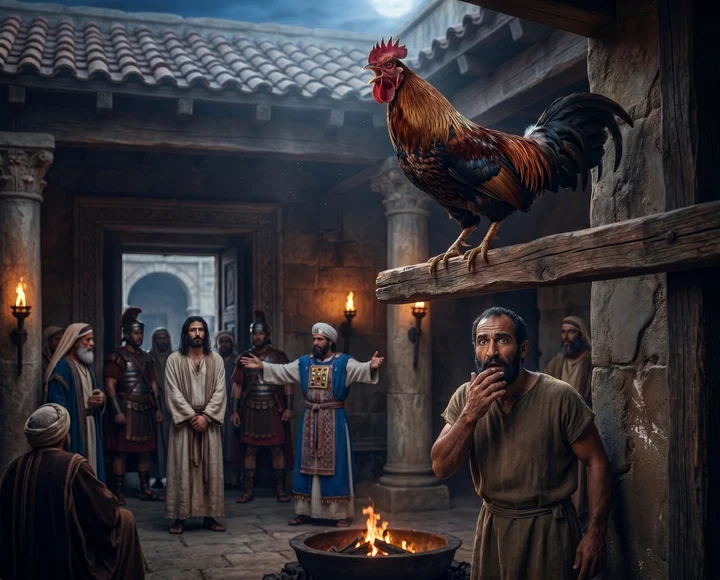
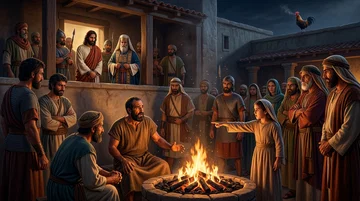
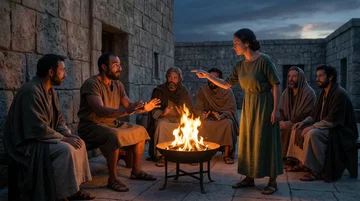
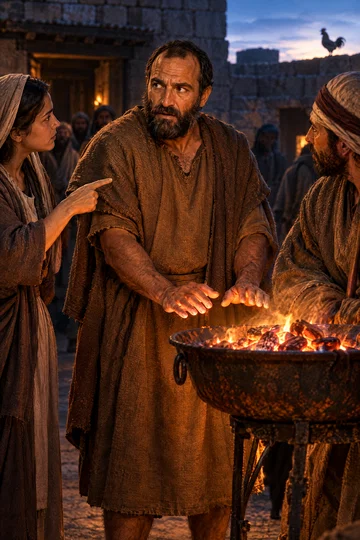
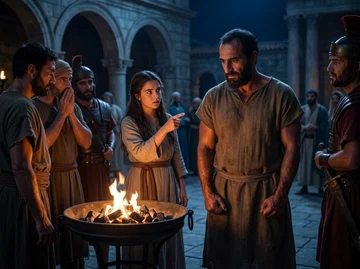
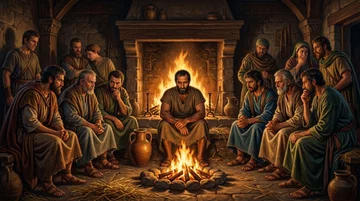
And when they had kindled a fire in the midst of the hall, and were set down together, Peter sat down among them.
Translations
And when they had kindled a fire in the middle of the hall, and were set down together, Peter sat down among them.
King James Version, KJV Cambridge Paragraph Bible, Webster Bible
And when they had kindled a fire in the midst of the hall, and were set down together, Peter sat down among them.
Revised Version, American Standard Version
And when they had kindled a fire in the midst of the court, and had sat down together, Peter sat in the midst of them.
and they having kindled a fire in the midst of the court, and having sat down together, Peter was sitting in the midst of them,
And they having lit a fire in the midst of the court and sat down together, Peter sat among them.
And, they having kindled up a fire in the midst of the court, and taken seats together, Peter was for sitting among them.
Berean Standard Bible, Majority Standard Bible
When those present had kindled a fire in the middle of the courtyard and sat down together, Peter sat down among them.
When they had kindled a fire in the middle of the courtyard and had sat down together, Peter sat among them.
And a fire was lighted in the middle of the open square, and they were seated together, and Peter was among them.
And when they had kindled a fire in the middes of the hall, and were set downe together, Peter also sate downe among them.
Douay-Rheims (Challoner revision)
And when they had kindled a fire in the midst of the hall, and were sitting about it, Peter was in the midst of them.
Pictures
Cross-references 20 of 33
- John 18:18
And the servants and officers stood there, who had made a fire of coals; for it was cold: and they warmed themselves: and Peter stood with them, and warmed himself.
Peter stands with the servants and officers, warming himself at their fire.
- Luke 22:32
But I have prayed for thee, that thy faith fail not: and when thou art converted, strengthen thy brethren.
Jesus prayed that Peter’s faith would not fail under Satan’s testing, and foretold his return to strengthen others.
- Matthew 26:69-75
Now Peter sat without in the palace: and a damsel came unto him, saying, Thou also wast with Jesus of Galilee.
Matthew recounts Peter’s denials in the courtyard and his grief afterward.
- Mark 14:66-72
And as Peter was beneath in the palace, there cometh one of the maids of the high priest:
Peter sits by the fire and denies Jesus, then the cock crows.
- Luke 22:61-62
And the Lord turned, and looked upon Peter. And Peter remembered the word of the Lord, how he had said unto him, Before the cock crow, thou shalt deny me thrice.
Jesus’ look recalls Peter’s denial and brings him to bitter remorse.
- John 21:15-17
So when they had dined, Jesus saith to Simon Peter, Simon, son of Jonas, lovest thou me more than these? He saith unto him, Yea, Lord; thou knowest that I love thee. He saith unto him, Feed my lambs.
three denials at the fire answered by three confessions
- Mark 14:54
And Peter followed him afar off, even into the palace of the high priest: and he sat with the servants, and warmed himself at the fire.
Peter follows Jesus at a distance and warms himself by the fire.
- Matthew 26:58
But Peter followed him afar off unto the high priest’s palace, and went in, and sat with the servants, to see the end.
Peter follows Jesus at a distance and sits among the attendants.
- Luke 22:34
And he said, I tell thee, Peter, the cock shall not crow this day, before that thou shalt thrice deny that thou knowest me.
Peter sits among them after Jesus predicts his denial.
- John 18:25-27
And Simon Peter stood and warmed himself. They said therefore unto him, Art not thou also one of his disciples? He denied it, and said, I am not.
Continues the courtyard scene with Peter’s denials and the cock’s crow.
- Matthew 26:33
Peter answered and said unto him, Though all men shall be offended because of thee, yet will I never be offended.
Peter’s confident claim of loyalty is recalled as he sits among Jesus’ captors.
- Acts 4:8-12
Then Peter, filled with the Holy Ghost, said unto them, Ye rulers of the people, and elders of Israel,
Peter boldly testifies before the authorities about the risen Jesus, unlike his earlier denial.
- John 18:15-16
And Simon Peter followed Jesus, and so did another disciple: that disciple was known unto the high priest, and went in with Jesus into the palace of the high priest.
John entered the palace with Jesus and helped Peter gain admission.
- Mark 14:29-31
But Peter said unto him, Although all shall be offended, yet will not I.
Peter confidently vows to remain faithful, despite Jesus predicting his denial.
- Acts 2:14
But Peter, standing up with the eleven, lifted up his voice, and said unto them, Ye men of Judæa, and all ye that dwell at Jerusalem, be this known unto you, and hearken to my words:
Peter later boldly addresses the assembled Jews.
- John 13:36-38
Simon Peter said unto him, Lord, whither goest thou? Jesus answered him, Whither I go, thou canst not follow me now; but thou shalt follow me afterwards.
Jesus foretells Peter’s denial after Peter promises to follow him.
- Luke 22:62
And Peter went out, and wept bitterly.
Peter’s bitter weeping shows sorrow after his denial.
- Luke 22:59-60
And about the space of one hour after another confidently affirmed, saying, Of a truth this fellow also was with him: for he is a Galilæan.
Peter’s sitting among them leads to his third denial an hour later.
- Luke 22:31
And the Lord said, Simon, Simon, behold, Satan hath desired to have you, that he may sift you as wheat:
Christ warns Peter compassionately of the temptation that leads to his denial.
- Mark 14:30
And Jesus saith unto him, Verily I say unto thee, That this day, even in this night, before the cock crow twice, thou shalt deny me thrice.
Jesus foretold Peter’s denials before the cock crowed twice.
Commentary
Each commentary is drawn from primary sources: the writings of Ellen G. White and Adventist pioneers and periodicals. Each commentary is separate. Its own words are not a quotation; follow the references to read the source passages.
Ellen G. White
43 sources
Peter followed Jesus to the high priest's house and sat with the crowd around a fire kindled in the midst of the hall while Jesus was held, questioned and mocked, warming himself in the coldest hour of the night before dawn.Ms 51, 1897, par. 15–17DA 698.1–700.53SP 107.1ST Jun 6, 18783SP 107.2–3 He came anxious to see what would be done with Jesus, yet mingled with those gathered to avoid recognition as a disciple and appear indifferent like one of those who had brought Him there.EW 138.23SP 107.1ST Jun 6, 1878ST Jun 6, 1878 Sitting among Christ's enemies he denied his Teacher three times, the third time with cursing and swearing, failing to witness when tested for fear of safety.Ms 51, 1897, par. 15–17EW 138.219MR 59.3–60.26RED 47.1Lt 33, 1879, par. 14–15 Jesus turned a sorrowful reproving gaze upon him that melted his heart, bringing to mind his boast that he would never be offended and would go to prison and death, so that he went alone to Gethsemane and wept bitterly in sincere repentance until he left a converted man fitted to strengthen his brethren.Lt 54, 1874, par. 15–16EW 138.2COL 150.1–152.2GW92 401.1Lt 12, 1861, par. 12–14 Christ did not cast him off but forgave and restored him to feed His sheep, so that afterward, modest and self-distrustful, he stood boldly before the same council and honored the name he had disowned, teaching all generations that self-confidence ruins and that sitting with enemies and hiding faith from fear is denial in practice.7RED 15.3SLP 329.1AA 62.2–63.13SP 230.2–232.1RH May 19, 1910
Setting Around the Fire
Peter had followed Jesus to the house and palace of the high priest, and then sat down with the people gathered around a fire kindled in the midst of the hall while Jesus was being held and questioned there and mocked and abused.Ms 51, 1897, par. 15–17DA 698.1–700.53SP 107.1 His place among that company set the scene for his denial of his beloved Teacher, whom he had acknowledged as the Son of the living God and the one with the words of eternal life.Ms 51, 1897, par. 15–17
It was the coldest hour of the night before dawn, when a fire was lighted in the hall where Jesus was being questioned and a company gathered around it.ST Jun 6, 18783SP 107.2–3ST Oct 19, 1882 Peter sat and also stood with the rest around that fire, warming himself with them.ST Jun 6, 18783SP 107.2–3ST Oct 19, 1882
He had come because he was anxious to see what would be done with Jesus.EW 138.2 Yet he presumptuously and carelessly mingled with those gathered, concealing that he was Jesus' disciple and hiding his true character so that he would not be recognized as a disciple.3SP 107.1ST Jun 6, 18783SP 107.2–3ST Oct 19, 18825RED 27.2–3 He wanted to be taken for one of those who had brought Jesus to the hall, even for one of His captors, and he tried to appear indifferent.ST Jun 6, 18783SP 107.2–3ST Oct 19, 18825RED 27.2–3
By taking that place he outwardly acted disinterested while inwardly his heart was wrung with sorrow at the cruel taunts and mockery and abuse Jesus suffered.ST Jun 6, 1878 He was surprised and angry that Jesus humiliated Himself and His followers by submitting passively to such treatment.ST Jun 6, 1878 Torn by those conflicting feelings, he could hardly keep up his assumed indifference, and his manner looked unnatural as he tried to join the persecutors in their untimely jests to cover his true feelings.ST Jun 6, 1878
Denial and Bitter Repentance
Among them Peter denied knowing Jesus, his beloved Teacher whom he had acknowledged as the Son of the living God with the words of eternal life, the Man of Sorrows in His hour of humiliation and grief.Ms 51, 1897, par. 15–17Lt 54, 1874, par. 15–16EW 138.2 Exposed to accusation as a disciple and fearing for his safety, he failed to witness for Jesus when tested and joined those gathered while Jesus was condemned, denying repeatedly, three times.EW 138.219MR 59.3–60.23SP 230.2–232.1Lt 33, 1879, par. 14–15Lt 35, 1891, par. 5–8 The third time he denied with cursing and swearing to convince his accusers, since the disciples were noted for purity of language.EW 138.2Lt 12, 1861, par. 12–14Lt 35, 1891, par. 5–8
Jesus, at some distance from Peter, turned a sorrowful, reproving gaze upon him that melted his heart and saved him.EW 138.2 When Jesus looked upon him in sadness and grief Peter recognized his sin and his heart was broken.EW 138.2COL 150.1–152.2Lt 12, 1861, par. 12–14 The look caused Peter to remember the warning in the upper chamber and his own zealous assertion that though all others would be offended he would never be offended.EW 138.2 He remembered his boast of constancy superior to the other disciples and his declaration in self-confidence that he was ready to go with Christ to prison and to death.EW 138.2Lt 33, 1879, par. 14–15Ms 115, 1902, par. 5–6
Peter wept bitterly with blinding tears and agonized tears.Lt 54, 1874, par. 15–16EW 138.2Ms 16, 1894, par. 33–34 Making his way alone to the Garden of Gethsemane, he prostrated himself where he had seen his Saviour prostrated as bloody sweat was forced from His pores by great agony.Lt 54, 1874, par. 15–16 He remembered that he had been asleep while Jesus prayed those fearful hours, and his heart broke until penitential tears moistened the sod stained with the sweat drops of God's dear Son, and he remembered with deep remorse that he had slept while Jesus prayed.Lt 54, 1874, par. 15–16GW92 401.1
He left that garden a converted man, humbled, having sincerely repented of his great sin with true contrition of soul and fresh surrender.Lt 54, 1874, par. 15–16EW 138.2Lt 12, 1861, par. 12–14 His repentance prepared him to strengthen his brethren, making him ready to pity the tempted, able to sympathize with the weak and erring, to caution and warn the presumptuous, and fully fitted for service.Lt 54, 1874, par. 15–16EW 138.2GW92 401.1Lt 12, 1861, par. 12–14
Why Peter Fell
Peter sincerely meant his promise to follow Christ even to death, but he did not recognize the self-love and self-assurance within him that circumstances would expose and that could ruin him.GW92 365.6–366.1RH Dec 16, 1902 Confident that he would never fail, he was earnest, forward and loud in fidelity and love, yet ardent, zealous, impetuous and impulsive, a proud boaster trusting in self.7RED 16.1Lt 33, 1879, par. 14–15EW 188.1–2 His quick zeal that impulsively cut off the ear of the high priest's servant in Gethsemane was not conversion, and his self-confidence proved his ruin.Lt 12, 1861, par. 12–14Ms 115, 1902, par. 5–6 Even the checks of the beloved disciple John had not reformed that ardor and zeal before his fall.EW 188.1–2
Christ warned him in true friendship and compassion that Satan desired to sift him as wheat, but Peter resented the warning and in self-sufficiency declared he was ready to go with Christ to prison and to death.3SP 230.2–232.1Ms 115, 1902, par. 5–6 Jesus prayed that his faith would not fail and that after conversion he would strengthen his fellow disciples and care for the flock.3SP 230.2–232.1Ms 14, 1894, par. 15 Peter's indifference to the lessons Jesus taught and his failure to stand right with God left him unfaithful, and his self-sufficiency tempted Satan to tempt him so that he fell under the arts of the wily foe.Ms 14, 1894, par. 15Ms 115, 1902, par. 5–6
By sitting with the enemies of Jesus around the fire to hide his true character and appear indifferent to the trial of his Master, he put himself on the enemy's ground among those hostile to his Master and those who mocked Jesus.ST Jun 6, 1878DA 711.2–33SP 112.2 His choice to mingle with them and try to appear as one of Jesus' captors rather than as His disciple was presumptuous and placed him where he hoped to avoid recognition.5RED 32.25RED 27.2–3 There he made himself an easy subject for Satan's temptation and exposed himself to pressure and temptation.ST Jun 6, 18785RED 32.23SP 112.2 The verse illustrates that associating with people one should avoid and hiding faith from fear of ridicule or suffering denies the Lord in practice even without openly renouncing faith, and claiming not to deny Christ is no safeguard when choices and conduct already refuse Him.5RED 32.2DA 711.2–33SP 112.2Lt 32, 1896, par. 3–6
His fall showed he was not a perfect man and had not yet learned to distrust his own strength, to distrust himself and to watch himself jealously.Lt 34, 1886, par. 39–42Lt 34a, 1886, par. 41Lt 63a, 1893, par. 15–17 Trusting in himself, he was overcome by the temptations of the devil, and in the test he denied his Lord, even speaking with cursing and swearing.Lt 35, 1891, par. 5–8Lt 34, 1886, par. 39–42 That imperfection of character still needed to keep learning from Christ, to gather instruction to correct wrong ideas of Christian character, to compare life with His life and see where it fails God's holy law, and to become perfect in his sphere even as God in heaven is perfect in His sphere.Lt 34, 1886, par. 39–42Lt 63a, 1893, par. 15–17 His failure did not mean he could not learn from Christ and belong to the Christian church.Lt 63a, 1893, par. 15–17
When the storm of opposition came like a sweeping tempest upon Christ's followers they all forsook Him and fled.Lt 33, 1879, par. 14–15 Peter at the very time he could have shown the bravery and fidelity he had promised, while Jesus stood condemned in humiliation wearing the shameful crown of thorns, stood on the side of the enemy and openly denied his Lord.19MR 59.3–60.2Lt 33, 1879, par. 14–15Ms 115, 1902, par. 5–6 That shameful failure contradicted his earlier claims of loyalty and his boast of constancy superior to the other disciples.19MR 59.3–60.26RED 47.1Lt 33, 1879, par. 14–15
Restoration and Later Witness
Peter sincerely repented with agonized tears of his great sin in denying Jesus in the hour of trial, which Christ foresaw together with the repentance that would follow conversion.SLP 329.13SP 230.2–232.1Ms 16, 1894, par. 33–34 He did not cast Peter off for his cowardly denial of the Master he had loved and served, but freely forgave him and restored him to trusted responsibility.SLP 329.1RH May 19, 1910 That restoration gave him the high commission to feed the sheep and lambs of the flock, to strengthen his fellow disciples and to care for disciples who were tempted and tried.SLP 329.13SP 230.2–232.1RH May 19, 1910Ms 16, 1894, par. 33–34
His denial became a lasting source of sorrow and humility that marked his converted life, for he never forgave himself.SLP 329.14T 342.1 The bitterness of his sorrow and repentance remained undiminished even in prospect of agonizing death.SLP 329.1 When called to die for his faith he felt unworthy of the honor of dying in the same manner as his Master and entreated to be nailed to the cross with his head downward.SLP 329.14T 342.1
He needed to show that sincere repentance before he could return to his apostolic work after the shameful failure that contradicted his earlier claims of loyalty.6RED 47.1 Before sitting among Christ's enemies and denying his Lord he had been ardent, zealous and impetuous, and even the checks of the beloved disciple John had not reformed him.EW 188.1–2 That change after conversion reformed his character, so that afterward only a mild caution from John was enough to check his ardor and zeal.EW 188.1–2
The room and the men before whom Peter later stood for trial were the same as those before whom he had denied his Lord, the very council room where he had sat among Christ's judges and among the enemies of Christ at his Master's trial.7RED 15.3AA 62.2–63.17RED 16.1 There before Annas and Caiaphas and the other temple leaders of the Sanhedrin, before some of the same men who heard him deny his Lord, the memory came distinctly to him and gave him opportunity to make amends for former cowardice.7RED 15.3AA 62.2–63.1 His denial there in the hour of his Master's greatest need had been shameful cowardice and apostasy that disowned the name of Jesus and left a stain, the act of the impulsive and self-confident disciple who was a proud boaster trusting in self.AA 62.2–63.17RED 16.1 Since his fall he had been converted, becoming modest and self-distrustful and no longer a proud boaster, filled with the Holy Spirit and through its power become firm as a rock, yet courageous and modest in magnifying Christ.AA 62.2–63.17RED 16.1 He used his second appearance to redeem his cowardice and to remove the stain of shameful cowardice and apostasy by honoring the name he had once disowned.AA 62.2–63.17RED 16.1
Even after that fall in denying Christ and afterward restoration, and after a long course of service and instruction received and gifts and knowledge and influence gained by preaching and teaching the Word, Peter still wavered in adherence to right and dissembled and evaded the principles of the gospel through fear of man and to gain esteem.AA 199.2 That wavering came despite intimate acquaintance with Christ and knowledge of Christ's straightforward practice of right principles.AA 199.2 It shows man's helplessness and inability to steer his own vessel straight and safe into the harbor without God.AA 199.2
Warning and Lessons for Believers
The open record of a highly favored man entrusted with great responsibility falling under temptation is kept before later generations as instruction and warning, laying bare the faults and follies of believers to show the penalty of disobedience and the need for pardoning mercy.ST May 31, 1910 If Peter had been without weakness he would have been more than human, and sinful people striving, wavering and often falling into error would despair of ever attaining excellence.ST May 31, 1910 Seeing where he struggled and fell, and where by grace he gained fresh vigor to rise above his evil nature, took heart again and conquered, encourages desponding hearts to renew the conflict, press on, surmount obstacles, recover lost ground, and trust that God is as powerful to save from sin now as in the days of patriarchs and apostles.ST May 31, 1910
His sitting down among Christ's enemies and falling there taught lessons that can be learned only through failure, and he became a better man afterward.Ms 115, 1902, par. 13 The Lord permits His children to fall, and when they repent of wrongdoing He sets them on vantage ground, for as fire purifies gold so Christ purifies His people by temptation and trial.Ms 115, 1902, par. 13 Where the heart has not been hardened by disregard of great light, temptation and fall lead to repentance, while humble fervent prayer saves the soul from death and confession with restitution covers a multitude of sins.Ms 115, 1902, par. 13 His fall shows that apparent goodness and strong resolve cannot take the place of knowing dependence on Christ, since he sincerely meant to follow even to death yet did not see the self-love and self-assurance within that circumstances would expose to his ruin.GW92 365.6–366.1 Those joined to God's work must therefore keep learning from Christ, gather instruction to correct wrong ideas of Christian character, compare life with His life, see where it fails God's holy law, and become perfect in their own sphere as God in heaven is perfect in His.Lt 34, 1886, par. 39–42
Merely claiming never to deny Christ is no safeguard when choices and conduct already refuse Him, as Peter's place among those gathered around the fire in the hall shows.Lt 32, 1896, par. 3–6 When scorn and ridicule made him ashamed of Jesus he associated with and honored His persecutors in the judgment hall, putting Christ to open shame, warning disciples to count the cost and stay faithful under opposition.ST Jul 28, 1898 To link with worldlings and speak their language is to deny truth already received.Lt 107, 1903, par. 7–9 Such denial comes when an evil spirit takes possession and voices Satan's sentiments, forsaking God, changing leaders from Christ to Satan, and forfeiting grace because no need of it is felt, while ignorant of Satan's devices and of personal danger and peril and not knowing what spirit one is of, so that only diligent repentance, cleansing of soul defilement, dying to self, reconversion to meekness and lowliness, and determined surrender to God bring freedom in Christ.Lt 107, 1903, par. 7–9
Peter's denial is repeated whenever believers cling to old habits and practices, and those who deny Christ as he did lose the blessing they would have at every step if they would follow on to know the Lord.Ms 91, 1909, par. 24–25 Yet his failure did not mean he could not learn from Christ and belong to the Christian church, but revealed imperfection of character still needing correction.Lt 63a, 1893, par. 15–17 His ardent quick zeal that promised to suffer and die with Christ and then impulsively cut off the servant's ear was not conversion, and only after Christ's sorrowful look broke his heart did he repent, become converted, and become fitted to strengthen his brethren.Lt 12, 1861, par. 12–14 A hasty quick temper that opens the mouth in hot passion brings trouble, destroys peace and happiness, and injures the cause, whereas conversion by the sanctifying influence of truth makes a man patient, holding his mouth shut when passion rises and overcoming by prayer and lifelong persevering untiring effort.Lt 12, 1861, par. 12–14
Sources
Pioneers and periodicals
58 sources
On the night Jesus was seized and brought into the high priest's house, Peter followed at a distance and sat down together with his captors around a fire kindled in the midst of the cold courtyard to warm himself while Jesus was mocked and accused nearby.ST Apr 29, 1897ST Nov 5, 1894ST Mar 6, 1901RH Dec 19, 1907ST Nov 5, 1894 He mingled presumptuously with Christ's enemies to conceal his discipleship and appear indifferent, yet inwardly loved Jesus and was torn with sorrow at his abuse.ST Apr 29, 1897ST Jun 6, 1878ST Jun 6, 1878ST Mar 14, 1906ST Dec 30, 1889 By keeping apart from Jesus instead of watching and praying, and by trusting his own strength, he put himself on the enemy's ground where fear of reproach and shame overcame him and opened the way to denial.ST Jun 6, 1878ST Oct 24, 1911ST Nov 1, 1910ST Aug 12, 1880ST Dec 30, 1889 Overcome in that hour he denied three times with cursing, until the cock crowed and the sorrowful, forgiving look of Jesus broke his heart and drove him out to bitter, godly repentance.ST Jan 10, 1911ST Mar 3, 1881ST Jan 28, 1913 Freely forgiven and restored, the still unconverted, self-confident disciple became thoroughly converted and fitted to strengthen others, so his fall stands as warning against distancing from Christ and as encouragement that grace can transform the weak and wayward.RH Jan 9, 1908RH Sep 28, 1869ST Jan 28, 1913ST Oct 1, 1885RH Apr 20, 1869
Arrest Night and Fire
On the last night before Jesus' death, after he was seized and brought into the high priest's house to be questioned and tried, Peter followed at a distance and entered the hall and court and palace of the high priest Caiaphas to see the end.ST Nov 5, 1894ST Mar 6, 1901ST Nov 5, 1894RH Mar 30, 1916ST Jun 6, 1878 There he sat down together with those who had taken Jesus, among the people gathered around the fire, while Jesus was held and mocked and accused nearby.ST Nov 5, 1894ST Mar 6, 1901ST Nov 5, 1894RH Mar 30, 1916ST Jun 6, 1878 The sitting belongs with Jesus going as his custom was to the Mount of Olives with his disciples, commanding them to pray that they enter not into temptation.ST Nov 5, 1894 There he prayed kneeling to the Father, was strengthened by an angel from heaven, was in agony with sweat as great drops of blood, and found the disciples sleeping for sorrow.ST Nov 5, 1894
It was cold, in the coldest hour of the night before dawn on a cold spring night, when a fire was kindled in the midst of the hall and court.ST Apr 29, 1897ST Jun 6, 1878ST Oct 19, 1882RH Dec 19, 1907ST Mar 14, 1906 The fire was in a brazier, and a company of servants and officers and soldiers and others sat down together around it to warm themselves.ST Apr 29, 1897ST Jun 6, 1878ST Oct 19, 1882RH Dec 19, 1907ST Mar 14, 1906 Peter sat warming himself and keenly listening among them.ST Apr 29, 1897ST Jun 6, 1878ST Oct 19, 1882RH Dec 19, 1907ST Mar 14, 1906 The cold at the fire proves the Passover of the crucifixion fell early in the season, on March 26 or 27 in A.D. 31, rather than on the later and probably milder April 14 dates of A.D. 32 and A.D. 33.RH Dec 19, 1907
Sitting in the light of the fire put Peter where he was seen and charged with having been with Jesus.ST Nov 5, 1894ST Nov 5, 1894 That exposure set up his questioning and three denials.ST Nov 5, 1894ST Nov 5, 1894
Sitting Among Enemies
Peter presumptuously took his place with the rest around the fire kindled in the hall during the coldest hour of the night before dawn, warming himself together with Christ's enemies, captors and persecutors.ST Apr 29, 1897ST Jun 6, 1878ST Oct 19, 1882 By carelessly mingling with the people gathered there he did not want to be recognized as a disciple of Jesus, expecting to be mistaken for one of those who had brought Jesus to the hall.ST Apr 29, 1897ST Jun 6, 1878ST Oct 19, 1882 In sitting with the enemies of Jesus around the fire he sought to hide his true character and to appear indifferent to the trial of his Master.ST Jun 6, 1878
He still loved Jesus and followed because he still hoped for a chance to fight for him, yet he had not learned the spirit of Jesus or the principles of His kingdom.ST Mar 14, 1906 Though he loved Jesus he followed at a distance and waited to identify himself with Christ until he should see whether Jesus would use divine power against His enemies, and his first denial kept him from going to Jesus so that he sat instead among those who mocked Him.ST Aug 8, 1906 Drawn to Jesus yet mingling with the indifferent, reckless crowd, he concealed his connection to Jesus, and this dissembling made him weaker and led toward repeated denials.RH Dec 2, 1909
Outwardly he acted disinterested and tried to appear indifferent, giving an indifferent look to cover his true feelings.ST Jun 6, 1878ST Oct 21, 1897 He even tried to join the persecutors in their untimely jests, yet torn by conflicting feelings he could hardly keep up the assumed indifference and his manner looked unnatural.ST Jun 6, 1878 Inwardly his heart was wrung with sorrow at the cruel taunts and mockery and abuse Jesus suffered, and he was surprised and angry that Jesus humiliated himself and his followers by submitting passively to such treatment.ST Jun 6, 1878 While warming himself on the cold spring night he brooded over his disappointment and tried to appear indifferent, but his effort to appear indifferent could not conceal his anxiety as he keenly listened to what was happening to Jesus.ST Dec 30, 1889ST Mar 14, 1906 That small-seeming act of cowardice formed part of his failure to endure the trial, and marked a move toward the old, coarse habits of his former life.ST Oct 21, 1897ST Mar 14, 1906
He had been allowed to warm himself by the servants' fire, and that friendly welcome was dangerous, because kindness from people opposed to God could disarm watchfulness and draw toward sin.ST Jan 17, 1884
By keeping apart from Jesus instead of going to His side or watching and praying, and by joining the crowd, he became vulnerable to temptation and took the first step toward denying Him.ST Dec 30, 1889 By taking that place he put himself on the enemy's ground and made himself an easy subject for Satan's temptation.ST Jun 6, 1878ST Dec 30, 1889
Steps Toward Denial
Peter followed Jesus at a distance and slipped into the court to see the end while avoiding the public cost of standing openly with him, and that distant following led him into danger and compromise and denial.ST Mar 14, 1906ST Mar 14, 1906ST Mar 14, 1906ST Aug 8, 1906ST Aug 8, 1906 By separating himself from his Master as Jesus faced judgment and mingling with unbelievers to avoid being recognized, he put himself in the way of temptation and prepared the way for denial.ST Mar 14, 1906ST Mar 14, 1906ST Aug 8, 1906ST Aug 8, 1906RH Jul 13, 1911 That following afar left him vulnerable, and after his first denial he did not go to Jesus but stayed on among those who mocked him.ST Mar 14, 1906ST Aug 8, 1906RH Jul 13, 1911
In presumption he went onto forbidden ground by sitting among Christ's enemies, where Christ would not hold him up, and his presumption needed a sharp lesson which he received in his awful fall.ST Nov 1, 1910 Confidence in his own strength and self-confidence that he would never fail led him to stand with Christ's enemies and deny his Lord when Christ needed him most.RH Dec 16, 1902 That self-confidence gave way under temptation and exposed his weakness.RH Dec 16, 1902ST Nov 1, 1910
He was surrounded by powerful, hostile men while he saw Jesus abused, and uneasy under the earnest gaze of a household maid he was overcome by fear of people.ST Oct 24, 1911ST Jan 10, 1911RH Sep 28, 1869 Fear of reproach and the ridicule of scorn overwhelmed his courage, and when scorn made him ashamed of Jesus he associated with and honored those who opposed him.ST Jul 28, 1898ST Jan 10, 1911RH Sep 28, 1869 Only hours before he had assured he would be faithful unto death even if all others forsook, yet the pressure proved too great for confidence in his own strength.ST Mar 3, 1881RH Sep 28, 1869ST Jan 28, 1913 His effort to keep warm by the fire became fearful closeness to Jesus' enemies and reluctance to acknowledge discipleship, warning against avoiding the risk of standing openly for Christ while he is betrayed.ST Jul 28, 1898ST Oct 24, 1911ST Aug 12, 1880
He had not learned the spirit of Jesus or the principles of his kingdom, and had not practiced the lessons presented during the ministry.ST Jan 13, 1888ST Mar 14, 1906 He had not partaken of Christ's spirit of self-abnegation nor learned to be meek and lowly with a humble opinion of himself, and selfishness was still in his heart.ST Jan 13, 1888ST Mar 24, 1914 Watchfulness and prayer failed when most needed, for the disciples slept when it was most important to watch in Gethsemane, and then denial followed.ST Mar 14, 1906RH Aug 3, 1869 Pride cherished in the heart perverted every good principle and admitted evil, while selfishness, ambition, greed, pleasure, love of human approval and resentment over reproof came between him and Christ.ST Aug 8, 1906ST Mar 24, 1914ST Jan 25, 1905
After following afar off and denying once, his choice to stay among the officers and servants around the brazier on the cool spring night, warming himself while keenly listening to what was happening to Jesus, exposed him to further questions and led to his second denial.ST Mar 14, 1906 His effort to appear indifferent could not conceal his anxiety, and he was moving toward the old, coarse habits of his former life.ST Mar 14, 1906
Uneasy under accusation he denied with bravado that he knew Jesus, denied again when accused by another, then when a third said his Galilean speech betrayed him he cursed and blasphemed with impetuous rage and needless cursing and swearing to make them believe him.ST Jan 10, 1911ST Mar 3, 1881 He denied thrice in an hour, piercing afresh his bleeding Lord and wounding him in the house of his friends, as a poor, lost, undone, guilty sinner overcome by fear, doubt, cowardice and conflicting emotions.ST Jan 10, 1911ST Jan 28, 1913ST Sep 9, 1875 Even as he spoke the cock crowed as Jesus had foretold, and Jesus turned and looked on him.ST Jan 10, 1911ST Jan 28, 1913
Grief Forgiveness and Restoration
That look turned upon Peter was full of sorrow and forgiveness and pity and infinite deep love, a loving face, and with it came the memory of his sins.ST Jan 10, 1911ST Jan 28, 1913 It broke his heart and showed him his sin against his Master and brought him back to himself.ST Jan 10, 1911ST Mar 3, 1881ST Jan 28, 1913 He rushed blindly out to the garden where he had slept during the bloody sweat and threw himself on the ground in bitterest remorse, begging with strong crying to be forgiven.ST Jan 10, 1911 He wept to think how cruel and ungrateful he had been and asked the dear Master to forgive him.ST Jan 28, 1913
His grief was as bitter as that of Judas, going out and crying with a bitterness known only to those who have learned to look on sin as God does.ST Mar 3, 1881 His sorrow was godly sorrow, sorrowing according to God, bringing the same feelings and views about sin that God has.ST Mar 3, 1881 He saw sin in itself as infinitely evil and not only in its consequences, just as Jesus himself saw it.ST Mar 3, 1881 In that grief there was an element of hope because he saw God in it all, so despair of self did not lead to despair of God.ST Mar 3, 1881
After failing his Lord in grief and humiliation he truly repented, wept, and gave himself anew to his Saviour, becoming a humbled and changed man.RH Jan 9, 1908ST Jan 28, 1913 Though he had known Jesus and lived in close fellowship with him, yet he had acted cowardly and denied the Master he had loved and served.RH May 19, 1910RH Dec 13, 1864 Yet Jesus did not cast him off but freely forgave him, restored him to fellowship and communion and to trusted responsibility, cleansed him by his blood, healed him upon his return, and gave him another opportunity to serve.RH May 19, 1910ST Jan 28, 1913RH Dec 13, 1864ST Mar 7, 1878 Restoration comes through penitence and tears, for one who is naked and helpless can cast himself on His mercy and stand complete in Him, and the same mercy that saved the thief on the cross is enough for one who denied Him.ST Oct 1, 1885ST Mar 7, 1878 Turned from self to Christ, he trusts no longer in himself for sustaining grace but in Him who said when thou art converted strengthen thy brethren, and through Him and not by any holiness in himself he does miracles.ST Jan 28, 1913
The same room and some of the same men later confronted him when he stood trial for preaching about Jesus, shortly after he had denied Jesus before the same council.ST Feb 7, 1884ST Feb 24, 1914ST Jan 29, 1902 He remembered that earlier cowardice and self-confidence and shameful disowning of his Lord.ST Feb 7, 1884ST Feb 24, 1914 Since his fall he had been converted; no longer proud and boastful, he was modest and distrustful of his own strength.ST Feb 24, 1914 Filled with the Holy Spirit rather than relying on himself, he now had courage to honor the name of Jesus which he had once disowned, in contrast to his earlier fear of people.ST Feb 7, 1884ST Feb 24, 1914ST Jan 29, 1902
The time and place of the denial are recorded in the books of heaven.ST Feb 16, 1915 Because Peter repented, his name remains in the book of life, and his sins are blotted out of the book of remembrance while his good deeds are retained.ST Feb 16, 1915 His denial stands as a notable instance of one who could later find forgiveness.ST Jun 25, 1894
Conversion and Grace
Sitting by the fire among his captors where he denied Christ proves Peter was still in a sense unconverted and not yet thoroughly converted, though he had been with Jesus for years, had been commissioned to work miracles, professed to love and follow him, said he was willing to die for him and would never deny him, and was favored of God and entrusted with great responsibility.RH Sep 28, 1869RH Apr 20, 1869ST Mar 24, 1914 Selfishness was still in his heart, he had not partaken of Christ's spirit of self-abnegation nor learned to be meek and lowly with a humble opinion of himself, and his confidence in his own strength could not withstand trial when fear of people overwhelmed his courage.RH Sep 28, 1869ST Mar 24, 1914 He and the other disciples became truly converted only after they saw the agonies and sufferings of Christ in Gethsemane, in the judgment hall, and upon Calvary, which gave them a true view of him, a realization of the true nature of sin and the awful wickedness of exalting self, and a humble opinion of themselves.RH Apr 20, 1869ST Mar 24, 1914 With his repentance, his experience at Christ's resurrection, his communion with Christ during the forty days after, and the work of God upon him on Pentecost, he was fully converted and fitted to strengthen his brethren.RH Apr 20, 1869
Conversion means a deep and thorough work of grace upon the heart, a complete change of the current of thought, the uprooting of the evil principle of the carnal mind and the implanting of God's good and holy principles by the special influence of the Holy Spirit.RH Apr 20, 1869 Although in weakness he forsook his Master and apostatized and denied his Lord, because he had not practiced the lessons presented during the ministry, he thoroughly repented and was forgiven.ST Jan 13, 1888RH Apr 20, 1869 Afterward he learned the lessons he had failed to take to heart and made them practical, until he who had deserted his Lord counted it too great an honor to suffer shame and death for him.ST Jan 13, 1888 The sitting down among enemies by the fire records the sin of a man favored of God and entrusted with great responsibility who was overcome by temptation, even as people of the present day strive, waver, and frequently fall into error.ST May 31, 1910 Its faithful narration, with the faults and follies of believers laid bare, is intended as a lesson and warning to all following generations, showing the penalty of disobedience and the need of God's pardoning mercy.ST May 31, 1910 If he had been without foible he would have been more than human and sinful people would despair of ever reaching excellence, but seeing where he struggled and fell and where through grace he gained fresh vigor to rise above his evil nature, desponding hearts are encouraged to renew the conflict, recover ground, and trust God is as powerful to save today as in the days of patriarchs and apostles.ST May 31, 1910
Peter is an example of a weak and wayward, impulsive and unstable person whom God can make a saint and a steadfast preacher and servant.RH Aug 7, 1913ST Mar 22, 1899 The account of his fall comforts those who make mistakes because the Lord accepted him and made him a powerful laborer, and his later life shows divine grace can so transform.RH Aug 7, 1913RH Apr 27, 1916 His denial makes the name Peter, meaning a stone, fittingly suggest instability, and Christ later addresses him as Simon as a gentle rebuke that humbles without driving to despair.ST Mar 5, 1912 There he trailed his Christian honor in the mire of blasphemy and lost character and manhood and his glorious title as Simon, son of the Holy Spirit, and would have gone down in final defeat had it not been for Christ's pity.ST Jul 16, 1902 Repentance and pardon were granted, and then reinstatement to name and privilege followed.ST Jul 16, 1902
Warning to Followers
The sitting among enemies and the fall were permitted in mercy and not in wrath, to reveal to Peter his own weakness because he would not learn his pride and love of human approval from reproof.ST Dec 21, 1888 Left to stand alone against the powers of darkness around the fire in the hall, his place among those who had gathered there set the scene for his coming denial.ST Dec 21, 1888ST Mar 19, 1894 That fall taught him only something of his weakness and its sinfulness, not all, so he was permitted to fall again later until the lesson was fully learned.ST Dec 21, 1888 His failure exposes human weakness and shows how temptation can reach anyone regardless of status, and how failure can lead to humility and confession.ST Mar 19, 1894
After sleeping through unutterable anguish in Gethsemane, following afar off to the place of trial and crucifixion, even the zealous disciple denied his suffering Lord.RH Jun 8, 1869 It reveals how the natural heart instinctively shrinks from suffering and how human nature faints and falters at the crosses and obstacles of the heavenward journey.RH Jun 8, 1869 This stands in contrast to the delight of dwelling with the glorified Saviour on the mount of transfiguration.RH Jun 8, 1869 It shows that if God were not infinite in mercy none of the fallen race could hope to be saved.RH Jun 8, 1869
By separating from Jesus and mingling with unbelievers after following at a distance, sitting among the people gathered around the fire, he put himself in the way of temptation.RH Jul 13, 1911 His choice to avoid being recognized as a follower and to conceal Christian identity prepared the way for denial, and warns against distancing from Christ and seeking unbelieving company.RH Jul 13, 1911 Following the Lord from afar can lead to denial, for people are not stronger than others who have fallen, and without renewed hearts and God's sustaining power cherished sin can lead to separation from God and ruin. Sitting among persecutors in the judgment hall, when scorn and ridicule made him ashamed of Jesus, he associated with and honored those who opposed Him and put Christ to open shame, warning disciples to count the cost and remain close to Him in every circumstance even at personal cost and remain faithful through opposition.ST Jul 28, 1898RH Jul 13, 1911
Following afar off and sitting down among enemies to avoid the danger of being classed with the inner circle of friends means cowardly silence and open rebuff.ST Jan 31, 1911 It fails the reciprocal loyalty that true friendship requires and causes those who have never known its blessedness to think the friendship of Jesus is scarcely worth having.ST Jan 31, 1911 It means wounding and slighting Jesus even in the house of those who claim to be His friends.ST Jan 31, 1911 It is done by letting whole days pass without allowing Him to speak through His Word, by neglecting to seek Him out and show love to Him, while seeking instead the companionship of those who can only amuse.ST Jan 31, 1911
Sources