Translations
American King James Version, Webster Bible
And he said to them, That the Son of man is Lord also of the sabbath.
King James Version, KJV Cambridge Paragraph Bible
And he said unto them, That the Son of man is Lord also of the sabbath.
Revised Version, American Standard Version
And he said unto them, The Son of man is lord of the sabbath.
and he said to them, — 'The Son of Man is lord also of the sabbath.'
And he said to them, The Son of man is Lord of the sabbath also.
And he was saying to them—The Son of Man is, Lord of the Sabbath.
Then Jesus declared, “ The Son of Man is Lord of the Sabbath.”
Then Jesus declared, “ The Son of Man is Lord even of the Sabbath.”
He said to them, “ The Son of Man is lord of the Sabbath.”
And he said, The Son of man is lord even of the Sabbath.
And he sayd vnto them, The Sonne of man is Lord also of the Sabbath day.
Douay-Rheims (Challoner revision)
And he said to them: The Son of man is Lord also of the sabbath.
Pictures
Cross-references 20 of 43
- Mark 2:28
Therefore the Son of man is Lord also of the sabbath.
The Son of man is identified as Lord of the Sabbath.
- Matthew 12:8
For the Son of man is Lord even of the sabbath day.
Identifies the Son of man as Lord of the Sabbath.
- Exodus 20:8-11
Remember the sabbath day, to keep it holy.
The commandment identifies the seventh day as the Sabbath Jesus claimed authority over.
- Genesis 2:2-3
And on the seventh day God ended his work which he had made; and he rested on the seventh day from all his work which he had made.
God rested on the seventh day and blessed and sanctified it.
- John 5:16-18
And therefore did the Jews persecute Jesus, and sought to slay him, because he had done these things on the sabbath day.
A Sabbath healing prompts accusations against Christ and opposition to his divine authority.
- Isaiah 58:13
If thou turn away thy foot from the sabbath, from doing thy pleasure on my holy day; and call the sabbath a delight, the holy of the LORD, honourable; and shalt honour him, not doing thine own ways, nor finding thine own pleasure, nor speaking thine own words:
The Sabbath is called the Lord’s holy day and is to be honored.
- Mark 2:27
And he said unto them, The sabbath was made for man, and not man for the sabbath:
Jesus says the Sabbath was made for humanity.
- Mark 3:1-5
And he entered again into the synagogue; and there was a man there which had a withered hand.
Christ heals on the Sabbath despite opposition.
- Matthew 12:11-12
And he said unto them, What man shall there be among you, that shall have one sheep, and if it fall into a pit on the sabbath day, will he not lay hold on it, and lift it out?
Jesus teaches that rescuing and doing good are lawful on the Sabbath.
- 1 Samuel 21:1-6
Then came David to Nob to Ahimelech the priest: and Ahimelech was afraid at the meeting of David, and said unto him, Why art thou alone, and no man with thee?
David receives consecrated bread for his hungry men, providing a precedent for necessity.
- Luke 13:10-16
And he was teaching in one of the synagogues on the sabbath.
Jesus heals on the Sabbath and defends the healing against challenge.
- Colossians 2:16
Let no man therefore judge you in meat, or in drink, or in respect of an holyday, or of the new moon, or of the sabbath days:
Both texts concern the Sabbath and its observance.
- Ezekiel 20:12
Moreover also I gave them my sabbaths, to be a sign between me and them, that they might know that I am the LORD that sanctify them.
The Sabbath is a sign that the Lord sanctifies his people.
- Matthew 5:17-19
Think not that I am come to destroy the law, or the prophets: I am not come to destroy, but to fulfil.
Christ’s Sabbath observance accords with his defense of the law.
- Luke 14:1-5
And it came to pass, as he went into the house of one of the chief Pharisees to eat bread on the sabbath day, that they watched him.
Jesus heals on the Sabbath and answers his critics.
- Luke 4:16
And he came to Nazareth, where he had been brought up: and, as his custom was, he went into the synagogue on the sabbath day, and stood up for to read.
Jesus regularly attended synagogue on the Sabbath.
- Mark 2:23
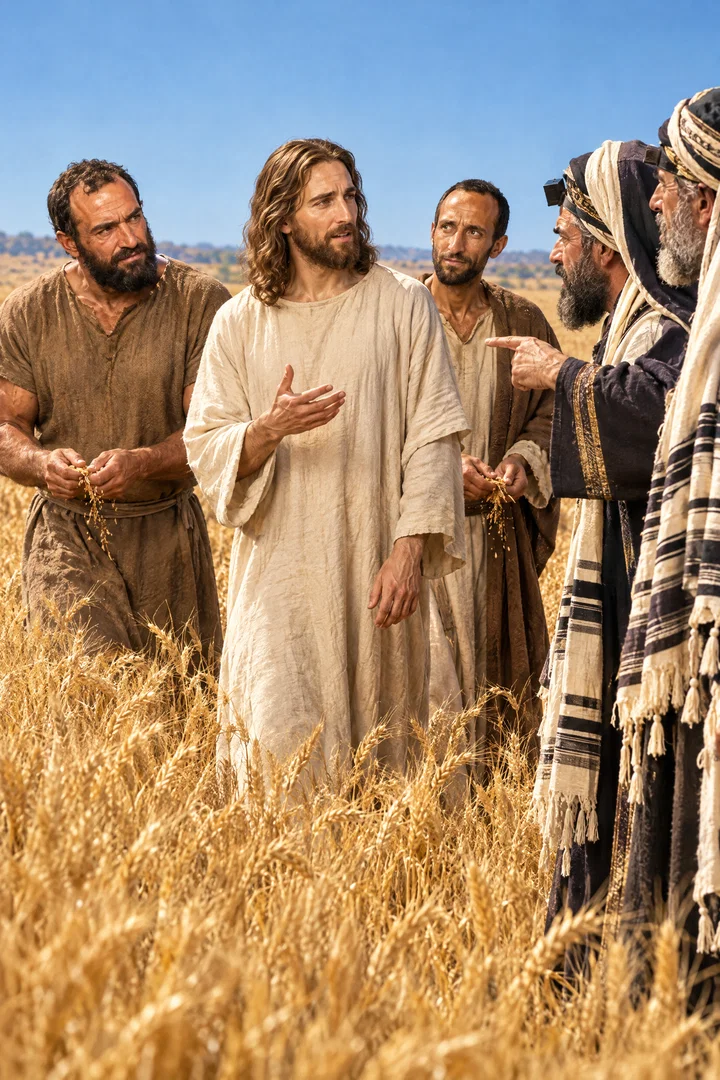
And it came to pass, that he went through the corn fields on the sabbath day; and his disciples began, as they went, to pluck the ears of corn.
Parallel account of Jesus’ Sabbath authority in the grain-field episode.
- John 9:14-16
And it was the sabbath day when Jesus made the clay, and opened his eyes.
Christ’s Sabbath healing becomes a point of dispute.
- John 5:8-10
Jesus saith unto him, Rise, take up thy bed, and walk.
Jesus heals a man on the Sabbath and tells him to carry his bed.
- Exodus 20:11
For in six days the LORD made heaven and earth, the sea, and all that in them is, and rested the seventh day: wherefore the LORD blessed the sabbath day, and hallowed it.
The Sabbath is grounded in God’s rest at creation.
Commentary
Each commentary is drawn from primary sources: the writings of Ellen G. White and Adventist pioneers and periodicals. Each commentary is separate. Its own words are not a quotation; follow the references to read the source passages.
Ellen G. White
15 sources
Jesus asserts that as Son of man He is Lord of the Sabbath in the fullest sense, because He made the worlds, proclaimed the law at Sinai, and set apart the seventh day for worship.ST Sep 14, 1882Ms 43b, 1891, par. 9 He said this when His disciples were accused of breaking the Sabbath for rubbing grain in their hands and eating as they passed through the field, exercising the poor man's right to take food to satisfy hunger.14MR 335.1–3PP 531.1–2HSFM 165.2Lt 13, 1876, par. 1–3 He declared them guiltless and innocent, for what they did was in harmony with the Sabbath commandment, and He covered them with the shield of His own dignity and authority as God in the flesh.ST Sep 16, 1913Ms 43b, 1891, par. 9 His claim denies any right of religious leaders to judge or direct His work, exposing the blindness and fallibility of human judgment when men assume jurisdiction to condemn those God is using.STMW6 43.22SP 169.1–2Lt 78, 1896, par. 42–4318MR 155.1–33RED 32.1–2 The Sabbath He made and gave remains binding, not merely a Jewish institution to be replaced by another day, and opposition to God's holy law is not animated by His Spirit.ST Sep 14, 1882STMW6 43.2Lt 78, 1896, par. 42–43Ms 55, 1895, par. 17–21
Sabbath Incident and Defense
The saying belongs to the occasion when Christ went through a cornfield where ears of corn were plucked, followed by His healing of the man with the withered hand.14MR 335.1–3Lt 13, 1876, par. 1–3 As they passed through the field the disciples plucked standing grain and ate it, exercising the poor person's right under God's law to take food from a neighbor's field to satisfy hunger.PP 531.1–2HSFM 165.2 That permission for a hungry person to eat from another's field shows provision for meeting human need rather than treating the field's produce as untouchable property.PP 531.1–2HSFM 165.2
Christ and His disciples kept the Sabbath in this setting, and when they were accused of breaking it for rubbing grain in their hands and eating the kernels, Christ denied the charge.ST Sep 16, 1913Ms 43b, 1891, par. 9 He declared them guiltless and established their innocence in the deed, because what they had done was in harmony with the Sabbath commandment.ST Sep 16, 1913Ms 43b, 1891, par. 9 He repelled the charge of the scribes and Pharisees by asserting His own prerogatives as Lord of the Sabbath, casting over the disciples the shield of His own dignity and authority.Ms 43b, 1891, par. 9 That authority was His as God in the flesh, in whom the divine and human natures are united without the divine being transformed into the human.Ms 43b, 1891, par. 9
Christ's Lordship and Authority
Christ is Lord of the Sabbath in the fullest sense, for He made the worlds, proclaimed the law at Sinai, and set apart the seventh day as sacred for the worship of angels and people.ST Sep 14, 1882 The Sabbath is therefore an institution He Himself gave and made, and its claims remain binding.ST Sep 14, 1882STMW6 43.2Lt 78, 1896, par. 42–43PK 183.118MR 155.1–3 It is not merely a Jewish institution, and the seventh day has not been replaced by a separate Christian Sabbath.ST Sep 14, 1882 As Lord of the Sabbath He is the greatest Teacher the world ever knew, sent of God with unmistakable evidence.STMW6 43.2Lt 78, 1896, par. 42–43 He kept the Sabbath according to God's law and not according to the distorted rules of religious leaders, so that its observance reflects God's character rather than human selfishness and arbitrariness.PK 183.1
Jesus has authority over the Sabbath and is not subject to the claim of Jewish leaders and dignitaries to judge or direct His work.2SP 169.1–23RED 32.1–2 He denied their right to question or interfere with it, and His claim to be Lord of the Sabbath was part of His declaration of His mission and work.2SP 169.1–23RED 32.1–2 The authority those leaders claimed rested on pride and arrogance, not on the Jewish system, so His words, mission and work could not rightly be condemned by their tribunal.2SP 169.1–23RED 32.1–2 When scribes, Pharisees and Jewish rulers charged the Maker and Lord of the Sabbath with being a Sabbath-breaker and transgressor, they were working blindly as if they had put out their eyes.STMW6 43.2Lt 78, 1896, par. 42–4318MR 155.1–3Ms 43b, 1891, par. 1 That course exposes the foolishness, weakness and fallibility of human judgment when men assume jurisdiction to judge and condemn those God is using.STMW6 43.2Lt 78, 1896, par. 42–43
Because Jesus declared Himself Lord over the Sabbath, intense bitterness against the holy law of God does not come from His Spirit, and those who stir up opposition to that law are not animated by Him.Ms 55, 1895, par. 17–21 The same loss of bearings happens today when men in councils venture to pronounce judgment upon the work of God.STMW6 43.2Lt 78, 1896, par. 42–43 This is repeated when people insist on carrying the work in America in their own way, doing the work the enemy prompts as the Pharisees did.STMW6 43.2Lt 78, 1896, par. 42–43Ms 43b, 1891, par. 1
Sources
Pioneers and periodicals
121 sources
Christ declares himself, the Son of man, to be Lord of the Sabbath, with full authority to define its true keeping and to defend his hungry disciples as guiltless for plucking grain on that day.ST Mar 12, 1894RH Nov 14, 1871RH Jan 8, 1857ST Mar 12, 1894ST Mar 12, 1894 His lordship belongs to him because as Creator he made the worlds, rested on the seventh day and blessed and sanctified it, and spoke the law at Sinai, so he knows how the day should honor God.ST Sep 14, 1882ST Jun 18, 1894ST Jan 21, 1903ST Mar 12, 1894RH May 10, 1864 The Sabbath he rules is the seventh day only, God's own holy day and memorial of completed creation, not the first day of the week.ST Jun 18, 1894RH Feb 13, 1872ST Mar 16, 1882RH Jan 23, 1866RH Apr 7, 1851 He is its Lord to cherish, protect and keep it in force, not to abolish it or change it to another day, and Sunday observance is a human institution with no warrant in this saying.RH Oct 21, 1851RH Jan 24, 1865ST Nov 26, 1894ST Nov 18, 1880RH Jan 11, 1906 Therefore works of necessity and mercy, such as eating to relieve hunger and healing to save life, are lawful and in harmony with the Sabbath, which was made as blessing and delight for humanity rather than a burden of human restrictions.ST Mar 4, 1889RH Nov 14, 1871RH Jan 8, 1857ST Nov 14, 1900ST Sep 19, 1911
Setting and Dispute
The saying was given in Galilee, likely near Capernaum, on the Sabbath after the second day of Passover, after leaving Jerusalem for freer air away from fanaticism and hypocrisy while rabbis and priests and spies watched every step.ST Apr 14, 1881 The disciples were hungry because no Jew broke fast till after the morning synagogue service, and on a lawful Sabbath-day walk of less than three-quarters of a mile through ripening barley they plucked ears and rubbed them in their hands, which law and Eastern custom freely allowed on other days to supply hunger.ST Apr 14, 1881 The Pharisees charged plucking as a kind of reaping and rubbing as a kind of grinding or threshing and preparation of food that should have been prepared Friday before sunset, guilt worthy of stoning rather than suffering hunger a few hours.ST Apr 14, 1881
Deputies from Jerusalem, alarmed by reports that the people were ready to make Jesus king which he refused and by rumors of his innovations as a reformer, used free Eastern access to private life to press this Sabbath offense and the further offense of eating without ceremonial hand-washing.ST Sep 8, 1881 The grain was ripening and therefore in the milky stage, when kernels were sweet and juicy with sugar instead of starch and very easily digested.RH Jun 26, 1900 In defense Jesus recalled that David and his men ate the sanctuary showbread, unlawful on any day, without condemnation because they were hungry, and cited the priests' Sabbath service in the temple.RH Feb 4, 1862 These scriptural examples supported his defense of the disciples as guiltless, beginning with David.RH Feb 4, 1862RH Apr 21, 1863
The same dispute embraced healing the man with the withered hand in the synagogue on another Sabbath, actions Jews regarded as borderline acts.ST Nov 26, 1894 People took offense at rubbing grain and at healing, and watched him to find grounds to accuse him.ST Nov 26, 1894ST Feb 2, 1915ST Apr 9, 1894 The dispute was not about which day was the Sabbath but about human rules imposed on its observance, contained in books like the Mishna and Talmud, by which the accusers were governed while Christ and his followers were guided by the Bible rule.RH Feb 11, 1858 Jesus observed the Sabbath on the same day the Jews were observing it, and did not correct their reckoning, so the incident gives no argument against the Bible Sabbath and no support for miscalculation or abolition.RH Oct 21, 1858ST Sep 20, 1905RH Feb 11, 1858
The Jews have continued that same seventh day without change or dispute worldwide, and first-day observers have always kept the day after that kept by Jews and seventh-day Christians, which has always been the Roman Sunday, so the Roman name Saturday does not affect the seventh day of the Decalogue.ST Sep 20, 1905 Christ and his disciples kept the Sabbath, denied the charge of breaking it, and were declared guiltless, for what they did was in harmony with the commandment.ST Sep 16, 1913 Passing through the grainfields and healing did not make him a Sabbath breaker or sinner; calling himself Lord affirms authority, not permission to transgress, for if he had broken God's law he would have been a sinner and could not be the sinless sacrifice.RH Nov 1, 1853 The claim that he broke the Sabbath and taught his disciples to break it is an astonishing position, not the passage's own teaching, while the hostile charge against him was neglect and being no particular observer of the Sabbath.RH Jun 18, 1872ST
Meaning of Lordship
The Son of man, Christ, is Lord of the Sabbath, and by declaring his own relation to it he defended his disciples against the charge of breaking it for what they did passing through the fields.ST Mar 12, 1894ST Mar 12, 1894ST Mar 12, 1894RH Apr 22, 1862 His lordship is no disparagement to the Sabbath or to the Redeemer, but affirms his authority over it.RH Apr 21, 1863 He designated himself its Lord and thereby showed his competence to answer what is lawful on it.ST Mar 12, 1894ST Mar 12, 1894
As Lawgiver he has authority to explain its requirements, interpret its law correctly, and define true keeping.RH Jan 8, 1857ST May 17, 1910ST Jan 30, 1879ST Jun 6, 1878ST Jan 30, 1896 He exercised that authority to free the Sabbath from human traditions and restore its proper purpose, not to claim a right to change the day.RH Nov 14, 1871ST May 17, 1910ST Jan 30, 1896 He did not break God's law but rejected Jewish traditions and did only what was lawful, for the Sabbath is founded on God's Word, not human opinion.RH Jan 8, 1857ST May 17, 1910ST Jun 6, 1878ST Jan 30, 1896 His defense presented the conduct of the hungry disciples in plucking grain to meet immediate necessity as consistent with that law and acquitted them, and his authority does not abolish the Sabbath or change its original purpose as part of God's unrevoked law.RH Jan 8, 1857ST Jan 30, 1879ST Jun 6, 1878
He is Lord in the fullest sense because he was with God from the beginning when the Sabbath was made.ST Jan 21, 1903ST Mar 12, 1894 He made the worlds and created all things, rested on the seventh day and blessed and sanctified it, proclaimed the law at Sinai, and made the seventh day sacred for the worship of angels and people.ST Sep 14, 1882ST Mar 12, 1894ST Jun 18, 1894 He therefore knows best how the day should be spent to most honor God, and his teachings and example teach that way is by doing good.ST Jan 21, 1903 The Sabbath is the memorial of his wonderful works and the mark of his power, and therefore the mark of his right and power to redeem.ST Mar 12, 1894 Since redemption is creation, as long as redemption is to be remembered and rejoiced in the Sabbath must be kept and delighted in.ST Mar 12, 1894
Because the Sabbath belongs to God it belongs to Christ as well, as truly as to the Father, since Father and Son are one in creation and redemption.ST Jun 18, 1894RH May 10, 1864 The Sabbath meant here is the seventh day, which God calls his own day, which Father and Son both claim as holy.ST Jun 18, 1894RH Feb 13, 1872 It is his own institution and his own day, which he claims as his own and over which he has authority.RH Feb 13, 1872ST Nov 18, 1880ST Nov 25, 1880RH Apr 22, 1862 His authority over it confirms that it remains the Lord's holy day rather than a day replaced by human choice, and its suppression and the elevation of Sunday in its place was in no sense his work.RH Nov 15, 1853ST Nov 25, 1880 His beneficial acts of allowing his hungry disciples relief through food and healing the withered hand upheld its law, fulfilled rather than destroyed it and added sanctity to it, showing that works of mercy and relief are proper to the day.ST Nov 18, 1880
His lordship means the Sabbath was made for humanity, not humanity for the Sabbath, restoring the relationship between people and the Sabbath to the order intended by the Creator.RH Nov 14, 1871ST Nov 14, 1900 It is a merciful blessing made for people, not a harsh burden or curse.ST Jun 4, 1894 It was made for humanity's good and for man's highest and best good, intended as rest, delight and holy joy and as spiritual and physical blessing and rest for mankind and even for beasts of burden, with provision for necessary care and rescue from danger even on the Sabbath, to sanctify him and to be a sign between God and him.ST Jan 21, 1903ST Jun 4, 1894 Doing good and showing compassion on it are lawful, as demonstrated through his words and works in meeting human need for food and in healing the man with the withered hand and saving life, while the restrictive rules imposed by the Jewish leaders distorted the Sabbath and made it oppressive.ST Nov 14, 1900ST Jan 21, 1903ST Jun 4, 1894
Therefore the Sabbath is the Lord's day, and Sabbath is the inspired name for the seventh day only, so only the seventh day is to be called the Sabbath.ST Mar 12, 1894ST Nov 18, 1886 It became the Lord's day because Jesus made it by virtue of his power as Creator, and it is properly called the Lord's day whose observance is obligatory for his followers.ST Mar 12, 1894ST Jun 18, 1894 Sunday is not the day meant by this biblical title, and the Lord's day does not apply to the first day of the week.ST Nov 4, 1889RH Aug 1, 1854 The seventh-day Sabbath in view here supports its continuing authority and connects with the Lord's day named in Revelation 1:10.ST Mar 12, 1894ST Nov 18, 1886RH Jun 24, 1873
Sabbath Day Identified
The Sabbath of which the Son of man declares himself Lord is the seventh day, which God calls his own day.ST Jun 18, 1894RH Feb 13, 1872ST Nov 18, 1886 Sabbath is the inspired name for the seventh day only, so only the seventh day is to be called the Sabbath, and its mention here names the seventh day as the Sabbath in the Christian dispensation.RH Jun 5, 1860ST Mar 12, 1894ST Nov 18, 1886 This is one of fifty-nine New Testament mentions of the seventh day as the Sabbath of the Lord, set against only eight mentions of the first day of the week, in none of which the first day is sanctified or given a sacred title.ST Mar 16, 1882 It became the Lord's day because Jesus made it, for as Creator of all things he rested on the seventh day and blessed and sanctified it, making the Sabbath the memorial of his wonderful works and the mark of his power and right to redeem.ST Mar 12, 1894 Since redemption is creation, as long as redemption is to be remembered and rejoiced in the Sabbath must be kept and delighted in.ST Mar 12, 1894
The accusation that the disciples were breaking the Sabbath by taking grain, rubbing it in their hands, and eating while passing through the field shows that the day was the seventh day of the week, not Sunday.ST Apr 15, 1886 The episode concerns plucking grain on the Sabbath, which was the seventh day before the first day of the week, and does not describe a Sunday meal.ST Jul 23, 1912 The seventh day remains sacred by God's blessing and sanctification, and human agreement cannot make the first day sacred or transfer the seventh day's holiness to it.ST Jul 23, 1912
His statement answers the Pharisees' accusation that his disciples had broken the Sabbath, so it identifies the Sabbath he rules over as the seventh-day Sabbath, not the first day.RH Jan 23, 1866 His lordship over the Sabbath does not make the first day the Sabbath or establish it as the Lord's day, for the fourth commandment and Isaiah 58 identify the Lord's day with the seventh day.RH Jan 23, 1866 The Bible never designates the first day as the Lord's day nor commands its observance, distinguishing the Sabbath which Jesus explicitly calls his from the first day.RH Apr 7, 1851
The seventh day is the Sabbath belonging to the Lord, not the first day of the week.ST Jan 3, 1878 His authority over the Sabbath does not make every day a Sabbath or permit people to choose another day, for the Sabbath was established and sanctified by the Creator as a memorial of creation and a day for worship, rest, and refreshment.ST Jul 12, 1905 The Sabbath is God's appointed memorial of completed creation, the day blessed and sanctified at the close of creation, and its observance means keeping the particular seventh day God appointed as loyalty to the Creator.ST Feb 17, 1898
His lordship is consistent with the Sabbath's continuing authority as moral, perpetual, and binding, without abrogating it, and does not show that he instituted a different Sabbath to replace the one observed from the beginning.RH Apr 14, 1853 The verse shows his authority over the weekly Sabbath, which is classified as the Lord's Sabbath and distinguished from temporary festival and land sabbaths.RH Mar 19, 1857
The Sabbath was made for the whole human family, not only for the Jews or for one age or country, and his wider teaching rejects superstitious restrictions while upholding the fourth commandment as a weekly day to be kept holy.RH Jul 18, 1854 It came through the Jews, just as every Bible truth of salvation came through the Jews, and Jesus and all his apostles were Jews, so rejecting the Sabbath because it is Jewish would require rejecting Jesus himself.ST May 27, 1908 Worshiping Christ on that seventh day is not Judaizing or adherence to Judaism, and Christians assemble on Saturday to worship Christ without following Judaism.RH May 5, 1851RH Apr 14, 1853RH Oct 24, 1854RH Dec 1850
As Lord he observed the Sabbath on earth on the same day the Jews were observing it, thus proving they had made no mistake about the day.ST Sep 20, 1905 He kept the Sabbath correctly and at the right time in Jerusalem, providing an example that the Sabbath can be observed at its proper local time in places east or west of one another.RH May 26, 1853 He rose from the dead on the first day of the week, the day following the Sabbath day kept according to the commandment.ST Sep 20, 1905 The Jews have continued to observe that same seventh day without change or dispute in every part of the world, and those who observe the first day have always kept the day after that kept by the Jews and seventh-day Christians, which has always been the Roman Sunday, so the Roman name Saturday does not affect the seventh day of the Decalogue.ST Sep 20, 1905
Mercy and Necessity Lawful
The hungry disciples who plucked grain to meet immediate necessity were acquitted and did not break God's Sabbath law by plucking, rubbing, eating, or healing, for the accusations treated these as unlawful labor under human traditions.ST Mar 4, 1889RH Jan 8, 1857RH Jul 18, 1854STRH May 13, 1875 Their actions were lawful because their Master sanctioned them, for they were doing necessary work to eat their own meal, doing what is necessary to life and comfort.ST Sep 19, 1911RH Jul 18, 1854STRH May 13, 1875 As Lord of the Sabbath He knows its design and scope and has authority as Lawgiver to explain its requirements and to correct false rules about it.ST Mar 4, 1889RH Jan 8, 1857RH Jul 18, 1854ST His defense of their hunger shows that meeting human need in this way does not break the Sabbath, and His justifying them in rubbing out wheat to eat proves the Sabbath does not forbid what is necessary to life and comfort.RH Jan 8, 1857RH Jul 18, 1854ST
The command to kindle no fire on the Sabbath belonged to Israel's wilderness wandering in a warm country where fire was needed only for cooking food, which was not to be done on that day.ST It does not require suffering from lack of fire when fire is necessary to life and comfort.ST
Acts of mercy and doing good, including healing and saving life, are always proper and in harmony with the law's true letter and spirit.ST Mar 4, 1889ST Jun 11, 1894ST Nov 14, 1900ST Jun 4, 1894 God's work of granting what is good continues on that day, and healing itself is Sabbath-keeping, so people should not cease from doing good.ST Aug 20, 1896ST Nov 14, 1900ST Jan 21, 1903 Provision is made for necessary care and rescue from danger even for beasts, and the day was made for mankind's highest and best good as physical rest and spiritual blessing, to sanctify him and be a sign between God and him.ST Jan 21, 1903 The Sabbath is a merciful blessing made for people, not a harsh burden, and doing good and showing compassion on it are lawful, while restrictive rules imposed by the leaders distorted it and made it oppressive.ST Jun 11, 1894ST Nov 14, 1900ST Jun 4, 1894 The disciples' need for food and the healing of the man with the withered hand show that Sabbath observance does not forbid meeting human need or saving life.ST Nov 14, 1900ST Nov 18, 1880
These beneficial acts of relief fulfilled rather than destroyed the law and added sanctity to the Sabbath, showing works of mercy and relief are proper to the day.ST Nov 18, 1880 His wider teaching and actions reject superstitious restrictions while upholding the fourth commandment as a weekly day to be kept holy for the whole human family, not only for the Jews or for one age or country.RH Jul 18, 1854
Sabbath rest may include works of necessity and does not require complete inactivity.ST Mar 3, 1914 Apart from acts of charity and mercy His authority gave no license to work on it, and He honored it by meeting with the people on that day.ST Jul 24, 1879 The verse supports the Sabbath's benevolent purpose and rejects a narrow interpretation placing ritual restriction above mercy.RH Jan 8, 1857 The Sabbath permits acts of mercy and doing good, is meant as blessing not burdened by human rules and traditions, is founded on God's Word not human opinion, and He did only what was lawful while rejecting Jewish traditions.ST Aug 20, 1896ST Mar 4, 1889RH Jan 8, 1857ST May 17, 1910 Thus the Sabbath served as a central point of dispute and as a test of lawful obedience, where Christ's merciful acts accorded with intended rest, delight and holy joy while restrictive traditions obscured them.ST Jun 11, 1894
Sabbath Not Abolished Changed
To be called its Lord does not mean to have abolished it or to have erased all distinction between days, for by that same logic lordship over his people would abolish them as well.RH Oct 21, 1851RH Jan 24, 1865ST Nov 18, 1880 He is its Lord, not its destroyer, holding authority over it in order to cherish, protect, defend and uphold it, and that authority proves it has not been abolished but remains in force with continued obligation.RH Oct 21, 1851RH Jul 9, 1914ST Apr 11, 1911RH May 16, 1854 His title vindicated his course when accused of breaking it, since he did not break God's commandments, and it cannot be used to claim he set it aside before healing on it.RH Oct 21, 1851RH Jan 24, 1865
He did not come as a legislator empowered to annul the law but to fulfill it, and to fulfill means to keep, just as fulfilling all righteousness at baptism did not abolish righteousness.RH May 16, 1854 His mission upheld the law and its commandments, and his rule extending into the gospel dispensation is no warrant for abolishing the fourth commandment.RH May 16, 1854RH Feb 21, 1854 To remove the Sabbath would require a different gospel and foundation, distinct from merely restoring the Mosaic system as a whole.RH Feb 21, 1854
His actions kept its law rather than abolishing it, for the day had been consecrated by the Father's blessing from the beginning and his own keeping added further sanctity to it.ST Nov 25, 1880ST Sep 17, 1896 He claimed it as his own institution, so the suppression of the Bible Sabbath and the elevation of Sunday in its place was in no sense his work.ST Nov 25, 1880 Forgetting his lordship made it easy to call it Jewish and set it aside, though it is no mere Jewish institution for Christians to disregard.ST Nov 25, 1880
His lordship neither abolishes it nor changes its original purpose, for it remains part of God's unrevoked law which he has authority to explain.ST Jan 30, 1879 The lord praised by those who say the law is abolished is not this Lord of the Sabbath.RH Mar 13, 1856
He said nothing in this account about changing the Sabbath from the seventh day to another day, but exercised his authority to free it from human traditions and restore its proper purpose and the Creator's intended order of the Sabbath made for humanity.RH Nov 14, 1871 Authority or power to change it is no proof that he did so, and the verse gives no evidence that the seventh-day Sabbath ceased or was changed and no proof that he actually did so.RH May 31, 1864RH May 31, 1864RH Jan 30, 1866
The passage does not teach that it makes no difference what day is kept so long as one day is kept.ST Jan 29, 1902 Being grouped with other texts under a heading of Sabbath observance does not make it teach that thought, since human marginal references and subject-index groupings are no part of God's Word and carry no authority for interpretation.ST Jan 29, 1902 Its meaning must be decided by Scripture itself with the aid of the Spirit.ST Jan 29, 1902
Its role as a sign between God and Israel for a certain period does not prove the commandment abolished, any more than his being spoken against as a sign means he will be abolished when he ceases to be such a sign.RH Mar 2, 1852
The claim drawn from the verse that Christians are lords over the Sabbath and may change its day or frequency as they see fit belongs to the Reformers' failure to recognize its divine authority, not to any basis for change.RH May 20, 1862 In that form it held the ancient Sabbath abolished and Sunday only a human ordinance which magistrates and the church may lawfully change whenever they see cause, even to Monday or any other day or to making every tenth day holy.RH May 20, 1862ST Oct 19, 1882 The verse was also invoked to argue that his lordship removed its strictness to allow lawful recreation.RH May 20, 1862
Against this stands the position of those who held that as Lord he has power to change, abrogate or ratify it, and did change observance from Saturday under the Mosaic economy to Sunday under the Christian economy by his resurrection on Sunday.RH Feb 26, 1857 His authority as Lord does not oppose Sabbath observance, so that Christians could also meet on Sunday without disregarding the Sabbath.RH Aug 1, 1854
Sunday Claims Answered
The declaration that the Son of man is Lord of the Sabbath makes no change of the Sabbath to Sunday, provides for no Sunday walk through the corn, and appoints no Lord's day to be kept instead in memory of another great event.ST Nov 26, 1894RH Jan 11, 1906ST Jul 12, 1899 It does not say that he intended to change the Sabbath or that he directed his disciples to observe the day of his resurrection.RH Jan 11, 1906ST Jul 12, 1899 Sunday observance was not devised in heaven nor by Christ while upon earth, for as Lord he commanded the seventh day, Saturday, as the rest day.RH Oct 26, 1911 Sunday observance is a human institution designed to supplant the Sabbath of which Jesus is Lord.RH Jan 13, 1910 That fourth commandment has been torn from the Lord's rest-day around which the great Law-giver placed it and given to the papal Lord's day, the ancient festival of the sun taken from Rome, as the seamless coat was torn from Jesus before he was nailed to the cross.ST Nov 30, 1882 Arrayed in that stolen fourth commandment, this Sunday Barabbas the robber challenges the obedience of the world as the divinely appointed Sabbath of the Most High God.ST Nov 30, 1882
The divine Sabbath is able to stand upon its own law with no need for a national or state Sunday law, while the human Sunday, being in opposition to what God established, deserves the support of neither Christians nor non-Christians and will be rooted up.RH Jan 13, 1910 Efforts by the church to get the state to enforce Sunday by national or state Sunday law are an attempt to abolish and supplant the institution Jesus is Lord of, which is a paradox for those professing to represent Jesus.RH Jan 13, 1910 The defense of the disciples when they plucked and ate grain on the Sabbath and the claim of authority over the Sabbath contrast the seventh-day Sabbath with the churches' observance of the first day of the week.RH Sep 1, 1859 The Sabbath is the Lord's day, and Sunday is not the day meant by this biblical title.ST Nov 4, 1889
The Sabbath belongs to the Lord and stands under his authority alone.ST Apr 4, 1906 It is a religious institution like baptism and the Lord's Supper, and civil government has no right to enforce its observance, for Christ does not ask that his gospel have the protection of human governments.ST Apr 4, 1906 True Sabbath reform means keeping the seventh day required by God's law rather than substituting another day, and the Lord of the Sabbath provides the help needed for this reform which civil government cannot supply in his place.ST Nov 26, 1894ST Nov 18, 1903 The Sabbath is the day God blessed and sanctified at the close of creation, and Christ's authority over it makes it God's ordained institution, not a religious rite that needs human law for its enforcement, so its observance rests on the biblical and religious authority of Christ and his example rather than civil laws or Sunday enforcement.ST Jan 7, 1897ST Nov 18, 1903 Civil laws that substitute human authority for God's law dishonor the Lord of the Sabbath under whose authority it belongs.RH Aug 14, 1868 To set aside the Sabbath is therefore to set aside its Lord, since the Sabbath belongs to the Son of man who is its Lord.ST Feb 25, 1897 Rejecting God's Sabbath and replacing it with a human institution therefore also rejects the Lord of the Sabbath.ST Nov 21, 1900
Rejecting the Sabbath as God established it was therefore a rejection of Jesus, the Sabbath's Lord.ST Nov 21, 1900 That rejection led the people to persecute and kill him in an attempt to save their nation from Rome, yet instead the nation and its city were destroyed by Roman power.ST Nov 21, 1900 False ideas about the Sabbath led to rejecting, persecuting, and seeking to kill him, and that rejection brought the nation's ruin.ST Nov 21, 1900 The Sabbath was the point of dispute between him and the strict rabbis when he defended his disciples condemned for eating grain on the Sabbath, so if the early Christians had abandoned the Sabbath for Sunday their secular use of the old Sabbath would have provoked repeated clashes, accusations, and arrests, and the absence of such reports supports the conclusion that they continued to observe the Sabbath.ST Oct 19, 1882 His attitude toward the Sabbath challenged the religious view of his day in a way characterized as revolutionary, differing from the view later Sabbatarians sought to apply to Sunday.RH Jul 24, 1913
Loyalty and Daily Living
The seventh-day Sabbath honors Christ as its Lord and brings his presence and blessing.RH Sep 2, 1851 The Sabbath originated with God, and because Jesus and the Father are one, exalting the Sabbath commandment exalts Christ and honors God.ST May 13, 1889 To honor and revere the seventh-day Sabbath is to honor and revere him as Creator and Redeemer, while to deny its claims is to deny the power of God.ST Jun 23, 1898 His lordship keeps the Sabbath universal and still binding today as when instituted, a perpetual memorial of the creative work.ST Jun 23, 1898 Trust in Jesus stands alongside trust in God, the author of the Sabbath, and honoring the risen Christ as Lord of the Sabbath means turning to him wholeheartedly and following him in all things.ST Apr 3, 1893RH Jan 10, 1865
The Sabbath is to be remembered and kept holy in praise of him, with its obligations upheld in their purity and followed from conscientious motives.RH Jun 11, 1861 It is to be obeyed and preserved even when doing so requires self-denial.ST Mar 17, 1887 It belongs to God's word, and those who remain faithful to it acknowledge Christ as its Lord rather than treating the Sabbath as a human tradition.ST Jul 2, 1894
God commands its observance and the letter of the law makes that duty plain, yet the Sabbath cannot be properly kept by the letter alone, for right observance requires an experimental knowledge of its Lord.RH Oct 26, 1911 He is the great Sabbath keeper, and the Sabbath to follow is the Lord's Sabbath, not the Sunday institution.RH Nov 18, 1902 He is the standard for restoring and observing the Bible Sabbath.RH Jan 28, 1902 He guides those who honor God and defend his law and his Sabbath, freeing them from all error and uniting them in that work, and because the Sabbath belongs to him people owe him reasonable service.RH Jul 6, 1869RH Jan 19, 1905
In Christ the Sabbath is a delight and a pledge of the future inheritance, where there is no sin and the Sabbath will be kept forever.ST Jul 2, 1896 It is a sign of the eternal rest of God's people, and the spiritual rest Christ gives is its pledge.ST Jul 2, 1896
People have treated both Jesus and God's Sabbath with contempt by neglecting the Sabbath.RH May 15, 1855 The Sabbath is the holy and honorable day, and the commandment requires the seventh day, not Sunday.RH May 15, 1855 Christ's authority stands over the seventh-day Sabbath, which he honored, and keeping that day is loyalty to God and obedience made possible by grace through Jesus.ST Jun 25, 1912
His dealings with the Pharisees over Sabbath observance show that their restrictive demands do not define its proper observance.ST Nov 21, 1895 Prosecuting Christians for keeping the Sabbath according to conscience repeats the Pharisees' opposition to Christ.ST Nov 21, 1895
Sources