Luke 6:3
And Jesus answering them said, Have ye not read so much as this, what David did, when himself was an hungred, and they which were with him;
Translations
And Jesus answering them said, Have you not read so much as this, what David did, when himself was an hungered, and they which were with him;
And Jesus answering them said, Have ye not read so much as this, what David did, when himself was an hungred, and they which were with him;
And Jesus answering them said, Have ye not read so much as this, what David did, when himself was a hungred, and they which were with him;
And Jesus answering them, said, Have ye not read so much as this, what David did, when himself was hungry, and they who were with him;
And Jesus answering them said, Have ye not read even this, what David did, when he was an hungred, he, and they that were with him;
And Jesus answering them said, Have ye not read even this, what David did, when he was hungry, he, and they that were with him;
And Jesus answering said unto them, 'Did ye not read even this that David did, when he hungered, himself and those who are with him,
And Jesus answering said to them, Have ye not read so much as this, what David did when he hungered, he and those who were with him,
And, making answer unto them, Jesus said—Have ye never read, even this, what David did when he hungered, he, and they who were with him—
Berean Standard Bible, Majority Standard Bible
Jesus replied, “ Have you not read what David did when he and his companions were hungry?
Jesus, answering them, said, “Haven’ t you read what David did when he was hungry, he and those who were with him,
And Jesus said, Have you not seen in the Writings what David did when he was in need of food, he, and those who were with him;
Then Iesus answered them, and said, Haue ye not read this, that Dauid did when he himselfe was an hungred, and they which were with him,
Douay-Rheims (Challoner revision)
And Jesus answering them, said: Have you not read so much as this, what David did, when himself was hungry, and they that were with him:
Pictures
Cross-references
- Matthew 12:1-4
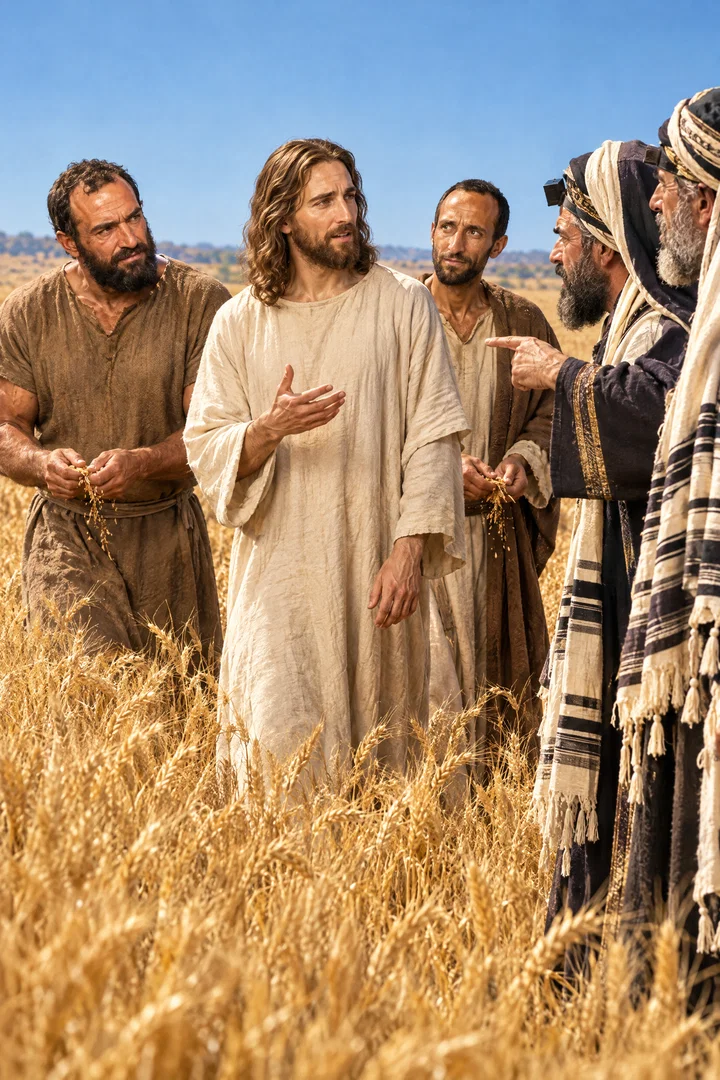
At that time Jesus went on the sabbath day through the corn; and his disciples were an hungred, and began to pluck the ears of corn, and to eat.
Jesus answers the Sabbath accusation by citing David’s example when he and his companions were hungry.
- Mark 2:25-26
And he said unto them, Have ye never read what David did, when he had need, and was an hungred, he, and they that were with him?
Jesus answers Sabbath criticism by recalling David’s hunger and the bread he ate.
- 1 Samuel 21:1-6
Then came David to Nob to Ahimelech the priest: and Ahimelech was afraid at the meeting of David, and said unto him, Why art thou alone, and no man with thee?
David and his companions ate the holy bread when hungry.
- Exodus 20:10
But the seventh day is the sabbath of the LORD thy God: in it thou shalt not do any work, thou, nor thy son, nor thy daughter, thy manservant, nor thy maidservant, nor thy cattle, nor thy stranger that is within thy gates:
The seventh-day Sabbath commandment frames the dispute over the disciples’ actions.
- Deuteronomy 23:25
When thou comest into the standing corn of thy neighbour, then thou mayest pluck the ears with thine hand; but thou shalt not move a sickle unto thy neighbour’s standing corn.
Permits hungry travelers to pluck a neighbor’s grain by hand.
- Mark 2:27
And he said unto them, The sabbath was made for man, and not man for the sabbath:
The Sabbath was made for humanity, supporting necessary care on that day.
- Mark 3:1-5
And he entered again into the synagogue; and there was a man there which had a withered hand.
Jesus continues the Sabbath controversy, teaching that healing and doing good are lawful.
- Matthew 12:5
Or have ye not read in the law, how that on the sabbath days the priests in the temple profane the sabbath, and are blameless?
Jesus cites the priests’ Sabbath service as justification.
- John 5:16-18
And therefore did the Jews persecute Jesus, and sought to slay him, because he had done these things on the sabbath day.
The Sabbath controversy centers on Jesus’ authority and identity.
- Leviticus 24:5-9
And thou shalt take fine flour, and bake twelve cakes thereof: two tenth deals shall be in one cake.
The law requires fresh showbread to be set out each Sabbath.
- Matthew 12:12
How much then is a man better than a sheep? Wherefore it is lawful to do well on the sabbath days.
Both affirm meeting human needs and doing good on the Sabbath.
- Matthew 12:7
But if ye had known what this meaneth, I will have mercy, and not sacrifice, ye would not have condemned the guiltless.
Jesus says the accusers condemned the guiltless.
- Luke 13:15
The Lord then answered him, and said, Thou hypocrite, doth not each one of you on the sabbath loose his ox or his ass from the stall, and lead him away to watering?
Both show that necessary care is lawful on the Sabbath.
- 1 Chronicles 9:32
And other of their brethren, of the sons of the Kohathites, were over the shewbread, to prepare it every sabbath.
The bread is arranged each Sabbath.
- Matthew 12:10
And, behold, there was a man which had his hand withered. And they asked him, saying, Is it lawful to heal on the sabbath days? that they might accuse him.
Jesus teaches that doing good, including healing, is lawful on the Sabbath.
Commentary
Each commentary is drawn from primary sources: the writings of Ellen G. White and Adventist pioneers and periodicals. Each commentary is separate. Its own words are not a quotation; follow the references to read the source passages.
Ellen G. White
11 sources
The saying was given as Jesus and His disciples were passing through a grainfield on the Sabbath, when the disciples plucked standing heads of wheat or ears of corn, rubbed them in their hands, and ate the kernels.PP 531.1–29MR 242.1HSFM 165.2Ms 43b, 1891, par. 99MR 32.3–5 The surrounding account also includes His healing of a withered hand, and the incident is one of special interest in Christ's life.9MR 242.19MR 32.3–5 The scribes and Pharisees had been watching and spying on all His actions and words to find cause to accuse Him, and they charged Jesus, the Lord of the Sabbath, and His disciples with breaking the Sabbath for gathering and eating the grain.18MR 155.1–3ST Sep 16, 1913Ms 43b, 1891, par. 1Ms 43b, 1891, par. 9 The law permitted a hungry person to enter another person's field or vineyard and eat grain or fruit to satisfy hunger, so the disciples' taking and eating was within that provision and their hunger did not make it a violation of the Sabbath commandment.PP 531.1–2HSFM 165.2ST Sep 16, 1913
To answer, Jesus appealed to what David did when himself hungry with his men in eating the showbread set apart to holy use and lawful only for priests.DA 284.2–285.3 His question, Have ye not read, was a rebuke for ignorance of the Scriptures.DA 284.2–285.3 If it was right for David to satisfy hunger with holy bread, it was right for the disciples to supply their need with grain on the sacred hours of the Sabbath.DA 284.2–285.3 By this answer Christ repelled the charge and established the innocence of His disciples, declaring them guiltless and the accusation false, acquitting them by the very statutes they were accused of violating.DA 284.2–285.3ST Sep 16, 1913Ms 43b, 1891, par. 9 The example proves that the service of God comes first and what is necessary for God's redeeming work is in accord with the Sabbath law.DA 284.2–285.3 Jesus kept the Sabbath according to God's law rather than the rabbis' requirements and challenged Sabbath rules that misrepresented God.DA 284.2–285.3PK 183.1
He did this with a dignity He alone possesses as God in the flesh, in whom dwells all the fullness of the Godhead bodily with the divine and human united to act out the principles that govern heaven, covering His disciples with the shield of His own prerogatives as the One who made the Sabbath and is Lord of the Sabbath.DA 284.2–285.3STMW6 43.2Ms 43b, 1891, par. 1Ms 43b, 1891, par. 9 The incident exposes the fallibility, foolishness, weakness, and blindness of human judgment.STMW6 43.2Ms 43b, 1891, par. 1 Despite unmistakable evidence that He was sent of God, the rulers took up a work prompted by the enemy to condemn the greatest Teacher, even charging the Maker and Lord of the Sabbath with Sabbath-breaking, as if they had put out their own eyes.STMW6 43.2Ms 43b, 1891, par. 1
Sources
Pioneers and periodicals
47 sources
Jesus answers the charge against his hungry disciples for plucking grain on the Sabbath by asking if his accusers have read what David did when he and his companions were hungry.ST Mar 12, 1894ST Feb 17, 1898 David ate the consecrated showbread reserved for priests and shared it, yet was not condemned because hunger made eating necessary.RH Feb 4, 1862RH Jul 30, 1861 The teaching is that meeting genuine bodily need is lawful on the Sabbath, and urgent necessity can for the time set aside the ordinary restriction.ST Feb 16, 1915RH Jan 8, 1857ST Sep 19, 1911 The disciples were therefore guiltless, having broken only burdensome human tradition and not God's command, which Jesus came to uphold and not destroy.RH Nov 14, 1871ST Sep 19, 1911ST Jun 6, 1878ST Nov 18, 1880 The Sabbath remains the blessed seventh day made as a merciful blessing for humanity, on which doing good and saving life are lawful under Jesus as its Lord.ST Nov 14, 1900ST Jul 23, 1912ST Jan 30, 1896
Grainfield Setting Recalled
Luke 6:3 belongs to the account of Jesus and his hungry disciples walking through barley or grain fields on the Sabbath, where they plucked ears, rubbed them in their hands, and ate to satisfy hunger.ST Apr 14, 1881ST Mar 12, 1894ST Nov 26, 1894RH Oct 21, 1858ST Sep 8, 1881 The same account is ground for rejecting the charge that Jesus broke the Sabbath, since transgression of God's law would have made him a sinner unable to be the sinless sacrifice for sinners.RH Nov 1, 1853 Their opponents treated the plucking and rubbing as reaping, threshing, and preparing food, and therefore as Sabbath offenses under Jewish rules.ST Apr 14, 1881ST Jan 30, 1896ST Sep 8, 1881
The incident occurred near Passover when barley was ripening, when travelers were customarily allowed to gather enough grain to satisfy hunger.ST Apr 14, 1881 The grain eaten was still in its sweet, juicy, easily digested milky stage of ripening.RH Jun 26, 1900
The surrounding Sabbath controversy also involved Jesus healing sufferers, and people watching him to find grounds to accuse him when he healed on the Sabbath.ST Oct 19, 1882ST Apr 9, 1894 That included the healing of the man with the withered hand on another Sabbath, joined with the grainfield meal in the wider dispute over Sabbath action.ST Nov 26, 1894ST Oct 19, 1882 The grainfield reference itself records the disciples as plucking and eating because they were hungry, and does not say that Jesus personally plucked grain.RH Oct 21, 1858
David's Precedent Explained
Jesus met the charge against his disciples by asking whether his accusers had read what David did when he himself was hungry and those with him were hungry.ST Mar 12, 1894ST Feb 17, 1898ST Mar 12, 1894RH Apr 21, 1863 The question was his answer to the Pharisees for plucking grain while passing through the fields, and it made David's hunger and the hunger of his companions the first case in defense of the disciples' conduct on the Sabbath.ST Mar 12, 1894ST Feb 17, 1898ST Mar 12, 1894RH Apr 21, 1863ST Mar 12, 1894 That case justified the disciples because it showed that meeting hunger could take precedence over the ordinary restriction at issue.RH Apr 21, 1863ST Mar 12, 1894 It belonged to the account of satisfying hunger by taking grain, an act the Jewish Sabbath rules forbade even though it was lawful under the Lord's Sabbath as Jesus taught and practiced it.ST Mar 12, 1894ST Mar 12, 1894
What David did was enter God's house and eat the sanctuary showbread or consecrated bread, which was ordinarily reserved for priests and otherwise unlawful to eat, and share it with his companions.RH Feb 4, 1862RH Jan 8, 1857ST Nov 14, 1900ST Aug 25, 1909 They were not condemned because hunger made eating necessary, and in such a necessary case he did not sin.RH Jul 30, 1861ST Aug 25, 1909 The example therefore supports the disciples' right to satisfy hunger by eating grain on the Sabbath.RH Feb 4, 1862 Urgent bodily need can justify an act otherwise forbidden under the ordinary rule, so the Sabbath law is not to be read without regard to necessity and mercy.RH Jul 30, 1861RH Jan 8, 1857 Human need matters in applying religious rules, and Jesus used the example to challenge a restrictive understanding of Sabbath observance.RH Jan 8, 1857ST Nov 14, 1900
The defense is connected with the teaching that the Sabbath was made for humanity and that he is Lord of the Sabbath, and with the claim that doing good and saving life are lawful on the Sabbath.ST Nov 14, 1900ST Aug 25, 1909 His healing of suffering people on the Sabbath likewise should have been excused, since it was not a violation of God's Sabbath law but of human traditions.ST Nov 14, 1900ST Aug 25, 1909 The example also supports doing work needed for health or comfort on the Sabbath, while requiring care not to treat unnecessary work as necessary.RH Jul 30, 1861RH Jan 8, 1857 The showbread was replaced with fresh bread every Sabbath, and the circumstances indicate that David received the old bread on the Sabbath.RH Jan 21, 1862 Jesus used David's case, together with the priests' Sabbath service, to justify his disciples' act of meeting their hunger.RH Jan 21, 1862RH Apr 21, 1863
David was esteemed as a model of Jewish piety, yet in hunger he did not hesitate to break rules and violate the sanctity of the holy place.ST Apr 14, 1881 Christ's main purpose in citing him was to establish the principle that the pressure of hunger justifies setting aside for the time even the strictest temple regulations.RH Apr 21, 1863ST Apr 14, 1881 Whether David did this on a Sabbath day, which would make the reference doubly appropriate, is not essential to the argument.ST Apr 14, 1881 By referring to David's hunger and the men with him, Jesus challenges his critics to consider the scriptural precedent, correcting human traditions about the Sabbath but saying nothing about changing the day on which it is kept.RH Nov 14, 1871RH Apr 21, 1863ST Apr 14, 1881
Necessity and Mercy Taught
Satisfying hunger and meeting genuine bodily need is lawful on the Sabbath, and urgent bodily need can justify an act otherwise forbidden under the ordinary rule.ST Feb 16, 1915RH Jan 8, 1857ST Sep 19, 1911 When hunger pressed David and his companions, eating the consecrated showbread did not make them sinners, and the same precedent vindicated the disciples when they plucked and ate grain while passing through the field on the Sabbath.ST Feb 16, 1915RH Jan 8, 1857ST Sep 19, 1911RH Jul 18, 1854 Jesus answered the charge against them by recalling that example from Scripture, stripping away restrictive traditions while upholding the Sabbath as a permanent moral duty made for all humanity and to be kept in its true purpose and spirit.RH Jan 8, 1857RH Jul 18, 1854
The Sabbath law is not to be read without regard to necessity and mercy, for human need matters in applying religious rules.RH Jan 8, 1857ST Nov 14, 1900 Sabbath rest allows works of necessity, as shown when Jesus pointed to David and his hungry companions.RH Jan 8, 1857ST Nov 14, 1900ST Mar 3, 1914 That appeal challenged a restrictive understanding of Sabbath observance.ST Nov 14, 1900ST Mar 3, 1914
Works of necessity and mercy are lawful on the Sabbath, including what is necessary to life, comfort, health, and relief of suffering.RH Jul 30, 1861ST Aug 25, 1909ST Hunger made eating necessary for David, so even what was otherwise unlawful was accepted as excused in such a necessary case.RH Jul 30, 1861ST Aug 25, 1909 In the same way Jesus justified the disciples in rubbing out wheat to eat on the Sabbath day and ministered to the sick and healed them on that day, since healing suffering people should likewise have been excused as no violation of God's Sabbath law but only of human traditions.ST Aug 25, 1909ST God does not intend the Sabbath to bring suffering to His children, so it does not forbid what is necessary to life and comfort, including kindling fire when needed for warmth.RH Jul 30, 1861ST
The defense belongs with the teaching that the Sabbath was made for humanity as a blessing and merciful institution, not as a burden, hardship, or occasion for faultfinding and harsh traditions.ST Nov 14, 1900ST Jan 30, 1896ST Mar 19, 1894 Doing good and saving life are lawful on the Sabbath, and Jesus is Lord of the Sabbath.ST Nov 14, 1900ST Jan 30, 1896 His defense upheld the Sabbath's sacredness while rejecting rules that made its observance a hardship, teaching that the Sabbath should be a day for humanity and mercy.ST Jan 30, 1896ST Mar 19, 1894
The dispute over proper Sabbath observance shows the Sabbath should be kept according to its true purpose.ST Jun 11, 1894RH Jul 18, 1854 The example supports doing work needed for health or comfort on the Sabbath, while requiring care not to treat unnecessary work as necessary.RH Jul 30, 1861RH Jul 18, 1854
Disciples Declared Guiltless
Jesus defended, vindicated, justified, and declared guiltless both himself and his disciples, showing that their plucking and eating grain to satisfy hunger on the Sabbath was lawful and did not violate God's Sabbath commandment.ST Sep 16, 1913ST Sep 19, 1911ST Jun 6, 1878RH May 13, 1875 They were meeting hunger by performing a work of necessity, and Jesus invoked what David did when he himself and those with him were hungry as the scriptural precedent for their actions.ST Sep 19, 1911ST Jun 6, 1878 The Jews condemned the disciples for rubbing grain in their hands as though they were threshing, but Jesus justified what they did and taught that the Sabbath was made for people as a blessing, not as a burden.ST Jan 30, 1896 The accusers had condemned the guiltless, and the charge that gathering and eating grain broke the Sabbath was false.ST Sep 16, 1913RH May 13, 1875
What the disciples disregarded was only Jewish tradition, the elders' burdensome rules, the Mishna, and human corruptions of Scripture, while Jesus explained, taught, and practiced what the Lord's Sabbath permits and upheld its sacredness.ST Mar 4, 1889ST May 17, 1910RH Oct 21, 1851ST Mar 12, 1894RH Feb 11, 1858 Their act of taking grain to satisfy hunger was lawful under the Lord's Sabbath as Jesus taught and practiced it, even though Jewish Sabbath rules forbade it, and the incident is no argument against keeping the Bible Sabbath because Jesus and his followers were guided by the Bible.ST Mar 12, 1894RH Feb 11, 1858ST Jan 30, 1896 The Pharisees treated rubbing grain from its heads as forbidden threshing, but Jesus taught that the Sabbath should be a day for humanity and mercy, not faultfinding or harsh traditions that make its observance a hardship.ST Mar 12, 1894ST Jan 30, 1896
In this account Christ corrects human traditions about the Sabbath but says nothing about changing the day on which it is kept.RH Nov 14, 1871 Their hunger and need for food made its relief a benefit to life, not a violation that abolished the Sabbath, and Jesus' beneficent work upheld and added honor to the Sabbath law consecrated by the Father, showing that he came to fulfill, not destroy, it.ST Nov 18, 1880
The episode rejects the claim that Jesus broke the Sabbath, for if he had transgressed God's law he would have been a sinner and could not be the sinless sacrifice for sinners.RH Nov 1, 1853 Their Sabbath action was therefore lawful, Jesus declared them guiltless, and the accusation against him and his disciples was false.ST Sep 16, 1913RH May 13, 1875RH Nov 1, 1853
The drawing of a complaint from the Jews over the disciples' eating grain on the Sabbath illustrates the danger of using religious rules to dictate other people's conduct.ST Feb 2, 1915 That same account shows the parallel between the Pharisees' treatment of Jesus' disciples and the prosecution of Christians for their Sabbath practices.ST Nov 21, 1895
The weight of teaching holds that Jesus upheld the Sabbath while rejecting its corruption, yet one position presents him as taking a revolutionary stand against the religious view of the Sabbath in his day, a view that modern Sabbatarians seek to apply to Sunday.RH Jul 24, 1913 Set beside it are opposing positions asserting that Christ broke the Sabbath and taught his disciples to break it, or that he was known as no particular observer of the Sabbath whose neglect of observance was one of the crimes charged against him.RH Jun 18, 1872ST
The verse belongs to the grain-field incident and to Christ's defense of his disciples when they were accused of breaking the Sabbath, forming part of the passage about the Sabbath.ST Mar 12, 1894 In that incident Jesus' actions on the Sabbath were viewed as borderline by the Jews.
Sabbath Day Upheld
The hungry meal taken from the grainfield drew the Pharisees' accusation, and that accusation itself shows the event occurred on the seventh-day Sabbath and not on Sunday.ST Apr 15, 1886 The words were spoken on the Sabbath, not on a Sunday morning, when the disciples being hungry plucked ears of corn as they went through the cornfield and ate them.ST Nov 26, 1894 Joined with the healing of the man with the withered hand on another Sabbath, the account belongs to Sabbath controversy and Sabbath healings.ST Nov 26, 1894
The day was the seventh-day Sabbath, not Sunday, coming before the Roman Sunday, so to call the disciples' meal a Sunday dinner distorts the account.ST Jul 23, 1912 The seventh day remains the day God blessed and sanctified, which human agreement cannot transfer to the first day.ST Jul 23, 1912 Together with the healing of the withered hand, the grainfield account does not put Sunday in place of the Sabbath nor teach a Lord's day to be kept in memory of a great event.ST Nov 26, 1894 It is no argument against keeping the Bible Sabbath, but is cited in support of the seventh day in contrast with the churches' observance of the first day, since those who challenged Jesus and his followers were guided by the Mishna and their own corruptions of Scripture while Jesus and his followers were guided by the Bible.ST Nov 26, 1894RH Sep 1, 1859RH Feb 11, 1858
The passage in Luke 6:1-10 does not teach that it makes no difference what day is kept so long as one day is kept.ST Jan 29, 1902 Its being grouped by men under a heading of Sabbath observance gives it no such meaning, because marginal references and subject headings are wholly human work and have no authority in interpretation.ST Jan 29, 1902 Its teaching must be decided from the Scriptures themselves, examined with the aid of the Spirit, giving each text its due weight and proper setting.ST Jan 29, 1902 Jesus' actions on the Sabbath were viewed as borderline by the Jews, and the eating of grain by his hungry disciples as they passed through the field on the Sabbath was an act the rabbis used to condemn Christ.ST Oct 19, 1882 The incident thus shows that Sabbath disputes involved the disciples' actions as well as Jesus' Sabbath healings.ST Oct 19, 1882
Sources