John 13:6
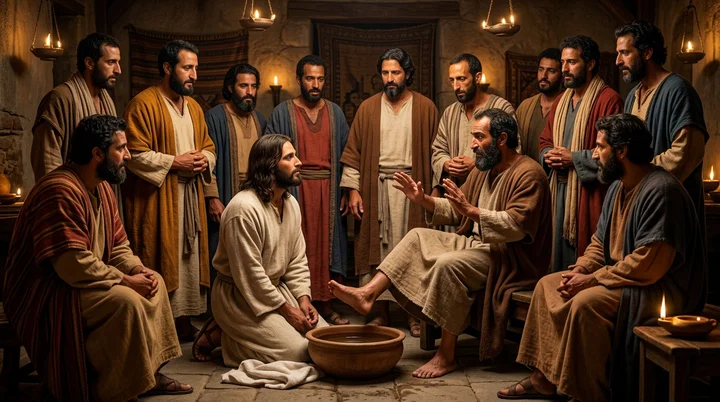
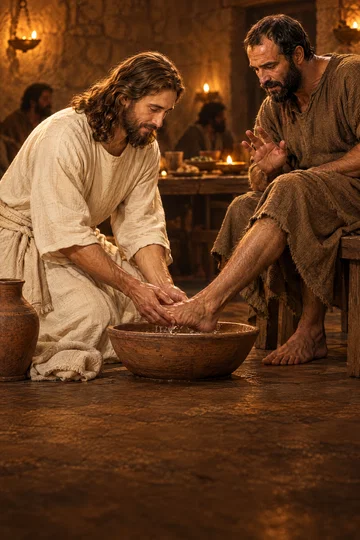
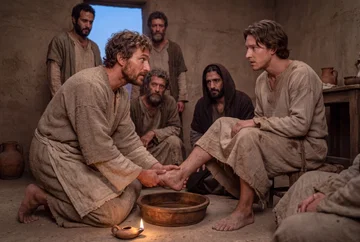
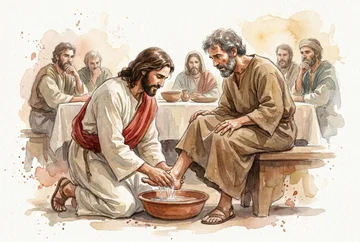
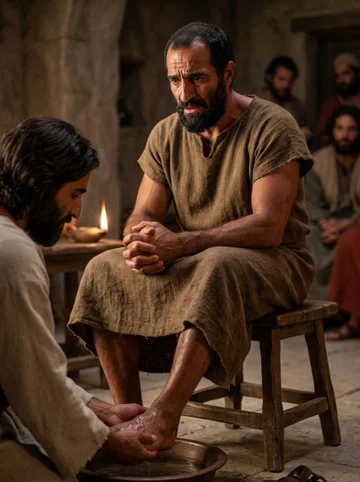
Then cometh he to Simon Peter: and Peter saith unto him, Lord, dost thou wash my feet?
Translations
Then comes he to Simon Peter: and Peter says to him, Lord, do you wash my feet?
King James Version, KJV Cambridge Paragraph Bible
Then cometh he to Simon Peter: and Peter saith unto him, Lord, dost thou wash my feet?
Then he cometh to Simon Peter: and Peter saith to him, Lord, dost thou wash my feet?
Revised Version, American Standard Version
So he cometh to Simon Peter. He saith unto him, Lord, dost thou wash my feet?
He cometh, therefore, unto Simon Peter, and that one saith to him, 'Sir, thou — dost thou wash my feet?'
He comes therefore to Simon Peter; and he says to him, Lord, dost thou wash my feet?
So he cometh unto Simon Peter. He saith unto him—Lord, dost, thou, wash my feet?
Berean Standard Bible, Majority Standard Bible
He came to Simon Peter, who asked Him, “ Lord, are You going to wash my feet?”
Then he came to Simon Peter. He said to him, “ Lord, do you wash my feet?”
So he came to Simon Peter. Peter said, Lord, are my feet to be washed by you?
Then came he to Simon Peter, who sayd to him, Lord, doest thou wash my feete?
Douay-Rheims (Challoner revision)
He cometh therefore to Simon Peter. And Peter saith to him: Lord, dost thou wash my feet?
Pictures
Cross-references
- John 13:14-15
If I then, your Lord and Master, have washed your feet; ye also ought to wash one another’s feet.
Jesus gives his foot washing as an example and commands his disciples to follow it.
- John 13:10-11
Jesus saith to him, He that is washed needeth not save to wash his feet, but is clean every whit: and ye are clean, but not all.
Jesus distinguishes foot washing from prior cleansing and identifies Judas as unclean.
- Luke 22:27
For whether is greater, he that sitteth at meat, or he that serveth? is not he that sitteth at meat? but I am among you as he that serveth.
Jesus’ example of serving connects with the foot-washing lesson.
- 1 Timothy 5:10
Well reported of for good works; if she have brought up children, if she have lodged strangers, if she have washed the saints’ feet, if she have relieved the afflicted, if she have diligently followed every good work.
Lists washing the saints’ feet among faithful widows’ good works, echoing Christ’s example.
- Philippians 2:7
But made himself of no reputation, and took upon him the form of a servant, and was made in the likeness of men:
Christ’s foot washing reflects his taking servant form and humbling himself.
- Genesis 18:4
Let a little water, I pray you, be fetched, and wash your feet, and rest yourselves under the tree:
Water is provided for guests to wash their feet.
- Matthew 20:28
Even as the Son of man came not to be ministered unto, but to minister, and to give his life a ransom for many.
Jesus came to serve rather than be served, as his foot washing demonstrates.
- John 13:14
If I then, your Lord and Master, have washed your feet; ye also ought to wash one another’s feet.
Jesus commands his disciples to wash one another’s feet.
- Luke 7:44
And he turned to the woman, and said unto Simon, Seest thou this woman? I entered into thine house, thou gavest me no water for my feet: but she hath washed my feet with tears, and wiped them with the hairs of her head.
Jesus contrasts Simon’s failure to provide foot-washing with the woman’s care.
- Genesis 43:24
And the man brought the men into Joseph’s house, and gave them water, and they washed their feet; and he gave their asses provender.
Joseph’s brothers are given water to wash their feet.
- John 13:17
If ye know these things, happy are ye if ye do them.
Doing the foot-washing instruction brings happiness.
- John 13:12
So after he had washed their feet, and had taken his garments, and was set down again, he said unto them, Know ye what I have done to you?
Jesus resumes his place at the table after washing the disciples’ feet.
- John 13:11
For he knew who should betray him; therefore said he, Ye are not all clean.
Jesus washed Judas’s feet knowing he would betray him.
- 1 Samuel 25:41
And she arose, and bowed herself on her face to the earth, and said, Behold, let thine handmaid be a servant to wash the feet of the servants of my lord.
Abigail offers to serve David’s servants by washing their feet.
- Genesis 19:2
And he said, Behold now, my lords, turn in, I pray you, into your servant’s house, and tarry all night, and wash your feet, and ye shall rise up early, and go on your ways. And they said, Nay; but we will abide in the street all night.
Lot offers his guests water to wash their feet as an act of hospitality.
- John 12:3
Then took Mary a pound of ointment of spikenard, very costly, and anointed the feet of Jesus, and wiped his feet with her hair: and the house was filled with the odour of the ointment.
Mary anoints Jesus’ feet and wipes them with her hair.
- John 13:2
And supper being ended, the devil having now put into the heart of Judas Iscariot, Simon’s son, to betray him;
Places the foot washing during the supper.
- John 13:38
Jesus answered him, Wilt thou lay down thy life for my sake? Verily, verily, I say unto thee, The cock shall not crow, till thou hast denied me thrice.
Peter’s denial warning follows the foot washing.
- John 13:16
Verily, verily, I say unto you, The servant is not greater than his lord; neither he that is sent greater than he that sent him.
Christ’s teaching on servants accompanies his washing the disciples’ feet.
Commentary
Each commentary is drawn from primary sources: the writings of Ellen G. White and Adventist pioneers and periodicals. Each commentary is separate. Its own words are not a quotation; follow the references to read the source passages.
Ellen G. White
43 sources
On the final evening before His death, at His last Passover supper in the upper chamber, Jesus rose as a servant with towel and basin and began to wash the disciples' soiled feet, and when He came to Peter, Peter protested in astonishment that his Lord should take that lowly place.Ms 102, 1904, par. 4–7Ms 35, 1897, par. 9–10Lt 336, 1906, par. 5–9ST Mar 25, 18806MR 24.2–3 His protest sprang from love and reverence for Jesus as Son of God, with shame that none of the disciples had done the service, and Christ's humble act broke his heart.Ms 106, 1903, par. 18–23Ms 54, 1897, par. 15DA 645.2–646.2 He did not yet understand that the washing pointed beyond bodily cleansing to Christ's cleansing of the heart from sin.Ms 106, 1903, par. 18–23DA 645.2–646.2 By this final service as Lord and Master Christ rebuked pride and striving for the highest place and taught humility through unselfish ministry that removes alienation and jealousy and brings fellowship in love.Ms 102, 1904, par. 4–7Ms 106, 1903, par. 18–23Ms 19, 1897, par. 3–5Lt 117, 1897, par. 8–10GW92 245.3–246.2 The washing was instituted as a sacred ordinance and appointed preparation for communion, kept as a season of self-examination, confession and forgiveness, even tenderly extended to Judas as a final appeal of mercy that he refused to heed.Ms 35, 1897, par. 9–10Ms 19, 1897, par. 3–5Ms 14, 1895, par. 1–2DA 655.4DA 720.2
Setting and Sequence
The verse belongs to the final evening before Jesus' death, spent in the upper chamber instructing His disciples during His last Passover supper with them in His final week.Lt 336, 1906, par. 5–9Ms 113a, 1897, par. 15Ms 113, 1897, par. 17 It was the last hours they had with Him before He offered Himself as a sacrifice for the world, as He prepared them for the coming trial of His betrayal and suffering and their separation from Him.Lt 336, 1906, par. 5–96MR 24.2–3 He had eaten the Passover with them just before His crucifixion, on the same night He instituted the Lord's Supper in place of the Passover to commemorate His death.ST Mar 25, 1880
He acted knowing the Father had given all things into His hands and that He had come from God and was going to God, even while the devil had put betrayal into the heart of Judas Iscariot.Ms 35, 1897, par. 9–10 The disciples had come to the supper selfish, with tempers heated by contention and disputing who should be greatest, yielding to Satan's determined effort to arouse strife, which filled His heart with sorrow and kept them from blessing.6MR 24.2–3 Hearing their whisperings and seeing their flushed faces, He without a word rose from supper, laid aside His garments, girded Himself with a towel like a servant, poured water into a basin, and with His own hands began to wash and wipe the disciples' soiled feet.Ms 35, 1897, par. 9–10Ms 19, 1897, par. 3–56MR 24.2–3 Though Lord, He thus girded Himself to do the work of a servant while they were contending for the highest place in the promised kingdom.Ms 43, 1897, par. 24
He washed Judas first, and with His own precious hands bathed the soiled feet and wiped them with the towel.Ms 19, 1897, par. 56–57 He alone read Judas's secret purpose while the other disciples knew nothing of it, yet He did not expose him.Ms 19, 1897, par. 56–57 By the time He came to Peter the other disciples were astonished and ashamed, too astonished and ashamed to speak, mortified, conscience-stricken, subdued and broken.6MR 24.2–3Ms 19, 1897, par. 56–57 His action opened their eyes and showed them themselves in a new light, filling their hearts with bitter shame and humiliation in an experience they remembered as long as life lasted, and their hearts went out to Him with deep earnest faith that works by love and purifies the soul.6MR 24.2–3Ms 19, 1897, par. 56–57
Peter's Surprised Protest
When He came to him in turn, Simon Peter questioned and protested with astonishment, surprise and resistance that his Lord should take the lowly place of washing his feet.Ms 102, 1904, par. 4–7Ms 35, 1897, par. 9–10Ms 19, 1897, par. 3–5Ms 54, 1897, par. 15GW92 245.3–246.2 He came in the course of rising from supper, laying aside His garments, girding Himself with a towel, pouring water into a basin, and beginning to wash and wipe the disciples' feet, knowing the Father had given all things into His hands and that He had come from God and was going to God, even while betrayal had been put into the heart of Judas Iscariot.Ms 35, 1897, par. 9–10Ms 19, 1897, par. 3–5 The act rebuked the disciples' pride and was a final lesson in humility through humble service by Lord and Master, teaching especially gospel ministers to embrace humility and service.Ms 102, 1904, par. 4–7Ms 35, 1897, par. 9–10GW92 245.3–246.2 It belongs to the ordinance of foot-washing in which God is sacredly near, to be remembered by bringing to mind His words that if He as Master and Lord washed their feet they also ought to wash one another's feet, for He gave an example that they should do as He had done, and happy are they if they do it.Ms 35, 1897, par. 9–10 The washing of feet is a sacred act and ordinance whose motive is to bring about, through remembrance of what Christ did, a state of feeling where no exaltation of one above another finds place, and to bring brother to an understanding of his brother's feelings.Ms 19, 1897, par. 3–5 It is an example Jesus set for His followers and a humble Christian duty that helps keep God's people separate from the world and from backsliding, to be followed with care and wisdom especially when introducing it to those unfamiliar with the practice or prejudiced against it.EW 95.2–96.1
Peter's response reflected love and reverence for Jesus as the Son of God, together with shame that none of the disciples had performed the service.Ms 106, 1903, par. 18–23Ms 54, 1897, par. 15DA 645.2–646.2 Jesus' humble service broke Peter's heart and made him ashamed that none of the disciples had taken the servant's place.Ms 106, 1903, par. 18–23Ms 54, 1897, par. 15DA 645.2–646.2 He did not yet understand that the washing pointed beyond bodily cleansing to Christ's cleansing of the heart.Ms 106, 1903, par. 18–23 He could not yet understand that Christ came into the world to serve and to cleanse people from sin.Ms 106, 1903, par. 18–23DA 645.2–646.2 The foot-washing was meant to remove alienation, jealousy, rivalry and pride and bring the disciples to the humility and love needed for fellowship with Christ.Ms 106, 1903, par. 18–23
Peter's hasty response reflected his impetuous, hasty, self-confident character, which often made him appear more faulty than Judas.MH 493.3–4 Yet Jesus patiently bore with Peter, and Peter's later life of service and sacrifice testified to the power of God's grace.MH 493.3–4 His experience among Jesus' disciples illustrates the patience to be shown toward those at fault.MH 493.3–4
Humility and Unity Lesson
Peter's question, "Lord, dost thou wash my feet?" came when his Lord took the lowly place of a servant to wash him, and that final, humiliating service by Lord and Master rebuked the disciples' pride and striving for the highest place.Ms 102, 1904, par. 4–7GW92 245.3–246.24T 225.3–4 The disciples were then contending for the highest place in the promised kingdom, and Christ though Lord girded Himself to do the work of a servant, which most forcibly illustrates the necessity of true humility and that true service calls for unselfish ministry.GW92 245.3–246.2Ms 43, 1897, par. 24 The chapter therefore teaches humility rather than striving for a higher position, and not to consider oneself superior to the lowliest saint.Lt 117, 1897, par. 8–104T 225.3–4
The humble act was meant to expose pride and show the disciples their need, and to remove alienation, jealousy, rivalry and conflict.Ms 106, 1903, par. 18–23DA 650.2–3Ms 50, 1890, par. 12–13 It was meant to bring them to the humility and love needed for fellowship with Christ, since pride, conflict and rivalry prevent fellowship with Him.Ms 106, 1903, par. 18–23DA 650.2–3 That is why remembrance of His humiliation was made to precede receiving the symbols of His body and blood, to bring about a state of feeling where no exaltation of one above another finds place and to bring brother to an understanding of the feelings of his brother.Ms 19, 1897, par. 3–5DA 650.2–3 It clears away misunderstandings to bring man out of selfishness and seeking the highest place, down from self-exaltation to humility of spirit that will lead him to wash his brother's feet.Ms 35, 1897, par. 11–12Ms 50, 1890, par. 12–13
Following that example in the ordinance can soften the heart, expel selfishness, and bring the Holy Spirit, love, grace and peace.Ms 14, 1895, par. 1–2Ms 75, 1898, par. 30–32 It was given to teach a lesson of humility and to bring the disciples together in unity, to join their hearts in oneness with Him and with one another.Ms 14, 1895, par. 1–2Ms 75, 1898, par. 30–32 Neglect of His words leaves pride, self-sufficiency, evil thinking, evil speaking, and planning without His help, with contention and strife among those who should be one in Christ.Ms 75, 1898, par. 30–32
The chapter calls for careful, prayerful study of Christ's example and of what it means to serve God with a pure, consecrated spirit, and for earnest practice.Lt 117, 1897, par. 8–10Lt 16j, 1892, par. 3 It plainly outlines God's will for His people and expresses His remedy for dissension, calling to humility and unity with one another and with Christ.Lt 117, 1897, par. 8–1021MR 346.1–3 The duties He specified as Substitute and Surety bear God's credentials to the world.Lt 16j, 1892, par. 3
The lesson bears especially on gospel ministers acquainted with present truth, calling them to be converted and to embrace humility and service.Ms 139, 1902, par. 1GW92 245.3–246.2 It calls them to understand the philosophy of genuine missionary work, for God means just what He says in John 13-17.Ms 139, 1902, par. 1 It is their privilege to believe every verse in those chapters and to live them out before their fellow ministers.Ms 139, 1902, par. 1
Footwashing Ordinance Practice
What Peter met when Jesus came to him was no longer mere hospitality for dusty feet, but a sacred religious service He instituted, Christ's appointed preparation for communion that keeps His humiliation, humility and service in mind and tests and proves the loyalty of His people.Ms 35, 1897, par. 9–10Ms 19, 1897, par. 3–5Ms 14, 1895, par. 1–2DA 650.2–3Ms 8, 1897, par. 10 It is to be remembered by His words that as Master and Lord He washed their feet so they also ought to wash one another's feet, for He gave an example that they should do as He had done, and happy are they if they do it.Ms 35, 1897, par. 9–10Ms 19, 1897, par. 3–5 Its motive is to bring about, through remembrance of what He did, a state of feeling where no exaltation of one above another finds place, and to bring brother to an understanding of his brother's feelings.Ms 19, 1897, par. 3–5Ms 14, 1895, par. 1–2
As He ate the Passover with His disciples He put an end to the sacrifices offered for four thousand years, discharging them from the cares and burdens of ancient Jewish obligations in rites and ceremonies that no longer possessed virtue.Ms 43, 1897, par. 24Ms 19, 1897, par. 18–19 Type was meeting antitype in Himself as the authority, foundation, and great and only efficacious offering for the sins of the world pointed to by all those ordinances, so to continue those rites would be an insult to Jehovah.Ms 43, 1897, par. 24Ms 19, 1897, par. 18–19 In place of the national festival He instituted a memorial service of feet washing and the sacramental supper to be repeated by His followers through all time and in every country, who should ever repeat His act.Ms 43, 1897, par. 24Ms 19, 1897, par. 18–19
Foot washing comes first and then the broken bread to represent His broken body and the juice of the vine to represent His spilled blood, observed together with the Lord's Supper after humble confession.ST Mar 25, 1880Ms 14, 1850, par. 4–612MR 247.1–2Lt 79, 1874, par. 7 It was set on the same night He instituted the Lord's Supper in place of the Passover to commemorate His death, connecting the humble duty with the supper as a season of self-examination in which His people learn the true feelings of their hearts toward God and one another.ST Mar 25, 1880Ms 14, 1850, par. 4–6 Honestly engaged in, it exposes pride, selfishness and hatred, awakens conscience, convicts of sin, revives memory, and produces mutual confession, forbearance, forgiveness of one another's errors, and true love as preparation for commemorating Christ's sufferings and death.ST Mar 25, 1880Ms 19, 1897, par. 18–19 That preparation flows from His love strong enough to die for them and requires them to love one another as He loved them, while He Himself is always present to lead everyone participating to feel the pulse of conscience, to awaken them to the lessons symbolized, and to receive their penitential offerings.ST Mar 25, 1880Ms 19, 1897, par. 18–19 Eating His body and drinking His blood means not merely partaking at the sacramental service but daily partaking of the bread of life that alone satisfies soul-hunger by receiving His Word and doing His will.Ms 19, 1897, par. 18–19
The ordinance is kept among disciples apart from unbelievers, after Jesus took them away alone separate from the wicked, for to do the washing of saints' feet among unbelievers brings reproach on God's cause.Ms 14, 1850, par. 4–612MR 247.1–2 Men wash men's feet and women wash women's feet, never together, with leaders setting the example first and then all heartily joining in, followed by washing the saints' feet together in humility before God.Ms 6, 1859, par. 347MR 218.1 It should be followed with care and wisdom, especially when introducing it to people unfamiliar with the practice or prejudiced against it, that it may keep God's people separate from the world and from backsliding.EW 95.2–96.1 It is to be observed together with the sacrament in evening worship, joined in by the largest possible number of believers as part of revival when sinners are seeking the Lord for the first time, bringing solemn impressiveness and settling believers into the work.Lt 79, 1874, par. 7
Remembering what Christ did brings a solemn humbling before God with weeping and rejoicing, with sobs and groans, that is long remembered, brings deep gratification, and accomplishes a good spiritual work.6MR 24.2–37MR 218.1Lt 73, 1888, par. 8 It brings brother to an understanding of his brother's feelings and gives an experience remembered as long as life lasts.Ms 19, 1897, par. 3–56MR 24.2–3 This speaks not so largely to intellectual capacity as to the heart, for the moral and spiritual nature need it, disentangling believers from rites and ceremonies hitherto engaged in as essential but which the reception of the Gospel made no longer of any force.Ms 19, 1897, par. 18–19
Mercy Toward Betrayer
When He came to Peter, He had already tenderly washed the feet of Judas and given him a place at the table and a share in the sacrament, though He knew Judas would betray Him and had already twice promised to do so.DA 655.4DA 720.220MR 149.2–4Ms 47, 1897, par. 18–20Ms 106, 1903, par. 54–55 Judas was already out of harmony with Him and was using his place beside Him at the supper to conceal his plan.Ms 120, 1897, par. 9Ms 64, 1897, par. 9 He was included in the service with the other disciples, and was not refused or exposed.DA 655.420MR 149.2–4Ms 47, 1897, par. 18–20
That washing was a final appeal of love, showing patience, mercy and long-suffering toward erring disciples.DA 655.4DA 720.2Ms 106, 1903, par. 54–55Ms 120, 1897, par. 9Ms 64, 1897, par. 9 Even the sinner was offered opportunity to receive Christ, repent, and be cleansed from sin.DA 655.4Ms 106, 1903, par. 54–55 All but one of the twelve were thus brought to repentance, and Judas's experience illustrates long patience with human weakness and perversity.DA 655.4ST Feb 9, 1915 Believers are therefore taught not to abandon someone believed to be in error or sin, and not by careless separation to drive that person further into temptation and leave him more exposed to it.DA 655.4Ms 106, 1903, par. 54–55
Judas did not heed the appeal but went from having his feet washed to carrying out the betrayal.DA 720.2Ms 120, 1897, par. 9 The servant's work did not make him love Christ.COS 110.7–9 He was angry that Christ had taken a servant's place and became more determined to betray Him.COS 110.7–9 Even when he realized Jesus knew his purpose he felt no fear but left to carry out his plan.DA 720.2Ms 120, 1897, par. 9COS 110.7–9
The washing is therefore not to be deferred because some present are considered unworthy.Ms 35, 1897, par. 11–12 No one may refuse to attend if such a person is present, or say who shall present themselves, for it is not left to man to decide.Ms 35, 1897, par. 11–12Ms 47, 1897, par. 18–20 Human beings cannot tell who is worthy and who is not, and cannot read the secrets of the soul.Ms 35, 1897, par. 11–12Ms 47, 1897, par. 18–20 Unseen heavenly and evil messengers witness these services.Ms 47, 1897, par. 18–20
Sources
Pioneers and periodicals
91 sources
When Jesus came to Simon Peter in turn in washing the disciples' feet, Peter answered with a startled question that called him Lord and could not see why his Lord would do this lowly service for him.ST Mar 29, 1899ST Jul 30, 1885ST May 13, 1889ST Feb 11, 1897ST Apr 19, 1905 Though he was Lord and Master, the Prince of glory, he laid aside his garments and took a servant's form to do menial servant's work for his own followers.ST May 13, 1889ST Mar 30, 1904RH Jan 8, 1867 In doing so he instituted foot-washing as a binding ordinance of humility to be repeated before the Lord's Supper, not to be set aside as nonessential, though those who held otherwise taught it as an example and admonition to humble service and not as a required part of the Supper.CO 43.4–5STST Jul 15, 1886RH May 3, 1864 Beyond humility the washing points to his cleansing of the heart from pride and sin, which must be accepted in order to have a part with him.RH Apr 2, 1908RH Jan 20, 1853RH May 3, 1864RH Jun 23, 1910RH Jun 27, 1878 Rightly observed together, the service humbles pride, removes alienation, brings unity, confession and forgiveness to prepare for communion, and those who know and do these things receive blessing, joy and the presence of Christ.ST May 13, 1889ST Oct 31, 1878RH Jun 23, 1910RH Jul 7, 1863RH Nov 20, 1866
Words and Setting
Then he came to Simon Peter, and Peter answered with startled resistance, calling him Lord and asking whether he, the Lord, would wash Peter's feet, unable to see any propriety in his Lord performing so lowly a service for him.ST Mar 29, 1899ST May 13, 1889ST Feb 7, 1884RH Jun 16, 1868ST Jul 26, 1883 Peter could see what was being done but did not yet grasp its meaning, and the reply that he would understand afterward shows the act carried a significance beyond what he then saw.ST Jul 30, 1885ST Feb 7, 1884RH Apr 2, 1908RH May 3, 1864RH Jan 8, 1867 The question belongs to the example of washing one another's feet that was then explained, an ordinance given as a token of humility and brotherly love for followers to practice toward one another.ST Jul 30, 1885ST May 13, 1889ST Jul 26, 1883 Its meaning is measured by that example and occasion, not by a separate lesson about hospitality.RH Jun 16, 1868
He came to Peter in turn while washing the disciples, implying he had already washed some others before reaching him.ST Feb 11, 1897ST Apr 19, 1905ST Mar 29, 1899 Seeing the Lord take this humbling position gave Peter time to reflect on the contrast between Jesus' service and the disciples' proper place as servants.ST Feb 11, 1897ST Apr 19, 1905 Having loved his own to the end, knowing his hour to depart out of this world to the Father had come and that the Father had given all things into his hands and that he came from God and went to God, he had risen from supper, laid aside his garments, girded himself with a towel, poured water into the basin, and begun to wash and wipe their feet.ST Feb 11, 1897
The washing took place during supper before the feast of the Passover, during or near the beginning of the meal, after the Passover supper and before he blessed and gave the bread and wine, with the saying that one would betray him coming after the washing.CO 45.1–2ST Feb 11, 1897ST Nov 15, 1883ST Jul 12, 1905ST Feb 4, 1903 It fell on the night of his betrayal just before his crucifixion, when type met antitype in the Lamb of God slain for the sins of the world, and its timing after supper was a deliberate departure from washing guests before a meal.ST Jul 12, 1905ST Aug 12, 1886 It is part of the upper-room discourse extending through John 13-17, expressing the emphasis on his divine glories.ST Mar 9, 1888
It was the last Passover supper, virtually the last Passover ever celebrated, eaten with his disciples before his arrest on its appointed day and time, on the same night he instituted the Lord's Supper in place of the Passover to commemorate his death.ST Mar 25, 1880ST Apr 2, 1912ST Aug 12, 1886 Meetings with his disciples were usually seasons of calm joy highly prized by them, and Passover suppers had been scenes of special interest, but on this occasion he was troubled in spirit and the disciples sympathized with his grief although they did not know its cause.ST Aug 12, 1886 As he stooped to serve them he bore sorrow over the betrayal and the horrors ahead with calm, tender love, and the few quiet hours between him and Gethsemane, near the hour of ascending to the Father, were spent for his disciples' benefit.ST Aug 28, 1879ST Aug 12, 1886
The occasion was marked by the disciples disputing which should be greatest and seeking the highest place and the place of honor at the table, leaving them unclean in heart, proud, alienated and dissenting, and unfit to receive the bread and wine as emblems of true communion.RH Jun 23, 1910RH Feb 10, 1916ST Jul 12, 1905ST May 18, 1904ST May 21, 1896 As setting a little child among them had taught humility and equality when they disputed who should be greatest in the kingdom of heaven, so this act was tied to its circumstances and rebuked that rivalry.RH Feb 24, 1859 It confronted jealous ambition and criticism among the twelve and was meant to wash away that alienation.RH Jun 23, 1910
The act was not ordinary hospitality or cleansing for physical uncleanness, for the disciples had already bathed before the Passover.RH Apr 22, 1862ST Jul 12, 1905 Customary practice was for hosts to provide water for guests to wash their own feet, whereas he himself washed and wiped their feet in a literal, minutely described transaction.ST Feb 11, 1897ST Mar 9, 1888 Viewed merely as hospitality it becomes a strange digression from the events then transpiring, since they had shown no inhospitality and were not in need of hospitality being shown them.RH Feb 24, 1859 His word that Peter did not yet understand shows it carried a meaning beyond ordinary courtesy, teaching Christian fellowship through serving one another.ST Mar 9, 1888
Humility and Mutual Service
Though he was Lord and Master, associated with the Father and sharing his glory, the Prince of glory and Lord of all, Jesus laid aside his garments and his rights, took a servant's place and form, and performed menial servant's work for his own followers.ST May 13, 1889ST Mar 30, 1904RH Jan 8, 1867ST Feb 7, 1884RH Jun 16, 1868 Peter's startled question whether his Lord would wash his feet exposes the reversal, that the Master took the lowliest place to serve while true greatness and authority are shown by serving others.ST May 13, 1889ST Mar 30, 1904RH Aug 19, 1902 The foot-washing was therefore not ordinary hospitality but an act of deep significance, a memorial of the humility of the Lord and Master to be retained in the church's practice rather than neglected or distorted.ST May 13, 1889ST Feb 7, 1884RH Jun 16, 1868
His example teaches that true greatness is humble, loving service to one another.ST Mar 30, 1904ST Sep 24, 1912ST May 21, 1896 Followers are called to reject pride and self-exaltation, selfishness and ambition to be greatest or to seek pre-eminence and their own advantage, and to serve one another humbly and willingly even in lowly tasks, showing the same meekness as they grow in grace.RH Apr 22, 1862ST Sep 9, 1886ST May 13, 1889ST Sep 24, 1912RH Jul 24, 1856 The washing was not done to remove physical uncleanness or as an ordinary act of hospitality, but as an example Jesus gave and a command for his followers to obey, without which they cannot be his disciples, and those who know these things are happy when they put them into practice.RH Apr 22, 1862ST May 13, 1889RH Jul 24, 1856
The command to do as he did means literally washing one another's feet in the same way he did it.ST Sep 9, 1886ST Jul 8, 1880ST Aug 5, 1886RH Apr 22, 1862 It is plain, literal, and to be practiced in life by One who knew what was best, with "ought" carrying the force of a direction to be done without excuse or caviling, bringing Christians to a more common level in humility, union, communion, and manifest love.ST Jul 8, 1880ST Aug 5, 1886RH Apr 22, 1862 It is not merely learning humility inwardly or substituting something else instead, whether helping the weak, showing hospitality, or caring for the afflicted, and to neglect or refuse it is to slight both example and command.ST Sep 9, 1886ST Jul 15, 1886ST Aug 5, 1886 Though told only once, the account is completely truthful and fully authoritative, establishing the ordinance for all the disciples and not a particular class, with evidence stronger than for Sunday-keeping or infant baptism, and refusal springing from its humiliating character rather than lack of proof.ST Jul 15, 1886
The washing teaches that disciples are equal as brethren and servants of one Master, members of one body who should care for one another.RH Feb 24, 1859ST Mar 30, 1904ST Feb 20, 1901 There are to be no castes, ranks, or barriers, no claim of supremacy over others, and no despising of labor or of laborers.ST Feb 20, 1901RH Oct 8, 1861RH Jun 27, 1878 As setting a little child among the disputing disciples taught humility and equality when they contended who should be greatest, so this act enforced the same moral lesson tied to its occasion, and it was not designed to teach hospitality, for the disciples had shown no inhospitality and were in no need of it, so that viewed as hospitality it becomes a strange digression.RH Feb 24, 1859ST May 21, 1896 It upholds brotherhood, equality, and dignity of labor, making the act honorable even when it challenges pride, social rank, wealth, learning, or propriety, for washing a brother's feet expresses willingness to regard him as an equal and serve him humbly, keeping Christ's condescension before his followers.ST May 21, 1896RH Oct 8, 1861RH Jun 27, 1878
The act shows steadfast, tender love amid suffering, bearing sorrow over betrayal and the horrors ahead with calm love while stooping to serve, proving that humility and self-forgetful service can remain steadfast amid suffering.ST Aug 28, 1879ST May 25, 1915RH Mar 24, 1910 His love extended even to the traitor, for he washed Judas's feet as well as Peter's, treating weakness with kindness including Peter's impatience and impetuosity, and did not separate himself from his still erring and faulty disciples because of their sins.RH Nov 6, 1900RH Jan 4, 1906RH Jul 23, 1901RH Mar 24, 1910 That crowning act of humility and loving service was given as an act of love and an example to follow by washing one another's feet, illustrating his closeness to his people in sharing human life and remaining one with his church as they keep serving one another in humility while awaiting his return.ST May 25, 1915RH Nov 6, 1900RH Jul 23, 1901
Ordinance of Humility Instituted
Peter's question belongs to Jesus instituting foot-washing as a church ordinance, commonly called the ordinance of humility, an example and religious ceremony his followers are to repeat for one another.CO 43.4–5STRH Jan 20, 1853 It was instituted in connection with the last supper for all the disciples, not a particular class, with direction to do as he had done, and receiving the washing made necessary for having a part with him.RH Jan 20, 1853 The history of its institution and the words establishing it are simple and clear, to be practiced in connection with communion immediately before the Lord's Supper, and it is not to be reduced to a figure but exemplifies the humility and love he showed before departing the world.RH Jan 20, 1853RH Aug 19, 1858 At the time he washed them it was ordinary servant's work and not yet a church ordinance, and the disciples' response to such lowly service tested their humility.RH May 30, 1912 The same spirit of willingly doing menial tasks for others is needed in the church's ordinance of humility.RH May 30, 1912
The ordinance is plainly taught, clearly commanded and binding as obedience, not a nonessential that may be set aside.ST Jul 15, 1886ST Jul 30, 1885RH Jun 23, 1910RH May 8, 1900ST Though told only once it is completely truthful and fully authoritative, with evidence stronger than any for Sunday-keeping or infant baptism, and it stands with baptism and the Lord's Supper as an explicitly defined and enforced act that is more than ordinary custom for cleanliness.ST Jul 15, 1886RH Jul 28, 1863 Churches ought to obey it as an act actually commanded, not only as being humble enough to do it, and obeying this plainly understood command is part of following him, to be practiced as commanded and together as a congregation rather than replaced by washing feet at home.RH Jun 23, 1910RH May 8, 1900STRH Jul 28, 1863 It was given just after disputing over highest place had left hearts unclean, alienated and dissenting and unfit to receive the bread and wine as emblems of true communion, and coming to wash feet was meant to wash away that alienation and at the same time establish an ordinance that would always take away similar feelings and prepare for communion.RH Jun 23, 1910 Those who held otherwise taught it as example and admonition to humble service and love toward one another in contrast to rivalry over greatness, not as a required part of the Lord's Supper.RH May 3, 1864
It is a preparatory service to be observed before the sacrament, with foot-washing coming first before the breaking of bread and blessing of the cup.CO 43.4–5CO 45.1–2 This foot-washing took place before blessing and giving the bread and wine at the Last Supper, with the saying that one would betray him coming after the washing.CO 45.1–2 It is to be practiced in connection with communion, immediately before the Lord's Supper, and is inseparable from the Supper when the Supper is spoken of generally. The example prepared for close self-examination before partaking of the emblems of broken body and shed blood, leading to heartfelt confession and blessing, and as a humbling ordinance followed by the Lord's supper, doing these things brings happiness and a refreshing season.RH Jan 14, 1858RH May 19, 1859 The ordinance is connected with the Last Supper instituted in place of the Passover to commemorate his death, after eating the Passover just before crucifixion on the same night.ST Mar 25, 1880
It is to be kept instead of the Passover that has served its time or Easter as a heathen institution, together with the Lord's Supper, to continue until his personal return.ST Mar 3, 1909ST May 21, 1896 It came as the next event of importance after the triumphal entry and is connected with the institution of the Lord's Supper and the ordinance of humility, to remind followers of his humiliation in taking human nature, his humble work of salvation, and his body and blood given for the world.STST May 21, 1896 It is to be kept acceptably only by those living in obedience and at peace with the brethren, and the foot-washing was enjoined as expressly as eating the bread and drinking the cup, an inseparable part included when the Supper is spoken of generally as breaking bread.ST Mar 3, 1909RH Feb 24, 1859 The foot washing was his crowning act of humility as servant of servants belonging to the period of humiliation through which he redeemed the lost world, and the Lord's Supper given after it is a divinely appointed memorial of incarnation and redemption.ST Apr 20, 1915 It teaches humility and connects foot washing with the supper as a season of self-examination exposing pride, selfishness and hatred, designed to produce mutual confession, forbearance, forgiveness and true love as preparation for commemorating his sufferings and death, flowing from love strong enough to die and requiring love one to another.ST Mar 25, 1880
The account plainly brings the ordinance to view as a new institution with its origin, circumstances and rites made clear, in the same way as circumcision, the Passover, baptism and the Lord's Supper.RH Mar 9, 1905 Unlike the tithing system, which reaches back to the beginning when the fall made it necessary and hope was promised to a lost world, this ordinance originates later in Bible history as a newly commanded institution.RH Mar 9, 1905 The time of its institution in the evening does not by itself make evening essential for its celebration, a question considered alongside the breaking of bread. The ordinance was practiced in the early Christian church but then generally neglected by professed followers, forgotten or burdened with superstition and outward forms.ST Feb 7, 1884RH Feb 2, 1860RH Jun 16, 1868 Refusal comes from its humiliating character rather than lack of proof, for the minute description including Peter's exchange shows a very literal transaction requiring the same act done literally as he did it, a literal emblem of the humility of the Lord and Master, the Prince of glory, which the natural man resists.ST Jul 15, 1886ST Feb 7, 1884RH Jun 16, 1868ST Jan 3, 1884 The neglected or perverted ordinance, long neglected as a duty, is to be restored and to retain its place in practice rather than be neglected or distorted, having been accepted when presented in connection with the Lord's Supper and the testimony of Jesus for followers to humbly follow rather than place themselves above their Master.ST Feb 7, 1884RH Jun 16, 1868ST Jan 3, 1884RH Dec 25, 1856
Cleansing From Sin Signified
Peter's question was not about what outward thing was being done, but why his Lord would do it for him, for he saw the humility yet did not yet grasp the inner sense, and the answer that he would understand afterward shows the act carried more than lowly service.RH Apr 2, 1908RH May 3, 1864RH Jan 8, 1867ST Feb 7, 1884RH Apr 2, 1908 It was no ordinary hospitality or bodily cleaning and no common Jewish custom, for its significance lay beyond physical cleanliness, and to refuse it was to have no share with Christ.RH Apr 2, 1908RH Jan 20, 1853RH May 3, 1864RH Jan 8, 1867ST Feb 7, 1884 Receiving the washing is therefore necessary in order to have part with him, since it points to his purpose to cleanse people from sin and join them to himself, and it stands as an institution to be followed in washing one another's feet rather than reduced to a mere figure.RH Apr 2, 1908RH Jan 20, 1853RH May 3, 1864ST Feb 7, 1884RH Apr 2, 1908
The washing of the feet is emblematic of a higher spiritual washing, the cleansing of the heart from pride and self-will and sin, proving that something more than a menial outward act was being done.RH Jun 23, 1910 Peter at first spoke proudly and refused because he saw no propriety in it, but his questioning led on to surrender to the Lord's way, a surrender of heart by which the yielding ones could be pronounced clean.ST Feb 7, 1884RH Jun 23, 1910 All were erring and faulty, yet he did not separate himself from them because of their sins; Judas was first, and all but one were brought to repentance, while Judas would not yield his heart to be cleansed.RH Jun 23, 1910RH Nov 20, 1913RH Jul 23, 1901 So humbled, their hearts were cleansed of pride before the next service and their feelings changed to unity and love and meekness and teachability and readiness to give one another the highest place, showing that pure love requires humility and that the same thorough cleansing is needed still.RH Nov 20, 1913ST May 13, 1875 The rite is not for bodily cleanliness, since participants first wash themselves, but a sign pointing to what has been done for them and cultivating the same humble spirit, making honorable what challenges pride and rank and wealth and learning and customary propriety by expressing willingness to regard a brother as an equal and serve him humbly and by keeping that condescension continually in view.RH Jun 27, 1878 For the same reason, at the Supper open sin excludes the guilty, yet no one else is to judge or bar others from coming even when they seem unworthy.RH Jul 23, 1901
Those once cleansed on accepting him, as in baptism, become defiled again by sins committed afterward, yet without being wholly separated and cast off forever as children, and they need to be cleansed again of everything in heart and life before they are fit to take the bread and wine that typify perfect unity with his holy sinless life.RH Jun 23, 1910 The washing placed before the communion gives time and opportunity for that cleansing, and rightly used it melts hearts and unites lives and interests as a great blessing.RH Jun 23, 1910
The ordinance therefore commemorates more than the one humble act of that night; it memorializes the humility of Lord and Master, the Prince of glory, in his whole humble self-denying life.RH Jan 8, 1867ST Feb 7, 1884RH Jun 16, 1868ST Jun 14, 1905 It points to his humiliation in taking human nature and accepting a lowly earthly position, to his humble work of salvation, and onward to bearing the world's sins and suffering death on the cross, with his body and blood given for the world.ST Oct 24, 1900ST May 21, 1896 It was practiced in the early church but then its meaning was forgotten or burdened with superstition and outward forms, and it is often rejected because it meets little response in the human heart; the neglected and perverted ordinance is to be restored and retained in its place rather than neglected or distorted, to continue until his personal return.ST Feb 7, 1884RH Jun 16, 1868ST Jun 14, 1905ST May 21, 1896
Observance and Spiritual Blessing
The ordinance is to be kept together as a congregation, not by washing feet privately at home, for the washing in this chapter is an act instituted and commanded to be performed together.ST Jun 13, 1900RH Jul 28, 1863 Men are to wash their brothers' feet and women to wash their sisters' feet, and doing what was commanded in this way shows whether one belongs to Christ, while to know these things and refuse to do them is to disregard plain instruction.ST Jun 13, 1900 Properly organized churches celebrate this ordinance along with communion regularly, though no fixed schedule is given for it.ST Nov 21, 1906 Baptized believers meet separately for it, and even converts new in the faith are to be taught and to take part heartily at their first opportunity, including those witnessing it for the first time, who receive blessing accordingly.ST Mar 4, 1886ST Mar 4, 1886ST Aug 21, 1907 The newly organized believers accepted this teaching without stumbling.ST Mar 4, 1886ST Mar 4, 1886
Christ came to wash feet to wash away alienation and dissension, for the instruction was given just after dispute over highest place had left the disciples unclean in heart, alienated, and unfit to receive the bread and wine as emblems of true communion.RH Jun 23, 1910 The ordinance commanded here is practiced as a means of humbling and uniting believers, removing alienation and encouraging settlement of difficulties before coming to the Lord's table.RH Jul 7, 1863 It humbles the proud heart and presents a beautiful example of humble mutual service that promotes harmony among church members.RH Nov 20, 1866RH May 16, 1871 Following the example leads to heartfelt confession and blessing and to a refreshing season, preparing the church for close self-examination before partaking of the emblems of broken body and shed blood.RH Jan 14, 1858RH May 19, 1859
The service is designed as a season of self-examination in which people learn the true feelings of their hearts toward God and one another, exposing pride, selfishness, and hatred in those who honestly engage in the humble duty.ST Mar 25, 1880 It is designed to produce mutual confession, forbearance, forgiveness of one another's errors, and true love as preparation for commemorating sufferings and death, flowing from love strong enough to die for disciples and requiring them to love one another in the same way.ST Mar 25, 1880 The humble practice shared among believers is accompanied by self-examination and brings joy and blessing.RH Jan 14, 1858RH Apr 9, 1861 At the Lord's Supper open sin excludes the guilty, yet no one else should judge or bar others from coming even when unworthy, for Jesus washed the feet of disciples still erring and faulty and did not separate himself from them because of their sins, and all but one were brought to repentance.RH Jul 23, 1901
Those who know these things are happy if they do them, for the foot washing was not ordinary hospitality but an act of deep significance in which one associated with the Father and sharing his glory humbled himself to serve, teaching followers to reject pride and self-exaltation, to serve one another humbly, and to do as was done.ST May 13, 1889 The scene is an example commanded to be repeated for one another, with blessing received through action and not merely understanding.ST Oct 31, 1878 The act was a literal washing to be followed, and doing so brings the blessing pronounced on those who practice what was taught.RH Apr 22, 1862 Followers ought to wash one another's feet and do as was done, and they are happy if they obey.ST Oct 20, 1898 The duty long neglected was accepted when presented in connection with the Lord's Supper, for followers should humbly follow the example rather than place themselves above their Master.RH Dec 25, 1856 Obeying the instructions for the Lord's ordinances with humility brought a shared blessing.RH May 7, 1872
The act must be performed as a ceremony with its truth and spirit, for merely performing it without that perverts its meaning.ST Apr 10, 1907 It is a Christian rite of humble service in which believers kneel and wash one another's feet, whose expression of love can bear witness to others and lead them toward Christianity, calling for obedience to God's command and leaving consequences to him. The washing is not for physical cleanliness, since participants first wash themselves, but serves as a sign pointing to what has been done for them and cultivating the same humble spirit in them.RH Jun 27, 1878 Taking a servant's place makes the act honorable even when it challenges pride, social rank, wealth, learning, or customary ideas of propriety, and washing a brother's feet expresses willingness to regard him as an equal and serve him humbly, keeping condescension before followers.RH Jun 27, 1878
The scene introduces willingness to humble self for others as an example for followers, and the foot-washing ordinance points to self-giving service and prepares believers to look forward to seeing him again.ST Oct 18, 1877
Sources