Mark 14:20
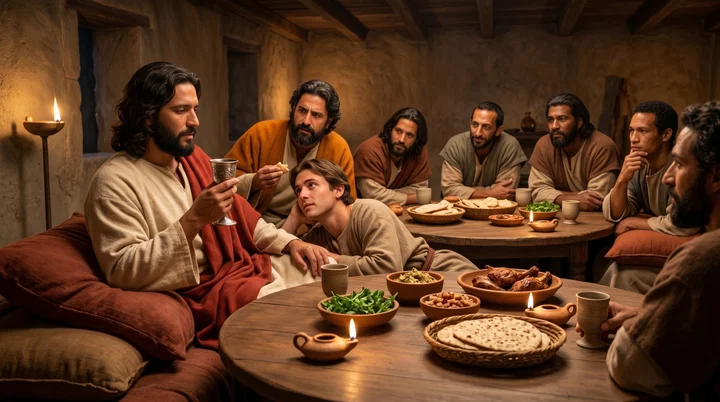
And he answered and said unto them, It is one of the twelve, that dippeth with me in the dish.
Translations
And he answered and said to them, It is one of the twelve, that dips with me in the dish.
King James Version, KJV Cambridge Paragraph Bible
And he answered and said unto them, It is one of the twelve, that dippeth with me in the dish.
And he answered and said to them, It is one of the twelve that dippeth with me in the dish.
Revised Version, American Standard Version
And he said unto them, It is one of the twelve, he that dippeth with me in the dish.
And he answering said to them, 'One of the twelve who is dipping with me in the dish;
But he answered and said to them, One of the twelve, he who dips with me in the dish.
And, he, said unto them—One of the twelve, he that is dipping with me into the [one] bowl:
Berean Standard Bible, Majority Standard Bible
He answered, “ It is one of the Twelve— the one who is dipping his hand into the bowl with Me.
He answered them, “ It is one of the twelve, he who dips with me in the dish.
And he said to them, It is one of the twelve, one who is putting his bread with me into the same plate.
And he answered and sayde vnto them, It is one of the twelue that dippeth with mee in the platter.
Douay-Rheims (Challoner revision)
Who saith to them: One of the twelve, who dippeth with me his hand in the dish.
Pictures
Cross-references
- Matthew 26:23
And he answered and said, He that dippeth his hand with me in the dish, the same shall betray me.
Jesus identifies his betrayer as the one sharing the dish.
- Luke 22:21-23
But, behold, the hand of him that betrayeth me is with me on the table.
Jesus identifies his betrayer at the table and says his death follows what was determined.
- John 13:26
Jesus answered, He it is, to whom I shall give a sop, when I have dipped it. And when he had dipped the sop, he gave it to Judas Iscariot, the son of Simon.
Jesus identifies Judas as the betrayer by giving him a dipped morsel.
- Psalms 41:9
Yea, mine own familiar friend, in whom I trusted, which did eat of my bread, hath lifted up his heel against me.
A trusted companion who shares bread turns against the speaker.
- John 13:18
I speak not of you all: I know whom I have chosen: but that the scripture may be fulfilled, He that eateth bread with me hath lifted up his heel against me.
Jesus identifies the betrayer at the meal, fulfilling Scripture about one who eats his bread.
- Matthew 26:25
Then Judas, which betrayed him, answered and said, Master, is it I? He said unto him, Thou hast said.
Judas asks if he is the betrayer, and Jesus confirms it.
- John 13:25
He then lying on Jesus’ breast saith unto him, Lord, who is it?
John asks Jesus who will betray him.
- John 13:30
He then having received the sop went immediately out: and it was night.
Judas leaves after receiving the sop, before the memorial supper.
- John 13:27
And after the sop Satan entered into him. Then said Jesus unto him, That thou doest, do quickly.
Jesus tells Judas to act quickly as he leaves.
- John 6:70
Jesus answered them, Have not I chosen you twelve, and one of you is a devil?
Jesus identifies one of the twelve as a devil, referring to Judas.
- Exodus 12:1-14
And the LORD spake unto Moses and Aaron in the land of Egypt, saying,
The supper is set at Passover, recalling Israel’s deliverance from Egypt.
- 1 Corinthians 11:23-26
For I have received of the Lord that which also I delivered unto you, That the Lord Jesus the same night in which he was betrayed took bread:
Describes the communion service instituted at the meal.
Commentary
Each commentary is drawn from primary sources: the writings of Ellen G. White and Adventist pioneers and periodicals. Each commentary is separate. Its own words are not a quotation; follow the references to read the source passages.
Ellen G. White
3 sources
The dipping in the dish marked the betrayer as one of the twelve, so the treachery came from inside the circle of close discipleship and shared fellowship and communion.DA 654.1–23SP 85.1–2ST May 23, 1878 The sign pointed to Judas, though the other disciples did not suspect him.DA 654.1–23SP 85.1–2 The words were spoken at the Passover supper and meal, when Jesus was troubled and weighed down and depressed under the cloud of coming calamity as He announced that one of the favored twelve would betray Him.3SP 85.1–2ST May 23, 1878
That announcement filled the disciples with amazement and consternation and fear and self-distrust.ST May 23, 1878 They examined their own hearts and searched one another's faces and asked one by one with painful feeling whether it was themselves.ST May 23, 1878 The identification was given as a private answer to John's distressed question.ST May 23, 1878 Amid the confusion and astonishment Judas at first did not hear it, then his silence drew all eyes to him, and when he asked in order to escape scrutiny Jesus confirmed his guilt with solemn discovery.3SP 85.1–2ST May 23, 1878
The identification shows Jesus already knew who would betray Him, proving that all of Judas's thoughts were known to Him.DA 654.1–2ST May 23, 1878 It was final convincing proof of His divinity and divine foresight and Messiahship, and the betrayal itself took place within what Scripture had foretold.DA 654.1–2ST May 23, 1878 The disclosure was an act of touching forbearance and infinite mercy with a twofold purpose.ST May 23, 1878 It gave Judas one last chance to repent and turn back and escape the betrayer's doom, which he refused and did not use before his treachery was consummated.3SP 85.1–2ST May 23, 1878 It also gave the disciples crowning evidence beforehand by revealing the hidden purpose of Judas before it happened, so they would believe and would not think their Master lacked foresight and was deceived and surprised into the hands of a mob, so their faith would be strengthened during His humiliation, and so they would remember the announced woe when Judas came to his dreadful end.ST May 23, 1878
Sources
Pioneers and periodicals
17 sources
At the Passover meal Jesus identifies His betrayer as one of the twelve disciples sharing the same dish with Him as He prepares them for His approaching death.ST May 13, 1889RH Dec 10, 1867ST Nov 22, 1883 Sharing a dish was a friendly familiar custom, which makes the treachery darker and fulfills Psalm 41:9.RH Dec 10, 1867ST Nov 22, 1883 Troubled under the coming calamity He announces the betrayal, and the disciples answer with amazement and self-distrust, examining their hearts and asking one by one who it is, while His death accords with what is written yet woe rests on the betrayer for whom it would have been better never to have been born.ST May 23, 1878ST May 12, 1898ST Aug 12, 1886 The disclosure proves He knew Judas's hidden thoughts and plans, giving him in touching forbearance one last chance to repent and giving the disciples crowning evidence of Messiahship beforehand so they will believe and not think Him surprised and deceived.ST May 23, 1878 Judas is alarmed but does not repent and goes out more firmly set to carry out his plan, the disclosure coming after the foot-washing and before the Lord's Supper so that he leaves immediately and is not present when Jesus institutes the memorial.ST Nov 22, 1883RH Jul 14, 1863RH Jul 29, 1873
Words and Passover Setting
It is one of the twelve disciples who is pointed out as the betrayer, the one dipping bread with Jesus in the same dish.ST May 23, 1878ST May 13, 1889RH Dec 10, 1867ST May 12, 1898ST Aug 12, 1886 The sign is given in answer to the disciples' anxious questions about who would do this deed.ST May 23, 1878ST May 12, 1898ST Aug 12, 1886 To share the same dish was a custom expressing friendliness and familiarity, which makes the treachery of the act especially base.RH Dec 10, 1867 The dipping takes place at the Passover meal, as Jesus is preparing the disciples for his approaching death and establishing a memorial of that death.ST May 23, 1878ST May 13, 1889ST Nov 22, 1883
The talk belongs to the evening after sunset in the first part of the night.RH Mar 20, 1879 That evening warning that Peter would deny him that day before the cock crows belongs to the same day as Peter's denial just before daylight the next morning.RH Mar 20, 1879 This proves the day began at sunset and did not close at midnight.RH Mar 20, 1879 The verse stands in Mark's account of the last hours of Jesus, his crucifixion, and his resurrection, giving clear, definite particulars not given by the other evangelists.ST Mar 10, 1909
The word for dip means to whelm on and is practically the same as the word meaning to cover wholly with a fluid, so dip may properly be rendered immerse.ST Jan 10, 1906 The verse uses a form of the word translated baptize for dipping bread in a dish, showing that the word's ordinary sense includes dipping.ST Jun 3, 1875
The designation stands in order after sitting down to supper and before the Lord's Supper.ST Nov 22, 1883ST Nov 15, 1883 Matthew gives almost precisely the same account in the same order, and though both omit many things the events they do relate are in their proper order.ST Nov 15, 1883 Luke does not follow the same order and adds the strife among the disciples which the others omit.ST Nov 15, 1883 John says nothing about the Lord's Supper but gives the most complete account in its details, centered on the foot-washing which none of the others mention.ST Nov 15, 1883 The events at the last supper are closely connected with his death, so the order of the events matters and careful comparison of the Gospel accounts helps clarify their setting and meaning.ST Nov 15, 1883
Betrayal Announced and Answered
At the Passover supper Jesus, troubled and depressed under a cloud of coming calamity, announced that one of the favored twelve in close communion with him would betray him.ST May 23, 1878ST May 12, 1898ST Aug 12, 1886 The announcement filled the disciples with amazement, consternation, fear, alarm and self-distrust.ST May 23, 1878ST May 12, 1898ST Aug 12, 1886 They examined their own hearts and searched one another's faces, anxiously asking one by one with painful feeling if it were themselves.ST May 23, 1878ST May 12, 1898ST Aug 12, 1886
In answer to John's distressed question Jesus privately identified the betrayer as one dipping with him in the dish.ST May 23, 1878ST May 12, 1898 Amid the confusion and astonishment Judas at first did not hear the words, until his silence drew all eyes to him.ST May 23, 1878 At that Passover meal where the disciples asked which of them would betray him, Judas also asked though he was the betrayer, speaking to escape scrutiny and receiving solemn discovery of his guilt.ST May 23, 1878ST Jan 10, 1911
The pointing out of one of the twelve sharing the dish fulfilled Psalm 41:9.ST Nov 22, 1883 The answer exposed the nearness of the betrayal while the disciples examined themselves in alarm.ST Aug 12, 1886 The Son of Man's death accords with what is written, yet woe is pronounced on the man who betrays him, and it would have been better for that man not to have been born.ST Aug 12, 1886
Mercy, Departure and Memorial
The pointing out of the one dipping in the dish laid bare hidden thoughts and plans, proving that all was known, and it was touching forbearance and infinite mercy giving one more chance to repent before treachery was consummated.ST May 23, 1878 Its purpose was twofold, to offer a last opportunity to escape the betrayer's doom and to give crowning evidence of Messiahship by revealing the hidden purpose before it happened.ST May 23, 1878 In this way the disciples were led to believe, kept from thinking their Master lacked divine foresight and was deceived and surprised into the hands of a mob, with faith strengthened during his humiliation and with the woe remembered when the dreadful end came.ST May 23, 1878 The disclosure was a final convincing proof of divinity and an act of mercy granting time to turn before it was too late.
Judas was alarmed by being thus known yet did not repent, but became more firmly set on his plan and went out to carry it through. The disclosure took place while eating the Passover, after the foot-washing and before the Lord's Supper.ST Nov 22, 1883RH Jul 14, 1863RH Jul 29, 1873 Because he went out immediately after receiving the sop or portion from Christ's hand, he was not present when Jesus instituted his memorial supper and did not partake at the Lord's table.ST Nov 22, 1883RH Jul 14, 1863RH Jul 29, 1873
The exact timing of receiving the portion and going out immediately in relation to the institution of the memorial must be established from the Gospel accounts, and by itself it does not settle whether he took part in the Supper.RH Jul 29, 1873 His part in the dipping does not give him part in the divine memorial, which removes the objection against close communion drawn from his presence.RH Jul 29, 1873 The betrayer receives the sop and leaves, while the others remain to sing a solemn hymn with Jesus.ST
Sources