John 13:26
Jesus answered, He it is, to whom I shall give a sop, when I have dipped it. And when he had dipped the sop, he gave it to Judas Iscariot, the son of Simon.
Translations
American King James Version, King James Version, KJV Cambridge Paragraph Bible
Jesus answered, He it is, to whom I shall give a sop, when I have dipped it. And when he had dipped the sop, he gave it to Judas Iscariot, the son of Simon.
Jesus answered, He it is to whom I shall give a sop, when I have dipped it. And when he had dipped the sop, he gave it to Judas Iscariot, the son of Simon.
Revised Version, American Standard Version
Jesus therefore answereth, He it is, for whom I shall dip the sop, and give it him. So when he had dipped the sop, he taketh and giveth it to Judas, the son of Simon Iscariot.
Jesus answereth, 'That one it is to whom I, having dipped the morsel, shall give it;' and having dipped the morsel, he giveth [it] to Judas of Simon, Iscariot.
Jesus answers, He it is to whom I, after I have dipped the morsel, give it. And having dipped the morsel, he gives it to Judas [son] of Simon, Iscariote.
Jesus, therefore, answereth—That one, it is, for whom, I, shall dip the morsel, and give unto him. So, dipping the morsel, he taketh and giveth it unto Judas, son of Simon Iscariot.
Jesus answered, “ It is the one to whom I give this morsel after I have dipped it.” Then He dipped the morsel and gave it to Judas son of Simon Iscariot.
Jesus answered, “ It is the one to whom I give this morsel after I have dipped it.” Then He dipped the morsel and gave it to Judas Iscariot, the son of Simon.
Jesus therefore answered, “ It is he to whom I will give this piece of bread when I have dipped it.” So when he had dipped the piece of bread, he gave it to Judas, the son of Simon Iscariot.
This was the answer Jesus gave: It is the one to whom I will give this bit of bread after I have put it in the vessel. Then he took the bit of bread, put it into the vessel, and gave it to Judas, the son of Simon Iscariot.
Iesus answered, He it is, to whome I shall giue a soppe, when I haue dipt it: and hee wet a soppe, and gaue it to Iudas Iscariot, Simons sonne.
Douay-Rheims (Challoner revision)
Jesus answered: He it is to whom I shall reach bread dipped. And when he had dipped the bread, he gave it to Judas Iscariot, the son of Simon.
Pictures
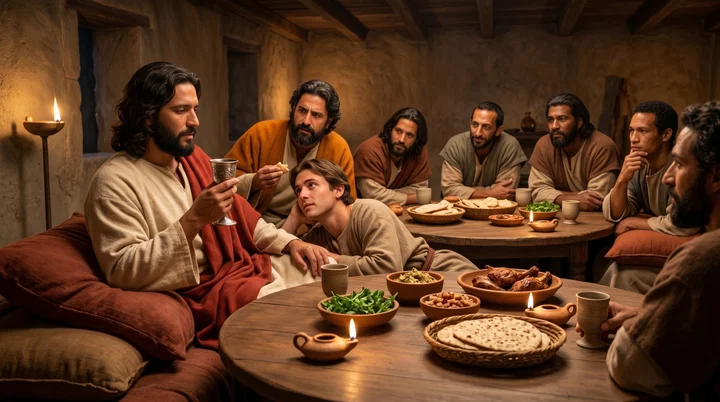
Cross-references 20 of 26
- Matthew 26:21-23
And as they did eat, he said, Verily I say unto you, that one of you shall betray me.
Jesus identifies Judas as the betrayer during the meal.
- Mark 14:20
And he answered and said unto them, It is one of the twelve, that dippeth with me in the dish.
Jesus identifies the betrayer as the one sharing the dish with him.
- Luke 22:21
But, behold, the hand of him that betrayeth me is with me on the table.
Jesus announces the betrayer during the meal.
- John 13:10-11
Jesus saith to him, He that is washed needeth not save to wash his feet, but is clean every whit: and ye are clean, but not all.
Jesus says the disciples are not all clean because he knows Judas will betray him.
- John 13:18
I speak not of you all: I know whom I have chosen: but that the scripture may be fulfilled, He that eateth bread with me hath lifted up his heel against me.
Judas’s betrayal fulfills Scripture about a companion who shared Jesus’s bread.
- John 13:30
He then having received the sop went immediately out: and it was night.
Judas leaves the supper immediately after receiving the dipped bread.
- John 13:21
When Jesus had thus said, he was troubled in spirit, and testified, and said, Verily, verily, I say unto you, that one of you shall betray me.
Jesus announces that one of the disciples will betray him.
- Psalms 41:9
Yea, mine own familiar friend, in whom I trusted, which did eat of my bread, hath lifted up his heel against me.
A close companion who shared Jesus’ meal turned against him.
- John 6:70-71
Jesus answered them, Have not I chosen you twelve, and one of you is a devil?
Jesus had already identified Judas as the one who would betray him.
- 1 Corinthians 11:23
For I have received of the Lord that which also I delivered unto you, That the Lord Jesus the same night in which he was betrayed took bread:
Both recount the meal on the night Jesus was betrayed.
- Matthew 26:21
And as they did eat, he said, Verily I say unto you, that one of you shall betray me.
Jesus identifies a betrayer during the supper.
- Luke 22:3-6
Then entered Satan into Judas surnamed Iscariot, being of the number of the twelve.
Judas, entered by Satan, agrees to betray Jesus.
- John 13:2
And supper being ended, the devil having now put into the heart of Judas Iscariot, Simon’s son, to betray him;
Judas’s betrayal is already in his heart as supper is in progress.
- Mark 14:17-18
And in the evening he cometh with the twelve.
Both describe the Passover supper and Jesus’ announcement that one of the Twelve will betray him.
- Luke 22:14-20
And when the hour was come, he sat down, and the twelve apostles with him.
Jesus shares the Passover meal with his disciples and institutes the supper.
- Mark 14:22-25
And as they did eat, Jesus took bread, and blessed, and brake it, and gave to them, and said, Take, eat: this is my body.
Mark records Jesus sharing bread and the cup at the supper.
- Matthew 26:24
The Son of man goeth as it is written of him: but woe unto that man by whom the Son of man is betrayed! it had been good for that man if he had not been born.
Jesus identifies Judas as his betrayer and pronounces woe upon him.
- John 13:11
For he knew who should betray him; therefore said he, Ye are not all clean.
Jesus had already shown that Judas was not clean.
- Luke 22:48
But Jesus said unto him, Judas, betrayest thou the Son of man with a kiss?
Jesus confronts the kiss after already revealing His knowledge at supper
- Matthew 26:47
And while he yet spake, lo, Judas, one of the twelve, came, and with him a great multitude with swords and staves, from the chief priests and elders of the people.
Judas arrives with a mob to arrest Jesus.
Commentary
Each commentary is drawn from primary sources: the writings of Ellen G. White and Adventist pioneers and periodicals. Each commentary is separate. Its own words are not a quotation; follow the references to read the source passages.
Ellen G. White
18 sources
At the Passover supper Jesus identified His betrayer as the one to whom He would give a morsel after dipping it in the shared dish, and He then gave it to Judas Iscariot, the son of Simon.Ms 106, 1903, par. 31–35DA 652.1–2RH Nov 4, 1902 The other disciples did not grasp the meaning of the act, for He gave Judas no rebuke and did not expose him to them, though the act itself openly marked Judas and was followed by Satan entering him and his going at once out into the night.Ms 106, 1903, par. 31–35RH Nov 4, 1902Ms 19, 1897, par. 56–57 The sign was a final tender appeal of love, making clear that Jesus fully knew Judas's hidden purpose and thoughts and still gave him opportunity to turn back and be freely forgiven if he confessed.ST May 23, 18783SP 86.13SP 85.1–2 Jesus bore with him to the last with goodness and humility, washing his feet with His own hands and keeping him a place at the table, yet Judas refused to repent and left more determined to carry out his plan.ST May 23, 18783SP 86.1DA 720.2MH 493.3–4Ms 35, 1897, par. 11–12 His long patience with a chosen apostle who was a traitor teaches His followers to bear patiently with the false-hearted and not to judge hearts or exclude any from the sacred service.MH 493.3–4Ms 35, 1897, par. 11–1220MR 149.2–4ST Feb 9, 1915
The Betrayer Identified
At the Passover supper Jesus was troubled in spirit and testified that one of the disciples would betray Him, and while they looked on one another doubting whom He meant, He answered the quiet question from the disciple lying on His breast by saying the betrayer was the one to whom He would give a sop after dipping it.Ms 106, 1903, par. 31–35RH Nov 4, 1902ST May 23, 18783SP 86.1DA 654.1–2 He then gave the dipped sop from the shared dish to Judas Iscariot, the son of Simon, thereby identifying him as the one who would betray Him.Ms 106, 1903, par. 31–35DA 652.1–2RH Nov 4, 1902ST May 23, 18783SP 86.1 The sign of sharing the dish and giving the dipped piece of bread marked Judas as the betrayer.DA 652.1–2RH Nov 4, 1902ST May 23, 18783SP 86.1DA 654.1–2
The other disciples knew nothing of Judas's secret purpose to betray Him.Ms 106, 1903, par. 31–35Ms 19, 1897, par. 56–57 They did not hear Jesus' words to Judas and did not understand the giving of the sop as a sign.Ms 106, 1903, par. 31–35Ms 19, 1897, par. 56–57 Jesus gave him no word of rebuke and did not expose him to them.Ms 106, 1903, par. 31–35Ms 19, 1897, par. 56–57
The act nevertheless marked Judas openly as the betrayer.RH Nov 4, 1902 After it Satan entered into him, Jesus told him to do quickly what he was doing, and Judas received the sop and went immediately out into the night.RH Nov 4, 1902 Judas's silence and later question do not conceal his guilt, and Jesus answers him solemnly.DA 654.1–2 The betrayal fulfills what was written about the Son of man, yet the dipping and giving of the sop was a direct personal warning to Judas of his exposed treachery and of the meaning of the woe pronounced on the betrayer, so that he could not later think Christ was ignorant of his action in Gethsemane.DA 654.1–2Ms 149, 1904, par. 13–15
Love's Final Appeal Rejected
The dipped sop was a sign that laid open hidden purpose, thoughts and plans, revealing the traitor and giving the disciples evidence of divine foresight, divinity and Messiahship.ST May 23, 18783SP 86.13SP 85.1–2DA 720.2Ms 120, 1897, par. 9 It was given so that Judas could not afterward suppose in Gethsemane that Christ had been ignorant of his action.Ms 149, 1904, par. 13–15 The exposure was final and convincing proof, a tender last opportunity and appeal of love for Judas to turn back and repent.ST May 23, 18783SP 86.13SP 85.1–2DA 720.2Ms 120, 1897, par. 9 He was still included in the ministry to the disciples, and even after that revelation he was not beyond hope, for Jesus still longed to save him and would have freely forgiven him if he had then confessed his traitor's work, just as He afterward saved the thief on the cross.DA 720.2Ms 120, 1897, par. 9Ms 149, 1904, par. 13–15
Jesus bore with him patiently though He knew he would betray Him, treating him with goodness, humility and enduring divine love.DA 720.2MH 493.3–4Ms 120, 1897, par. 9Ms 19, 1897, par. 56–57 He washed his soiled feet first with His own hands and wiped them with the towel, and did not refuse him a place at the table.DA 720.2Ms 35, 1897, par. 11–12Ms 19, 1897, par. 56–5720MR 149.2–4 That kindness thrilled Judas's heart with an impulse to confess his sin then and there.Ms 19, 1897, par. 56–57 It was a sample of how Jesus had treated him through all their association.Ms 19, 1897, par. 56–57
Judas was not villainous in appearance or deportment, but was looked upon by the disciples as a man of great capabilities with breadth of knowledge and valuable qualifications if sanctified to God's service.Ms 19, 1897, par. 56–57 He was angry that Jesus did a servant's work in washing his feet without winning his love, and seeing that Jesus would not be made king and having given up all hope of temporal preferment, he became more determined to betray Him.COS 110.7–9Ms 19, 1897, par. 56–57 He turned the wrong way, bracing his soul against light he knew better and seeking to obliterate from his mind all he had heard.Ms 19, 1897, par. 56–57 The greater the love Christ expressed toward him, the more powerful were the enemy's presentations that Christ was not the Son of God but a pretence, and though often deeply impressed by the working of the Holy Spirit, he fought away from Jesus and allowed himself to become the channel of darkness.Ms 19, 1897, par. 56–57
He was surprised and alarmed by the exposure but felt no fear or change, did not repent, and became more firmly set on his plan.ST May 23, 18783SP 86.13SP 85.1–2COS 110.7–9 In anger he left the supper room at once to carry out his wicked plan, his feet which Jesus had washed going out to betray Him.DA 720.2COS 110.7–9 His going relieved everyone present, lightened Jesus' face, and lifted the shadow from the disciples.COS 110.7–9
Lessons for Believers
The giving of the dipped sop to Judas Iscariot shows that he was numbered among the chosen apostles even though he was a traitor, and that Jesus knew he would betray Him yet bore with him patiently.MH 493.3–4ST Feb 9, 1915 That experience reveals Christ's long patience with perverse human nature.ST Feb 9, 1915 His example teaches His followers to bear patiently with false brethren and with those who are false-hearted or at fault.MH 493.3–4ST Feb 9, 1915
Though He knew Judas would betray Him, Jesus washed his soiled feet and did not refuse him a place at the table at the final meal, but allowed him to partake in the sacrament.Ms 35, 1897, par. 11–1220MR 149.2–4 His presence there shows that people cannot judge who is worthy to take part in the ordinance, because they cannot read another person's heart.Ms 35, 1897, par. 11–1220MR 149.2–4 No one should therefore be excluded from the service on the basis of judgments about hearts.20MR 149.2–4 Christ's words in this chapter rebuke defiling unkind talk and passing judgment, and call for the Holy Spirit to cleanse the lips as with a living coal from self-assured conversation that hurts souls and spoils God's work.Lt 264, 1902, par. 11 To ignore these words while giving counsels is to handle strange fire, and such counsels become a savor of death unto death instead of a savor of life unto life.Lt 264, 1902, par. 11 Since Judas betrayed his Master, all, especially the youth, must work out their own salvation with fear and trembling, keeping religious influence genuine and faith in Christ as a personal Saviour unwavering, so they will never betray Christ as Judas did, and gaining this loyal experience is what all need.Ms 102, 1904, par. 39
Sources
Pioneers and periodicals
61 sources
At the Passover supper in the upper room on the night before His suffering, when He was troubled in spirit, Jesus answered the quiet question of the disciple on His breast by marking the betrayer with a dipped piece of bread given to Judas Iscariot the son of Simon.ST Jan 10, 1900ST Aug 12, 1886RH Jul 28, 1863RH May 18, 1869ST Nov 4, 1897 That giving fulfilled Psalm 41:9 and showed He knew Judas's treachery all along, yet it was pity and a final call to turn back rather than mere exposure, and Judas understood, refused to repent, received Satan, and went immediately out into the night.ST May 23, 1878ST Oct 5, 1882ST Nov 22, 1883ST May 18, 1904 The sop came after the feet-washing while they were still reclining at table, for Jesus had washed their feet to remove pride and dissension and to institute an example of humble mutual service to be kept before the memorial of His body and blood.RH Jun 23, 1910RH May 3, 1864RH Aug 19, 1858ST Jul 30, 1885ST Feb 4, 1903 Judas then left at once and had no part in the Lord's Supper instituted afterward, though those who held the other view taught that he remained through the emblems with a wrong heart and left after the supper.ST Nov 22, 1883ST Jul 12, 1905RH May 27, 1873ST Mar 20, 1907RH Jul 29, 1873 Because Jesus washed and served even the traitor, no elder or deacon may discriminate between clean and unclean at His table except for open sin, but each must examine himself, and His long patience with Judas teaches patience with false brethren without excusing delay in surrender.ST Feb 9, 1915RH Jan 14, 1858ST May 18, 1904RH Mar 7, 1912
Supper Setting and Words
The scene belongs to the Passover supper Jesus shared with His disciples in the upper room before His suffering, before He and His disciples left the chamber.ST Aug 12, 1886ST Apr 2, 1912ST Nov 19, 1912ST Mar 18, 1897 He foresaw the events soon to come and was grieved by the ingratitude and cruelty awaiting Him, troubled in spirit at a gathering usually marked by special interest and calm joy, and the disciples shared His grief without knowing its cause.ST Aug 12, 1886ST Aug 12, 1886 That same night He was taken and later crucified, after Judas left the supper to complete the betrayal.ST Apr 2, 1912 This was virtually the last Passover, as the Passover type was to meet its fulfillment in the death of the Lamb of God for the sins of the world.ST Aug 12, 1886 After eating the Passover with them He then instituted the Lord's Supper after it, to be continued until He comes again.ST Nov 19, 1912
The verse falls within the upper-room discourse extending through John 13-17, presented as a major part of John's Gospel whose central emphasis is Christ's divine glories and life.ST Mar 9, 1888 The word for dipped means to dip, plunge, or immerse, to whelm or cover wholly with fluid.ST Jun 3, 1875ST Jan 10, 1906 It comes from the Greek words bapto and embapto, which have practically the same meaning, and bapto could properly be translated immerse.ST Jan 10, 1906 The dipping of the sop uses that same common word for dip or plunge, illustrating the sense of the related word for baptizing and proving that baptism is by immersion and not by sprinkling or pouring or mere washing.ST Jun 3, 1875ST Jan 10, 1906RH Feb 10, 1910
The sop reflects the custom of using bread as a utensil, with a piece of cake bent into the shape of a rough spoon to scoop up pottage and then passed into the mouth along with the food.ST Sep 23, 1886 The giving of the dipped sop to Judas happened during the supper while they were reclining at the table and still eating, after Jesus had washed the disciples' feet.ST Jul 30, 1885RH Dec 23, 1858 The washing thus took place during or near the beginning of the meal, not after it had ended, and the scene places the foot washing before the disciples ate the supper.ST Jul 30, 1885RH Dec 23, 1858 The events of this last supper are closely connected with His death and should be studied in their sequence to understand their full significance.ST Nov 15, 1883
In the order of the last supper the giving of the sop comes after the washing of the disciples' feet, the breaking of the bread, Jesus saying one would betray Him, and the disciples asking in inquiry, and before the warning to Peter and the blessing of the cup, with the breaking of the bread and the blessing of the cup belonging immediately together.ST Feb 4, 1903 Judas's departure followed the moment he received the dipped sop as the identified betrayer, before Jesus gave the instruction recorded in John 13:31-17 on the same night, and he immediately went out and did not join in what followed.ST Feb 4, 1903ST May 19, 1898RH Dec 23, 1858 After Jesus washed the disciples' feet they remained at the table and ate, and the meal that followed the washing was the Lord's Supper, not the Passover supper.RH Jul 21, 1868 Jesus' announcement that one of them would betray Him came after the feet washing and was connected with His teaching about His death and the memorials of His body and blood.RH Jul 21, 1868
Exposing Judas Iscariot
The dipped piece of bread given at the supper marked out Judas Iscariot, the son of Simon, as the one who would betray Jesus.ST Jan 10, 1900RH Jul 28, 1863ST Nov 4, 1897RH Jun 26, 1856ST May 12, 1898 The giving belongs to the occasion of the feet-washing, which was more than an ordinary custom and was a congregational act of obedience to Christ's command.RH Jul 28, 1863 When Jesus was troubled in spirit and testified that one of the disciples would betray Him, the disciples looked on one another doubting whom He meant, and each asked whether it might be he.RH Nov 4, 1902RH May 18, 1869ST Aug 12, 1886 The sign was given in answer to the quiet question of the disciple lying on Jesus' breast, who asked at Peter's urging, that the betrayer would be the one to whom Jesus would give the sop after dipping it.RH Nov 4, 1902ST Jan 10, 1911
The act marked Judas openly through the shared dish.RH Nov 4, 1902 After receiving the sop Satan entered into him, Jesus told him to do quickly what he was doing, and Judas received it and went immediately out into the night.RH Nov 4, 1902ST Oct 5, 1882 Having thus left the supper, he did not join the disciples in their solemn hymn.ST
Judas's silence stood in contrast to the anxious self-examination of the other disciples as each wondered whether he himself was the betrayer.RH May 18, 1869ST Aug 12, 1886 The others did not recognize him as the betrayer and did not suspect him.RH May 18, 1869ST Jan 10, 1911 The betrayal that followed took place that same night, when Judas came with a mob and Jesus was delivered to His enemies.ST Nov 4, 1897
Foreknowledge, Grief and Mercy
Jesus handed the dipped sop to Judas with complete knowledge of his hidden thoughts, purpose and treachery, knowing all along that he was a thief and would betray Him.ST May 23, 1878ST May 18, 1904RH Sep 17, 1914 That knowledge was made plain in the identifying of Judas by the sop, so that Judas himself understood Jesus knew his purpose.ST May 23, 1878ST May 18, 1904 He met that betrayal with calm dignity and tender love, though grieved by the ingratitude and cruelty awaiting Him and troubled in spirit.ST Aug 28, 1879ST Aug 12, 1886ST Aug 12, 1886 The disciples shared His grief at that Passover gathering usually marked by special interest and calm joy, without knowing its cause.ST Aug 12, 1886
The exposure by the shared dish let Judas see that his plans were known and gave him a final opportunity to turn back before it was too late.ST May 23, 1878ST Aug 12, 1886 It was at the same time convincing proof of divine foresight and Messiahship for the disciples, showing Jesus had done all He could to turn Judas from his covetous plan.ST May 23, 1878ST May 18, 1904 Judas was surprised and alarmed to find himself known, but he did not repent.ST May 23, 1878ST Aug 12, 1886 He instead became more firmly set on his plan, continued with it, and went out to carry it through.ST May 23, 1878ST Aug 12, 1886
Even after exposure he still could have confessed and received forgiveness, but he gave himself over to the enemy and Satan entered him.RH Aug 2, 1906 The giving of the sop was pity and an effort to do everything possible for him rather than to expose him, dealing with his sin privately by conviction of the Spirit so it could be taken away and hidden and cast into the depths of the sea before others found it out.RH Sep 17, 1914 Jesus had first washed Judas's feet, and that act of humility and love nearly softened his heart, but he soon rebelled, decided to stop acknowledging Jesus, and gave himself to Satan.RH Sep 17, 1914RH Jun 23, 1910
Jesus would not remain silent in apparent ignorance, lest the disciples think their Master lacked divine foresight and had been deceived and surprised and betrayed into the hands of a murderous mob. Having told them a year before that He had chosen twelve but one was a devil, these words showing the treachery was fully known would strengthen the faith of true followers during His humiliation. When He said the disciples were not all clean, He referred to the inner person rather than bodily cleanliness, as Judas's actions that night showed.ST Jul 26, 1883 Judas's place in Jesus' immediate household shows that even close association with Jesus did not determine his character.ST Jul 1, 1889
Prophecy and Divine Evidence
The giving of the dipped piece of bread to Judas marked him as the betrayer and fulfilled Psalm 41:9.ST Nov 22, 1883 It took place after the washing of feet and before the institution of the memorial supper, and Judas left at once afterward so that he was not present when that memorial was instituted.ST Nov 22, 1883 The meal was the Passover supper, ordinarily an occasion of special interest and calm joy, but on this night Jesus was troubled in spirit and the disciples shared His grief without knowing its cause.ST Aug 12, 1886 It was virtually the last Passover, because the Passover type was to meet its fulfillment in the death of the Lamb of God for the sins of the world.ST Aug 12, 1886
The supper and the betrayal that same night are facts consistently recorded by the Gospel writers in agreement with Paul's account of the meal.RH Jan 28, 1862 Their full meaning was not understood by the disciples at the time, but was brought to their remembrance when the Holy Spirit was poured out and Jesus was glorified at God's right hand.RH Jul 4, 1871 The identification of Judas by the sop, followed by the entry of the devil in the next verse, shows that Judas rather than Peter was the one associated with that entry.RH Jun 26, 1856 To replace the word devil with a mere human being produces absurdity, for the next verse would then be made to say that Peter entered Judas after the sop, or that Judas entered himself. Calling Judas or Peter a devil does not make either man the personal being described elsewhere as the devil.
Judas then left, while the other disciples did not recognize him as the betrayer.ST Jan 10, 1911 At Peter's urging, the disciple lying on Jesus' breast asked who it was, and Peter, or Bar-jona, thus sought to learn the betrayer through John.ST Jan 10, 1911 The betrayal by Judas and the later denial by Peter are distinct acts, for Peter boasted that he would remain faithful, yet Jesus foretold that he would deny knowing Him three times before the cock crows.ST Jan 10, 1911 The treachery of Judas brings no blame upon his Master or upon the faithful eleven.
Humility and Communion Ordinances
John 13 records Jesus enforcing a great moral lesson by an act done when surrounding circumstances called for it.RH Feb 24, 1859 It does not teach hospitality, for the disciples showed no inhospitality and were in no need of having hospitality shown to them.RH Feb 24, 1859 To read hospitality into it makes the act a strange digression from the course of events then transpiring.RH Feb 24, 1859
The feet-washing is a very literal transaction with literal emblems of a literal event, whose proceedings are minutely described to show its literal character.ST Jan 3, 1884 It was given as an example that disciples should do as Christ had done to them, which can only be done in a literal manner, memorializing humility literally.ST Jul 15, 1886ST Jan 3, 1884 Though stated only once in the Bible, the account is fact and is just as valid and binding as if repeated fifty times, making feet-washing an ordinance to be adopted as duty.ST Jul 15, 1886 The testimony it gives for feet-washing is stronger than any testimony that can be found for Sunday-keeping or infant baptism.ST Jul 15, 1886 Rejection of it comes because it is too humiliating an ordinance and hard to the natural man, and because unpalatable words of Christ are rejected.ST Jul 15, 1886ST Jan 3, 1884
The instruction about foot-washing was given at the Last Supper, just before which the disciples had been disputing about which should have the highest place in the kingdom.RH Jun 23, 1910 They were not clean of heart and were not fit to receive the bread and the wine Christ was about to give them, the emblems of true communion, which they were not really enjoying, because alienation and dissension were among them.RH Jun 23, 1910 Jesus desired to wash all this away and at the same time establish an ordinance for the church that would always take away similar feelings and conditions and prepare the participants for the communion service.RH Jun 23, 1910
The washing of the disciples' feet serves as an example of humble, mutual love rather than only a command to make foot-washing part of the Lord's supper.RH May 3, 1864 It addressed the disciples' selfish rivalry over who was greatest: they were to serve one another instead of striving for rank.RH May 3, 1864ST Feb 20, 1901 Christ's example of humble service is meant to be followed, and His disciples are obligated to serve one another as He served them.ST Feb 20, 1901RH Jan 9, 1872 Following that example fosters holy, equal fellowship among believers, who belong to the same body and care for one another, without castes, classes, or walls of separation.ST Feb 20, 1901 It is proof of Christ's willingness to humble Himself for our sakes, and an example left that we should follow in His steps.ST Oct 18, 1877 Knowing and doing these things, the humbling ordinance of washing feet followed by the Lord's supper and the instructions to be carried out in connection with commemorating His humility and death, brings happiness and a refreshing season, His rich blessing and the happiness promised in If ye know these things, happy are ye if ye do them, with joy now in thinking that we shall soon see Him and infinite satisfaction then that we tried to do as He directed in His word.RH May 3, 1864ST Oct 18, 1877RH May 19, 1859RH Jan 9, 1872
The account belongs to the supper on the evening the Lord's supper was instituted; that same evening Jesus washed His disciples' feet and commanded them to follow His example.RH Aug 19, 1858RH Jul 28, 1863 Christ plainly instituted this preceding ordinance to be observed before His supper, and its observance is obedience to Christ, rather than replacing it with a bread-and-cheese meal.RH Jun 13, 1865 The feet-washing occasion is presented as more than an ordinary custom and as a congregational act of obedience to Christ's command.RH Jul 28, 1863
The example prepares believers for close self-examination before they partake of the emblems of His broken body and shed blood, and that examination leads to confession and blessing.RH Jan 14, 1858 It is the example and instruction Jesus gave for His followers to follow when they celebrate the ordinances of the Lord's house and partake of the emblems of the infinite sacrifice He made for them.
Jesus and His disciples gathered in the upper room to celebrate the Passover, where He instituted the Lord's Supper and the rite of humility, or foot-washing, as observances to continue until His return.ST May 21, 1896 The institution stands alongside Matthew 26, Mark 14, and Luke 22, and comes as the next event of importance after the triumphal entry recorded in Matthew 21, Mark 11, Luke 19, and John 12.ST These rites remind His followers of His humiliation in taking human nature, His humble work of salvation, and His body and blood given for the world.ST May 21, 1896
The giving of the dipped sop identifying Judas as the betrayer happened during the Passover meal after the feet-washing and before the Lord's Supper.ST Nov 22, 1883 Judas received it and went out immediately afterward, before Jesus instituted the Lord's supper.ST Nov 22, 1883RH May 27, 1873RH Jul 29, 1873 Therefore he was not present when Jesus instituted the memorial supper, had no part in it, and did not partake of that memorial.ST Nov 22, 1883RH May 27, 1873RH Jul 29, 1873 The identification fulfilled the prophecy in Psalm 41:9.ST Nov 22, 1883
By contrast, it is also taught that Judas remained with Jesus and the disciples through the Passover supper, the dispute about who was greatest, the washing of feet, and the Lord's Supper, and left after the supper.ST Jul 12, 1905 On that showing Judas received the supper emblems even though his heart was not right, and his choice to partake made him responsible, not Christ who gave them to him.ST Mar 20, 1907 Whether his going out immediately after receiving the dipped portion happened before or after Jesus instituted the memorial supper is a disputed question that this passage does not settle.RH Jul 29, 1873
Warnings and Duties Today
The dipped morsel was handed to a traitor at the table, and therefore no officer, not even elders or deacons, may sort the clean from the unclean at the Lord's table.RH Mar 7, 1912 In the churches all who wish to share are to be served, with the sole exception of open sin which is to be met with public rebuke.RH Mar 7, 1912 Each participant is to examine himself, so that blessing or curse in partaking falls upon the individual communicant.RH Mar 7, 1912 Judas was counted among the apostles, and Christ's long forbearance with him displays His patience toward perverse human nature and calls His followers to bear patiently with false brethren.ST Feb 9, 1915
Judas stands as the case of a trusted man proving unfaithful, yet even when such betrayal brings loss believers are to keep trusting one another and the Lord.RH Mar 22, 1860 The handing of the morsel made plain that Jesus knew who would betray Him, and Judas perceived that his purpose was known.ST May 18, 1904 Every effort had been made to turn him from his covetous design, but he fully resisted the Spirit, and his course warns against putting off entire surrender.ST May 18, 1904
Sources